Prepared By: ☺
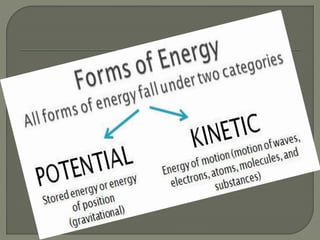
 Kinetic Energy is 
energy that is in 
motion. Moving water 
and wind are good 
examples of kinetic 
energy. Electricity is 
also kinetic energy 
because even though 
you can't see it 
happen, electricity 
involves electrons 
moving in conductors.
 Energy is measured 
in the amount of 
"work" it does. 
 Potential Energy is 
stored energy. 
Examples of 
potential energy are 
oil sitting in a barrel, 
or water in a lake in 
the mountains. This 
energy is referred to 
as potential energy, 
because if it were 
released, it would 
do a lot of work.
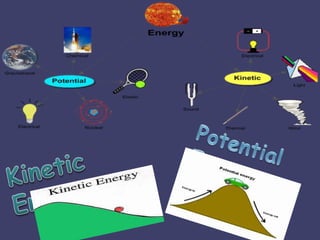
 Energy can change 
from one form to 
another. A good 
example is a Roller 
Coaster. When it is on 
its way up, it is using 
kinetic energy since 
the energy is in 
motion. When it 
reaches the top it has 
potential (or stored) 
energy. When it goes 
down the hill it is 
using kinetic energy 
again.
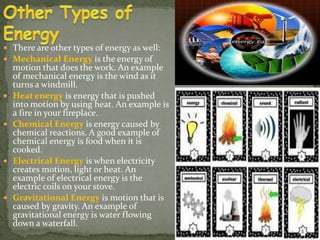
 There are other types of energy as well: 
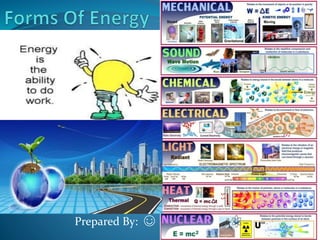
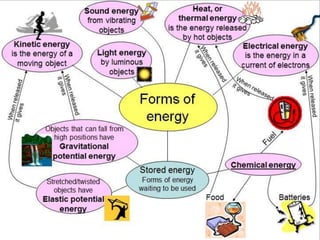
 Mechanical Energy is the energy of 
motion that does the work. An example 
of mechanical energy is the wind as it 
turns a windmill. 
 Heat energy is energy that is pushed 
into motion by using heat. An example is 
a fire in your fireplace. 
 Chemical Energy is energy caused by 
chemical reactions. A good example of 
chemical energy is food when it is 
cooked. 
 Electrical Energy is when electricity 
creates motion, light or heat. An 
example of electrical energy is the 
electric coils on your stove. 
 Gravitational Energy is motion that is 
caused by gravity. An example of 
gravitational energy is water flowing 
down a waterfall.
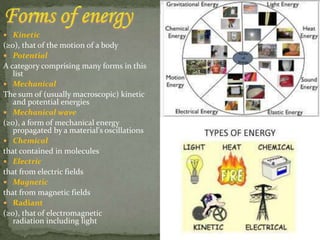
 Kinetic 
(≥0), that of the motion of a body 
 Potential 
A category comprising many forms in this 
list 
 Mechanical 
The sum of (usually macroscopic) kinetic 
and potential energies 
 Mechanical wave 
(≥0), a form of mechanical energy 
propagated by a material's oscillations 
 Chemical 
that contained in molecules 
 Electric 
that from electric fields 
 Magnetic 
that from magnetic fields 
 Radiant 
(≥0), that of electromagnetic 
radiation including light
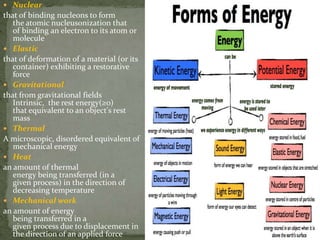
 Nuclear 
that of binding nucleons to form 
the atomic nucleusonization that 
of binding an electron to its atom or 
molecule 
 Elastic 
that of deformation of a material (or its 
container) exhibiting a restorative 
force 
 Gravitational 
that from gravitational fields 
Intrinsic, the rest energy(≥0) 
that equivalent to an object's rest 
mass 
 Thermal 
A microscopic, disordered equivalent of 
mechanical energy 
 Heat 
an amount of thermal 
energy being transferred (in a 
given process) in the direction of 
decreasing temperature 
 Mechanical work 
an amount of energy 
being transferred in a 
given process due to displacement in 
the direction of an applied force
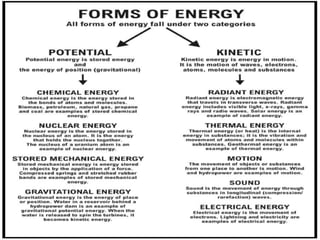
 Potential energies are often measured as positive 
or negative depending on whether they are 
greater or less than the energy of a specified base 
state or configuration such as two interacting 
bodies being infinitely far apart. 
Wave energies (such as radiant or sound 
energy), kinetic energy, and rest energy are each 
greater than or equal to zero because they are 
measured in comparison to a base state of zero 
energy: "no wave", "no motion", and "no inertia", 
respectively.
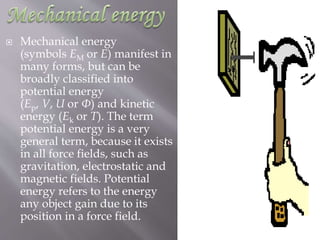
 Mechanical energy 
(symbols EM or E) manifest in 
many forms, but can be 
broadly classified into 
potential energy 
(Ep, V, U or Φ) and kinetic 
energy (Ek or T). The term 
potential energy is a very 
general term, because it exists 
in all force fields, such as 
gravitation, electrostatic and 
magnetic fields. Potential 
energy refers to the energy 
any object gain due to its 
position in a force field.
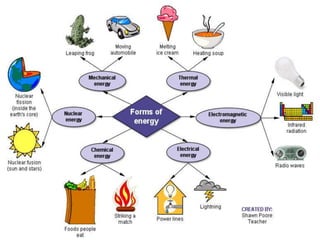
Forms of energy

Forms of energy

  • 1.
  • 5.
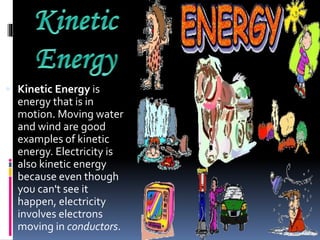
     Kinetic Energyis energy that is in motion. Moving water and wind are good examples of kinetic energy. Electricity is also kinetic energy because even though you can't see it happen, electricity involves electrons moving in conductors.
  • 7.
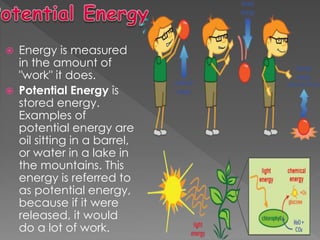
     Energy ismeasured in the amount of "work" it does.  Potential Energy is stored energy. Examples of potential energy are oil sitting in a barrel, or water in a lake in the mountains. This energy is referred to as potential energy, because if it were released, it would do a lot of work.
  • 8.
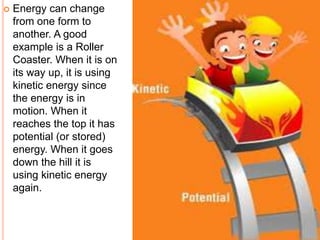
     Energy canchange from one form to another. A good example is a Roller Coaster. When it is on its way up, it is using kinetic energy since the energy is in motion. When it reaches the top it has potential (or stored) energy. When it goes down the hill it is using kinetic energy again.
  • 10.
     There areother types of energy as well:  Mechanical Energy is the energy of motion that does the work. An example of mechanical energy is the wind as it turns a windmill.  Heat energy is energy that is pushed into motion by using heat. An example is a fire in your fireplace.  Chemical Energy is energy caused by chemical reactions. A good example of chemical energy is food when it is cooked.  Electrical Energy is when electricity creates motion, light or heat. An example of electrical energy is the electric coils on your stove.  Gravitational Energy is motion that is caused by gravity. An example of gravitational energy is water flowing down a waterfall.
  • 11.
     Kinetic (≥0),that of the motion of a body  Potential A category comprising many forms in this list  Mechanical The sum of (usually macroscopic) kinetic and potential energies  Mechanical wave (≥0), a form of mechanical energy propagated by a material's oscillations  Chemical that contained in molecules  Electric that from electric fields  Magnetic that from magnetic fields  Radiant (≥0), that of electromagnetic radiation including light
  • 12.
     Nuclear thatof binding nucleons to form the atomic nucleusonization that of binding an electron to its atom or molecule  Elastic that of deformation of a material (or its container) exhibiting a restorative force  Gravitational that from gravitational fields Intrinsic, the rest energy(≥0) that equivalent to an object's rest mass  Thermal A microscopic, disordered equivalent of mechanical energy  Heat an amount of thermal energy being transferred (in a given process) in the direction of decreasing temperature  Mechanical work an amount of energy being transferred in a given process due to displacement in the direction of an applied force
  • 14.
     Potential energiesare often measured as positive or negative depending on whether they are greater or less than the energy of a specified base state or configuration such as two interacting bodies being infinitely far apart. Wave energies (such as radiant or sound energy), kinetic energy, and rest energy are each greater than or equal to zero because they are measured in comparison to a base state of zero energy: "no wave", "no motion", and "no inertia", respectively.
  • 15.
     Mechanical energy (symbols EM or E) manifest in many forms, but can be broadly classified into potential energy (Ep, V, U or Φ) and kinetic energy (Ek or T). The term potential energy is a very general term, because it exists in all force fields, such as gravitation, electrostatic and magnetic fields. Potential energy refers to the energy any object gain due to its position in a force field.