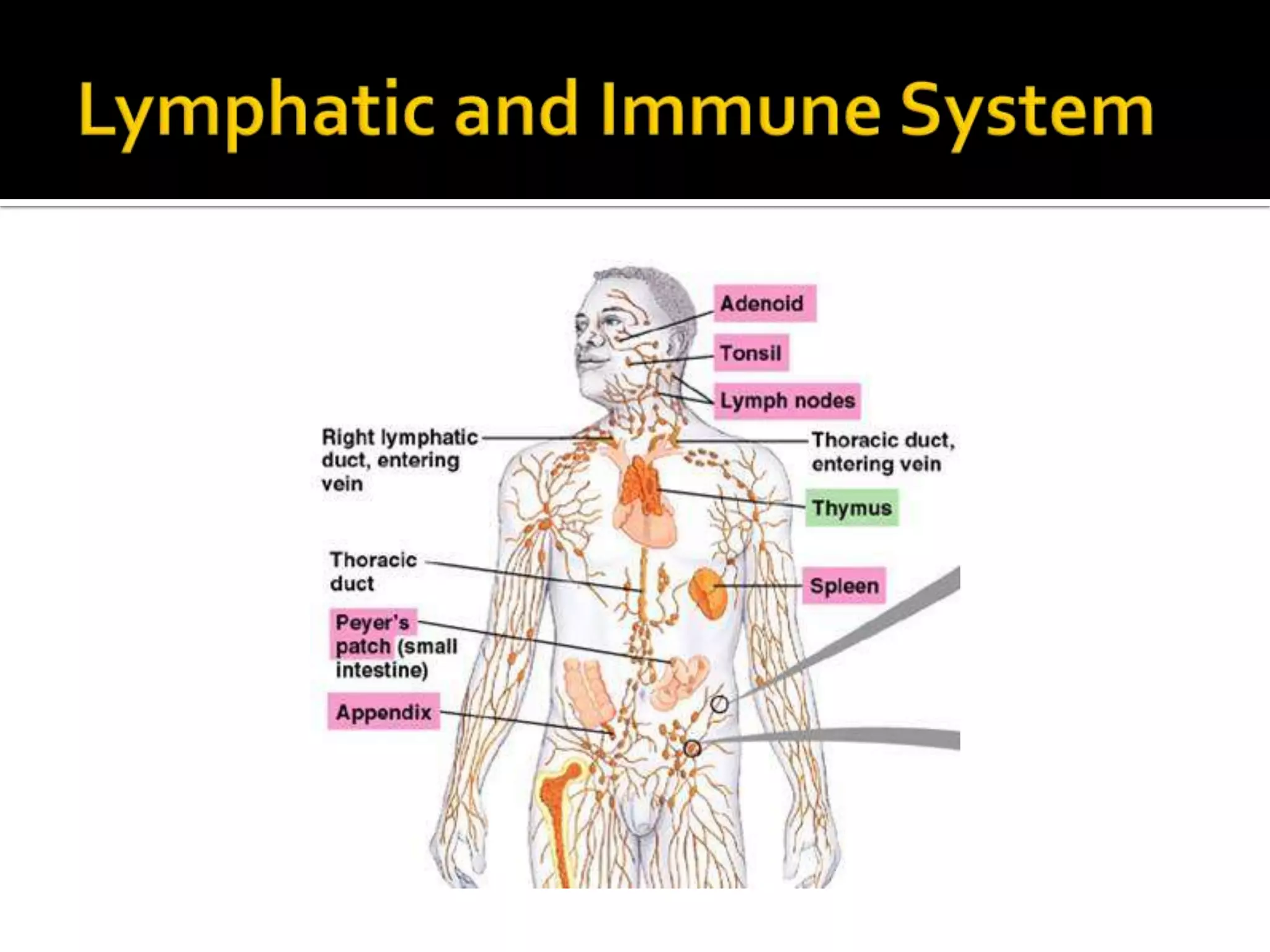
Lymphatic and Immune System
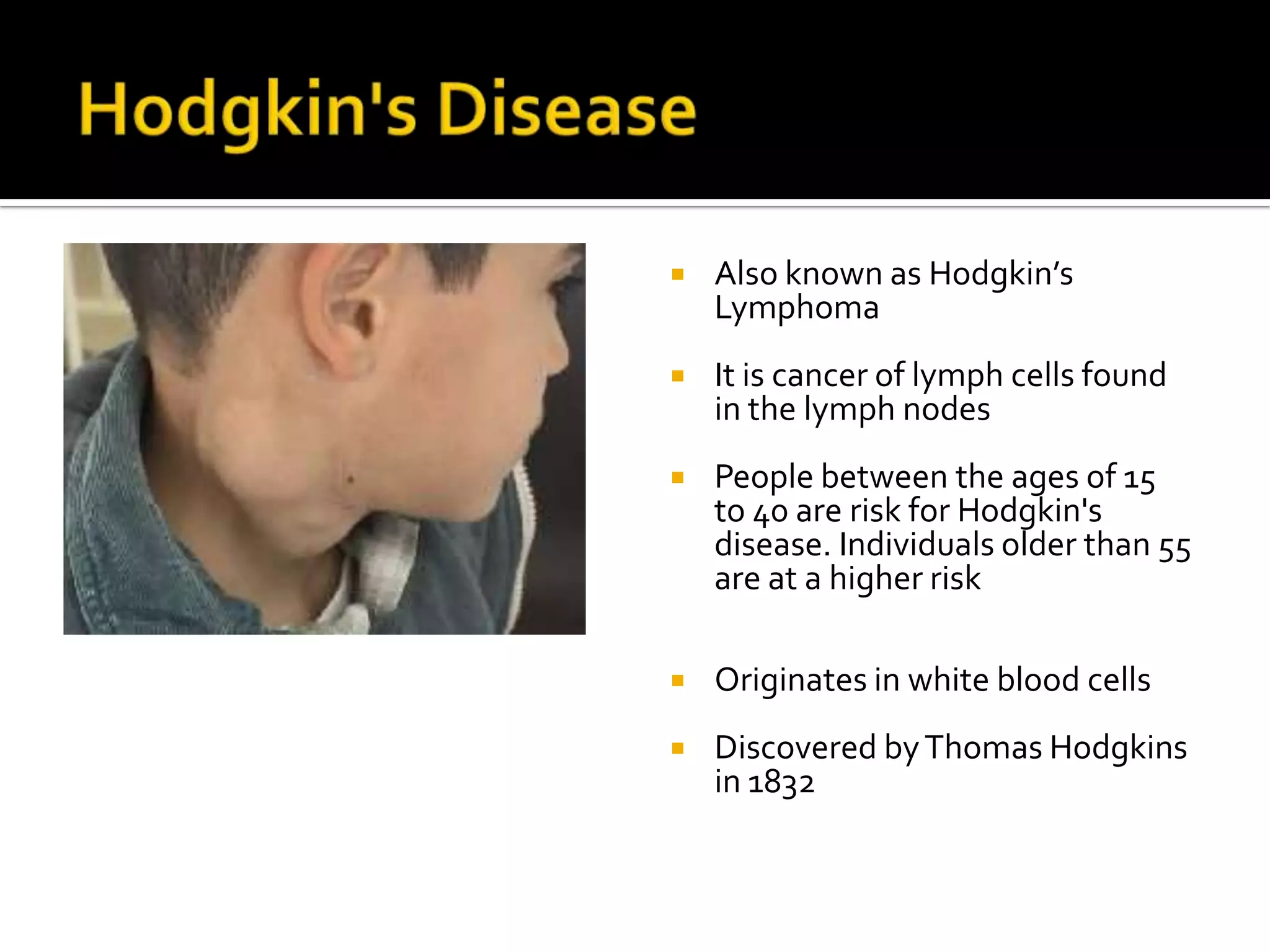
Hodgkin's Disease Also known as Hodgkin’s LymphomaIt is cancer of lymph cells found in the lymph nodes People between the ages of 15 to 40 are risk for Hodgkin's disease. Individuals older than 55 are at a higher risk Originates in white blood cellsDiscovered by Thomas Hodgkins in 1832
 Types of Hodgkin's Disease Non Hodgkin's DiseaseFar more common type of Hodgkin's DiseaseIt is characterized by swelling of the lymphatic tissues There is the classical Hodgkin's disease It is cancer of lymph cells found in the lymph nodes Has 4 subtypes Nodular sclerosing Hodgkin's lymphoma Mixed cellularity Hodgkin's lymphoma Lymphocyte depleted Hodgkin's lymphoma Lymphocyte-rich classical Hodgkin's lymphoma
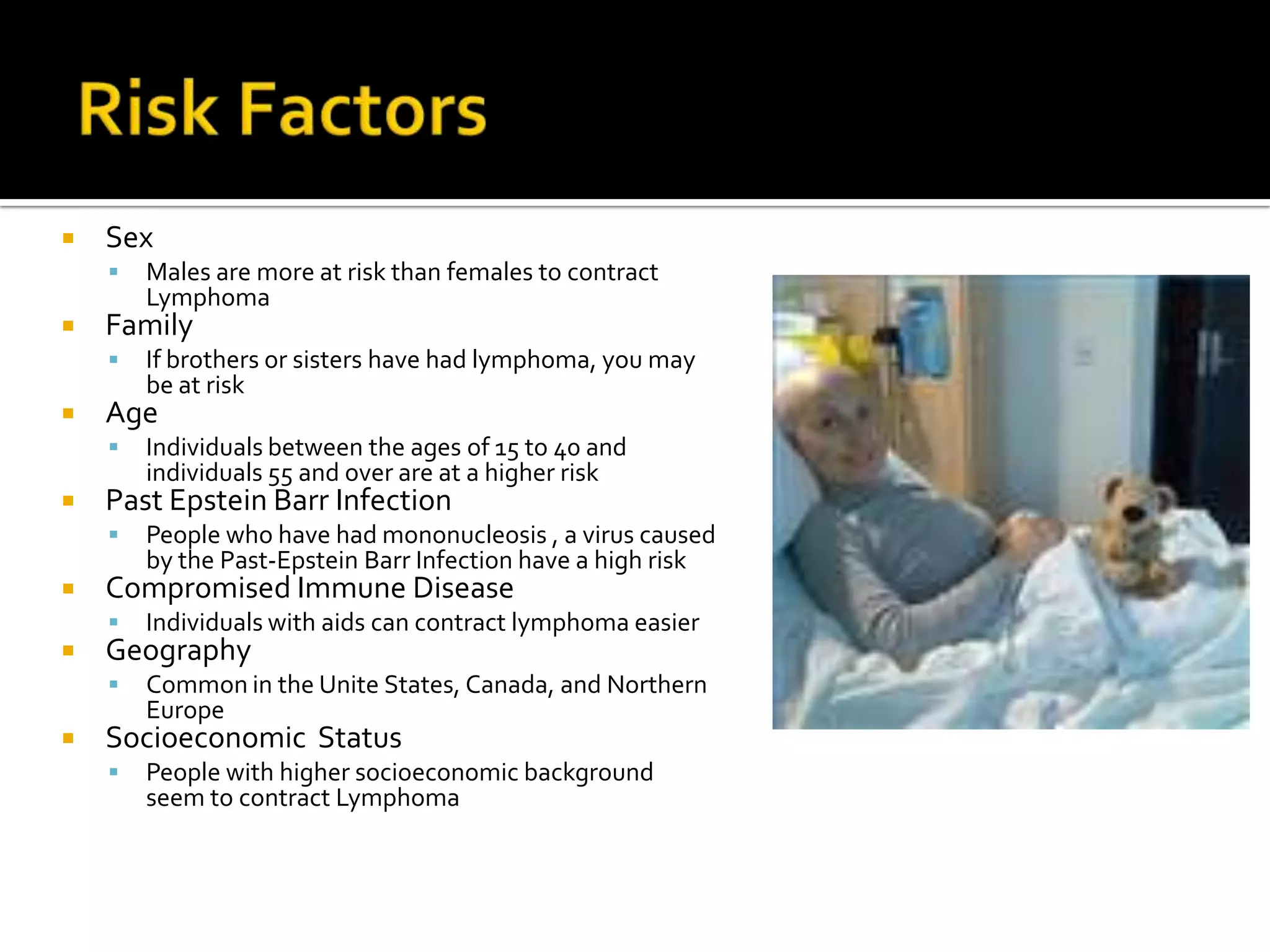
Risk Factors SexMales are more at risk than females to contract Lymphoma Family If brothers or sisters have had lymphoma, you may be at risk Age Individuals between the ages of 15 to 40 and individuals 55 and over are at a higher risk Past Epstein Barr Infection People who have had mononucleosis , a virus caused by the Past-Epstein Barr Infection have a high risk  Compromised Immune DiseaseIndividuals with aids can contract lymphoma easier  Geography Common in the Unite States, Canada, and Northern EuropeSocioeconomic  Status People with higher socioeconomic background seem to contract Lymphoma
Symptoms and Complications Symptoms Painless swelling of lymph nodes in your neck, armpits or groin Persistent fatigue Fever and chills Night sweats Unexplained weight loss — as much as 10 percent or more of your body weight Coughing, trouble breathing or chest painLoss of appetite Itching Increased sensitivity to the effects of alcohol or pain in your lymph nodes after drinking alcoholComplications Cardiovascular diseaseSecond malignancy, such as leukemia, non-Hodgkin's lymphoma and tumors in the lungs, breasts or gastrointestinal systemVascular disease, including strokeThyroid dysfunctionSterility
Treatment Patients can undergo either chemotherapy or radiation therapy Patients who are diagnosed earlier are either given radiation therapy or chemotherapy Patients in later stages are given only chemotherapy
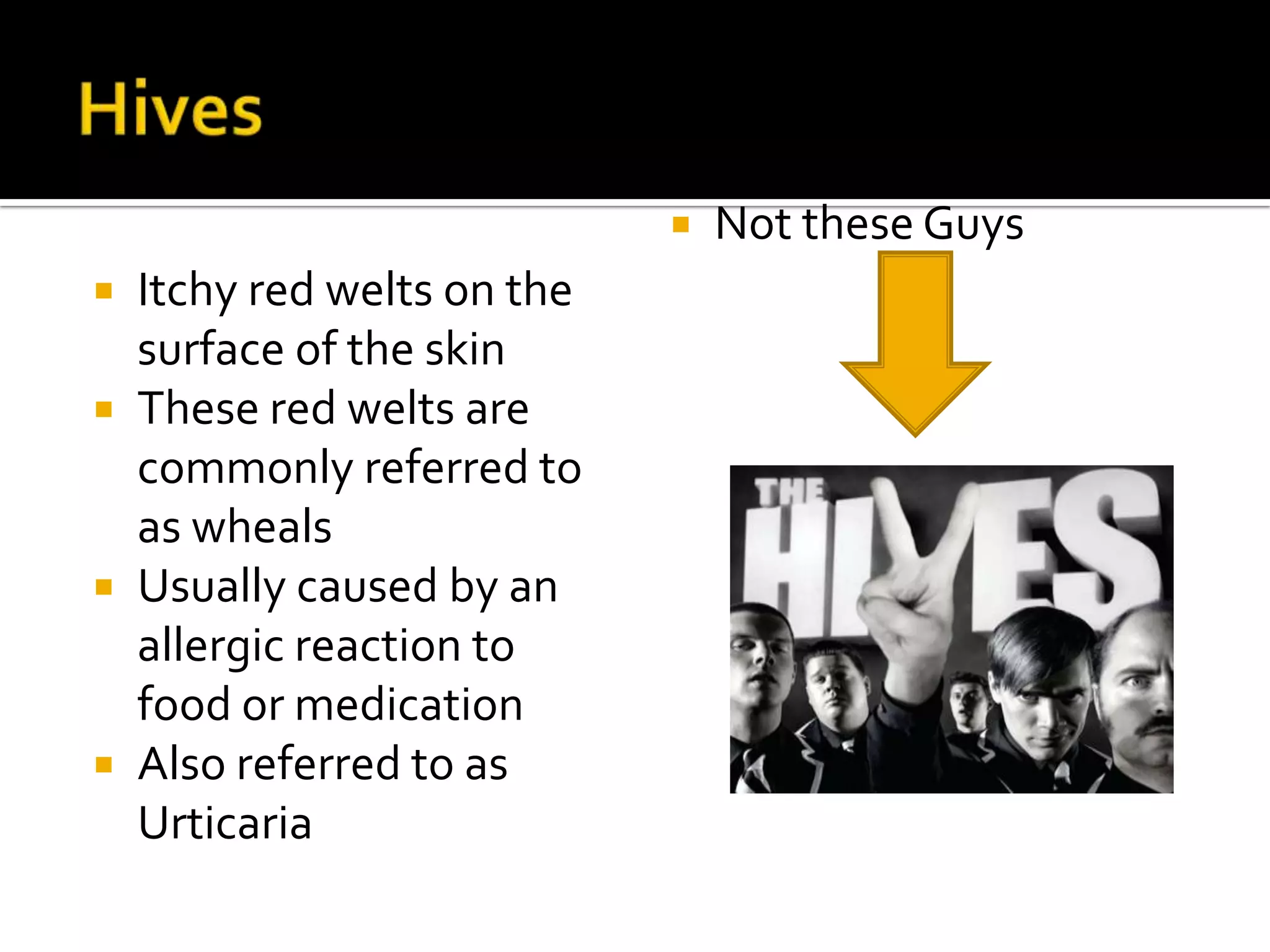
Hives Itchy red welts on the surface of the skinThese red welts are commonly referred to as whealsUsually caused by an allergic reaction to food or medication Also referred to as Urticaria  Not these Guys
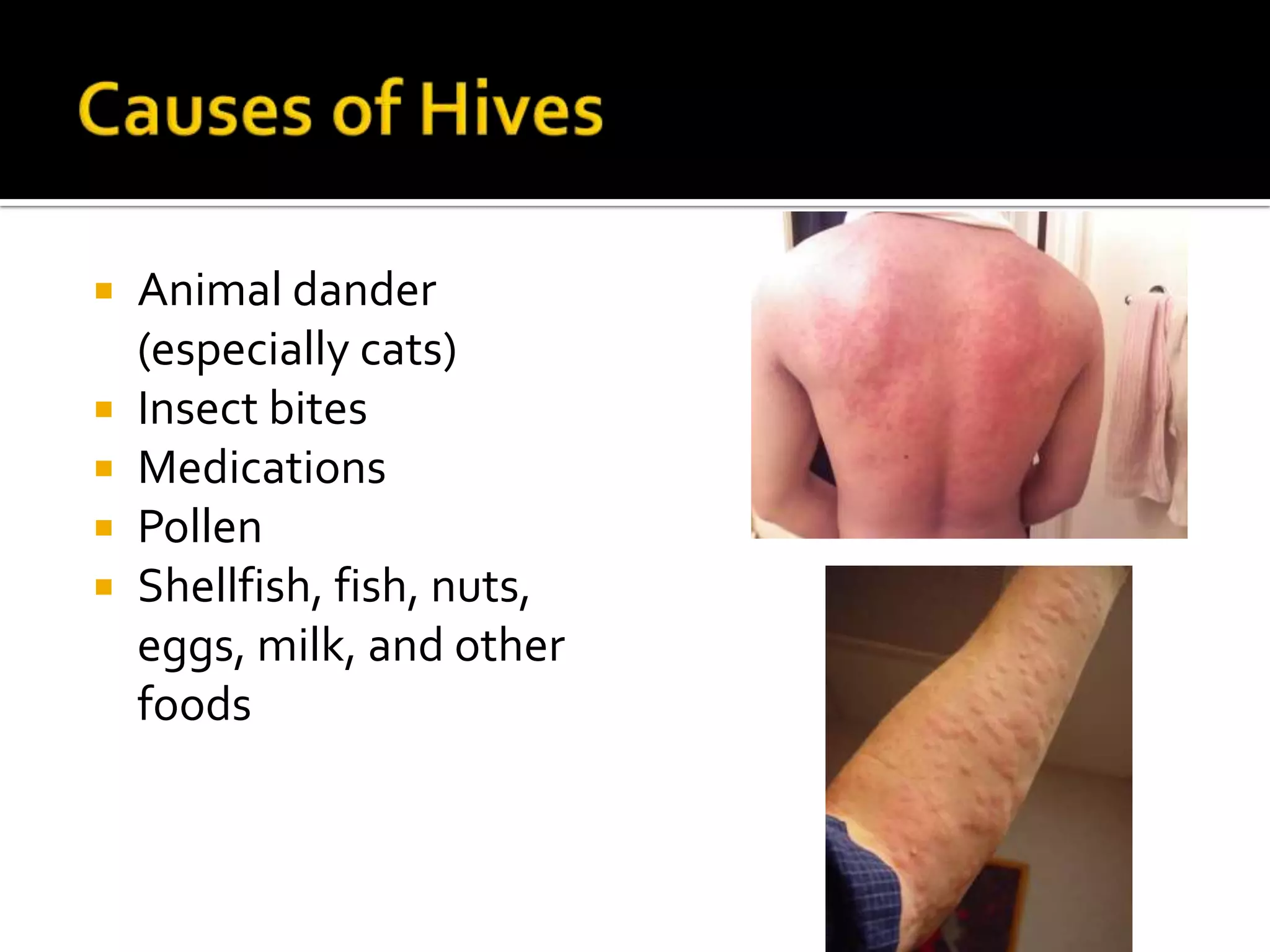
Different types of Hives Chronic urticaria and angioedemaThis type of hives last more than 6 weeksThe cause for this type of hives is sometimes unknown and hard to find Physical urticariaHives caused by direct stimulation to the skin Appear within an hour of exposure DermatographismHives that occur after firmly scratching
Causes of Hives Animal dander (especially cats)Insect bitesMedicationsPollenShellfish, fish, nuts, eggs, milk, and other foods
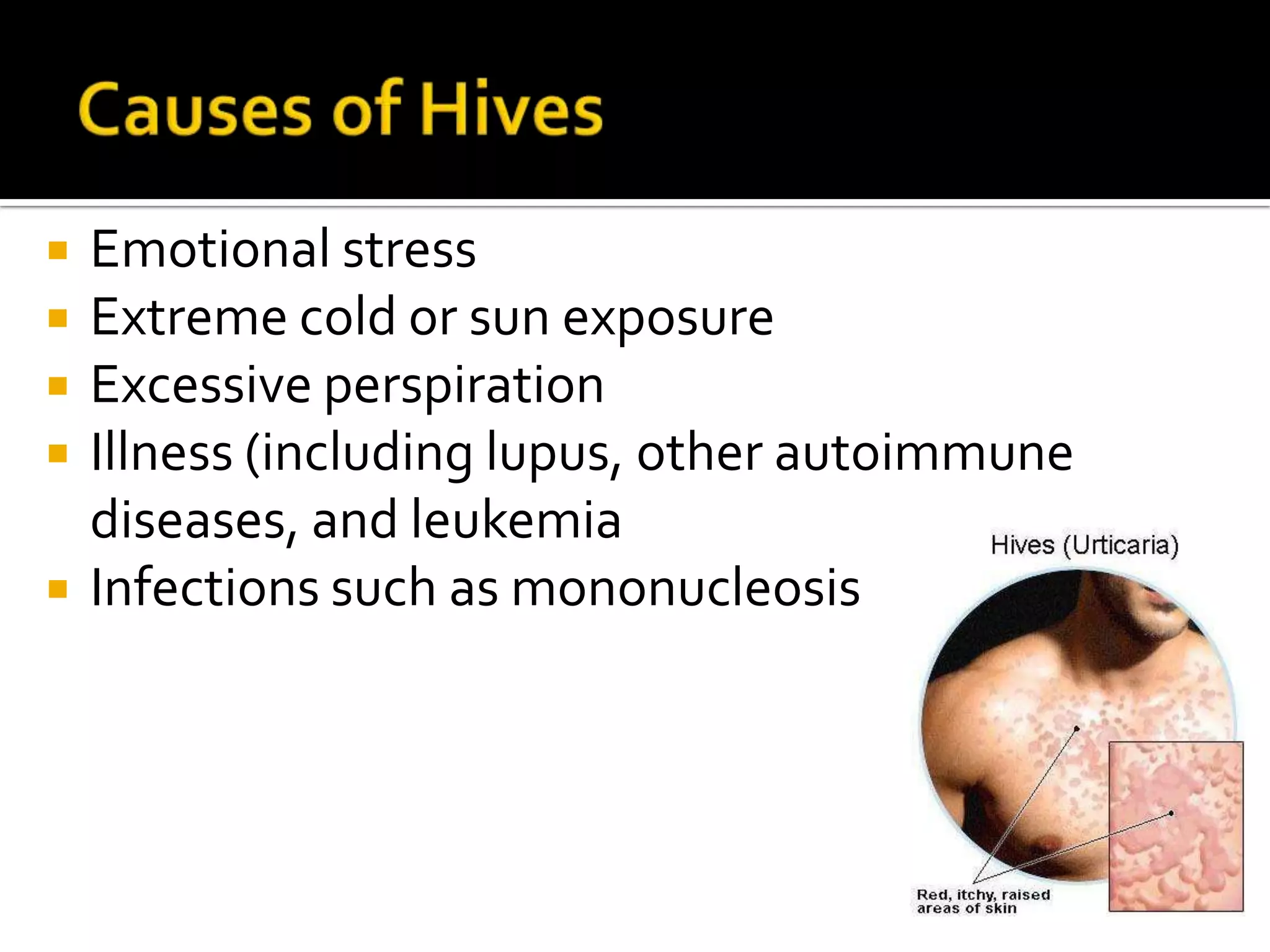
Causes of Hives Emotional stressExtreme cold or sun exposureExcessive perspirationIllness (including lupus, other autoimmune diseases, and leukemiaInfections such as mononucleosis
Complications and TreatmentComplications Hives can turn into AnaphylaxisAnaphylaxis is a whole body allergic reaction that causes difficulty breathing  Swelling in the throat can lead to trouble breathing Treatment It is recommended that patients avoid hot baths and showers Avoid tight wearing clothing  around infected area Antihistamines are given and Diphenhydramine is the most commonly administered
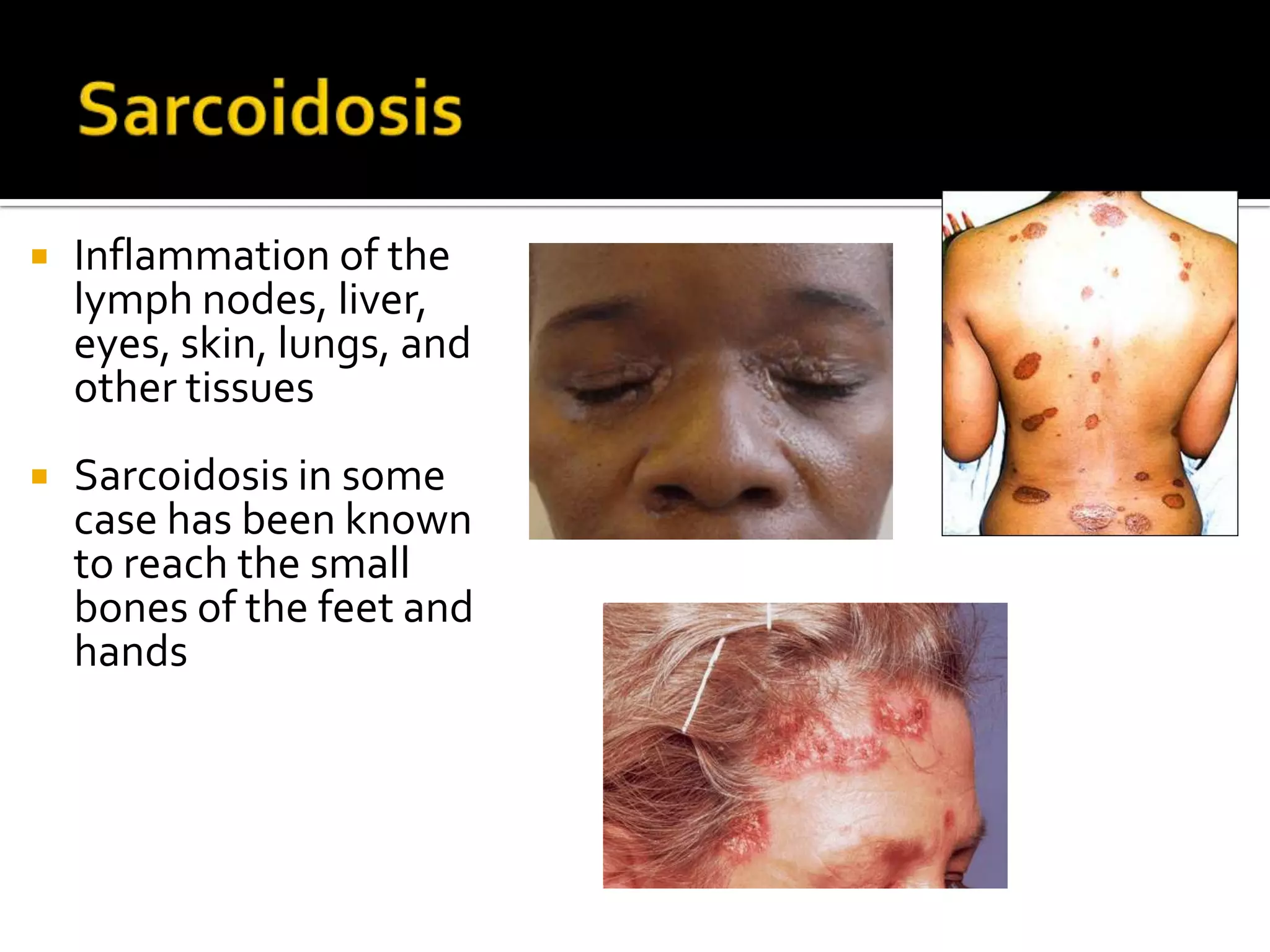
Sarcoidosis Inflammation of the lymph nodes, liver, eyes, skin, lungs, and other tissuesSarcoidosis in some case has been known to reach the small bones of the feet and hands
Causes of SarcoidosisCauses are unknown Clumps usually form in certain parts of the body Sarcoidosis can basically attack any organ but usually infects the lungs Some causes for Sarcoidosis have been suggested Genetics Extreme immune response to infection Sensitivity to certain environmental factors
Symptoms Lung and Chest Dry coughShortness of breathUneasiness behind your breast boneAbnormal breath sounds Skin Symptoms Skin rashesOld scars become more visible Visible, red, firm skin sores, almost always on the front part of the lower legsSkin lesionsHair loss
Symptoms Nervous system HeadacheSeizuresWeakness or paralysis (palsy) on one side of the faceEye burning, itching, and dischargeDecreased tearingOther Symptoms   Enlarged lymph glands (armpit lump)Enlarged liverEnlarged spleenDry mouthNosebleed
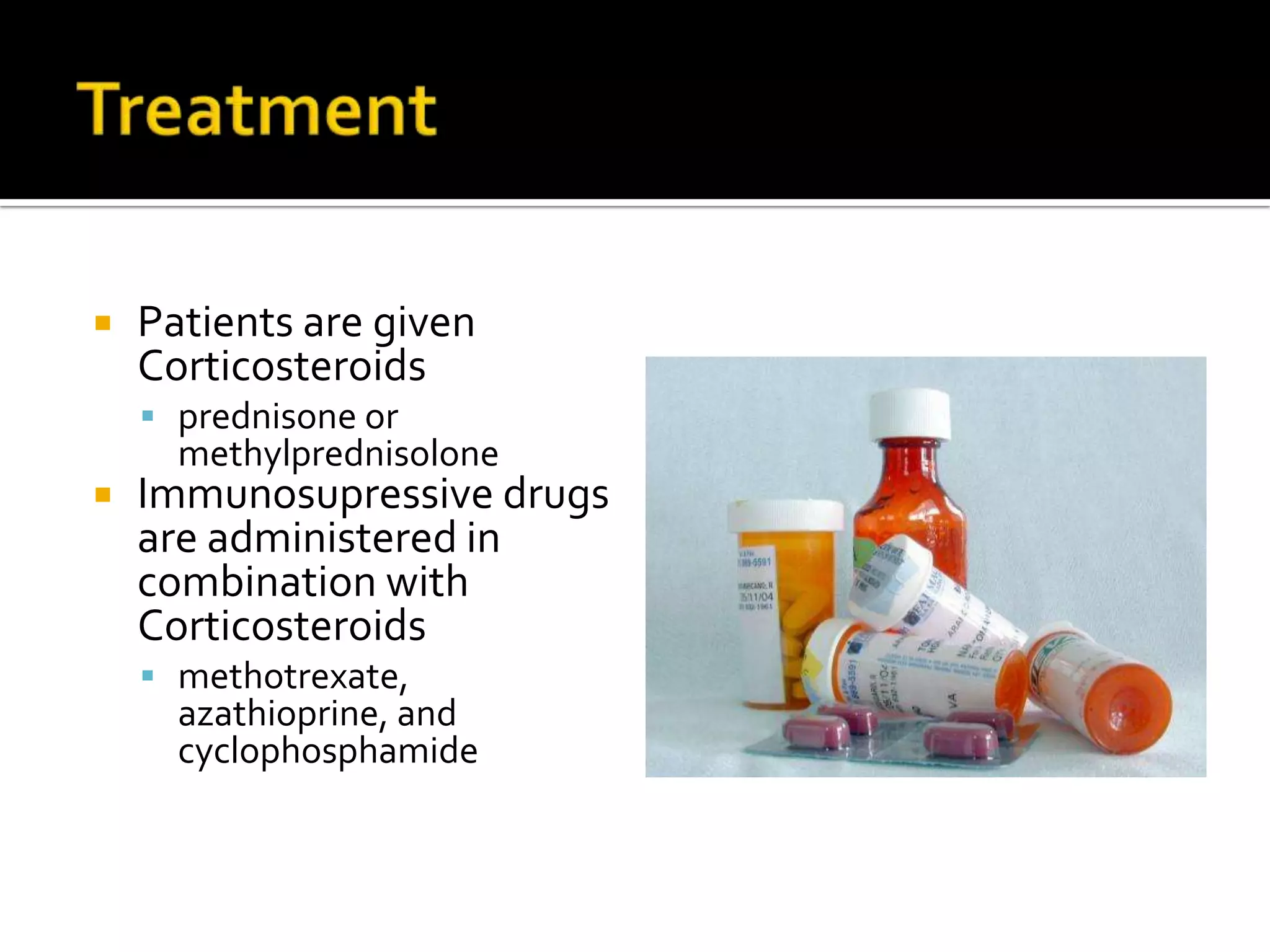
Treatment Patients are given Corticosteroids prednisone or methylprednisoloneImmunosupressive drugs are administered in combination with Corticosteroids methotrexate, azathioprine, and cyclophosphamide
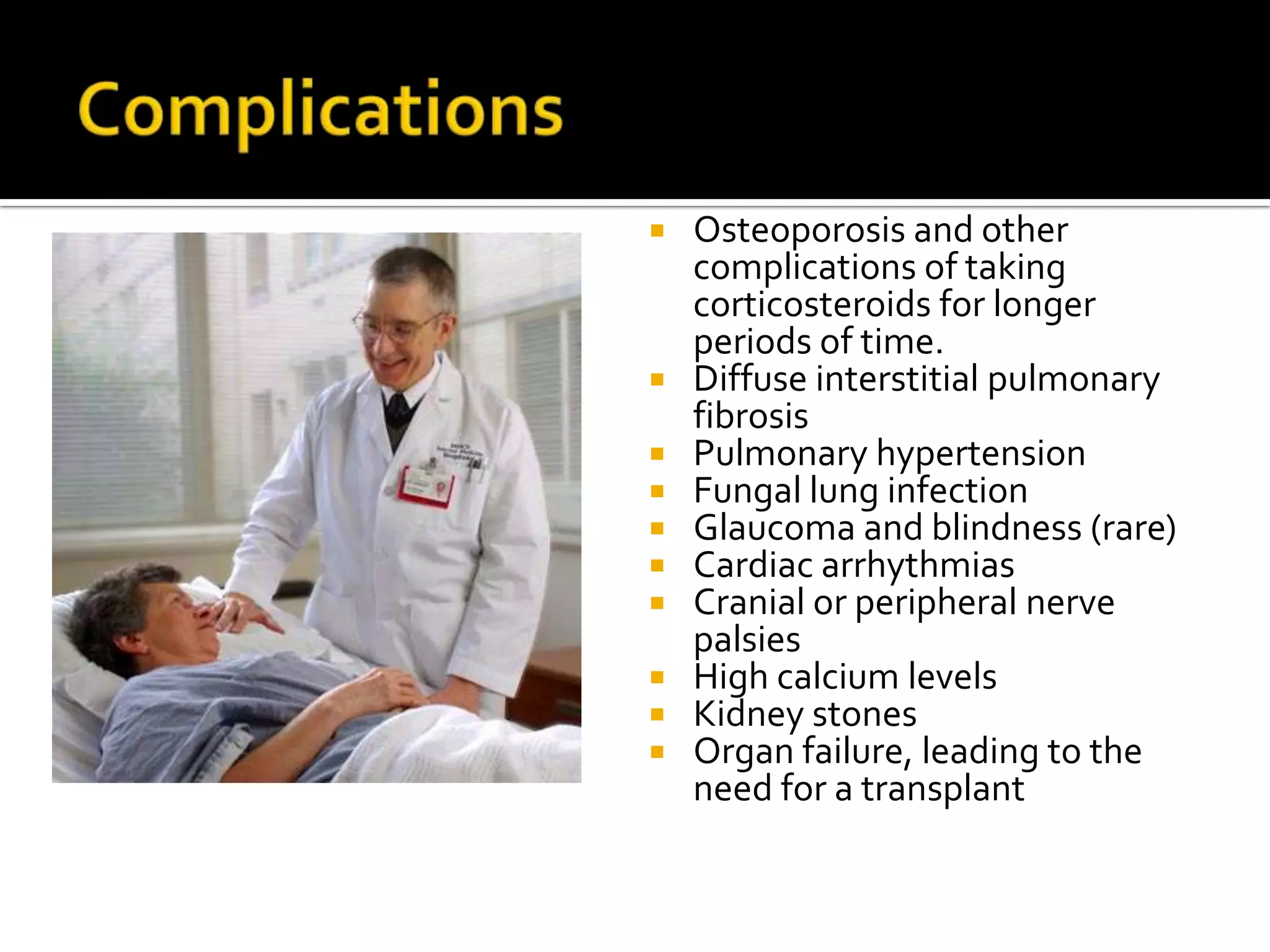
Complications Osteoporosis and other complications of taking corticosteroids for longer periods of time.Diffuse interstitial pulmonary fibrosisPulmonary hypertensionFungal lung infectionGlaucoma and blindness (rare)Cardiac arrhythmiasCranial or peripheral nerve palsiesHigh calcium levels Kidney stonesOrgan failure, leading to the need for a transplant

Lymphatic and immune system

  • 1.
  • 2.
    Hodgkin's Disease Alsoknown as Hodgkin’s LymphomaIt is cancer of lymph cells found in the lymph nodes People between the ages of 15 to 40 are risk for Hodgkin's disease. Individuals older than 55 are at a higher risk Originates in white blood cellsDiscovered by Thomas Hodgkins in 1832
  • 3.
    Types ofHodgkin's Disease Non Hodgkin's DiseaseFar more common type of Hodgkin's DiseaseIt is characterized by swelling of the lymphatic tissues There is the classical Hodgkin's disease It is cancer of lymph cells found in the lymph nodes Has 4 subtypes Nodular sclerosing Hodgkin's lymphoma Mixed cellularity Hodgkin's lymphoma Lymphocyte depleted Hodgkin's lymphoma Lymphocyte-rich classical Hodgkin's lymphoma
  • 4.
    Risk Factors SexMalesare more at risk than females to contract Lymphoma Family If brothers or sisters have had lymphoma, you may be at risk Age Individuals between the ages of 15 to 40 and individuals 55 and over are at a higher risk Past Epstein Barr Infection People who have had mononucleosis , a virus caused by the Past-Epstein Barr Infection have a high risk Compromised Immune DiseaseIndividuals with aids can contract lymphoma easier Geography Common in the Unite States, Canada, and Northern EuropeSocioeconomic Status People with higher socioeconomic background seem to contract Lymphoma
  • 5.
    Symptoms and ComplicationsSymptoms Painless swelling of lymph nodes in your neck, armpits or groin Persistent fatigue Fever and chills Night sweats Unexplained weight loss — as much as 10 percent or more of your body weight Coughing, trouble breathing or chest painLoss of appetite Itching Increased sensitivity to the effects of alcohol or pain in your lymph nodes after drinking alcoholComplications Cardiovascular diseaseSecond malignancy, such as leukemia, non-Hodgkin's lymphoma and tumors in the lungs, breasts or gastrointestinal systemVascular disease, including strokeThyroid dysfunctionSterility
  • 6.
    Treatment Patients canundergo either chemotherapy or radiation therapy Patients who are diagnosed earlier are either given radiation therapy or chemotherapy Patients in later stages are given only chemotherapy
  • 7.
    Hives Itchy redwelts on the surface of the skinThese red welts are commonly referred to as whealsUsually caused by an allergic reaction to food or medication Also referred to as Urticaria Not these Guys
  • 8.
    Different types ofHives Chronic urticaria and angioedemaThis type of hives last more than 6 weeksThe cause for this type of hives is sometimes unknown and hard to find Physical urticariaHives caused by direct stimulation to the skin Appear within an hour of exposure DermatographismHives that occur after firmly scratching
  • 9.
    Causes of HivesAnimal dander (especially cats)Insect bitesMedicationsPollenShellfish, fish, nuts, eggs, milk, and other foods
  • 10.
    Causes of HivesEmotional stressExtreme cold or sun exposureExcessive perspirationIllness (including lupus, other autoimmune diseases, and leukemiaInfections such as mononucleosis
  • 11.
    Complications and TreatmentComplicationsHives can turn into AnaphylaxisAnaphylaxis is a whole body allergic reaction that causes difficulty breathing Swelling in the throat can lead to trouble breathing Treatment It is recommended that patients avoid hot baths and showers Avoid tight wearing clothing around infected area Antihistamines are given and Diphenhydramine is the most commonly administered
  • 12.
    Sarcoidosis Inflammation ofthe lymph nodes, liver, eyes, skin, lungs, and other tissuesSarcoidosis in some case has been known to reach the small bones of the feet and hands
  • 13.
    Causes of SarcoidosisCausesare unknown Clumps usually form in certain parts of the body Sarcoidosis can basically attack any organ but usually infects the lungs Some causes for Sarcoidosis have been suggested Genetics Extreme immune response to infection Sensitivity to certain environmental factors
  • 14.
    Symptoms Lung andChest Dry coughShortness of breathUneasiness behind your breast boneAbnormal breath sounds Skin Symptoms Skin rashesOld scars become more visible Visible, red, firm skin sores, almost always on the front part of the lower legsSkin lesionsHair loss
  • 15.
    Symptoms Nervous systemHeadacheSeizuresWeakness or paralysis (palsy) on one side of the faceEye burning, itching, and dischargeDecreased tearingOther Symptoms Enlarged lymph glands (armpit lump)Enlarged liverEnlarged spleenDry mouthNosebleed
  • 16.
    Treatment Patients aregiven Corticosteroids prednisone or methylprednisoloneImmunosupressive drugs are administered in combination with Corticosteroids methotrexate, azathioprine, and cyclophosphamide
  • 17.
    Complications Osteoporosis andother complications of taking corticosteroids for longer periods of time.Diffuse interstitial pulmonary fibrosisPulmonary hypertensionFungal lung infectionGlaucoma and blindness (rare)Cardiac arrhythmiasCranial or peripheral nerve palsiesHigh calcium levels Kidney stonesOrgan failure, leading to the need for a transplant