Smart Cities Software:
Customized Messages for
Mobile Subscribers
Manfred Sneps-Sneppe Ventspils University College
manfreds.sneps@gmail.com
Dmitry Namiot Lomonosov Moscow State University
dnamiot@gmail.com
WIFLEX 2013
• A new model for local area messaging based on
the network proximity.
• Our mobile mashup combines Wi-Fi proximity
measurements with Cloud Messaging.
• Passive Wi-Fi monitoring can determine the
location of mobile subscribers (mobile phones)
without the active participation of mobile users.
• Cloud Messaging delivers notifications to local
subscribers
About
Contents
Introduction
Passive Wi-Fi monitoring
Cloud Messaging
Local area messaging mashup
Conclusion
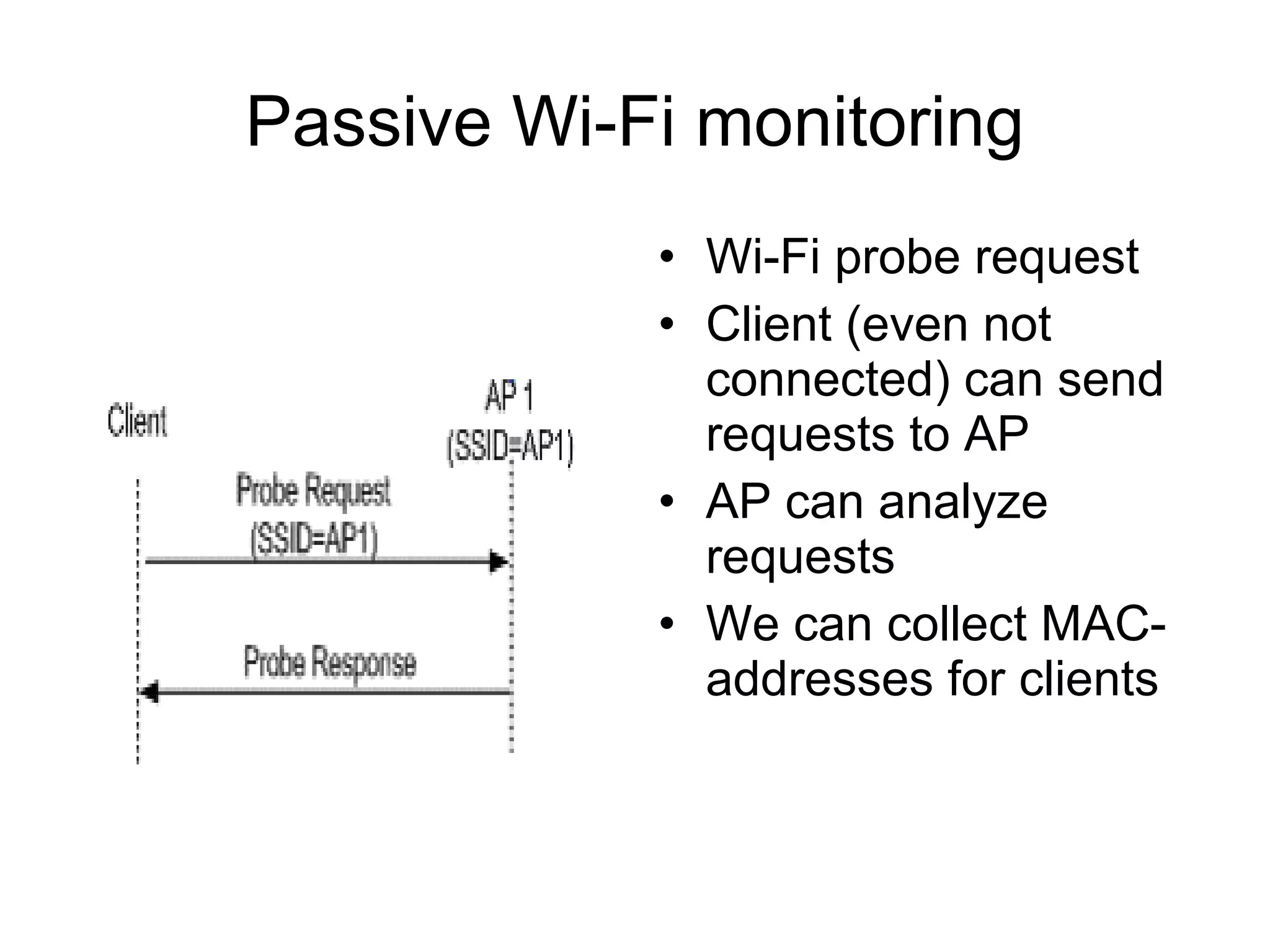
Passive Wi-Fi monitoring
• Wi-Fi probe request
• Client (even not
connected) can send
requests to AP
• AP can analyze
requests
• We can collect MAC-
addresses for clients
Advantages and disadvantages
for passive monitoring
• It does not require special mobile applications
• For mobile users it works automatically and
transparently
• It is anonymous monitoring. MAC address is
used for re-identification only. It could be
replaced with some hash-code (privacy)
• It is not 100% reliable. There is no warranty
that Wi-Fi client will send probe request. Our
own experiments and references show 70%-80%
detection rate.
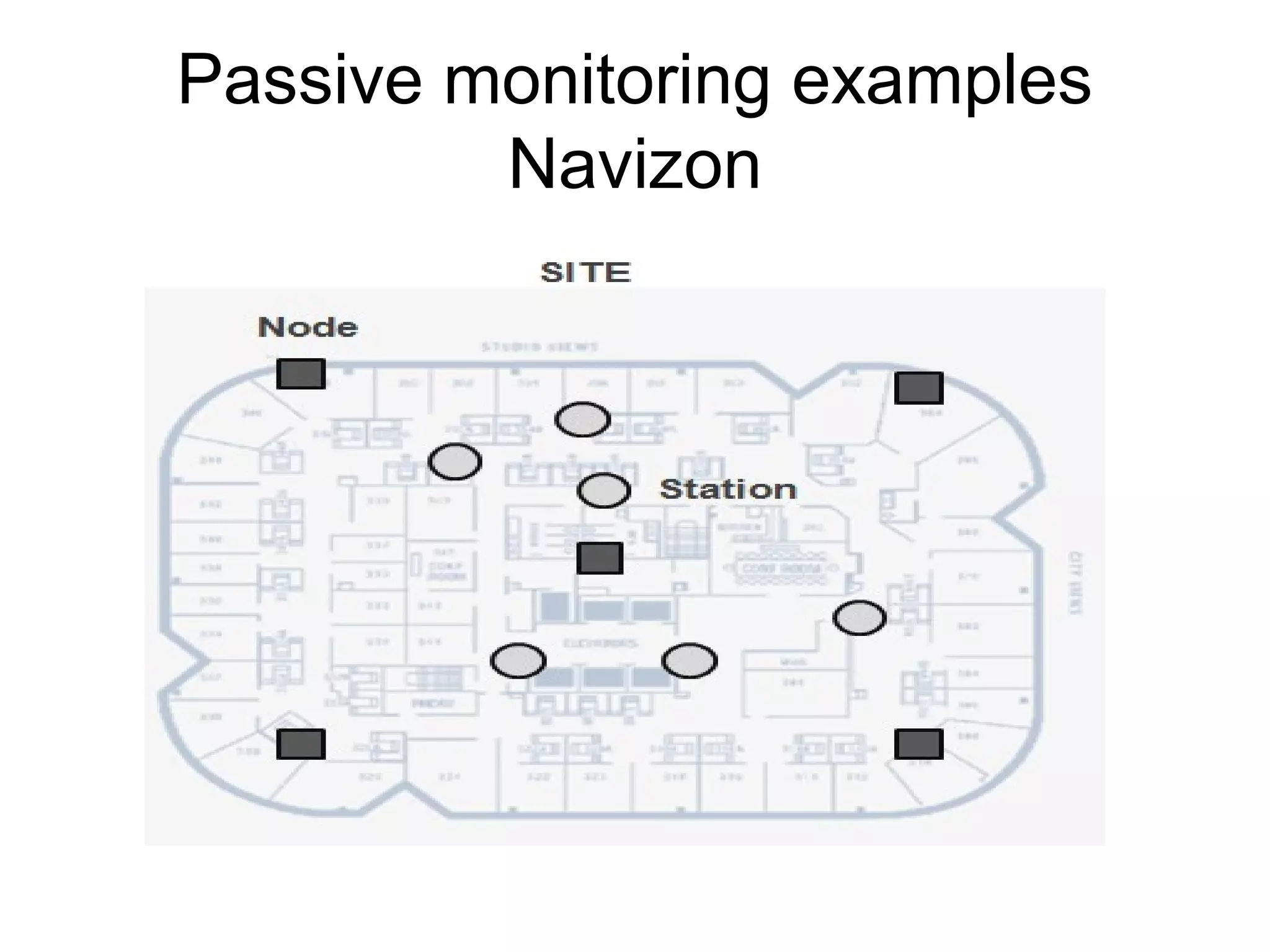
Passive monitoring examples
Navizon
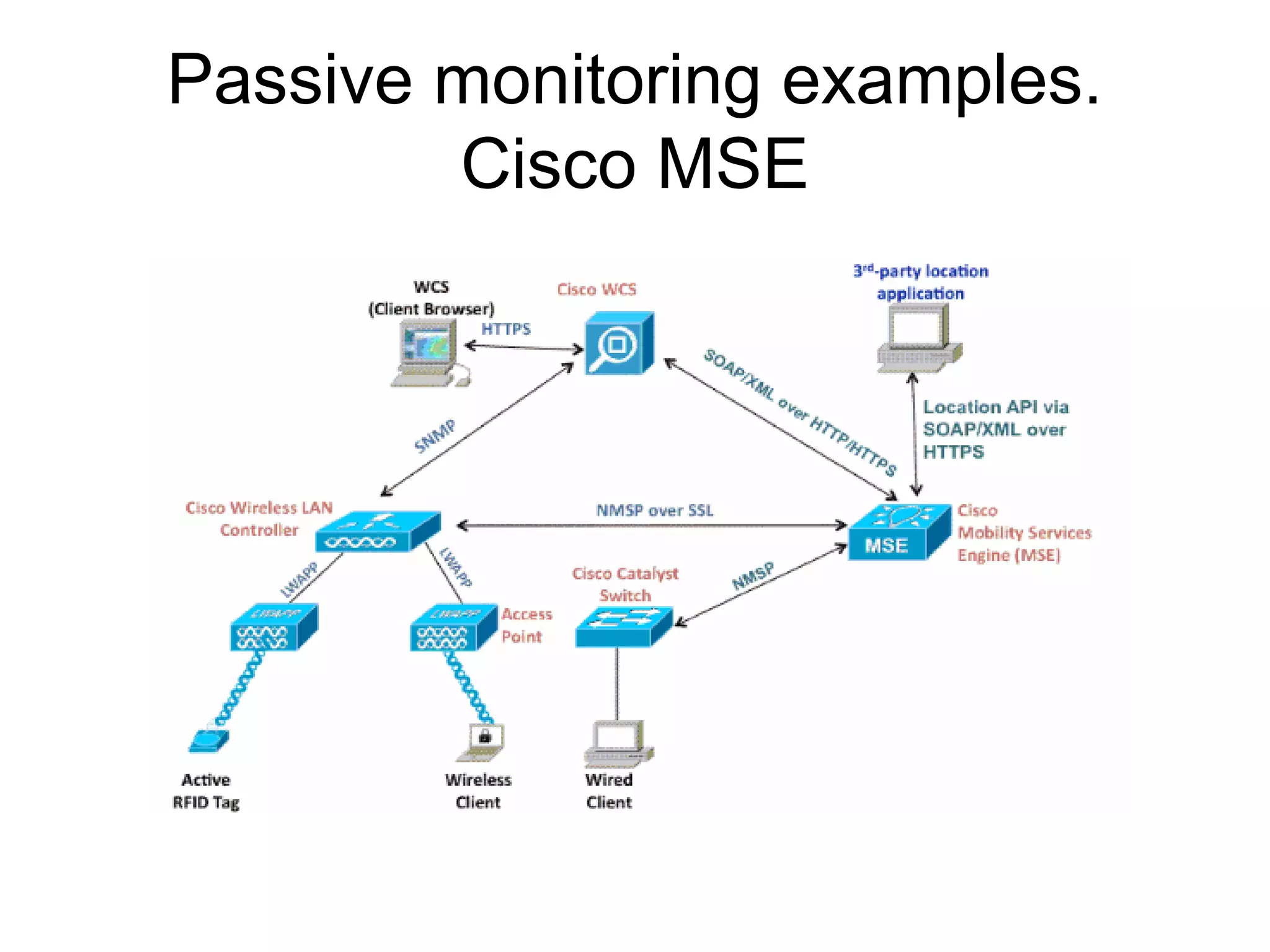
Passive monitoring examples.
Cisco MSE
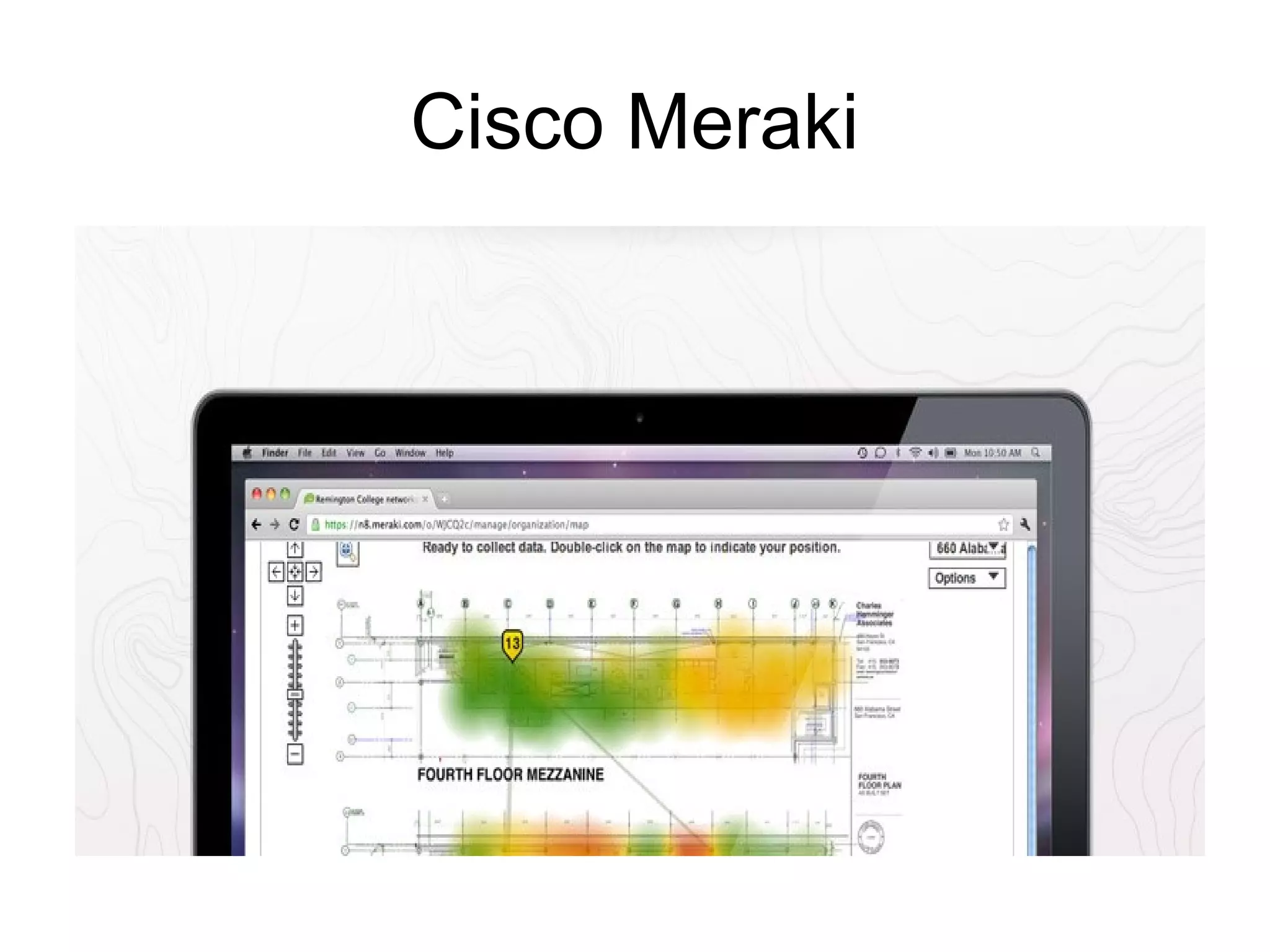
Cisco Meraki
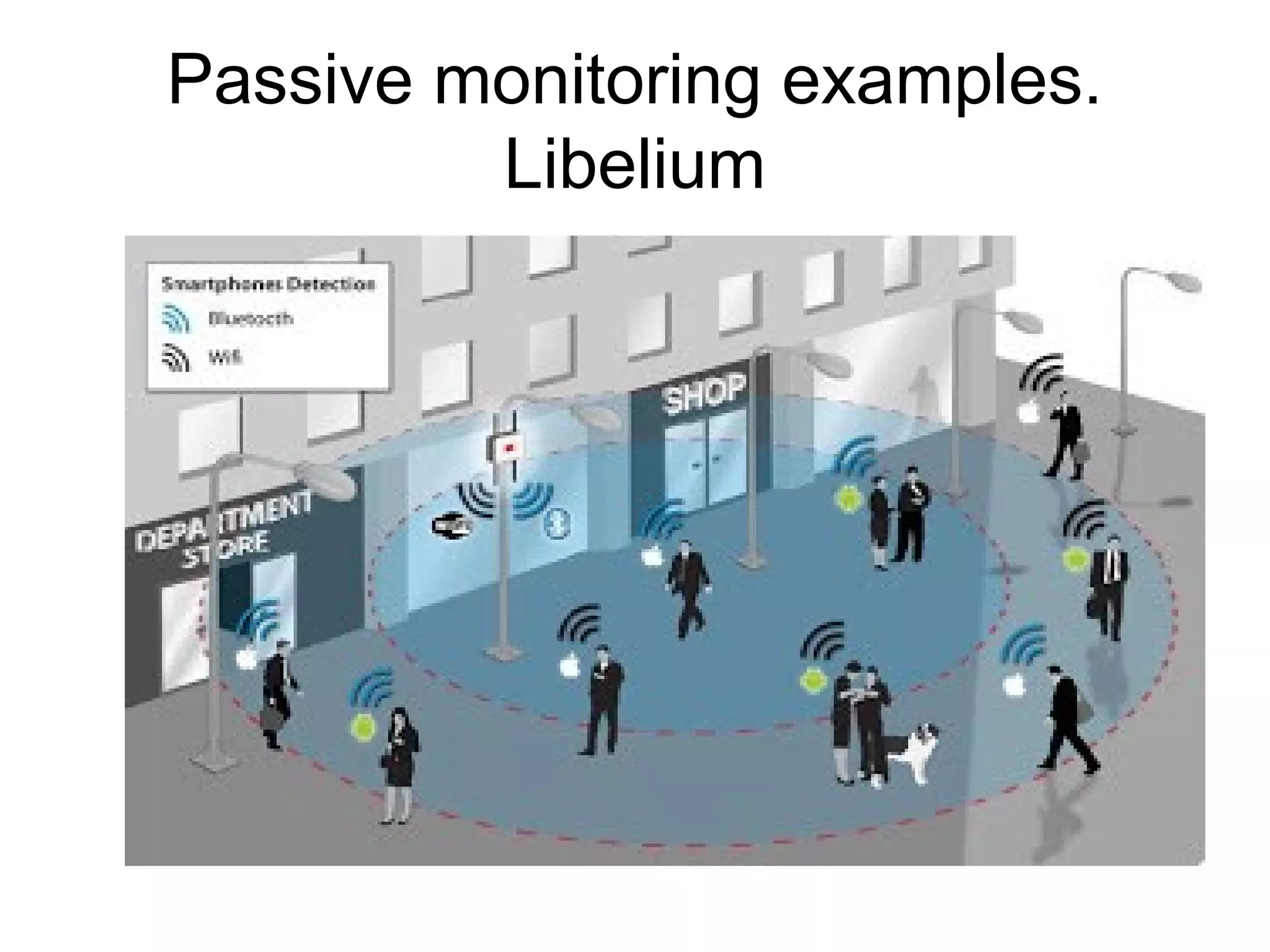
Passive monitoring examples.
Libelium
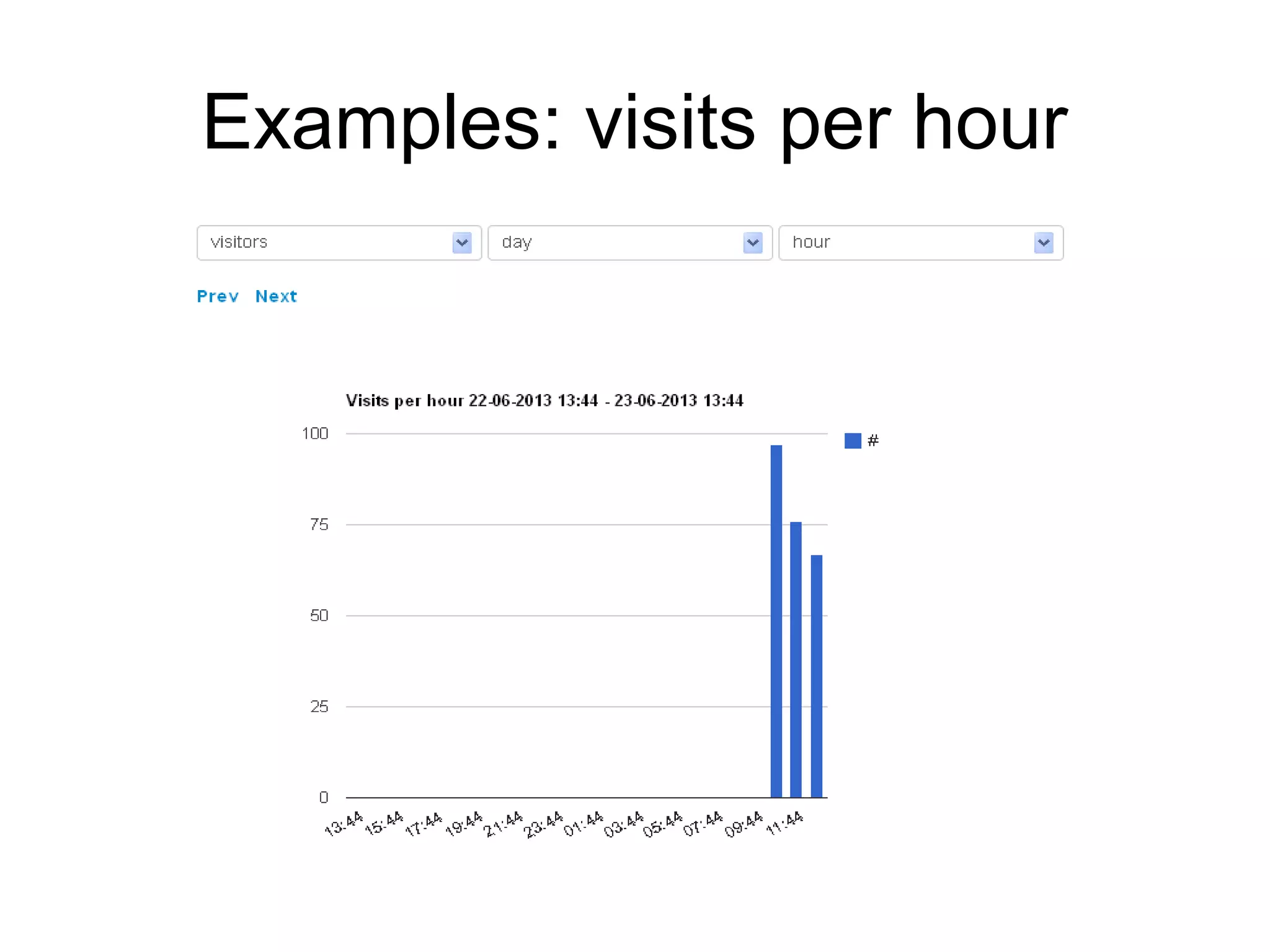
Examples: visits per hour
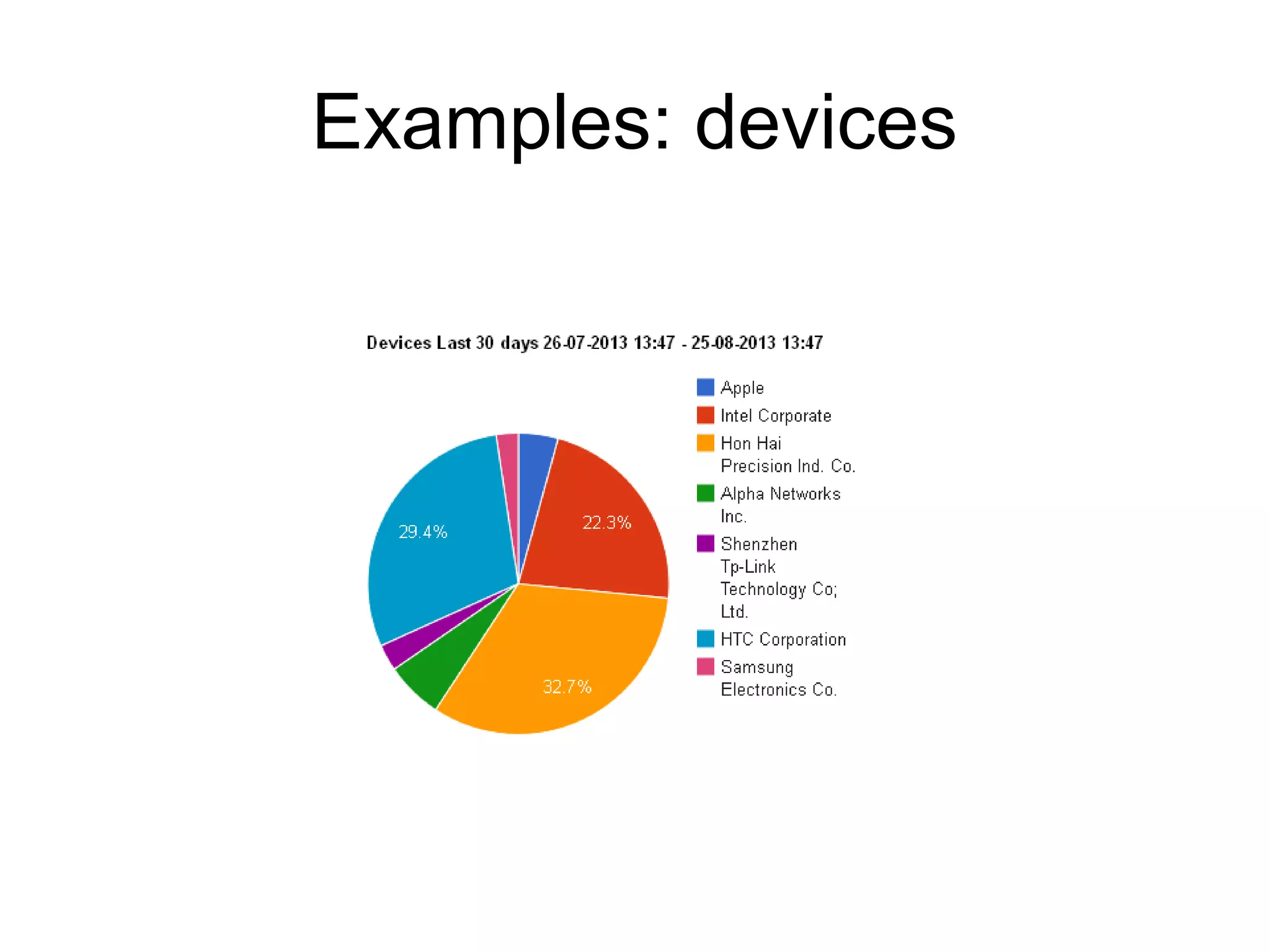
Examples: devices
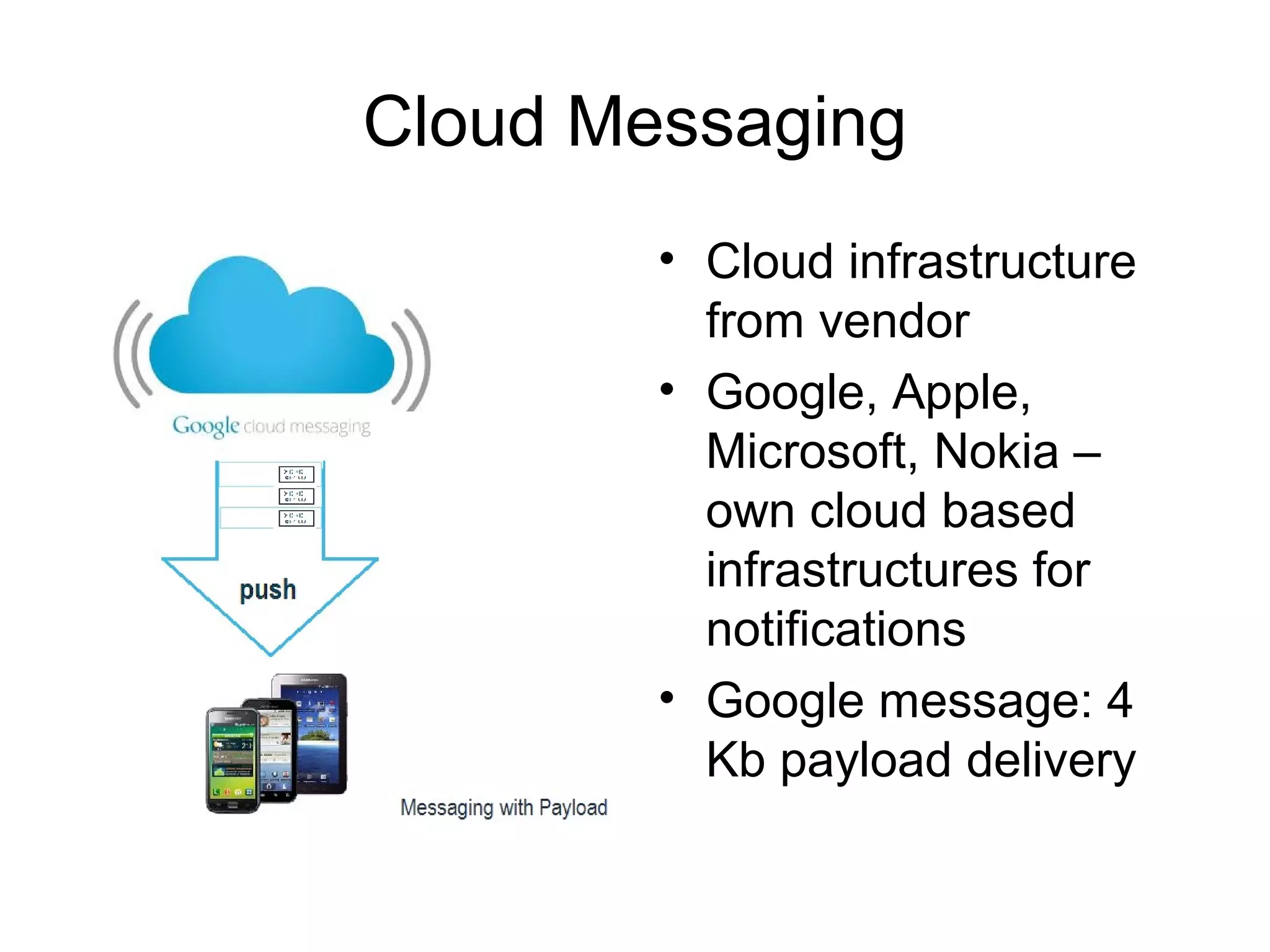
Cloud Messaging
• Cloud infrastructure
from vendor
• Google, Apple,
Microsoft, Nokia –
own cloud based
infrastructures for
notifications
• Google message: 4
Kb payload delivery
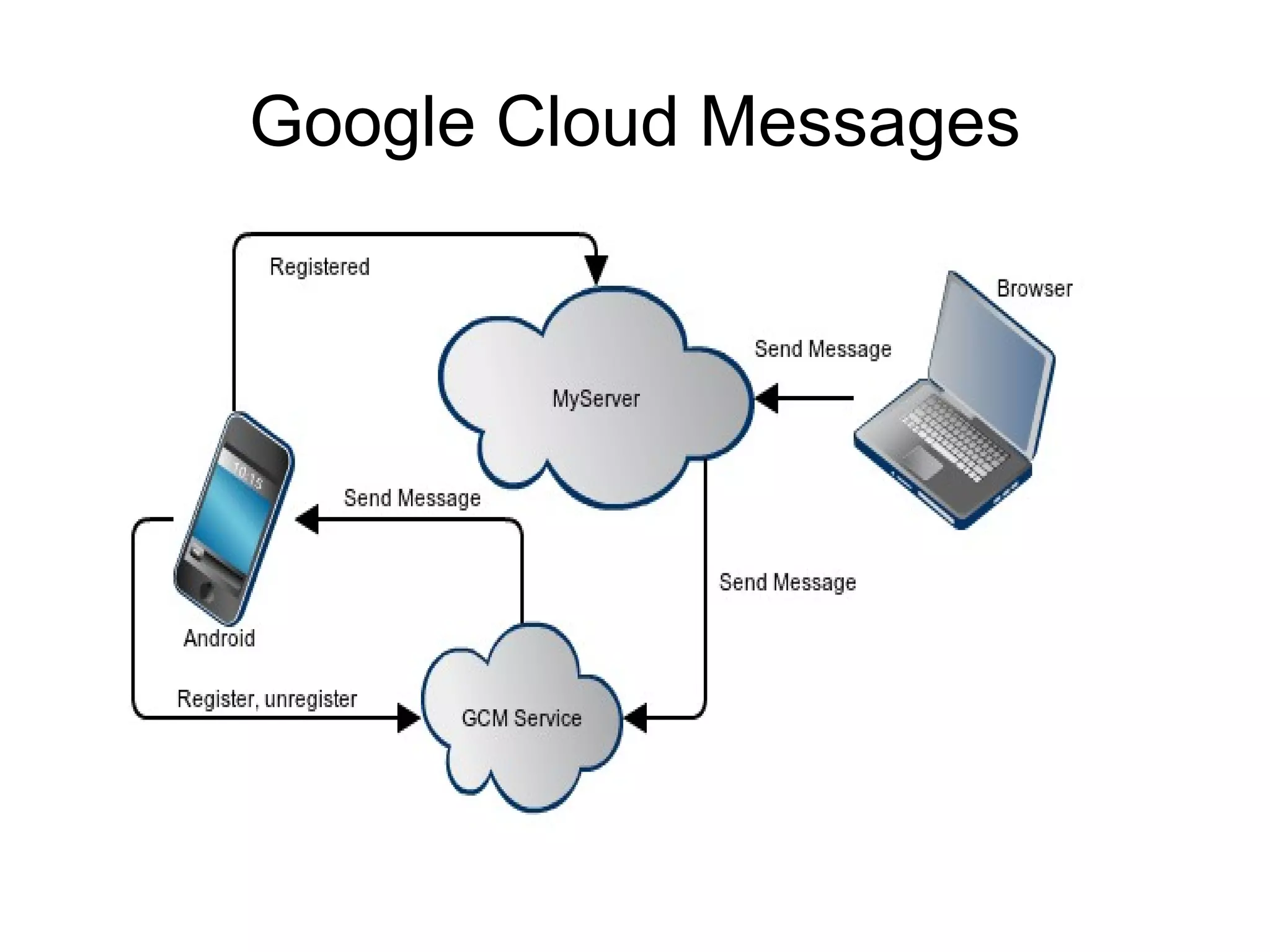
Google Cloud Messages
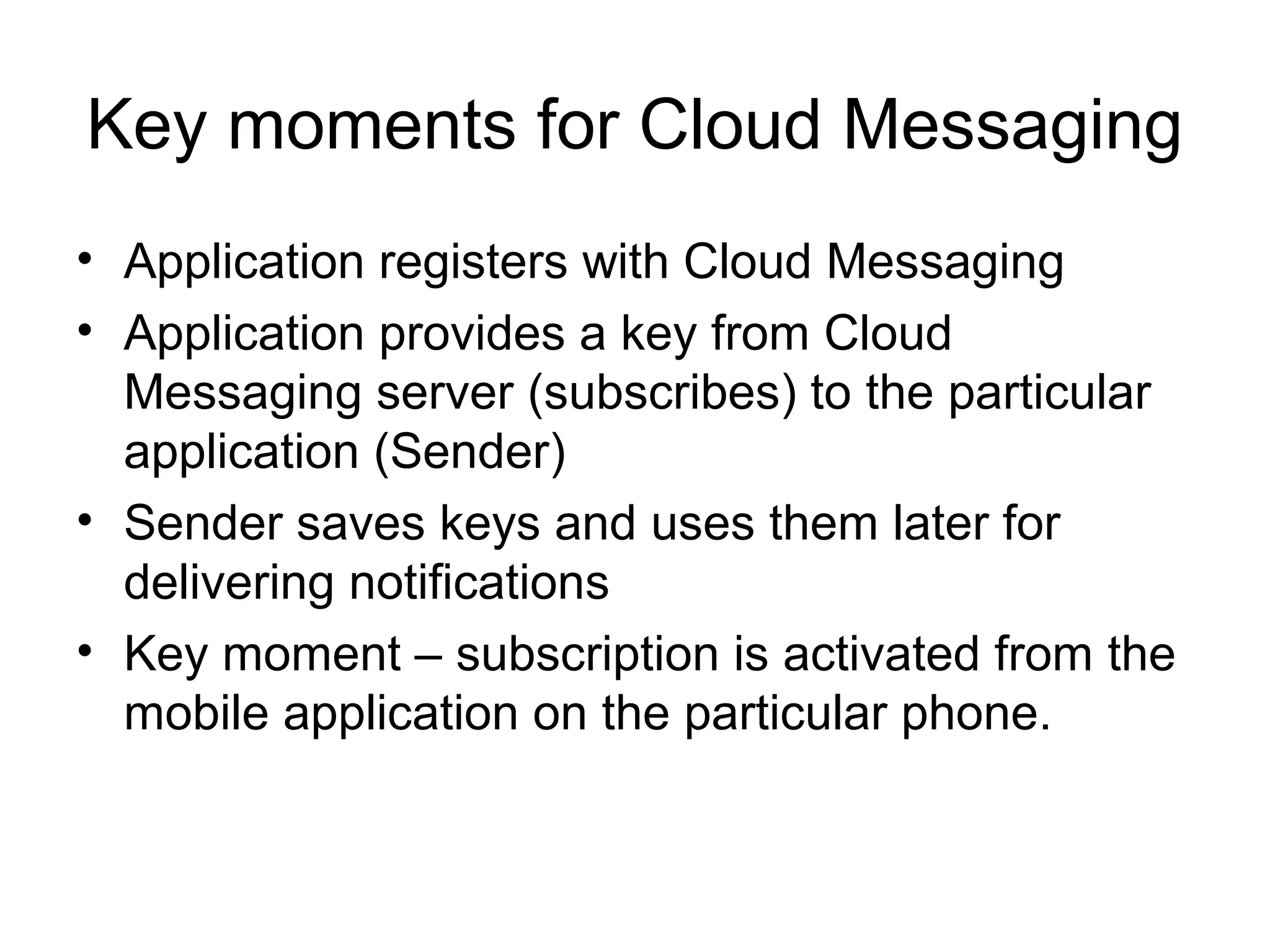
Key moments for Cloud Messaging
• Application registers with Cloud Messaging
• Application provides a key from Cloud
Messaging server (subscribes) to the particular
application (Sender)
• Sender saves keys and uses them later for
delivering notifications
• Key moment – subscription is activated from the
mobile application on the particular phone.
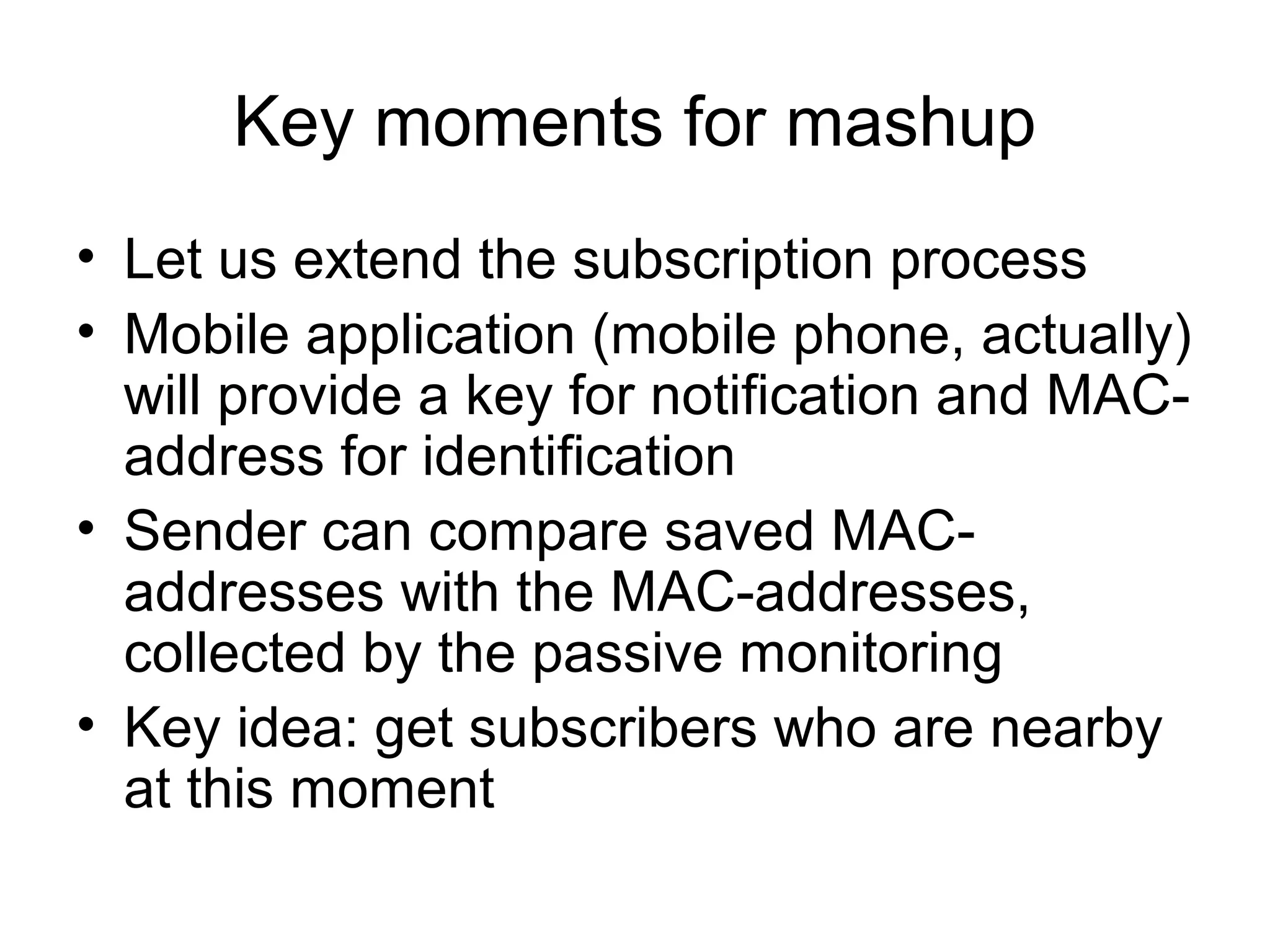
Key moments for mashup
• Let us extend the subscription process
• Mobile application (mobile phone, actually)
will provide a key for notification and MAC-
address for identification
• Sender can compare saved MAC-
addresses with the MAC-addresses,
collected by the passive monitoring
• Key idea: get subscribers who are nearby
at this moment
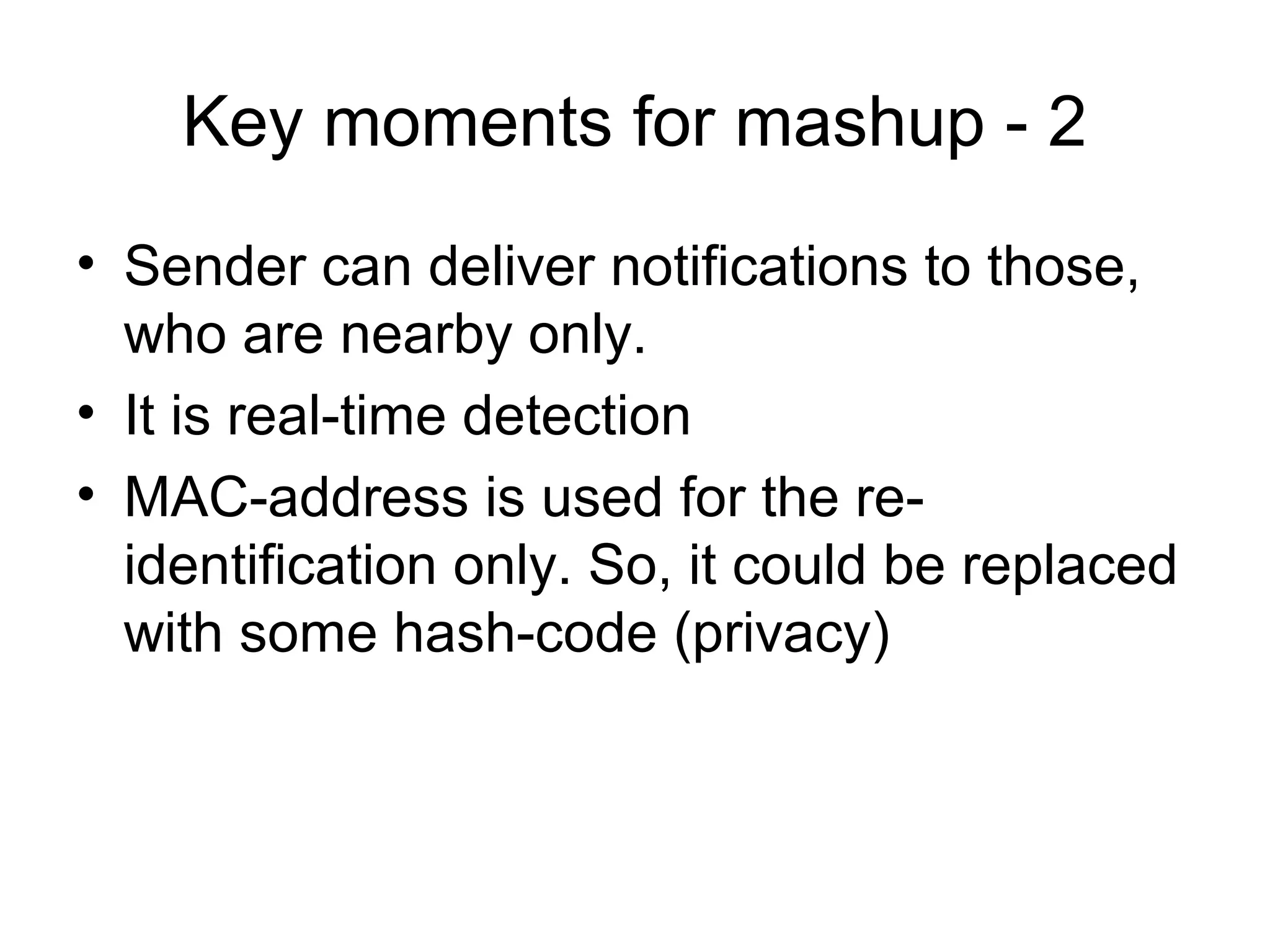
Key moments for mashup - 2
• Sender can deliver notifications to those,
who are nearby only.
• It is real-time detection
• MAC-address is used for the re-
identification only. So, it could be replaced
with some hash-code (privacy)
Use cases
• Proximity marketing
• Deliver local area messages in retail
• Hyper-local news delivery in campuses.
Tested in Lomonosov Moscow State
University
• Smart Cities information delivery
Proximity <> Location
• Proximity here is the network proximity.
• The location for nodes could be unknown
• The location for Wi-Fi access points could be
changed. E.g., hot spot right on the mobile phone
• Proximity based data could be more precise
(especially for indoor)
• In other words: the proposed approach could not be
replaced one by one with some geo-fence with push
notifications. Proximity is not equal to location.
Conclusion
• A new mashup based on passive Wi-Fi monitoring forA new mashup based on passive Wi-Fi monitoring for
mobile devices and cloud based notifications.mobile devices and cloud based notifications.
• Passive monitoring uses probe requests from Wi-FiPassive monitoring uses probe requests from Wi-Fi
specifications for detecting nearby clients.specifications for detecting nearby clients.
• Notification module uses cloud messaging (pushNotification module uses cloud messaging (push
notifications) from mobile operational systems.notifications) from mobile operational systems.
• This application does not publish location info in theThis application does not publish location info in the
social network (it is not a check-in).social network (it is not a check-in).
• Custom messages will target online subscribers inCustom messages will target online subscribers in
the nearby area only.the nearby area only.
About us
International team: Russia - LatviaInternational team: Russia - Latvia ((Moscow –Moscow –
Riga – VentspilsRiga – Ventspils).). Big history of developingBig history of developing
innovative telecom and software services,innovative telecom and software services,
international contests awardsinternational contests awards
Research areas are:Research areas are:
open API for telecom,open API for telecom,
web access for telecom data,web access for telecom data,
Smart Cities,Smart Cities,
M2M applications, context-aware computingM2M applications, context-aware computing..

Smart Cities Software: Customized Messages for Mobile Subscribers

  • 1.
    Smart Cities Software: CustomizedMessages for Mobile Subscribers Manfred Sneps-Sneppe Ventspils University College manfreds.sneps@gmail.com Dmitry Namiot Lomonosov Moscow State University dnamiot@gmail.com WIFLEX 2013
  • 2.
    • A newmodel for local area messaging based on the network proximity. • Our mobile mashup combines Wi-Fi proximity measurements with Cloud Messaging. • Passive Wi-Fi monitoring can determine the location of mobile subscribers (mobile phones) without the active participation of mobile users. • Cloud Messaging delivers notifications to local subscribers About
  • 3.
    Contents Introduction Passive Wi-Fi monitoring CloudMessaging Local area messaging mashup Conclusion
  • 4.
    Passive Wi-Fi monitoring •Wi-Fi probe request • Client (even not connected) can send requests to AP • AP can analyze requests • We can collect MAC- addresses for clients
  • 5.
    Advantages and disadvantages forpassive monitoring • It does not require special mobile applications • For mobile users it works automatically and transparently • It is anonymous monitoring. MAC address is used for re-identification only. It could be replaced with some hash-code (privacy) • It is not 100% reliable. There is no warranty that Wi-Fi client will send probe request. Our own experiments and references show 70%-80% detection rate.
  • 6.
  • 7.
  • 8.
  • 9.
  • 10.
  • 11.
  • 12.
    Cloud Messaging • Cloudinfrastructure from vendor • Google, Apple, Microsoft, Nokia – own cloud based infrastructures for notifications • Google message: 4 Kb payload delivery
  • 13.
  • 14.
    Key moments forCloud Messaging • Application registers with Cloud Messaging • Application provides a key from Cloud Messaging server (subscribes) to the particular application (Sender) • Sender saves keys and uses them later for delivering notifications • Key moment – subscription is activated from the mobile application on the particular phone.
  • 15.
    Key moments formashup • Let us extend the subscription process • Mobile application (mobile phone, actually) will provide a key for notification and MAC- address for identification • Sender can compare saved MAC- addresses with the MAC-addresses, collected by the passive monitoring • Key idea: get subscribers who are nearby at this moment
  • 16.
    Key moments formashup - 2 • Sender can deliver notifications to those, who are nearby only. • It is real-time detection • MAC-address is used for the re- identification only. So, it could be replaced with some hash-code (privacy)
  • 17.
    Use cases • Proximitymarketing • Deliver local area messages in retail • Hyper-local news delivery in campuses. Tested in Lomonosov Moscow State University • Smart Cities information delivery
  • 18.
    Proximity <> Location •Proximity here is the network proximity. • The location for nodes could be unknown • The location for Wi-Fi access points could be changed. E.g., hot spot right on the mobile phone • Proximity based data could be more precise (especially for indoor) • In other words: the proposed approach could not be replaced one by one with some geo-fence with push notifications. Proximity is not equal to location.
  • 19.
    Conclusion • A newmashup based on passive Wi-Fi monitoring forA new mashup based on passive Wi-Fi monitoring for mobile devices and cloud based notifications.mobile devices and cloud based notifications. • Passive monitoring uses probe requests from Wi-FiPassive monitoring uses probe requests from Wi-Fi specifications for detecting nearby clients.specifications for detecting nearby clients. • Notification module uses cloud messaging (pushNotification module uses cloud messaging (push notifications) from mobile operational systems.notifications) from mobile operational systems. • This application does not publish location info in theThis application does not publish location info in the social network (it is not a check-in).social network (it is not a check-in). • Custom messages will target online subscribers inCustom messages will target online subscribers in the nearby area only.the nearby area only.
  • 20.
    About us International team:Russia - LatviaInternational team: Russia - Latvia ((Moscow –Moscow – Riga – VentspilsRiga – Ventspils).). Big history of developingBig history of developing innovative telecom and software services,innovative telecom and software services, international contests awardsinternational contests awards Research areas are:Research areas are: open API for telecom,open API for telecom, web access for telecom data,web access for telecom data, Smart Cities,Smart Cities, M2M applications, context-aware computingM2M applications, context-aware computing..