Seminal creations in the evolution of
information technology
Presented by - Pi Office Products - www.piofficeproducts.com
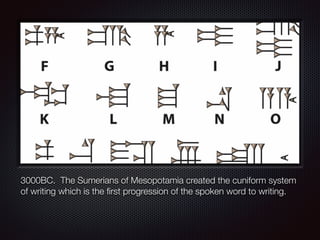
3000BC. The Sumerians of Mesopotamia created the cuniform system
of writing which is the first progression of the spoken word to writing.
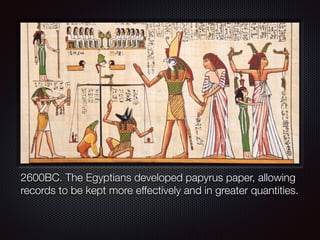
2600BC. The Egyptians developed papyrus paper, allowing
records to be kept more effectively and in greater quantities.
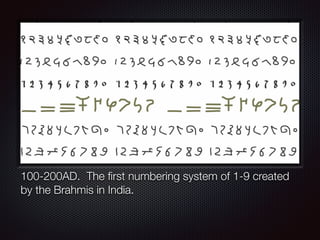
100-200AD. The first numbering system of 1-9 created
by the Brahmis in India.
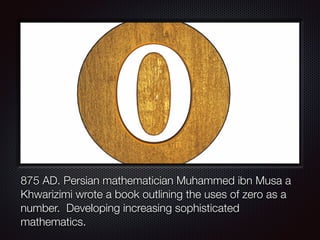
875 AD. Persian mathematician Muhammed ibn Musa a
Khwarizimi wrote a book outlining the uses of zero as a
number. Developing increasing sophisticated
mathematics.
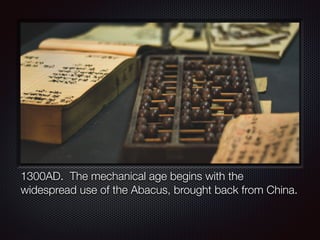
1300AD. The mechanical age begins with the
widespread use of the Abacus, brought back from China.
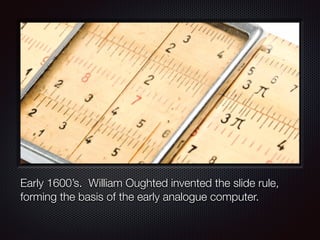
Early 1600’s. William Oughted invented the slide rule,
forming the basis of the early analogue computer.
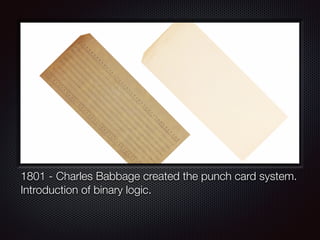
1801 - Charles Babbage created the punch card system.
Introduction of binary logic.
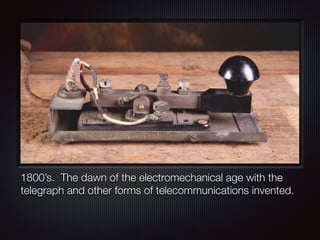
1800’s. The dawn of the electromechanical age with the
telegraph and other forms of telecommunications invented.
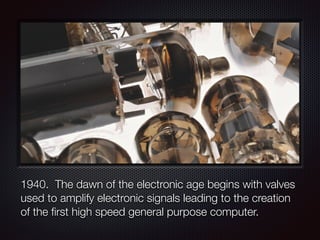
1940. The dawn of the electronic age begins with valves
used to amplify electronic signals leading to the creation
of the first high speed general purpose computer.
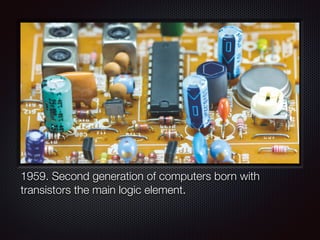
1959. Second generation of computers born with
transistors the main logic element.
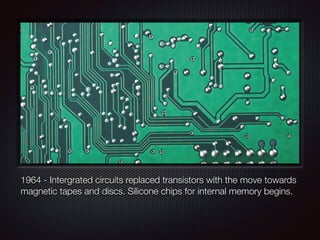
1964 - Intergrated circuits replaced transistors with the move towards
magnetic tapes and discs. Silicone chips for internal memory begins.
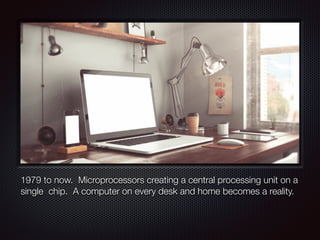
1979 to now. Microprocessors creating a central processing unit on a
single chip. A computer on every desk and home becomes a reality.
Desk Calendar for 2016 created by
www.piofficeproducts.com
Available through Amazon
http://www.amazon.co.uk/dp/B016OTYBVE

Key steps in the evolution of information technology

  • 1.
    Seminal creations inthe evolution of information technology Presented by - Pi Office Products - www.piofficeproducts.com
  • 2.
    3000BC. The Sumeriansof Mesopotamia created the cuniform system of writing which is the first progression of the spoken word to writing.
  • 3.
    2600BC. The Egyptiansdeveloped papyrus paper, allowing records to be kept more effectively and in greater quantities.
  • 4.
    100-200AD. The firstnumbering system of 1-9 created by the Brahmis in India.
  • 5.
    875 AD. Persianmathematician Muhammed ibn Musa a Khwarizimi wrote a book outlining the uses of zero as a number. Developing increasing sophisticated mathematics.
  • 6.
    1300AD. The mechanicalage begins with the widespread use of the Abacus, brought back from China.
  • 7.
    Early 1600’s. WilliamOughted invented the slide rule, forming the basis of the early analogue computer.
  • 8.
    1801 - CharlesBabbage created the punch card system. Introduction of binary logic.
  • 9.
    1800’s. The dawnof the electromechanical age with the telegraph and other forms of telecommunications invented.
  • 10.
    1940. The dawnof the electronic age begins with valves used to amplify electronic signals leading to the creation of the first high speed general purpose computer.
  • 11.
    1959. Second generationof computers born with transistors the main logic element.
  • 12.
    1964 - Intergratedcircuits replaced transistors with the move towards magnetic tapes and discs. Silicone chips for internal memory begins.
  • 13.
    1979 to now.Microprocessors creating a central processing unit on a single chip. A computer on every desk and home becomes a reality.
  • 14.
    Desk Calendar for2016 created by www.piofficeproducts.com Available through Amazon http://www.amazon.co.uk/dp/B016OTYBVE