BOARD GAMESBOARD GAMES
Building up teaching school materialsBuilding up teaching school materials
Cecilia Maller ACecilia Maller A
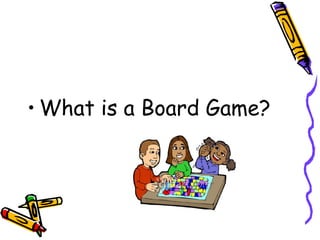
• What is a Board Game?
A Board Game….
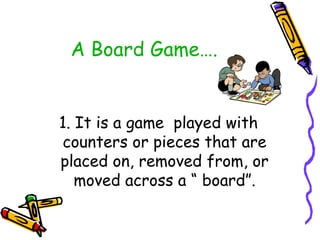
1. It is a game played with
counters or pieces that are
placed on, removed from, or
moved across a “ board”.
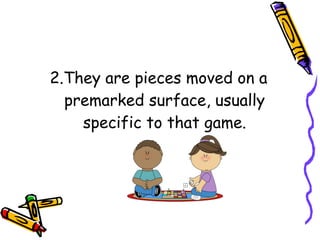
2.They are pieces moved on a
premarked surface, usually
specific to that game.
Types of Board Games
• There are different types of them.
1.Many games simulate aspects of real
life(e.i. Monopoly- simulates the real
state market)
2. Other games only attempt to
imitate reality.
These games may include:
• -Abstract strategy games
• (eg. Chess)
• -Word games(eg. Scrabble),etc
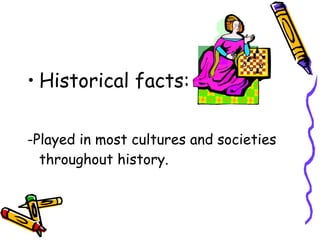
• Historical facts:
-Played in most cultures and societies
throughout history.
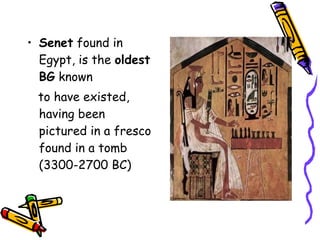
• Senet found in
Egypt, is the oldest
BG known
to have existed,
having been
pictured in a fresco
found in a tomb
(3300-2700 BC)
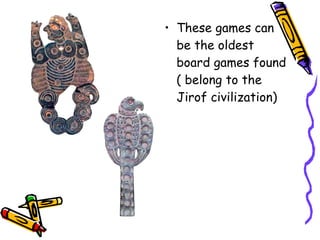
• These games can
be the oldest
board games found
( belong to the
Jirof civilization)
• When did they become
popular?
• Widely popular among the
general population early in
the 20th century.
• When the rise of the middle
class with disposable income
and leisure time made them a
receptive audience to such
games.
• This popularity expanded
after the Second World
War, a period from which
many classic board games
date.
What happens nowadays?
• Many BG are now available
as COMPUTER GAMES,
including the option to have
the computer act as an
oponent
With the internet, many BG
can now be played online
against a computer or
other players, even play in
real time!
Recommended sites:
• http://www.eslhq.com/forums/worksheets/esl-
worksheets/board-games/.
• ESL Fun Games & Activities at ESL Games World
http://www.eslgamesworld.com
Free ESL Games, Online Interactive Games, Printable
Board Games, Card Games, Powerpoint PPT Games and
Game Templates to Build your own games. Hangman,
Snakes and Ladders, Jeopardy, Wheel Game and more.
• http://www.english-
4kids.com/boardgames.html.
• Really cool:
http://www.esl-galaxy.com/board.htm
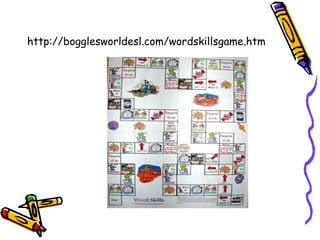
Example:Word Skills Board Game:
Words Skills is :
• a fun game ,
• easy to play ,
• can be used to review word skills.
• Example: indicating the beginning sound
of a word, the ending sound of a word,
middle sound of a word, rhymes,
synonyms, and antonyms.
Can be used as :
•a stand alone board game, or
•as a supplement for reviewing the 7
core phonics units at Lanternfish ESL
(or any other similar phonics program).
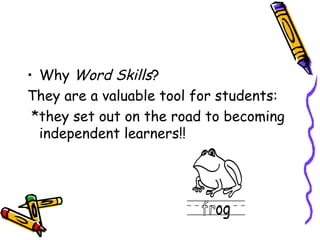
• Why Word Skills?
They are a valuable tool for students:
*they set out on the road to becoming
independent learners!!
•Being able to talk about words is
an essential skill language learners
will need .
Why?
they interact with their teachers to
figure out spelling, pronunciation, and
meaning of new words they encounter.  
• The words skills include:
• identifying beginning sounds, middle
sounds, ending sounds,
• rhyme,
• synonyms, antonyms and,
• if you use one of the advanced
versions, spelling and past tense of
words.  
http://bogglesworldesl.com/wordskillsgame.htm
And now….
• Make your own Board Game.

Board games

  • 1.
    BOARD GAMESBOARD GAMES Buildingup teaching school materialsBuilding up teaching school materials Cecilia Maller ACecilia Maller A
  • 2.
    • What isa Board Game?
  • 3.
    A Board Game…. 1.It is a game played with counters or pieces that are placed on, removed from, or moved across a “ board”.
  • 4.
    2.They are piecesmoved on a premarked surface, usually specific to that game.
  • 5.
    Types of BoardGames • There are different types of them. 1.Many games simulate aspects of real life(e.i. Monopoly- simulates the real state market)
  • 6.
    2. Other gamesonly attempt to imitate reality. These games may include: • -Abstract strategy games • (eg. Chess) • -Word games(eg. Scrabble),etc
  • 7.
    • Historical facts: -Playedin most cultures and societies throughout history.
  • 8.
    • Senet foundin Egypt, is the oldest BG known to have existed, having been pictured in a fresco found in a tomb (3300-2700 BC)
  • 9.
    • These gamescan be the oldest board games found ( belong to the Jirof civilization)
  • 10.
    • When didthey become popular?
  • 11.
    • Widely popularamong the general population early in the 20th century.
  • 12.
    • When therise of the middle class with disposable income and leisure time made them a receptive audience to such games.
  • 13.
    • This popularityexpanded after the Second World War, a period from which many classic board games date.
  • 14.
    What happens nowadays? •Many BG are now available as COMPUTER GAMES, including the option to have the computer act as an oponent
  • 15.
    With the internet,many BG can now be played online against a computer or other players, even play in real time!
  • 16.
    Recommended sites: • http://www.eslhq.com/forums/worksheets/esl- worksheets/board-games/. •ESL Fun Games & Activities at ESL Games World http://www.eslgamesworld.com Free ESL Games, Online Interactive Games, Printable Board Games, Card Games, Powerpoint PPT Games and Game Templates to Build your own games. Hangman, Snakes and Ladders, Jeopardy, Wheel Game and more.
  • 17.
    • http://www.english- 4kids.com/boardgames.html. • Reallycool: http://www.esl-galaxy.com/board.htm
  • 18.
    Example:Word Skills BoardGame: Words Skills is : • a fun game , • easy to play , • can be used to review word skills. • Example: indicating the beginning sound of a word, the ending sound of a word, middle sound of a word, rhymes, synonyms, and antonyms.
  • 19.
    Can be usedas : •a stand alone board game, or •as a supplement for reviewing the 7 core phonics units at Lanternfish ESL (or any other similar phonics program).
  • 20.
    • Why WordSkills? They are a valuable tool for students: *they set out on the road to becoming independent learners!!
  • 21.
    •Being able totalk about words is an essential skill language learners will need . Why? they interact with their teachers to figure out spelling, pronunciation, and meaning of new words they encounter.  
  • 22.
    • The wordsskills include: • identifying beginning sounds, middle sounds, ending sounds, • rhyme, • synonyms, antonyms and, • if you use one of the advanced versions, spelling and past tense of words.  
  • 23.
  • 24.
    And now…. • Makeyour own Board Game.