Length is defined as the distance from one end to the other of an object. It is commonly measured in millimetres, centimetres, metres, and kilometres. Length can be used to measure how long, tall, or far apart objects are. Common tools for measuring length include rulers, tape measures, and vehicle odometers. Examples of when length measurements are used include determining distances, sizing clothing, and calculating perimeters.
WHAT IS LENGTHMEASURED IN?
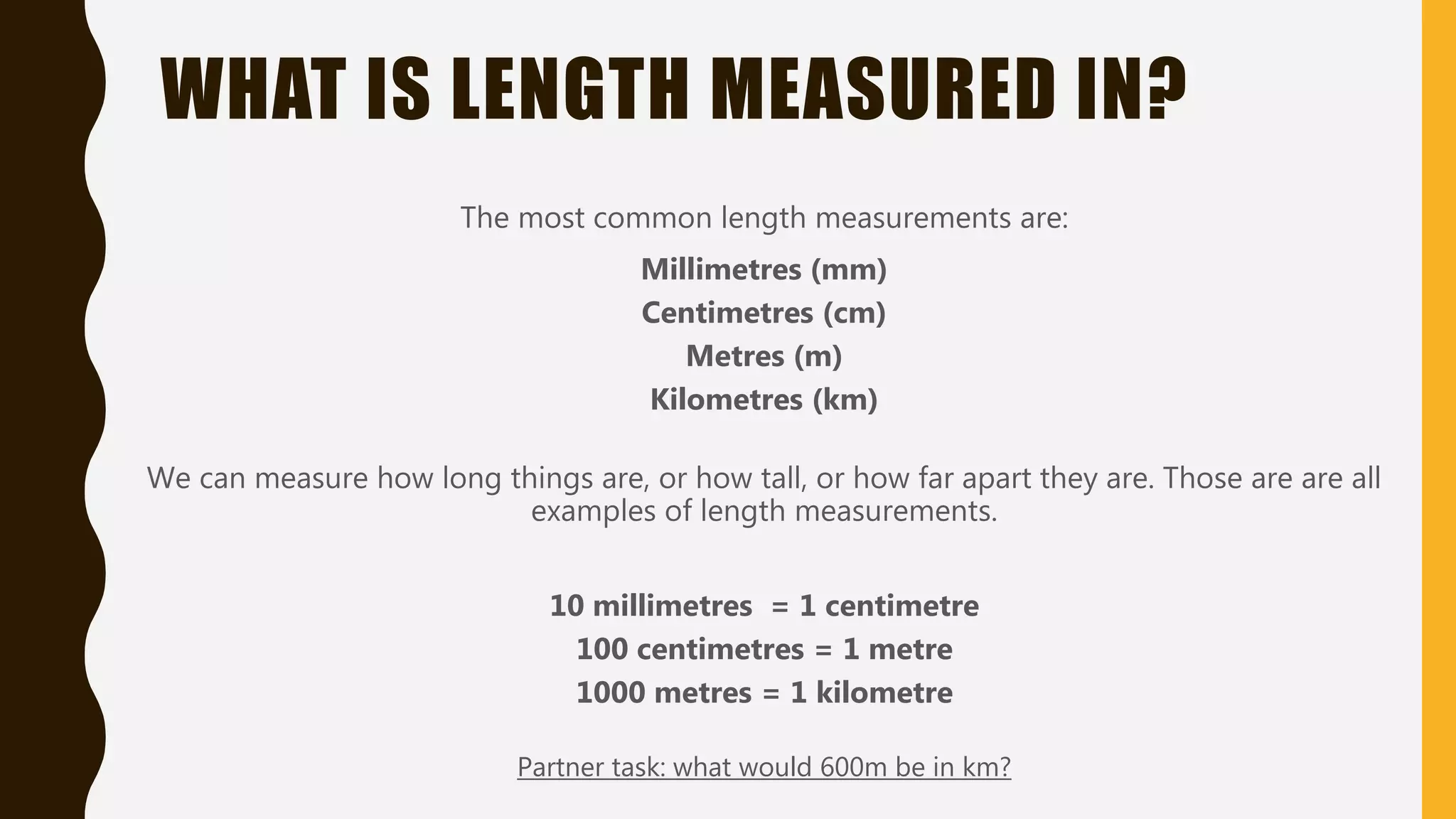
The most common length measurements are:
Millimetres (mm)
Centimetres (cm)
Metres (m)
Kilometres (km)
We can measure how long things are, or how tall, or how far apart they are. Those are are all
examples of length measurements.
10 millimetres = 1 centimetre
100 centimetres = 1 metre
1000 metres = 1 kilometre
Partner task: what would 600m be in km?
3.
EXAMPLES OF THESEMEASUREMENTS
• A centimetre (cm) is about:
• about as long as a staple
• the width of a highlighter
• A metre (m) is about:
• the width of a doorway
• half the length of a bed
• A kilometre (km) is about:
• roughly 10 football fields all next to each
other
• A 12 minutes' walk
• A millimetre (mm) is about:
• The size of one grain of salt
• Or the thickness of a 5 cent coin
4.
WHAT IS LENGTHMEASURED WITH?
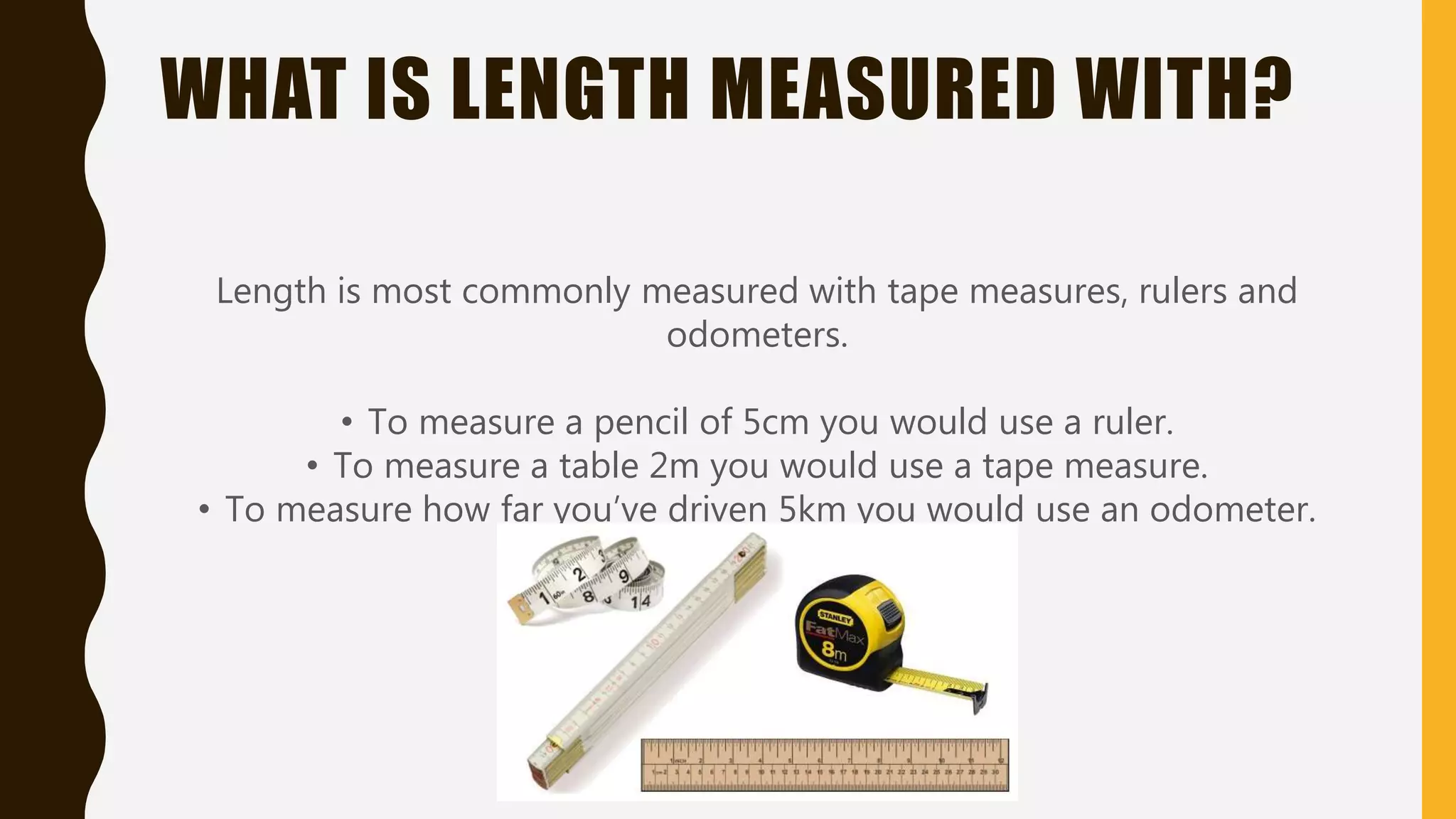
Length is most commonly measured with tape measures, rulers and
odometers.
• To measure a pencil of 5cm you would use a ruler.
• To measure a table 2m you would use a tape measure.
• To measure how far you’ve driven 5km you would use an odometer.
6.
WHEN WILL YOUUSE THESE UNITS OF
MEASURE TO MEASURE LENGTH?
Most common uses
• To figure out how far away a destination is
• To measure how long something is
• To measure your waist if clothes will fit you
• To determine a perimeter
7.
LENGTH
• Please viewthis short presentation of LENGTH. Once viewed you are able to move
onto the online game!
• http://splash.abc.net.au/home#!/media/1423429/have-ruler-will-measure-