TELLING TIME
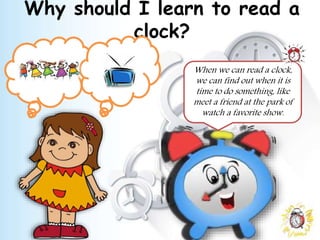
Why should I learn to read a
clock?
When we can read a clock,
we can find out when it is
time to do something, like
meet a friend at the park of
watch a favorite show.
This looks pretty hand,
are you sure I can do
this?
Sure you can! It may take
some practice, but by
learning the basics you’ll be
on your way in no time!
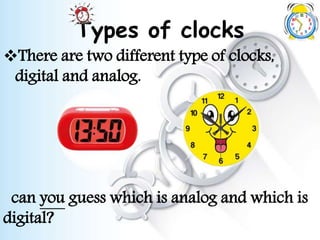
Types of clocks
There are two different type of clocks,
digital and analog.
can you guess which is analog and which is
digital?
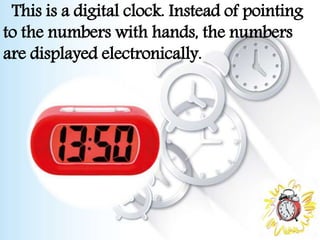
This is a digital clock. Instead of pointing
to the numbers with hands, the numbers
are displayed electronically.
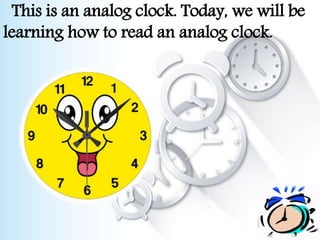
This is an analog clock. Today, we will be
learning how to read an analog clock.
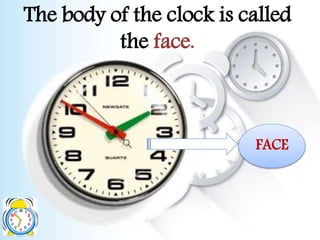
The body of the clock is called
the face.
FACE
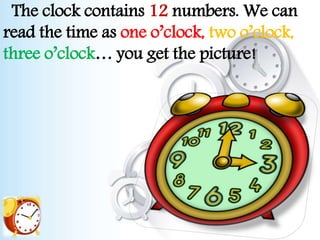
The clock contains 12 numbers. We can
read the time as one o’clock, two o’clock,
three o’clock… you get the picture!
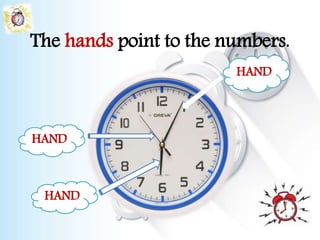
The hands point to the numbers.
HAND
HAND
HAND
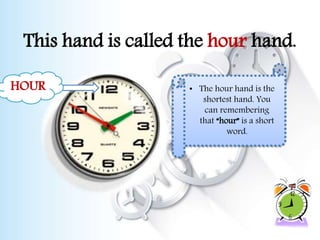
This hand is called the hour hand.
HOUR • The hour hand is the
shortest hand. You
can remembering
that “hour” is a short
word.
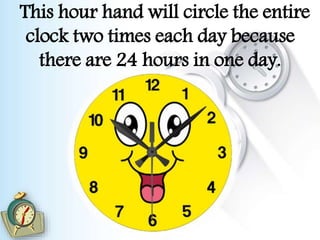
This hour hand will circle the entire
clock two times each day because
there are 24 hours in one day.
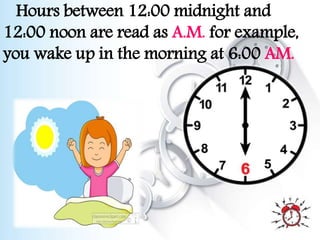
Hours between 12:00 midnight and
12:00 noon are read as A.M. for example,
you wake up in the morning at 6:00 AM.
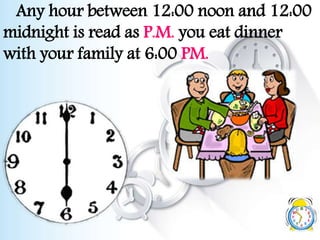
Any hour between 12:00 noon and 12:00
midnight is read as P.M. you eat dinner
with your family at 6:00 PM.
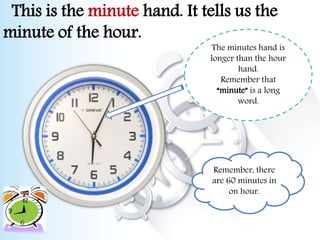
This is the minute hand. It tells us the
minute of the hour.
The minutes hand is
longer than the hour
hand.
Remember that
“minute” is a long
word.
Remember, there
are 60 minutes in
on hour.
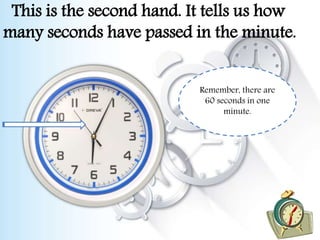
This is the second hand. It tells us how
many seconds have passed in the minute.
Remember, there are
60 seconds in one
minute.
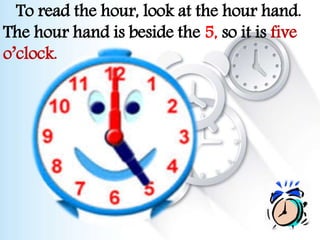
To read the hour, look at the hour hand.
The hour hand is beside the 5, so it is five
o’clock.
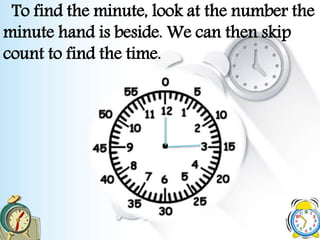
To find the minute, look at the number the
minute hand is beside. We can then skip
count to find the time.
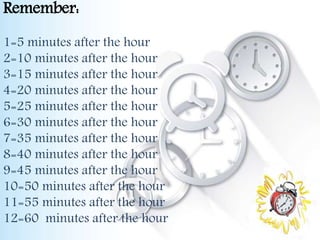
Remember:
1=5 minutes after the hour
2=10 minutes after the hour
3=15 minutes after the hour
4=20 minutes after the hour
5=25 minutes after the hour
6=30 minutes after the hour
7=35 minutes after the hour
8=40 minutes after the hour
9=45 minutes after the hour
10=50 minutes after the hour
11=55 minutes after the hour
12=60 minutes after the hour
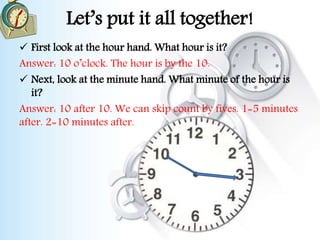
Let’s put it all together!
 First look at the hour hand. What hour is it?
Answer: 10 o’clock. The hour is by the 10.
 Next, look at the minute hand. What minute of the hour is
it?
Answer: 10 after 10. We can skip count by fives. 1=5 minutes
after. 2=10 minutes after.
Wow! This was
really fun! I feel so
much better about
telling time!
All it takes is a little
practice. Well, that’s
all the time we have
we can practice
telling time to the
nearest minute.
Thank You
& God bless
Presented by:
Fatima S. Ibasan
BEED - III

Telling Time

  • 1.
  • 2.
    Why should Ilearn to read a clock? When we can read a clock, we can find out when it is time to do something, like meet a friend at the park of watch a favorite show.
  • 3.
    This looks prettyhand, are you sure I can do this? Sure you can! It may take some practice, but by learning the basics you’ll be on your way in no time!
  • 4.
    Types of clocks Thereare two different type of clocks, digital and analog. can you guess which is analog and which is digital?
  • 5.
    This is adigital clock. Instead of pointing to the numbers with hands, the numbers are displayed electronically.
  • 6.
    This is ananalog clock. Today, we will be learning how to read an analog clock.
  • 7.
    The body ofthe clock is called the face. FACE
  • 8.
    The clock contains12 numbers. We can read the time as one o’clock, two o’clock, three o’clock… you get the picture!
  • 9.
    The hands pointto the numbers. HAND HAND HAND
  • 10.
    This hand iscalled the hour hand. HOUR • The hour hand is the shortest hand. You can remembering that “hour” is a short word.
  • 11.
    This hour handwill circle the entire clock two times each day because there are 24 hours in one day.
  • 12.
    Hours between 12:00midnight and 12:00 noon are read as A.M. for example, you wake up in the morning at 6:00 AM.
  • 13.
    Any hour between12:00 noon and 12:00 midnight is read as P.M. you eat dinner with your family at 6:00 PM.
  • 14.
    This is theminute hand. It tells us the minute of the hour. The minutes hand is longer than the hour hand. Remember that “minute” is a long word. Remember, there are 60 minutes in on hour.
  • 15.
    This is thesecond hand. It tells us how many seconds have passed in the minute. Remember, there are 60 seconds in one minute.
  • 16.
    To read thehour, look at the hour hand. The hour hand is beside the 5, so it is five o’clock.
  • 17.
    To find theminute, look at the number the minute hand is beside. We can then skip count to find the time.
  • 18.
    Remember: 1=5 minutes afterthe hour 2=10 minutes after the hour 3=15 minutes after the hour 4=20 minutes after the hour 5=25 minutes after the hour 6=30 minutes after the hour 7=35 minutes after the hour 8=40 minutes after the hour 9=45 minutes after the hour 10=50 minutes after the hour 11=55 minutes after the hour 12=60 minutes after the hour
  • 19.
    Let’s put itall together!  First look at the hour hand. What hour is it? Answer: 10 o’clock. The hour is by the 10.  Next, look at the minute hand. What minute of the hour is it? Answer: 10 after 10. We can skip count by fives. 1=5 minutes after. 2=10 minutes after.
  • 20.
    Wow! This was reallyfun! I feel so much better about telling time! All it takes is a little practice. Well, that’s all the time we have we can practice telling time to the nearest minute.
  • 21.
    Thank You & Godbless Presented by: Fatima S. Ibasan BEED - III