Tone and
   Purpose
The Indirect Ways That
 Writers Communicate
Understanding the
Author’s Purpose
In many textbooks, the
writer’s purpose is fairly clear.
However, sometimes a writer
will express an opinion
indirectly.
Writers use tone, style and
other features of language to
achieve the results they want.
Understanding Tone
 Refers to the author’s          Examples
  attitude toward his/her          Instructive
  subject.                        Sympathetic
 Think of how you interpret       Persuasive
                                    Nostalgic
  the tone of a speaker’s voice
                                   Humorous
 Pay attention to word              Angry
  choice, types and length of      Insensitive
  sentences, description              Naive
 Tone is important in
  determining the author’s
  purpose.
Style and Intended
     Audience
Style may be defined as the
characteristics that make a
writer unique.
Depending upon whom the
writer is addressing, he will
change the level of language,
method of presentation, and
word choice.
Writing may be academic,
technical, formal, or informal.
Language
    Objective                  Subjective
      factual                       Express
                                   attitudes,
                                   feelings &
                                    opinions
  Authors use language in special ways to help the
reader understand and create a picture of a situation.
               Create Descriptions
              Making comparisons
                 Using symbols
Word Choice
 Connotative             Denotative
   Meanings               Meanings
– Opposite of          – Literal Meaning
  Denotation             found in the
– Implied Meaning        dictionary
– A Word’s Nuance—     – Factual, exact
  ideas associated     – No added meanings
  with the word’s
  usage
– May be positive or
  negative
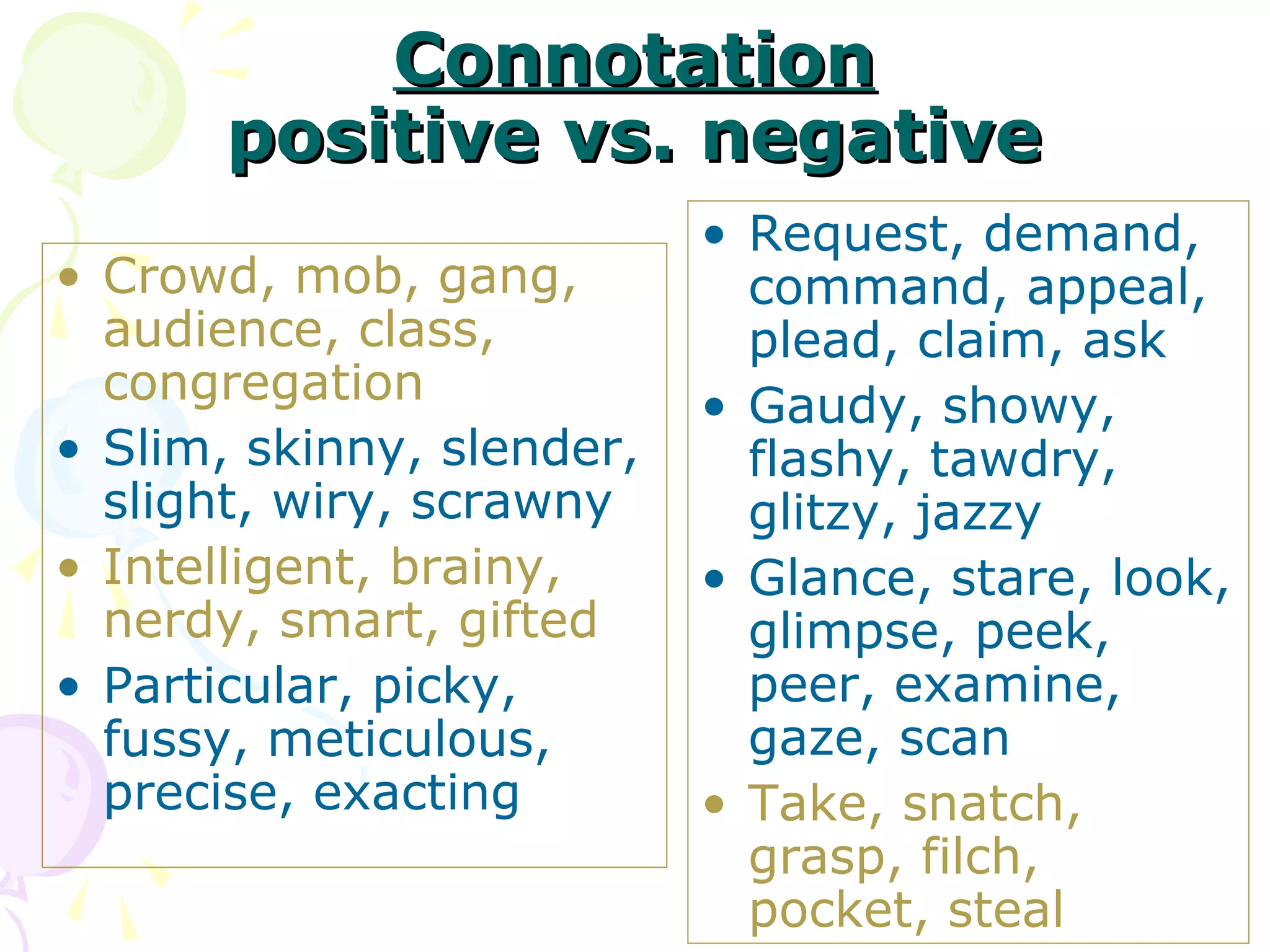
Connotation
       positive vs. negative
                           • Request, demand,
• Crowd, mob, gang,          command, appeal,
  audience, class,           plead, claim, ask
  congregation             • Gaudy, showy,
• Slim, skinny, slender,     flashy, tawdry,
  slight, wiry, scrawny      glitzy, jazzy
• Intelligent, brainy,     • Glance, stare, look,
  nerdy, smart, gifted       glimpse, peek,
• Particular, picky,         peer, examine,
  fussy, meticulous,         gaze, scan
  precise, exacting        • Take, snatch,
                             grasp, filch,
                             pocket, steal
Figurative Language
• Describes
  something that
  makes sense on an
  imaginative level
  but not on a
  factual or literal
  level.
• Example:
  – Sam eats like a
    horse.
  – The wilted plants
    begged for water.
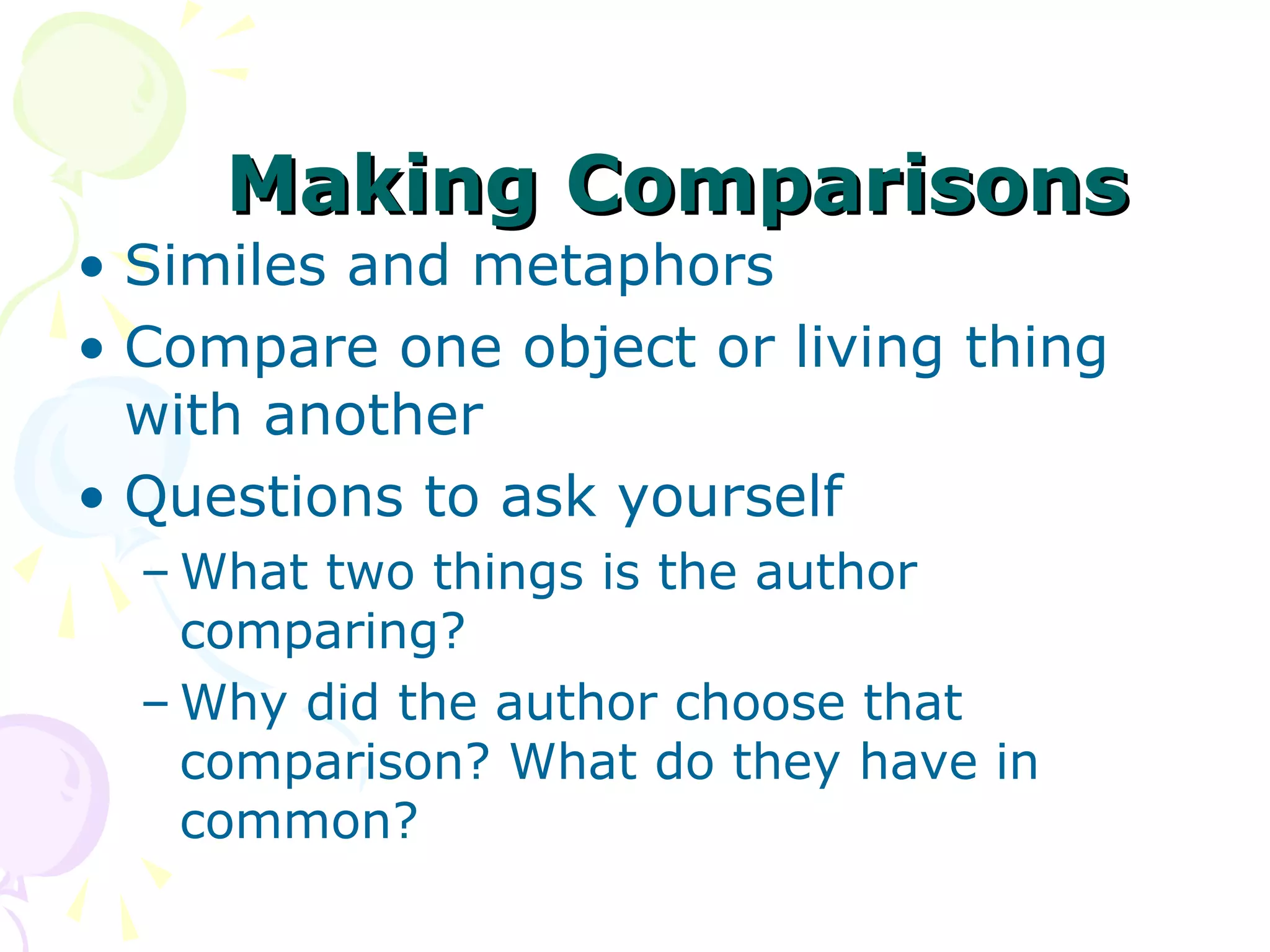
Making Comparisons
• Similes and metaphors
• Compare one object or living thing
  with another
• Questions to ask yourself
  – What two things is the author
    comparing?
  – Why did the author choose that
    comparison? What do they have in
    common?
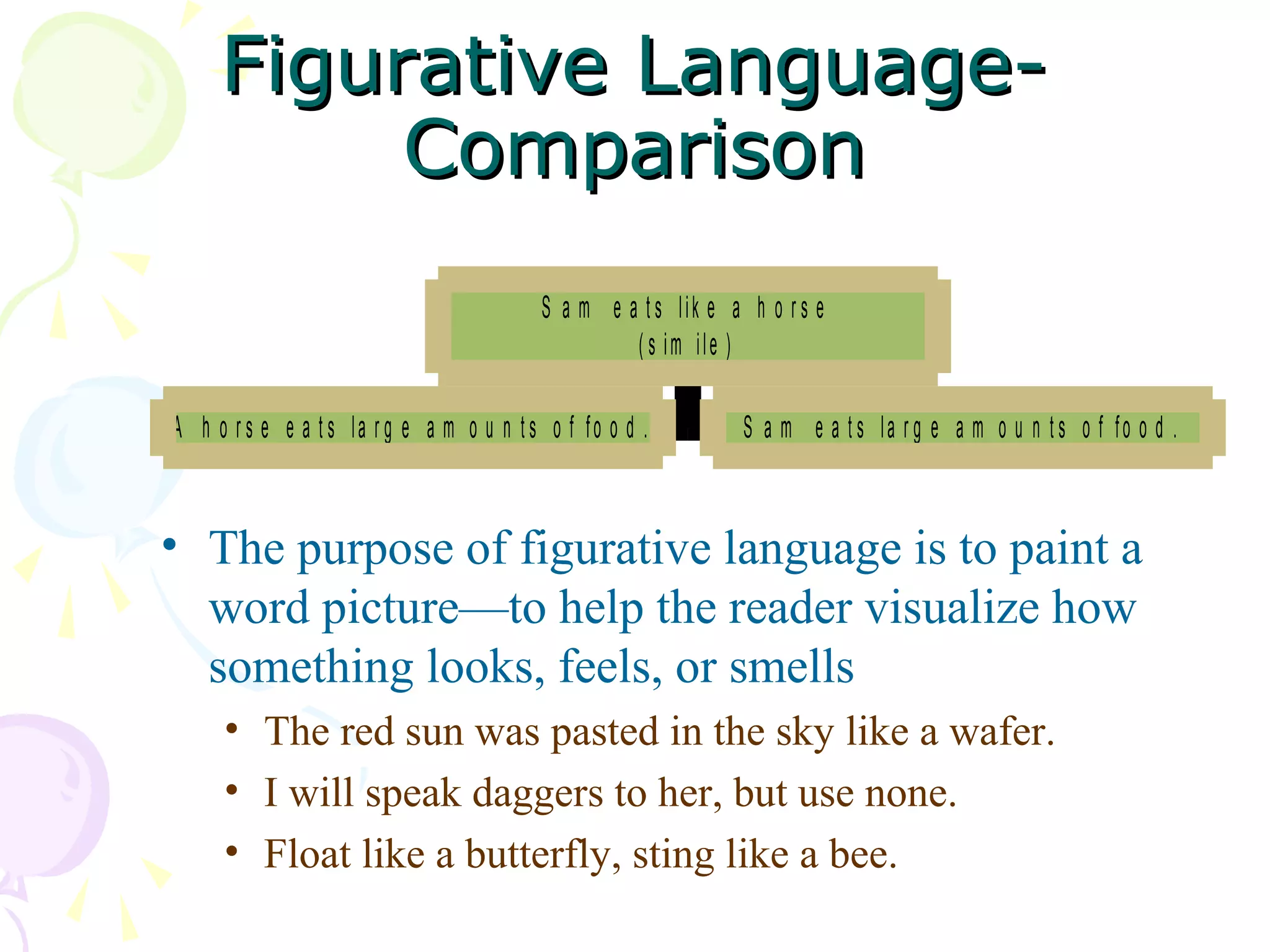
Figurative Language-
          Comparison
                                          S a m e a t s lik e a h o r s e
                                                   ( s im ile )

A h o r s e e a t s la r g e a m o u n t s o f fo o d .         S a m e a t s la r g e a m o u n t s o f fo o d .


• The purpose of figurative language is to paint a
  word picture—to help the reader visualize how
  something looks, feels, or smells
     • The red sun was pasted in the sky like a wafer.
     • I will speak daggers to her, but use none.
     • Float like a butterfly, sting like a bee.
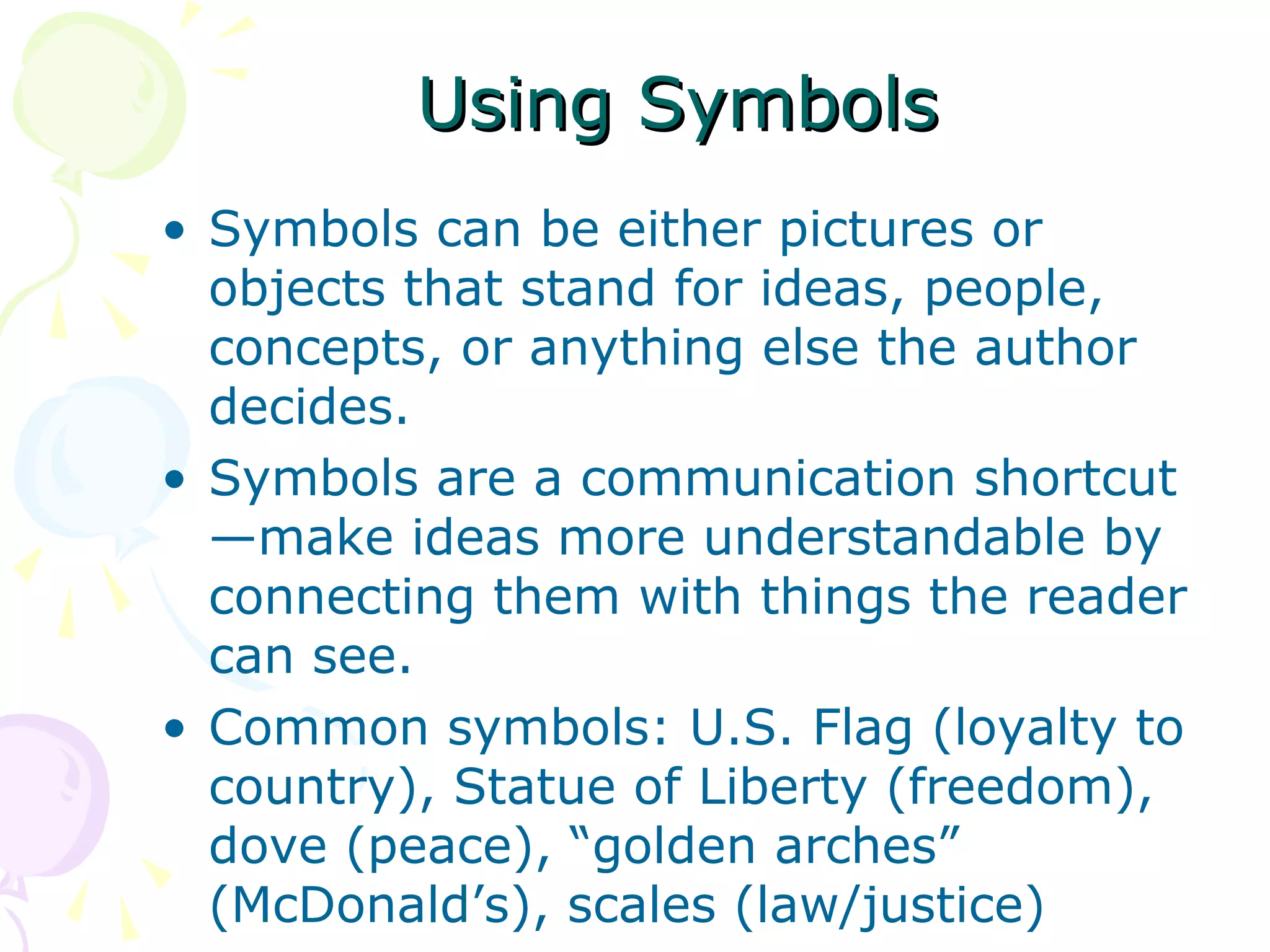
Using Symbols
• Symbols can be either pictures or
  objects that stand for ideas, people,
  concepts, or anything else the author
  decides.
• Symbols are a communication shortcut
  —make ideas more understandable by
  connecting them with things the reader
  can see.
• Common symbols: U.S. Flag (loyalty to
  country), Statue of Liberty (freedom),
  dove (peace), “golden arches”
  (McDonald’s), scales (law/justice)
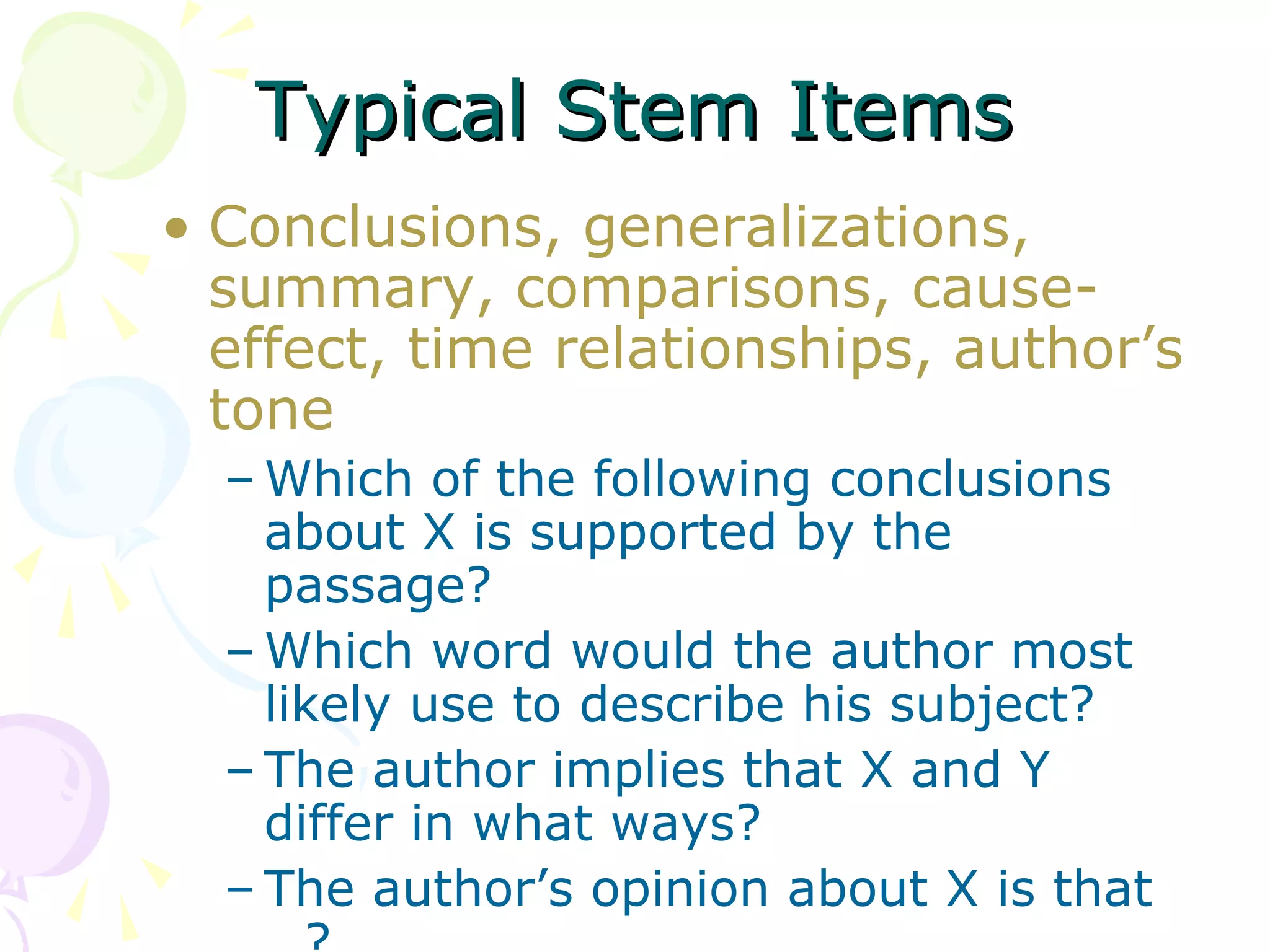
Typical Stem Items
• Conclusions, generalizations,
  summary, comparisons, cause-
  effect, time relationships, author’s
  tone
  – Which of the following conclusions
    about X is supported by the
    passage?
  – Which word would the author most
    likely use to describe his subject?
  – The author implies that X and Y
    differ in what ways?
  – The author’s opinion about X is that
Typical Stem Items
• Application of one or more ideas
  – Based on the author’s description of
    X, how would a teacher using this
    plan arrange the student’s activities?
  – Based on the examples provided in
    the passage, how could the
    government best deter illegal
    immigration?
Typical Stem Items
• Figurative language
  – By the phrase, “a breath of fresh air”
    in lines 6-7, the author means that …
  – The use of the phrase “alien from
    another planet” to describe the sister
    is an example of what type of
    figurative language?
  – By saying “the room was like a
    sauna,” the author is indicating that
    …
Review/Recall
• What are inferences and why are they
  important for reading?
• What do you do with inferences once you
  have made them?
• Explain why the conclusions you draw
  about a reading selection can be tentative
  —why you can change you mind about
  how you understand them.
• What are some things that might influence
  a change in how you understand a reading
  selection?

Tone purpose

  • 1.
    Tone and Purpose The Indirect Ways That Writers Communicate
  • 2.
    Understanding the Author’s Purpose Inmany textbooks, the writer’s purpose is fairly clear. However, sometimes a writer will express an opinion indirectly. Writers use tone, style and other features of language to achieve the results they want.
  • 3.
    Understanding Tone  Refersto the author’s Examples attitude toward his/her Instructive subject. Sympathetic  Think of how you interpret Persuasive Nostalgic the tone of a speaker’s voice Humorous  Pay attention to word Angry choice, types and length of Insensitive sentences, description Naive  Tone is important in determining the author’s purpose.
  • 4.
    Style and Intended Audience Style may be defined as the characteristics that make a writer unique. Depending upon whom the writer is addressing, he will change the level of language, method of presentation, and word choice. Writing may be academic, technical, formal, or informal.
  • 5.
    Language Objective Subjective factual Express attitudes, feelings & opinions Authors use language in special ways to help the reader understand and create a picture of a situation. Create Descriptions Making comparisons Using symbols
  • 6.
    Word Choice Connotative Denotative Meanings Meanings – Opposite of – Literal Meaning Denotation found in the – Implied Meaning dictionary – A Word’s Nuance— – Factual, exact ideas associated – No added meanings with the word’s usage – May be positive or negative
  • 7.
    Connotation positive vs. negative • Request, demand, • Crowd, mob, gang, command, appeal, audience, class, plead, claim, ask congregation • Gaudy, showy, • Slim, skinny, slender, flashy, tawdry, slight, wiry, scrawny glitzy, jazzy • Intelligent, brainy, • Glance, stare, look, nerdy, smart, gifted glimpse, peek, • Particular, picky, peer, examine, fussy, meticulous, gaze, scan precise, exacting • Take, snatch, grasp, filch, pocket, steal
  • 8.
    Figurative Language • Describes something that makes sense on an imaginative level but not on a factual or literal level. • Example: – Sam eats like a horse. – The wilted plants begged for water.
  • 9.
    Making Comparisons • Similesand metaphors • Compare one object or living thing with another • Questions to ask yourself – What two things is the author comparing? – Why did the author choose that comparison? What do they have in common?
  • 10.
    Figurative Language- Comparison S a m e a t s lik e a h o r s e ( s im ile ) A h o r s e e a t s la r g e a m o u n t s o f fo o d . S a m e a t s la r g e a m o u n t s o f fo o d . • The purpose of figurative language is to paint a word picture—to help the reader visualize how something looks, feels, or smells • The red sun was pasted in the sky like a wafer. • I will speak daggers to her, but use none. • Float like a butterfly, sting like a bee.
  • 11.
    Using Symbols • Symbolscan be either pictures or objects that stand for ideas, people, concepts, or anything else the author decides. • Symbols are a communication shortcut —make ideas more understandable by connecting them with things the reader can see. • Common symbols: U.S. Flag (loyalty to country), Statue of Liberty (freedom), dove (peace), “golden arches” (McDonald’s), scales (law/justice)
  • 12.
    Typical Stem Items •Conclusions, generalizations, summary, comparisons, cause- effect, time relationships, author’s tone – Which of the following conclusions about X is supported by the passage? – Which word would the author most likely use to describe his subject? – The author implies that X and Y differ in what ways? – The author’s opinion about X is that
  • 13.
    Typical Stem Items •Application of one or more ideas – Based on the author’s description of X, how would a teacher using this plan arrange the student’s activities? – Based on the examples provided in the passage, how could the government best deter illegal immigration?
  • 14.
    Typical Stem Items •Figurative language – By the phrase, “a breath of fresh air” in lines 6-7, the author means that … – The use of the phrase “alien from another planet” to describe the sister is an example of what type of figurative language? – By saying “the room was like a sauna,” the author is indicating that …
  • 15.
    Review/Recall • What areinferences and why are they important for reading? • What do you do with inferences once you have made them? • Explain why the conclusions you draw about a reading selection can be tentative —why you can change you mind about how you understand them. • What are some things that might influence a change in how you understand a reading selection?