Post-PhD Pathways
OR: You’ve done the thing, so what’s next?
Brady Robards
University of Tasmania
brady.robards@utas.edu.au
@bradyjay
Griffith Centre for Cultural Research HDR Summer School – November, 2015
PLAN
• Help frame the day
• Conferences
• Publishing
• Social media + the ‘public intellectual’
• Share my own experiences as a Griffith graduate + ECR
• Applying for academic jobs
• Developing a post-PhD research agenda
• Challenges and opportunities around contemporary academic
labour
1. Telling children you’re in the 25th grade.
As curated by Buzzfeed’s Jessica Misener:
25 Deeply Painful PhD Student Problems (Besides Your Thesis)
3. Realizing your vocabulary is permanently scattered
with words like “problematic” and “ontological” and
“hegemony.”
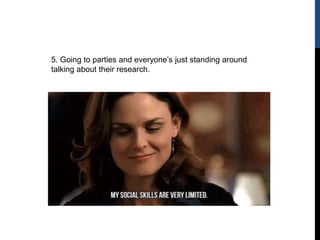
5. Going to parties and everyone’s just standing around
talking about their research.
8. When someone claims that being in a doctoral
program isn’t “the same thing as having a real job”:
11. …and feeling ultra-guilty anytime you try to relax.
12. Finding an old paper you wrote your first year of grad
school:
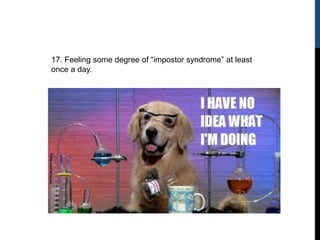
17. Feeling some degree of “impostor syndrome” at least
once a day.
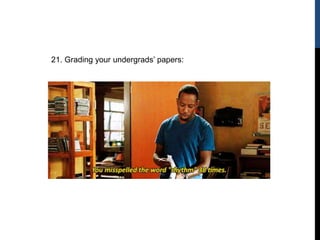
21. Grading your undergrads’ papers:
22. When someone asks how “writing” is going:
25. When ANYONE asks you what your plan is after you
graduate:
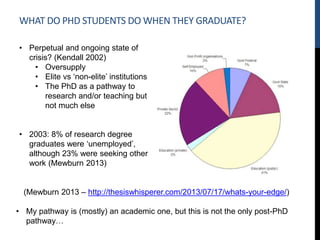
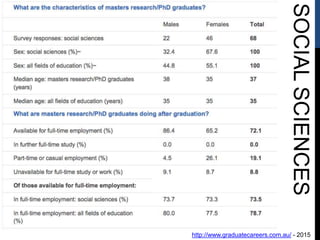
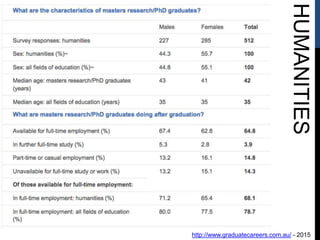
WHAT DO PHD STUDENTS DO WHEN THEY GRADUATE?
(Mewburn 2013 – http://thesiswhisperer.com/2013/07/17/whats-your-edge/)
• Perpetual and ongoing state of
crisis? (Kendall 2002)
• Oversupply
• Elite vs ‘non-elite’ institutions
• The PhD as a pathway to
research and/or teaching but
not much else
• 2003: 8% of research degree
graduates were ‘unemployed’,
although 23% were seeking other
work (Mewburn 2013)
• My pathway is (mostly) an academic one, but this is not the only post-PhD
pathway…
SOCIALSCIENCES
http://www.graduatecareers.com.au/ - 2015
HUMANITIES
http://www.graduatecareers.com.au/ - 2015
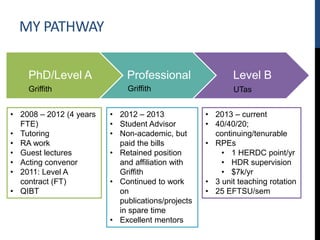
MY PATHWAY
PhD/Level A Professional Level B
• 2008 – 2012 (4 years
FTE)
• Tutoring
• RA work
• Guest lectures
• Acting convenor
• 2011: Level A
contract (FT)
• QIBT
• 2012 – 2013
• Student Advisor
• Non-academic, but
paid the bills
• Retained position
and affiliation with
Griffith
• Continued to work
on
publications/projects
in spare time
• Excellent mentors
• 2013 – current
• 40/40/20;
continuing/tenurable
• RPEs
• 1 HERDC point/yr
• HDR supervision
• $7k/yr
• 3 unit teaching rotation
• 25 EFTSU/sem
Griffith Griffith UTas
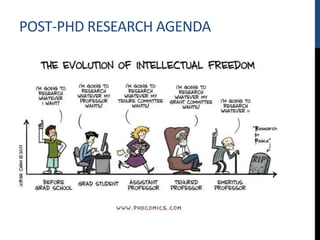
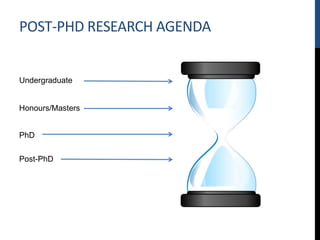
POST-PHD RESEARCH AGENDA
Undergraduate
Honours/Masters
PhD
Post-PhD
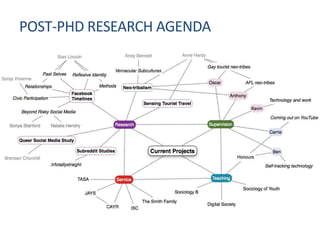
POST-PHD RESEARCH AGENDA
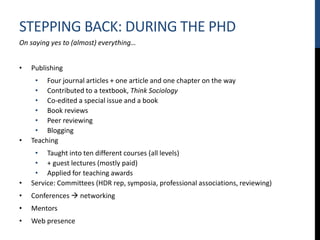
STEPPING BACK: DURING THE PHD
On saying yes to (almost) everything…
• Publishing
• Four journal articles + one article and one chapter on the way
• Contributed to a textbook, Think Sociology
• Co-edited a special issue and a book
• Book reviews
• Peer reviewing
• Blogging
• Teaching
• Taught into ten different courses (all levels)
• + guest lectures (mostly paid)
• Applied for teaching awards
• Service: Committees (HDR rep, symposia, professional associations, reviewing)
• Conferences  networking
• Mentors
• Web presence
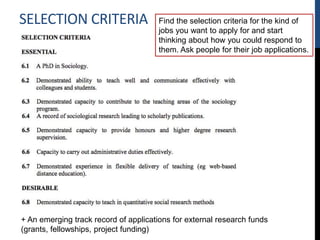
SELECTION CRITERIA
+ An emerging track record of applications for external research funds
(grants, fellowships, project funding)
Find the selection criteria for the kind of
jobs you want to apply for and start
thinking about how you could respond to
them. Ask people for their job applications.
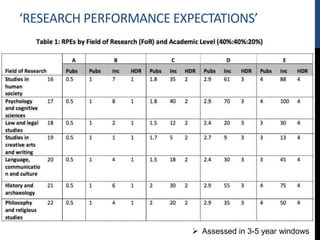
‘RESEARCH PERFORMANCE EXPECTATIONS’
 Assessed in 3-5 year windows
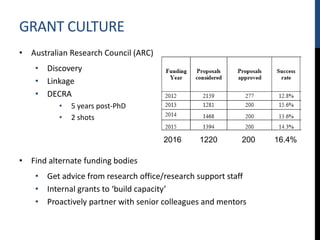
GRANT CULTURE
• Australian Research Council (ARC)
• Discovery
• Linkage
• DECRA
• 5 years post-PhD
• 2 shots
• Find alternate funding bodies
• Get advice from research office/research support staff
• Internal grants to ‘build capacity’
• Proactively partner with senior colleagues and mentors
2016 1220 200 16.4%
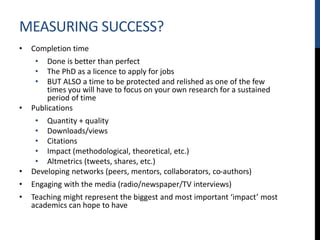
MEASURING SUCCESS?
• Completion time
• Done is better than perfect
• The PhD as a licence to apply for jobs
• BUT ALSO a time to be protected and relished as one of the few
times you will have to focus on your own research for a sustained
period of time
• Publications
• Quantity + quality
• Downloads/views
• Citations
• Impact (methodological, theoretical, etc.)
• Altmetrics (tweets, shares, etc.)
• Developing networks (peers, mentors, collaborators, co-authors)
• Engaging with the media (radio/newspaper/TV interviews)
• Teaching might represent the biggest and most important ‘impact’ most
academics can hope to have
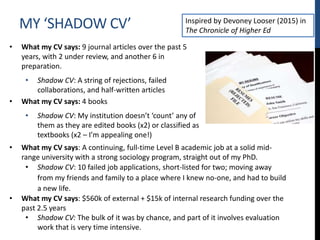
MY ‘SHADOW CV’
• What my CV says: 9 journal articles over the past 5
years, with 2 under review, and another 6 in
preparation.
• Shadow CV: A string of rejections, failed
collaborations, and half-written articles
• What my CV says: 4 books
• Shadow CV: My institution doesn’t ‘count’ any of
them as they are edited books (x2) or classified as
textbooks (x2 – I’m appealing one!)
• What my CV says: A continuing, full-time Level B academic job at a solid mid-
range university with a strong sociology program, straight out of my PhD.
• Shadow CV: 10 failed job applications, short-listed for two; moving away
from my friends and family to a place where I knew no-one, and had to build
a new life.
• What my CV says: $560k of external + $15k of internal research funding over the
past 2.5 years
• Shadow CV: The bulk of it was by chance, and part of it involves evaluation
work that is very time intensive.
Inspired by Devoney Looser (2015) in
The Chronicle of Higher Ed
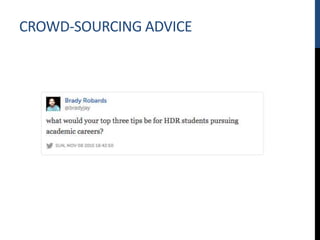
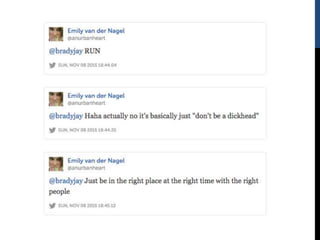
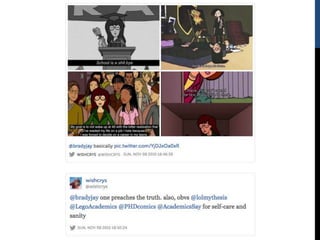
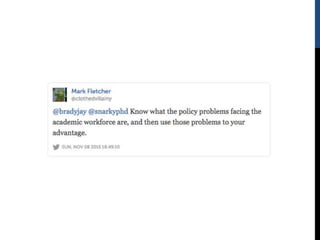
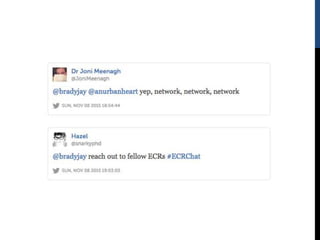
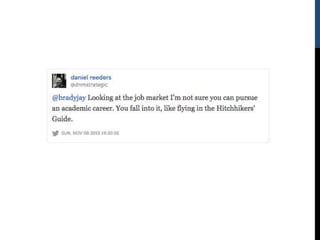
CROWD-SOURCING ADVICE
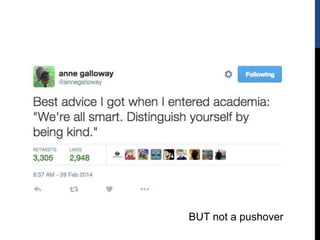
BUT not a pushover
THE CHALLENGE
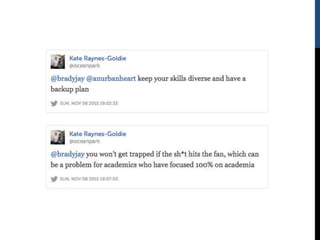
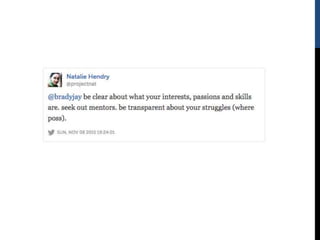
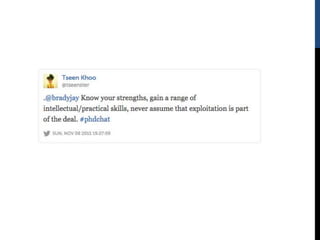
• Academic pathways appear to be increasingly fraught, non-linear
and involve at least some ‘treading water’
• Exploitation, casualisation, and short-term contracts
• Four essential elements to address these challenges:
• Planning, resilience, tenacity, and kindness
PREPARE FOR VERSATILITY
Take stock of the skills you develop during a PhD, and learn to translate
them into different position descriptions and selection criteria:
• Research
• Literature reviews - translating complex existing research into
accessible language
• Methods (qual, quant, recruitment, ethics)
• Project management
• Writing and editing
• Grant/tender applications
• Identifying funding organisations
• Writing persuasively
• Responding to criteria
 BUT: It’s a PhD, not a Nobel Prize (Mullins & Kiley 2002)
FORGING NEW PATHWAYS
• While we must continue to confront a range of challenges in
negotiating what comes after the PhD (personal, institutional,
structural) there is cause for optimism…
• Develop your own measures of success
• An academic career can be incredibly rewarding, but those
rewards do not always have to be found in conventional
academic positions
• In the Humanities and Social Sciences, we are uniquely
positioned to contribute to a range of discussions and industries
outside academia
• Other pathways today and tomorrow: Jodi, Catherine, David, Indigo
FURTHER READING
• www.thesiswhisperer.com - Inger Mewburn (ANU)
• http://theresearchwhisperer.wordpress.com - Tseen Khoo + Jonathan
O’Donnell (RMIT) +
• ‘It’s a PhD, not a Nobel Prize’ (Mullins & Kiley 2002)
• ‘Me and my Shadow CV’ (Looser 2015) -
http://chronicle.com/article/MeMy-Shadow-CV/233801
QUESTIONS/DISCUSSION
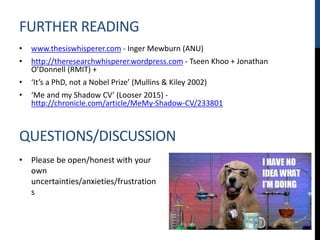
• Please be open/honest with your
own
uncertainties/anxieties/frustration
s

Post-PhD Pathways

  • 1.
    Post-PhD Pathways OR: You’vedone the thing, so what’s next? Brady Robards University of Tasmania brady.robards@utas.edu.au @bradyjay Griffith Centre for Cultural Research HDR Summer School – November, 2015
  • 2.
    PLAN • Help framethe day • Conferences • Publishing • Social media + the ‘public intellectual’ • Share my own experiences as a Griffith graduate + ECR • Applying for academic jobs • Developing a post-PhD research agenda • Challenges and opportunities around contemporary academic labour
  • 3.
    1. Telling childrenyou’re in the 25th grade. As curated by Buzzfeed’s Jessica Misener: 25 Deeply Painful PhD Student Problems (Besides Your Thesis)
  • 4.
    3. Realizing yourvocabulary is permanently scattered with words like “problematic” and “ontological” and “hegemony.”
  • 5.
    5. Going toparties and everyone’s just standing around talking about their research.
  • 6.
    8. When someoneclaims that being in a doctoral program isn’t “the same thing as having a real job”:
  • 7.
    11. …and feelingultra-guilty anytime you try to relax.
  • 8.
    12. Finding anold paper you wrote your first year of grad school:
  • 9.
    17. Feeling somedegree of “impostor syndrome” at least once a day.
  • 10.
    21. Grading yourundergrads’ papers:
  • 11.
    22. When someoneasks how “writing” is going:
  • 12.
    25. When ANYONEasks you what your plan is after you graduate:
  • 13.
    WHAT DO PHDSTUDENTS DO WHEN THEY GRADUATE? (Mewburn 2013 – http://thesiswhisperer.com/2013/07/17/whats-your-edge/) • Perpetual and ongoing state of crisis? (Kendall 2002) • Oversupply • Elite vs ‘non-elite’ institutions • The PhD as a pathway to research and/or teaching but not much else • 2003: 8% of research degree graduates were ‘unemployed’, although 23% were seeking other work (Mewburn 2013) • My pathway is (mostly) an academic one, but this is not the only post-PhD pathway…
  • 14.
  • 15.
  • 16.
    MY PATHWAY PhD/Level AProfessional Level B • 2008 – 2012 (4 years FTE) • Tutoring • RA work • Guest lectures • Acting convenor • 2011: Level A contract (FT) • QIBT • 2012 – 2013 • Student Advisor • Non-academic, but paid the bills • Retained position and affiliation with Griffith • Continued to work on publications/projects in spare time • Excellent mentors • 2013 – current • 40/40/20; continuing/tenurable • RPEs • 1 HERDC point/yr • HDR supervision • $7k/yr • 3 unit teaching rotation • 25 EFTSU/sem Griffith Griffith UTas
  • 17.
  • 18.
  • 19.
  • 20.
    STEPPING BACK: DURINGTHE PHD On saying yes to (almost) everything… • Publishing • Four journal articles + one article and one chapter on the way • Contributed to a textbook, Think Sociology • Co-edited a special issue and a book • Book reviews • Peer reviewing • Blogging • Teaching • Taught into ten different courses (all levels) • + guest lectures (mostly paid) • Applied for teaching awards • Service: Committees (HDR rep, symposia, professional associations, reviewing) • Conferences  networking • Mentors • Web presence
  • 21.
    SELECTION CRITERIA + Anemerging track record of applications for external research funds (grants, fellowships, project funding) Find the selection criteria for the kind of jobs you want to apply for and start thinking about how you could respond to them. Ask people for their job applications.
  • 22.
    ‘RESEARCH PERFORMANCE EXPECTATIONS’ Assessed in 3-5 year windows
  • 23.
    GRANT CULTURE • AustralianResearch Council (ARC) • Discovery • Linkage • DECRA • 5 years post-PhD • 2 shots • Find alternate funding bodies • Get advice from research office/research support staff • Internal grants to ‘build capacity’ • Proactively partner with senior colleagues and mentors 2016 1220 200 16.4%
  • 24.
    MEASURING SUCCESS? • Completiontime • Done is better than perfect • The PhD as a licence to apply for jobs • BUT ALSO a time to be protected and relished as one of the few times you will have to focus on your own research for a sustained period of time • Publications • Quantity + quality • Downloads/views • Citations • Impact (methodological, theoretical, etc.) • Altmetrics (tweets, shares, etc.) • Developing networks (peers, mentors, collaborators, co-authors) • Engaging with the media (radio/newspaper/TV interviews) • Teaching might represent the biggest and most important ‘impact’ most academics can hope to have
  • 25.
    MY ‘SHADOW CV’ •What my CV says: 9 journal articles over the past 5 years, with 2 under review, and another 6 in preparation. • Shadow CV: A string of rejections, failed collaborations, and half-written articles • What my CV says: 4 books • Shadow CV: My institution doesn’t ‘count’ any of them as they are edited books (x2) or classified as textbooks (x2 – I’m appealing one!) • What my CV says: A continuing, full-time Level B academic job at a solid mid- range university with a strong sociology program, straight out of my PhD. • Shadow CV: 10 failed job applications, short-listed for two; moving away from my friends and family to a place where I knew no-one, and had to build a new life. • What my CV says: $560k of external + $15k of internal research funding over the past 2.5 years • Shadow CV: The bulk of it was by chance, and part of it involves evaluation work that is very time intensive. Inspired by Devoney Looser (2015) in The Chronicle of Higher Ed
  • 26.
  • 28.
    BUT not apushover
  • 37.
    THE CHALLENGE • Academicpathways appear to be increasingly fraught, non-linear and involve at least some ‘treading water’ • Exploitation, casualisation, and short-term contracts • Four essential elements to address these challenges: • Planning, resilience, tenacity, and kindness
  • 38.
    PREPARE FOR VERSATILITY Takestock of the skills you develop during a PhD, and learn to translate them into different position descriptions and selection criteria: • Research • Literature reviews - translating complex existing research into accessible language • Methods (qual, quant, recruitment, ethics) • Project management • Writing and editing • Grant/tender applications • Identifying funding organisations • Writing persuasively • Responding to criteria  BUT: It’s a PhD, not a Nobel Prize (Mullins & Kiley 2002)
  • 39.
    FORGING NEW PATHWAYS •While we must continue to confront a range of challenges in negotiating what comes after the PhD (personal, institutional, structural) there is cause for optimism… • Develop your own measures of success • An academic career can be incredibly rewarding, but those rewards do not always have to be found in conventional academic positions • In the Humanities and Social Sciences, we are uniquely positioned to contribute to a range of discussions and industries outside academia • Other pathways today and tomorrow: Jodi, Catherine, David, Indigo
  • 40.
    FURTHER READING • www.thesiswhisperer.com- Inger Mewburn (ANU) • http://theresearchwhisperer.wordpress.com - Tseen Khoo + Jonathan O’Donnell (RMIT) + • ‘It’s a PhD, not a Nobel Prize’ (Mullins & Kiley 2002) • ‘Me and my Shadow CV’ (Looser 2015) - http://chronicle.com/article/MeMy-Shadow-CV/233801 QUESTIONS/DISCUSSION • Please be open/honest with your own uncertainties/anxieties/frustration s

Editor's Notes

  • #2 Thanks: Andy + GCCR Acknowledge: Disclaimer: Just one story/pathway, and not necessarily a good one or one that should be emulated, but perhaps there will be some useful ideas or insights in here somewhere Buzzfeed: http://www.buzzfeed.com/jessicamisener/25-deeply-painful-phd-student-problems-besides-your-thesis#.ihjwj51yE ARC RMS: https://rms.arc.gov.au/RMS/Report/Download/Report/a3f6be6e-33f7-4fb5-98a6-7526aaa184cf/6
  • #24 https://rms.arc.gov.au/RMS/Report/Download/Report/c1d284de-3f2a-410d-8cc4-71daf59bfef2/0