Toyota's JIT Revolution: A Legendary
Production System
Bravo group
Humaira Mehboob 07
Naila Farooq 14
AneelaYousaf 25
Sidra Mumtaz 02
Just InTime:
The JIT production was defined as 'producing only necessary units in a necessary
quantity at a necessary time resulting in decreased excess inventories and excess
workforce, thereby increasing productivity. JIT was based on the principle of producing
only what is needed and nothing more than needed.JIT focuses on continuous
improvement.
TOYOTA MOTOR CORPORATION
TOYOTA MOTORS is a Japanese automobile manufacturer headquartered inToyota,
Aichi, Japan.
November 2014, is the twelfth-largest company in the world by revenue.
Toyota was the largest automobile manufacturer in 2012 (by production)
Toyota is the world's first automobile manufacturer to produce more than 10 million
vehicles per year
. As of July 2014,Toyota was the largest listed company in Japan by market
capitalization and by revenue.
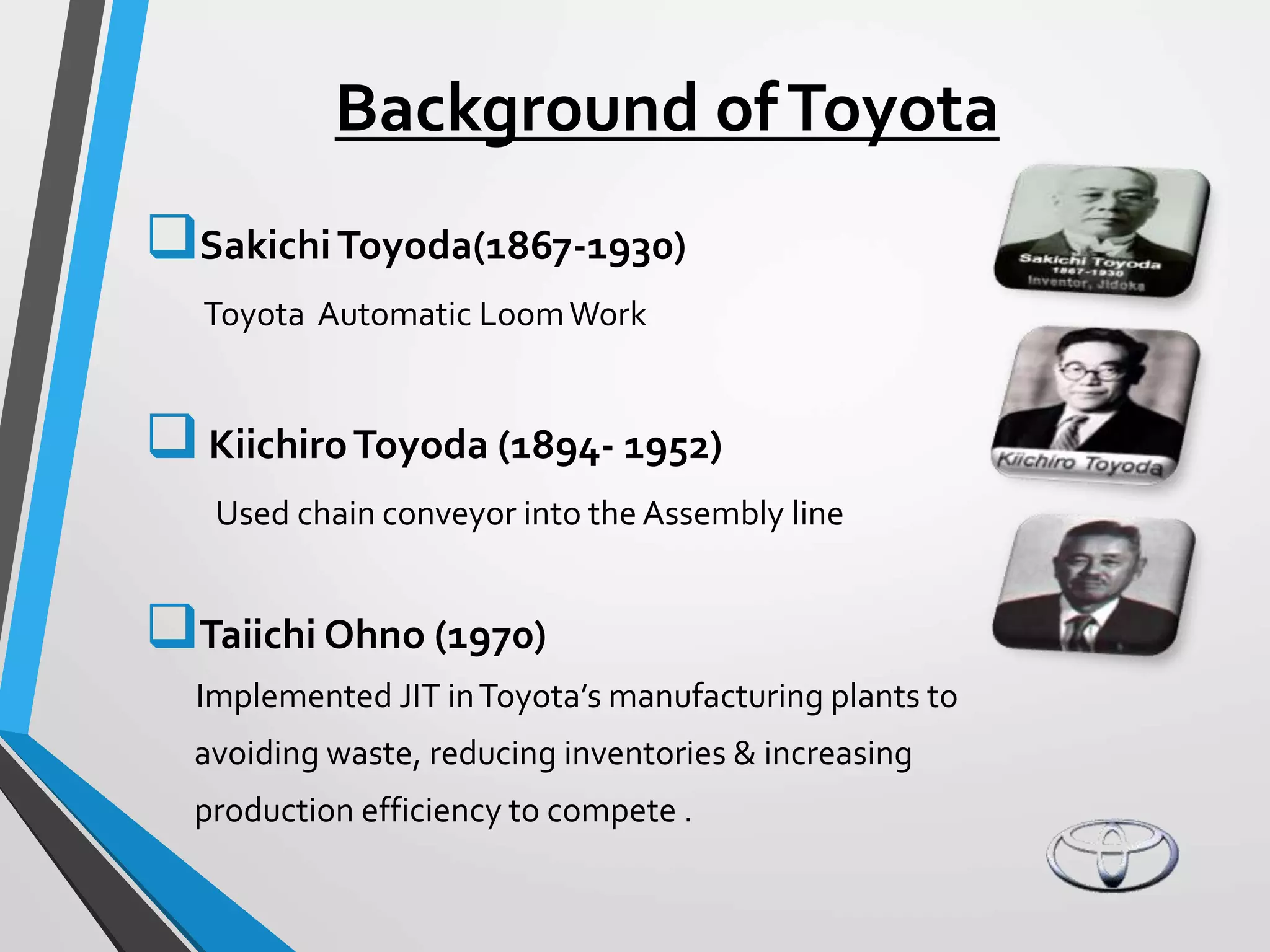
Background ofToyota
SakichiToyoda(1867-1930)
Toyota Automatic LoomWork
KiichiroToyoda (1894- 1952)
Used chain conveyor into the Assembly line
Taiichi Ohno (1970)
Implemented JIT inToyota’s manufacturing plants to
avoiding waste, reducing inventories & increasing
production efficiency to compete .
A Legendary Production System
Toyota production system also known as “TOYOTA WAY” was developed & promoted by
Toyota Motor Corporation.
The main purpose ofTPS is to eliminate waste through continuous improvement
activities.
Profit through cost reduction
Elimination of over production
Quality control , Quality assurance.
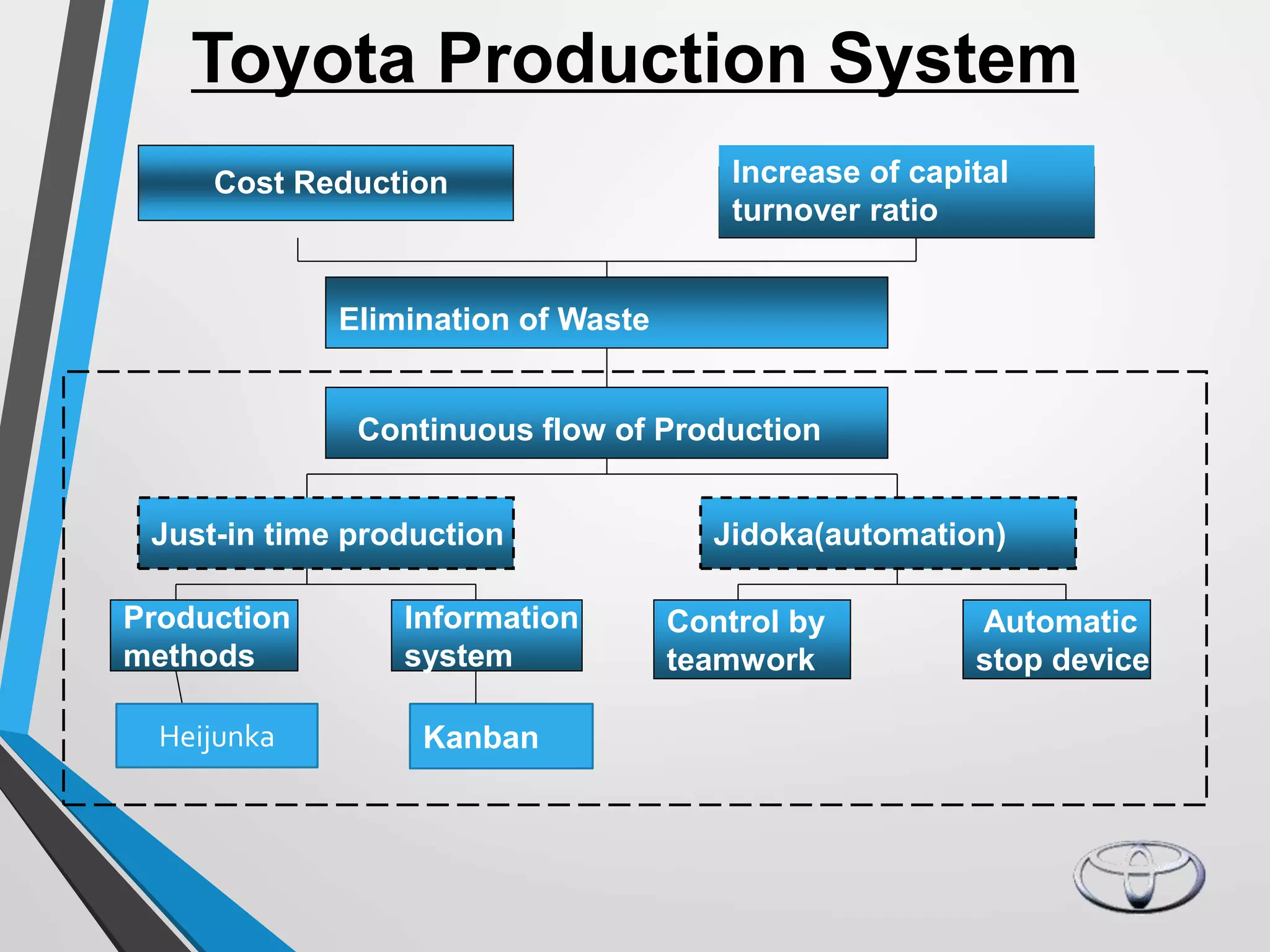
Toyota Production System
Cost Reduction Increase of capital
turnover ratio
Elimination of Waste
Production
methods
Information
system
Control by
teamwork
Automatic
stop device
Kanban
Continuous flow of Production
Just-in time production Jidoka(automation)
Heijunka
Features of Just-In-Time Production System
What it is:
• Management philosophy
• 'Pull' System through the plant
What it does:
• Attacks waste (time, inventory, scrap)
• Exposes problems and bottlenecks
• Achieves streamlined production
What it requires:
• Employee participation
• Industrial engineering/basics
• Continuing improvement
• Total quality control
• Small lot sizes
What it assumes:
• Stable environment
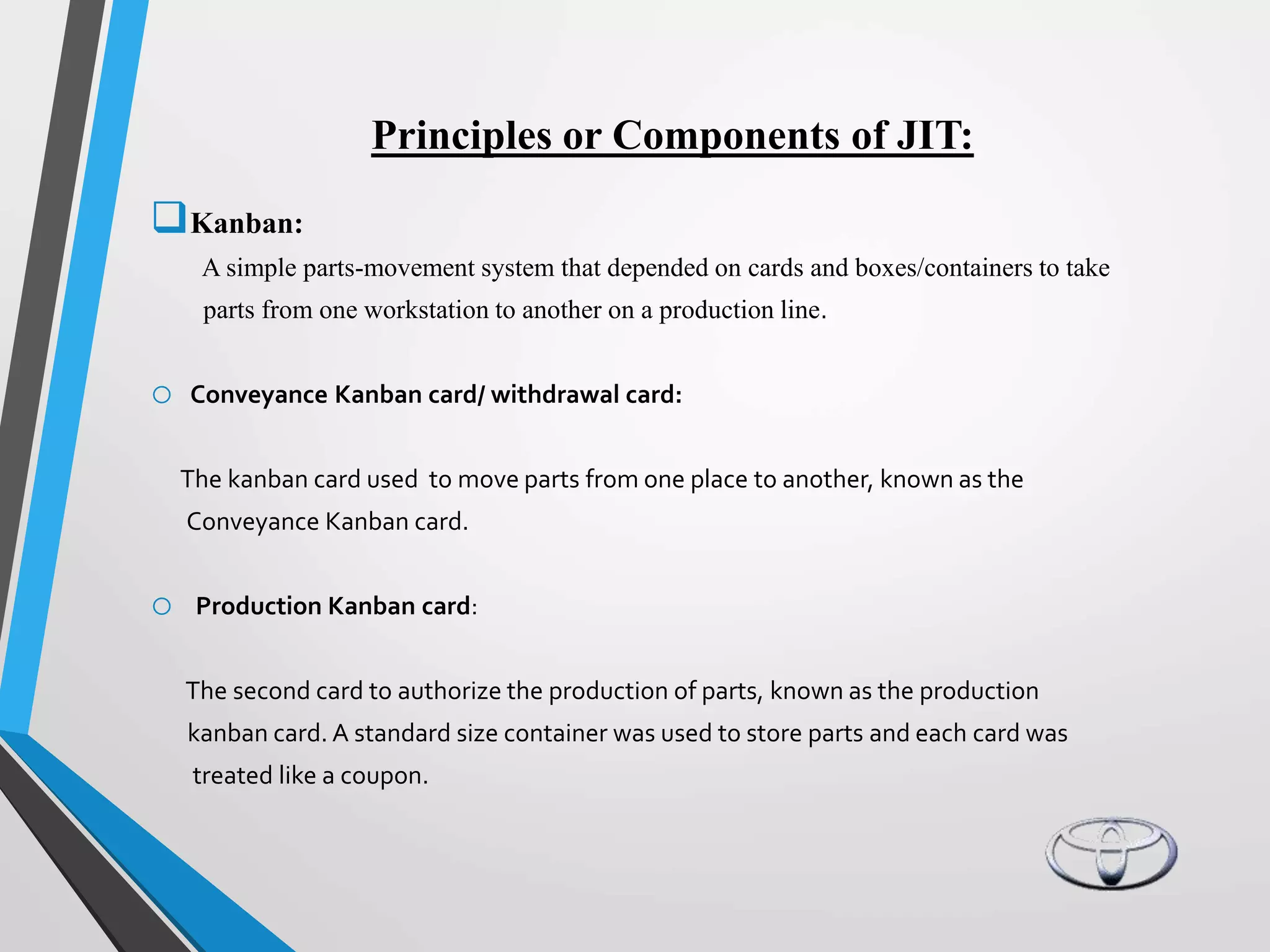
Principles or Components of JIT:
Kanban:
A simple parts-movement system that depended on cards and boxes/containers to take
parts from one workstation to another on a production line.
o Conveyance Kanban card/ withdrawal card:
The kanban card used to move parts from one place to another, known as the
Conveyance Kanban card.
o Production Kanban card:
The second card to authorize the production of parts, known as the production
kanban card. A standard size container was used to store parts and each card was
treated like a coupon.
 Heijunka:
Another important component of JIT was Heijunka (finding and keeping
average production volumes).
JIT's principle of building only the required number of items helped keep the
production costs low.
Heijunka helped in the accomplishment of this principle by creating a
consistent production volume.
Heijunka averaged the highest and lowest variations of the orders.The
variations were then removed from the production schedule.This ensured that
the right quantity of parts was produced with minimum workforce.
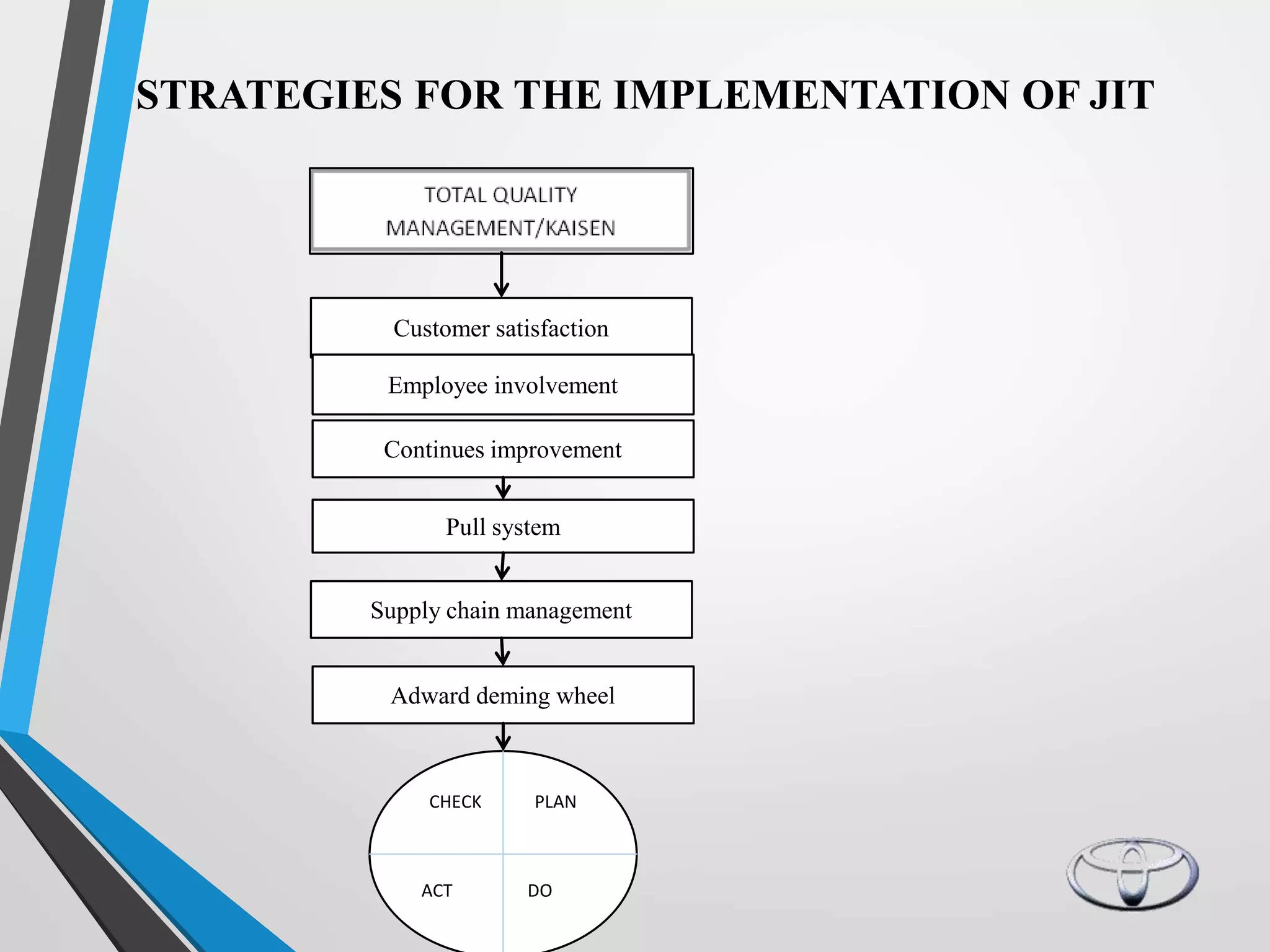
STRATEGIES FOR THE IMPLEMENTATION OF JIT
Customer satisfaction
Employee involvement
Continues improvement
Pull system
CHECK PLAN
ACT DO
Supply chain management
Adward deming wheel
PROBLEMS ANDTHE ACTIONS
TAKEN
WHY TOYOTA INTRODUCED JUST IN TIME PRODUCTION
PHILOSOPHY?
In the early 1930s, the technology used byAmerican automobile companies was
superior to that used by Japanese companies.
After thorough study and research Kiichiro sort out the root causes to the failure
of not competing in the global market. He then reorganized the production
system inToyota in a unique way.
This reorganization eventually led to the development of JIT concept
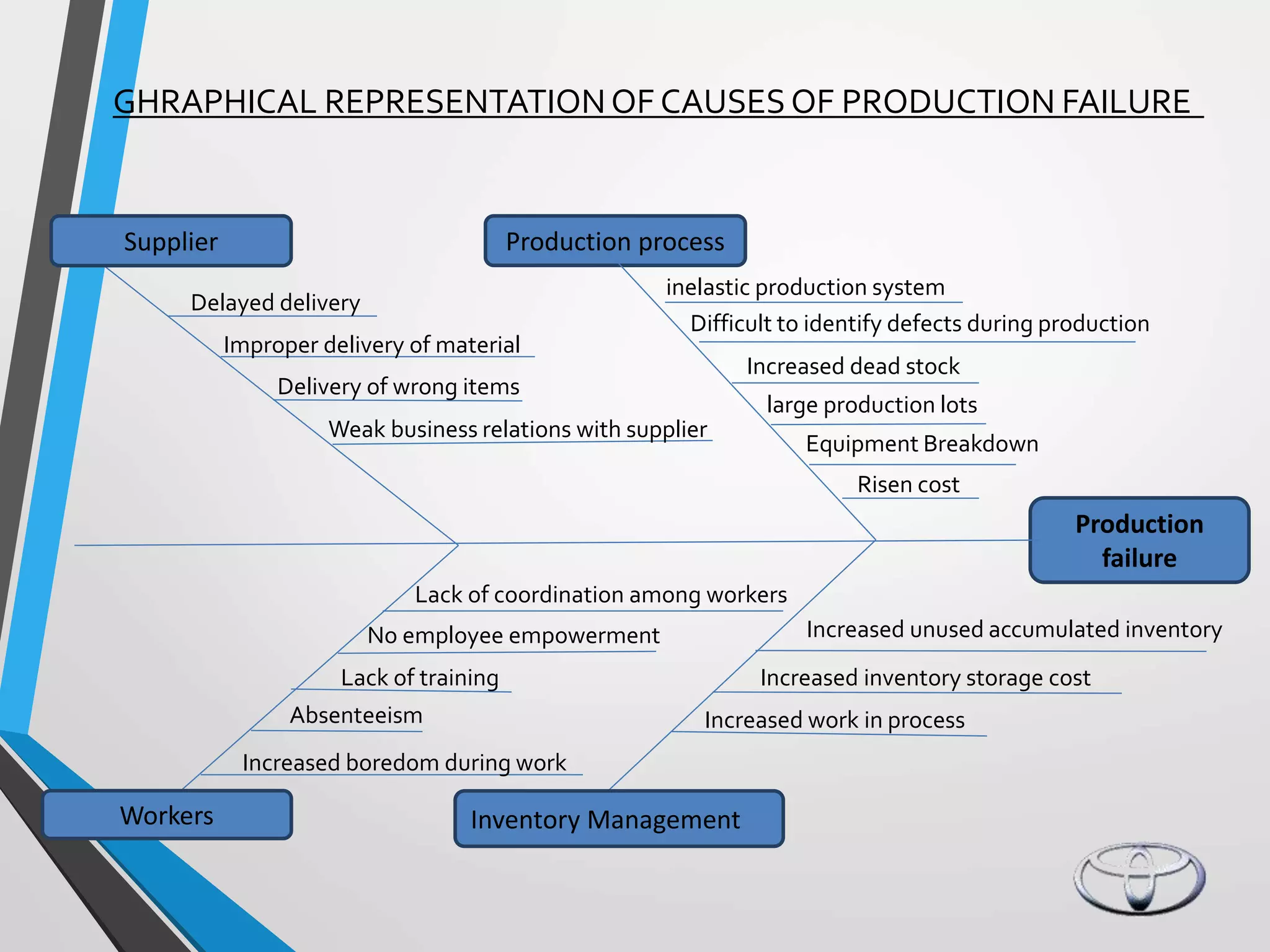
GHRAPHICAL REPRESENTATIONOF CAUSESOF PRODUCTION FAILURE
Production
failure
Production processSupplier
Workers Inventory Management
Delayed delivery
Delivery of wrong items
Improper delivery of material
Weak business relations with supplier
inelastic production system
Difficult to identify defects during production
Increased dead stock
large production lots
Equipment Breakdown
Risen cost
Lack of coordination among workers
No employee empowerment
Lack of training
Absenteeism
Increased boredom during work
Increased inventory storage cost
Increased work in process
Increased unused accumulated inventory
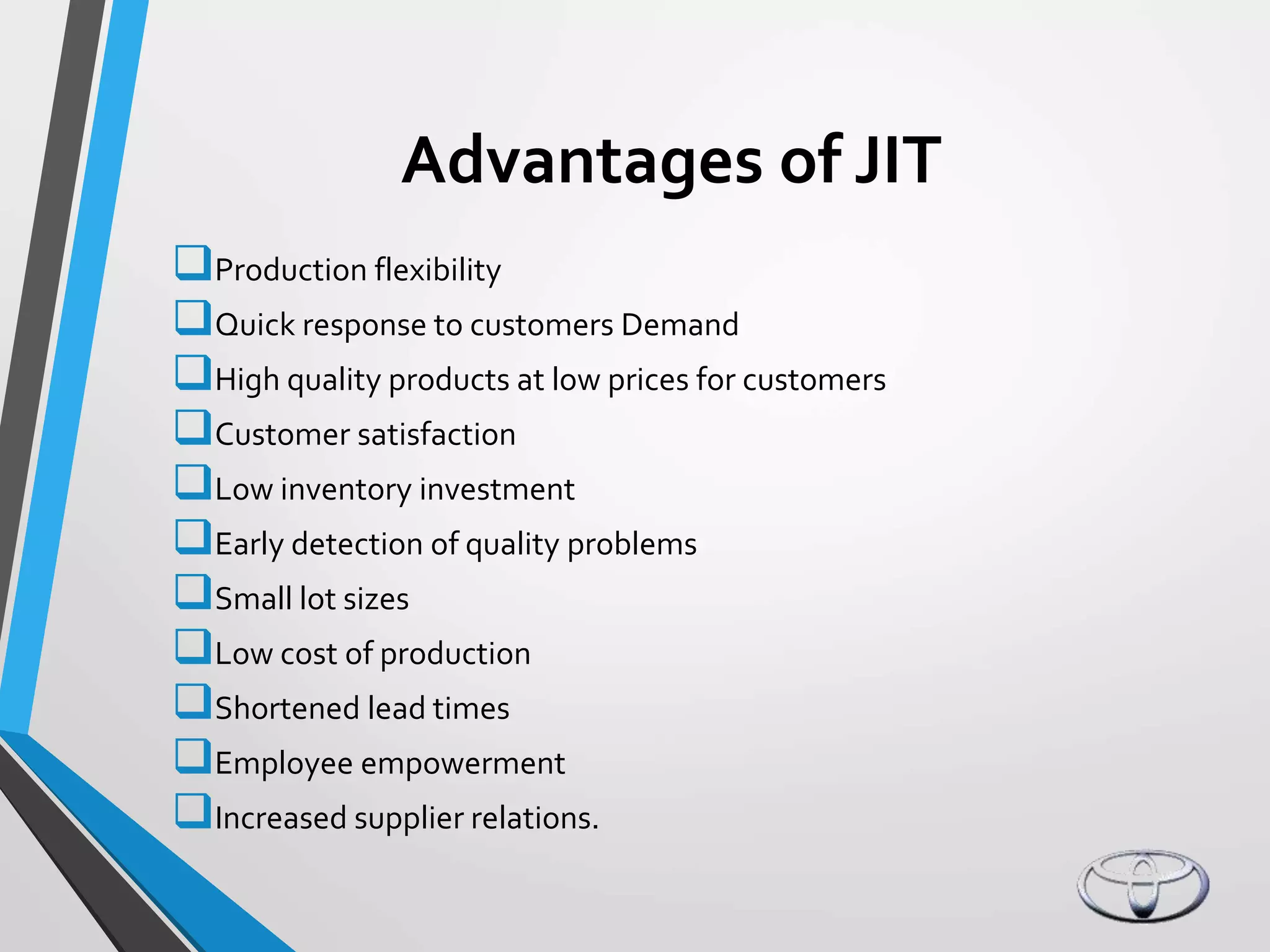
Advantages of JIT
Production flexibility
Quick response to customers Demand
High quality products at low prices for customers
Customer satisfaction
Low inventory investment
Early detection of quality problems
Small lot sizes
Low cost of production
Shortened lead times
Employee empowerment
Increased supplier relations.
Disadvantages of JIT:
JIT involved high set up costs
Special training and reorganization of policies and procedures in the
company were necessary to implement JIT
The supplier relations of the company also needed to be improved to
ensure timely delivery. In the absence of good supplier relations, JIT
increased the risk of inventory shortage.
Change in Organizational culture.
CONCLUSION
The JIT system was aimed at avoiding waste, reducing inventories
and increasing production efficiency.
JIT principles is respect for people or maintaining relationship at all
levels, be it employees, customers, suppliers or management.
Success of JIT depends on identification of what the customer needs
and fulfilling the request in the best possible manner.

JIT case study of Toyota

  • 2.
    Toyota's JIT Revolution:A Legendary Production System Bravo group Humaira Mehboob 07 Naila Farooq 14 AneelaYousaf 25 Sidra Mumtaz 02
  • 3.
    Just InTime: The JITproduction was defined as 'producing only necessary units in a necessary quantity at a necessary time resulting in decreased excess inventories and excess workforce, thereby increasing productivity. JIT was based on the principle of producing only what is needed and nothing more than needed.JIT focuses on continuous improvement. TOYOTA MOTOR CORPORATION TOYOTA MOTORS is a Japanese automobile manufacturer headquartered inToyota, Aichi, Japan. November 2014, is the twelfth-largest company in the world by revenue. Toyota was the largest automobile manufacturer in 2012 (by production) Toyota is the world's first automobile manufacturer to produce more than 10 million vehicles per year . As of July 2014,Toyota was the largest listed company in Japan by market capitalization and by revenue.
  • 4.
    Background ofToyota SakichiToyoda(1867-1930) Toyota AutomaticLoomWork KiichiroToyoda (1894- 1952) Used chain conveyor into the Assembly line Taiichi Ohno (1970) Implemented JIT inToyota’s manufacturing plants to avoiding waste, reducing inventories & increasing production efficiency to compete .
  • 5.
    A Legendary ProductionSystem Toyota production system also known as “TOYOTA WAY” was developed & promoted by Toyota Motor Corporation. The main purpose ofTPS is to eliminate waste through continuous improvement activities. Profit through cost reduction Elimination of over production Quality control , Quality assurance.
  • 6.
    Toyota Production System CostReduction Increase of capital turnover ratio Elimination of Waste Production methods Information system Control by teamwork Automatic stop device Kanban Continuous flow of Production Just-in time production Jidoka(automation) Heijunka
  • 7.
    Features of Just-In-TimeProduction System What it is: • Management philosophy • 'Pull' System through the plant What it does: • Attacks waste (time, inventory, scrap) • Exposes problems and bottlenecks • Achieves streamlined production What it requires: • Employee participation • Industrial engineering/basics • Continuing improvement • Total quality control • Small lot sizes What it assumes: • Stable environment
  • 8.
    Principles or Componentsof JIT: Kanban: A simple parts-movement system that depended on cards and boxes/containers to take parts from one workstation to another on a production line. o Conveyance Kanban card/ withdrawal card: The kanban card used to move parts from one place to another, known as the Conveyance Kanban card. o Production Kanban card: The second card to authorize the production of parts, known as the production kanban card. A standard size container was used to store parts and each card was treated like a coupon.
  • 9.
     Heijunka: Another importantcomponent of JIT was Heijunka (finding and keeping average production volumes). JIT's principle of building only the required number of items helped keep the production costs low. Heijunka helped in the accomplishment of this principle by creating a consistent production volume. Heijunka averaged the highest and lowest variations of the orders.The variations were then removed from the production schedule.This ensured that the right quantity of parts was produced with minimum workforce.
  • 10.
    STRATEGIES FOR THEIMPLEMENTATION OF JIT Customer satisfaction Employee involvement Continues improvement Pull system CHECK PLAN ACT DO Supply chain management Adward deming wheel
  • 11.
    PROBLEMS ANDTHE ACTIONS TAKEN WHYTOYOTA INTRODUCED JUST IN TIME PRODUCTION PHILOSOPHY? In the early 1930s, the technology used byAmerican automobile companies was superior to that used by Japanese companies. After thorough study and research Kiichiro sort out the root causes to the failure of not competing in the global market. He then reorganized the production system inToyota in a unique way. This reorganization eventually led to the development of JIT concept
  • 12.
    GHRAPHICAL REPRESENTATIONOF CAUSESOFPRODUCTION FAILURE Production failure Production processSupplier Workers Inventory Management Delayed delivery Delivery of wrong items Improper delivery of material Weak business relations with supplier inelastic production system Difficult to identify defects during production Increased dead stock large production lots Equipment Breakdown Risen cost Lack of coordination among workers No employee empowerment Lack of training Absenteeism Increased boredom during work Increased inventory storage cost Increased work in process Increased unused accumulated inventory
  • 13.
    Advantages of JIT Productionflexibility Quick response to customers Demand High quality products at low prices for customers Customer satisfaction Low inventory investment Early detection of quality problems Small lot sizes Low cost of production Shortened lead times Employee empowerment Increased supplier relations.
  • 14.
    Disadvantages of JIT: JITinvolved high set up costs Special training and reorganization of policies and procedures in the company were necessary to implement JIT The supplier relations of the company also needed to be improved to ensure timely delivery. In the absence of good supplier relations, JIT increased the risk of inventory shortage. Change in Organizational culture.
  • 15.
    CONCLUSION The JIT systemwas aimed at avoiding waste, reducing inventories and increasing production efficiency. JIT principles is respect for people or maintaining relationship at all levels, be it employees, customers, suppliers or management. Success of JIT depends on identification of what the customer needs and fulfilling the request in the best possible manner.