Gerund or
Infinitive?
We select the –ing from....
To create a NOUN from a verb to express a
general idea(Subject of the sentence in most
cases):
“Paying attention is essential in class”
After any preposition:
“I am looking forward to hearing from
you”
After certain verbal expressions (can’t stand, can’t
help, be/get used to, don’t mind/would mind, it’s no
use):
“I can’t help getting angry when pupils speak in
class”
• As Direct Object of a list of verbs
(continue, enjoy, like, love, prefer,
suggest, recommend, etc...):
–“I prefer going to the beach”
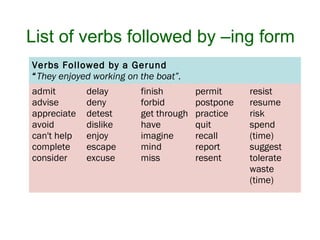
List of verbs followed by –ing form
Verbs Followed by a Gerund
“They enjoyed working on the boat”.
admit
advise
appreciate
avoid
can't help
complete
consider
delay
deny
detest
dislike
enjoy
escape
excuse
finish
forbid
get through
have
imagine
mind
miss
permit
postpone
practice
quit
recall
report
resent
resist
resume
risk
spend
(time)
suggest
tolerate
waste
(time)
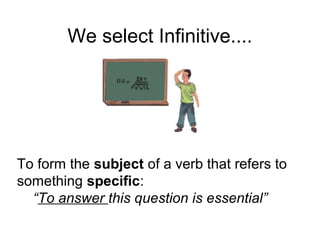
We select Infinitive....
To form the subject of a verb that refers to
something specific:
“To answer this question is essential”
After some adjectives
and/or adverbs:
“I am happy to
announce my
daughter’s wedding”
“The wall was too high
to jump for young
children”
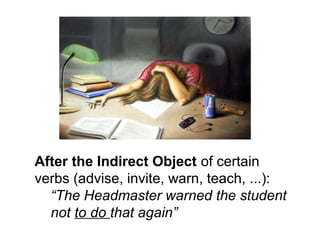
After the Indirect Object of certain
verbs (advise, invite, warn, teach, ...):
“The Headmaster warned the student
not to do that again”
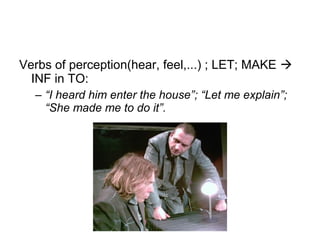
Verbs of perception(hear, feel,...) ; LET; MAKE 
INF in TO:
– “I heard him enter the house”; “Let me explain”;
“She made me to do it”.
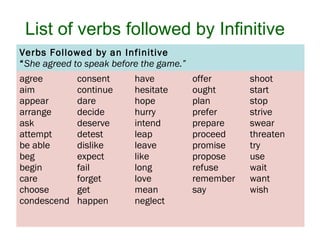
List of verbs followed by Infinitive
Verbs Followed by an Infinitive
“She agreed to speak before the game.”
agree
aim
appear
arrange
ask
attempt
be able
beg
begin
care
choose
condescend
consent
continue
dare
decide
deserve
detest
dislike
expect
fail
forget
get
happen
have
hesitate
hope
hurry
intend
leap
leave
like
long
love
mean
neglect
offer
ought
plan
prefer
prepare
proceed
promise
propose
refuse
remember
say
shoot
start
stop
strive
swear
threaten
try
use
wait
want
wish
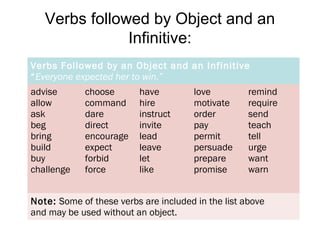
Verbs followed by Object and an
Infinitive:
Verbs Followed by an Object and an Infinitive
“Everyone expected her to win.”
advise
allow
ask
beg
bring
build
buy
challenge
choose
command
dare
direct
encourage
expect
forbid
force
have
hire
instruct
invite
lead
leave
let
like
love
motivate
order
pay
permit
persuade
prepare
promise
remind
require
send
teach
tell
urge
want
warn
Note: Some of these verbs are included in the list above
and may be used without an object.
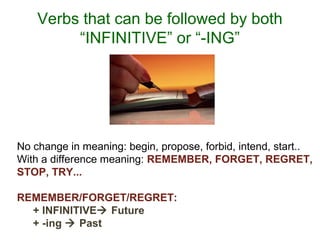
Verbs that can be followed by both
“INFINITIVE” or “-ING”
No change in meaning: begin, propose, forbid, intend, start..
With a difference meaning: REMEMBER, FORGET, REGRET,
STOP, TRY...
REMEMBER/FORGET/REGRET:
+ INFINITIVE Future
+ -ing  Past
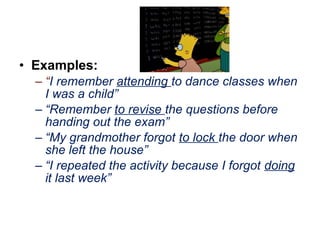
• Examples:
– “I remember attending to dance classes when
I was a child”
– “Remember to revise the questions before
handing out the exam”
– “My grandmother forgot to lock the door when
she left the house”
– “I repeated the activity because I forgot doing
it last week”
Verbs that can be followed by both
“INFINITIVE” or “-ING”
STOP:
+ ING  NO (don’t do that anymore)
+ INFINITIVE  YES (do it, indeed)
Examples:
“You have to stop writing at 10 o’clock.”
“After five hours of hard work we stopped to have a
rest”
• TRY:
– +ING  “experiment”
– + INFINITIVE  “make the effort”
• Examples:
– “I was trying to open the door but I couldn’t.”
– “Why don’t you try using this key?”

Gerundorinfinitive

  • 1.
  • 2.
    We select the–ing from.... To create a NOUN from a verb to express a general idea(Subject of the sentence in most cases): “Paying attention is essential in class”
  • 3.
    After any preposition: “Iam looking forward to hearing from you”
  • 4.
    After certain verbalexpressions (can’t stand, can’t help, be/get used to, don’t mind/would mind, it’s no use): “I can’t help getting angry when pupils speak in class”
  • 5.
    • As DirectObject of a list of verbs (continue, enjoy, like, love, prefer, suggest, recommend, etc...): –“I prefer going to the beach”
  • 6.
    List of verbsfollowed by –ing form Verbs Followed by a Gerund “They enjoyed working on the boat”. admit advise appreciate avoid can't help complete consider delay deny detest dislike enjoy escape excuse finish forbid get through have imagine mind miss permit postpone practice quit recall report resent resist resume risk spend (time) suggest tolerate waste (time)
  • 7.
    We select Infinitive.... Toform the subject of a verb that refers to something specific: “To answer this question is essential”
  • 8.
    After some adjectives and/oradverbs: “I am happy to announce my daughter’s wedding” “The wall was too high to jump for young children”
  • 9.
    After the IndirectObject of certain verbs (advise, invite, warn, teach, ...): “The Headmaster warned the student not to do that again”
  • 10.
    Verbs of perception(hear,feel,...) ; LET; MAKE  INF in TO: – “I heard him enter the house”; “Let me explain”; “She made me to do it”.
  • 11.
    List of verbsfollowed by Infinitive Verbs Followed by an Infinitive “She agreed to speak before the game.” agree aim appear arrange ask attempt be able beg begin care choose condescend consent continue dare decide deserve detest dislike expect fail forget get happen have hesitate hope hurry intend leap leave like long love mean neglect offer ought plan prefer prepare proceed promise propose refuse remember say shoot start stop strive swear threaten try use wait want wish
  • 12.
    Verbs followed byObject and an Infinitive: Verbs Followed by an Object and an Infinitive “Everyone expected her to win.” advise allow ask beg bring build buy challenge choose command dare direct encourage expect forbid force have hire instruct invite lead leave let like love motivate order pay permit persuade prepare promise remind require send teach tell urge want warn Note: Some of these verbs are included in the list above and may be used without an object.
  • 13.
    Verbs that canbe followed by both “INFINITIVE” or “-ING” No change in meaning: begin, propose, forbid, intend, start.. With a difference meaning: REMEMBER, FORGET, REGRET, STOP, TRY... REMEMBER/FORGET/REGRET: + INFINITIVE Future + -ing  Past
  • 14.
    • Examples: – “Iremember attending to dance classes when I was a child” – “Remember to revise the questions before handing out the exam” – “My grandmother forgot to lock the door when she left the house” – “I repeated the activity because I forgot doing it last week”
  • 15.
    Verbs that canbe followed by both “INFINITIVE” or “-ING” STOP: + ING  NO (don’t do that anymore) + INFINITIVE  YES (do it, indeed) Examples: “You have to stop writing at 10 o’clock.” “After five hours of hard work we stopped to have a rest”
  • 16.
    • TRY: – +ING “experiment” – + INFINITIVE  “make the effort” • Examples: – “I was trying to open the door but I couldn’t.” – “Why don’t you try using this key?”