CHOROIDAL NEVUS & MELANOMA
Amara Yousef
INTRODUCTION
 Melanocytic tumors of the UVEA
 Choroidal melanocytes.
 Mesodermal tissue
 Typically disseminate hematogenously.
 Benign NEVI
 Malign Melanomas
NEVUS OF THE CHOROID
 10% of the population.
 Caucasians
 Associated with NF 1 and dysplastic nevus
syndrome
 Growth in pre-pubertal years
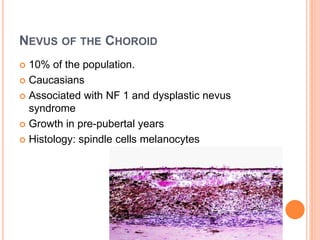
 Histology: spindle cells melanocytes
NEVUS OF THE CHOROID
 No clinical symptoms
 incidental finding
 visual field defects
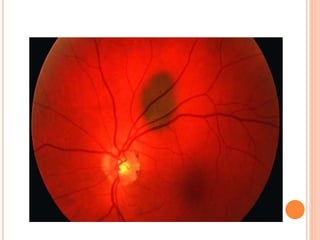
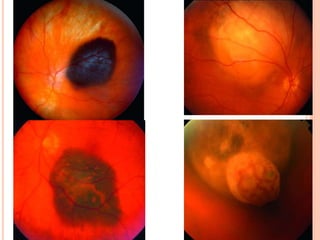
 Ophthalmoscopy:
 flat or minimally elevated
 pigmented (gray-brown)
 Distinct/indistinct margins?
 Some nevi are amelanotic.
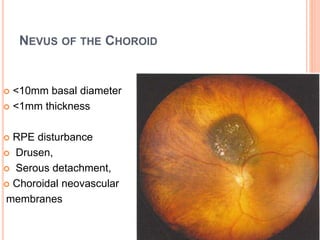
NEVUS OF THE CHOROID
 <10mm basal diameter
 <1mm thickness
 RPE disturbance
 Drusen,
 Serous detachment,
 Choroidal neovascular
membranes
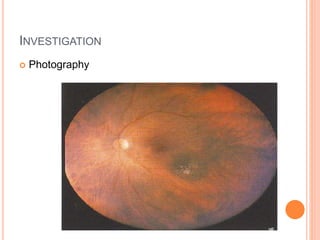
INVESTIGATION
 Photography
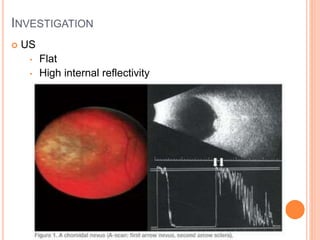
INVESTIGATION
 US
• Flat
• High internal reflectivity
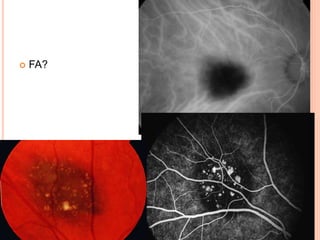
 FA?
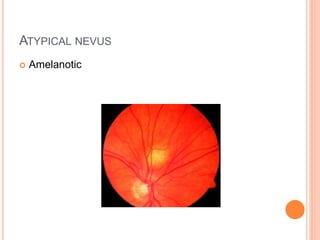
ATYPICAL NEVUS
 Amelanotic
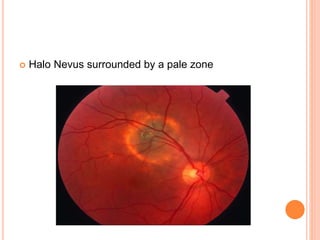
 Halo Nevus surrounded by a pale zone
SUSPICIOUS NEVUS
 Documented growth
 Symptoms: blurred vision, metamorphopsia,
VF loss, photopsia
 larger size at presentation
 >5mm diameter
 >1mm thickness
 Absence of drusen or RPE changes
 Associated sub-retinal fluid
 Presence of orange pigmentation
 Margin near optic disc
RECOMMENDED FOLLOW-UP
 NO suspicious features:
 require no treatment.
 first year, monitored twice;
 evaluated annually
 sunglasses.
 Suspicious features :
 Evaluated experienced center
 possible treatment
 four to six months
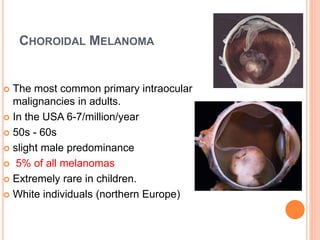
CHOROIDAL MELANOMA
 The most common primary intraocular
malignancies in adults.
 In the USA 6-7/million/year
 50s - 60s
 slight male predominance
 5% of all melanomas
 Extremely rare in children.
 White individuals (northern Europe)
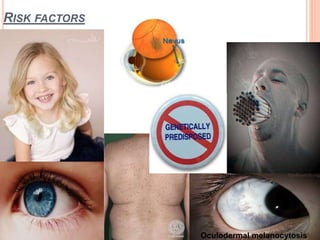
RISK FACTORS
Oculodermal melanocytosis
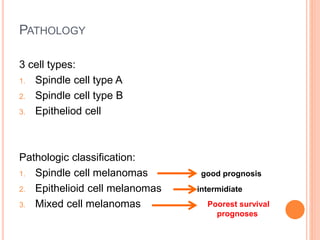
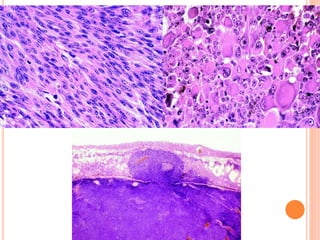
PATHOLOGY
3 cell types:
1. Spindle cell type A
2. Spindle cell type B
3. Epitheliod cell
Pathologic classification:
1. Spindle cell melanomas good prognosis
2. Epithelioid cell melanomas intermidiate
3. Mixed cell melanomas Poorest survival
prognoses
CLINICAL PRESENTATION:
Frequently asymptomatic
 Blurred vision, scotoma, flashing lights, floaters
 visual field loss
 Retinal detachment.
 Hemorrhage with arterial erosion.
 Pain
 glaucoma
Anamnesis
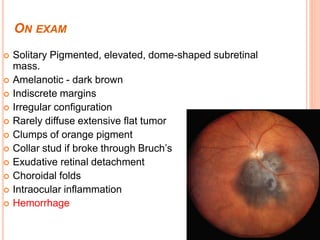
ON EXAM
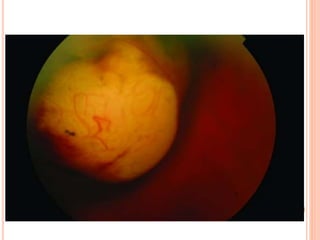
 Solitary Pigmented, elevated, dome-shaped subretinal
mass.
 Amelanotic - dark brown
 Indiscrete margins
 Irregular configuration
 Rarely diffuse extensive flat tumor
 Clumps of orange pigment
 Collar stud if broke through Bruch’s
 Exudative retinal detachment
 Choroidal folds
 Intraocular inflammation
 Hemorrhage
LOCATION
1- Temporaly hemisphere - posterior to equator
“most common location”
2- Posterior Uvea
 Choroidal lesions (85%)
 Ciliary body (10%)
3- Anterior Uvea
 Iris lesions (5%): Within previous chambler.
INVESTIGATION
 FA: differentiate from hemangioma
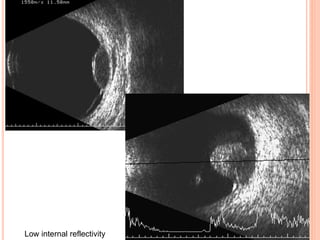
 US: Dimentions, extraocular spread, collar stud
(pathognomonic), choroidal excavation, high
surface and low internal reflectivity
 Dopller to differentiate from blood
 CT, MRI: Invasion, optic nerve involvment,
metastasis?
 Biopsy in uncertain cases (FNA or vitrectomy)
Low internal reflectivity
1.Choroidal nevi
2. Choroidal metastases.
3. Choroidal hemangioma (hamartoma)
 Benign vascular lesion
 Circumscribed form in adults, sometimes with retinal
detachment.
 Diffuse form in infants associated with Sturge -Weber.
 Increased T2 signal and enhancement than melanoma.
4. Retinal Detachment
 Serous, exudative or haemorrhagic.
 Myriad etiologies, including trauma, inflammation,
underlying tumor, or systemic disease.
 Does not enhance, but may obscure underlying mass.
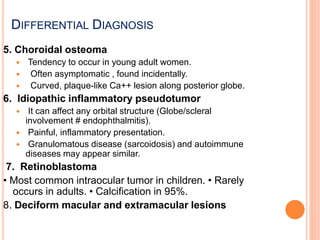
DIFFERENTIAL DIAGNOSIS
5. Choroidal osteoma
 Tendency to occur in young adult women.
 Often asymptomatic , found incidentally.
 Curved, plaque-like Ca++ lesion along posterior globe.
6. Idiopathic inflammatory pseudotumor
 It can affect any orbital structure (Globe/scleral
involvement # endophthalmitis).
 Painful, inflammatory presentation.
 Granulomatous disease (sarcoidosis) and autoimmune
diseases may appear similar.
7. Retinoblastoma
• Most common intraocular tumor in children. • Rarely
occurs in adults. • Calcification in 95%.
8. Deciform macular and extramacular lesions
DIFFERENTIAL DIAGNOSIS
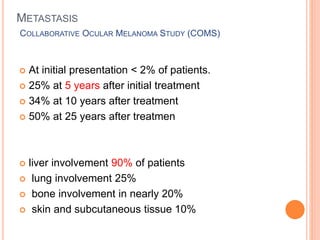
METASTASIS
COLLABORATIVE OCULAR MELANOMA STUDY (COMS)
 At initial presentation < 2% of patients.
 25% at 5 years after initial treatment
 34% at 10 years after treatment
 50% at 25 years after treatmen
 liver involvement 90% of patients
 lung involvement 25%
 bone involvement in nearly 20%
 skin and subcutaneous tissue 10%
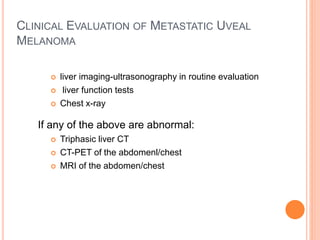
CLINICAL EVALUATION OF METASTATIC UVEAL
MELANOMA
 liver imaging-ultrasonography in routine evaluation
 liver function tests
 Chest x-ray
If any of the above are abnormal:
 Triphasic liver CT
 CT-PET of the abdomenl/chest
 MRI of the abdomen/chest
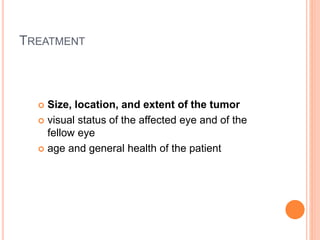
TREATMENT
 Size, location, and extent of the tumor
 visual status of the affected eye and of the
fellow eye
 age and general health of the patient
Observation
TREATMENT
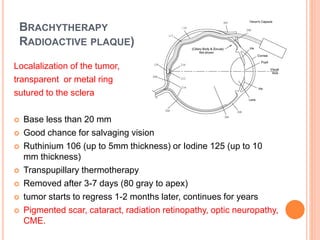
BRACHYTHERAPY
RADIOACTIVE PLAQUE)
Localalization of the tumor,
transparent or metal ring
sutured to the sclera
 Base less than 20 mm
 Good chance for salvaging vision
 Ruthinium 106 (up to 5mm thickness) or Iodine 125 (up to 10
mm thickness)
 Transpupillary thermotherapy
 Removed after 3-7 days (80 gray to apex)
 tumor starts to regress 1-2 months later, continues for years
 Pigmented scar, cataract, radiation retinopathy, optic neuropathy,
CME.
EXTERNAL PROTON BEAM RADIATION
 Ineffective as a single-modality treatment
 High dose in tumor, low dose on tissues
 Indications: large tumors, posterior tumors
 Tumor regression is slow
 Complications: cataract, retinopathy…
 Also: loss of lashes, depigmentation of lid skin…
TRANS SCLERAL CHOROIDECTOMY
 Rarely performed
 Very thick tumors (base less than 16mm)
 Complications: Retinal Detachment
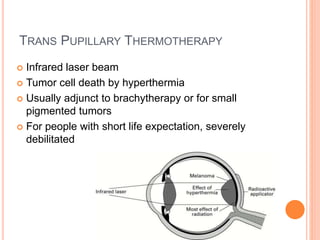
TRANS PUPILLARY THERMOTHERAPY
 Infrared laser beam
 Tumor cell death by hyperthermia
 Usually adjunct to brachytherapy or for small
pigmented tumors
 For people with short life expectation, severely
debilitated
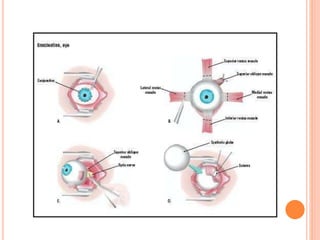
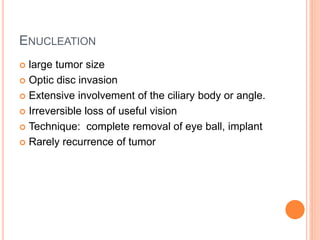
ENUCLEATION
 large tumor size
 Optic disc invasion
 Extensive involvement of the ciliary body or angle.
 Irreversible loss of useful vision
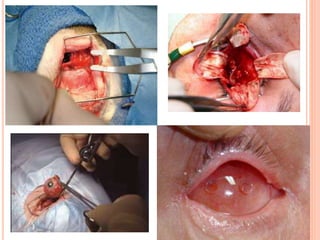
 Technique: complete removal of eye ball, implant
 Rarely recurrence of tumor
ARAD - Romania

Choroidal nevus & melanoma

  • 1.
    CHOROIDAL NEVUS &MELANOMA Amara Yousef
  • 2.
    INTRODUCTION  Melanocytic tumorsof the UVEA  Choroidal melanocytes.  Mesodermal tissue  Typically disseminate hematogenously.  Benign NEVI  Malign Melanomas
  • 3.
    NEVUS OF THECHOROID  10% of the population.  Caucasians  Associated with NF 1 and dysplastic nevus syndrome  Growth in pre-pubertal years  Histology: spindle cells melanocytes
  • 4.
    NEVUS OF THECHOROID  No clinical symptoms  incidental finding  visual field defects  Ophthalmoscopy:  flat or minimally elevated  pigmented (gray-brown)  Distinct/indistinct margins?  Some nevi are amelanotic.
  • 6.
    NEVUS OF THECHOROID  <10mm basal diameter  <1mm thickness  RPE disturbance  Drusen,  Serous detachment,  Choroidal neovascular membranes
  • 7.
  • 8.
    INVESTIGATION  US • Flat •High internal reflectivity
  • 9.
  • 10.
  • 11.
     Halo Nevussurrounded by a pale zone
  • 12.
    SUSPICIOUS NEVUS  Documentedgrowth  Symptoms: blurred vision, metamorphopsia, VF loss, photopsia  larger size at presentation  >5mm diameter  >1mm thickness  Absence of drusen or RPE changes  Associated sub-retinal fluid  Presence of orange pigmentation  Margin near optic disc
  • 13.
    RECOMMENDED FOLLOW-UP  NOsuspicious features:  require no treatment.  first year, monitored twice;  evaluated annually  sunglasses.  Suspicious features :  Evaluated experienced center  possible treatment  four to six months
  • 14.
    CHOROIDAL MELANOMA  Themost common primary intraocular malignancies in adults.  In the USA 6-7/million/year  50s - 60s  slight male predominance  5% of all melanomas  Extremely rare in children.  White individuals (northern Europe)
  • 15.
  • 16.
    PATHOLOGY 3 cell types: 1.Spindle cell type A 2. Spindle cell type B 3. Epitheliod cell Pathologic classification: 1. Spindle cell melanomas good prognosis 2. Epithelioid cell melanomas intermidiate 3. Mixed cell melanomas Poorest survival prognoses
  • 18.
    CLINICAL PRESENTATION: Frequently asymptomatic Blurred vision, scotoma, flashing lights, floaters  visual field loss  Retinal detachment.  Hemorrhage with arterial erosion.  Pain  glaucoma Anamnesis
  • 19.
    ON EXAM  SolitaryPigmented, elevated, dome-shaped subretinal mass.  Amelanotic - dark brown  Indiscrete margins  Irregular configuration  Rarely diffuse extensive flat tumor  Clumps of orange pigment  Collar stud if broke through Bruch’s  Exudative retinal detachment  Choroidal folds  Intraocular inflammation  Hemorrhage
  • 22.
    LOCATION 1- Temporaly hemisphere- posterior to equator “most common location” 2- Posterior Uvea  Choroidal lesions (85%)  Ciliary body (10%) 3- Anterior Uvea  Iris lesions (5%): Within previous chambler.
  • 23.
    INVESTIGATION  FA: differentiatefrom hemangioma  US: Dimentions, extraocular spread, collar stud (pathognomonic), choroidal excavation, high surface and low internal reflectivity  Dopller to differentiate from blood  CT, MRI: Invasion, optic nerve involvment, metastasis?  Biopsy in uncertain cases (FNA or vitrectomy)
  • 24.
  • 25.
    1.Choroidal nevi 2. Choroidalmetastases. 3. Choroidal hemangioma (hamartoma)  Benign vascular lesion  Circumscribed form in adults, sometimes with retinal detachment.  Diffuse form in infants associated with Sturge -Weber.  Increased T2 signal and enhancement than melanoma. 4. Retinal Detachment  Serous, exudative or haemorrhagic.  Myriad etiologies, including trauma, inflammation, underlying tumor, or systemic disease.  Does not enhance, but may obscure underlying mass. DIFFERENTIAL DIAGNOSIS
  • 26.
    5. Choroidal osteoma Tendency to occur in young adult women.  Often asymptomatic , found incidentally.  Curved, plaque-like Ca++ lesion along posterior globe. 6. Idiopathic inflammatory pseudotumor  It can affect any orbital structure (Globe/scleral involvement # endophthalmitis).  Painful, inflammatory presentation.  Granulomatous disease (sarcoidosis) and autoimmune diseases may appear similar. 7. Retinoblastoma • Most common intraocular tumor in children. • Rarely occurs in adults. • Calcification in 95%. 8. Deciform macular and extramacular lesions DIFFERENTIAL DIAGNOSIS

  • 27.
    METASTASIS COLLABORATIVE OCULAR MELANOMASTUDY (COMS)  At initial presentation < 2% of patients.  25% at 5 years after initial treatment  34% at 10 years after treatment  50% at 25 years after treatmen  liver involvement 90% of patients  lung involvement 25%  bone involvement in nearly 20%  skin and subcutaneous tissue 10%
  • 28.
    CLINICAL EVALUATION OFMETASTATIC UVEAL MELANOMA  liver imaging-ultrasonography in routine evaluation  liver function tests  Chest x-ray If any of the above are abnormal:  Triphasic liver CT  CT-PET of the abdomenl/chest  MRI of the abdomen/chest
  • 29.
    TREATMENT  Size, location,and extent of the tumor  visual status of the affected eye and of the fellow eye  age and general health of the patient
  • 30.
  • 31.
    BRACHYTHERAPY RADIOACTIVE PLAQUE) Localalization ofthe tumor, transparent or metal ring sutured to the sclera  Base less than 20 mm  Good chance for salvaging vision  Ruthinium 106 (up to 5mm thickness) or Iodine 125 (up to 10 mm thickness)  Transpupillary thermotherapy  Removed after 3-7 days (80 gray to apex)  tumor starts to regress 1-2 months later, continues for years  Pigmented scar, cataract, radiation retinopathy, optic neuropathy, CME.
  • 32.
    EXTERNAL PROTON BEAMRADIATION  Ineffective as a single-modality treatment  High dose in tumor, low dose on tissues  Indications: large tumors, posterior tumors  Tumor regression is slow  Complications: cataract, retinopathy…  Also: loss of lashes, depigmentation of lid skin…
  • 33.
    TRANS SCLERAL CHOROIDECTOMY Rarely performed  Very thick tumors (base less than 16mm)  Complications: Retinal Detachment
  • 34.
    TRANS PUPILLARY THERMOTHERAPY Infrared laser beam  Tumor cell death by hyperthermia  Usually adjunct to brachytherapy or for small pigmented tumors  For people with short life expectation, severely debilitated
  • 35.
    ENUCLEATION  large tumorsize  Optic disc invasion  Extensive involvement of the ciliary body or angle.  Irreversible loss of useful vision  Technique: complete removal of eye ball, implant  Rarely recurrence of tumor
  • 38.