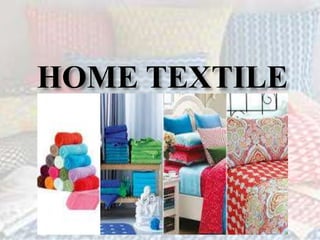
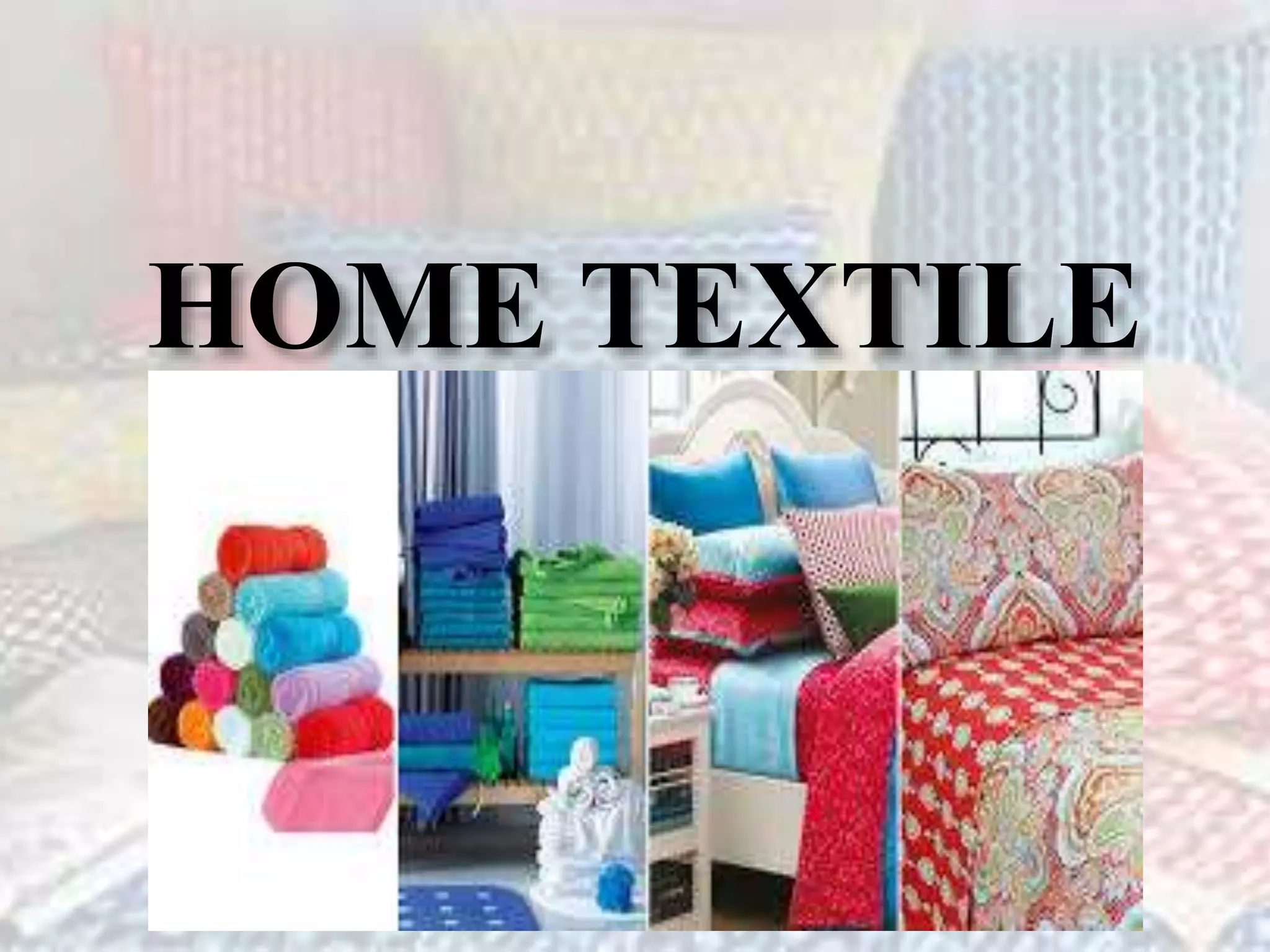
HOME TEXTILE
 Home textile = home + textile technology
 Home textile is a branch of technical textile
containing application of textile in household
purpose.
 Home textile are mainly used for their
functional and aesthetic properties which
provides us mood and also gives mental
relaxation to the people.
 A technical textile is a textile product
manufacture for non aesthetic purpose where
function is the primary criterion.
 Technical textile is a very large and growing
sector and supposed a vast array of other
industries.
 Polyester fabric
 Plastic fabric
 Leather fabric
 Satin fabric
 Organza fabric
 Organdy fabric
 Silk fabric
 Cotton fabric
 Jute fabric
 Wool fabric
 Rayon fabric
 Nylon fabric
 Fabric affords sun and light control.
 Fabric prevents interior color from fading.
 Fabric prevents deterioration through sunlight.
 Protects eyes from glare.
 Protection from night blackness at evening and
too-early sun in the morning.
 It can make summer room cooler and reduce air-
conditioning load.
 Increase livability and workability of small space.
 It also reduces noise; make music even speech
richer and more resonant.
 Textiles for seating
 Window textile
 Sun filters
 Semi sheer
 Reflective textile
 Curtain fabrics and
 Drapes
 Blinds
 Bed textiles
 Sheet and pillowcases
 Blankets
 Quilted textiles
 Bed spreads
 Mattress covers
 Fabrics for wall
 Coverings
 Bathroom textiles
 Shower curtains
 Terry towels
 Table textile
 Tablecloth
 Tablemats
Home textile
Table cloth Blankets
Sheets and
Pillowcases
Terry
Towels
Carpets and
Rugs
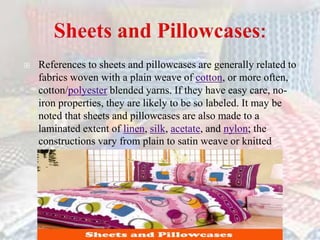
 References to sheets and pillowcases are generally related to
fabrics woven with a plain weave of cotton, or more often,
cotton/polyester blended yarns. If they have easy care, no-
iron properties, they are likely to be so labeled. It may be
noted that sheets and pillowcases are also made to a
laminated extent of linen, silk, acetate, and nylon; the
constructions vary from plain to satin weave or knitted.
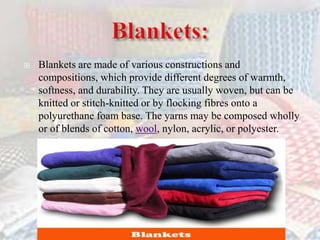
 Blankets are made of various constructions and
compositions, which provide different degrees of warmth,
softness, and durability. They are usually woven, but can be
knitted or stitch-knitted or by flocking fibres onto a
polyurethane foam base. The yarns may be composed wholly
or of blends of cotton, wool, nylon, acrylic, or polyester.
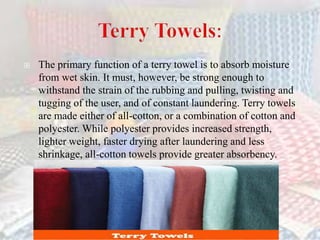
 The primary function of a terry towel is to absorb moisture
from wet skin. It must, however, be strong enough to
withstand the strain of the rubbing and pulling, twisting and
tugging of the user, and of constant laundering. Terry towels
are made either of all-cotton, or a combination of cotton and
polyester. While polyester provides increased strength,
lighter weight, faster drying after laundering and less
shrinkage, all-cotton towels provide greater absorbency..
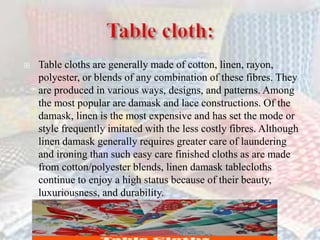
 Table cloths are generally made of cotton, linen, rayon,
polyester, or blends of any combination of these fibres. They
are produced in various ways, designs, and patterns. Among
the most popular are damask and lace constructions. Of the
damask, linen is the most expensive and has set the mode or
style frequently imitated with the less costly fibres. Although
linen damask generally requires greater care of laundering
and ironing than such easy care finished cloths as are made
from cotton/polyester blends, linen damask tablecloths
continue to enjoy a high status because of their beauty,
luxuriousness, and durability.
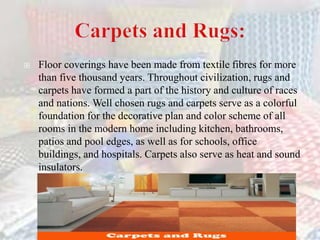
 Floor coverings have been made from textile fibres for more
than five thousand years. Throughout civilization, rugs and
carpets have formed a part of the history and culture of races
and nations. Well chosen rugs and carpets serve as a colorful
foundation for the decorative plan and color scheme of all
rooms in the modern home including kitchen, bathrooms,
patios and pool edges, as well as for schools, office
buildings, and hospitals. Carpets also serve as heat and sound
insulators.
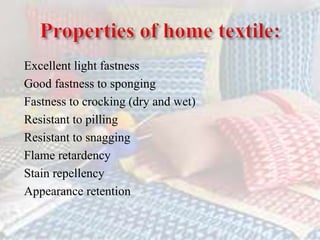
Excellent light fastness
Good fastness to sponging
Fastness to crocking (dry and wet)
Resistant to pilling
Resistant to snagging
Flame retardency
Stain repellency
Appearance retention
Thank you

home textile

  • 1.
  • 2.
     Home textile= home + textile technology  Home textile is a branch of technical textile containing application of textile in household purpose.  Home textile are mainly used for their functional and aesthetic properties which provides us mood and also gives mental relaxation to the people.
  • 3.
     A technicaltextile is a textile product manufacture for non aesthetic purpose where function is the primary criterion.  Technical textile is a very large and growing sector and supposed a vast array of other industries.
  • 4.
     Polyester fabric Plastic fabric  Leather fabric  Satin fabric  Organza fabric  Organdy fabric  Silk fabric  Cotton fabric  Jute fabric  Wool fabric  Rayon fabric  Nylon fabric
  • 5.
     Fabric affordssun and light control.  Fabric prevents interior color from fading.  Fabric prevents deterioration through sunlight.  Protects eyes from glare.  Protection from night blackness at evening and too-early sun in the morning.  It can make summer room cooler and reduce air- conditioning load.  Increase livability and workability of small space.  It also reduces noise; make music even speech richer and more resonant.
  • 6.
     Textiles forseating  Window textile  Sun filters  Semi sheer  Reflective textile  Curtain fabrics and  Drapes  Blinds  Bed textiles  Sheet and pillowcases  Blankets  Quilted textiles  Bed spreads  Mattress covers  Fabrics for wall  Coverings  Bathroom textiles  Shower curtains  Terry towels  Table textile  Tablecloth  Tablemats
  • 7.
    Home textile Table clothBlankets Sheets and Pillowcases Terry Towels Carpets and Rugs
  • 8.
     References tosheets and pillowcases are generally related to fabrics woven with a plain weave of cotton, or more often, cotton/polyester blended yarns. If they have easy care, no- iron properties, they are likely to be so labeled. It may be noted that sheets and pillowcases are also made to a laminated extent of linen, silk, acetate, and nylon; the constructions vary from plain to satin weave or knitted.
  • 9.
     Blankets aremade of various constructions and compositions, which provide different degrees of warmth, softness, and durability. They are usually woven, but can be knitted or stitch-knitted or by flocking fibres onto a polyurethane foam base. The yarns may be composed wholly or of blends of cotton, wool, nylon, acrylic, or polyester.
  • 10.
     The primaryfunction of a terry towel is to absorb moisture from wet skin. It must, however, be strong enough to withstand the strain of the rubbing and pulling, twisting and tugging of the user, and of constant laundering. Terry towels are made either of all-cotton, or a combination of cotton and polyester. While polyester provides increased strength, lighter weight, faster drying after laundering and less shrinkage, all-cotton towels provide greater absorbency..
  • 11.
     Table clothsare generally made of cotton, linen, rayon, polyester, or blends of any combination of these fibres. They are produced in various ways, designs, and patterns. Among the most popular are damask and lace constructions. Of the damask, linen is the most expensive and has set the mode or style frequently imitated with the less costly fibres. Although linen damask generally requires greater care of laundering and ironing than such easy care finished cloths as are made from cotton/polyester blends, linen damask tablecloths continue to enjoy a high status because of their beauty, luxuriousness, and durability.
  • 12.
     Floor coveringshave been made from textile fibres for more than five thousand years. Throughout civilization, rugs and carpets have formed a part of the history and culture of races and nations. Well chosen rugs and carpets serve as a colorful foundation for the decorative plan and color scheme of all rooms in the modern home including kitchen, bathrooms, patios and pool edges, as well as for schools, office buildings, and hospitals. Carpets also serve as heat and sound insulators.
  • 13.
    Excellent light fastness Goodfastness to sponging Fastness to crocking (dry and wet) Resistant to pilling Resistant to snagging Flame retardency Stain repellency Appearance retention
  • 14.