Modal Verbs 
Why, when, and how to 
use them.
Main caracteristcis 
 A special type of auxiliary verb; 
 They alter or complete the meaning of the 
main verb; 
 They express ideas such as capacity, 
possibility, obligation, permission, prohibition, 
probability, supposition, request, and desire. 
 They can also indicate the level of formality in 
the conversation. 
 They do not take “s” for the third person 
singular.
Main modal verbs 
CAN, COULD, MAY, MIGHT, 
MUST, SHALL, WILL, SHOULD, 
OUGHT TO, and WOULD.
CAN 
One of the most commonly used 
modals in English. It can express 
ideas such as capacity, 
permission or request.
Examples: 
She can speak French. (capacity) 
He can come in now. (permission) 
Can you lend me your pen, please? 
(request)
COULD 
It expresses possibility, 
past ability as well as 
suggestions and requests.
Examples: 
Extreme rain could cause the river 
to flood the city (possibility) 
John could run very fast when he 
was younger (past ability)
We could go to an ice-cream parlor or 
stay home and watch a movie. 
(suggestion) 
Could I use your cell phone for a 
moment? (request)
MAY 
It is most commonly used to 
express possibility. It can 
also be used to give or ask 
for permission.
Examples: 
Maria may be at school or at home. 
(possibility) 
May he leave the room with me? 
(asking for permission) 
Yes, he may leave the room with you. 
(giving permission)
MIGHT 
It is more commonly used to 
indicate possibility. However, it 
can also be used to make 
suggestions or requests; this is 
a rare use, though.
Examples: 
Your backpack might be under the desk. 
(possibility) 
You might go to the Bodódromo during 
your visit. (suggestion) 
Might I open the door? 
(request – British standard)
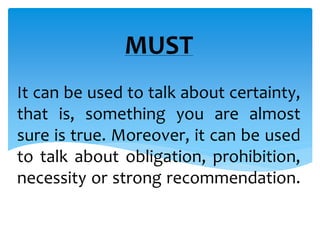
MUST 
It can be used to talk about certainty, 
that is, something you are almost 
sure is true. Moreover, it can be used 
to talk about obligation, prohibition, 
necessity or strong recommendation.
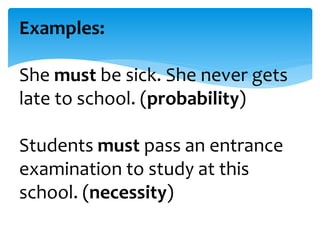
Examples: 
She must be sick. She never gets 
late to school. (probability) 
Students must pass an entrance 
examination to study at this 
school. (necessity)
You must drink a lot of water to 
protect your voice. (strong 
recommendation) 
Sarah, you must always do your 
homework. (obligation)
SHALL 
It indicates a future action. It is 
more commonly used with the first 
person singular and plural (I and 
we) often found in suggestions, 
promises, or predestinations.
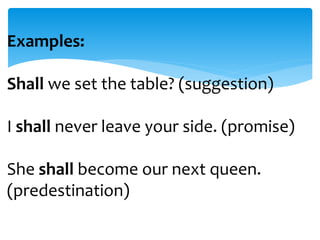
Examples: 
Shall we set the table? (suggestion) 
I shall never leave your side. (promise) 
She shall become our next queen. 
(predestination)
WILL 
It is more commonly used to talk about 
future situations. Nonetheless, it can 
also be used to talk about the present 
when we want to make a request. It is 
also used in situations in which we 
make instant decisions.
Examples: 
I will call you later. (future action) 
Will you close the window, please? 
(request) 
I loved that T-shirt! I’ll take it. (instant 
decision)
SHOULD 
This modal is more commonly 
used to give recommendations 
or advices. It can also be used 
to talk about obligation as well 
as expectation.
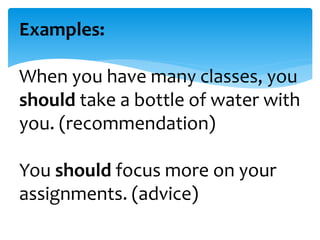
Examples: 
When you have many classes, you 
should take a bottle of water with 
you. (recommendation) 
You should focus more on your 
assignments. (advice)
I should be at work before 7pm. 
(obligation) 
At this moment, they should already 
be in New York. (expectation)
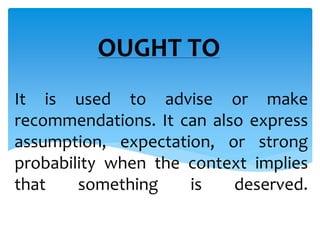
OUGHT TO 
It is used to advise or make 
recommendations. It can also express 
assumption, expectation, or strong 
probability when the context implies 
that something is deserved.
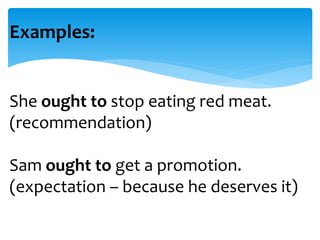
Examples: 
She ought to stop eating red meat. 
(recommendation) 
Sam ought to get a promotion. 
(expectation – because he deserves it)
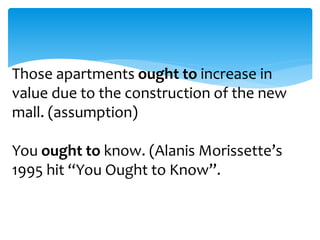
Those apartments ought to increase in 
value due to the construction of the new 
mall. (assumption) 
You ought to know. (Alanis Morissette’s 
1995 hit “You Ought to Know”.
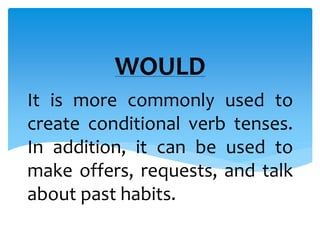
WOULD 
It is more commonly used to 
create conditional verb tenses. 
In addition, it can be used to 
make offers, requests, and talk 
about past habits.
Examples: 
If I were you, I would not do that 
again. (2nd conditional) 
Would you like some cake? (offer)
Would you turn down the volume, 
please? (request) 
We would swim in the dam for 
hours when we were kids. (past 
habits)
Other modals which can be used to 
make conditional sentences: could, 
might, will and should. 
If I knew her name, I might tell. 
I could have told you the truth if you 
had listened to me. 
If I should see him, I’ll give him the 
message.

Modal Verbs

  • 1.
    Modal Verbs Why,when, and how to use them.
  • 2.
    Main caracteristcis A special type of auxiliary verb;  They alter or complete the meaning of the main verb;  They express ideas such as capacity, possibility, obligation, permission, prohibition, probability, supposition, request, and desire.  They can also indicate the level of formality in the conversation.  They do not take “s” for the third person singular.
  • 3.
    Main modal verbs CAN, COULD, MAY, MIGHT, MUST, SHALL, WILL, SHOULD, OUGHT TO, and WOULD.
  • 4.
    CAN One ofthe most commonly used modals in English. It can express ideas such as capacity, permission or request.
  • 6.
    Examples: She canspeak French. (capacity) He can come in now. (permission) Can you lend me your pen, please? (request)
  • 7.
    COULD It expressespossibility, past ability as well as suggestions and requests.
  • 9.
    Examples: Extreme raincould cause the river to flood the city (possibility) John could run very fast when he was younger (past ability)
  • 10.
    We could goto an ice-cream parlor or stay home and watch a movie. (suggestion) Could I use your cell phone for a moment? (request)
  • 11.
    MAY It ismost commonly used to express possibility. It can also be used to give or ask for permission.
  • 13.
    Examples: Maria maybe at school or at home. (possibility) May he leave the room with me? (asking for permission) Yes, he may leave the room with you. (giving permission)
  • 14.
    MIGHT It ismore commonly used to indicate possibility. However, it can also be used to make suggestions or requests; this is a rare use, though.
  • 16.
    Examples: Your backpackmight be under the desk. (possibility) You might go to the Bodódromo during your visit. (suggestion) Might I open the door? (request – British standard)
  • 17.
    MUST It canbe used to talk about certainty, that is, something you are almost sure is true. Moreover, it can be used to talk about obligation, prohibition, necessity or strong recommendation.
  • 19.
    Examples: She mustbe sick. She never gets late to school. (probability) Students must pass an entrance examination to study at this school. (necessity)
  • 20.
    You must drinka lot of water to protect your voice. (strong recommendation) Sarah, you must always do your homework. (obligation)
  • 21.
    SHALL It indicatesa future action. It is more commonly used with the first person singular and plural (I and we) often found in suggestions, promises, or predestinations.
  • 23.
    Examples: Shall weset the table? (suggestion) I shall never leave your side. (promise) She shall become our next queen. (predestination)
  • 24.
    WILL It ismore commonly used to talk about future situations. Nonetheless, it can also be used to talk about the present when we want to make a request. It is also used in situations in which we make instant decisions.
  • 26.
    Examples: I willcall you later. (future action) Will you close the window, please? (request) I loved that T-shirt! I’ll take it. (instant decision)
  • 27.
    SHOULD This modalis more commonly used to give recommendations or advices. It can also be used to talk about obligation as well as expectation.
  • 29.
    Examples: When youhave many classes, you should take a bottle of water with you. (recommendation) You should focus more on your assignments. (advice)
  • 30.
    I should beat work before 7pm. (obligation) At this moment, they should already be in New York. (expectation)
  • 31.
    OUGHT TO Itis used to advise or make recommendations. It can also express assumption, expectation, or strong probability when the context implies that something is deserved.
  • 33.
    Examples: She oughtto stop eating red meat. (recommendation) Sam ought to get a promotion. (expectation – because he deserves it)
  • 34.
    Those apartments oughtto increase in value due to the construction of the new mall. (assumption) You ought to know. (Alanis Morissette’s 1995 hit “You Ought to Know”.
  • 35.
    WOULD It ismore commonly used to create conditional verb tenses. In addition, it can be used to make offers, requests, and talk about past habits.
  • 37.
    Examples: If Iwere you, I would not do that again. (2nd conditional) Would you like some cake? (offer)
  • 38.
    Would you turndown the volume, please? (request) We would swim in the dam for hours when we were kids. (past habits)
  • 39.
    Other modals whichcan be used to make conditional sentences: could, might, will and should. If I knew her name, I might tell. I could have told you the truth if you had listened to me. If I should see him, I’ll give him the message.