Computer Ethics
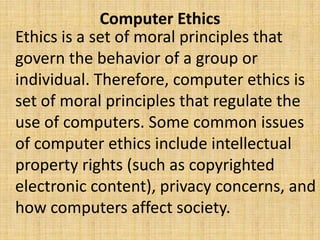
Ethics is a set of moral principles that
govern the behavior of a group or
individual. Therefore, computer ethics is
set of moral principles that regulate the
use of computers. Some common issues
of computer ethics include intellectual
property rights (such as copyrighted
electronic content), privacy concerns, and
how computers affect society.
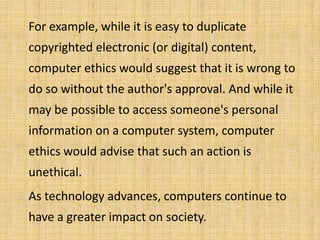
For example, while it is easy to duplicate
copyrighted electronic (or digital) content,
computer ethics would suggest that it is wrong to
do so without the author's approval. And while it
may be possible to access someone's personal
information on a computer system, computer
ethics would advise that such an action is
unethical.
As technology advances, computers continue to
have a greater impact on society.
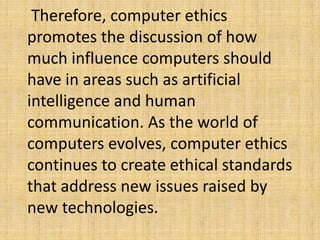
Therefore, computer ethics
promotes the discussion of how
much influence computers should
have in areas such as artificial
intelligence and human
communication. As the world of
computers evolves, computer ethics
continues to create ethical standards
that address new issues raised by
new technologies.
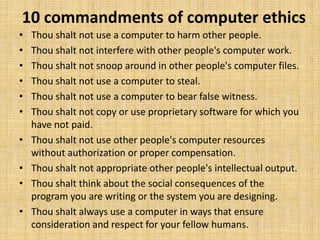
10 commandments of computer ethics
• Thou shalt not use a computer to harm other people.
• Thou shalt not interfere with other people's computer work.
• Thou shalt not snoop around in other people's computer files.
• Thou shalt not use a computer to steal.
• Thou shalt not use a computer to bear false witness.
• Thou shalt not copy or use proprietary software for which you
have not paid.
• Thou shalt not use other people's computer resources
without authorization or proper compensation.
• Thou shalt not appropriate other people's intellectual output.
• Thou shalt think about the social consequences of the
program you are writing or the system you are designing.
• Thou shalt always use a computer in ways that ensure
consideration and respect for your fellow humans.

Computer ethics

  • 1.
    Computer Ethics Ethics isa set of moral principles that govern the behavior of a group or individual. Therefore, computer ethics is set of moral principles that regulate the use of computers. Some common issues of computer ethics include intellectual property rights (such as copyrighted electronic content), privacy concerns, and how computers affect society.
  • 2.
    For example, whileit is easy to duplicate copyrighted electronic (or digital) content, computer ethics would suggest that it is wrong to do so without the author's approval. And while it may be possible to access someone's personal information on a computer system, computer ethics would advise that such an action is unethical. As technology advances, computers continue to have a greater impact on society.
  • 3.
    Therefore, computer ethics promotesthe discussion of how much influence computers should have in areas such as artificial intelligence and human communication. As the world of computers evolves, computer ethics continues to create ethical standards that address new issues raised by new technologies.
  • 4.
    10 commandments ofcomputer ethics • Thou shalt not use a computer to harm other people. • Thou shalt not interfere with other people's computer work. • Thou shalt not snoop around in other people's computer files. • Thou shalt not use a computer to steal. • Thou shalt not use a computer to bear false witness. • Thou shalt not copy or use proprietary software for which you have not paid. • Thou shalt not use other people's computer resources without authorization or proper compensation. • Thou shalt not appropriate other people's intellectual output. • Thou shalt think about the social consequences of the program you are writing or the system you are designing. • Thou shalt always use a computer in ways that ensure consideration and respect for your fellow humans.