Deviated Nasal
Septum
Dr. Vishal Sharma
Aetiology
1. Trauma: blow on nose
2. Developmental:
 Birth moulding

 High arched palate

 Unequal growth b/w skull base & palate
3. Mass in opposite nasal cavity
4. Racial factors: common in Europeans
5. Hereditary: in posterior D.N.S.
Types
1. Anterior / caudal dislocation

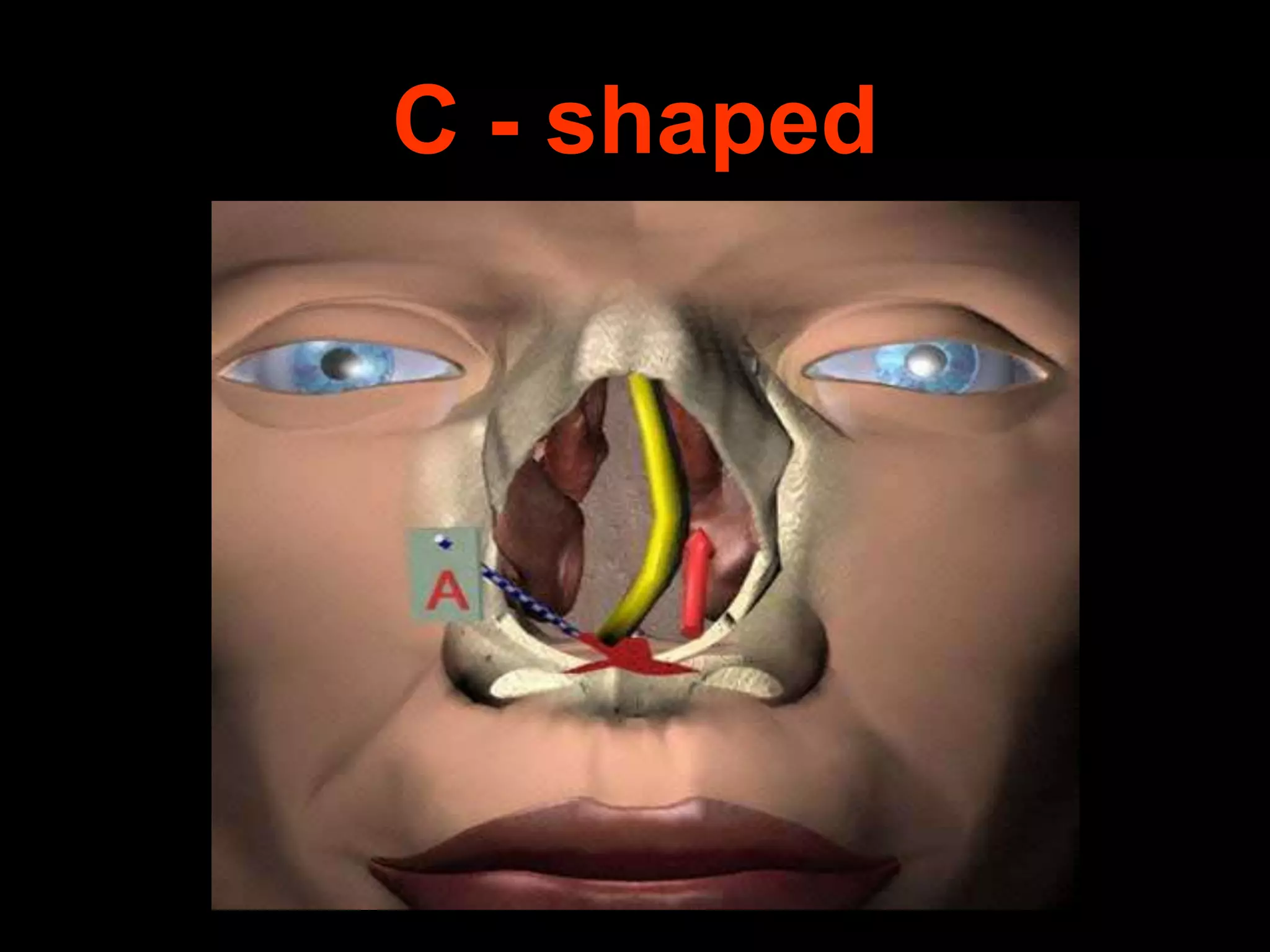
2. C-shaped deformity
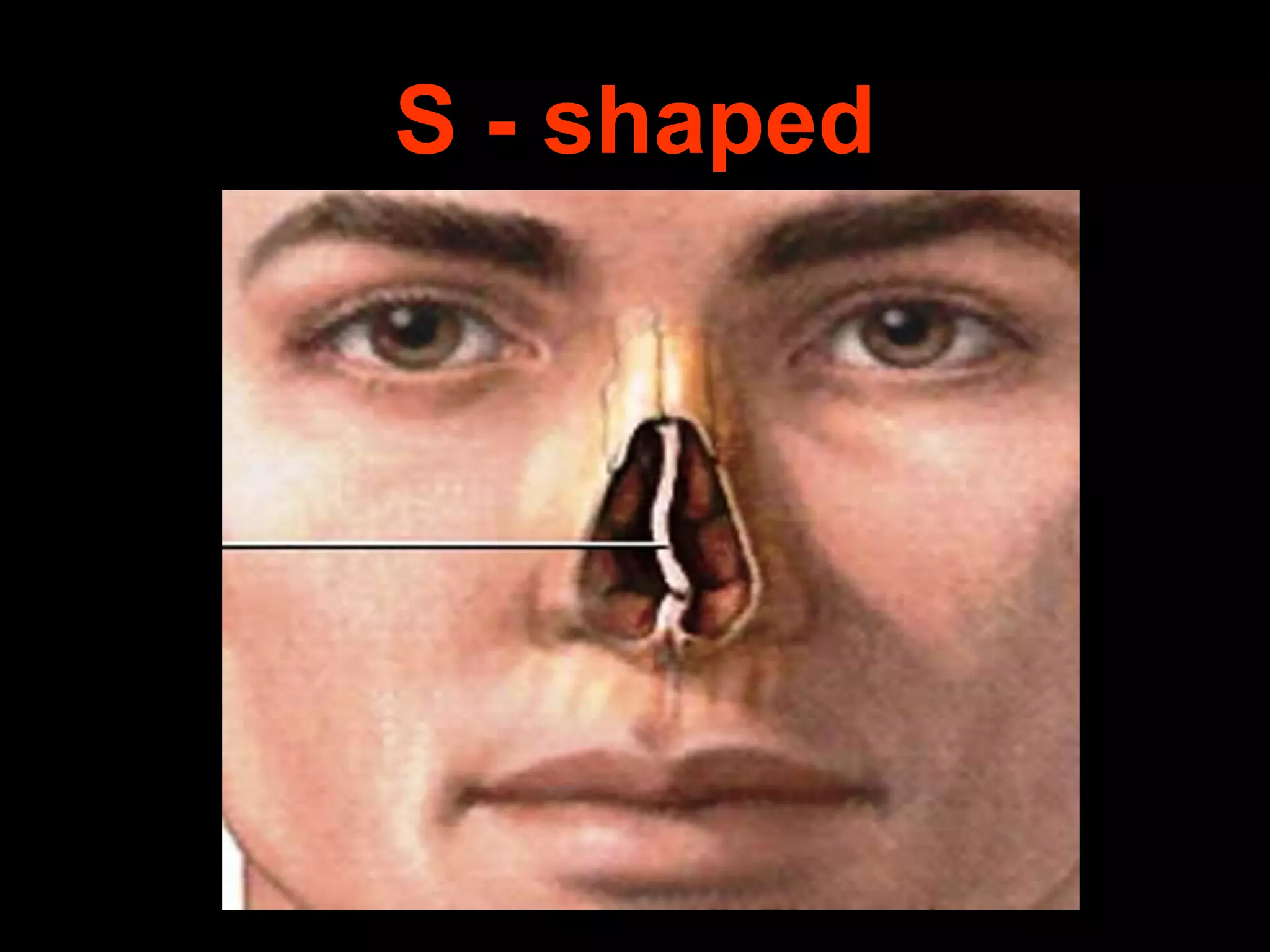
3. S-shaped deformity

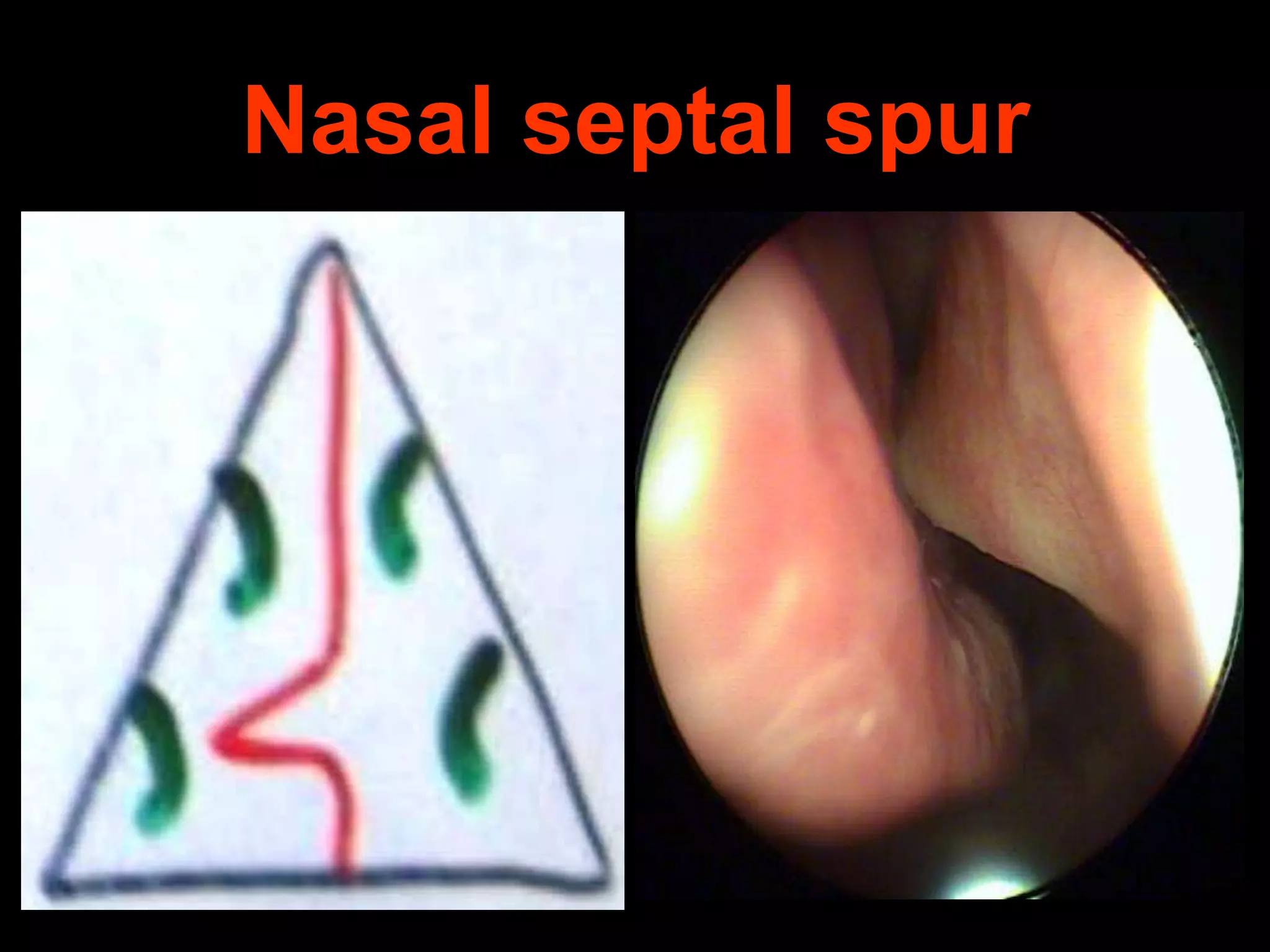
4. Septal Spur: shelf-like projection
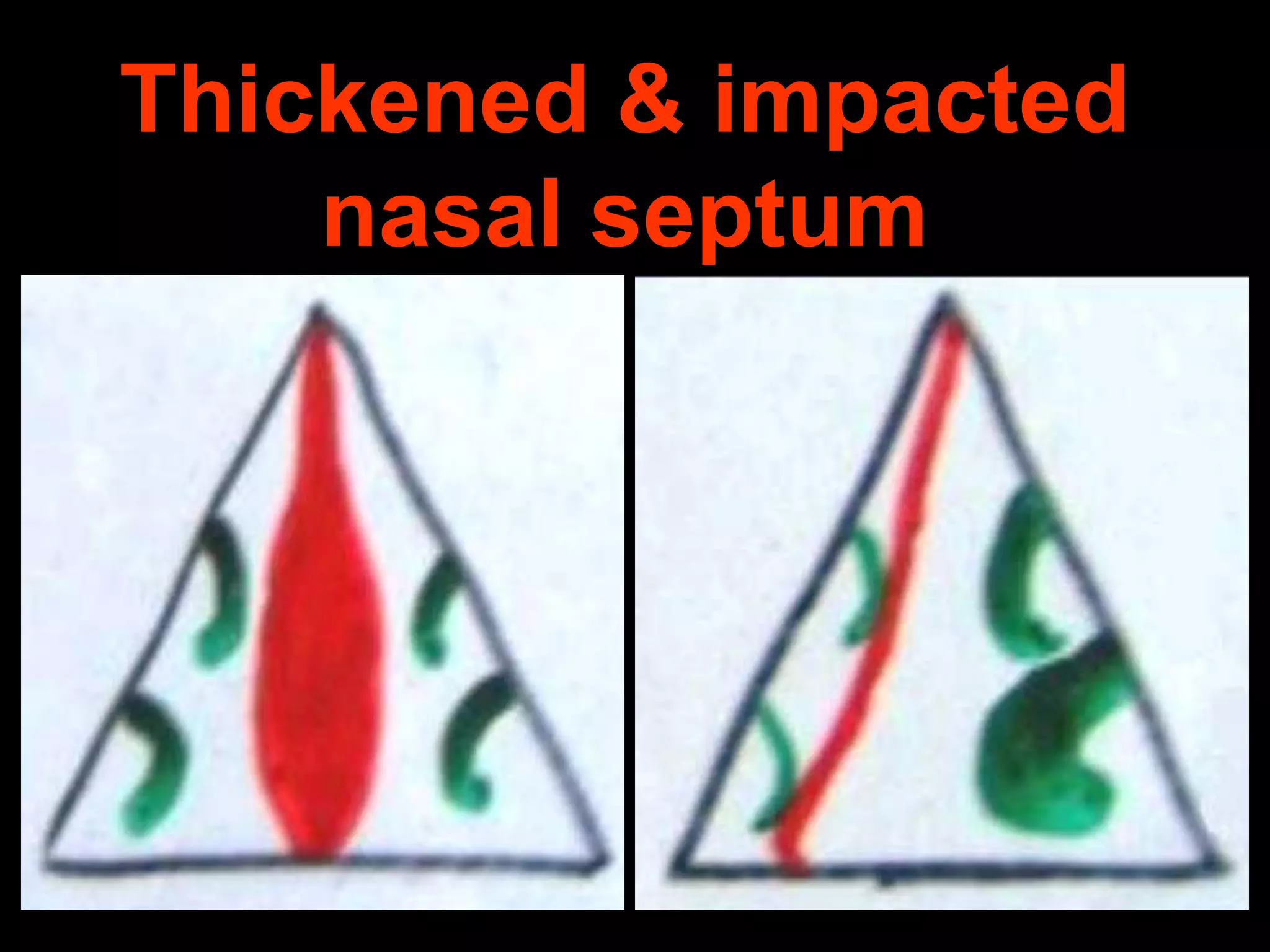
5. Septal Thickening: organized hematoma
or over-riding of septal fragments
6. Impacted septum: despite decongestion
Anterior / caudal dislocation
C - shaped
S - shaped
Nasal septal spur
Thickened & impacted
nasal septum
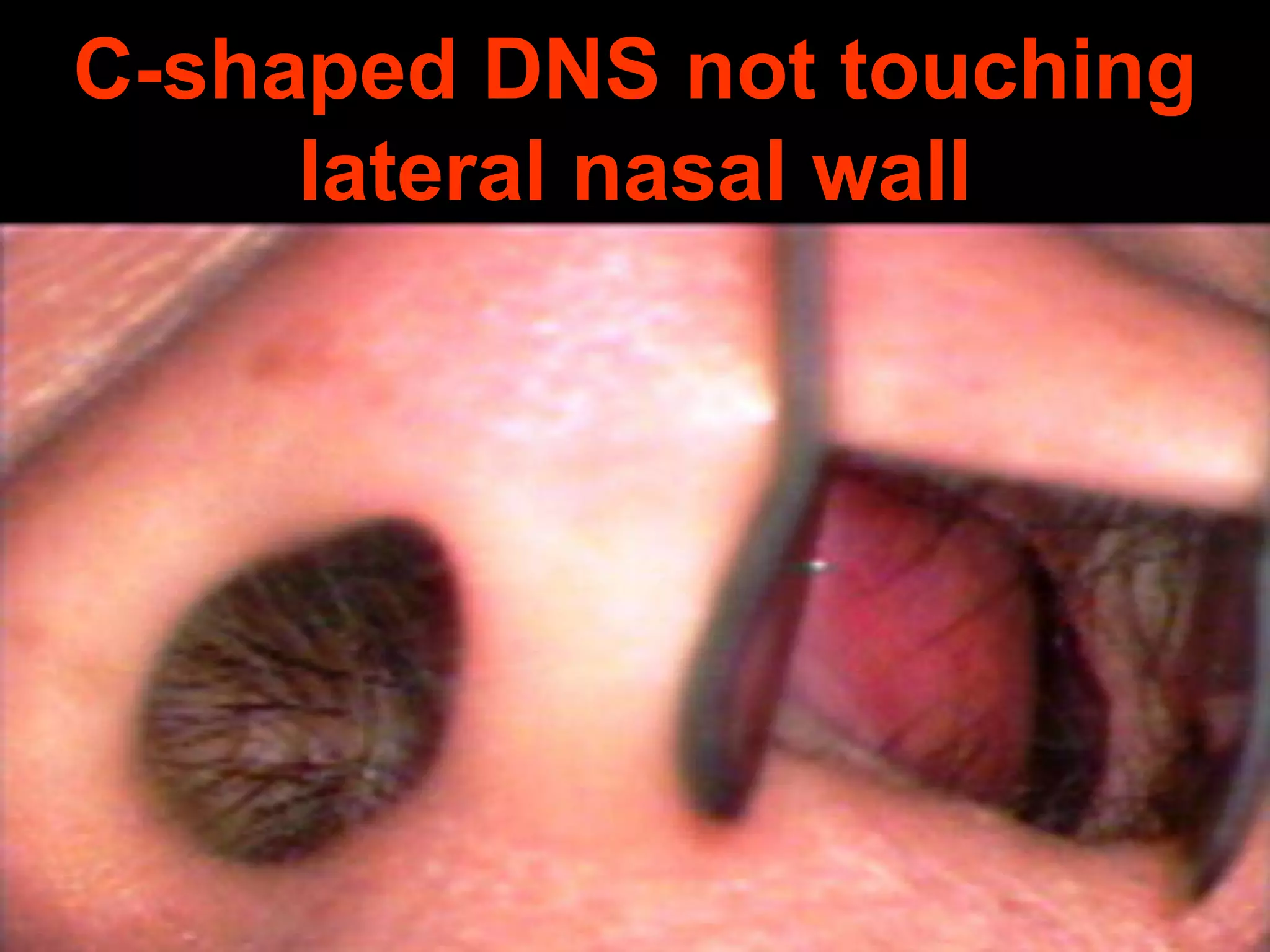
C-shaped DNS not touching
lateral nasal wall
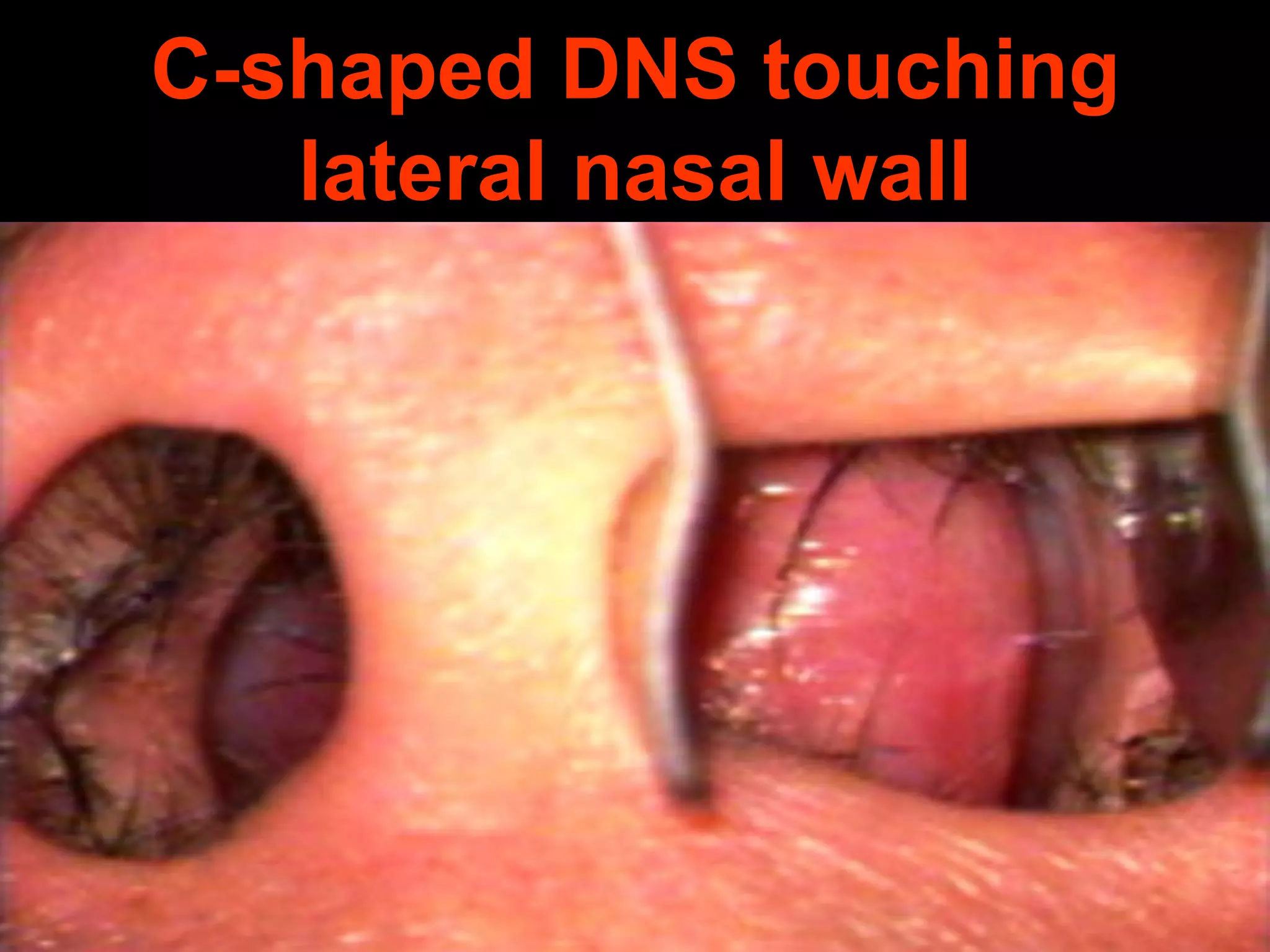
C-shaped DNS touching
lateral nasal wall
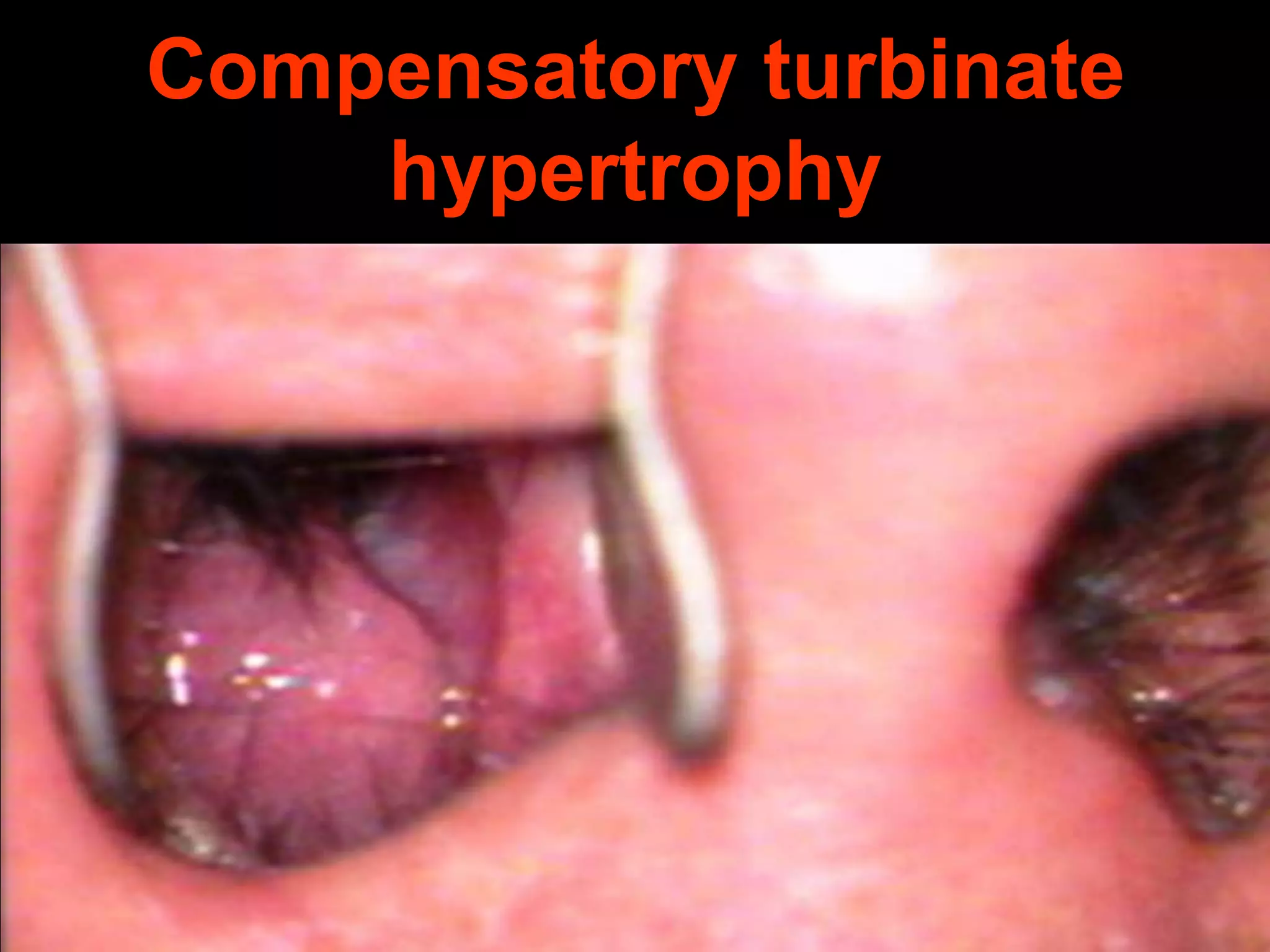
Compensatory turbinate
hypertrophy
Clinical features
1. Nasal block: present on side of D.N.S.

C/L paradoxical nasal obstruction due to
compensatory inferior turbinate hypertrophy.

2. Recurrent cold: due to associated sinusitis
3. Headache: due to contact with lateral wall
(Sluder’s neuralgia), sinusitis
Clinical features
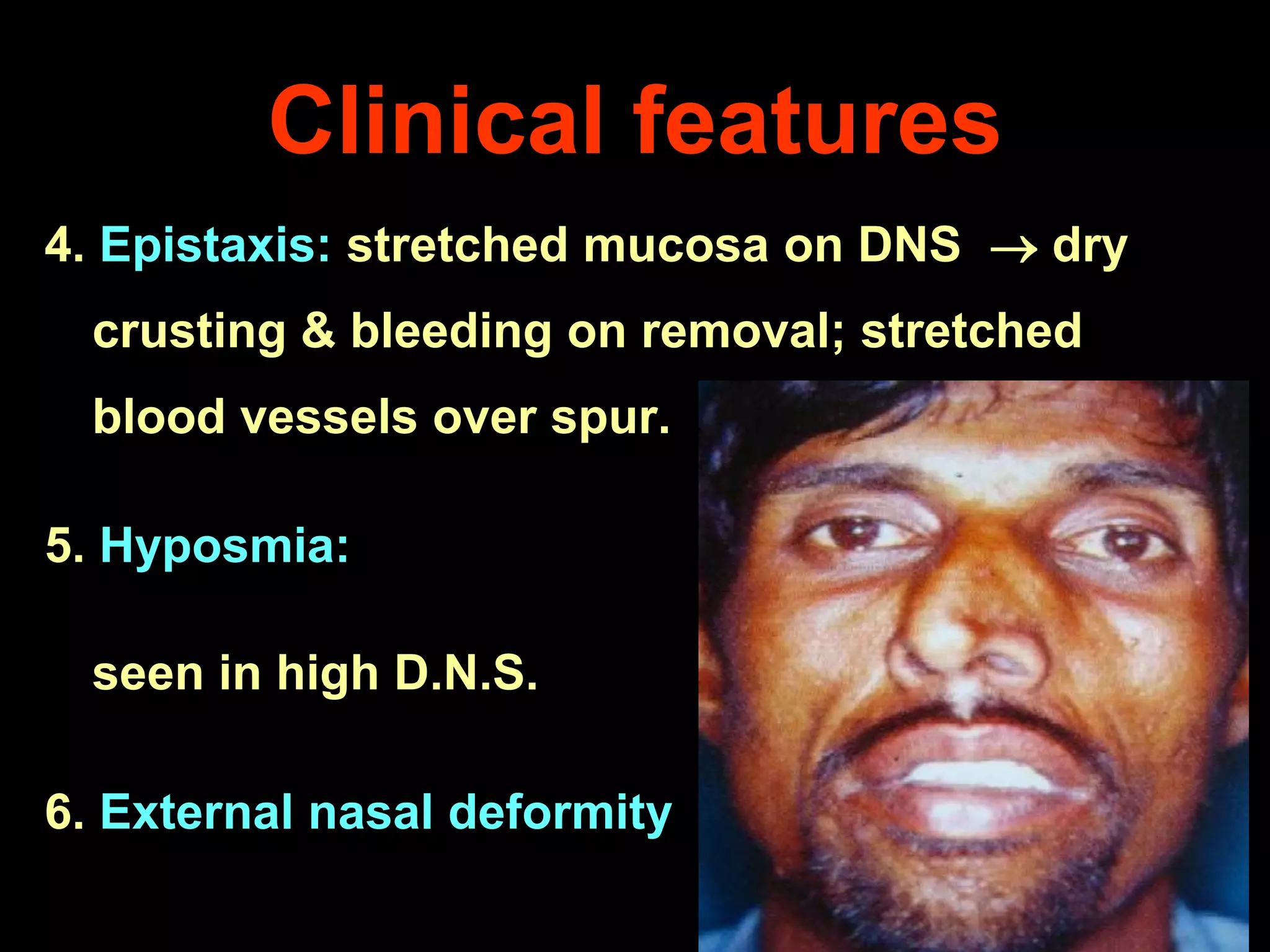
4. Epistaxis: stretched mucosa on DNS  dry

crusting & bleeding on removal; stretched
blood vessels over spur.
5. Hyposmia:
seen in high D.N.S.

6. External nasal deformity
Sequelae
• Sinusitis
• Mouth breathing  snoring, pharyngitis
• Atrophic rhinitis & myiasis
• Otitis media
History of septal
surgeries
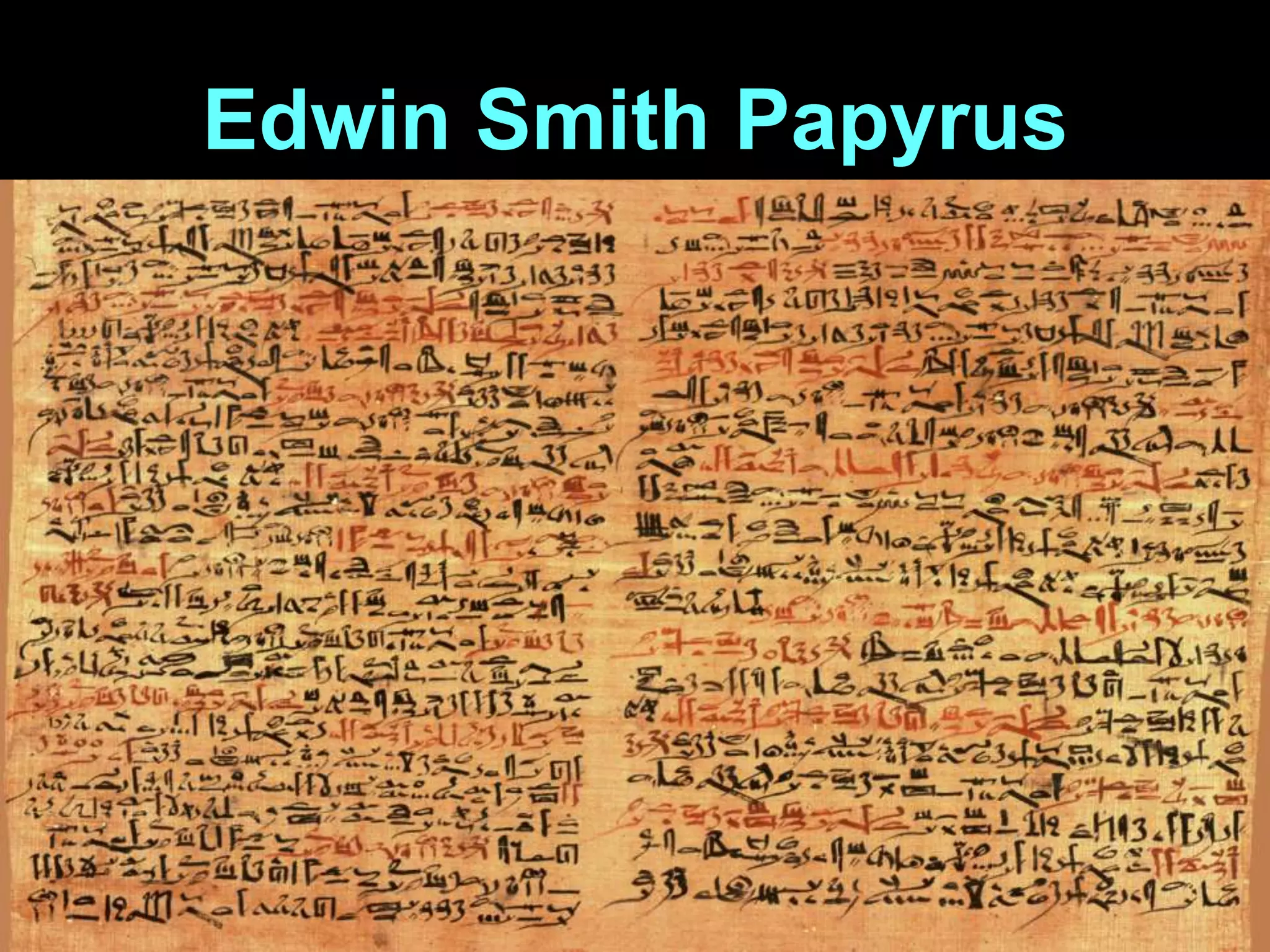
• Edwin Smith Surgical Papyrus (dated 17th
century BC): world's oldest surgical
document & only surviving copy of a part of

an Ancient Egyptian textbook on trauma
surgery written in 3500 B.C. Listed are 48
traumatic injury cases, with description of
examination, diagnosis & treatment.
• Treatment of DNS: fracture reduction of DNS

with internal pack using grease coated linen
& external packing with stiff rolls of linen.
Edwin Smith Papyrus
• Bosworth operation (late 19th century): deviated
part of septum amputated along with mucosa
• Asch (1899): full thickness cruciate incisions on
septal cartilage
• Freer (1902): SMR of total septal cartilage
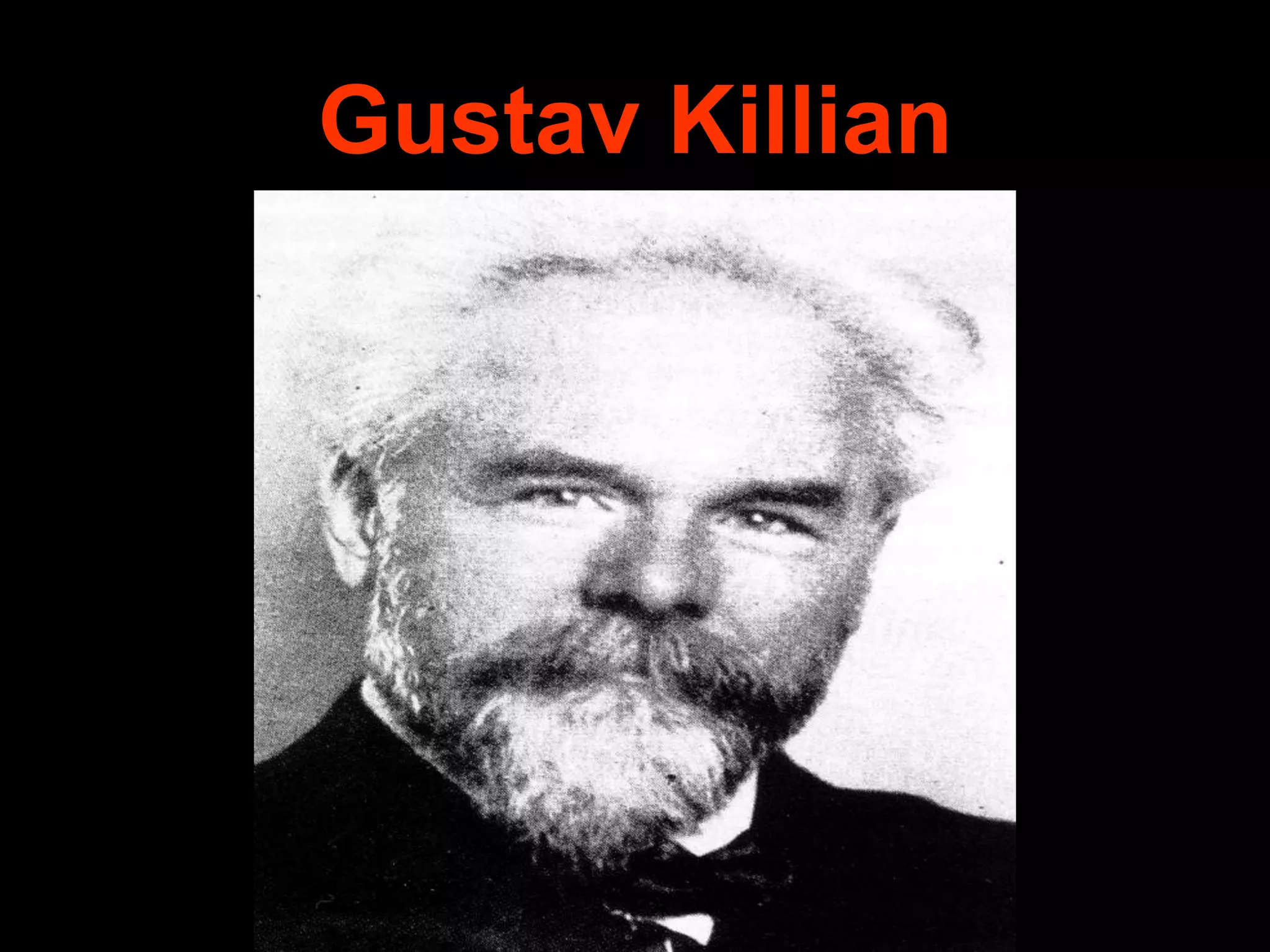
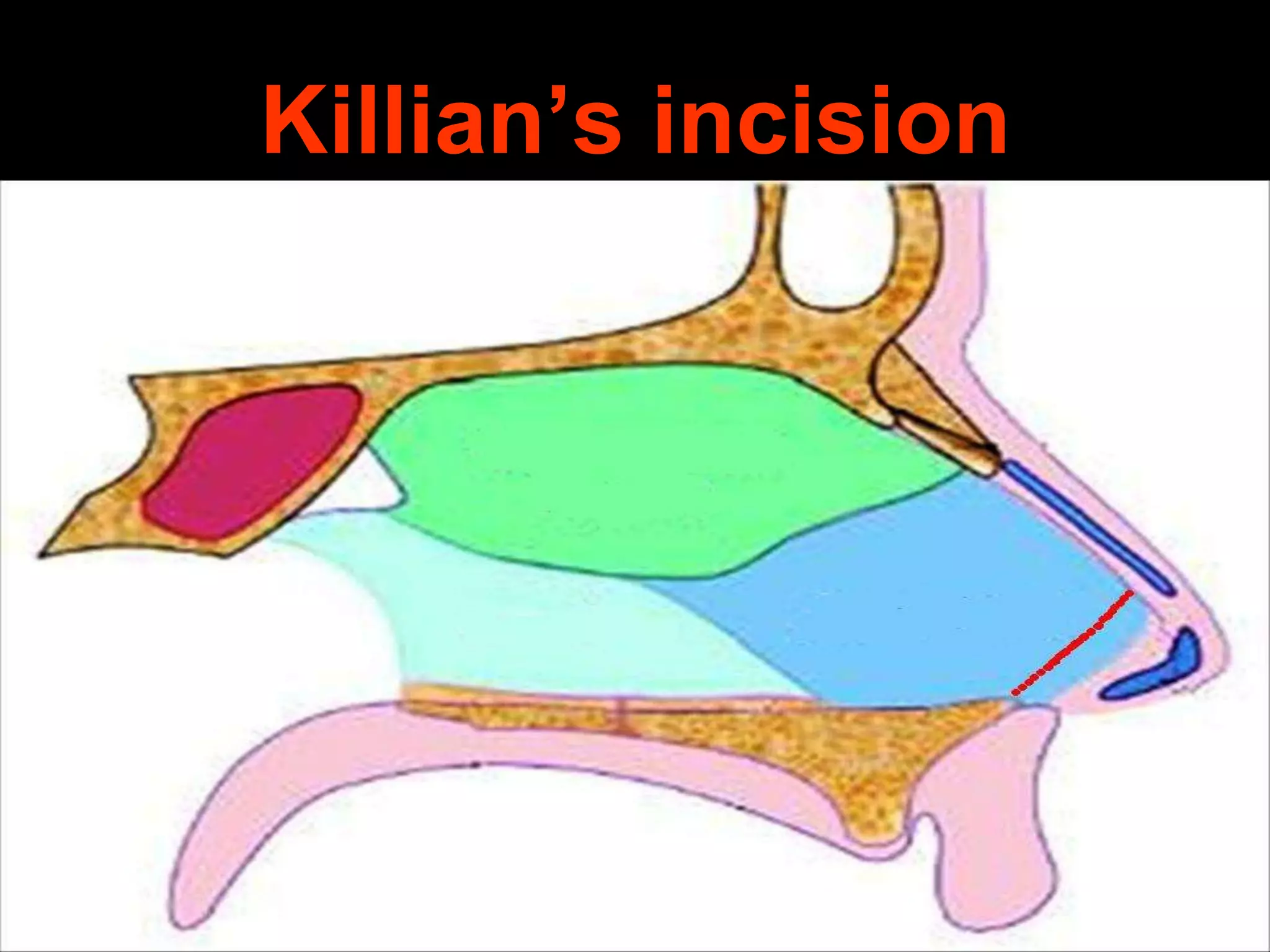
• Killian (1904): SMR with preservation of dorsal &
caudal portion of septal cartilage
• Metzenbaum (1929): Swinging door technique for
caudal septal dislocation
• Peer (1937): Removal of caudal septum &
replacement after its alteration
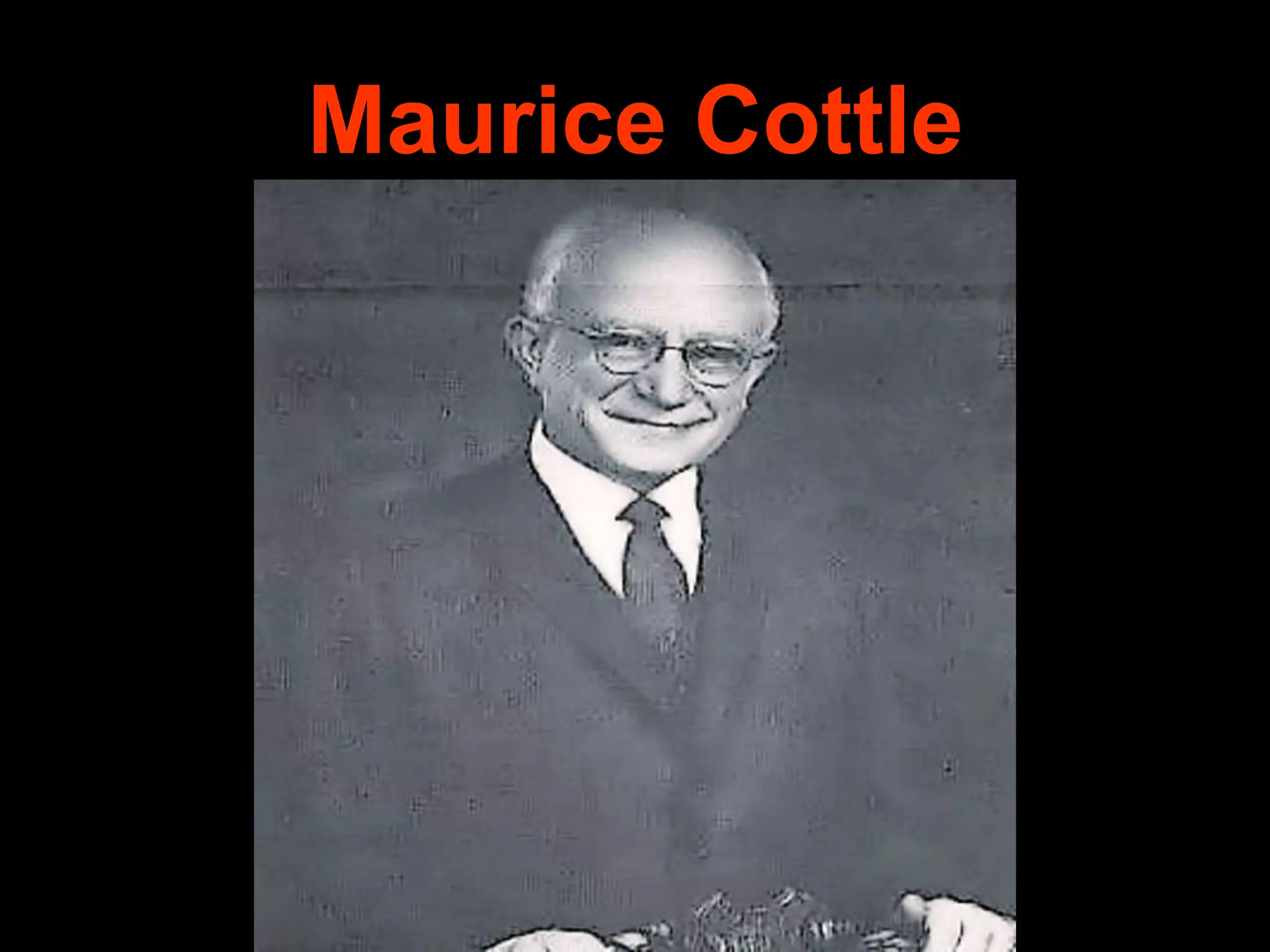
• Cottle (1948) : Maxilla-Premaxilla septoplasty
Gustav Killian
Maurice Cottle
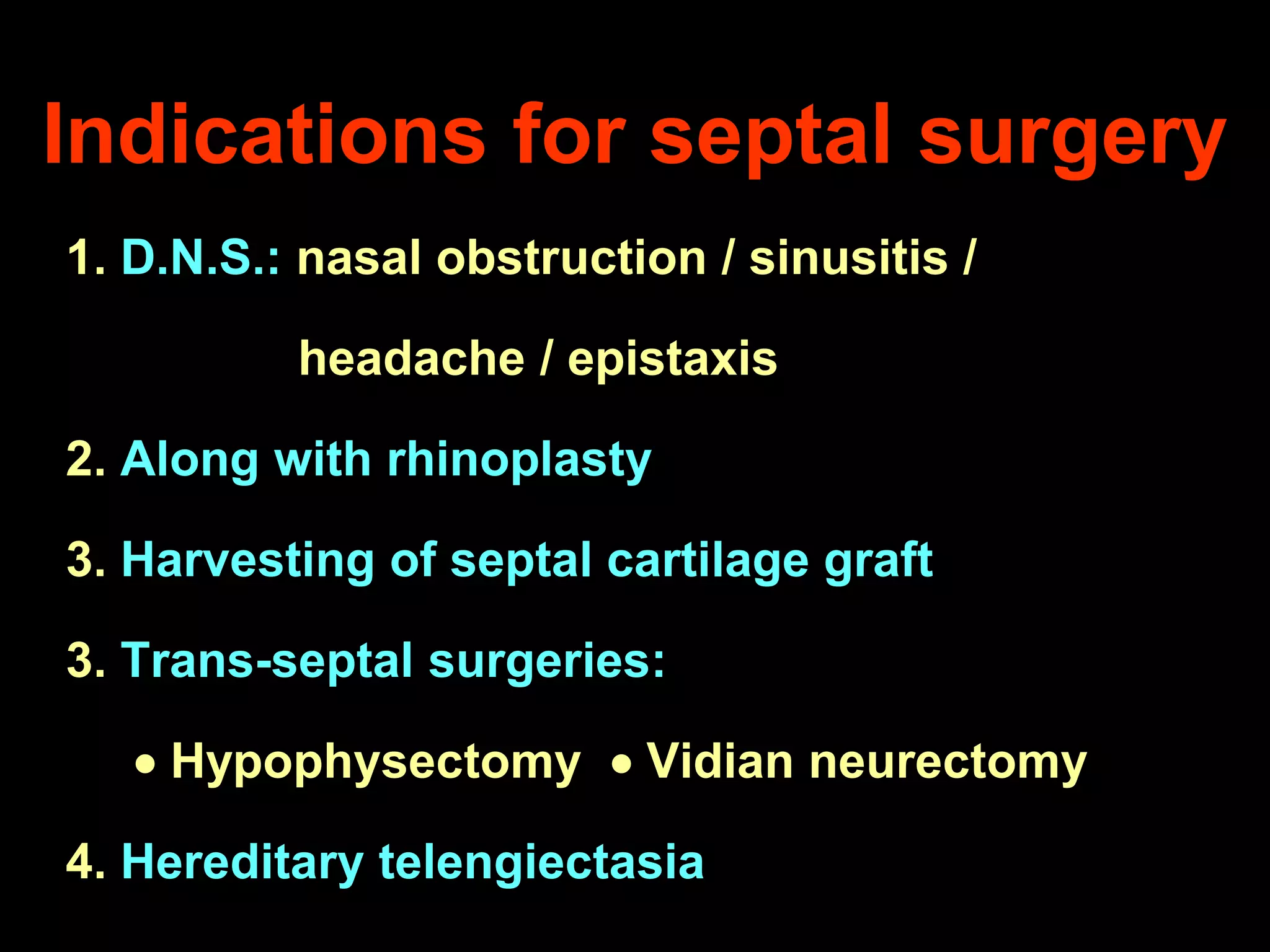
Indications for septal surgery
1. D.N.S.: nasal obstruction / sinusitis /

headache / epistaxis
2. Along with rhinoplasty

3. Harvesting of septal cartilage graft
3. Trans-septal surgeries:
 Hypophysectomy  Vidian neurectomy
4. Hereditary telengiectasia
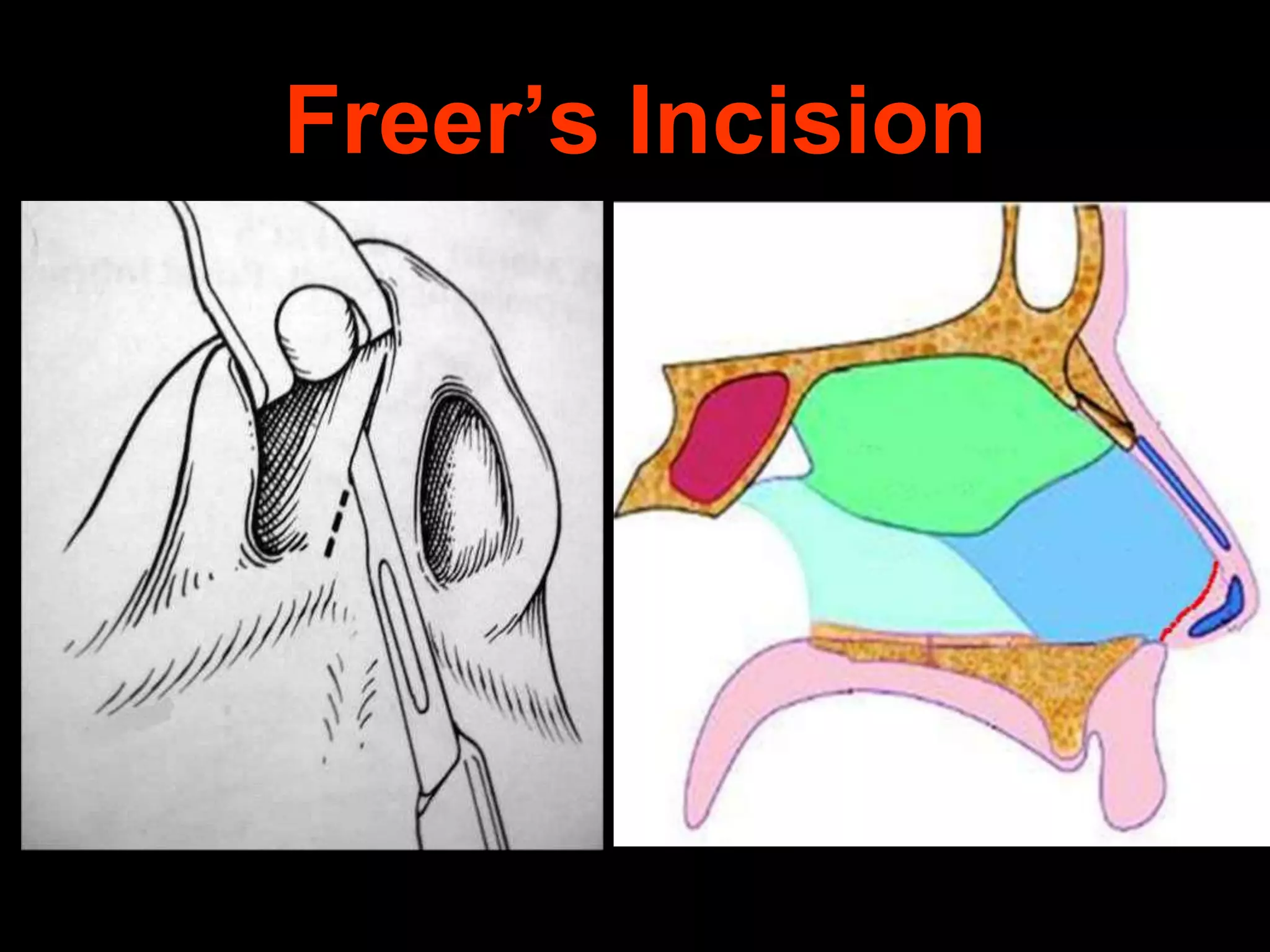
Septoplasty
Freer’s Incision
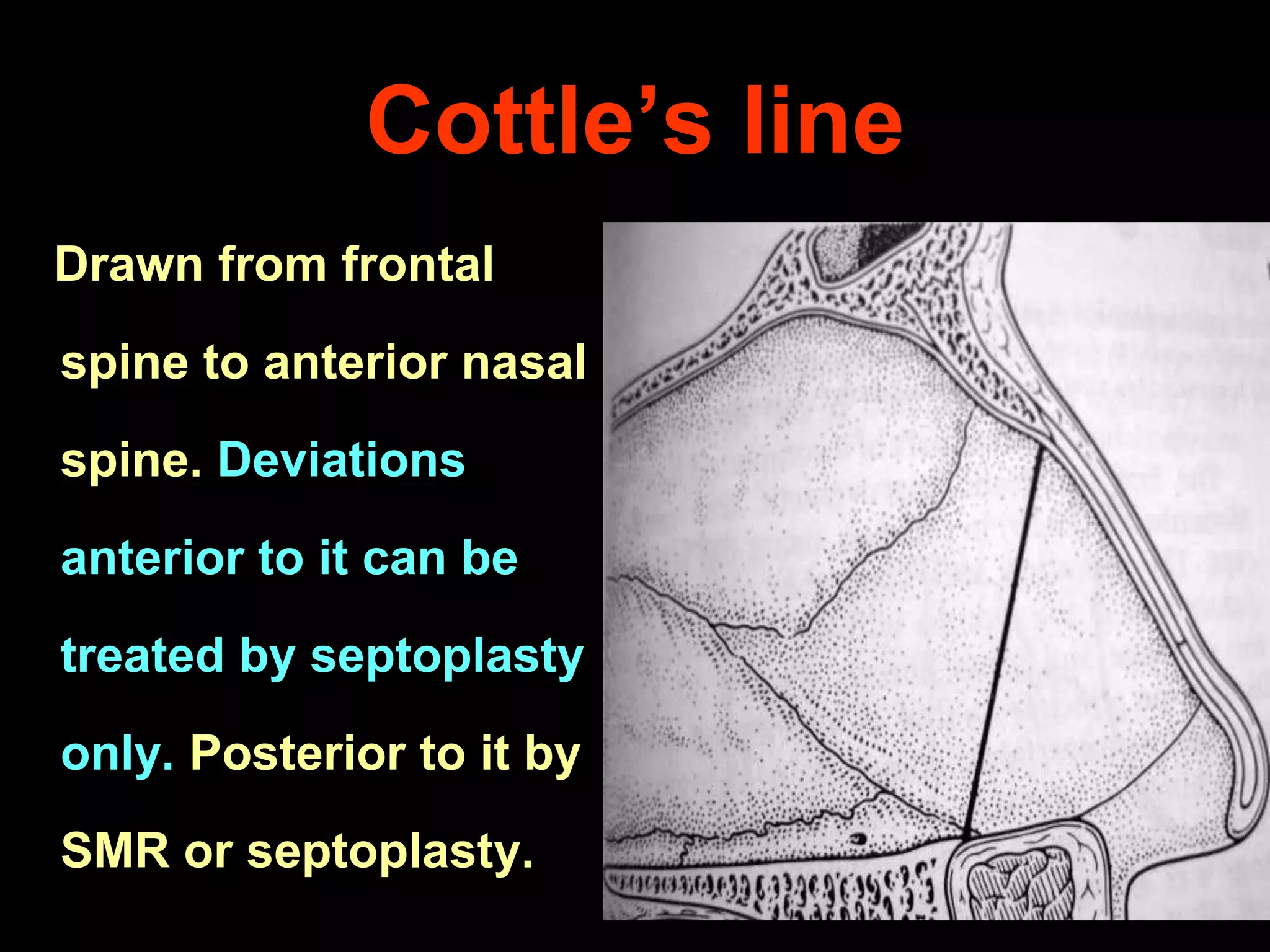
Cottle’s line
Drawn from frontal

spine to anterior nasal
spine. Deviations

anterior to it can be
treated by septoplasty
only. Posterior to it by
SMR or septoplasty.
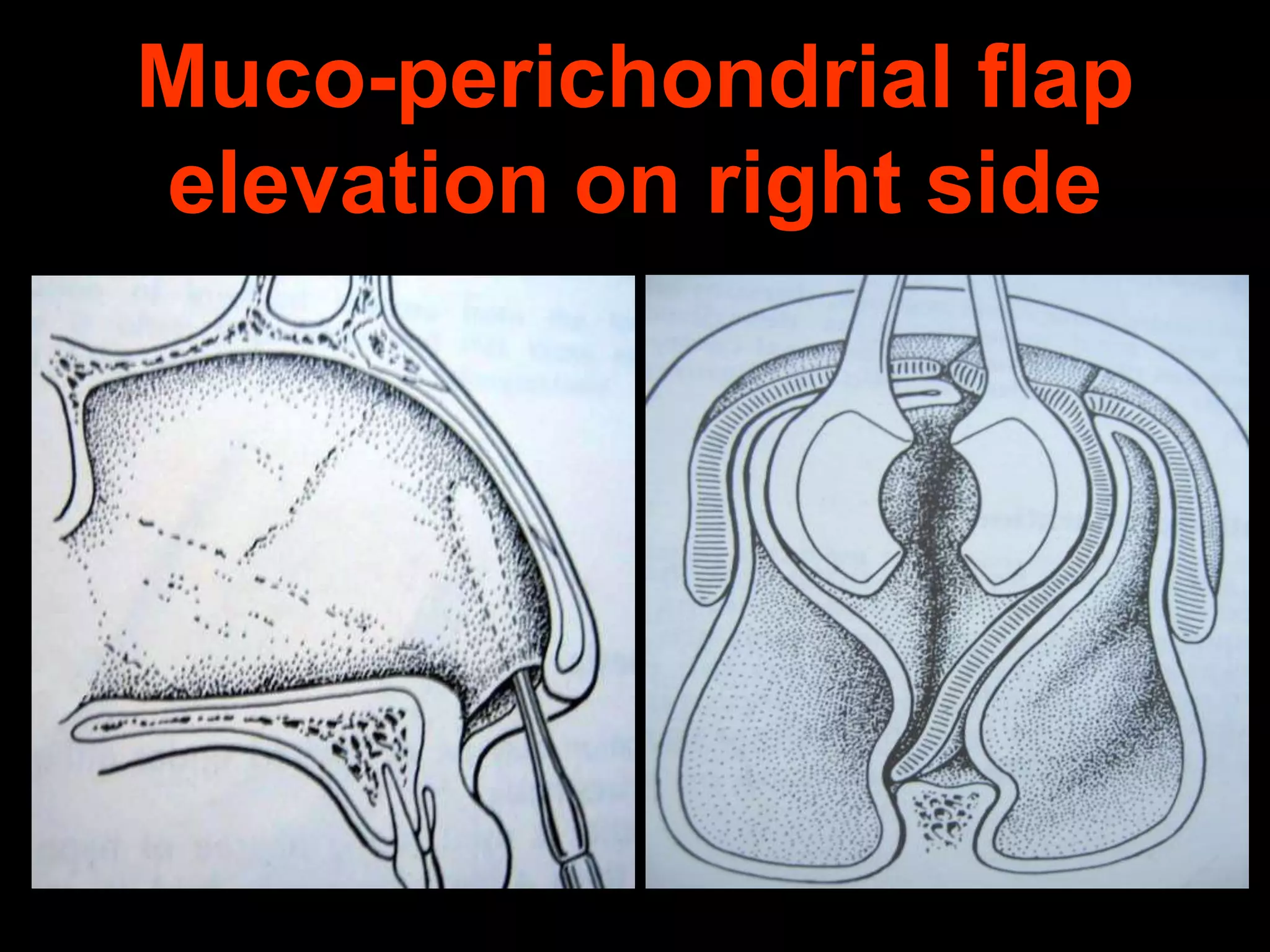
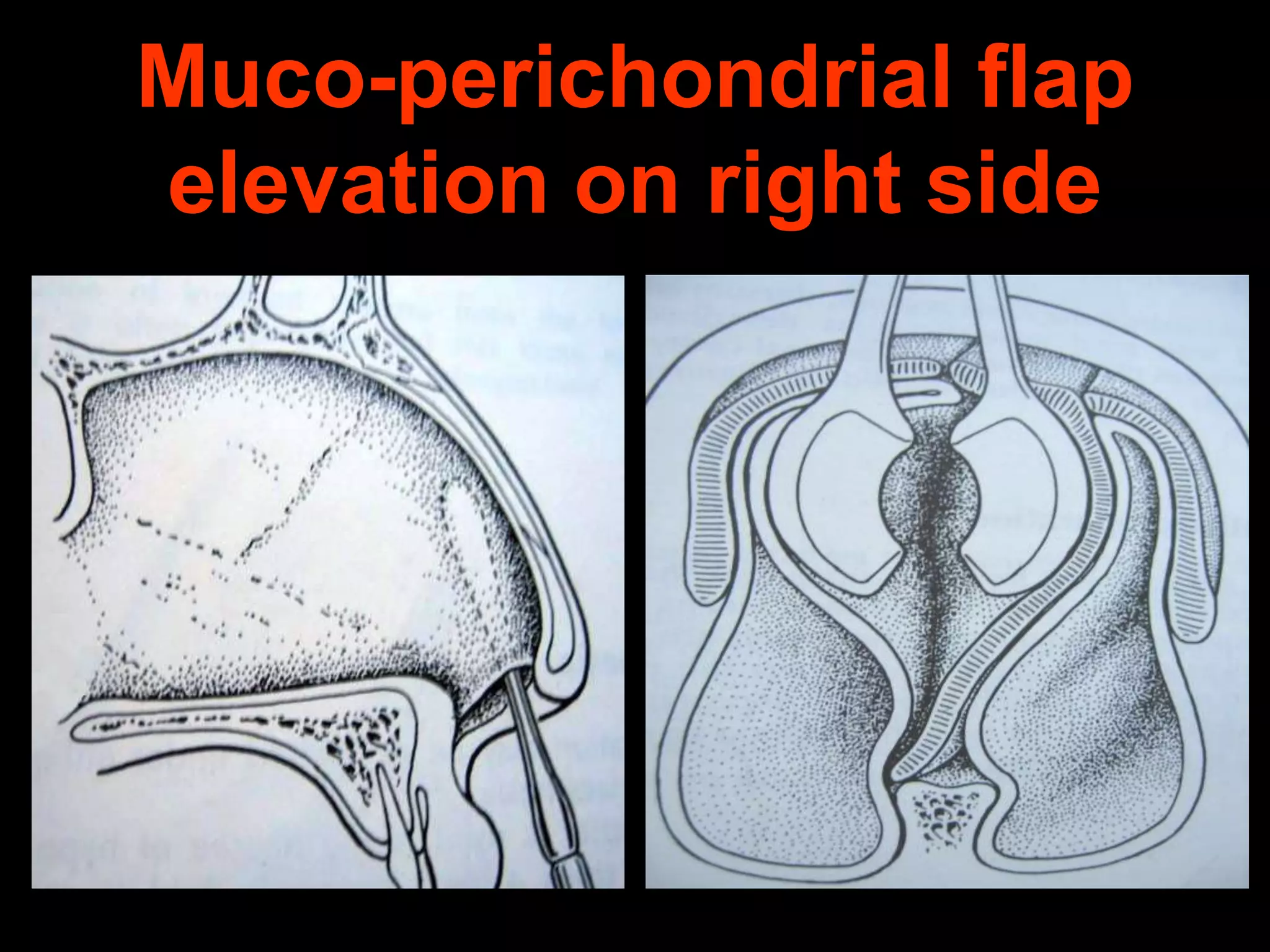
Muco-perichondrial flap
elevation on right side
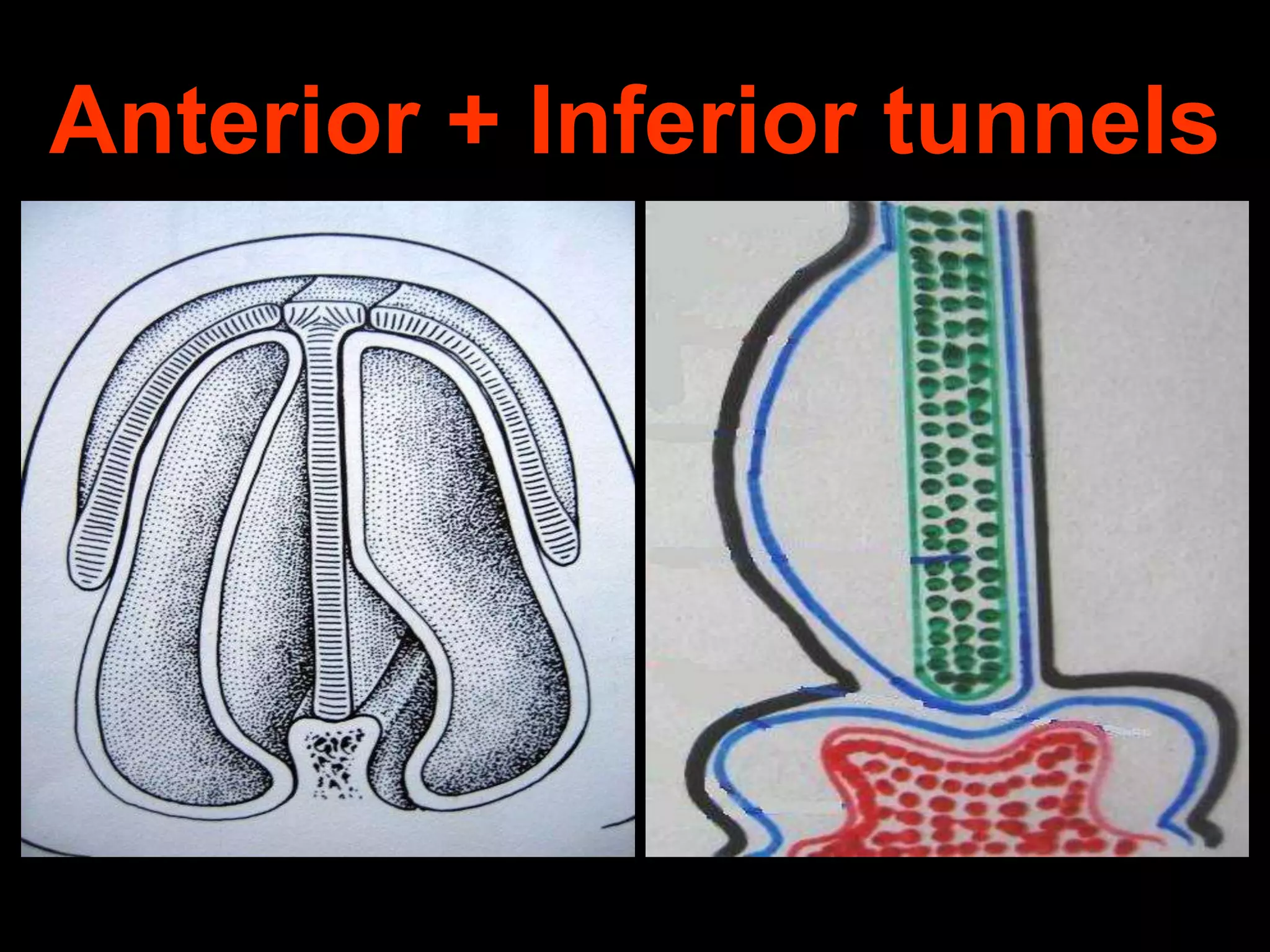
Anterior + Inferior tunnels
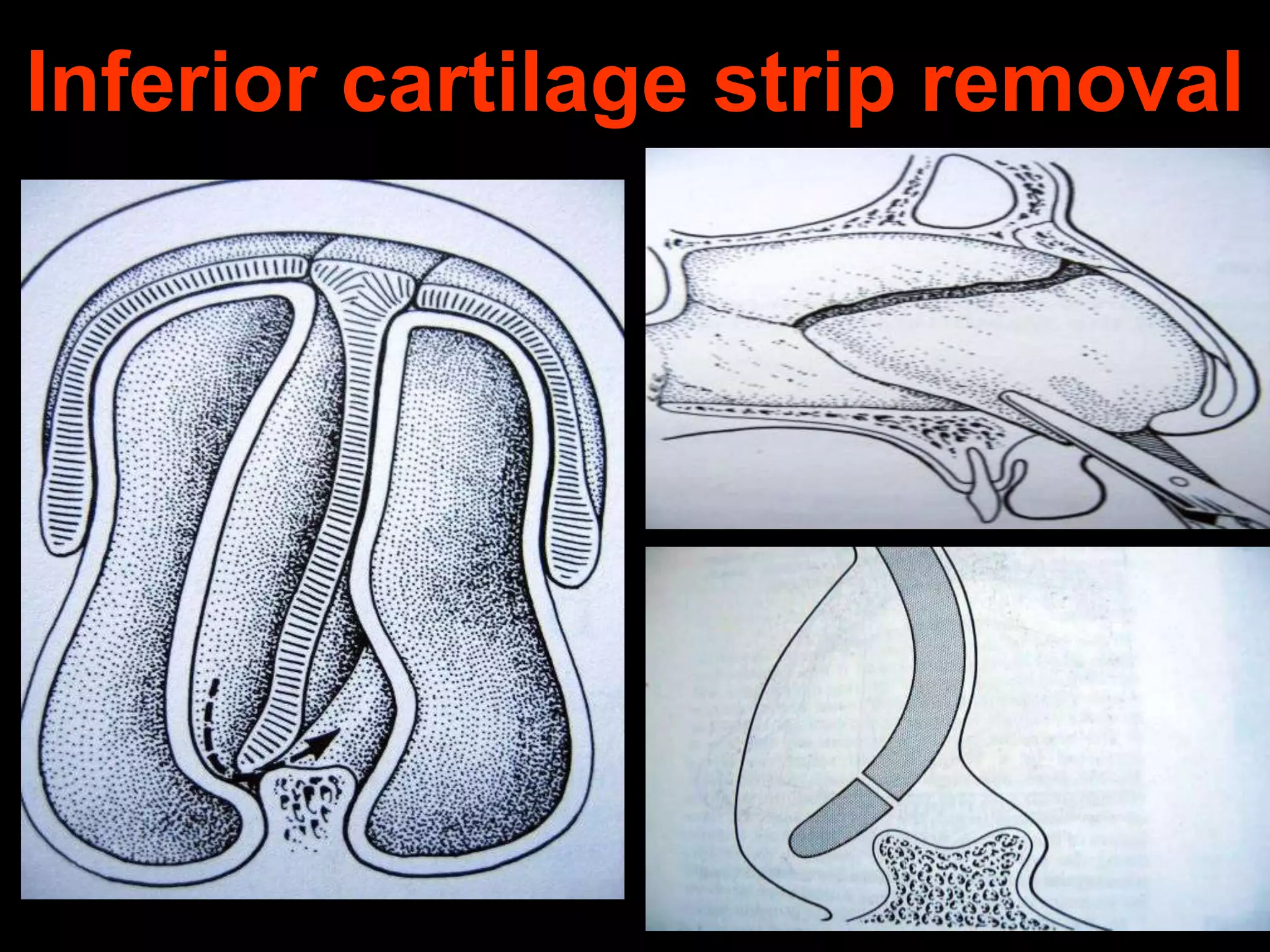
Inferior cartilage strip removal
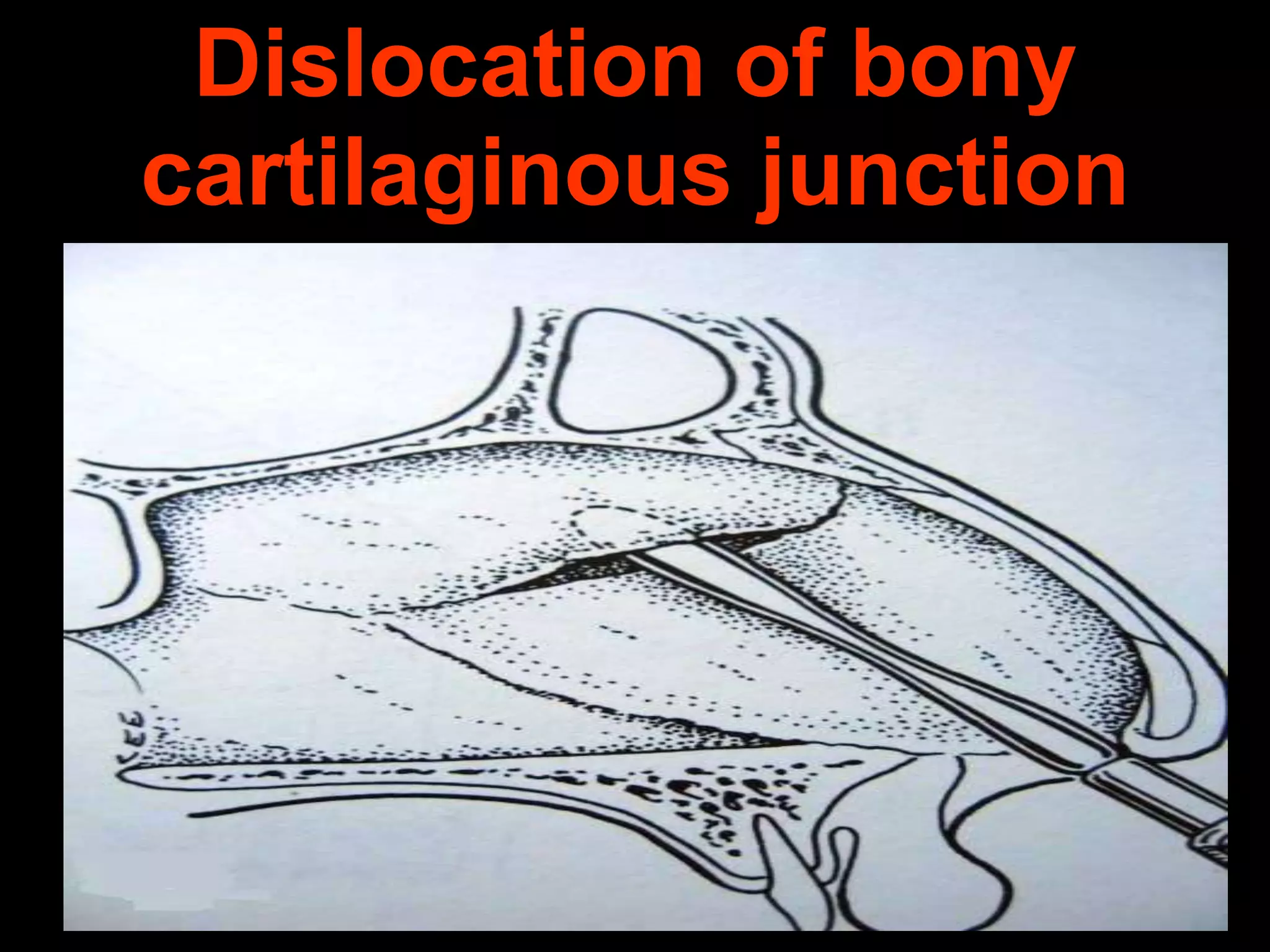
Dislocation of bony
cartilaginous junction
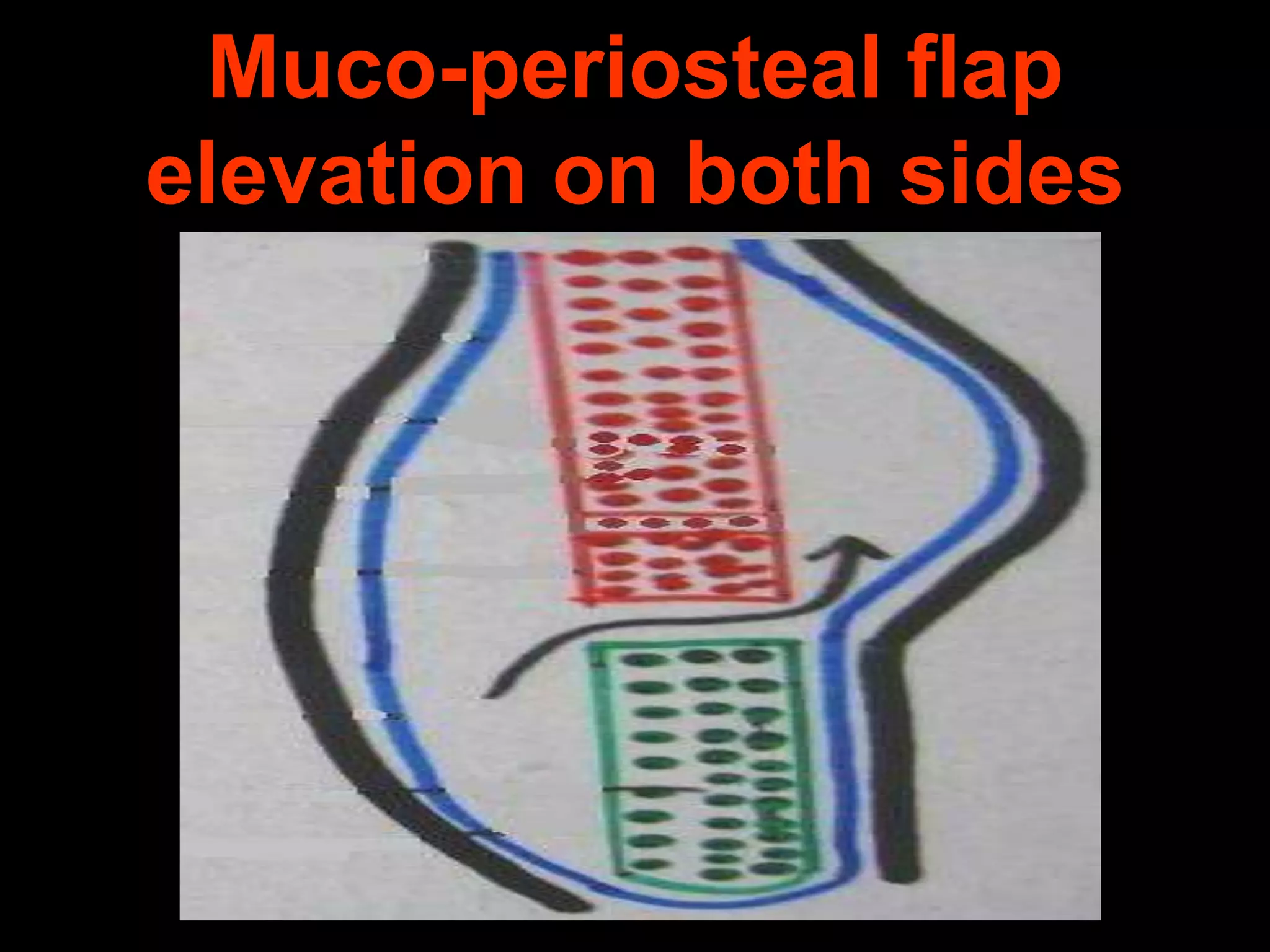
Muco-periosteal flap
elevation on both sides
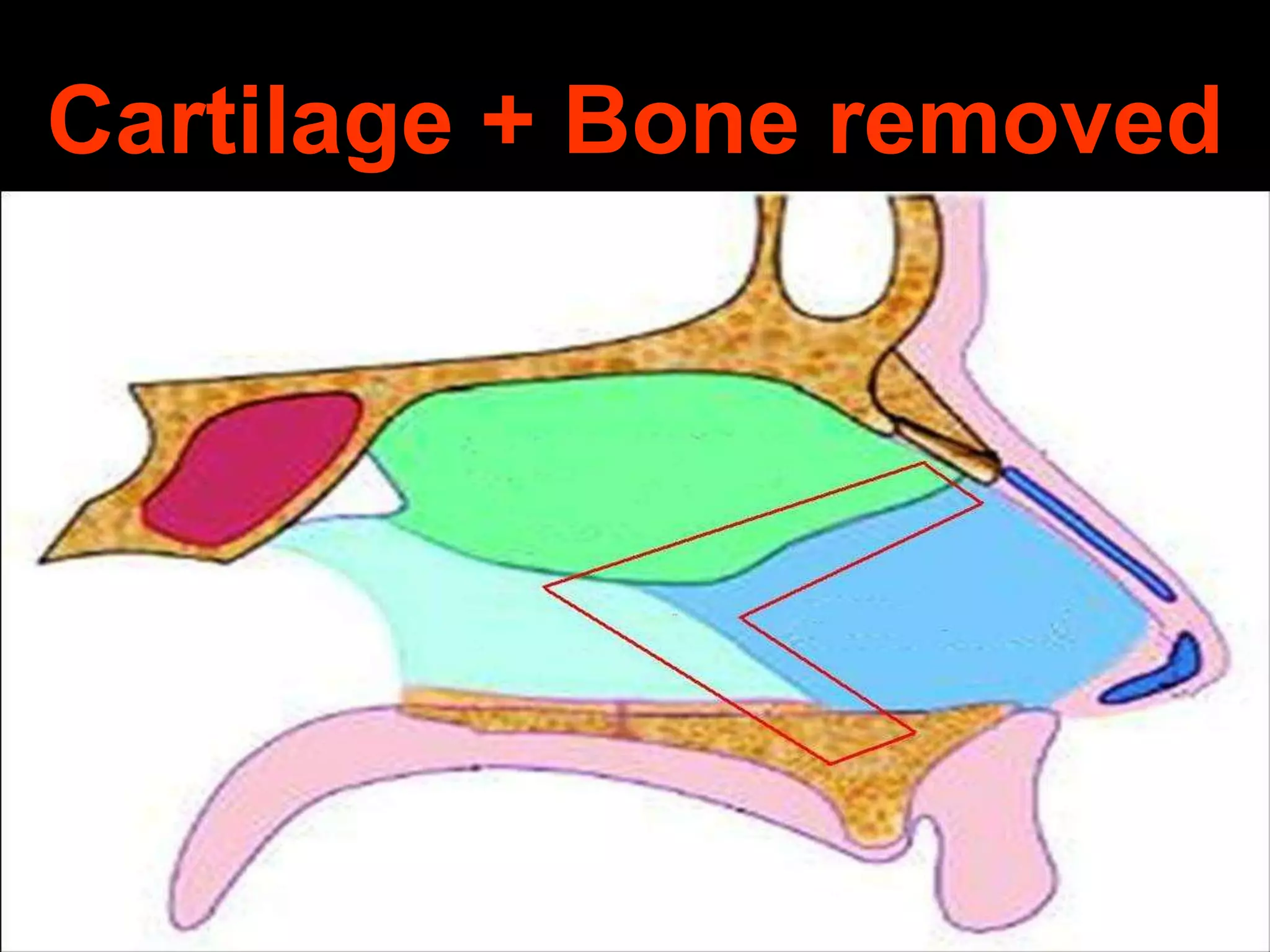
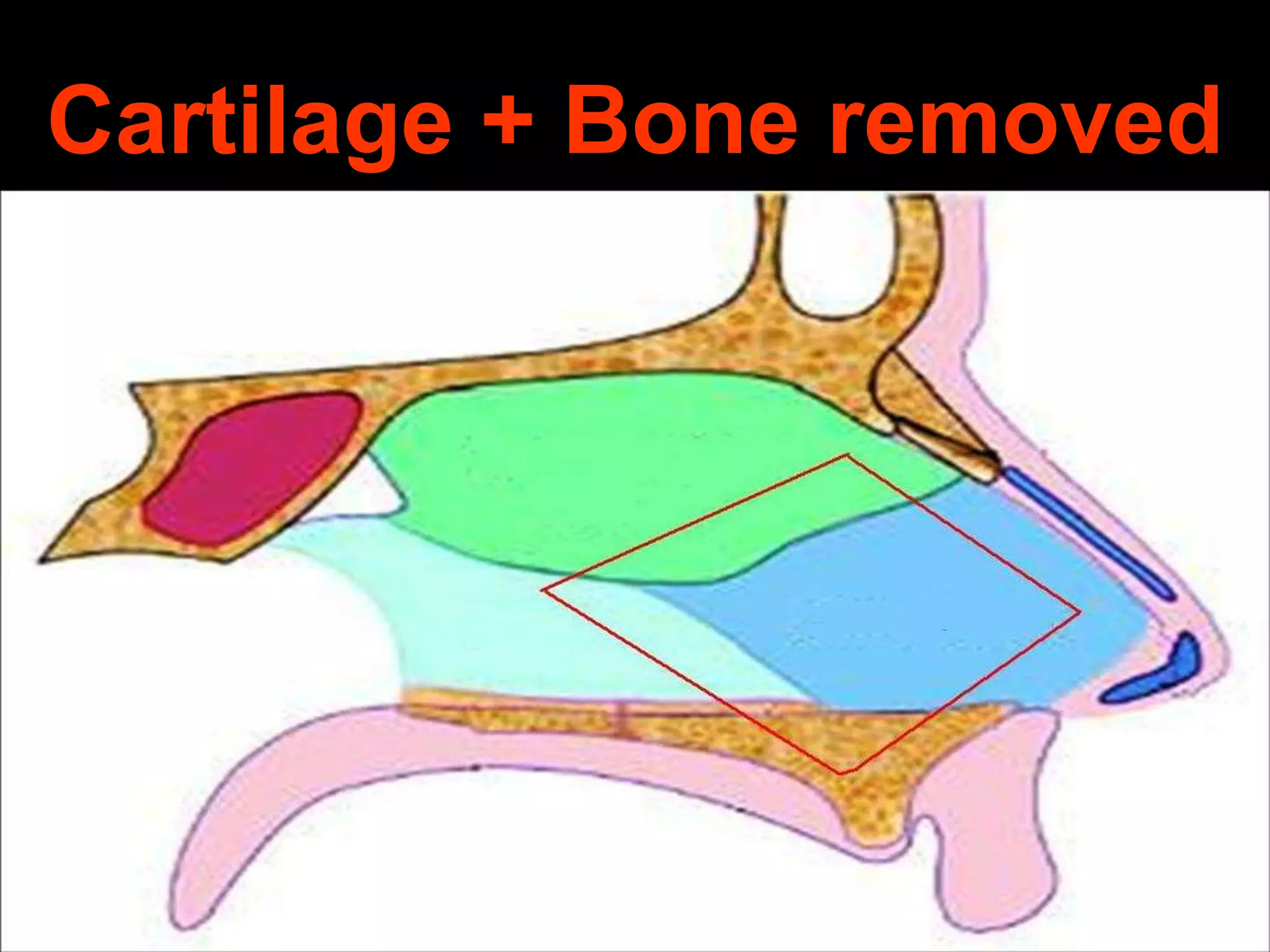
Cartilage + Bone removed
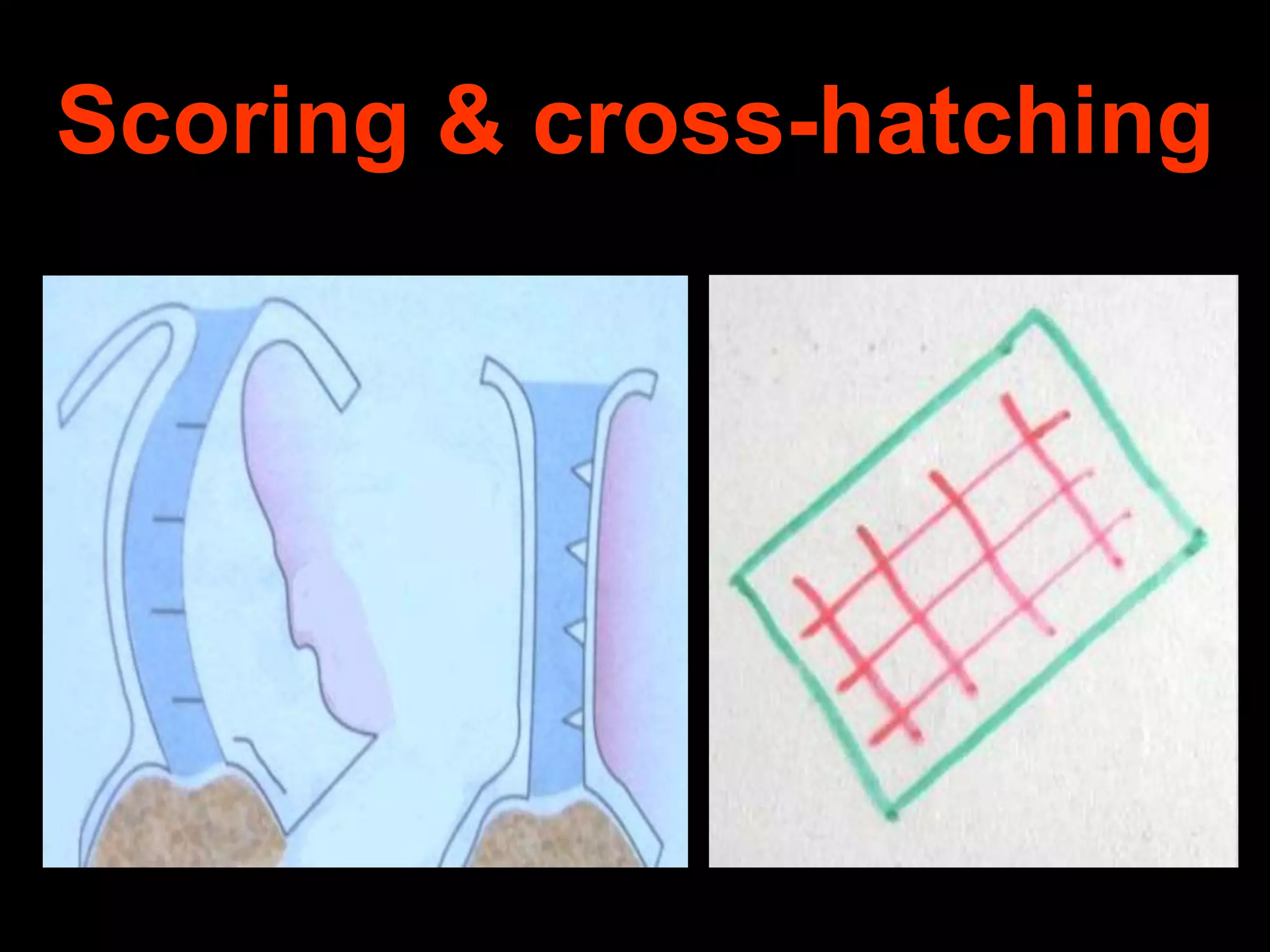
Scoring & cross-hatching
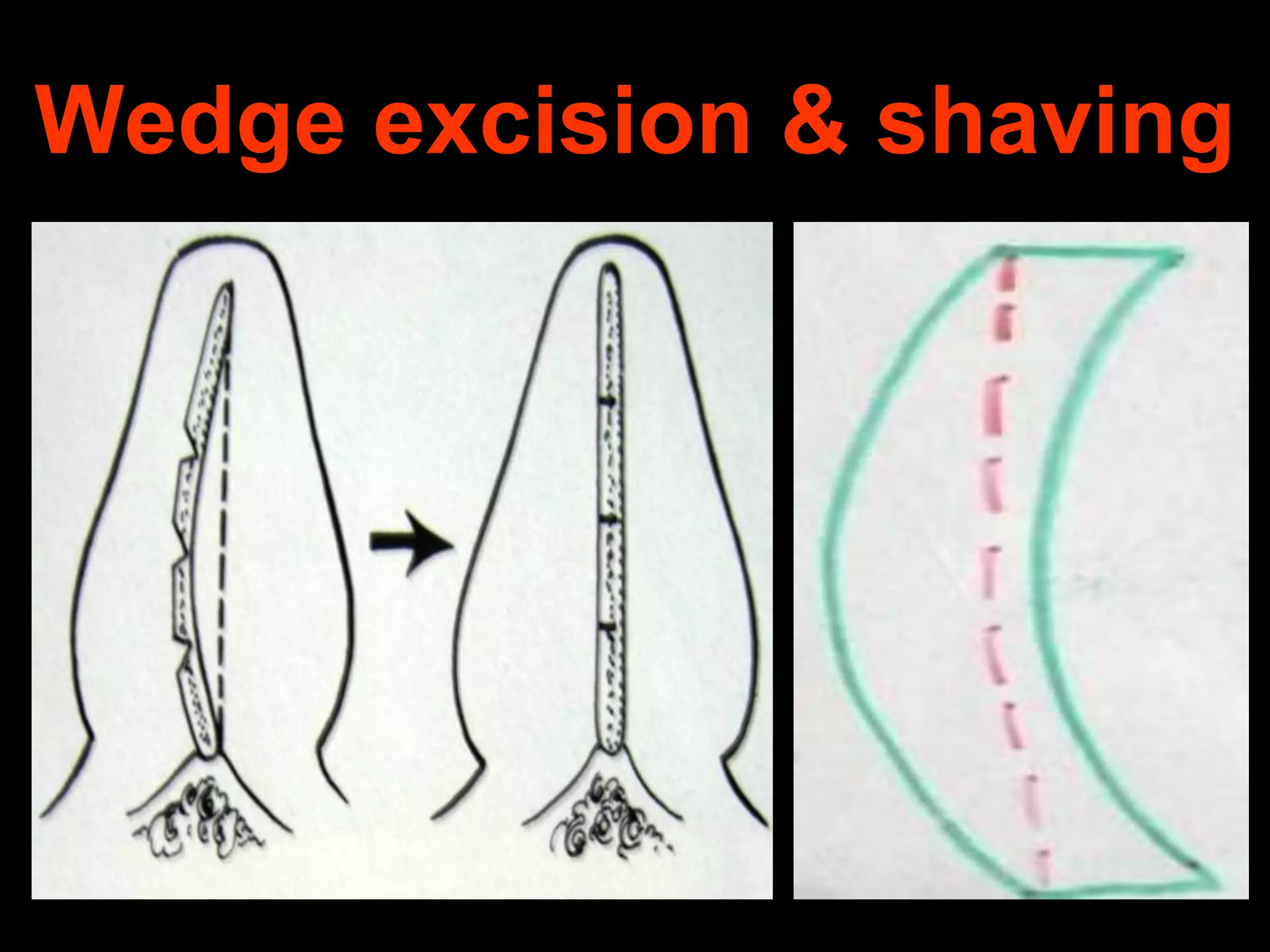
Wedge excision & shaving
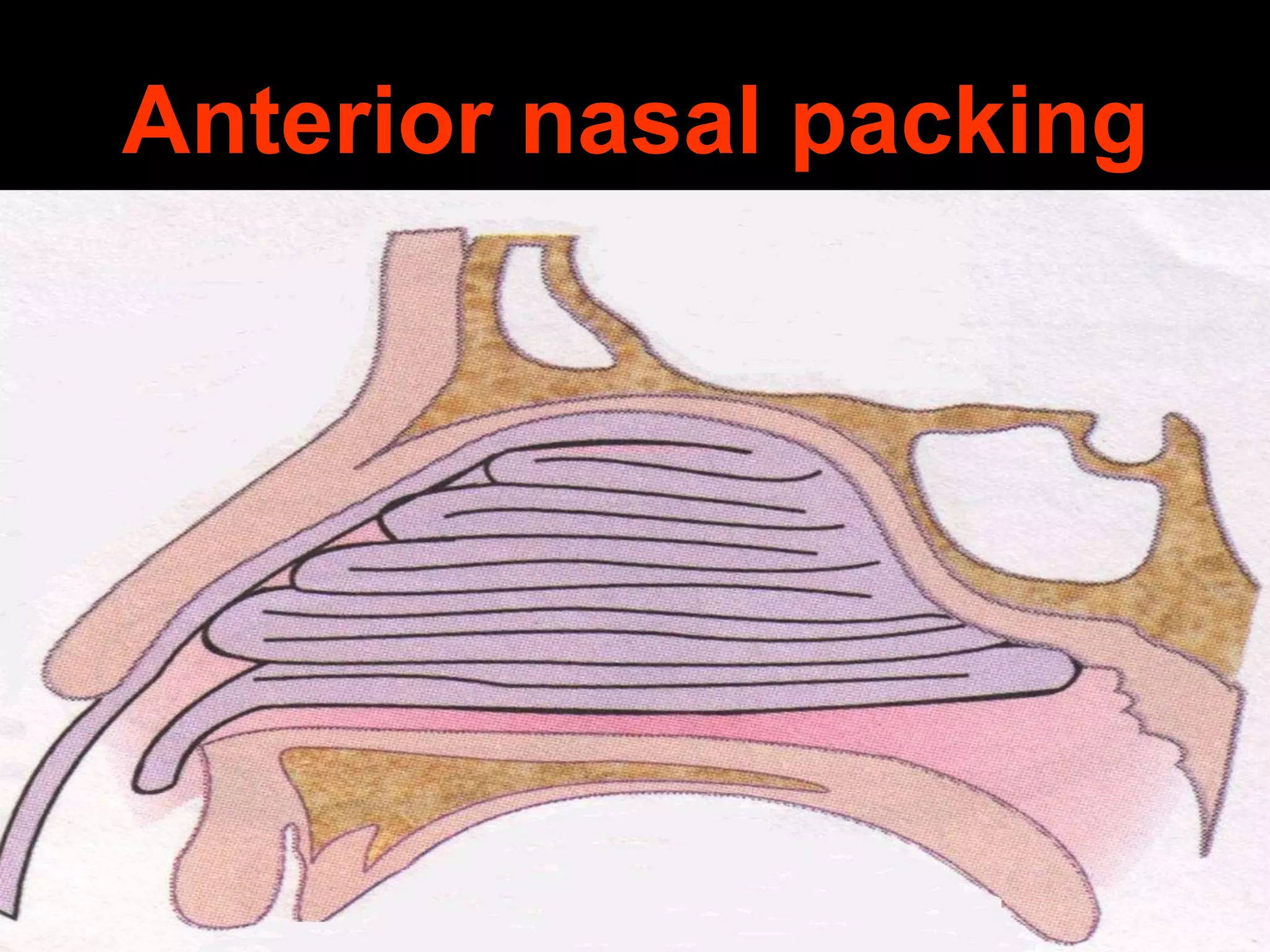
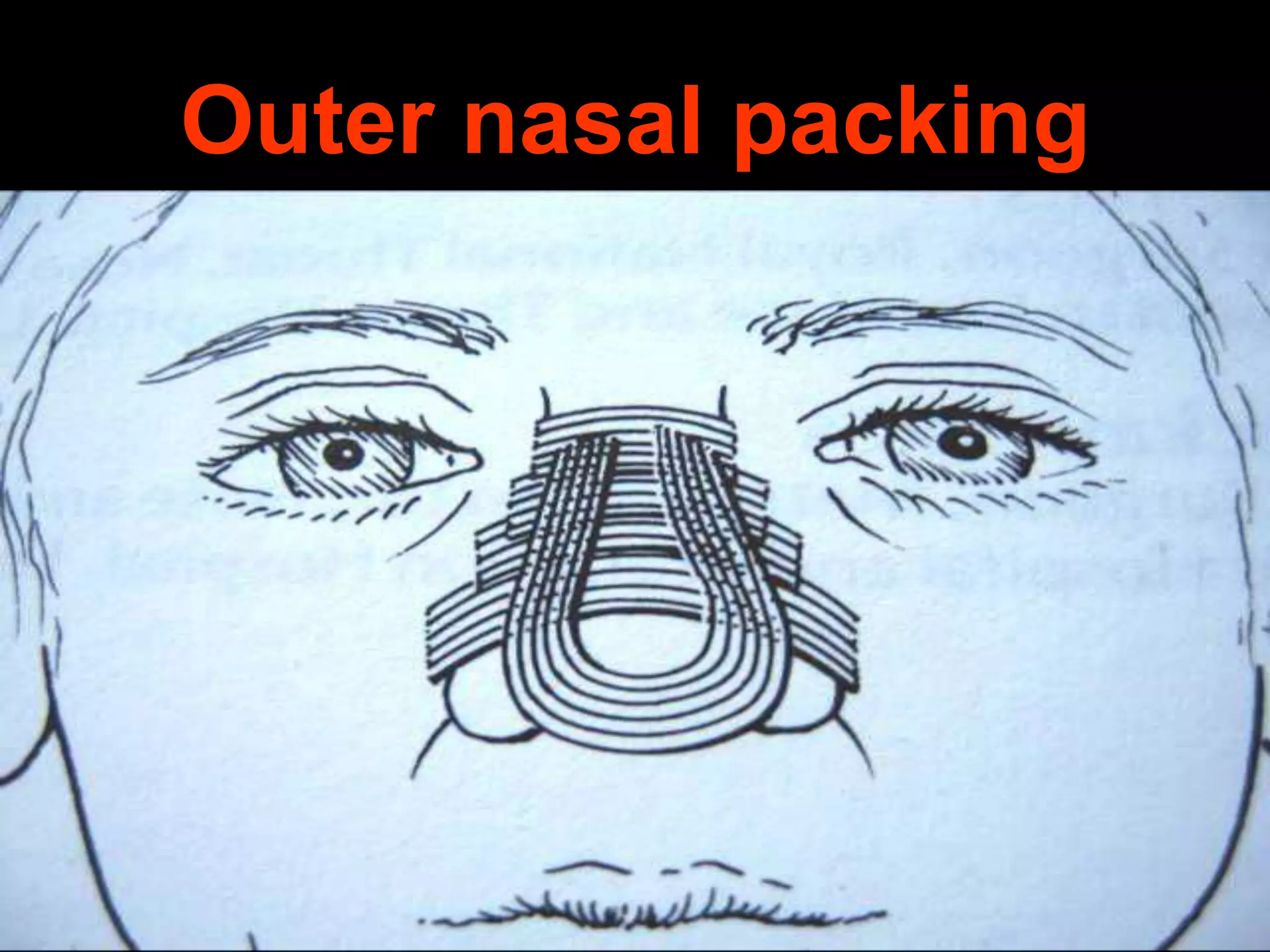
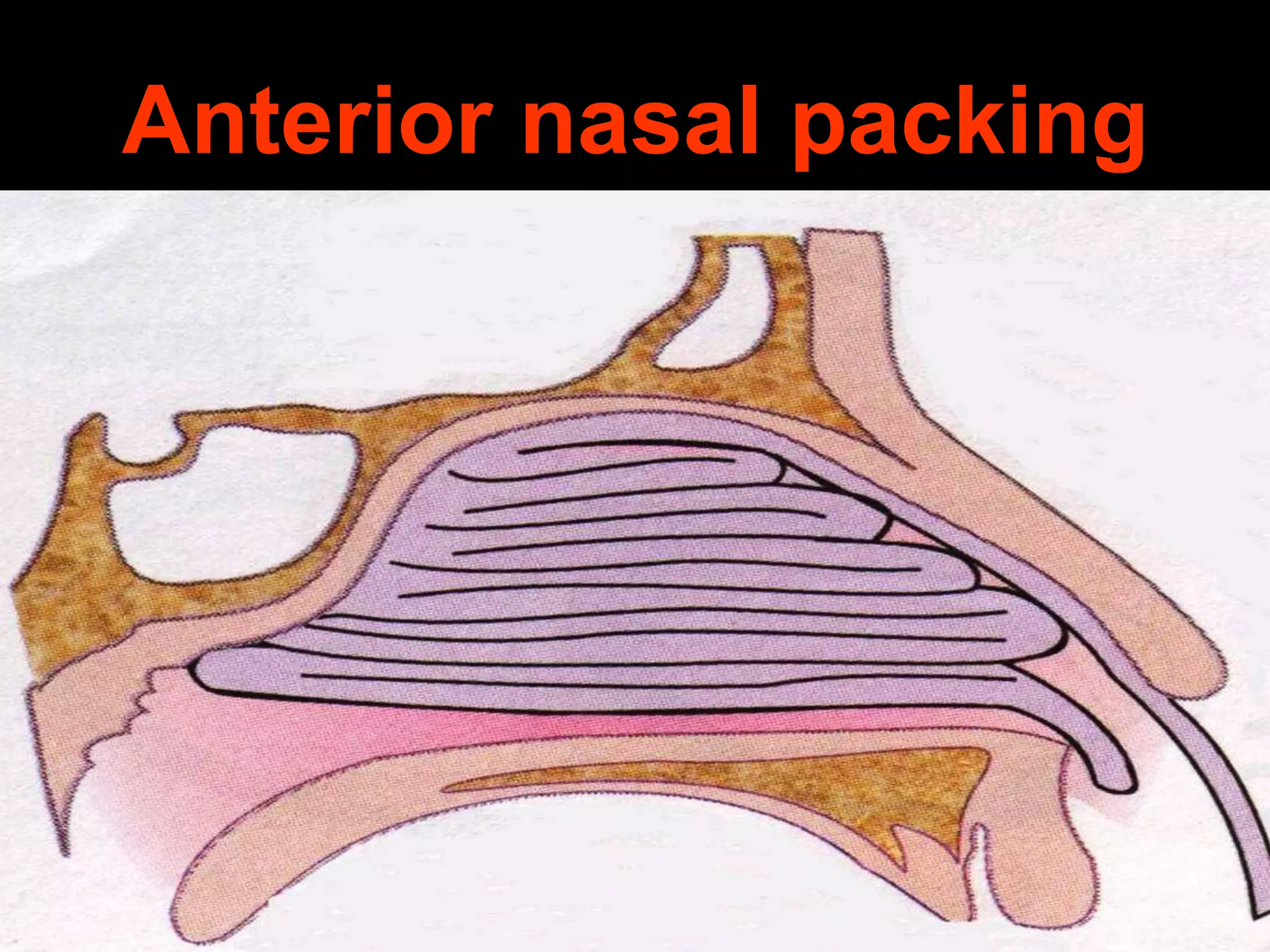
Anterior nasal packing
Outer nasal packing
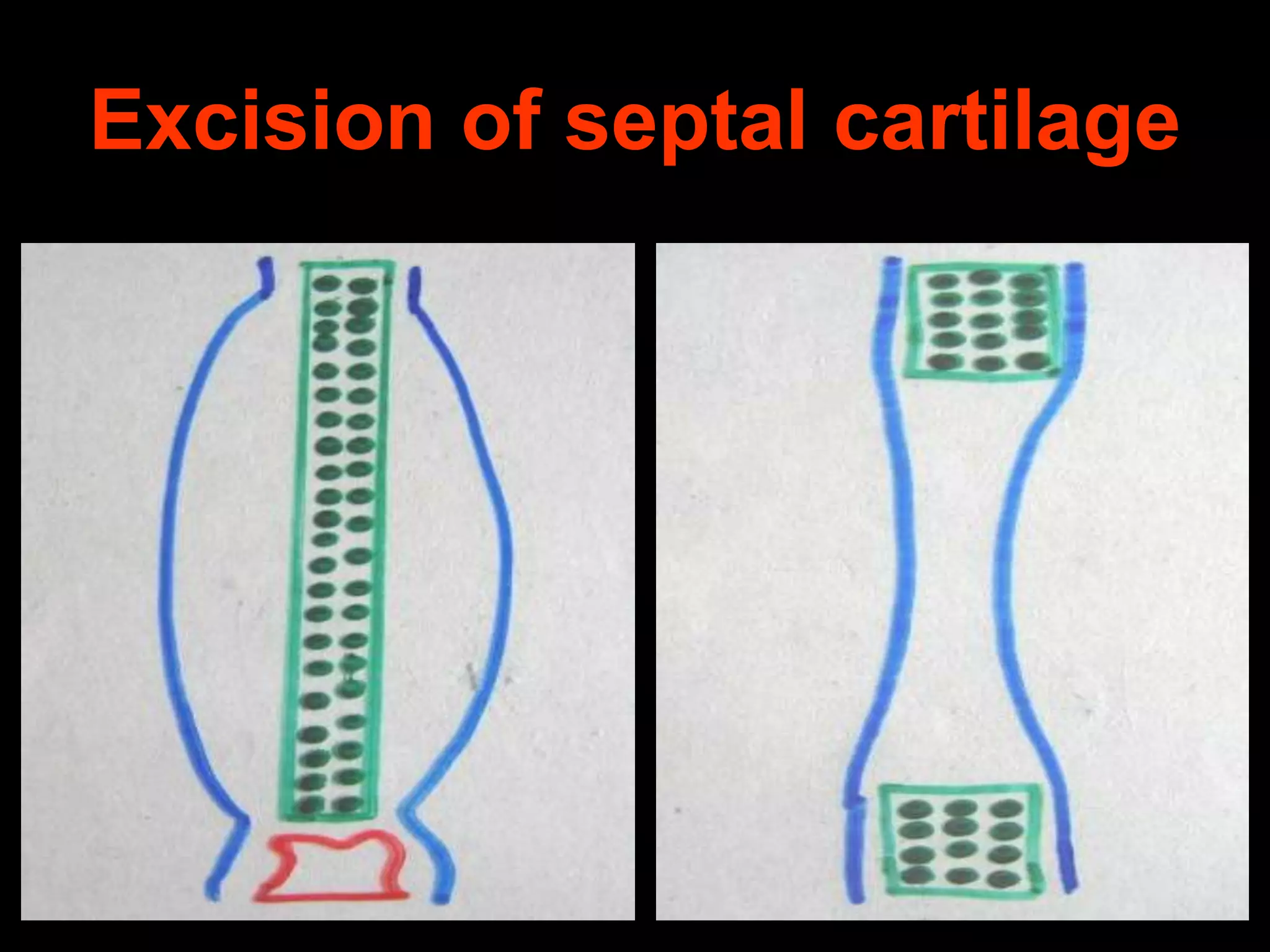
Submucosal
Resection
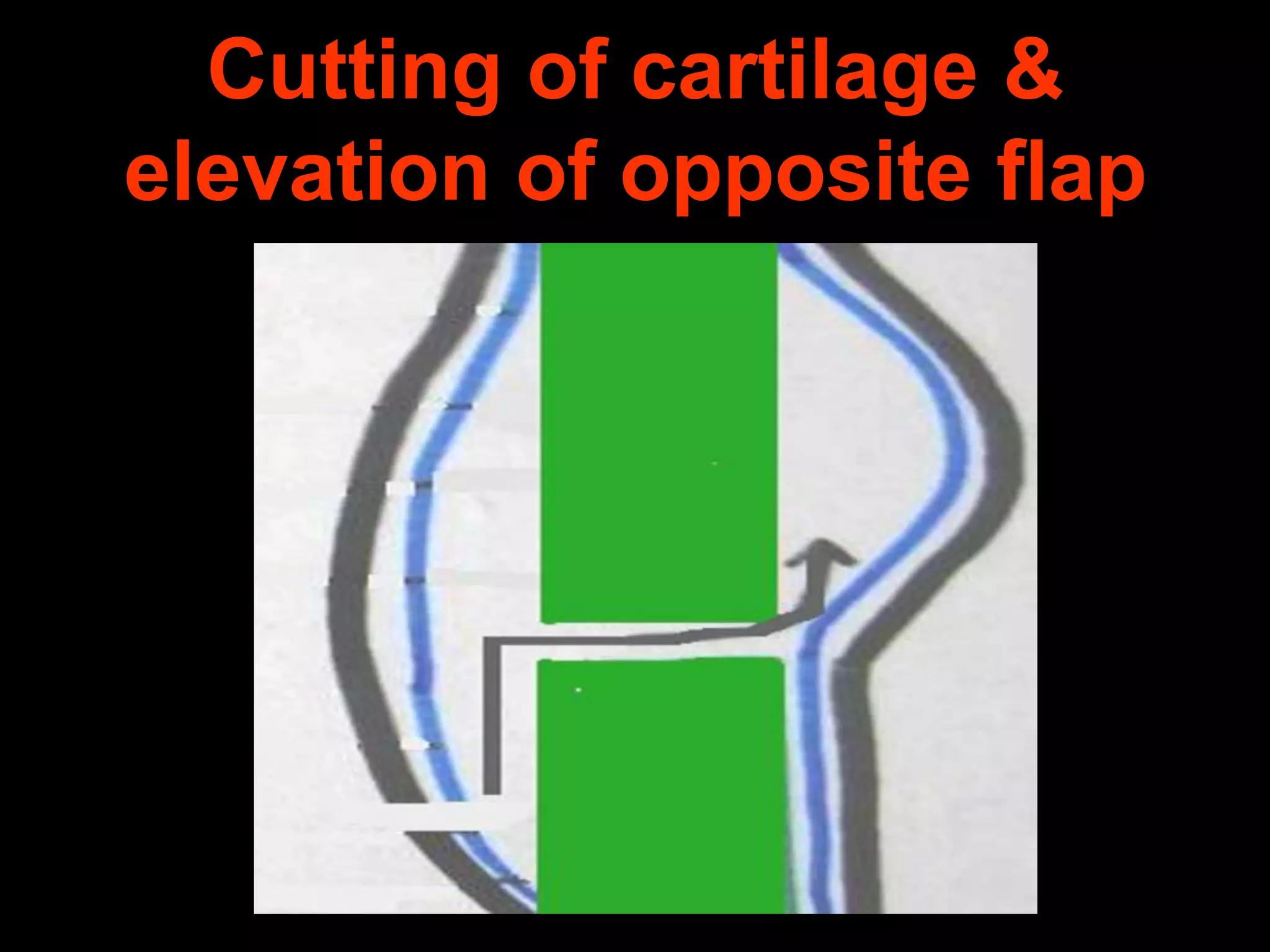
Killian’s incision
Muco-perichondrial flap
elevation on right side
Cutting of cartilage &
elevation of opposite flap
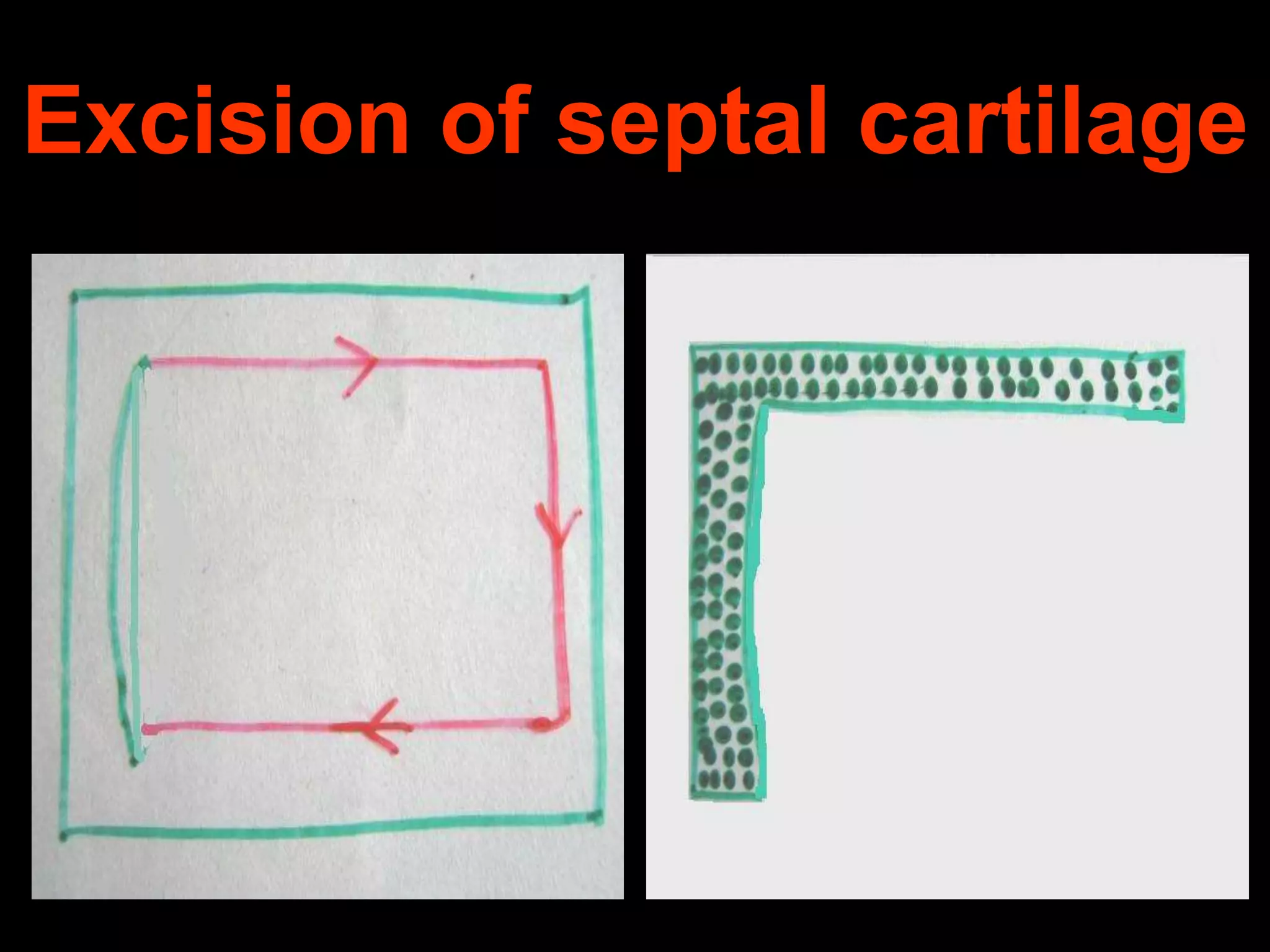
Excision of septal cartilage
Cartilage + Bone removed
Anterior nasal packing
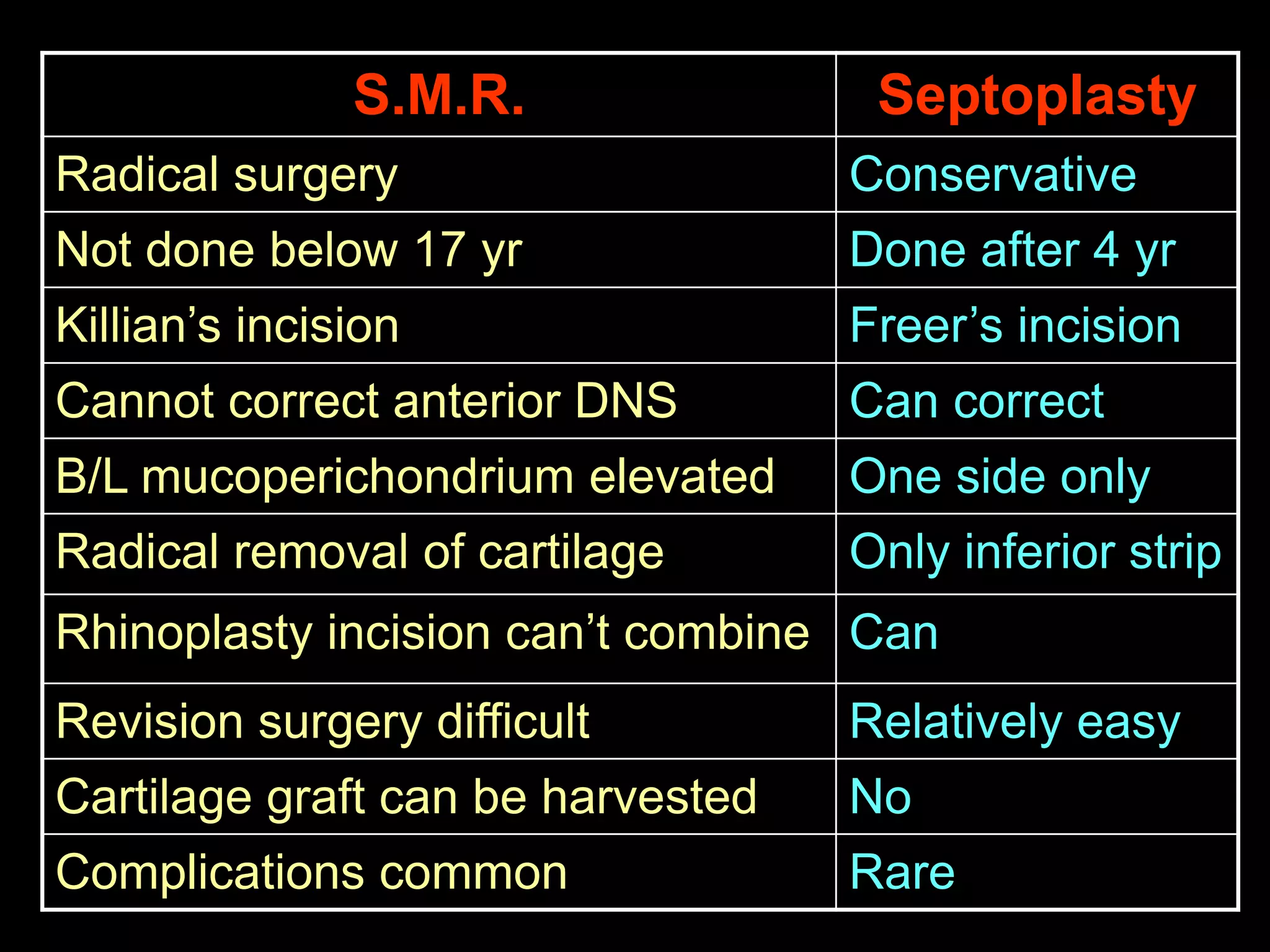
S.M.R.

Septoplasty

Radical surgery

Conservative

Not done below 17 yr

Done after 4 yr

Killian’s incision

Freer’s incision

Cannot correct anterior DNS

Can correct

B/L mucoperichondrium elevated

One side only

Radical removal of cartilage

Only inferior strip

Rhinoplasty incision can’t combine Can
Revision surgery difficult

Relatively easy

Cartilage graft can be harvested

No

Complications common

Rare
Complications of septal
surgery
1. Haemorrhage

2. Septal haematoma

3. Septal abscess

4. Septal perforation

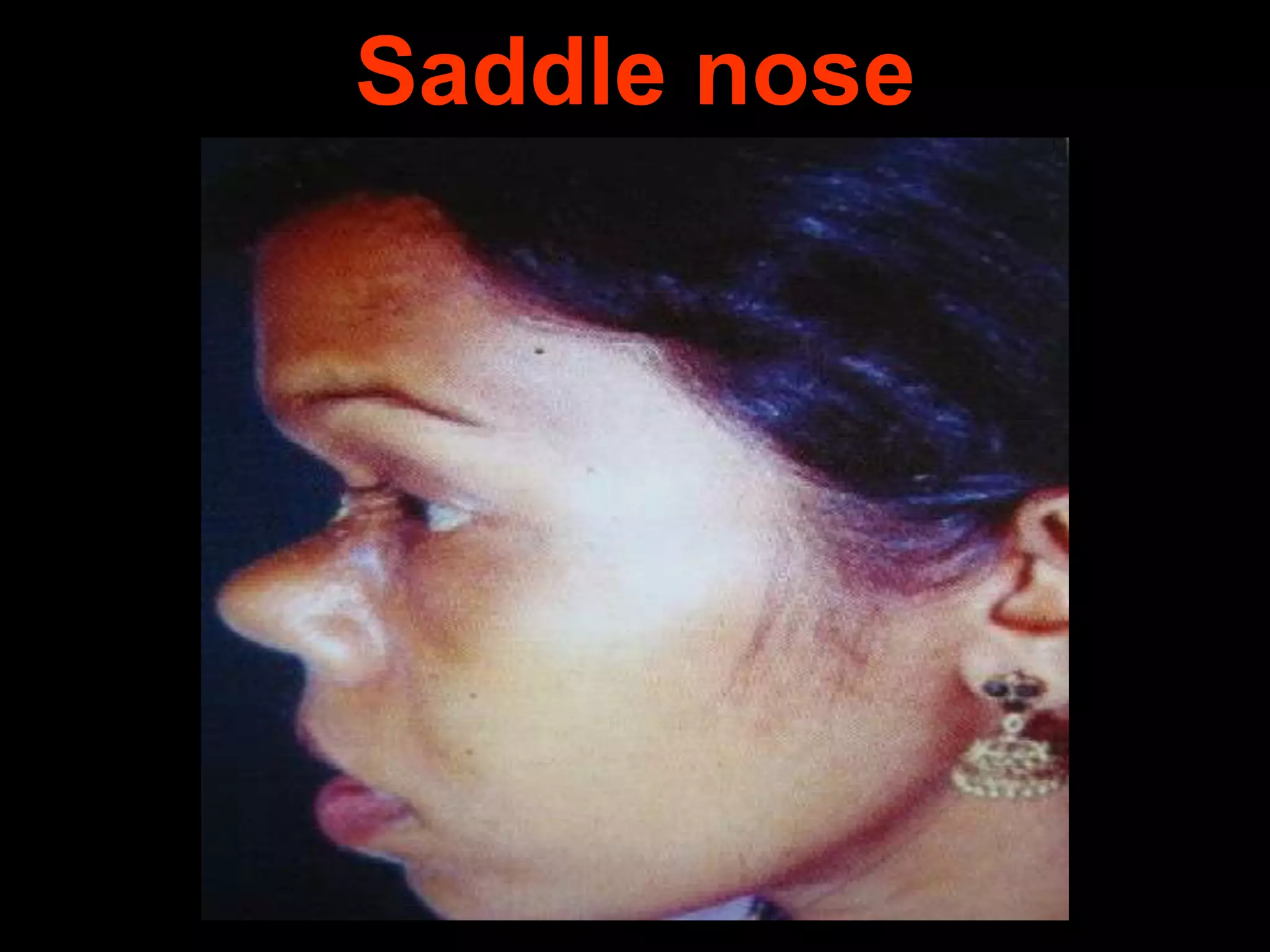
5. Saddle nose

6. Columellar retraction

7. Flapping septum

8. Persistent deviation

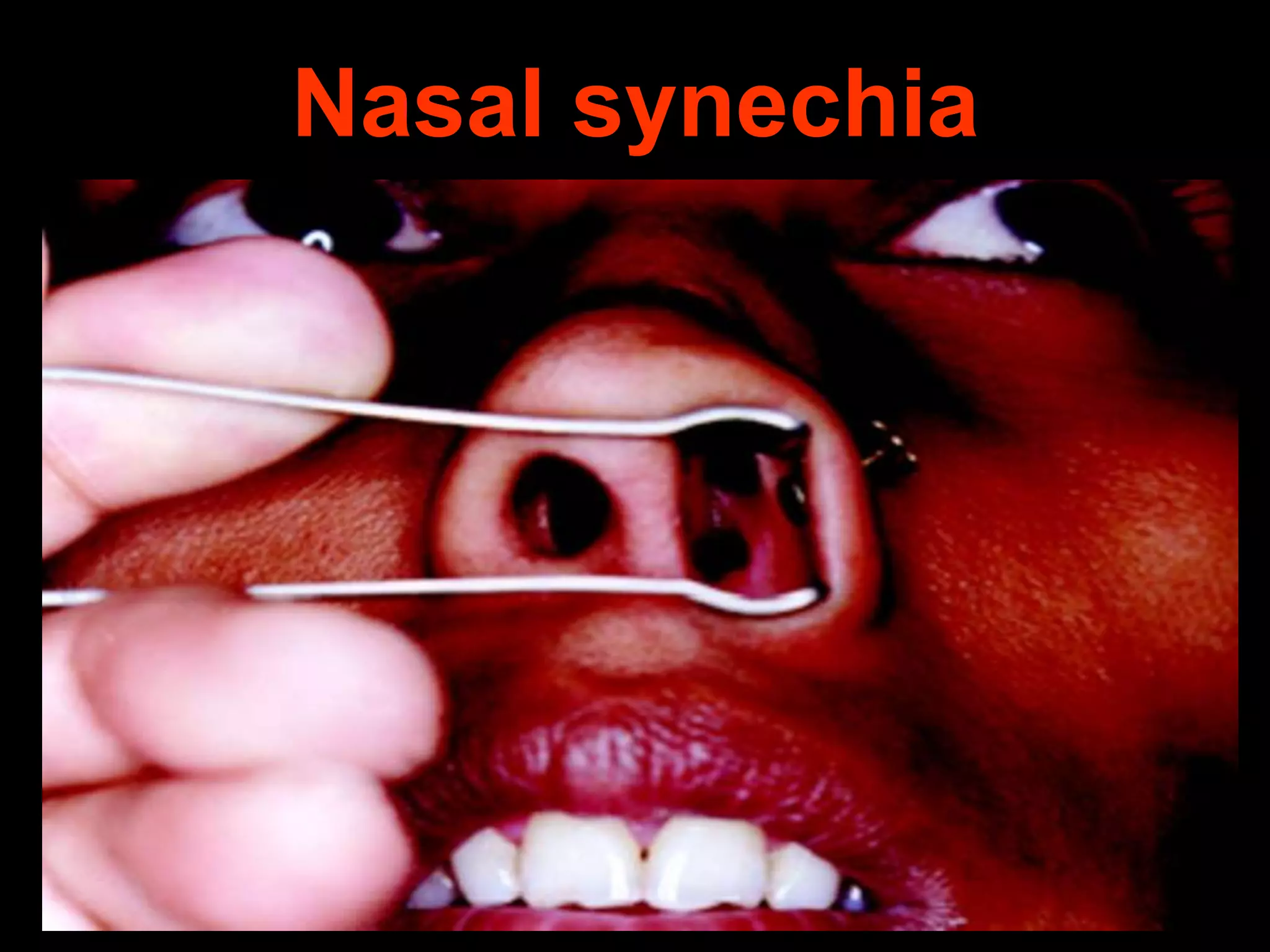
9. Nasal synechia

10. C.S.F. rhinorrhoea

11. Infection

12. Toxic shock syndrome
Septal haematoma
Collection of blood under perichondrium
& periosteum of nasal septum.
Aetiology:
1. Nasal trauma
2. Septal surgery
3. Bleeding disorders
Clinical features
• Bilateral nasal obstruction

• Sense of pressure over nasal bridge
• B/L smooth, rounded septal swelling

• On palpation mass is soft & fluctuant
• Absence of raised

temperature, erythema, swelling & tenderness
of skin over nose.
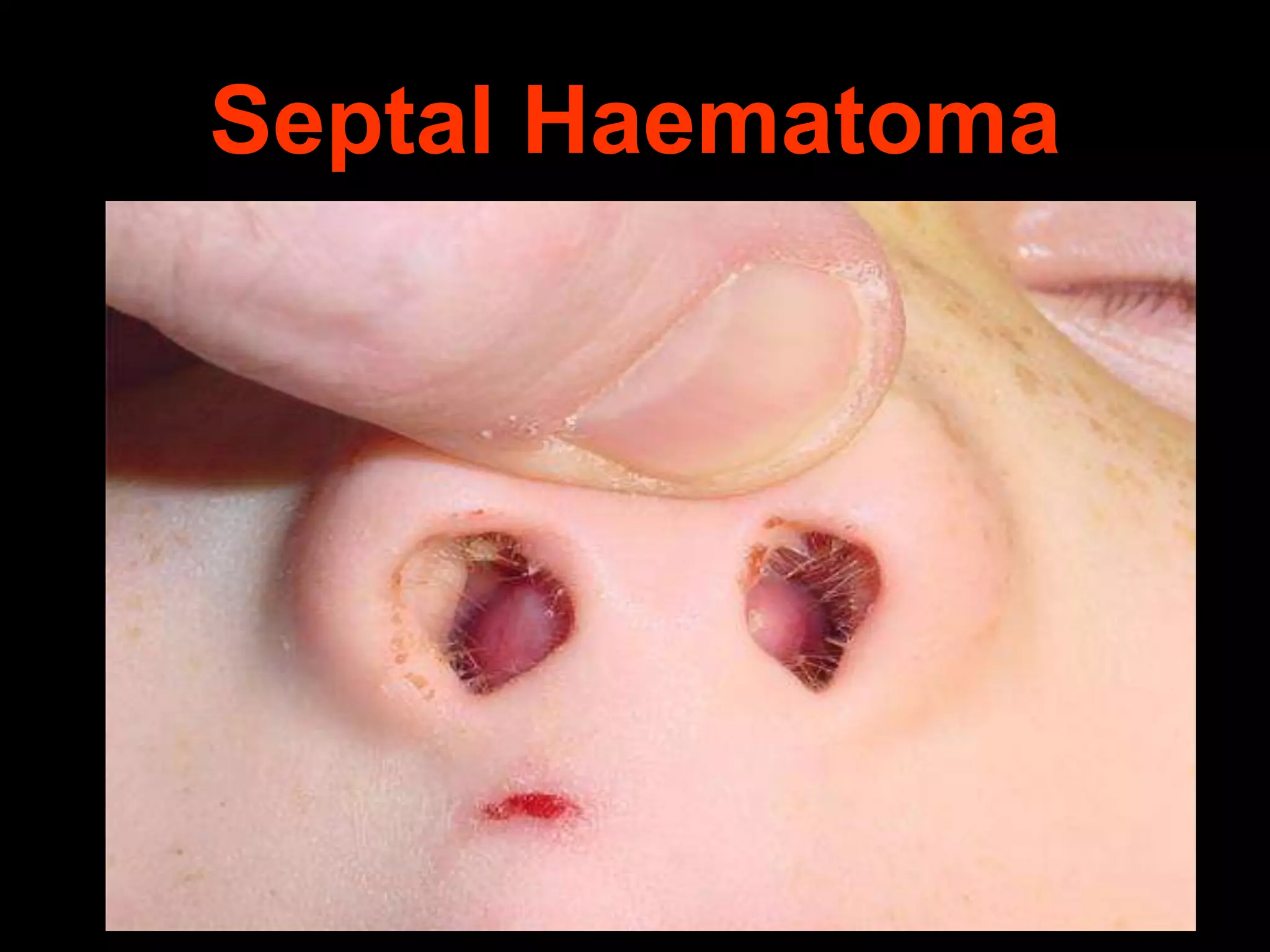
Septal Haematoma
Treatment
1. Small: wide bore needle aspiration
2. Large:
a. incision & drainage
b. nasal packing (prevent recurrence)

c. systemic antibiotics (prevent abscess)
Complications
• Thickened nasal septum
• Septal abscess with cartilage necrosis
• Saddle nose
• Supra-tip deformity

• Septal perforation
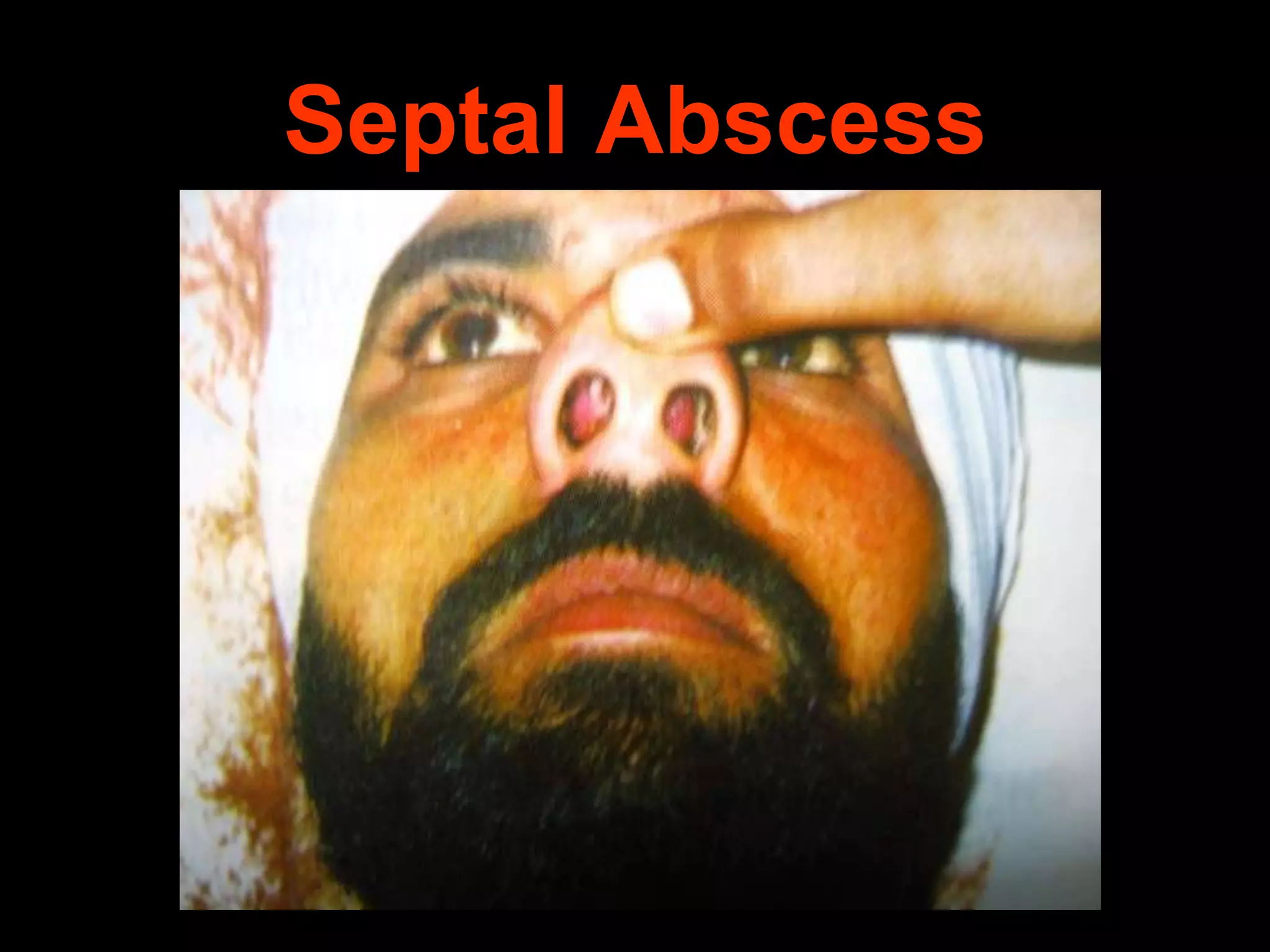
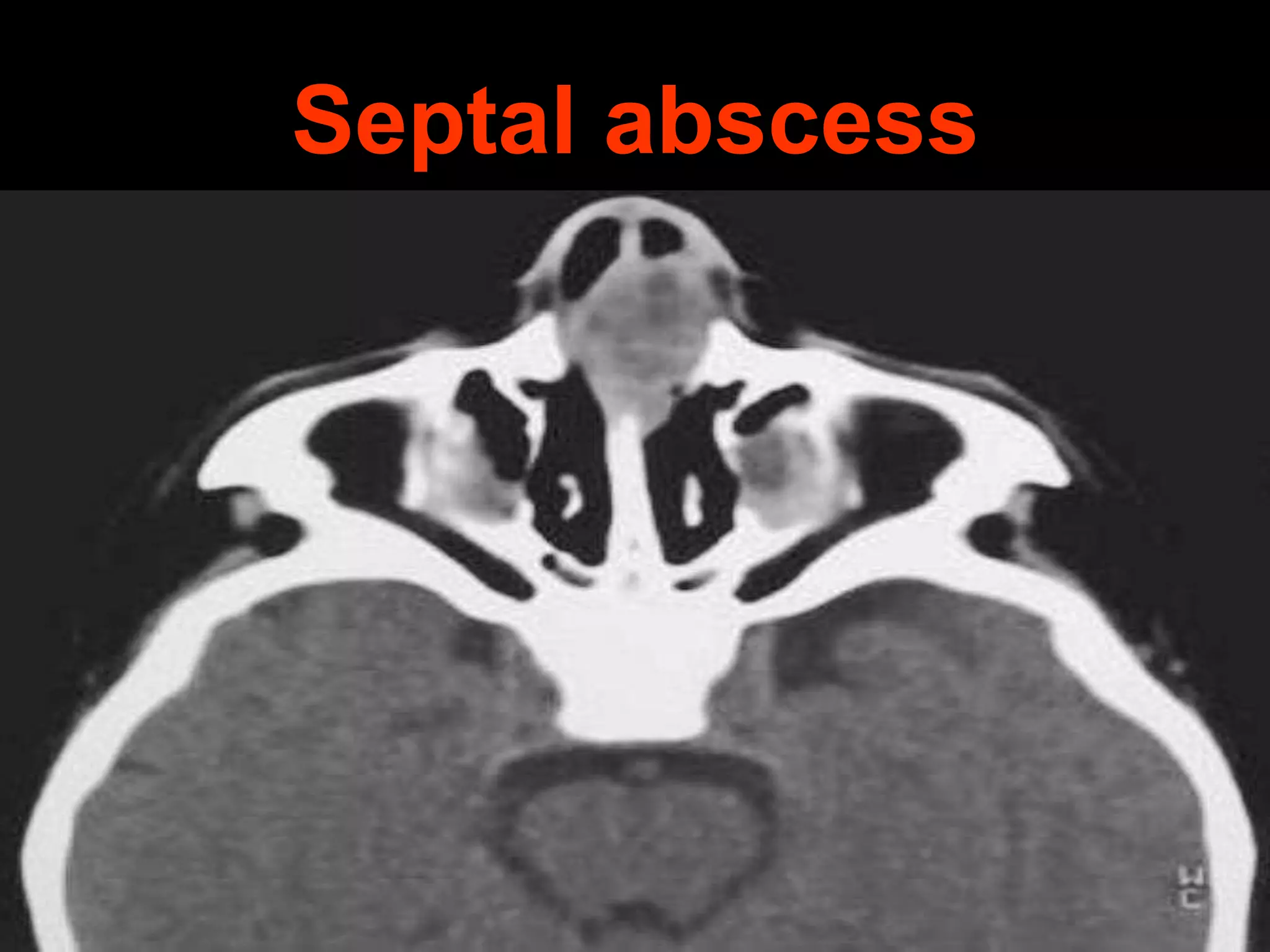
Septal abscess
Collection of pus under perichondrium

& periosteum of nasal septum.
Aetiology:
1. secondary infection of septal hematoma
2. following furuncle of nose or upper lip
3. following typhoid or measles
Clinical Features
• Bilateral nasal obstruction with fever
• Skin over nose shows raised
temperature, erythema, swelling & tenderness
• B/L smooth, soft, fluctuant septal swelling
• Septal mucosa congested
• Submandibular node enlarged & tender
Septal Abscess
Septal abscess
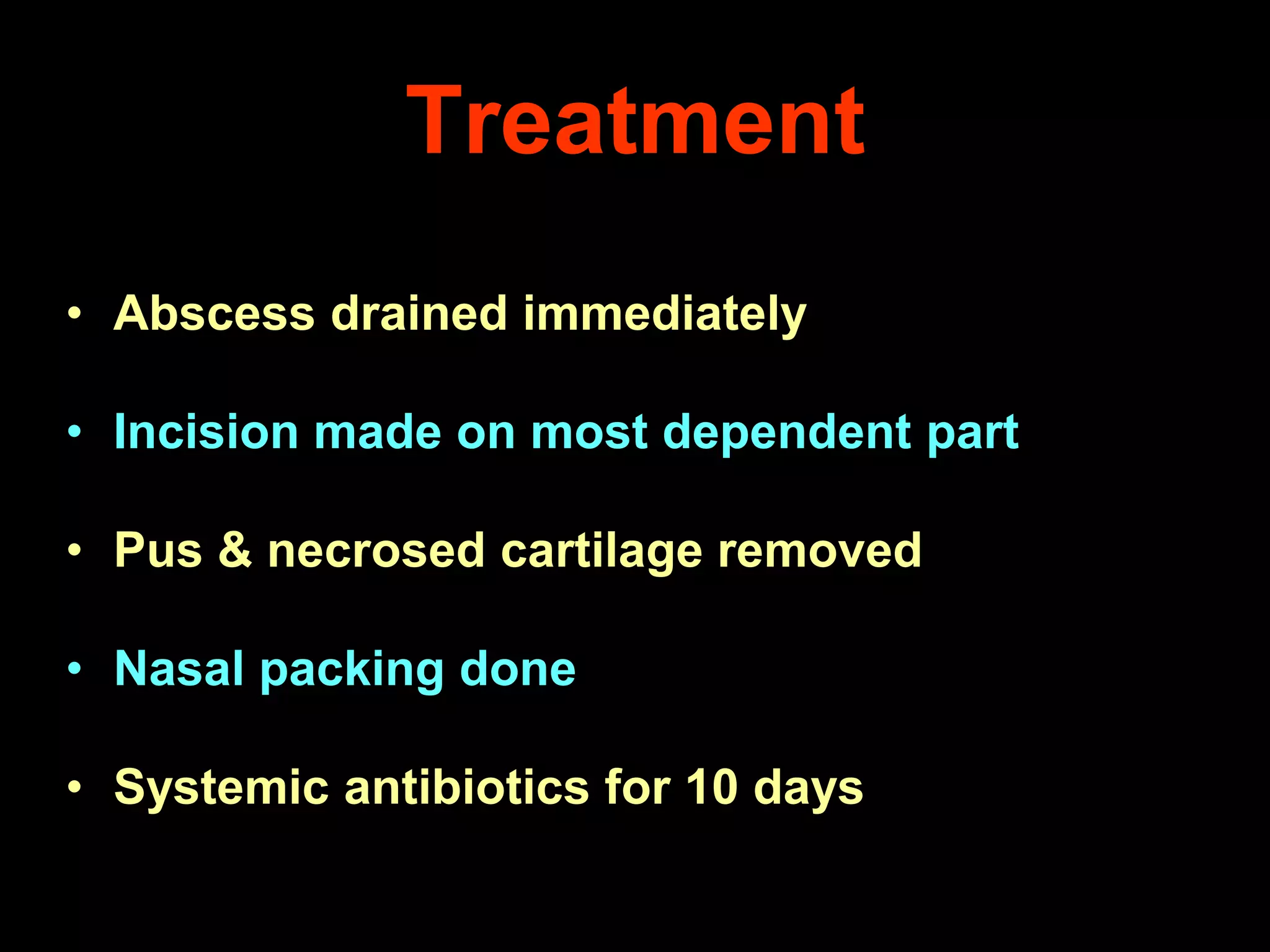
Treatment
• Abscess drained immediately
• Incision made on most dependent part
• Pus & necrosed cartilage removed
• Nasal packing done

• Systemic antibiotics for 10 days
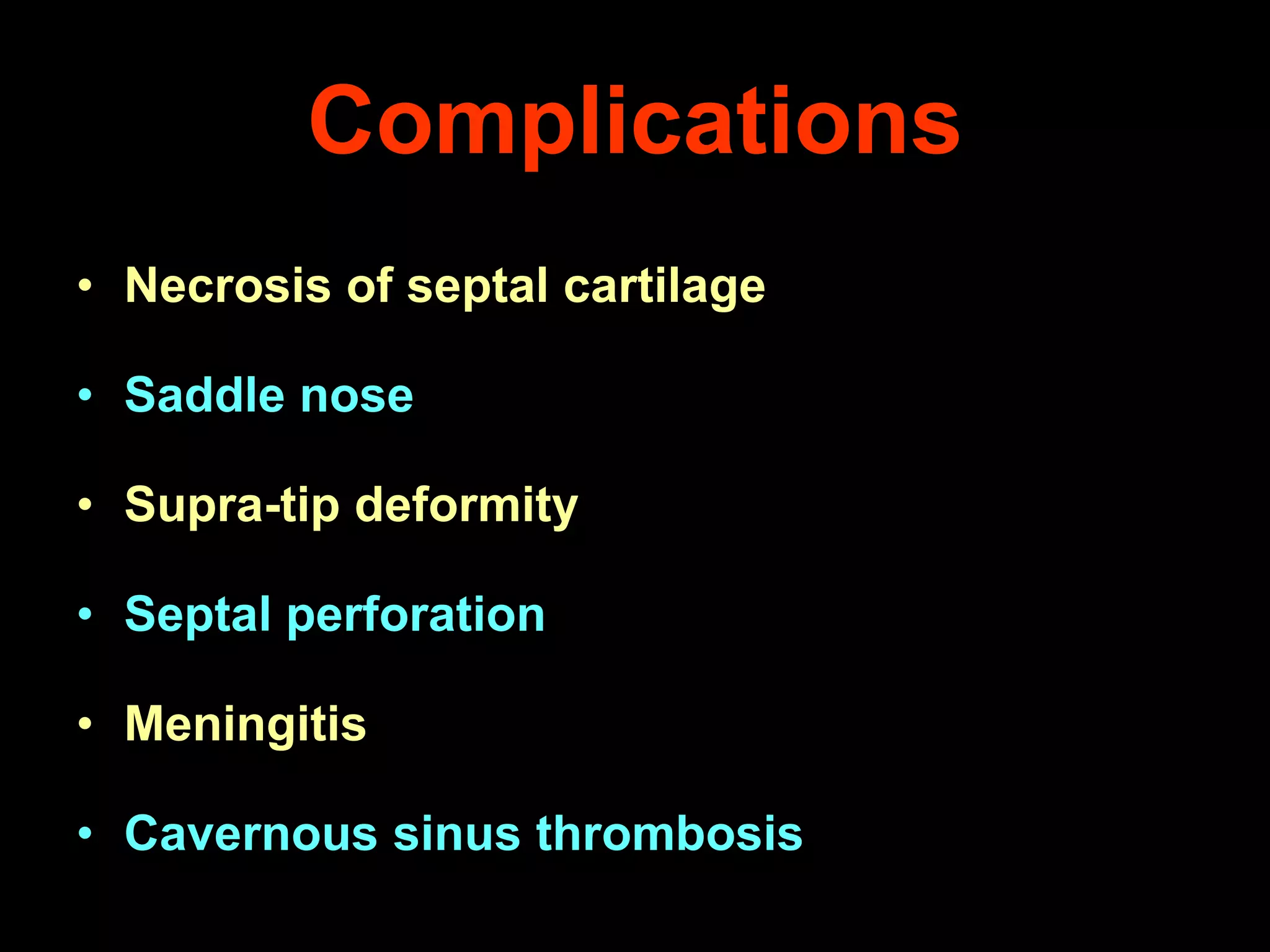
Complications
• Necrosis of septal cartilage
• Saddle nose
• Supra-tip deformity
• Septal perforation
• Meningitis
• Cavernous sinus thrombosis
Saddle nose
Nasal synechia
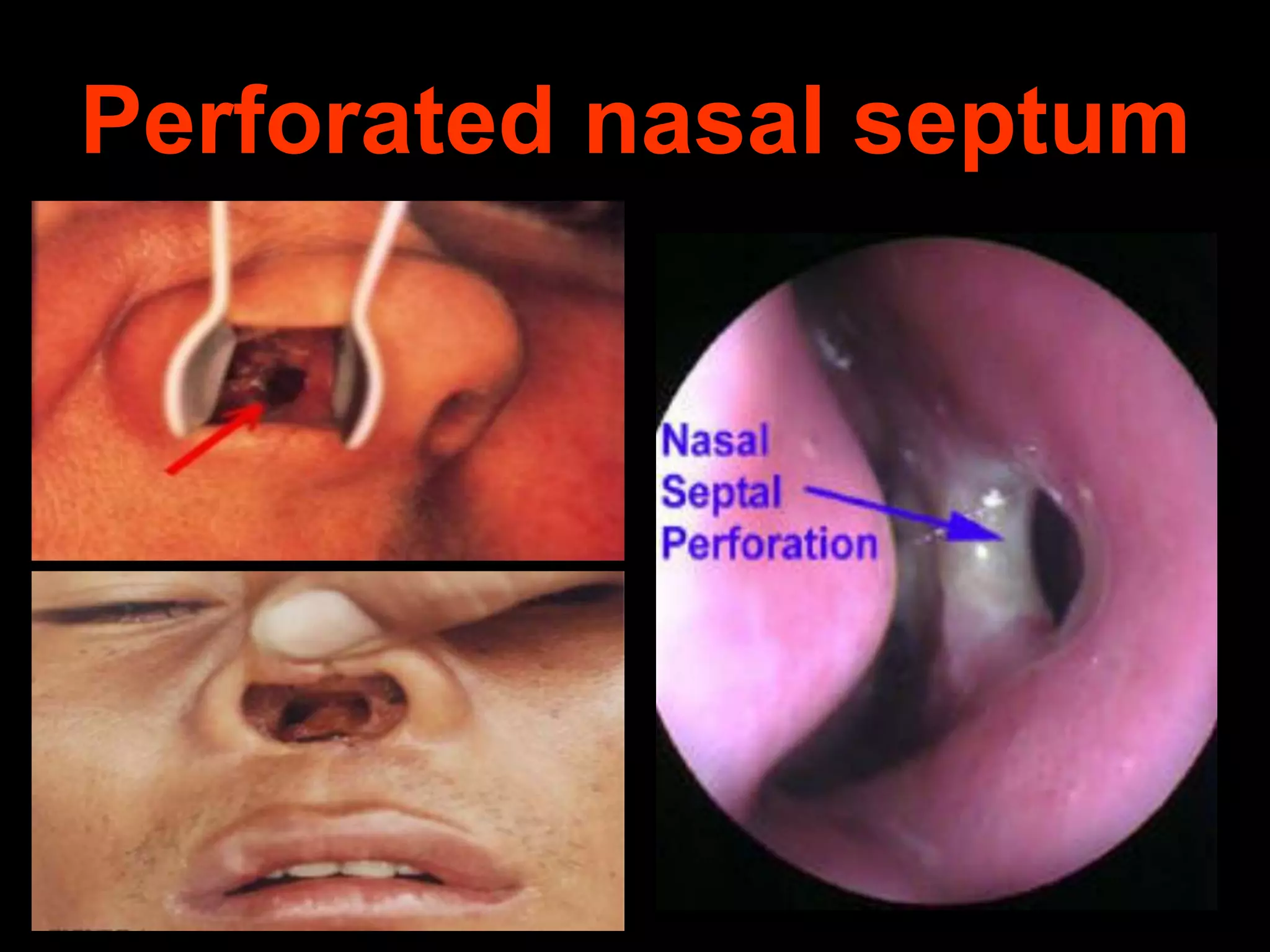
Perforated
nasal septum
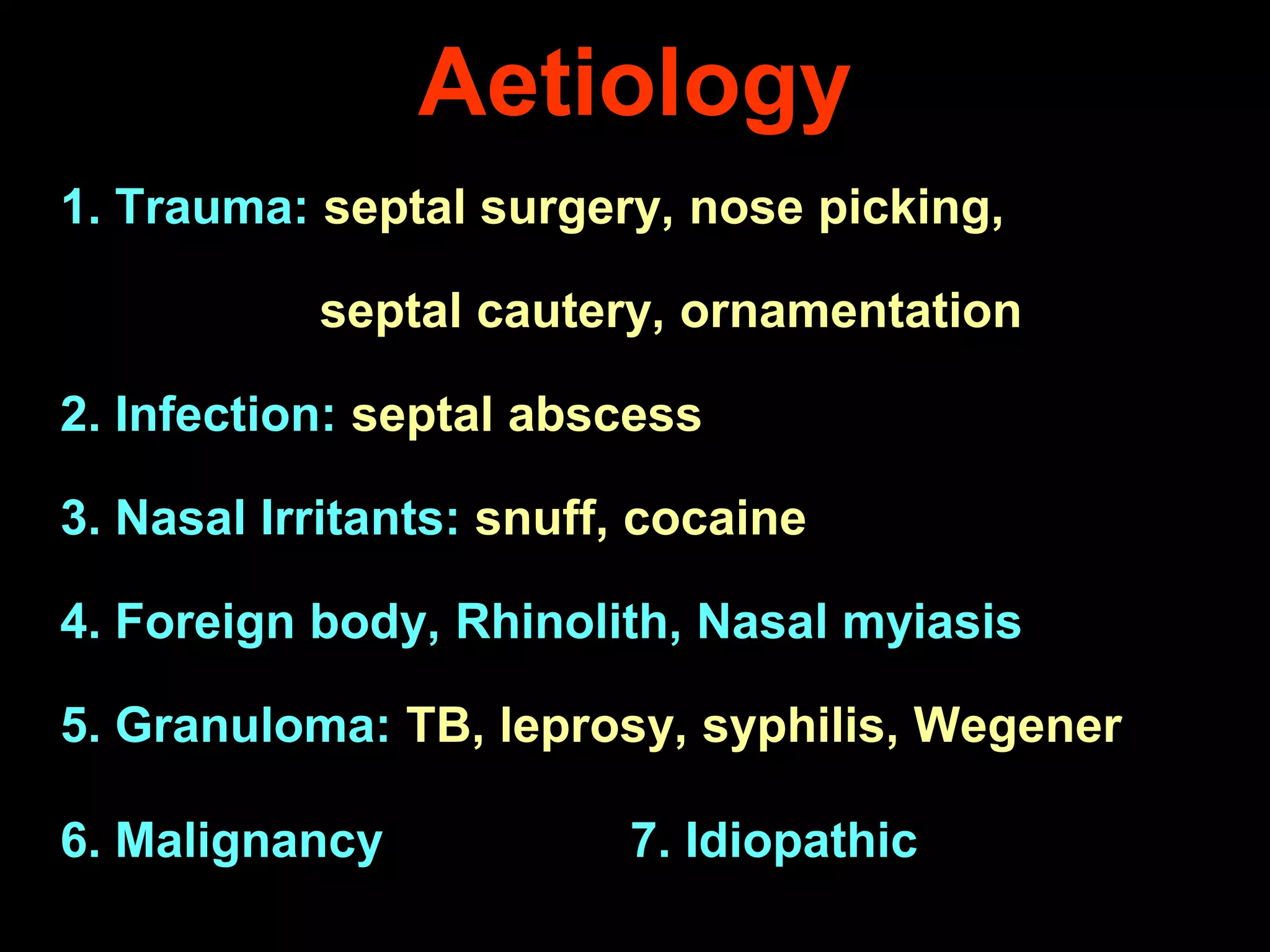
Aetiology
1. Trauma: septal surgery, nose picking,
septal cautery, ornamentation
2. Infection: septal abscess
3. Nasal Irritants: snuff, cocaine
4. Foreign body, Rhinolith, Nasal myiasis
5. Granuloma: TB, leprosy, syphilis, Wegener
6. Malignancy

7. Idiopathic
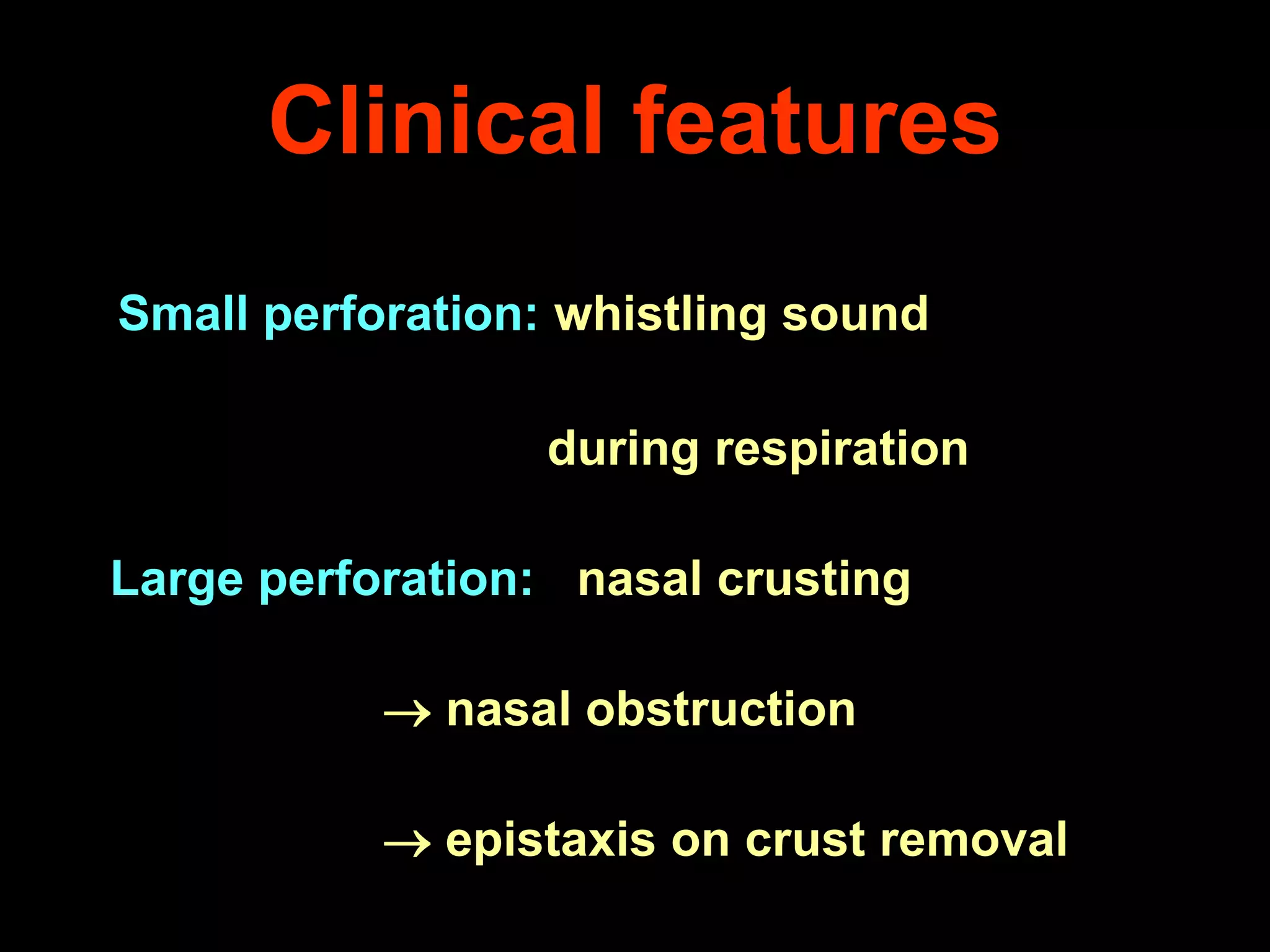
Clinical features
Small perforation: whistling sound
during respiration

Large perforation: nasal crusting
 nasal obstruction
 epistaxis on crust removal
Perforated nasal septum
Treatment
• Treat cause of septal perforation
• Alkaline nasal douche for crusting
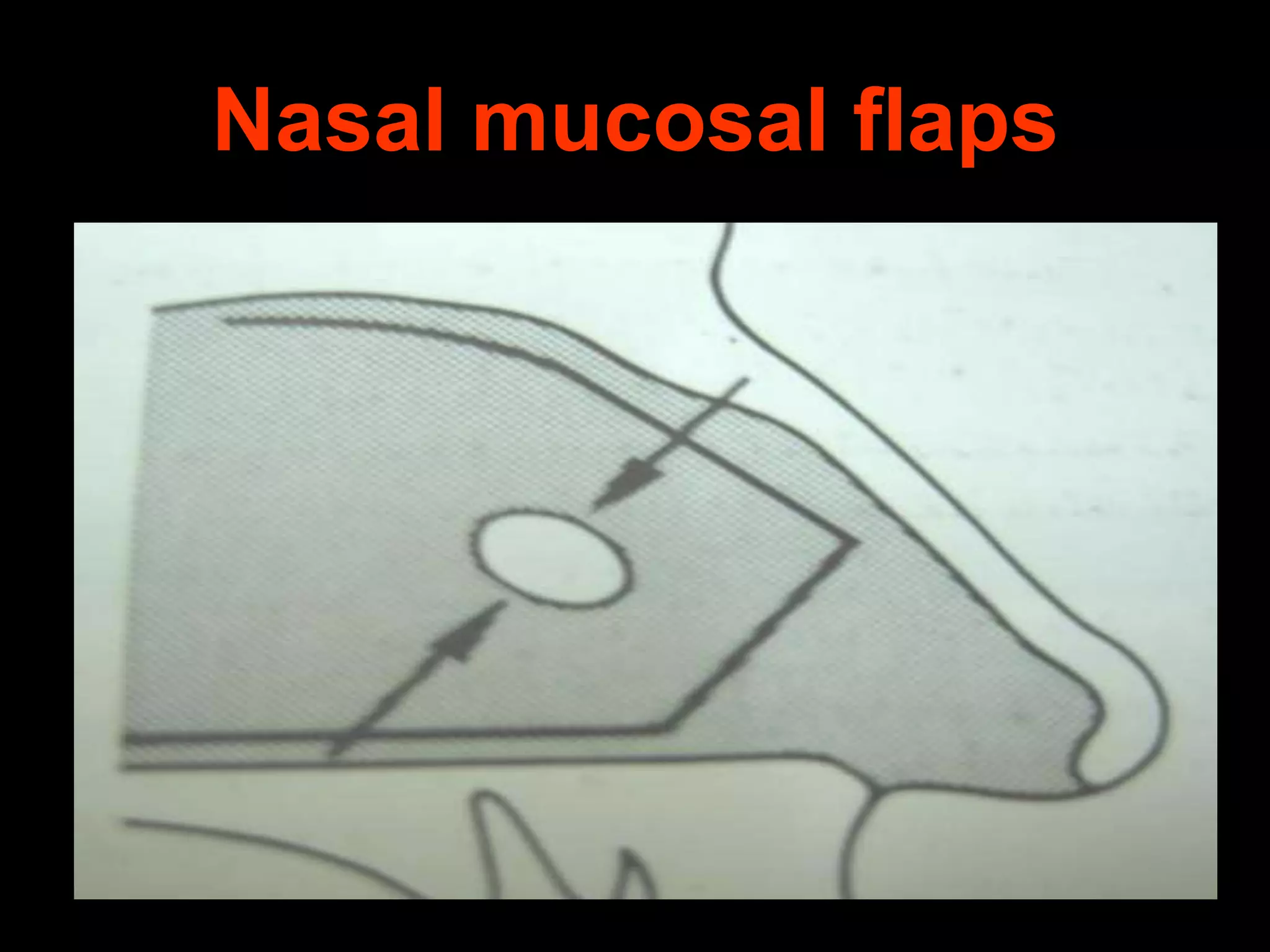
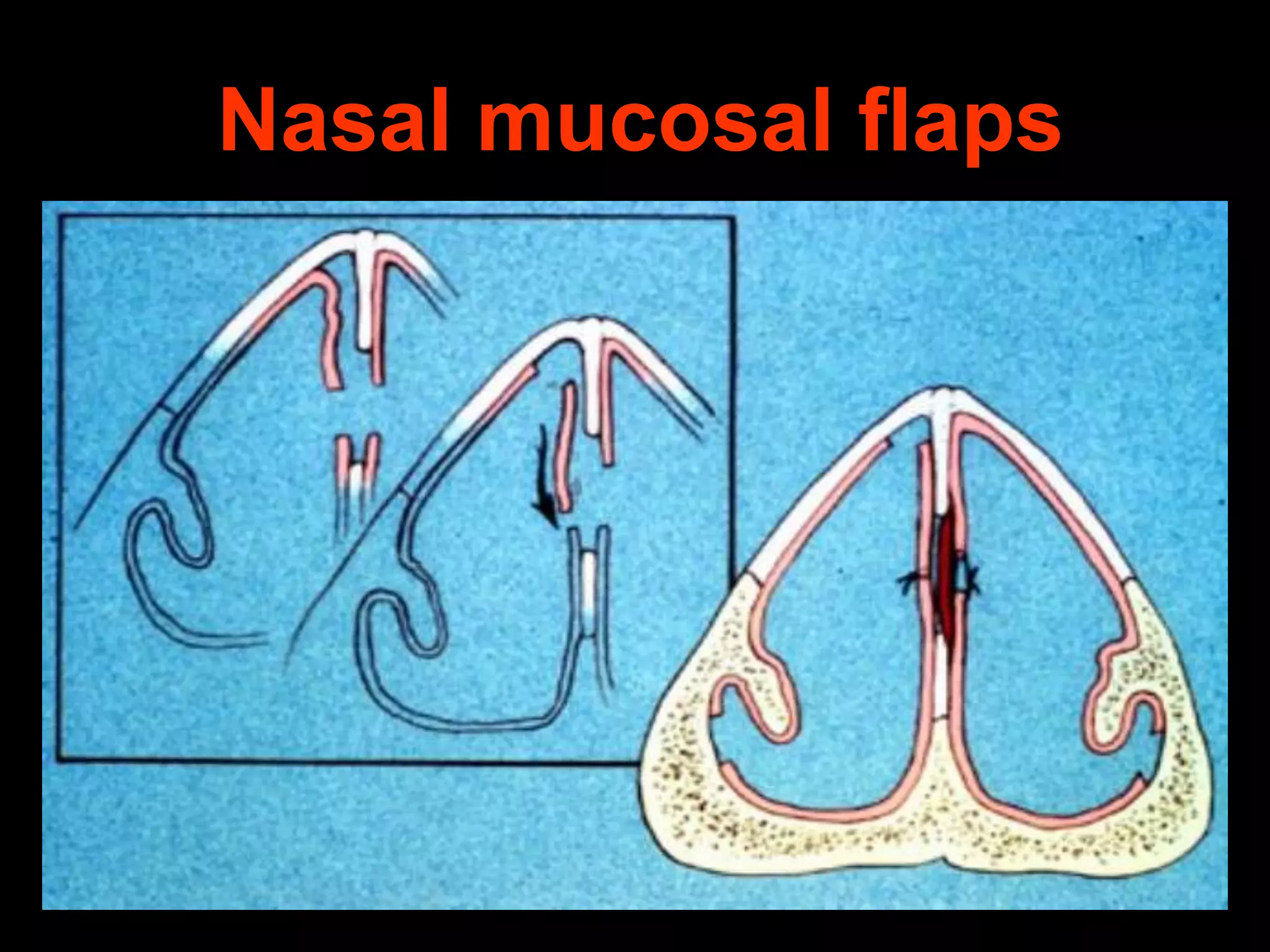
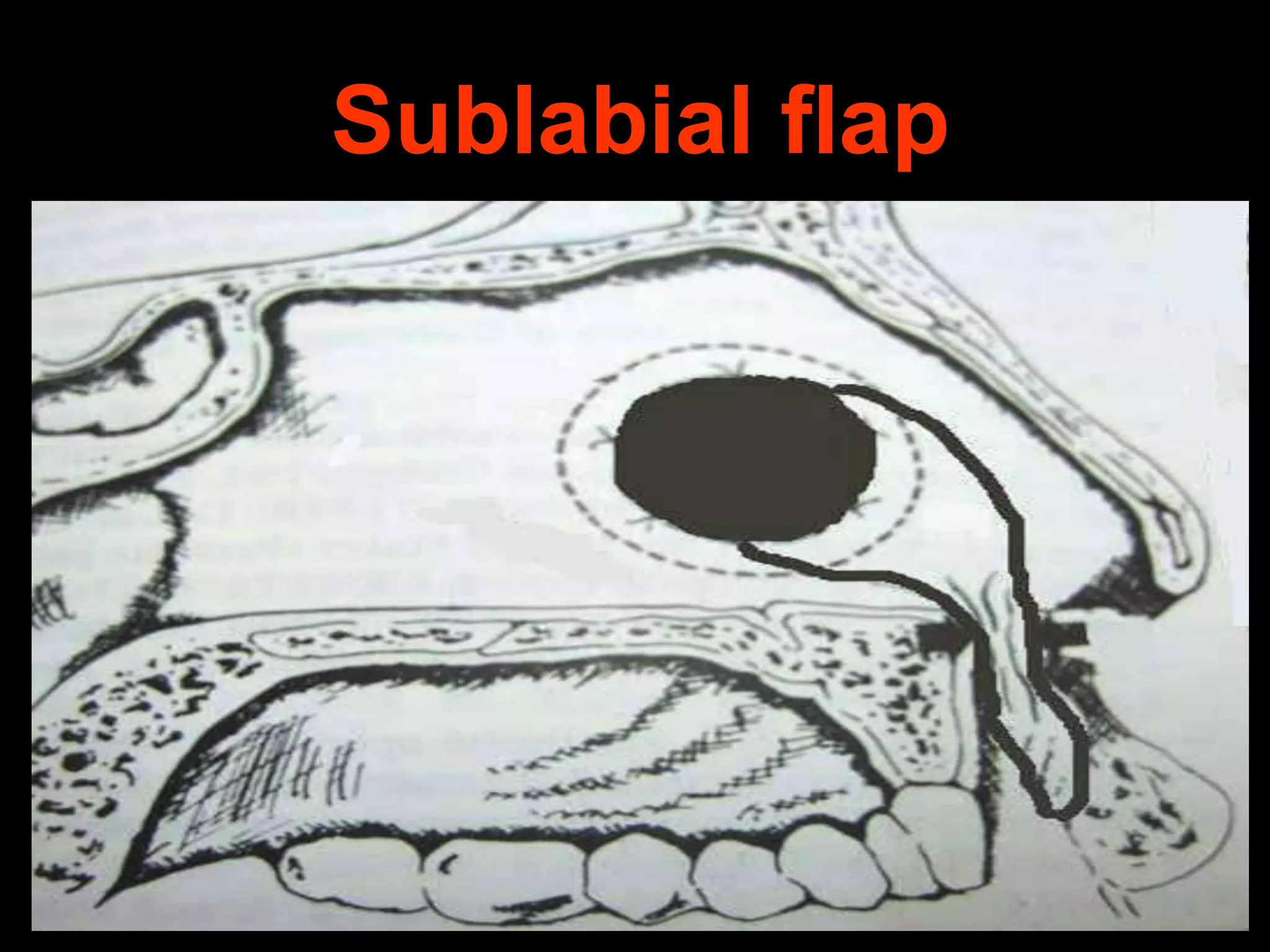
• Small perforation: closed by mucosal
advancement flaps
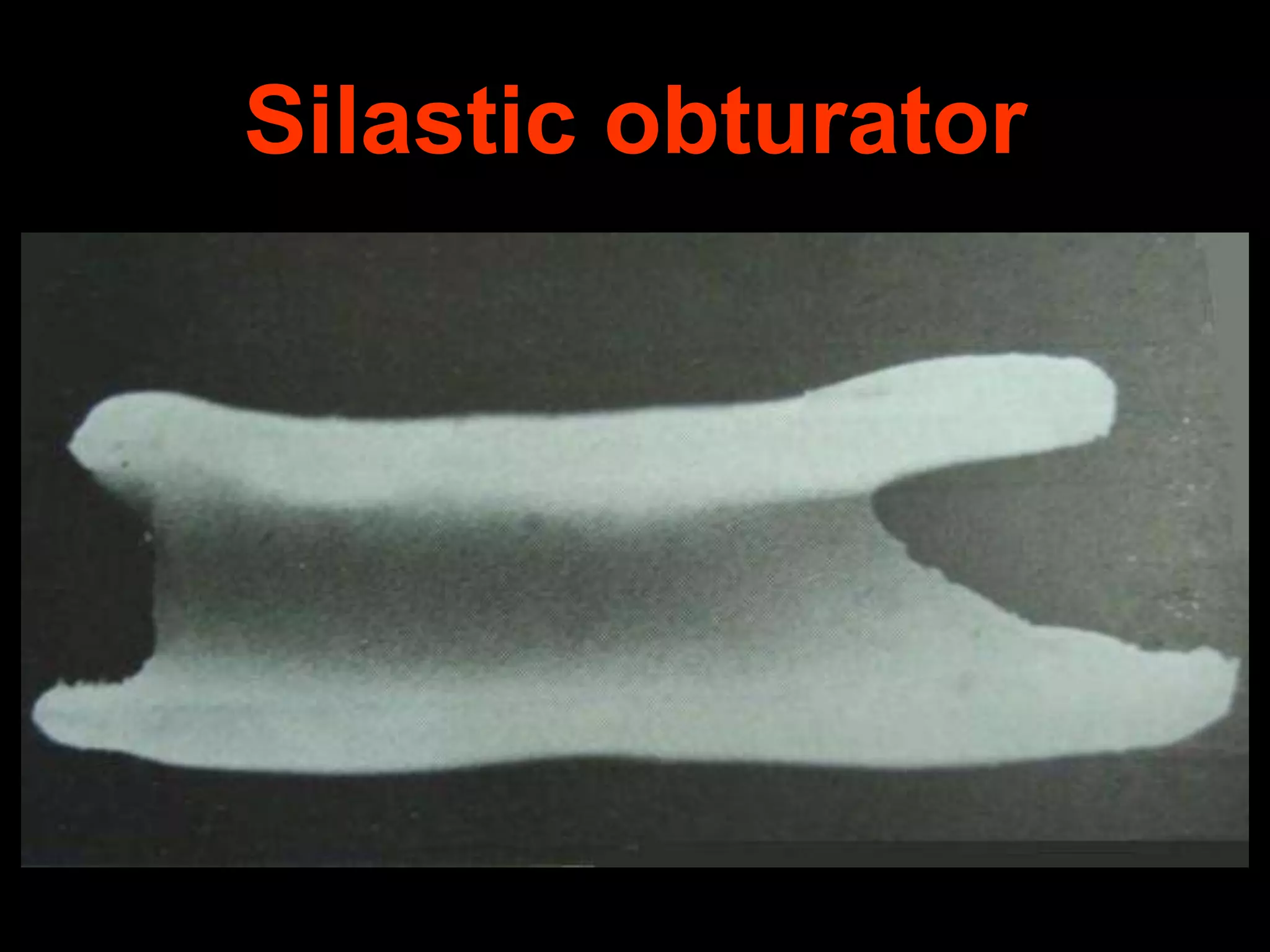
• Large perforation: Silastic
obturator, Alloderm. Results of surgery are
Nasal mucosal flaps
Nasal mucosal flaps
Sublabial flap
Silastic obturator
Thank You

5 deviated-nasal-septum