DAZED WEBSITE
ANALYSIS.
ZOEOLAWORE
Where is digital
convergence.
02
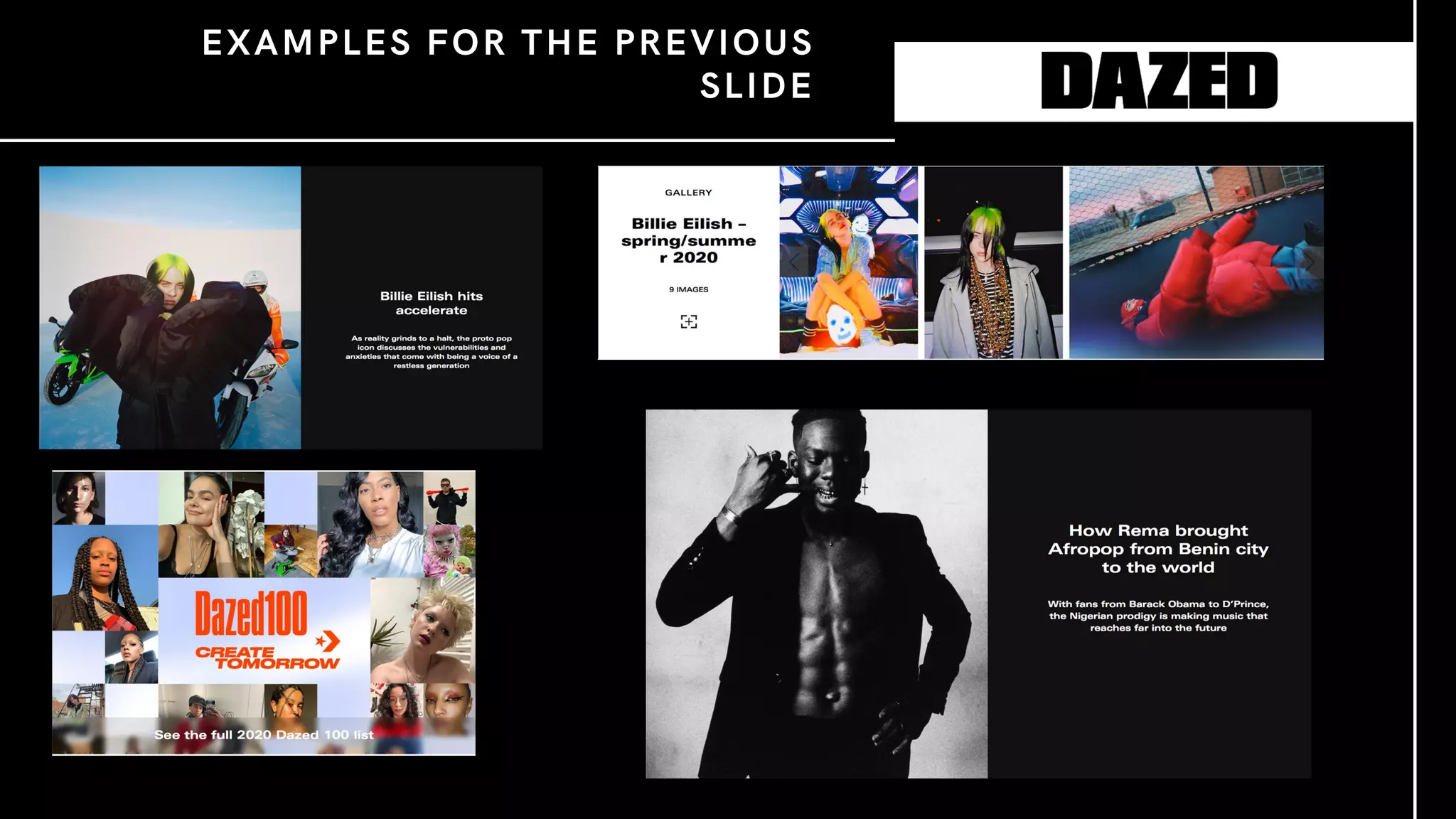
The logo is written in a capitalised, bold typeface both online and in print
Photographs of Billie Eillish from the same photoshoot is used online and in
print to create a sense of consistency
With the alternative front covers of Rema, the same photo that is used of
Rema is also used for the article about this artist (as well as additional)
They mentioned and featured some of the artists who are part of Dazed 100 and
this continued to prove a great theme online (so the themes hinted in print
were developed online)
It was interesting to see that even the content of an interview with fashion
icon couple, Devon Lee Carlson and Jesse Rutherford was also published online
EXAMPLES FOR THE PREVIOUS
SLIDE
Where is digital
convergence.
04
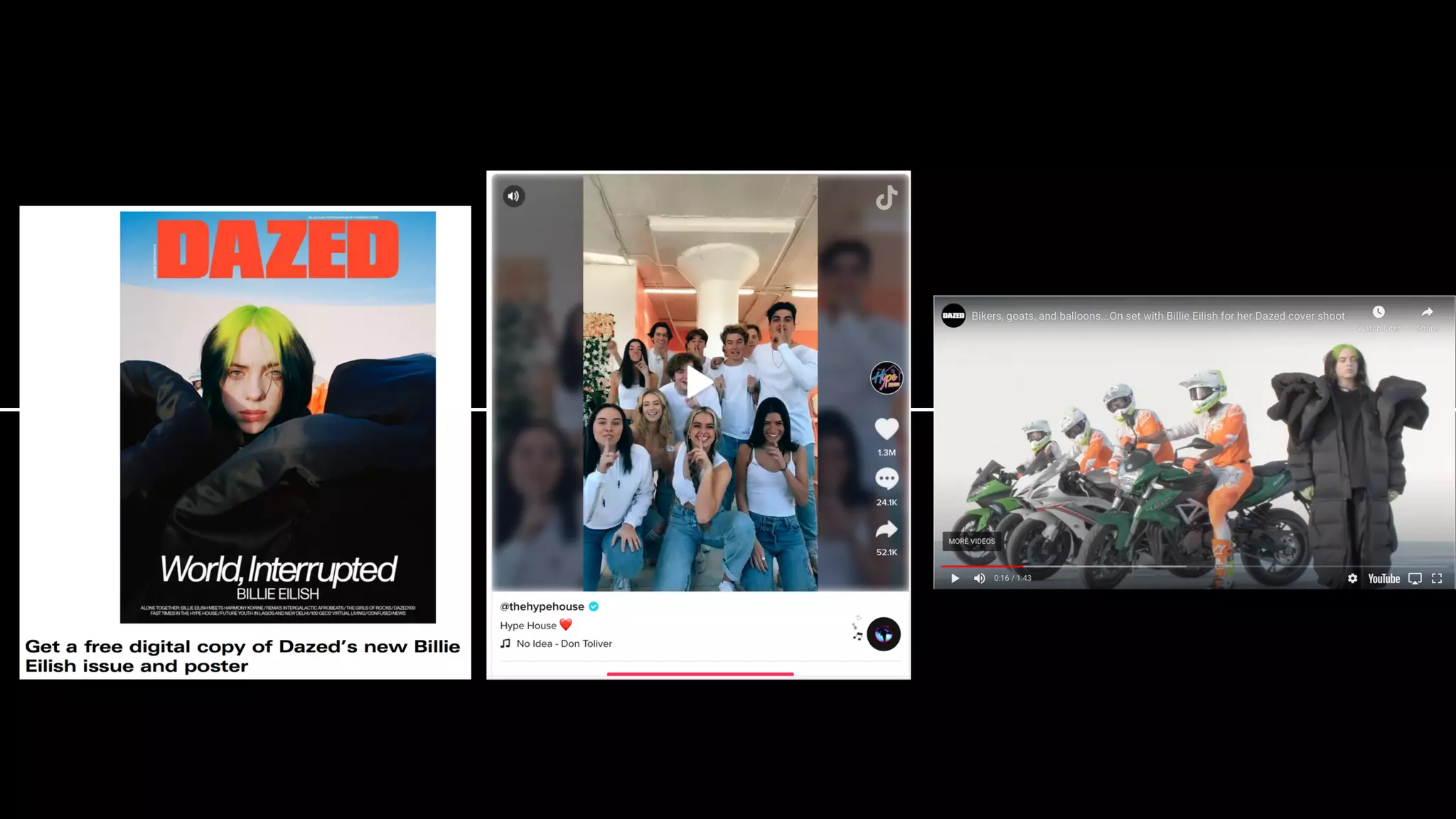
The coverage of the Hype House was extensively developed online with variations
in the content- there was a different photoshoot which was used, one much more
formal- they took advantage of technological improvements and included a TikTok
on the page
For a further sense of digital convergence, if not this being classified as
Easter Eggs, online there was extra content. For example:
A short film on the set where the Billie Eillish photoshoot took place- this
would satisfy the voyeuristic expectations of avid fans- the same font that was
used on the front cover's copy was also used within the video
They also offered a free digital copy of the issue and a poster (this was in
exchange for them signing up for their newsletter)
How is brand identity
created.
06
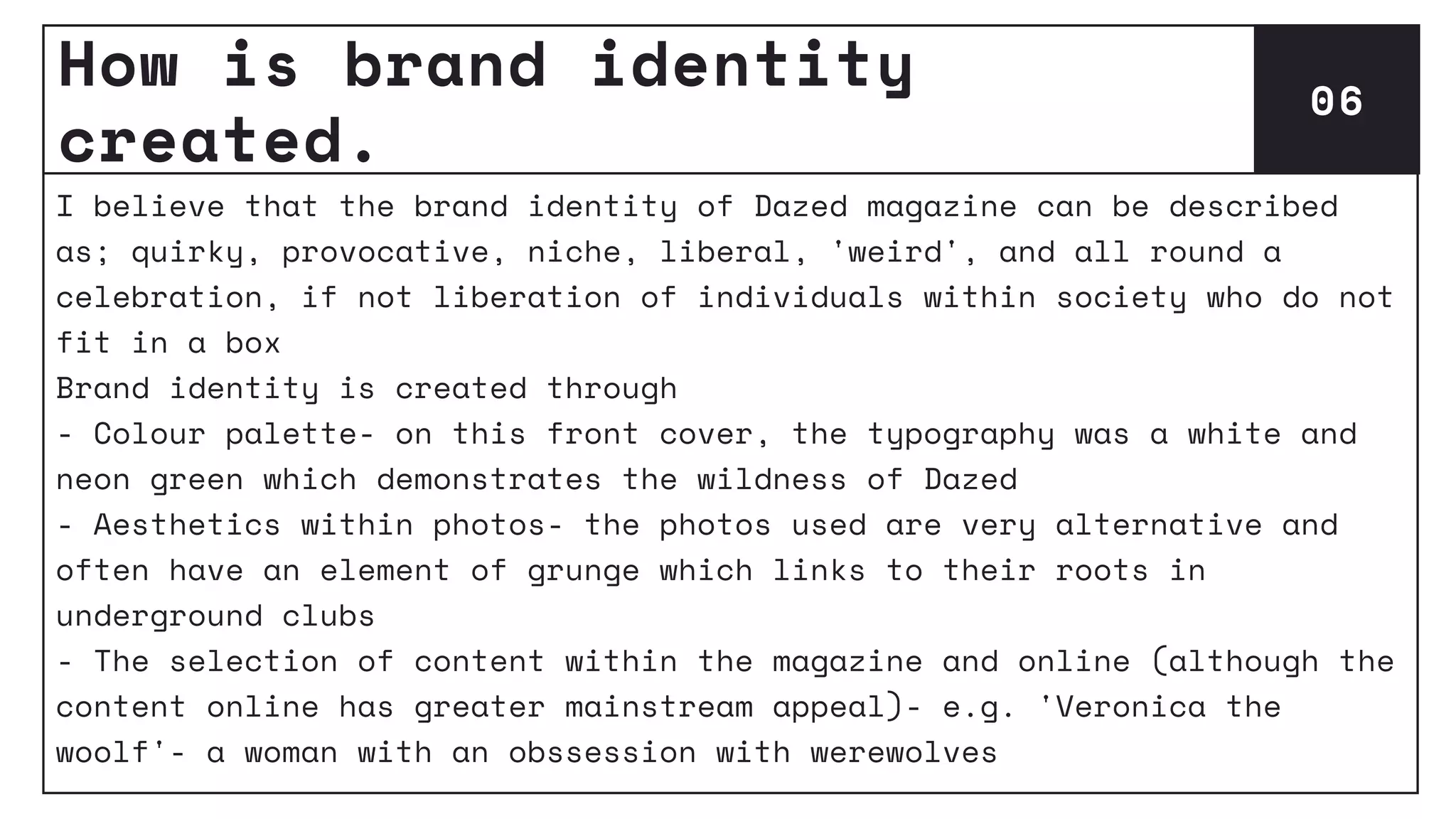
I believe that the brand identity of Dazed magazine can be described
as; quirky, provocative, niche, liberal, 'weird', and all round a
celebration, if not liberation of individuals within society who do not
fit in a box
Brand identity is created through
- Colour palette- on this front cover, the typography was a white and
neon green which demonstrates the wildness of Dazed
- Aesthetics within photos- the photos used are very alternative and
often have an element of grunge which links to their roots in
underground clubs
- The selection of content within the magazine and online (although the
content online has greater mainstream appeal)- e.g. 'Veronica the
woolf'- a woman with an obssession with werewolves
07
How is
intertextuality
used.
PRINT
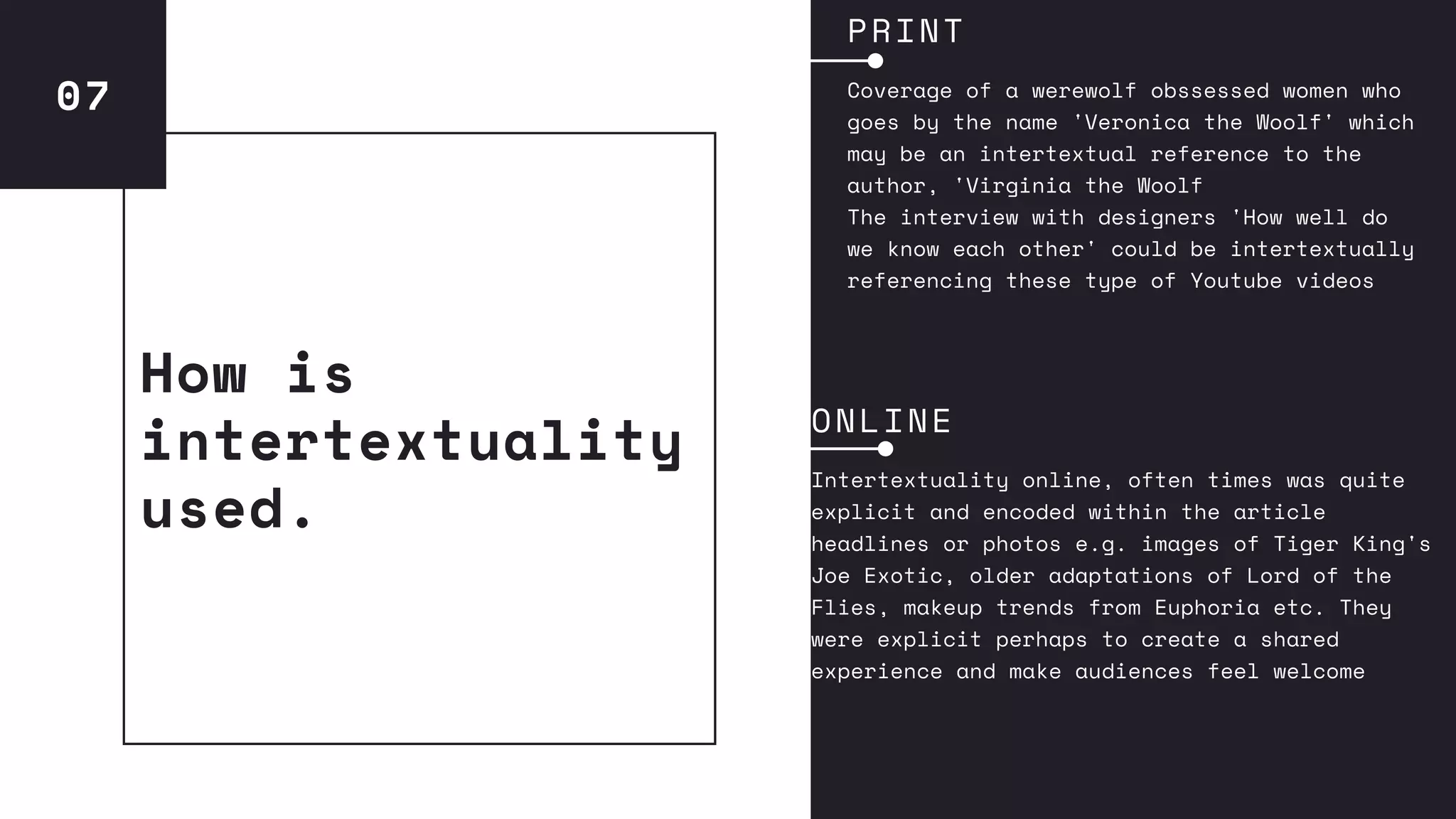
Coverage of a werewolf obssessed women who
goes by the name 'Veronica the Woolf' which
may be an intertextual reference to the
author, 'Virginia the Woolf
The interview with designers 'How well do
we know each other' could be intertextually
referencing these type of Youtube videos
ONLINE
Intertextuality online, often times was quite
explicit and encoded within the article
headlines or photos e.g. images of Tiger King's
Joe Exotic, older adaptations of Lord of the
Flies, makeup trends from Euphoria etc. They
were explicit perhaps to create a shared
experience and make audiences feel welcome
Easter Eggs.08
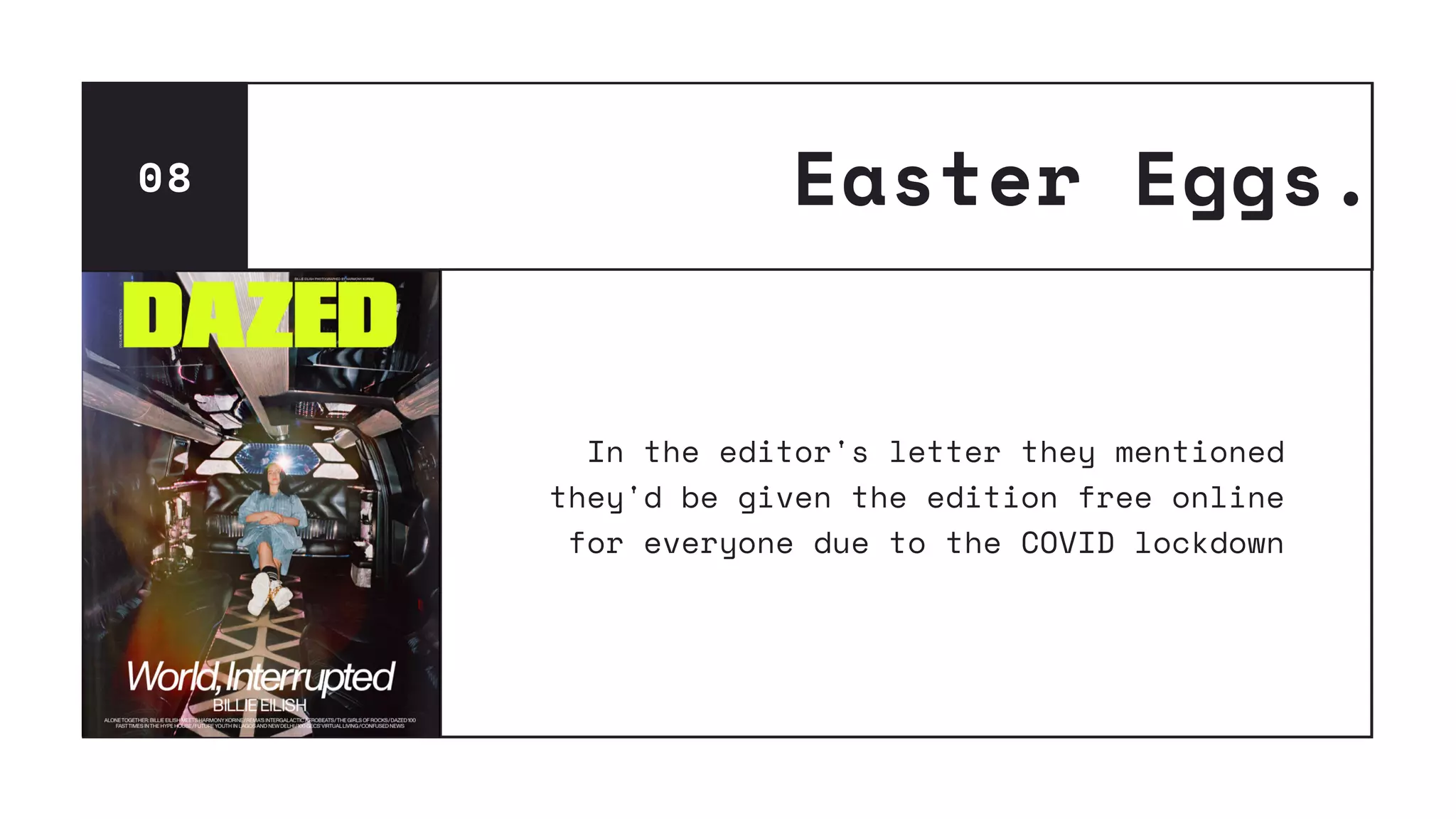
In the editor's letter they mentioned
they'd be given the edition free online
for everyone due to the COVID lockdown
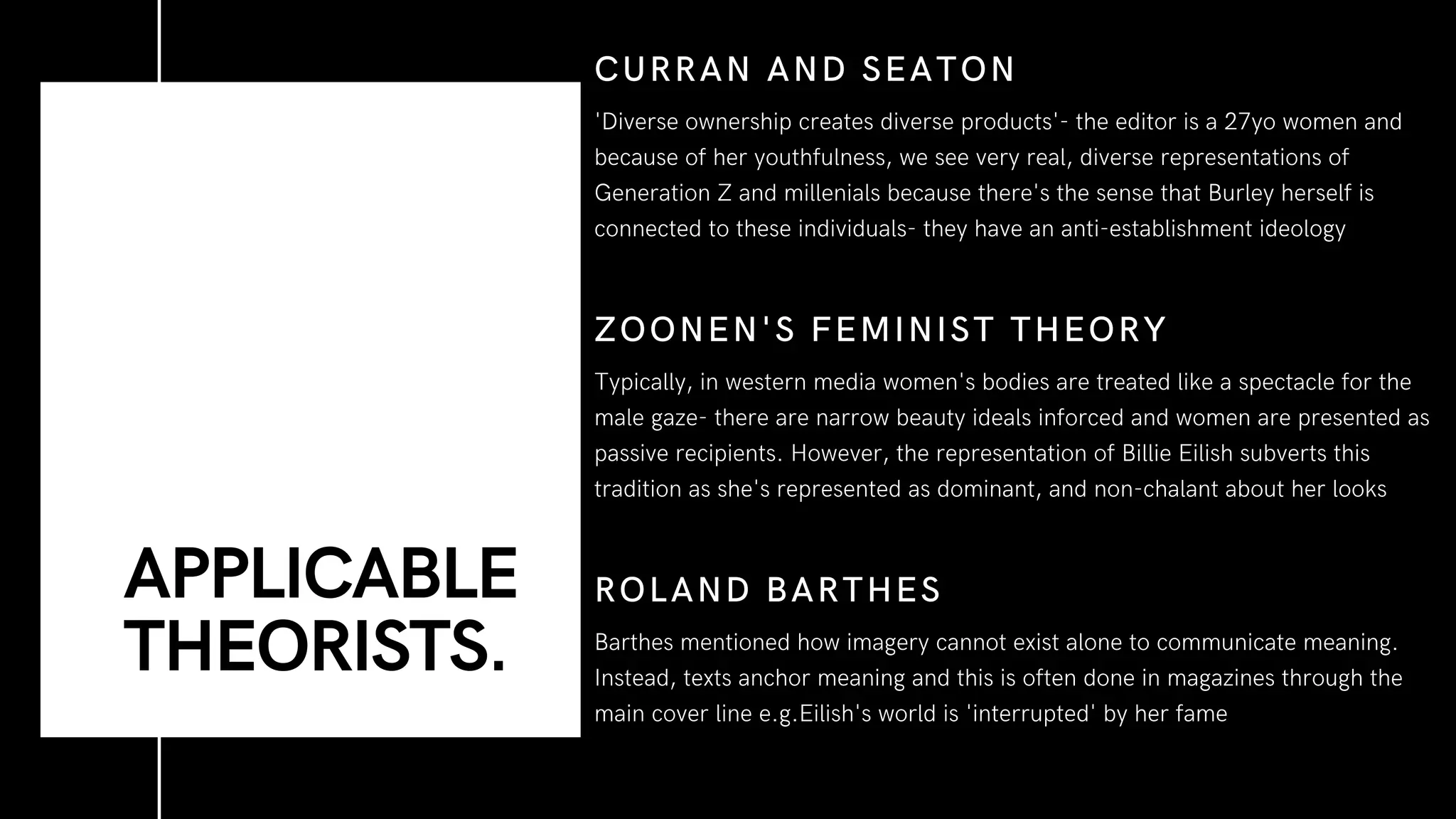
Typically, in western media women's bodies are treated like a spectacle for the
male gaze- there are narrow beauty ideals inforced and women are presented as
passive recipients. However, the representation of Billie Eilish subverts this
tradition as she's represented as dominant, and non-chalant about her looks
ZOONEN'S FEMINIST THEORY
Barthes mentioned how imagery cannot exist alone to communicate meaning.
Instead, texts anchor meaning and this is often done in magazines through the
main cover line e.g.Eilish's world is 'interrupted' by her fame
ROLAND BARTHES
'Diverse ownership creates diverse products'- the editor is a 27yo women and
because of her youthfulness, we see very real, diverse representations of
Generation Z and millenials because there's the sense that Burley herself is
connected to these individuals- they have an anti-establishment ideology
CURRAN AND SEATON
APPLICABLE
THEORISTS.

Dazed website analysis

  • 1.
  • 2.
    Where is digital convergence. 02 Thelogo is written in a capitalised, bold typeface both online and in print Photographs of Billie Eillish from the same photoshoot is used online and in print to create a sense of consistency With the alternative front covers of Rema, the same photo that is used of Rema is also used for the article about this artist (as well as additional) They mentioned and featured some of the artists who are part of Dazed 100 and this continued to prove a great theme online (so the themes hinted in print were developed online) It was interesting to see that even the content of an interview with fashion icon couple, Devon Lee Carlson and Jesse Rutherford was also published online
  • 3.
    EXAMPLES FOR THEPREVIOUS SLIDE
  • 4.
    Where is digital convergence. 04 Thecoverage of the Hype House was extensively developed online with variations in the content- there was a different photoshoot which was used, one much more formal- they took advantage of technological improvements and included a TikTok on the page For a further sense of digital convergence, if not this being classified as Easter Eggs, online there was extra content. For example: A short film on the set where the Billie Eillish photoshoot took place- this would satisfy the voyeuristic expectations of avid fans- the same font that was used on the front cover's copy was also used within the video They also offered a free digital copy of the issue and a poster (this was in exchange for them signing up for their newsletter)
  • 6.
    How is brandidentity created. 06 I believe that the brand identity of Dazed magazine can be described as; quirky, provocative, niche, liberal, 'weird', and all round a celebration, if not liberation of individuals within society who do not fit in a box Brand identity is created through - Colour palette- on this front cover, the typography was a white and neon green which demonstrates the wildness of Dazed - Aesthetics within photos- the photos used are very alternative and often have an element of grunge which links to their roots in underground clubs - The selection of content within the magazine and online (although the content online has greater mainstream appeal)- e.g. 'Veronica the woolf'- a woman with an obssession with werewolves
  • 7.
    07 How is intertextuality used. PRINT Coverage ofa werewolf obssessed women who goes by the name 'Veronica the Woolf' which may be an intertextual reference to the author, 'Virginia the Woolf The interview with designers 'How well do we know each other' could be intertextually referencing these type of Youtube videos ONLINE Intertextuality online, often times was quite explicit and encoded within the article headlines or photos e.g. images of Tiger King's Joe Exotic, older adaptations of Lord of the Flies, makeup trends from Euphoria etc. They were explicit perhaps to create a shared experience and make audiences feel welcome
  • 8.
    Easter Eggs.08 In theeditor's letter they mentioned they'd be given the edition free online for everyone due to the COVID lockdown
  • 9.
    Typically, in westernmedia women's bodies are treated like a spectacle for the male gaze- there are narrow beauty ideals inforced and women are presented as passive recipients. However, the representation of Billie Eilish subverts this tradition as she's represented as dominant, and non-chalant about her looks ZOONEN'S FEMINIST THEORY Barthes mentioned how imagery cannot exist alone to communicate meaning. Instead, texts anchor meaning and this is often done in magazines through the main cover line e.g.Eilish's world is 'interrupted' by her fame ROLAND BARTHES 'Diverse ownership creates diverse products'- the editor is a 27yo women and because of her youthfulness, we see very real, diverse representations of Generation Z and millenials because there's the sense that Burley herself is connected to these individuals- they have an anti-establishment ideology CURRAN AND SEATON APPLICABLE THEORISTS.