ZOE OLAWORE
Time
Magazine-
Website
CURRENT AFFAIRS MAGAZINE
How is digital
convergence
created
GENERAL ASPECTS
The iconic red colour associated with TIME magazine is repeated
throughout the website on feature like; the logo, headings of
articles, names of writers, social media links and the option to
subscribe
PERSON OF THE YEAR
'Person of the Year' is a yearly segment within TIME where they
report on iconic changemakers both in their print and online
and so this similar content creates a sense of'coming together'
Due to this special edition, the 'Guardians of the Year', 'Athlete of
the year' etc. have articles both online and in print
The article about Greta Thunberg nearly word for word with the
same photos are repeated online. However producers have
clearly taken advantage of technological offers e.g. by having a
cinematic photo at the top of the page, offering a 3mins30
seconds video in a documentary style and also including
screenshots of the magazine issue
Even the adverts gear towards climate change like in print
AESTHETIC
Brand identity is created through the
consistent use of one colour rather than
using a variety of different colours for a
border or logo- makes the brand more
recognisable
CONTENT CHOSEN
The content chosen is serious, slightly left-
wing (e.g. focusing on the economic
impact of COVID-19 on average citizens).
Like said, the content also focuses on the
global, as well as the US. These various
factors give TIME a brand identity
TONE
A high-brow, formal tone is created by
TIME magazine whether through the serif
typeface of the logo or their coverage of
content which is complicated and
commonly requires previous knowledge in
current affairs
STYLE OF PHOTOS
The style of the photos on front covers can be
defined as professional, providing heroic
representations whereas the photos used online are
much more candid and focused on communities.
This reflects a convergence between fulfilling
audience needs to see celebs with their perhaps
collectivist ideology
How is brand identity created
Intertextuality
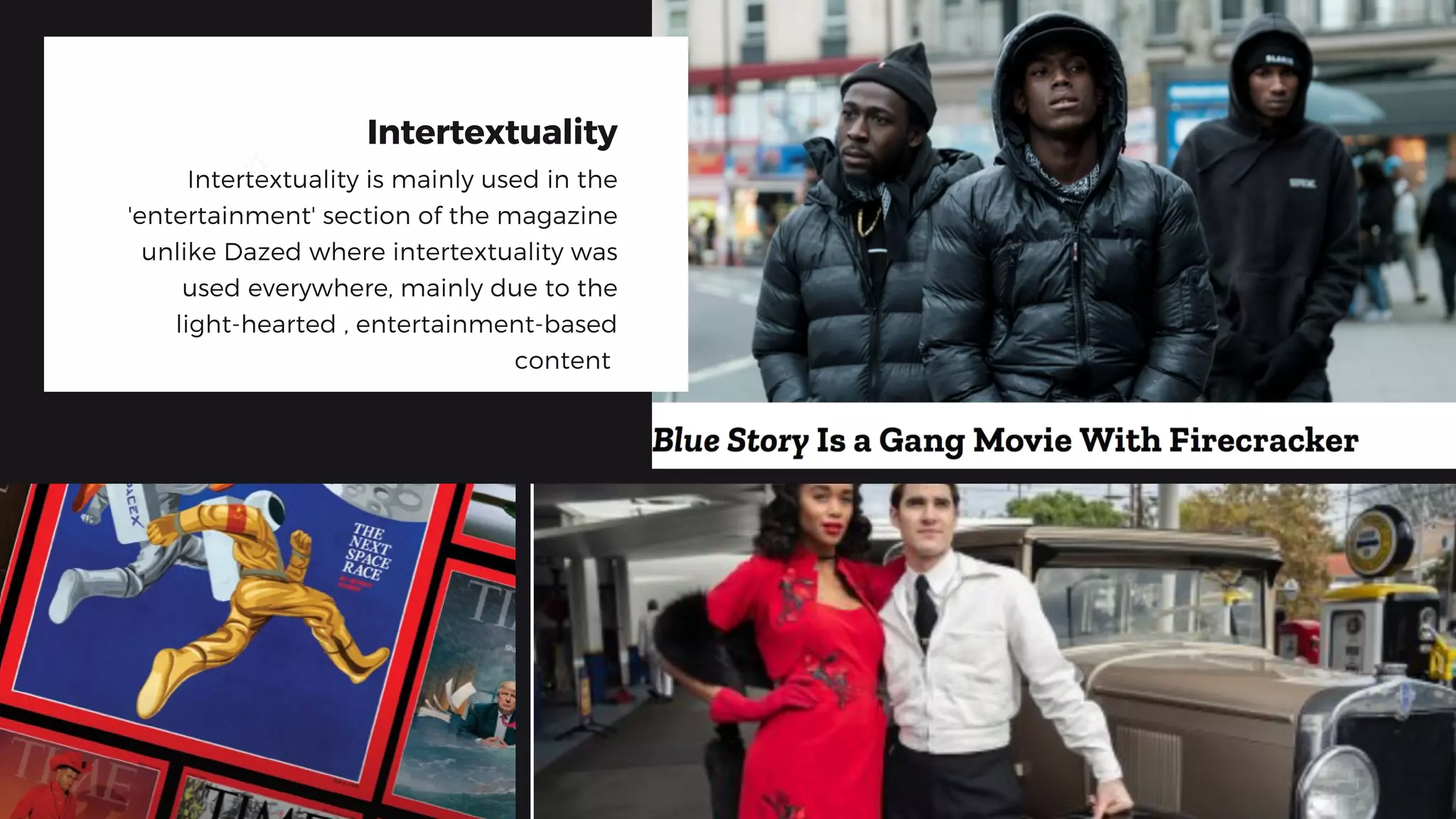
Intertextuality is mainly used in the
'entertainment' section of the magazine
unlike Dazed where intertextuality was
used everywhere, mainly due to the
light-hearted , entertainment-based
content
EXAMPLES OF
EASTER EGGS
From research, I wasn't able to identify the Easter
Eggs however TIME magazine did use 'sneak
peek' deals. For example, when you click on the
magazine at the top with the 'subscribe' button, a
vibrant page with a plethora of deals pop up,
even offering free Aqua speakers
STUART HALL
TIME's representation of Stormzy is very anti-
stereotypical as he is depicted as powerful and
joyful (through the code of expression of his
smile)- they have even gone to the extent of titling
him as a 'leader'- this is what Hall refered to as a
counter-typical representation
LIESBET ZOONEN
Like in Dazed magazine, there is a non-
sexualised representation of women where
women's bodies aren't treated like sexual
objects. Perhaps this could be to her youngness
but also  the sophistication of current affairs
magazines in comparison to lifestyle magazines
PAUL GILROY
Paul Gilroy suggested that postcolonial
melancholia has lead to representing black people
as 'other', and there being a nostalgic construction
of Britishness- TIME subvert this and suggest that
they are looking forward to the 'next generation
leaders', black, white etc.
Applicable Theorists

Time magazine website

  • 1.
  • 2.
    How is digital convergence created GENERALASPECTS The iconic red colour associated with TIME magazine is repeated throughout the website on feature like; the logo, headings of articles, names of writers, social media links and the option to subscribe PERSON OF THE YEAR 'Person of the Year' is a yearly segment within TIME where they report on iconic changemakers both in their print and online and so this similar content creates a sense of'coming together' Due to this special edition, the 'Guardians of the Year', 'Athlete of the year' etc. have articles both online and in print The article about Greta Thunberg nearly word for word with the same photos are repeated online. However producers have clearly taken advantage of technological offers e.g. by having a cinematic photo at the top of the page, offering a 3mins30 seconds video in a documentary style and also including screenshots of the magazine issue Even the adverts gear towards climate change like in print
  • 3.
    AESTHETIC Brand identity iscreated through the consistent use of one colour rather than using a variety of different colours for a border or logo- makes the brand more recognisable CONTENT CHOSEN The content chosen is serious, slightly left- wing (e.g. focusing on the economic impact of COVID-19 on average citizens). Like said, the content also focuses on the global, as well as the US. These various factors give TIME a brand identity TONE A high-brow, formal tone is created by TIME magazine whether through the serif typeface of the logo or their coverage of content which is complicated and commonly requires previous knowledge in current affairs STYLE OF PHOTOS The style of the photos on front covers can be defined as professional, providing heroic representations whereas the photos used online are much more candid and focused on communities. This reflects a convergence between fulfilling audience needs to see celebs with their perhaps collectivist ideology How is brand identity created
  • 4.
    Intertextuality Intertextuality is mainlyused in the 'entertainment' section of the magazine unlike Dazed where intertextuality was used everywhere, mainly due to the light-hearted , entertainment-based content
  • 5.
    EXAMPLES OF EASTER EGGS Fromresearch, I wasn't able to identify the Easter Eggs however TIME magazine did use 'sneak peek' deals. For example, when you click on the magazine at the top with the 'subscribe' button, a vibrant page with a plethora of deals pop up, even offering free Aqua speakers
  • 6.
    STUART HALL TIME's representationof Stormzy is very anti- stereotypical as he is depicted as powerful and joyful (through the code of expression of his smile)- they have even gone to the extent of titling him as a 'leader'- this is what Hall refered to as a counter-typical representation LIESBET ZOONEN Like in Dazed magazine, there is a non- sexualised representation of women where women's bodies aren't treated like sexual objects. Perhaps this could be to her youngness but also  the sophistication of current affairs magazines in comparison to lifestyle magazines PAUL GILROY Paul Gilroy suggested that postcolonial melancholia has lead to representing black people as 'other', and there being a nostalgic construction of Britishness- TIME subvert this and suggest that they are looking forward to the 'next generation leaders', black, white etc. Applicable Theorists