 Introduction
 Definition
 Communication Cycle
 Type of Communication
Definition
 The word “communication” has been derived from LATIN word
“Communicare”.
 “Communicare” means to share.
 The sharing of information ,knowledge ,understanding ,and thoughts
to other is called communication.
 There are two parties required for Communication.
 First party calls as “Sender” and second calls as “Receiver”.
 Absence of these two parties communication can not take place.
 It is termed effective only when the receiver receive the message
intended by the sender in the same perspective.
otherwise, it is miscommunication.
Communication Cycle
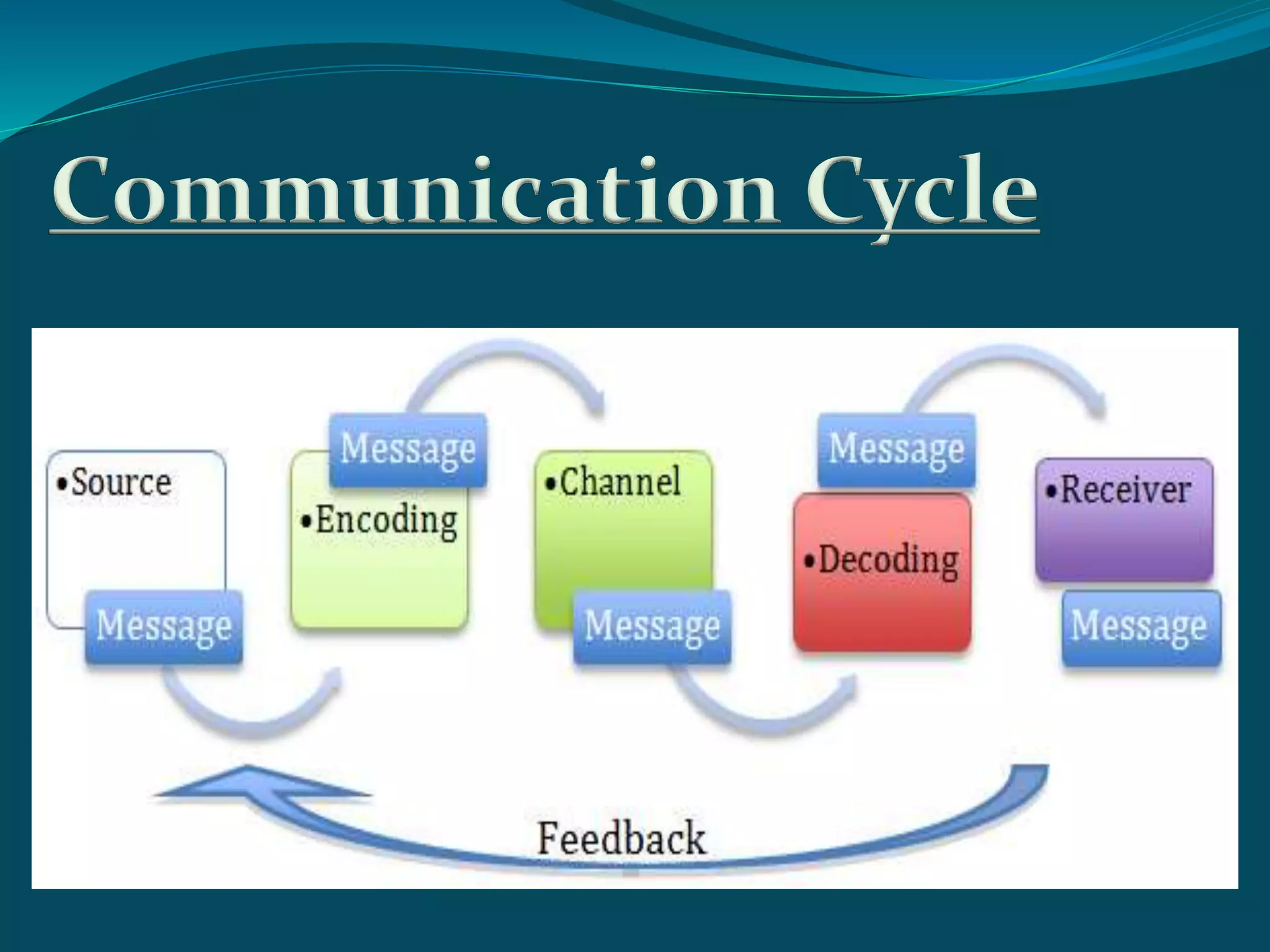
 Sender first encode the message and send it.
 Message goes through in well defined channel.
 Message reaches to the receiver, they decodes the message
and give pay attention on its ,if receiver understand the
message , then they give the feedback to the sender.
 Feedback is nothing but it is reply the suitable answer to
the sender.
 For every moment it is not necessary that receiver will
understand the message.
 This is happened due to presence of some noise and fault
in channel.
Effective Communication
 Essential for effective communication
 A common communication Environment
 Co-operation between the sender and the receiver
 Selection of an appropriate channel
 Correct encoding and decoding of the message
 Receipt of the desired response and feedback
Noise
 If response and desired answer do not get back to the sender from the
receiver , then communication has not been done.
 This is because of presence of noise.
 “Noise” is defined as any unplanned interference in the communication
environment ,which causes hindrance in the transmission of the message.
 Noise distorts interpretation or decoding part of the communication process.
 There are two types of “Noise”.
o Channel Noise
o Semantic Noise
Channel Noise
 Channel noise is any interference in the mechanism of the
medium used to send a message.
 Channel noise is developed externally.
Example:- Noise in telephone lines , too high volume from
loudspeaker etc.
Semantic Noise
 This type of error produced in the message itself.
 It is developed internally .
 It is generated due to faulty grammar , misspellings
and incorrect punctuation .
Example:- Sender interpret “Condescend” in positive
manner but receiver interpret in negative
manner.
Type of Communication
 General Communication
 Technical Communication
 Extra personal Communication
 Intra personal Communication
 Interpersonal Communication
 Mass Communication
General Communication
 It contains a general message.
 Informal in style and approach.
 No set pattern of communication.
 Mostly oral
 Not always for a specific audience.
 Doesn’t involve the use of technical vocabulary or graphics, etc.
Technical Communication
 It contains a technical message.
 Mostly formal
 Follows a set pattern
 Both oral and written
 Always for a specific audience
 Frequently involves jargon, graphics, etc.
Extra personal Communication
 Communication between human beings and non-human entities
is called “Extra personal Communication”.
 This form of communication requires perfect co-ordination and
understanding between the sender and receiver .
Example:- Communication between you and your pet dog.
Intrapersonal Communication
 This takes place within the individual.
 Self-motivation , self-determination ,etc are take place in intrapersonal level.
Example:- When you begin to “Feel hot” , the information is sent to
the brain and you may decide to “turn on the cooler” ,
responding to instructions sent from the brain to the hand.
-> In this case ,the relevant organ is the sender, the electrochemical
impulse is the message , and the brain is the receiver.
Interpersonal Communication
 Communication at this level refers to sharing of information among
people.
 Interpersonal communication differs from other forms of
communication.
 In that there are few participants involved.
 The interactants are in close physical Proxemity to each other .
 There are many sansory channel used , and feedback is immediate.
 It can be formal or informal.
Mass Communication
 This type of communication require a mediator to transmit information.
 Mass media such as journals, books, newspapers, and television which
mediate such communication.
 This kind of message are for large audience.
 Oral communication through mass media requires some equipment,
such as microphone, amplifiers, etc.
 For written form needs print or visual media.
Communication Cycle | Communication | Communication process

Communication Cycle | Communication | Communication process

  • 1.
     Introduction  Definition Communication Cycle  Type of Communication
  • 2.
    Definition  The word“communication” has been derived from LATIN word “Communicare”.  “Communicare” means to share.  The sharing of information ,knowledge ,understanding ,and thoughts to other is called communication.
  • 3.
     There aretwo parties required for Communication.  First party calls as “Sender” and second calls as “Receiver”.  Absence of these two parties communication can not take place.  It is termed effective only when the receiver receive the message intended by the sender in the same perspective. otherwise, it is miscommunication.
  • 4.
  • 5.
     Sender firstencode the message and send it.  Message goes through in well defined channel.  Message reaches to the receiver, they decodes the message and give pay attention on its ,if receiver understand the message , then they give the feedback to the sender.  Feedback is nothing but it is reply the suitable answer to the sender.  For every moment it is not necessary that receiver will understand the message.  This is happened due to presence of some noise and fault in channel.
  • 6.
    Effective Communication  Essentialfor effective communication  A common communication Environment  Co-operation between the sender and the receiver  Selection of an appropriate channel  Correct encoding and decoding of the message  Receipt of the desired response and feedback
  • 7.
    Noise  If responseand desired answer do not get back to the sender from the receiver , then communication has not been done.  This is because of presence of noise.  “Noise” is defined as any unplanned interference in the communication environment ,which causes hindrance in the transmission of the message.  Noise distorts interpretation or decoding part of the communication process.
  • 8.
     There aretwo types of “Noise”. o Channel Noise o Semantic Noise Channel Noise  Channel noise is any interference in the mechanism of the medium used to send a message.  Channel noise is developed externally. Example:- Noise in telephone lines , too high volume from loudspeaker etc.
  • 9.
    Semantic Noise  Thistype of error produced in the message itself.  It is developed internally .  It is generated due to faulty grammar , misspellings and incorrect punctuation . Example:- Sender interpret “Condescend” in positive manner but receiver interpret in negative manner.
  • 10.
    Type of Communication General Communication  Technical Communication  Extra personal Communication  Intra personal Communication  Interpersonal Communication  Mass Communication
  • 11.
    General Communication  Itcontains a general message.  Informal in style and approach.  No set pattern of communication.  Mostly oral  Not always for a specific audience.  Doesn’t involve the use of technical vocabulary or graphics, etc.
  • 12.
    Technical Communication  Itcontains a technical message.  Mostly formal  Follows a set pattern  Both oral and written  Always for a specific audience  Frequently involves jargon, graphics, etc.
  • 13.
    Extra personal Communication Communication between human beings and non-human entities is called “Extra personal Communication”.  This form of communication requires perfect co-ordination and understanding between the sender and receiver . Example:- Communication between you and your pet dog.
  • 14.
    Intrapersonal Communication  Thistakes place within the individual.  Self-motivation , self-determination ,etc are take place in intrapersonal level. Example:- When you begin to “Feel hot” , the information is sent to the brain and you may decide to “turn on the cooler” , responding to instructions sent from the brain to the hand. -> In this case ,the relevant organ is the sender, the electrochemical impulse is the message , and the brain is the receiver.
  • 15.
    Interpersonal Communication  Communicationat this level refers to sharing of information among people.  Interpersonal communication differs from other forms of communication.  In that there are few participants involved.  The interactants are in close physical Proxemity to each other .  There are many sansory channel used , and feedback is immediate.  It can be formal or informal.
  • 16.
    Mass Communication  Thistype of communication require a mediator to transmit information.  Mass media such as journals, books, newspapers, and television which mediate such communication.  This kind of message are for large audience.  Oral communication through mass media requires some equipment, such as microphone, amplifiers, etc.  For written form needs print or visual media.