
![“From interviews ... from the
“This new emphasis on speed
and flexibility calls for a different
CEO to young engineers ...
approach [iterative, overlapping we learned that leading
development]... The traditional companies show six
sequential approach to product characteristics in managing
development may conflict with their new product
the goals of maximum speed development processes:
and flexibility. ...
1.built-in instability
The [new approach] also does 2.self-organizing teams
away with the traditional notions
3.overlapping development
of division of labor...shared
division of labor, where each 4.multilearning
team member feels responsible 5.subtle control
for--and is able to work on--any
6.organizational transfer of
aspect of the system.”
learning”
21
“From interviews ... from the
“This new emphasis on speed
Sc
and flexibility calls for a different
CEO to young engineers ...
approach [iterative, overlapping we learned that leading
development]... The traditional companies show six
ru
sequential approach to product characteristics in managing
development may conflict with their new product
the goals of maximum speed development processes:
m
and flexibility. ...
1.built-in instability
The [new approach] also does 2.self-organizing teams
away with the traditional notions
3.overlapping development
of division of labor...shared
division of labor, where each 4.multilearning
team member feels responsible 5.subtle control
for--and is able to work on--any
6.organizational transfer of
aspect of the system.”
learning”
22](https://image.slidesharecdn.com/scalingleanagilescrum-largemultisiteoffshore-craiglarman-1-2hours-130212090705-phpapp02/85/Craig-Larman-Scaling-Lean-Agile-Development-11-320.jpg)
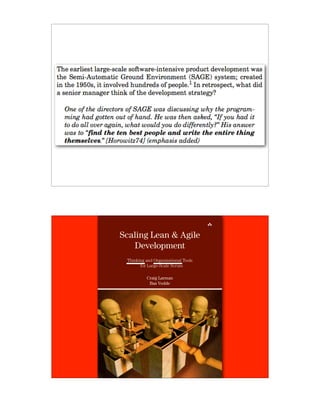
![101
Large meta-analysis shows the top quartile
of developers is at least 4 times faster than
the bottom quartile
– [Prechelt00]
102](https://image.slidesharecdn.com/scalingleanagilescrum-largemultisiteoffshore-craiglarman-1-2hours-130212090705-phpapp02/85/Craig-Larman-Scaling-Lean-Agile-Development-51-320.jpg)
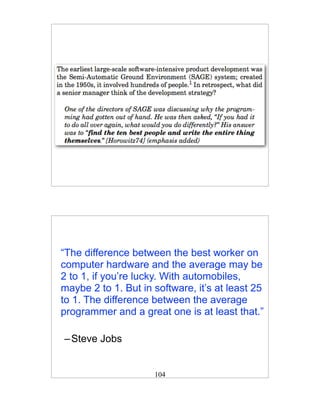
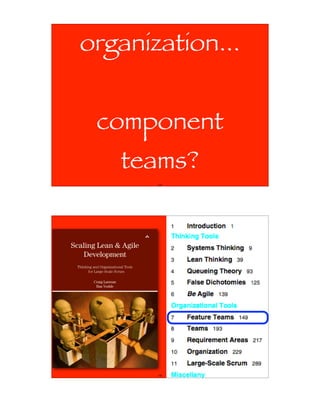
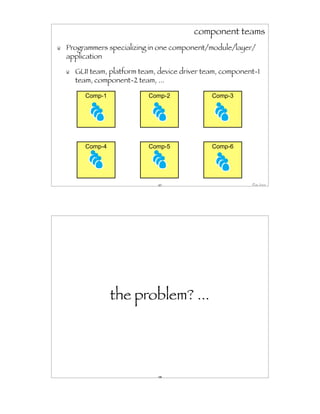
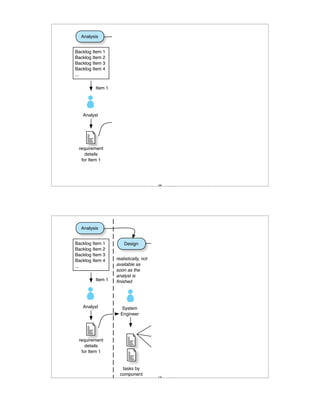
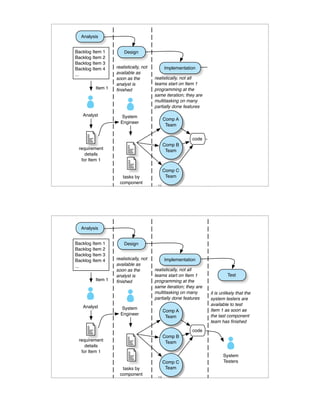
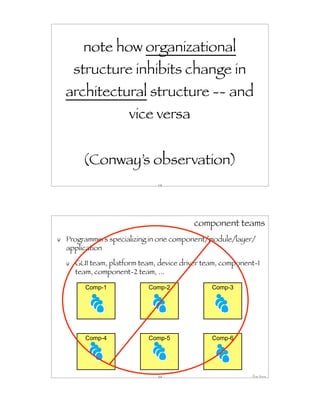
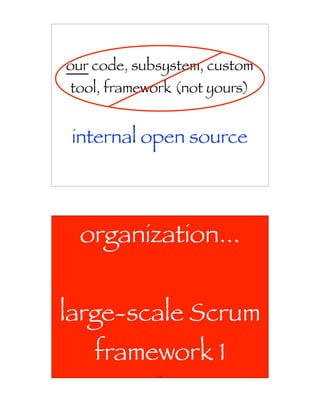
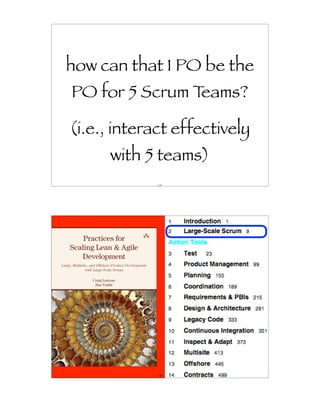
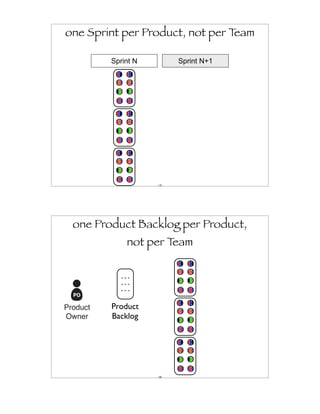
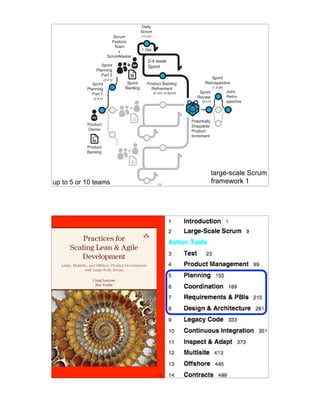
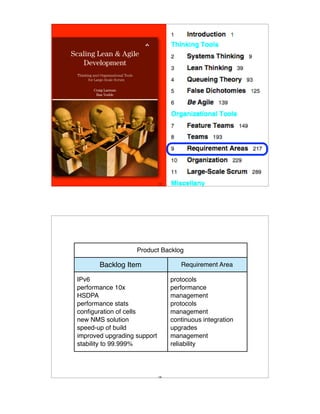
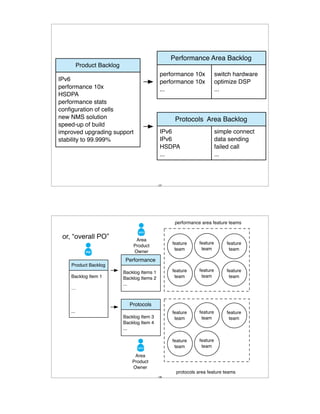
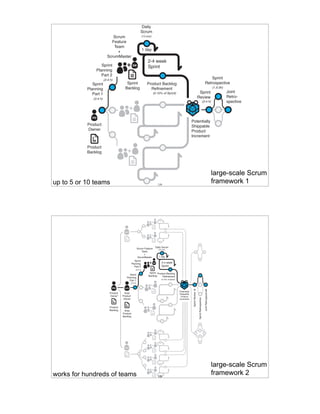
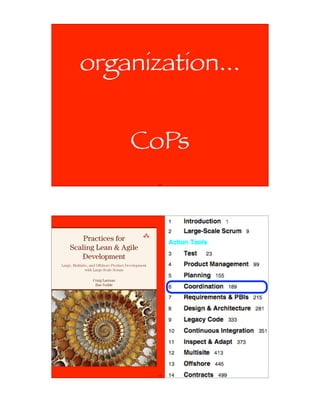
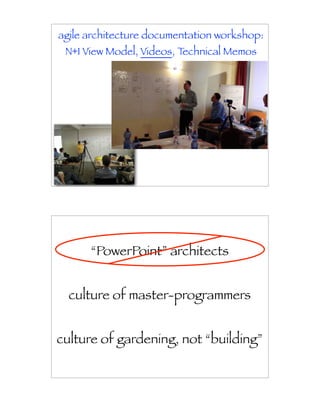
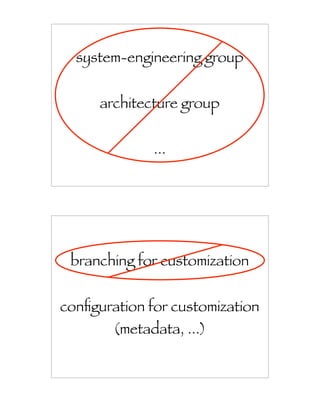
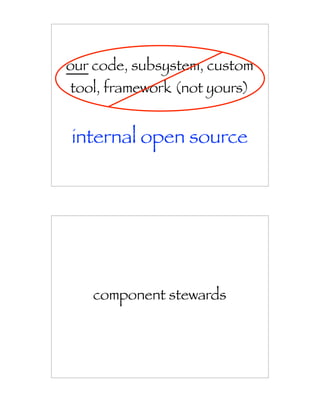
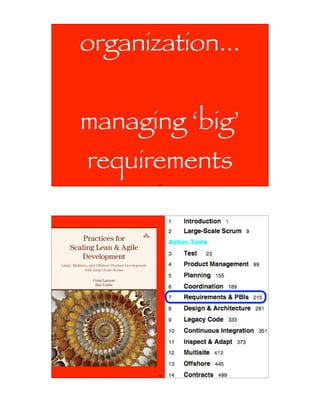
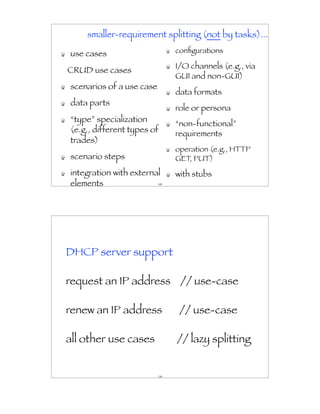
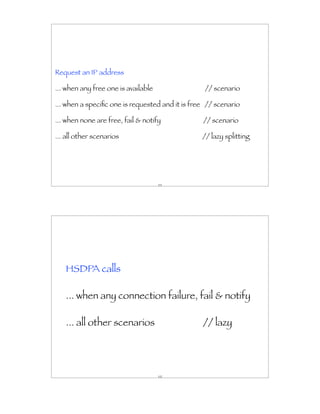
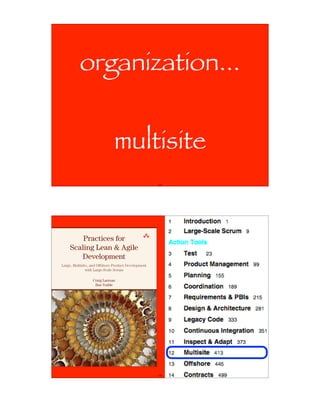
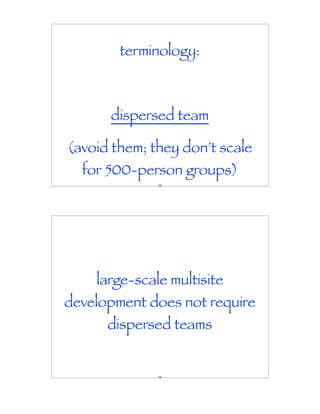
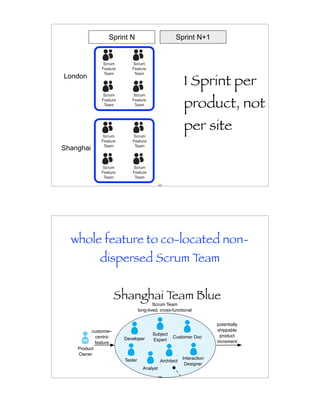
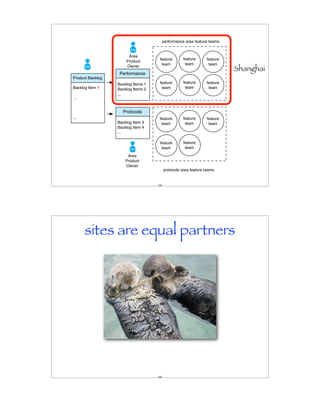

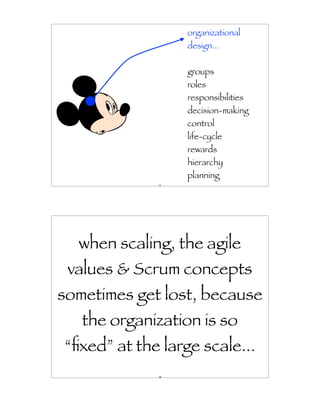
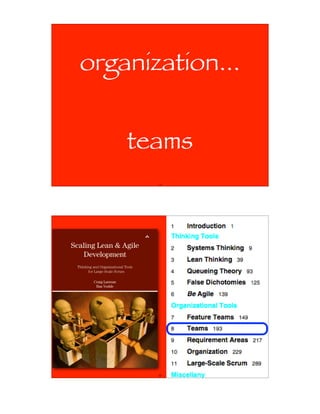
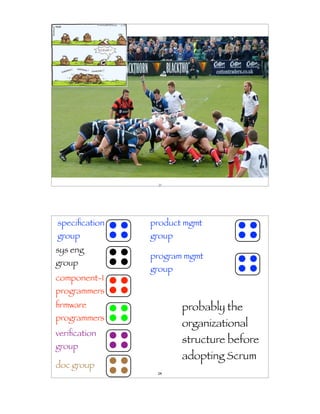
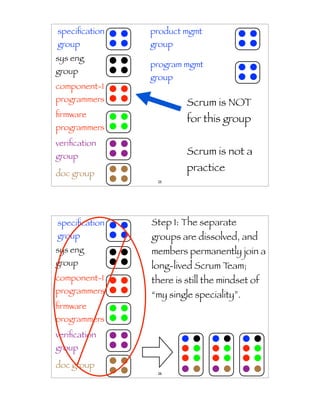
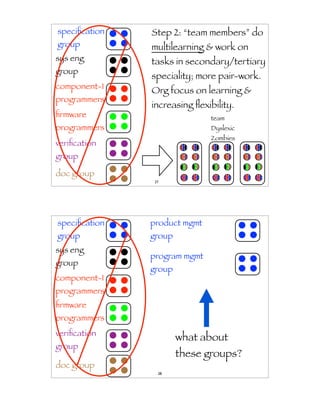
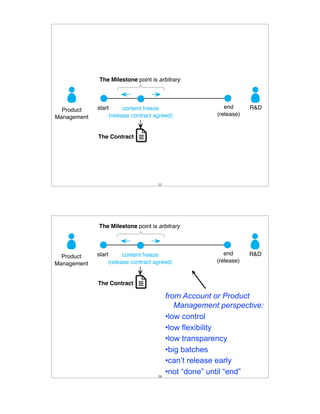
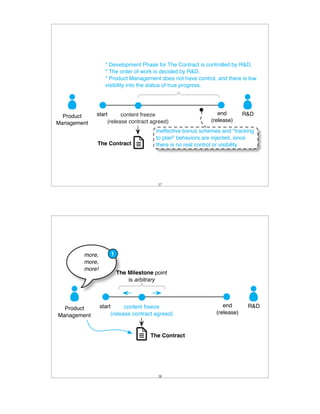
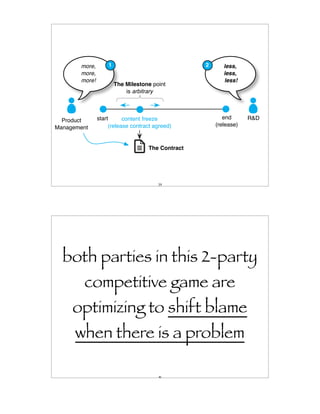
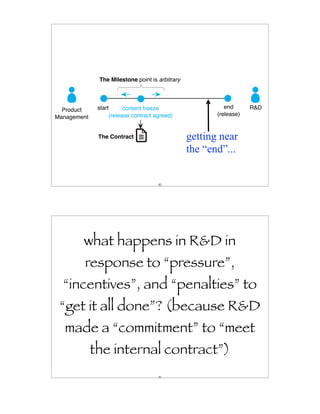
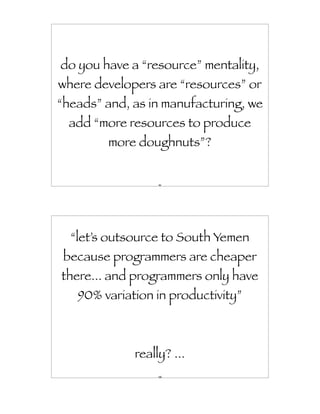
This document discusses organizational structures and practices for large-scale Scrum development. It describes how traditional sequential development approaches conflict with agile goals of speed and flexibility. Effective organizations use self-organizing teams, overlapping development, multilearning across specialties, and subtle control instead of rigid hierarchies. When scaling Scrum, the values and concepts can be lost if the organization structure remains too fixed.


![[Veille thématique et décryptage] Cannes Lions 2014](https://cdn.slidesharecdn.com/ss_thumbnails/valtech-canneslions2014-140702122046-phpapp01-thumbnail.jpg?width=640&height=640&fit=bounds)

![[ Revue Innovations ] Valtech - Mobile World Congress](https://cdn.slidesharecdn.com/ss_thumbnails/valtech-mwc14-140310065604-phpapp02-thumbnail.jpg?width=640&height=640&fit=bounds)

![[ Veille de tendances ] Valtech : Objets connectés](https://cdn.slidesharecdn.com/ss_thumbnails/valtech-ces2014-140121054330-phpapp01-thumbnail.jpg?width=640&height=640&fit=bounds)


