How to do effective PI
Planning….
© Benzne. All rights reserved
Agile
ITSM
AI
Design
Thinking
Culture
Lean
Kanban
Visualization
DevOps
CI/CD Scrum
SAFe
XP
Cloud
Analytics
Mindset
People
Process
Technology
Data
Sudha Madhuri
18+ years of global experience as a
Project/Program management Trainer
4 years as an Agile coach and a Trainer
© Benzne. All Rights Reserved.
Webinar Agenda
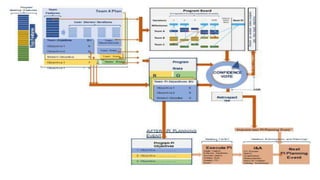
● PI Planning: What, Why, and When?
● PI planning workflow
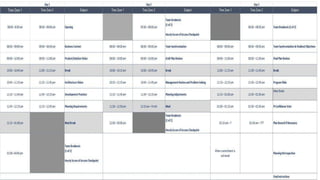
● Sample PI planning schedule
● Why do teams struggle with PI Planning?
● What could we do differently?
● Elements of preparation for planning readiness
● SMART Planning and Objective setting
● Planning Communication for better business alignment
● QnA
What?
Cadence-based, face-to-face event that serves as the heartbeat of the Agile Release Train (ART), aligning all the teams on the
ART to a shared mission and Vision.
Why?
• Commitment to agreed PI
• Alignment between Development and Business
• Fast Decision making
• Establishing cross team collaboration & communication
When?
Innovation and Planning Iteration of the current PI
Duration: Standard agenda 16 Hrs
Distributed teams: 3-4 days with 4 hrs overlap
PI Planning
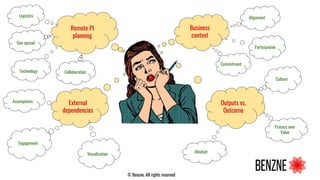
Why do teams struggle with PI planning?
© Benzne. All Rights Reserved.
© Benzne. All rights reserved
Geo spread
Assumptions
Process over
Value
Culture
Visualization
Collaboration
Logistics Alignment
Participation
Commitment
Technology
Engagement
Mindset
Outputs vs.
Outcome
Business
context
Remote PI
planning
External
dependencies
What could we do differently?
© Benzne. All Rights Reserved.
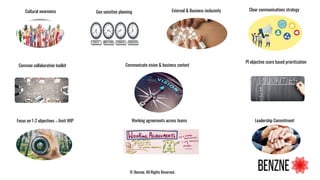
Cultural awareness Geo sensitive planning Clear communications strategy
Common collaboration toolkit
Focus on 1-2 objectives – limit WIP
PI objective score based prioritization
Communicate vision & business context
Working agreements across teams Leadership Commitment
External & Business inclusivity
Elements of Preparation for Planning Readiness
© Benzne. All Rights Reserved.
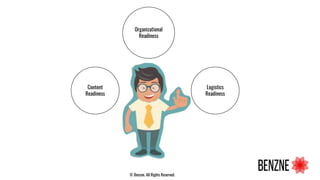
Logistics
Readiness
Organizational
Readiness
© Benzne. All Rights Reserved.
Content
Readiness
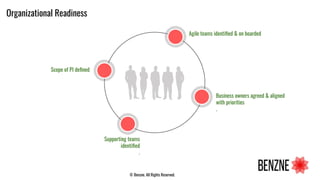
Organizational Readiness
Supporting teams
identified
.
Agile teams identified & on boarded
Business owners agreed & aligned
with priorities
.
Scope of PI defined
© Benzne. All Rights Reserved.
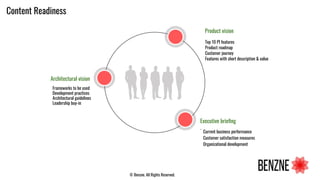
Frameworks to be used
Development practices
Architectural guidelines
Leadership buy-in
Content Readiness
Product vision
Executive briefing
.
Architectural vision
© Benzne. All Rights Reserved.
Current business performance
Customer satisfaction measures
Organizational development
Top 10 PI features
Product roadmap
Customer journey
Features with short description & value
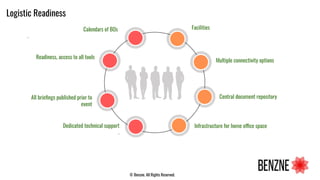
Logistic Readiness
Calendars of BOs
.
Dedicated technical support
.
Facilities
Infrastructure for home office space
Multiple connectivity options
Central document repository
Readiness, access to all tools
All briefings published prior to
event
© Benzne. All Rights Reserved.
SMART Planning & Objective Setting
© Benzne. All Rights Reserved.
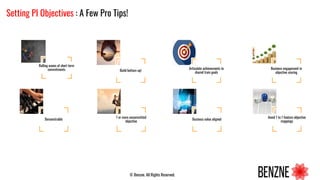
Rolling waves of short term
commitments Build bottom-up!
Articulate achievements to
shared train goals
Business engagement in
objective scoring
Demonstrable
1 or more uncommitted
objective
Business value aligned
Avoid 1 to 1 feature-objective
mappings
Setting PI Objectives : A Few Pro Tips!
© Benzne. All Rights Reserved.
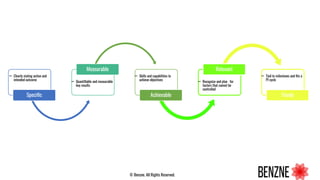
•• Clearly stating action and
intended outcome
Specific
•• Quantifiable and measurable
key results
Measurable
•• Skills and capabilities to
achieve objectives
Achievable
•• Recognize and plan for
factors that cannot be
controlled
Relevant
•• Tied to milestones and fits a
PI cycle
Timely
Planning communication for better business
Alignment
© Benzne. All Rights Reserved.
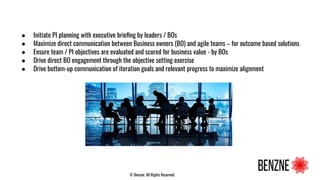
● Initiate PI planning with executive briefing by leaders / BOs
● Maximize direct communication between Business owners (BO) and agile teams – for outcome based solutions
● Ensure team / PI objectives are evaluated and scored for business value - by BOs
● Drive direct BO engagement through the objective setting exercise
● Drive bottom-up communication of iteration goals and relevant progress to maximize alignment
‘Questions’
We might help you :)
© Benzne. All Rights Reserved.
Some References
Check our upcoming public Micro Training batches -
https://benzne.com/micro-training-levels-of-planning-product-release-sprint/
Check out our blogs at www.Benzne.com/blogs
Reference: https://www.scaledagileframework.com
http://www.instituteengmgt.com/wp-content/uploads/PIPlanning.pdf
© Benzne. All Rights Reserved.
© Benzne. All rights reserved
THANK YOU
www.Benzne.com

How to do effective pi planning

  • 2.
    How to doeffective PI Planning….
  • 3.
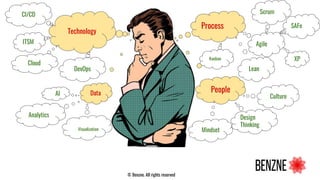
    © Benzne. Allrights reserved Agile ITSM AI Design Thinking Culture Lean Kanban Visualization DevOps CI/CD Scrum SAFe XP Cloud Analytics Mindset People Process Technology Data
  • 4.
    Sudha Madhuri 18+ yearsof global experience as a Project/Program management Trainer 4 years as an Agile coach and a Trainer © Benzne. All Rights Reserved.
  • 5.
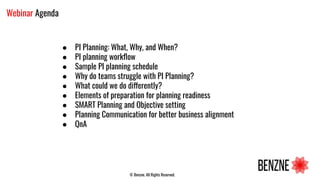
    © Benzne. AllRights Reserved. Webinar Agenda ● PI Planning: What, Why, and When? ● PI planning workflow ● Sample PI planning schedule ● Why do teams struggle with PI Planning? ● What could we do differently? ● Elements of preparation for planning readiness ● SMART Planning and Objective setting ● Planning Communication for better business alignment ● QnA
  • 6.
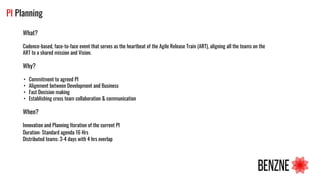
    What? Cadence-based, face-to-face eventthat serves as the heartbeat of the Agile Release Train (ART), aligning all the teams on the ART to a shared mission and Vision. Why? • Commitment to agreed PI • Alignment between Development and Business • Fast Decision making • Establishing cross team collaboration & communication When? Innovation and Planning Iteration of the current PI Duration: Standard agenda 16 Hrs Distributed teams: 3-4 days with 4 hrs overlap PI Planning
  • 9.
    Why do teamsstruggle with PI planning? © Benzne. All Rights Reserved.
  • 10.
    © Benzne. Allrights reserved Geo spread Assumptions Process over Value Culture Visualization Collaboration Logistics Alignment Participation Commitment Technology Engagement Mindset Outputs vs. Outcome Business context Remote PI planning External dependencies
  • 11.
    What could wedo differently? © Benzne. All Rights Reserved.
  • 12.
    © Benzne. AllRights Reserved. Cultural awareness Geo sensitive planning Clear communications strategy Common collaboration toolkit Focus on 1-2 objectives – limit WIP PI objective score based prioritization Communicate vision & business context Working agreements across teams Leadership Commitment External & Business inclusivity
  • 13.
    Elements of Preparationfor Planning Readiness © Benzne. All Rights Reserved.
  • 14.
  • 15.
    Organizational Readiness Supporting teams identified . Agileteams identified & on boarded Business owners agreed & aligned with priorities . Scope of PI defined © Benzne. All Rights Reserved.
  • 16.
    Frameworks to beused Development practices Architectural guidelines Leadership buy-in Content Readiness Product vision Executive briefing . Architectural vision © Benzne. All Rights Reserved. Current business performance Customer satisfaction measures Organizational development Top 10 PI features Product roadmap Customer journey Features with short description & value
  • 17.
    Logistic Readiness Calendars ofBOs . Dedicated technical support . Facilities Infrastructure for home office space Multiple connectivity options Central document repository Readiness, access to all tools All briefings published prior to event © Benzne. All Rights Reserved.
  • 18.
    SMART Planning &Objective Setting © Benzne. All Rights Reserved.
  • 19.
    © Benzne. AllRights Reserved. Rolling waves of short term commitments Build bottom-up! Articulate achievements to shared train goals Business engagement in objective scoring Demonstrable 1 or more uncommitted objective Business value aligned Avoid 1 to 1 feature-objective mappings Setting PI Objectives : A Few Pro Tips!
  • 20.
    © Benzne. AllRights Reserved. •• Clearly stating action and intended outcome Specific •• Quantifiable and measurable key results Measurable •• Skills and capabilities to achieve objectives Achievable •• Recognize and plan for factors that cannot be controlled Relevant •• Tied to milestones and fits a PI cycle Timely
  • 21.
    Planning communication forbetter business Alignment © Benzne. All Rights Reserved.
  • 22.
    © Benzne. AllRights Reserved. ● Initiate PI planning with executive briefing by leaders / BOs ● Maximize direct communication between Business owners (BO) and agile teams – for outcome based solutions ● Ensure team / PI objectives are evaluated and scored for business value - by BOs ● Drive direct BO engagement through the objective setting exercise ● Drive bottom-up communication of iteration goals and relevant progress to maximize alignment
  • 23.
    ‘Questions’ We might helpyou :) © Benzne. All Rights Reserved.
  • 24.
    Some References Check ourupcoming public Micro Training batches - https://benzne.com/micro-training-levels-of-planning-product-release-sprint/ Check out our blogs at www.Benzne.com/blogs Reference: https://www.scaledagileframework.com http://www.instituteengmgt.com/wp-content/uploads/PIPlanning.pdf © Benzne. All Rights Reserved.
  • 25.
    © Benzne. Allrights reserved THANK YOU www.Benzne.com