IN THE WORKPLACE &
THE PERSONAL SPHERE
is the process of adapting
well in the face of
adversity, trauma, tragedy,
threats or significant
sources of stress.
It means "bouncing back"
from difficult experiences.
RESILIENCE
Source : APA
A RESILIENT PERSON
● Is likely to recognize and manage their
own feelings and understand the
feelings of others;
● Have a sense of independence and self-
worth;
● Form and maintain positive, mutually
respectful relationships with others;
● Be able to solve problems and make
informed decisions;
● Have a sense of purpose and goals for
the future.
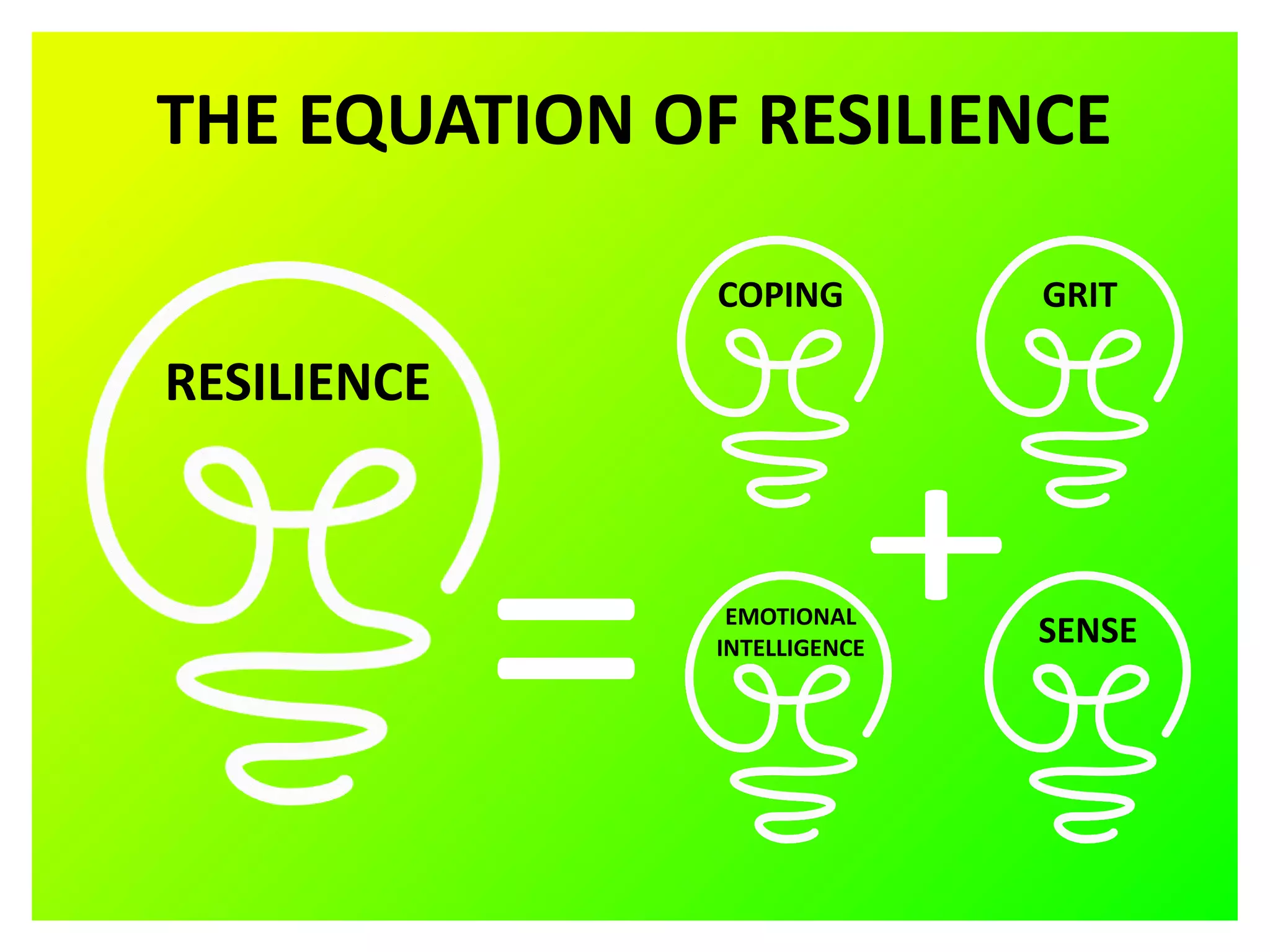
THE EQUATION OF RESILIENCE
COPING GRIT
EMOTIONAL
INTELLIGENCE
SENSE
RESILIENCE
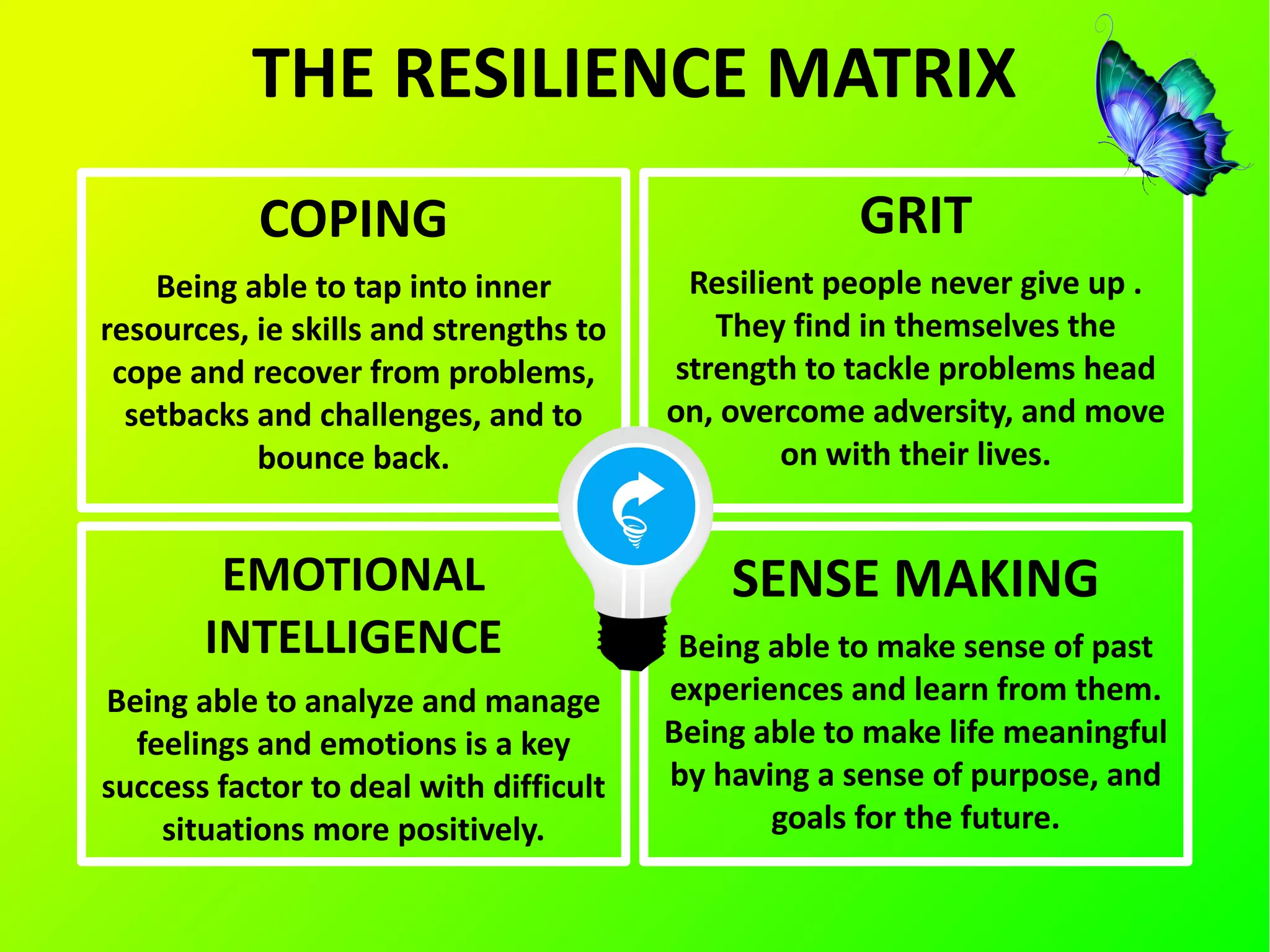
THE RESILIENCE MATRIX
COPING
Being able to tap into inner
resources, ie skills and strengths to
cope and recover from problems,
setbacks and challenges, and to
bounce back.
GRIT
Resilient people never give up .
They find in themselves the
strength to tackle problems head
on, overcome adversity, and move
on with their lives.
SENSE MAKING
Being able to make sense of past
experiences and learn from them.
Being able to make life meaningful
by having a sense of purpose, and
goals for the future.
EMOTIONAL
INTELLIGENCE
Being able to analyze and manage
feelings and emotions is a key
success factor to deal with difficult
situations more positively.
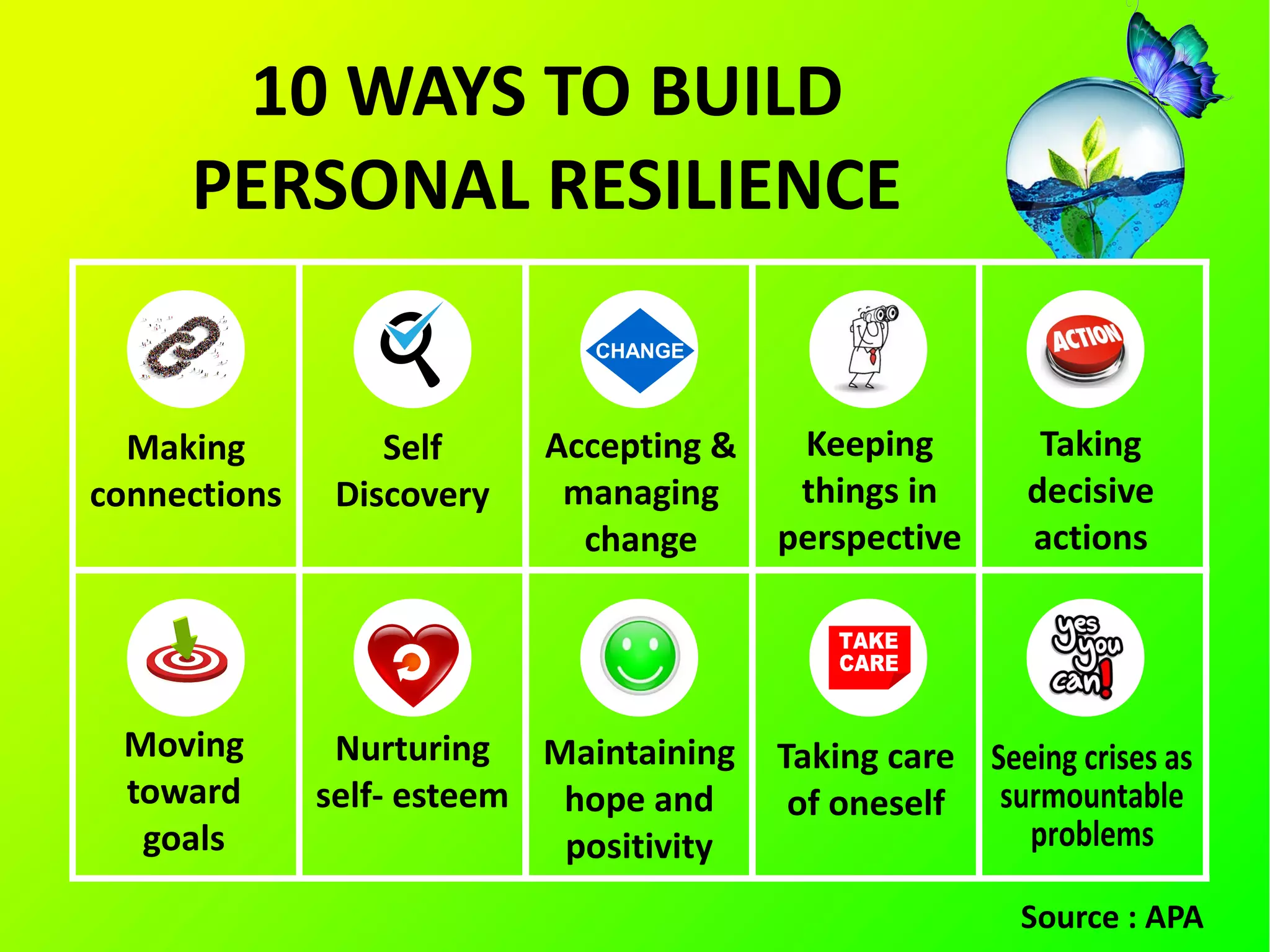
10 WAYS TO BUILD
PERSONAL RESILIENCE
Source : APA
Making
connections
Self
Discovery
Accepting &
managing
change
Keeping
things in
perspective
Taking
decisive
actions
Moving
toward
goals
Nurturing
self- esteem
Maintaining
hope and
positivity
Taking care
of oneself
CHANGE
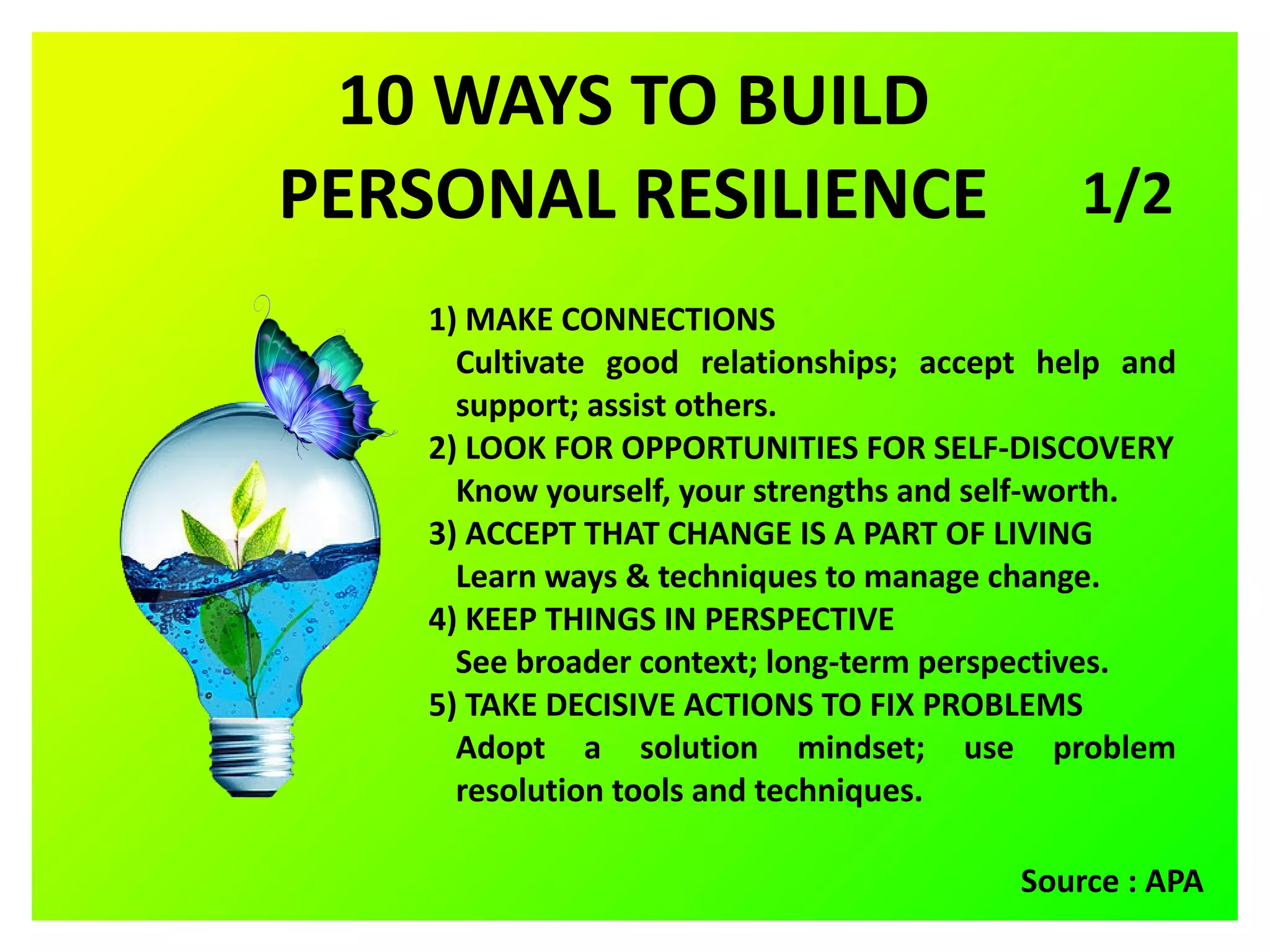
10 WAYS TO BUILD
PERSONAL RESILIENCE
1) MAKE CONNECTIONS
Cultivate good relationships; accept help and
support; assist others.
2) LOOK FOR OPPORTUNITIES FOR SELF-DISCOVERY
Know yourself, your strengths and self-worth.
3) ACCEPT THAT CHANGE IS A PART OF LIVING
Learn ways & techniques to manage change.
4) KEEP THINGS IN PERSPECTIVE
See broader context; long-term perspectives.
5) TAKE DECISIVE ACTIONS TO FIX PROBLEMS
Adopt a solution mindset; use problem
resolution tools and techniques.
Source : APA
1/2
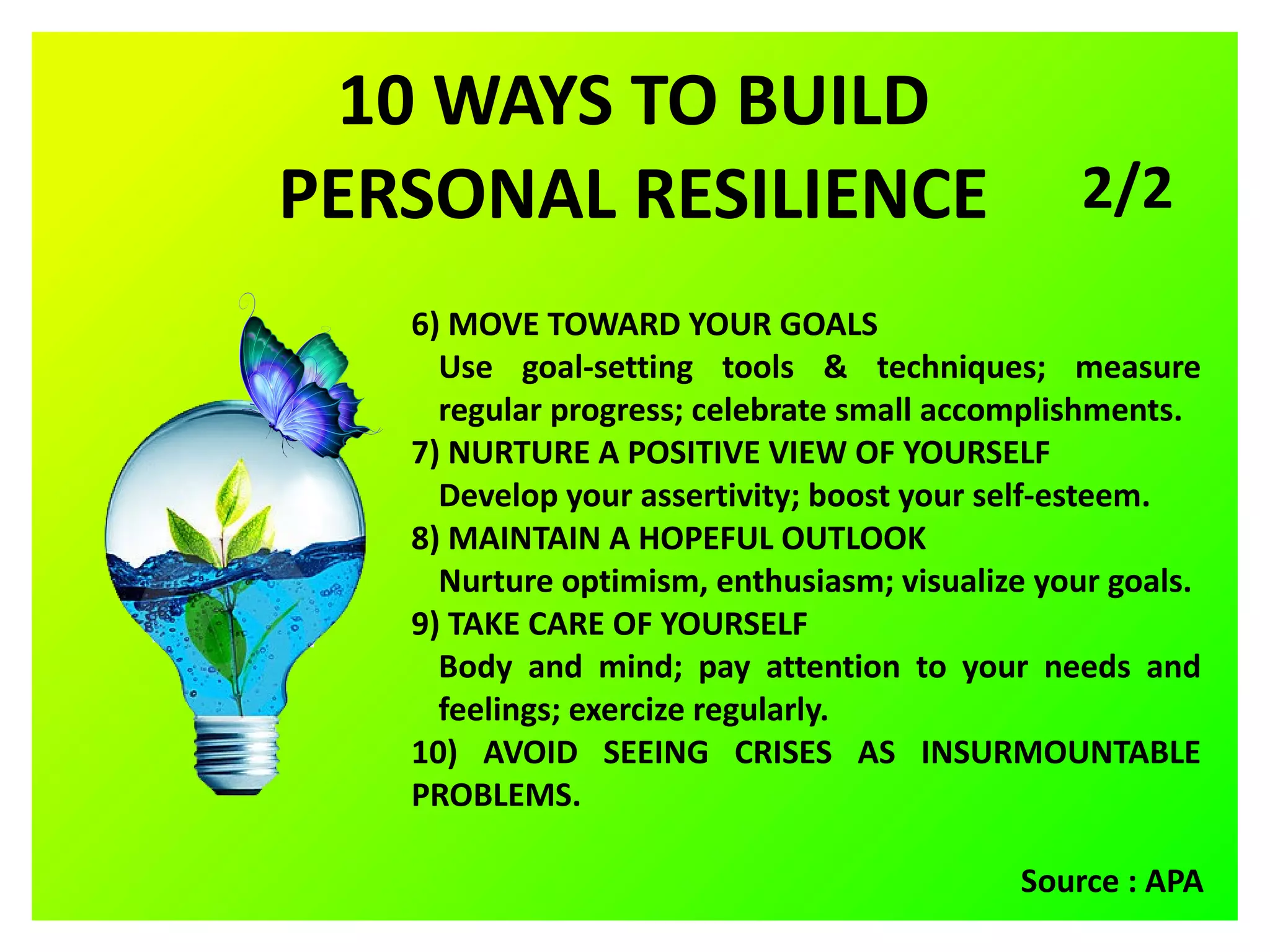
10 WAYS TO BUILD
PERSONAL RESILIENCE
6) MOVE TOWARD YOUR GOALS
Use goal-setting tools & techniques; measure
regular progress; celebrate small accomplishments.
7) NURTURE A POSITIVE VIEW OF YOURSELF
Develop your assertivity; boost your self-esteem.
8) MAINTAIN A HOPEFUL OUTLOOK
Nurture optimism, enthusiasm; visualize your goals.
9) TAKE CARE OF YOURSELF
Body and mind; pay attention to your needs and
feelings; exercize regularly.
10) AVOID SEEING CRISES AS INSURMOUNTABLE
PROBLEMS.
Source : APA
2/2
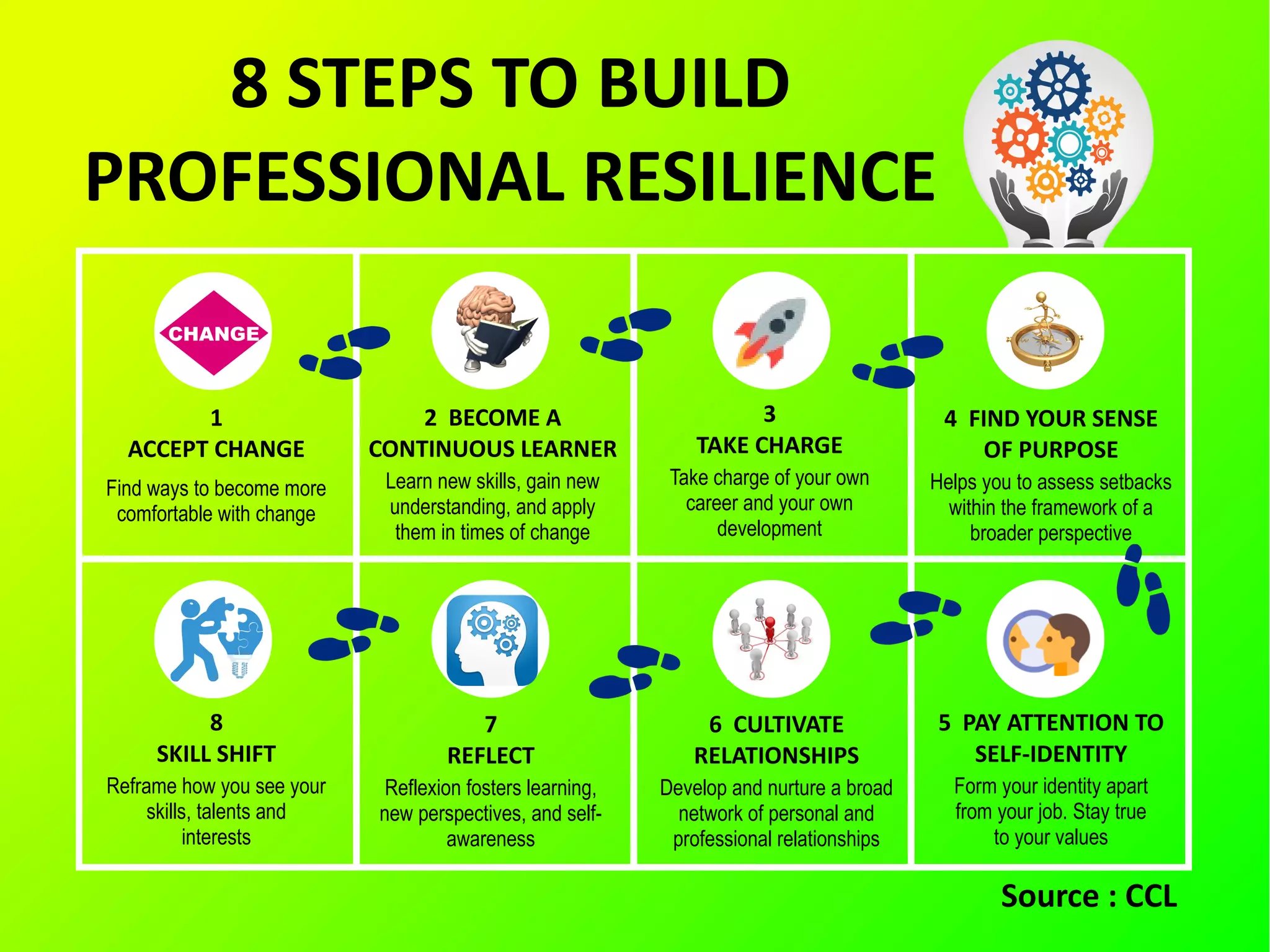
8 STEPS TO BUILD
PROFESSIONAL RESILIENCE
CHANGE
1
ACCEPT CHANGE
Find ways to become more
comfortable with change
2 BECOME A
CONTINUOUS LEARNER
Learn new skills, gain new
understanding, and apply
them in times of change
3
TAKE CHARGE
Take charge of your own
career and your own
development
4 FIND YOUR SENSE
OF PURPOSE
Helps you to assess setbacks
within the framework of a
broader perspective
5 PAY ATTENTION TO
SELF-IDENTITY
Form your identity apart
from your job. Stay true
to your values
6 CULTIVATE
RELATIONSHIPS
Develop and nurture a broad
network of personal and
professional relationships
7
REFLECT
Reflexion fosters learning,
new perspectives, and self-
awareness
8
SKILL SHIFT
Reframe how you see your
skills, talents and
interests
Source : CCL
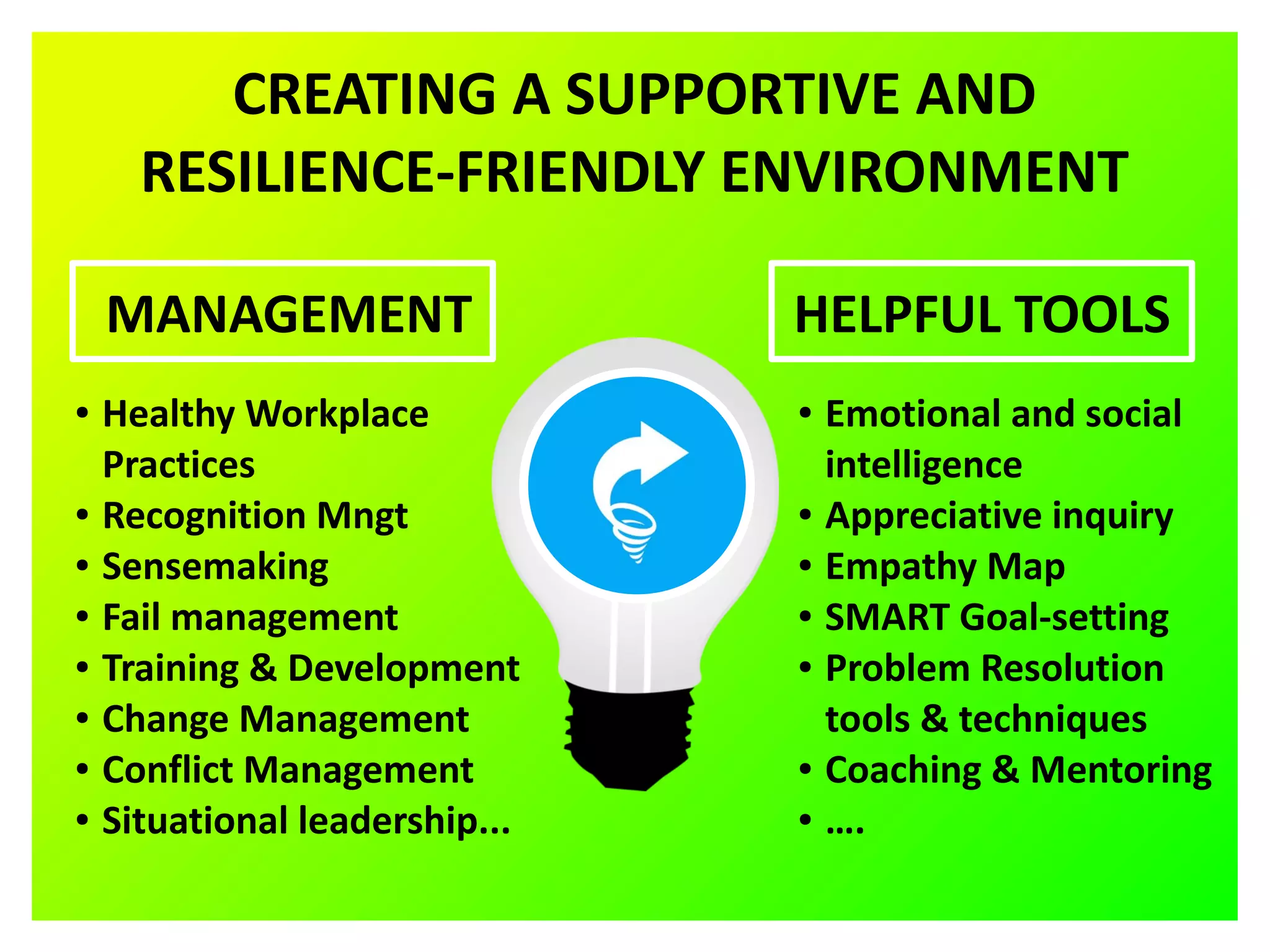
CREATING A SUPPORTIVE AND
RESILIENCE-FRIENDLY ENVIRONMENT
MANAGEMENT HELPFUL TOOLS
● Emotional and social
intelligence
● Appreciative inquiry
● Empathy Map
● SMART Goal-setting
● Problem Resolution
tools & techniques
● Coaching & Mentoring
● ….
● Healthy Workplace
Practices
● Recognition Mngt
● Sensemaking
● Fail management
● Training & Development
● Change Management
● Conflict Management
● Situational leadership...
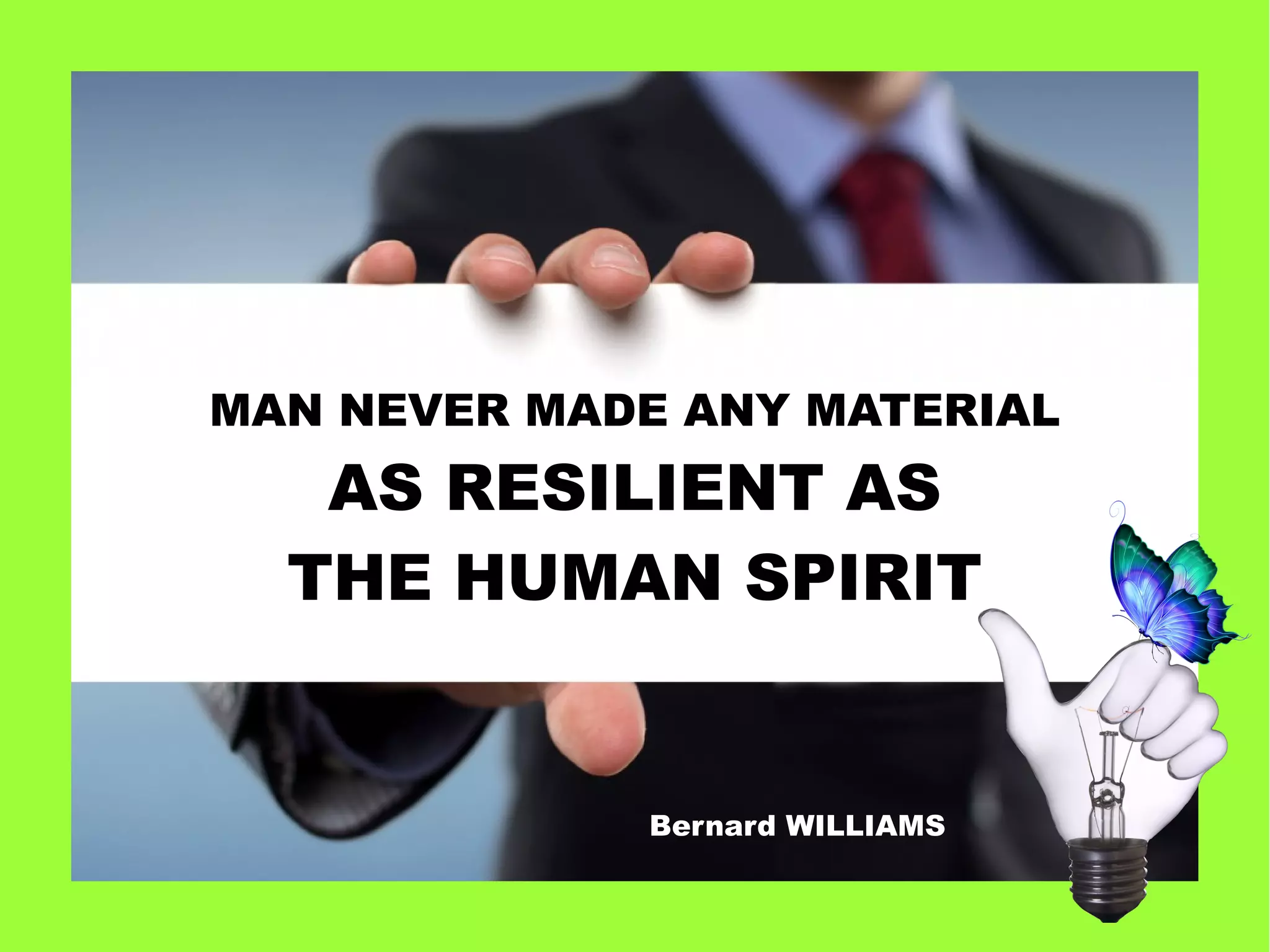
MAN NEVER MADE ANY MATERIAL
AS RESILIENT AS
THE HUMAN SPIRIT
Bernard WILLIAMS
● American Psychological Association
● The Road To Resilience, APA.
● Center For Creative Leadership
● Resilience Quiz (Mindtools)
● Developing Resilience (Mindtools)
● Books by Boris Cyrulnik (Wikipedia).

Building Resilience in the Workplace and the Personal Sphere

  • 1.
    IN THE WORKPLACE& THE PERSONAL SPHERE
  • 2.
    is the processof adapting well in the face of adversity, trauma, tragedy, threats or significant sources of stress. It means "bouncing back" from difficult experiences. RESILIENCE Source : APA
  • 3.
    A RESILIENT PERSON ●Is likely to recognize and manage their own feelings and understand the feelings of others; ● Have a sense of independence and self- worth; ● Form and maintain positive, mutually respectful relationships with others; ● Be able to solve problems and make informed decisions; ● Have a sense of purpose and goals for the future.
  • 4.
    THE EQUATION OFRESILIENCE COPING GRIT EMOTIONAL INTELLIGENCE SENSE RESILIENCE
  • 5.
    THE RESILIENCE MATRIX COPING Beingable to tap into inner resources, ie skills and strengths to cope and recover from problems, setbacks and challenges, and to bounce back. GRIT Resilient people never give up . They find in themselves the strength to tackle problems head on, overcome adversity, and move on with their lives. SENSE MAKING Being able to make sense of past experiences and learn from them. Being able to make life meaningful by having a sense of purpose, and goals for the future. EMOTIONAL INTELLIGENCE Being able to analyze and manage feelings and emotions is a key success factor to deal with difficult situations more positively.
  • 6.
    10 WAYS TOBUILD PERSONAL RESILIENCE Source : APA Making connections Self Discovery Accepting & managing change Keeping things in perspective Taking decisive actions Moving toward goals Nurturing self- esteem Maintaining hope and positivity Taking care of oneself CHANGE
  • 7.
    10 WAYS TOBUILD PERSONAL RESILIENCE 1) MAKE CONNECTIONS Cultivate good relationships; accept help and support; assist others. 2) LOOK FOR OPPORTUNITIES FOR SELF-DISCOVERY Know yourself, your strengths and self-worth. 3) ACCEPT THAT CHANGE IS A PART OF LIVING Learn ways & techniques to manage change. 4) KEEP THINGS IN PERSPECTIVE See broader context; long-term perspectives. 5) TAKE DECISIVE ACTIONS TO FIX PROBLEMS Adopt a solution mindset; use problem resolution tools and techniques. Source : APA 1/2
  • 8.
    10 WAYS TOBUILD PERSONAL RESILIENCE 6) MOVE TOWARD YOUR GOALS Use goal-setting tools & techniques; measure regular progress; celebrate small accomplishments. 7) NURTURE A POSITIVE VIEW OF YOURSELF Develop your assertivity; boost your self-esteem. 8) MAINTAIN A HOPEFUL OUTLOOK Nurture optimism, enthusiasm; visualize your goals. 9) TAKE CARE OF YOURSELF Body and mind; pay attention to your needs and feelings; exercize regularly. 10) AVOID SEEING CRISES AS INSURMOUNTABLE PROBLEMS. Source : APA 2/2
  • 9.
    8 STEPS TOBUILD PROFESSIONAL RESILIENCE CHANGE 1 ACCEPT CHANGE Find ways to become more comfortable with change 2 BECOME A CONTINUOUS LEARNER Learn new skills, gain new understanding, and apply them in times of change 3 TAKE CHARGE Take charge of your own career and your own development 4 FIND YOUR SENSE OF PURPOSE Helps you to assess setbacks within the framework of a broader perspective 5 PAY ATTENTION TO SELF-IDENTITY Form your identity apart from your job. Stay true to your values 6 CULTIVATE RELATIONSHIPS Develop and nurture a broad network of personal and professional relationships 7 REFLECT Reflexion fosters learning, new perspectives, and self- awareness 8 SKILL SHIFT Reframe how you see your skills, talents and interests Source : CCL
  • 10.
    CREATING A SUPPORTIVEAND RESILIENCE-FRIENDLY ENVIRONMENT MANAGEMENT HELPFUL TOOLS ● Emotional and social intelligence ● Appreciative inquiry ● Empathy Map ● SMART Goal-setting ● Problem Resolution tools & techniques ● Coaching & Mentoring ● …. ● Healthy Workplace Practices ● Recognition Mngt ● Sensemaking ● Fail management ● Training & Development ● Change Management ● Conflict Management ● Situational leadership...
  • 11.
    MAN NEVER MADEANY MATERIAL AS RESILIENT AS THE HUMAN SPIRIT Bernard WILLIAMS
  • 12.
    ● American PsychologicalAssociation ● The Road To Resilience, APA. ● Center For Creative Leadership ● Resilience Quiz (Mindtools) ● Developing Resilience (Mindtools) ● Books by Boris Cyrulnik (Wikipedia).