‘LOCK - AND - KEY’ HYPOTHESIS
&
‘INDUCED FIT’ HYPOTHESIS
A PRESENTATION BY UNNIMAYA VINOD
DEPARTMENT OF ZOOLOGY
UNIVERSITY OF KERALA
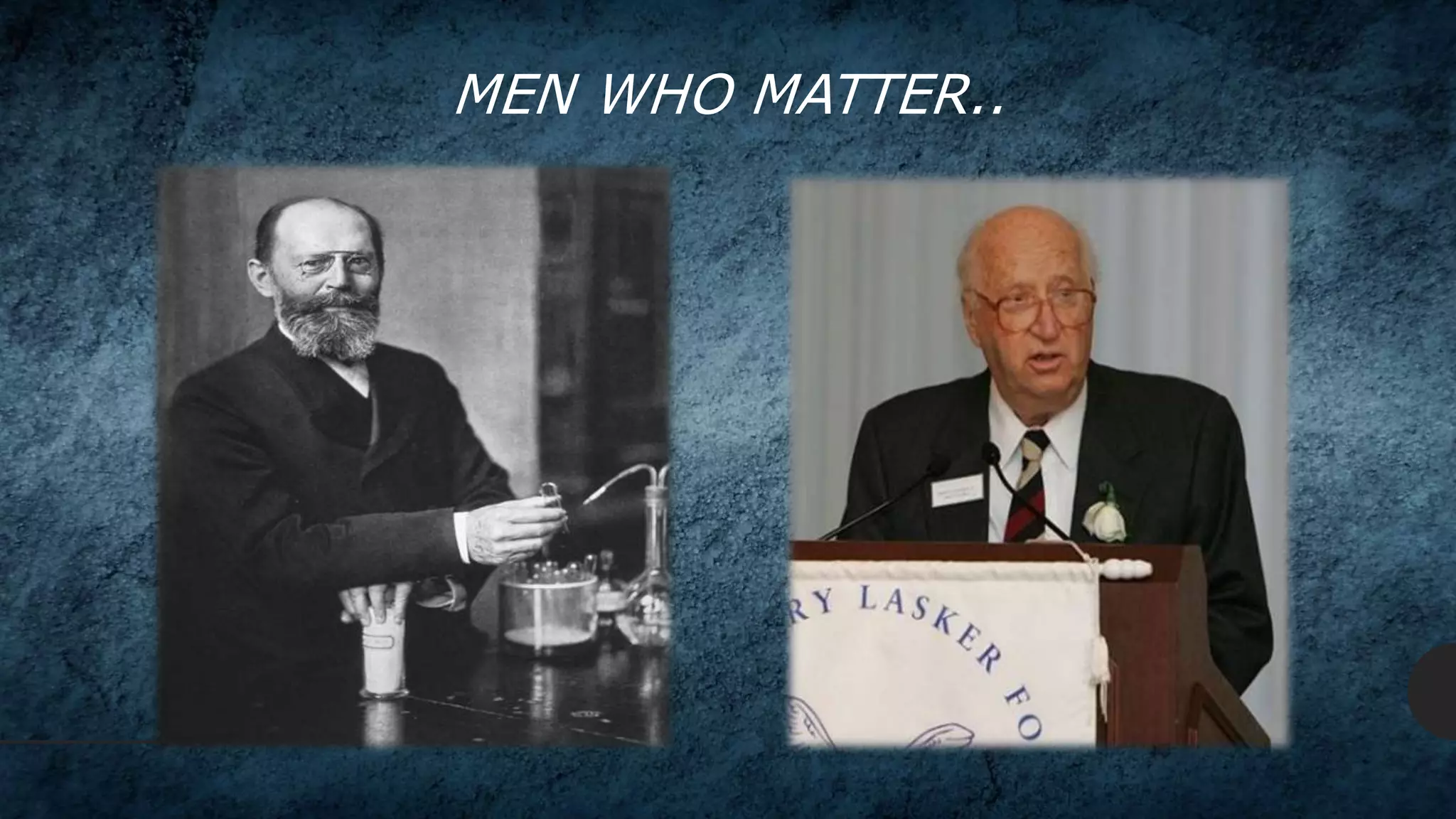
MEN WHO MATTER..
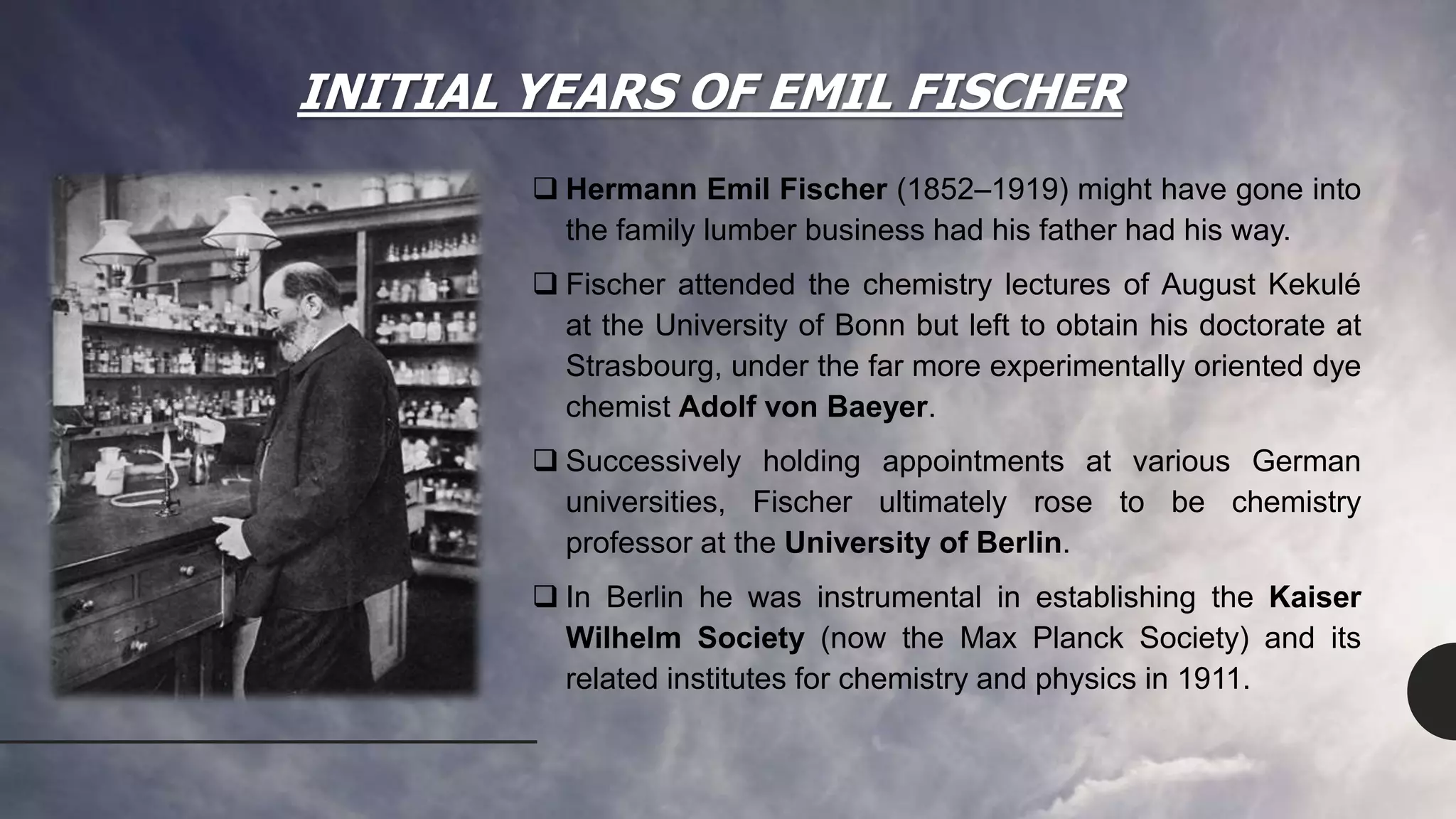
INITIAL YEARS OF EMIL FISCHER
 Hermann Emil Fischer (1852–1919) might have gone into
the family lumber business had his father had his way.
 Fischer attended the chemistry lectures of August Kekulé
at the University of Bonn but left to obtain his doctorate at
Strasbourg, under the far more experimentally oriented dye
chemist Adolf von Baeyer.
 Successively holding appointments at various German
universities, Fischer ultimately rose to be chemistry
professor at the University of Berlin.
 In Berlin he was instrumental in establishing the Kaiser
Wilhelm Society (now the Max Planck Society) and its
related institutes for chemistry and physics in 1911.
NOTABLE
WORKS
FISCHER INDOLE SYNTHESIS
FISCHER PROJECTION
FISCHER OXAZOLE SYNTHESIS
FISCHER PEPTIDE SYNTHESIS
FISCHER PHENYLHYDRAZINE OSAZONE
REACTION
FISHER ESTERIFICATION
FISCHER GLYCOSIDATION
KILLIANI- FISCHER SYNTHESIS
FISCHER’S
LOCK AND KEY HYPOTHESIS
SUBSTRATE BINDING
 Enzymes work in a very unique manner. The way that an
enzyme catalyzes a chemical reaction is to start by binding a
substrate or several substrates to an active site on the enzyme.
 This active site is the region on an enzyme that combines with
the substrate. When a substrate and an enzyme bind, the
actions cause the distribution of electrons in chemical bonds of
the substrate to change.
 This eventually leads to a chemical reaction, which leads to the
product.
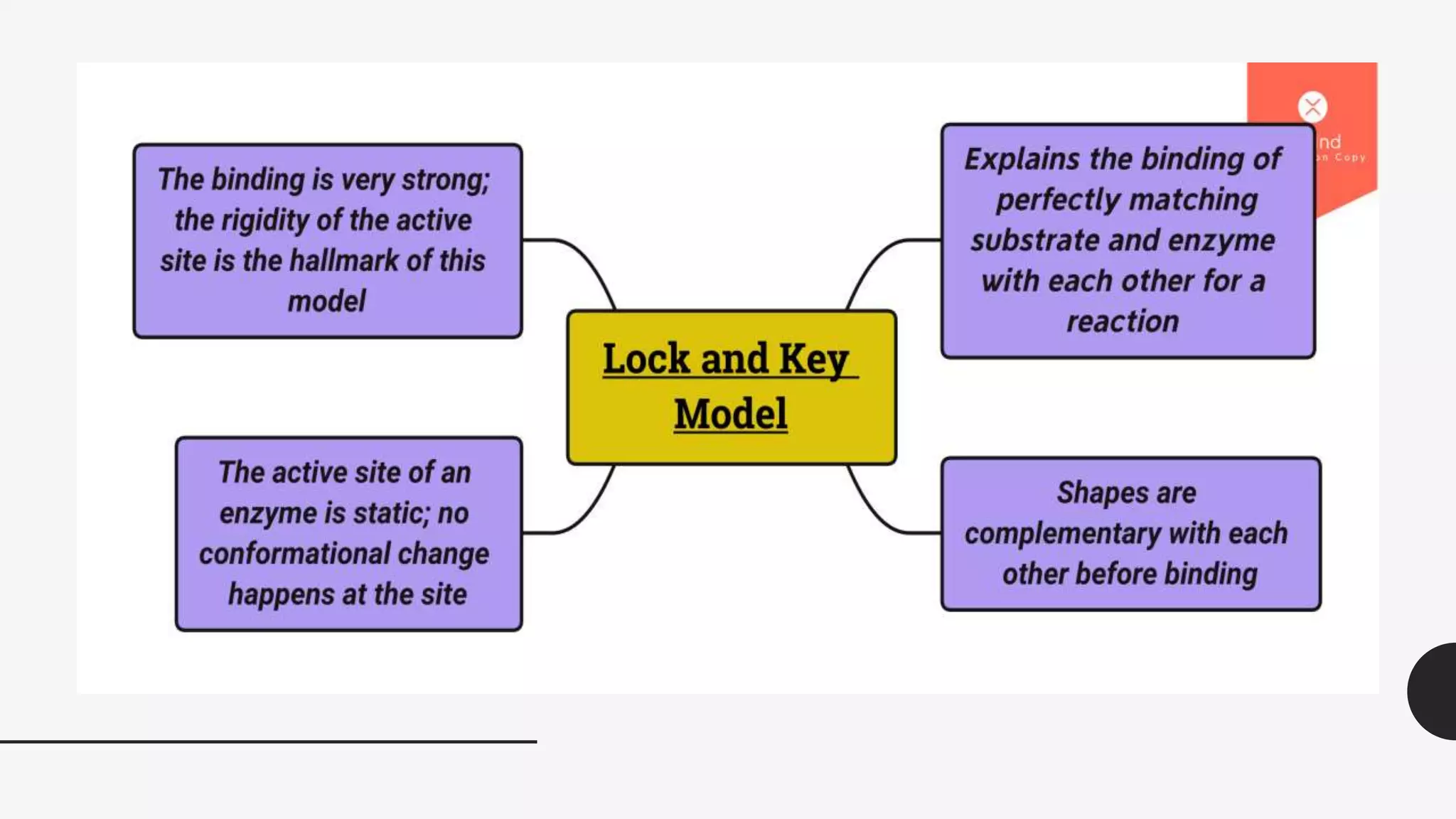
THE LOCK AND KEY MODEL
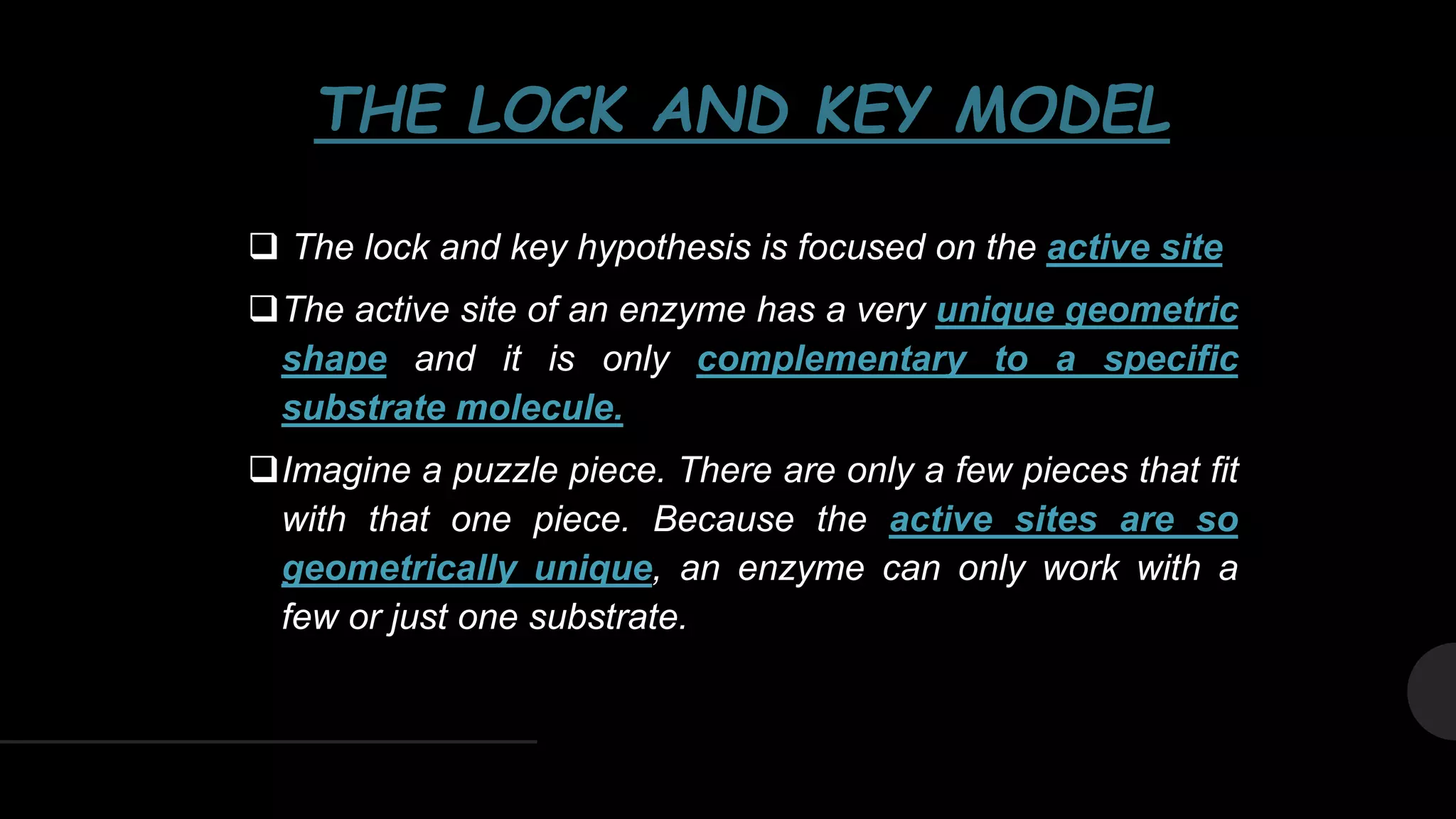
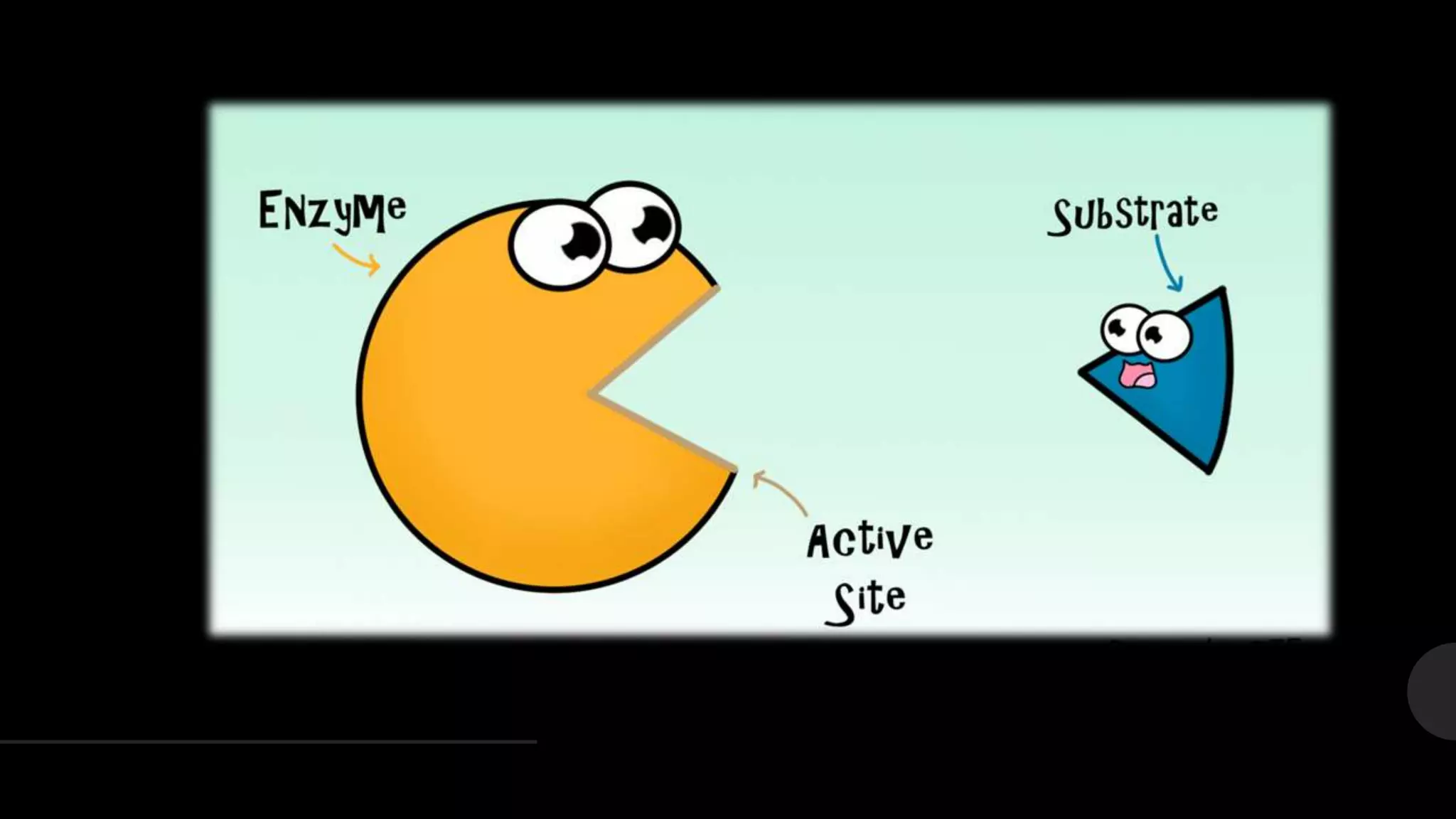
 The lock and key hypothesis is focused on the active site
The active site of an enzyme has a very unique geometric
shape and it is only complementary to a specific
substrate molecule.
Imagine a puzzle piece. There are only a few pieces that fit
with that one piece. Because the active sites are so
geometrically unique, an enzyme can only work with a
few or just one substrate.
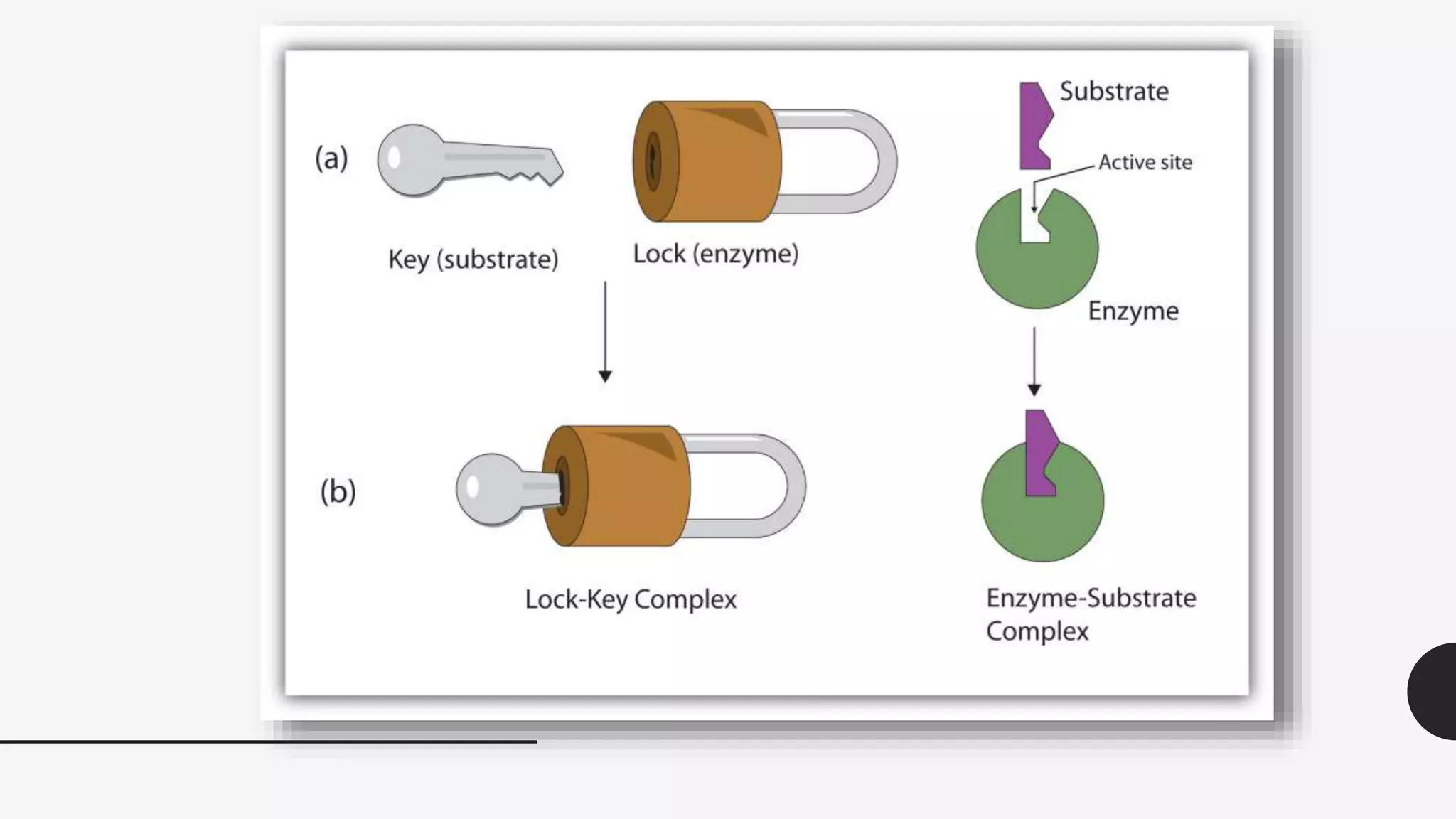
 In order to explain why enzymes have such a high level of
specificity, Emil Fischer in 1894 suggested that both a substrate
and an enzyme have specific geometric shapes that fit exactly
into each other.
 This idea of both substrates and enzymes having a natural
geometric fit has been called the lock and key hypothesis.
“ACTIVE SITE IS RIGID..”
THE WORK THAT BOUGHT HIM
FAME..
The Nobel Prize in Chemistry 1902 was
awarded to Hermann Emil Fischer "in
recognition of the extraordinary services he
has rendered by his work on sugar and purine
syntheses."
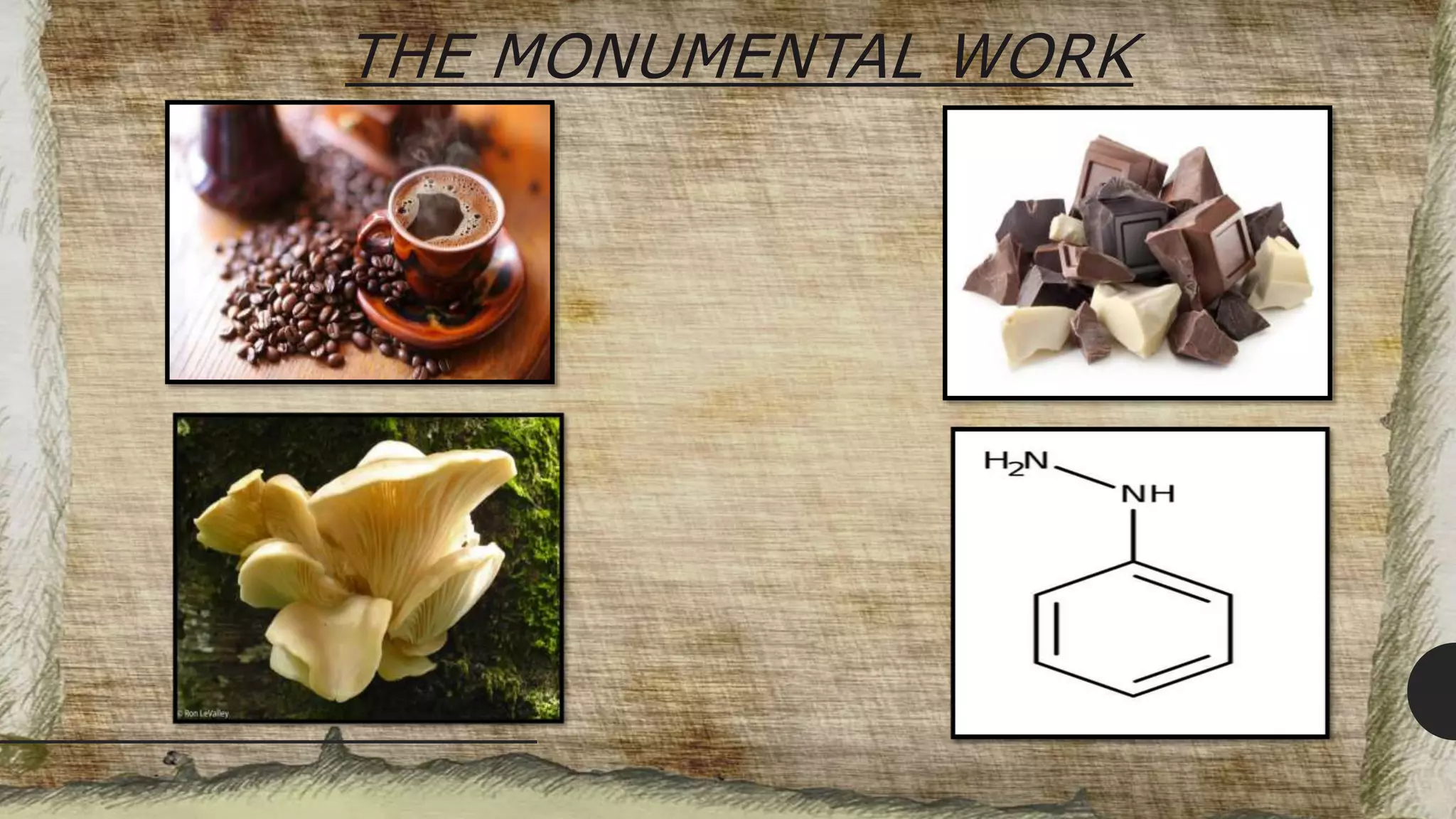
THE MONUMENTAL WORK
KOSHLAND’S INDUCED FIT
MODEL
EARLY LIFE OF DANIEL E. KOSHLAND
 Daniel E. Koshland, Jr., was a giant in the field of biochemistry,
making important strides in knowledge of the properties and
activities of enzymes and bacteria.
Koshland majored in chemistry at the University of California,
Berkeley, before serving as a group leader, working to purify
plutonium, in the Manhattan Project during World War II.
He was a Member of the United States National Academy of
Sciences and established the Academy’s Marian Koshland
Science Museum in honor of his wife, Marian Koshland, a
noted immunologist.
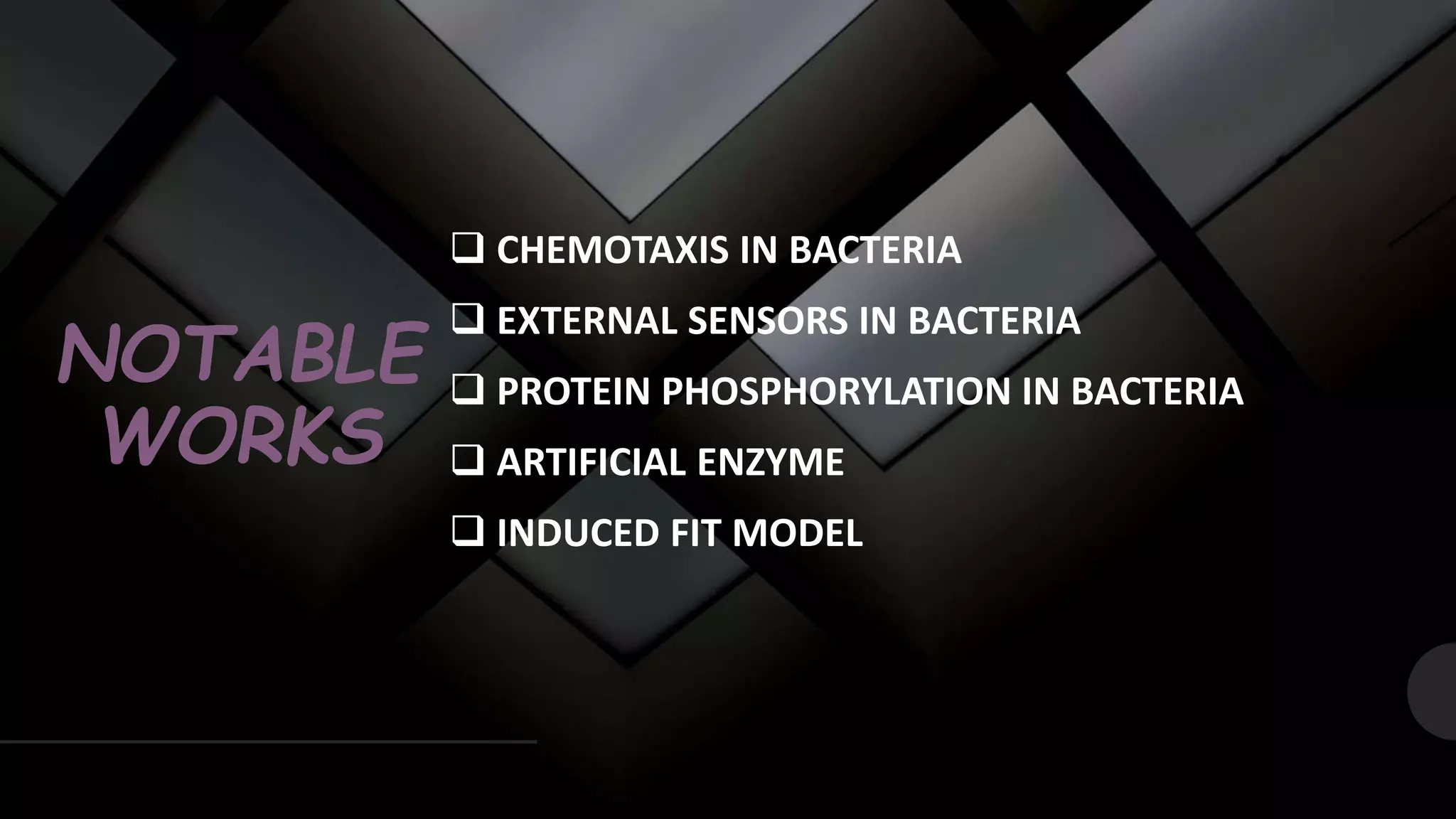
NOTABLE
WORKS
 CHEMOTAXIS IN BACTERIA
 EXTERNAL SENSORS IN BACTERIA
 PROTEIN PHOSPHORYLATION IN BACTERIA
 ARTIFICIAL ENZYME
 INDUCED FIT MODEL
INDUCED FIT MODEL
 An offshoot of the previous model, the current model supports a more
refined view of enzyme-substrate binding.
 As the enzyme and substrate come together, their interaction causes a
mild shift in the enzyme’s structure that confirms an ideal binding
arrangement between the enzyme and the substrate .
 This dynamic binding maximizes the enzyme’s ability to catalyze the
reaction.
“ACTIVE SITE IS NOT RIGID..”
REFERENCES
 www.britannica.com
www.socratic.org.in
 www.biologyonline.com
 www.vedantu.com
 www.courses.lumenlearning.com
 www.khanacademy.org

Lock and key model & induced fit model

  • 1.
    ‘LOCK - AND- KEY’ HYPOTHESIS & ‘INDUCED FIT’ HYPOTHESIS A PRESENTATION BY UNNIMAYA VINOD DEPARTMENT OF ZOOLOGY UNIVERSITY OF KERALA
  • 2.
  • 3.
    INITIAL YEARS OFEMIL FISCHER  Hermann Emil Fischer (1852–1919) might have gone into the family lumber business had his father had his way.  Fischer attended the chemistry lectures of August Kekulé at the University of Bonn but left to obtain his doctorate at Strasbourg, under the far more experimentally oriented dye chemist Adolf von Baeyer.  Successively holding appointments at various German universities, Fischer ultimately rose to be chemistry professor at the University of Berlin.  In Berlin he was instrumental in establishing the Kaiser Wilhelm Society (now the Max Planck Society) and its related institutes for chemistry and physics in 1911.
  • 4.
    NOTABLE WORKS FISCHER INDOLE SYNTHESIS FISCHERPROJECTION FISCHER OXAZOLE SYNTHESIS FISCHER PEPTIDE SYNTHESIS FISCHER PHENYLHYDRAZINE OSAZONE REACTION FISHER ESTERIFICATION FISCHER GLYCOSIDATION KILLIANI- FISCHER SYNTHESIS
  • 5.
  • 7.
    SUBSTRATE BINDING  Enzymeswork in a very unique manner. The way that an enzyme catalyzes a chemical reaction is to start by binding a substrate or several substrates to an active site on the enzyme.  This active site is the region on an enzyme that combines with the substrate. When a substrate and an enzyme bind, the actions cause the distribution of electrons in chemical bonds of the substrate to change.  This eventually leads to a chemical reaction, which leads to the product.
  • 9.
    THE LOCK ANDKEY MODEL  The lock and key hypothesis is focused on the active site The active site of an enzyme has a very unique geometric shape and it is only complementary to a specific substrate molecule. Imagine a puzzle piece. There are only a few pieces that fit with that one piece. Because the active sites are so geometrically unique, an enzyme can only work with a few or just one substrate.
  • 11.
     In orderto explain why enzymes have such a high level of specificity, Emil Fischer in 1894 suggested that both a substrate and an enzyme have specific geometric shapes that fit exactly into each other.  This idea of both substrates and enzymes having a natural geometric fit has been called the lock and key hypothesis.
  • 13.
  • 14.
    THE WORK THATBOUGHT HIM FAME.. The Nobel Prize in Chemistry 1902 was awarded to Hermann Emil Fischer "in recognition of the extraordinary services he has rendered by his work on sugar and purine syntheses."
  • 15.
  • 16.
  • 17.
    EARLY LIFE OFDANIEL E. KOSHLAND  Daniel E. Koshland, Jr., was a giant in the field of biochemistry, making important strides in knowledge of the properties and activities of enzymes and bacteria. Koshland majored in chemistry at the University of California, Berkeley, before serving as a group leader, working to purify plutonium, in the Manhattan Project during World War II. He was a Member of the United States National Academy of Sciences and established the Academy’s Marian Koshland Science Museum in honor of his wife, Marian Koshland, a noted immunologist.
  • 18.
    NOTABLE WORKS  CHEMOTAXIS INBACTERIA  EXTERNAL SENSORS IN BACTERIA  PROTEIN PHOSPHORYLATION IN BACTERIA  ARTIFICIAL ENZYME  INDUCED FIT MODEL
  • 19.
    INDUCED FIT MODEL An offshoot of the previous model, the current model supports a more refined view of enzyme-substrate binding.  As the enzyme and substrate come together, their interaction causes a mild shift in the enzyme’s structure that confirms an ideal binding arrangement between the enzyme and the substrate .  This dynamic binding maximizes the enzyme’s ability to catalyze the reaction.
  • 20.
    “ACTIVE SITE ISNOT RIGID..”
  • 25.
    REFERENCES  www.britannica.com www.socratic.org.in  www.biologyonline.com www.vedantu.com  www.courses.lumenlearning.com  www.khanacademy.org