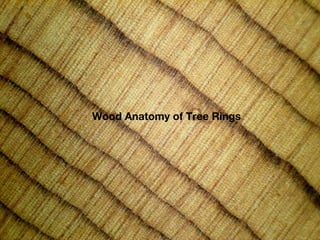
Wood Anatomy of Tree Rings
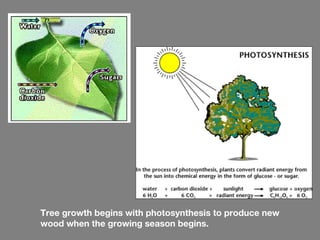
Tree growth begins with photosynthesis to produce new
wood when the growing season begins.
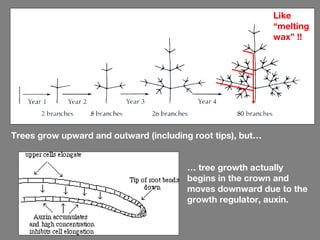
Like
                                                            “melting
                                                            wax” !!


Trees grow upward and outward (including root tips), but…


                                        … tree growth actually
                                        begins in the crown and
                                        moves downward due to the
                                        growth regulator, auxin.
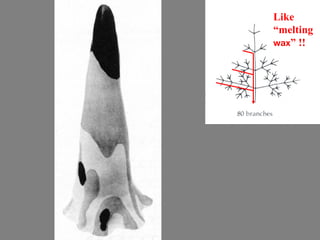
Like
“melting
wax” !!
Meristems:
apical and
lateral
growth


D: cell
division
E: cell
elongation
M: cell
maturation
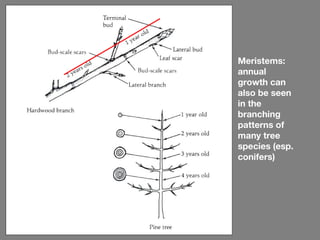
Meristems:
annual
growth can
also be seen
in the
branching
patterns of
many tree
species (esp.
conifers)
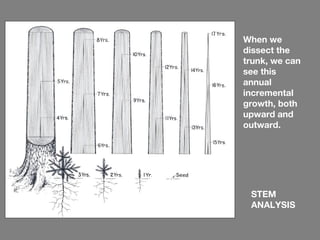
When we
dissect the
trunk, we can
see this
annual
incremental
growth, both
upward and
outward.


 STEM
 ANALYSIS
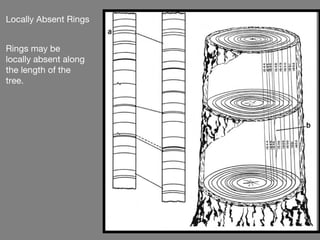
Locally Absent Rings


Rings may be
locally absent along
the length of the
tree.
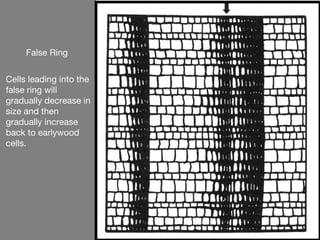
False Ring


Cells leading into the
false ring will
gradually decrease in
size and then
gradually increase
back to earlywood
cells.
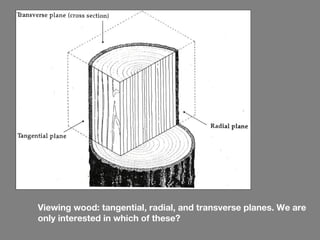
Viewing wood: tangential, radial, and transverse planes. We are
only interested in which of these?
Definitions:

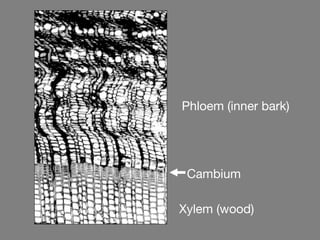
Cambium: the growing (generative) layer between the xylem and phloem.

Xylem: principle strengthening and water conducting tissue of the stem,
roots, and branches.

Phloem: inner bark, principal function to distribute manufactured
foodstuffs.

Bark: dead, outer tissue that protects the cambium from the external
environment and exposure to pathogens and physical injury.

Vessel: the composite, tube-like structure found in hardwoods from the
fusion of cells in a longitudinal column.

Fiber: an elongated cell with pointed ends and a thick or infrequently thin
wall.

Rays: ribbon-shaped tissue extending in a radial direction across the grain
of the wood.
Note the five major portions of the tree trunk.
Phloem (inner bark)


 Cambium

Xylem (wood)
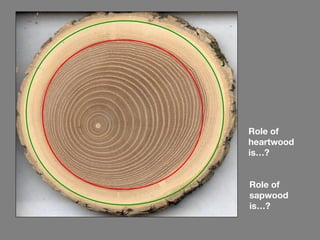
Role of
heartwood
is…?


Role of
sapwood
is…?
The Wood Cell:
      1. Holocellulose
            a. alpha-cellulose (40-50%) = non-soluble =
                   long-chain polymers (glucose)
            b. hemicellulose (20-35%) = readily soluble =
                  short-chain polysaccharides
      2. Lignin (15-35%) – non-carbohydrate materials in
             cell wall, very complex chemical structure.
      3. Numerous Extractives – can be removed!
            a. tannins
            b. oils and resins
            c. other complex organic compounds
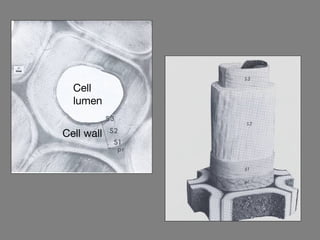
Cell
  lumen


Cell wall

Wood anatomy

  • 1.
    Wood Anatomy ofTree Rings
  • 2.
    Tree growth beginswith photosynthesis to produce new wood when the growing season begins.
  • 3.
    Like “melting wax” !! Trees grow upward and outward (including root tips), but… … tree growth actually begins in the crown and moves downward due to the growth regulator, auxin.
  • 4.
  • 5.
  • 6.
    Meristems: annual growth can also beseen in the branching patterns of many tree species (esp. conifers)
  • 7.
    When we dissect the trunk,we can see this annual incremental growth, both upward and outward. STEM ANALYSIS
  • 8.
    Locally Absent Rings Ringsmay be locally absent along the length of the tree.
  • 9.
    False Ring Cells leadinginto the false ring will gradually decrease in size and then gradually increase back to earlywood cells.
  • 10.
    Viewing wood: tangential,radial, and transverse planes. We are only interested in which of these?
  • 11.
    Definitions: Cambium: the growing(generative) layer between the xylem and phloem. Xylem: principle strengthening and water conducting tissue of the stem, roots, and branches. Phloem: inner bark, principal function to distribute manufactured foodstuffs. Bark: dead, outer tissue that protects the cambium from the external environment and exposure to pathogens and physical injury. Vessel: the composite, tube-like structure found in hardwoods from the fusion of cells in a longitudinal column. Fiber: an elongated cell with pointed ends and a thick or infrequently thin wall. Rays: ribbon-shaped tissue extending in a radial direction across the grain of the wood.
  • 12.
    Note the fivemajor portions of the tree trunk.
  • 13.
    Phloem (inner bark) Cambium Xylem (wood)
  • 14.
  • 15.
    The Wood Cell: 1. Holocellulose a. alpha-cellulose (40-50%) = non-soluble = long-chain polymers (glucose) b. hemicellulose (20-35%) = readily soluble = short-chain polysaccharides 2. Lignin (15-35%) – non-carbohydrate materials in cell wall, very complex chemical structure. 3. Numerous Extractives – can be removed! a. tannins b. oils and resins c. other complex organic compounds
  • 16.