Webinar
Critical SQL Server Databases:
Provide HA with SQL Server Failover
Clustering and Cluster Shared Volumes
Edwin Sarmiento
http://www.EdwinMSarmiento.com
edwin@EdwinMSarmiento.com
@EdwinMSarmiento
http://ca.linkedin.com/in/EdwinMSa
rmiento
Microsoft MVP/Microsoft Certified Master:
high
availability
high
availability
characteristic of a system that is
full y oper ational
for a long period of time
high
availability
is NOT the same as
UPTIME
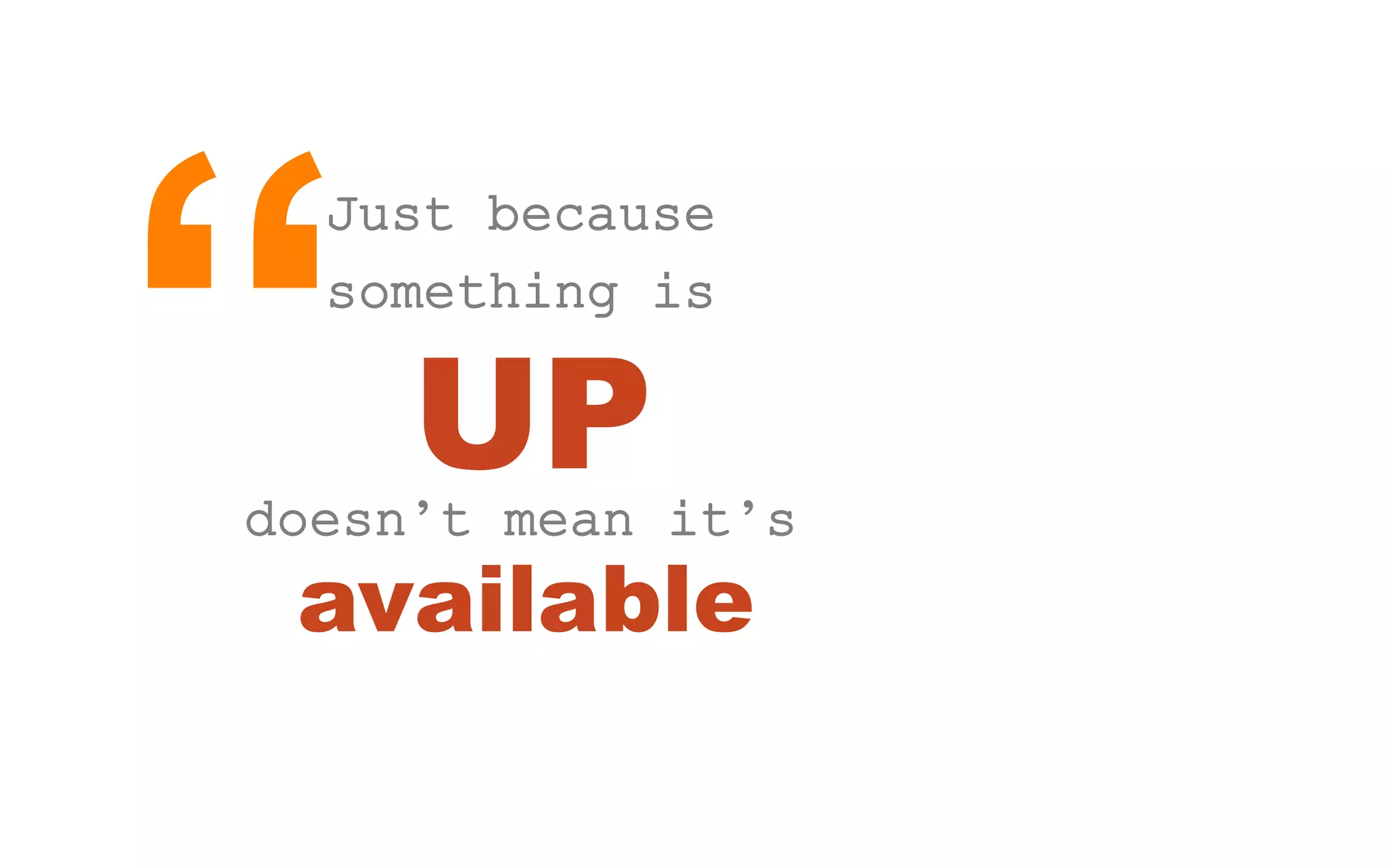
Just because
something is
UP
doesn’t mean it’s
available
UP
available
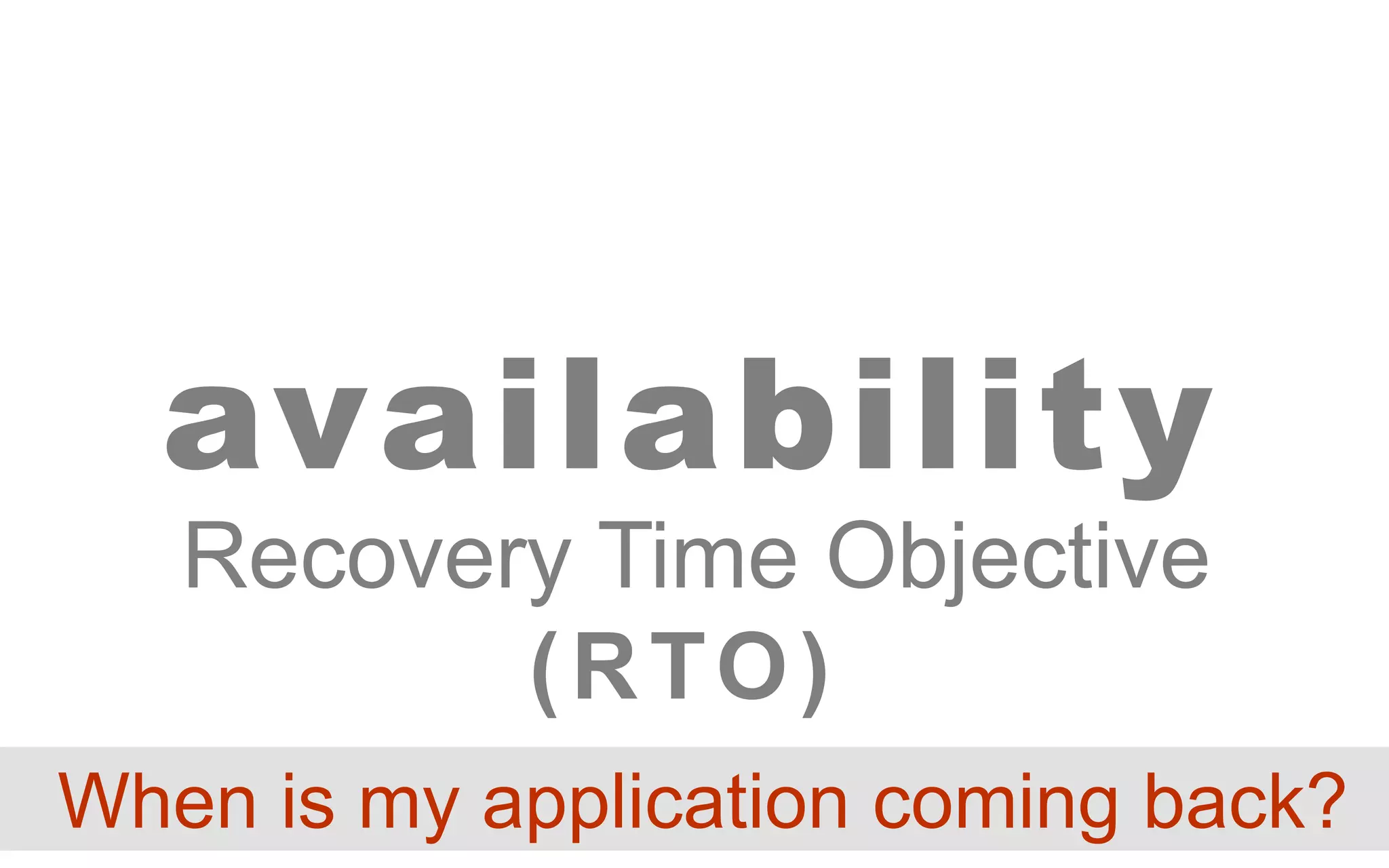
Recovery Time Objective
(RTO)
high
availability
When is my application coming back?
downtime
high ZERO
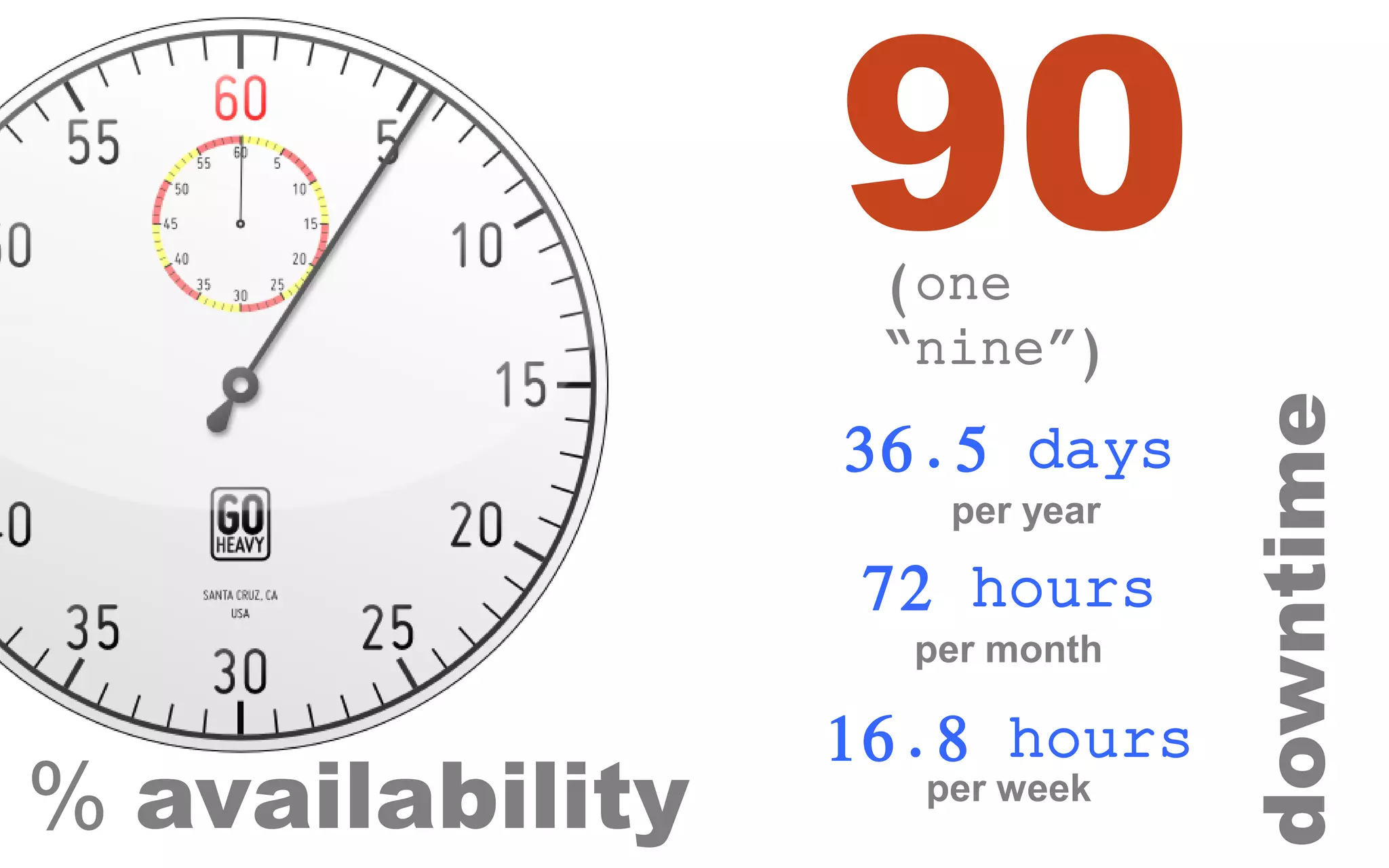
(one
“nine”)
% availability
90
36.5 days
per year
72 hours
per month
16.8 hours
per week
downtime
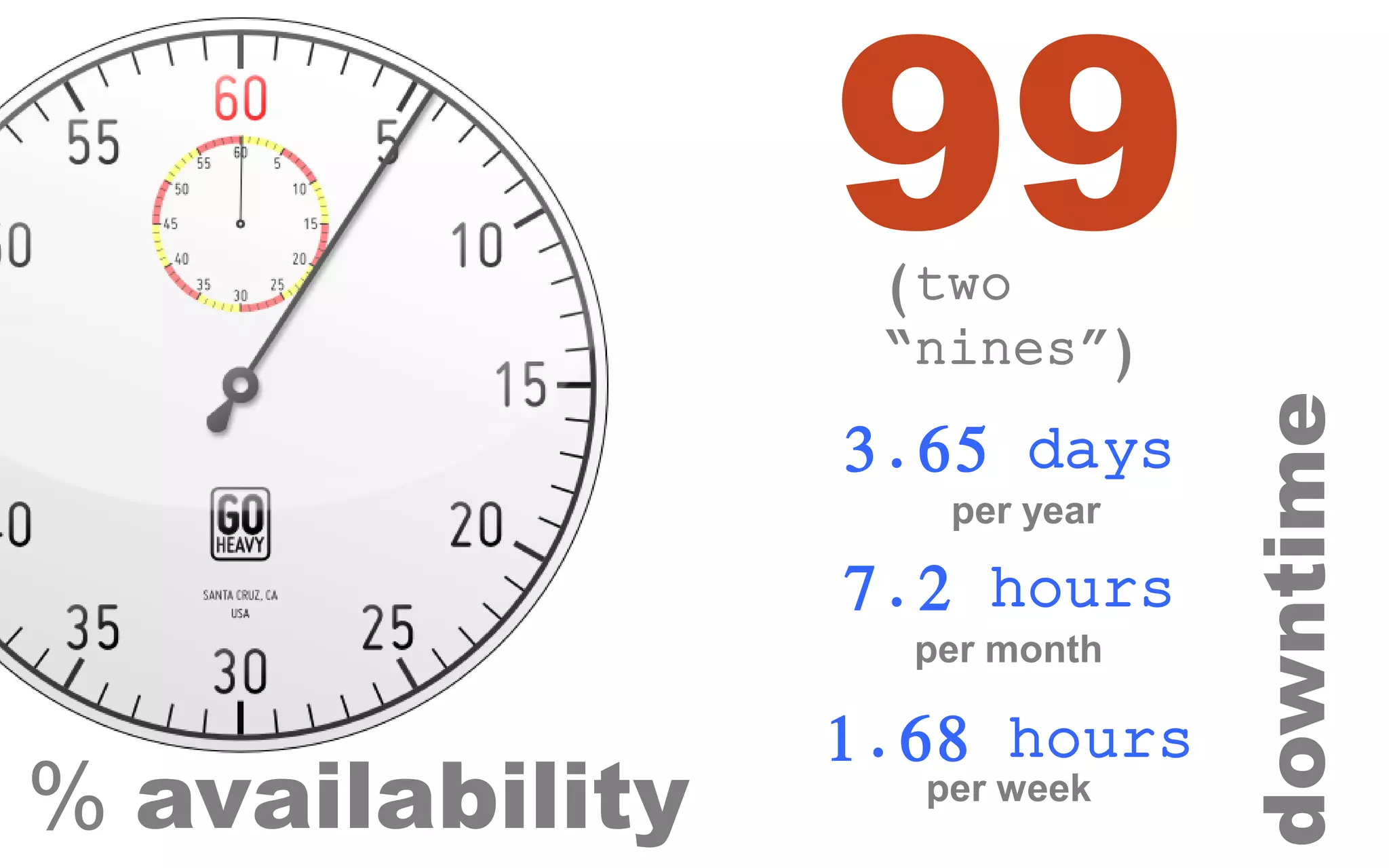
(two
“nines”)
% availability
99
3.65 days
per year
7.2 hours
per month
1.68 hours
per week
downtime
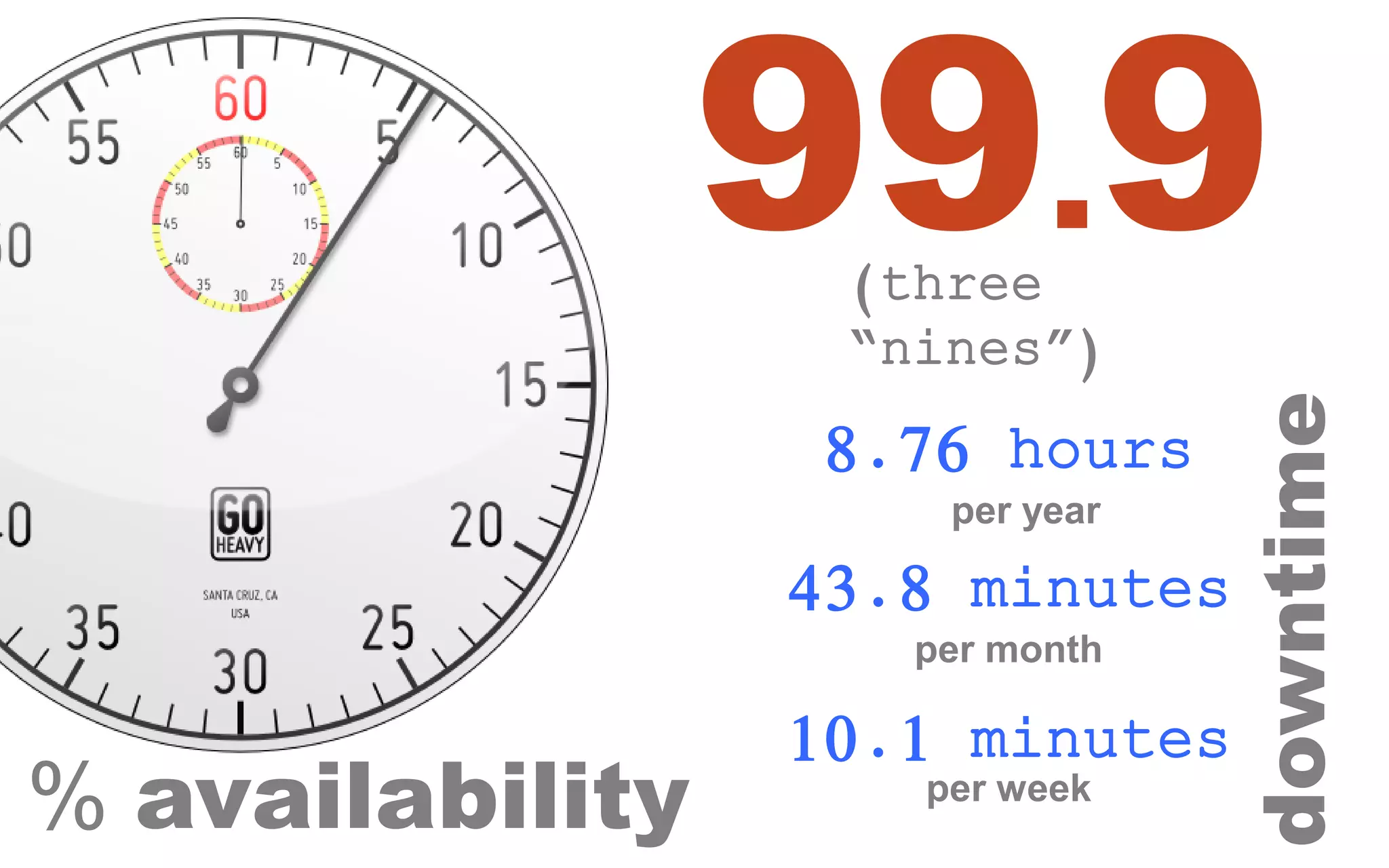
(three
“nines”)
% availability
99.9
8.76 hours
per year
43.8 minutes
per month
10.1 minutes
per week
downtime
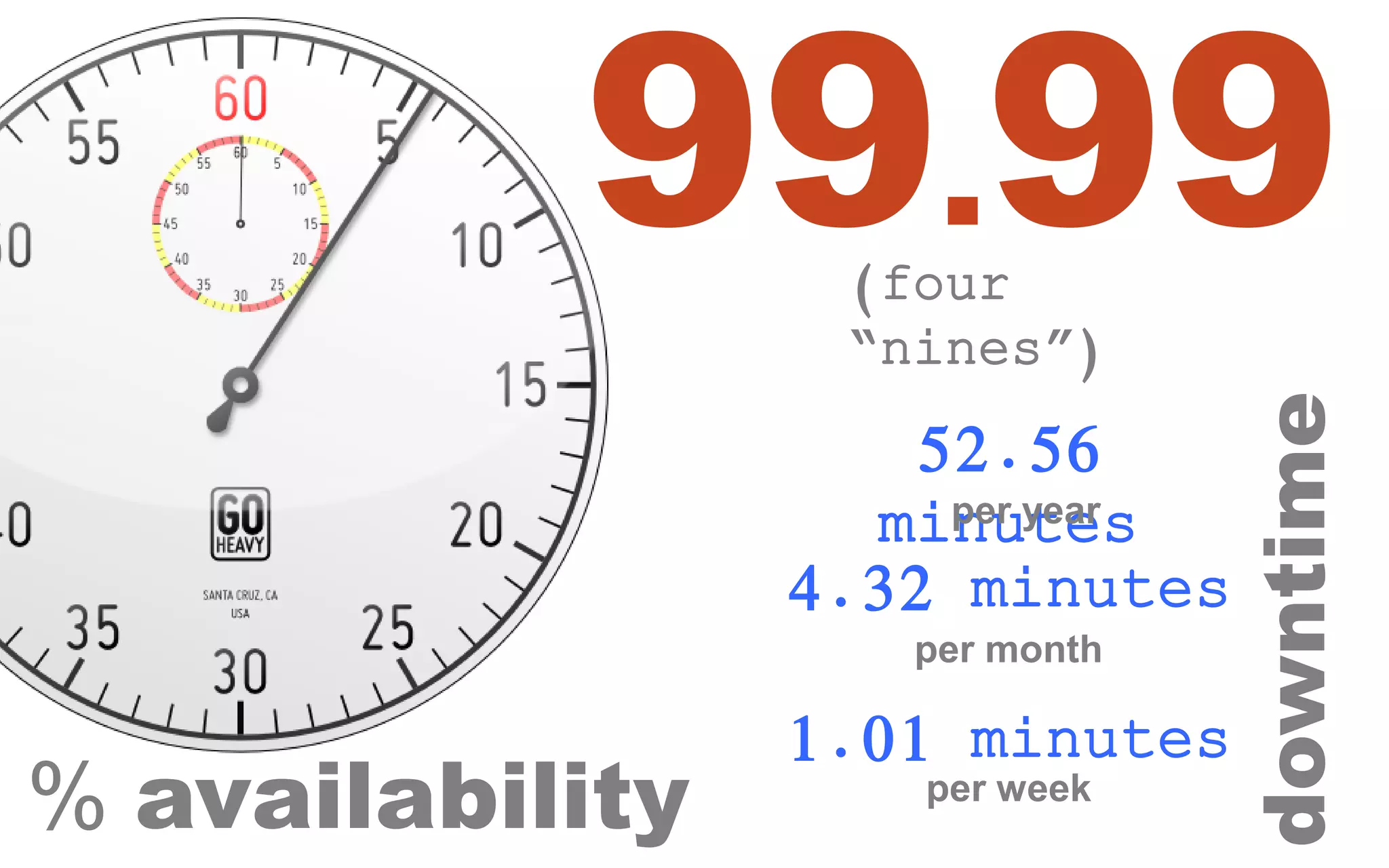
(four
“nines”)
% availability
99.99
52.56
minutesper year
4.32 minutes
per month
1.01 minutes
per week
downtime
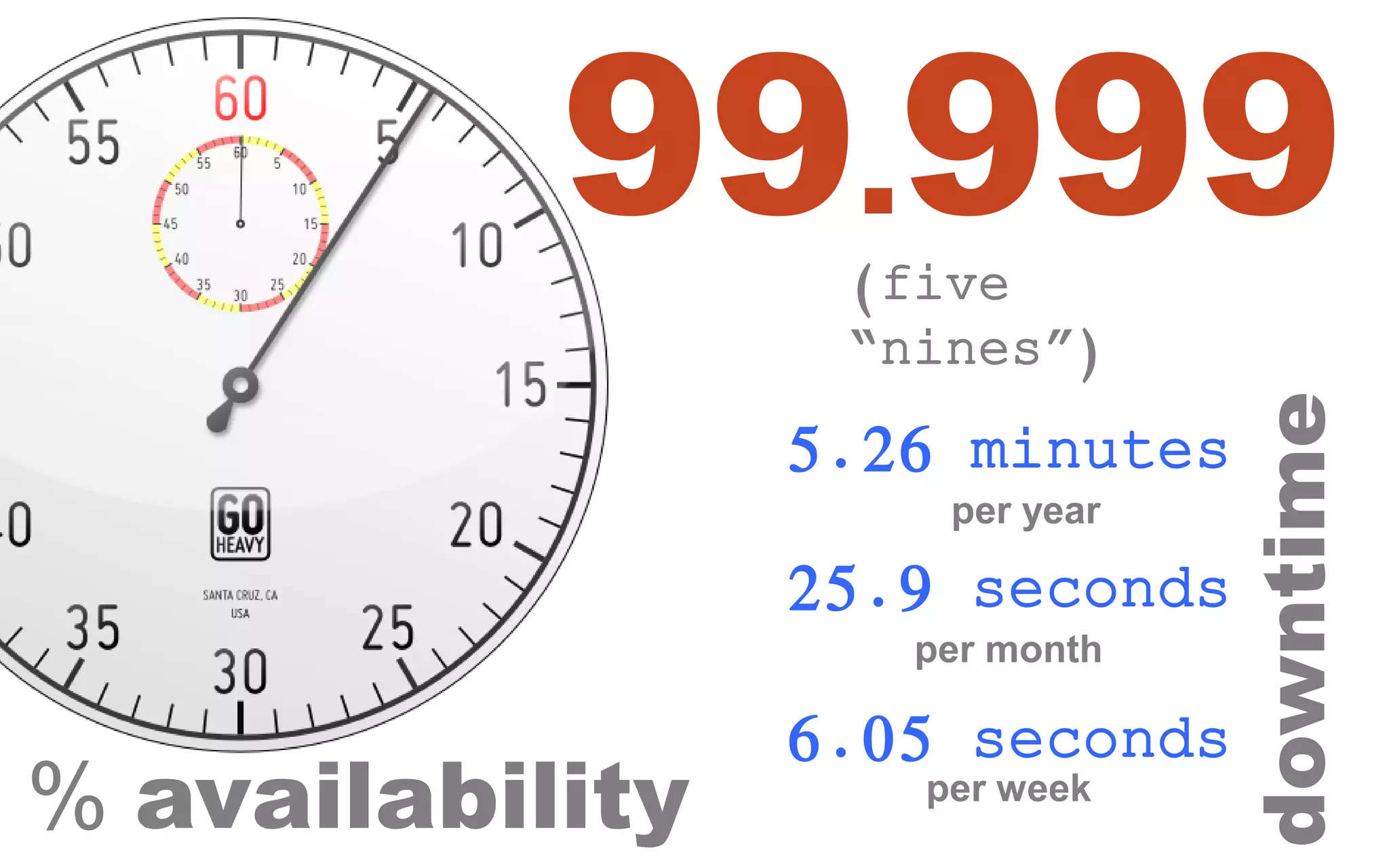
(five
“nines”)
% availability
99.999
5.26 minutes
per year
25.9 seconds
per month
6.05 seconds
per week
downtime
(five
“nines”)
% availability
99.999
5.26 minutes
per year
25.9 seconds
per month
6.05 seconds
per week
downtime
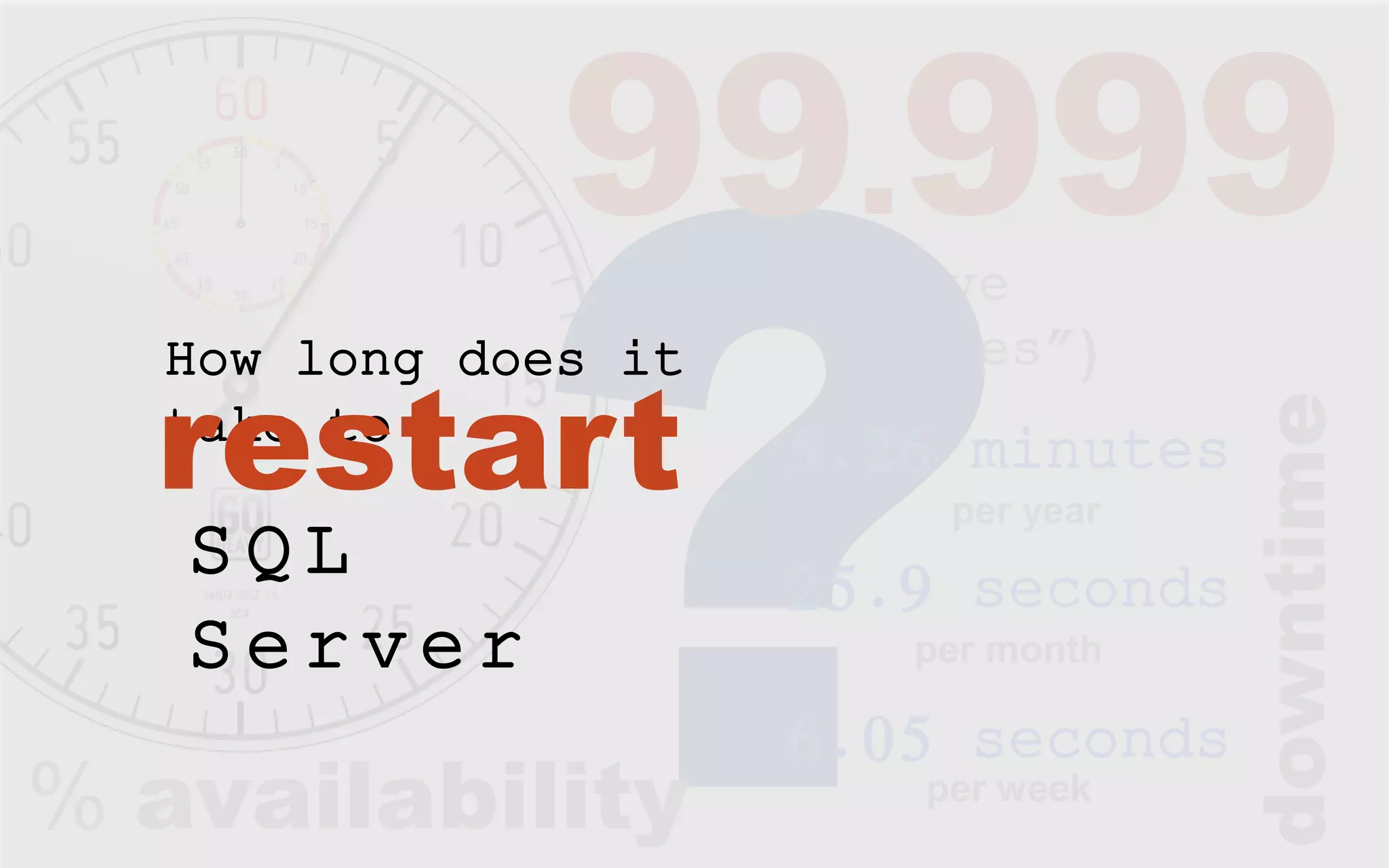
How long does it
take to
restart
S Q L
S e r ver
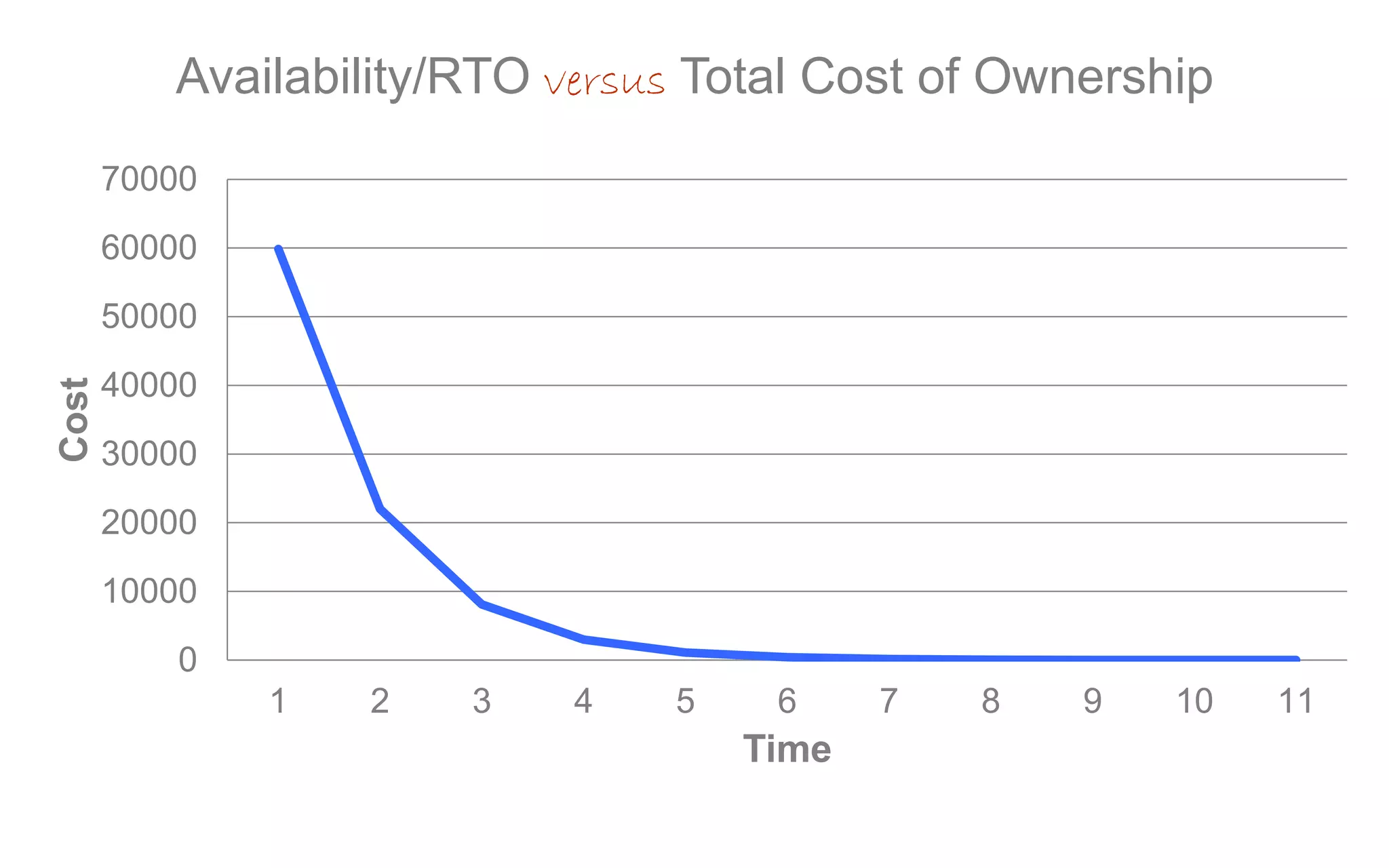
0
10000
20000
30000
40000
50000
60000
70000
1 2 3 4 5 6 7 8 9 10 11
Cost
Time
Availability/RTO versus Total Cost of Ownership
downtime
high ZERO
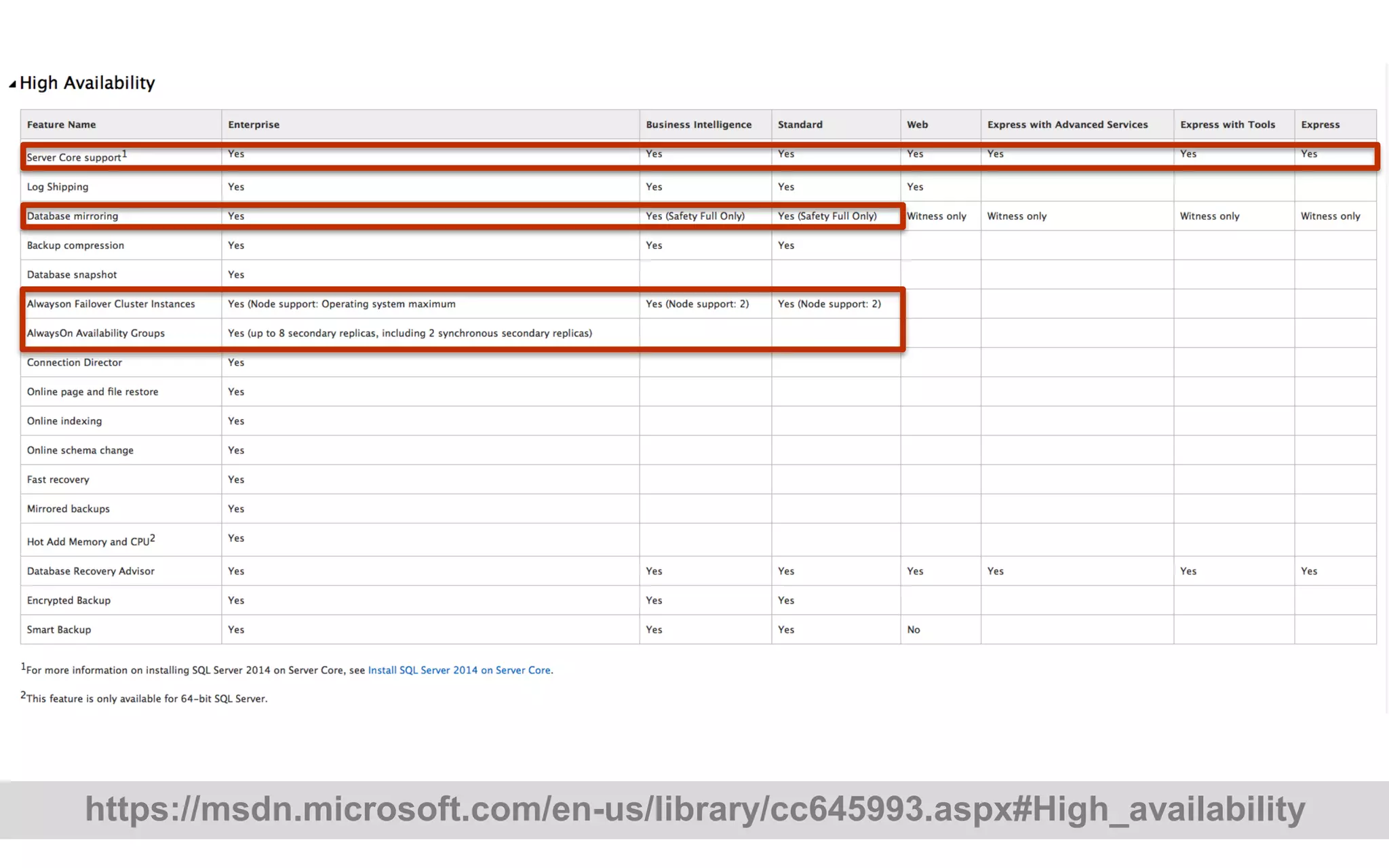
features
high
availability
https://msdn.microsoft.com/en-us/library/cc645993.aspx#High_availability
ALWAYSON AVAILABILITY
GROUPS
introduced in SQL Server 2012
ALWAYSON AVAILABILITY
GROUPS
*DATABASE (group) protection
can either be an HA and/or DR solution
ALWAYSON AVAILABILITY
GROUPS
*DATABASE (group) protection
combination of
DATABASE MIRRORING
&
FAILOVER CLUSTERING
ALWAYSON AVAILABILITY
GROUPS
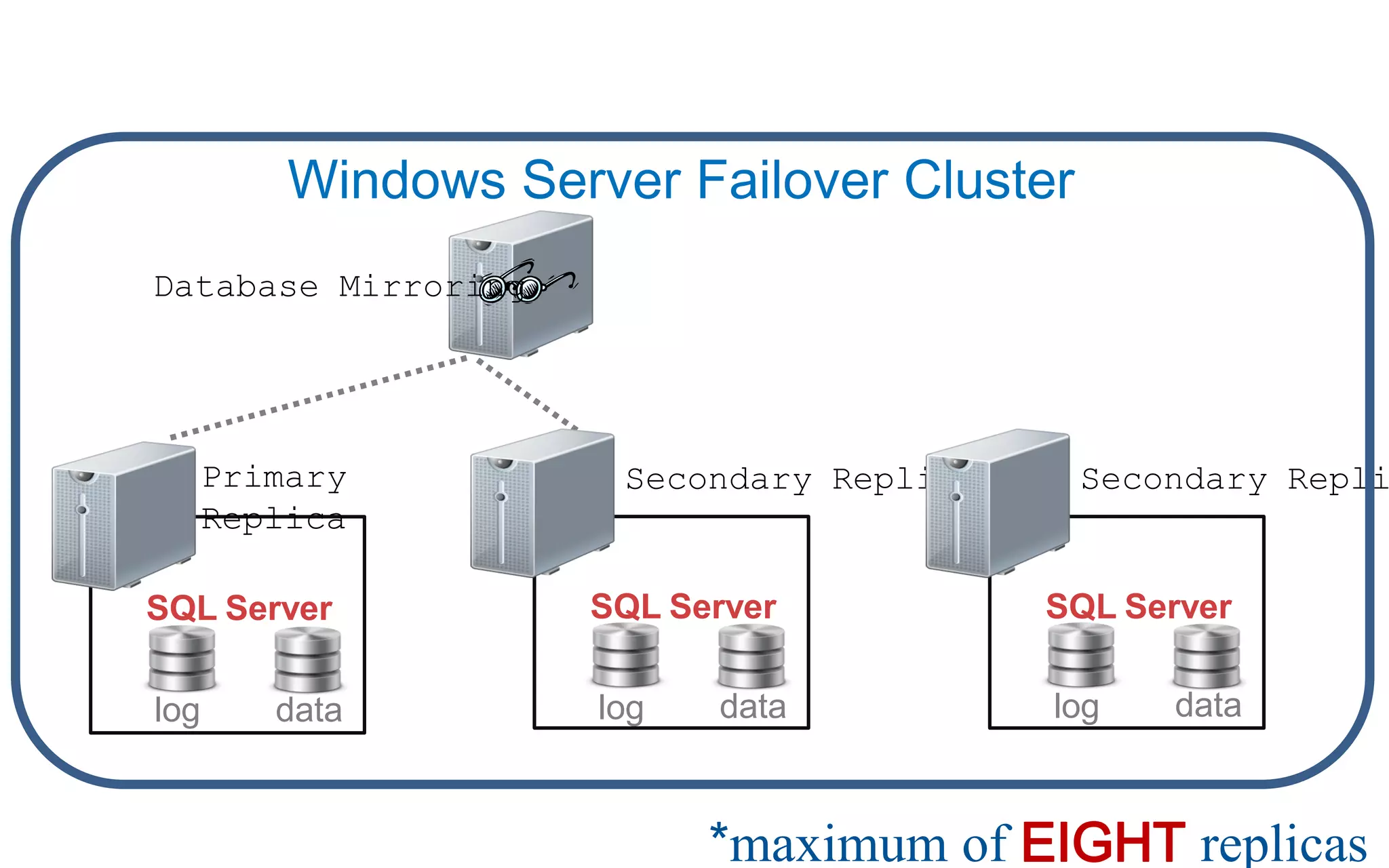
SQL Server
log data
SQL Server
log data
Secondary ReplicaPrimary
Replica
SQL Server
log data
Secondary Repli
*maximum of EIGHT replicas
Windows Server Failover Cluster
Database Mirroring
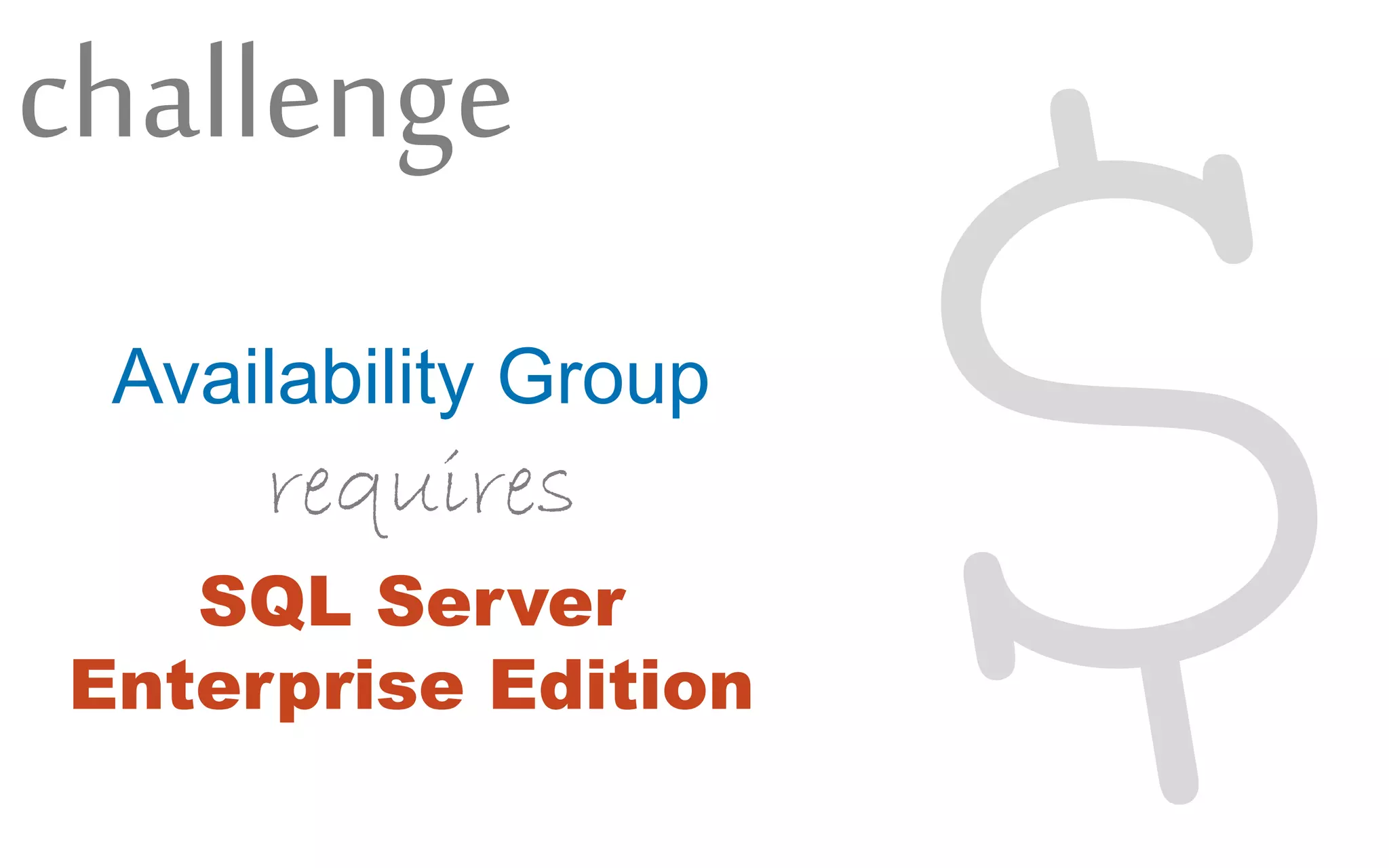
challenge
Availability Group
SQL Server
Enterprise Edition
requires
FAILOVER CLUSTERING
*INSTANCE protection
FAILOVER CLUSTERING
can either be an HA and/or DR solution
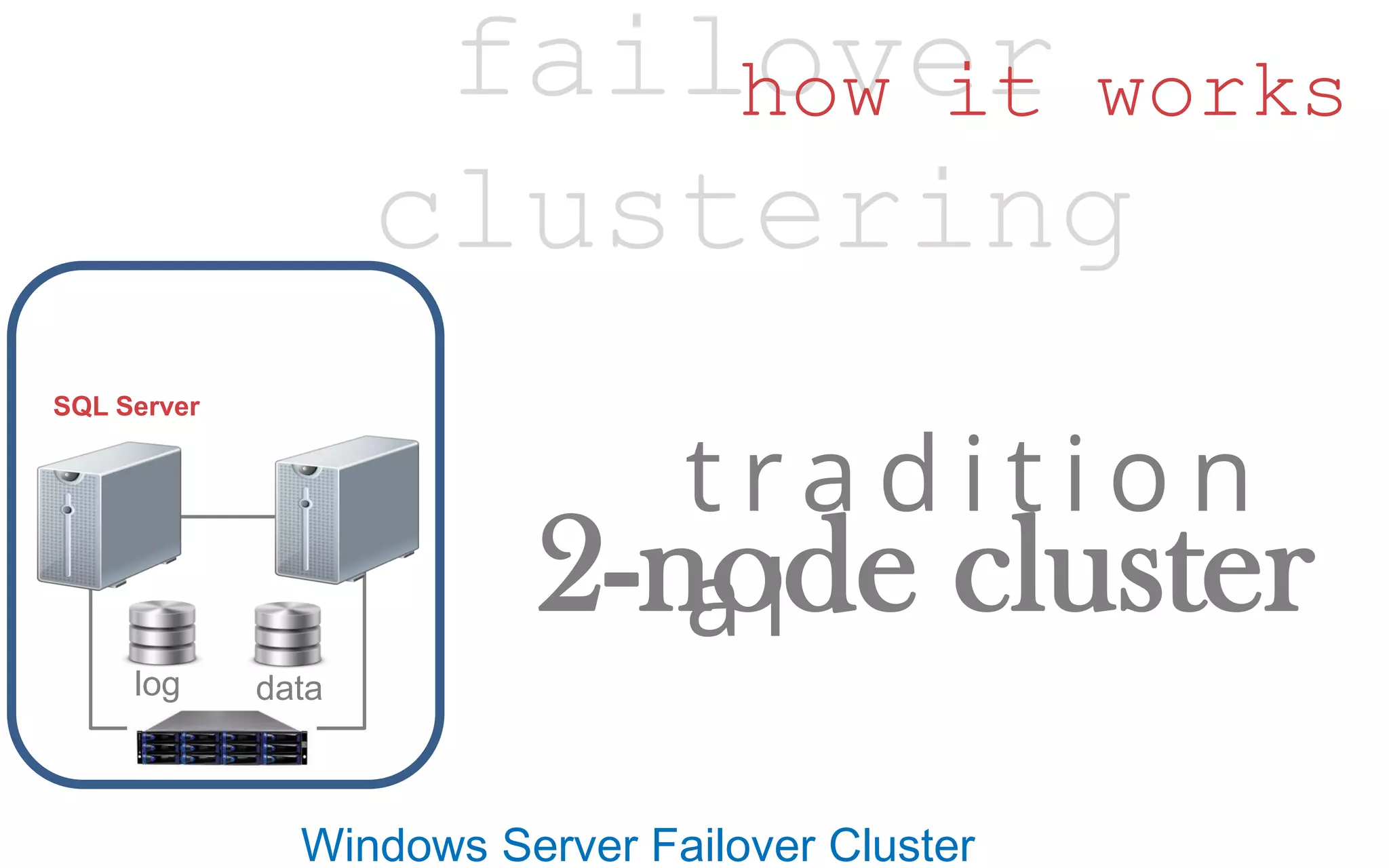
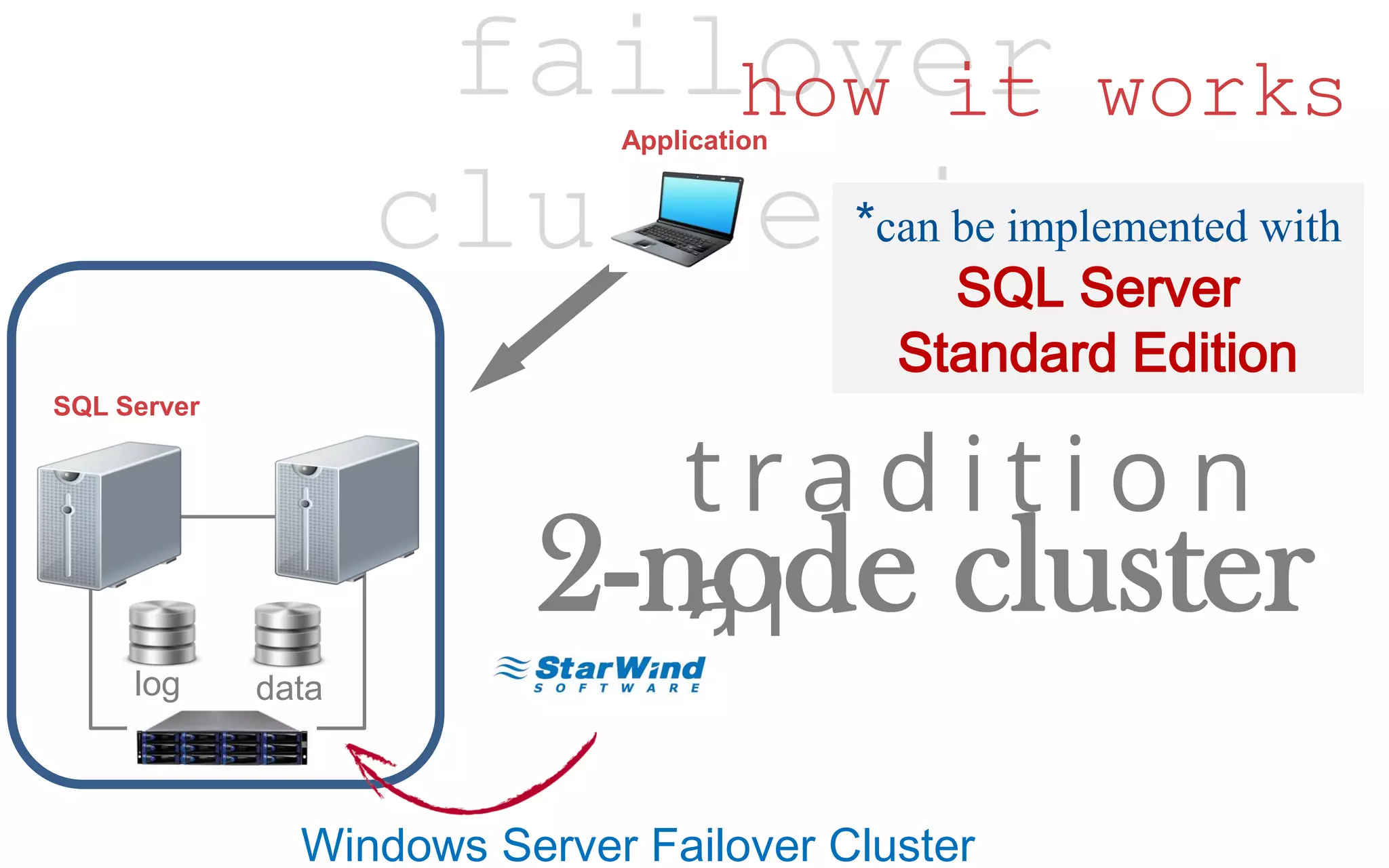
log data
failover
clustering
how it works
Windows Server Failover Cluster
SQL Server
2-node cluster
t r a d i t i o n
a l
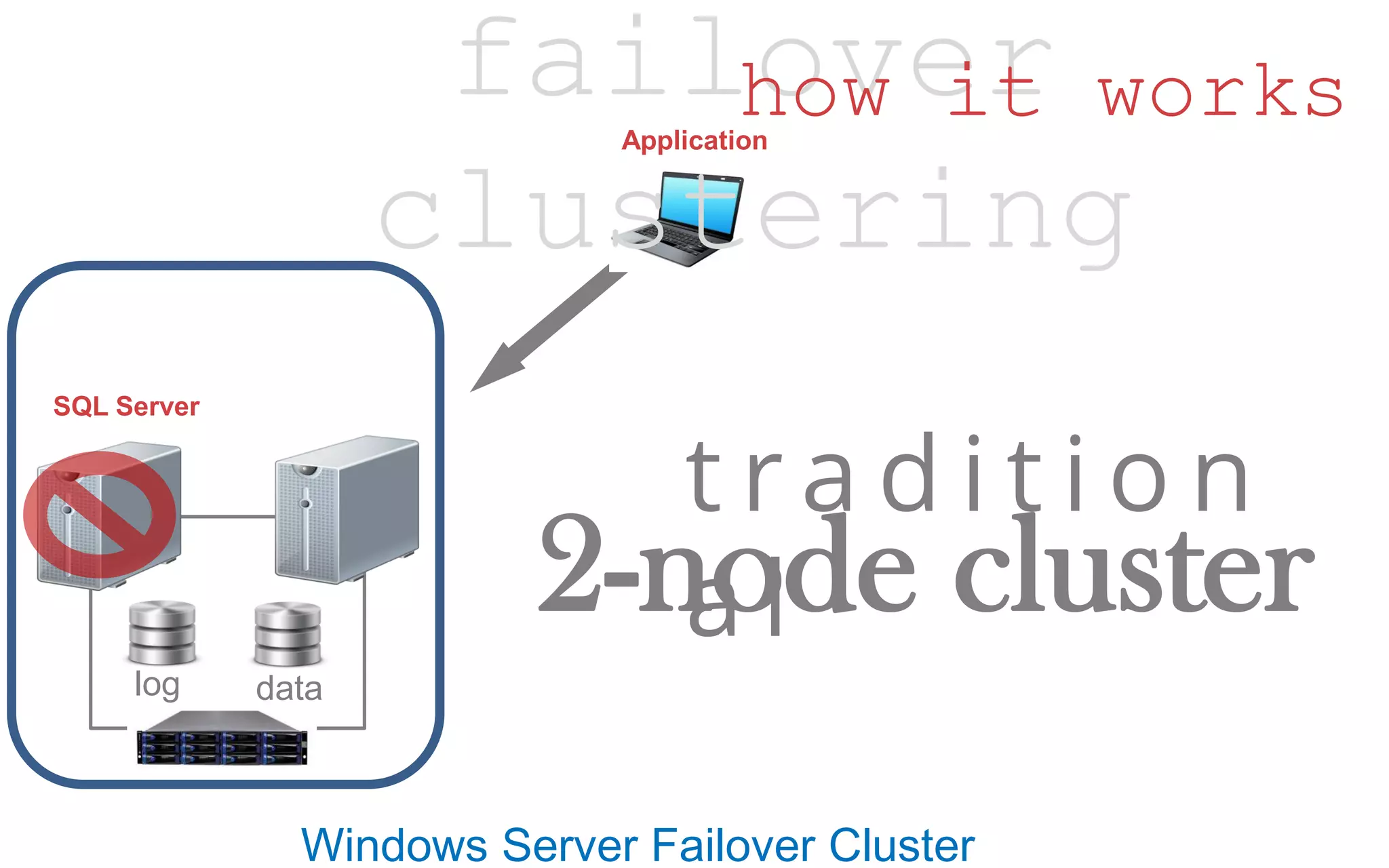
failover
clustering
how it works
Windows Server Failover Cluster
SQL Server
Application
2-node cluster
t r a d i t i o n
a l
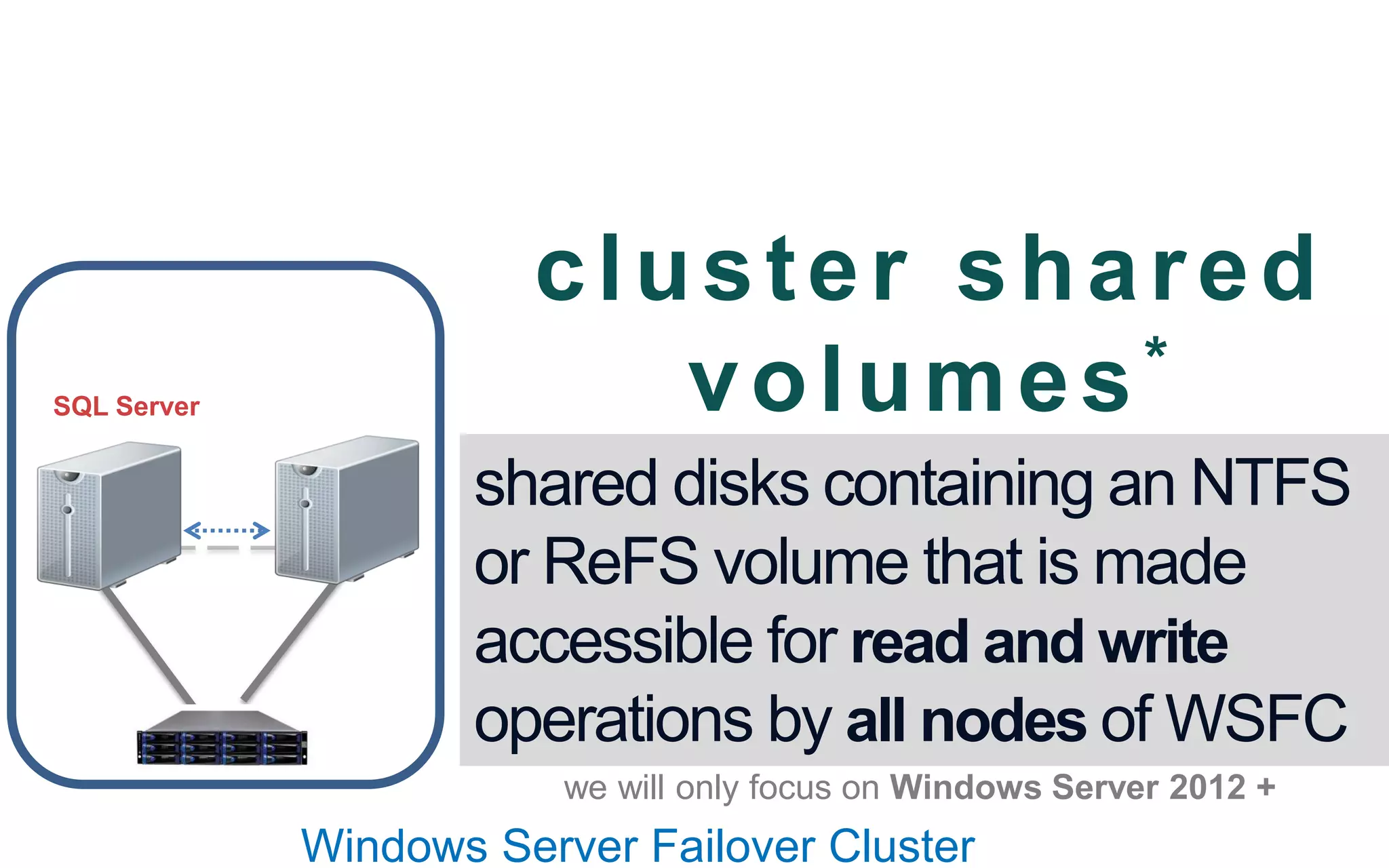
log data
Windows Server Failover Cluster
shared disks containing an NTFS
or ReFS volume that is made
accessible for read and write
operations by all nodes of WSFC
cluster shared
volumes*
we will only focus on Windows Server 2012 +
SQL Server
Windows Server Failover Cluster
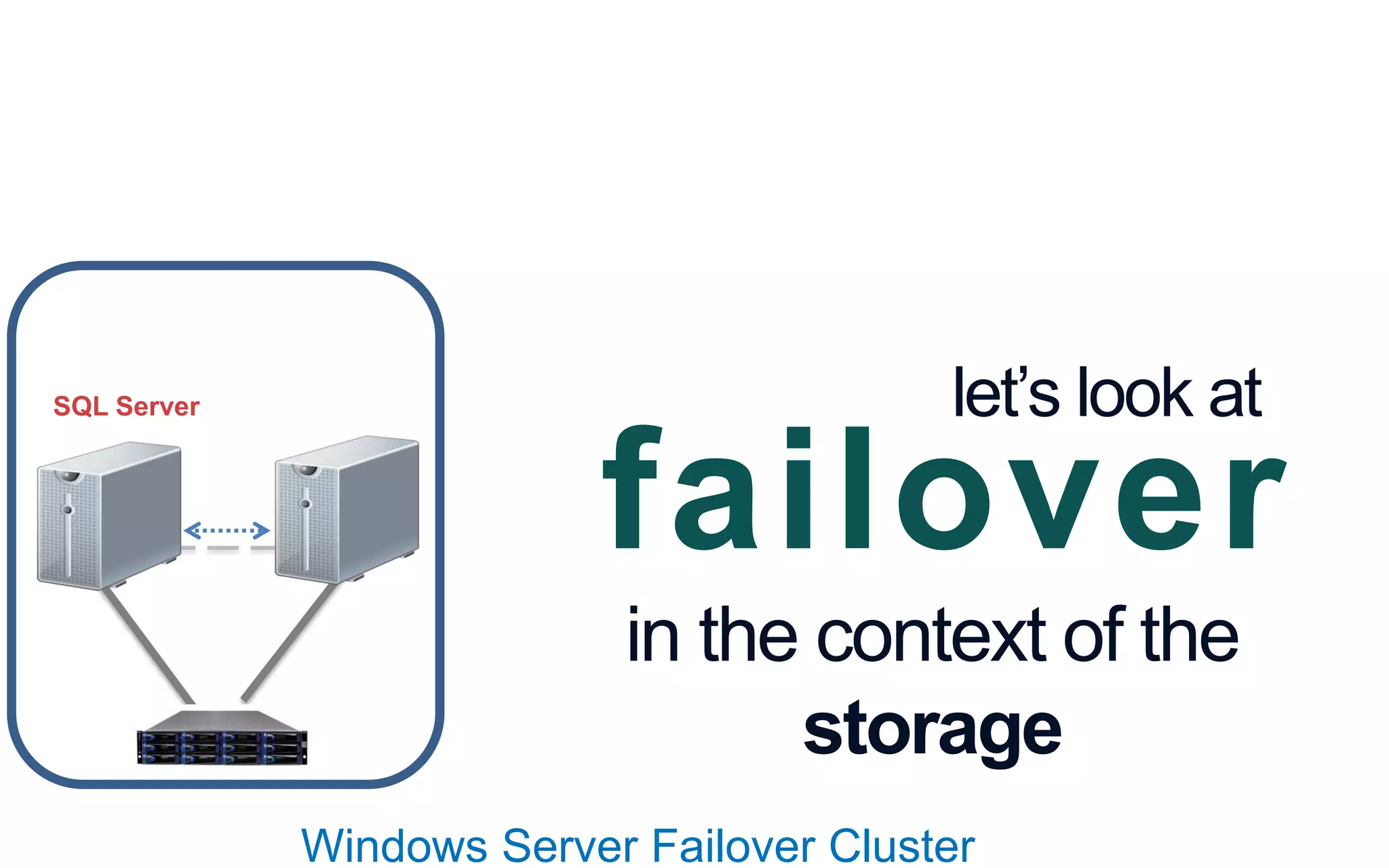
failover
let’s look at
in the context of the
storage
SQL Server
Windows Server Failover Cluster
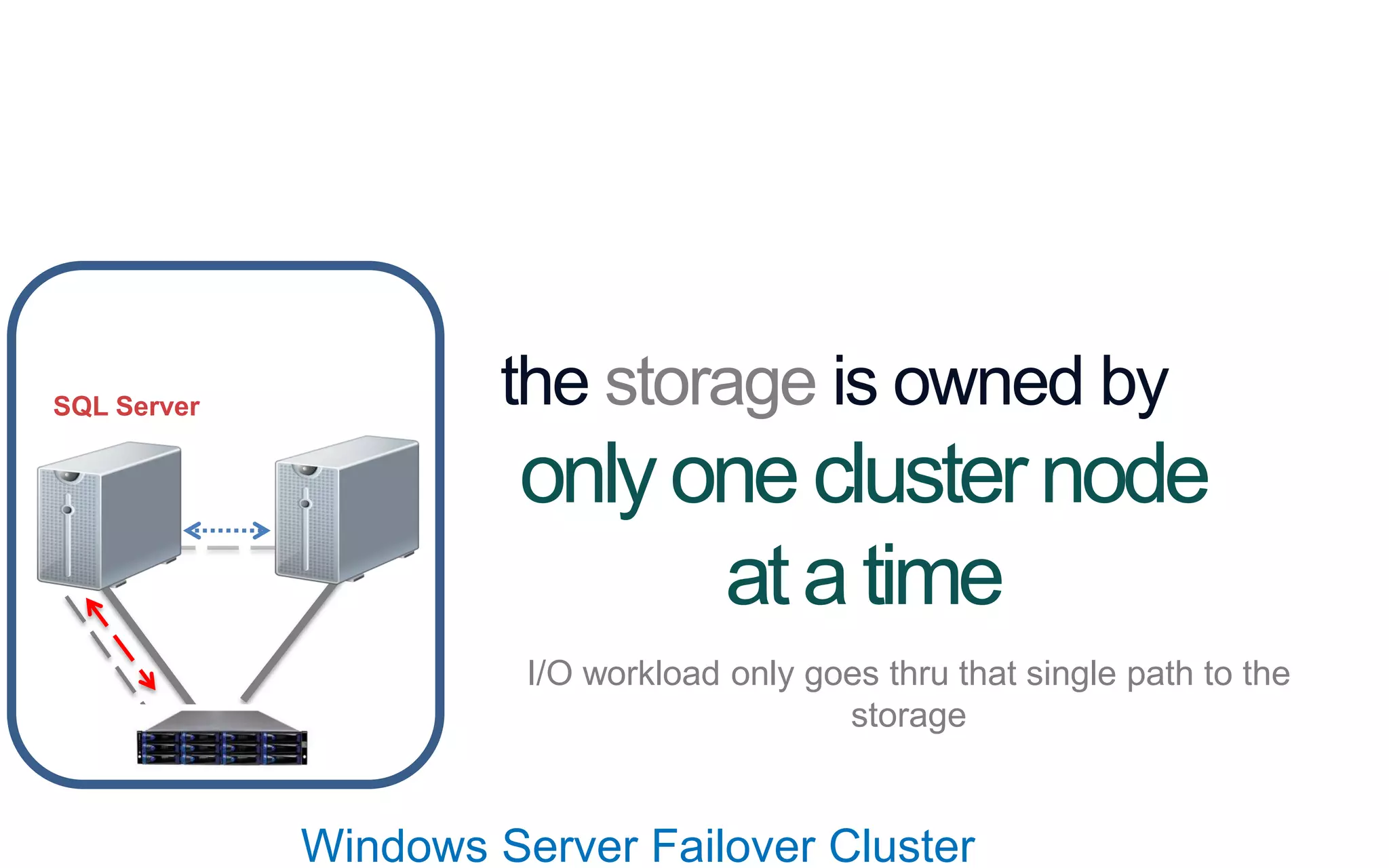
the storage is owned by
I/O workload only goes thru that single path to the
storage
onlyoneclusternode
atatime
SQL Server
Windows Server Failover Cluster
SQL Server
AD/DNS
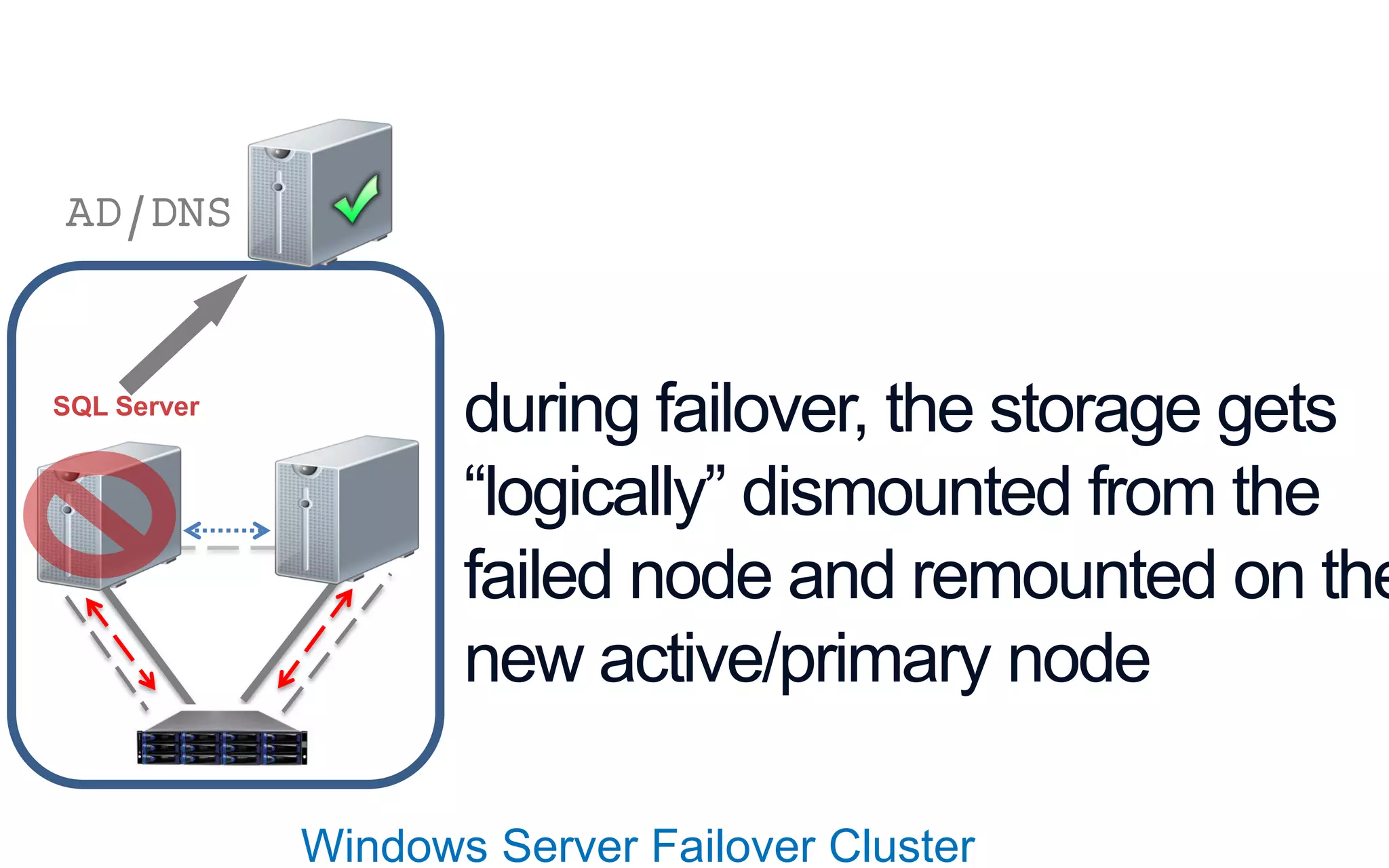
during failover, the storage gets
“logically” dismounted from the
failed node and remounted on the
new active/primary node
Windows Server Failover Cluster
SQL Server
AD/DNS
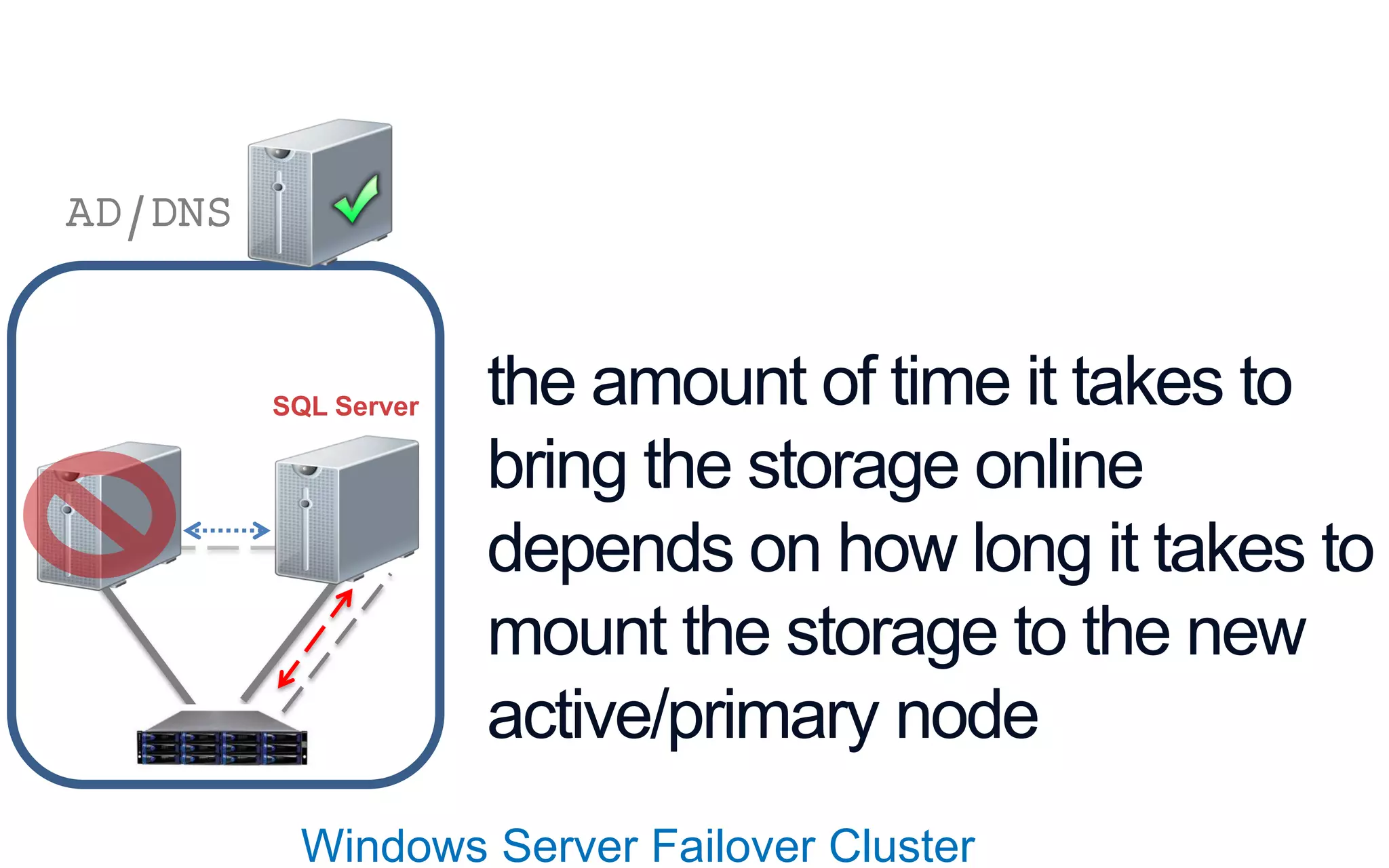
the amount of time it takes to
bring the storage online
depends on how long it takes to
mount the storage to the new
active/primary node
SQL Server
Windows Server Failover Cluster
SQL Server
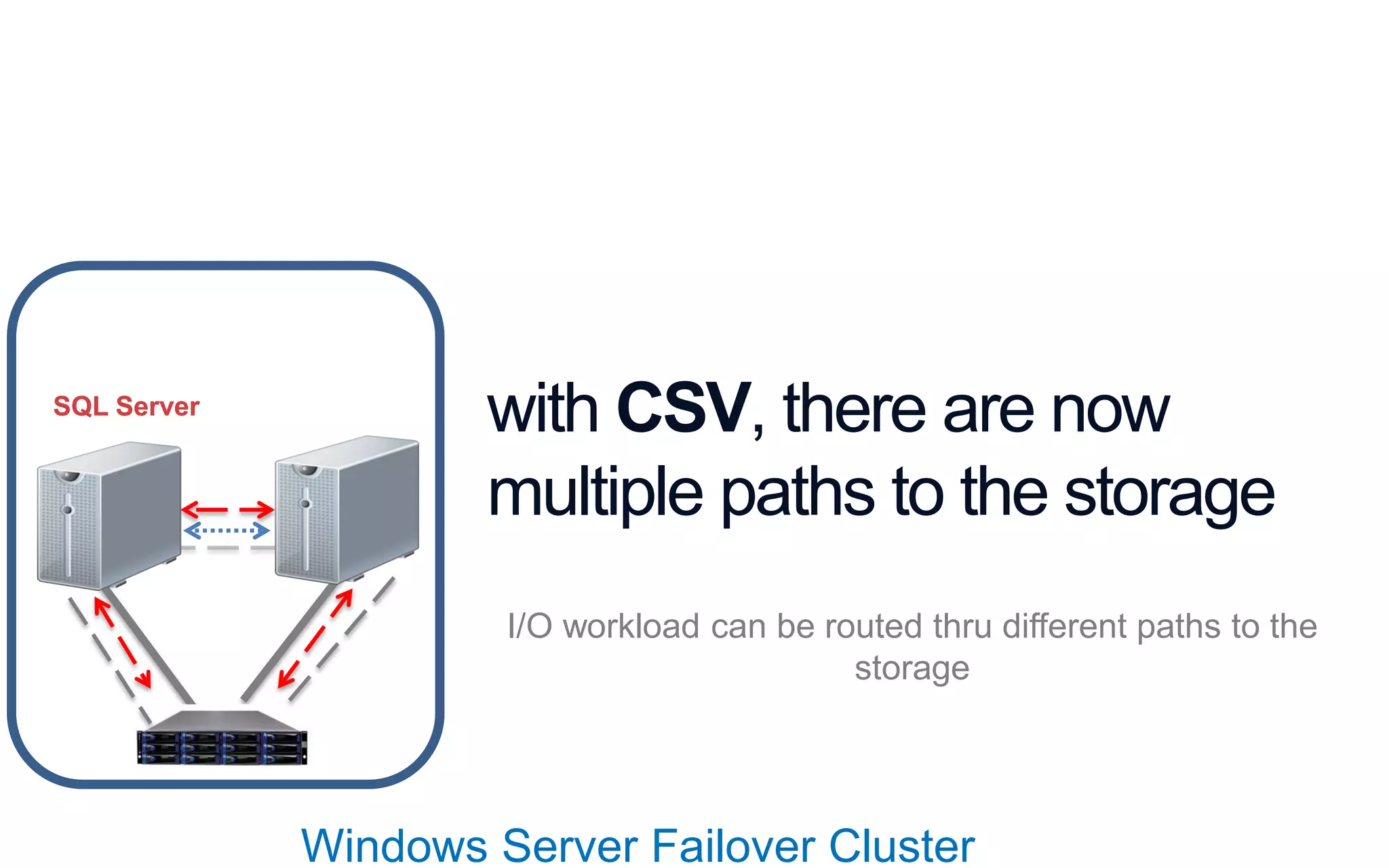
with CSV, there are now
multiple paths to the storage
I/O workload can be routed thru different paths to the
storage
Windows Server Failover Cluster
SQL Server
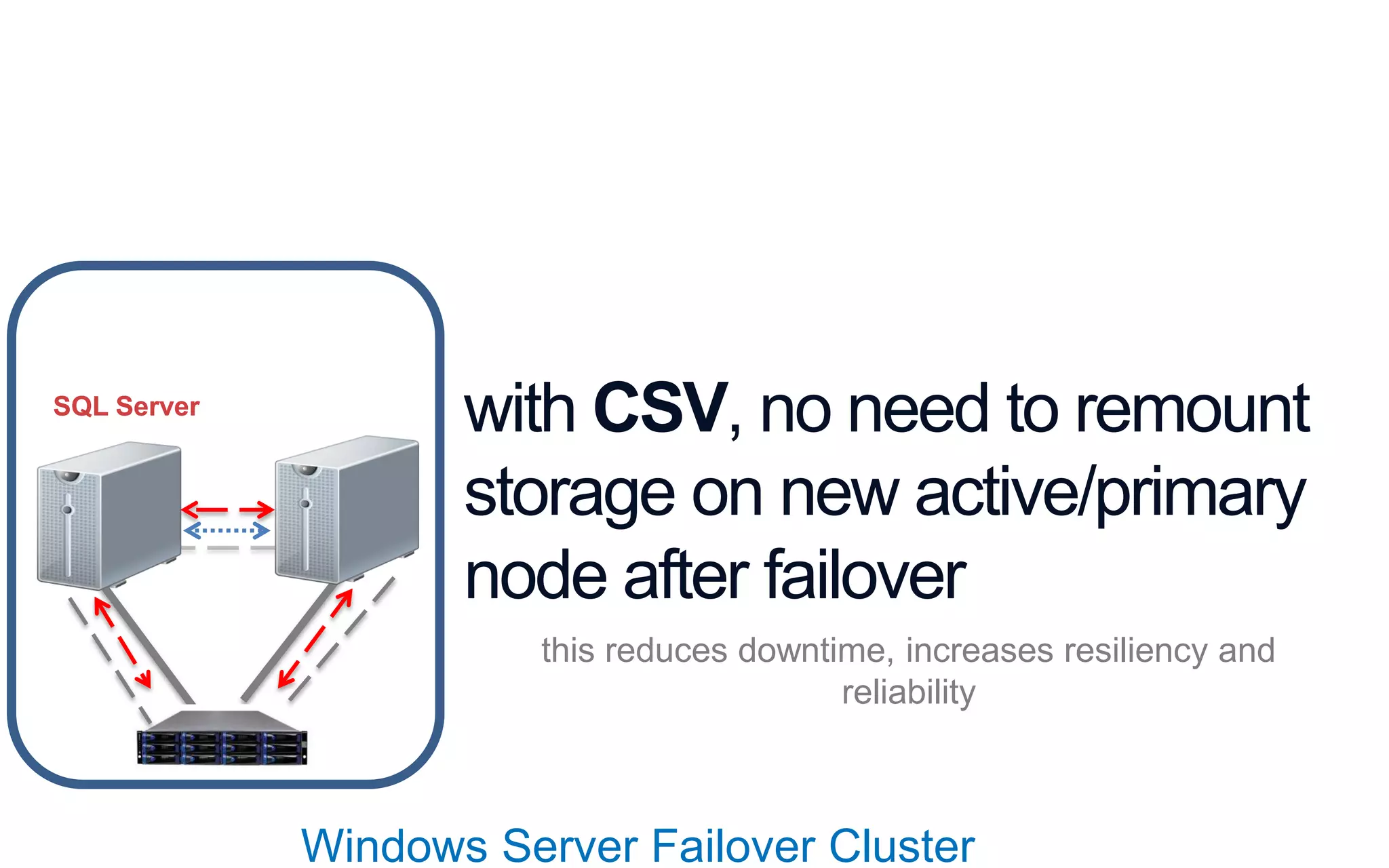
with CSV, no need to remount
storage on new active/primary
node after failover
this reduces downtime, increases resiliency and
reliability
SQL Server
Windows Server Failover Cluster
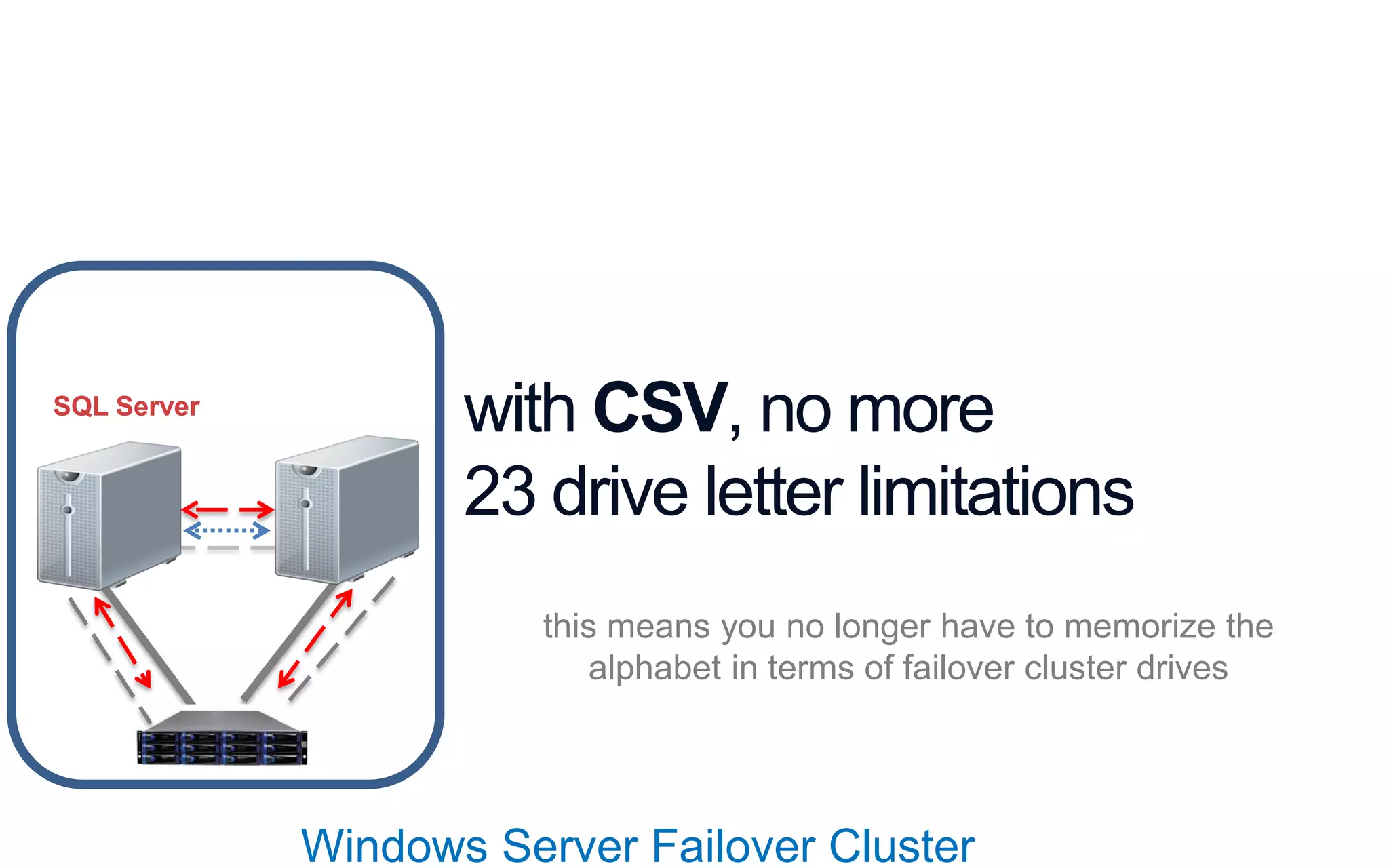
with CSV, no more
23 drive letter limitations
this means you no longer have to memorize the
alphabet in terms of failover cluster drives
SQL ServerSQL Server
Windows Server Failover Cluster
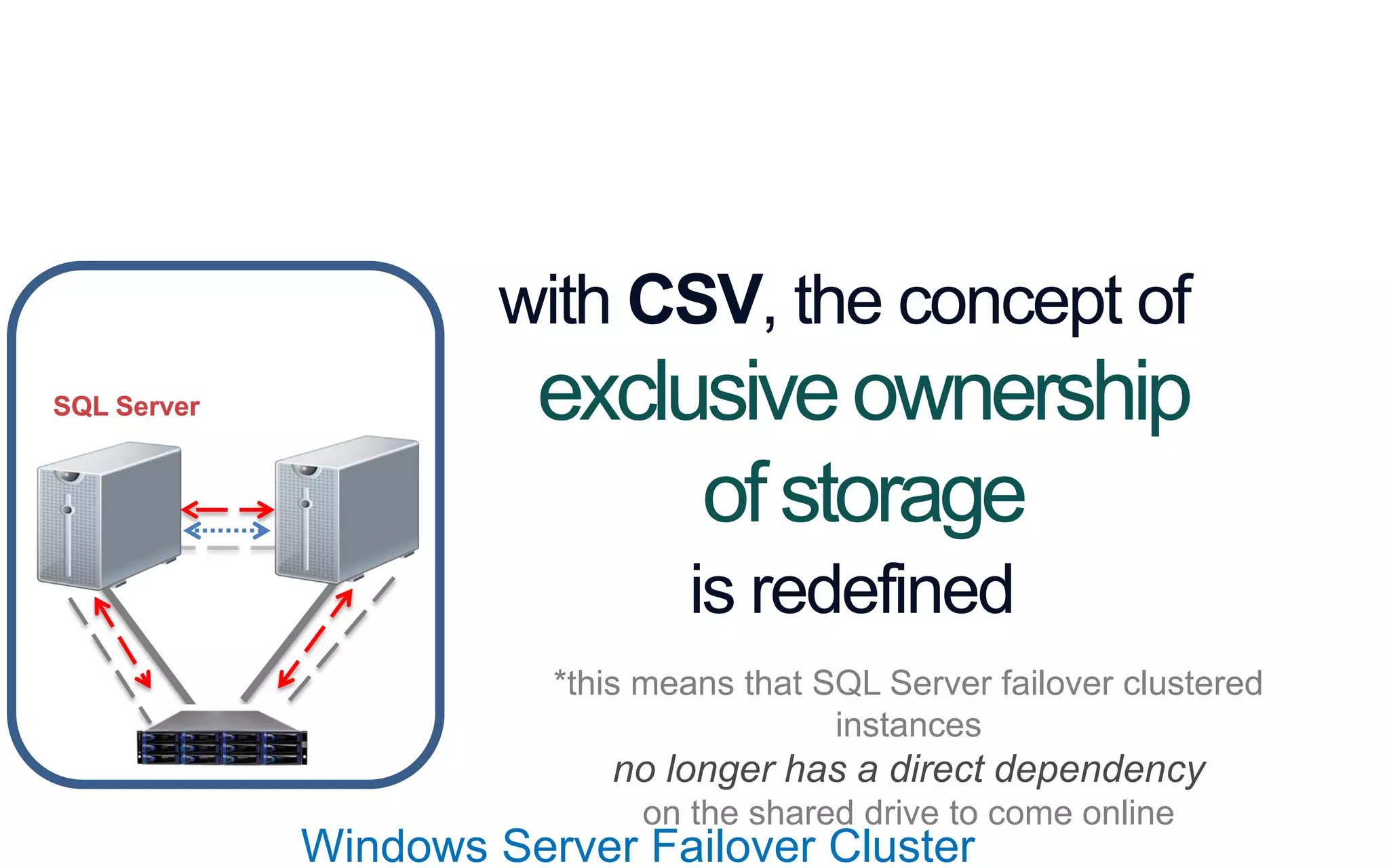
with CSV, the concept of
*this means that SQL Server failover clustered
instances
no longer has a direct dependency
on the shared drive to come online
exclusiveownership
ofstorage
is redefined
SQL ServerSQL Server
failover
clustering
how it works
Windows Server Failover Cluster
2-node cluster
t r a d i t i o n
a l
Application
*can be implemented with
SQL Server
Standard Edition
log data
SQL Server
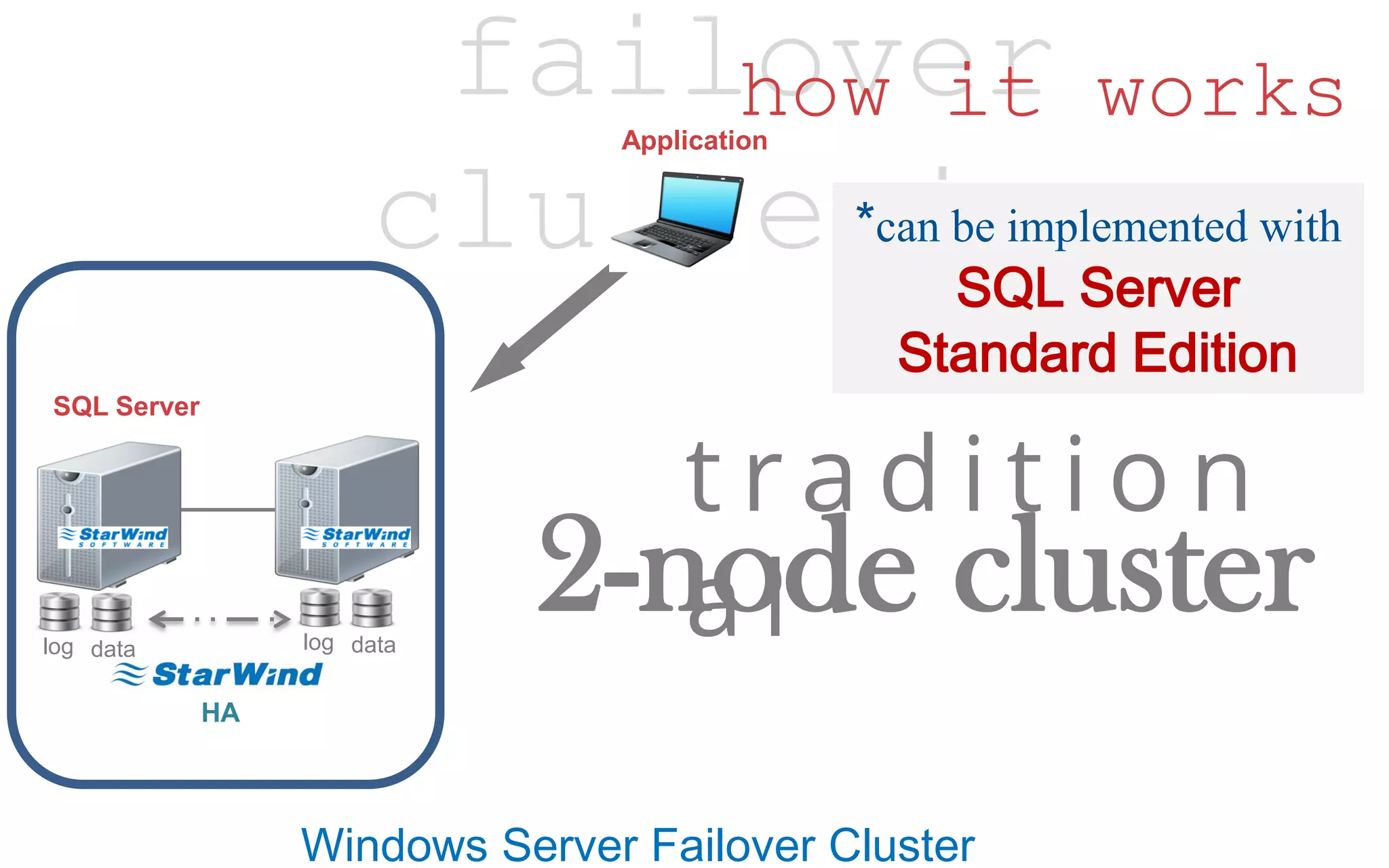
failover
clustering
how it works
Windows Server Failover Cluster
2-node cluster
t r a d i t i o n
a l
Application
*can be implemented with
SQL Server
Standard Edition
log data log data
HA
SQL Server
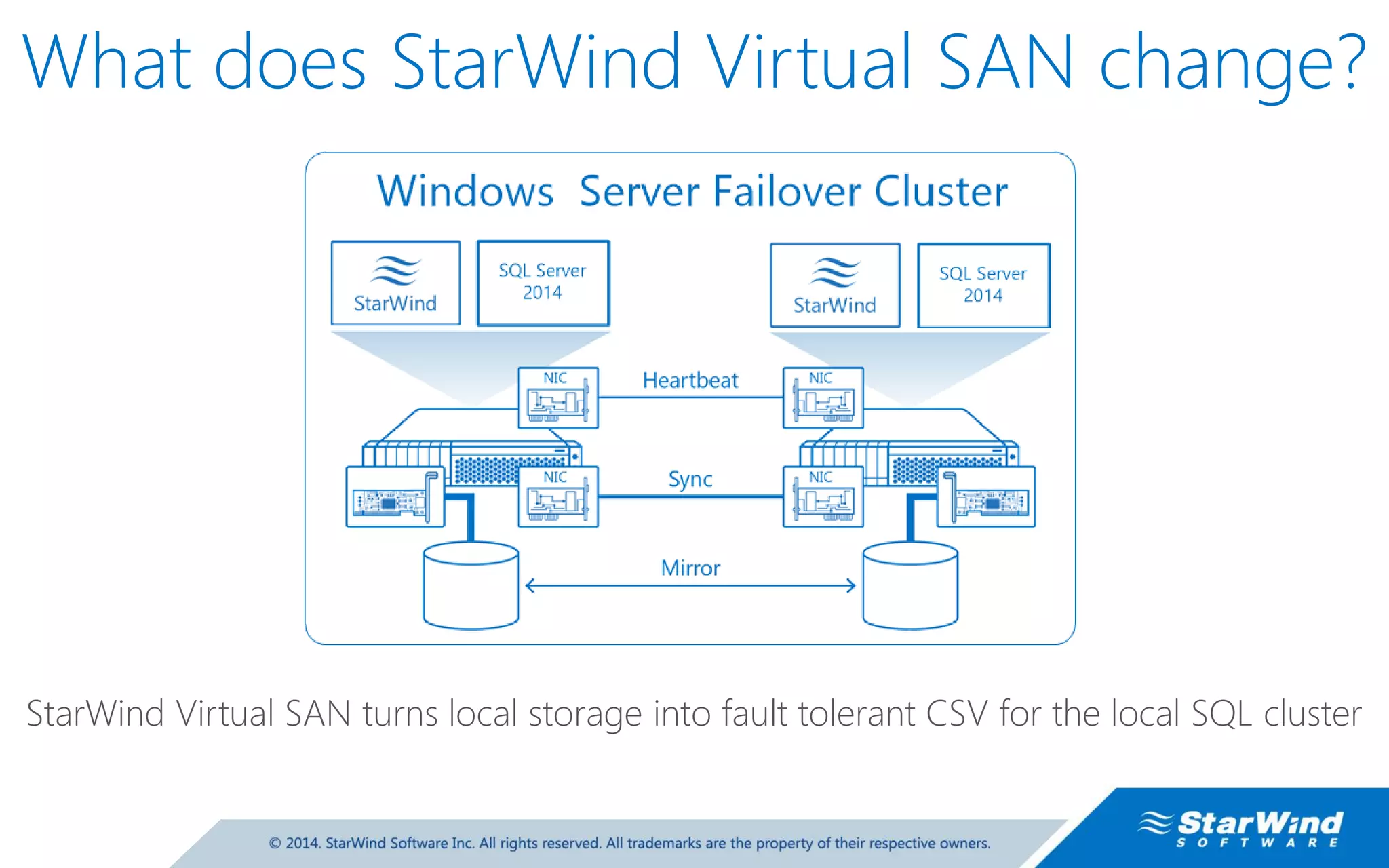
What does StarWind Virtual SAN change?
StarWind Virtual SAN turns local storage into fault tolerant CSV for the local SQL cluster
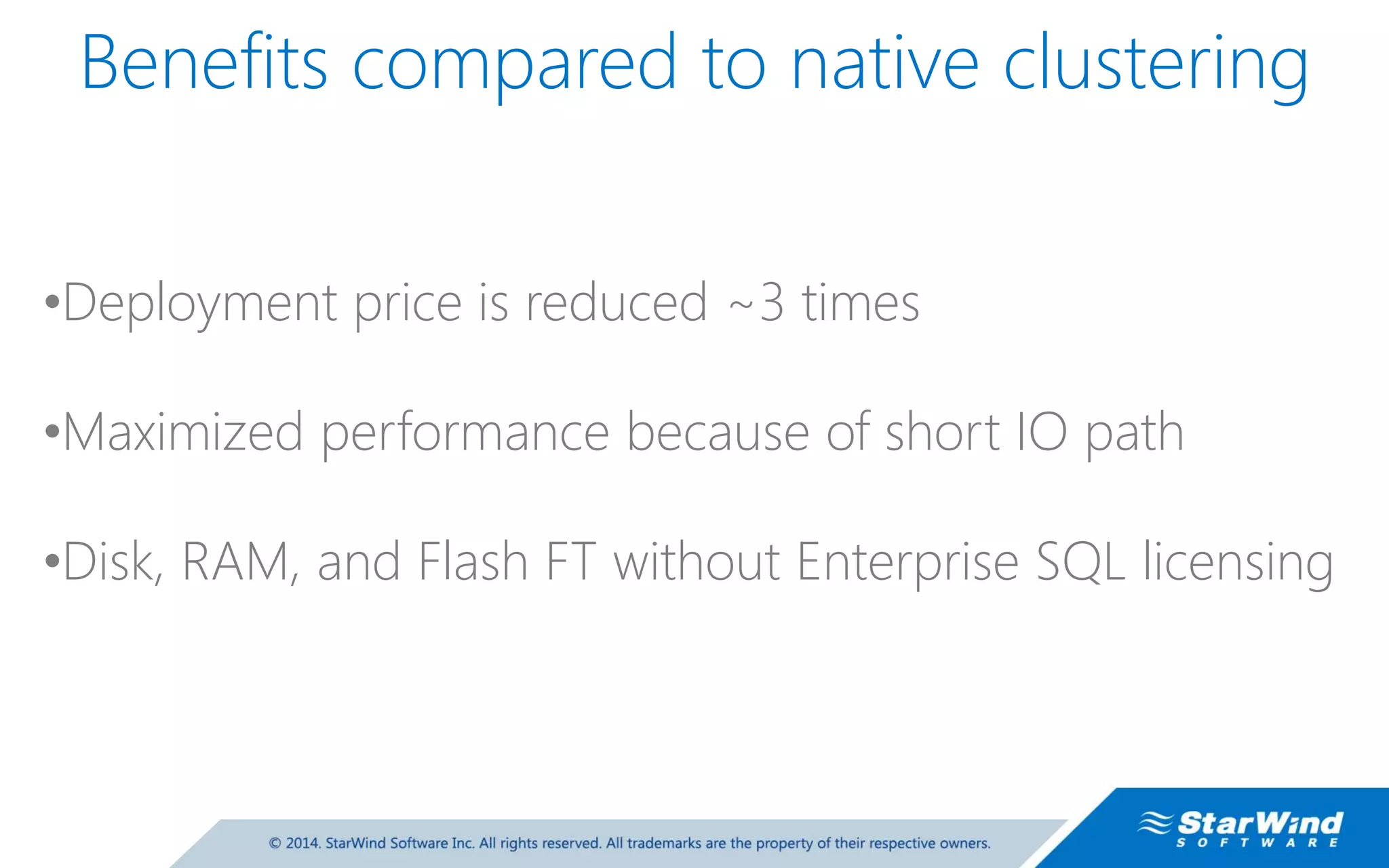
•Deployment price is reduced ~3 times
•Maximized performance because of short IO path
•Disk, RAM, and Flash FT without Enterprise SQL licensing
Benefits compared to native clustering
demo
Configure SQL Server 2014
Failover Clustered Instances to
use Cluster Shared Volumes
Edwin Sarmiento
http://www.EdwinMSarmiento.com
edwin@EdwinMSarmiento.com
@EdwinMSarmiento
http://ca.linkedin.com/in/EdwinMSa
rmiento
Microsoft MVP/Microsoft Certified Master:

Critical SQL Server Databases: Provide HA with SQL Server Failover Clustering and Cluster Shared Volumes