Highlights Digital Reading Platform
The Power of Reading
2
Highlights for Children’s Mission
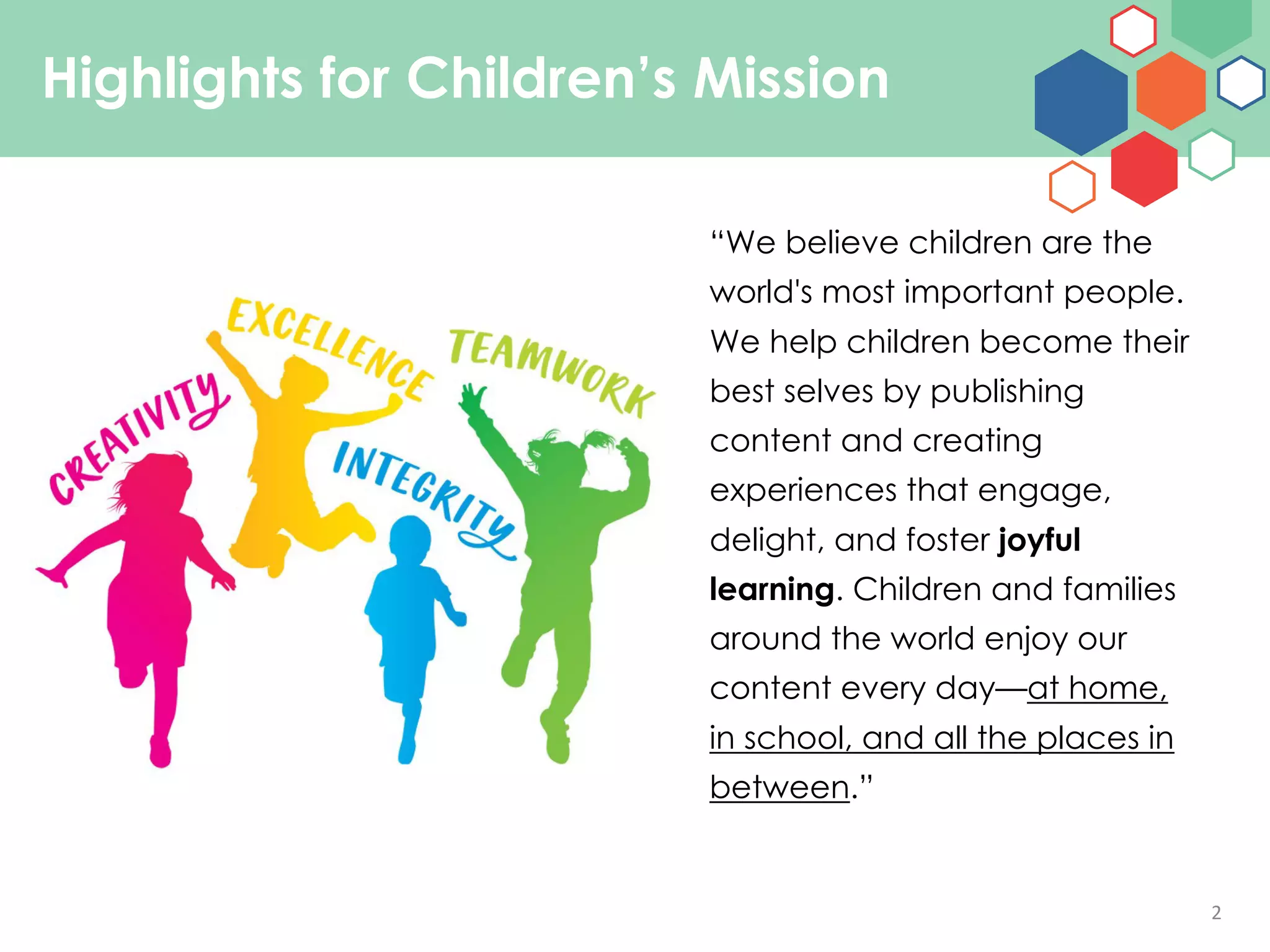
“We believe children are the
world's most important people.
We help children become their
best selves by publishing
content and creating
experiences that engage,
delight, and foster joyful
learning. Children and families
around the world enjoy our
content every day—at home,
in school, and all the places in
between.”
3
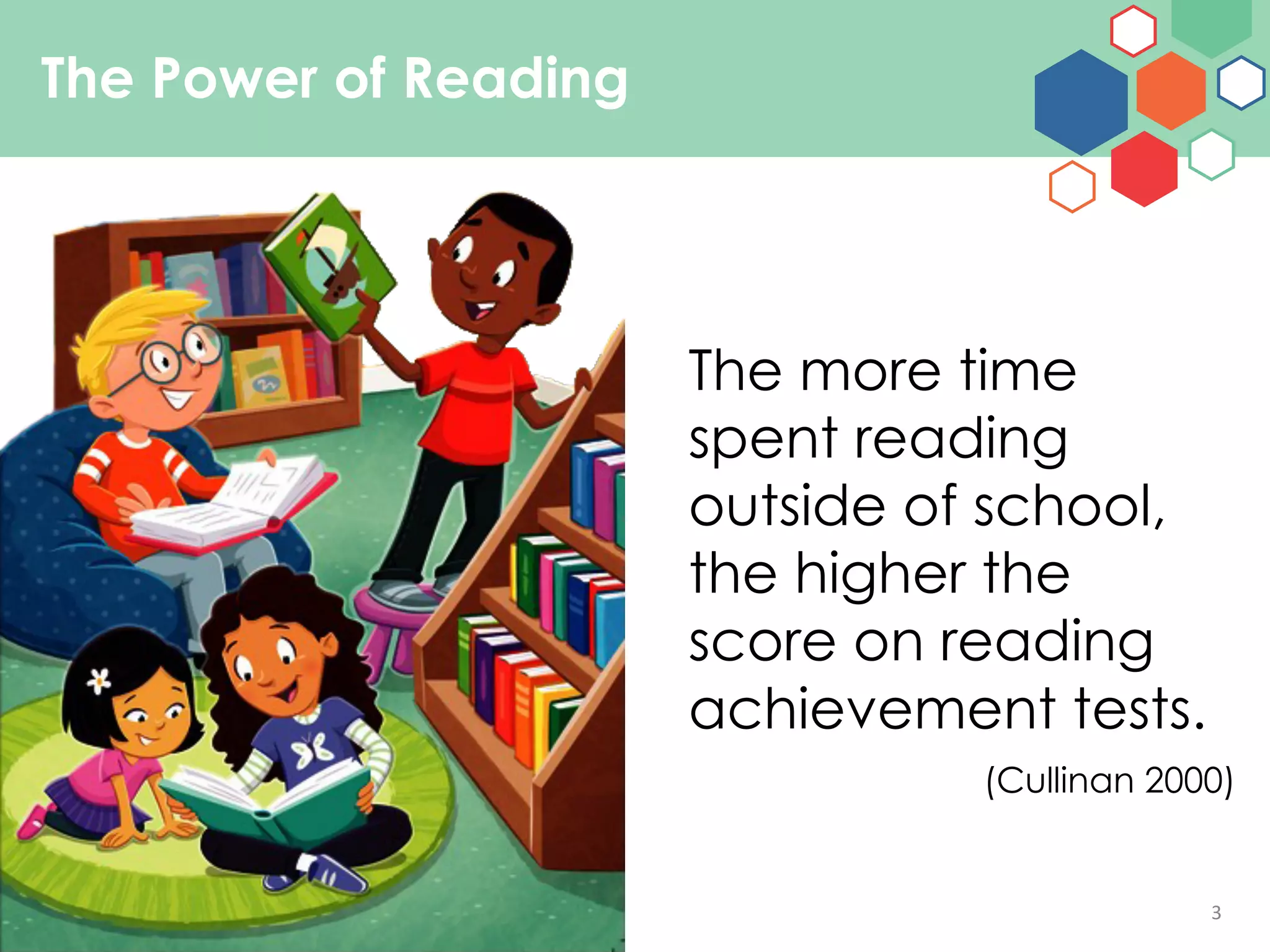
The more time
spent reading
outside of school,
the higher the
score on reading
achievement tests.
(Cullinan 2000)
The Power of Reading
4
How do children learn to read?
Reading is a product of:
Decoding (word recognition)
Language comprehension
Reading fluency is defined as the combined ability
to read the text and understand what is read
5
How do children learn to read?
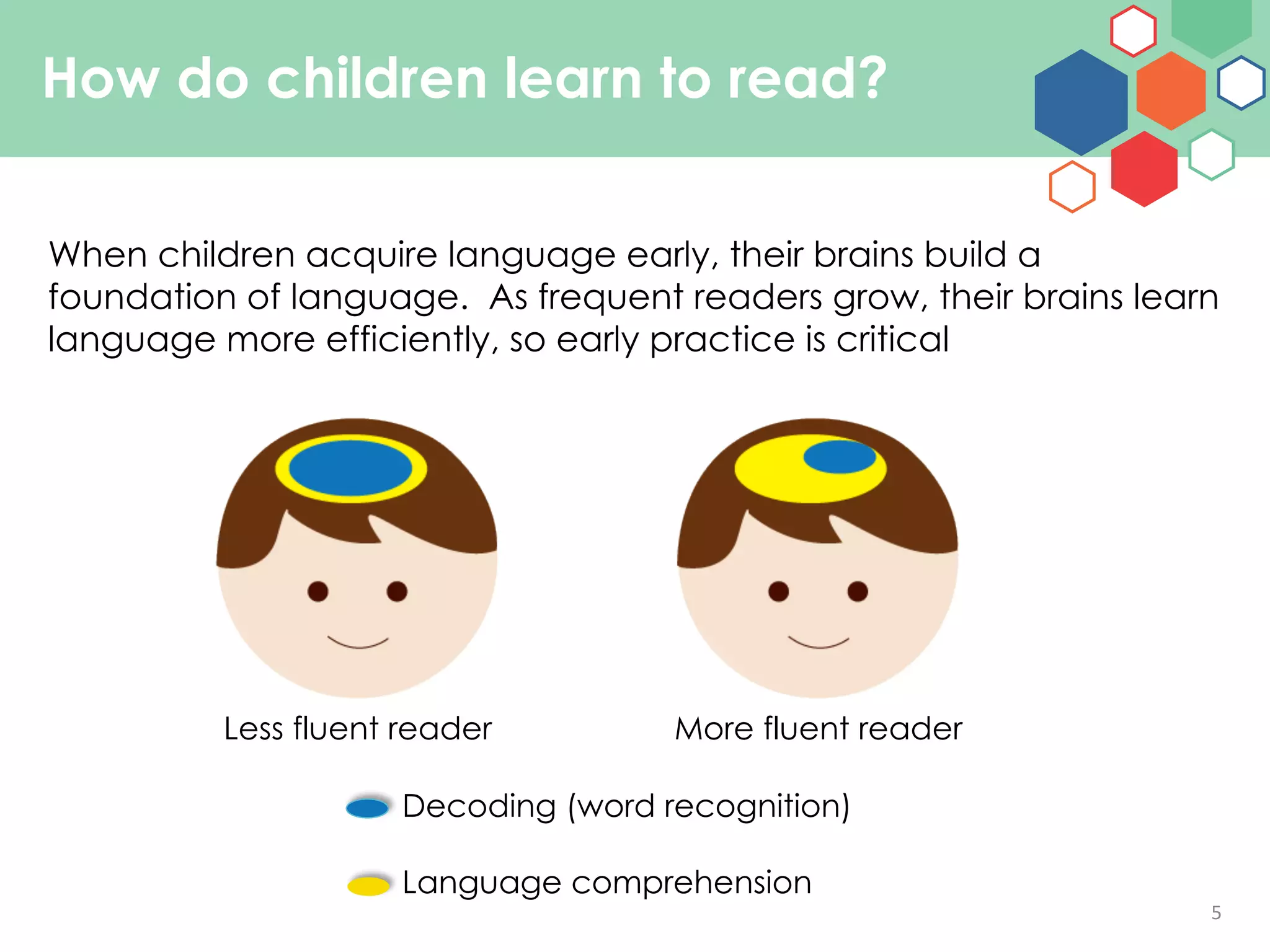
When children acquire language early, their brains build a
foundation of language. As frequent readers grow, their brains learn
language more efficiently, so early practice is critical
Decoding (word recognition)
Language comprehension
Less fluent reader More fluent reader
6
How the brain reads
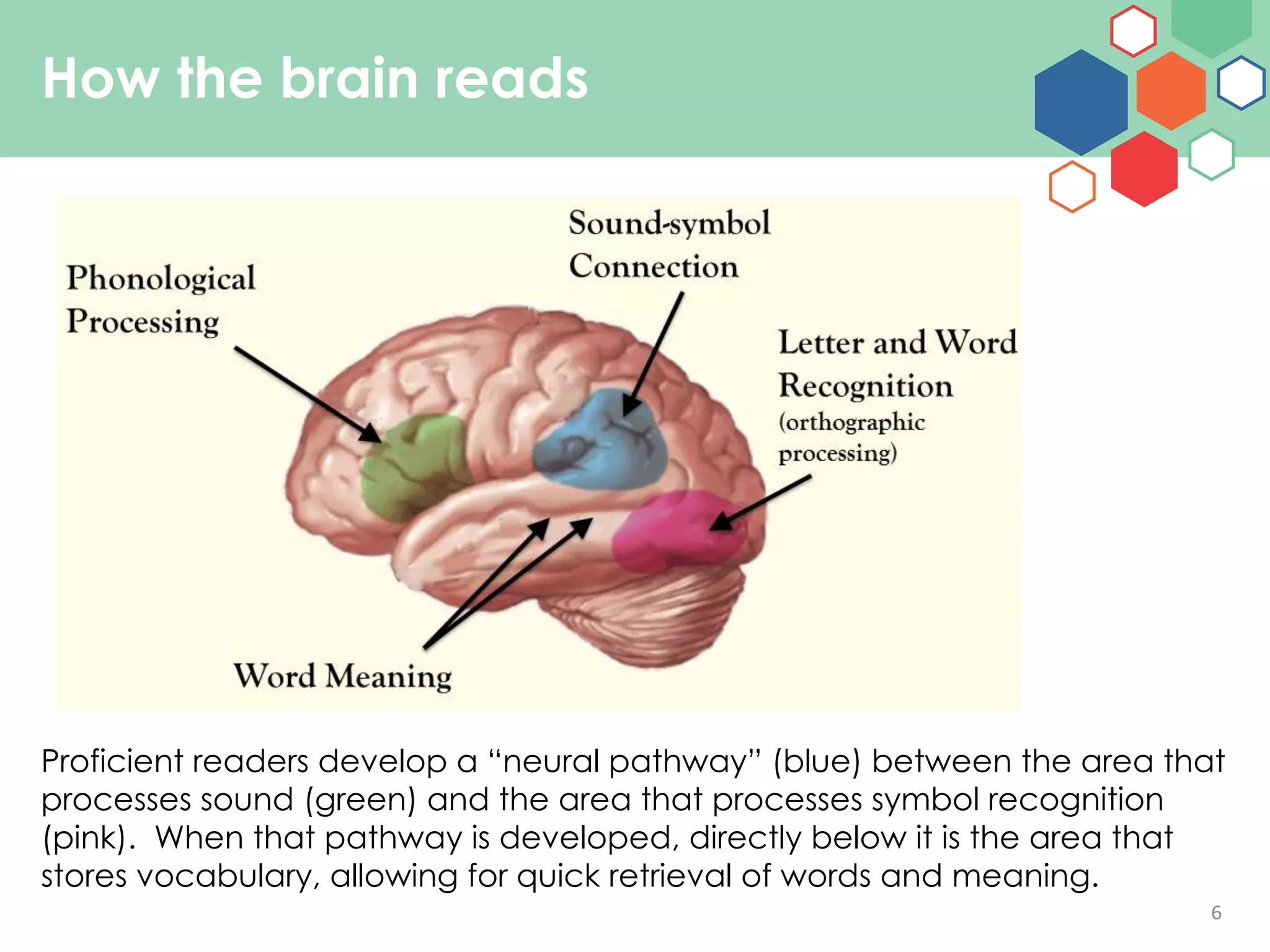
Proficient readers develop a “neural pathway” (blue) between the area that
processes sound (green) and the area that processes symbol recognition
(pink). When that pathway is developed, directly below it is the area that
stores vocabulary, allowing for quick retrieval of words and meaning.
7
How the brain reads
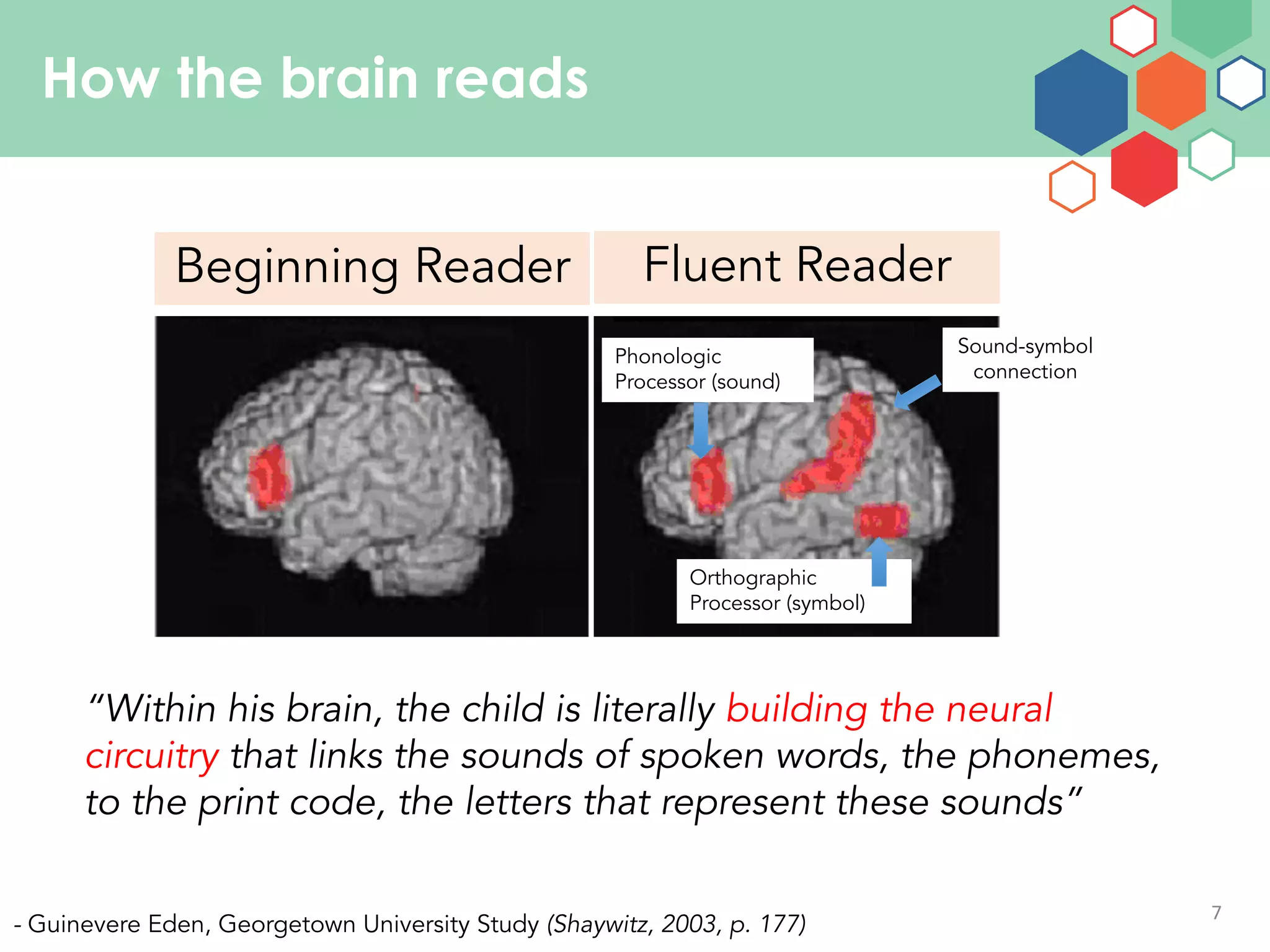
Orthographic
Processor (symbol)
Phonologic
Processor (sound)
Fluent ReaderBeginning Reader
Sound-symbol
connection
“Within his brain, the child is literally building the neural
circuitry that links the sounds of spoken words, the phonemes,
to the print code, the letters that represent these sounds”
- Guinevere Eden, Georgetown University Study (Shaywitz, 2003, p. 177)
8
Development of vocabulary
--Hart, B. & Risley, T. Meaningful Differences in the Everyday Experiences of Young American Children.
Baltimore, MD:; Paul H. Brookes, 1995.
The number of words heard
The richness of language heard
Vocabulary is developed based on
Exposure to many words, through both reading books and spoken
conversation, is key to acquiring a deep vocabulary when learning a
language
9
Development of comprehension
• Readers must be able to get the text off the page to
have sufficient cognitive energy to devote to
reading.
• While developing word-recognition skills and fluency,
a young reader needs to develop a wide and broad
base of vocabulary, oral language, and
background knowledge.
What does research say about
comprehension in early reading?
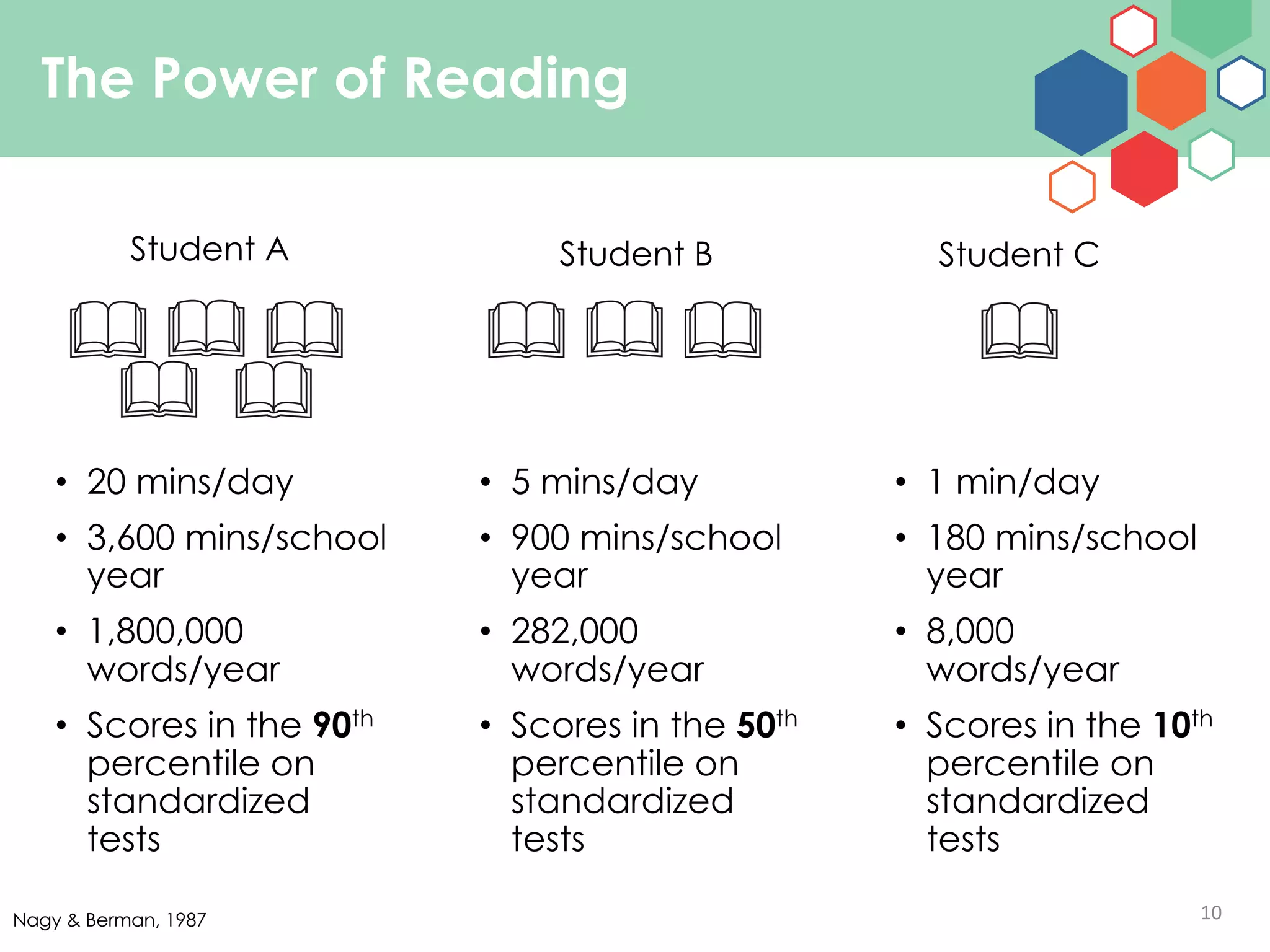
Student A
10
The Power of Reading
Student B
• 1 min/day
• 180 mins/school
year
• 8,000
words/year
• Scores in the 10th
percentile on
standardized
tests
• 20 mins/day
• 3,600 mins/school
year
• 1,800,000
words/year
• Scores in the 90th
percentile on
standardized
tests
• 5 mins/day
• 900 mins/school
year
• 282,000
words/year
• Scores in the 50th
percentile on
standardized
tests
Student C
Nagy & Berman, 1987
11
Benefits of Reading
Improve children’s lifetime success in English language
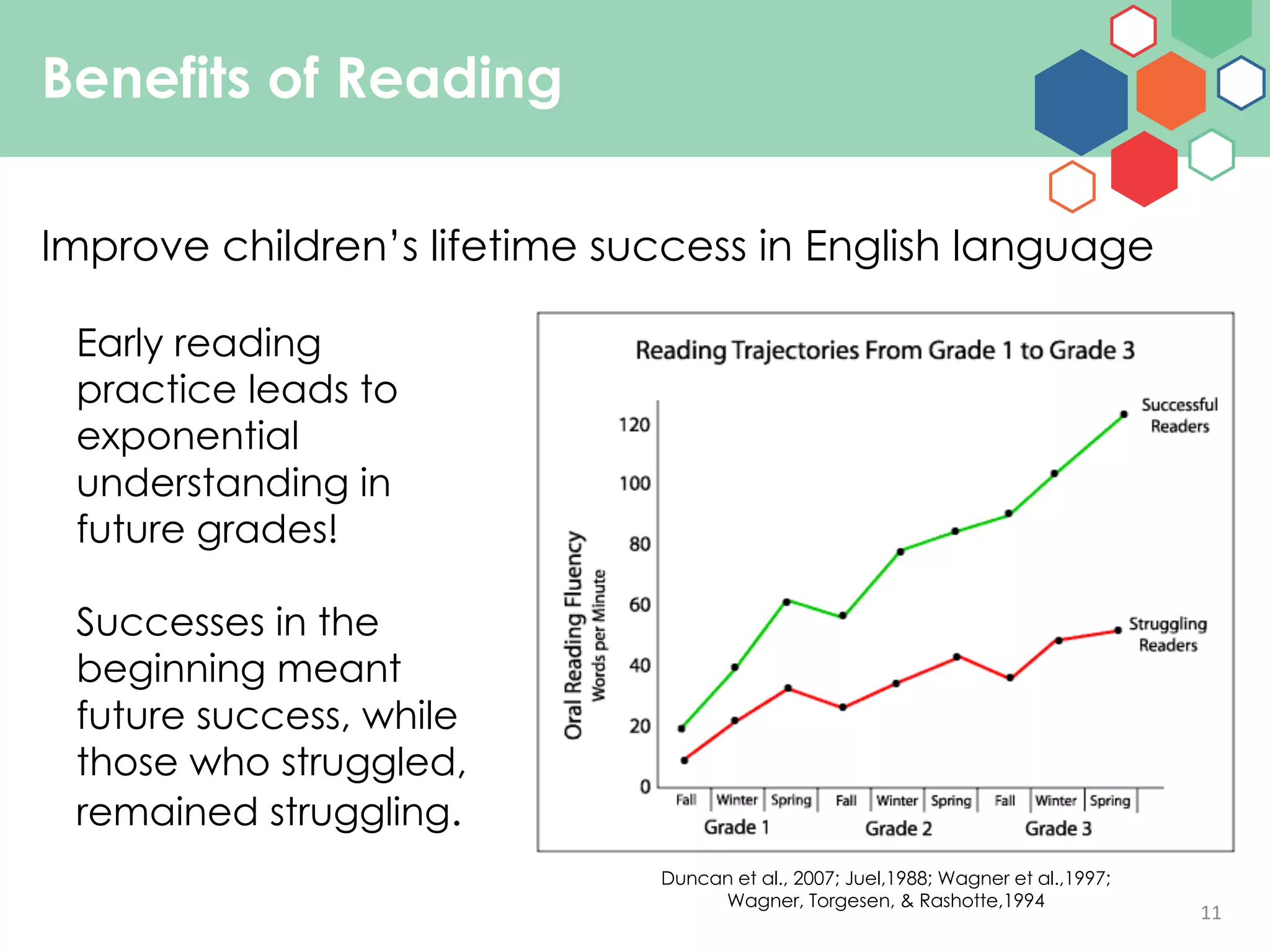
Early reading
practice leads to
exponential
understanding in
future grades!
Successes in the
beginning meant
future success, while
those who struggled,
remained struggling.
Duncan et al., 2007; Juel,1988; Wagner et al.,1997;
Wagner, Torgesen, & Rashotte,1994
Benefits of Reading with
Highlights Library
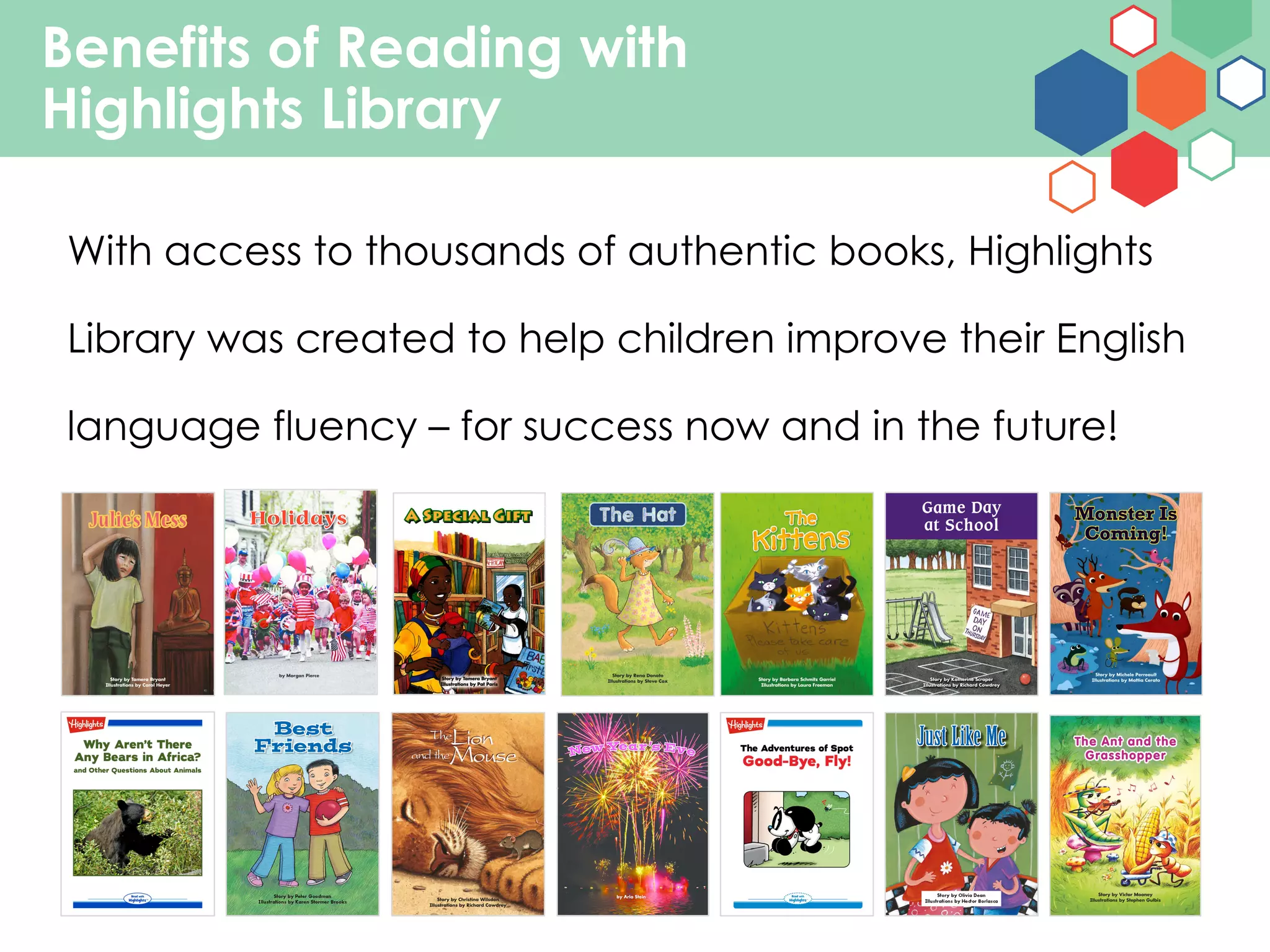
With access to thousands of authentic books, Highlights
Library was created to help children improve their English
language fluency – for success now and in the future!
Highlights Digital Reading Platform
Thank You!

The Power of Reading

  • 1.
    Highlights Digital ReadingPlatform The Power of Reading
  • 2.
    2 Highlights for Children’sMission “We believe children are the world's most important people. We help children become their best selves by publishing content and creating experiences that engage, delight, and foster joyful learning. Children and families around the world enjoy our content every day—at home, in school, and all the places in between.”
  • 3.
    3 The more time spentreading outside of school, the higher the score on reading achievement tests. (Cullinan 2000) The Power of Reading
  • 4.
    4 How do childrenlearn to read? Reading is a product of: Decoding (word recognition) Language comprehension Reading fluency is defined as the combined ability to read the text and understand what is read
  • 5.
    5 How do childrenlearn to read? When children acquire language early, their brains build a foundation of language. As frequent readers grow, their brains learn language more efficiently, so early practice is critical Decoding (word recognition) Language comprehension Less fluent reader More fluent reader
  • 6.
    6 How the brainreads Proficient readers develop a “neural pathway” (blue) between the area that processes sound (green) and the area that processes symbol recognition (pink). When that pathway is developed, directly below it is the area that stores vocabulary, allowing for quick retrieval of words and meaning.
  • 7.
    7 How the brainreads Orthographic Processor (symbol) Phonologic Processor (sound) Fluent ReaderBeginning Reader Sound-symbol connection “Within his brain, the child is literally building the neural circuitry that links the sounds of spoken words, the phonemes, to the print code, the letters that represent these sounds” - Guinevere Eden, Georgetown University Study (Shaywitz, 2003, p. 177)
  • 8.
    8 Development of vocabulary --Hart,B. & Risley, T. Meaningful Differences in the Everyday Experiences of Young American Children. Baltimore, MD:; Paul H. Brookes, 1995. The number of words heard The richness of language heard Vocabulary is developed based on Exposure to many words, through both reading books and spoken conversation, is key to acquiring a deep vocabulary when learning a language
  • 9.
    9 Development of comprehension •Readers must be able to get the text off the page to have sufficient cognitive energy to devote to reading. • While developing word-recognition skills and fluency, a young reader needs to develop a wide and broad base of vocabulary, oral language, and background knowledge. What does research say about comprehension in early reading?
  • 10.
    Student A 10 The Powerof Reading Student B • 1 min/day • 180 mins/school year • 8,000 words/year • Scores in the 10th percentile on standardized tests • 20 mins/day • 3,600 mins/school year • 1,800,000 words/year • Scores in the 90th percentile on standardized tests • 5 mins/day • 900 mins/school year • 282,000 words/year • Scores in the 50th percentile on standardized tests Student C Nagy & Berman, 1987
  • 11.
    11 Benefits of Reading Improvechildren’s lifetime success in English language Early reading practice leads to exponential understanding in future grades! Successes in the beginning meant future success, while those who struggled, remained struggling. Duncan et al., 2007; Juel,1988; Wagner et al.,1997; Wagner, Torgesen, & Rashotte,1994
  • 12.
    Benefits of Readingwith Highlights Library With access to thousands of authentic books, Highlights Library was created to help children improve their English language fluency – for success now and in the future!
  • 13.
    Highlights Digital ReadingPlatform Thank You!