Do students want to be
Normal or Amazing ?
Activate a Student’s Desire to Learn!
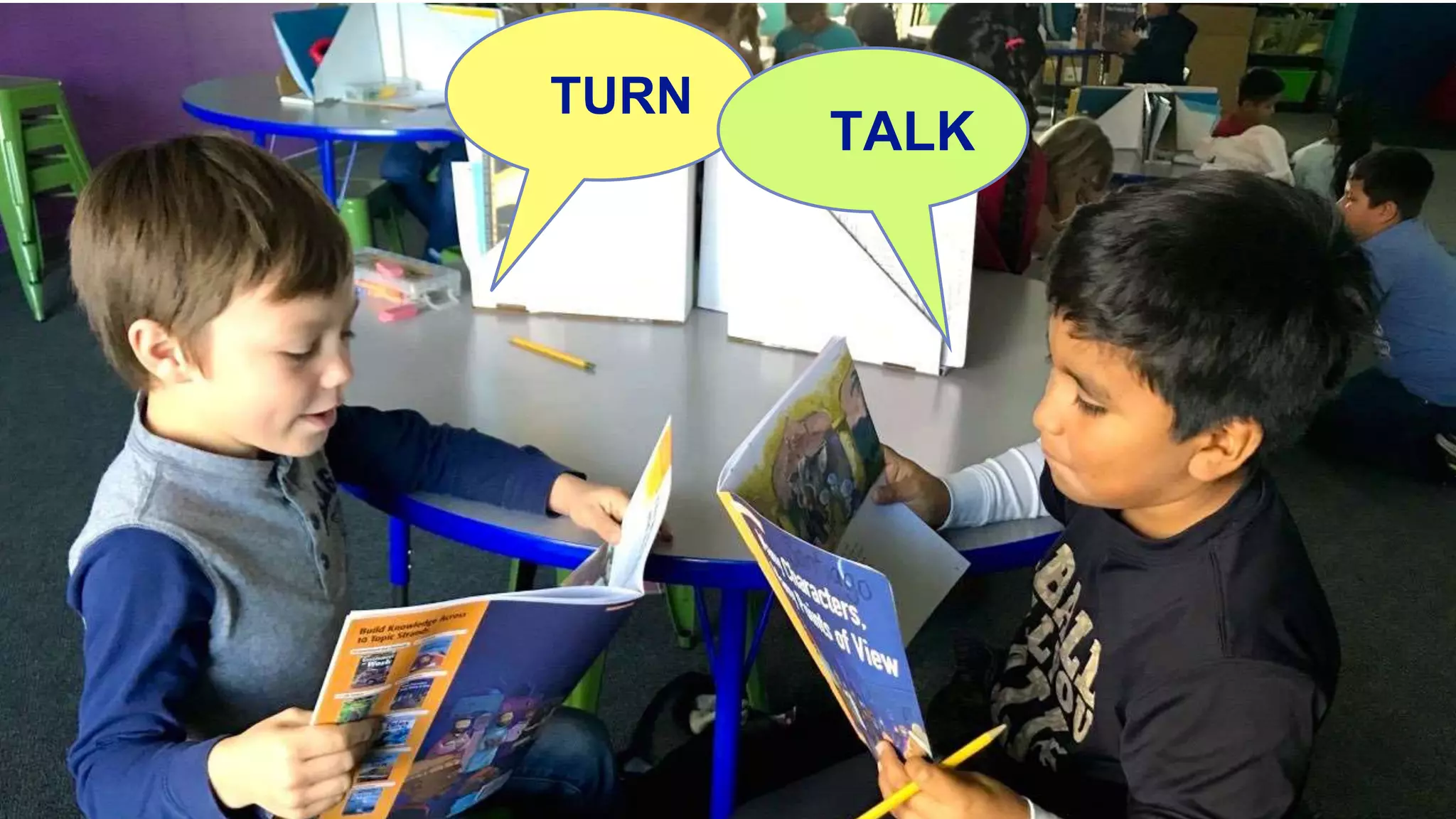
TURN
TALK
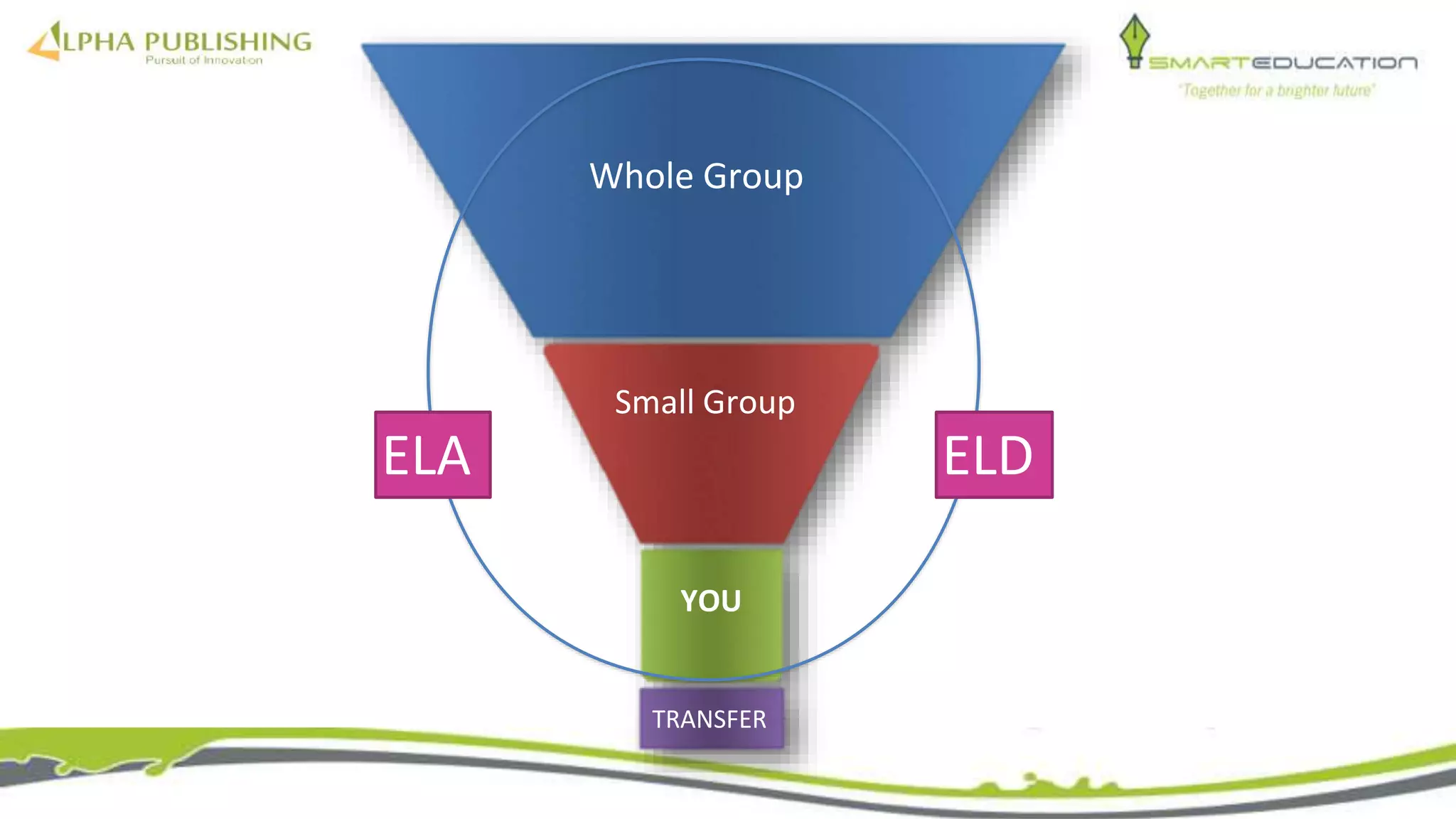
ELA and ELD
WORKING in TANDEM
Whole Group
Small Group
TRANSFER
YOU
ELDELA
RIGOR
VIGOR
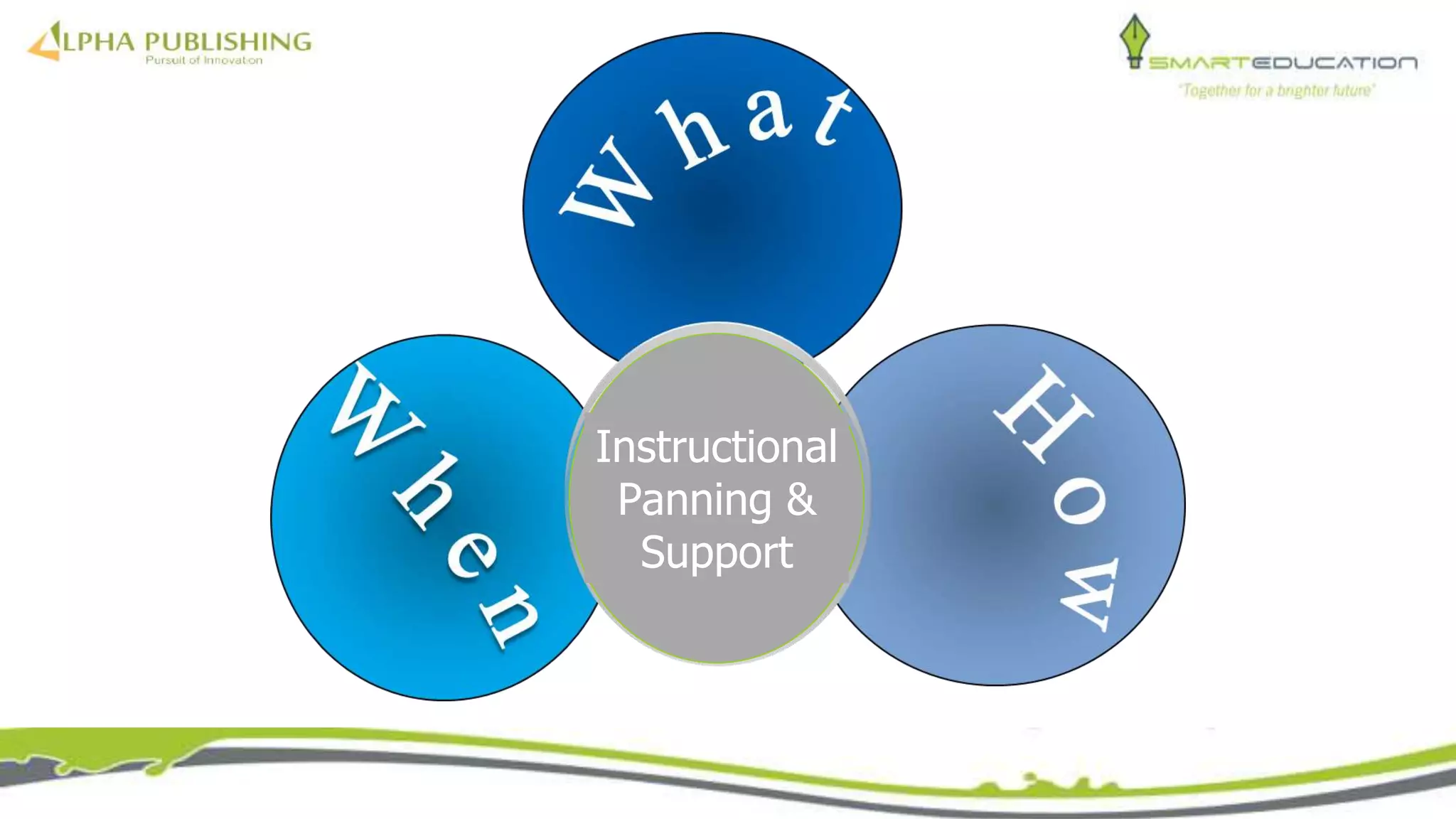
Instructional
Panning &
Support
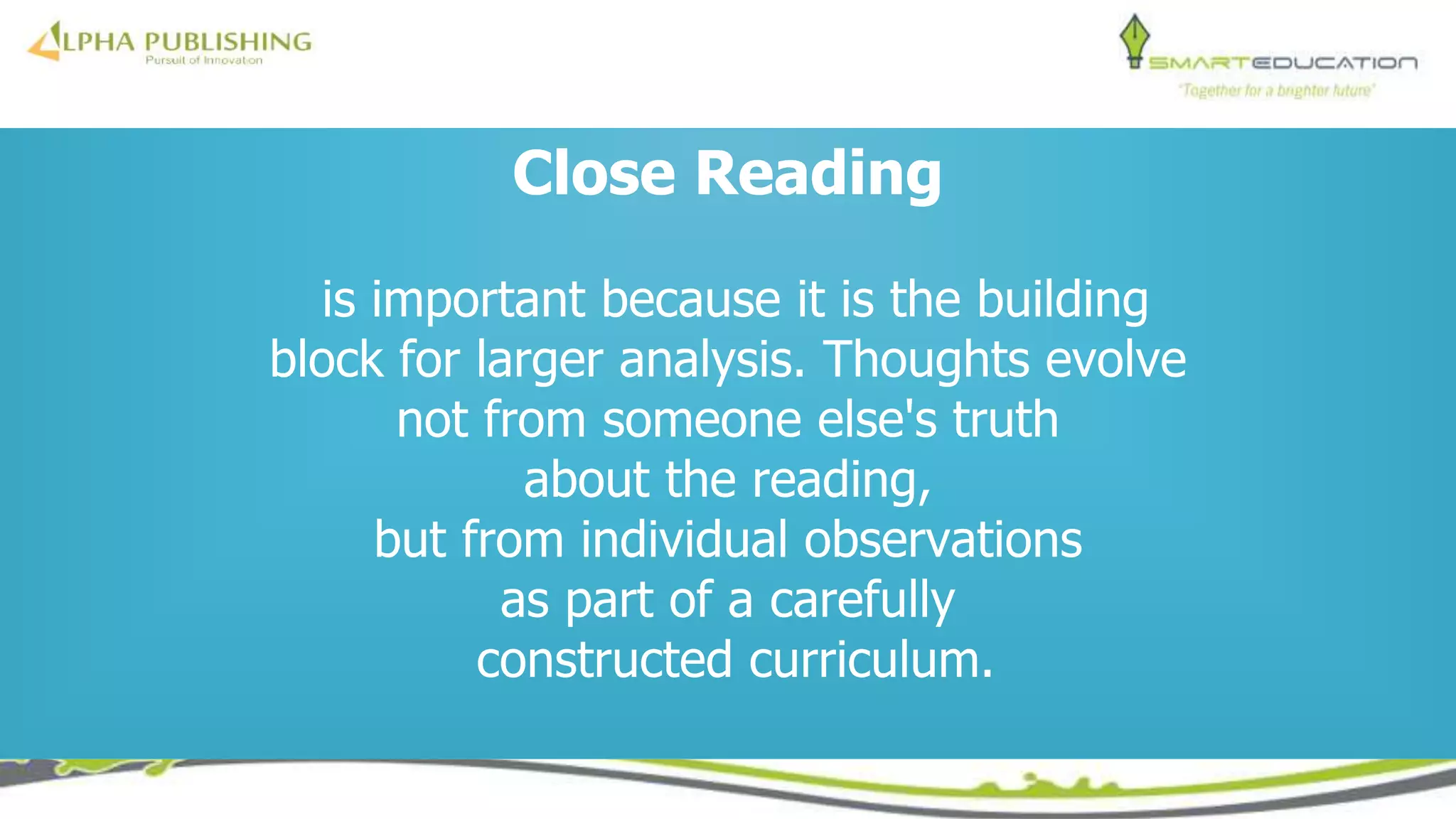
Close Reading
is important because it is the building
block for larger analysis. Thoughts evolve

not from someone else's truth
about the reading,
but from individual observations
as part of a carefully
constructed curriculum.
The core idea is that annotation
should help the reader during
and after reading.
By anthropologist and naturalist
Loren Eiseley
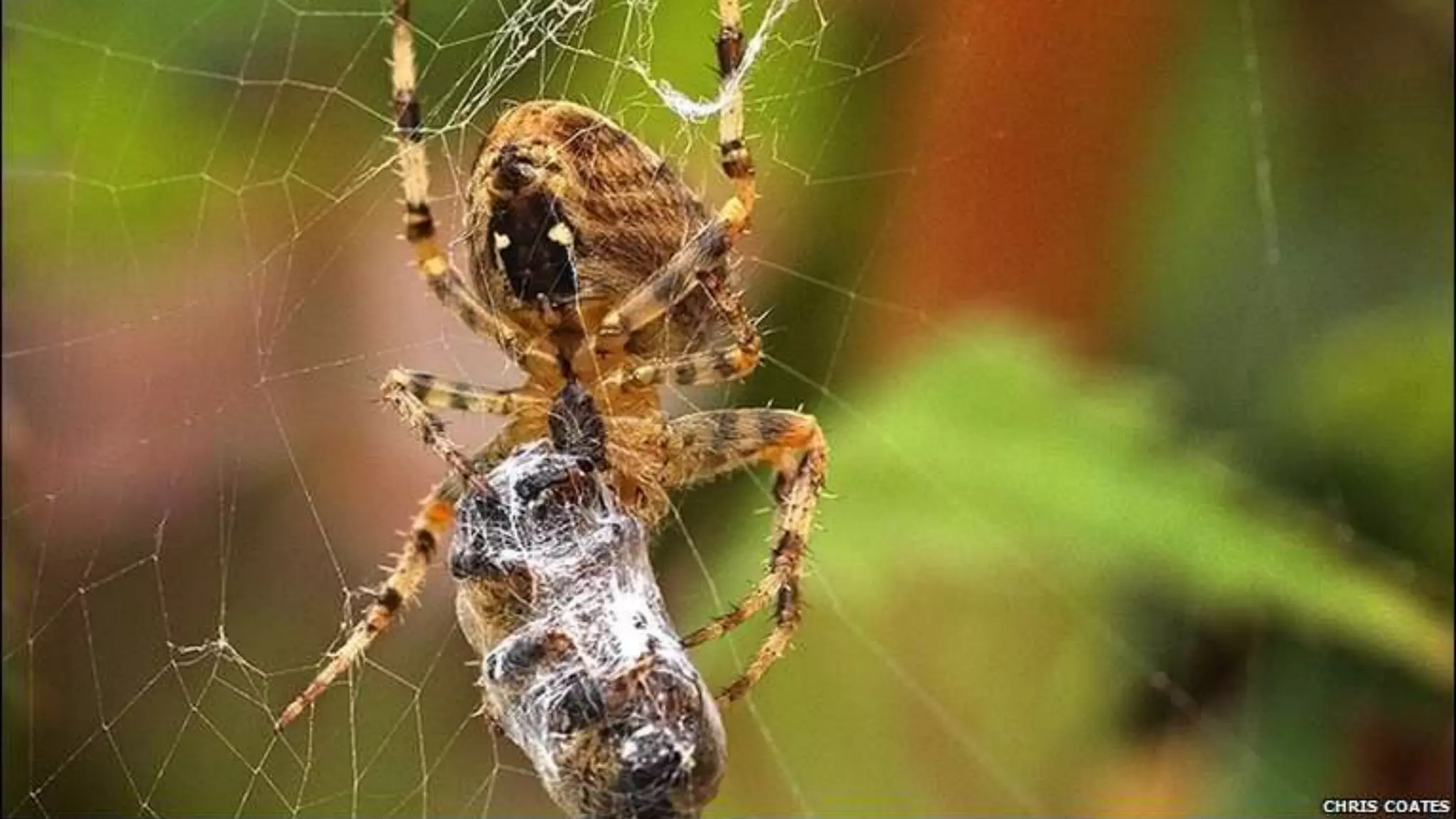
Curious, I took a pencil from my pocket and
touched a strand of the web. Immediately there
was a response. The web, plucked by its
menacing occupant, began to vibrate until it was
a blur. Anything that had brushed claw or wing
against that amazing snare would be thoroughly
entrapped.
How Can I Locate the Main Idea?
Once you can find the topic, you are ready to find the
main idea. The main idea is the point of the paragraph.
It is the most important thought about the topic.
To figure out the main idea, ask yourself this question:
What is being said about the person, thing,
or idea (the topic)?
By anthropologist and naturalist
Loren Eiseley
Curious, I took a pencil from my pocket and
touched a strand of the web. Immediately there
was a response. The web, plucked by its
menacing occupant, began to vibrate until it was
a blur. Anything that had brushed claw or wing
against that amazing snare would be thoroughly
entrapped.
Productive Struggle
to experience difficulty
and make a very
great effort in order to do
something long-lasting.
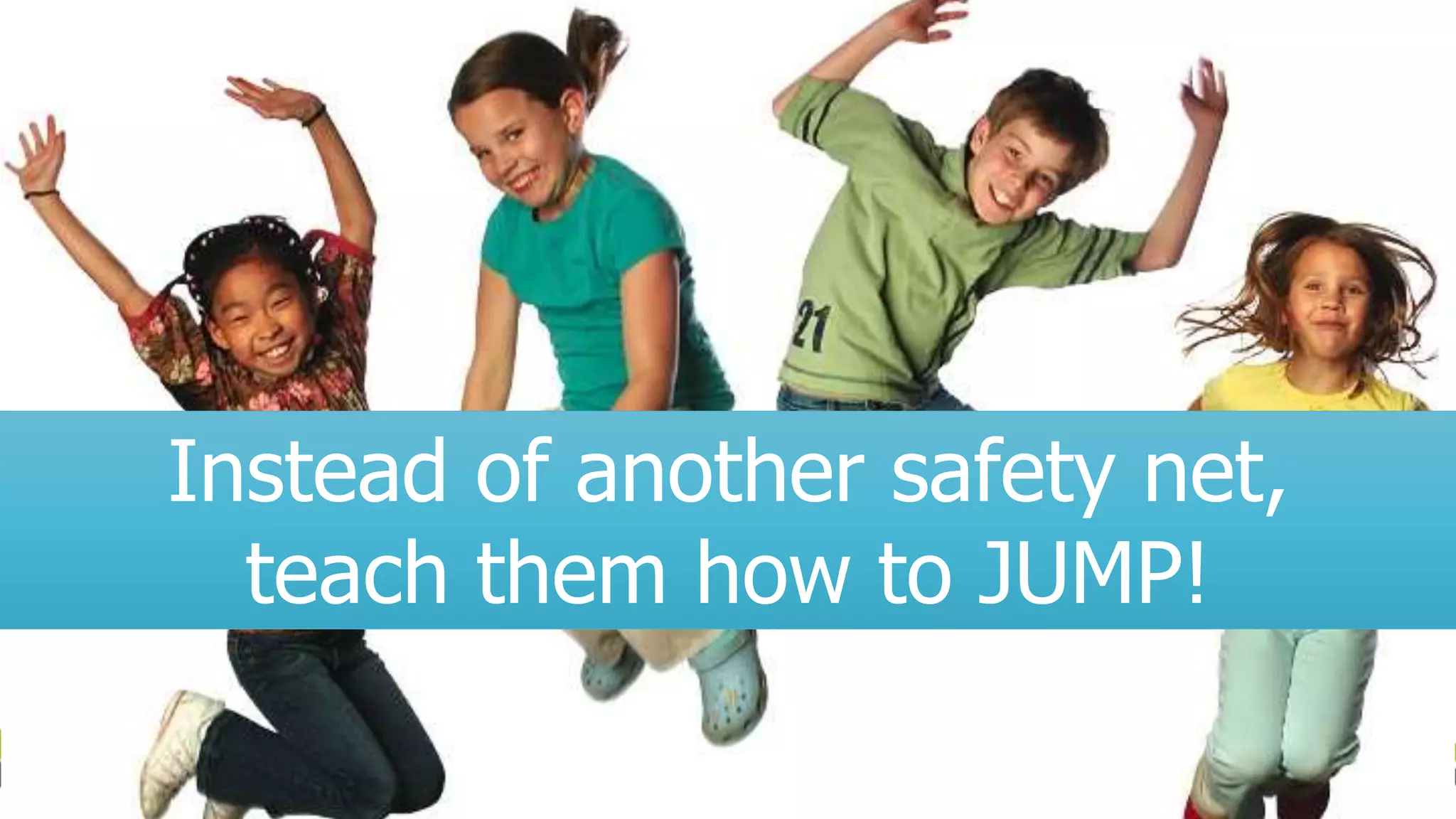
Instead of another safety net,
teach them how to JUMP!
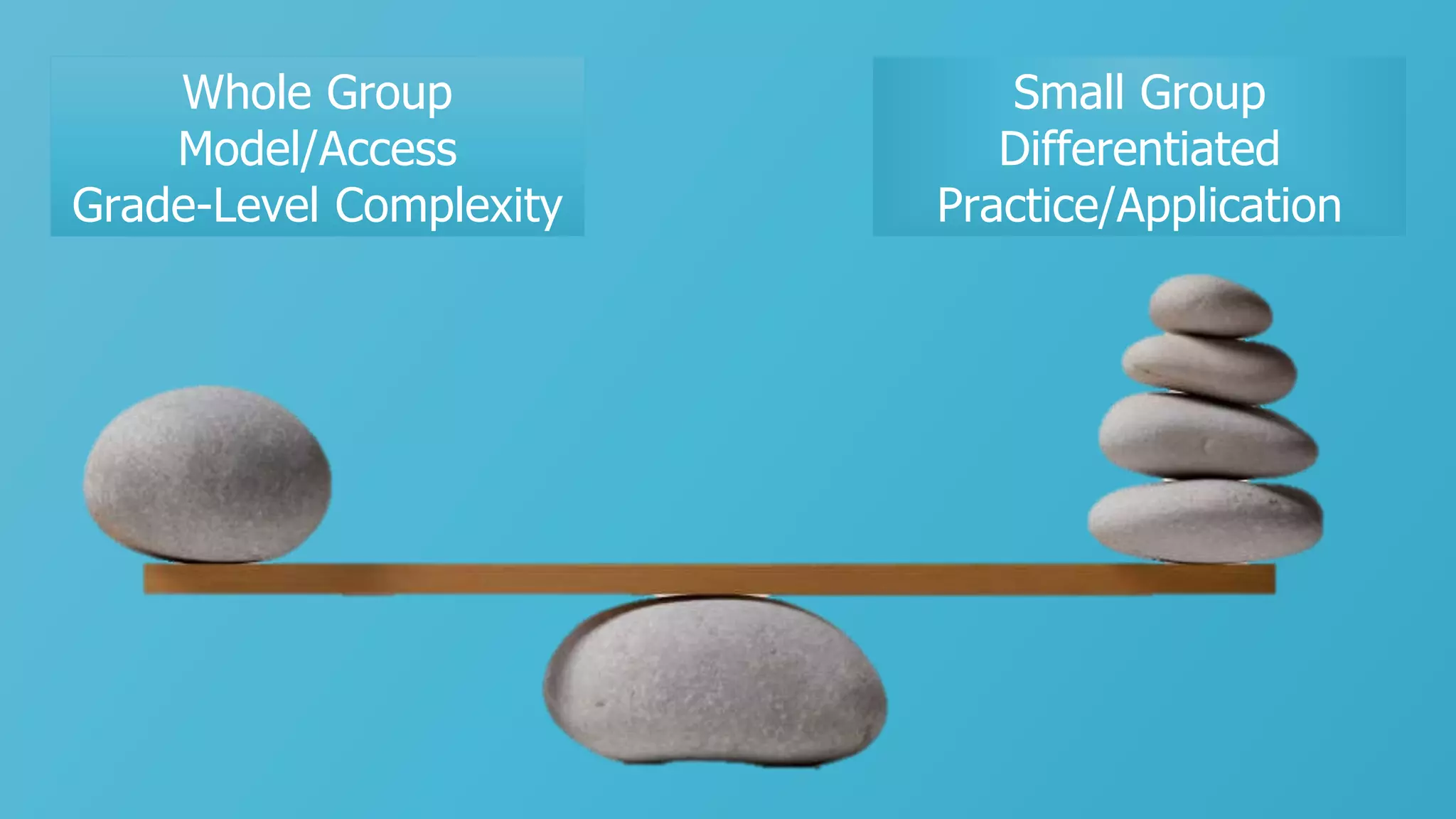
Whole Group
Model/Access
Grade-Level Complexity
Small Group
Differentiated
Practice/Application
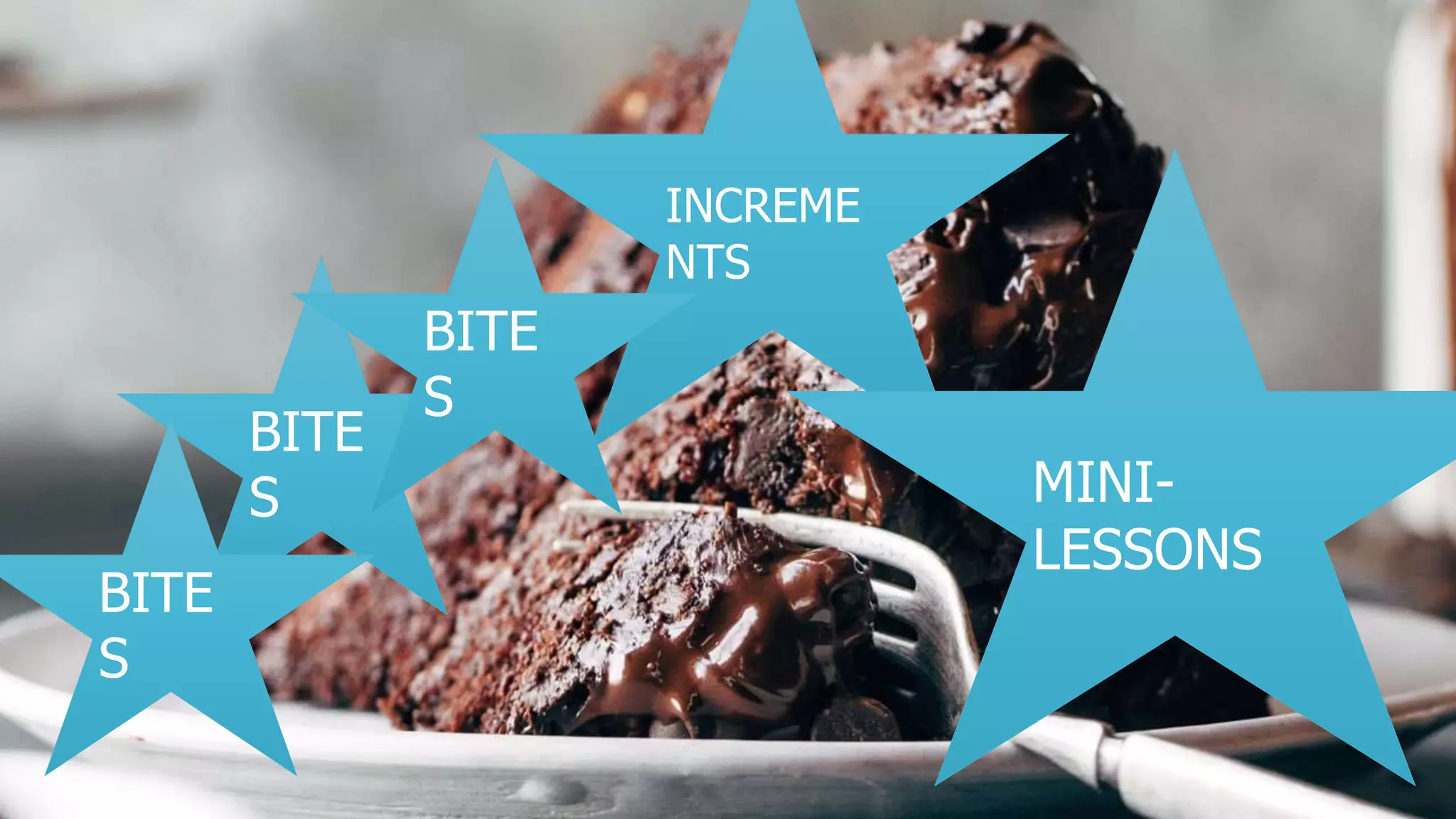
BITE
S
INCREME
NTS
MINI-
LESSONS
BITE
S
BITE
S
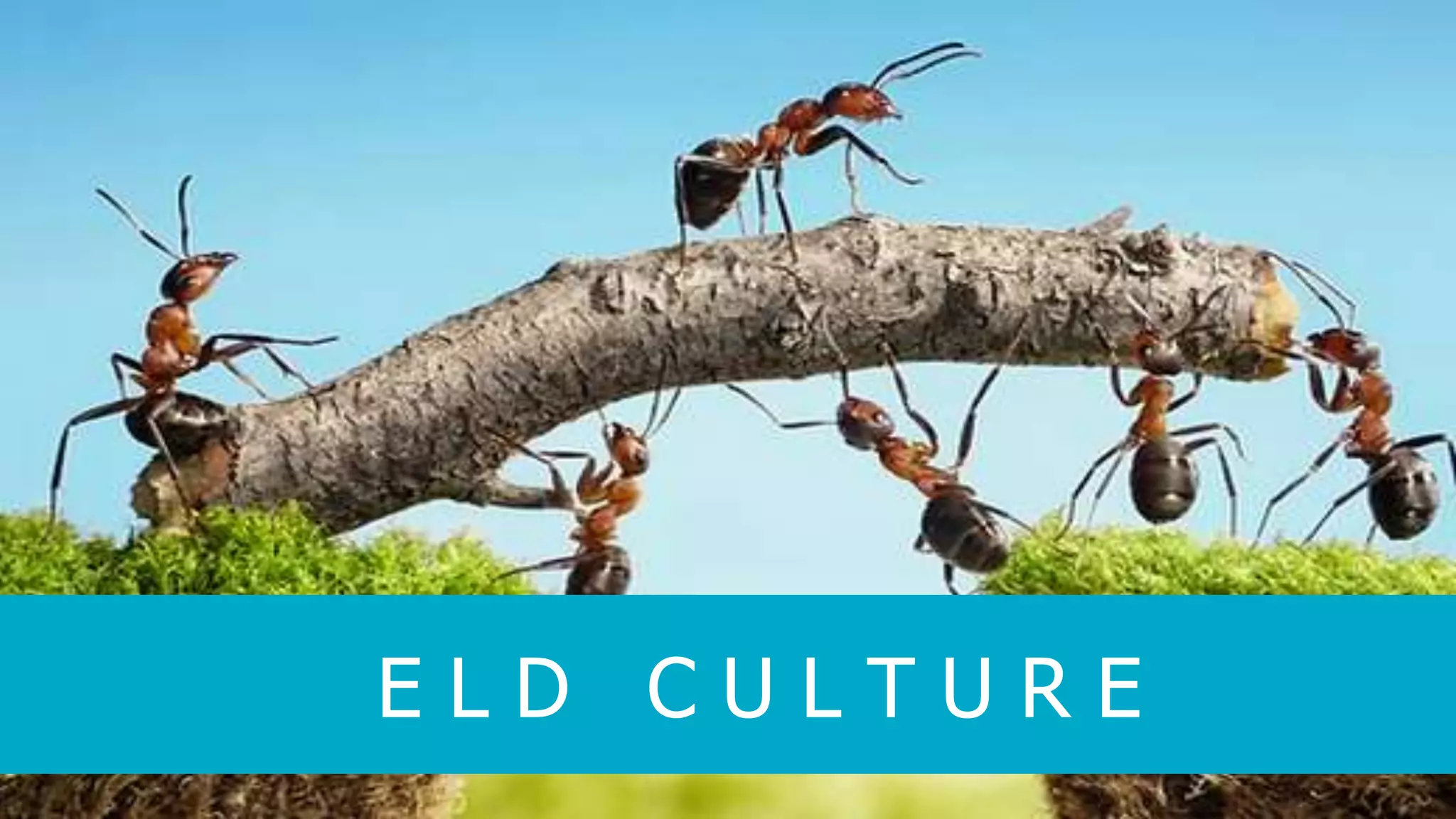
E L D C U L T U R E
Amplify!
not
Simplify
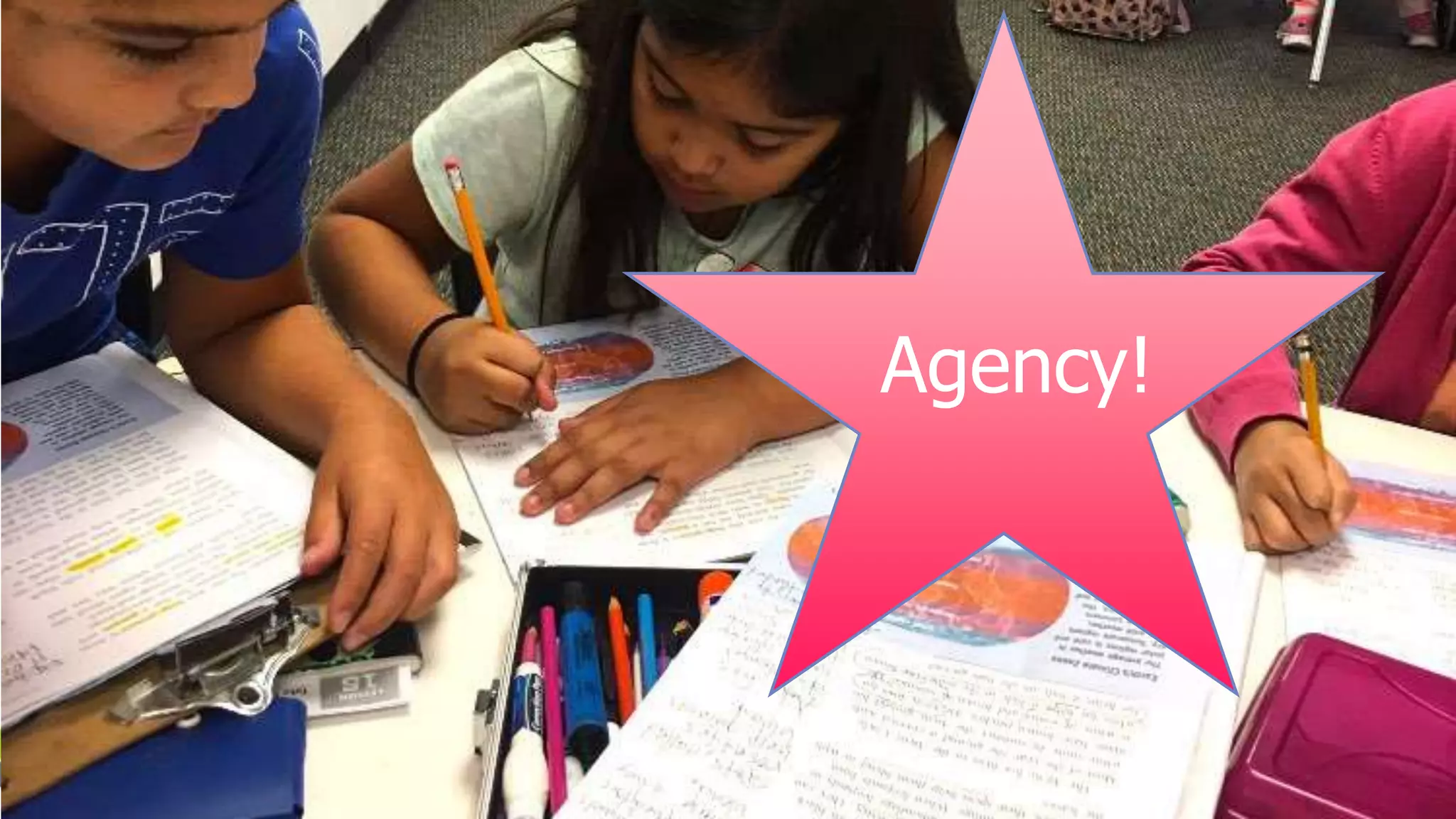
Agency!
Student agency refers to learning
through activities that are
meaningful and relevant
to learners,
driven
by their interests,
and often self-initiated with
appropriate guidance
from teachers.
Self- Direction or Control?
“Control might lead to compliance
but it doesn't inspire us
to do our best”
Bob Sullo
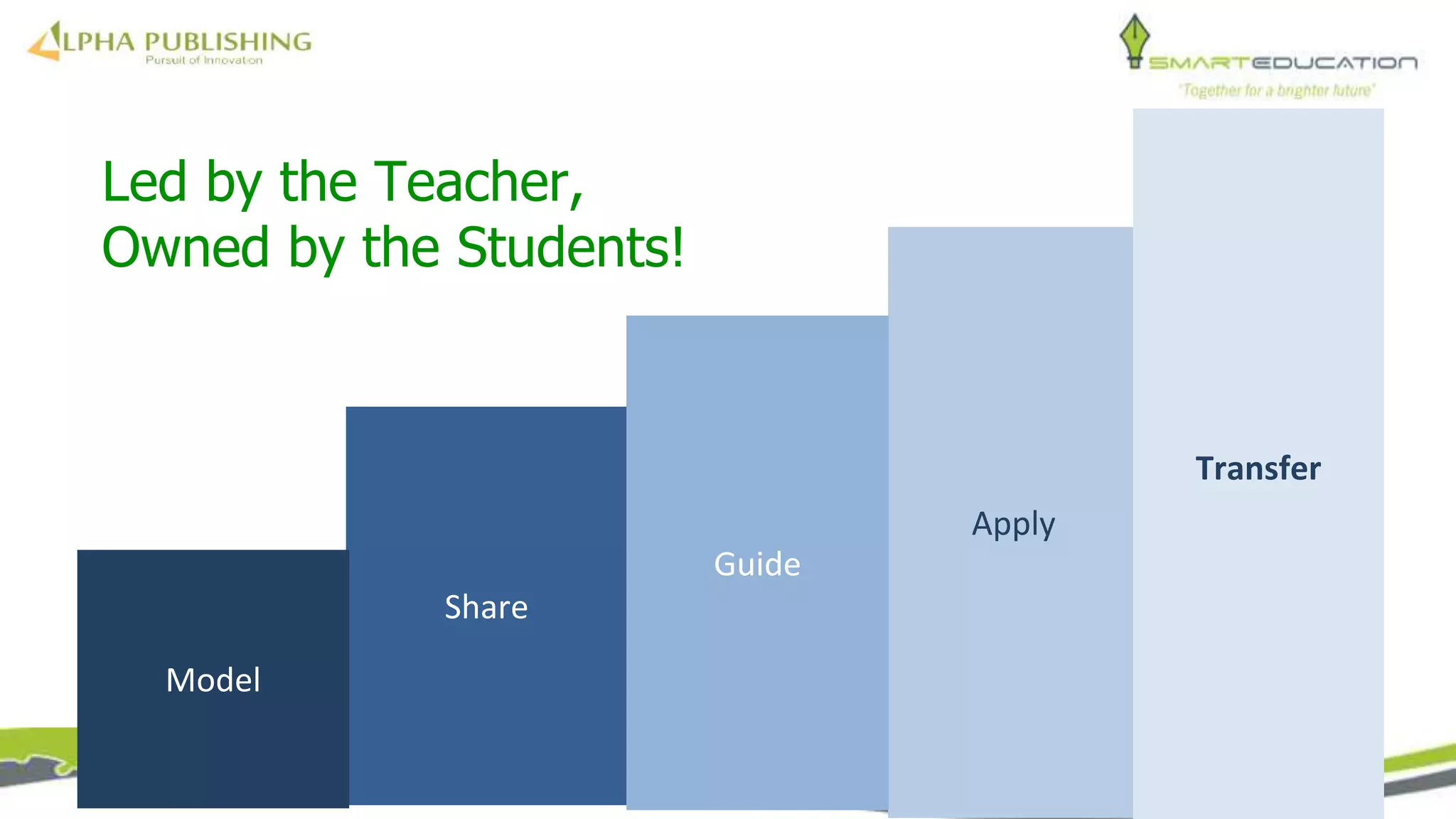
Led by the Teacher,
Owned by the Students!
Apply
Share
Model
Guide
Transfer
Teaching for Transfer
Transfer is
“the practice of applying knowledge or
meaning from a familiar context
to an unfamiliar context.”
Close Reading
is important because it is the building
block for larger analysis. Thoughts evolve
not from someone else's truth
about the reading,
but from individual observations
as part of a carefully
constructed curriculum.
DESTINATION = GOALS
ELA ELD
By anthropologist and naturalist
Loren Eiseley
Curious, I took a pencil from my pocket and
touched a strand of the web. Immediately there
was a response. The web, plucked by its
menacing occupant, began to vibrate until it was
a blur. Anything that had brushed claw or wing
against that amazing snare would be thoroughly
entrapped.
STUDENT
The idea here is that I’m writing these things in the margins — these purposeful
annotations — not simply for a grade or because the teacher said, “Do a close
reading.” I’m doing it to help me dominate:
A_the task of understanding and learning from the text while reading (this is
one of my ultimate goals for my students — that they’ll read the texts I assign with
self-kindled, habituated, cultivated curiosity, engaging with it for learning’s sake)
B_the task of doing a thing with that text after reading
(if my head is on straight as a teacher, there’s going to be a piece of writing or a
piece of speaking that every student will do with any given text).
Reciprocal Reading and Writing
“…students are expected
to read carefully to make meaning and identify
evidence.”
“Teaching students to annotate text
(mark text and make notes)
for specific elements…”
Curious, I took a pencil from my pocket and
touched a strand of the web. Immediately
there was a response. The web, plucked by its
menacing occupant, began to vibrate until
it was a blur. Anything that had brushed claw or
wing against that amazing snare would be
thoroughly entrapped.
curious
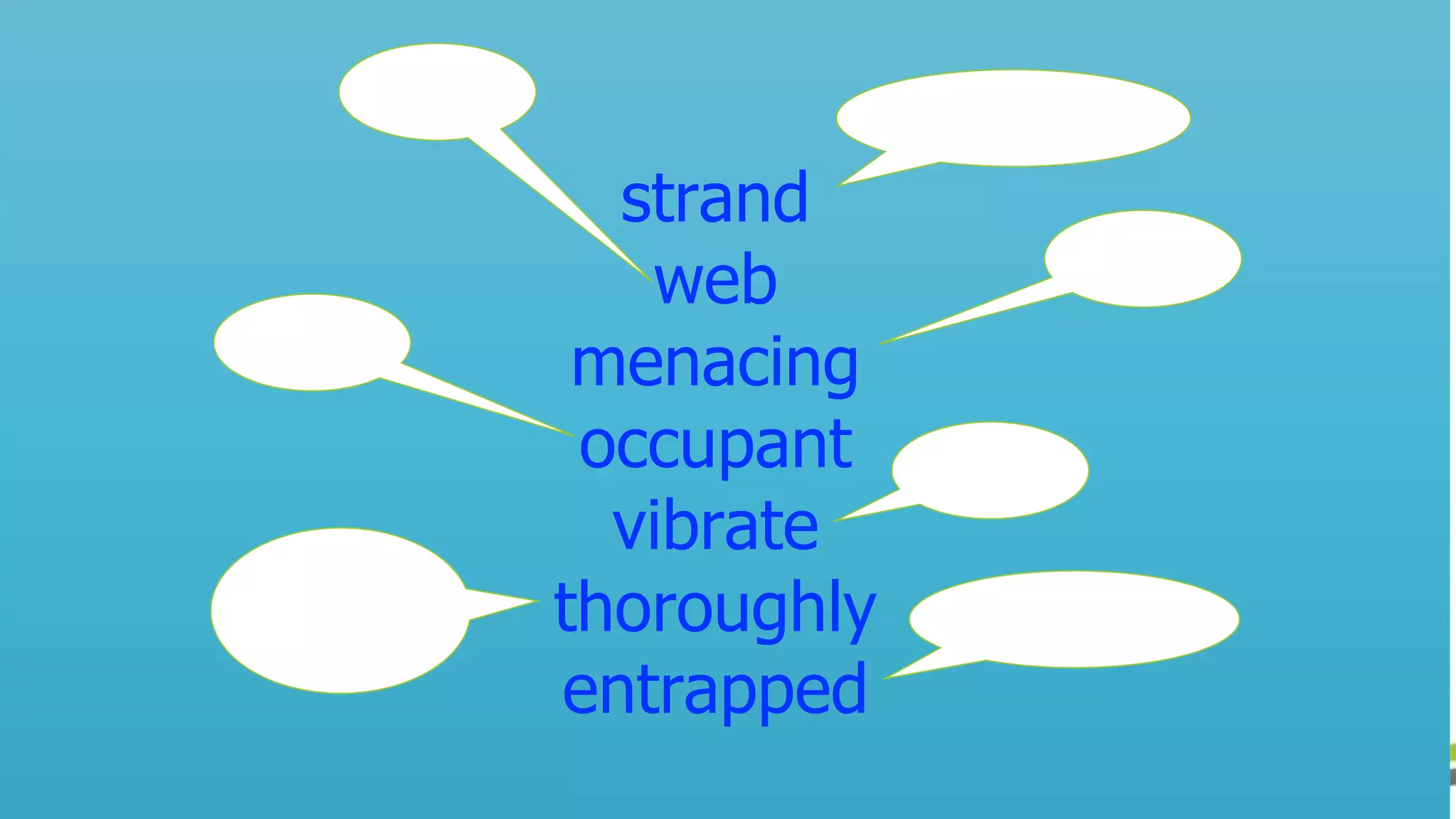
strand
web
plucked
menacing
occupant
vibrate
blur
brushed
claw
wing
snare
thoroughly
entrapped
curious
strand
web
plucked
menacing
occupant
vibrate
blur
brushed
claw
wing
snare
thoroughly
entrapped
strand
web
menacing
occupant
vibrate
thoroughly
entrapped
menacing occupant
thoroughly entrapped
By anthropologist and naturalist
Loren Eiseley
1 Curious, I took a pencil from my pocket and
touched a strand of the web.
2 Immediately there was a response.
3 The web, plucked by its menacing occupant, began
to vibrate until it was a blur.
4 Anything that had brushed claw or wing against
that amazing snare would be
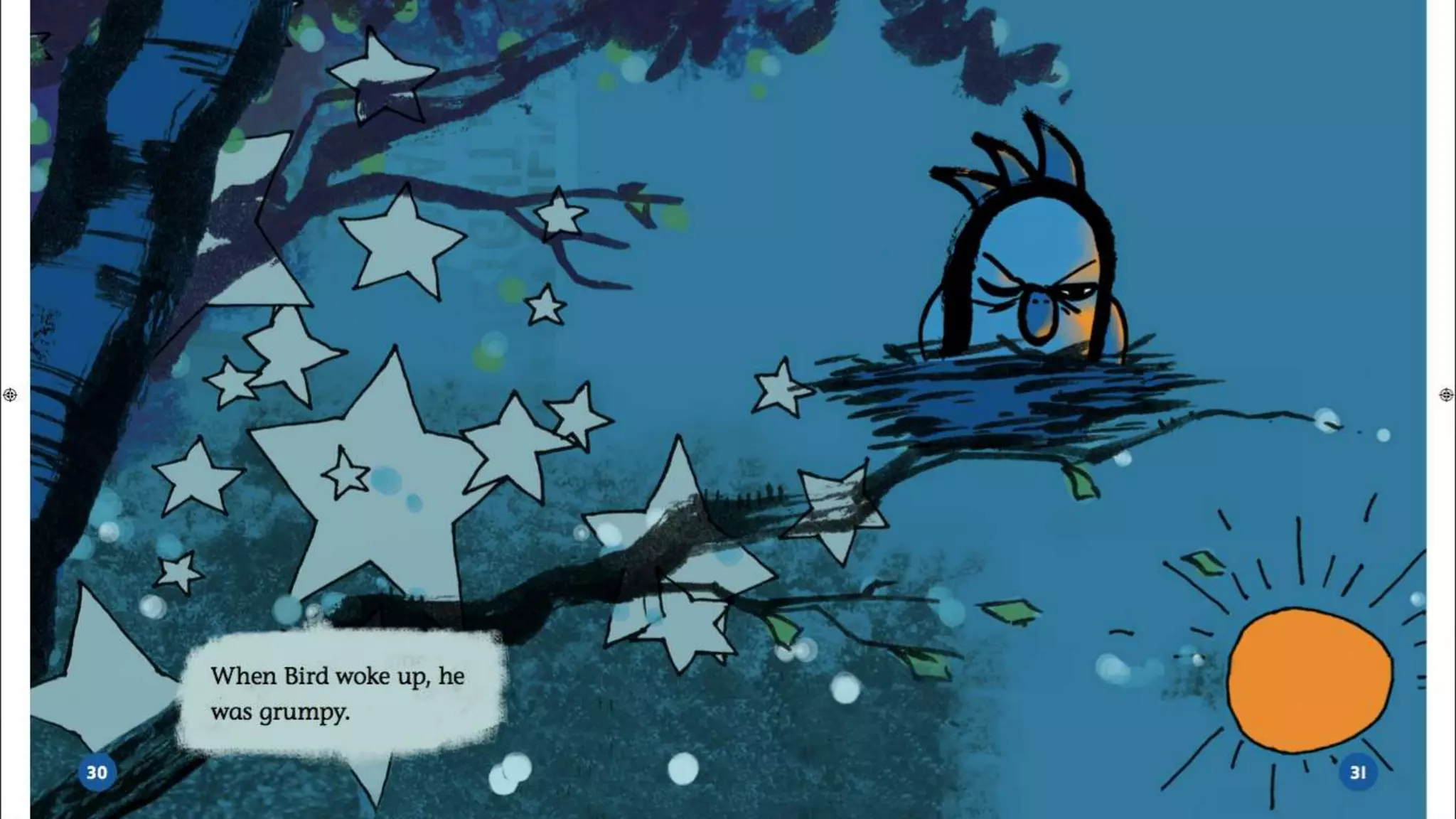
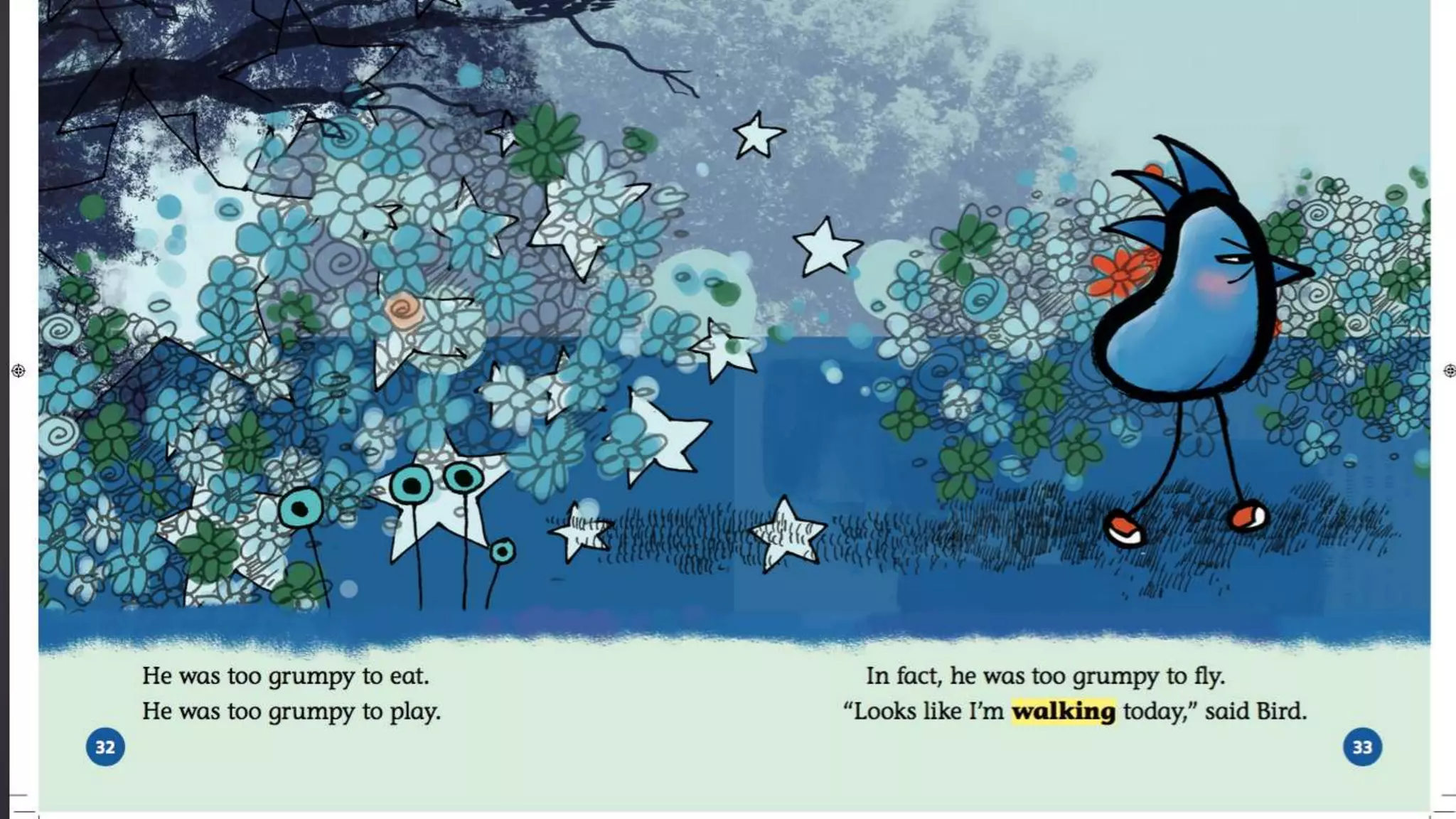
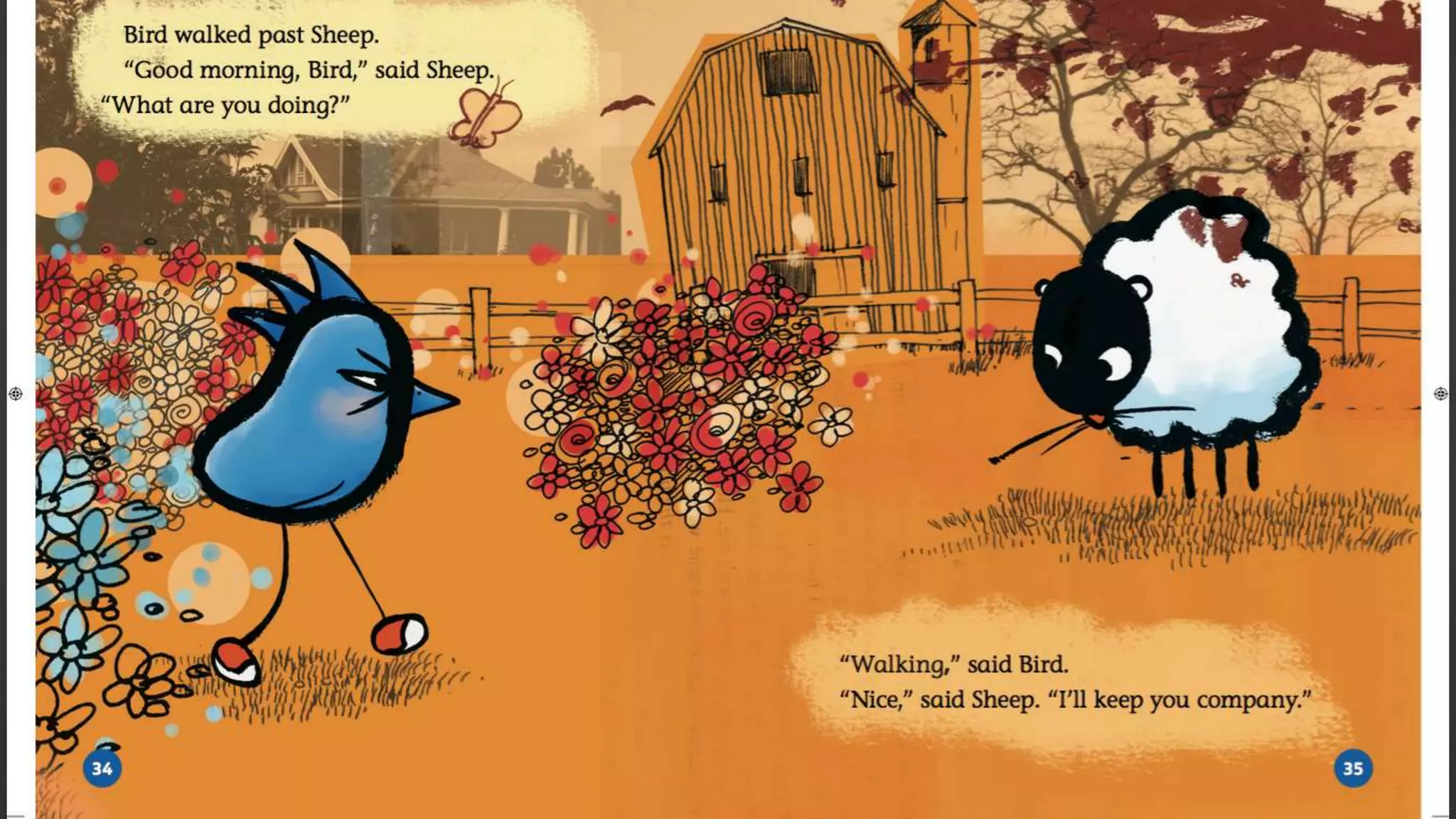
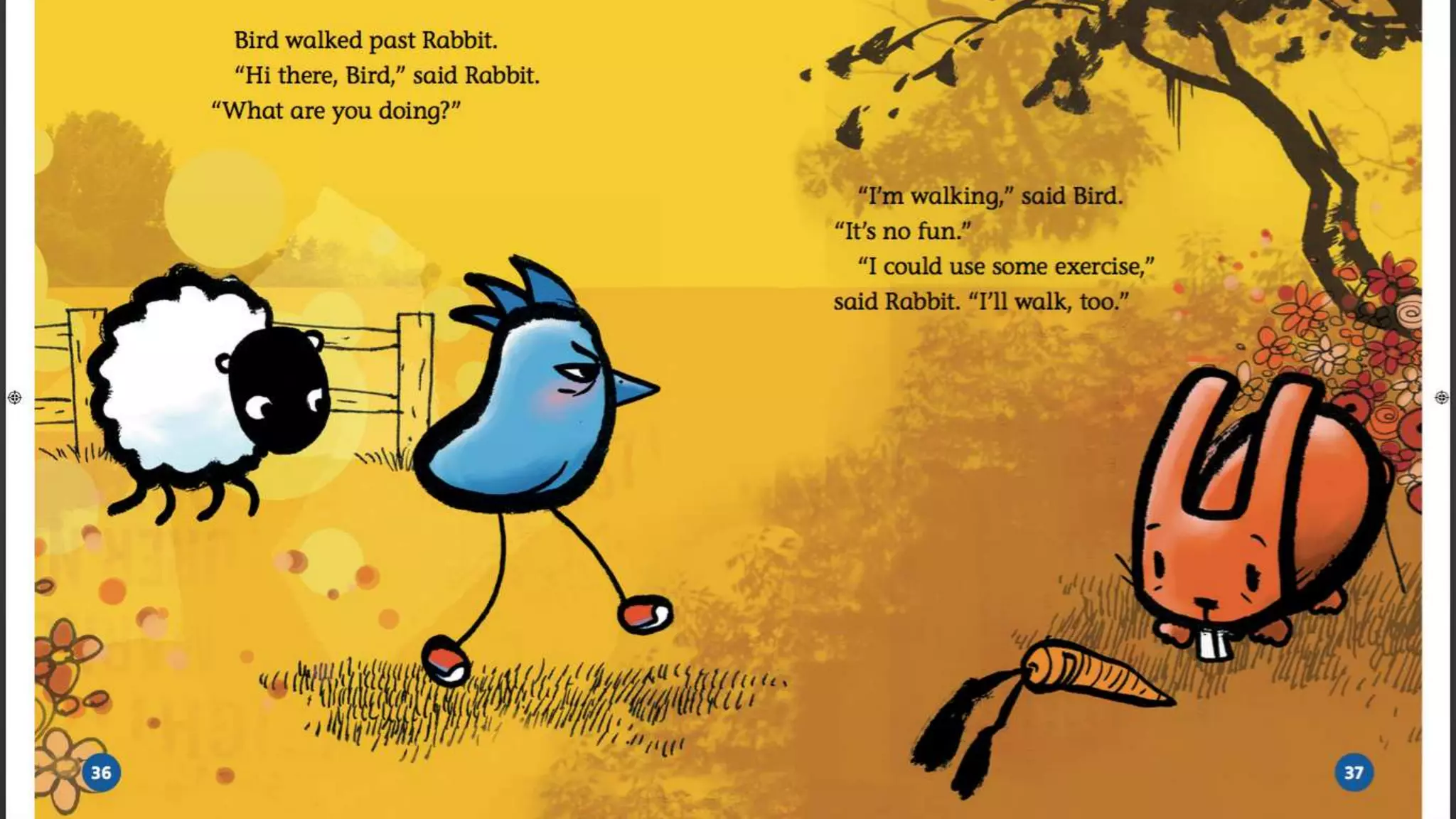
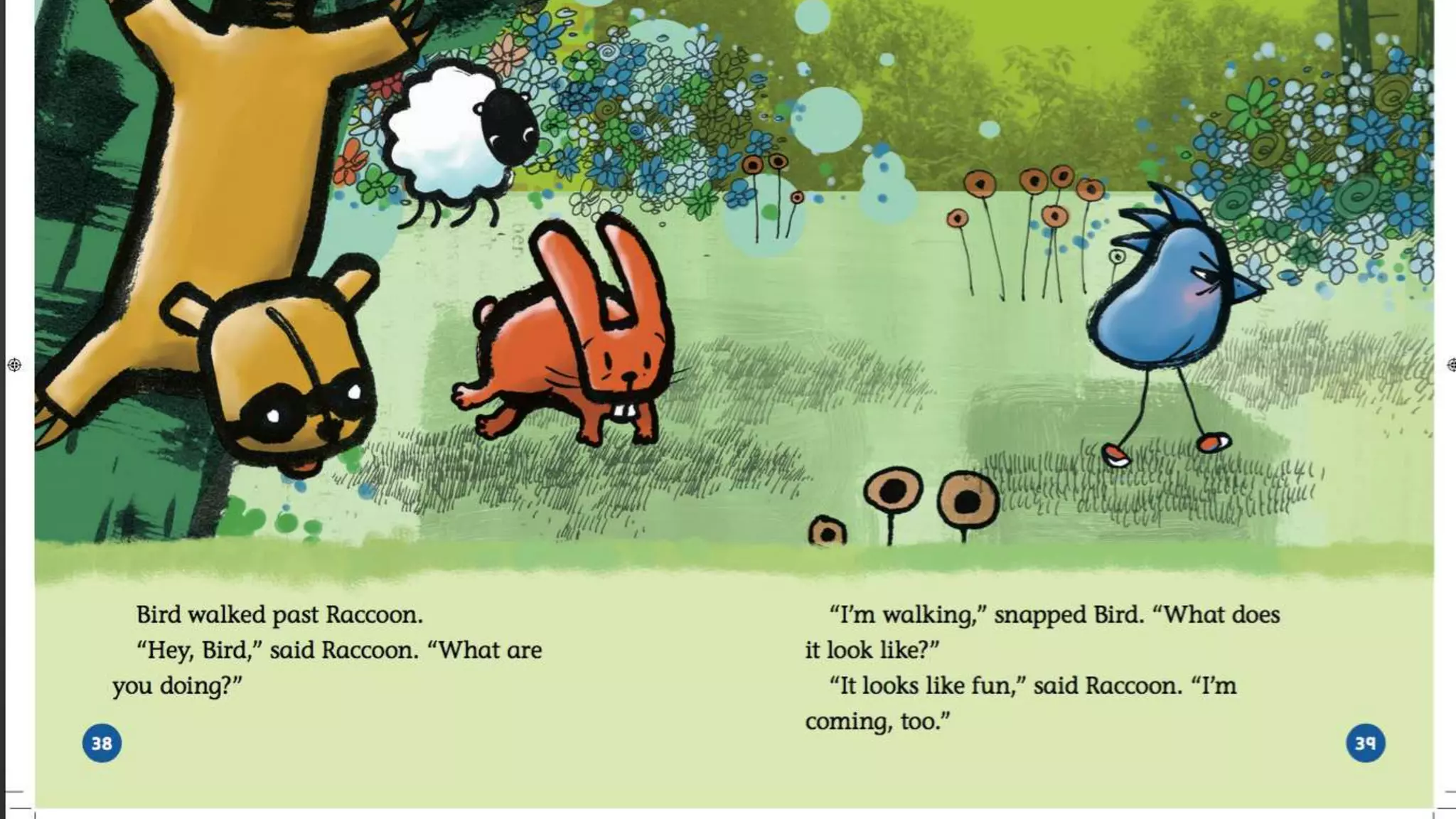
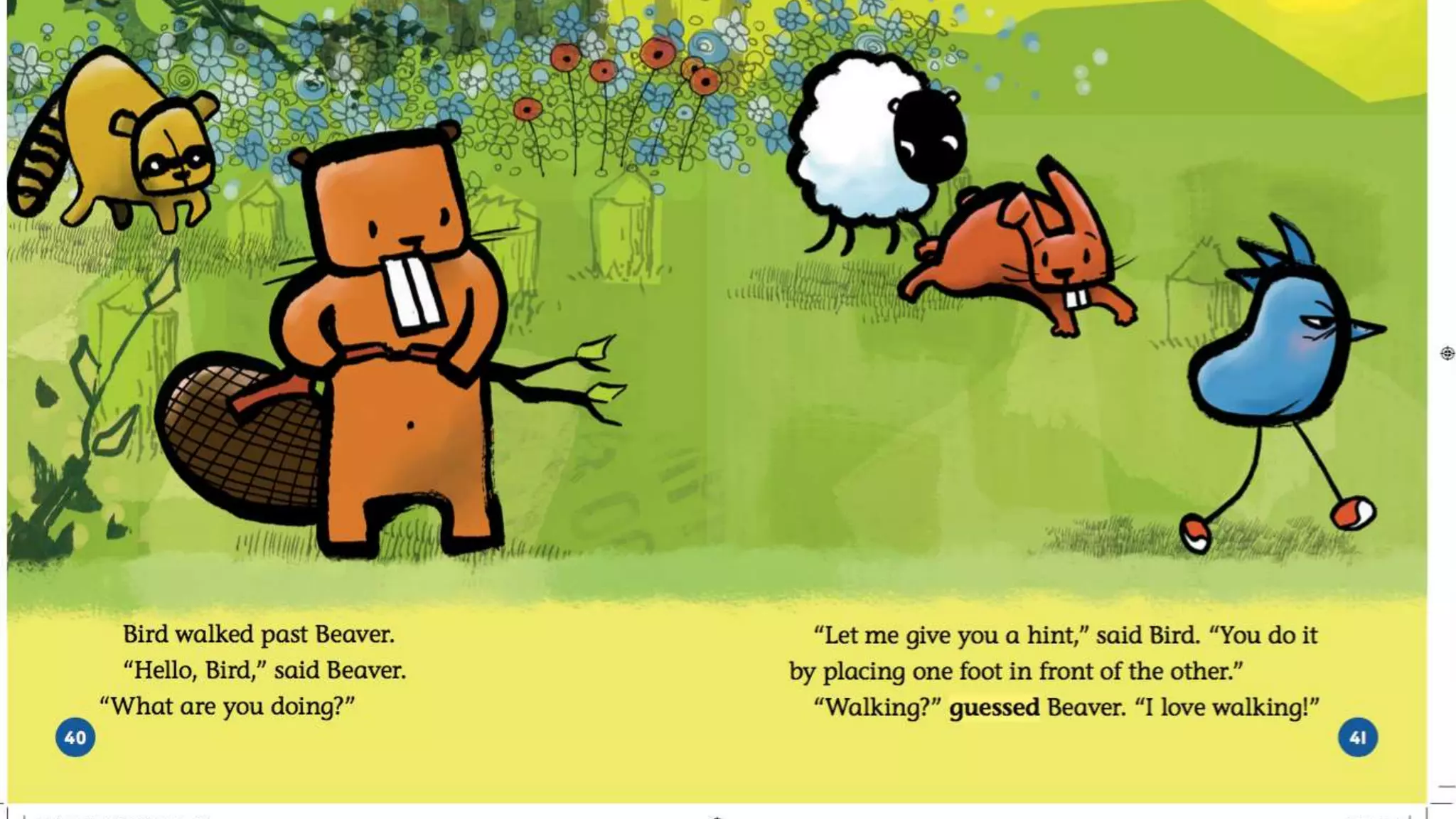
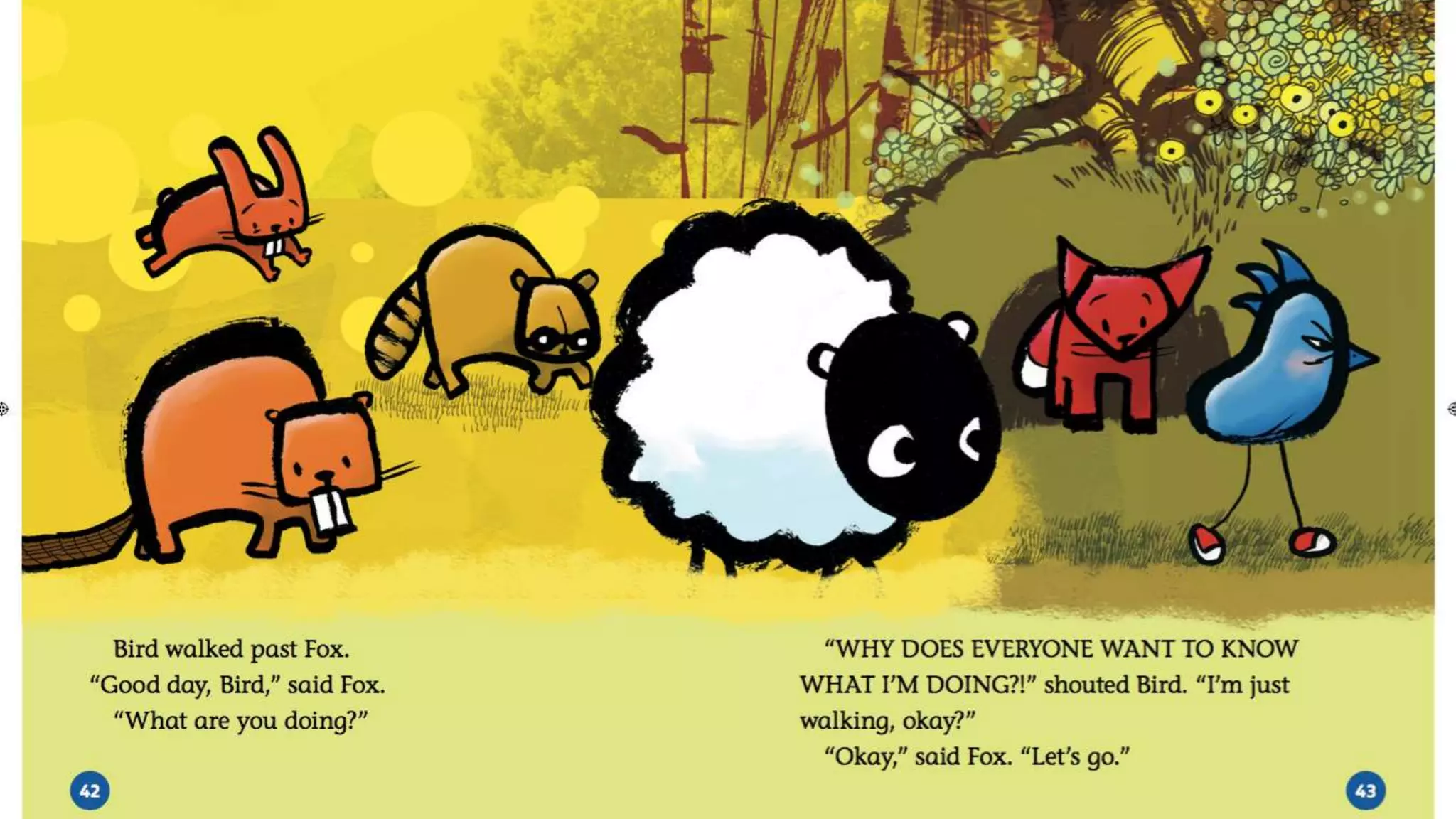
Picture Walks
A picture walk allows readers to explore and interpret
visual images across all content areas.
Connect visual images to their personal experiences
and activate prior knowledge while
expressing themselves at their own
oral language level.
Details Count!
If you see it?
You’ll talk about it!
If you talk about it?
You’ll be able write about it!
A Culture of
Thinking!
READ LIKE A DETECTIVE,
WRITE LIKE AN INVESTIGATIVE REPORTER
READ LIKE A DETECTIVE,
WRITE LIKE AN INVESTIGATIVE REPORTER
Productiv
e
Struggle
Productiv
e
Struggle
Productiv
e
Struggle
Backwards Mapping
To begin with the end in mind means to start with a
clear understanding of your destination.
It means to know where you're going
so that you better understand where you are now so
that the steps you take are always
in the right direction.
Essential Question
Well-crafted questions ground intellectual pursuits giving
students some sense of direction, purpose, and
relevance as they are engaged in the work of the
subject. Good questions direct students to dig deeper
into content and processes, and delve deeper into a
subject or the content.
Transforming
Parents, Administrators, Teachers and
Students!

Activate Students While Exploring ELA & ELD in Tandem

  • 2.
    Do students wantto be Normal or Amazing ? Activate a Student’s Desire to Learn!
  • 3.
  • 4.
  • 5.
  • 6.
  • 7.
  • 10.
    Close Reading is importantbecause it is the building block for larger analysis. Thoughts evolve not from someone else's truth about the reading, but from individual observations as part of a carefully constructed curriculum.
  • 11.
    The core ideais that annotation should help the reader during and after reading.
  • 13.
    By anthropologist andnaturalist Loren Eiseley Curious, I took a pencil from my pocket and touched a strand of the web. Immediately there was a response. The web, plucked by its menacing occupant, began to vibrate until it was a blur. Anything that had brushed claw or wing against that amazing snare would be thoroughly entrapped.
  • 14.
    How Can ILocate the Main Idea? Once you can find the topic, you are ready to find the main idea. The main idea is the point of the paragraph. It is the most important thought about the topic. To figure out the main idea, ask yourself this question: What is being said about the person, thing, or idea (the topic)?
  • 15.
    By anthropologist andnaturalist Loren Eiseley Curious, I took a pencil from my pocket and touched a strand of the web. Immediately there was a response. The web, plucked by its menacing occupant, began to vibrate until it was a blur. Anything that had brushed claw or wing against that amazing snare would be thoroughly entrapped.
  • 16.
    Productive Struggle to experiencedifficulty and make a very great effort in order to do something long-lasting.
  • 17.
    Instead of anothersafety net, teach them how to JUMP!
  • 18.
    Whole Group Model/Access Grade-Level Complexity SmallGroup Differentiated Practice/Application
  • 20.
  • 21.
    E L DC U L T U R E
  • 22.
  • 23.
  • 24.
    Student agency refersto learning through activities that are meaningful and relevant to learners, driven by their interests, and often self-initiated with appropriate guidance from teachers.
  • 25.
    Self- Direction orControl? “Control might lead to compliance but it doesn't inspire us to do our best” Bob Sullo
  • 26.
    Led by theTeacher, Owned by the Students! Apply Share Model Guide Transfer
  • 27.
    Teaching for Transfer Transferis “the practice of applying knowledge or meaning from a familiar context to an unfamiliar context.”
  • 28.
    Close Reading is importantbecause it is the building block for larger analysis. Thoughts evolve not from someone else's truth about the reading, but from individual observations as part of a carefully constructed curriculum.
  • 29.
  • 31.
    By anthropologist andnaturalist Loren Eiseley Curious, I took a pencil from my pocket and touched a strand of the web. Immediately there was a response. The web, plucked by its menacing occupant, began to vibrate until it was a blur. Anything that had brushed claw or wing against that amazing snare would be thoroughly entrapped.
  • 32.
    STUDENT The idea hereis that I’m writing these things in the margins — these purposeful annotations — not simply for a grade or because the teacher said, “Do a close reading.” I’m doing it to help me dominate: A_the task of understanding and learning from the text while reading (this is one of my ultimate goals for my students — that they’ll read the texts I assign with self-kindled, habituated, cultivated curiosity, engaging with it for learning’s sake) B_the task of doing a thing with that text after reading (if my head is on straight as a teacher, there’s going to be a piece of writing or a piece of speaking that every student will do with any given text).
  • 33.
    Reciprocal Reading andWriting “…students are expected to read carefully to make meaning and identify evidence.” “Teaching students to annotate text (mark text and make notes) for specific elements…”
  • 34.
    Curious, I tooka pencil from my pocket and touched a strand of the web. Immediately there was a response. The web, plucked by its menacing occupant, began to vibrate until it was a blur. Anything that had brushed claw or wing against that amazing snare would be thoroughly entrapped.
  • 35.
  • 36.
  • 37.
  • 38.
  • 42.
    By anthropologist andnaturalist Loren Eiseley 1 Curious, I took a pencil from my pocket and touched a strand of the web. 2 Immediately there was a response. 3 The web, plucked by its menacing occupant, began to vibrate until it was a blur. 4 Anything that had brushed claw or wing against that amazing snare would be
  • 43.
    Picture Walks A picturewalk allows readers to explore and interpret visual images across all content areas. Connect visual images to their personal experiences and activate prior knowledge while expressing themselves at their own oral language level. Details Count!

  • 44.
    If you seeit? You’ll talk about it! If you talk about it? You’ll be able write about it!
  • 45.
  • 57.
    READ LIKE ADETECTIVE, WRITE LIKE AN INVESTIGATIVE REPORTER
  • 69.
    READ LIKE ADETECTIVE, WRITE LIKE AN INVESTIGATIVE REPORTER
  • 76.
  • 77.
  • 78.
  • 79.
    Backwards Mapping To beginwith the end in mind means to start with a clear understanding of your destination. It means to know where you're going so that you better understand where you are now so that the steps you take are always in the right direction.
  • 80.
    Essential Question Well-crafted questionsground intellectual pursuits giving students some sense of direction, purpose, and relevance as they are engaged in the work of the subject. Good questions direct students to dig deeper into content and processes, and delve deeper into a subject or the content.
  • 83.