Visitor-Centered Exhibition
Design: A paradigm Shift for Art
Museums
Silvia Filippini-Fantoni
@silviaff20
@imamuseum
Director of Interpretation,
Media, and Evaluation
The Collection
User-centred Approach
Visitor-Centered Approach
Process:
• New exhibition development
process
Participation:
• Participatory in-gallery
experiences
Programming:
• Innovative participatory and
experiential programs
Visitor-oriented approach
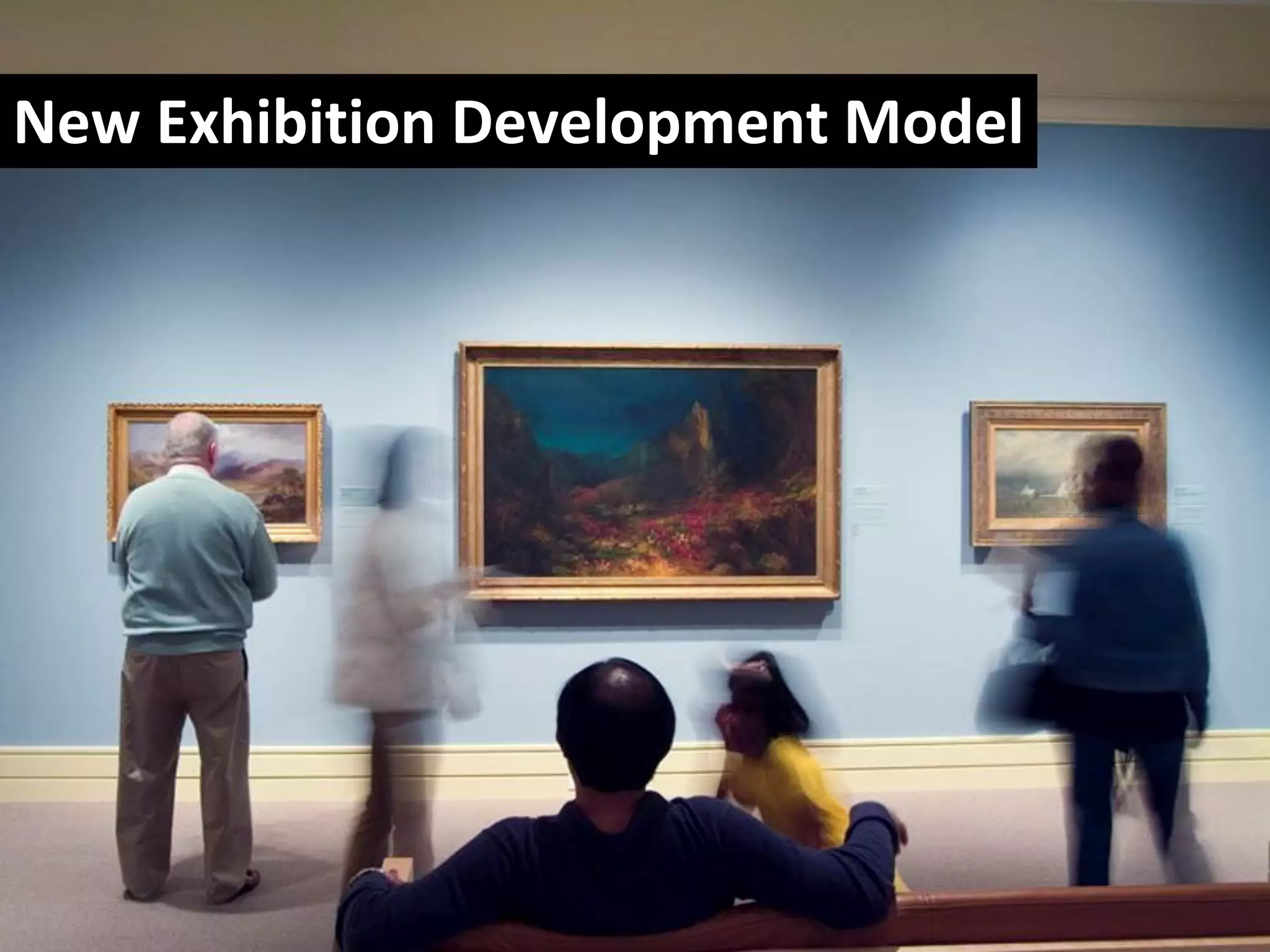
New Exhibition Development Model
•Non-Art Museums
•Detroit Institute of Art
•Oakland Museum of
California
•Denver Art Museum
•Brooklyn Museum
Inspiration
Old Model: all decisions were
made by curators
New Model: interdisciplinary
core team is created at the
start and makes all decisions.
It includes:
• curator
• interpretation specialist
• evaluator
• designer
• exhibition manager
Curator
Layout
Content
Idea
Checklist
Other Inter.
tools
Public
Programs
Old Model
New Model
Big idea: the core team
identifies the main thesis
and learning outcomes
These are used to inform:
• Checklist
• Layout
• Title
• Interpretive plan
• Content
• Evaluation
Testing: incorporate
testing and evaluation
throughout the process
Research and Evaluation
team:
• Manager
• 1 part-time staff
• 3 or 4 data collectors
• 1 or 2 contractors
Rome wasn’t build in a day!
New director
Methods
n=576
21% 21%
27%
31%
0%
5%
10%
15%
20%
25%
30%
35%
Art Deco
Automobiles
Duesenbergs Automobile
Masterpieces
Concept Cars
Front-End: Automobile Design
Formative: Gustave Baumann
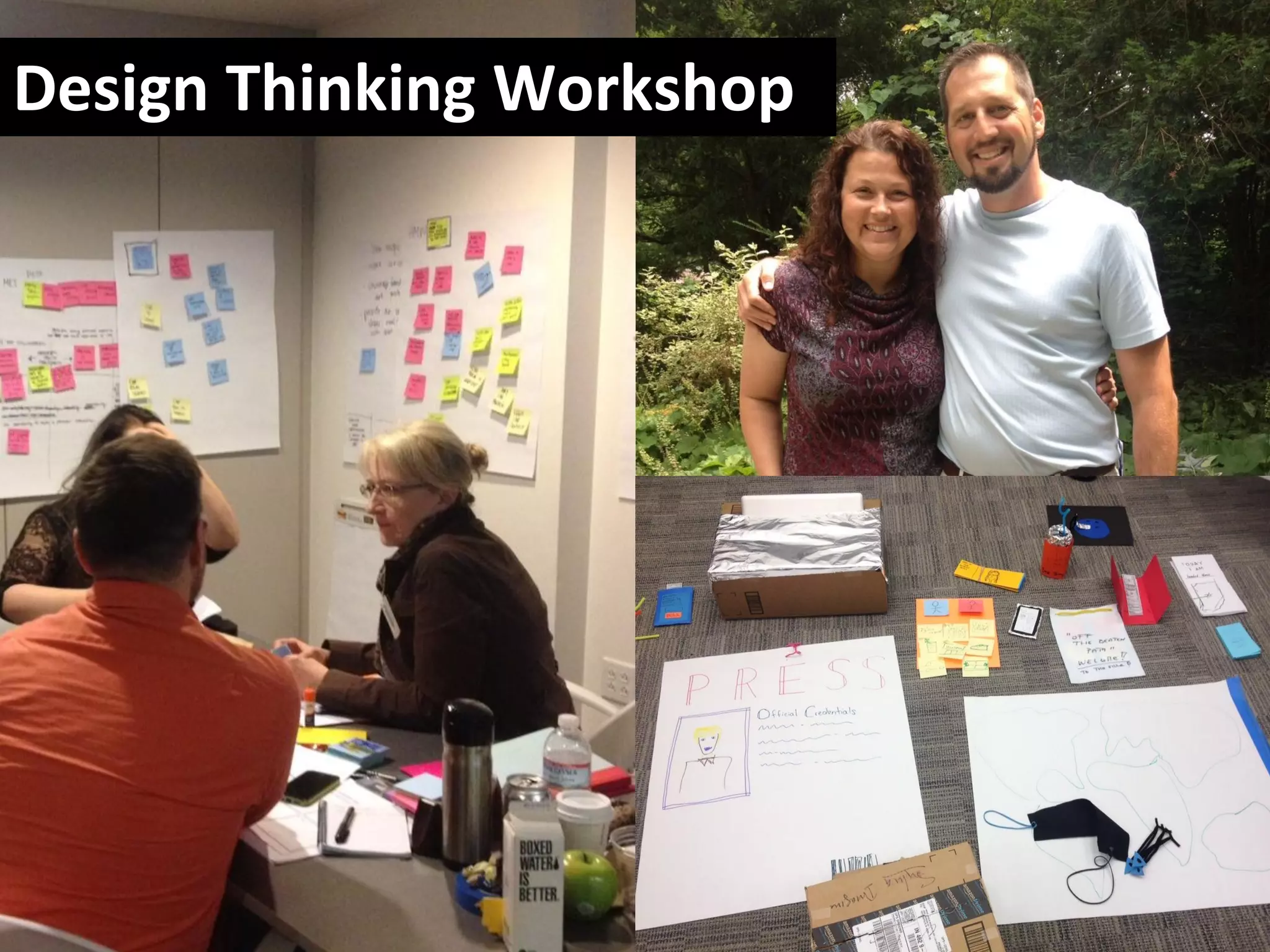
Design Thinking Workshop
Prototype Testing
Visual Identity Testing
Option 1 Option 2
Option 3
Title Testing
Paintings in the Round
• Round room (12)
• Round objects (8)
• Paintings of round objects (7)
• Music round (5)
• Circular paintings, round canvas
(4)
• Architecture (2)
• Theatre (2)
• Abstract/Geometric Art (3)
• Panorama (2)
• Other (5)
On the Flipside: Secrets
on the Back of Paintings
Remedial Evaluation: Dream Cars
Summative: Exhibition Evaluations
• Have learning outcomes been
met?
• Are visitors satisfied with their
experience?
• How do they engage with the art
and interpretive tools?
• What problems do visitors
encounter?
• Who visited the exhibition
(demographics & psychographics)?
0%
10%
20%
30%
40%
50%
60%
70%
1 2 3 4 5 6 7 8
%UsageofExhibitionElements
Gallery #
Extended Labels Simple Labels Artworks
Observations
Results
Before
After
Less Text More Visuals
Experiment with Text
Multisensory experiences
Provide More Active Experiences
Old Method
Engagement Framework
Multiple Platforms
Personal Connections
Stimulate Creativity
Higher Visitors’ Satisfaction
BEAUTY & BELIEF AI WEIWEI INDIANA
FACE TO
FACE
O’KEEFFE
Learning Outcome 1 73% 87% 97% 93% 90%
Learning Outcome 2 67% 77% 86% 83% 80%
Learning Outcome 3 67% 53% 79% 63% 57%
Learning Outcome 4 60% 47% 79% 50% 57%
Learning Outcome 5 47% 40% 62% 37% 53%
Learning Outcome 6 40% 40% 34% 33% 33%
Learning Outcome 7 30% 30% 24% 20% 30%
Learning Outcome 8 23% 27%
Old Model New Model
Better Communication of Key Messages
Higher Usage of Interpretative Tools
30-50% 40-60%
46%60%
Successful Participatory Projects
40%
60%24%
23%
Challenges
• Resistance mostly from
curatorial staff
• Resistance from other
institutions
• Process is more time-
consuming (planning is two
years out)
• Process is more contentious
(Who directs the process?
Conflict vs. Creativity)
Next Steps•Involve designers and
curators more frequently in
the testing process
•Implement strategies to
help members of the core
team work better together.
•Extend the model to
permanent collection and
contemporary exhibitions
•Understand consequences
of new admission model
Questions?
sfantoni@imamuseum.org
@silviaff20

Visitor-Centered Exhibition Design: A paradigm Shift for Art Museums