ALIGNMENT OF
TTP
PRESESNTED BY:
SIDRA MANZOOR
3RD YEAR
Orthotics and prosthetics
Rawalpindi Medical College
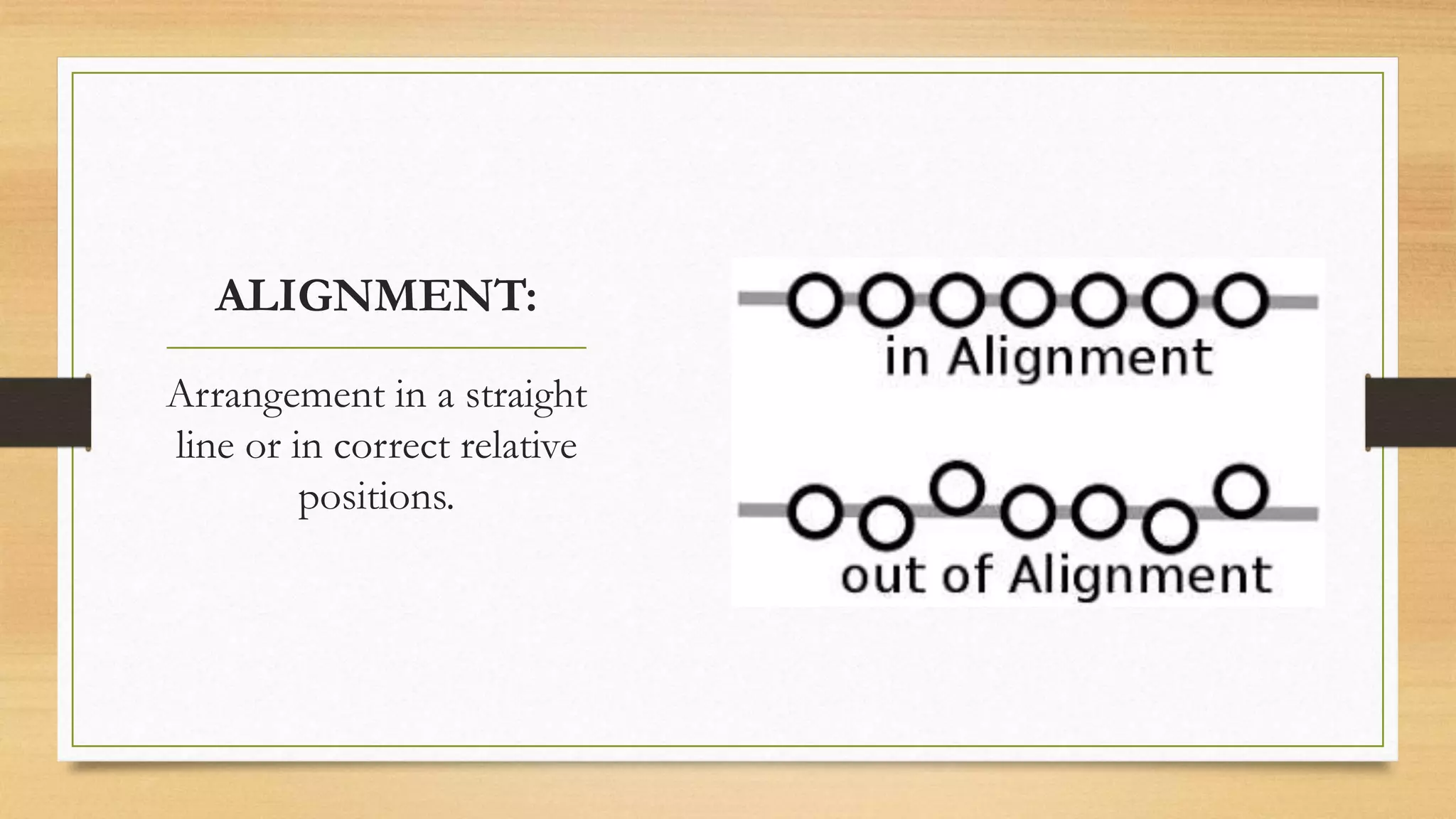
ALIGNMENT:
Arrangement in a straight
line or in correct relative
positions.
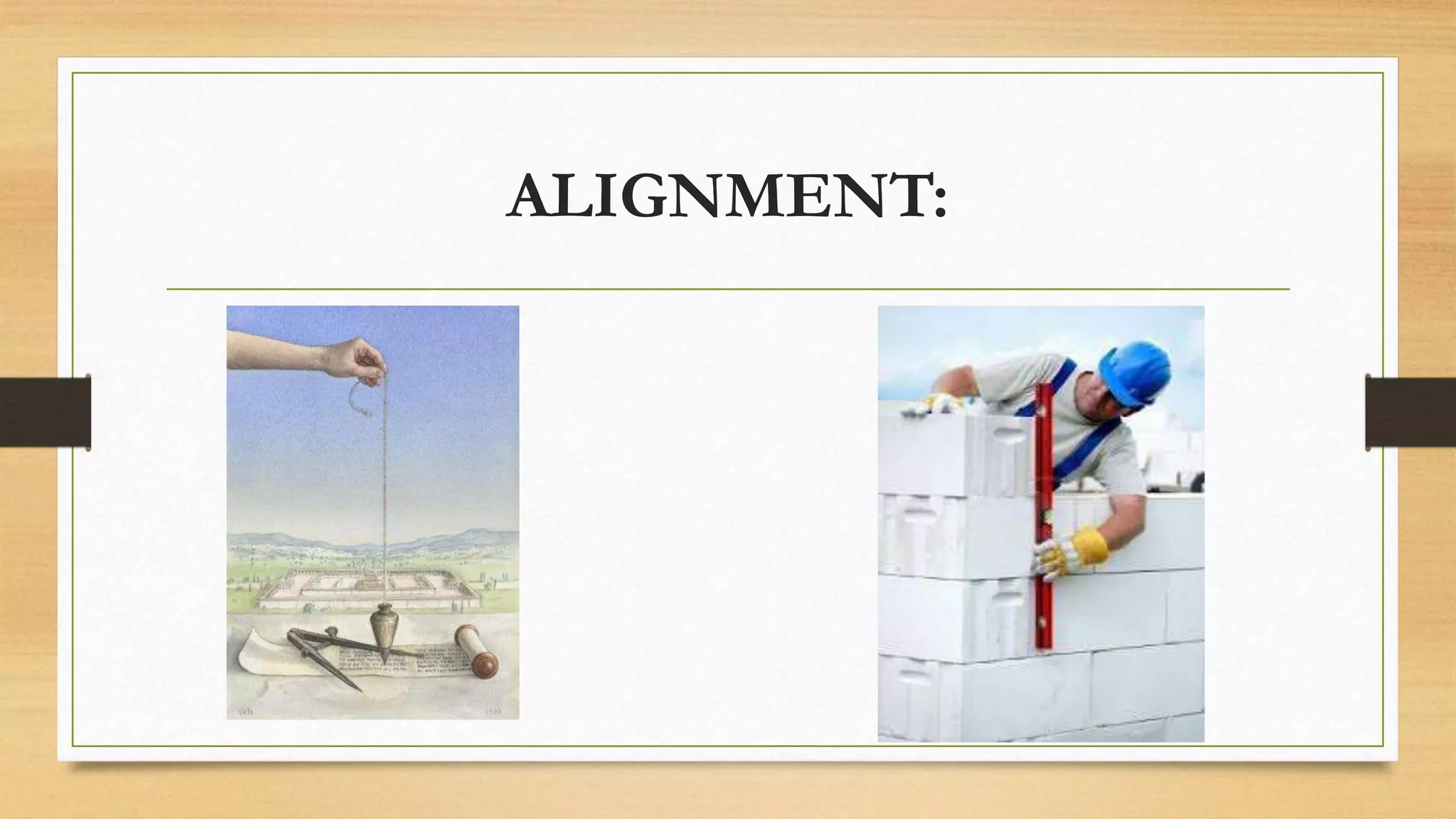
ALIGNMENT:
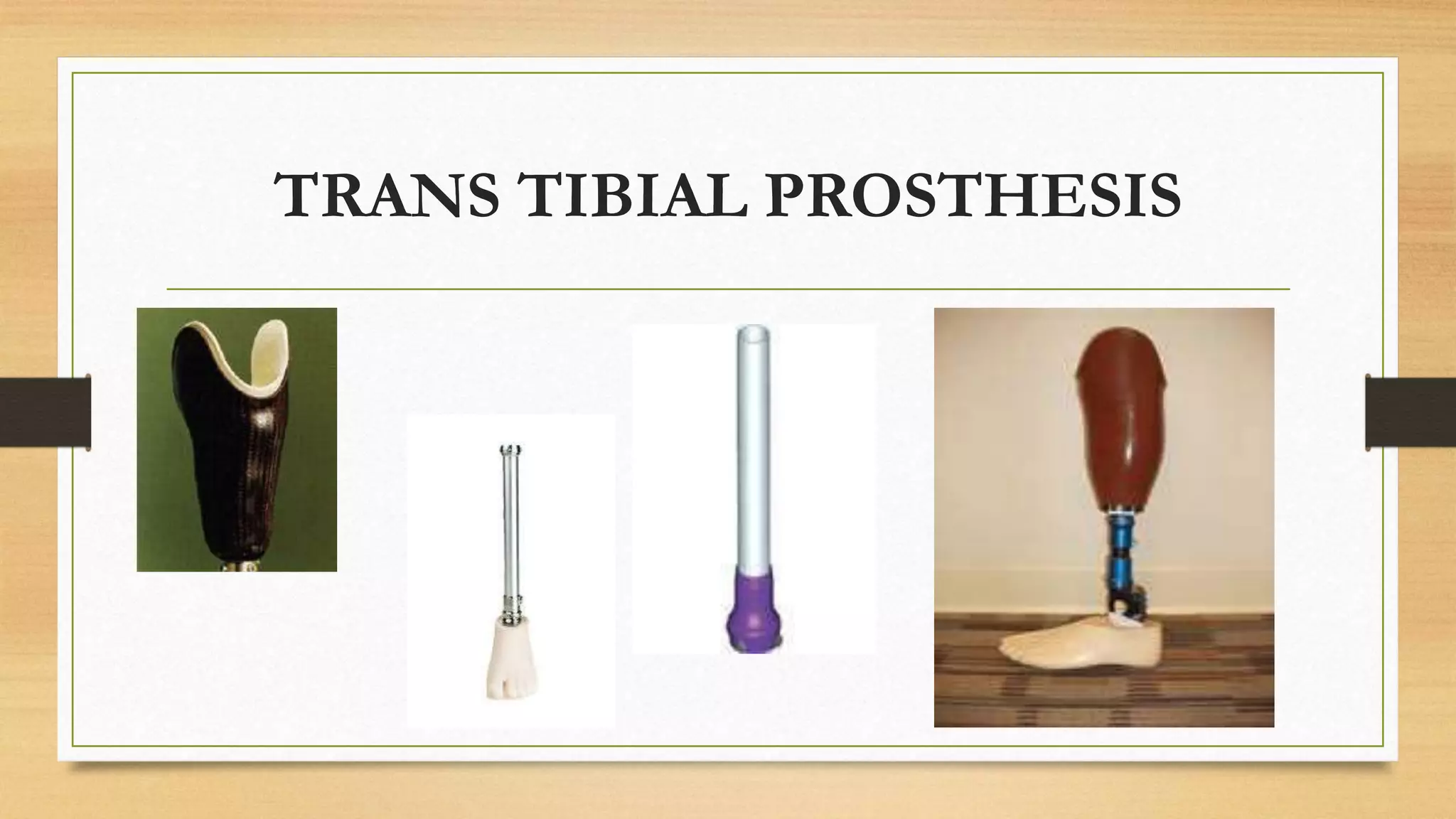
ALIGNMENT OF TTP:
The spatial relationship between prosthetic components and
the amputee..”
Prosthetic component are:
Socket
Pylon tube
Prosthetic foot
TRANS TIBIAL PROSTHESIS
ROLE OF ALIGNMENT
Proper alignment and good socket
go hand in hand , one will not do
without other.
A well fitting socket will be
uncomfortable with poor
alignment and vice versa.
GOALS OF ALIGNMENT:
Even weight distribution
Smooth natural gait
Less energy expenditure
Cosmetic realism
TYPES OF ALIGNMENT:
bench alignment
Static alignment
Dynamic alignment
BENCH ALIGNMENT:
“Standard alignment with all the alignment screw neutral and
technician assemble the prosthetic component..”
Also called initial alignment.
This is done before fitting the prosthesis onto the patient and before weight
bearing.
Ensure that:
Prosthesis is stable without any support
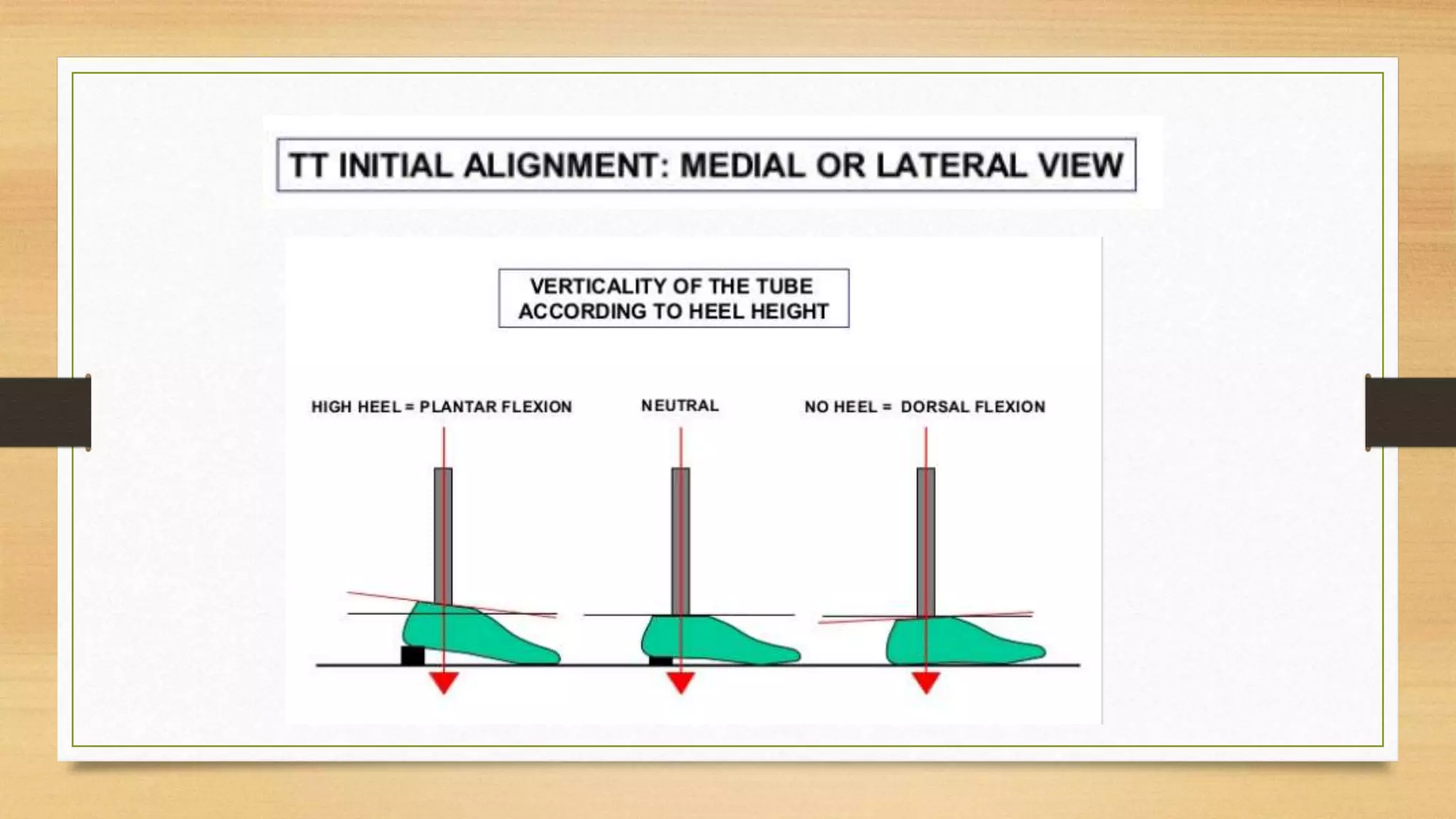
Prosthesis is aligned within the patient shoes /on the heel height of 1cm
Pylon tube is vertical
Foot size is according to the sound side and foot is properly aligned
Socket, shank, foot are in proper relation according to the readings done
during pt. assessment.
ALIGNMENT CAN BE DONE BY:
• Tilting (changing the angulation)
• Shifting (sliding the foot or socket)
Make Sure:
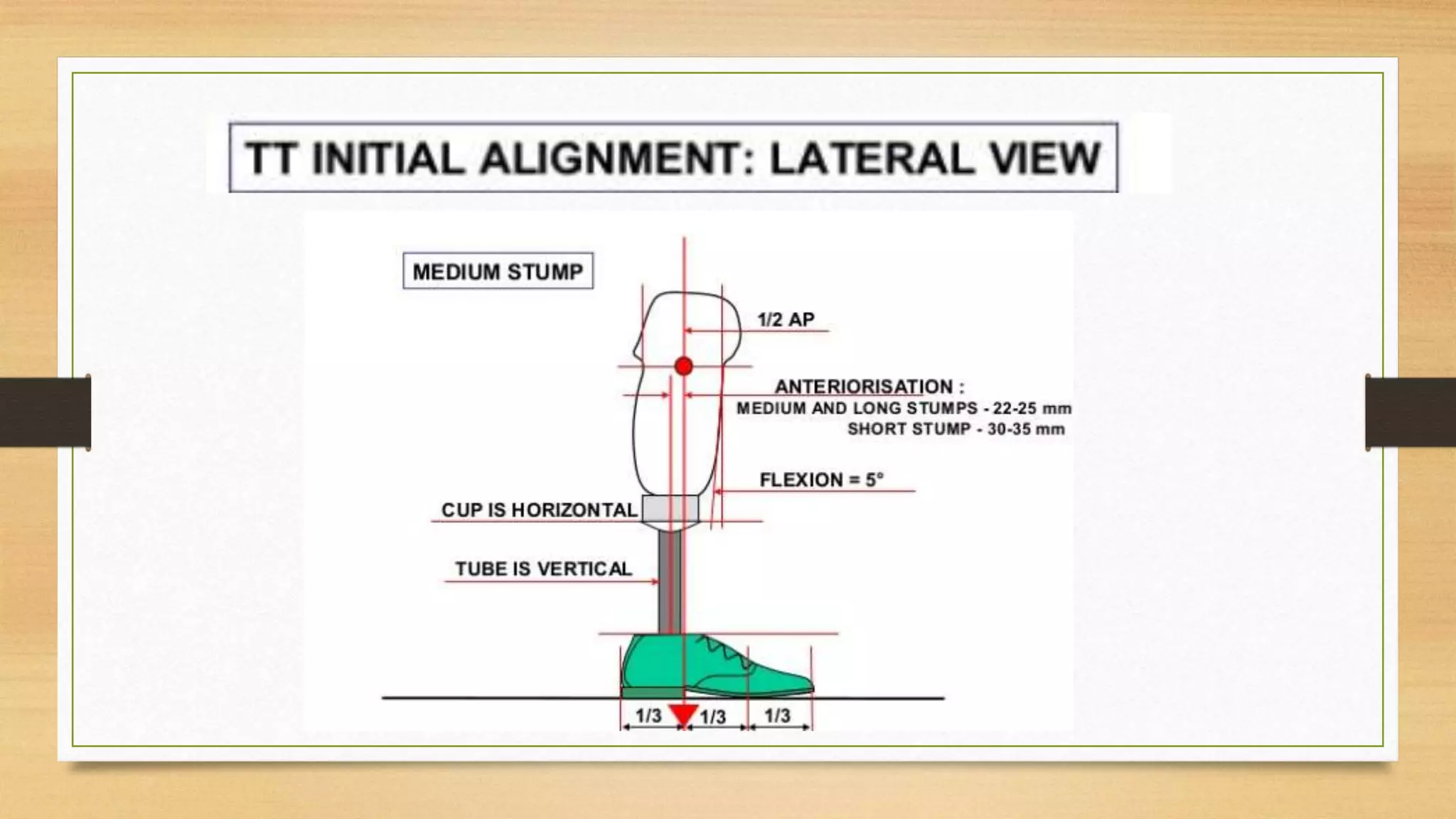
• The socket and foot are attached to each other so that socket is flexed 5-7
degree.
• If the knee has flexum , the socket should be initially set with that amount
of flexion then add 5 deg. Of flexion to the initial flexum.
Advantage:
Remember that this initial alignment give prosthetic enough free way to make
all the changes needed during the static and dynamic alignment without too
much pain taking . This way we maximize our chance to obtain the optimum
final alignment for the patient.
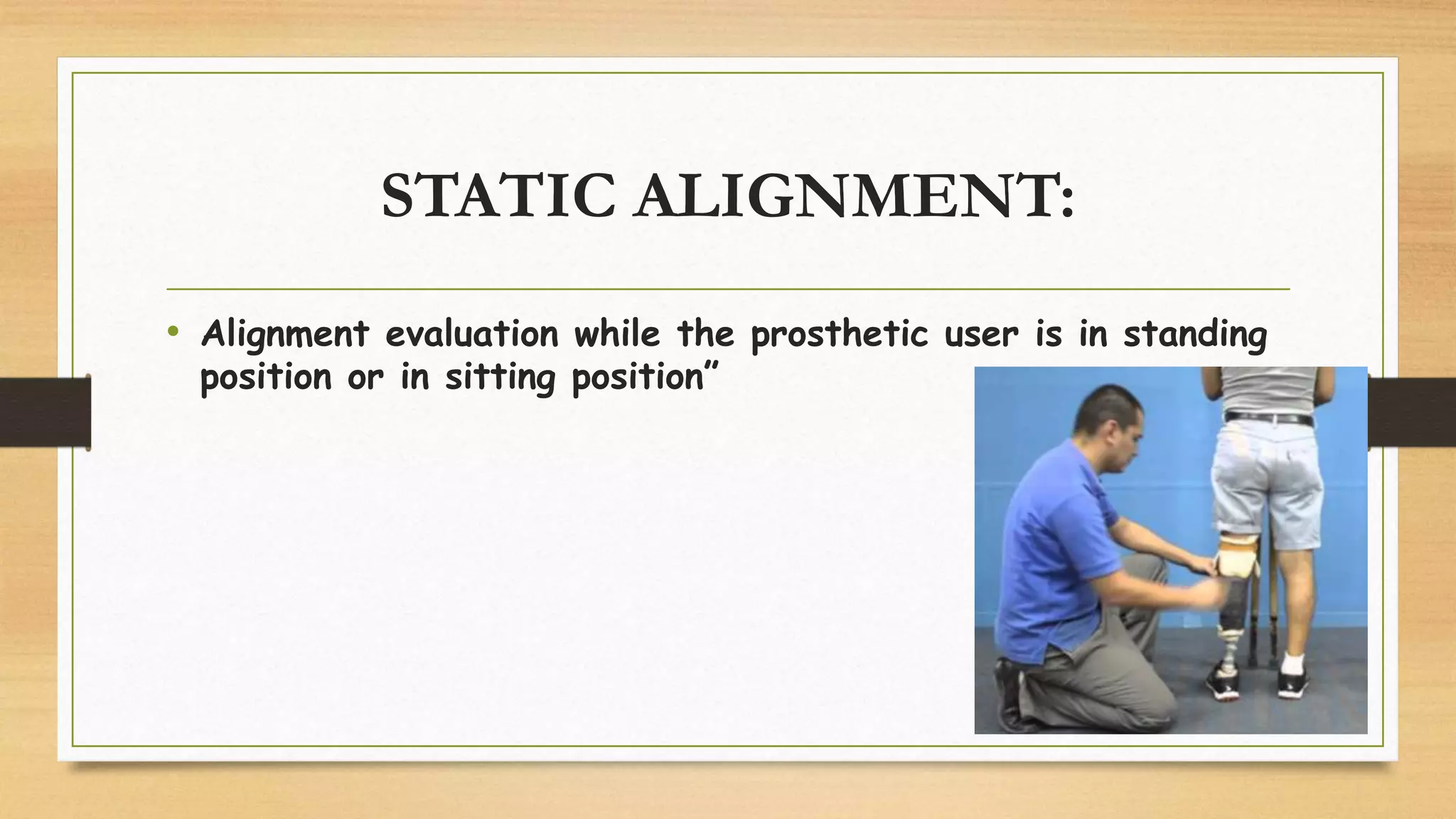
STATIC ALIGNMENT:
• Alignment evaluation while the prosthetic user is in standing
position or in sitting position”
Preliminary alignment of the prosthesis is observed on amputee as he stands
between parallel bars and shift his weight equally between prosthesis and sound leg.
Put the leg on patient and assess the fit.
Assess the height and ask the pt. about pain.
Check that hip is in level (not externally rotated) and toes out.
Check the height of pt. comparing both legs.
Check the initial tilt of socket.
STATIC ALIGNMENT
STATIC ALIGNMENT IN DIFFERENT
POSITIONS:
In standing:
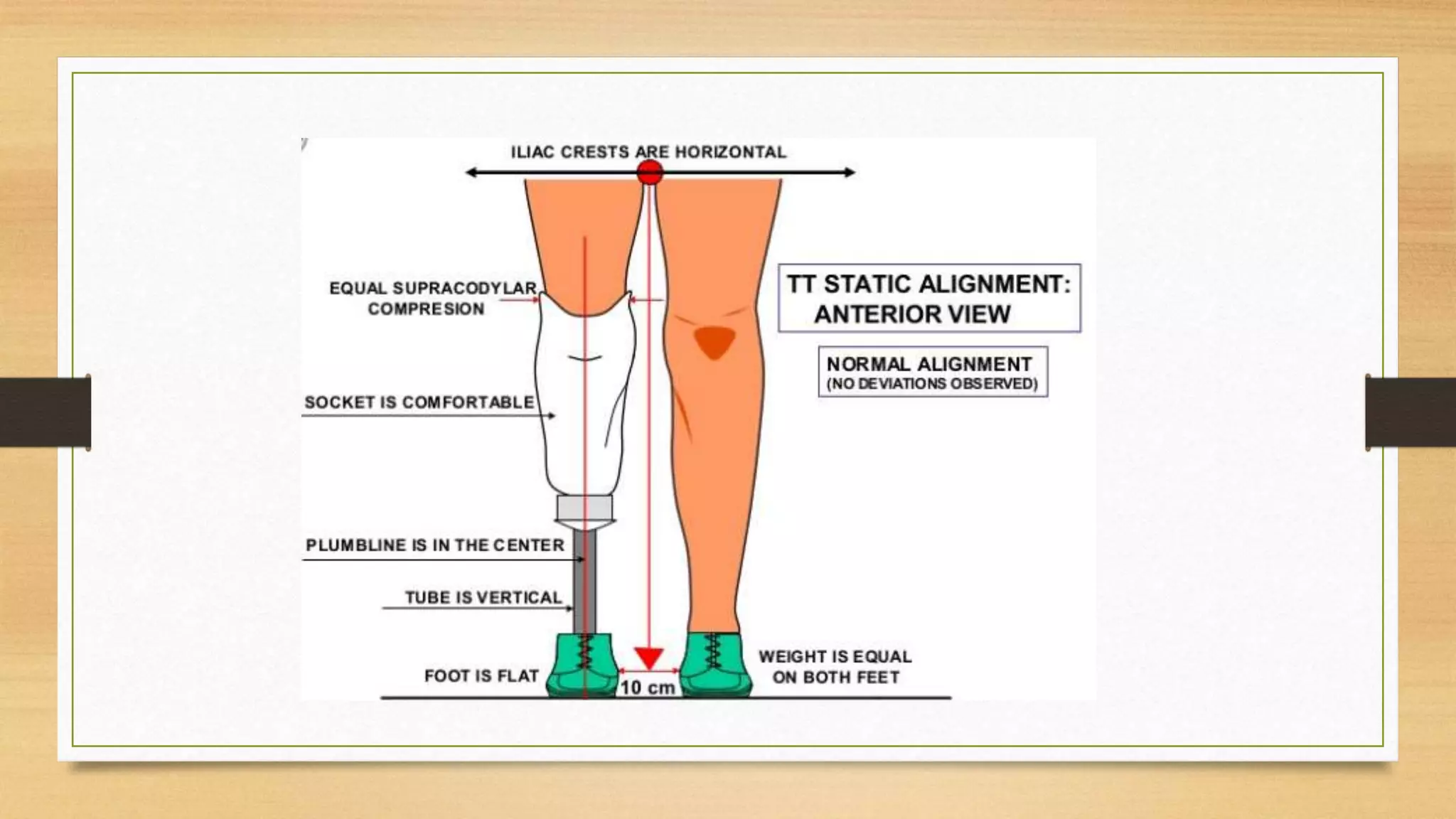
Weight distributed on both limbs and feet are approximately 10cm apart
In sitting:
both the knee joint flex at 90 degree and feet are touching the ground
ENSURE THAT:
Socket is 5-7 degree flex
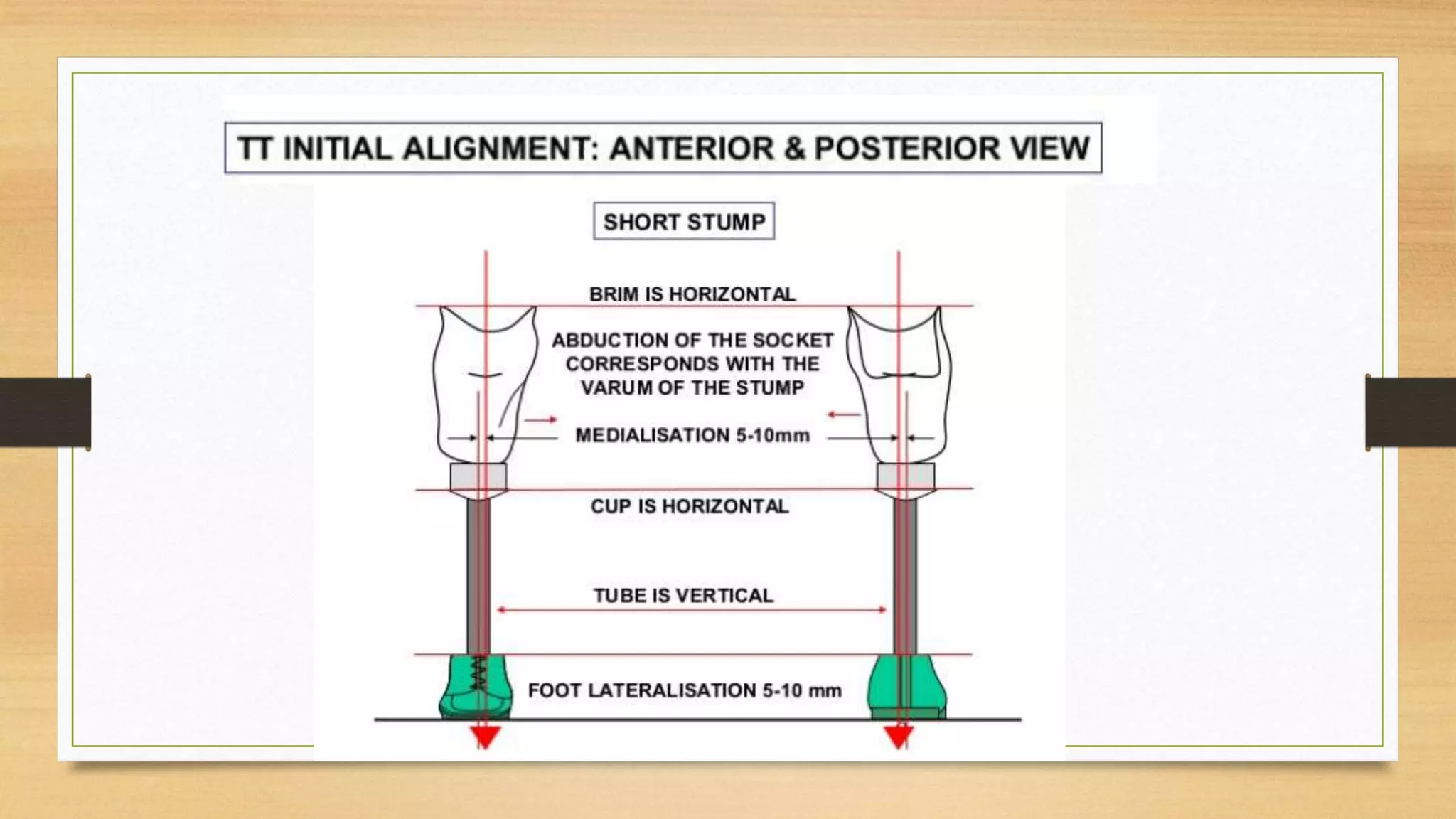
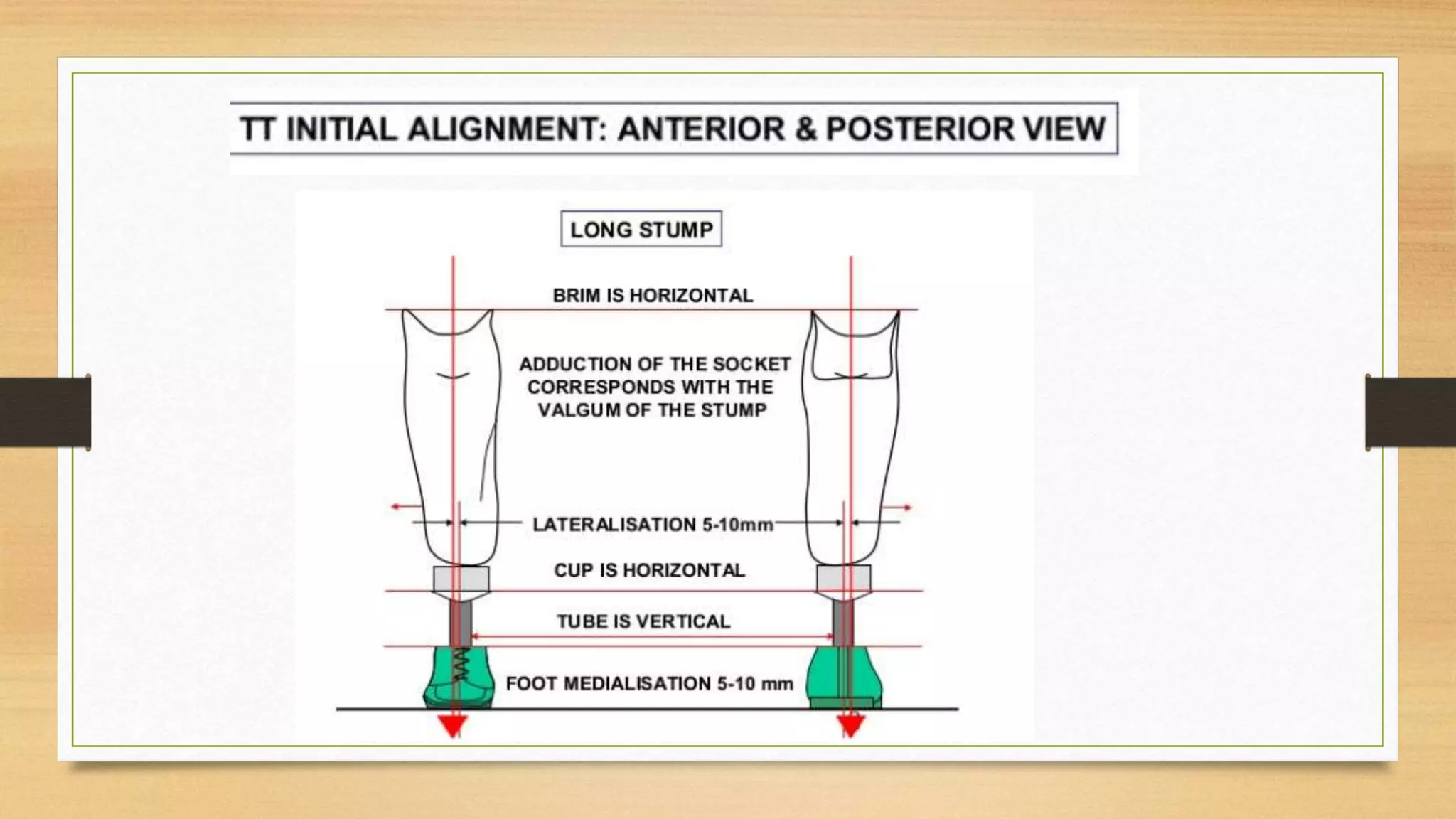
Socket is 5-7 degree adducted
Feet are 5-7 degree in external rotation
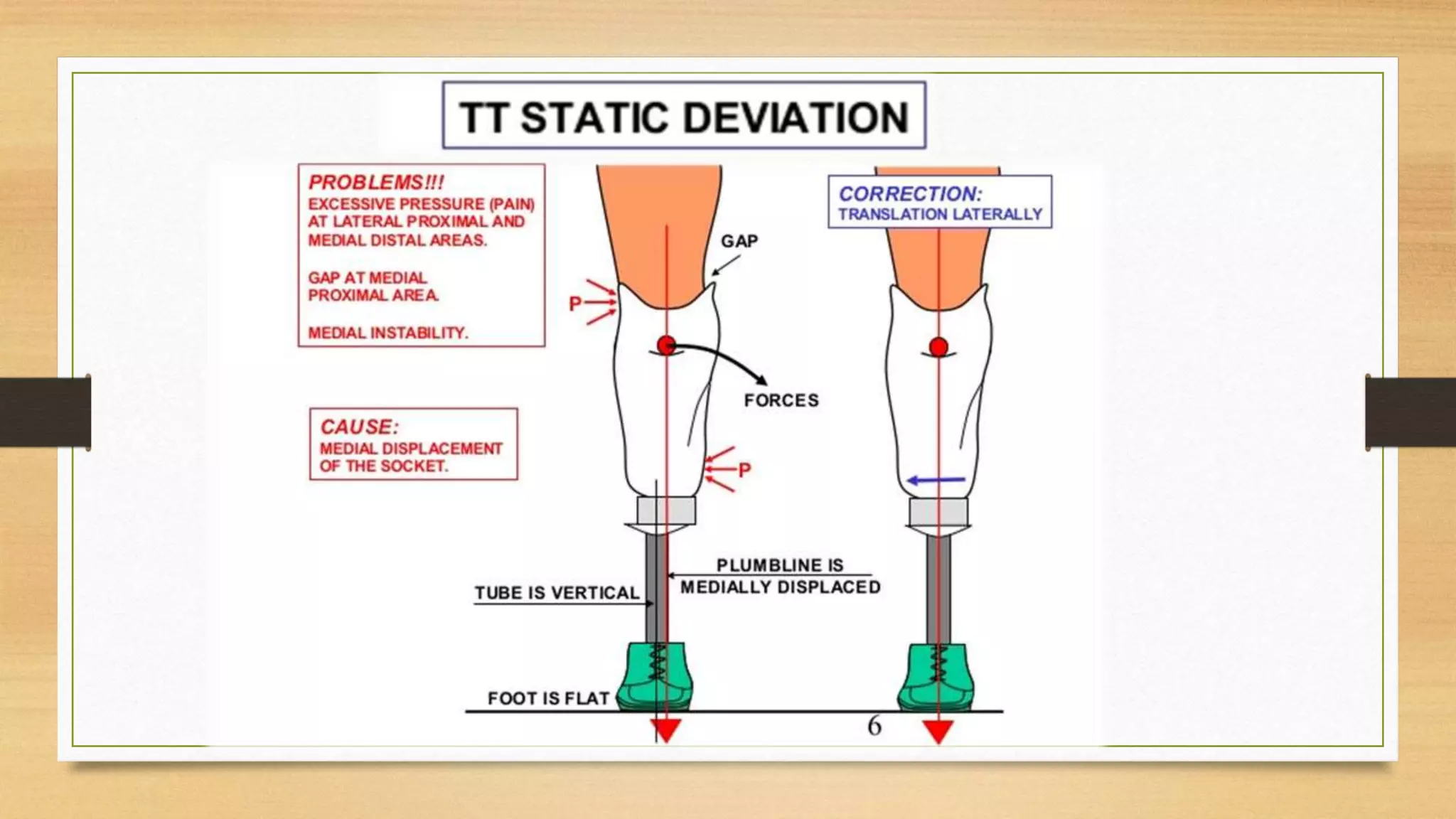
Plumb line in the middle of the knee , through the pylon tube and through
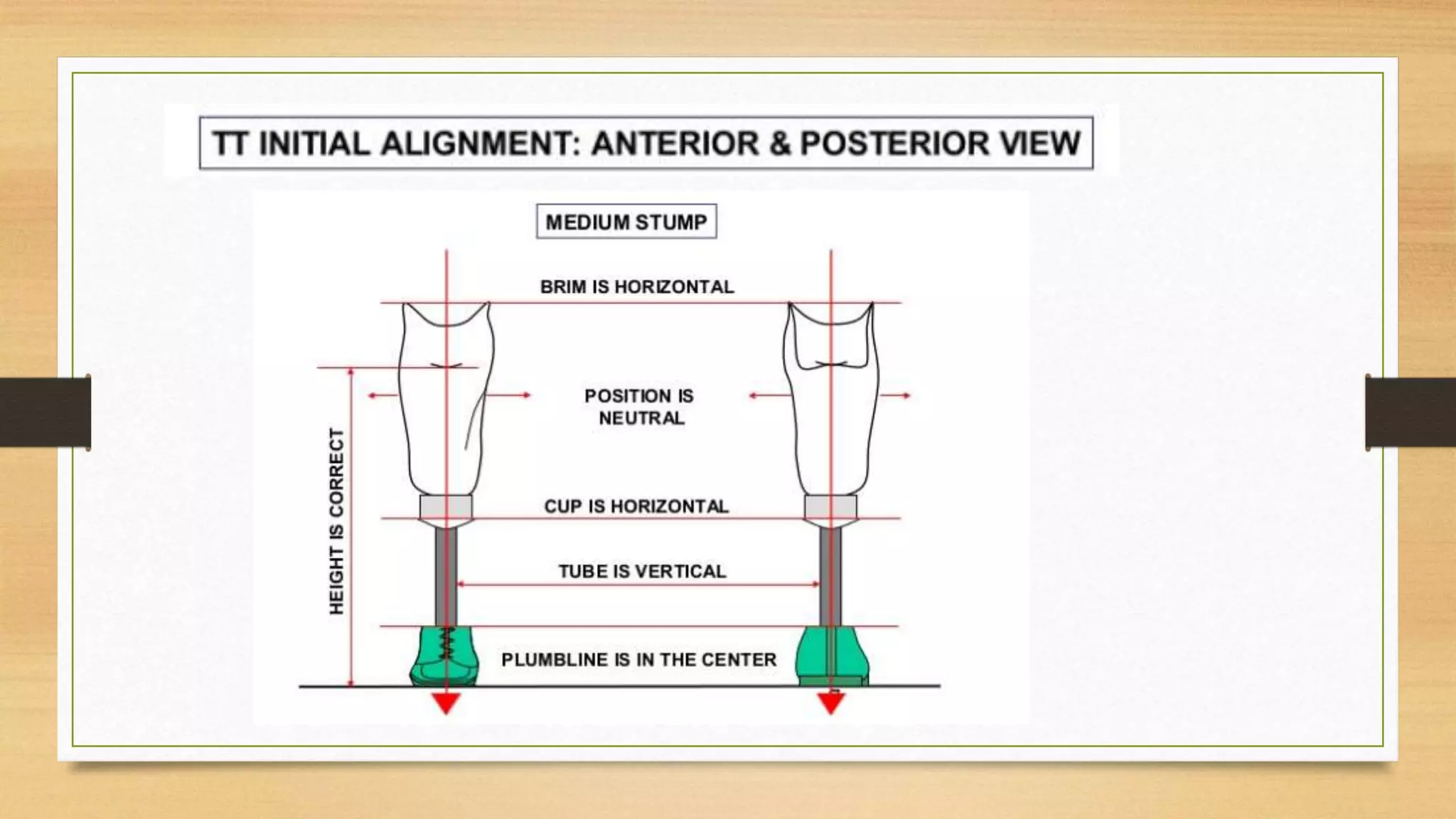
the 2nd web space in frontal view.
Patient is comfortable while standing
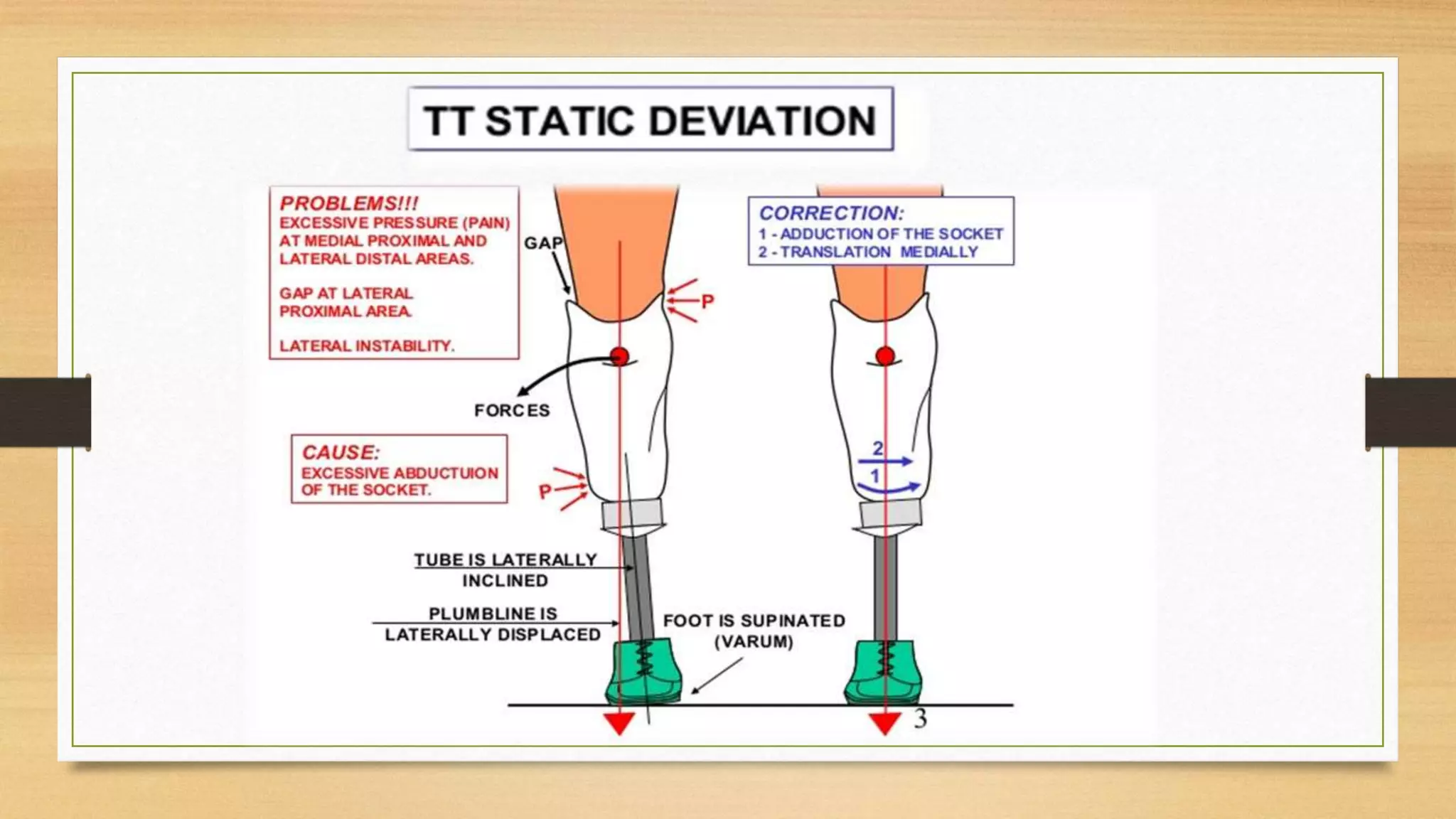
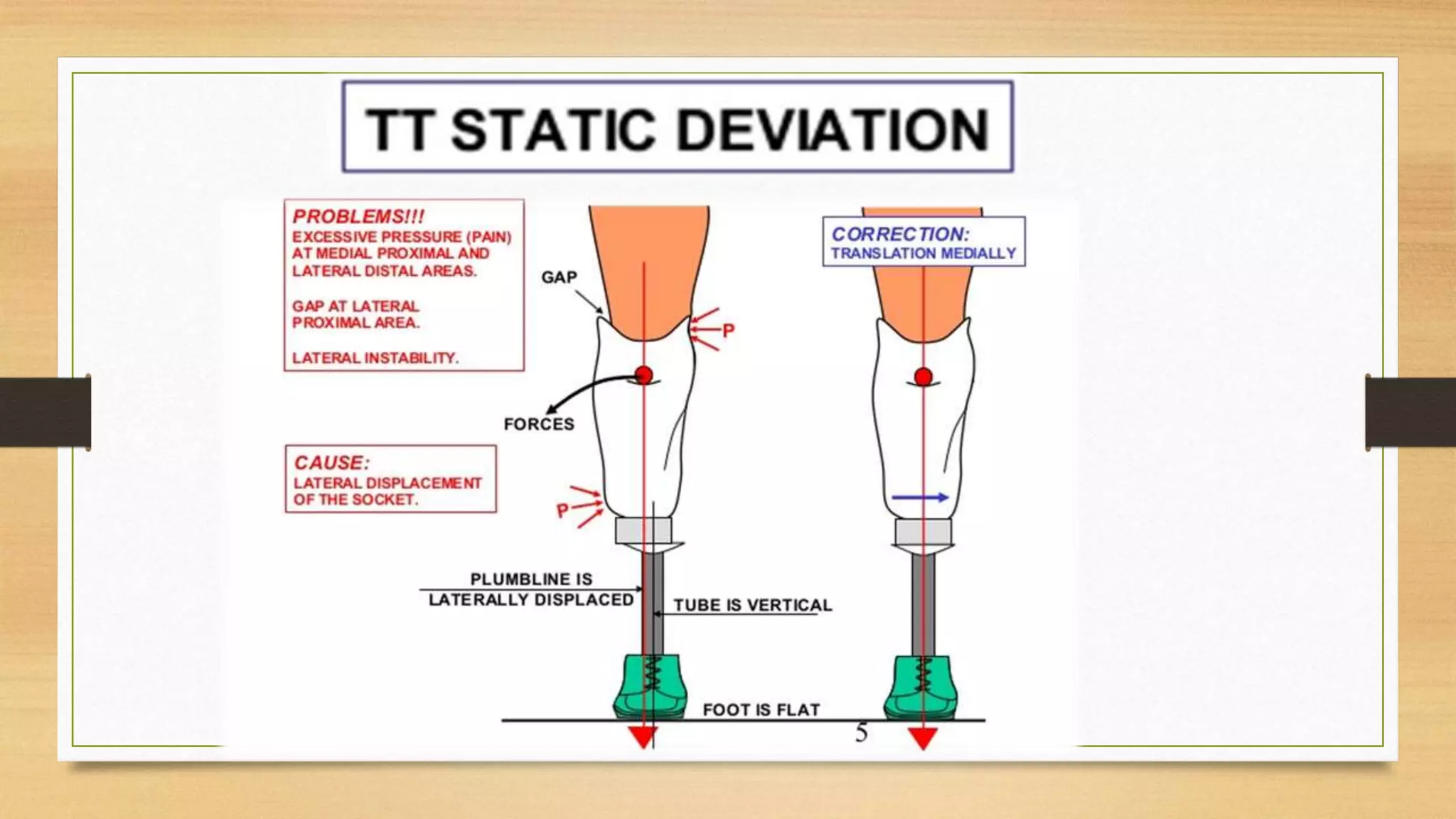
No uncomfortable pressure at lateral and medial brim of socket
Prosthesis is of correct length
REMEMBER THAT:
 Pt. is the most important part of the process. Always listen to what he say
and ask his opinion. But you must also use your judgement and your
experience to understand what the patient is trying to tell you.
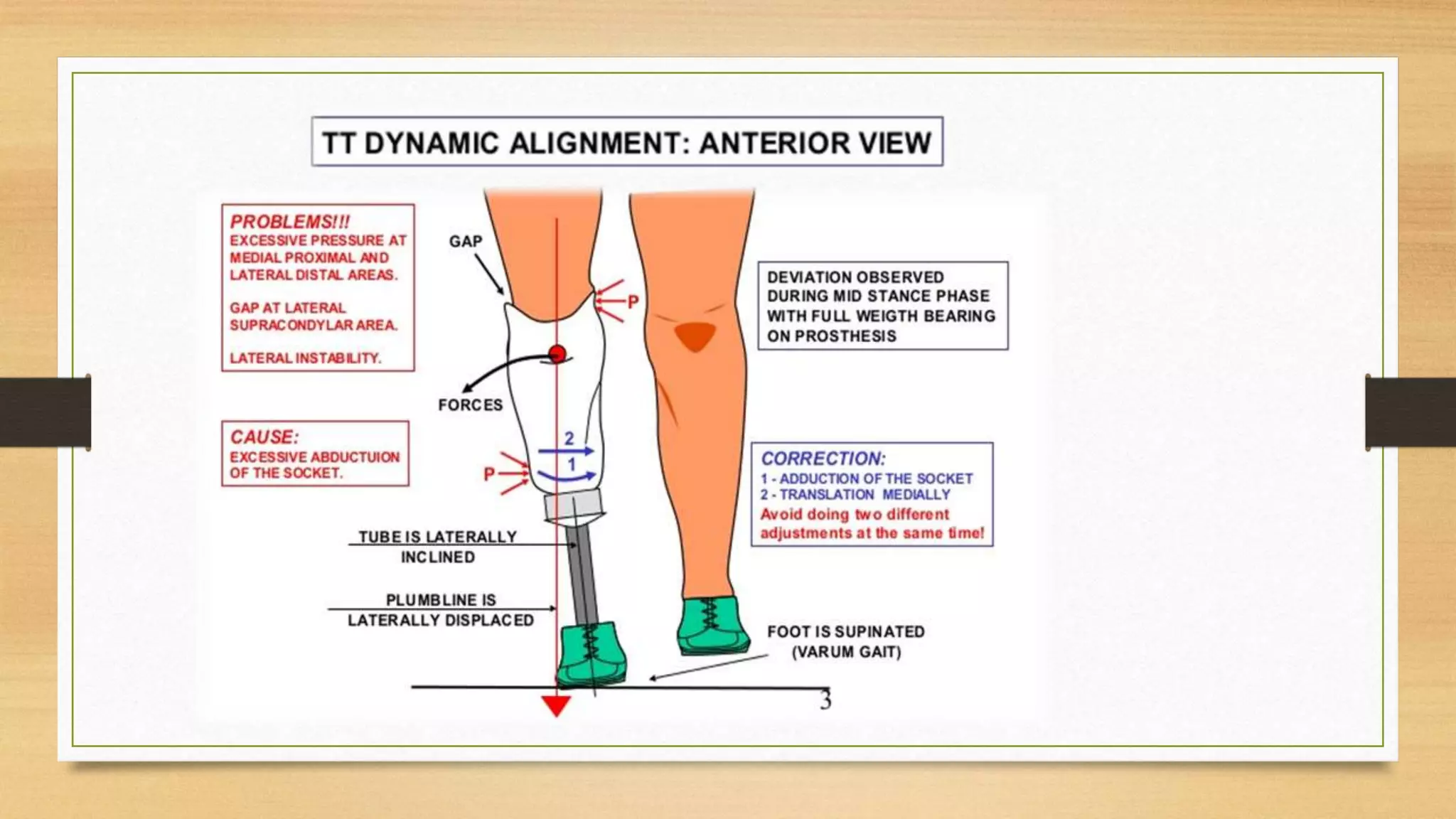
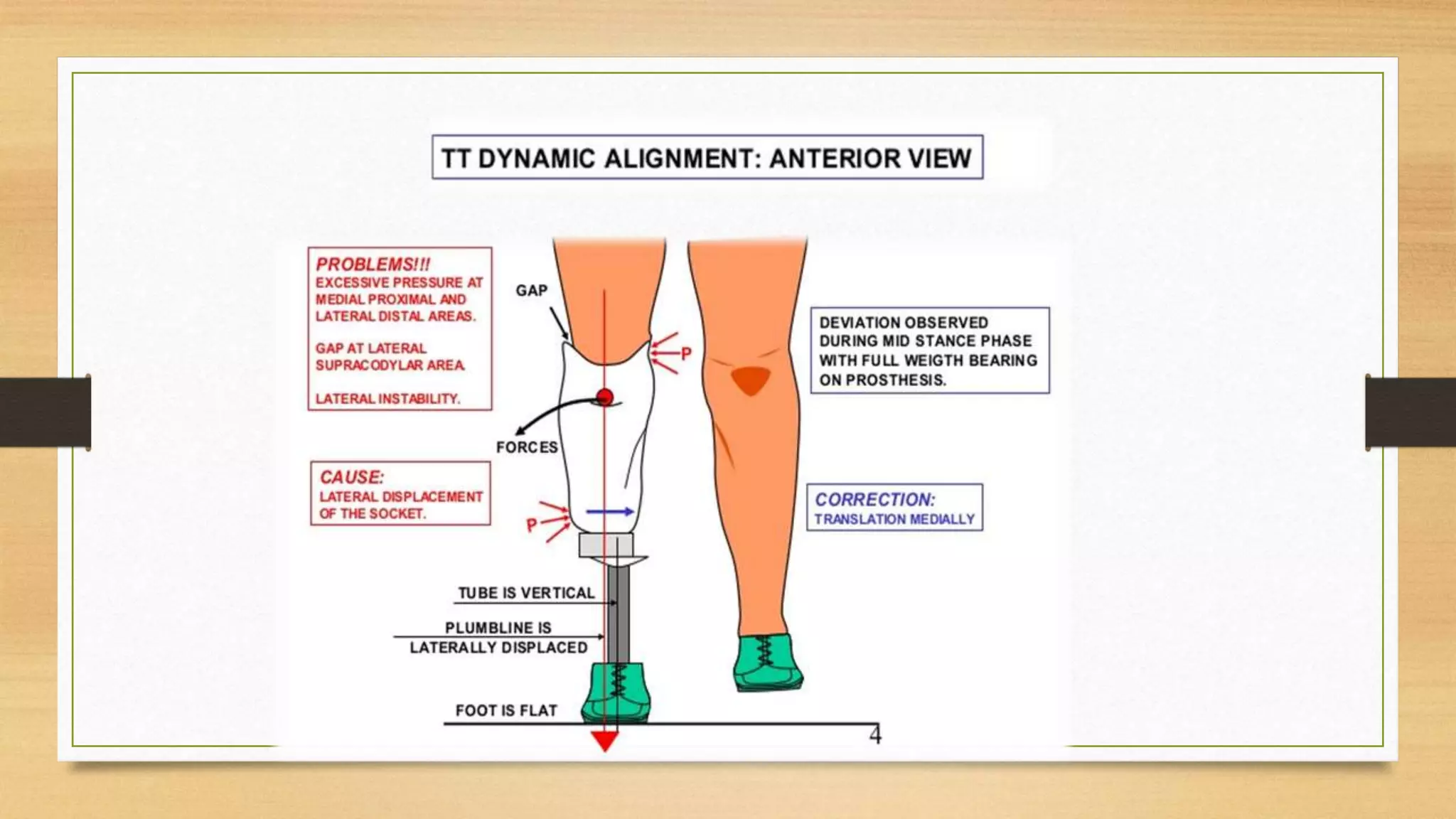
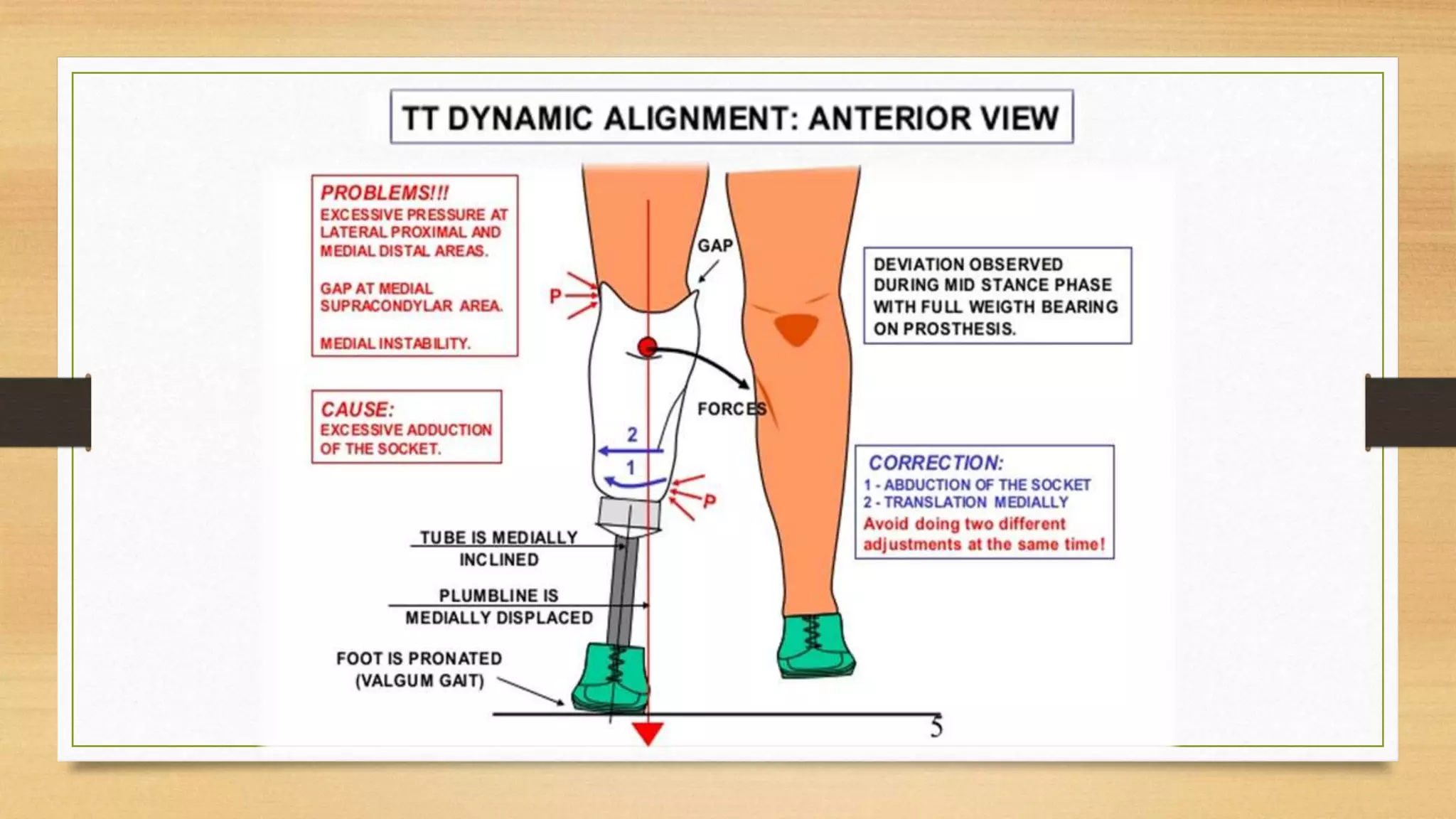
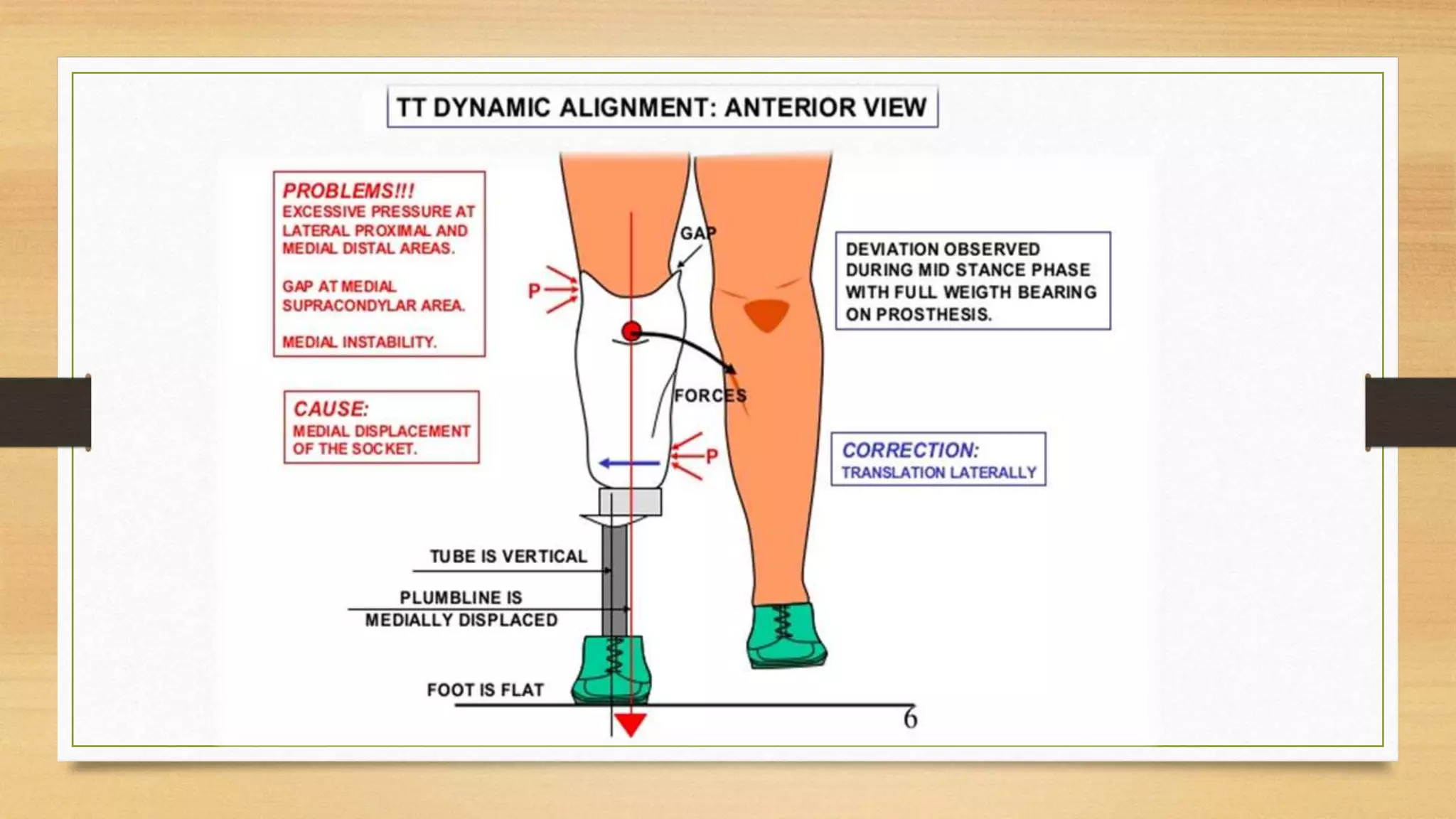
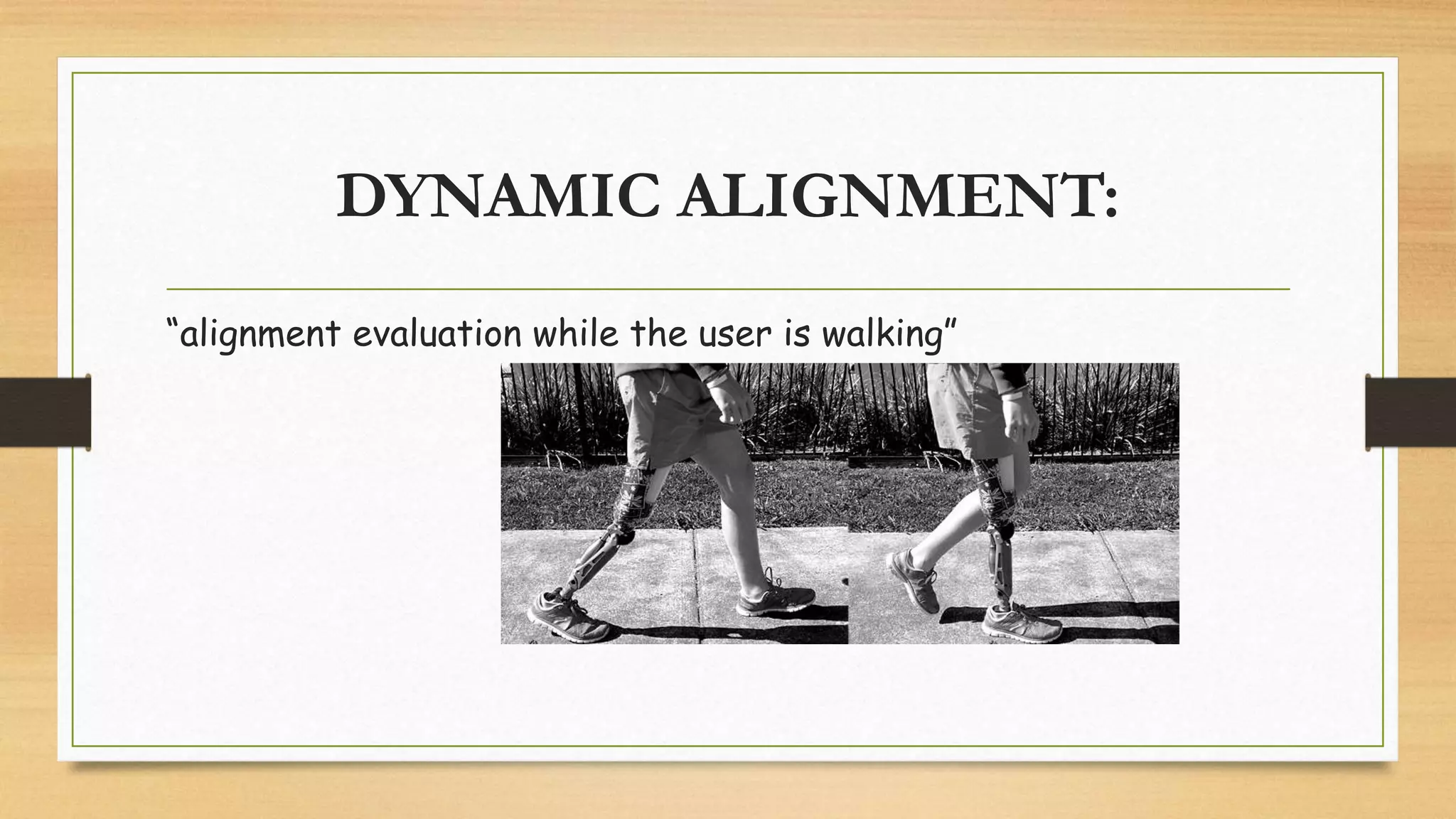
DYNAMIC ALIGNMENT:
“alignment evaluation while the user is walking”
Any gait deviation can be adjusted based on:
Visual observation
Feed back of discomfort from the user
Observation of skin responses after gait evaluation
Interpretation of gait deviation by practitioner
Ensure that:
GRF has a similar affect on the amputee’s joint movement as in normal
subjects
PROCEDURE:
Prosthetist should not expect perfect gait from the amputee.
Once the amputee has become accustomed to standing to the prosthesis and
shifting his weight from leg to leg, and after static alignment has been
completed, refinement can be made by observing the amputee walk. Best to
walk between the rails until he is confident.
If the alignment is not too bad allow the patient to walk for 2-3 minutes to
settle in . If alignment is wrong then adjust until it nearly correct and then let
the patient continue walking.
Cont.
View the patient from behind or in front, then from the side. Observes the
anomalies of the walking pattern and adjust as required.
If the patient is walking with an incomprehensible pattern to you, have him
walking on his old leg, if he has one. This will tell if he has any bad gait
habbits or the peculiarities. Observe the action of the sound leg as well as
since both legs may be affected by the same deformity. Then have him walk
with new prosthesis. From your observation see there is a way to improve or
not.
Observe the gait of Amputee:
At heel strike knee is extended
Between heel strike and foot flat knee is flexed
after mid stance knee is extended
Late stance knee is flexed
BK ALIGNMENT PROCEDURE:
Watch pt. walk on old leg.
Check information on measure chart.
Check prescription.
Check bench alignment. (in workshop)
Examine pt.’s stump carefully.
Put on stump sock and liner
Put on prosthesis.
Cont.
STATIC ALIGNMENT :
check height
check stability
check for the initial tilt of the socket.
check for toe out.
check for comfort.
Cont.
LOOK FROM FRONT AND BACK:
Toe position
Pole vertical
Toe rise at heel strike
Width of the walking base. (M-L thrust at knee)
Cont.
LOOK FROM SIDES:
Knee flexion
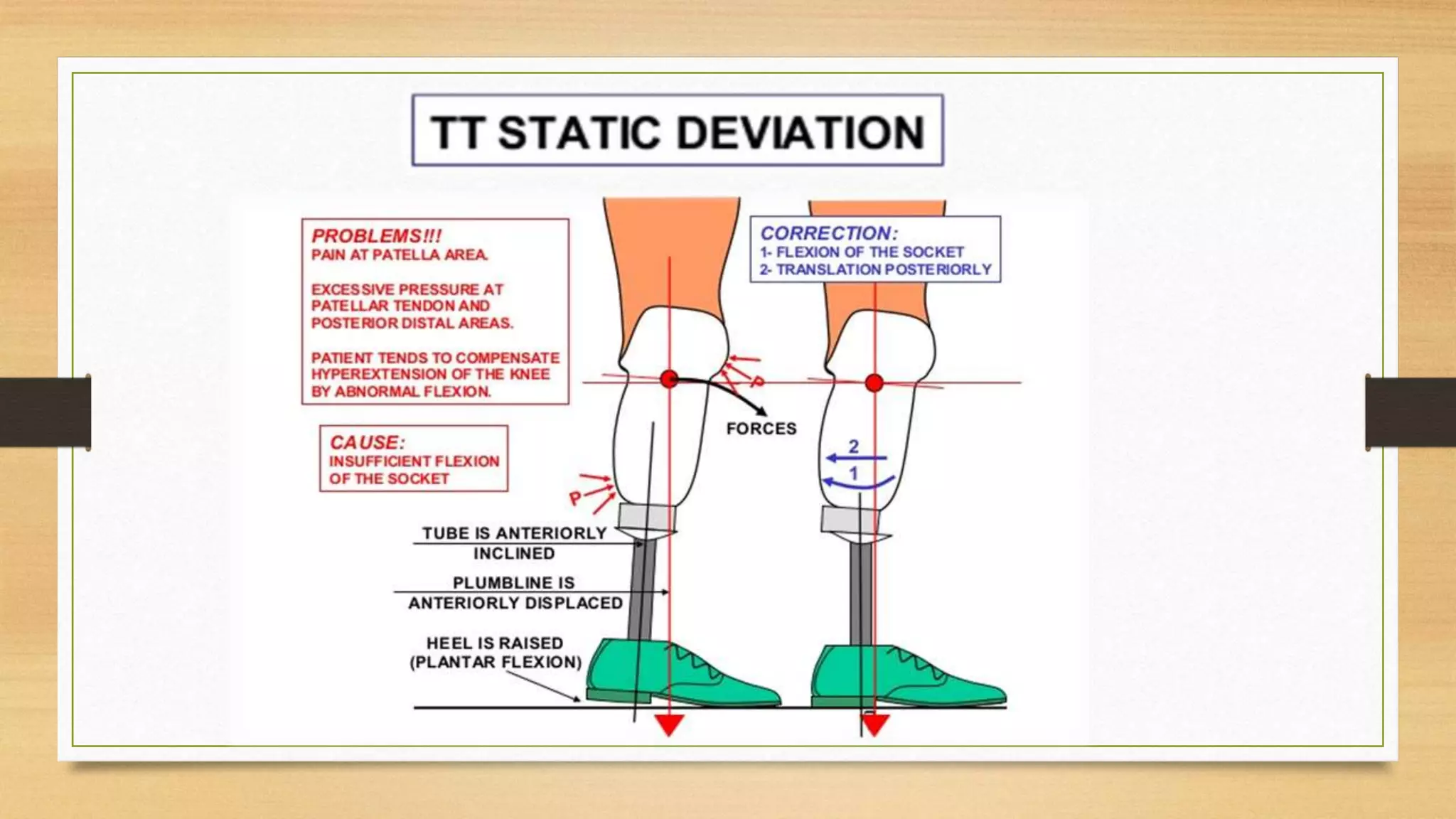
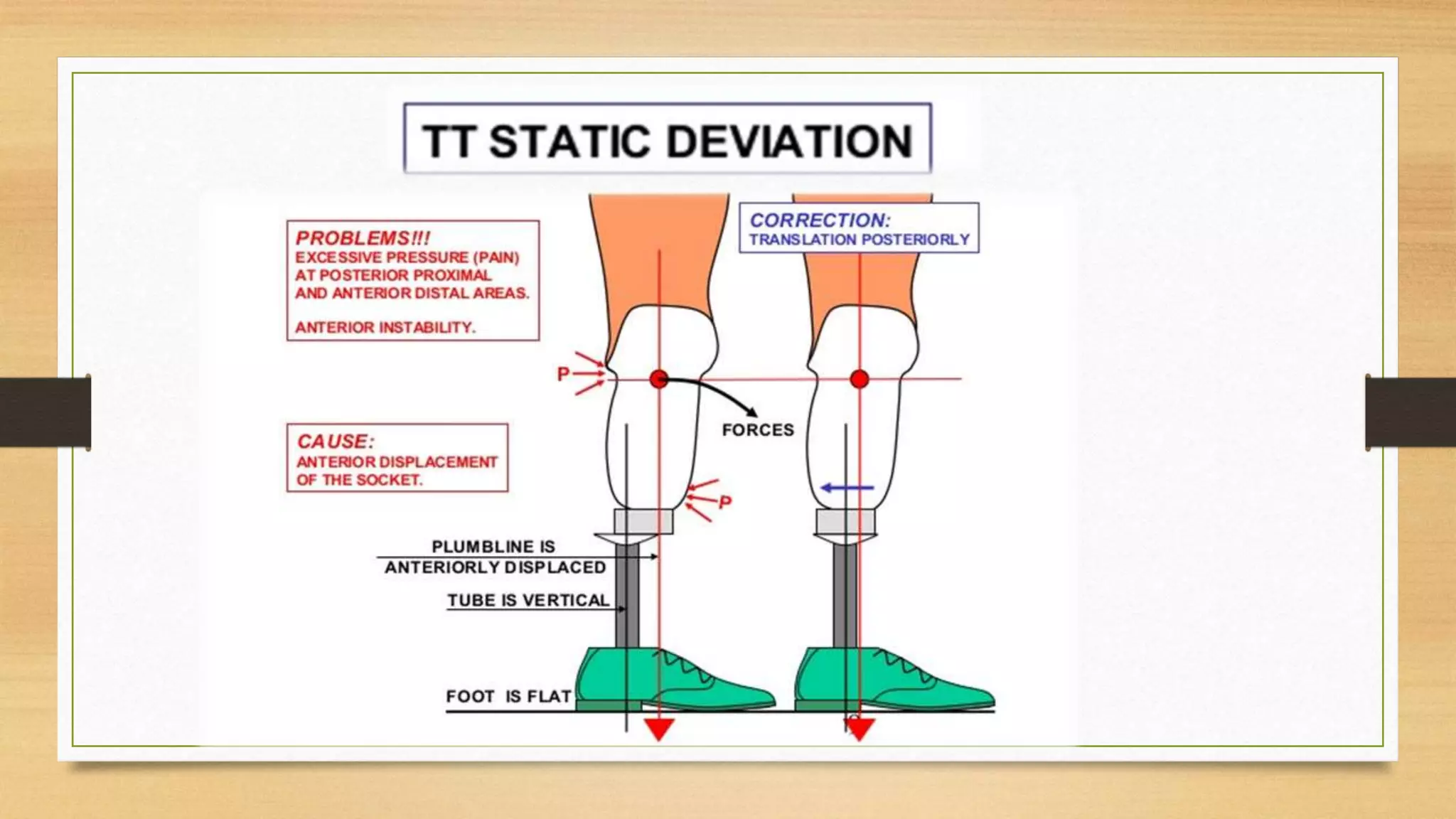
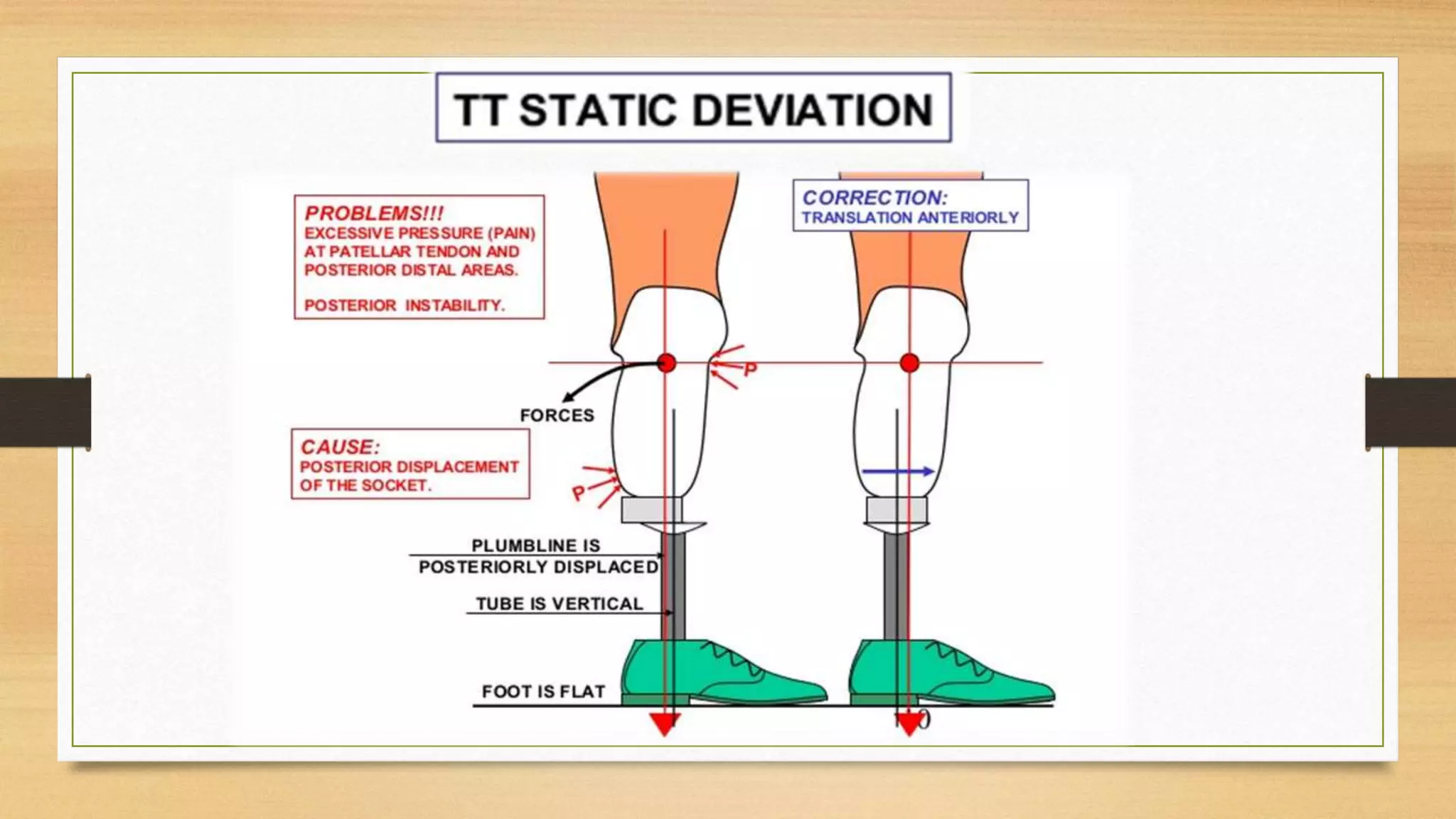
 hyperextesion moves socket anterior
 too much flexion moves knee posterior
Check everything again.
Check trim lines with patient sitting.
Take prosthesis off and check stump.
Check measures for cosmetic finish.
REFERENCE:
Below knee prosthetics, course work manual, national school of prosthetics
and orthotics, phnom penh, Cambodia. carson harte, anne henrickson.
Clinical aspects of lower limb prosthetics, The Canadian association of
orthotics and prosthetics.
Lower limb prosthetics,1990 revision, newyork university medical centre.
Red cross Manuals.
Alignment of Trans Tibial Prosthesis

Alignment of Trans Tibial Prosthesis

  • 2.
    ALIGNMENT OF TTP PRESESNTED BY: SIDRAMANZOOR 3RD YEAR Orthotics and prosthetics Rawalpindi Medical College
  • 3.
    ALIGNMENT: Arrangement in astraight line or in correct relative positions.
  • 4.
  • 5.
    ALIGNMENT OF TTP: Thespatial relationship between prosthetic components and the amputee..” Prosthetic component are: Socket Pylon tube Prosthetic foot
  • 6.
  • 7.
    ROLE OF ALIGNMENT Properalignment and good socket go hand in hand , one will not do without other. A well fitting socket will be uncomfortable with poor alignment and vice versa.
  • 8.
    GOALS OF ALIGNMENT: Evenweight distribution Smooth natural gait Less energy expenditure Cosmetic realism
  • 9.
    TYPES OF ALIGNMENT: benchalignment Static alignment Dynamic alignment
  • 10.
    BENCH ALIGNMENT: “Standard alignmentwith all the alignment screw neutral and technician assemble the prosthetic component..” Also called initial alignment. This is done before fitting the prosthesis onto the patient and before weight bearing.
  • 11.
    Ensure that: Prosthesis isstable without any support Prosthesis is aligned within the patient shoes /on the heel height of 1cm Pylon tube is vertical Foot size is according to the sound side and foot is properly aligned Socket, shank, foot are in proper relation according to the readings done during pt. assessment.
  • 12.
    ALIGNMENT CAN BEDONE BY: • Tilting (changing the angulation) • Shifting (sliding the foot or socket)
  • 14.
    Make Sure: • Thesocket and foot are attached to each other so that socket is flexed 5-7 degree. • If the knee has flexum , the socket should be initially set with that amount of flexion then add 5 deg. Of flexion to the initial flexum.
  • 23.
    Advantage: Remember that thisinitial alignment give prosthetic enough free way to make all the changes needed during the static and dynamic alignment without too much pain taking . This way we maximize our chance to obtain the optimum final alignment for the patient.
  • 24.
    STATIC ALIGNMENT: • Alignmentevaluation while the prosthetic user is in standing position or in sitting position”
  • 25.
    Preliminary alignment ofthe prosthesis is observed on amputee as he stands between parallel bars and shift his weight equally between prosthesis and sound leg. Put the leg on patient and assess the fit. Assess the height and ask the pt. about pain. Check that hip is in level (not externally rotated) and toes out. Check the height of pt. comparing both legs. Check the initial tilt of socket. STATIC ALIGNMENT
  • 26.
    STATIC ALIGNMENT INDIFFERENT POSITIONS: In standing: Weight distributed on both limbs and feet are approximately 10cm apart In sitting: both the knee joint flex at 90 degree and feet are touching the ground
  • 27.
    ENSURE THAT: Socket is5-7 degree flex Socket is 5-7 degree adducted Feet are 5-7 degree in external rotation Plumb line in the middle of the knee , through the pylon tube and through the 2nd web space in frontal view. Patient is comfortable while standing No uncomfortable pressure at lateral and medial brim of socket Prosthesis is of correct length
  • 37.
    REMEMBER THAT:  Pt.is the most important part of the process. Always listen to what he say and ask his opinion. But you must also use your judgement and your experience to understand what the patient is trying to tell you.
  • 38.
    DYNAMIC ALIGNMENT: “alignment evaluationwhile the user is walking”
  • 39.
    Any gait deviationcan be adjusted based on: Visual observation Feed back of discomfort from the user Observation of skin responses after gait evaluation Interpretation of gait deviation by practitioner
  • 40.
    Ensure that: GRF hasa similar affect on the amputee’s joint movement as in normal subjects
  • 41.
    PROCEDURE: Prosthetist should notexpect perfect gait from the amputee. Once the amputee has become accustomed to standing to the prosthesis and shifting his weight from leg to leg, and after static alignment has been completed, refinement can be made by observing the amputee walk. Best to walk between the rails until he is confident. If the alignment is not too bad allow the patient to walk for 2-3 minutes to settle in . If alignment is wrong then adjust until it nearly correct and then let the patient continue walking.
  • 42.
    Cont. View the patientfrom behind or in front, then from the side. Observes the anomalies of the walking pattern and adjust as required. If the patient is walking with an incomprehensible pattern to you, have him walking on his old leg, if he has one. This will tell if he has any bad gait habbits or the peculiarities. Observe the action of the sound leg as well as since both legs may be affected by the same deformity. Then have him walk with new prosthesis. From your observation see there is a way to improve or not.
  • 43.
    Observe the gaitof Amputee: At heel strike knee is extended Between heel strike and foot flat knee is flexed after mid stance knee is extended Late stance knee is flexed
  • 53.
    BK ALIGNMENT PROCEDURE: Watchpt. walk on old leg. Check information on measure chart. Check prescription. Check bench alignment. (in workshop) Examine pt.’s stump carefully. Put on stump sock and liner Put on prosthesis.
  • 54.
    Cont. STATIC ALIGNMENT : checkheight check stability check for the initial tilt of the socket. check for toe out. check for comfort.
  • 55.
    Cont. LOOK FROM FRONTAND BACK: Toe position Pole vertical Toe rise at heel strike Width of the walking base. (M-L thrust at knee)
  • 56.
    Cont. LOOK FROM SIDES: Kneeflexion  hyperextesion moves socket anterior  too much flexion moves knee posterior Check everything again. Check trim lines with patient sitting. Take prosthesis off and check stump. Check measures for cosmetic finish.
  • 58.
    REFERENCE: Below knee prosthetics,course work manual, national school of prosthetics and orthotics, phnom penh, Cambodia. carson harte, anne henrickson. Clinical aspects of lower limb prosthetics, The Canadian association of orthotics and prosthetics. Lower limb prosthetics,1990 revision, newyork university medical centre. Red cross Manuals.