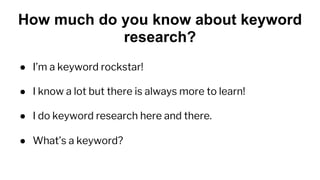
● I’m a keyword rockstar!
● I know a lot but there is always more to learn!
● I do keyword research here and there.
● What’s a keyword?
How much do you know about keyword
research?
The Heads & Tails of
Keyword Strategy
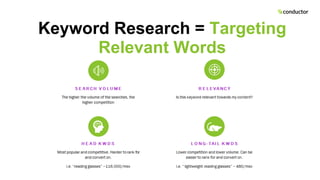
Keyword Research = Targeting
Relevant Words
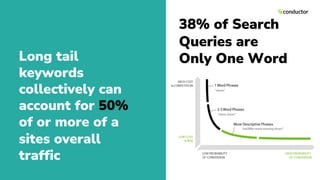
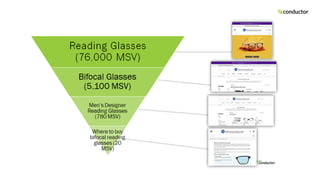
Long tail
keywords
collectively can
account for 50%
of or more of a
sites overall
traffic
38% of Search
Queries are
Only One Word
Keyword Research Best Practices
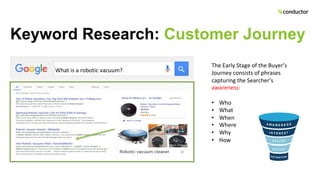
Keyword Research: Customer Journey
3
What is a robotic vacuum?
The Early Stage of the Buyer’s
Journey consists of phrases
capturing the Searcher’s
awareness:
• Who
• What
• When
• Where
• Why
• How
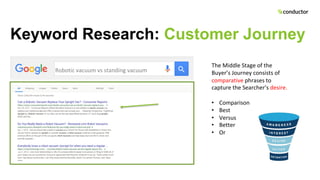
Keyword Research: Customer Journey
3
Robotic vacuum vs standing vacuum
The Middle Stage of the
Buyer’s Journey consists of
comparative phrases to
capture the Searcher’s desire.
• Comparison
• Best
• Versus
• Better
• Or
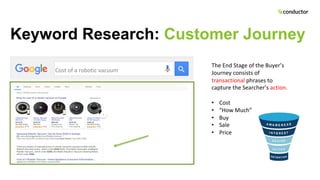
Keyword Research: Customer Journey
3
Cost of a robotic vacuum
The End Stage of the Buyer’s
Journey consists of
transactional phrases to
capture the Searcher’s action.
• Cost
• “How Much”
• Buy
• Sale
• Price
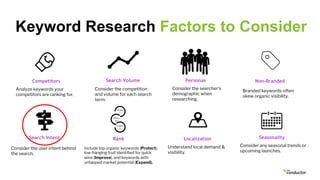
Keyword Research Factors to Consider
Personas
Consider the searcher’s
demographic when
researching.
Rank
Search Volume
Consider the competition
and volume for each search
term.
Search Intent
Consider the user intent behind
the search.
Competitors
Analyze keywords your
competitors are ranking for.
Localization
Understand local demand &
visibility.
Non-Branded
Branded keywords often
skew organic visibility.
Seasonality
Consider any seasonal trends or
upcoming launches.
Include top organic keywords (Protect),
low-hanging fruit identified for quick
wins (Improve), and keywords with
untapped market potential (Expand).
Protec
t
Impro
ve
Expan
d
The Importance of
Keyword Relevancy &
Intent
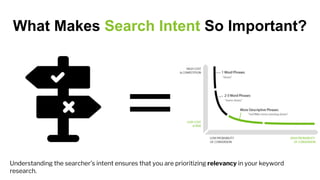
What Makes Search Intent So Important?
Understanding the searcher’s intent ensures that you are prioritizing relevancy in your keyword
research.
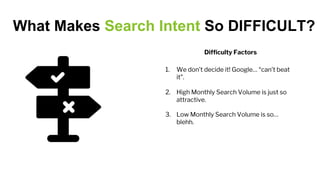
What Makes Search Intent So DIFFICULT?
1. We don’t decide it! Google… “can’t beat
it”.
2. High Monthly Search Volume is just so
attractive.
3. Low Monthly Search Volume is so…
blehh.
Difficulty Factors
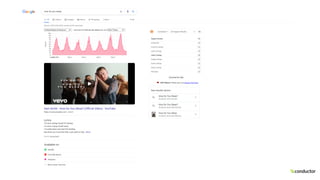
Meet Tired Tim
How do you sleep
How to Best Understand Search Intent
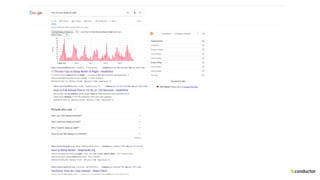
1. The SERP does not lie. Research your
phrase!
2. Competitive Rank Analysis
3. The higher the volume, the more likely it
can have a different meaning.
● How do you sleep (5,400 MSV)
● How do you sleep at night (1,300 MSV)
Factors to Consider
How to find relevant
keywords to use?
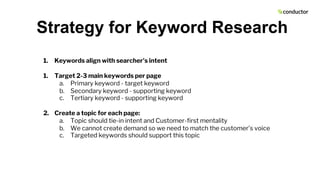
Strategy for Keyword Research
1. Keywords align with searcher's intent
1. Target 2-3 main keywords per page
a. Primary keyword - target keyword
b. Secondary keyword - supporting keyword
c. Tertiary keyword - supporting keyword
2. Create a topic for each page:
a. Topic should tie-in intent and Customer-first mentality
b. We cannot create demand so we need to match the customer’s voice
c. Targeted keywords should support this topic
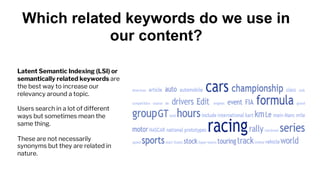
Which related keywords do we use in
our content?
Latent Semantic Indexing (LSI) or
semantically related keywords are
the best way to increase our
relevancy around a topic.
Users search in a lot of different
ways but sometimes mean the
same thing.
These are not necessarily
synonyms but they are related in
nature.
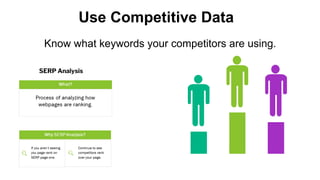
Use Competitive Data
SERP Analysis
Know what keywords your competitors are using.
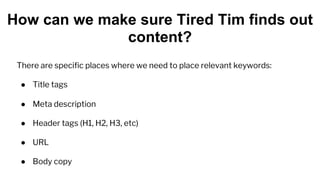
There are specific places where we need to place relevant keywords:
● Title tags
● Meta description
● Header tags (H1, H2, H3, etc)
● URL
● Body copy
How can we make sure Tired Tim finds out
content?
Title Tag: How Do I Fall Asleep At Night? (1300 MSV) | [Brand Name]
Meta Description: Learn the tips and tricks to make sure you can fall asleep fast and stay asleep.
H1: How Do I Fall Asleep Fast ( 480 MSV)
H2: How Do I Fall Asleep Earlier (40 MSV)
● H3: Tips to Fall Asleep Easily (110 MSV)
● H3: Best Way to Sleep Quickly (20 MSV)
H2: How Do I Fall Asleep After Waking Up (20 MSV)
Example of Page Optimization So Tired
Tim Can Sleep
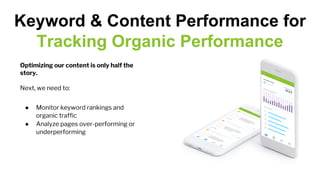
Optimizing our content is only half the
story.
Next, we need to:
● Monitor keyword rankings and
organic traffic
● Analyze pages over-performing or
underperforming
Keyword & Content Performance for
Tracking Organic Performance
Keyword Research for SEO: Best Practices & Top Tips

Keyword Research for SEO: Best Practices & Top Tips

  • 2.
    ● I’m akeyword rockstar! ● I know a lot but there is always more to learn! ● I do keyword research here and there. ● What’s a keyword? How much do you know about keyword research?
  • 3.
    The Heads &Tails of Keyword Strategy
  • 4.
    Keyword Research =Targeting Relevant Words
  • 5.
    Long tail keywords collectively can accountfor 50% of or more of a sites overall traffic 38% of Search Queries are Only One Word
  • 7.
  • 8.
    Keyword Research: CustomerJourney 3 What is a robotic vacuum? The Early Stage of the Buyer’s Journey consists of phrases capturing the Searcher’s awareness: • Who • What • When • Where • Why • How
  • 9.
    Keyword Research: CustomerJourney 3 Robotic vacuum vs standing vacuum The Middle Stage of the Buyer’s Journey consists of comparative phrases to capture the Searcher’s desire. • Comparison • Best • Versus • Better • Or
  • 10.
    Keyword Research: CustomerJourney 3 Cost of a robotic vacuum The End Stage of the Buyer’s Journey consists of transactional phrases to capture the Searcher’s action. • Cost • “How Much” • Buy • Sale • Price
  • 11.
    Keyword Research Factorsto Consider Personas Consider the searcher’s demographic when researching. Rank Search Volume Consider the competition and volume for each search term. Search Intent Consider the user intent behind the search. Competitors Analyze keywords your competitors are ranking for. Localization Understand local demand & visibility. Non-Branded Branded keywords often skew organic visibility. Seasonality Consider any seasonal trends or upcoming launches. Include top organic keywords (Protect), low-hanging fruit identified for quick wins (Improve), and keywords with untapped market potential (Expand). Protec t Impro ve Expan d
  • 12.
    The Importance of KeywordRelevancy & Intent
  • 13.
    What Makes SearchIntent So Important? Understanding the searcher’s intent ensures that you are prioritizing relevancy in your keyword research.
  • 14.
    What Makes SearchIntent So DIFFICULT? 1. We don’t decide it! Google… “can’t beat it”. 2. High Monthly Search Volume is just so attractive. 3. Low Monthly Search Volume is so… blehh. Difficulty Factors
  • 15.
  • 16.
  • 19.
    How to BestUnderstand Search Intent 1. The SERP does not lie. Research your phrase! 2. Competitive Rank Analysis 3. The higher the volume, the more likely it can have a different meaning. ● How do you sleep (5,400 MSV) ● How do you sleep at night (1,300 MSV) Factors to Consider
  • 20.
    How to findrelevant keywords to use?
  • 21.
    Strategy for KeywordResearch 1. Keywords align with searcher's intent 1. Target 2-3 main keywords per page a. Primary keyword - target keyword b. Secondary keyword - supporting keyword c. Tertiary keyword - supporting keyword 2. Create a topic for each page: a. Topic should tie-in intent and Customer-first mentality b. We cannot create demand so we need to match the customer’s voice c. Targeted keywords should support this topic
  • 22.
    Which related keywordsdo we use in our content? Latent Semantic Indexing (LSI) or semantically related keywords are the best way to increase our relevancy around a topic. Users search in a lot of different ways but sometimes mean the same thing. These are not necessarily synonyms but they are related in nature.
  • 23.
    Use Competitive Data SERPAnalysis Know what keywords your competitors are using.
  • 24.
    There are specificplaces where we need to place relevant keywords: ● Title tags ● Meta description ● Header tags (H1, H2, H3, etc) ● URL ● Body copy How can we make sure Tired Tim finds out content?
  • 25.
    Title Tag: HowDo I Fall Asleep At Night? (1300 MSV) | [Brand Name] Meta Description: Learn the tips and tricks to make sure you can fall asleep fast and stay asleep. H1: How Do I Fall Asleep Fast ( 480 MSV) H2: How Do I Fall Asleep Earlier (40 MSV) ● H3: Tips to Fall Asleep Easily (110 MSV) ● H3: Best Way to Sleep Quickly (20 MSV) H2: How Do I Fall Asleep After Waking Up (20 MSV) Example of Page Optimization So Tired Tim Can Sleep
  • 26.
    Optimizing our contentis only half the story. Next, we need to: ● Monitor keyword rankings and organic traffic ● Analyze pages over-performing or underperforming Keyword & Content Performance for Tracking Organic Performance