K n o w Yo u r K n o w l e d g e G r a p h s
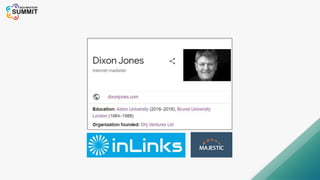
Dixon Jones
Email “Talk@DixonJones.com with “SEO Mastery
in the title”
A b o u t D i x o n
Agenda
40 minutes
Knowledge Graphs vs THE Knowledge Graph
Why Topics aka Entities are replacing keywords in
search
How you can see how well Google understands
Entities in your content
How you can IMPROVE Google’s understanding of
the entities
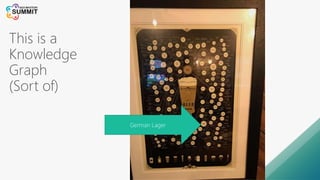
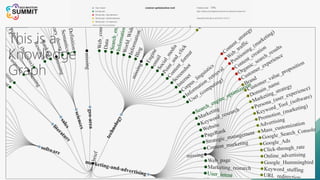
This is a
Knowledge
Graph
(Sort of)
German Lager
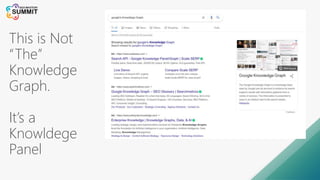
This is Not
“The”
Knowledge
Graph.
It’s a
Knowldege
Panel
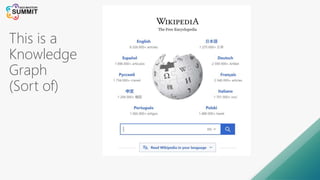
This is a
Knowledge
Graph
(Sort of)
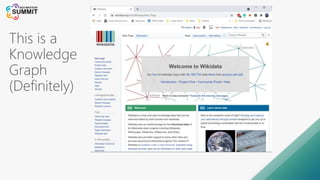
This is a
Knowledge
Graph
(Definitely)
This is a
Knowledge
Graph
• A Knowledge Graph is a connected
Knowledge Base
• A Knowledge Panel is in the SERPS
• The Knowledge Graph is Google’s
Knowledge Graph
What is an Entity to
Google and where are
they used?
An Entity is a record or
article or topic in a
Knowledge Base
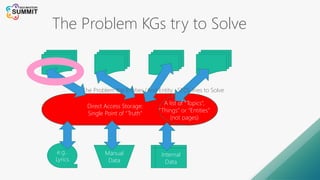
Internal
Data
Manual
Data
e.g..
Lyrics
Direct Access Storage:
Single Point of “Truth”
A list of “Topics”,
“Things” or “Entities”
(not pages)
The Problem KGs try to Solve
The Problem the Entities (And Entity SEO) Tries to Solve
Q1: Why is the move to an
Entity based model so
pressing for Google?
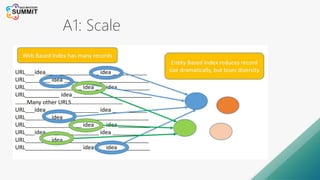
A1: Scale
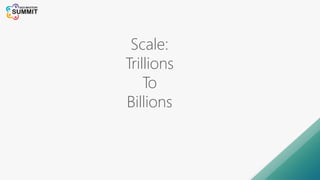
Scale:
Trillions
To
Billions
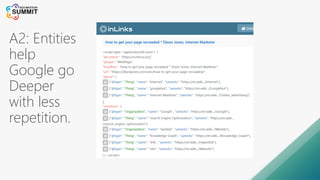
A2: Entities
help
Google go
Deeper
with less
repetition.
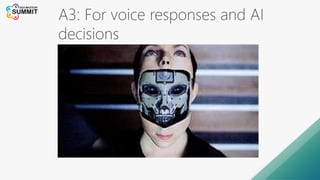
A3: For voice responses and AI
decisions
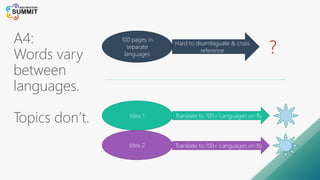
A4:
Words vary
between
languages.
Topics don’t. Idea 1
Idea 2
Translate to 100+ Languages on fly
100 pages in
separate
languages
Hard to disambiguate & cross
reference
Learn from
the best:
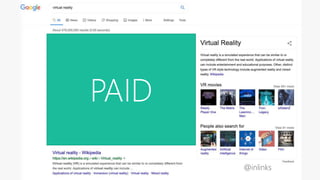
What is
Wikipedia’s
page
structure?
PAID
@inlinks
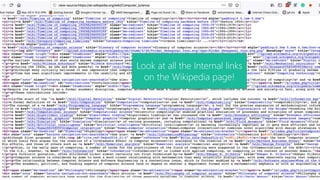
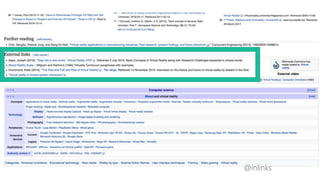
Look at all the Internal links
on the Wikipedia page!
@inlinks
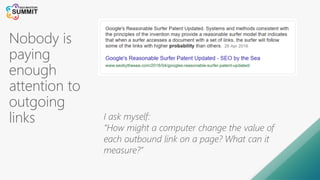
Nobody is
paying
enough
attention to
outgoing
links I ask myself:
“How might a computer change the value of
each outbound link on a page? What can it
measure?”
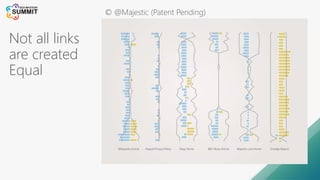
Not all links
are created
Equal
© @Majestic (Patent Pending)
What
have we
found
so far?
• A Knowledge Graph helps create a
machine readable single point of
truth.
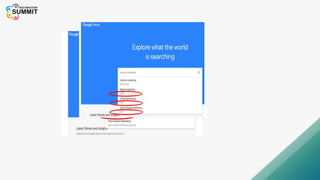
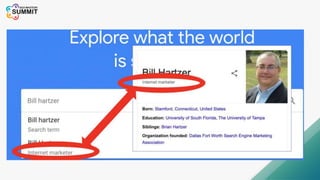
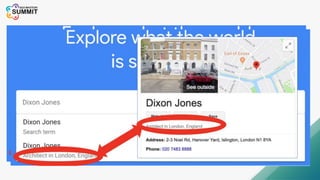
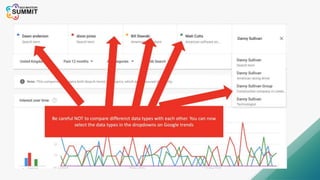
• Google Trends is an easy way to see
topics Google understands
• Understanding Entities (Topics) is a
pressing issue for Information
Retrieval.
• Anatomy of a Wikipedia Article shows
they link a lot
• Links out of a page all carry different
weights
WARNING!
• Wikipedia’s internal outlinks are based on
Entities. Do not link internally based on
Keywords.
This is a hard concept to
get one’s head around.
Even harder to manage
on large websites.
But Fear not…
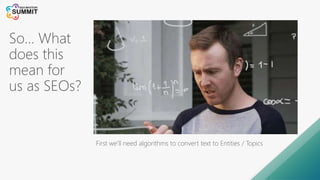
So… What
does this
mean for
us as SEOs?
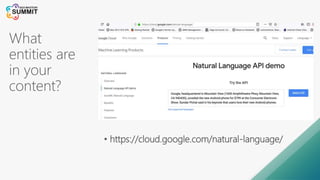
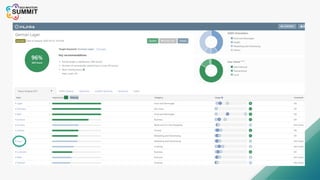
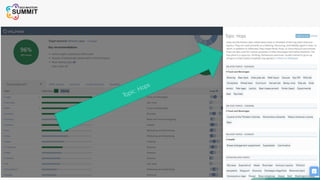
First we’ll need algorithms to convert text to Entities / Topics
What
entities are
in your
content?
• https://cloud.google.com/natural-language/
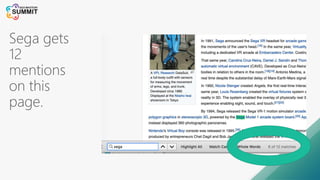
Sega gets
12
mentions
on this
page.
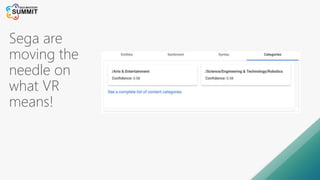
Sega are
moving the
needle on
what VR
means!
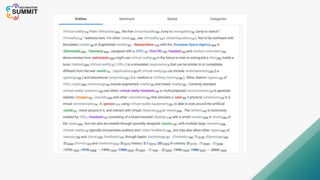
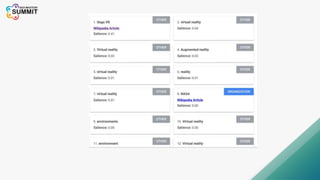
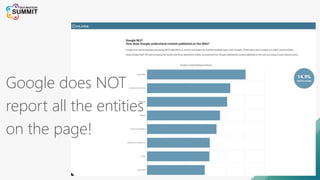
Google does NOT
report all the entities
on the page!
Entity SEO
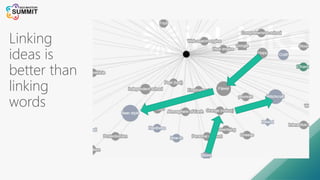
• Is all about scaling this idea on your own site: Connect entities,
not words… Then translate the signals into Schema.
Linking
ideas is
better than
linking
words
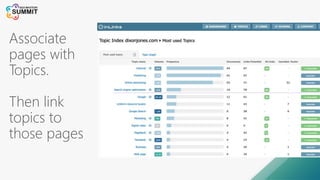
Associate
pages with
Topics.
Then link
topics to
those pages
What have
we found in
Part 2
• Semantic SEO communicates topic
details to (and from) the Knowledge
Graph
• Wikipedia suffers heavily from Human
Bias, so Google’s KG does too
• Tightly themed, content rich sites are
easier to build Knowledge Graphs for
• Google have a NLP checking tool
• Scaling internal links is something
Wikipedia does well… you should too!
Tips and
Takeaways
• Build your site as if it was a miniature
Knowledge Graph
• Build content pages around the
Knowledge graph created by the top
pages for a given phrase
• Create “Topic” landing pages (with
Webpage schema)
• Internally link ideas (not keywords) to
those landing pages
K n o w y o u r K n o w l e d g e G r a p h s
Dixon Jones
Email “Talk@DixonJones.com with “SEO
Mastery in the title”

Entity Seo Mastery

Editor's Notes

  • #25 Well worth looking at the anatomy of a Wikipedia page. Company opposite my desk have a Virtual Reality page.