Shiny Hammers
This is a talk about altruism.
Also, vanity and laziness.
About alignment of interests.
About earning happy customers.
And keeping them.
By investing in design.
Design?
Design = creation of
something that does work
…so people don’t have to.
Design = innovation
Design = leverage
name, logo, meme
hardware, software, service
recipe, guide, mantra
Design is a
fundamental
human pursuit.
fire
the wheel
agriculture
architecture
rule of law
medicine
society
Design is about
scaling people.
Product Design
Product design =
investment in customer
acquisition and retention
Retention = happiness
Happiness?
Back to hammers…
Everyone has a shiny hammer.
The tool you reach for first,
the tool you feel great using.
The tool that helps you scale.
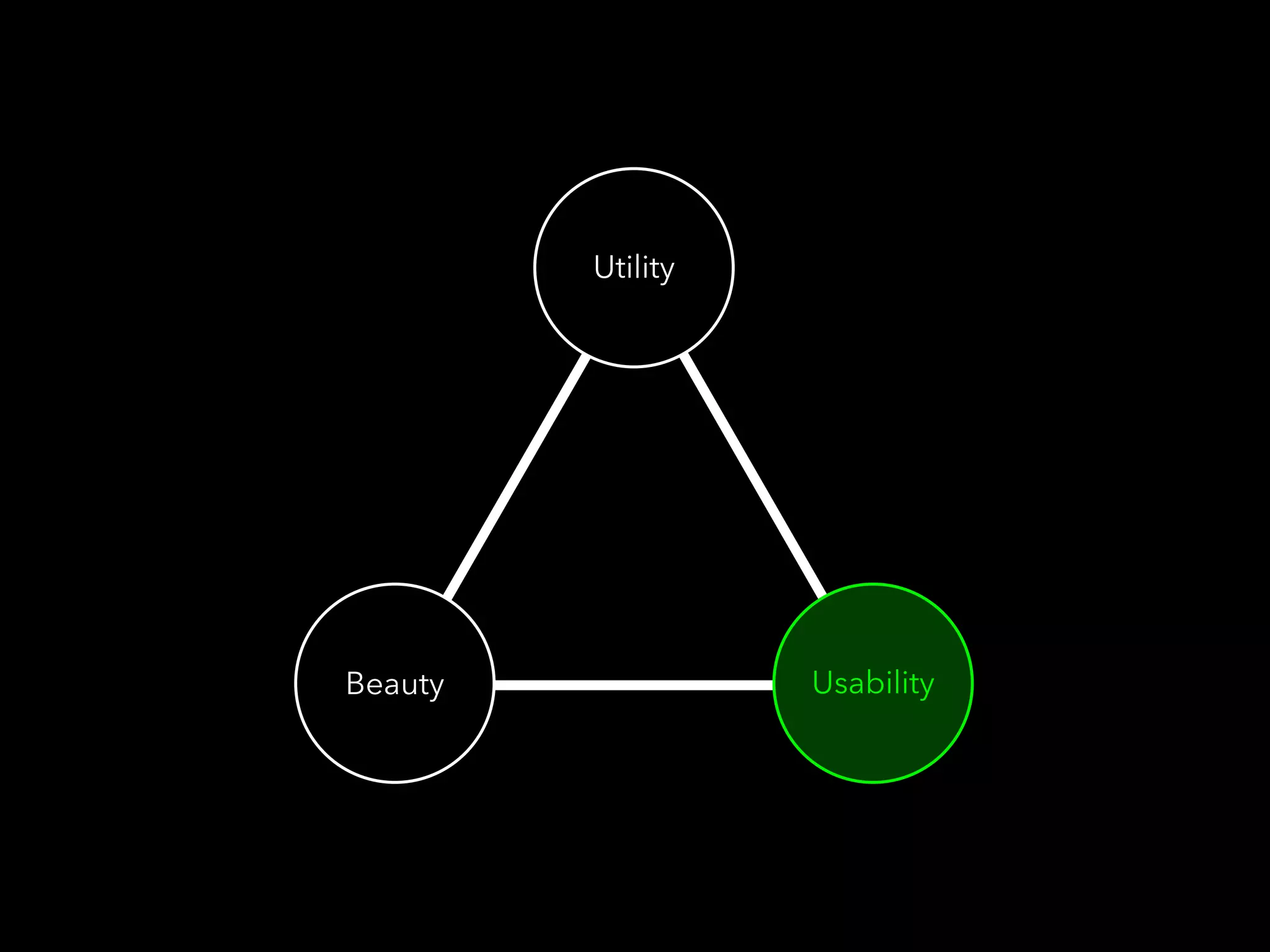
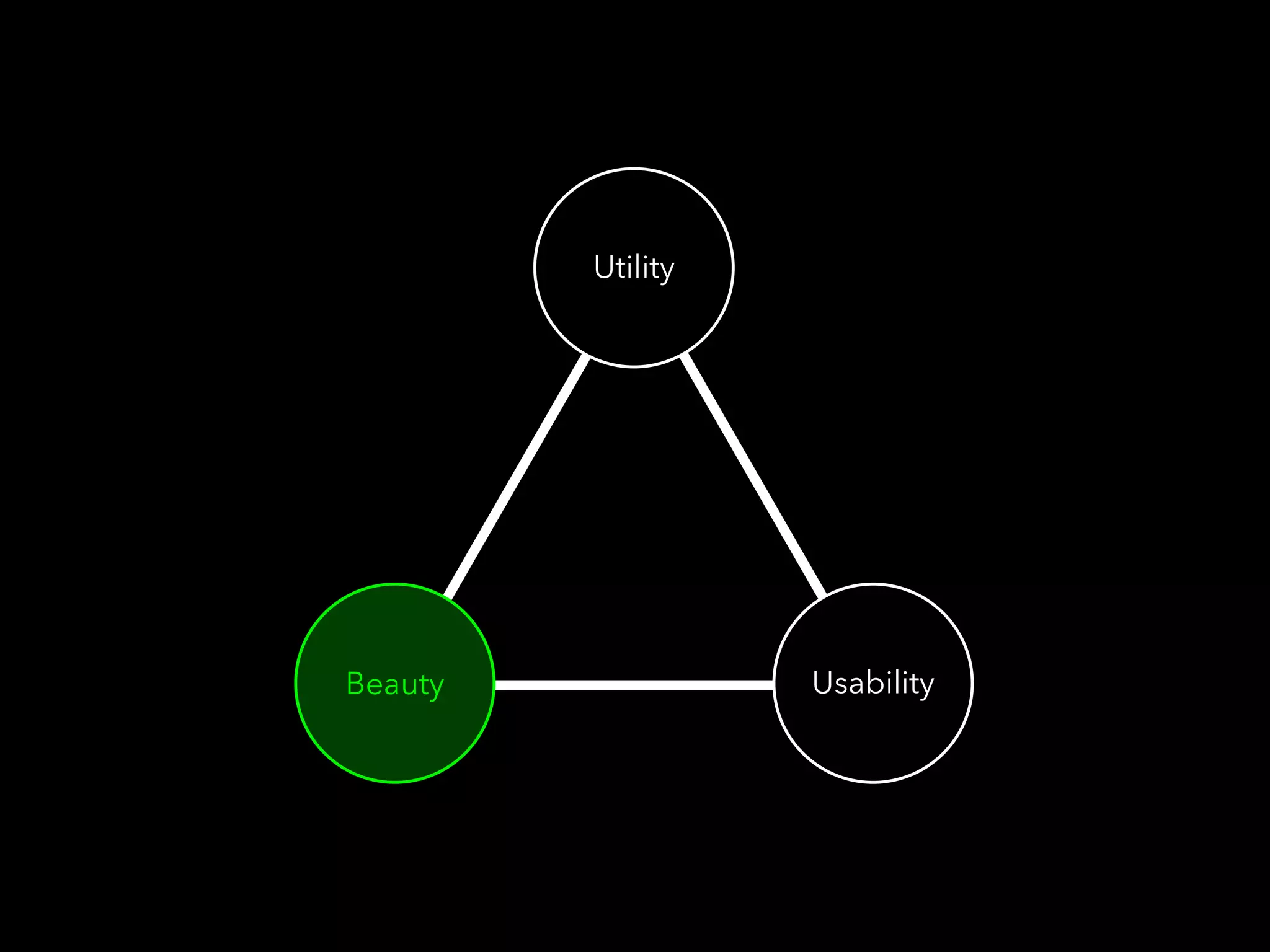
Three Things to Consider
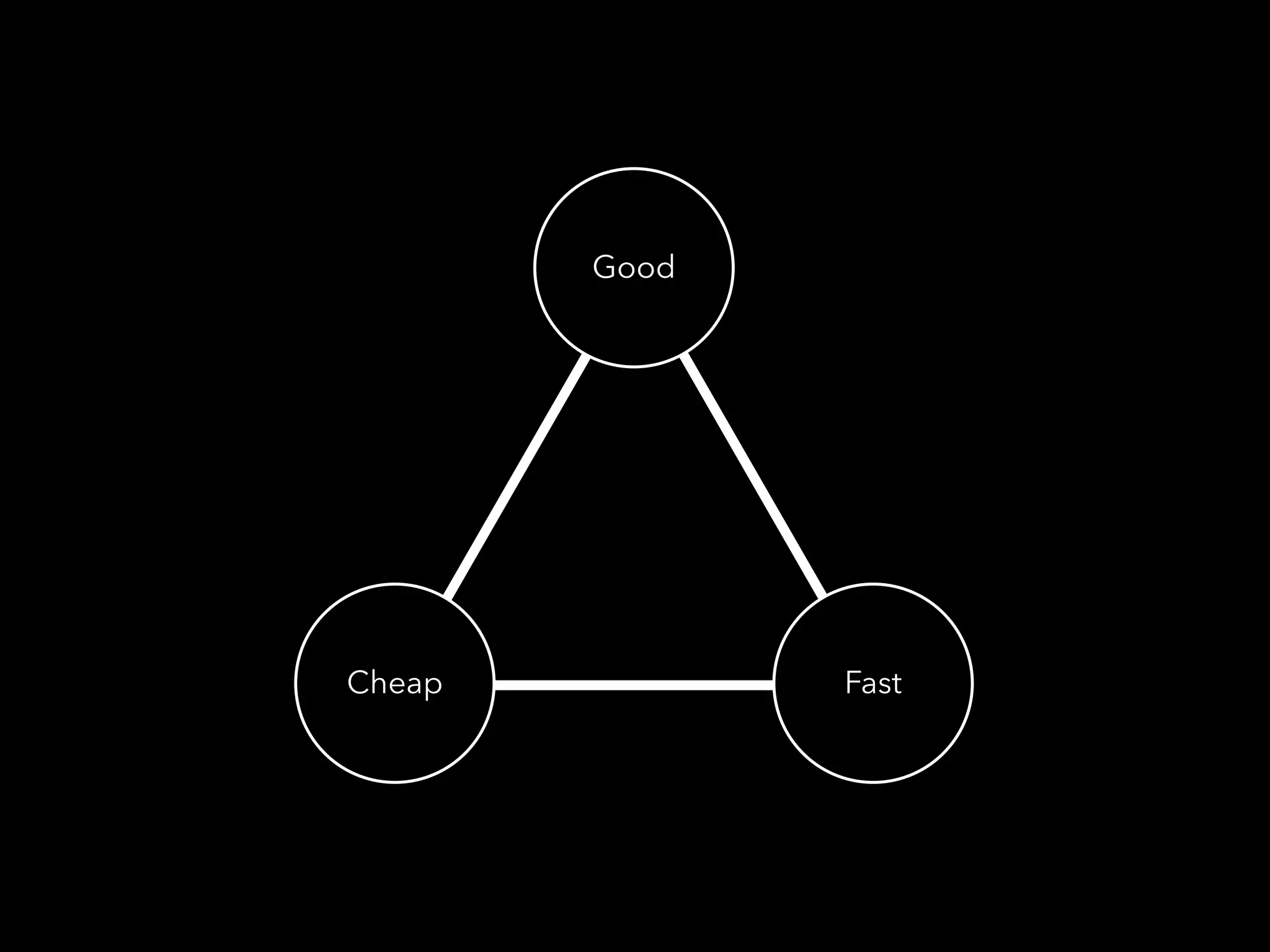
Good
Cheap Fast
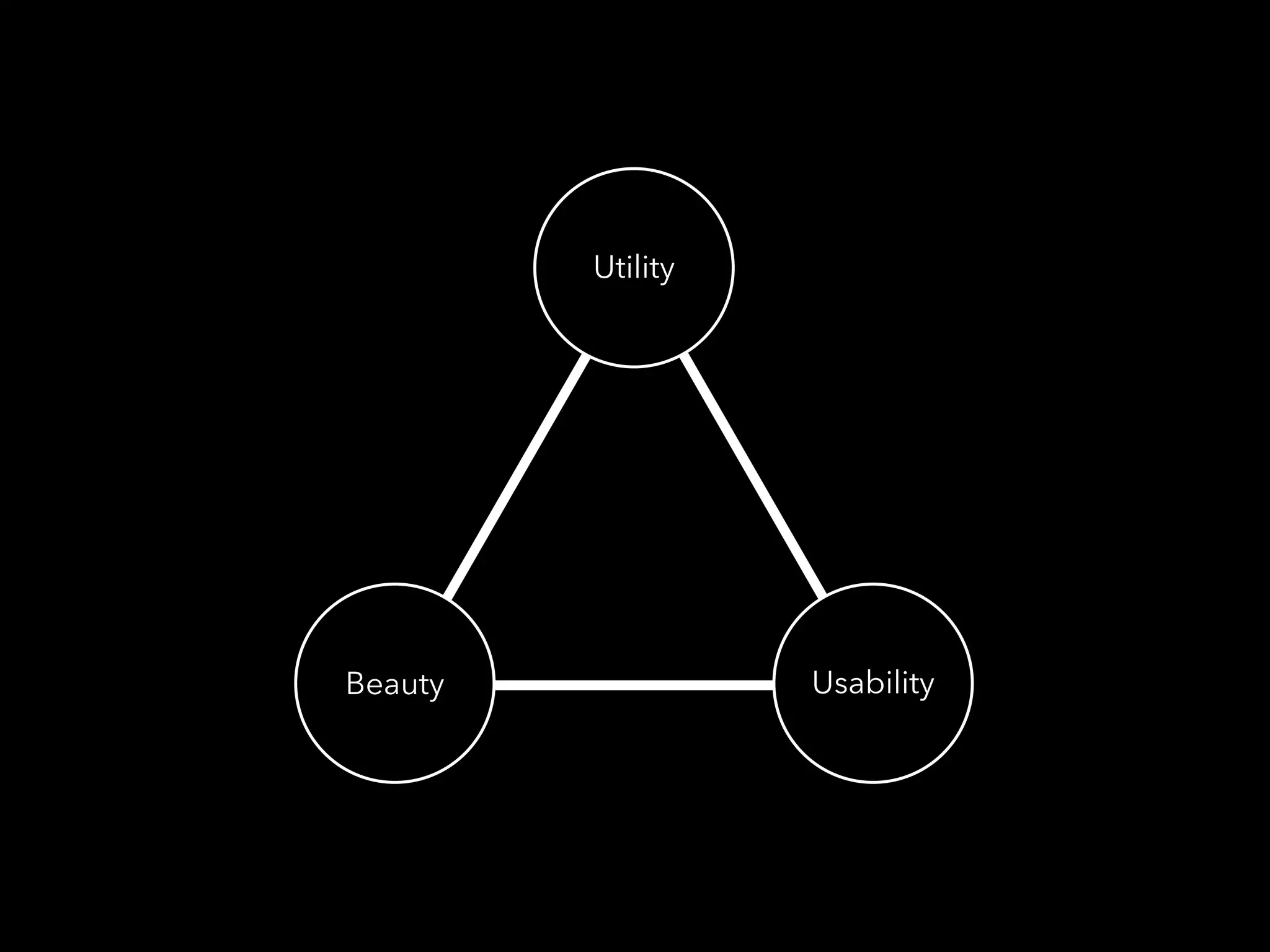
Utility
Beauty Usability
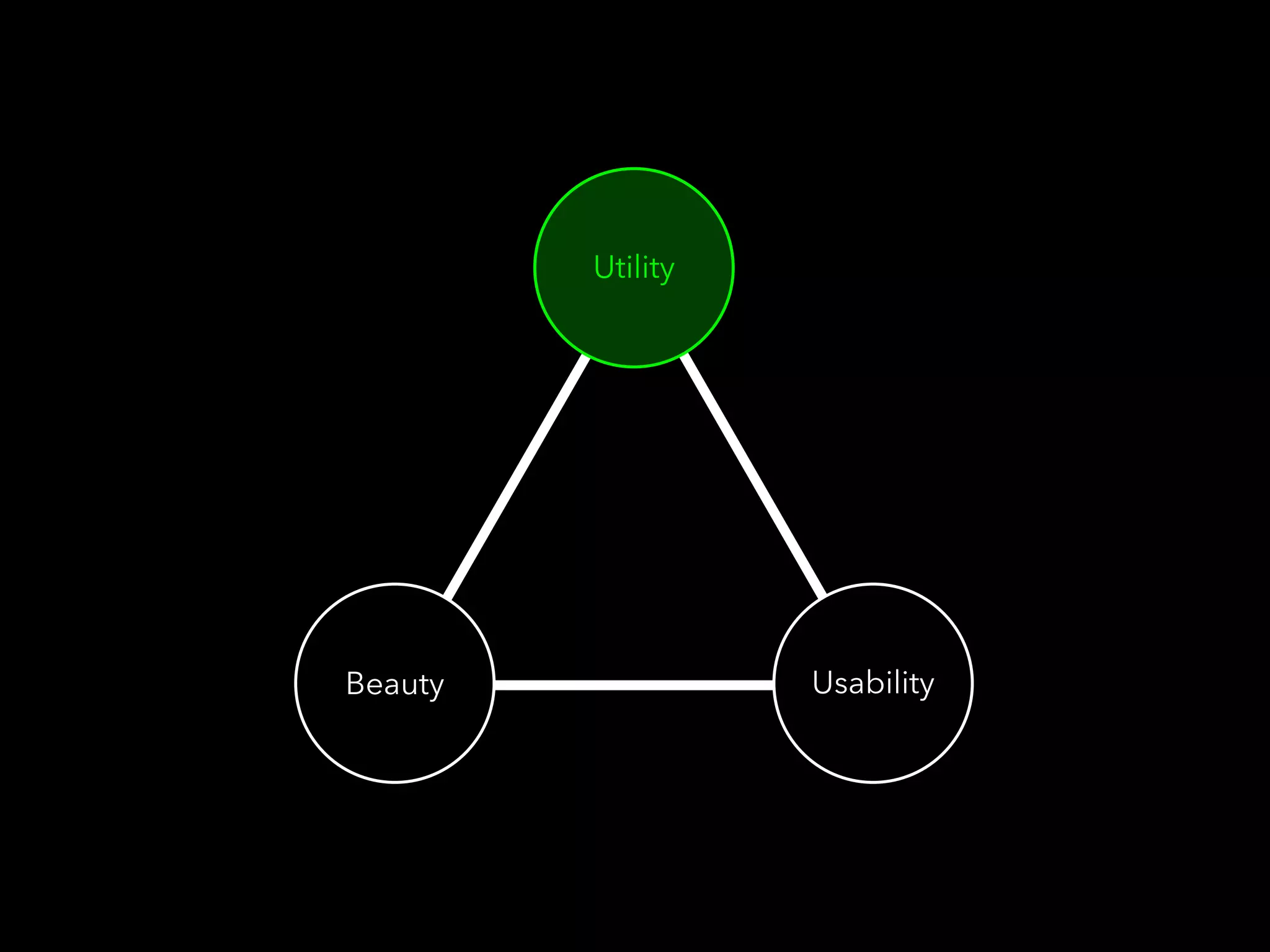
Utility
Beauty Usability
Utility = work
Utility = capability to do work
(for a customer)
Utility
Beauty Usability
Usability = cost
Usability = cost to access utility
Cost = time + $,
fixed and variable
Fixed usability cost =
evaluation, implementation,
switching cost, learning curve
Variable usability cost =
maintenance, usage,
exception cost
Utility
Beauty Usability
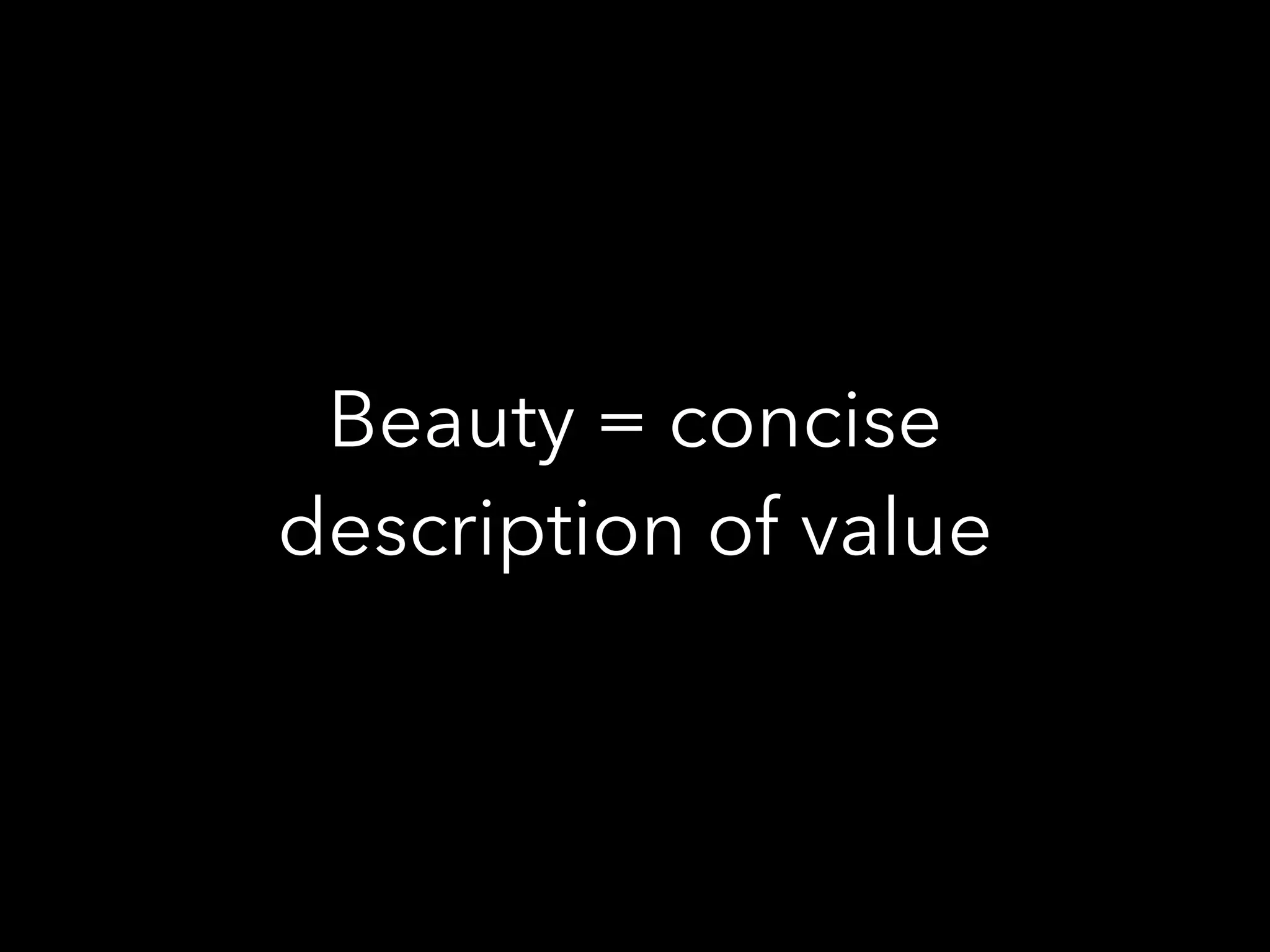
Beauty = concise
description of value
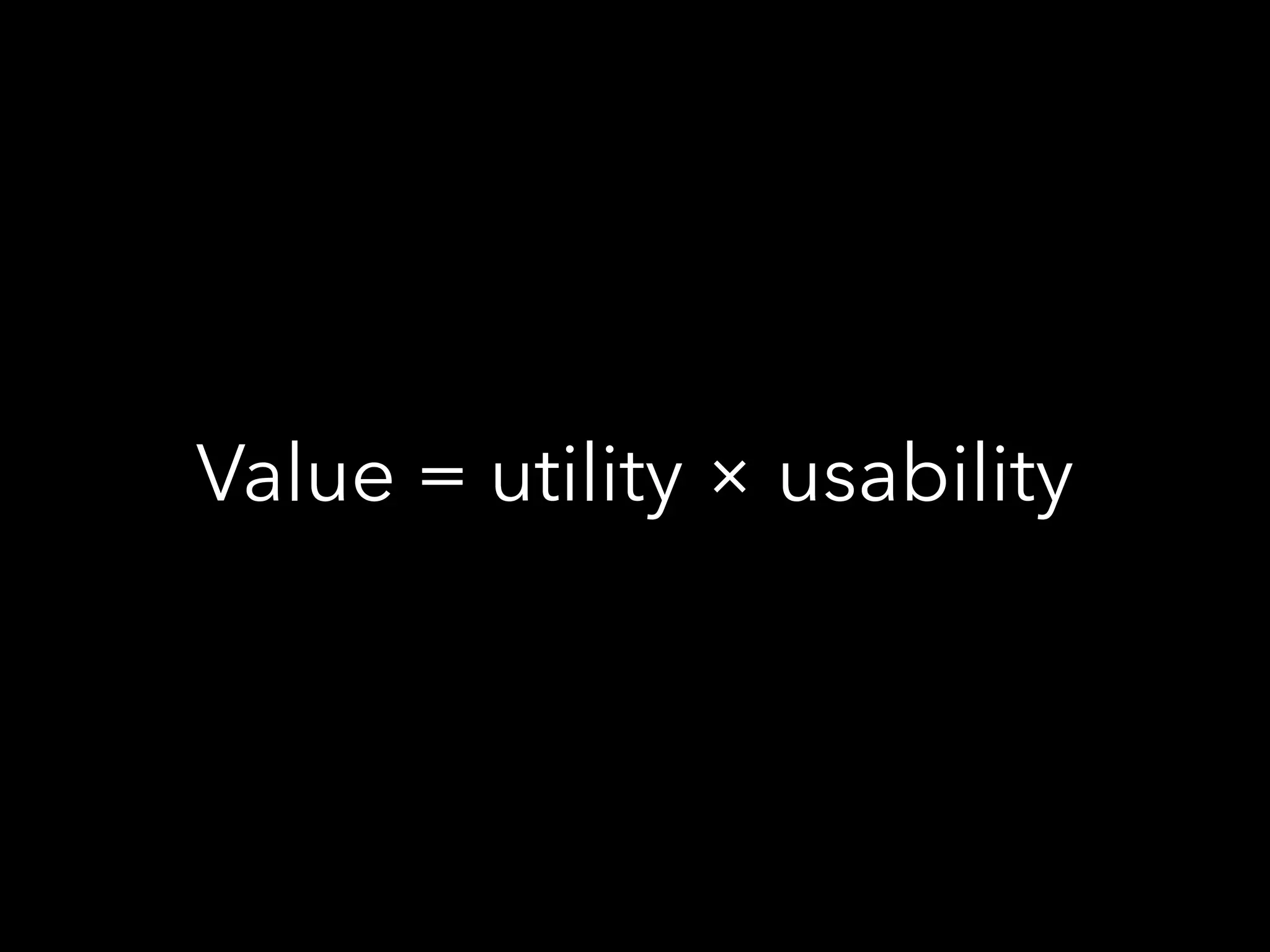
Value = utility × usability
Beauty works to
evoke positive emotion,
e.g. confidence, trust.
Beauty maximizes the odds
a potential customer will
consider your product
…or an existing customer
will evangelize it.
Accessible Utility
Everything designed has
maximum theoretical utility.
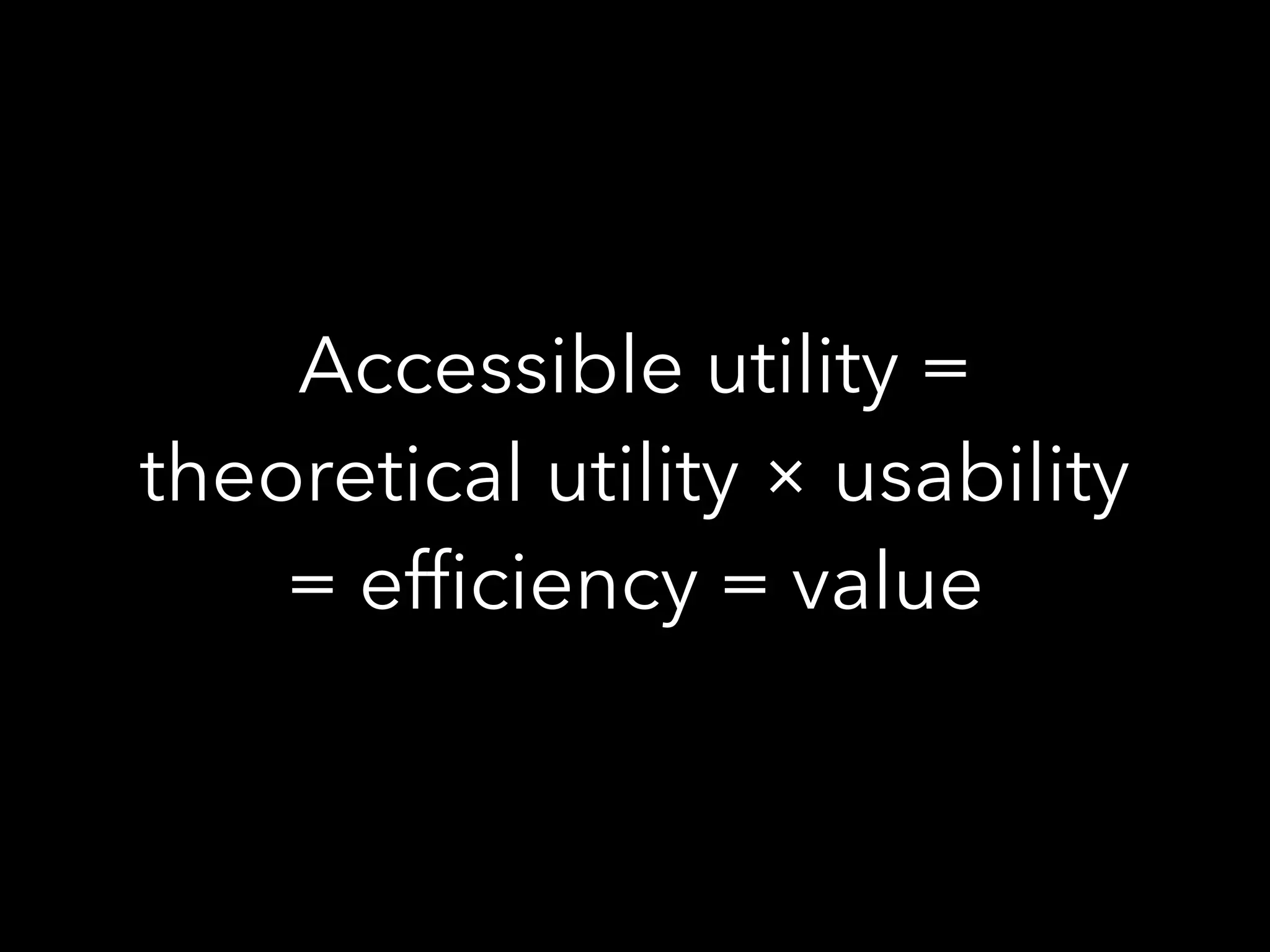
Accessible utility =
theoretical utility × usability
= efficiency = value
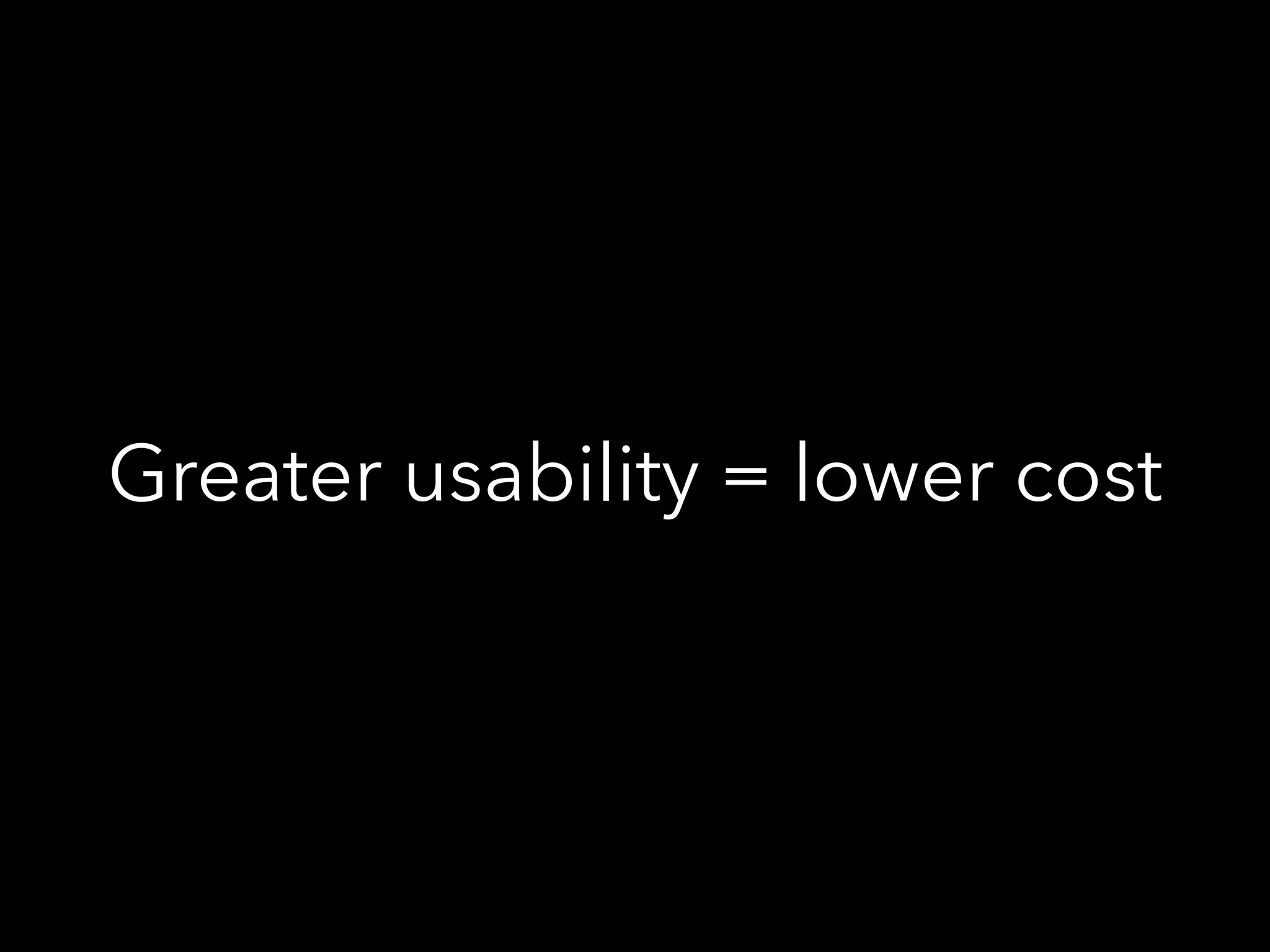
Greater usability = lower cost
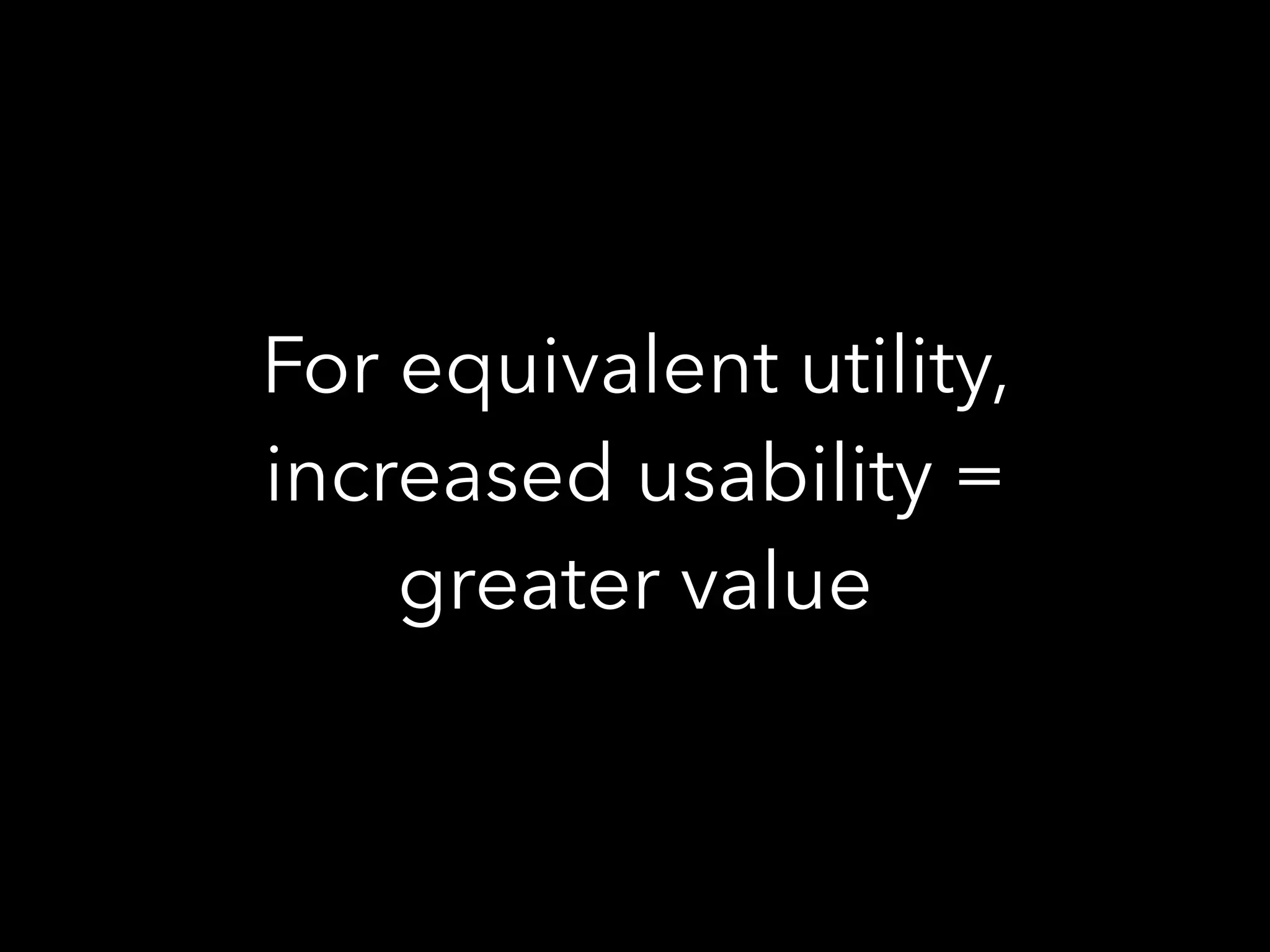
For equivalent utility,
increased usability =
greater value
For each customer,
every product has maximum
utilizable value.
(More sophisticated customers
can access greater utility.)
Each potential customer
has a budget (time + $)
to invest in your product.
To acquire a customer,
you must meet their
accessibility threshold—
their budget.
Obviously this is perceptual—
witness success of certain
products, e.g. vices.
Surplus Time
Great products give time back.
Time back = happier customers
Customers will
invest surplus time
back into your product.
A product that
helps your customers scale,
helps you scale.
Organic growth,
user communities,
evangelists.
Constraints
Why invest in design?
Investment in design
invests in your customers
and invests in growth.
Investing in design says
“I like my customers” and
“I want more.”
Altruism =
“I can help you”
Vanity =
“I can help you”
Laziness =
“I have limited resources”
Designing a product to scale?
Where are you constrained?
sales
support
development
operations
customers
If you have zero customers,
there is only one right answer.
Design investment changes
as you build relationships
with customers.
Design investment is a deliberate
allocation of resources between
utility, usability, and beauty.
Focus shifts as your
target customers change.
New needs require
new investment in utility.
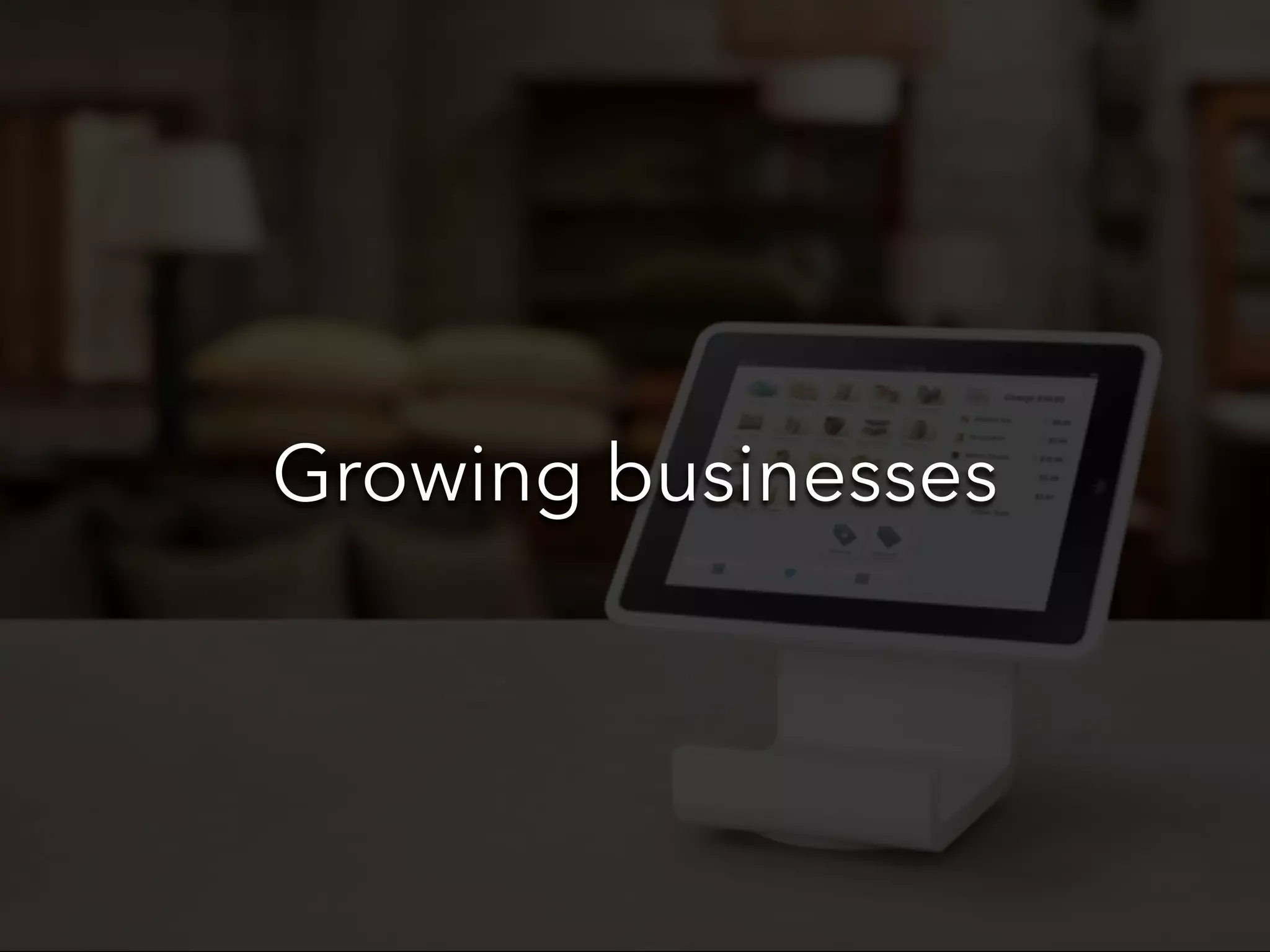
Growing businesses
Enterprise
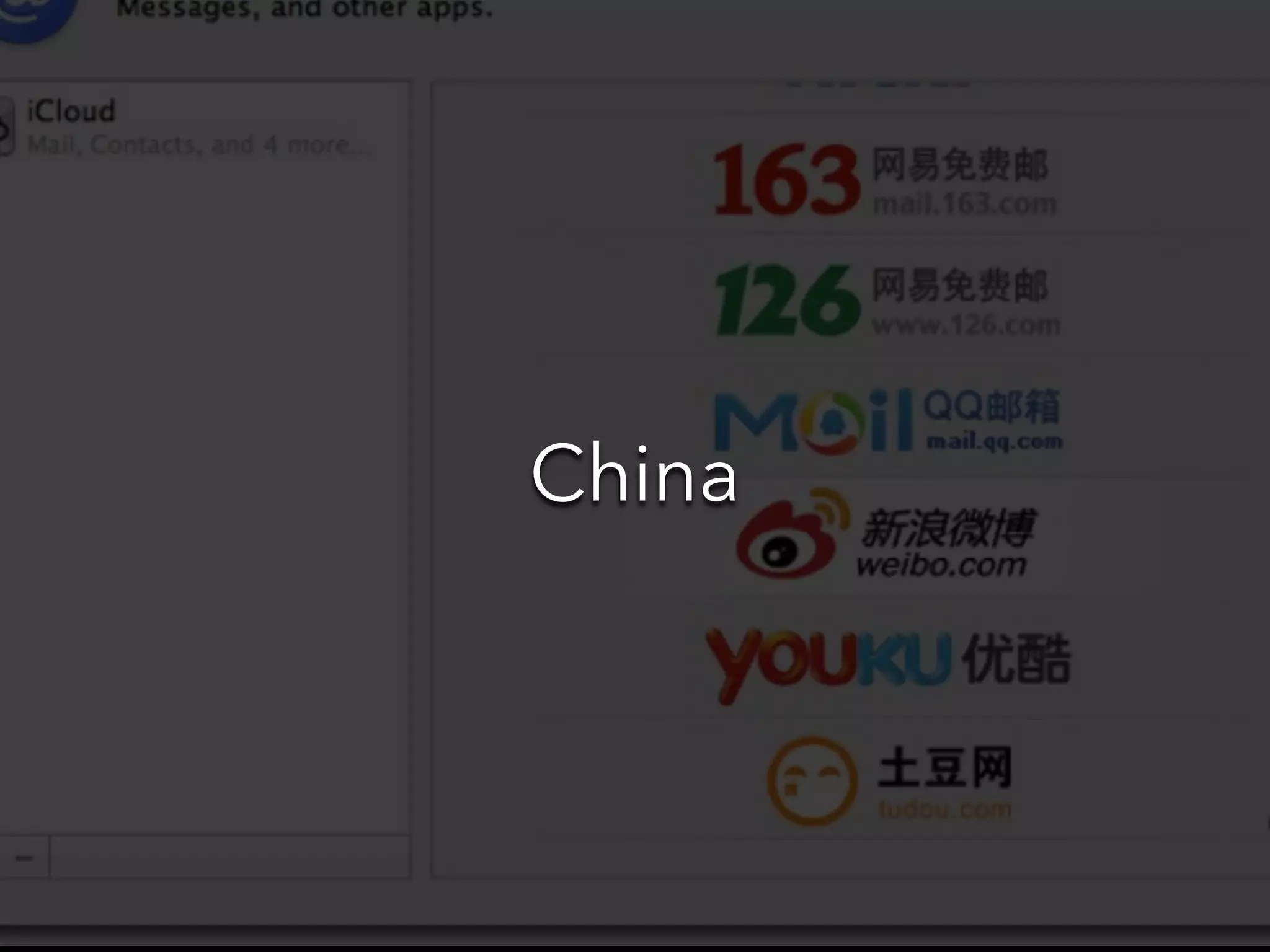
China
Invest in usability
to reach customers
with fewer resources
or simpler needs.
Maximize share
of existing markets.
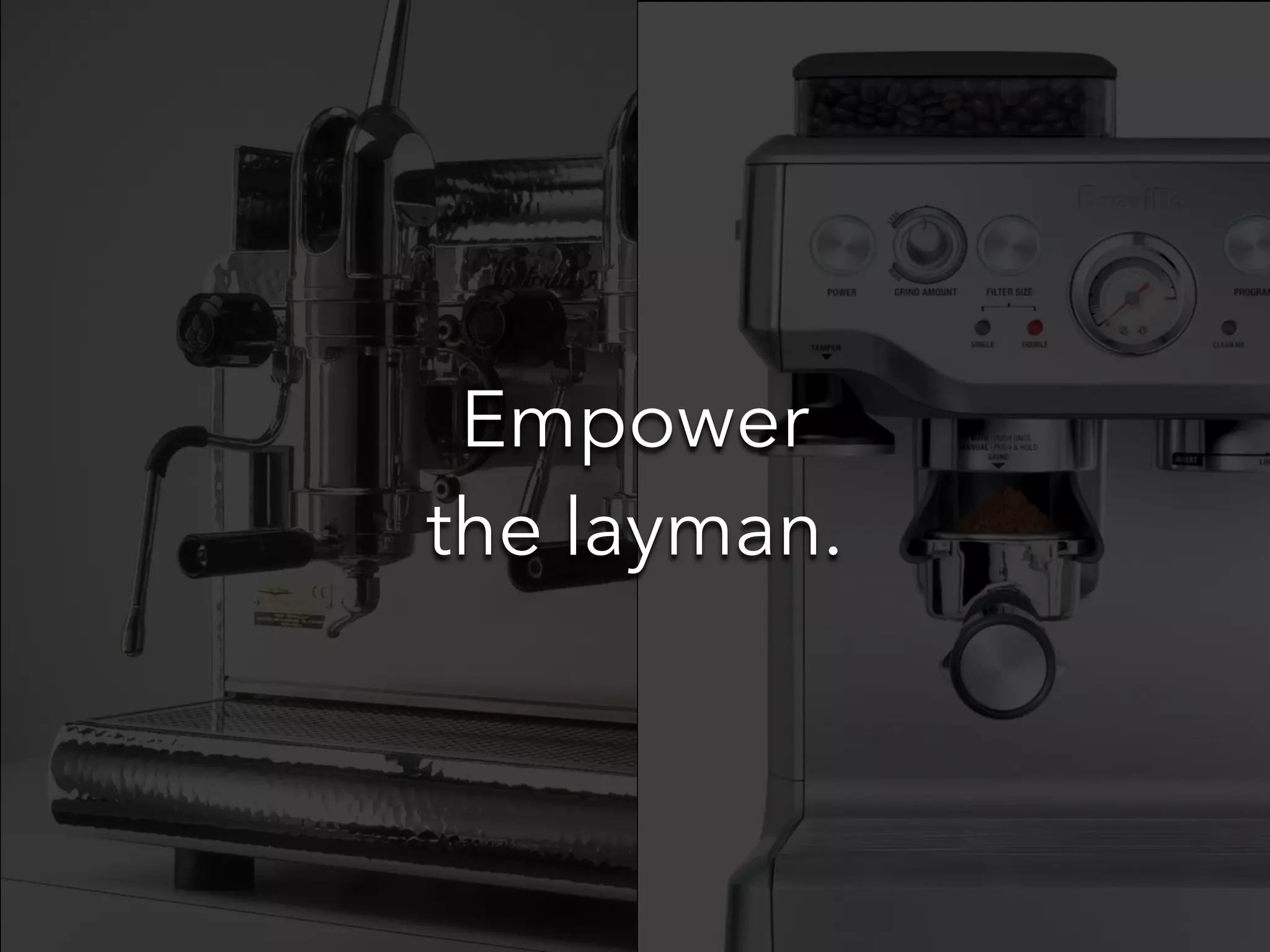
Empower
the layman.
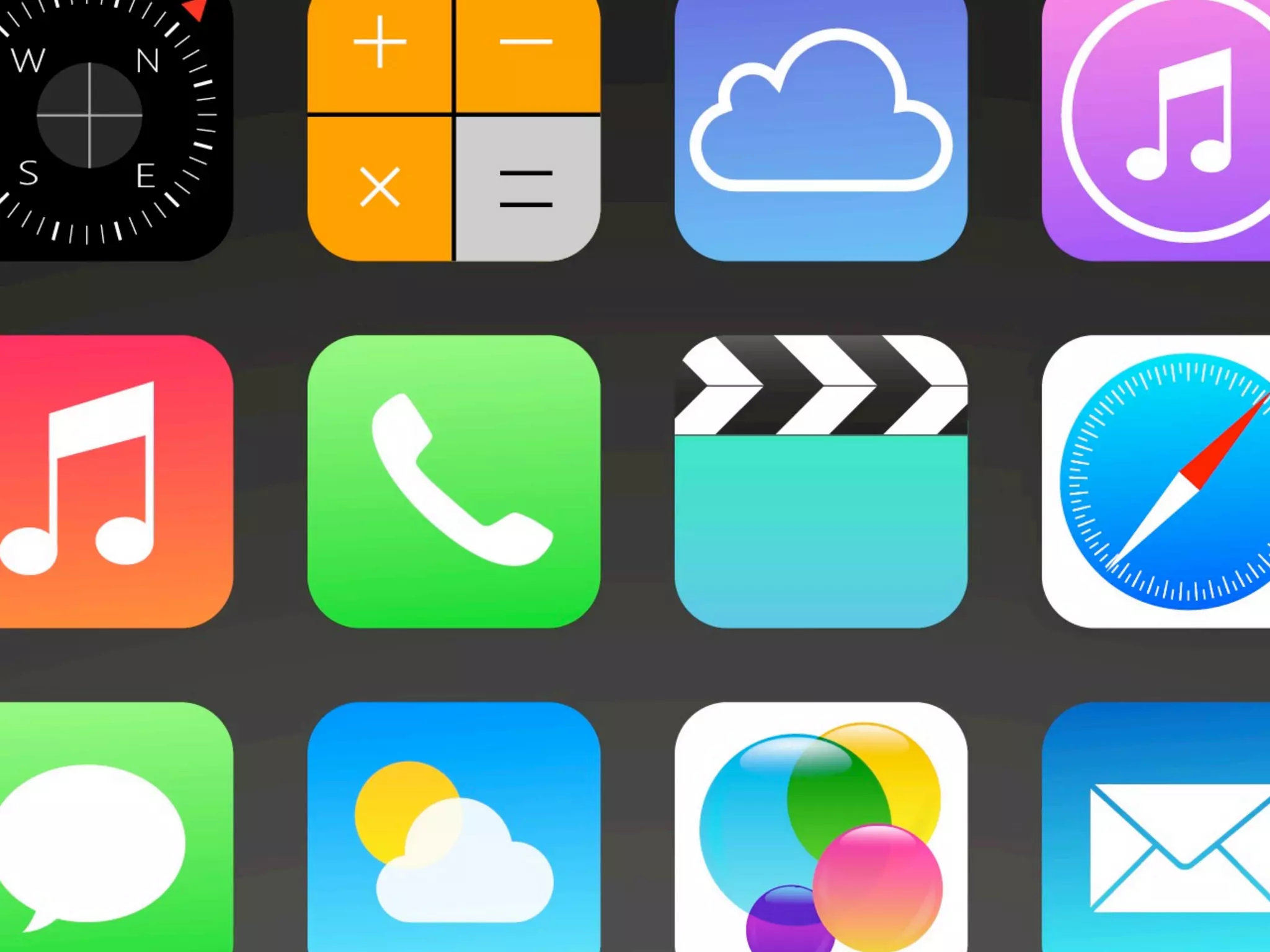
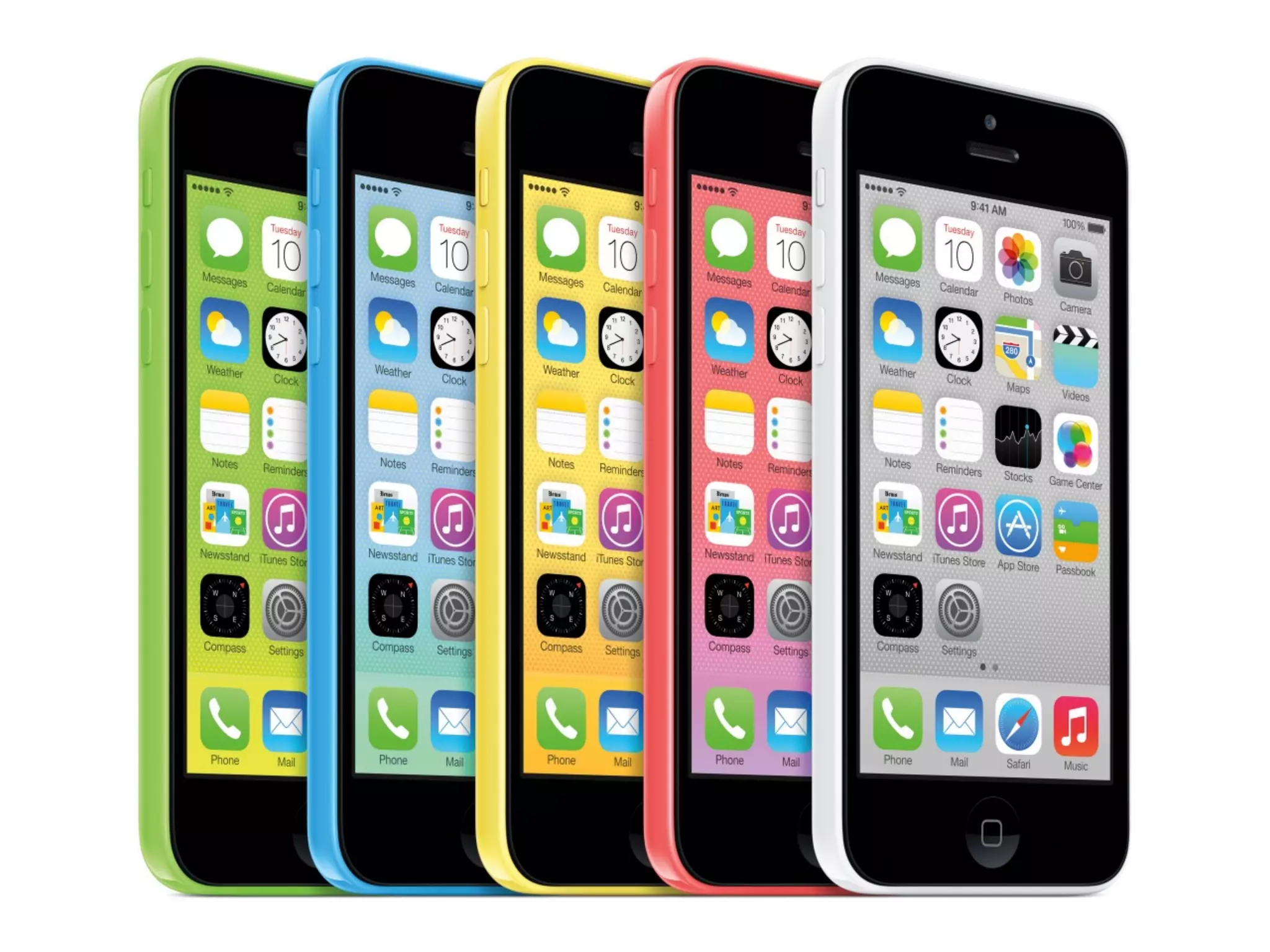
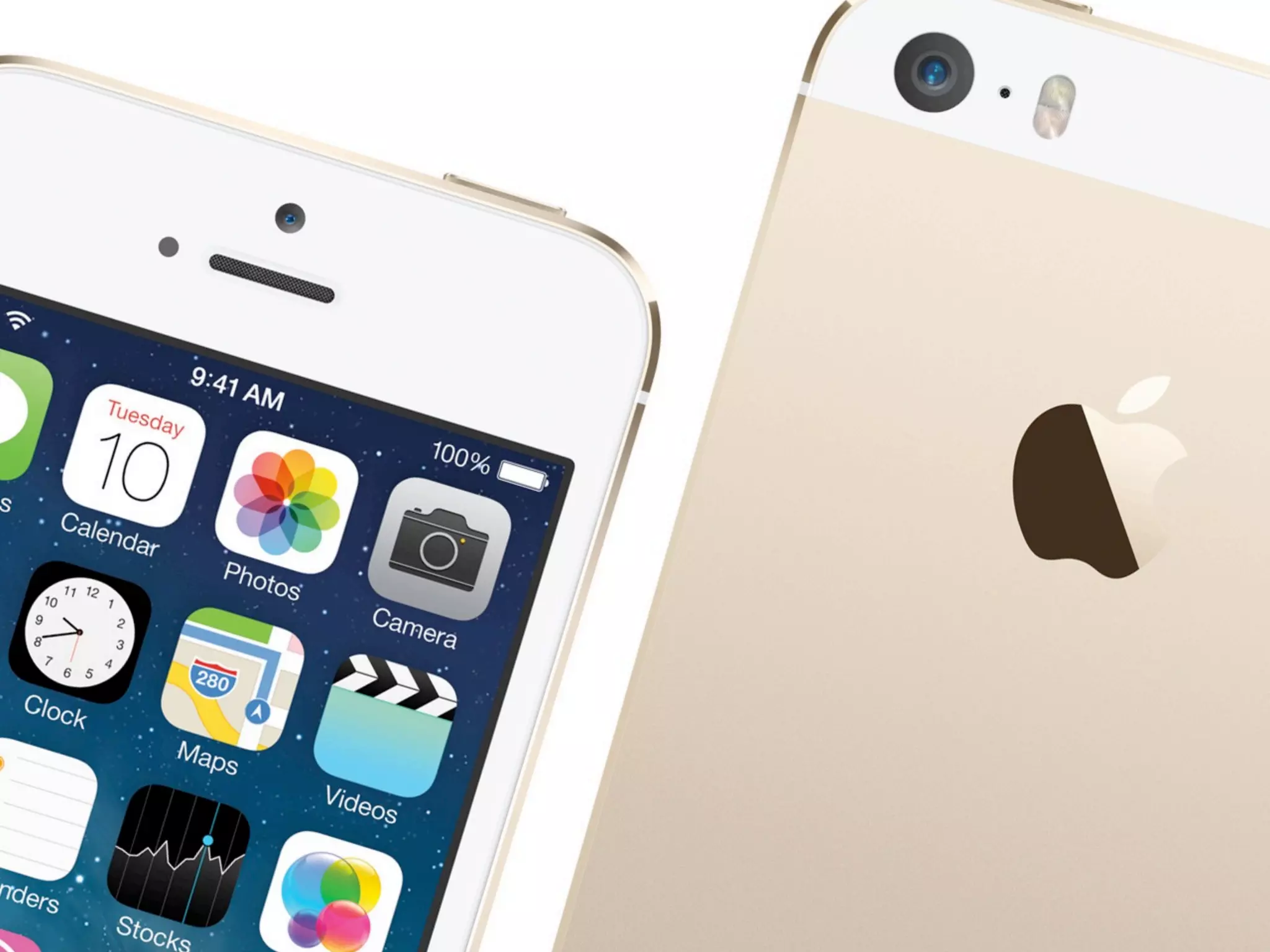
Invest in beauty
to address changing tastes
or new customers with
different tastes.
In a competitive environment,
there is no normal.
Usability in Practice
Avoid falling into
the product trap.
Not every usability problem
should be solved with UX.
Sometimes it’s cheaper to
throw people at the problem.
(Or cheaper people.
It depends where
you’re constrained.)
Customer Support
Customer support is a great
way to increase usability at
low cost to your customers.
It’s also a great
feedback mechanism.
Obviously, this isn’t scalable—
“web-scale,” anyway.
If you only have 10 customers,
you don’t have a scaling problem.
You have a
“I only have 10 customers”
problem.
Documentation
How fast is your
product evolving?
A high rate of change makes
documentation obsolete quickly.
Document stable or mature
parts of your product.
Leave the rest to support.
Community
Do your customers
talk to each other?
Do they have surplus time
to spend on your product?
Seed a community—
Twitter, Facebook,
forums, mailing lists.
Reward altruistic
customer behavior.
Interface Design
Does your product do
something new,
or something better?
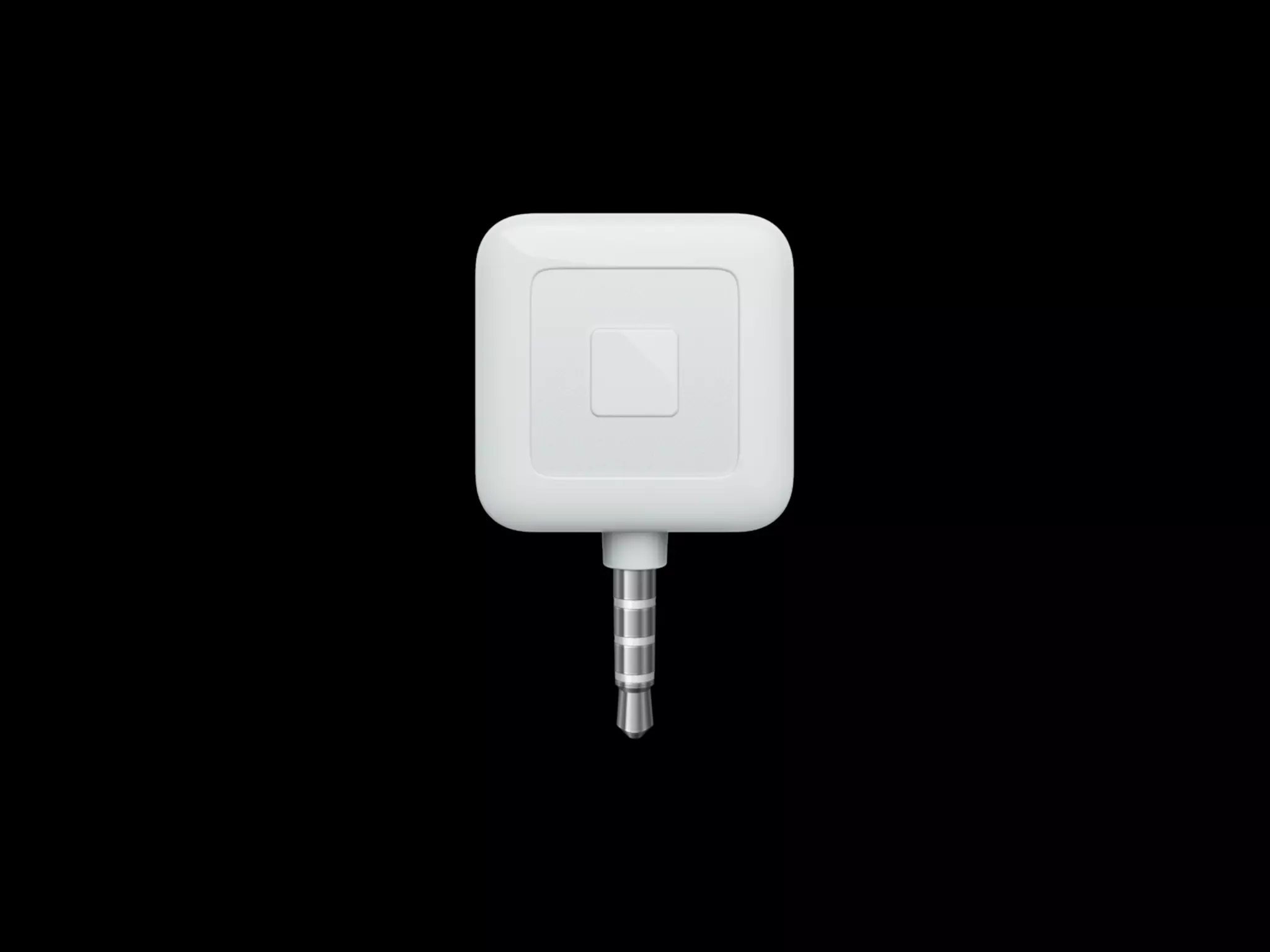
M-PESA unlocked banking
for millions in Kenya
via mobile phones.
M-PESA delivered demonstrably
less utility than a bank.
But with infinitely
greater usability.
Minimum Viable *
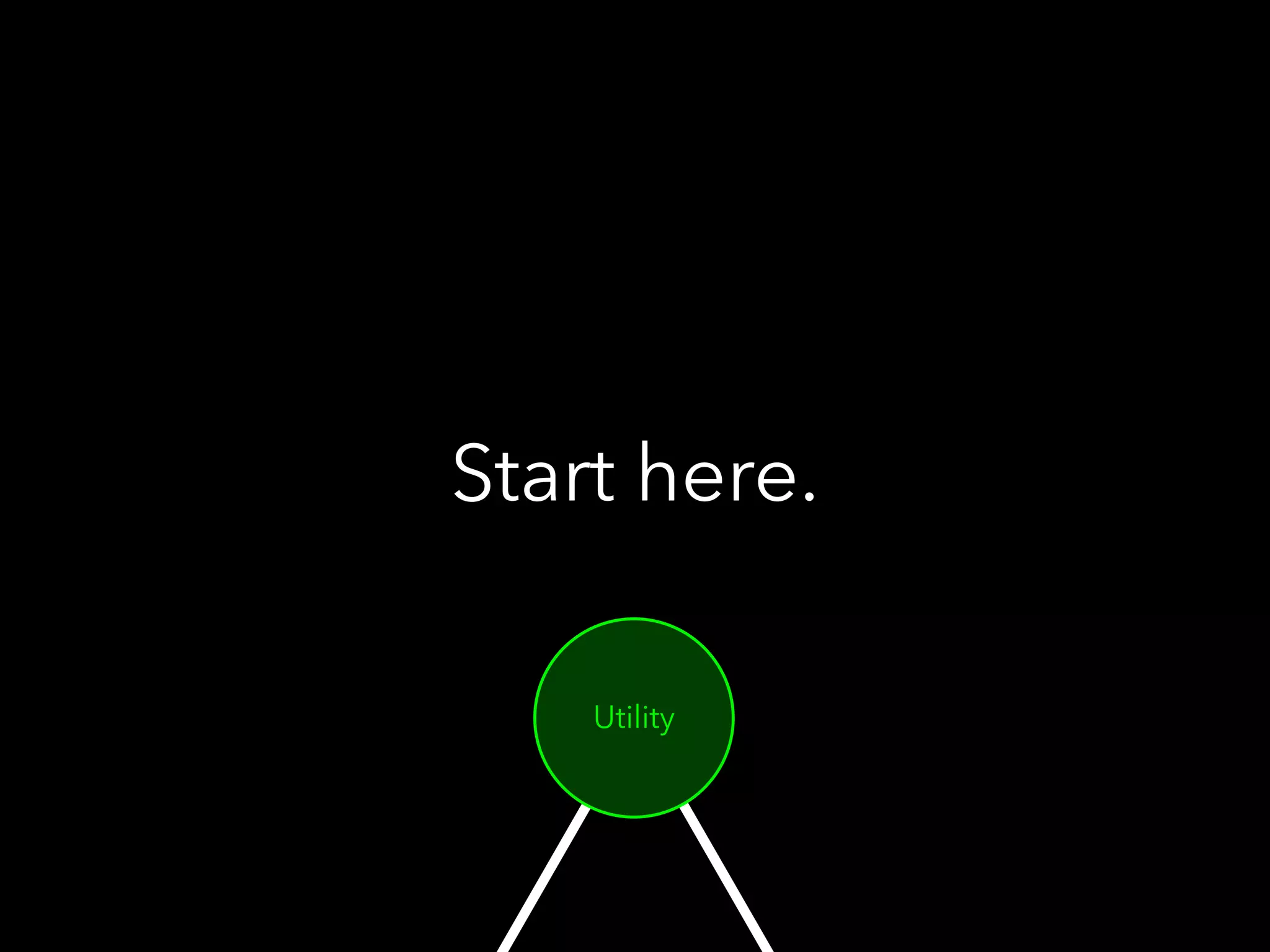
Start here.
Utility
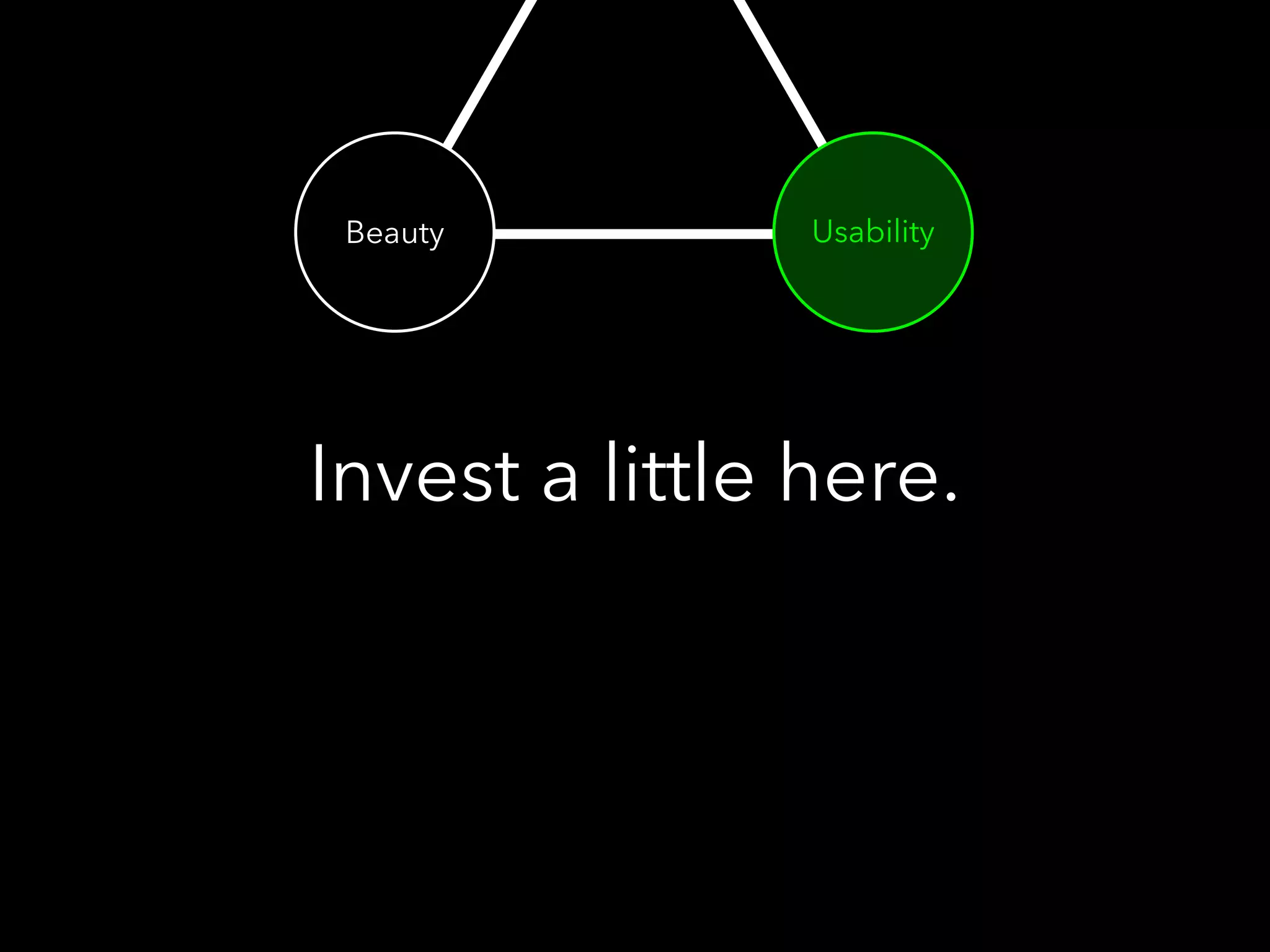
Invest a little here.
Beauty Usability
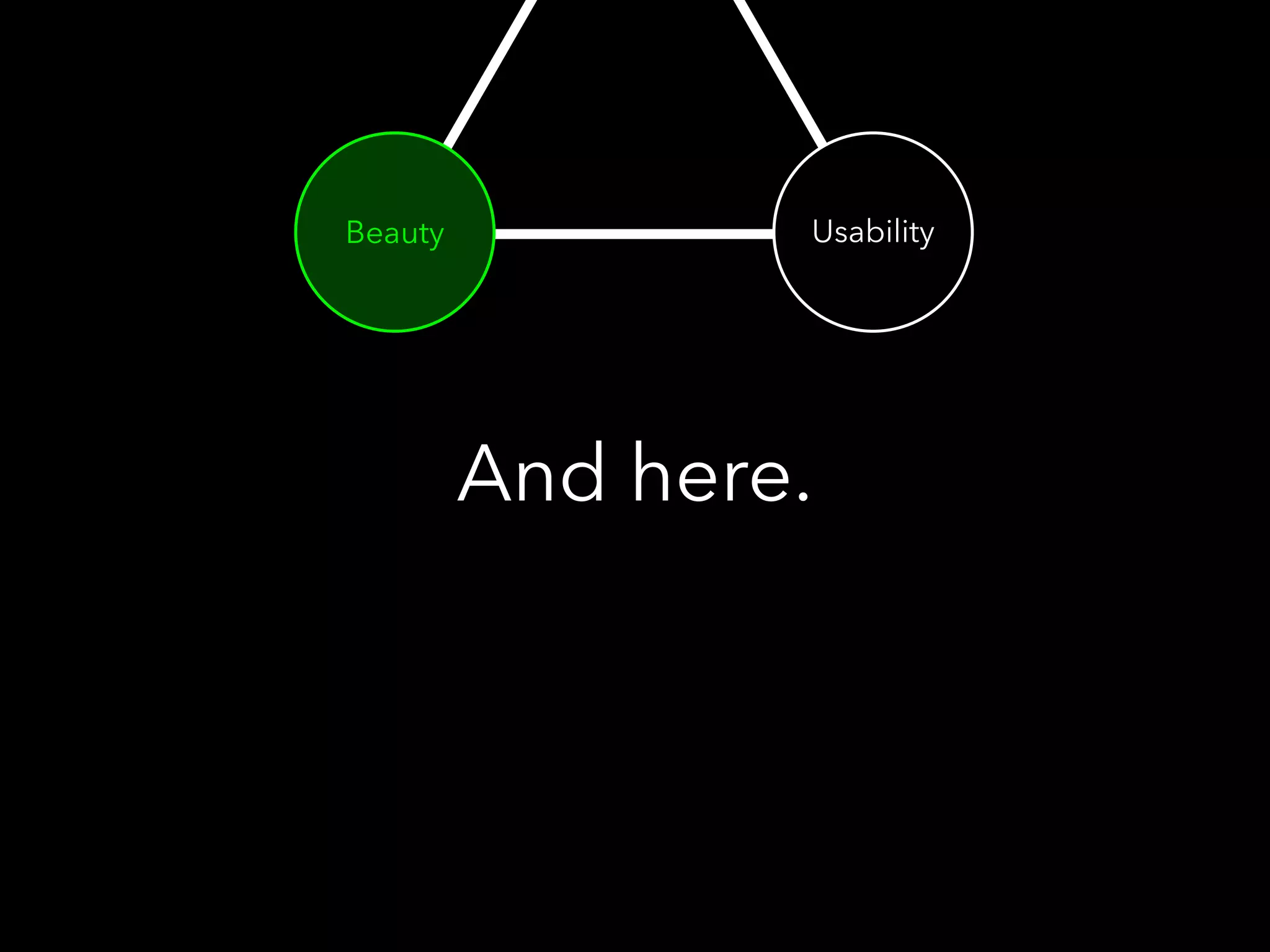
And here.
Beauty Usability
Start with just enough utility
to get your first customer.
Until you know who
your customer really is or
what your product really does,
invest judiciously in
usability and beauty.
Usually, that means
for patient customer zero,
usability = you
You probably know your
first customer. Spend time
with them. Teach. Listen.
At this point,
beauty = also you
Since you know your customer,
and presumably they trust you,
they’ll try your product.
Try = minimal investment
(time + $)
The burden is on you to
prove why your customer
should continue to invest
in your product.
Your customer puts in time + $,
and—hopefully—gets utility out.
And time back.
And greater happiness.
Randy Reddig
@rr

Shiny Hammers — utility + usability + beauty