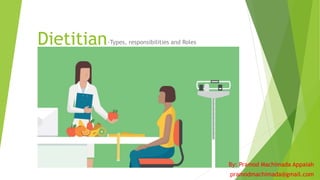
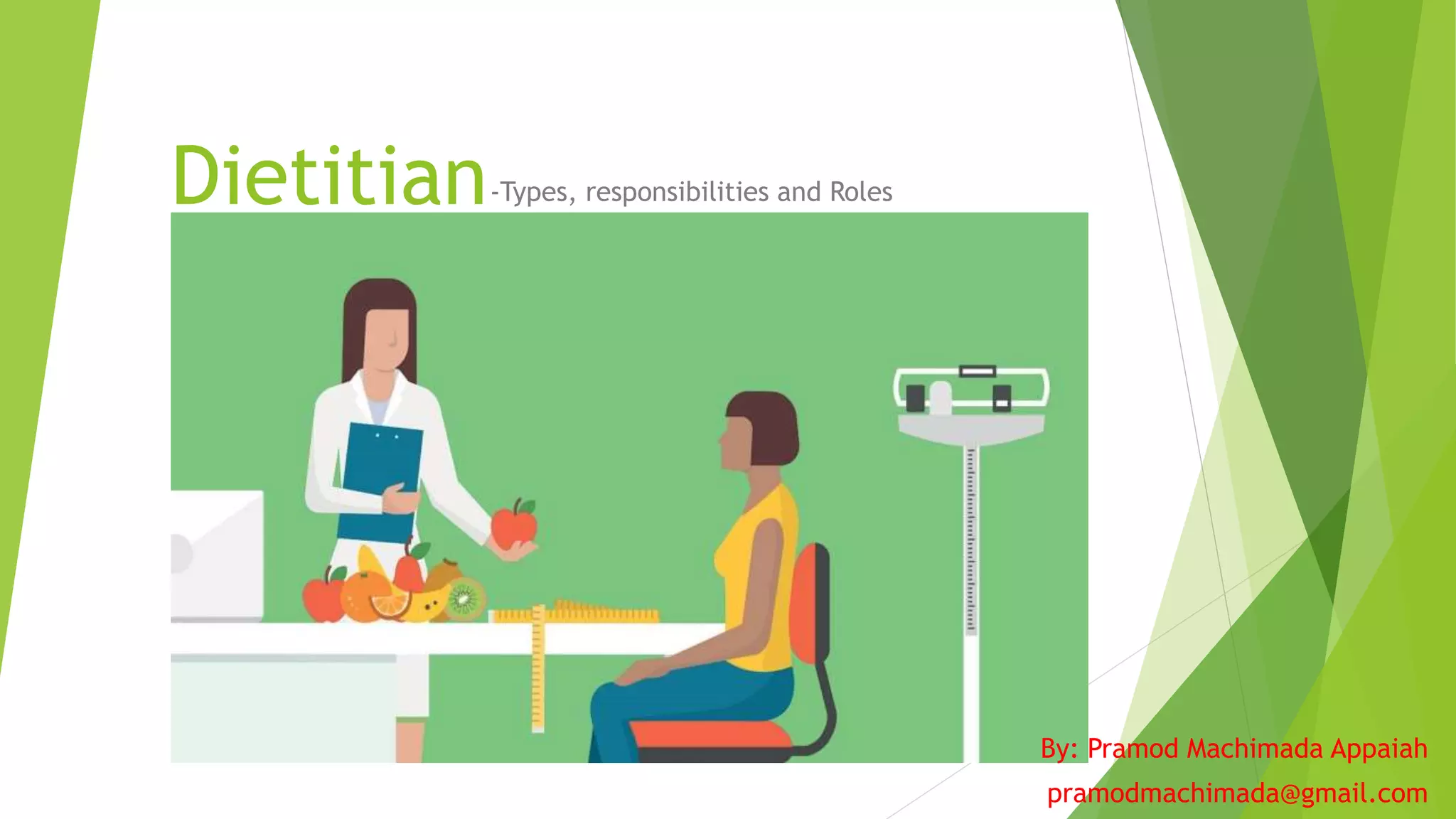


Dietitian-Types, responsibilities and Roles
By: Pramod Machimada Appaiah
pramodmachimada@gmail.com
 A dietitian plans nutrition programs and food
programs for people.
 Dietitians can help prevent diseases and obesity
problems by teaching people about the role of food
in their diet.
 They run food programs in institutions, such
as hospitals and schools.
 A dietitian promotes healthy diets through
education and education programs.
Types and responsibilities of Dietitians:
1. Clinical dietitians
 Clinical dietitians provide medical nutrition therapy
(MNT) for patients in institutions such as hospitals and
nursing care facilities.
 They assess patients’ nutritional needs, develop and
implement nutrition programs and evaluate and report
the results.
 They confer with doctors and other health care
professionals in order to coordinate medical and dietary
needs.
 Some clinical dietitians specialize in the
management of overweight and critically ill
patients, such as those with renal (kidney)
disease and diabetes.
 In addition, clinical dietitians in nursing care
facilities, small hospitals, or correctional
facilities may manage the food service
department.
2. Community dietitians/ Nutritionists
 Community dietitians develop nutrition programs
designed to prevent disease and promote health,
targeting particular groups of people.
 Dietitians in this practice area may work in
settings such as public health clinics, fitness
centers, corporate wellness programs or home
health agencies.
3. Corporate dietitians
 Corporate dietitians work in food
manufacturing, advertising and marketing.
 In these areas, dietitians analyze foods,
prepare literature for distribution, or report
on issues such as the nutritional content of
recipes, dietary fiber or vitamin
supplements.
4. Management dietitians
 Management dietitians oversee large-scale meal
planning and preparation in health care facilities,
company cafeterias, prisons and schools.
 They hire, train and direct other dietitians and
food service workers; budget for and purchase
food, equipment, and supplies; enforce sanitary
and safety regulations; and prepare records and
reports.
5. Consultant dietitians
 Consultant dietitians work under contract with
health care facilities or in their own private
practice.
 They perform nutrition assessments for their clients
and advise them about diet-related concerns, such
as weight loss or cholesterol reduction.
 Some work for wellness programs, sports
teams, supermarkets and other nutrition-
related businesses.
 They consult with food service managers,
providing expertise in sanitation, safety
procedures, menu development, budgeting
and planning.
Roles of Dietitians:
1. Role in Patient care –
 Dietitians in hospitals and nursing homes educate
patients and family members on eating well.
 They adapt menus for people recovering from
illness or surgery, or with health conditions like:
• Diabetes
• Heart disease
• Swallowing difficulties
• Poor appetite
2. Role in Private practice and consultancy –
 Dietitians work with individuals, groups and
organisations to provide dietary advice.
 They run health and nutrition education
programs and seminars.
 They may also provide nutrition and health
information to the media
3. Role in Community and public health –
 Dietitians work to improve eating habits, health
and wellbeing in the community. (They often
work in community health centres).
 They also work at state or national levels to
influence food policy and improve access to
better food choices for everyone
4. Role in Food industry –
 In the food industry, dietitians work to:
• Improve the nutritional quality of foods
• Develop nutrition education campaigns
• Promote food safety
• Work with food law and regulations.
5. Role in Research and teaching –
 Dietitians investigate the links between
food and health.
 They do this to learn how diet can promote
good health and prevent disease.
 Dietitians also teach in universities
6. Role in Sports nutrition –
 Dietitians help athletes, sporting clubs, children
and people interested in fitness to eat better.
 They do this to help them achieve their sporting
and fitness goals.
 For example, they may give advice on how to
achieve peak sporting performance, or improve
energy and activity levels.
THANK YOU

Dietitian- types, Responsibilities and Roles

  • 1.
    Dietitian-Types, responsibilities andRoles By: Pramod Machimada Appaiah pramodmachimada@gmail.com
  • 2.
     A dietitianplans nutrition programs and food programs for people.  Dietitians can help prevent diseases and obesity problems by teaching people about the role of food in their diet.
  • 3.
     They runfood programs in institutions, such as hospitals and schools.  A dietitian promotes healthy diets through education and education programs.
  • 4.
    Types and responsibilitiesof Dietitians: 1. Clinical dietitians  Clinical dietitians provide medical nutrition therapy (MNT) for patients in institutions such as hospitals and nursing care facilities.  They assess patients’ nutritional needs, develop and implement nutrition programs and evaluate and report the results.  They confer with doctors and other health care professionals in order to coordinate medical and dietary needs.
  • 5.
     Some clinicaldietitians specialize in the management of overweight and critically ill patients, such as those with renal (kidney) disease and diabetes.  In addition, clinical dietitians in nursing care facilities, small hospitals, or correctional facilities may manage the food service department.
  • 6.
    2. Community dietitians/Nutritionists  Community dietitians develop nutrition programs designed to prevent disease and promote health, targeting particular groups of people.  Dietitians in this practice area may work in settings such as public health clinics, fitness centers, corporate wellness programs or home health agencies.
  • 7.
    3. Corporate dietitians Corporate dietitians work in food manufacturing, advertising and marketing.  In these areas, dietitians analyze foods, prepare literature for distribution, or report on issues such as the nutritional content of recipes, dietary fiber or vitamin supplements.
  • 8.
    4. Management dietitians Management dietitians oversee large-scale meal planning and preparation in health care facilities, company cafeterias, prisons and schools.  They hire, train and direct other dietitians and food service workers; budget for and purchase food, equipment, and supplies; enforce sanitary and safety regulations; and prepare records and reports.
  • 9.
    5. Consultant dietitians Consultant dietitians work under contract with health care facilities or in their own private practice.  They perform nutrition assessments for their clients and advise them about diet-related concerns, such as weight loss or cholesterol reduction.
  • 10.
     Some workfor wellness programs, sports teams, supermarkets and other nutrition- related businesses.  They consult with food service managers, providing expertise in sanitation, safety procedures, menu development, budgeting and planning.
  • 11.
    Roles of Dietitians: 1.Role in Patient care –  Dietitians in hospitals and nursing homes educate patients and family members on eating well.  They adapt menus for people recovering from illness or surgery, or with health conditions like: • Diabetes • Heart disease • Swallowing difficulties • Poor appetite
  • 12.
    2. Role inPrivate practice and consultancy –  Dietitians work with individuals, groups and organisations to provide dietary advice.  They run health and nutrition education programs and seminars.  They may also provide nutrition and health information to the media
  • 13.
    3. Role inCommunity and public health –  Dietitians work to improve eating habits, health and wellbeing in the community. (They often work in community health centres).  They also work at state or national levels to influence food policy and improve access to better food choices for everyone
  • 14.
    4. Role inFood industry –  In the food industry, dietitians work to: • Improve the nutritional quality of foods • Develop nutrition education campaigns • Promote food safety • Work with food law and regulations.
  • 15.
    5. Role inResearch and teaching –  Dietitians investigate the links between food and health.  They do this to learn how diet can promote good health and prevent disease.  Dietitians also teach in universities
  • 16.
    6. Role inSports nutrition –  Dietitians help athletes, sporting clubs, children and people interested in fitness to eat better.  They do this to help them achieve their sporting and fitness goals.  For example, they may give advice on how to achieve peak sporting performance, or improve energy and activity levels.
  • 17.