Communicating with your Clients:Tools for Health and Social Service ProvidersLois Wessel, FNP-Associate Director for Programs, ACUCenter for Health Literacywww.clinicians.org
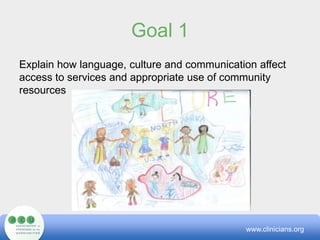
Goal 1Explain how language, culture and communication affect access to services and appropriate use of community resourceswww.clinicians.org
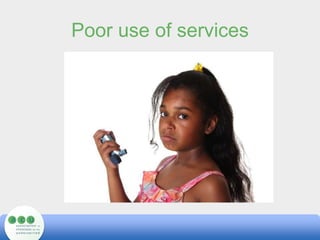
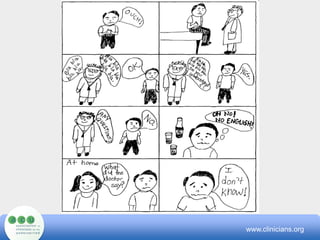
Poor use of services
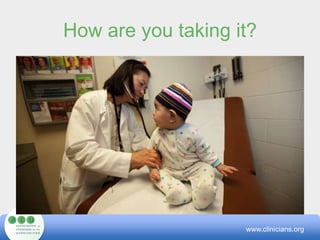
How are you taking it? www.clinicians.org
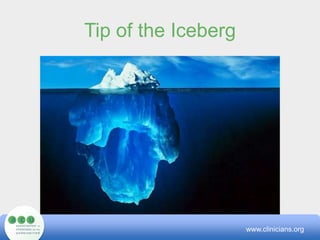
Tip of the Icebergwww.clinicians.org
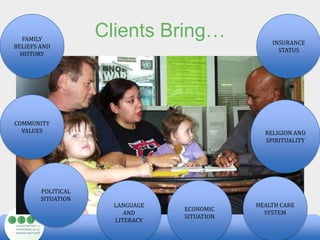
Clients Bring…INSURANCE STATUSFAMILY BELIEFS AND HISTORYCOMMUNITY VALUESRELIGION AND SPIRITUALITYPOLITICAL SITUATIONHEALTH CARE SYSTEMLANGUAGE AND LITERACYECONOMIC SITUATION6
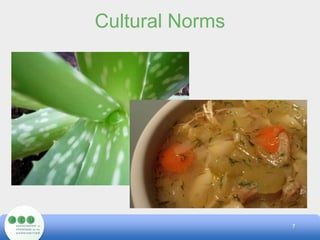
Cultural Norms7
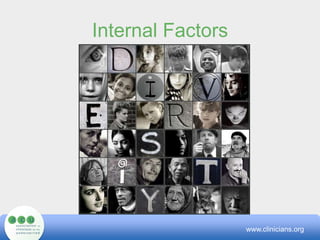
Internal Factorswww.clinicians.org
External Factorswww.clinicians.org
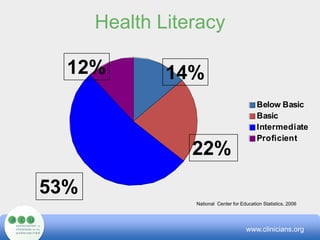
Health Literacy12%14%22%53%National  Center for Education Statistics, 2006 www.clinicians.org
www.clinicians.org
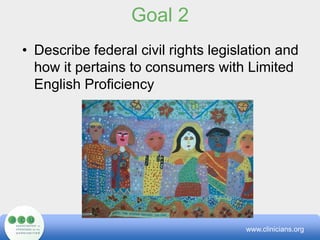
Goal 2Describe federal civil rights legislation and how it pertains to consumers with Limited English Proficiencywww.clinicians.org
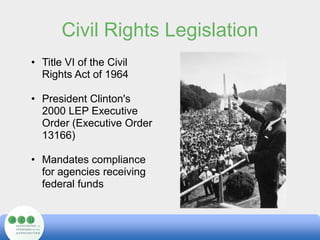
Civil Rights LegislationTitle VI of the Civil Rights Act of 1964
President Clinton's 2000 LEP Executive Order (Executive Order 13166)
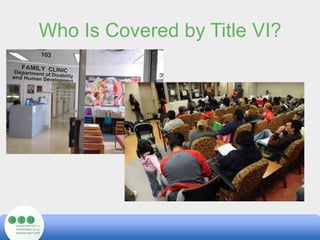
Mandates compliance for agencies receiving federal fundsWho Is Covered by Title VI?
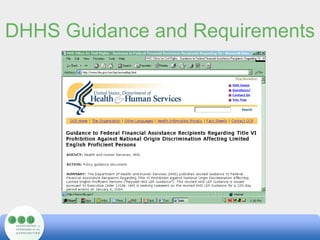
DHHS Guidance and Requirements
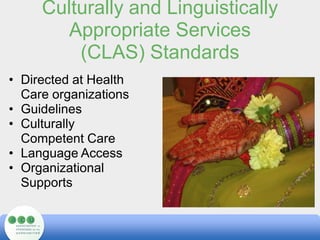
Culturally and Linguistically Appropriate Services (CLAS) Standards Directed at Health Care organizationsGuidelines Culturally Competent CareLanguage AccessOrganizational Supports
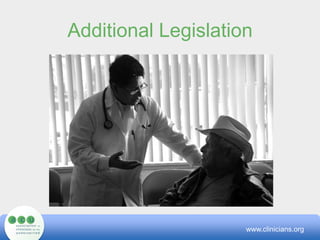
Additional Legislationwww.clinicians.org
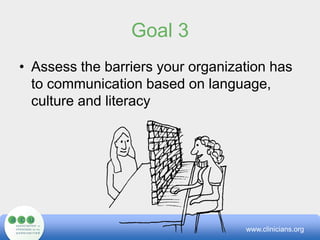
Goal 3Assess the barriers your organization has to communication based on language, culture and literacywww.clinicians.org
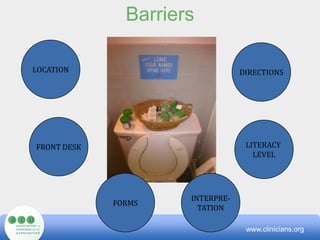
BarriersLOCATIONDIRECTIONSFRONT DESKLITERACY LEVELFORMSINTERPRE-TATIONwww.clinicians.org
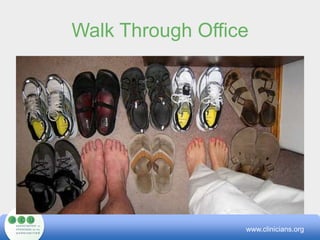
Walk Through Officewww.clinicians.org
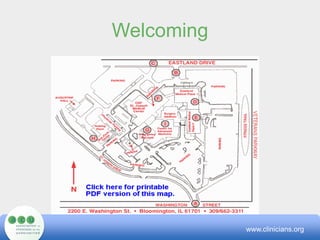
Welcomingwww.clinicians.org
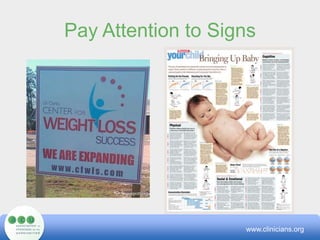
Pay Attention to Signswww.clinicians.org
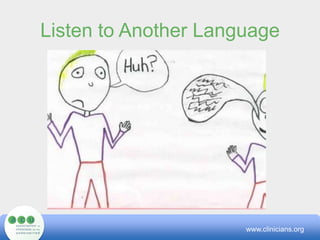
Listen to Another Languagewww.clinicians.org
Assessment ToolsNational Center for Cultural CompetenceCross Cultural Healthcare ProgramHRSAAmerican Speech Language and Hearing Associationwww.clinicians.org
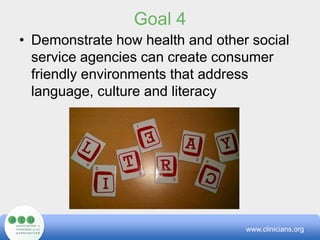
Goal 4Demonstrate how health and other social service agencies can create consumer friendly environments that address language, culture and literacywww.clinicians.org
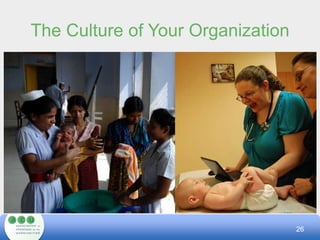
The Culture of Your Organization26
Organizational Commitment
Organizational Practicewww.clinicians.org
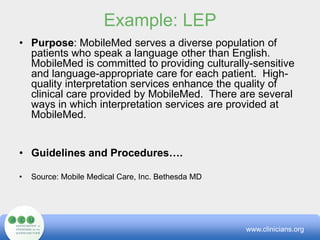
Example: LEPPurpose: MobileMed serves a diverse population of patients who speak a language other than English.  MobileMed is committed to providing culturally-sensitive and language-appropriate care for each patient.  High-quality interpretation services enhance the quality of clinical care provided by MobileMed.  There are several ways in which interpretation services are provided at MobileMed.Guidelines and Procedures….Source: Mobile Medical Care, Inc. Bethesda MDwww.clinicians.org
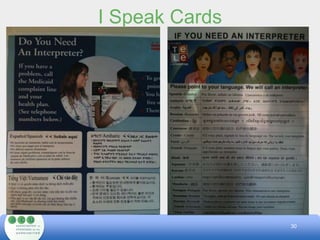
I Speak Cards30
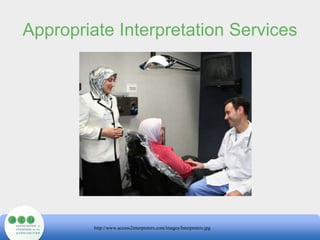
Appropriate Interpretation Serviceshttp://www.access2interpreters.com/images/Interpreters.jpg
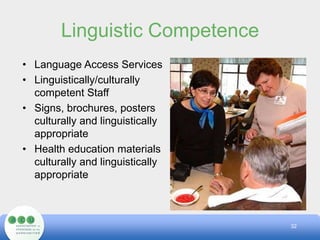
Linguistic CompetenceLanguage Access ServicesLinguistically/culturally competent StaffSigns, brochures, posters culturally and linguistically appropriateHealth education materials culturally and linguistically appropriate32
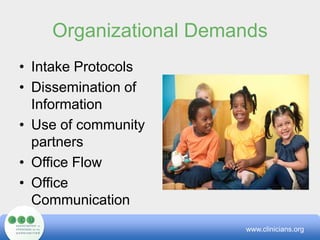
Organizational DemandsIntake ProtocolsDissemination of InformationUse of community partnersOffice FlowOffice Communicationwww.clinicians.org
StaffDiversityStaff TrainingPerformance ReviewSupport for TrainingSelf Assessmentwww.clinicians.org
Goal 5Identify ways to incorporate low-cost consumer friendly tools into your office setting to reduce barriers to communicationwww.clinicians.org
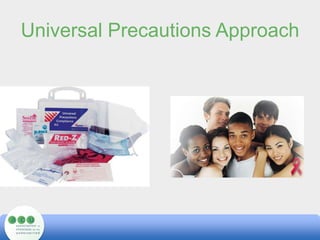
Universal Precautions Approach
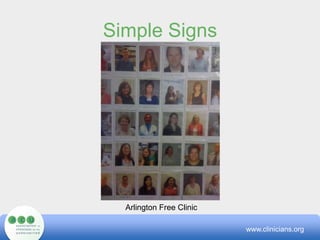
Simple Signswww.clinicians.orgArlington Free Clinic
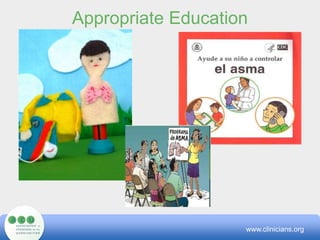
Appropriate Educationwww.clinicians.org
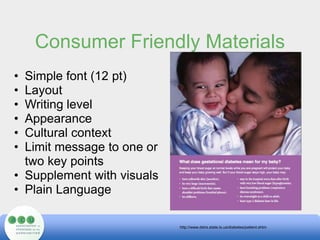
Consumer Friendly MaterialsSimple font (12 pt)
Layout
Writing level
Appearance

Lois Wessel - Communicating with your Clients