Accreditation of IDPS screening laboratories by UKAS
The incorporation of PHE
Antenatal/Newborn screening standards into
UKAS accreditation to ISO 15189
Delia Geary, UKAS Technical Manager for Healthcare
NHS Infectious Diseases in Pregnancy Screening Programme (IDPS)
National Laboratory Workshop March 2019
Scope of presentation
a) Setting the scene – background
b) Objectives
c) Process
d) Expected outcome
Setting the scene
People involved:
Public Health England/Screening Quality Assurance
Jane Woodland – Regional Head of QA, Midlands and East
Rowena Clayton – PH Consultant – Laboratory QA project
lead
Pam Tarn – Senior QA Advisor North
Angela Dietrich – Senior QA Advisor London
Sheila Miller, QA Advisor North
Jodie Price, Senior QA Advisor Midlands and East
Emma Procter, Senior QA Advisor South
Delia Geary UKAS/ Gwen Guthrie CPA
Some acronyms…
UKAS – United Kingdom Accreditation Service
CPA – Clinical Pathology Accreditation
PHE – Public Health England
SQAS – Screening Quality Assurance Service
ANNB – Antenatal and Newborn
Antenatal and New Born Screening – what does
it include?
Antenatal.
Fetal Anomaly/Down’s, Edwards’ & Patau’s syndromes
Infectious Diseases (HIV; Hepatitis B; Syphilis)
Sickle Cell and Thalassaemia
Newborn Blood Spot
Cystic Fibrosis; Congenital hypothyroidism (CHT); Glutaric
aciduria type 1 (GA1); Homocystinuria (HCU); Inherited
metabolic diseases (IMDs); Isovaleric acidaemia (IVA); Maple
syrup urine disease (MSUD); Medium-chain acyl-CoA
dehydrogenase deficiency (MCADD); Phenylketonuria (PKU);
Sickle cell disease
Background
• The interaction with the national screening programme
began with CPA prior to the ISO 15189 transition
• Gwen Guthrie from CPA pioneered the initial work alongside
Elizabeth Dormandy from Screening QA
• In 2012/2013 the overall responsibility passed to UKAS but
with continued involvement of Gwen
• Upon Gwen’s retirement the responsibility to progress this
transferred to Delia Geary
• 2015 Memorandum of understanding signed
Objectives
• Reduction of assessment/inspection burden on laboratories
and minimising duplication of activities
• Limited assessor resource
• Increasing liaison between bodies involved in monitoring the
quality of services across a clinical pathway therefore
providing a ‘joined up approach
Objectives
• Enhanced communication and patient safety
• Multi faceted improvement mechanism
• Frequency of UKAS visits leading to increased awareness of
any patient safety issues
Process
Laboratories offering an Antenatal and Newborn (ANNB)
screening service in England:
• Assessments by UKAS will address screening programme
requirements through assessments to ISO 15189
• PHE Service Specifications make it clear that laboratories
must engage with UKAS in assessments against the
screening requirements
• Laboratories must meet the screening programme quality
assurance requirements mapped to ISO 15189 and use ISO
15189 accredited referral laboratories
Process
All ANNB screening laboratories must:
• be accredited by the United Kingdom Accreditation Service
(UKAS) to ISO 15189. 'Medical laboratories – Requirements
for quality and competence’ (for the specific examinations)
• participate in EQA schemes accredited to ISO/IEC 17043.
'Conformity assessment. General requirements for
proficiency testing schemes’
Process
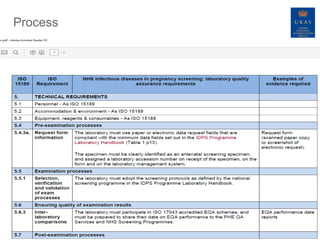
• Screening laboratory requirements - screening programme
standards, service specifications and laboratory guidance
“mapped” to ISO 15189 to generate a programme specific
document (QA requirements) which is used and referred to by
UKAS Lead assessors
• https://www.gov.uk/government/publications/antenatal-and-
newborn-screening-laboratory-quality-assurance
Process
Process
• Laboratories will need to agree to a sharing of information
between UKAS and SQAS (Screening Quality Assurance
Service) and to sign a confidentiality waiver
• Increase in effort for UKAS assessments
• Relevant documentation: National standards, laboratory
handbooks & service specifications; laboratory quality
assurance evidence requirements
• Screening laboratory will need to demonstrate to UKAS how
they ensure all screening requirements are satisfied and
audited against
Process
• Relevant UKAS assessment outcomes to be shared with
SQAS including relevant non conformities and a summary
report
• This information to be reviewed and used by SQAS to inform
whether SQAS need to take any additional action
• SQAS QA visits to maternity services will focus on the
laboratory communication strategies and user interface from
the (user) maternity perspective
Process
Process piloted – four visits generally found to be
satisfactory – no negative comments from customers
Approach during assessments:
• Surveillance visits: vertical audit
• Reassessment visits – horizontal
• Assessments completed by Lead Assessor
• Once in the accreditation cycle a technical assessor
with screening experience to be included in the
team.
• All non conformities will be closed out by UKAS
Outcomes
• Common findings to be trended
• Feedback on process to be sought (from customers) on an
ongoing basis
• Trends and learning will be fed into the national
development of each programme
Queries
Please direct any questions associated with the programmes
and the requirements to SQAS or the contacts for the national
programmes
Any queries about the UKAS assessment approach to be
directed to me (delia.geary@ukas.com) or your Assessment
Manager
Thank you!
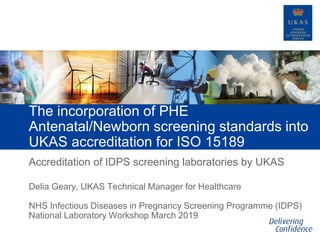
Accreditation of IDPS screening laboratories by UKAS
The incorporation of PHE
Antenatal/Newborn screening standards into
UKAS accreditation for ISO 15189
Delia Geary, UKAS Technical Manager for Healthcare
NHS Infectious Diseases in Pregnancy Screening Programme (IDPS)
National Laboratory Workshop March 2019

2. Delia Geary IDPS lab workshop march 2019

  • 1.
    Accreditation of IDPSscreening laboratories by UKAS The incorporation of PHE Antenatal/Newborn screening standards into UKAS accreditation to ISO 15189 Delia Geary, UKAS Technical Manager for Healthcare NHS Infectious Diseases in Pregnancy Screening Programme (IDPS) National Laboratory Workshop March 2019
  • 2.
    Scope of presentation a)Setting the scene – background b) Objectives c) Process d) Expected outcome
  • 3.
    Setting the scene Peopleinvolved: Public Health England/Screening Quality Assurance Jane Woodland – Regional Head of QA, Midlands and East Rowena Clayton – PH Consultant – Laboratory QA project lead Pam Tarn – Senior QA Advisor North Angela Dietrich – Senior QA Advisor London Sheila Miller, QA Advisor North Jodie Price, Senior QA Advisor Midlands and East Emma Procter, Senior QA Advisor South Delia Geary UKAS/ Gwen Guthrie CPA
  • 4.
    Some acronyms… UKAS –United Kingdom Accreditation Service CPA – Clinical Pathology Accreditation PHE – Public Health England SQAS – Screening Quality Assurance Service ANNB – Antenatal and Newborn
  • 5.
    Antenatal and NewBorn Screening – what does it include? Antenatal. Fetal Anomaly/Down’s, Edwards’ & Patau’s syndromes Infectious Diseases (HIV; Hepatitis B; Syphilis) Sickle Cell and Thalassaemia Newborn Blood Spot Cystic Fibrosis; Congenital hypothyroidism (CHT); Glutaric aciduria type 1 (GA1); Homocystinuria (HCU); Inherited metabolic diseases (IMDs); Isovaleric acidaemia (IVA); Maple syrup urine disease (MSUD); Medium-chain acyl-CoA dehydrogenase deficiency (MCADD); Phenylketonuria (PKU); Sickle cell disease
  • 6.
    Background • The interactionwith the national screening programme began with CPA prior to the ISO 15189 transition • Gwen Guthrie from CPA pioneered the initial work alongside Elizabeth Dormandy from Screening QA • In 2012/2013 the overall responsibility passed to UKAS but with continued involvement of Gwen • Upon Gwen’s retirement the responsibility to progress this transferred to Delia Geary • 2015 Memorandum of understanding signed
  • 7.
    Objectives • Reduction ofassessment/inspection burden on laboratories and minimising duplication of activities • Limited assessor resource • Increasing liaison between bodies involved in monitoring the quality of services across a clinical pathway therefore providing a ‘joined up approach
  • 8.
    Objectives • Enhanced communicationand patient safety • Multi faceted improvement mechanism • Frequency of UKAS visits leading to increased awareness of any patient safety issues
  • 9.
    Process Laboratories offering anAntenatal and Newborn (ANNB) screening service in England: • Assessments by UKAS will address screening programme requirements through assessments to ISO 15189 • PHE Service Specifications make it clear that laboratories must engage with UKAS in assessments against the screening requirements • Laboratories must meet the screening programme quality assurance requirements mapped to ISO 15189 and use ISO 15189 accredited referral laboratories
  • 10.
    Process All ANNB screeninglaboratories must: • be accredited by the United Kingdom Accreditation Service (UKAS) to ISO 15189. 'Medical laboratories – Requirements for quality and competence’ (for the specific examinations) • participate in EQA schemes accredited to ISO/IEC 17043. 'Conformity assessment. General requirements for proficiency testing schemes’
  • 11.
    Process • Screening laboratoryrequirements - screening programme standards, service specifications and laboratory guidance “mapped” to ISO 15189 to generate a programme specific document (QA requirements) which is used and referred to by UKAS Lead assessors • https://www.gov.uk/government/publications/antenatal-and- newborn-screening-laboratory-quality-assurance
  • 12.
  • 13.
    Process • Laboratories willneed to agree to a sharing of information between UKAS and SQAS (Screening Quality Assurance Service) and to sign a confidentiality waiver • Increase in effort for UKAS assessments • Relevant documentation: National standards, laboratory handbooks & service specifications; laboratory quality assurance evidence requirements • Screening laboratory will need to demonstrate to UKAS how they ensure all screening requirements are satisfied and audited against
  • 14.
    Process • Relevant UKASassessment outcomes to be shared with SQAS including relevant non conformities and a summary report • This information to be reviewed and used by SQAS to inform whether SQAS need to take any additional action • SQAS QA visits to maternity services will focus on the laboratory communication strategies and user interface from the (user) maternity perspective
  • 15.
    Process Process piloted –four visits generally found to be satisfactory – no negative comments from customers Approach during assessments: • Surveillance visits: vertical audit • Reassessment visits – horizontal • Assessments completed by Lead Assessor • Once in the accreditation cycle a technical assessor with screening experience to be included in the team. • All non conformities will be closed out by UKAS
  • 16.
    Outcomes • Common findingsto be trended • Feedback on process to be sought (from customers) on an ongoing basis • Trends and learning will be fed into the national development of each programme
  • 17.
    Queries Please direct anyquestions associated with the programmes and the requirements to SQAS or the contacts for the national programmes Any queries about the UKAS assessment approach to be directed to me (delia.geary@ukas.com) or your Assessment Manager
  • 18.
  • 19.
    Accreditation of IDPSscreening laboratories by UKAS The incorporation of PHE Antenatal/Newborn screening standards into UKAS accreditation for ISO 15189 Delia Geary, UKAS Technical Manager for Healthcare NHS Infectious Diseases in Pregnancy Screening Programme (IDPS) National Laboratory Workshop March 2019