HIV self-testing and linkage in Africa
8th IAS Conference on HIV pathogenesis, treatment and
prevention– Vancouver
22nd July 2015
Dr Peter MacPherson MBChB PhD
Outline of presentation
1. Need for HIV self-testing in Africa
2. Completed and planned studies in Africa
3. Ongoing and planned studies
4. Priority areas for future research
What is HIV self-testing?
WHO HTS Guidelines 2015
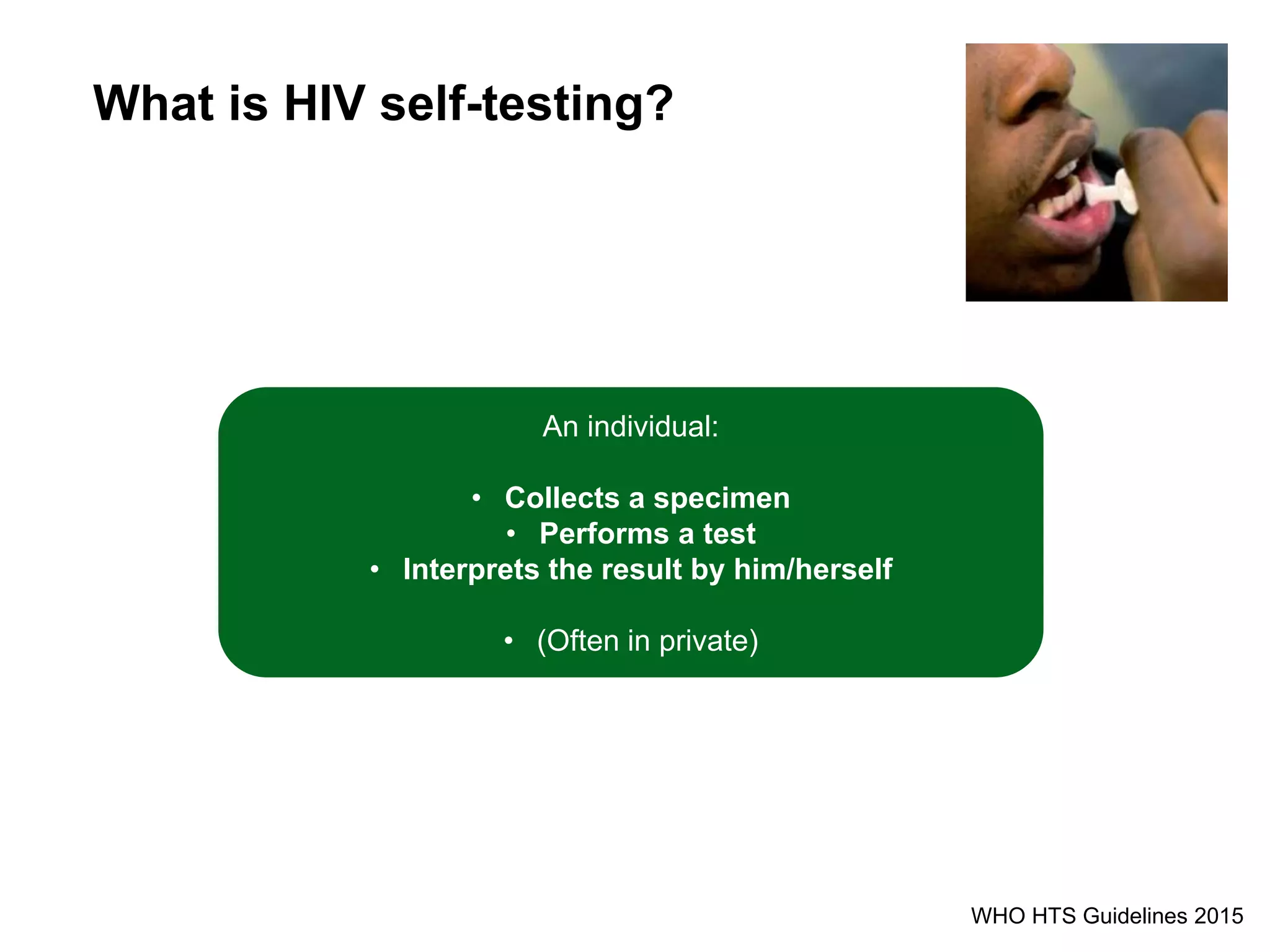
An individual:
• Collects a specimen
• Performs a test
• Interprets the result by him/herself
• (Often in private)
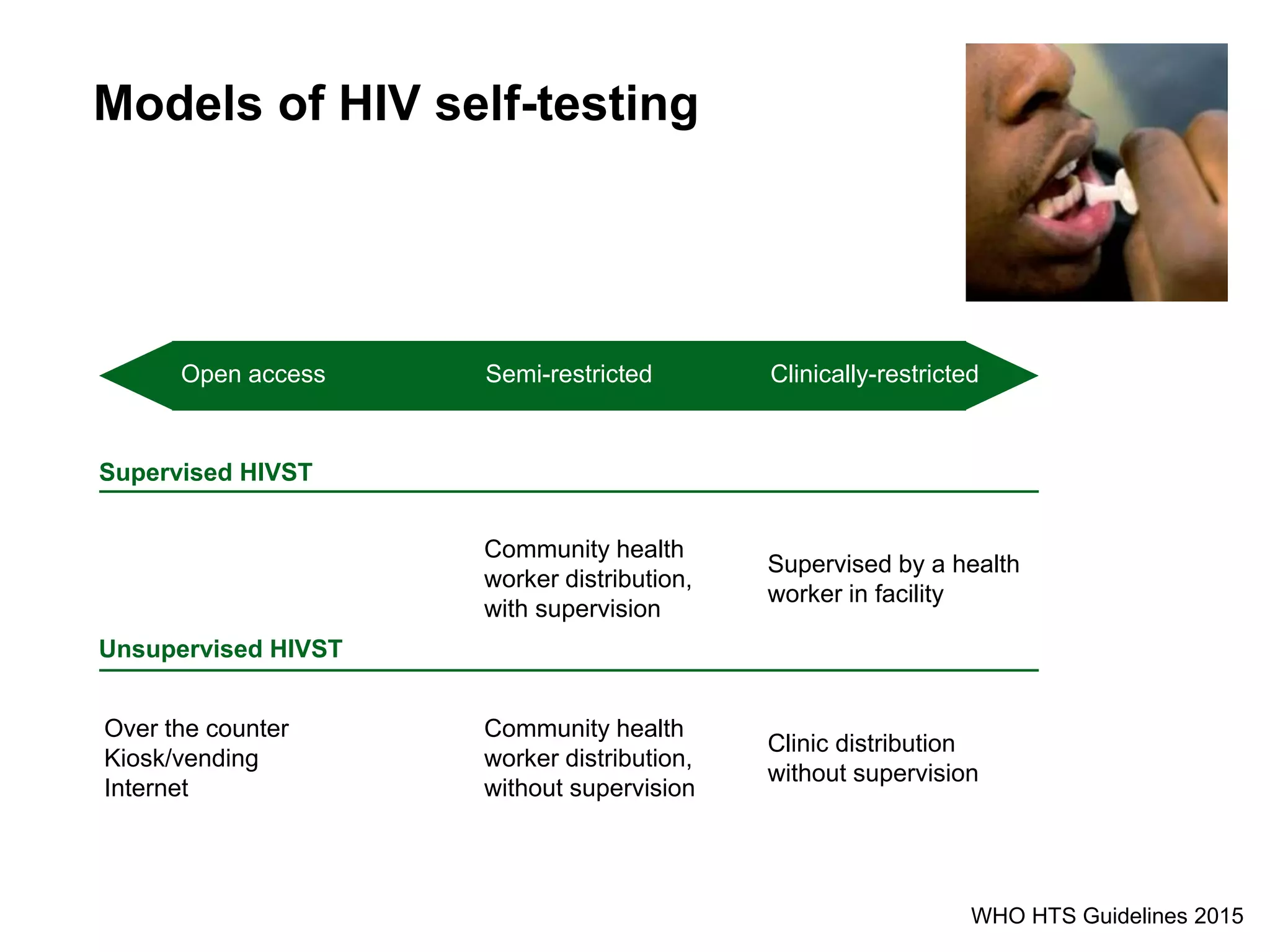
Models of HIV self-testing
WHO HTS Guidelines 2015
Open access Semi-restricted Clinically-restricted
Supervised HIVST
Unsupervised HIVST
Community health
worker distribution,
with supervision
Supervised by a health
worker in facility
Over the counter
Kiosk/vending
Internet
Community health
worker distribution,
without supervision
Clinic distribution
without supervision
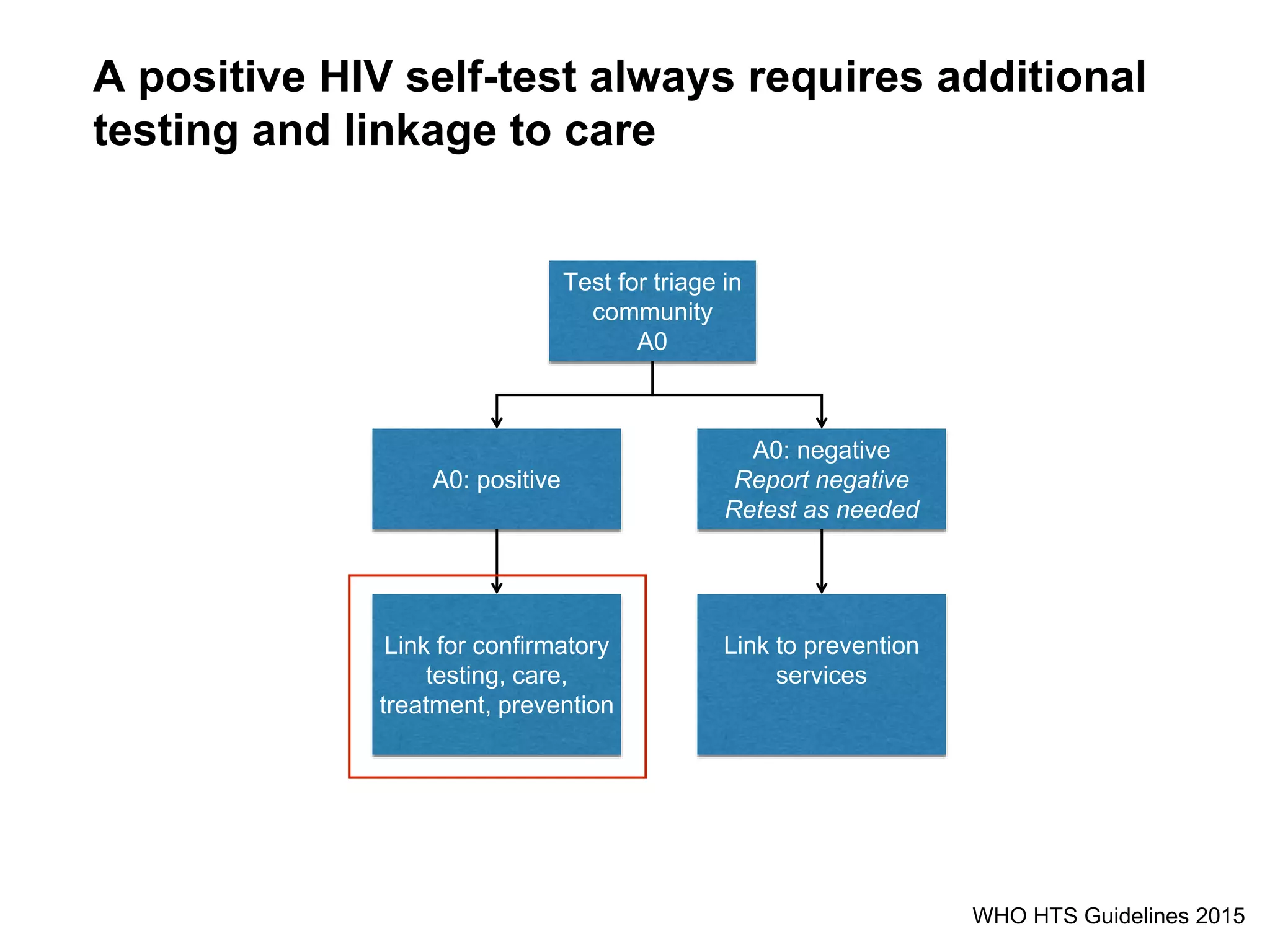
A positive HIV self-test always requires additional
testing and linkage to care
WHO HTS Guidelines 2015
Test for triage in
community
A0
A0: positive
A0: negative
Report negative
Retest as needed
Link for confirmatory
testing, care,
treatment, prevention
Link to prevention
services
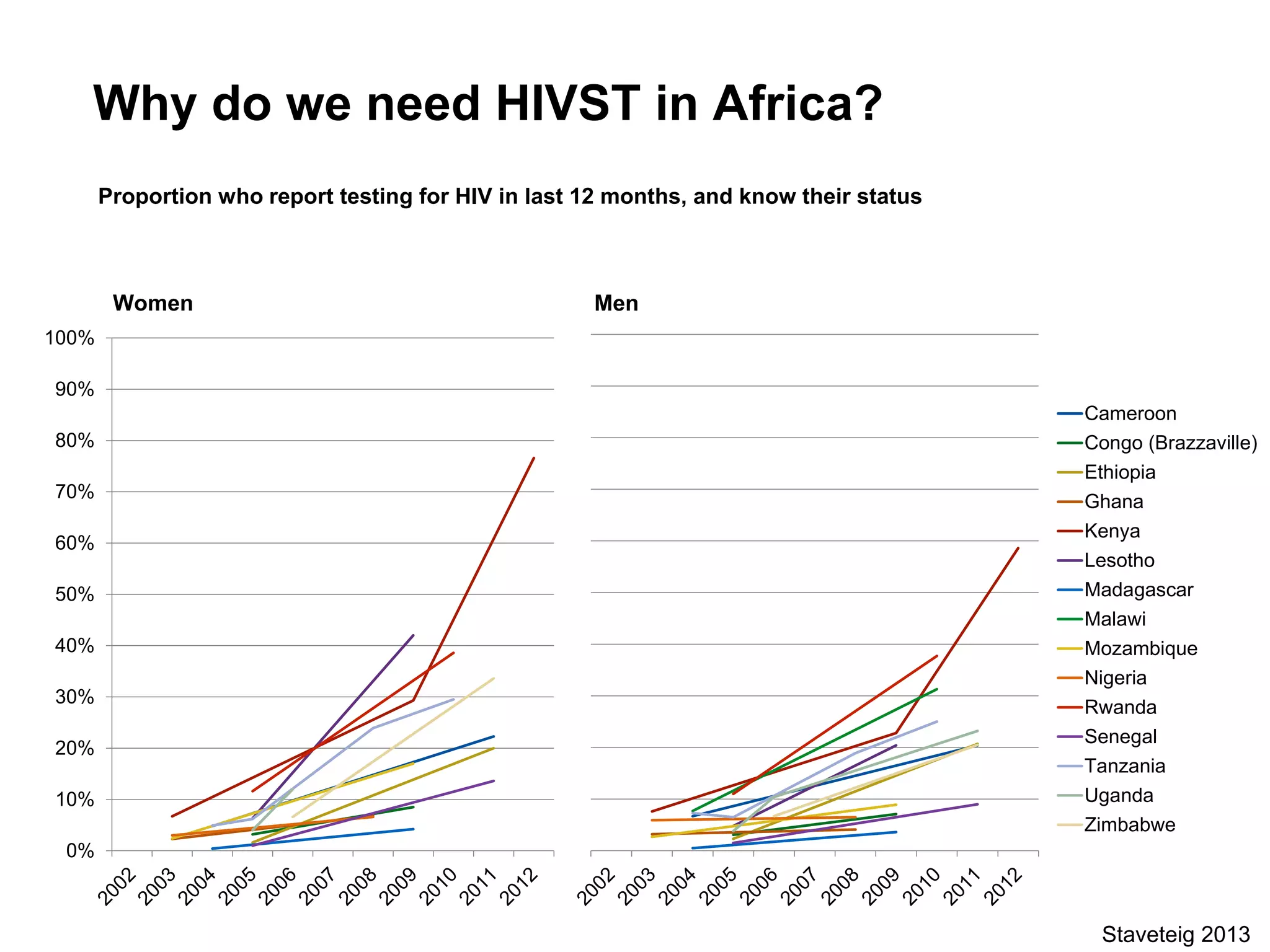
Why do we need HIVST in Africa?
0%
10%
20%
30%
40%
50%
60%
70%
80%
90%
100%
Proportion who report testing for HIV in last 12 months, and know their status
Women Men
Cameroon
Congo (Brazzaville)
Ethiopia
Ghana
Kenya
Lesotho
Madagascar
Malawi
Mozambique
Nigeria
Rwanda
Senegal
Tanzania
Uganda
Zimbabwe
Staveteig 2013
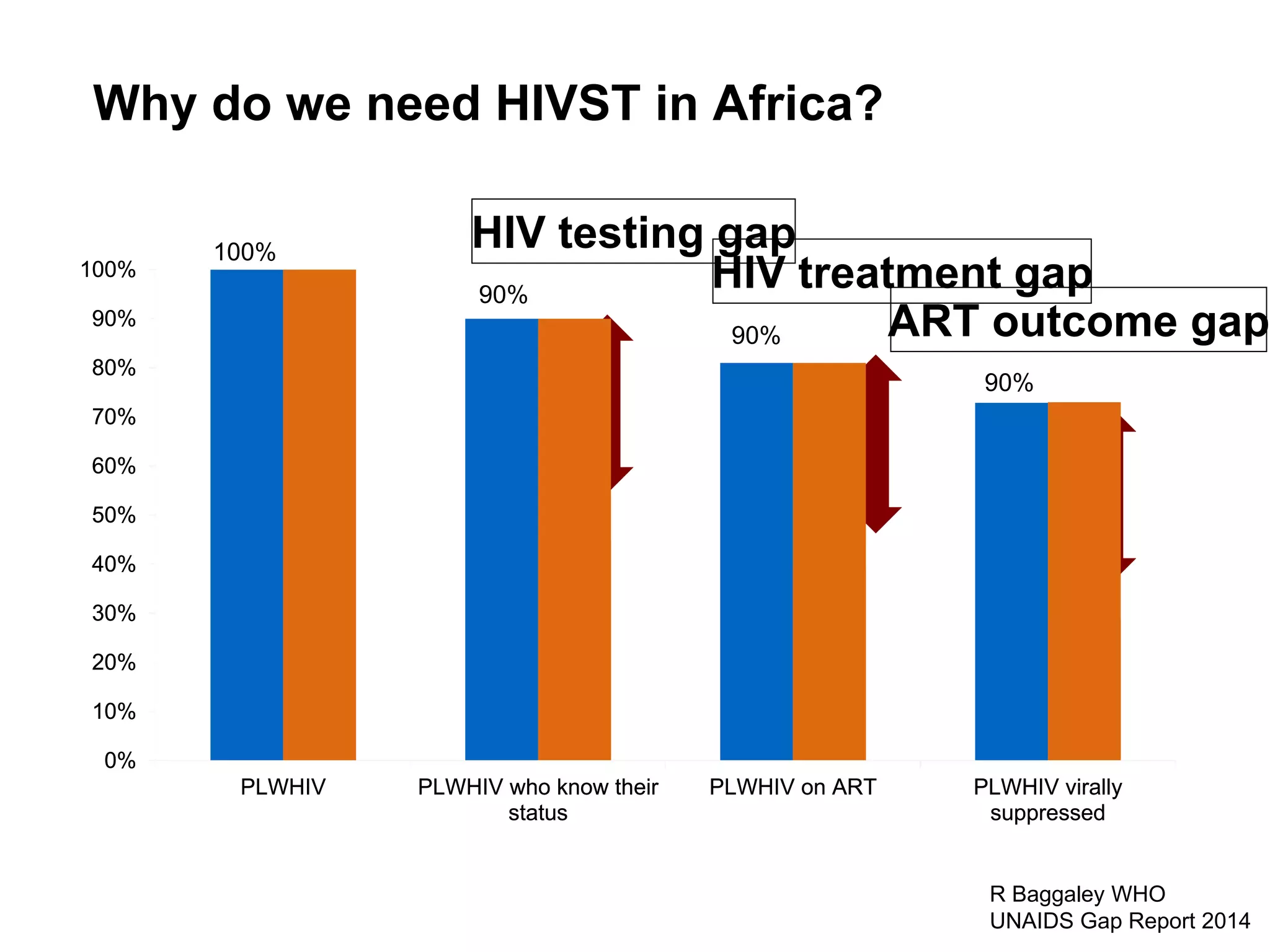
Why do we need HIVST in Africa?
R Baggaley WHO
UNAIDS Gap Report 2014
0%
10%
20%
30%
40%
50%
60%
70%
80%
90%
100%
PLWHIV PLWHIV who know their
status
PLWHIV on ART PLWHIV virally
suppressed
90%
90%
90%
45%
39%
29%
100%
HIV testing gap
HIV treatment gap
ART outcome gap
0%
10%
20%
30%
40%
50%
60%
70%
80%
90%
100%
PLWHIV PLWHIV who know their
status
PLWHIV on ART PLWHIV virally
suppressed
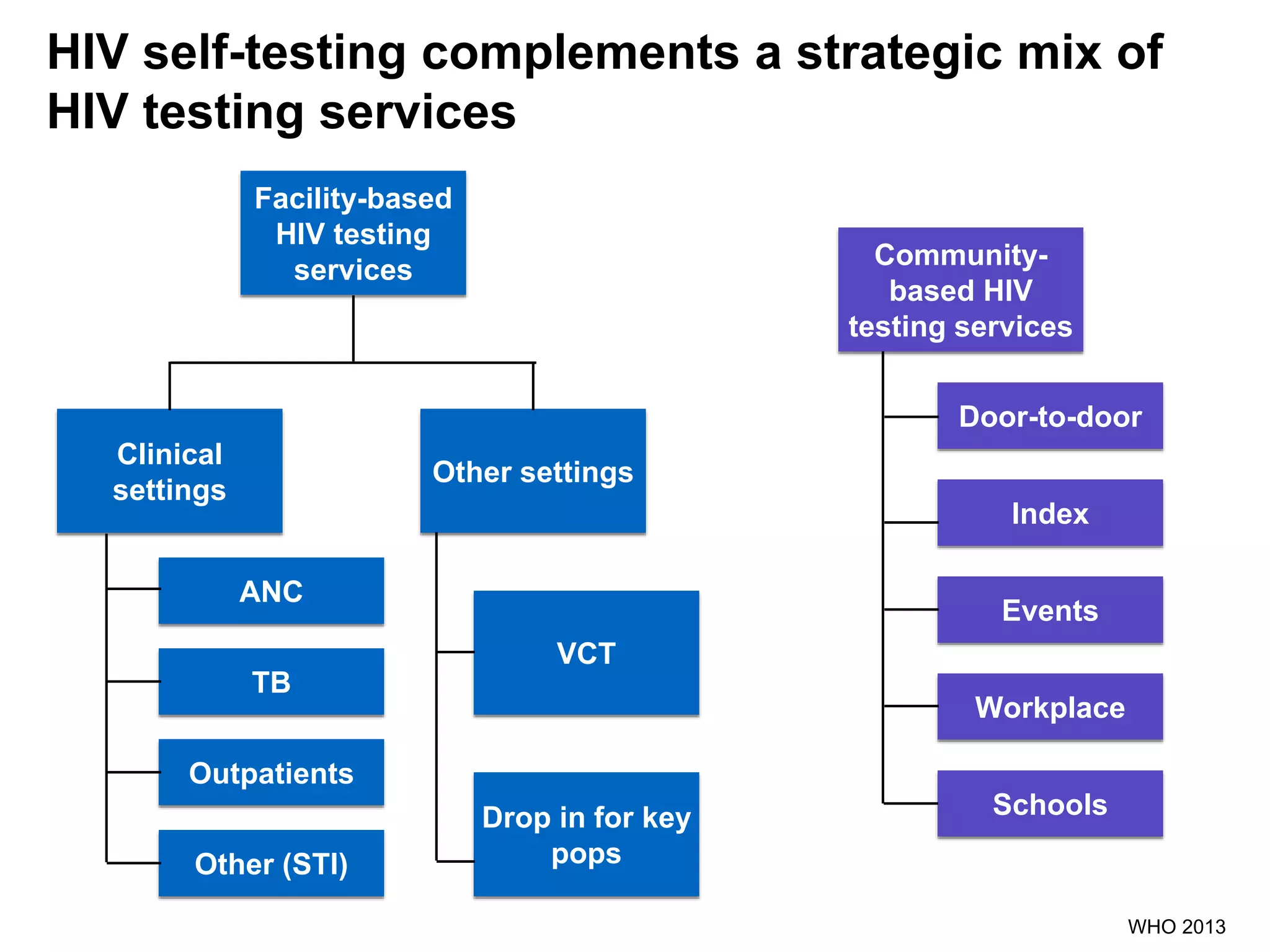
HIV self-testing complements a strategic mix of
HIV testing services
Facility-based
HIV testing
services
Clinical
settings
Other settings
VCT
Drop in for key
pops
ANC
TB
Outpatients
Other (STI)
Community-
based HIV
testing services
Door-to-door
Index
Events
Workplace
Schools
WHO 2013
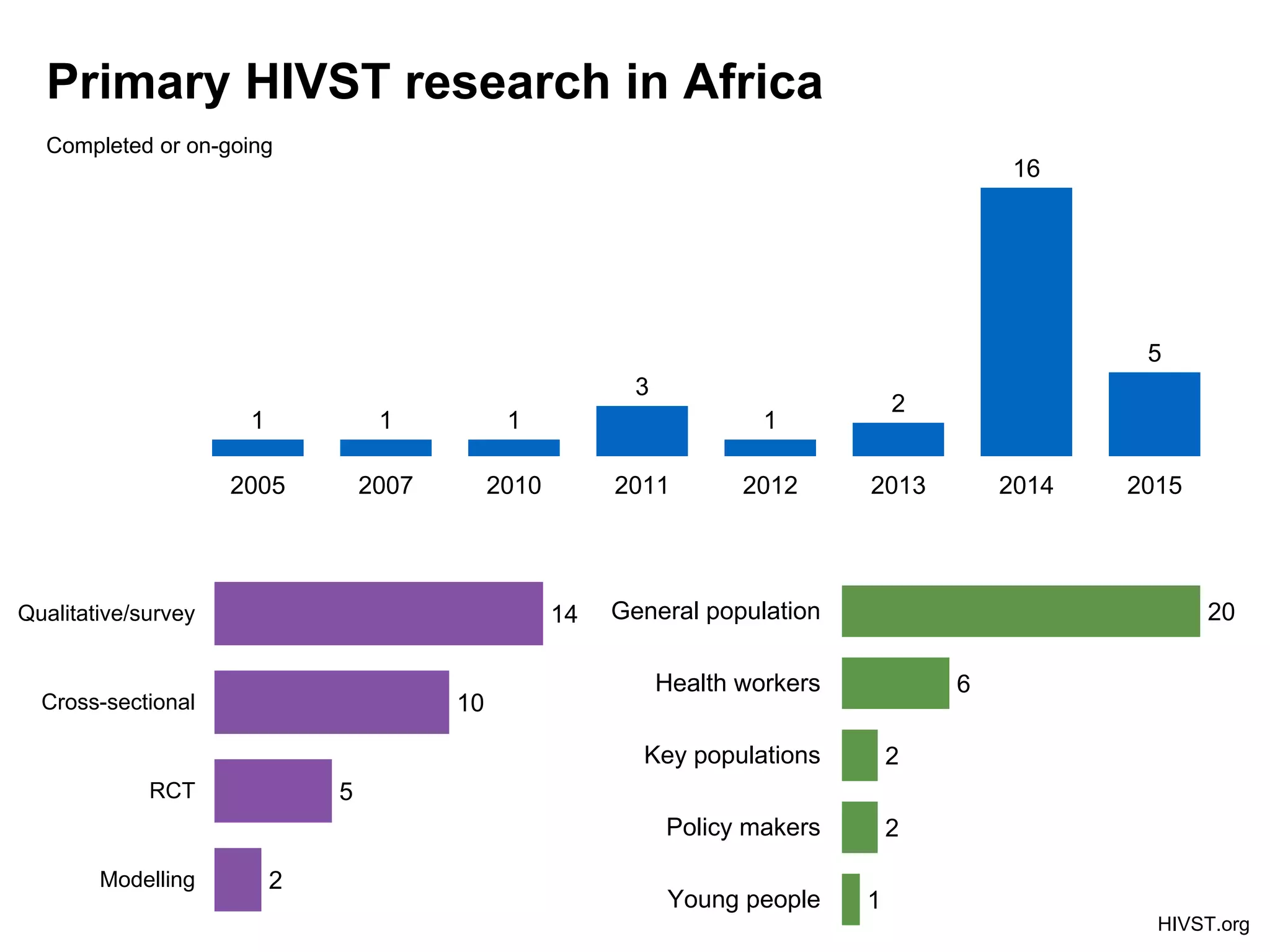
Primary HIVST research in Africa
14
10
5
2
Qualitative/survey
Cross-sectional
RCT
Modelling
HIVST.org
1 1 1
3
1
2
16
5
2005 2007 2010 2011 2012 2013 2014 2015
20
6
2
2
1
General population
Health workers
Key populations
Policy makers
Young people
Completed or on-going
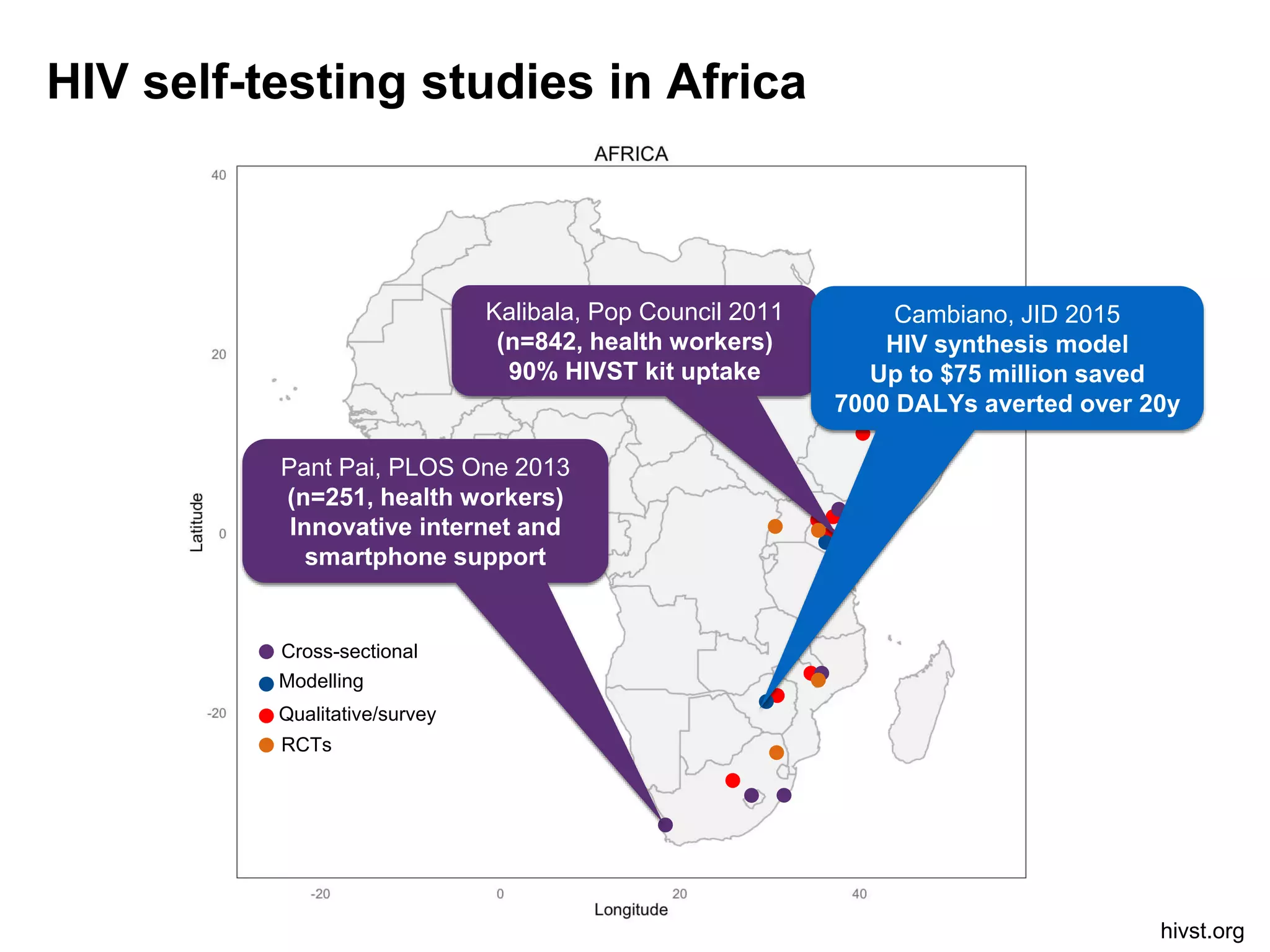
HIV self-testing studies in Africa
Qualitative/survey
Modelling
Cross-sectional
Kalibala, Pop Council 2011
(n=842, health workers)
90% HIVST kit uptake
Pant Pai, PLOS One 2013
(n=251, health workers)
Innovative internet and
smartphone support
Cambiano, JID 2015
HIV synthesis model
Up to $75 million saved
7000 DALYs averted over 20y
hivst.org
RCTs
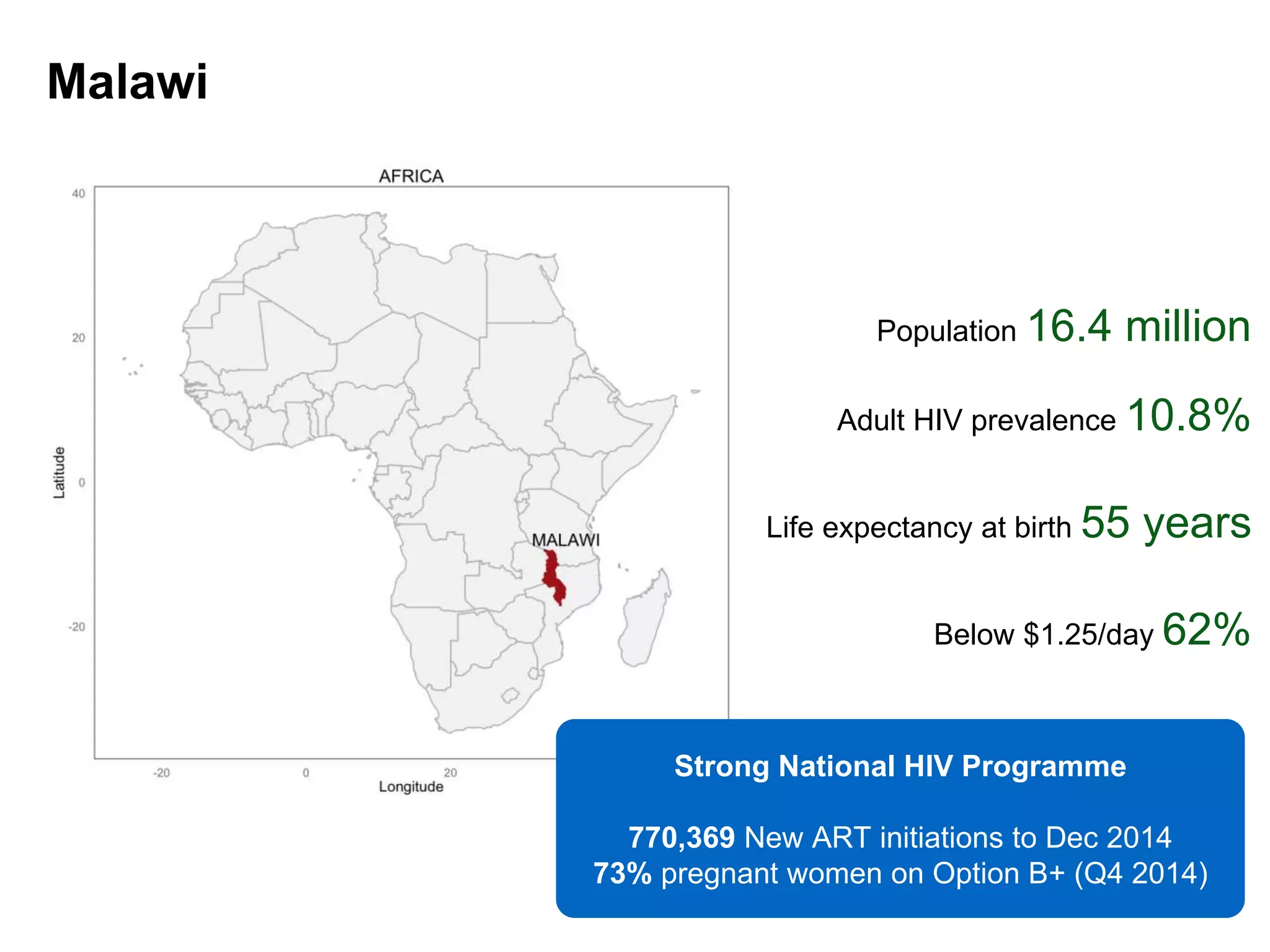
Malawi
Population 16.4 million
Adult HIV prevalence 10.8%
Life expectancy at birth 55 years
Below $1.25/day 62%
Strong National HIV Programme
770,369 New ART initiations to Dec 2014
73% pregnant women on Option B+ (Q4 2014)
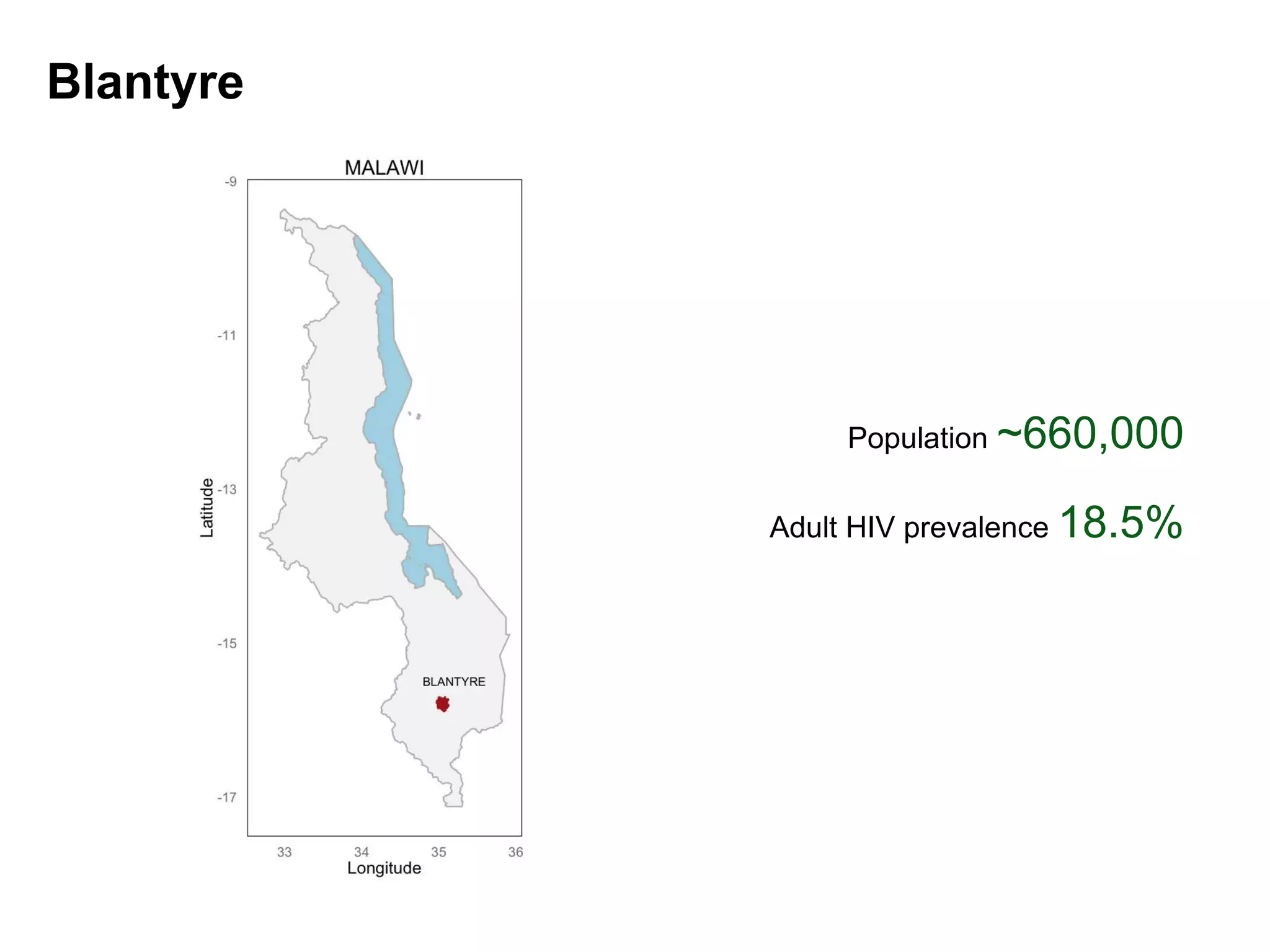
Blantyre
Population ~660,000
Adult HIV prevalence 18.5%
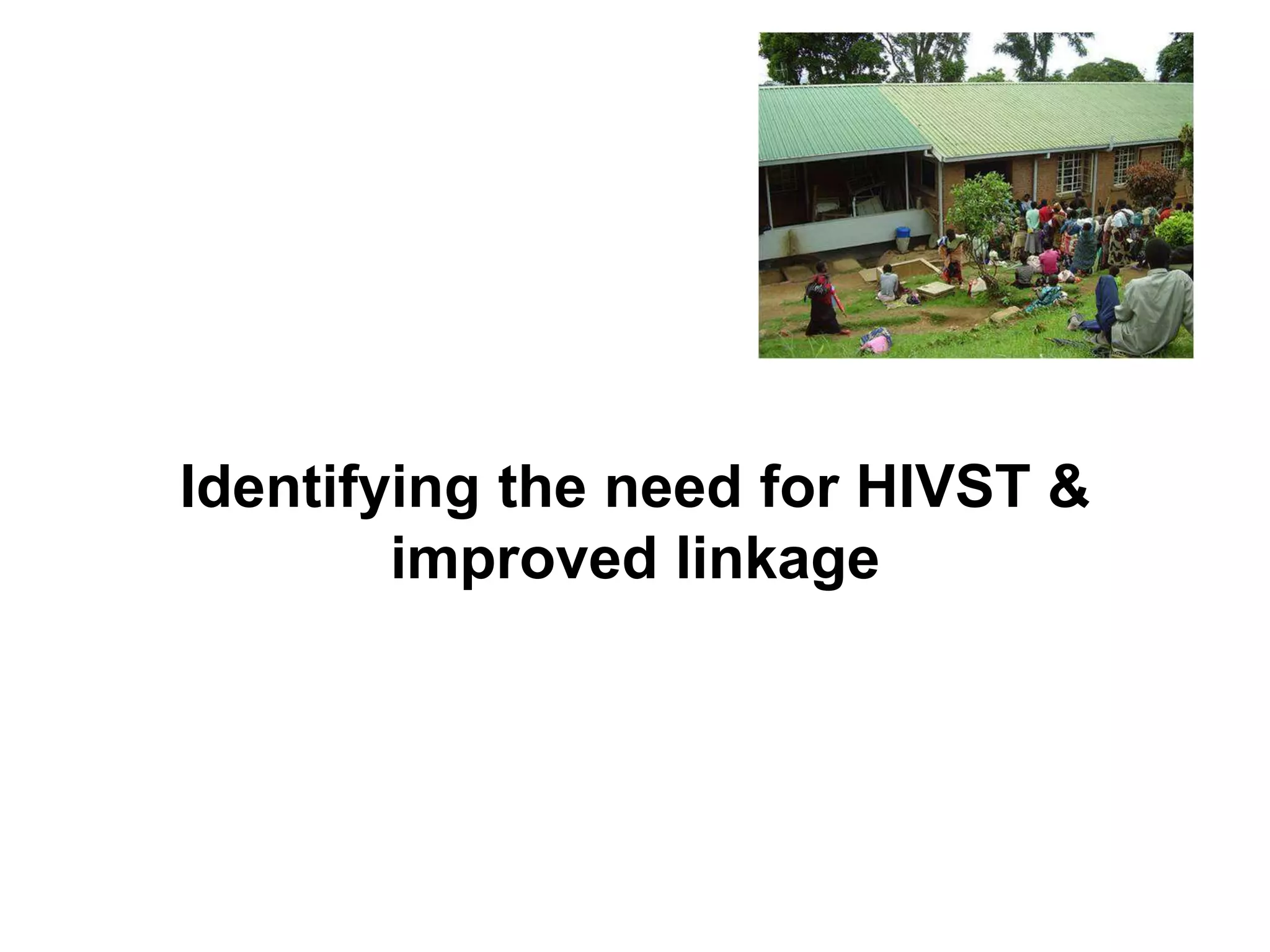
Identifying the need for HIVST &
improved linkage
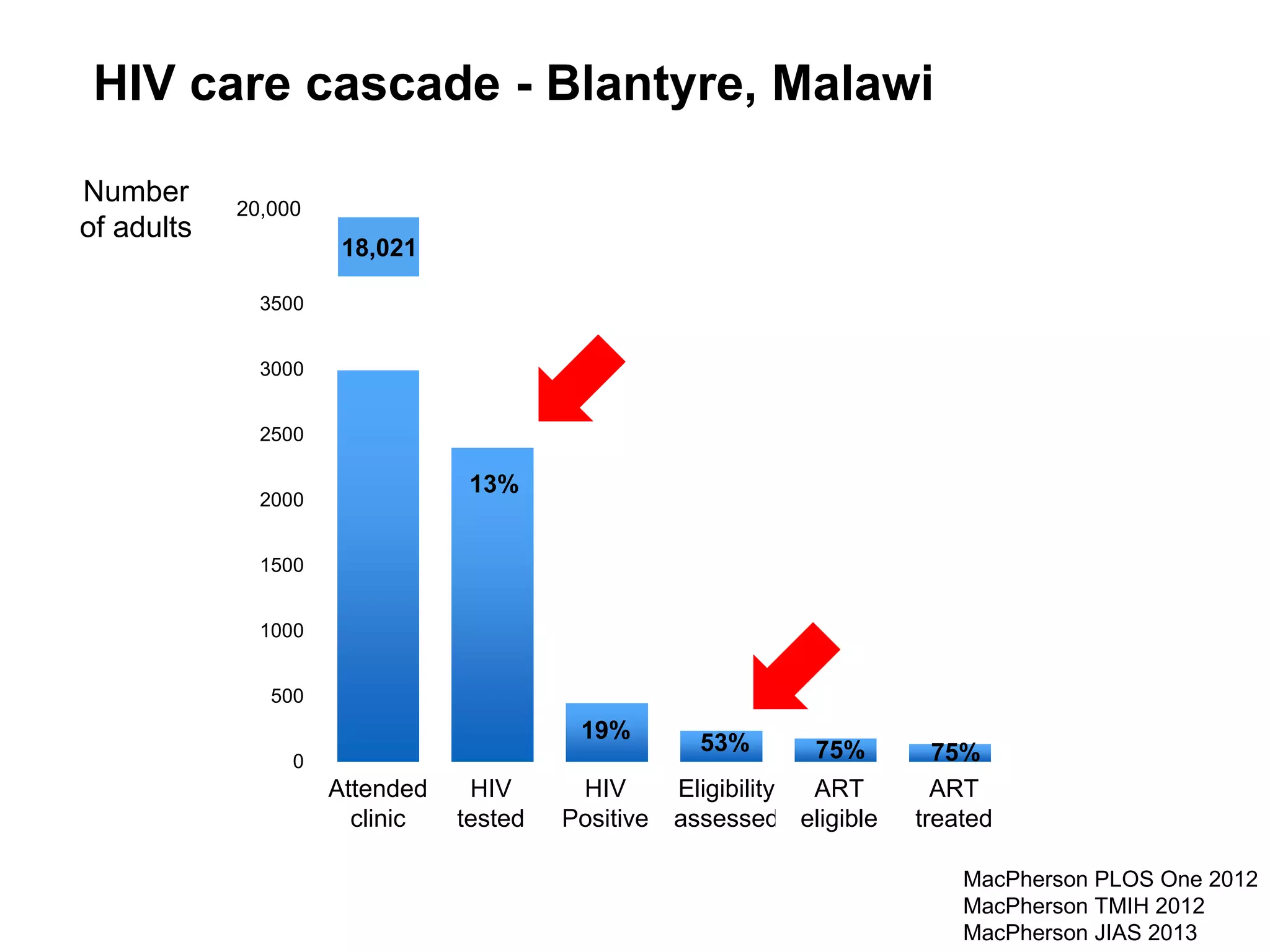
HIV care cascade - Blantyre, Malawi
0
500
1000
1500
2000
2500
3000
3500
Attended clinic HIV tested HIV positiveCompleted eligibility assesment Eligible Initiated ART
Attended
clinic
HIV
tested
HIV
Positive
Eligibility
assessed
ART
eligible
ART
treated
20,000
18,021
13%
19%
53% 75% 75%
Number
of adults
MacPherson PLOS One 2012
MacPherson TMIH 2012
MacPherson JIAS 2013
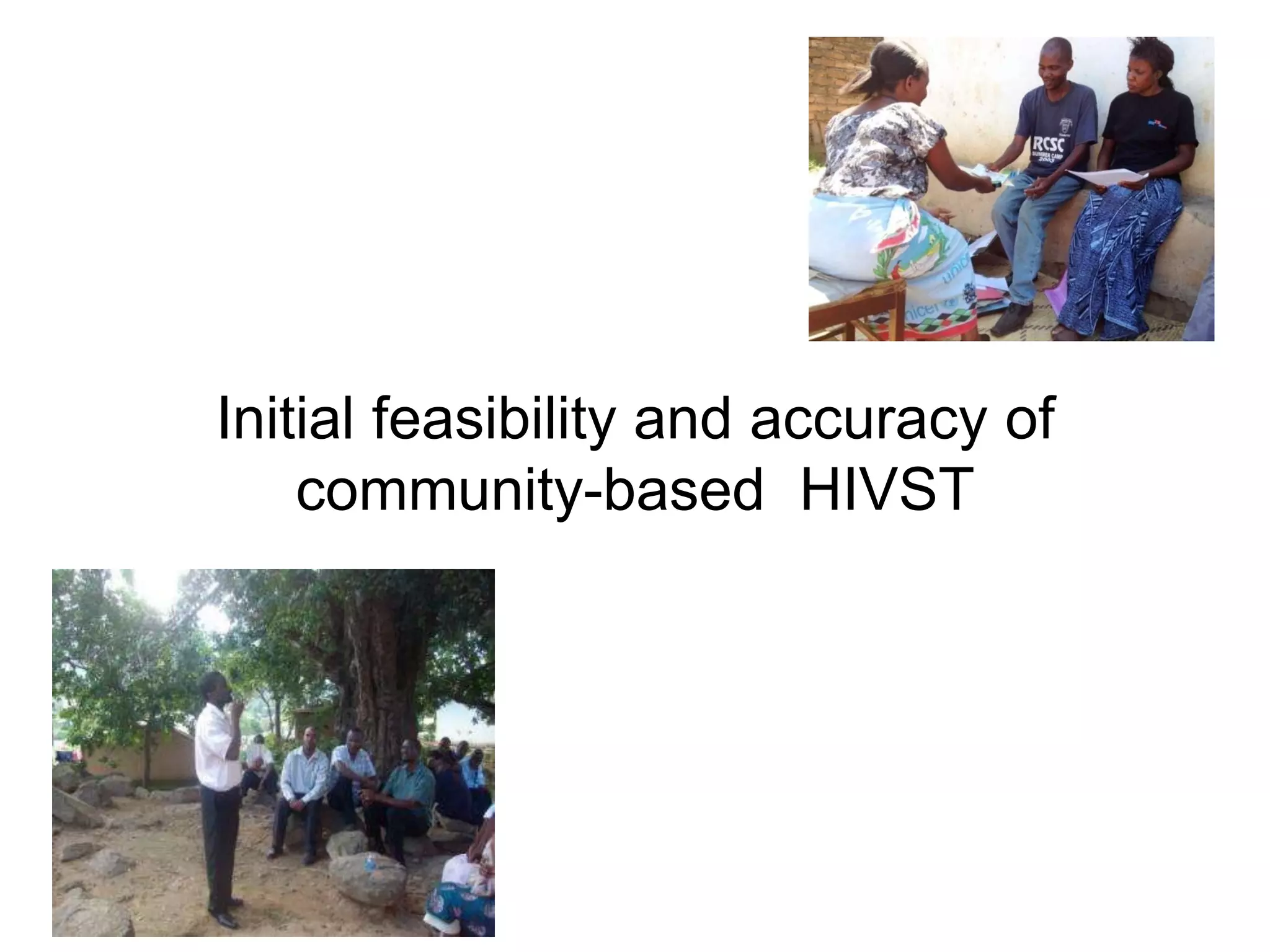
Initial feasibility and accuracy of
community-based HIVST
99.2%
96.5%
10.0%
10.0%
0% 20% 40% 60% 80% 100%
Accurate result first time
Own result "definitely
correct"
Needed help
Made error
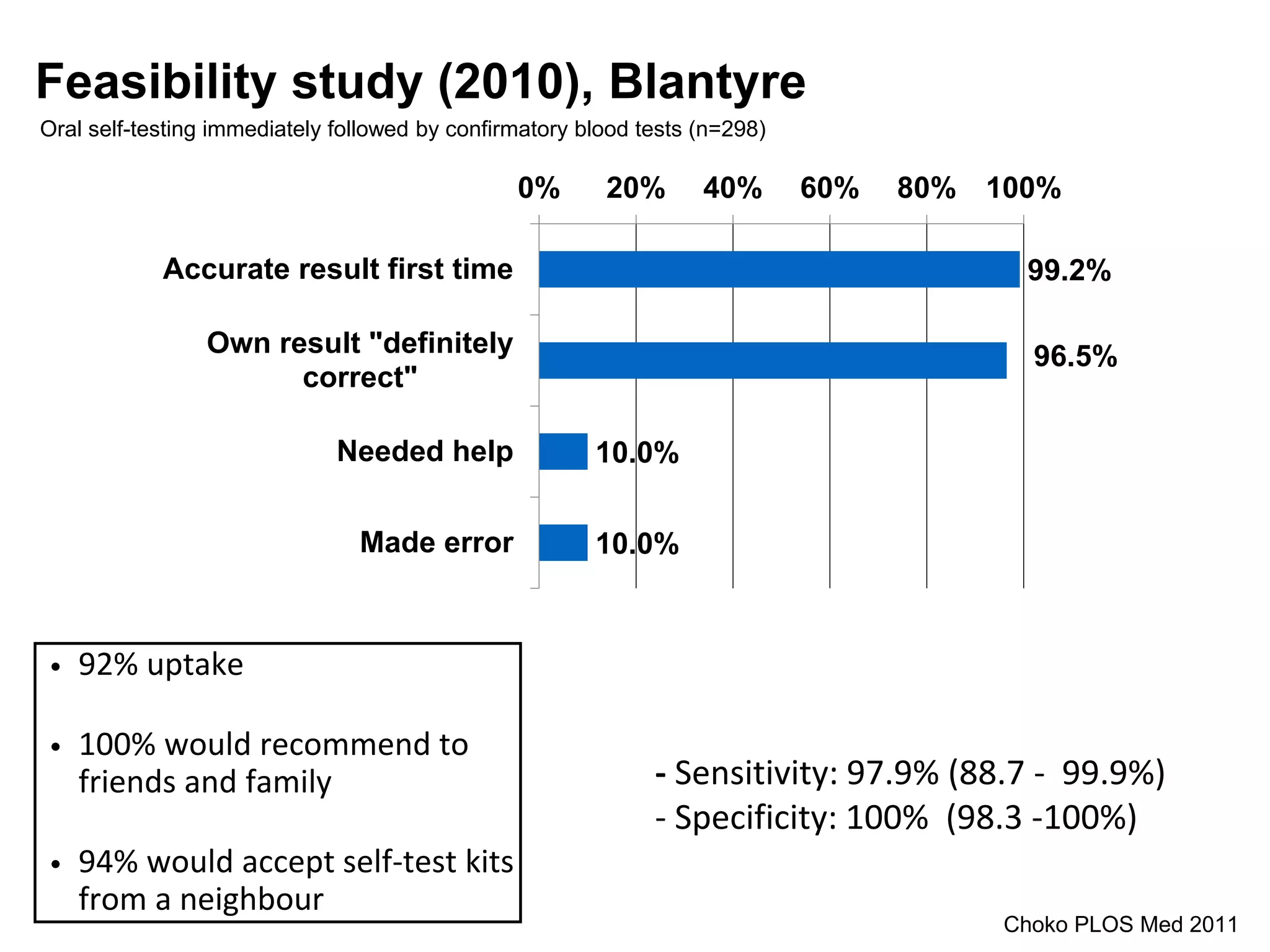
Feasibility study (2010), Blantyre
- Sensitivity: 97.9% (88.7 - 99.9%)
- Specificity: 100% (98.3 -100%)
• 92% uptake
• 100% would recommend to
friends and family
• 94% would accept self-test kits
from a neighbour
Oral self-testing immediately followed by confirmatory blood tests (n=298)
Choko PLOS Med 2011
Effectiveness of HIVST and linkage to
care interventions
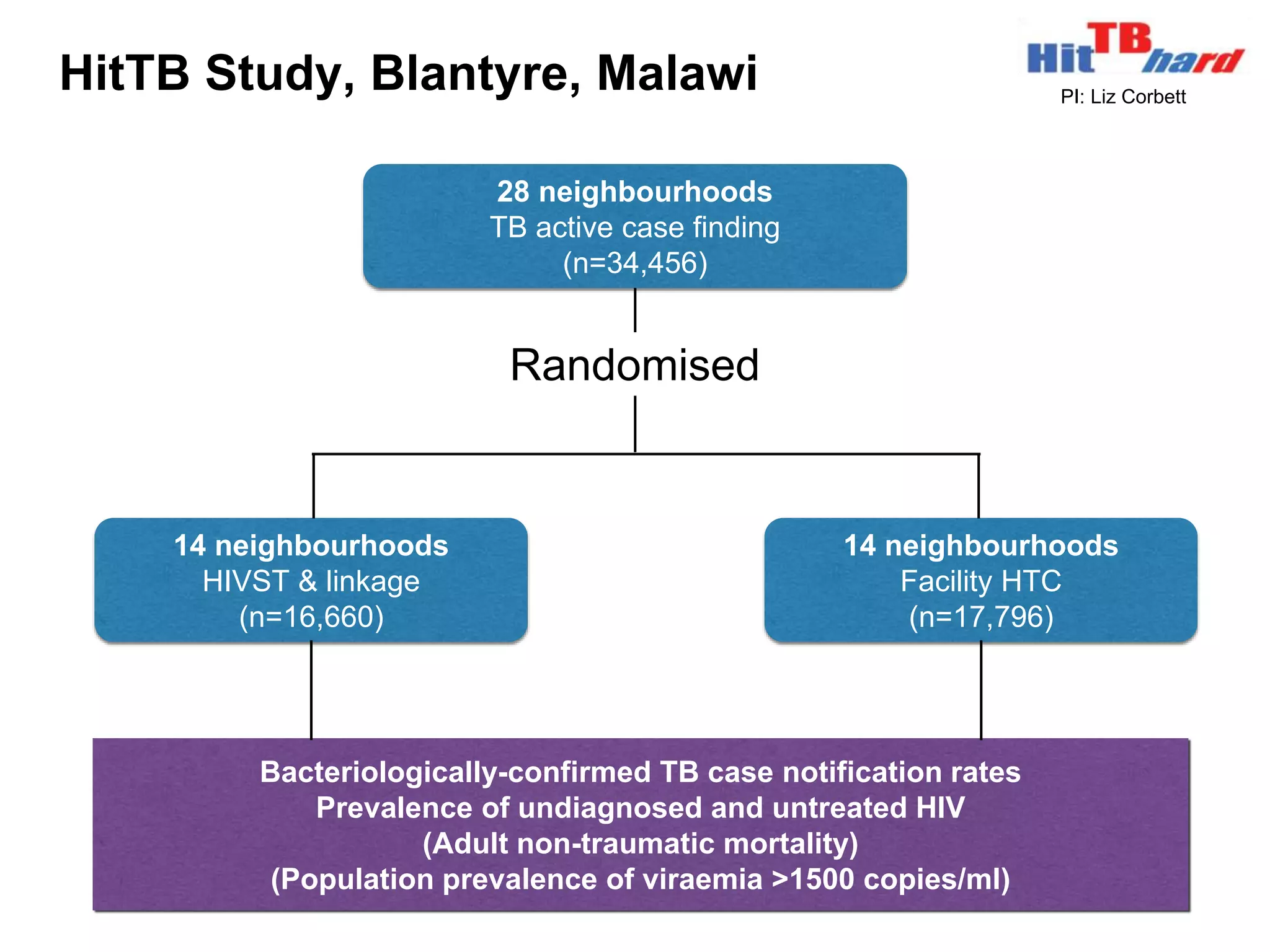
HitTB Study, Blantyre, Malawi
28 neighbourhoods
TB active case finding
(n=34,456)
14 neighbourhoods
HIVST & linkage
(n=16,660)
14 neighbourhoods
Facility HTC
(n=17,796)
Randomised
Bacteriologically-confirmed TB case notification rates
Prevalence of undiagnosed and untreated HIV
(Adult non-traumatic mortality)
(Population prevalence of viraemia >1500 copies/ml)
PI: Liz Corbett
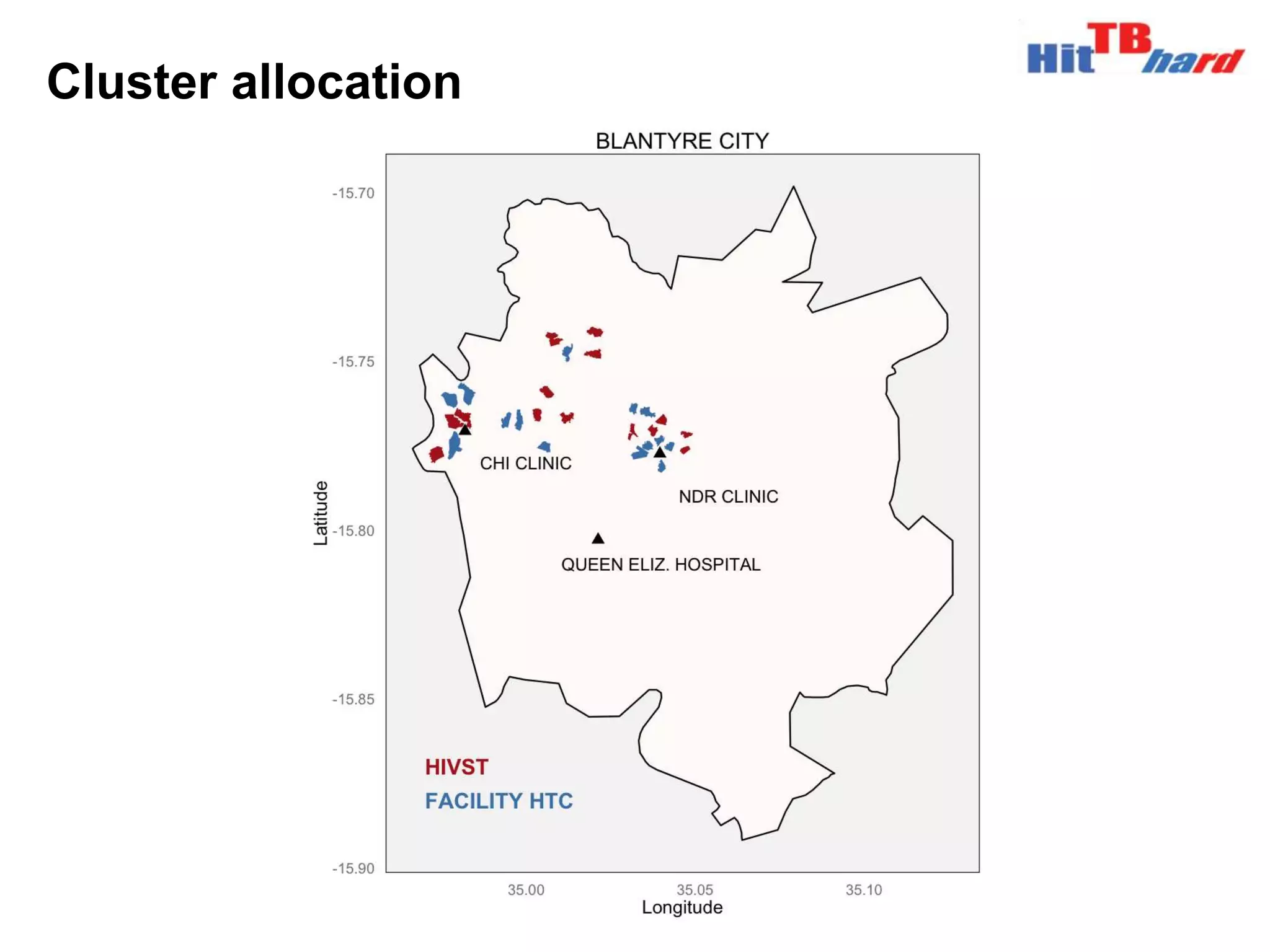
Cluster allocation
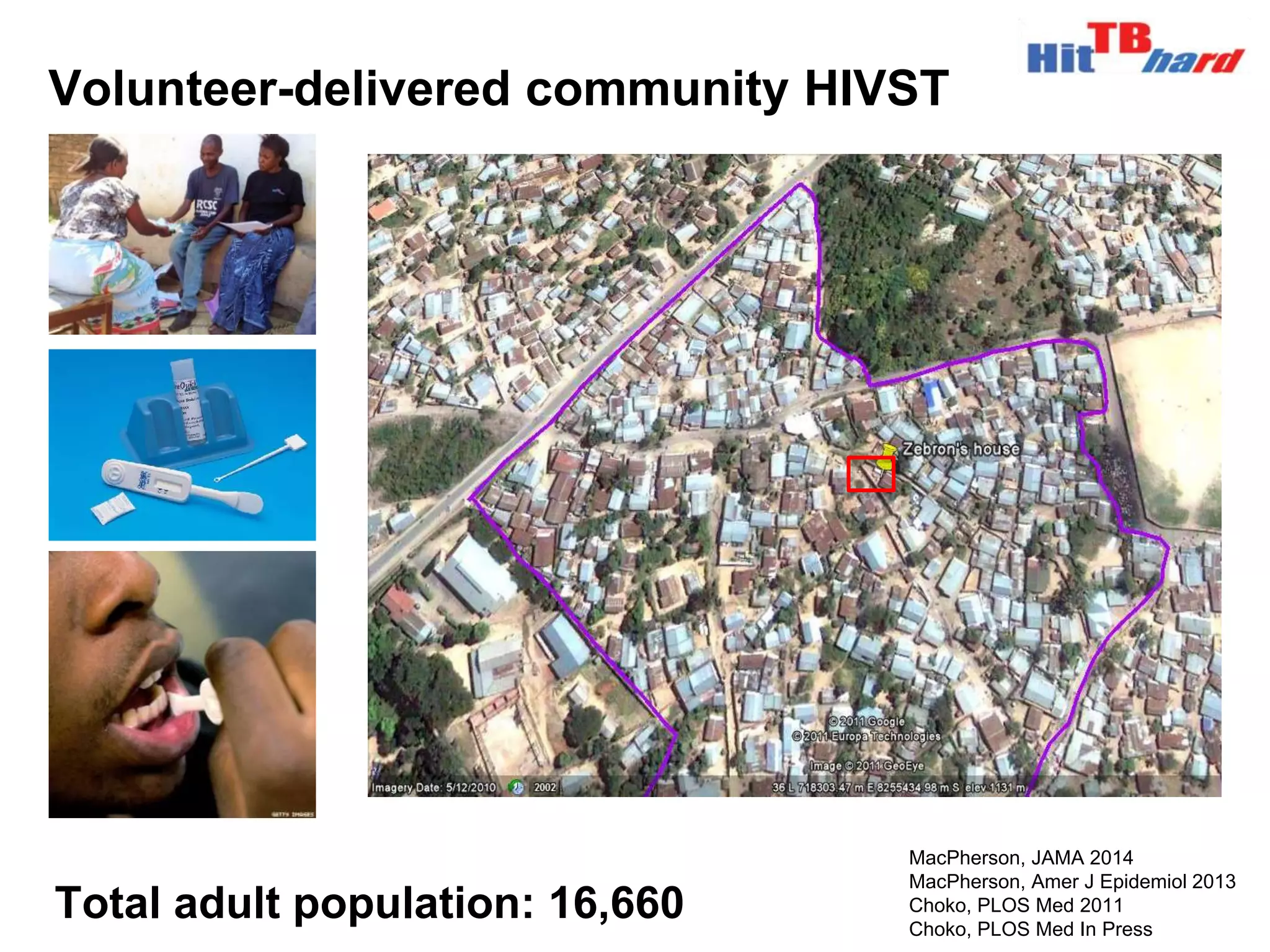
Volunteer-delivered community HIVST
MacPherson, JAMA 2014
MacPherson, Amer J Epidemiol 2013
Choko, PLOS Med 2011
Choko, PLOS Med In Press
Total adult population: 16,660
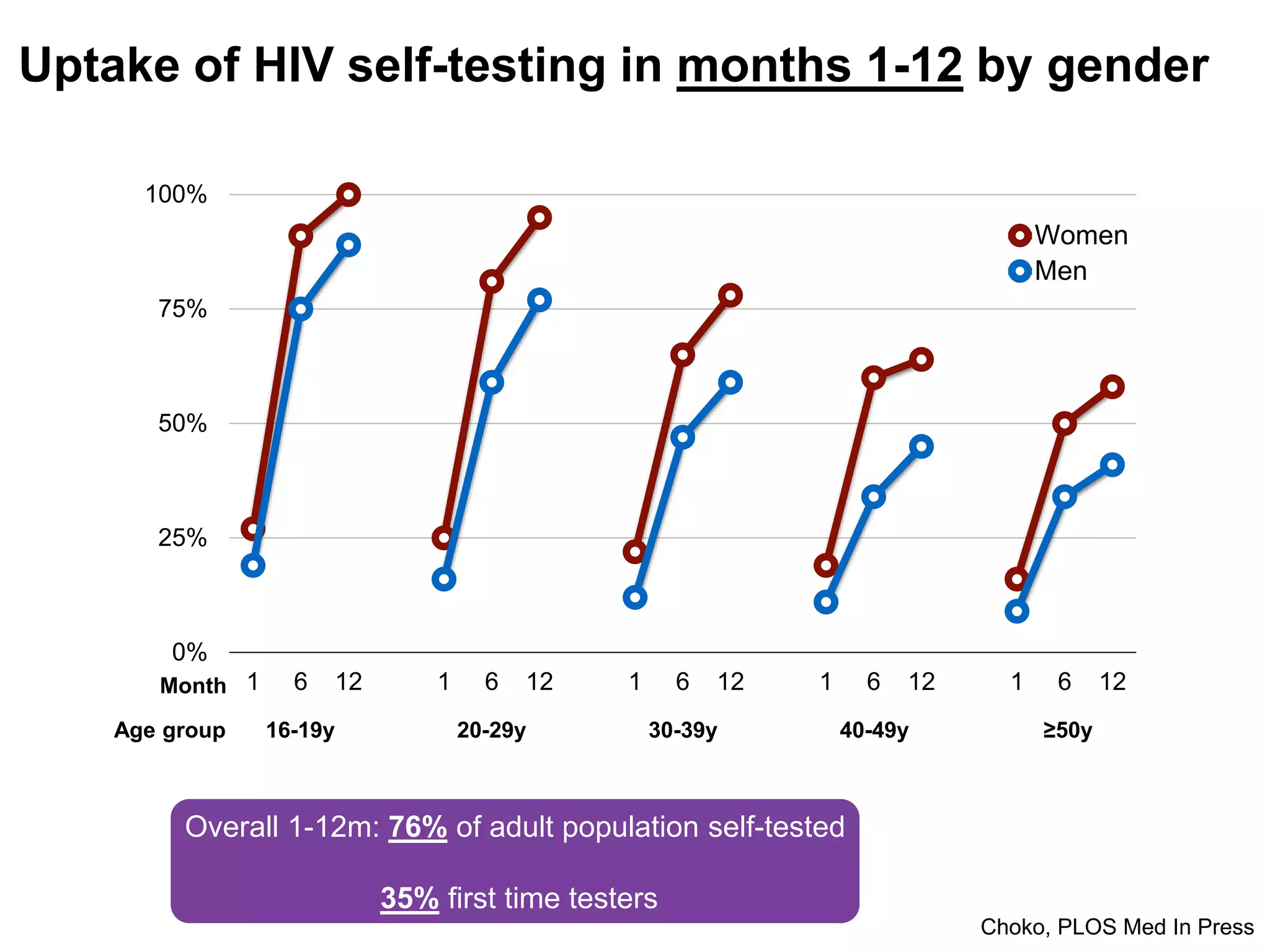
Uptake of HIV self-testing in months 1-12 by gender
0%
25%
50%
75%
100%
1 6 12 1 6 12 1 6 12 1 6 12 1 6 12
Women
Men
16-19y 20-29y 30-39y 40-49y ≥50yAge group
Month
Overall 1-12m: 76% of adult population self-tested
35% first time testers
Choko, PLOS Med In Press
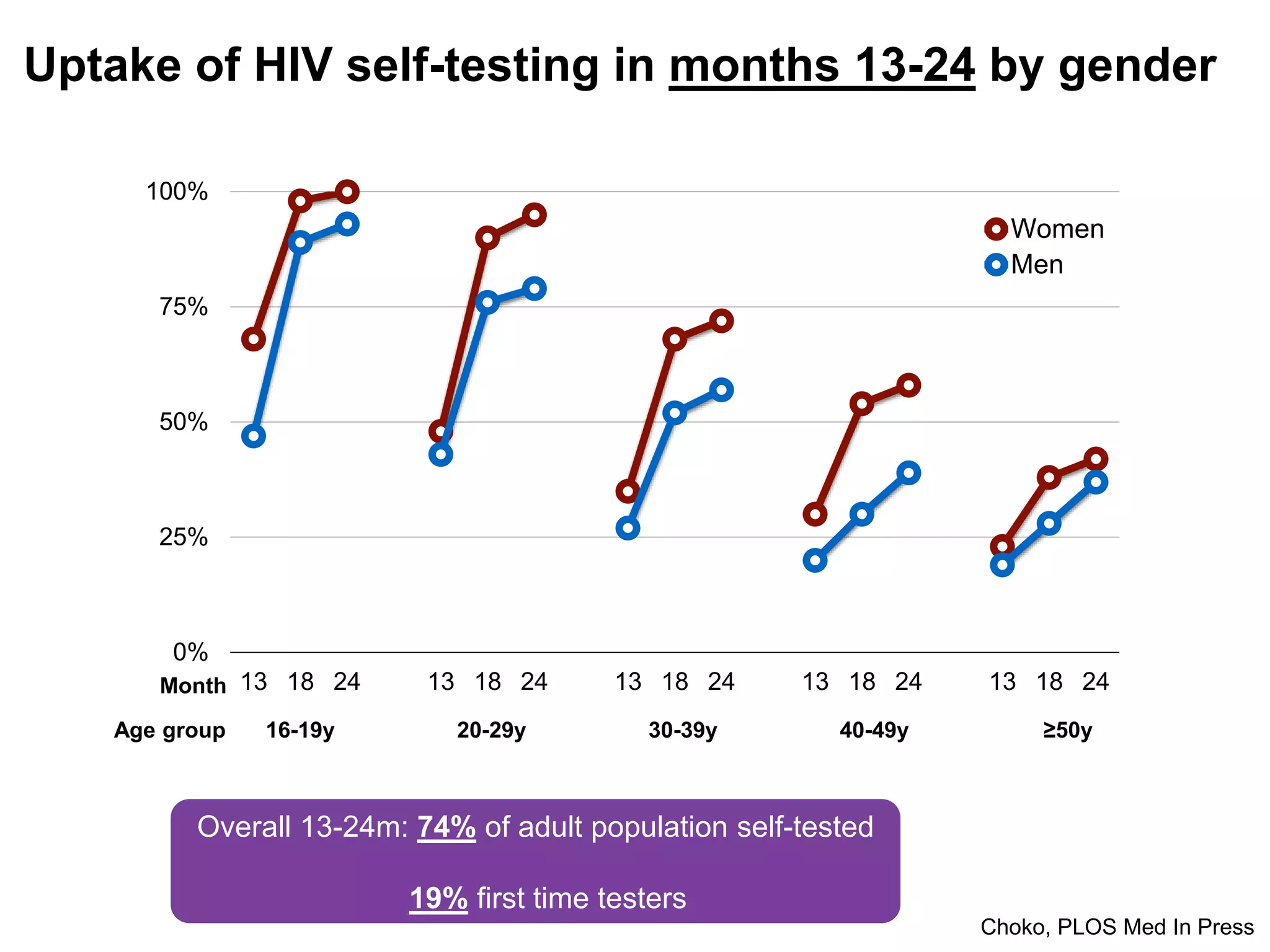
Uptake of HIV self-testing in months 13-24 by gender
Choko, PLOS Med In Press
16-19y 20-29y 30-39y 40-49y ≥50yAge group
Month
Overall 13-24m: 74% of adult population self-tested
19% first time testers
0%
25%
50%
75%
100%
13 18 24 13 18 24 13 18 24 13 18 24 13 18 24
Women
Men
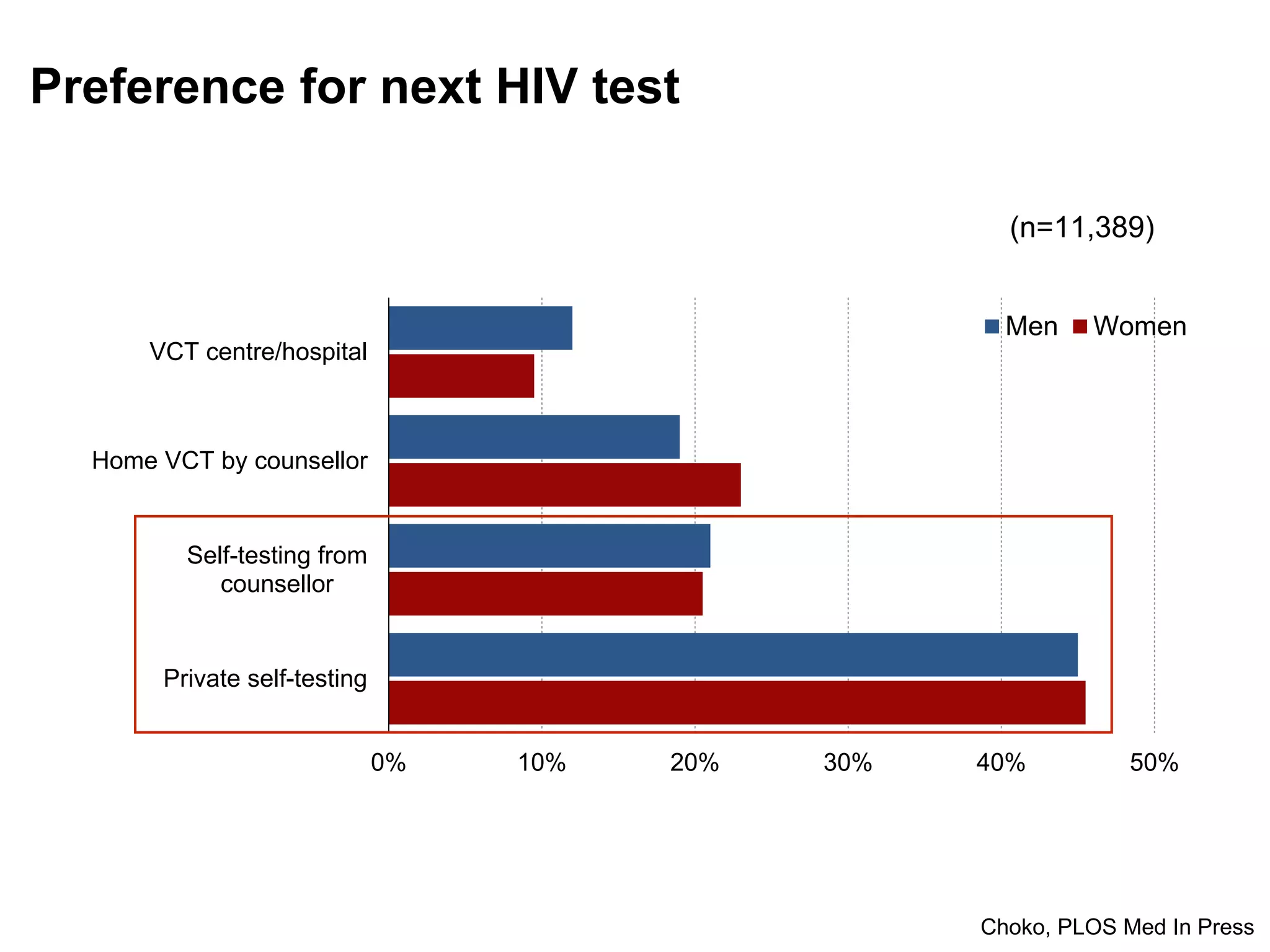
Preference for next HIV test
Choko, PLOS Med In Press
(n=11,389)
0% 10% 20% 30% 40% 50%
VCT centre/hospital
Home VCT by counsellor
Self-testing from
counsellor
Private self-testing
Men Women
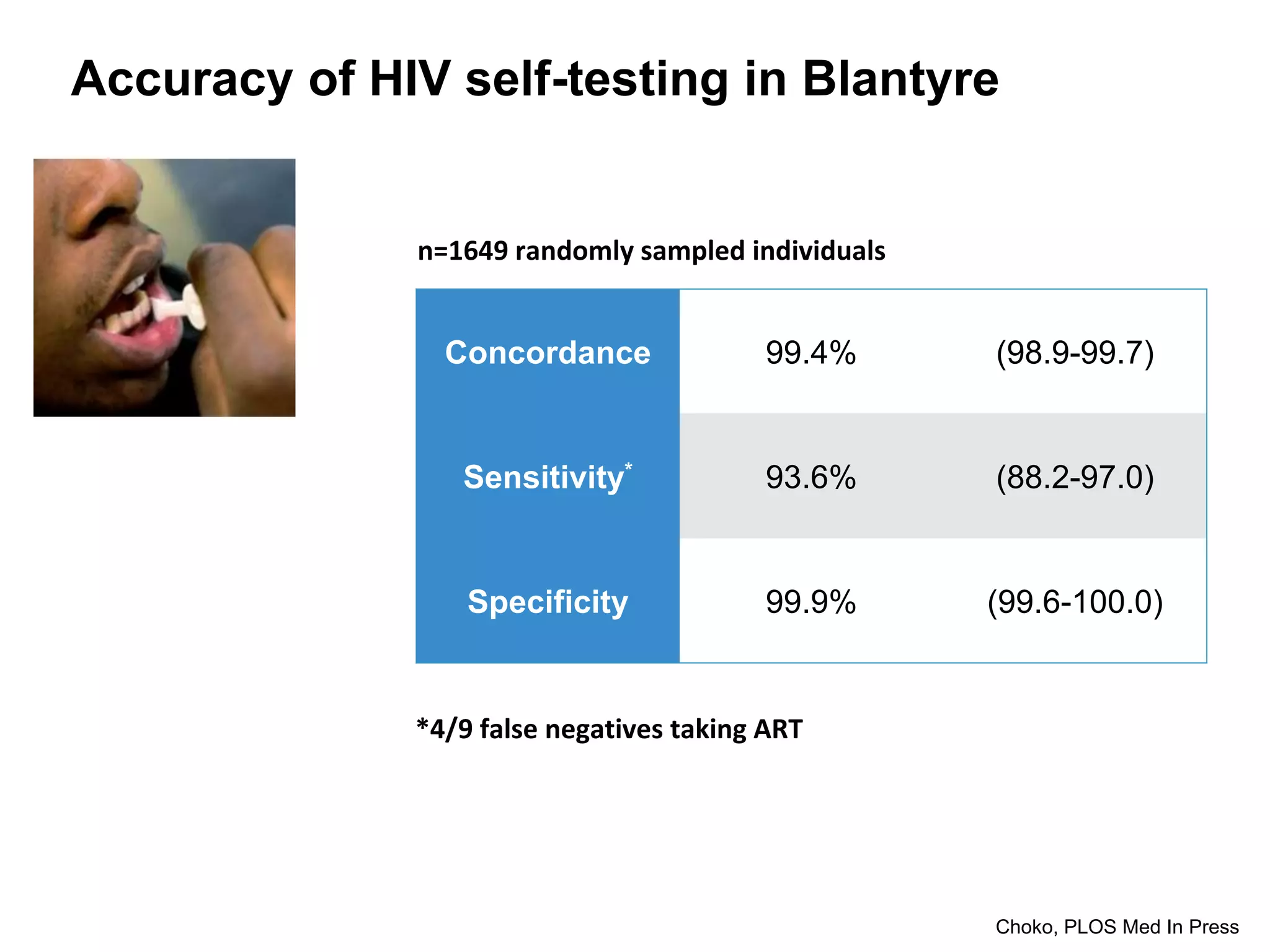
Concordance 99.4% (98.9-99.7)
Sensitivity* 93.6% (88.2-97.0)
Specificity 99.9% (99.6-100.0)
Accuracy of HIV self-testing in Blantyre
n=1649 randomly sampled individuals
*4/9 false negatives taking ART
Choko, PLOS Med In Press
Adverse events
Choko, PLOS Med In Press
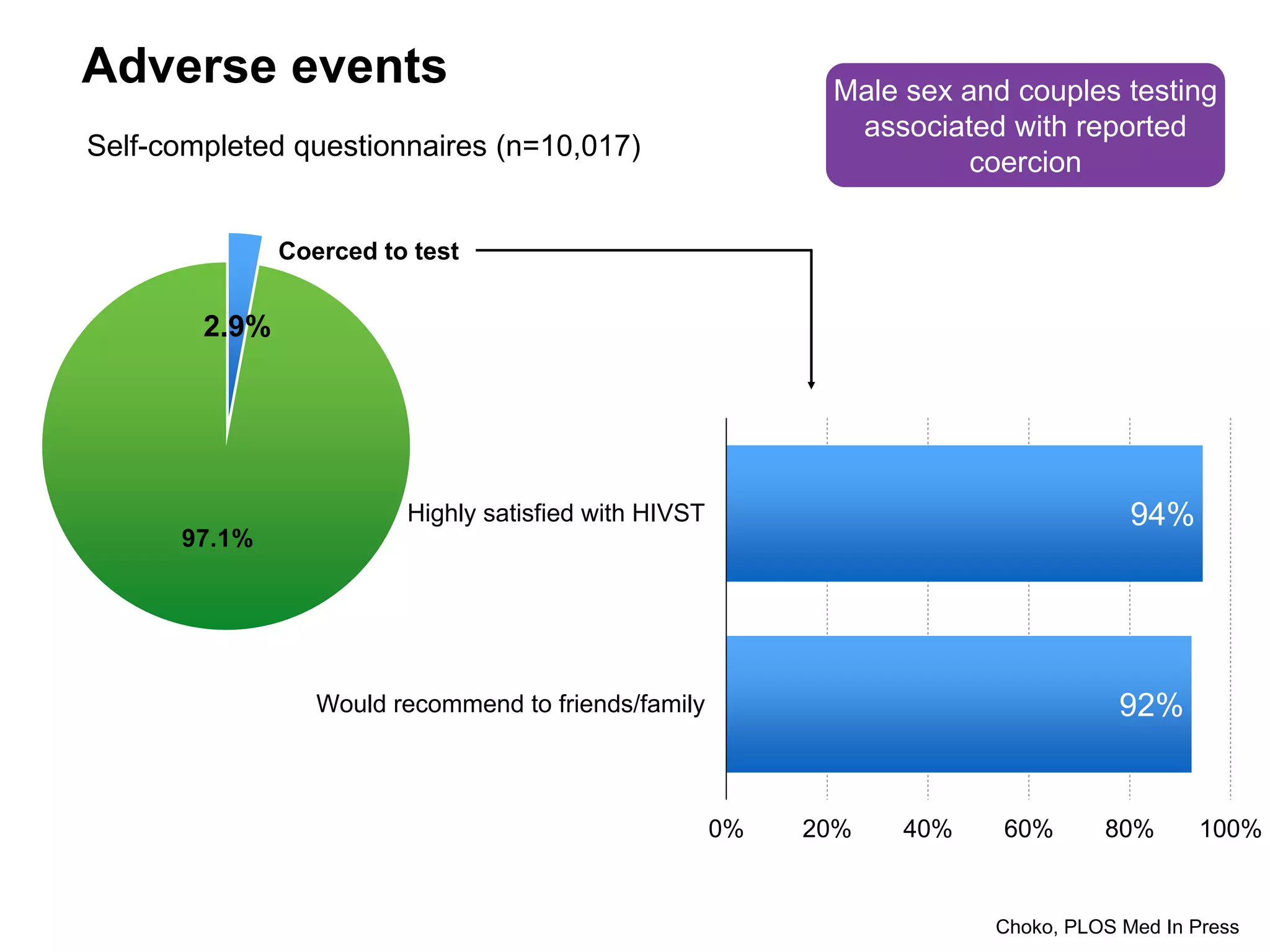
Self-completed questionnaires (n=10,017)
2.9%
97.1%
Coerced to test
94%
92%
0% 20% 40% 60% 80% 100%
Highly satisfied with HIVST
Would recommend to friends/family
Male sex and couples testing
associated with reported
coercion
Adverse events
Choko, PLOS Med In Press
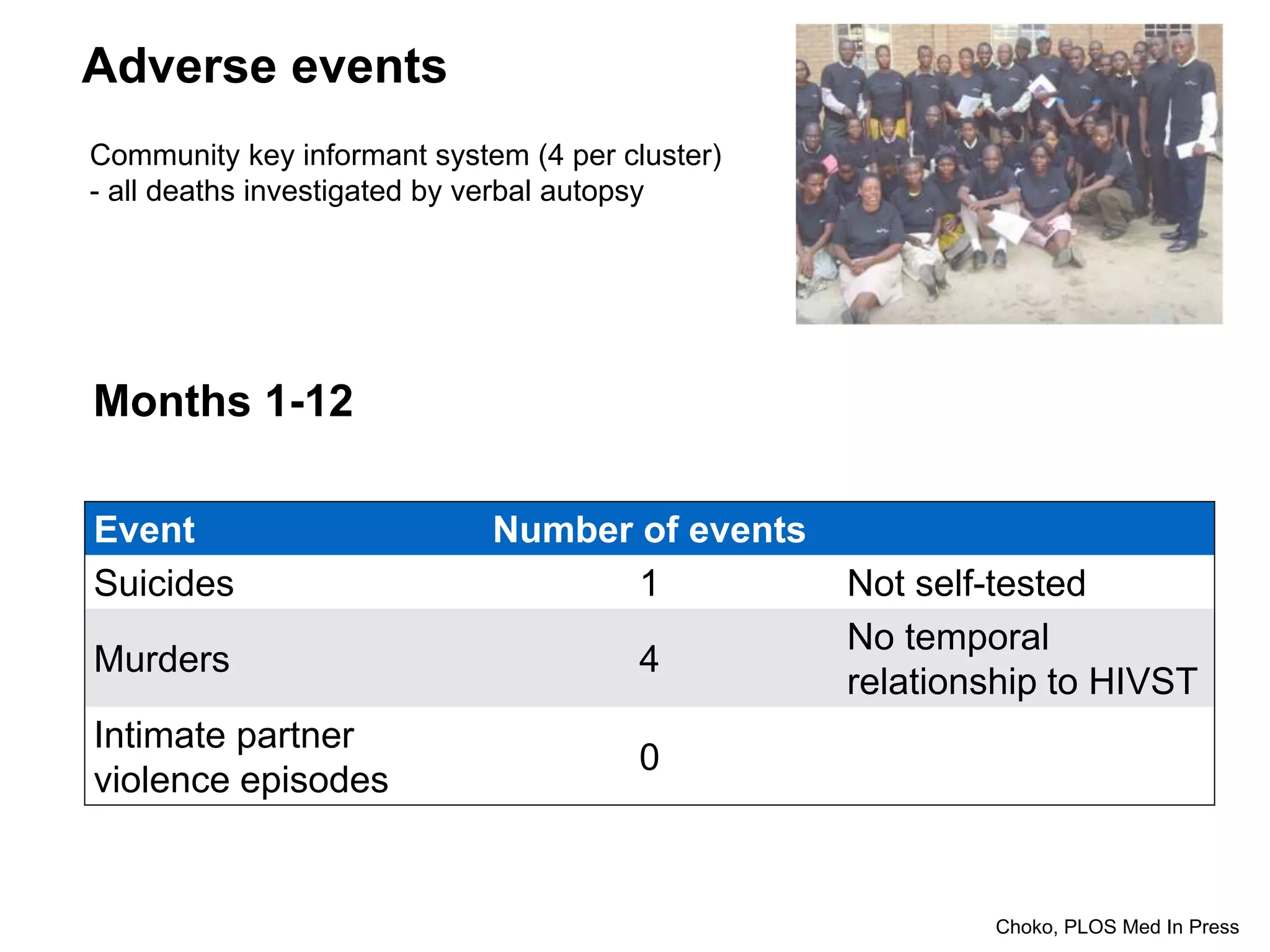
Community key informant system (4 per cluster)
- all deaths investigated by verbal autopsy
Months 1-12
Event Number of events
Suicides 1 Not self-tested
Murders 4
No temporal
relationship to HIVST
Intimate partner
violence episodes
0
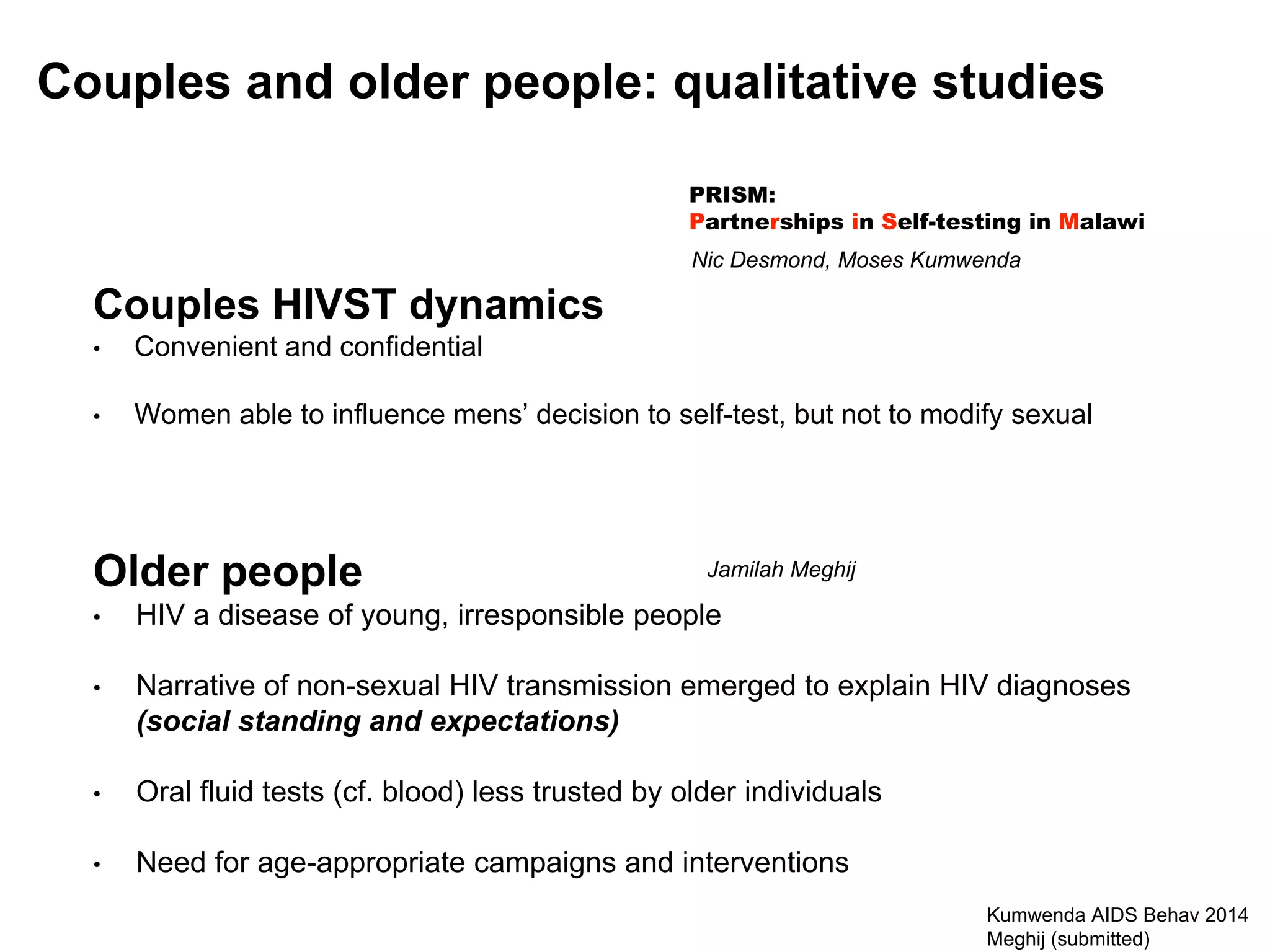
Couples and older people: qualitative studies
Kumwenda AIDS Behav 2014
Meghij (submitted)
Couples HIVST dynamics
• Convenient and confidential
• Women able to influence mens’ decision to self-test, but not to modify sexual
PRISM:
Partnerships in Self-testing in Malawi
Nic Desmond, Moses Kumwenda
Older people
• HIV a disease of young, irresponsible people
• Narrative of non-sexual HIV transmission emerged to explain HIV diagnoses
(social standing and expectations)
• Oral fluid tests (cf. blood) less trusted by older individuals
• Need for age-appropriate campaigns and interventions
Jamilah Meghij
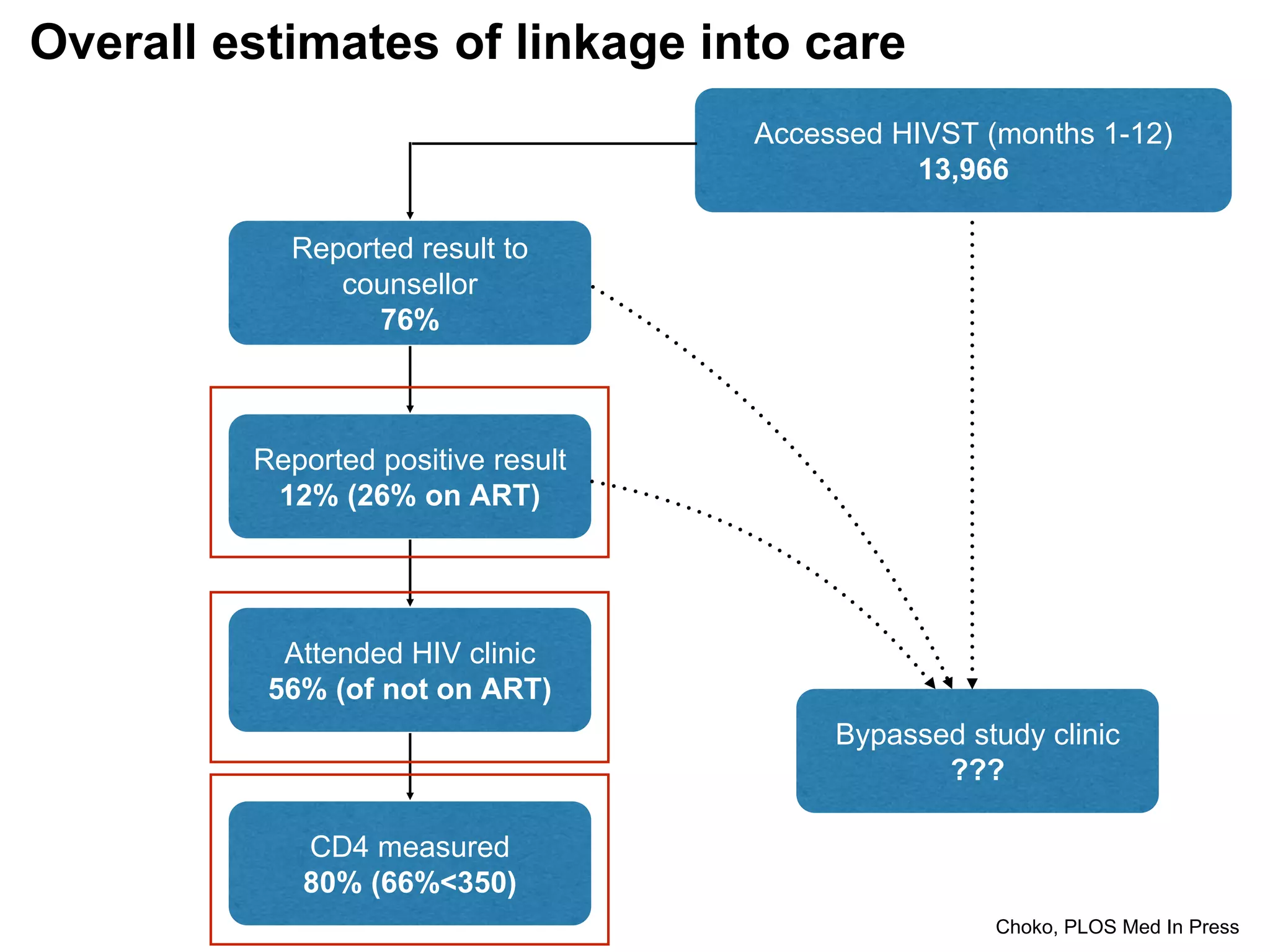
Overall estimates of linkage into care
Choko, PLOS Med In Press
Accessed HIVST (months 1-12)
13,966
Reported positive result
12% (26% on ART)
Attended HIV clinic
56% (of not on ART)
CD4 measured
80% (66%<350)
Reported result to
counsellor
76%
Bypassed study clinic
???
Improving linkage into HIV care
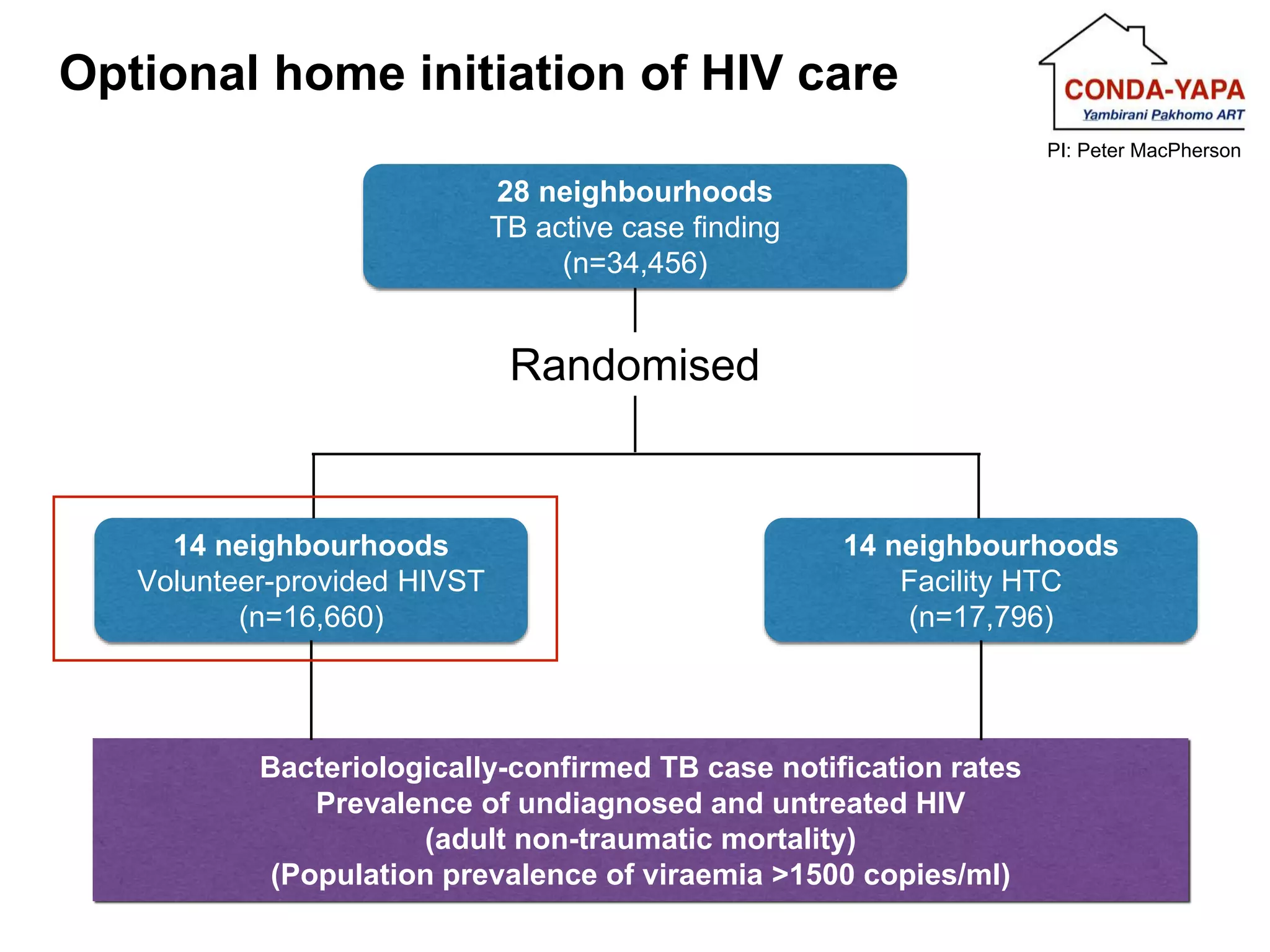
Optional home initiation of HIV care
28 neighbourhoods
TB active case finding
(n=34,456)
14 neighbourhoods
Volunteer-provided HIVST
(n=16,660)
14 neighbourhoods
Facility HTC
(n=17,796)
Randomised
Bacteriologically-confirmed TB case notification rates
Prevalence of undiagnosed and untreated HIV
(adult non-traumatic mortality)
(Population prevalence of viraemia >1500 copies/ml)
PI: Peter MacPherson
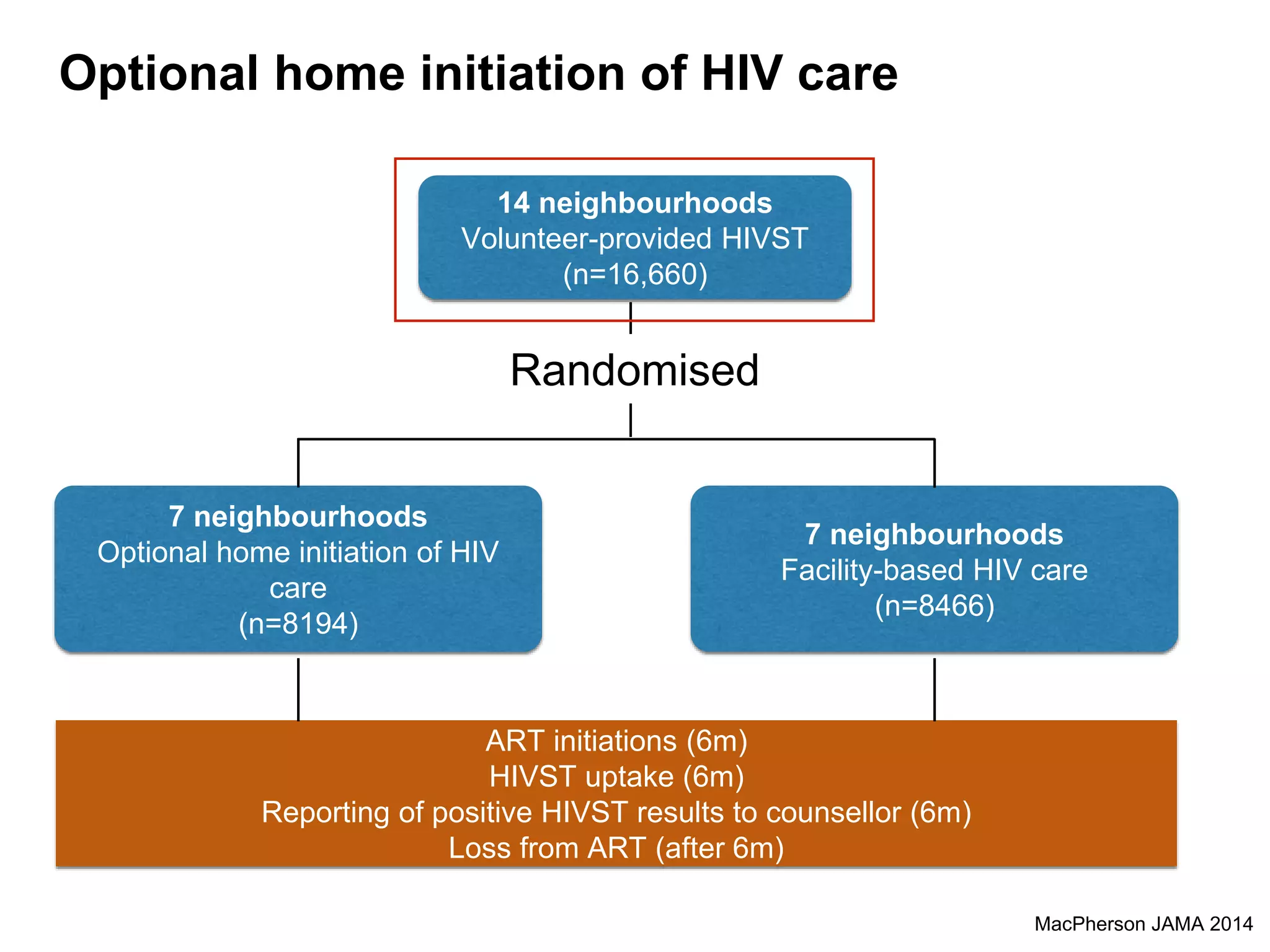
Optional home initiation of HIV care
14 neighbourhoods
Volunteer-provided HIVST
(n=16,660)
MacPherson JAMA 2014
7 neighbourhoods
Optional home initiation of HIV
care
(n=8194)
7 neighbourhoods
Facility-based HIV care
(n=8466)
Randomised
ART initiations (6m)
HIVST uptake (6m)
Reporting of positive HIVST results to counsellor (6m)
Loss from ART (after 6m)
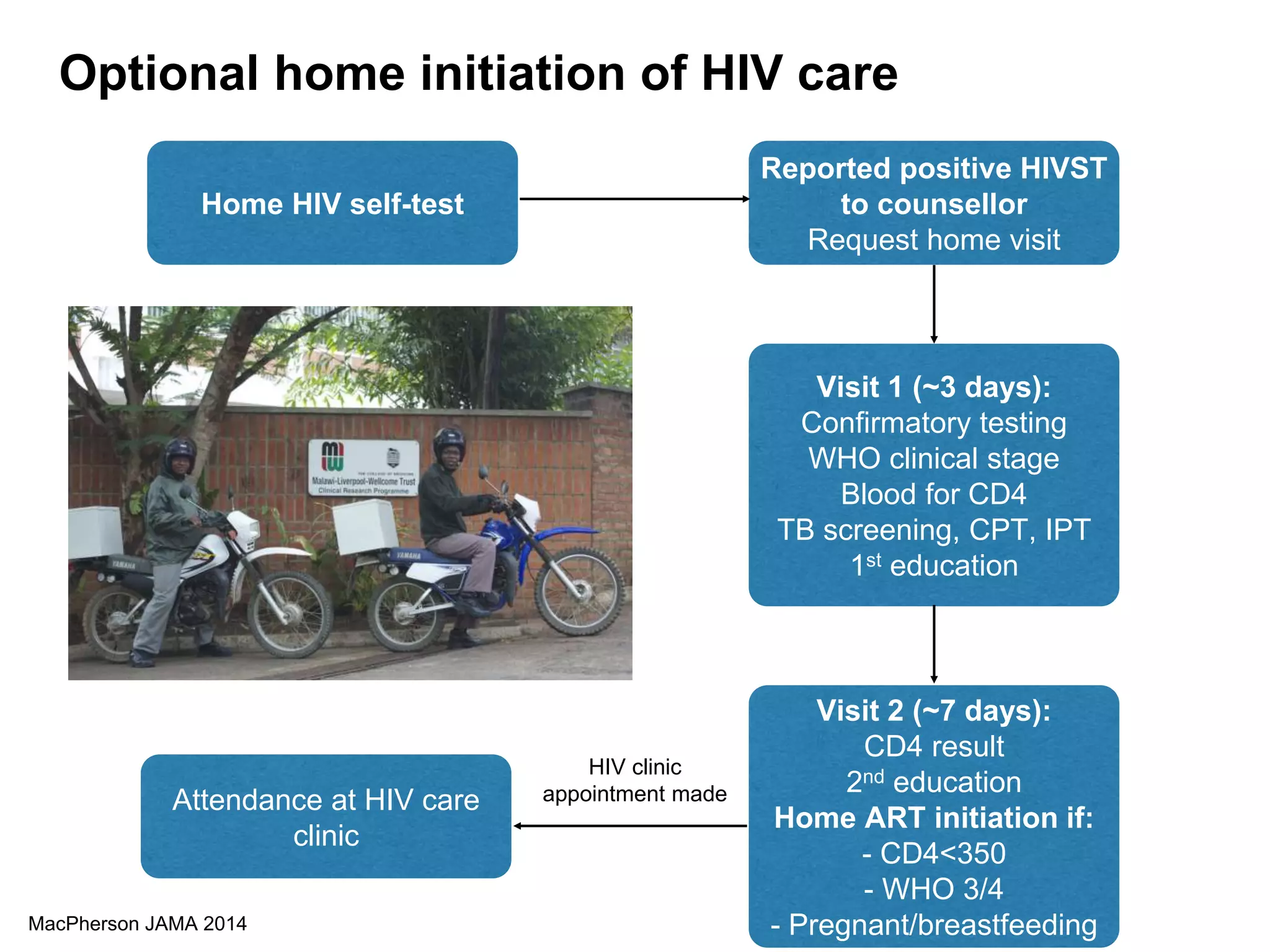
Optional home initiation of HIV care
MacPherson JAMA 2014
Home HIV self-test
Reported positive HIVST
to counsellor
Request home visit
Visit 1 (~3 days):
Confirmatory testing
WHO clinical stage
Blood for CD4
TB screening, CPT, IPT
1st education
Visit 2 (~7 days):
CD4 result
2nd education
Home ART initiation if:
- CD4<350
- WHO 3/4
- Pregnant/breastfeeding
Attendance at HIV care
clinic
HIV clinic
appointment made
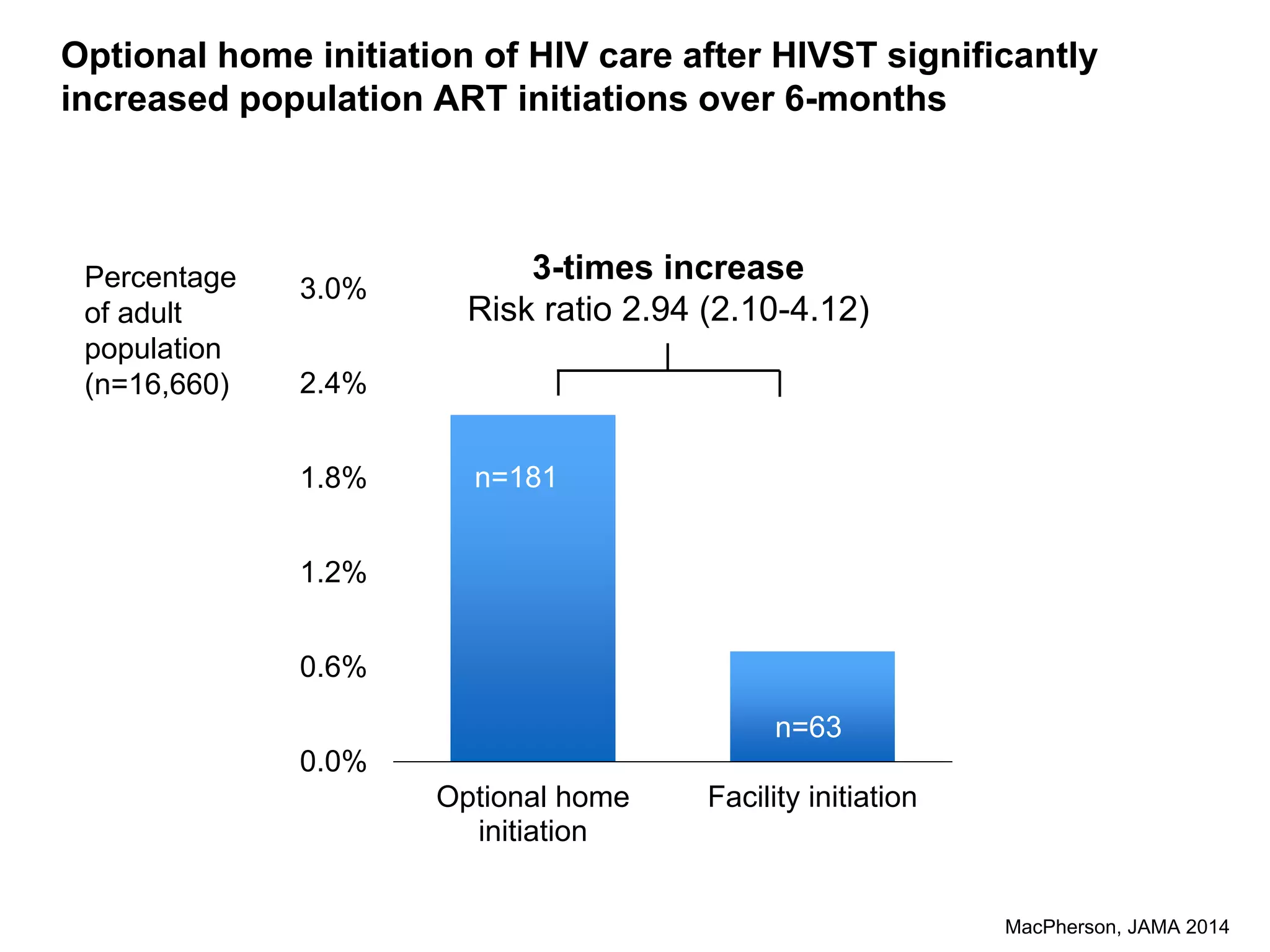
Optional home initiation of HIV care after HIVST significantly
increased population ART initiations over 6-months
MacPherson, JAMA 2014
0.0%
0.6%
1.2%
1.8%
2.4%
3.0%
Optional home
initiation
Facility initiation
3-times increase
Risk ratio 2.94 (2.10-4.12)
Percentage
of adult
population
(n=16,660)
n=181
n=63
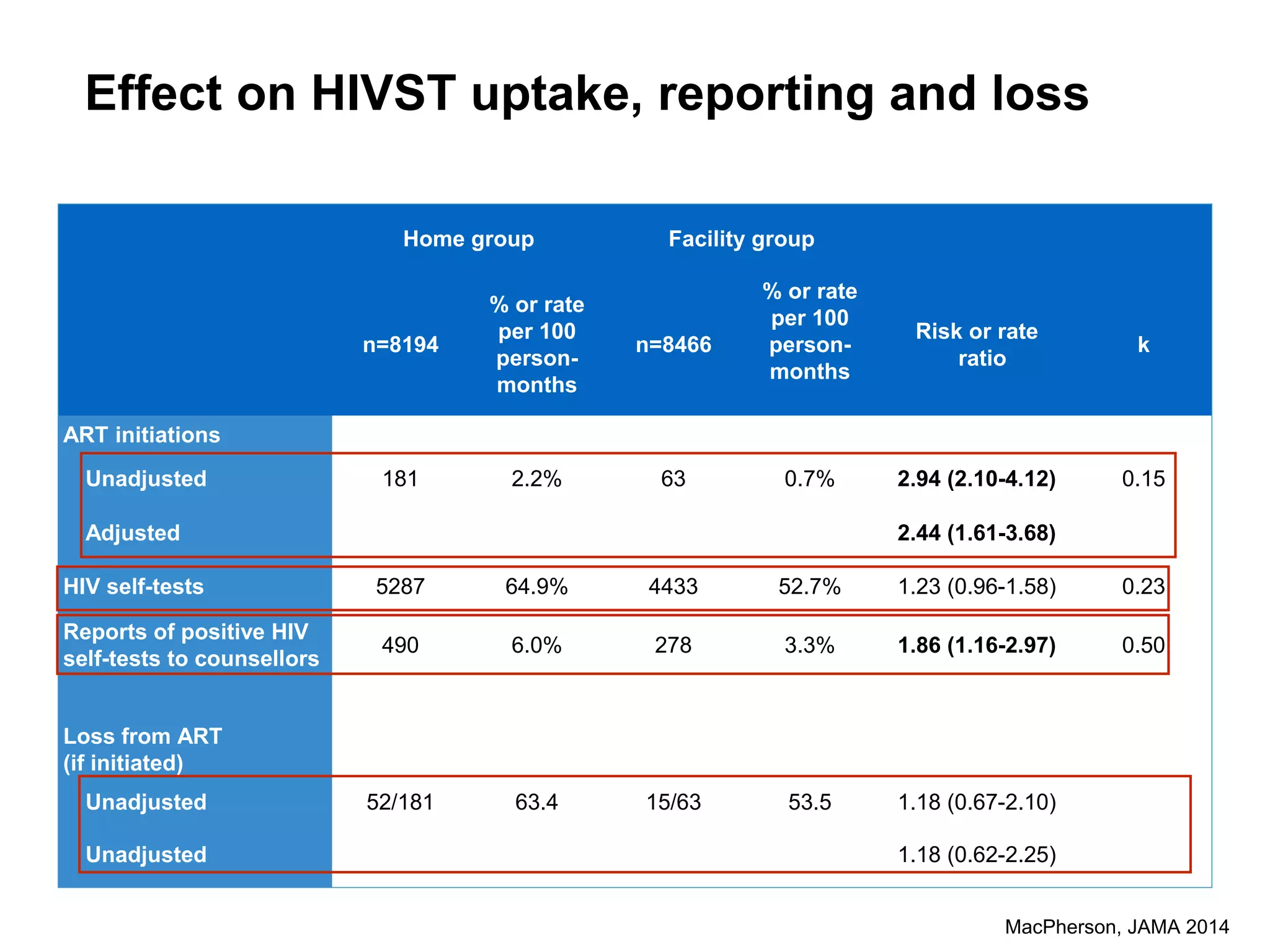
Effect on HIVST uptake, reporting and loss
MacPherson, JAMA 2014
181
63
Home group Facility group
n=8194
% or rate
per 100
person-
months
n=8466
% or rate
per 100
person-
months
Risk or rate
ratio
k
ART initiations
Unadjusted 181 2.2% 63 0.7% 2.94 (2.10-4.12) 0.15
Adjusted 2.44 (1.61-3.68)
HIV self-tests 5287 64.9% 4433 52.7% 1.23 (0.96-1.58) 0.23
Reports of positive HIV
self-tests to counsellors
490 6.0% 278 3.3% 1.86 (1.16-2.97) 0.50
Loss from ART
(if initiated)
Unadjusted 52/181 63.4 15/63 53.5 1.18 (0.67-2.10)
Unadjusted 1.18 (0.62-2.25)
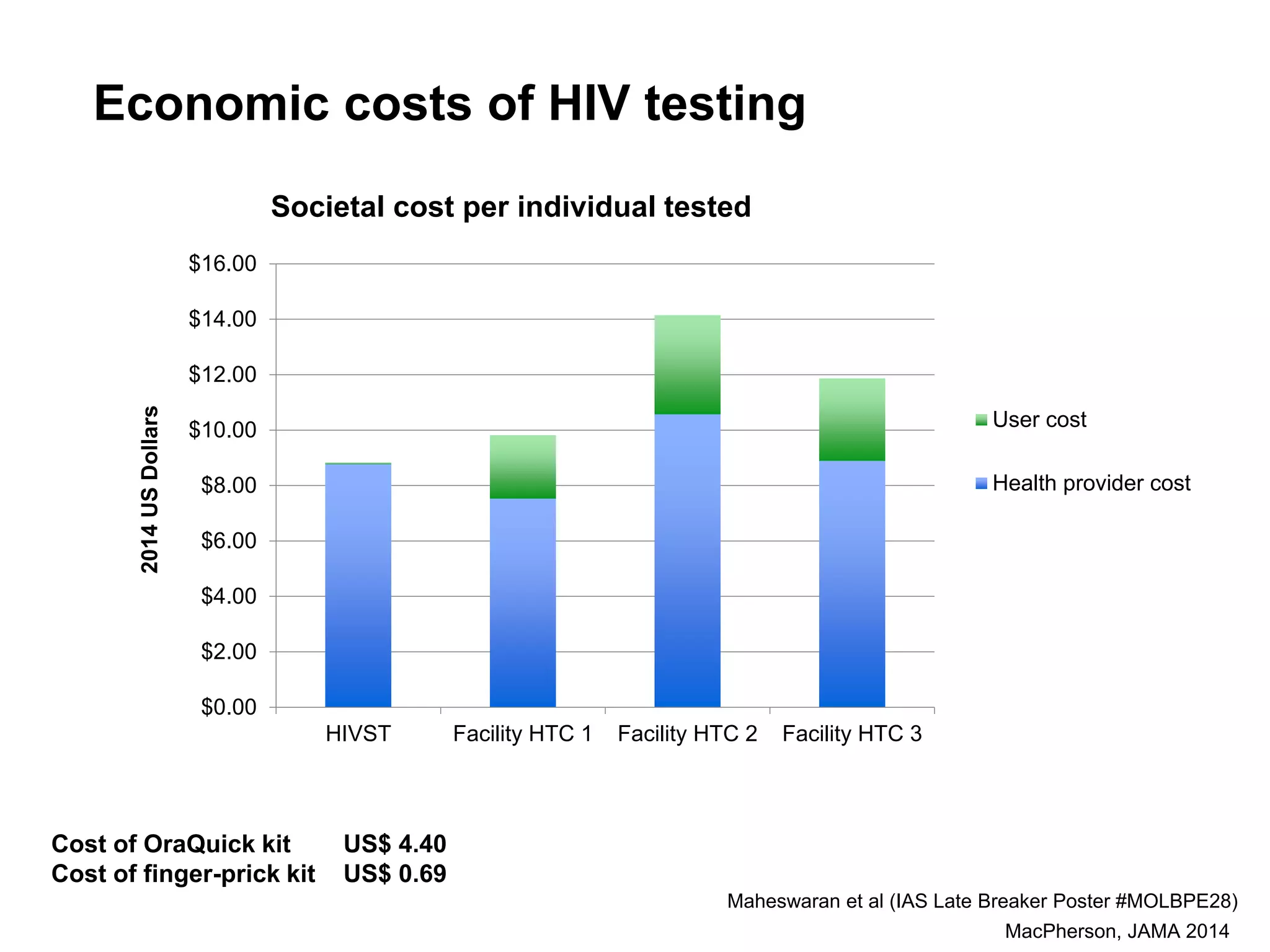
Economic costs of HIV testing
$0.00
$2.00
$4.00
$6.00
$8.00
$10.00
$12.00
$14.00
$16.00
HIVST Facility HTC 1 Facility HTC 2 Facility HTC 3
2014USDollars
User cost
Health provider cost
Maheswaran et al (IAS Late Breaker Poster #MOLBPE28)
Societal cost per individual tested
MacPherson, JAMA 2014
Cost of OraQuick kit US$ 4.40
Cost of finger-prick kit US$ 0.69
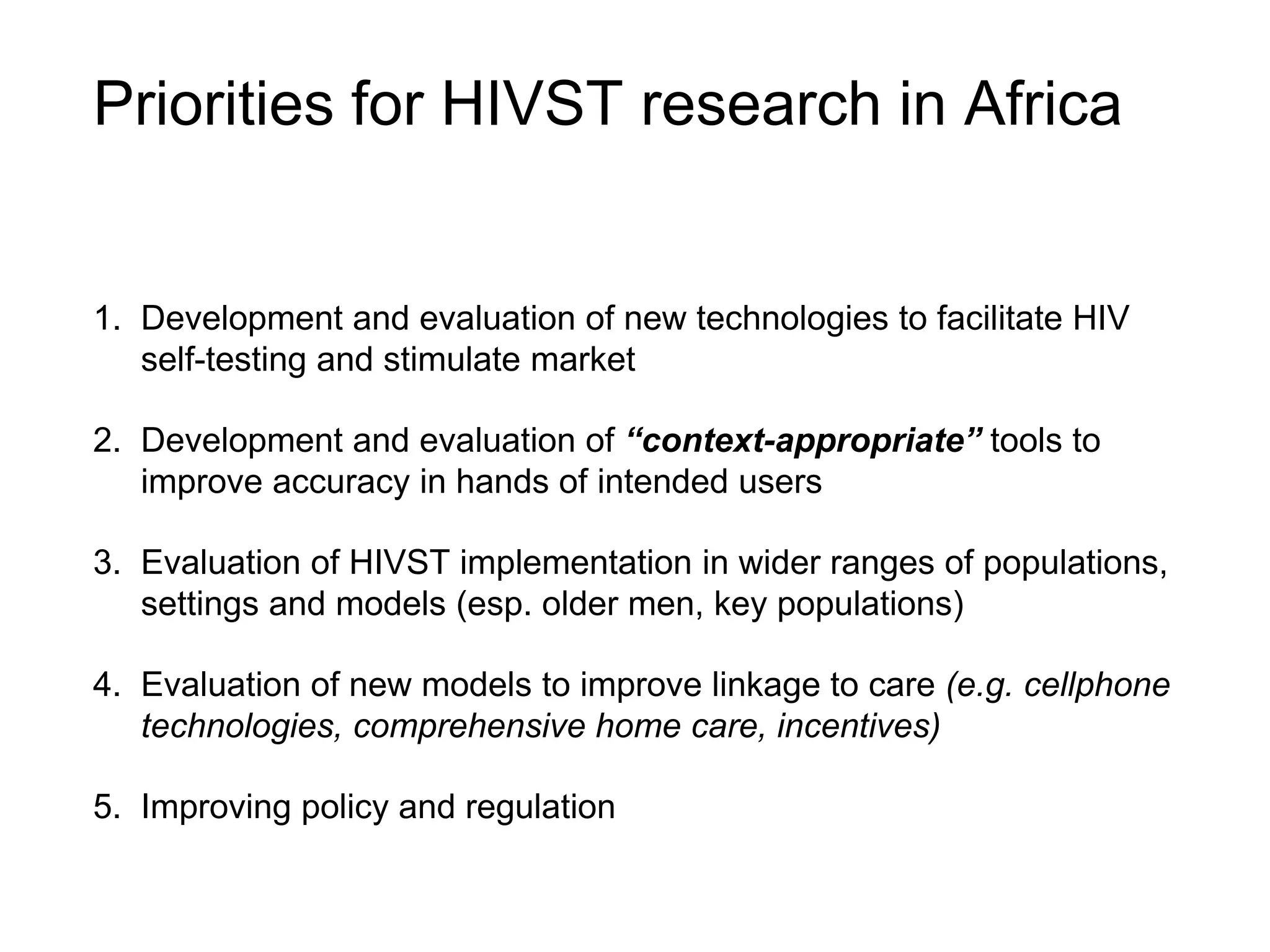
Priorities for HIVST research in Africa
1. Development and evaluation of new technologies to facilitate HIV
self-testing and stimulate market
2. Development and evaluation of “context-appropriate” tools to
improve accuracy in hands of intended users
3. Evaluation of HIVST implementation in wider ranges of populations,
settings and models (esp. older men, key populations)
4. Evaluation of new models to improve linkage to care (e.g. cellphone
technologies, comprehensive home care, incentives)
5. Improving policy and regulation
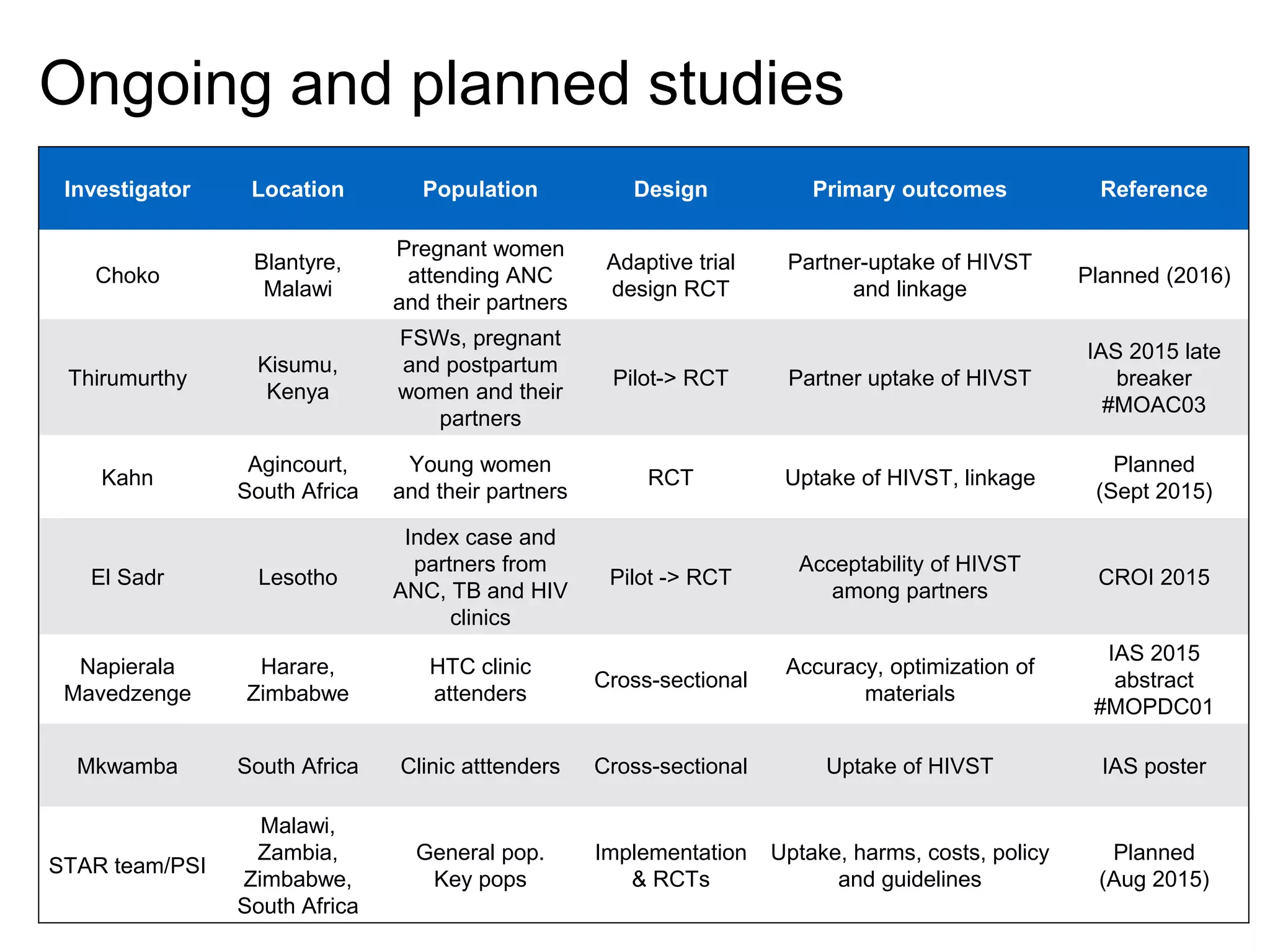
Ongoing and planned studies
Investigator Location Population Design Primary outcomes Reference
Choko
Blantyre,
Malawi
Pregnant women
attending ANC
and their partners
Adaptive trial
design RCT
Partner-uptake of HIVST
and linkage
Planned (2016)
Thirumurthy
Kisumu,
Kenya
FSWs, pregnant
and postpartum
women and their
partners
Pilot-> RCT Partner uptake of HIVST
IAS 2015 late
breaker
#MOAC03
Kahn
Agincourt,
South Africa
Young women
and their partners
RCT Uptake of HIVST, linkage
Planned
(Sept 2015)
El Sadr Lesotho
Index case and
partners from
ANC, TB and HIV
clinics
Pilot -> RCT
Acceptability of HIVST
among partners
CROI 2015
Napierala
Mavedzenge
Harare,
Zimbabwe
HTC clinic
attenders
Cross-sectional
Accuracy, optimization of
materials
IAS 2015
abstract
#MOPDC01
Mkwamba South Africa Clinic atttenders Cross-sectional Uptake of HIVST IAS poster
STAR team/PSI
Malawi,
Zambia,
Zimbabwe,
South Africa
General pop.
Key pops
Implementation
& RCTs
Uptake, harms, costs, policy
and guidelines
Planned
(Aug 2015)
Uptake: first time & re-
testing
Equitable HTC coverage
Social Harms
User demand &
preferences
Value for Money
HIV prevention
(esp. VMMC)
Equitable ART coverage
Impact
STAR Project (PSI/UNITAID) – Aug 2015)
Malawi
600,000 HIVST episodes
Zimbabwe
1.4 million HIVST episodes
Zambia
600,000 HIVST episodes
Diagnostic Accuracy Optimised instructions-for-use. Accuracy studies
Qualitative and economic studies: General and Key Populations
Impact evaluation of multiple different delivery models
• Malawi: 10 intervention and 10 matched control communities
• Zimbabwe: randomised trial of 80 intervention-control areas
• Zambia: before-after HIVST in 30 established outreach sites
All countries will evaluate
• Safety, unintended consequences
• Demand for ART and VMMC as well as HTC coverage
Community reporting systems. Long-term follow-up with sex workers
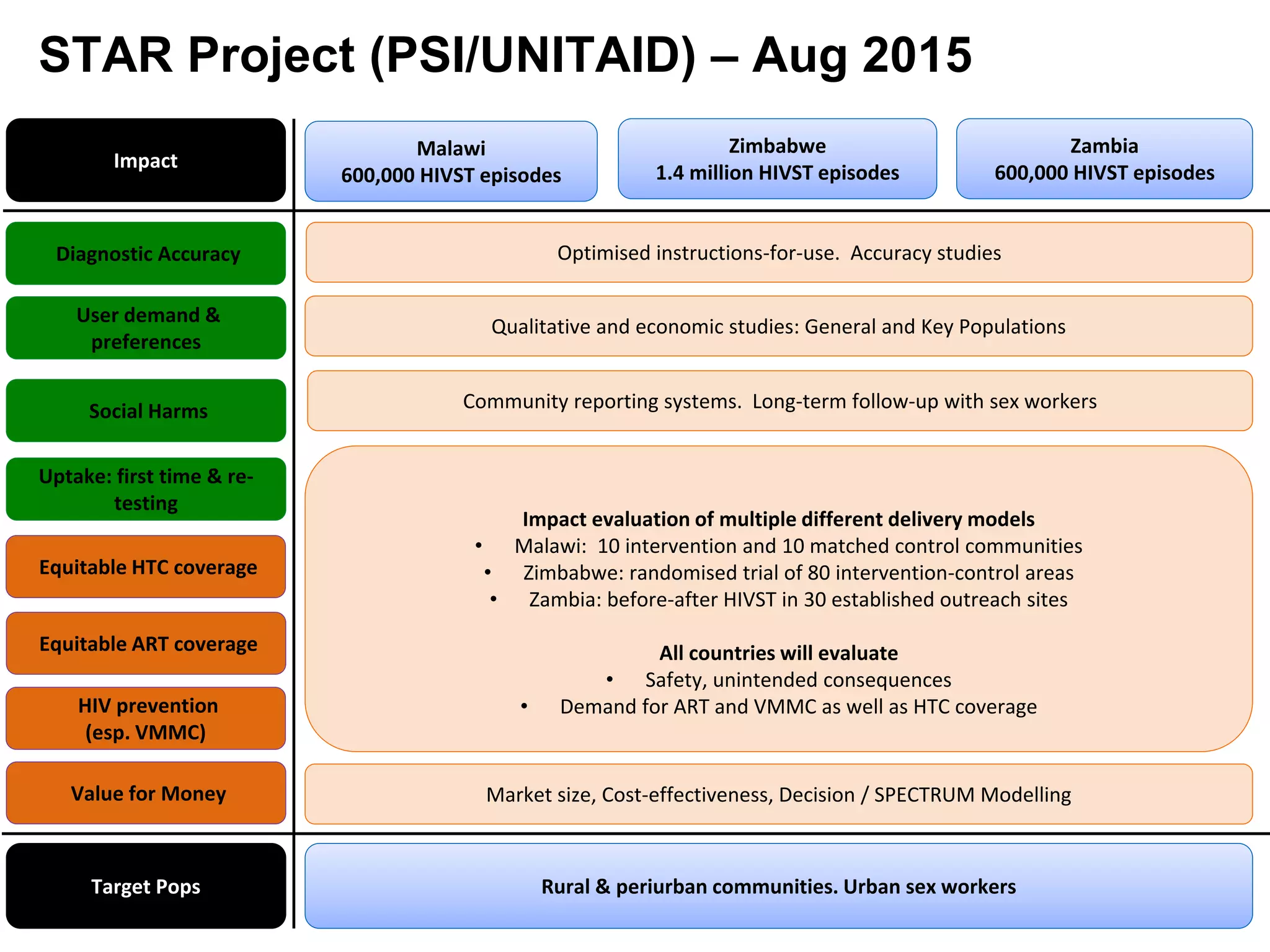
Market size, Cost-effectiveness, Decision / SPECTRUM Modelling
Target Pops Rural & periurban communities. Urban sex workers
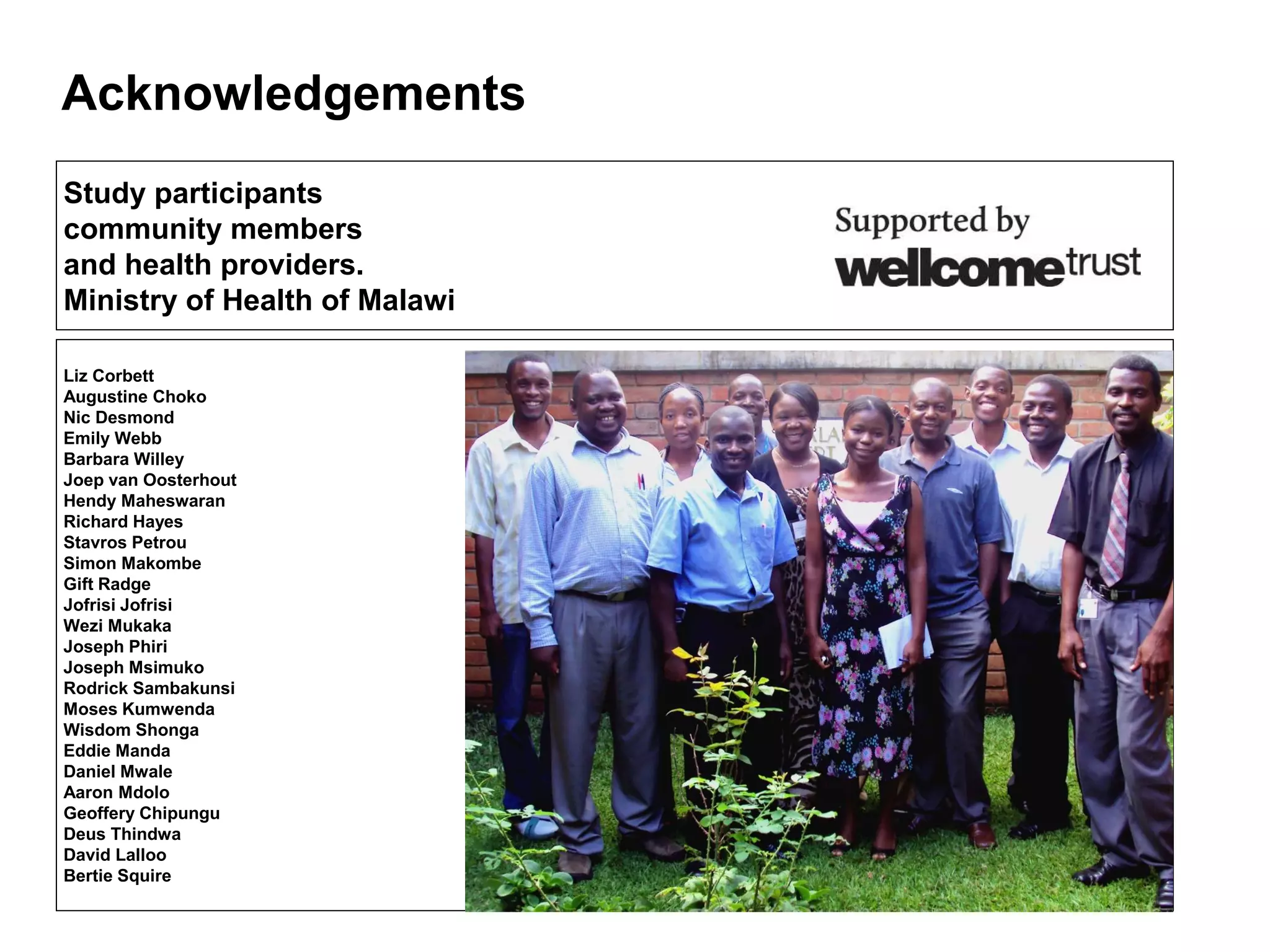
Acknowledgements
Liz Corbett
Augustine Choko
Nic Desmond
Emily Webb
Barbara Willey
Joep van Oosterhout
Hendy Maheswaran
Richard Hayes
Stavros Petrou
Simon Makombe
Gift Radge
Jofrisi Jofrisi
Wezi Mukaka
Joseph Phiri
Joseph Msimuko
Rodrick Sambakunsi
Moses Kumwenda
Wisdom Shonga
Eddie Manda
Daniel Mwale
Aaron Mdolo
Geoffery Chipungu
Deus Thindwa
David Lalloo
Bertie Squire
Study participants
community members
and health providers.
Ministry of Health of Malawi

HIV self-testing and linkage in Africa

  • 1.
    HIV self-testing andlinkage in Africa 8th IAS Conference on HIV pathogenesis, treatment and prevention– Vancouver 22nd July 2015 Dr Peter MacPherson MBChB PhD
  • 2.
    Outline of presentation 1.Need for HIV self-testing in Africa 2. Completed and planned studies in Africa 3. Ongoing and planned studies 4. Priority areas for future research
  • 3.
    What is HIVself-testing? WHO HTS Guidelines 2015 An individual: • Collects a specimen • Performs a test • Interprets the result by him/herself • (Often in private)
  • 4.
    Models of HIVself-testing WHO HTS Guidelines 2015 Open access Semi-restricted Clinically-restricted Supervised HIVST Unsupervised HIVST Community health worker distribution, with supervision Supervised by a health worker in facility Over the counter Kiosk/vending Internet Community health worker distribution, without supervision Clinic distribution without supervision
  • 5.
    A positive HIVself-test always requires additional testing and linkage to care WHO HTS Guidelines 2015 Test for triage in community A0 A0: positive A0: negative Report negative Retest as needed Link for confirmatory testing, care, treatment, prevention Link to prevention services
  • 6.
    Why do weneed HIVST in Africa? 0% 10% 20% 30% 40% 50% 60% 70% 80% 90% 100% Proportion who report testing for HIV in last 12 months, and know their status Women Men Cameroon Congo (Brazzaville) Ethiopia Ghana Kenya Lesotho Madagascar Malawi Mozambique Nigeria Rwanda Senegal Tanzania Uganda Zimbabwe Staveteig 2013
  • 7.
    Why do weneed HIVST in Africa? R Baggaley WHO UNAIDS Gap Report 2014 0% 10% 20% 30% 40% 50% 60% 70% 80% 90% 100% PLWHIV PLWHIV who know their status PLWHIV on ART PLWHIV virally suppressed 90% 90% 90% 45% 39% 29% 100% HIV testing gap HIV treatment gap ART outcome gap 0% 10% 20% 30% 40% 50% 60% 70% 80% 90% 100% PLWHIV PLWHIV who know their status PLWHIV on ART PLWHIV virally suppressed
  • 8.
    HIV self-testing complementsa strategic mix of HIV testing services Facility-based HIV testing services Clinical settings Other settings VCT Drop in for key pops ANC TB Outpatients Other (STI) Community- based HIV testing services Door-to-door Index Events Workplace Schools WHO 2013
  • 9.
    Primary HIVST researchin Africa 14 10 5 2 Qualitative/survey Cross-sectional RCT Modelling HIVST.org 1 1 1 3 1 2 16 5 2005 2007 2010 2011 2012 2013 2014 2015 20 6 2 2 1 General population Health workers Key populations Policy makers Young people Completed or on-going
  • 10.
    HIV self-testing studiesin Africa Qualitative/survey Modelling Cross-sectional Kalibala, Pop Council 2011 (n=842, health workers) 90% HIVST kit uptake Pant Pai, PLOS One 2013 (n=251, health workers) Innovative internet and smartphone support Cambiano, JID 2015 HIV synthesis model Up to $75 million saved 7000 DALYs averted over 20y hivst.org RCTs
  • 11.
    Malawi Population 16.4 million AdultHIV prevalence 10.8% Life expectancy at birth 55 years Below $1.25/day 62% Strong National HIV Programme 770,369 New ART initiations to Dec 2014 73% pregnant women on Option B+ (Q4 2014)
  • 12.
  • 13.
    Identifying the needfor HIVST & improved linkage
  • 14.
    HIV care cascade- Blantyre, Malawi 0 500 1000 1500 2000 2500 3000 3500 Attended clinic HIV tested HIV positiveCompleted eligibility assesment Eligible Initiated ART Attended clinic HIV tested HIV Positive Eligibility assessed ART eligible ART treated 20,000 18,021 13% 19% 53% 75% 75% Number of adults MacPherson PLOS One 2012 MacPherson TMIH 2012 MacPherson JIAS 2013
  • 15.
    Initial feasibility andaccuracy of community-based HIVST
  • 16.
    99.2% 96.5% 10.0% 10.0% 0% 20% 40%60% 80% 100% Accurate result first time Own result "definitely correct" Needed help Made error Feasibility study (2010), Blantyre - Sensitivity: 97.9% (88.7 - 99.9%) - Specificity: 100% (98.3 -100%) • 92% uptake • 100% would recommend to friends and family • 94% would accept self-test kits from a neighbour Oral self-testing immediately followed by confirmatory blood tests (n=298) Choko PLOS Med 2011
  • 17.
    Effectiveness of HIVSTand linkage to care interventions
  • 18.
    HitTB Study, Blantyre,Malawi 28 neighbourhoods TB active case finding (n=34,456) 14 neighbourhoods HIVST & linkage (n=16,660) 14 neighbourhoods Facility HTC (n=17,796) Randomised Bacteriologically-confirmed TB case notification rates Prevalence of undiagnosed and untreated HIV (Adult non-traumatic mortality) (Population prevalence of viraemia >1500 copies/ml) PI: Liz Corbett
  • 19.
  • 20.
    Volunteer-delivered community HIVST MacPherson,JAMA 2014 MacPherson, Amer J Epidemiol 2013 Choko, PLOS Med 2011 Choko, PLOS Med In Press Total adult population: 16,660
  • 21.
    Uptake of HIVself-testing in months 1-12 by gender 0% 25% 50% 75% 100% 1 6 12 1 6 12 1 6 12 1 6 12 1 6 12 Women Men 16-19y 20-29y 30-39y 40-49y ≥50yAge group Month Overall 1-12m: 76% of adult population self-tested 35% first time testers Choko, PLOS Med In Press
  • 22.
    Uptake of HIVself-testing in months 13-24 by gender Choko, PLOS Med In Press 16-19y 20-29y 30-39y 40-49y ≥50yAge group Month Overall 13-24m: 74% of adult population self-tested 19% first time testers 0% 25% 50% 75% 100% 13 18 24 13 18 24 13 18 24 13 18 24 13 18 24 Women Men
  • 23.
    Preference for nextHIV test Choko, PLOS Med In Press (n=11,389) 0% 10% 20% 30% 40% 50% VCT centre/hospital Home VCT by counsellor Self-testing from counsellor Private self-testing Men Women
  • 24.
    Concordance 99.4% (98.9-99.7) Sensitivity*93.6% (88.2-97.0) Specificity 99.9% (99.6-100.0) Accuracy of HIV self-testing in Blantyre n=1649 randomly sampled individuals *4/9 false negatives taking ART Choko, PLOS Med In Press
  • 25.
    Adverse events Choko, PLOSMed In Press Self-completed questionnaires (n=10,017) 2.9% 97.1% Coerced to test 94% 92% 0% 20% 40% 60% 80% 100% Highly satisfied with HIVST Would recommend to friends/family Male sex and couples testing associated with reported coercion
  • 26.
    Adverse events Choko, PLOSMed In Press Community key informant system (4 per cluster) - all deaths investigated by verbal autopsy Months 1-12 Event Number of events Suicides 1 Not self-tested Murders 4 No temporal relationship to HIVST Intimate partner violence episodes 0
  • 27.
    Couples and olderpeople: qualitative studies Kumwenda AIDS Behav 2014 Meghij (submitted) Couples HIVST dynamics • Convenient and confidential • Women able to influence mens’ decision to self-test, but not to modify sexual PRISM: Partnerships in Self-testing in Malawi Nic Desmond, Moses Kumwenda Older people • HIV a disease of young, irresponsible people • Narrative of non-sexual HIV transmission emerged to explain HIV diagnoses (social standing and expectations) • Oral fluid tests (cf. blood) less trusted by older individuals • Need for age-appropriate campaigns and interventions Jamilah Meghij
  • 28.
    Overall estimates oflinkage into care Choko, PLOS Med In Press Accessed HIVST (months 1-12) 13,966 Reported positive result 12% (26% on ART) Attended HIV clinic 56% (of not on ART) CD4 measured 80% (66%<350) Reported result to counsellor 76% Bypassed study clinic ???
  • 29.
  • 30.
    Optional home initiationof HIV care 28 neighbourhoods TB active case finding (n=34,456) 14 neighbourhoods Volunteer-provided HIVST (n=16,660) 14 neighbourhoods Facility HTC (n=17,796) Randomised Bacteriologically-confirmed TB case notification rates Prevalence of undiagnosed and untreated HIV (adult non-traumatic mortality) (Population prevalence of viraemia >1500 copies/ml) PI: Peter MacPherson
  • 31.
    Optional home initiationof HIV care 14 neighbourhoods Volunteer-provided HIVST (n=16,660) MacPherson JAMA 2014 7 neighbourhoods Optional home initiation of HIV care (n=8194) 7 neighbourhoods Facility-based HIV care (n=8466) Randomised ART initiations (6m) HIVST uptake (6m) Reporting of positive HIVST results to counsellor (6m) Loss from ART (after 6m)
  • 32.
    Optional home initiationof HIV care MacPherson JAMA 2014 Home HIV self-test Reported positive HIVST to counsellor Request home visit Visit 1 (~3 days): Confirmatory testing WHO clinical stage Blood for CD4 TB screening, CPT, IPT 1st education Visit 2 (~7 days): CD4 result 2nd education Home ART initiation if: - CD4<350 - WHO 3/4 - Pregnant/breastfeeding Attendance at HIV care clinic HIV clinic appointment made
  • 33.
    Optional home initiationof HIV care after HIVST significantly increased population ART initiations over 6-months MacPherson, JAMA 2014 0.0% 0.6% 1.2% 1.8% 2.4% 3.0% Optional home initiation Facility initiation 3-times increase Risk ratio 2.94 (2.10-4.12) Percentage of adult population (n=16,660) n=181 n=63
  • 34.
    Effect on HIVSTuptake, reporting and loss MacPherson, JAMA 2014 181 63 Home group Facility group n=8194 % or rate per 100 person- months n=8466 % or rate per 100 person- months Risk or rate ratio k ART initiations Unadjusted 181 2.2% 63 0.7% 2.94 (2.10-4.12) 0.15 Adjusted 2.44 (1.61-3.68) HIV self-tests 5287 64.9% 4433 52.7% 1.23 (0.96-1.58) 0.23 Reports of positive HIV self-tests to counsellors 490 6.0% 278 3.3% 1.86 (1.16-2.97) 0.50 Loss from ART (if initiated) Unadjusted 52/181 63.4 15/63 53.5 1.18 (0.67-2.10) Unadjusted 1.18 (0.62-2.25)
  • 35.
    Economic costs ofHIV testing $0.00 $2.00 $4.00 $6.00 $8.00 $10.00 $12.00 $14.00 $16.00 HIVST Facility HTC 1 Facility HTC 2 Facility HTC 3 2014USDollars User cost Health provider cost Maheswaran et al (IAS Late Breaker Poster #MOLBPE28) Societal cost per individual tested MacPherson, JAMA 2014 Cost of OraQuick kit US$ 4.40 Cost of finger-prick kit US$ 0.69
  • 36.
    Priorities for HIVSTresearch in Africa 1. Development and evaluation of new technologies to facilitate HIV self-testing and stimulate market 2. Development and evaluation of “context-appropriate” tools to improve accuracy in hands of intended users 3. Evaluation of HIVST implementation in wider ranges of populations, settings and models (esp. older men, key populations) 4. Evaluation of new models to improve linkage to care (e.g. cellphone technologies, comprehensive home care, incentives) 5. Improving policy and regulation
  • 37.
    Ongoing and plannedstudies Investigator Location Population Design Primary outcomes Reference Choko Blantyre, Malawi Pregnant women attending ANC and their partners Adaptive trial design RCT Partner-uptake of HIVST and linkage Planned (2016) Thirumurthy Kisumu, Kenya FSWs, pregnant and postpartum women and their partners Pilot-> RCT Partner uptake of HIVST IAS 2015 late breaker #MOAC03 Kahn Agincourt, South Africa Young women and their partners RCT Uptake of HIVST, linkage Planned (Sept 2015) El Sadr Lesotho Index case and partners from ANC, TB and HIV clinics Pilot -> RCT Acceptability of HIVST among partners CROI 2015 Napierala Mavedzenge Harare, Zimbabwe HTC clinic attenders Cross-sectional Accuracy, optimization of materials IAS 2015 abstract #MOPDC01 Mkwamba South Africa Clinic atttenders Cross-sectional Uptake of HIVST IAS poster STAR team/PSI Malawi, Zambia, Zimbabwe, South Africa General pop. Key pops Implementation & RCTs Uptake, harms, costs, policy and guidelines Planned (Aug 2015)
  • 38.
    Uptake: first time& re- testing Equitable HTC coverage Social Harms User demand & preferences Value for Money HIV prevention (esp. VMMC) Equitable ART coverage Impact STAR Project (PSI/UNITAID) – Aug 2015) Malawi 600,000 HIVST episodes Zimbabwe 1.4 million HIVST episodes Zambia 600,000 HIVST episodes Diagnostic Accuracy Optimised instructions-for-use. Accuracy studies Qualitative and economic studies: General and Key Populations Impact evaluation of multiple different delivery models • Malawi: 10 intervention and 10 matched control communities • Zimbabwe: randomised trial of 80 intervention-control areas • Zambia: before-after HIVST in 30 established outreach sites All countries will evaluate • Safety, unintended consequences • Demand for ART and VMMC as well as HTC coverage Community reporting systems. Long-term follow-up with sex workers Market size, Cost-effectiveness, Decision / SPECTRUM Modelling Target Pops Rural & periurban communities. Urban sex workers
  • 39.
    Acknowledgements Liz Corbett Augustine Choko NicDesmond Emily Webb Barbara Willey Joep van Oosterhout Hendy Maheswaran Richard Hayes Stavros Petrou Simon Makombe Gift Radge Jofrisi Jofrisi Wezi Mukaka Joseph Phiri Joseph Msimuko Rodrick Sambakunsi Moses Kumwenda Wisdom Shonga Eddie Manda Daniel Mwale Aaron Mdolo Geoffery Chipungu Deus Thindwa David Lalloo Bertie Squire Study participants community members and health providers. Ministry of Health of Malawi

Editor's Notes

  • #17 Randomly selected study participants (age >=16 years). Xx of N participated: 95% participation rate. Yy accepted offer of self-test (92% uptake) and xx interpreted their self-read results correctly (compared with counselor re-read of self-test) representing 99.2% accuracy despite 8% illiterate.