Getting it right for
pathology
Tom Lewis
Consultant Microbiologist
“Our approach is to deliver
clinically-led improvement
and put the patient in the
heart of the system.
We deliver this through an
approach called Getting It
Right First Time (GIRFT).”
3
David Hunter – BMJ 14th March 2015
• Health systems have always been complex, messy, hard
to comprehend and even harder to change.
• Meeting these challenges has not been helped by the
endless meddling in health systems by politicians.
• In this endeavour they have been assisted by numerous
snake oil merchants, peddling the latest fads and
fashions.
Getting It Right First Time
4
Started in orthopaedics, aiming to reduce
unwarranted variation in clinical care
Now rolled out to over 30 specialties in
England
Budget of £60M from NHSI
Led by senior consultants
Pathology workstream – 4 clinical leads
6+ months old
Independent of the NHSI NPIODG
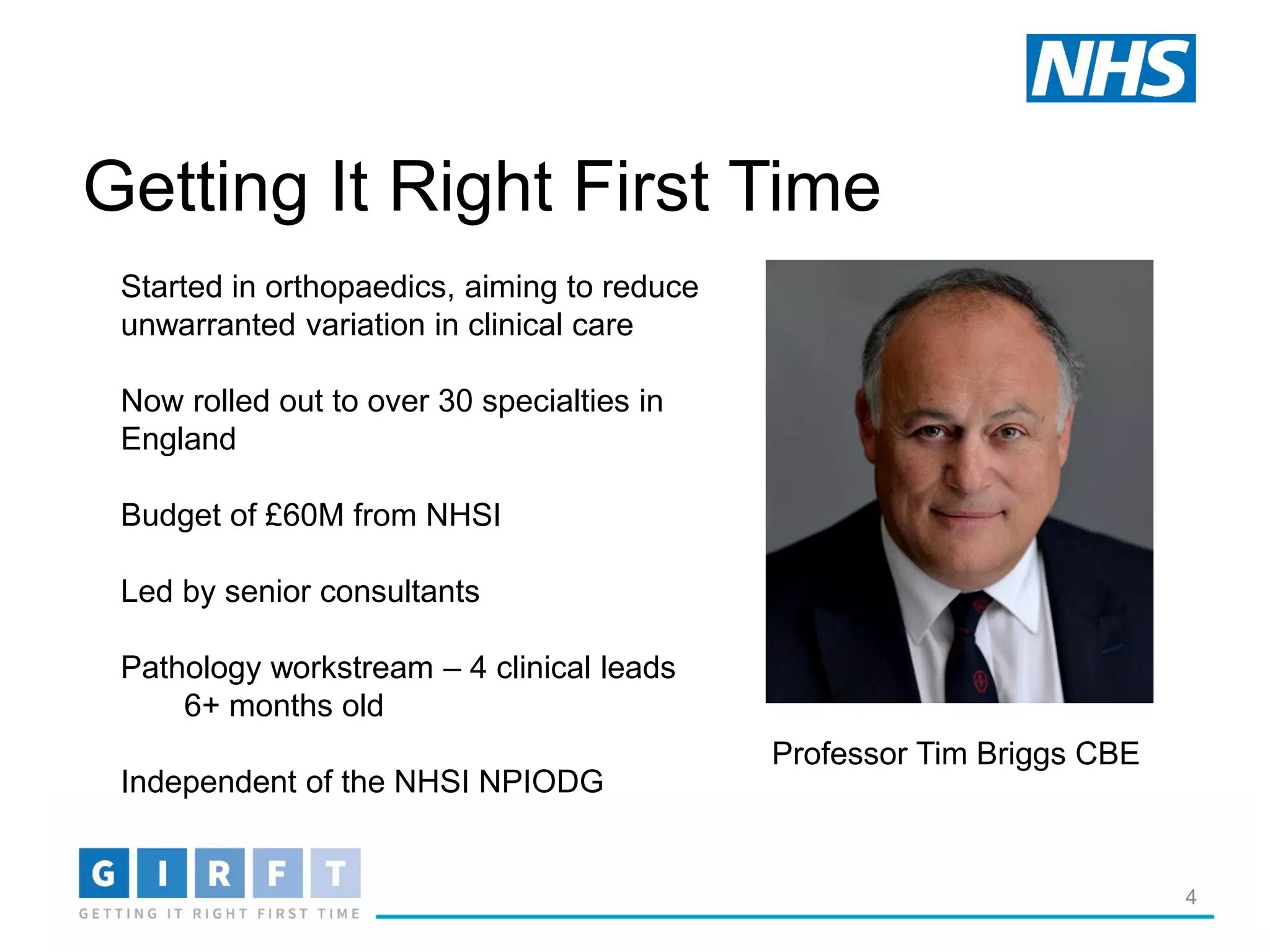
Professor Tim Briggs CBE
5
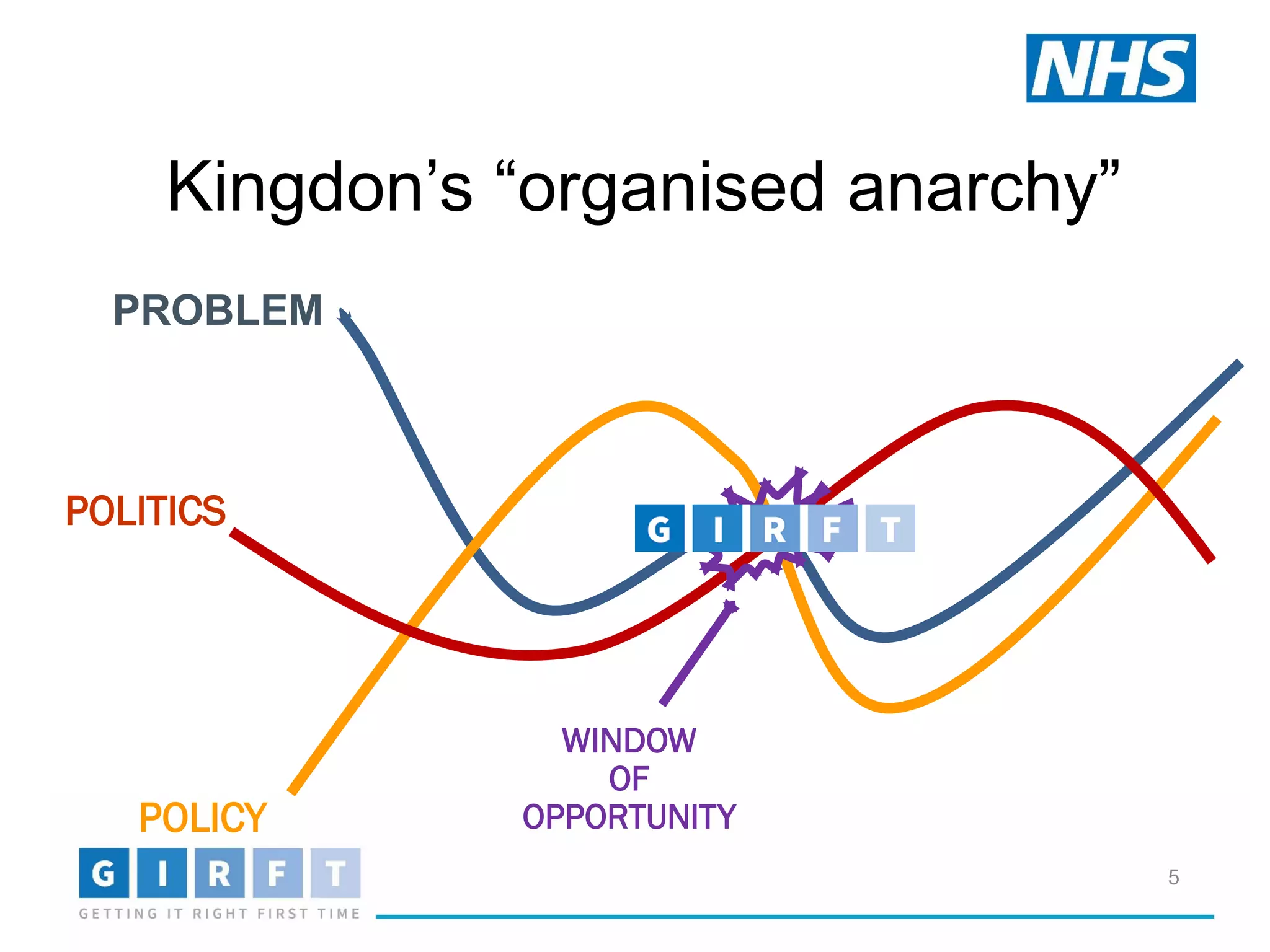
Kingdon’s “organised anarchy”
PROBLEM
POLICY
POLITICS
WINDOW
OF
OPPORTUNITY
Perfect storm or fab opportunity
• Primary care meltdown and consolidation
• Personalised health
• POCT and changing technical delivery
• Demand and demographics
• ICOs and care closer to home
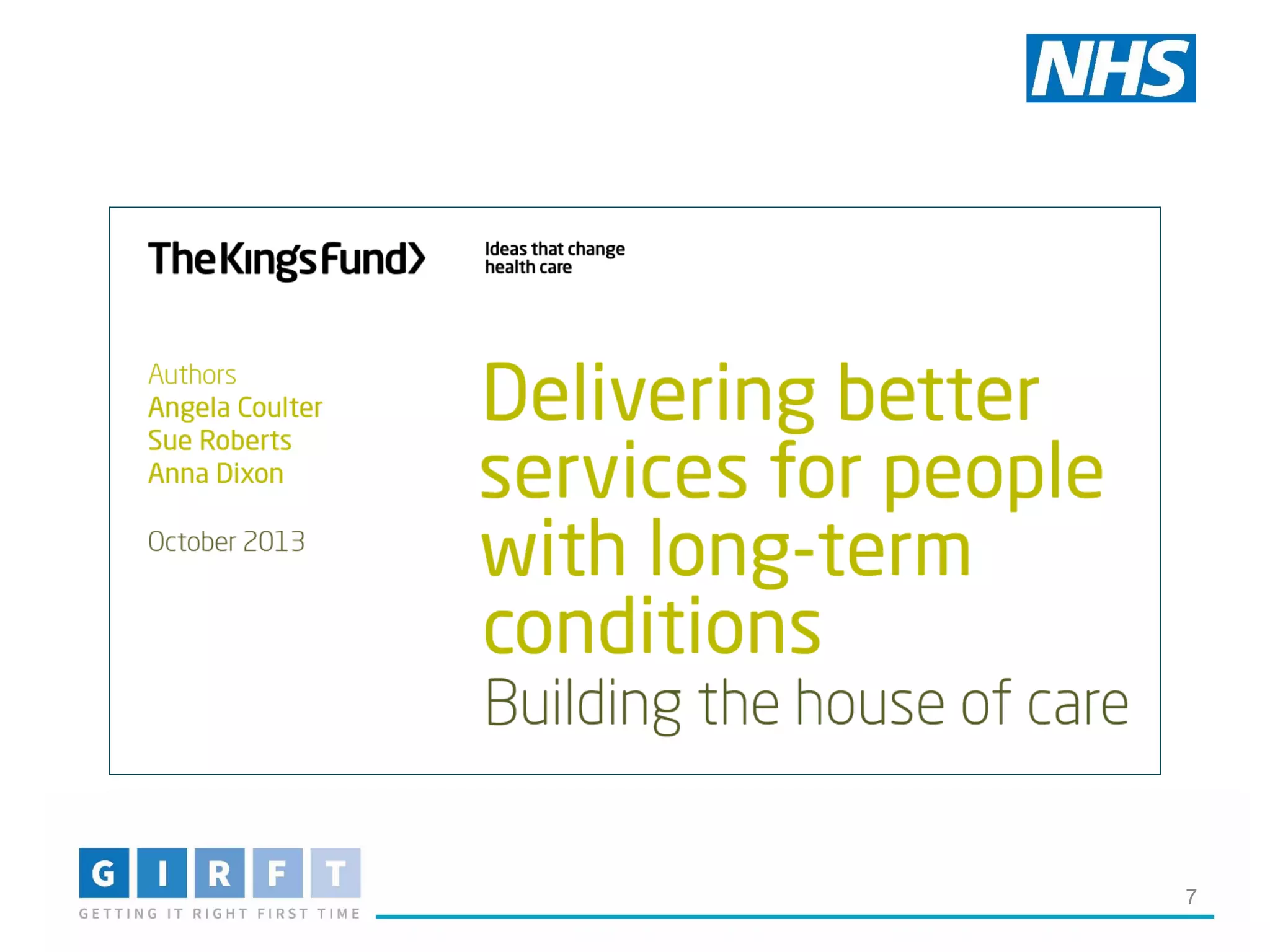
7
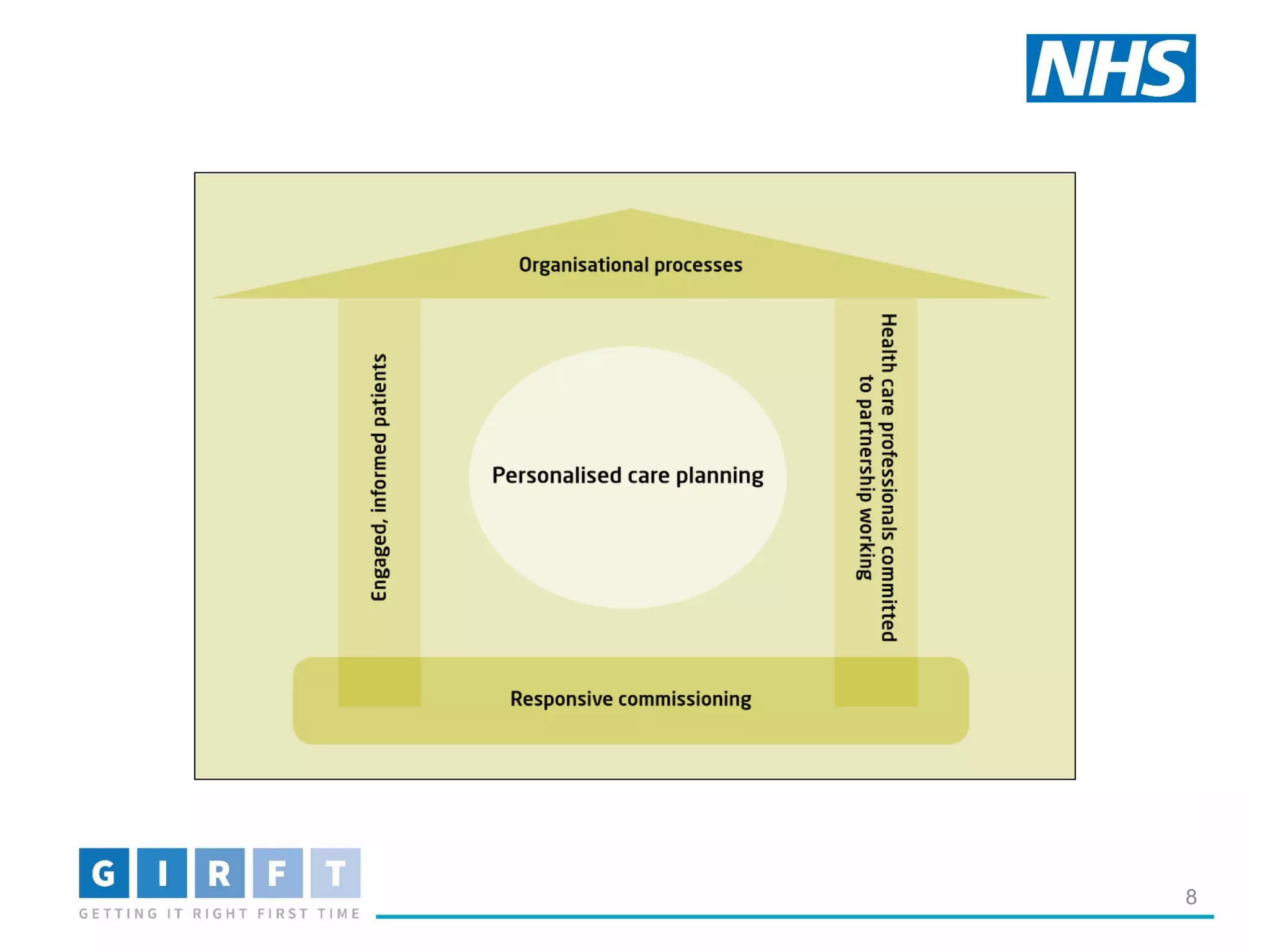
8
9
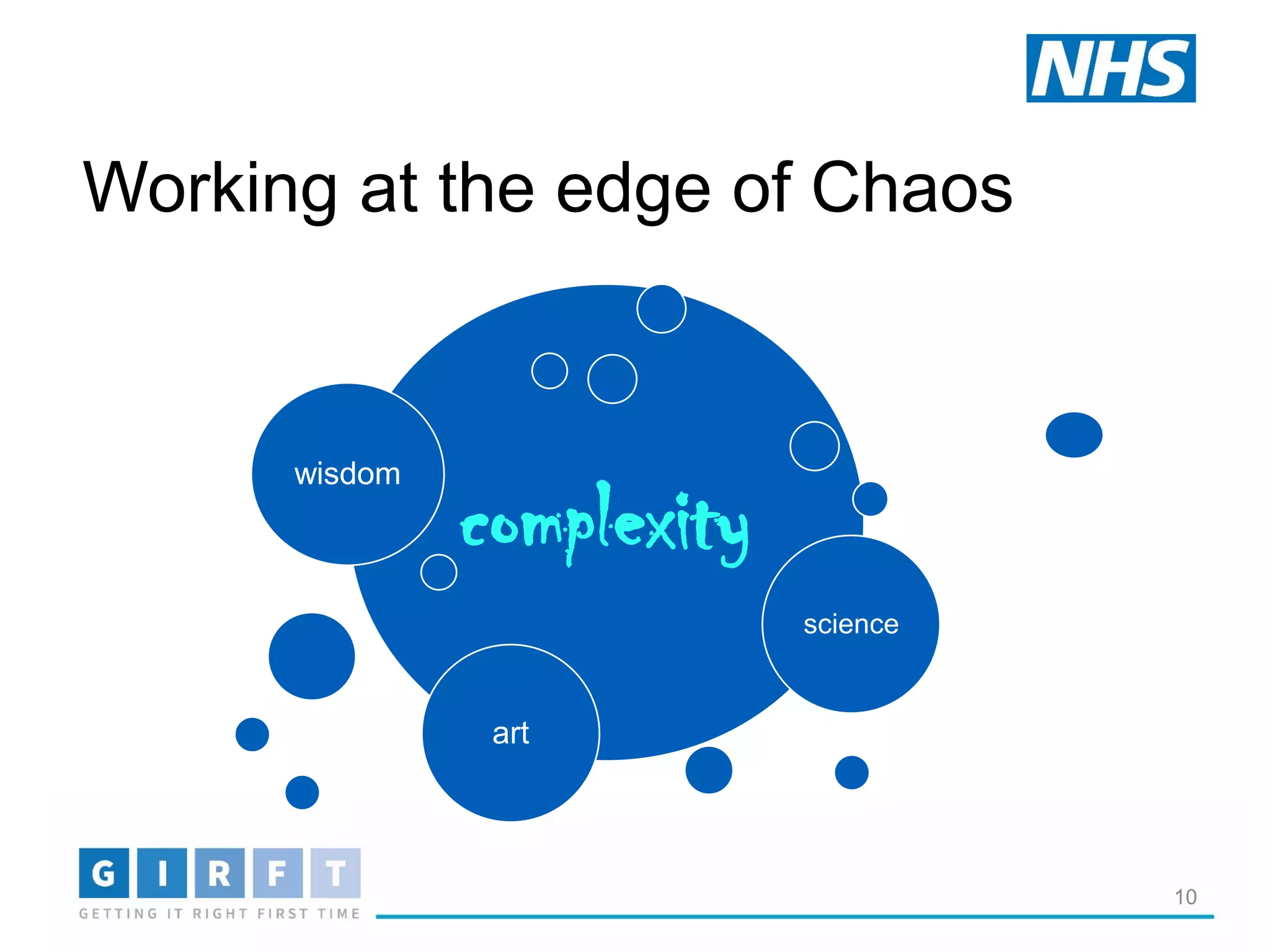
Working at the edge of Chaos
10
complexity
wisdom
science
art
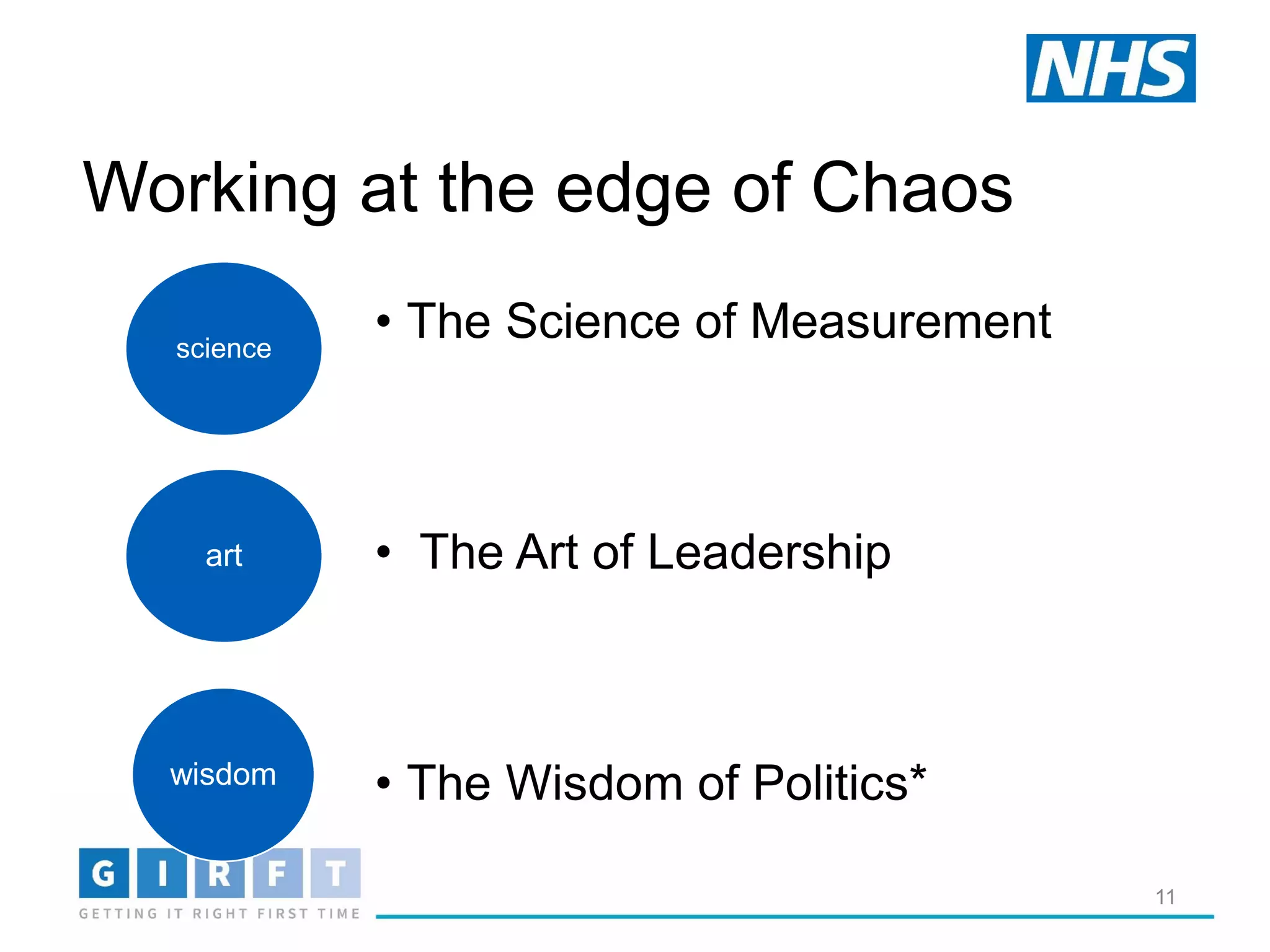
11
• The Science of Measurement
• The Art of Leadership
• The Wisdom of Politics*wisdom
art
science
Working at the edge of Chaos
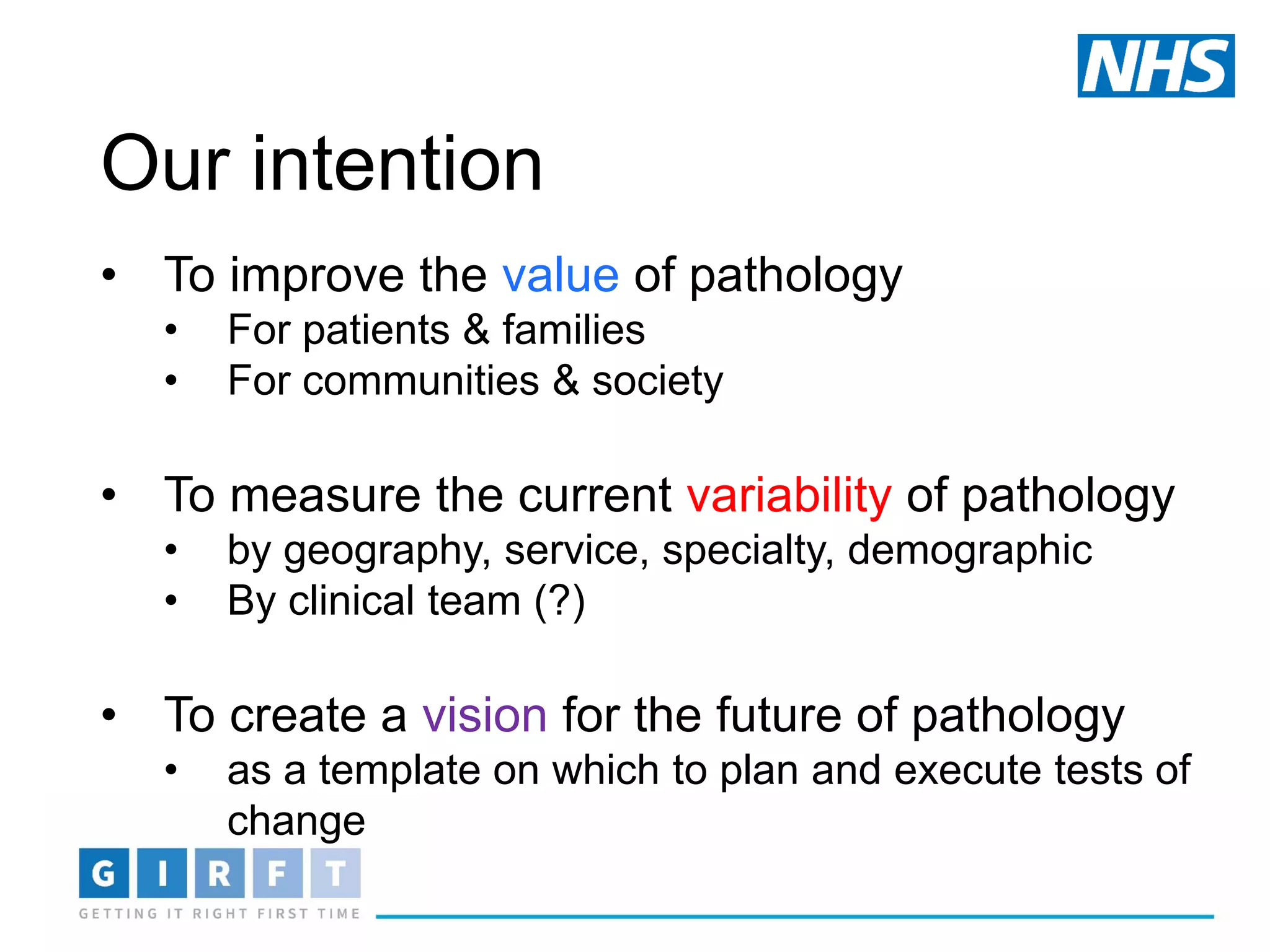
Our intention
• To improve the value of pathology
• For patients & families
• For communities & society
• To measure the current variability of pathology
• by geography, service, specialty, demographic
• By clinical team (?)
• To create a vision for the future of pathology
• as a template on which to plan and execute tests of
change
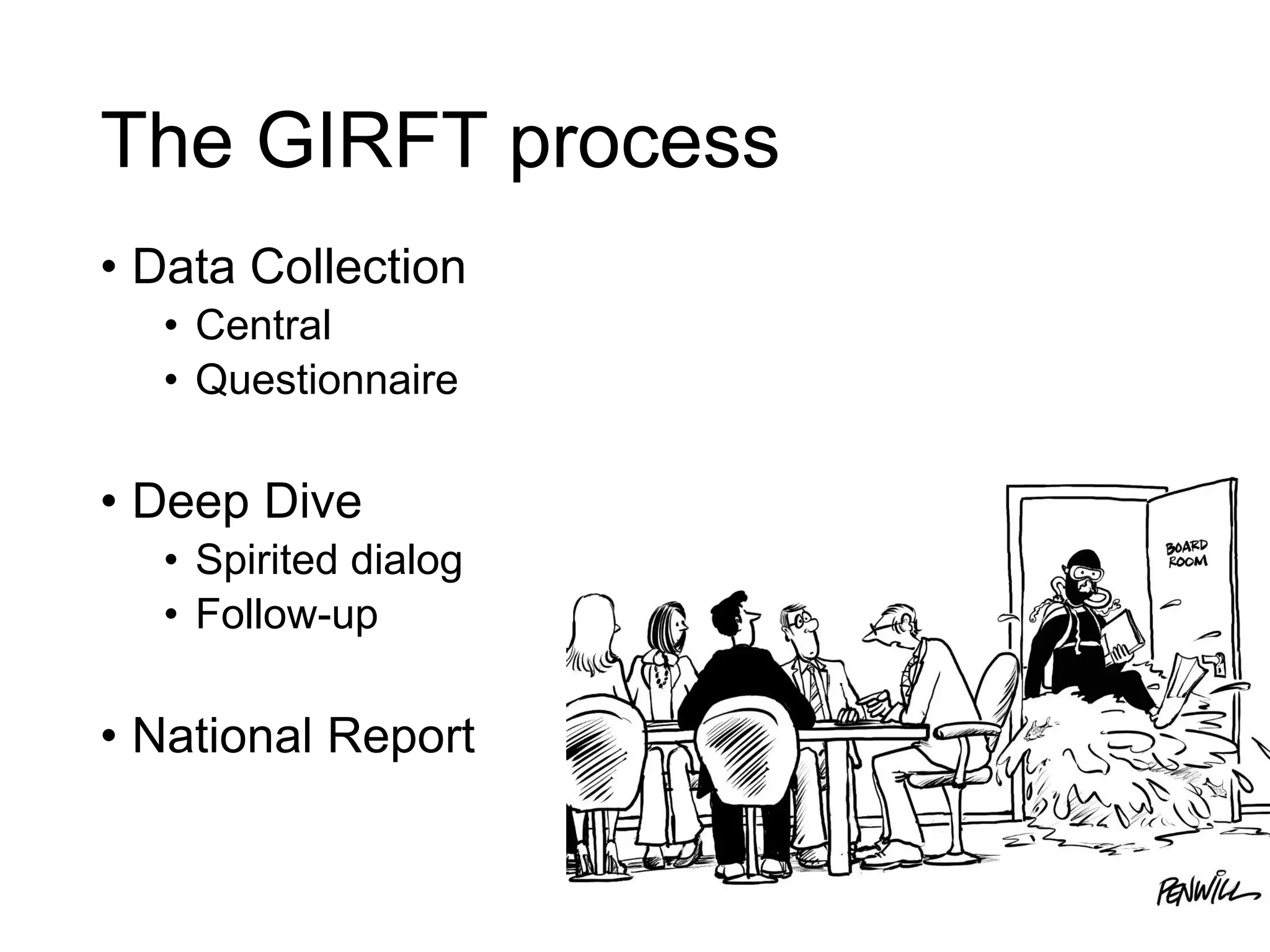
The GIRFT process
• Data Collection
• Central
• Questionnaire
• Deep Dive
• Spirited dialog
• Follow-up
• National Report
13
Pathology providers are considered productive if the cost
of pathology to the trust is less than 1.6% of operating
expenditure.
Carter Review 2016
If economists could manage to get themselves thought
of as humble, competent people on a level with dentists,
that would be splendid.
John Maynard Keynes
Economics:
We are not focused on economics
We are focused on value
Value = benefit/cost
In other words …
• We are not directly concerned with laboratory
efficiency (cost per test; cost per FTE etc)
Unless it impacts on quality and/or care
• We are not directly concerned with laboratory system
& structure (hub, spoke or federation)
Unless it impacts on quality and/or care
In other words …
We are concerned with starting a conversation that
• will help laboratory services make rational
decisions about their future
• So they can deliver better value to patients,
clinicians, communities and to their staff
So where do we start? …
Next steps
• Create the “Datapack”
use HES & other readily accessible data
A long questionnaire
• “Deep Dive” visits
• National report and recommendations
18
GIRFT and IDPS
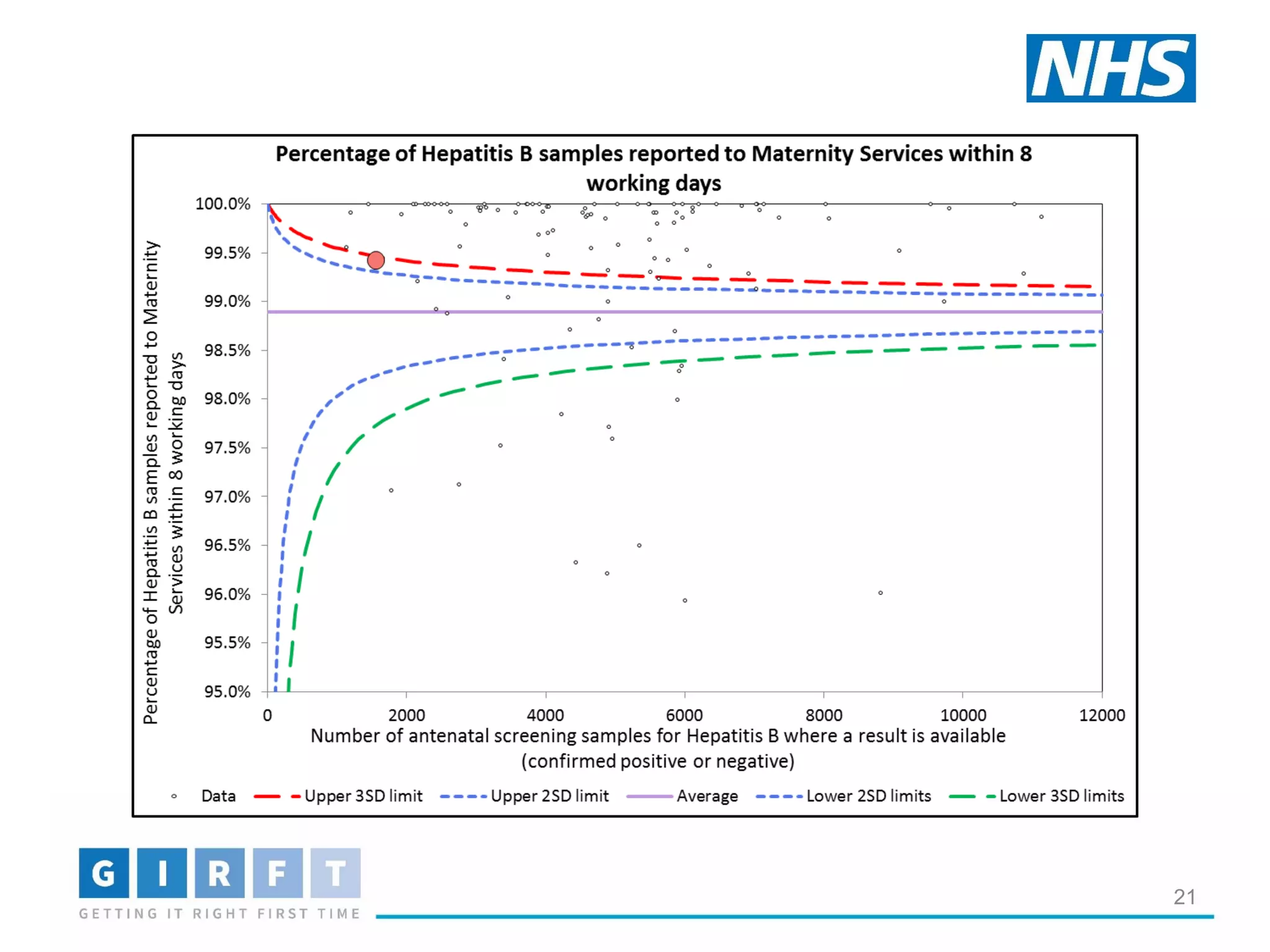
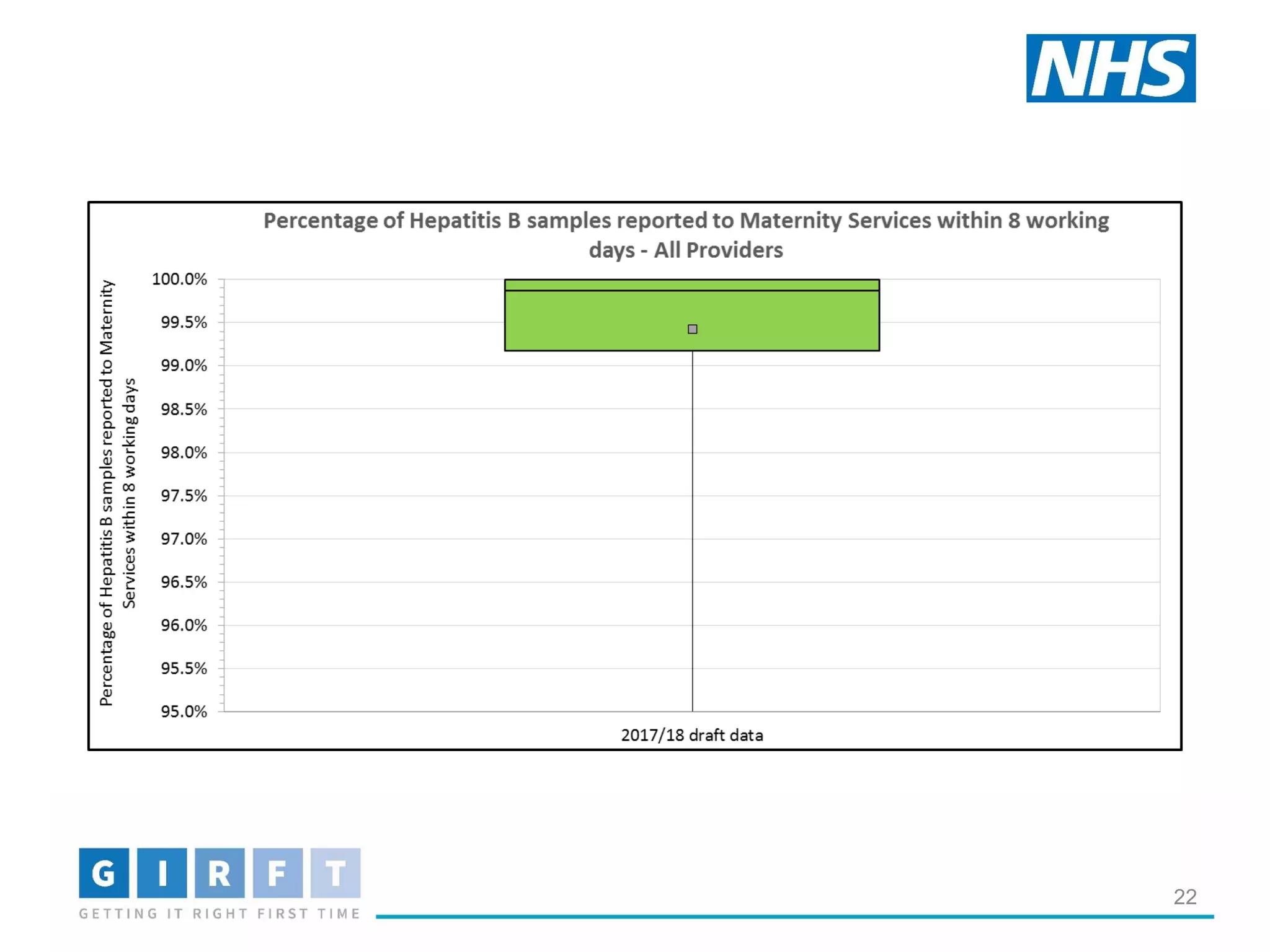
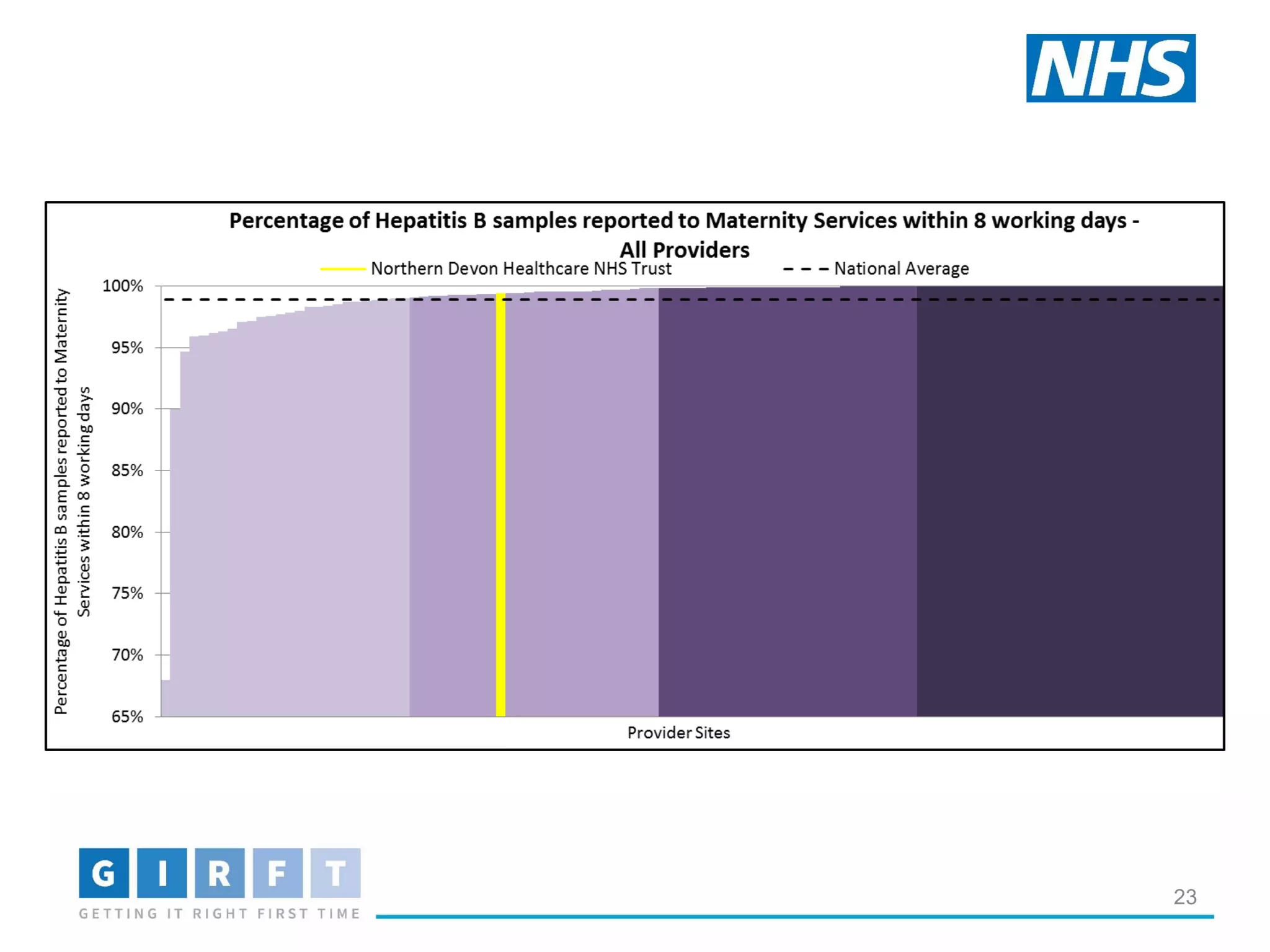
Turn around data for antenatal serology
• Does it mean something for IDPS?
• Does it tell us something more general about
laboratory performance?
20
21
22
23

7. Tom Lewis Getting it right for pathology presentation

  • 1.
    Getting it rightfor pathology Tom Lewis Consultant Microbiologist
  • 2.
    “Our approach isto deliver clinically-led improvement and put the patient in the heart of the system. We deliver this through an approach called Getting It Right First Time (GIRFT).”
  • 3.
    3 David Hunter –BMJ 14th March 2015 • Health systems have always been complex, messy, hard to comprehend and even harder to change. • Meeting these challenges has not been helped by the endless meddling in health systems by politicians. • In this endeavour they have been assisted by numerous snake oil merchants, peddling the latest fads and fashions.
  • 4.
    Getting It RightFirst Time 4 Started in orthopaedics, aiming to reduce unwarranted variation in clinical care Now rolled out to over 30 specialties in England Budget of £60M from NHSI Led by senior consultants Pathology workstream – 4 clinical leads 6+ months old Independent of the NHSI NPIODG Professor Tim Briggs CBE
  • 5.
  • 6.
    Perfect storm orfab opportunity • Primary care meltdown and consolidation • Personalised health • POCT and changing technical delivery • Demand and demographics • ICOs and care closer to home
  • 7.
  • 8.
  • 9.
  • 10.
    Working at theedge of Chaos 10 complexity wisdom science art
  • 11.
    11 • The Scienceof Measurement • The Art of Leadership • The Wisdom of Politics*wisdom art science Working at the edge of Chaos
  • 12.
    Our intention • Toimprove the value of pathology • For patients & families • For communities & society • To measure the current variability of pathology • by geography, service, specialty, demographic • By clinical team (?) • To create a vision for the future of pathology • as a template on which to plan and execute tests of change
  • 13.
    The GIRFT process •Data Collection • Central • Questionnaire • Deep Dive • Spirited dialog • Follow-up • National Report 13
  • 14.
    Pathology providers areconsidered productive if the cost of pathology to the trust is less than 1.6% of operating expenditure. Carter Review 2016 If economists could manage to get themselves thought of as humble, competent people on a level with dentists, that would be splendid. John Maynard Keynes Economics:
  • 15.
    We are notfocused on economics We are focused on value Value = benefit/cost
  • 16.
    In other words… • We are not directly concerned with laboratory efficiency (cost per test; cost per FTE etc) Unless it impacts on quality and/or care • We are not directly concerned with laboratory system & structure (hub, spoke or federation) Unless it impacts on quality and/or care
  • 17.
    In other words… We are concerned with starting a conversation that • will help laboratory services make rational decisions about their future • So they can deliver better value to patients, clinicians, communities and to their staff So where do we start? …
  • 18.
    Next steps • Createthe “Datapack” use HES & other readily accessible data A long questionnaire • “Deep Dive” visits • National report and recommendations 18
  • 19.
  • 20.
    Turn around datafor antenatal serology • Does it mean something for IDPS? • Does it tell us something more general about laboratory performance? 20
  • 21.
  • 22.
  • 23.