FOOD IRRADIATION

By: Palwinder, Kaarina, Amanuel
CHEM & BIOSCIENCES TECHNOLOGY
RED RIVER COLLEGE
WINNIPEG, MANITOBA, CANADA
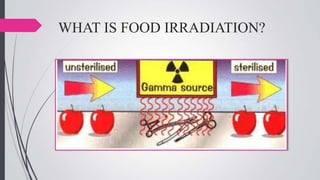
WHAT IS FOOD IRRADIATION?
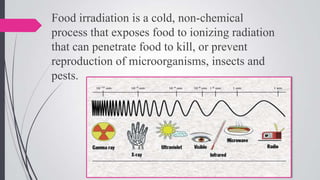
Food irradiation is a cold, non-chemical
process that exposes food to ionizing radiation
that can penetrate food to kill, or prevent
reproduction of microorganisms, insects and
pests.
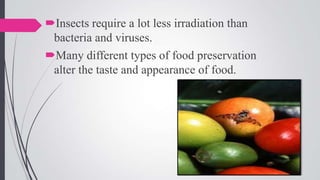
Insects require a lot less irradiation than
bacteria and viruses.
Many different types of food preservation
alter the taste and appearance of food.
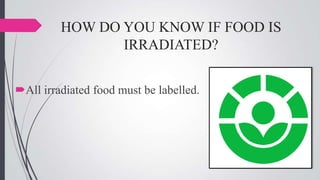
HOW DO YOU KNOW IF FOOD IS
IRRADIATED?
All irradiated food must be labelled.
WHY SHOULD WE IRRADIATE
FOODS?
To decrease the growing food-borne illness rate.

The control of ripening, sprouting and insect
damage.
Along with other preserving technologies there are
advantages and disadvantages.
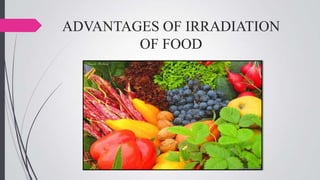
ADVANTAGES OF IRRADIATION
OF FOOD
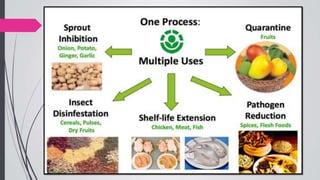
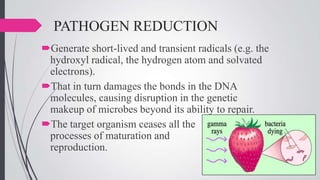
PATHOGEN REDUCTION
Generate short-lived and transient radicals (e.g. the
hydroxyl radical, the hydrogen atom and solvated
electrons).
That in turn damages the bonds in the DNA
molecules, causing disruption in the genetic
makeup of microbes beyond its ability to repair.
The target organism ceases all the
processes of maturation and
reproduction.
SHELF LIFE EXTENSION
Low doses of radiation (up to 1 kGy) can prolong
the shelf-life of many fruits and vegetables.
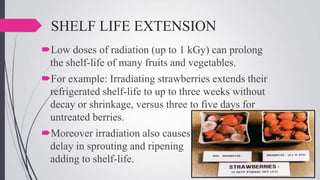
For example: Irradiating strawberries extends their
refrigerated shelf-life to up to three weeks without
decay or shrinkage, versus three to five days for
untreated berries.
Moreover irradiation also causes
delay in sprouting and ripening
adding to shelf-life.
INSECT DISINFESTATION
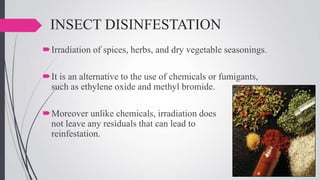
Irradiation of spices, herbs, and dry vegetable seasonings.
It is an alternative to the use of chemicals or fumigants,
such as ethylene oxide and methyl bromide.
Moreover unlike chemicals, irradiation does
not leave any residuals that can lead to
reinfestation.
STERLIZATION
 Irradiation can also be used to sterilize food, which

can then be stored for years without refrigeration.
Sterilized food are used in hospitals for patients with
severely impaired immune systems, such as patients
with AIDS or undergoing chemotherapy.
Did you know?
National Aeronautics and Space Administration
(NASA) astronauts eat meat that has been
sterilized by irradiation to avoid getting
foodborne illnesses when they fly in space.
IRRADIATION OF MEAT AND POULTRY
Treating raw meat and poultry at slaughter plant with
high doses of irradiation can cause elimination of E.
coli, Salmonella, and Campylobacter.
Irradiation of animal feeds could also prevent the spread
of Salmonella and other pathogens to livestock through
feeds.
PRESERVATION
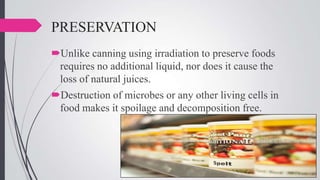
Unlike canning using irradiation to preserve foods
requires no additional liquid, nor does it cause the
loss of natural juices.
Destruction of microbes or any other living cells in
food makes it spoilage and decomposition free.
DISADVANTAGES OF FOOD
IRRADIATION
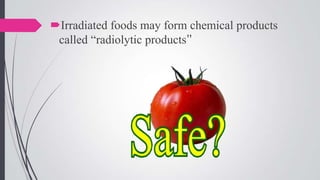
Irradiated foods may form chemical products
called “radiolytic products”
Irradiation cannot be used with all foods. It
can causes undesirable flavor and texture
changes
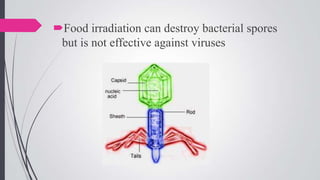
Food irradiation can destroy bacterial spores
but is not effective against viruses
Unknown long-term effects on
human health
Increased consumer cost- Irradiated meats
cost approximately 3 to 5 cents more a pound
than non-irradiated meat
Prices of irradiated foods are expected to
decrease
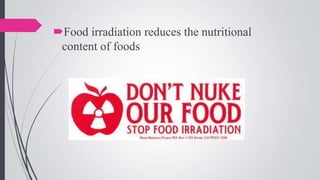
Food irradiation reduces the nutritional
content of foods
IN CONCLUSION
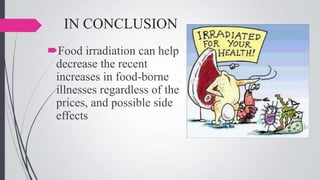
Food irradiation can help
decrease the recent
increases in food-borne
illnesses regardless of the
prices, and possible side
effects
CITATIONS
 http://www.srs.fs.usda.gov/aamu/Alysia/Irr0139.htm
 http://www.mercola.com/article/irradiated/irradiated_research.htm
 http://www.extension.iastate.edu/foodsafety/irradiation/
 http://www.sustainabletable.org/728/food-irradiation

 http://www.cna.ca/nuclear_facts/food_irradiation/
 http://www.foodandwaterwatch.org/factsheet/food-irradiation-and-vitamin-loss/
 http://www.sustainable-city.org/articles/irradiat.htm
 http://rense.com/general81/foodr.htm

 http://www.winnipegfreepress.com/opinion/analysis/food-irradiation----a-gift-horse178326491.html
 http://uw-food-irradiation.engr.wisc.edu/Facts.html
 http://www.betterhealth.vic.gov.au/bhcv2/bhcarticles.nsf/pages/Food_irradiation

FOOD IRRADIATION :)

  • 1.
    FOOD IRRADIATION By: Palwinder,Kaarina, Amanuel CHEM & BIOSCIENCES TECHNOLOGY RED RIVER COLLEGE WINNIPEG, MANITOBA, CANADA
  • 2.
    WHAT IS FOODIRRADIATION?
  • 3.
    Food irradiation isa cold, non-chemical process that exposes food to ionizing radiation that can penetrate food to kill, or prevent reproduction of microorganisms, insects and pests.
  • 4.
    Insects require alot less irradiation than bacteria and viruses. Many different types of food preservation alter the taste and appearance of food.
  • 5.
    HOW DO YOUKNOW IF FOOD IS IRRADIATED? All irradiated food must be labelled.
  • 6.
    WHY SHOULD WEIRRADIATE FOODS? To decrease the growing food-borne illness rate. The control of ripening, sprouting and insect damage. Along with other preserving technologies there are advantages and disadvantages.
  • 7.
  • 9.
    PATHOGEN REDUCTION Generate short-livedand transient radicals (e.g. the hydroxyl radical, the hydrogen atom and solvated electrons). That in turn damages the bonds in the DNA molecules, causing disruption in the genetic makeup of microbes beyond its ability to repair. The target organism ceases all the processes of maturation and reproduction.
  • 10.
    SHELF LIFE EXTENSION Lowdoses of radiation (up to 1 kGy) can prolong the shelf-life of many fruits and vegetables. For example: Irradiating strawberries extends their refrigerated shelf-life to up to three weeks without decay or shrinkage, versus three to five days for untreated berries. Moreover irradiation also causes delay in sprouting and ripening adding to shelf-life.
  • 11.
    INSECT DISINFESTATION Irradiation ofspices, herbs, and dry vegetable seasonings. It is an alternative to the use of chemicals or fumigants, such as ethylene oxide and methyl bromide. Moreover unlike chemicals, irradiation does not leave any residuals that can lead to reinfestation.
  • 12.
    STERLIZATION  Irradiation canalso be used to sterilize food, which can then be stored for years without refrigeration. Sterilized food are used in hospitals for patients with severely impaired immune systems, such as patients with AIDS or undergoing chemotherapy. Did you know? National Aeronautics and Space Administration (NASA) astronauts eat meat that has been sterilized by irradiation to avoid getting foodborne illnesses when they fly in space.
  • 13.
    IRRADIATION OF MEATAND POULTRY Treating raw meat and poultry at slaughter plant with high doses of irradiation can cause elimination of E. coli, Salmonella, and Campylobacter. Irradiation of animal feeds could also prevent the spread of Salmonella and other pathogens to livestock through feeds.
  • 14.
    PRESERVATION Unlike canning usingirradiation to preserve foods requires no additional liquid, nor does it cause the loss of natural juices. Destruction of microbes or any other living cells in food makes it spoilage and decomposition free.
  • 15.
  • 16.
    Irradiated foods mayform chemical products called “radiolytic products”
  • 17.
    Irradiation cannot beused with all foods. It can causes undesirable flavor and texture changes
  • 18.
    Food irradiation candestroy bacterial spores but is not effective against viruses
  • 19.
  • 20.
    Increased consumer cost-Irradiated meats cost approximately 3 to 5 cents more a pound than non-irradiated meat Prices of irradiated foods are expected to decrease
  • 21.
    Food irradiation reducesthe nutritional content of foods
  • 22.
    IN CONCLUSION Food irradiationcan help decrease the recent increases in food-borne illnesses regardless of the prices, and possible side effects
  • 23.
    CITATIONS  http://www.srs.fs.usda.gov/aamu/Alysia/Irr0139.htm  http://www.mercola.com/article/irradiated/irradiated_research.htm http://www.extension.iastate.edu/foodsafety/irradiation/  http://www.sustainabletable.org/728/food-irradiation  http://www.cna.ca/nuclear_facts/food_irradiation/  http://www.foodandwaterwatch.org/factsheet/food-irradiation-and-vitamin-loss/  http://www.sustainable-city.org/articles/irradiat.htm  http://rense.com/general81/foodr.htm  http://www.winnipegfreepress.com/opinion/analysis/food-irradiation----a-gift-horse178326491.html  http://uw-food-irradiation.engr.wisc.edu/Facts.html  http://www.betterhealth.vic.gov.au/bhcv2/bhcarticles.nsf/pages/Food_irradiation