Download to read offline


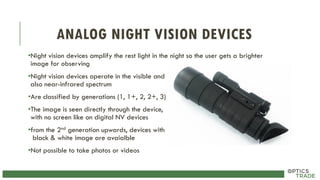
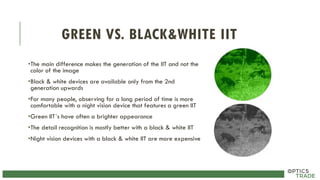
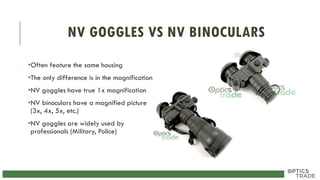
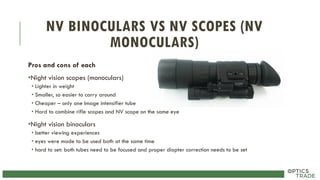
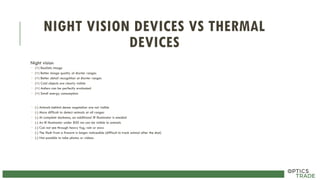
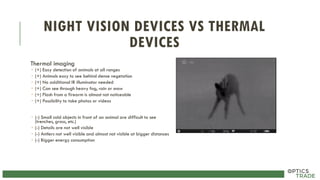


Analog night vision devices amplify low light levels to produce brighter images for nighttime observation. They are classified by generation and can produce black and white or green images directly without a screen. Higher generations and those with black and white images provide better resolution and detail recognition but are more expensive. While night vision goggles provide a single image, binoculars offer magnified dual images for better viewing. Night vision devices perform better at short ranges in low light conditions compared to thermal imaging, but thermals can see through vegetation, fog, and smoke and detect animals at longer distances.


![Getting Started with Apache Spark: Big Data Made Simple [Free Meetup]](https://cdn.slidesharecdn.com/ss_thumbnails/apachesparkgettingstarted-260203175547-8361bcc3-thumbnail.jpg?width=640&height=640&fit=bounds)