Ensuring health for the future
Overview of the NZ Health system
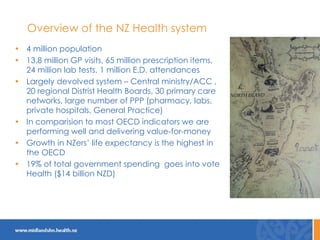
• 4 million population
• 13.8 million GP visits, 65 million prescription items,
24 million lab tests, 1 million E.D. attendances
• Largely devolved system – Central ministry/ACC ,
20 regional Distrist Health Boards, 30 primary care
networks, large number of PPP (pharmacy, labs,
private hospitals, General Practice)
• In comparision to most OECD indicators we are
performing well and delivering value-for-money
• Growth in NZers’ life expectancy is the highest in
the OECD
• 19% of total government spending goes into vote
Health ($14 billion NZD)
Challenges
• Living within our means: our rate of growth in health spend is
unsustainable
• Population ageing: increasing demands on health system (44%
increase)
• Increased chronic conditions – 80% of deaths are a result of heart
disease, cancer, diabetes and tobacco related illness
• Increasing expectations from the public on health system performance
• Workforce ageing and changing expectations
• Fragmentation and differences in service performance across a
devolved health and disability system
Primary Care Networks
• From small individual businesses to 100 practice, 500,000 patients
jointly governed networks.
• 1990s – organic growth of networks
– Improving quality and reducing professional isolation
– Frustration around lack of practical relevance of professional bodies
– Collective bargaining around local and national contracts
• Mid 1990s “funder investment” & Policy Development
– Ease of contracting with a group
– Introduction of capitation vs FFS
– Pharms and labs budget & risk holding contracts to cap demand driven
pressures
– Introduction and incentivisation to develop electronic records and claiming
– Development of primary care community services
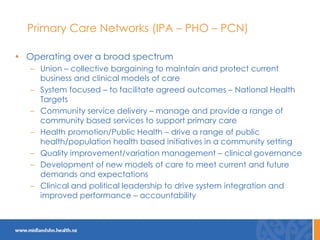
Primary Care Networks (IPA – PHO – PCN)
• Operating over a broad spectrum
– Union – collective bargaining to maintain and protect current
business and clinical models of care
– System focused – to facilitate agreed outcomes – National Health
Targets
– Community service delivery – manage and provide a range of
community based services to support primary care
– Health promotion/Public Health – drive a range of public
health/population health based initiatives in a community setting
– Quality improvement/variation management – clinical governance
– Development of new models of care to meet current and future
demands and expectations
– Clinical and political leadership to drive system integration and
improved performance – accountability
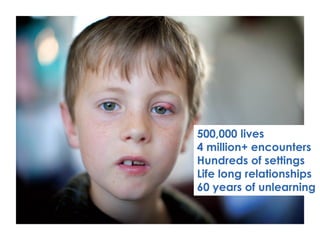
500,000 lives
4 million+ encounters
Hundreds of settings
Life long relationships
60 years of unlearning
Ensure the future of high quality general practice….
Be a vehicle to enable the development of new models,
ownership etc to ensure sustainability of high quality GP.
Sustainable & leading edge primary care services
The way to bring together the founding partners to ensure each
partner is successful
Vehicle to enable single contract/plan
Pinnacle
Incorporated
Primary Health
Care Limited
Midlands Health
Network Limited
Midlands Regional
Health Network
Charitable Trust
Role of Members of the Group
Tui Ora
Limited Integrated health service organisation committed to enhancing
health and wellbeing.
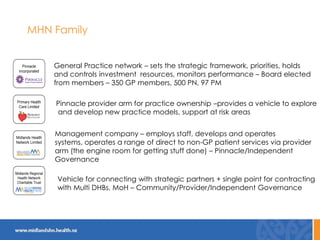
General Practice network – sets the strategic framework, priorities, holds
and controls investment resources, monitors performance – Board elected
from members – 350 GP members, 500 PN, 97 PM
Pinnacle provider arm for practice ownership –provides a vehicle to explore
and develop new practice models, support at risk areas
Management company – employs staff, develops and operates
systems, operates a range of direct to non-GP patient services via provider
arm (the engine room for getting stuff done) – Pinnacle/Independent
Governance
Vehicle for connecting with strategic partners + single point for contracting
with Multi DHBs, MoH – Community/Provider/Independent Governance
MHN Family
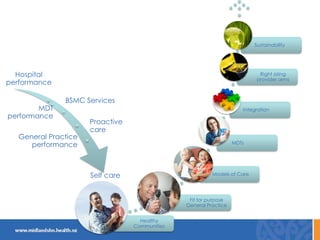
Healthy
Communities
Fit for purpose
General Practice
Models of Care
MDTs
Integration
Right sizing
provider arms
Sustainability
Hospital
performance
BSMC Services
MDT
performance
Proactive
care
General Practice
performance
Self care
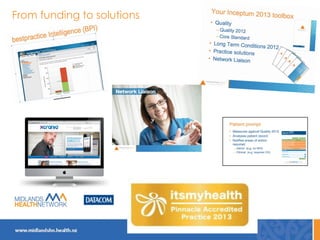
From funding to solutions
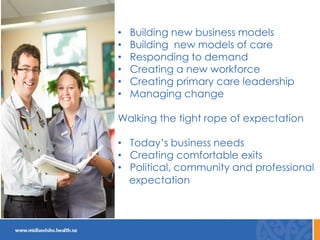
Reflection & Development
• Building new business models
• Building new models of care
• Responding to demand
• Creating a new workforce
• Creating primary care leadership
• Managing change
Walking the tight rope of expectation
• Today’s business needs
• Creating comfortable exits
• Political, community and professional
expectation
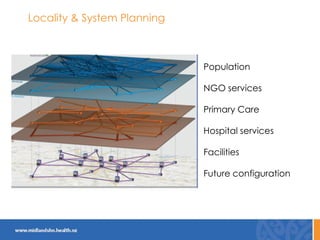
Locality & System Planning
Population
NGO services
Primary Care
Hospital services
Facilities
Future configuration
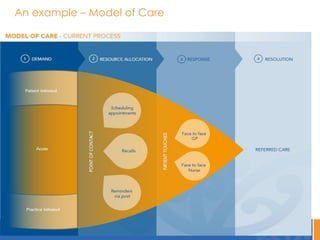
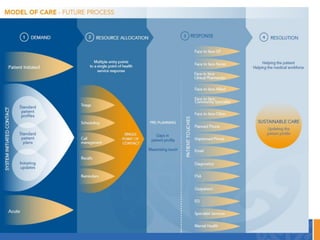
An example – Model of Care
It went something like…..
Why Networks are important
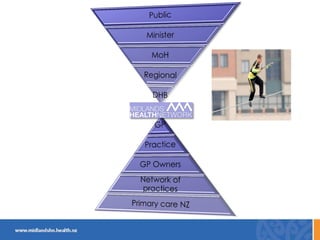
• MoH and DHBs are too far removed from the “business end”
• System change vs small business management
• General Practice needs a busines and local professional
orginsation, out plays the College, NZMA etc
• Allows local inovation to flourish
• Enables local contracting for a broader range of services rather
than just nationally agreed
– Front line General Practice
– Practice nursing
– Specialist nursing
– Mobile and district nursing
– Allied services
– Mental health
– Pop health services
What next for networks
• Alliance agreements are allowing broader roles to be
developed – community based outpatient services
• Commissioning of wider range of services
• Implementation of new models of care
– Medical home
– Rural services
– Rusral hospital management
• Ownership and management of practices for the next
generation vs coporate takeovers
• Further development of self management CQI and harm
reduction programs
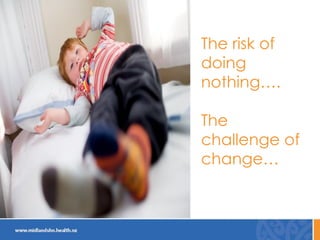
The risk of
doing
nothing….
The
challenge of
change…

John Macaskill-Smith: Supporting general practice needs

  • 1.
  • 2.
    Overview of theNZ Health system • 4 million population • 13.8 million GP visits, 65 million prescription items, 24 million lab tests, 1 million E.D. attendances • Largely devolved system – Central ministry/ACC , 20 regional Distrist Health Boards, 30 primary care networks, large number of PPP (pharmacy, labs, private hospitals, General Practice) • In comparision to most OECD indicators we are performing well and delivering value-for-money • Growth in NZers’ life expectancy is the highest in the OECD • 19% of total government spending goes into vote Health ($14 billion NZD)
  • 3.
    Challenges • Living withinour means: our rate of growth in health spend is unsustainable • Population ageing: increasing demands on health system (44% increase) • Increased chronic conditions – 80% of deaths are a result of heart disease, cancer, diabetes and tobacco related illness • Increasing expectations from the public on health system performance • Workforce ageing and changing expectations • Fragmentation and differences in service performance across a devolved health and disability system
  • 4.
    Primary Care Networks •From small individual businesses to 100 practice, 500,000 patients jointly governed networks. • 1990s – organic growth of networks – Improving quality and reducing professional isolation – Frustration around lack of practical relevance of professional bodies – Collective bargaining around local and national contracts • Mid 1990s “funder investment” & Policy Development – Ease of contracting with a group – Introduction of capitation vs FFS – Pharms and labs budget & risk holding contracts to cap demand driven pressures – Introduction and incentivisation to develop electronic records and claiming – Development of primary care community services
  • 5.
    Primary Care Networks(IPA – PHO – PCN) • Operating over a broad spectrum – Union – collective bargaining to maintain and protect current business and clinical models of care – System focused – to facilitate agreed outcomes – National Health Targets – Community service delivery – manage and provide a range of community based services to support primary care – Health promotion/Public Health – drive a range of public health/population health based initiatives in a community setting – Quality improvement/variation management – clinical governance – Development of new models of care to meet current and future demands and expectations – Clinical and political leadership to drive system integration and improved performance – accountability
  • 7.
    500,000 lives 4 million+encounters Hundreds of settings Life long relationships 60 years of unlearning
  • 8.
    Ensure the future of high quality general practice…. Be a vehicleto enable the development of new models, ownership etc to ensure sustainability of high quality GP. Sustainable & leading edge primary care services The way to bring together the founding partners to ensure each partner is successful Vehicle to enable single contract/plan Pinnacle Incorporated Primary Health Care Limited Midlands Health Network Limited Midlands Regional Health Network Charitable Trust Role of Members of the Group Tui Ora Limited Integrated health service organisation committed to enhancing health and wellbeing. General Practice network – sets the strategic framework, priorities, holds and controls investment resources, monitors performance – Board elected from members – 350 GP members, 500 PN, 97 PM Pinnacle provider arm for practice ownership –provides a vehicle to explore and develop new practice models, support at risk areas Management company – employs staff, develops and operates systems, operates a range of direct to non-GP patient services via provider arm (the engine room for getting stuff done) – Pinnacle/Independent Governance Vehicle for connecting with strategic partners + single point for contracting with Multi DHBs, MoH – Community/Provider/Independent Governance MHN Family
  • 10.
    Healthy Communities Fit for purpose GeneralPractice Models of Care MDTs Integration Right sizing provider arms Sustainability Hospital performance BSMC Services MDT performance Proactive care General Practice performance Self care
  • 11.
    From funding tosolutions
  • 12.
  • 13.
    • Building newbusiness models • Building new models of care • Responding to demand • Creating a new workforce • Creating primary care leadership • Managing change Walking the tight rope of expectation • Today’s business needs • Creating comfortable exits • Political, community and professional expectation
  • 14.
    Locality & SystemPlanning Population NGO services Primary Care Hospital services Facilities Future configuration
  • 15.
    An example –Model of Care
  • 18.
  • 19.
    Why Networks areimportant • MoH and DHBs are too far removed from the “business end” • System change vs small business management • General Practice needs a busines and local professional orginsation, out plays the College, NZMA etc • Allows local inovation to flourish • Enables local contracting for a broader range of services rather than just nationally agreed – Front line General Practice – Practice nursing – Specialist nursing – Mobile and district nursing – Allied services – Mental health – Pop health services
  • 20.
    What next fornetworks • Alliance agreements are allowing broader roles to be developed – community based outpatient services • Commissioning of wider range of services • Implementation of new models of care – Medical home – Rural services – Rusral hospital management • Ownership and management of practices for the next generation vs coporate takeovers • Further development of self management CQI and harm reduction programs
  • 21.