Nonviolent Crisis
Intervention Training
Program
Neddra Catron-Rice
CUR/516
Elizabeth Pace
July 17,2017
Nonviolent Crisis Intervention Training
Program
 Purpose: To provide the best Care,
Welfare, Safety and Security for all
individuals in your charge, sometimes of
moments of violence.
Objectives
 1. The participant will be calm and rational
 2. The participant will establish basic facts.
 3. The participant will look for alternatives.
 4. The participant will reach for an
agreement and provide support.
Goals
 1. Organize your thoughts about responses to crisis
situations.
 2. Use nonverbal, paraverbal, and physical intervention
skills.
 3. Work as a team to resolve disruptive and dangerous
situations effectively, safely and respectfully.
 4. Use techniques to control your own anxieties during
interventions and maintain the best positive and
professional attitude.
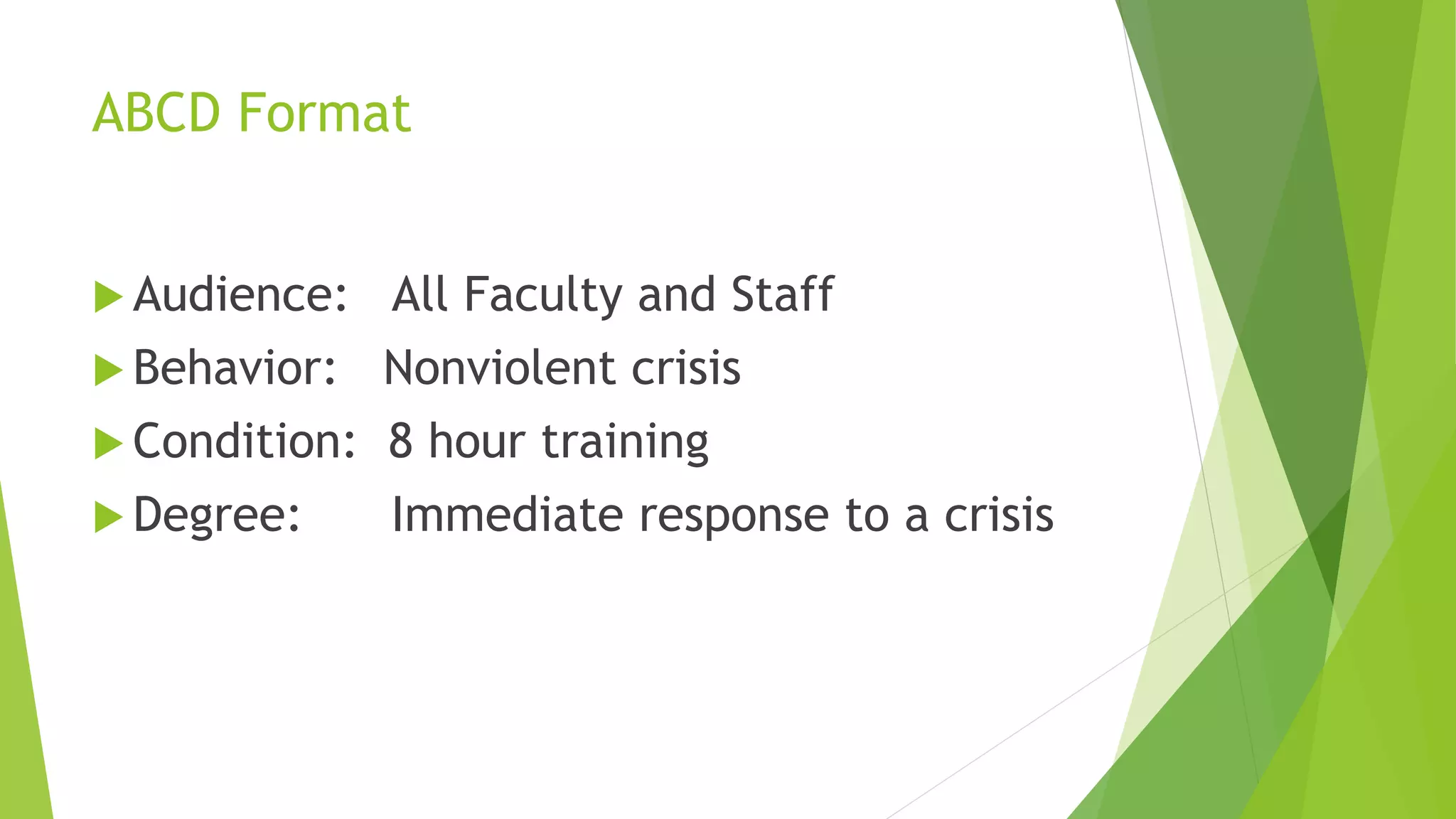
ABCD Format
 Audience: All Faculty and Staff
 Behavior: Nonviolent crisis
 Condition: 8 hour training
 Degree: Immediate response to a crisis
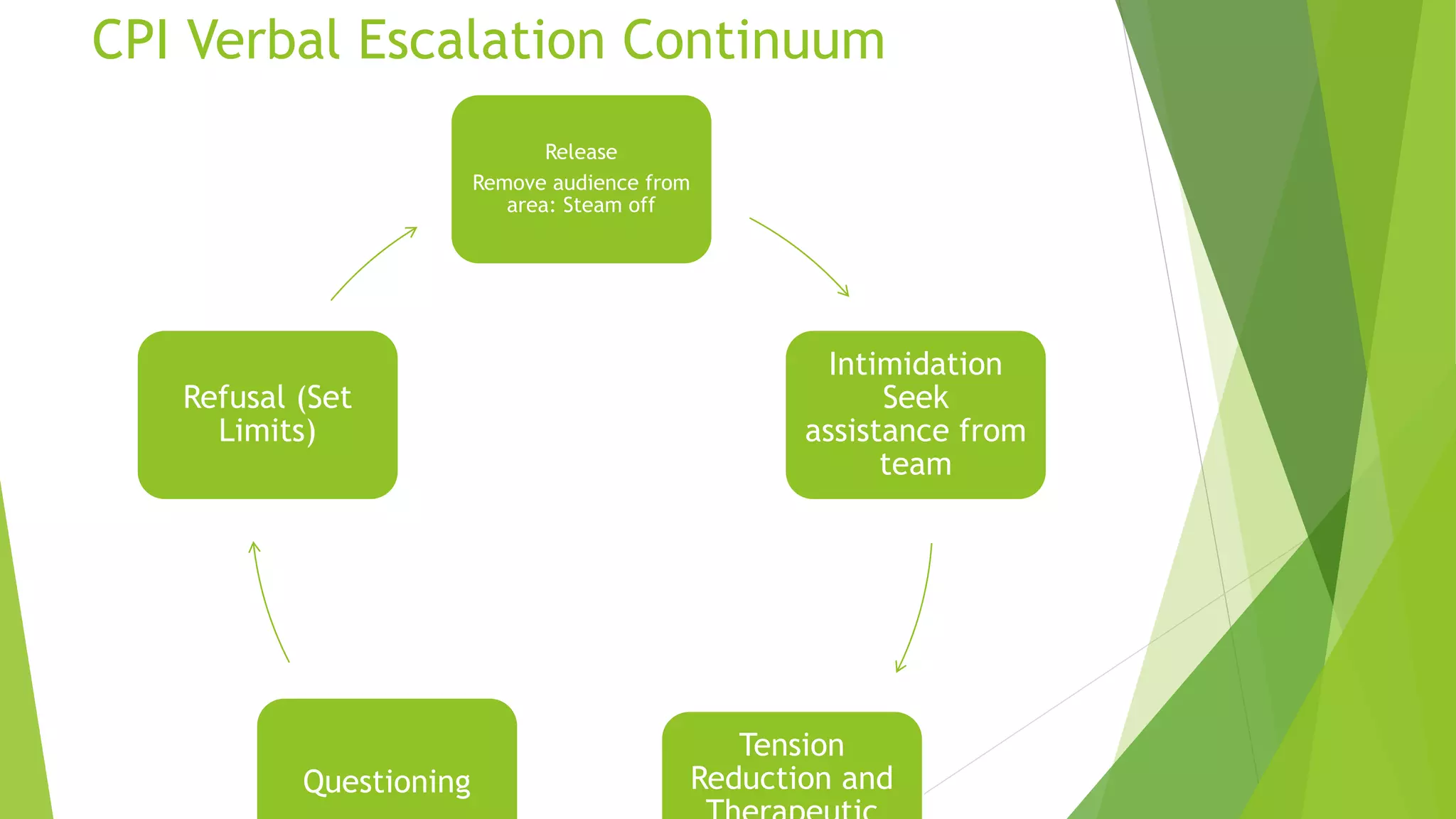
CPI Verbal Escalation Continuum
Release
Remove audience from
area: Steam off
Intimidation
Seek
assistance from
team
Tension
Reduction andQuestioning
Refusal (Set
Limits)
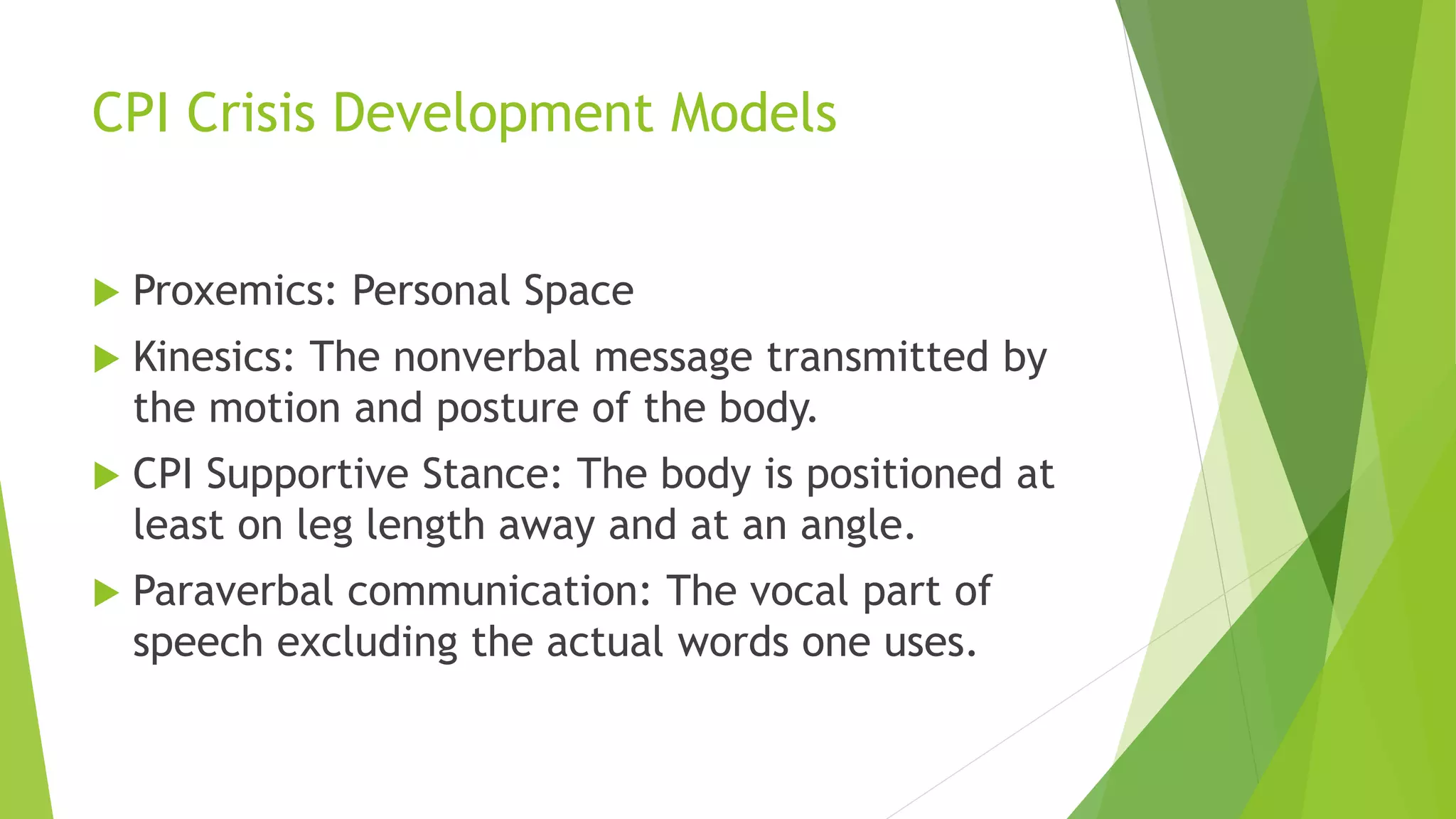
CPI Crisis Development Models
 Proxemics: Personal Space
 Kinesics: The nonverbal message transmitted by
the motion and posture of the body.
 CPI Supportive Stance: The body is positioned at
least on leg length away and at an angle.
 Paraverbal communication: The vocal part of
speech excluding the actual words one uses.
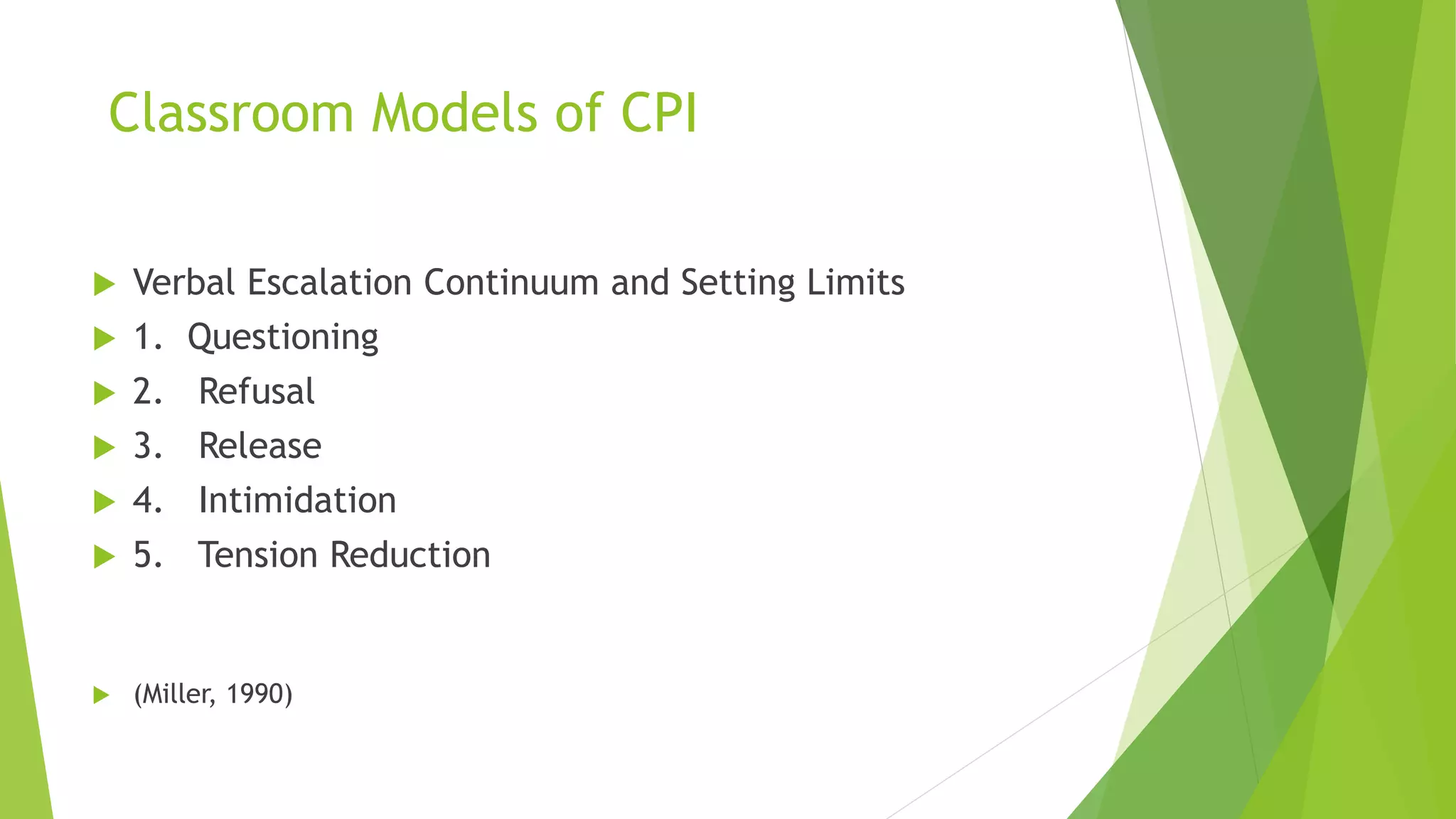
Classroom Models of CPI
 Verbal Escalation Continuum and Setting Limits
 1. Questioning
 2. Refusal
 3. Release
 4. Intimidation
 5. Tension Reduction
 (Miller, 1990)
Acting Out Person
 Example:
Tension Reduction
 Therapeutic Rapport
 Example:
 (Seigel, 1999)
The CPI Coping Model Examples
 CPI Kick Block
 CPI Two-Hand Wrist Grab Release
 CPI One-Hand Wrist Grab Release
 CPI One-Hand Hair Pull Release
 CPI Back Choke Release
 CPI Front Choke Release
 CPI Bite Release
 CPI Children’s Control Position
(Maier, 1996)
Class Participation
 Form small groups of four.
 2- students and 2- employee/teacher
 The trainer will demonstrate the CPI Coping Model and
the participants will execute each position with their
partners.
 The Trainer will observe and make corrections as needed.
Philosophy of the Nonviolent Crisis
Intervention Program
 To provide for the
 Care
 Welfare
 Safety
 Security
 Of all involved in the crisis……
 * Physical restraints is a Last resort……
Why should a team approach be applied?
 A team approach should be used for safety,
litigation and professionalism..
 SLP
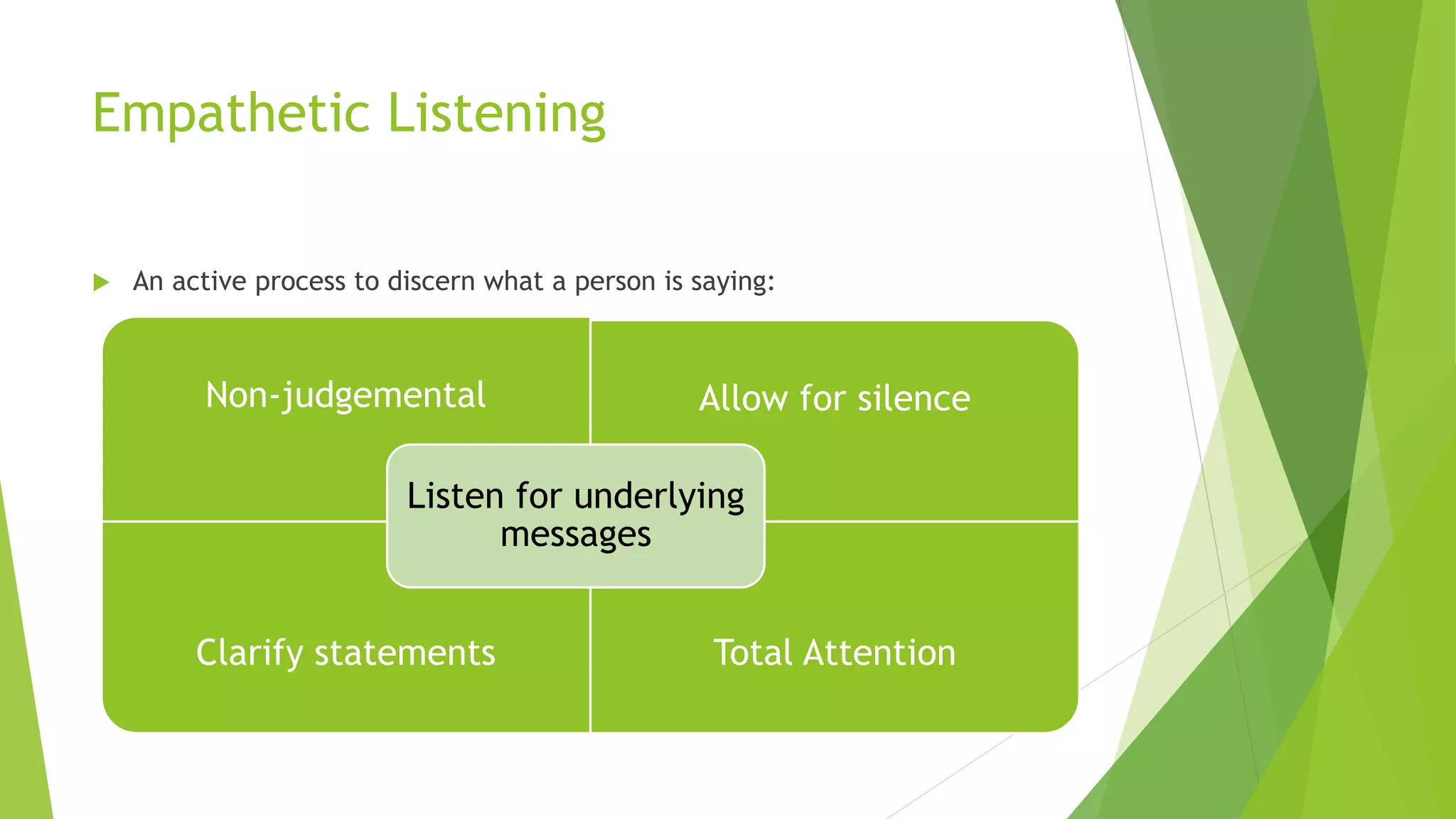
Empathetic Listening
 An active process to discern what a person is saying:
Non-judgemental Allow for silence
Clarify statements Total Attention
Listen for underlying
messages
Assessment
 The test will consist of multiple choice, matching and fill-in the blank
questions and one definition.
 With 90% accuracy.
 A certificate of completion will be given.
References
 Maier, G. (1996). Managing threatening behavior: The role
of talk down and talk up. Journal of Psychosocial Nursing,
34(6).
 Miller, L. (1999). Workplace violence: Prevention,
response, and recovery. Psychotherapy, 36(2).
 Seigel, D. (1999). The developing mind: How relationships
and the brain interact to shape who we are. New York:
Guilford Press.

Nonviolent crisis intervention training program

  • 1.
    Nonviolent Crisis Intervention Training Program NeddraCatron-Rice CUR/516 Elizabeth Pace July 17,2017
  • 2.
    Nonviolent Crisis InterventionTraining Program  Purpose: To provide the best Care, Welfare, Safety and Security for all individuals in your charge, sometimes of moments of violence.
  • 3.
    Objectives  1. Theparticipant will be calm and rational  2. The participant will establish basic facts.  3. The participant will look for alternatives.  4. The participant will reach for an agreement and provide support.
  • 4.
    Goals  1. Organizeyour thoughts about responses to crisis situations.  2. Use nonverbal, paraverbal, and physical intervention skills.  3. Work as a team to resolve disruptive and dangerous situations effectively, safely and respectfully.  4. Use techniques to control your own anxieties during interventions and maintain the best positive and professional attitude.
  • 5.
    ABCD Format  Audience:All Faculty and Staff  Behavior: Nonviolent crisis  Condition: 8 hour training  Degree: Immediate response to a crisis
  • 6.
    CPI Verbal EscalationContinuum Release Remove audience from area: Steam off Intimidation Seek assistance from team Tension Reduction andQuestioning Refusal (Set Limits)
  • 7.
    CPI Crisis DevelopmentModels  Proxemics: Personal Space  Kinesics: The nonverbal message transmitted by the motion and posture of the body.  CPI Supportive Stance: The body is positioned at least on leg length away and at an angle.  Paraverbal communication: The vocal part of speech excluding the actual words one uses.
  • 8.
    Classroom Models ofCPI  Verbal Escalation Continuum and Setting Limits  1. Questioning  2. Refusal  3. Release  4. Intimidation  5. Tension Reduction  (Miller, 1990)
  • 9.
  • 10.
    Tension Reduction  TherapeuticRapport  Example:  (Seigel, 1999)
  • 11.
    The CPI CopingModel Examples  CPI Kick Block  CPI Two-Hand Wrist Grab Release  CPI One-Hand Wrist Grab Release  CPI One-Hand Hair Pull Release  CPI Back Choke Release  CPI Front Choke Release  CPI Bite Release  CPI Children’s Control Position (Maier, 1996)
  • 12.
    Class Participation  Formsmall groups of four.  2- students and 2- employee/teacher  The trainer will demonstrate the CPI Coping Model and the participants will execute each position with their partners.  The Trainer will observe and make corrections as needed.
  • 13.
    Philosophy of theNonviolent Crisis Intervention Program  To provide for the  Care  Welfare  Safety  Security  Of all involved in the crisis……  * Physical restraints is a Last resort……
  • 14.
    Why should ateam approach be applied?  A team approach should be used for safety, litigation and professionalism..  SLP
  • 15.
    Empathetic Listening  Anactive process to discern what a person is saying: Non-judgemental Allow for silence Clarify statements Total Attention Listen for underlying messages
  • 16.
    Assessment  The testwill consist of multiple choice, matching and fill-in the blank questions and one definition.  With 90% accuracy.  A certificate of completion will be given.
  • 17.
    References  Maier, G.(1996). Managing threatening behavior: The role of talk down and talk up. Journal of Psychosocial Nursing, 34(6).  Miller, L. (1999). Workplace violence: Prevention, response, and recovery. Psychotherapy, 36(2).  Seigel, D. (1999). The developing mind: How relationships and the brain interact to shape who we are. New York: Guilford Press.