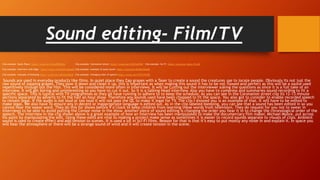
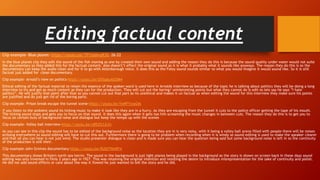
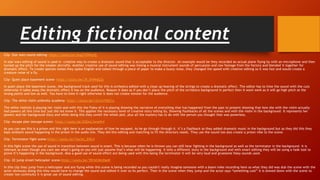
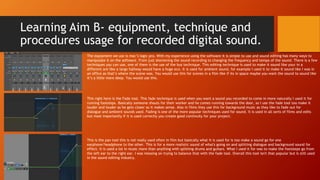
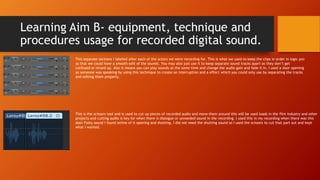
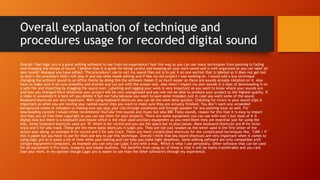
The document discusses the importance of sound recording and editing in films, television, and other media. It provides several examples to illustrate key points. Sound editing is used to fit sounds within time constraints for television, remove inappropriate language, and manipulate the chronological order of speech. Editing ambient sounds can add tension or tell parts of the story. Factual documentaries may add sounds to improve audio quality, while fictional works may use creative sound editing, like altering animal noises or blending sound effects with music. Proper timing of background music with visuals is important to create dramatic effect. Overall, sound editing techniques are used to serve the director's vision and tell stories in both factual and fictional content.