Regents Biology 2015/20162017/2018
Allied Medical Science
Medical equipment technology
Clinical Engineering
Name :-
- Mohamed Morsy Elsaied (51015312)
Supervised by :- Dr. Dalia H. Elkamchouchi
Regents Biology 2015/2016
[ Clinical
Engineering ]
2017/2018
Supervised by :- Dr. Dalia H. Elkamchouchi
Allied Medical Science
Medical equipment technology
 Introduction
2017/2018
 Clinical Engineering
(CE) represents the part of
Biomedical Engineering focused on the
applications of theories and methodologies of the
broad biomedical engineering field
to improve the quality of health services .
2017/2018
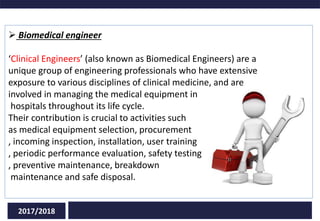
 Biomedical engineer
‘Clinical Engineers’ (also known as Biomedical Engineers) are a
unique group of engineering professionals who have extensive
exposure to various disciplines of clinical medicine, and are
involved in managing the medical equipment in
hospitals throughout its life cycle.
Their contribution is crucial to activities such
as medical equipment selection, procurement
, incoming inspection, installation, user training
, periodic performance evaluation, safety testing
, preventive maintenance, breakdown
maintenance and safe disposal.
2017/2018
 Full Clinical Engineering Implementation
2017/2018
 Diagnostic Studies
Inventory
Market Procurement
Law Standards and Regulations
Equipment Control
Costs & Expenses Control
Process Management
Contract Management
Personal Management
Maintenance
Patient Safety
Technology Planning
Training
Quality
 Safety
2017/2018
 Systems analysis,
 hospital safety programs
incident investigation
Safety is a condition of being safe from:
Danger
Injury
Damage
Regulations and Standards
Air conditioning (tuberculosis)
X-Ray dose
Medical air quality
Electrical current leakage
Burns associated to electrosurgical units
Alarms management
 Inventory
2017/2018
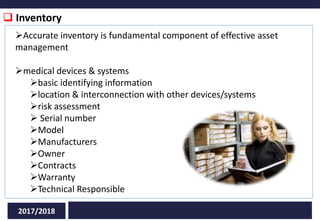
Accurate inventory is fundamental component of effective asset
management
medical devices & systems
basic identifying information
location & interconnection with other devices/systems
risk assessment
 Serial number
Model
Manufacturers
Owner
Contracts
Warranty
Technical Responsible
 Training of medical personnel
2017/2018
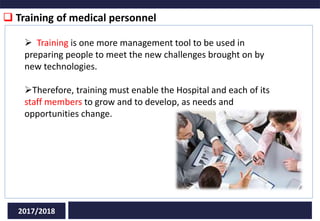
 Training is one more management tool to be used in
preparing people to meet the new challenges brought on by
new technologies.
Therefore, training must enable the Hospital and each of its
staff members to grow and to develop, as needs and
opportunities change.
 Standards & Regulations
2017/2018
 Food & Drug Administration (FDA)
 Joint Commission on Accreditation of Healthcare Organizations
(JCAHO)
 Safe Medical Device Act (SMDA)
 Integrating the Healthcare Enterprise (IHE)
 Health Insurance Portability & Accountability Act (HIPAA)
 State & Local Regs
 ISO
 Global Harmonization Task Force( GHTF)
 Global Medical Device Nomenclature (GMDN)
 Medical Device Service Equipment control
2017/2018
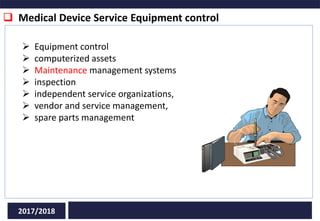
 Equipment control
 computerized assets
 Maintenance management systems
 inspection
 independent service organizations,
 vendor and service management,
 spare parts management
 Safety and Risk Management
2017/2018
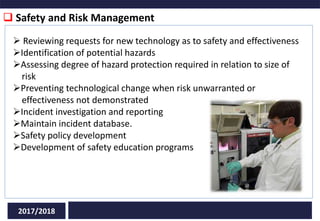
 Reviewing requests for new technology as to safety and effectiveness
Identification of potential hazards
Assessing degree of hazard protection required in relation to size of
risk
Preventing technological change when risk unwarranted or
effectiveness not demonstrated
Incident investigation and reporting
Maintain incident database.
Safety policy development
Development of safety education programs
 Summary
2017/2018
 Reference
2017/2018
 “Maintenance Management for Medical Equipment”
 “Risk Management”
 “Risk Assessment in a Medical Equipment Management
 “Is Preventive Maintenance Still a Core Element of Clinical
Engineering ”
 “Clinical Equipment Management”
 “A Medical Equipment Replacement Score System”

Clinical engineering

  • 1.
    Regents Biology 2015/20162017/2018 AlliedMedical Science Medical equipment technology Clinical Engineering Name :- - Mohamed Morsy Elsaied (51015312) Supervised by :- Dr. Dalia H. Elkamchouchi
  • 2.
    Regents Biology 2015/2016 [Clinical Engineering ] 2017/2018 Supervised by :- Dr. Dalia H. Elkamchouchi Allied Medical Science Medical equipment technology
  • 3.
     Introduction 2017/2018  ClinicalEngineering (CE) represents the part of Biomedical Engineering focused on the applications of theories and methodologies of the broad biomedical engineering field to improve the quality of health services .
  • 4.
    2017/2018  Biomedical engineer ‘ClinicalEngineers’ (also known as Biomedical Engineers) are a unique group of engineering professionals who have extensive exposure to various disciplines of clinical medicine, and are involved in managing the medical equipment in hospitals throughout its life cycle. Their contribution is crucial to activities such as medical equipment selection, procurement , incoming inspection, installation, user training , periodic performance evaluation, safety testing , preventive maintenance, breakdown maintenance and safe disposal.
  • 5.
  • 6.
     Full ClinicalEngineering Implementation 2017/2018  Diagnostic Studies Inventory Market Procurement Law Standards and Regulations Equipment Control Costs & Expenses Control Process Management Contract Management Personal Management Maintenance Patient Safety Technology Planning Training Quality
  • 7.
     Safety 2017/2018  Systemsanalysis,  hospital safety programs incident investigation Safety is a condition of being safe from: Danger Injury Damage Regulations and Standards Air conditioning (tuberculosis) X-Ray dose Medical air quality Electrical current leakage Burns associated to electrosurgical units Alarms management
  • 8.
     Inventory 2017/2018 Accurate inventoryis fundamental component of effective asset management medical devices & systems basic identifying information location & interconnection with other devices/systems risk assessment  Serial number Model Manufacturers Owner Contracts Warranty Technical Responsible
  • 9.
     Training ofmedical personnel 2017/2018  Training is one more management tool to be used in preparing people to meet the new challenges brought on by new technologies. Therefore, training must enable the Hospital and each of its staff members to grow and to develop, as needs and opportunities change.
  • 10.
     Standards &Regulations 2017/2018  Food & Drug Administration (FDA)  Joint Commission on Accreditation of Healthcare Organizations (JCAHO)  Safe Medical Device Act (SMDA)  Integrating the Healthcare Enterprise (IHE)  Health Insurance Portability & Accountability Act (HIPAA)  State & Local Regs  ISO  Global Harmonization Task Force( GHTF)  Global Medical Device Nomenclature (GMDN)
  • 11.
     Medical DeviceService Equipment control 2017/2018  Equipment control  computerized assets  Maintenance management systems  inspection  independent service organizations,  vendor and service management,  spare parts management
  • 12.
     Safety andRisk Management 2017/2018  Reviewing requests for new technology as to safety and effectiveness Identification of potential hazards Assessing degree of hazard protection required in relation to size of risk Preventing technological change when risk unwarranted or effectiveness not demonstrated Incident investigation and reporting Maintain incident database. Safety policy development Development of safety education programs
  • 13.
  • 14.
     Reference 2017/2018  “MaintenanceManagement for Medical Equipment”  “Risk Management”  “Risk Assessment in a Medical Equipment Management  “Is Preventive Maintenance Still a Core Element of Clinical Engineering ”  “Clinical Equipment Management”  “A Medical Equipment Replacement Score System”