Sinhagad Institue Of Business
Management


   RETAIL MANAGEMENT

        Case Study –

     RELIANCE
Vision


    GROWTH
     THROUGH
     VALUE
     CREATION
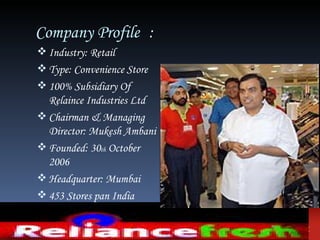
Company Profile :
 Industry: Retail
 Type: Convenience Store
 100% Subsidiary Of
  Relaince Industries Ltd
 Chairman & Managing
  Director: Mukesh Ambani
 Founded: 30th October
  2006
 Headquarter: Mumbai
 453 Stores pan India
 Average Area: 1100-7500
  sqft
Business Model

Store Size – Small & Medium Store
Merchndise – Food & FMCG Products
Investment Per Store – Rs 5 To 6 Million
Catchment Area – 2 To 3 Sq Km Radius
Market Positioning – Convinence Store
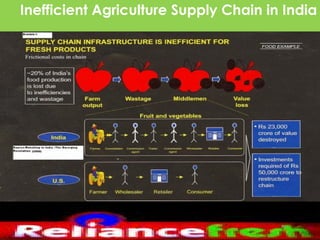
Inefficient Agriculture Supply Chain in India


                                          6
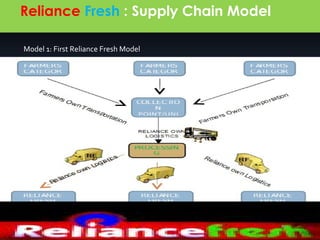
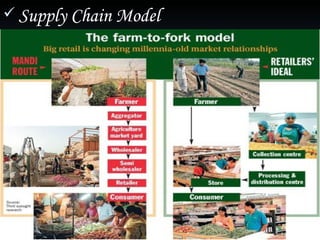
Reliance Fresh : Supply Chain Model

Model 1: First Reliance Fresh Model


                                      7
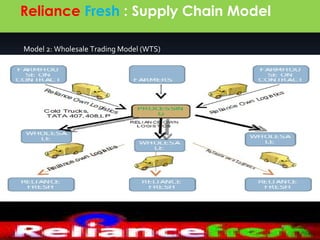
Reliance Fresh : Supply Chain Model

Model 2: Wholesale Trading Model (WTS)


                                         8
 Supply Chain Model
Operational Startegy
Branded
     Direct Approach To Manufacturer
Private Lable
Backward Integration Strtegy
Local Vendor Developement With Focus On “GOOD
  QUALITY AT CHEAP PRICE”
  Example : Buying Bakery Prodcuts From Tihar Jail
Retail Mix – Reliance Fresh
Product Range:ONLY VEGETERIAN

 Fresh Vegetables & Fruits
 Staple
 Processed Food
 Beverages
 Personal & Home Care
 Dairy Products
MERCHANDISE DETAILS
Product width:
Fruits, Vegetables, Juices and other FMCG
  Products.
Product length:
Fruits and vegetables both Indian and imported are
  available.
FMCG Product length:
Personnel & Home care
Place:

 Located in small commercial complexes close to Residential
  areas

 Observation: Close to cross roads


 Metro & Tier I Cities
Pricing:

 Low prized private labels
 Perishable merchandise are put on discount of 20% after 4 pm every day
 Discount on bulk buying
 Revises the rate list sent by the head office.
Promotion:

 Main idea – Make bulk purchase
 Discount scheme days – Saturday and Sunday
 Promotions In Local Print Media
 Reliance fresh membership card – Reliance One
SWOT Analysis
Strength:

 Strong Financial s Of Holding Company & Brand
 Private Label Sale – Reliance Select
 Contract Farming
 Network – 1600 channels in villages
 Backward Integration Strategy
Weakness:

 Poor inventory control
 Less Innovative Promotional Scheme
 Lack Of Use Of Advance Of Information Technology
 Lack Of Facilities To Customers like Parking,Compact
  Layout etc
Opportunities:


    Increase In Net Margin

    Untapped Rural Market Potential

    Sale of Reliance Select products In Open Market

    Expansion In Metro & Tier Cities
Threats:
 Domestic Competitors like Big Bazar
 Brand Cautious Customers
 Opposition From Unorganized Retailers
 Employee Attrition Rate
 Change In FDI Norms in Retail Sectors
 Eg: Banjara hill outlets-sourced directly- vantimamdi, chevella, and
  nearby mandals in ranga reddy district.

 Recruiting People – Underprivileged Community
 Biometric Cards – Farmers – Loans upto Rs. 15000
 Training the farmer

 Information centre:
 Increase productivity
 Market rates of different Corps
 Technical Help
 Quality of seeds and fertilizers
Future Plans of Reliance Retail Ltd.
Future plans:

 Plans to invest Rs 25000 Crore in next 4 year in their retail division
 Train Students and Housewives – Customer care & Quality service
  – Part time job
 Every Indian Consumer _ Reliance Consumer
Expansion To 800 cities Pan India
 Focus on Research & Development In Agriculture Sector
 Building Of Financial Institution For Agriculture Sector
Retail Management -Reliancefresh

Retail Management -Reliancefresh

  • 1.
    Sinhagad Institue OfBusiness Management RETAIL MANAGEMENT Case Study – RELIANCE
  • 3.
    Vision GROWTH THROUGH VALUE CREATION
  • 4.
    Company Profile : Industry: Retail  Type: Convenience Store  100% Subsidiary Of Relaince Industries Ltd  Chairman & Managing Director: Mukesh Ambani  Founded: 30th October 2006  Headquarter: Mumbai  453 Stores pan India  Average Area: 1100-7500 sqft
  • 5.
    Business Model Store Size– Small & Medium Store Merchndise – Food & FMCG Products Investment Per Store – Rs 5 To 6 Million Catchment Area – 2 To 3 Sq Km Radius Market Positioning – Convinence Store
  • 6.
  • 7.
    Reliance Fresh :Supply Chain Model Model 1: First Reliance Fresh Model 7
  • 8.
    Reliance Fresh :Supply Chain Model Model 2: Wholesale Trading Model (WTS) 8
  • 9.
  • 10.
    Operational Startegy Branded Direct Approach To Manufacturer Private Lable Backward Integration Strtegy Local Vendor Developement With Focus On “GOOD QUALITY AT CHEAP PRICE” Example : Buying Bakery Prodcuts From Tihar Jail
  • 11.
    Retail Mix –Reliance Fresh
  • 12.
    Product Range:ONLY VEGETERIAN Fresh Vegetables & Fruits  Staple  Processed Food  Beverages  Personal & Home Care  Dairy Products
  • 13.
    MERCHANDISE DETAILS Product width: Fruits,Vegetables, Juices and other FMCG Products. Product length: Fruits and vegetables both Indian and imported are available. FMCG Product length: Personnel & Home care
  • 14.
    Place:  Located insmall commercial complexes close to Residential areas  Observation: Close to cross roads  Metro & Tier I Cities
  • 15.
    Pricing:  Low prizedprivate labels  Perishable merchandise are put on discount of 20% after 4 pm every day  Discount on bulk buying  Revises the rate list sent by the head office.
  • 16.
    Promotion:  Main idea– Make bulk purchase  Discount scheme days – Saturday and Sunday  Promotions In Local Print Media  Reliance fresh membership card – Reliance One
  • 17.
  • 18.
    Strength:  Strong Financials Of Holding Company & Brand  Private Label Sale – Reliance Select  Contract Farming  Network – 1600 channels in villages  Backward Integration Strategy
  • 19.
    Weakness:  Poor inventorycontrol  Less Innovative Promotional Scheme  Lack Of Use Of Advance Of Information Technology  Lack Of Facilities To Customers like Parking,Compact Layout etc
  • 20.
    Opportunities:  Increase In Net Margin  Untapped Rural Market Potential  Sale of Reliance Select products In Open Market  Expansion In Metro & Tier Cities
  • 21.
    Threats:  Domestic Competitorslike Big Bazar  Brand Cautious Customers  Opposition From Unorganized Retailers  Employee Attrition Rate  Change In FDI Norms in Retail Sectors
  • 22.
     Eg: Banjarahill outlets-sourced directly- vantimamdi, chevella, and nearby mandals in ranga reddy district.  Recruiting People – Underprivileged Community  Biometric Cards – Farmers – Loans upto Rs. 15000  Training the farmer  Information centre:  Increase productivity  Market rates of different Corps  Technical Help  Quality of seeds and fertilizers
  • 23.
    Future Plans ofReliance Retail Ltd.
  • 24.
    Future plans:  Plansto invest Rs 25000 Crore in next 4 year in their retail division  Train Students and Housewives – Customer care & Quality service – Part time job  Every Indian Consumer _ Reliance Consumer Expansion To 800 cities Pan India  Focus on Research & Development In Agriculture Sector  Building Of Financial Institution For Agriculture Sector