
IoT Methodology
Source: IoT Design Methodology - IoT Tutorial for Beginners (startertutorials.com)
Contents
• Introduction to IoT Design Methodology
• Purpose and Requirements Specification
• Process Specification
• Domain Model Specification
• Information Model Specification
• Service Specifications
• IoT Level Specification
• Functional View Specification
• Operational View Specification
• Device and Component Integration
• Application Development
Introduction to IoT Design Methodology
• Designing IoT systems can be a complex and
challenging task as these systems involve interactions
between various components. A wide range of choices
are available for each component. IoT designers often
tend to design the system keeping specific products in
mind.
• We will look at a generic design methodology which is
independent of specific product, service or
programming language. IoT systems designed with this
methodology will have reduced design time, testing
time, maintenance time, complexity and better
interoperability.
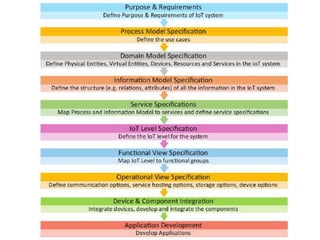
The steps involved in the designing of an
IoT system or application as shown in the
below figure:
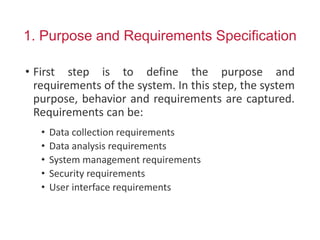
1. Purpose and Requirements Specification
• First step is to define the purpose and
requirements of the system. In this step, the system
purpose, behavior and requirements are captured.
Requirements can be:
• Data collection requirements
• Data analysis requirements
• System management requirements
• Security requirements
• User interface requirements
Purpose
A home automation system that allows controlling the lights remotely
using a web application
Behavior
Home automation system should support two modes: auto and
manual
Auto: System measures the light level in the room and switches on the
light when it is dark
Manual: Allows remotely switching lights on and off
System Management System should provide remote monitoring and control functions
Data Analysis System should perform local analysis of the data
Application
Deployment
Application should be deployed locally, but should be accessible
remotely
Security Should provide basic security like user authentication
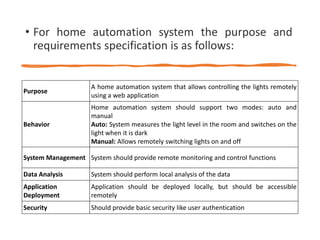
• For home automation system the purpose and
requirements specification is as follows:
2. Process Specification
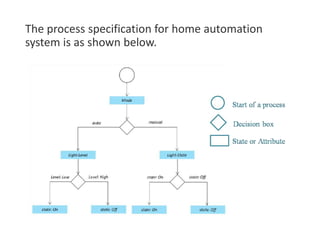
• The use cases of the IoT system are formally
described based on or derived from the purpose
and requirements specifications.
The process specification for home automation
system is as shown below.
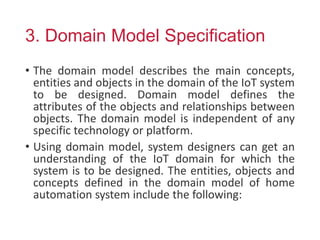
3. Domain Model Specification
• The domain model describes the main concepts,
entities and objects in the domain of the IoT system
to be designed. Domain model defines the
attributes of the objects and relationships between
objects. The domain model is independent of any
specific technology or platform.
• Using domain model, system designers can get an
understanding of the IoT domain for which the
system is to be designed. The entities, objects and
concepts defined in the domain model of home
automation system include the following:
Physical
Entity
• The physical identifiable objects in the environment
• IoT system provides information about the physical entity (using
sensors) or performs actuation upon the physical entity
Virtual
Entity
• Virtual entity is a representation of the physical entity in the
digital world
• For every physical entity there is a virtual entity
Device
• Devices provide a medium for interaction between physical and
virtual entities
• Devices are used to gather information from or perform actuation
on physical entities
Resource
• Resources are software components which can be either on-
device or network-resources
• On-device resources are hosted on the device and provide
sensing or actuation (eg: operating system)
• Network-resources include software components that are
available on the network (eg: database)
Service
• Services provide an interface for interacting with the physical
entity
• Services access resources to perform operations on physical
entities
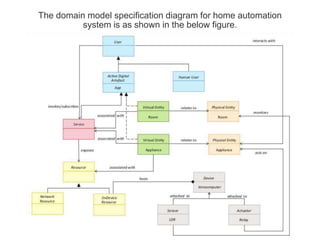
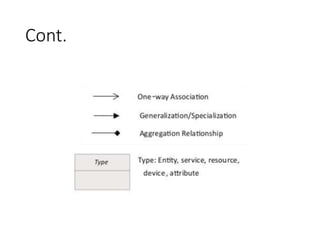
The domain model specification diagram for home automation
system is as shown in the below figure.
Cont.
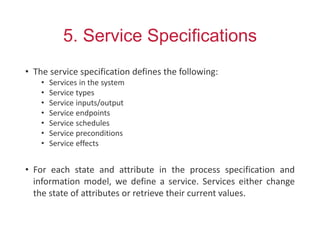
4. Information Model Specification
• Information model defines the structure of all the
information in the IoT system. Does not describe
how the information is stored and represented. To
define the information model, we first list the
virtual entities. Later more details like attributes
and relationships are added.
The information model specification for home
automation system is as shown below:
5. Service Specifications
• The service specification defines the following:
• Services in the system
• Service types
• Service inputs/output
• Service endpoints
• Service schedules
• Service preconditions
• Service effects
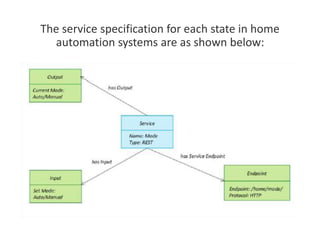
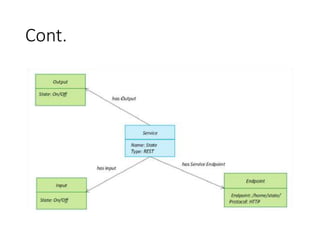
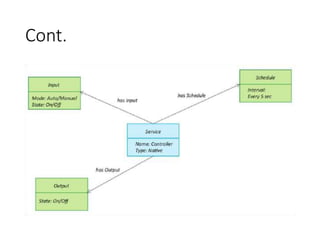
• For each state and attribute in the process specification and
information model, we define a service. Services either change
the state of attributes or retrieve their current values.
The service specification for each state in home
automation systems are as shown below:
Cont.
Cont.
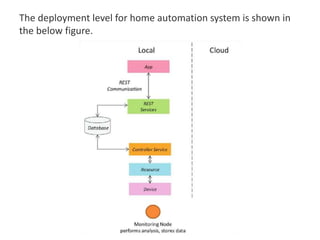
6. IoT Level Specification
• Based on the requirements we will choose the IoT
application deployment level.
The deployment level for home automation system is shown in
the below figure.
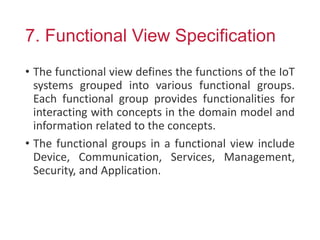
7. Functional View Specification
• The functional view defines the functions of the IoT
systems grouped into various functional groups.
Each functional group provides functionalities for
interacting with concepts in the domain model and
information related to the concepts.
• The functional groups in a functional view include
Device, Communication, Services, Management,
Security, and Application.
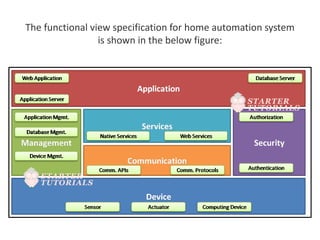
The functional view specification for home automation system
is shown in the below figure:
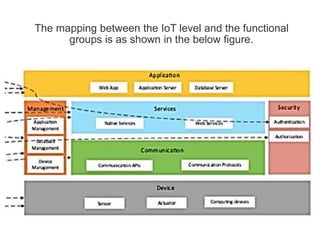
The mapping between the IoT level and the functional
groups is as shown in the below figure.
8. Operational View Specification
• In this step, various options related to the IoT
system deployment and operation are defined,
such as:
• Service hosting options
• Storage options
• Device options
• Application hosting options
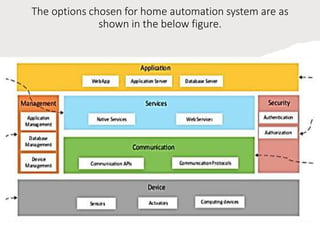
The options chosen for home automation system are as
shown in the below figure.
Cont.
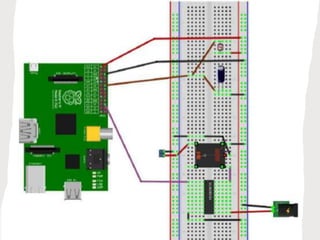
9. Device and Component
Integration
• In this step the devices like sensors, computing
devices and other components are integrated
together. The interconnection of different
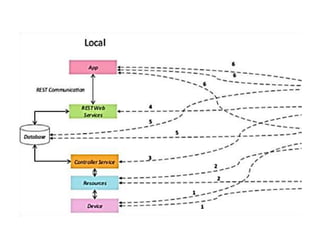
components in our home automation system are as
shown in the figure given below.
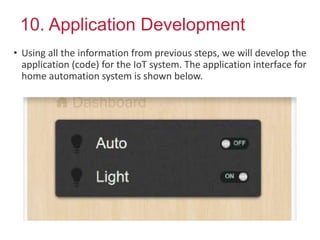
10. Application Development
• Using all the information from previous steps, we will develop the
application (code) for the IoT system. The application interface for
home automation system is shown below.
Thankyou

IoT Methodology.pptx

  • 1.
    IoT Methodology Source: IoTDesign Methodology - IoT Tutorial for Beginners (startertutorials.com)
  • 2.
    Contents • Introduction toIoT Design Methodology • Purpose and Requirements Specification • Process Specification • Domain Model Specification • Information Model Specification • Service Specifications • IoT Level Specification • Functional View Specification • Operational View Specification • Device and Component Integration • Application Development
  • 3.
    Introduction to IoTDesign Methodology • Designing IoT systems can be a complex and challenging task as these systems involve interactions between various components. A wide range of choices are available for each component. IoT designers often tend to design the system keeping specific products in mind. • We will look at a generic design methodology which is independent of specific product, service or programming language. IoT systems designed with this methodology will have reduced design time, testing time, maintenance time, complexity and better interoperability.
  • 4.
    The steps involvedin the designing of an IoT system or application as shown in the below figure:
  • 6.
    1. Purpose andRequirements Specification • First step is to define the purpose and requirements of the system. In this step, the system purpose, behavior and requirements are captured. Requirements can be: • Data collection requirements • Data analysis requirements • System management requirements • Security requirements • User interface requirements
  • 7.
    Purpose A home automationsystem that allows controlling the lights remotely using a web application Behavior Home automation system should support two modes: auto and manual Auto: System measures the light level in the room and switches on the light when it is dark Manual: Allows remotely switching lights on and off System Management System should provide remote monitoring and control functions Data Analysis System should perform local analysis of the data Application Deployment Application should be deployed locally, but should be accessible remotely Security Should provide basic security like user authentication • For home automation system the purpose and requirements specification is as follows:
  • 8.
    2. Process Specification •The use cases of the IoT system are formally described based on or derived from the purpose and requirements specifications.
  • 9.
    The process specificationfor home automation system is as shown below.
  • 10.
    3. Domain ModelSpecification • The domain model describes the main concepts, entities and objects in the domain of the IoT system to be designed. Domain model defines the attributes of the objects and relationships between objects. The domain model is independent of any specific technology or platform. • Using domain model, system designers can get an understanding of the IoT domain for which the system is to be designed. The entities, objects and concepts defined in the domain model of home automation system include the following:
  • 11.
    Physical Entity • The physicalidentifiable objects in the environment • IoT system provides information about the physical entity (using sensors) or performs actuation upon the physical entity Virtual Entity • Virtual entity is a representation of the physical entity in the digital world • For every physical entity there is a virtual entity Device • Devices provide a medium for interaction between physical and virtual entities • Devices are used to gather information from or perform actuation on physical entities Resource • Resources are software components which can be either on- device or network-resources • On-device resources are hosted on the device and provide sensing or actuation (eg: operating system) • Network-resources include software components that are available on the network (eg: database) Service • Services provide an interface for interacting with the physical entity • Services access resources to perform operations on physical entities
  • 12.
    The domain modelspecification diagram for home automation system is as shown in the below figure.
  • 13.
  • 14.
    4. Information ModelSpecification • Information model defines the structure of all the information in the IoT system. Does not describe how the information is stored and represented. To define the information model, we first list the virtual entities. Later more details like attributes and relationships are added.
  • 15.
    The information modelspecification for home automation system is as shown below:
  • 16.
    5. Service Specifications •The service specification defines the following: • Services in the system • Service types • Service inputs/output • Service endpoints • Service schedules • Service preconditions • Service effects • For each state and attribute in the process specification and information model, we define a service. Services either change the state of attributes or retrieve their current values.
  • 17.
    The service specificationfor each state in home automation systems are as shown below:
  • 18.
  • 19.
  • 20.
    6. IoT LevelSpecification • Based on the requirements we will choose the IoT application deployment level.
  • 21.
    The deployment levelfor home automation system is shown in the below figure.
  • 22.
    7. Functional ViewSpecification • The functional view defines the functions of the IoT systems grouped into various functional groups. Each functional group provides functionalities for interacting with concepts in the domain model and information related to the concepts. • The functional groups in a functional view include Device, Communication, Services, Management, Security, and Application.
  • 23.
    The functional viewspecification for home automation system is shown in the below figure:
  • 24.
    The mapping betweenthe IoT level and the functional groups is as shown in the below figure.
  • 26.
    8. Operational ViewSpecification • In this step, various options related to the IoT system deployment and operation are defined, such as: • Service hosting options • Storage options • Device options • Application hosting options
  • 27.
    The options chosenfor home automation system are as shown in the below figure.
  • 28.
  • 29.
    9. Device andComponent Integration • In this step the devices like sensors, computing devices and other components are integrated together. The interconnection of different components in our home automation system are as shown in the figure given below.
  • 31.
    10. Application Development •Using all the information from previous steps, we will develop the application (code) for the IoT system. The application interface for home automation system is shown below.
  • 32.