Visitors, Movement,
and Circulation in
Museums
DIGITAL HUMANITIES:
TECHNOLOGY
TRANSFORMING CULTURAL
HERITAGE
DR COSTAS PAPADOPOULOS
4 DECEMBER 2017
Last Week
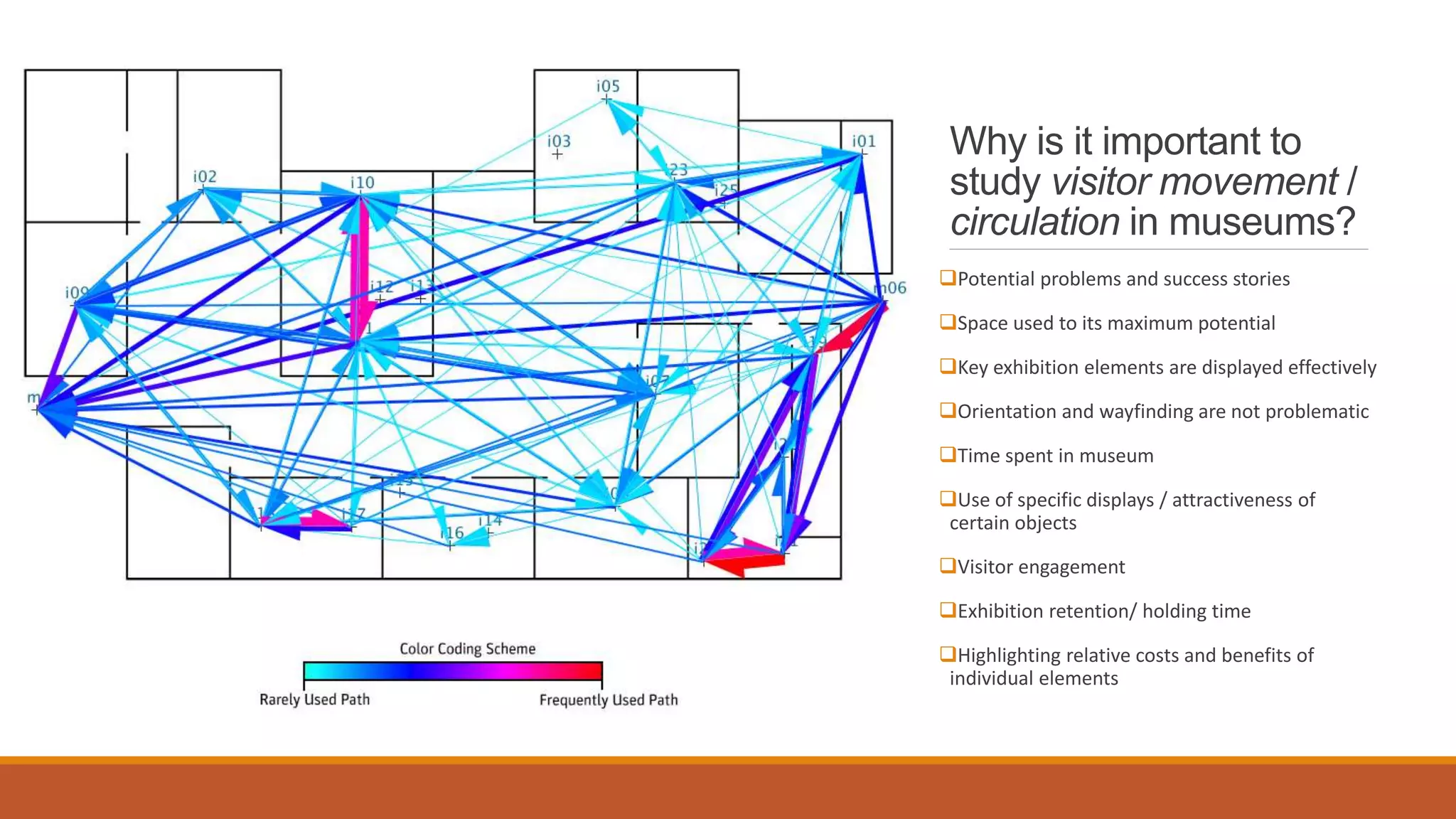
Why is it important to
study visitor movement /
circulation in museums?
Potential problems and success stories
Space used to its maximum potential
Key exhibition elements are displayed effectively
Orientation and wayfinding are not problematic
Time spent in museum
Use of specific displays / attractiveness of
certain objects
Visitor engagement
Exhibition retention/ holding time
Highlighting relative costs and benefits of
individual elements
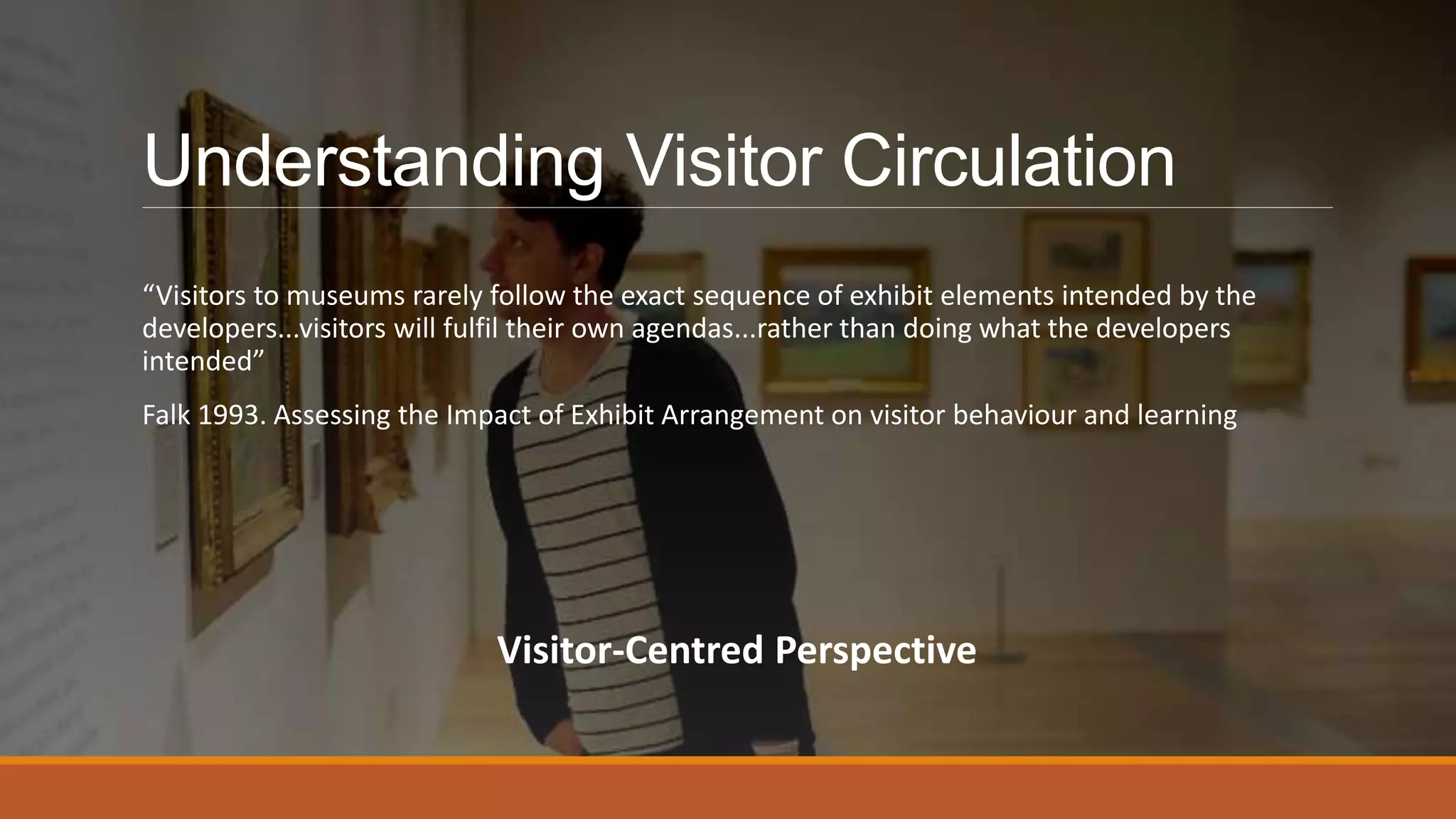
Understanding Visitor Circulation
“Visitors to museums rarely follow the exact sequence of exhibit elements intended by the
developers...visitors will fulfil their own agendas...rather than doing what the developers
intended”
Falk 1993. Assessing the Impact of Exhibit Arrangement on visitor behaviour and learning
Visitor-Centred Perspective
Understanding Visitor Circulation
Visitor-Centred Perspective
VS.
Exhibit-visitor interaction
Understanding Visitor Circulation
Visitor Movement and Museum Design
Understanding Visitor Circulation
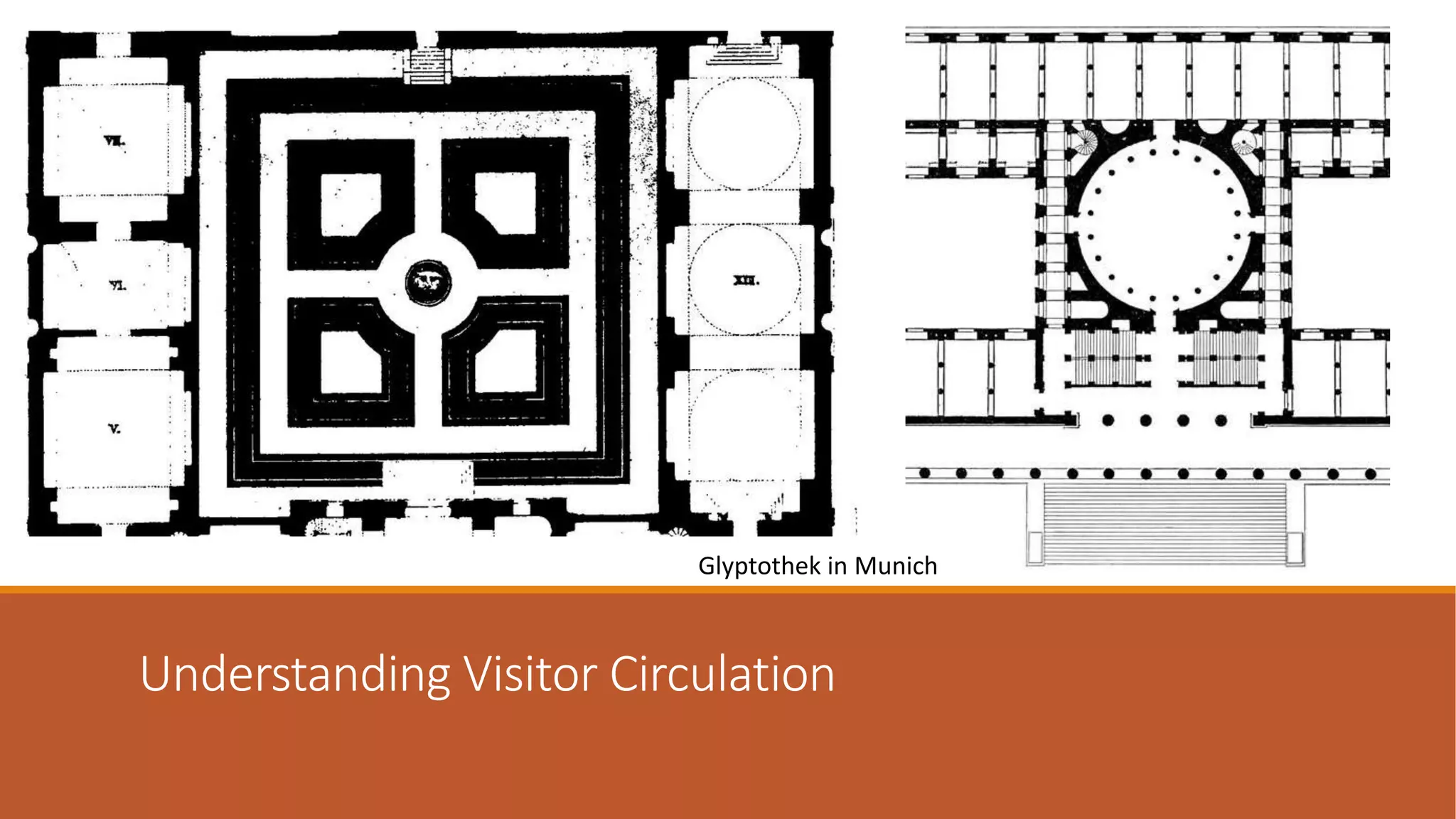
Glyptothek in Munich
Understanding Visitor Circulation
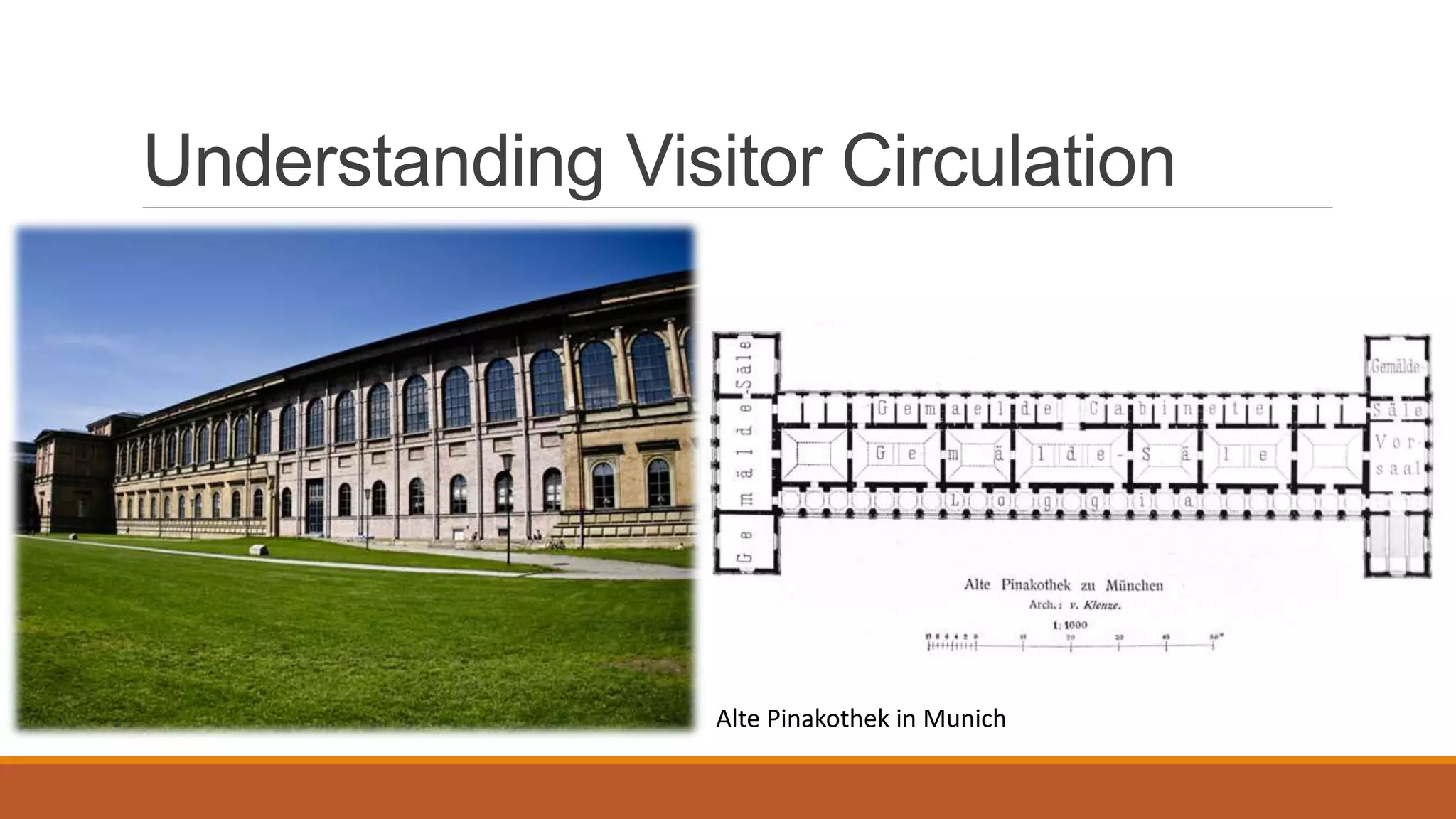
Alte Pinakothek in Munich
Understanding Visitor Circulation
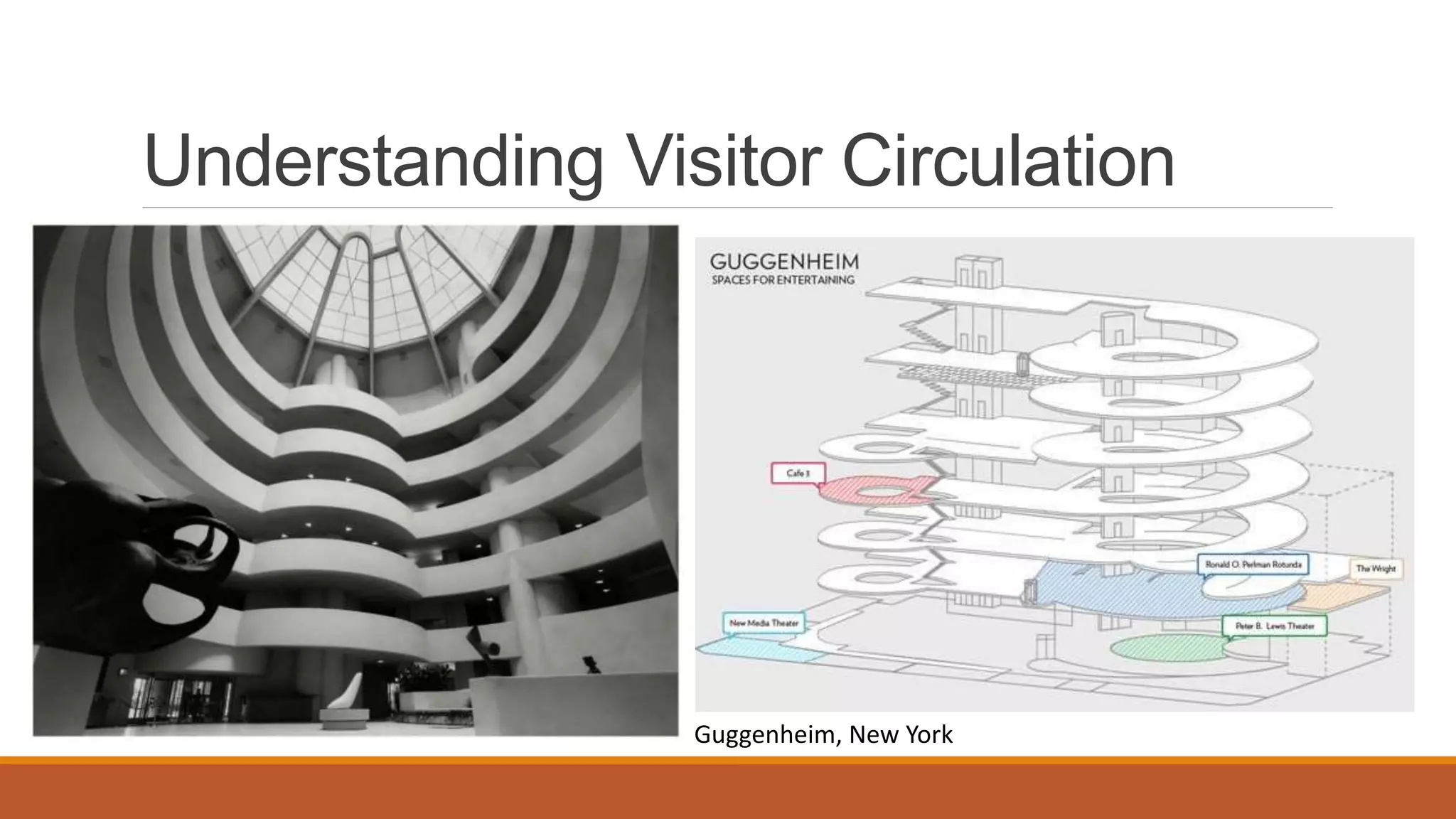
Guggenheim, New York
Understanding Visitor Circulation
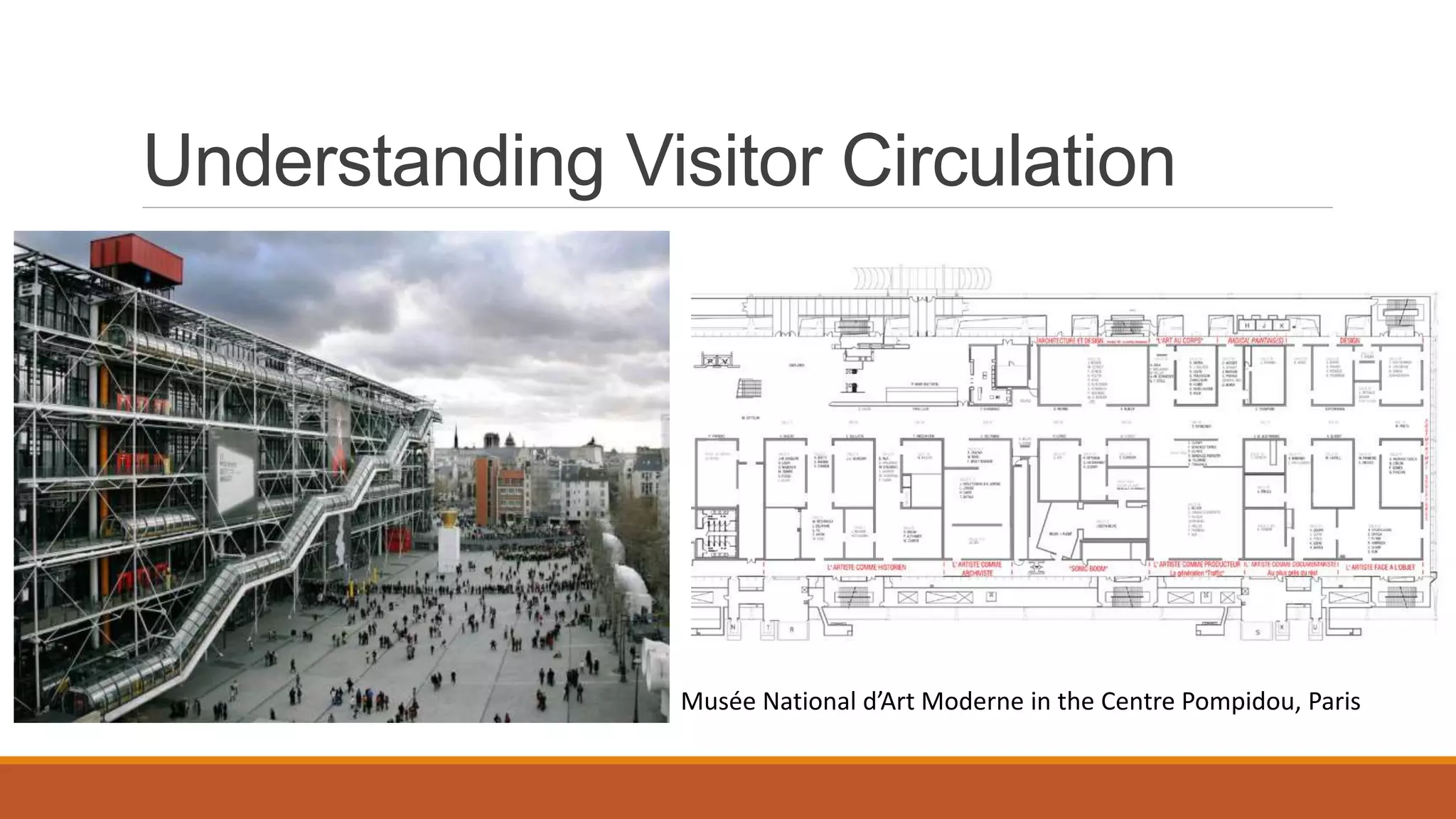
Musée National d’Art Moderne in the Centre Pompidou, Paris
Understanding Visitor Circulation
Tate Modern, London
Understanding Visitor Circulation
The New Acropolis Museum
Understanding Visitor Circulation
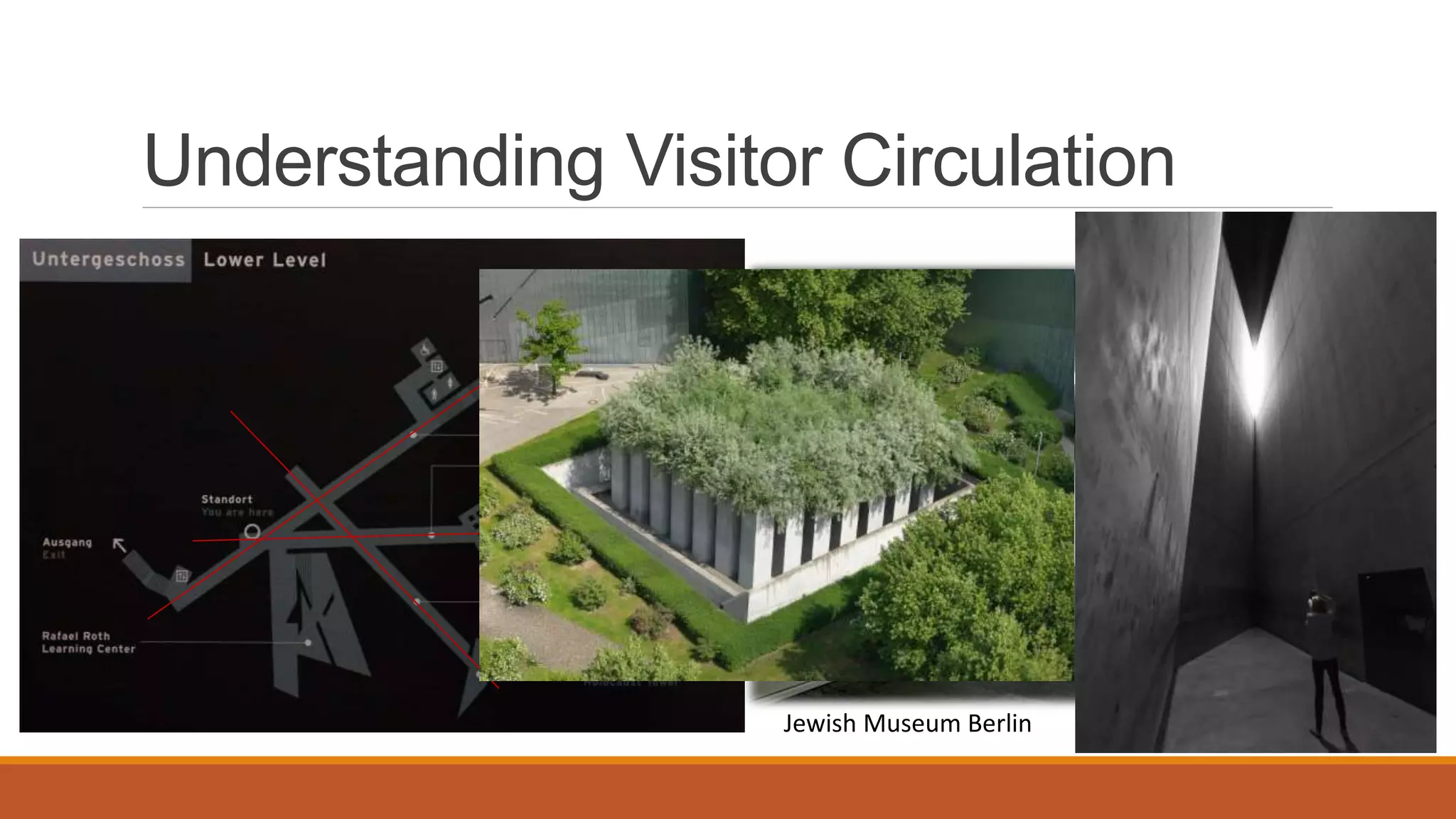
Jewish Museum Berlin
Understanding Visitor Circulation
The General Value Principle
“When the costs (time and effort) are too great, and benefits not
sufficient, people choose an alternative behavior.”
Bitgood, S. An Analysis of Visitor Circulation: Movement Patterns and the General Value Principle.
Understanding Visitor Circulation
The General Value Principle
• Visitors approach objects that are perceived as attractive or interesting.
• But, only a few objects are perceived as attractive enough to merit physical approach.
• Many objects may be viewed because they are in the visitor’s circulation pathway and
thus require little effort.
• Not only must the object of attention be perceived as attractive/interesting, but the
cost (time, effort) must be perceived as low enough to warrant focused attention.
• Thus the value of the exhibit experience changes with variations in both benefits and
costs.
Bitgood, S. An Analysis of Visitor Circulation: Movement
Patterns and the General Value Principle
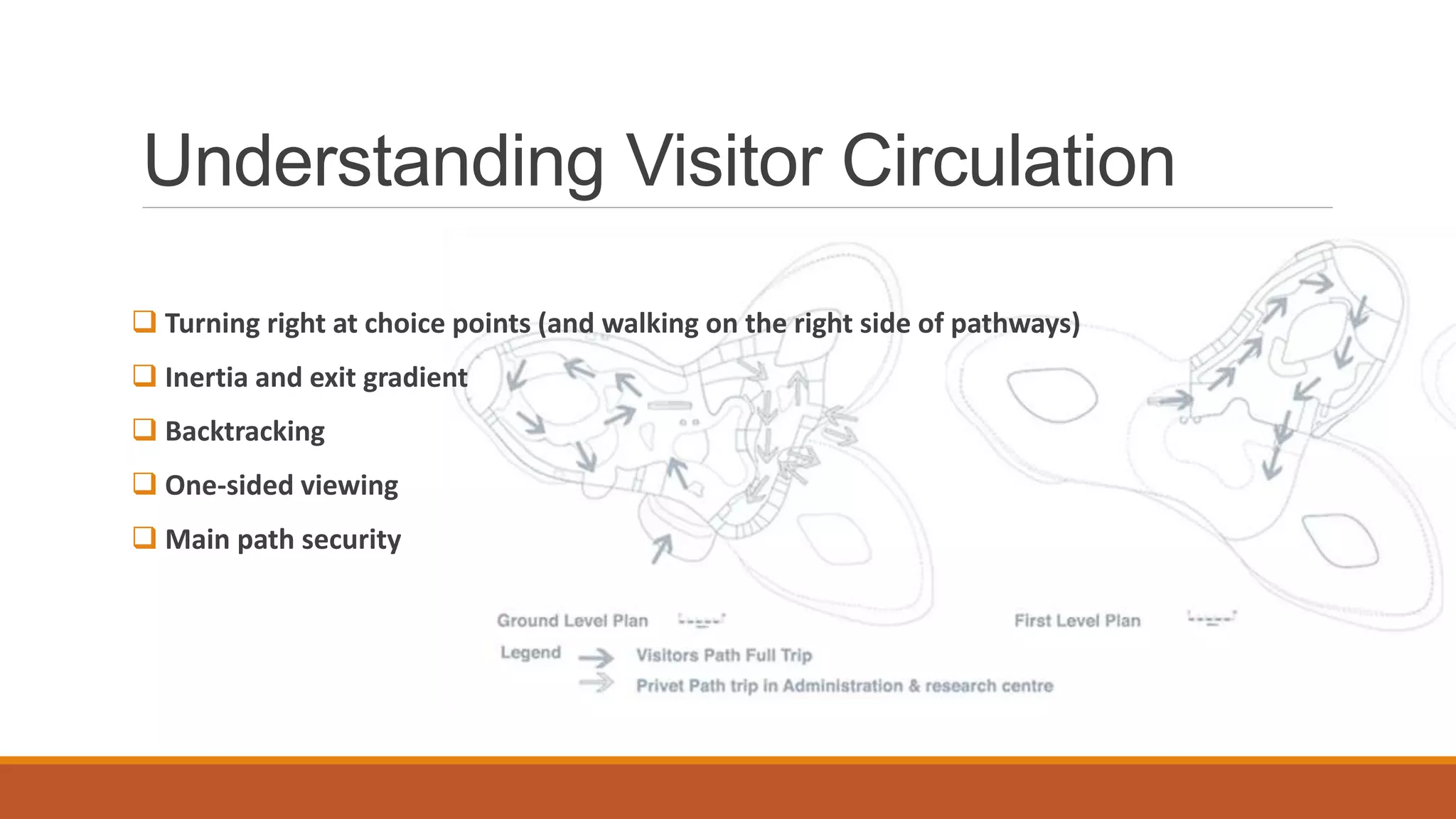
 Turning right at choice points (and walking on the right side of pathways)
 Inertia and exit gradient
 Backtracking
 One-sided viewing
 Main path security
Understanding Visitor Circulation
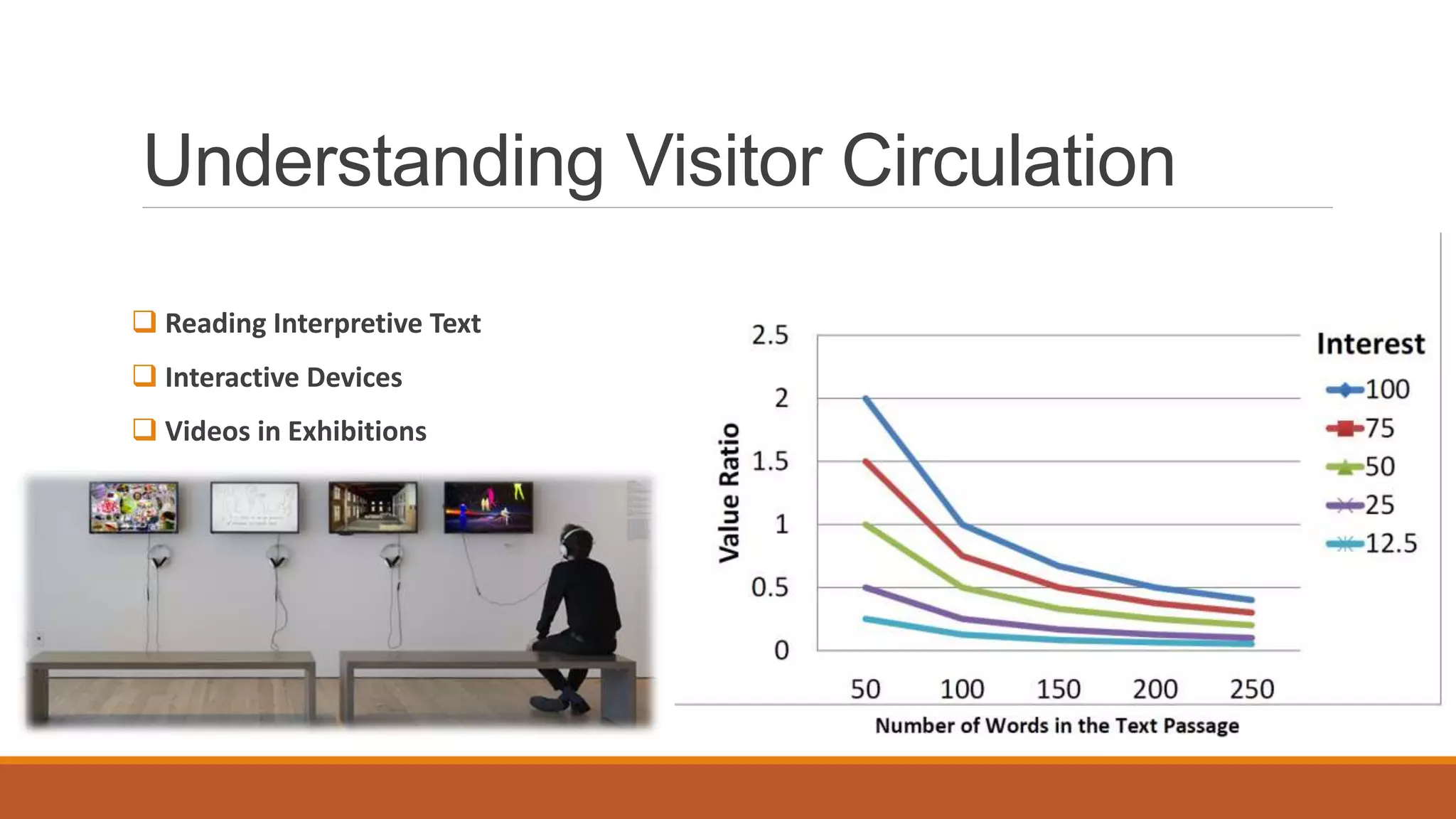
 Reading Interpretive Text
 Interactive Devices
 Videos in Exhibitions
Understanding Visitor Circulation
Methods for Visitor Tracking and
Analysis of Movement
 Observation
 Self-mapping
 Bluetooth/RFID
 Space syntax
Methods for Visitor Tracking and
Analysis of Movement
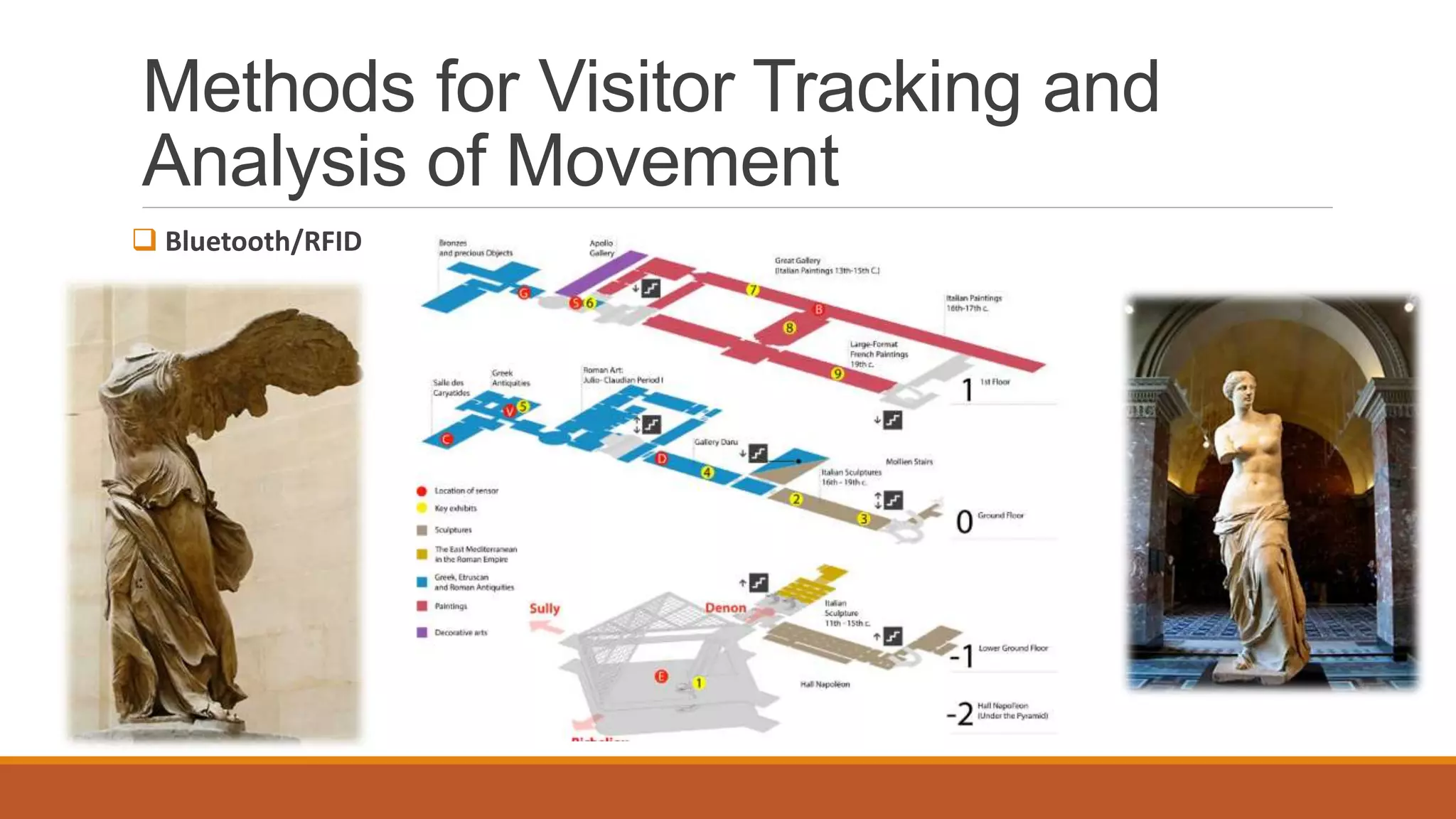
 Bluetooth/RFID
Methods for Visitor Tracking and
Analysis of Movement
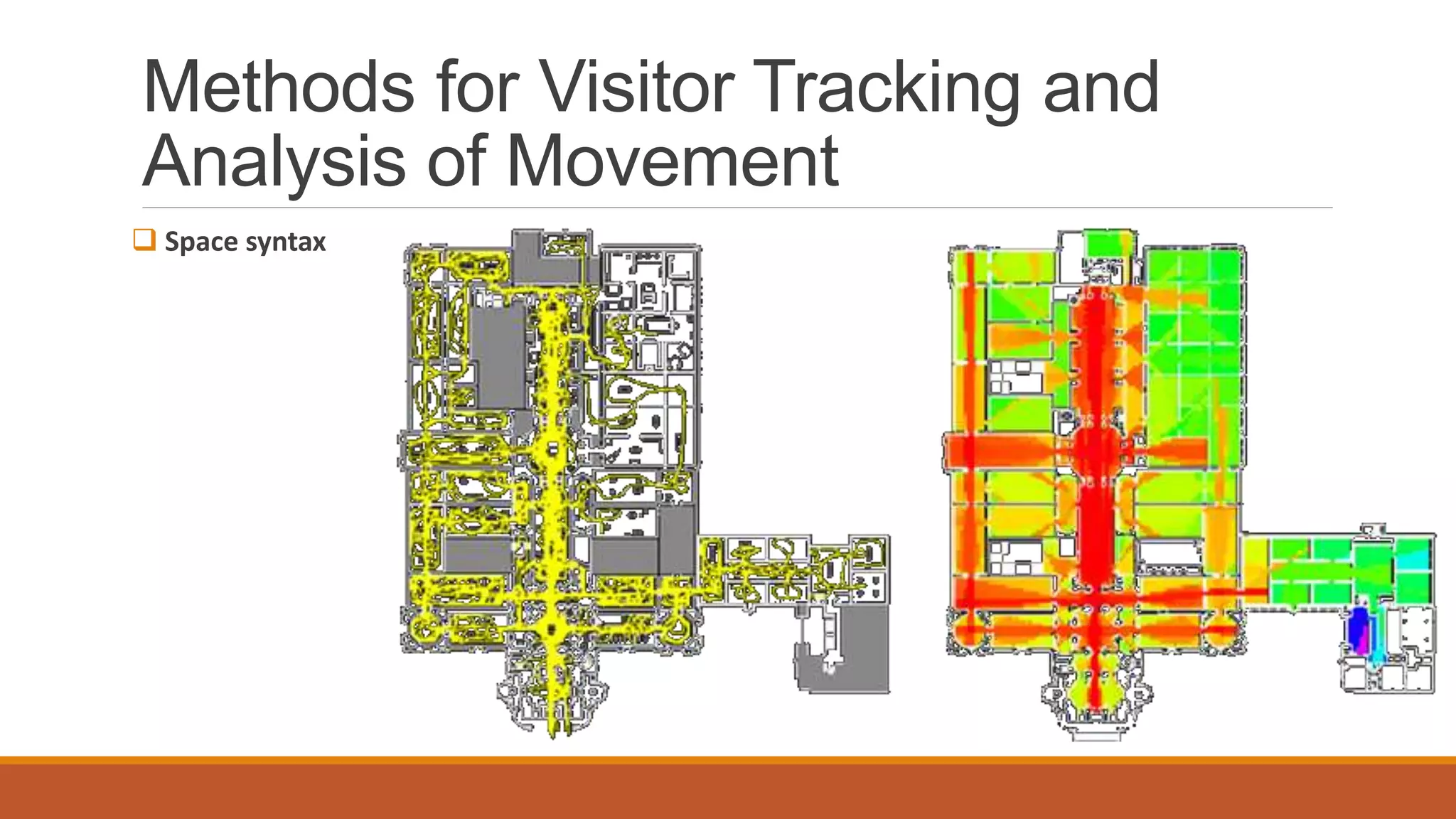
 Space syntax
Visitors, Movement,
and Circulation in
Museums
DIGITAL HUMANITIES:
TECHNOLOGY
TRANSFORMING CULTURAL
HERITAGE
DR COSTAS PAPADOPOULOS
4 DECEMBER 2017

Visitors, Movement, and Circulation in Museums

Editor's Notes

  • #4 Pieces on loan – understand use, negotiate agreements If a second unit is needed to meet demand (or how often an interactive may need maintenance)
  • #5 Both should be considered jointly - the past experiences of the individuals and their perceptual/cognitive characteristics interact with exhibition design to influence visitor attention, circulation, movement, mental processing, and learning. For example – large –moving objects attract our attention – Also, attractive/interesting objects. Also objects-related to high interest topics
  • #6 Both should be considered jointly - the past experiences of the individuals and their perceptual/cognitive characteristics interact with exhibition design to influence visitor attention, circulation, movement, mental processing, and learning. For example – large –moving objects attract our attention – Also, attractive/interesting objects. Also objects-related to high interest topics
  • #7 The creation of a visitable sequence of spaces is at the core of the idea of the museum. We find it in the first museum buildings of the nineteenth century, like the Glyptothek in Munich (1815–30), where a sequence of galleries is arranged around an open space, organising a linear route, or the Altes Museum in Berlin (1823–30), where a sequence of spaces is organised around a central rotunda. In the Glyptothek, the organisation of movement is linked to the organisation of objects. Ancient sculptures are presented in chronological order, based on the development of art from Egypt to ancient Greece and then to Rome (Pevsner 1976, 126). So by moving in space, visitors experience the evolution of art.
  • #8 Glyptothek in Munich (1815–30), where a sequence of galleries is arranged around an open space, organising a linear route, In the Glyptothek, the organisation of movement is linked to the organisation of objects. Ancient sculptures are presented in chronological order, based on the development of art from Egypt to ancient Greece and then to Rome (Pevsner 1976, 126). So by moving in space, visitors experience the evolution of art. or the Altes Museum in Berlin (1823–30), where a sequence of spaces is organised around a central rotunda.
  • #9 Very soon the element of choice was introduced in the design of museum space by the Alte Pinakothek in Munich (1826–36), where the layout was organised in three parallel strips – two sequences of galleries and a corridor– in the belief that ‘one must be able to reach each room directly, so as not to be distracted by the previous sight of other works’ (MacGregor 2007, 251). We again discern the close link between moving and viewing.
  • #10 For example, in the Guggenheim, New York (1959), a spiral ramp takes the place of the sequence of galleries, organised around a sky-lit central space, a distant memory of the rotunda
  • #11 the open-plan layout and free circulation, as proposed, e.g. by the Musée National d’Art Moderne in the Centre Pompidou, Paris, in 1977. By setting no constraints on movement, it was seen as a manifestation of the ‘democratic museum’. The flexibility of the space in terms of routes was in agreement with the flexibility and openness of the building. The museum is organised around a long axis, often referred to as the ‘grande avenue’, running the length of the building, giving physical and visual access to galleries on both sides. The layout is in fact highly hierarchical. On the east side, in particular, hierarchal relations are created between the external galleries that open onto the main axis, the central ones that open on to each other and the deeper dead-end spaces. This organisation allows visitors different depths of exploration, from simple linear progression through the main axis and the selective viewing of the central spaces, to exhaustive exploration at all levels of the hierarchy
  • #12 In terms of display rationale, Tate Modern is at the opposite pole to Pompidou. It rejects the art-historical narrative and brings together artists from different periods, showing continuities across time, as in the case of the juxtaposition of Monet’s Water Lilies (1916) with Patrick Heron’s Azalea Garden, May 1956 (1956) (Figure 4b). The display consists of self-contained rooms, loosely linked by a thematic thread, so rooms are experienced individually, both conceptually, each being devoted to a different subtheme, and spatially, since visual connections between objects located in neighbouring rooms are rarely made
  • #13 The museum is organised on three levels which takes the visitor through a chronological narrative from prehistory to late antiquity, moving up from the ground floor representing the origins of the city, through the archaic period on the south side of the first floor, to the upper floor dedicated to the Parthenon and back to the entrance through the Roman Gallery on the north side of the first floor. The levels also correspond to the topography of the Acropolis: the archaeological excavation represents the foot of the hill; the ground floor with the ascending ramp, the slopes of the Acropolis (Figure 5e); the first floor, the Acropolis except the Parthenon (Figure 4e) and the top floor, the Parthenon. So the museum route acquires a symbolic dimension, both in terms of chronology and topography. Visitors are invited to appreciate works not only through seeing but also through moving, and in this way to perceive the Acropolis as a place across history, rather than in history. The arrangement of spaces and objects thus becomes a message in its own right. As Tschumi (2007, 83) said, ‘the museum is concerned with movement; it is about movement in space and time’.
  • #14 Axis of continuity connects the old and the new building: Stairs gives a sense of unending steps – looking from the top steps are not visible – no way back Insecurity of the exiles, who after wondering found themselves in strange land. The only exit is through the garden of exile. The axis of the holocaust is the path to annihilation and lead to one of the voids called the Holocaust Tower. It is separated from the building. The tower is 27 metres tall. It is unheated and damp. There are no windows apart from an aperture at the very top which lets in some light (and sound from the street).
  • #15 The general value principle argues that the value of an experience is calculated (usually unconsciously) as a ratio between the benefits and the costs. We attend to things that are perceived as beneficial (such as satisfying curiosity, enjoyment) only if the costs are perceived as low in relation to the benefits. The choice of viewing or not viewing exhibit elements is strongly influenced by the benefits divided by the costs.
  • #17 Right-turn principle works only in the absence of other strong directional factors such as landmark attractors (1995). We now believe that there is a little more to the story. When right turning occurs, it involves the least amount of movement or effort. We consider right turning as an example of “economy of movement” (or reducing the cost in terms of time and effort) because turning right, when it does occur, is motivated by taking the fewest number of steps. Inertia/exit gradient: inertia occurs when the design of the space makes continuing in a straight line the most economical option (saves steps) and there is an absence of a strong attractor to pull people away from this straight line. Melton’s “exit gradient” concept (tendency to take the straightest line between the entrance and exit) is considered a special case of this phenomenon (1935). -- Critique- Visitors do not follow linear patterns. Backtracking: Exhibitions that require backtracking to see all of the exhibit displays are undesirable because visitors do not want to waste time and energy. One-side viewing: There is a tendency for visitors to move along only one side of a path through an exhibition. When exhibits or objects are displayed on both sides of a path, there is competition for visitor attention between the two sides and one or both sides will have a lower rate of attention and/or approach. To save steps, many visitors continue along one side. We might speculate that the distance from one side to another and the amount of traffic flow will strongly influence crossing the path. Thus, wider pathways and crowded conditions will discourage path crossing. Main path security: visitors avoiding pathways that are cut off visually from the main path. There may be some type of wayfinding security staying on the main path. There is also the possibility that perceived effort outweighs the possible benefits of walking far off the main path.
  • #18 Visitors read more text when information was presented in small chunks than all at once [Reducing the cost may be more important than increasing the interest according to a number of studies we have conducted. Interactives generally fail if they require too much time-effort Payoff for making a response (getting feedback) increases the value Visitors spend little time viewing videos embedded within exhibitions Long duration videos rarely get much attention Visitors rarely invest in activities that require large cost when lower cost alternatives are available
  • #20 They are situated in one of the busiest trails, identified by The Louvre Museum authorities, which lead visitors from the entrance to the Venus de Milo; Entrance Hall (E), Gallery Daru (D), Venus de Milo (V), Salle des Caryatides (C), Great Gallery (B), Victory of Samothrace (S), and Salle des Verres (G). Once a Bluetooth-activated mobile device enters a detection area, the sensor receives the signal emitted by the mobile device and the detection continues until the device leaves the area. The sensor registers the time at which the signal from the mobile device first appears, called the check-in time, and when the signal disappears, called the check-out time; The series of check-in and check-out times registered for a mobile device by all the sensors makes it possible to construct a visitor’s trajectory through the museum. In addition to the length of the stay, the sensors time stamps allow calculation of the travel time between nodes.
  • #21 Space Syntax: Space syntax is a theory of space and a set of analytical, quantitative, and descriptive tools for analyzing the layout of space in buildings and cities (Hillier and Hanson 1984; Hillier 1996). Originating in architecture, it aims to answer key architectural questions: does the layout of space make a difference? If so, what kind of difference? And how may these differences be realized through design? For museums and galleries, it asks: does spatial design influence how people move through the layout? Does it make a difference to how a gallery works as a social space? Can it be used to enhance curatorial intent? Does the way in which spaces are arranged into visitable sequences and objects are organized spatially play a role in shaping the experience of the museum visitor? Syntactic analysis can in effect be used to show that spatial layout is both a dependent variable, in that it can reflect pre-given social, cultural, or pedagogical ideas, and an independent variable, in that spatial design can, and usually will, have the consequence of shaping a pattern of movement and co-presence amongst those using the layout. An illustration showing the movement of people through London’s Tate Britain art museum. At right is an analysis of the visibility of the space. As for the previous illustration, red is the color for the most accessible places. At left is the actual movement of the people, marked by yellow lines. At a glance, it’s clear to see that people move to the places that are easy to access.