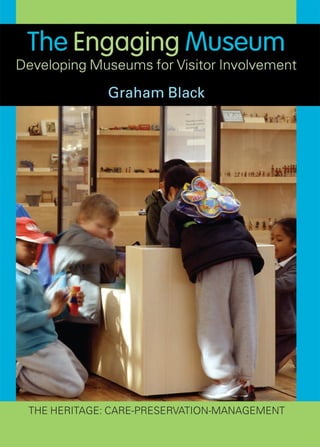
The Engaging Museum Developing Museums For
Visitor Involvement Graham Black download
https://ebookbell.com/product/the-engaging-museum-developing-
museums-for-visitor-involvement-graham-black-51247220
Explore and download more ebooks at ebookbell.com
Here are some recommended products that we believe you will be
interested in. You can click the link to download.
Gem Engraving In Britain From Antiquity To The Present With A
Catalogue Of The British Engraved Gems In The State Hermitage Museum
Julia Kagan
https://ebookbell.com/product/gem-engraving-in-britain-from-antiquity-
to-the-present-with-a-catalogue-of-the-british-engraved-gems-in-the-
state-hermitage-museum-julia-kagan-49995870
Engaging The Law In China State Society And Possibilities For Justice
Neil Jeffrey Diamant
https://ebookbell.com/product/engaging-the-law-in-china-state-society-
and-possibilities-for-justice-neil-jeffrey-diamant-45458530
Engaging The Workforce The Grand Management Challenge Of The 21st
Century Nicos Rossides
https://ebookbell.com/product/engaging-the-workforce-the-grand-
management-challenge-of-the-21st-century-nicos-rossides-47290176
Engaging The Emotions In Spanish Culture And History Luisa Elena
Delgado
https://ebookbell.com/product/engaging-the-emotions-in-spanish-
culture-and-history-luisa-elena-delgado-49156386
Engaging The Moving Image Nol Carroll
https://ebookbell.com/product/engaging-the-moving-image-nol-
carroll-50349780
Engaging The Spirit World Popular Beliefs And Practices In Modern
Southeast Asia Kirsten W Endres Editor Andrea Lauser Editor
https://ebookbell.com/product/engaging-the-spirit-world-popular-
beliefs-and-practices-in-modern-southeast-asia-kirsten-w-endres-
editor-andrea-lauser-editor-51750608
Engaging The Past Mass Culture And The Production Of Historical
Knowledge Pilot Project Ebook Available To Selected Us Libraries Only
Alison Landsberg
https://ebookbell.com/product/engaging-the-past-mass-culture-and-the-
production-of-historical-knowledge-pilot-project-ebook-available-to-
selected-us-libraries-only-alison-landsberg-51912064
Engaging The Evil Empire Washington Moscow And The Beginning Of The
End Of The Cold War Simon Miles
https://ebookbell.com/product/engaging-the-evil-empire-washington-
moscow-and-the-beginning-of-the-end-of-the-cold-war-simon-
miles-51934436
Engaging The Law In China State Society And Possibilities For Justice
Neil J Diamant Editor Stanley B Lubman Editor Kevin J Obrien Editor
https://ebookbell.com/product/engaging-the-law-in-china-state-society-
and-possibilities-for-justice-neil-j-diamant-editor-stanley-b-lubman-
editor-kevin-j-obrien-editor-51943878
This very practical book guides museums on how to create the highest quality experi-
ence possible for their visitors. Creating an environment that supports visitor engage-
ment with collections means examining every stage of the visit, from the visitor’s
initial impetus to go to a particular institution, to front-of-house management, to
the way the collections are displayed and qualitative analysis afterwards. This holistic
approach will be immensely helpful to museums in meeting the needs and expecta-
tions of visitors and building their audience base. Because The Engaging Museum offers
a set of principles that can be adapted to any museum in any location, it will be an
invaluable resource for institutions of every shape and size.
Especially designed to be user-friendly, The Engaging Museum includes:
• chapter introductions and discussion sections
• supporting case studies to show how ideas are put into practice
• a varied selection of tables, figures and plates to support and illustrate the discus-
sion
• boxes showing ideas, models and planning suggestions to guide development
• an up-to-date bibliography of landmark research
The Engaging Museum will appeal internationally to students and teachers from a
wide range of postgraduate museum courses in museology, museum studies, gallery
studies, heritage studies and management, as well as those studying tourism and
visitor attraction management. It is also highly relevant to any professional planning
a new museum exhibition or applying for grant aid for exhibition development.
Graham Black is a senior lecturer in Museum and Heritage Management at the
Nottingham Trent University. He is also a professional interpretation consultant
and his exhibitions have won the £100,000 Gulbenkian Prize, a Museum of the
Year award, the Special Judges Prize at the Interpret Britain Awards and the
English Tourist Board’s ‘England for Excellence’ Tourist Attraction of the Year
Award.
The Engaging Museum
❚ THE HERITAGE: CARE-PRESERVATION-MANAGEMENT
The Heritage: Care-Preservation-Management is a series designed to meet the needs
of both practitioners and academics in the global museums and heritage community.
Each volume has strong practical foundations, integrated with awareness of the rele-
vant conceptual frameworks.
The new generation of HCPM titles takes full account of the many developments
that have occurred since the series was originated, to provide up-to-date support,
instruction and insight for today’s readers.
Previous titles include:
Museum Basics
Timothy Ambrose and Crispin Paine
Museum Ethics
Gary Edson
Museum Security and Protection
Edited by David Listen
Representation of the Past
Kevin Walsh
The Engaging Museum
Developing museums for visitor involvement
Graham Black
First published 2005 by Routledge
2 Park Square, Milton Park, Abingdon, Oxon OX14 4RN
Simultaneously published in the USA and Canada
by Routledge
711 Third Avenue, New York, NY 10017 (8th Floor)
© 2005 Graham Black
Typeset in Garamond 3 and Frutiger by The Running Head Limited, Cambridge
All rights reserved. No part of this book may be reprinted or reproduced or utilised in
any form or by any electronic, mechanical, or other means, now known or hereafter
invented, including photocopying and recording, or in any information storage or
retrieval system, without permission in writing from the publishers.
British Library Cataloguing in Publication Data
A catalogue record for this book is available from the British Library
Library of Congress Cataloging in Publication Data
Black, Graham.
The engaging museum: an interpretive approach to visitor involvement/Graham Black.
p. cm. — (Heritage)
Includes bibliographical references and index.
1. Museum attendance—Evaluation. 2. Museum exhibits—Evaluation. 3. Museums—
Educational aspects. 4. Museums—Marketing. 5. Museums—Management. 6. Museum
techniques. 7. Museum visitors. 8. Interpretation of cultural and natural resources.
9. Cultural property—Protection. 10. Cultural property—Management. 11. Historic
sites—Management. I. Title. II. Series.
AM7.B56 2005
069—dc22 2004061484
For my parents
Routledge is an imprint of the Taylor & Francis Group, an informa business
–
ISBN13: 978–0–415–34556–9 (hbk)
ISBN13: 978 0–415–34557–6 (pbk)
Preface ix
Acknowledgements xi
Introduction: meeting the demands placed on the
twenty-first century museum 1
Section 1 Museum audiences: their nature, needs and expectations 7
1 ‘Traditional’ museum audiences: a quantitative and qualitative analysis 9
Introduction: the rise of museum visitor studies 9
Audience segmentation 11
Market surveys 12
Quantitative visitor surveys 16
Qualitative data on visitor expectations, motivations and needs 22
Discussion: an audience in decline – trends and challenges 37
Case study: lessons from tourism research 41
2 Developing new audiences 46
Introduction 46
Social exclusion and museums 48
Audience development 51
Audience development planning 61
Discussion: how will an audience development strategy impact on a museum’s
public face? 64
Case study: developing museum content for young children and families with
babies/young children 66
Section 2 Operating for quality 75
3 Stimulating the visit 77
Introduction 77
Awareness 78
Entrenched negative attitudes 79
v
Contents
The ‘wrong’ positive perceptions 80
Positioning the museum 81
Influencing the visitor agenda 86
Positive marketing 86
Marketing to diversify the audience base 87
Discussion: seven core issues 88
Case study: repositioning Manchester Art Gallery 91
4 Visitor services: operating for quality 96
Introduction 96
A central role for visitor services 97
How do you define quality in a museum visit? 101
Measuring visit quality 103
Discussion: managing for quality 109
Case study: adapting Servqual to measure visitor services quality 113
Section 3 Learning in museums 121
5 Museums and lifelong learning 123
Introduction: the rise of ‘learning’ up the museum agenda 123
Museums and lifelong learning 125
Learning theory and museums 128
Discussion: applying learning theory to museum display and support 147
Case study: evaluating visitor learning in museums 150
6 Use of museums by schools 157
Introduction: museums and structured educational use 157
The agenda for structured educational use 159
How can museums best support schools use? 160
Discussion: enjoyment and memories come first 171
Case study: education resource packs/websites 173
Section 4 Planned to engage: using interpretation to develop museum
displays and associated services 177
7 Applying the principles of interpretation to museum display 179
Introduction: what is interpretation? 179
Modern museums and interpretation 183
Defining interpretive principles for museum display 185
Discussion: the impact of interpretive principles on museum display 208
Case study: exhibition standards/guidelines 209
8 Interpretive master planning 211
Introduction 211
Developing an interpretation strategy for a museum service 214
CONTENTS
vi
Developing an interpretation masterplan for a multi-collection museum 226
Discussion: the role of the project manager 230
Case study: process mapping 232
9 Concept development for museum galleries 239
Introduction 239
What: the collections audit 240
Why: aims and objectives 240
Who: specific audience targets 241
How: developing the concept and turning it into reality 242
Discussion: the impact of interpretive planning 255
Case study: a design brief for a small gallery at New Walk Museum, Leicester 258
10 The engaging museum 266
Introduction 266
The ‘big picture’ – a museum for the twenty-first century 268
Direct engagement with objects 271
Discussion: satisfying museum experiences and visitor take-aways 284
Case study: the visitor response 286
Bibliography 289
Index 302
CONTENTS
vii
It is a wonderful time to be working in museums – at long last audiences are being
given the priority they deserve. This book seeks both to add to the debate on how
most effectively to engage audiences with collections, and also to support in a practi-
cal way those trying to achieve this. It makes no claims to be the only way forward,
but will hopefully provide rich food for thought.
The book has two sources of origin. One lies in my role over the last 20 years as a
consultant interpreter, where I have spent a lot of my time training curatorial staff in
interpretive principles, planning and techniques. The other lies in my role as a
teacher, introducing a new generation of future museum professionals to the delights
of engaging audiences. The two came together in my need for a text that would
provide the groundwork from which I could build. There are a number of excellent
books introducing environmental interpretation and interpretive planning, but I did
not feel that any of them really sought to apply interpretive principles and tech-
niques to the museum world. Equally, there is a huge library of museum texts now
available, but I feel strongly that museum literature has lost touch with interpreta-
tion (and vice versa) over the last 20 to 30 years, so there was nothing that specifically
fitted my needs.
So the book started with the intention of introducing an audience of museum pro-
fessionals and trainees to a practical interpretive approach to museum and exhibition
development. From there it grew. As interpretive planning encompasses all aspects
of museum and exhibition development, and as I am committed to a holistic view of
the museum visit, it proved essential to provide a background for visitor studies,
image projection and visitor services. Because, like many museum professionals, I am
committed to sharing my enthusiasms with as broad an audience as possible, a dis-
cussion of approaches to audience development and to meeting the needs of diverse
audiences was central. As interpretive planning includes defining target audiences
and then setting out to meet their needs it was equally essential to include, for
example, the ‘building in’ of relevant project work for structured educational users.
Because, like all interpreters, I believe that direct visitor participation leads to learn-
ing, it was necessary to engage in the wider learning debate – and the physical
impact of a commitment to learning on museums.
At the same time, I was also seeking to expand the range of ‘interpretive princi-
ples’ that I use to underpin my own work specifically to reflect the circumstances of
museums which are, in many ways, different to those pertaining to environmental
ix
Preface
interpreters or park visitor centres. To do so meant not just listing them (adequate for
me in my consultancy work), but also providing a justification to a wider audience.
The end result is a very practical book immersed within an academic text. I make
no apologies for this. The objective of the book is to outline best practice as I see it,
and to support this with a thorough academic underpinning. I hope that people who
use this book will not only find that it helps them to think through practical
approaches to individual projects, but also that they will have no difficulty in commu-
nicating why the approach they have selected is the most appropriate for their specific
circumstances.
Graham Black
Nottingham, 2005
THE ENGAGING MUSEUM
x
I must begin by expressing my absolute gratitude to Lynda Kelly, head of the Aus-
tralian Museum Audience Research Centre; Kym S. Rice, Assistant Director, Museum
Studies Program, George Washington University; and Pat Sterry, Director of the
Centre for Heritage Studies, University of Salford. They very generously agreed to
read and comment in depth on the bulk of the book. Without their support, the book
would not have what depth of understanding it has. Errors, of course, remain my own.
I would also like to thank, in chronological order, Diane Lees, Director, UK
National Museum of Childhood; Sally Manuireva, Project Manager for the Weston
Park Museum, Sheffield redevelopment; and Nick Gordon, site manager of New
Walk Museum, Leicester, for helping me get to grips with the practical application
of interpretive principles to major new museum developments, and for their help in
tracing images.
Others who gave invaluable assistance included:
Emily Allen for allowing me to quote from her work on Musequal.
Robin Conway for saving me comprehensively when my computer tried to die.
John Cross of Adult Learning Australia for an inspiring ‘virtual conversation’ on
the nature of adult learning and on the central importance of reflection.
Larry DeBuhr for his comments on interpretation at botanic gardens and provision
of a copy of the Chicago Botanic Garden model.
Annie Delin for kindly permitting me to use some of her material on disability
access and for commenting on chapter 2.
Janet Elkington and Olwyn Ince for the substantial amount of work they did to
make my text usable by the publishers.
Kate Farmery, head of Marketing and Business Development, Manchester City
Galleries, for her invaluable assistance on the chapter 3 case study.
Isabelle Frochot of the Université de Savoie, France, for allowing me to refer in
detail to her work on Histoqual and for commenting on my text.
Nancy Fuller of the Center for Museum Studies, the Smithsonian Institution,
Washington DC, for her support and for putting me in contact with a number of
people in the USA.
Liz Gilmore, Outreach Manager for Families and Young People, National Gallery,
London for sharing her experience with me.
Jo Graham for her commitment to young children in museums and sharing her
ideas and expertise with me, particularly in the case study in chapter 2.
xi
Acknowledgements
Pamela Clelland Gray, Manager of Education and Public Programmes at the
National Portrait Gallery, Canberra, for reading and commenting on chapter 5 and
for adding to my reflection/reverie conversation with John Cross.
Phil Hackett, Assistant Director Visitor Operations, English Heritage West Mid-
lands Region, for his comments on chapter 4.
Emily Johnsson of the London Museum Hub for giving me access to her research,
for her comments on chapters 5 and 6 and for her help in locating images.
Eric Langham for his comments on chapter 2, for giving me access to some key
research material and for his help in tracing images.
Kevin Osbon, Steven Fletcher, Anthony Barber and Mike Lee for keeping me
focused at all times (or, at least, all hours!).
Liz Wilson, of East Midlands Museum Hub, for her comments on chapters 5 and
6, and for pointing me in the direction of key additional material.
My university colleagues – Stuart Burch, Angela Phelps, Deborah Skinner and
Neville Stankley – for their practical and moral support.
And finally my students on the MA Museum and Heritage Management course
at The Nottingham Trent University over the last five years, who have had to put
up with me as I have developed the contents of this book, have frequently halted me
in my tracks with searching questions and have generally inspired me to carry on
with it.
Throughout the book I have tried to credit all those whose work I have consulted
or adapted over the years, or who have inspired my own thinking. If I have missed
anyone, it is by accident – the result of many elements of the interpretive approach
being adapted constantly over time, and of my basing this book on course notes
developed over a number of years. Please bring any omissions to my attention for
what I hope will be the second edition.
Where I have used figures and tables from other publications, I have made every
attempt to locate copyright holders to obtain permission. Any omissions brought to
my attention will be remedied in future editions.
ACKNOWLEDGEMENTS
xii
Opening a heritage site or museum collection to the public used to be easy. Art gal-
leries saw their primary roles as the collection, preservation and display of artworks,
and the promotion of public appreciation of these works. Museums of archaeology,
history, science, etc., saw their sites as educational institutions, with a responsibility
to create knowledge through the development and research of collections, and then
to disseminate that knowledge through the provision of formal scholarly displays.
Both types of institution believed that they did not ‘own’ their sites and collec-
tions, but held them in trust for future generations. As such, they viewed the unique
nature of the assets for which they were responsible as a non-negotiable background,
which conditioned the purpose of and approach to their presentation. Access was
almost grudgingly provided to the public in return for a sense of reverence and grati-
tude, reflected in an authoritarian protection of the site – ‘temple’ architecture,
cordoned routes, glass cases, security guards, ‘do not touch’ signs, etc.
However in recent decades, while protection of the site or collection has remained
the first priority, at least in the eyes of the profession, there have been increasing pres-
sures for change in the way the material is presented to the public. These pressures
have come from a number of directions – from above (governing and funding bodies),
from below (audiences) and from within the profession itself.
From ‘above’, there has been the gradual development of national, regional and local
strategic goals for museums and heritage sites, and the relating of these directly to
sites through conditions placed on public subsidy. This can be seen most clearly in
the development of the roles of museums and heritage sites in:
• supporting lifelong learning and structured educational provision
• enhancing ‘access’, diversifying their audience base and reflecting the make-up of
their communities
• meeting the needs and requirements of local communities
• generating income in their own right
• supporting local regeneration initiatives
• supporting economic and social regeneration
• the drive by governments to enhance the quality and value for money of public
service provision.
1
Introduction
Meeting the demands placed on the twenty-first century museum
From ‘below’, the growing demands of the ‘traditional’ white professional audience
have been joined by those who have previously felt excluded from what museums and
heritage sites have to offer:
• The competition for use of leisure time has given the ‘traditional’ museum audi-
ence much greater choice. It will only visit museums if the experience obtained
matches or exceeds that provided by other activities.
• The high quality requirements demanded by visitors. The traditional audience
is increasingly experienced and educated. Visitors are no longer willing to be
passive recipients of wisdom from on high, but want to participate, to question,
to take part as equals, and to receive as high a standard of service as would be
offered at any other type of leisure site.
• The increasing competition from alternative information sources that individuals
can control for themselves – not least the Internet.
• The increasing demands from previously excluded or marginalised audiences for
the right to representation and to a say in how a site or museum is managed and
presented.
INTRODUCTION
2
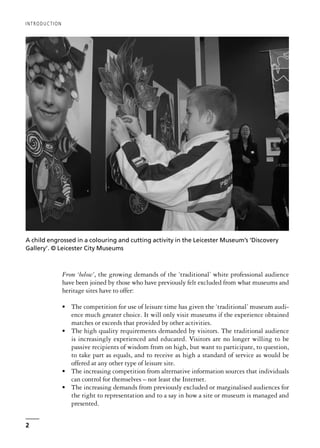
A child engrossed in a colouring and cutting activity in the Leicester Museum’s ‘Discovery
Gallery’. © Leicester City Museums
From within the profession, despite continuing and at times heated debates around the
issue of ‘dumbing down’, it is possible to sense:
• an increasing recognition that the traditional audience is not ‘one’ but a plurality
– a mass of separate audiences each seeking its own experiences and outcomes
from what is basically the same product
• a commitment to meeting the needs and expectations of visitors and the recogni-
tion of an obligation to meet those needs by deploying the most appropriate
approaches possible
• a growing vision of the potential partnership role for museums in association with
local communities, reflecting their histories and perspectives
• a belief that heritage has a role in enhancing people’s lives and supporting com-
munity regeneration – to engage/involve all audiences/potential audiences with
the available sites/collections/heritage – optimising the opportunities for visitors
to achieve their full potential
• a belief that the work of museums can be used to broaden and retain support for
conservation and retention of the heritage
• a continuing passion among museum professionals to share knowledge and
enthusiasm for ‘their’ subject area.
Putting these elements together places very different demands on the twenty-first
century museum. Rather than a repository and display facility for objects largely
reflective of middle-class, western values worthily made available to the public, we
see instead a more audience-centred role, reflected in Box 0.1.
The items in Box 0.1 reflect a huge transformation in attitudes toward the roles of
museums in society. In seeking to champion such roles, this book states unashamedly
that if museum or heritage site managers believe that everyone has a right of ‘access’
to our shared inheritance in museum collections, and that museums can make a pro-
found difference to the lives of communities and of individuals, they should face up
to the consequences and seek a practical reflection of these ideals. This is not to deny
a belief in the continuing importance of collections, their conservation and research,
and the documentation related to them. However, if the museum profession is to talk
about purpose at the start of the twenty-first century, the focus must be on audiences
and on the role of museums in society (see, for example, Smithsonian 1996, 2002c).
This book is not so much about the developing roles of museums within their
communities but rather focuses on a central element of this – the concept of mus-
eums responding to audiences as partners in a joint enterprise. A key step along this
route is for the museum to cease to be product-led and become audience-centred in
approach. To be audience-centred means taking into account the personal context of
the visitor and the holistic nature of the museum visit. Museums need to think of
their role in motivating and supporting visitors as three interlinked tiers, defined in
Box 0.2, of which only the third is directly about approaches to museum display. The
exploration of these three elements, and of their links, provides the framework for
this book.
Being audience-centred requires a commitment to gaining and constantly up-
dating a real knowledge and understanding of visitors. Section 1 of the book explores
INTRODUCTION
3
what we know of museum audiences – the nature, needs, expectations and motiva-
tions of both ‘traditional’ museum visitors, and the broader audience of potential
visitors – and what this should mean for the way museums develop. Museums need
to talk to people on a regular basis and be flexible enough to respond to their needs.
What motivated them to come in the first place? What are their expectations of the
visit? What thoughts and experiences do they bring with them to the visit? What
thoughts and memories do they take away with them? We must also spend time
observing, tracking and listening to visitors to define what they actually do on site.
Equally, museums must look at the barriers discouraging people from visiting and
seek both to overcome these and to actively stimulate visits. Regular consultation
INTRODUCTION
4
Box 0.1 The twenty-first-century museum
A museum is now expected to be:
• an object treasure-house significant to all local communities
• an agent for physical, economic, cultural and social regeneration
• accessible to all – intellectually, physically, socially, culturally, economically
• relevant to the whole of society, with the community involved in product development
and delivery, and with a core purpose of improving people’s lives
• a celebrant of cultural diversity
• a promoter of social cohesion and a bridger of social capital
• a promoter of social inclusion
• proactive in supporting neighbourhood and community renewal
• proactive in developing new audiences
• proactive in developing, working with and managing pan-agency projects
• a resource for structured educational use
• integral to the learning community
• a community meeting place
• a tourist attraction
• an income generator
• an exemplar of quality service provision and value for money.
Box 0.2 The three-tier route to visitor engagement
1 Provide the stimulus to visit in the first place – this should include site image, quality of
marketing and PR, word-of-mouth recommendation by previous visitors, prior
personal experiences, supporting learning agendas, reflecting leisure trends, etc.
2 Place visitors in the ‘right frame of mind’ on site so that they wish to engage with
collections and exhibitions – this should include operational and service quality and a
sense of welcome and belonging.
3 Provide the motivation and support to engage directly with the site and/or collection –
this should include quality of interpretation, learning provision and displays.
and evaluation is critical. The importance of this approach cannot be overestimated –
it is a framework for continual improvement.
Section 2 examines the importance of the external image presented by museums
and the quality of visitor services on site, in terms of placing visitors in the ‘right
frame of mind’ to engage with collections. For visitors to have a quality experience,
museums must promote a positive but accurate external image, provide a ‘sense of
occasion’ on arrival, welcome them as equals, meet the highest possible standards of
service and do their best to encourage audience motivation to become involved. From
the moment of arrival, operational quality also means ensuring that belief in, com-
mitment to and enthusiasm for the site and collections shine through.
Equally, through the visitors’ stay, museums must be able to respond to their
expectations in a way that meets the increasingly high demands of audiences accus-
tomed to quality service standards elsewhere and to insist that these are provided by
museums. The concept of quality has always been fundamental to museums and gal-
leries, in terms of site, collections, etc. Now the museum profession must appreciate
that quality standards should also be applied to every aspect of public provision, from
front-of-house operations to exhibitions and associated services. Nor is this a one-off
activity. All of us must recognise that, over time, expectations will change – so pursu-
ing the quality agenda is a dynamic concept. Aspects of this have been recognised for
some time but, beyond a few enlightened museums, visitor services specialists are a
rarity and there is little momentum to achieve, let alone further develop, quality
standards. A key challenge is, therefore, to seek to outline an approach that responds
to the quality agenda for museums in the twenty-first century and to provide a posi-
tive direction forward for museums and galleries to enable that agenda to be
achieved.
Section 3 introduces the concept of the museum as a learning environment. This
issue is currently at the top of the political agenda for museums across western society,
and much has been written on the subject in recent years. The section does not
attempt to repeat previous work, but instead focuses on key practical questions. If we
accept the potential for museums as learning institutions, what do the relevant learn-
ing theories mean in terms of the physical way that collections are presented, and the
ways in which we should support this presentation to meet the differing needs of users
– effectively in terms of how we develop ‘learning environments’? The section looks
briefly at provision for structured educational users, particularly schools, but concen-
trates on the non-structured learning experience of the independent visitor.
Finally Section 4, the largest in the book, attempts to bring together the conclu-
sions reached in earlier chapters to build up a picture of the principles and planning
processes involved in seeking to create the ‘engaging museum’, looking service-wide
as well as at the master planning for individual sites and at concept development
for individual exhibitions. In the past, exhibitions were the key means by which
museums sought to communicate with their audiences. Now they are only one of a
range of elements in a museum visit, although still the most important one. Also,
where exhibition development was once the domain of the curator, it is now a team
effort and where once the priority was scholarly display, the objective now is the pro-
duction of audience-centred participative and engaging exhibitions, but ones still
underpinned by academic rigour. A ‘one size fits all’ approach – the very basis of most
INTRODUCTION
5
past and current museum exhibitions – will not work in presenting collections to
twenty-first century audiences. Museums must seek to provide both a palette of
display approaches and a layering of content, to meet the needs of different audiences
and support their engagement with collections.
Finally, a brief word on the structure of the book. The approach seeks to be pro-
gressive in the sense that its contents, framed around the three tiers defined in Box
0.2, are intended to build inexorably toward chapter 10 (and beyond). Having
broken the book into four sections, I provide a brief introduction to each. I then
provide a structure for each chapter, finishing with a brief discussion and a ‘case
study’. I am not sure the latter is the correct term, but have failed to come up with a
better one. What I seek to do in the case study is to highlight an issue relating to the
chapter that provokes thought from a different angle. Some of these are straight-
forward – for example, I have a straight site case study at the end of chapter 3. Others
are tangential – for example, I use the case study at the end of chapter 1 to contrast
the way tourism researchers interpret the quantitative data they gather with that of
museum researchers studying the same audience segments.
INTRODUCTION
6
Exhibition previews at Manchester Art Gallery now attract a more diverse audience.
© Manchester Art Gallery
❚Instead of only placing our objects on pedestals, it’s time
we placed our visitors on pedestals as well.
McLean (1993: 5)
Once we recognise that the public face of our museums must be audience-
centred rather than product-led, the central challenge for museums at the
start of the twenty-first century becomes:
• to understand the nature, motivations, expectations and needs of
existing audiences, and to build an enduring relationship with them
(chapter 1)
• to develop and then retain new audiences (chapter 2).
The starting point in planning a strategy to meet these objectives is to
find out about visitors and non-visitors. This section explores:
• available quantitative information on the nature and extent of existing
and potential audiences
• qualitative material on visitor needs, motivations, perceptions and expec-
tations as well as the visitor response to the whole experience
• the impact of current trends in leisure activities
• the identification of non-visitors, the barriers that prevent their use of
museums and ways in which these barriers can be removed or reduced.
The objectives are both to underline the need for individual sites to gain
a real understanding of their own actual and potential audiences, and of
how more general leisure trends are influencing these, and also to show
how essential it is that museums then use this understanding to underpin
future policies as they strive to develop the ‘engaging museum’.
7
Section 1
Museum audiences: their
nature, needs and
expectations ❚
❚
Our mission is to educate. We cannot do that if we are not
serving visitors. We cannot survive if we are not assessing and
satisfying the needs of our constituents.
Hill (2001: 12)
❚ INTRODUCTION: THE RISE OF MUSEUM VISITOR STUDIES
The analysis of audiences and potential audiences for museums is usually defined as
‘market research’, although this term does not define the full range of participants
researched (for example sponsors, corporate users, etc.). However, this type of activity
represents only a part of the work now being carried out by museums as they seek to
develop a fuller understanding of visitors, their motivations, needs and expectations,
the way they explore and engage with exhibits, staff and each other, and what they
gain from the experience. This much wider exploration now comes under the
heading of ‘visitor studies’, still a relatively new activity in museums, although its
origins date back over 80 years. A brief summary of the development of museum
visitor studies can be found in Hein (1998) or Kelly (1998), and a fuller one in
Loomis (1987). The visitor surveys carried out in the 1950s by David Abbey and
Duncan Cameron, at the Royal Ontario Museum in Canada, are generally acknowl-
edged to be the first systematic visitor surveys undertaken in museums (Rubenstein
and Loten 1996: 3). The substantial development of visitor studies first occurred in
the USA in the 1960s, although it was not until 1988 that the First Annual Visitor
Studies Conference was held in Jacksonville, Alabama. In 1989 the Committee on
Audience Research and Evaluation (CARE) was established as a standing professional
committee of the American Association of Museums, while the USA Visitor Studies
Association was formally incorporated in 1992. Visitor studies first became estab-
lished in the UK and Australia in the 1970s. Across the western world, rapid growth
in museum visitor studies only occurred in the 1990s. This included the establish-
ment of the Visitor Studies Association in Canada in 1991, the Evaluation and
Visitor Research Special Interest Group (EVRSIG) of Museums Australia in 1995
and the Visitor Studies Group in the UK in 1998.
Thanks to a study commissioned by Museums Australia (Reussner 2003), we
know most about the current state of visitor studies in Australian museums. This
9
1 ‘Traditional’ museum
audiences: a quantitative and
qualitative analysis
revealed visitor satisfaction to be the subject area of broadest interest, followed by
basic attendance and postcode/zipcode data and classic visitor socio-demographics. It
also reflected the established range of data-gathering techniques, from comment
cards through tracking and observation and questionnaires to discussion groups and
in-depth interviews. The report showed how effective visitor research can be when
applied to the improvement of the visitor experience (a subject previously explored,
for example, by Loomis 1993). It also revealed the limitations of what is done at
present and – most worryingly – the continuing failure of many institutions to act
upon the findings of the research carried out. Audience research can be an irritant to
those curators accustomed to developing the museum product as they see fit. It can
also provoke resistance where it challenges prefigured beliefs and assumptions.
However, if museums acknowledge that they should be audience-centred, a properly
resourced programme of visitor studies should be an essential, systematic element of
a museum’s activities, with the museum director as a key advocate.
MUSEUM AUDIENCES
10
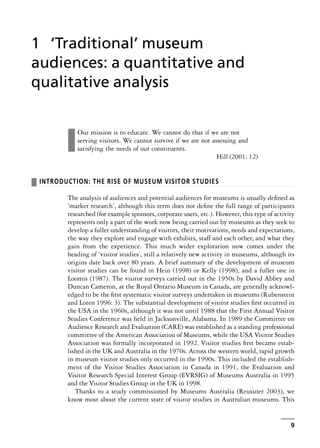
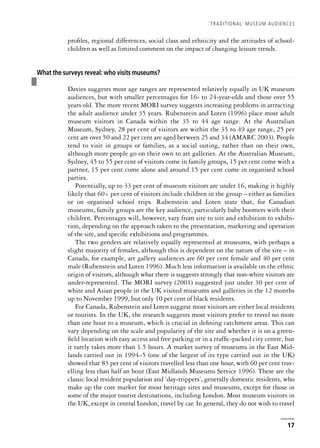
Tracking visitors in the Uncovered Exhibition, Australian Museum, Sydney. © Lynda Kelly
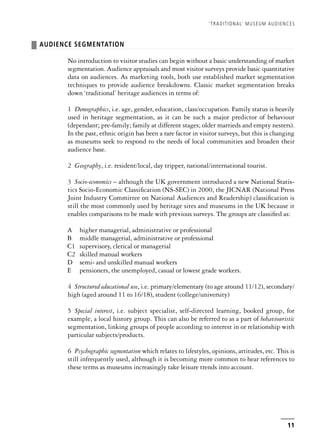
❚ AUDIENCE SEGMENTATION
No introduction to visitor studies can begin without a basic understanding of market
segmentation. Audience appraisals and most visitor surveys provide basic quantitative
data on audiences. As marketing tools, both use established market segmentation
techniques to provide audience breakdowns. Classic market segmentation breaks
down ‘traditional’ heritage audiences in terms of:
1 Demographics, i.e. age, gender, education, class/occupation. Family status is heavily
used in heritage segmentation, as it can be such a major predictor of behaviour
(dependant; pre-family; family at different stages; older marrieds and empty nesters).
In the past, ethnic origin has been a rare factor in visitor surveys, but this is changing
as museums seek to respond to the needs of local communities and broaden their
audience base.
2 Geography, i.e. resident/local, day tripper, national/international tourist.
3 Socio-economics – although the UK government introduced a new National Statis-
tics Socio-Economic Classification (NS-SEC) in 2000, the JICNAR (National Press
Joint Industry Committee on National Audiences and Readership) classification is
still the most commonly used by heritage sites and museums in the UK because it
enables comparisons to be made with previous surveys. The groups are classified as:
A higher managerial, administrative or professional
B middle managerial, administrative or professional
C1 supervisory, clerical or managerial
C2 skilled manual workers
D semi- and unskilled manual workers
E pensioners, the unemployed, casual or lowest grade workers.
4 Structured educational use, i.e. primary/elementary (to age around 11/12), secondary/
high (aged around 11 to 16/18), student (college/university)
5 Special interest, i.e. subject specialist, self-directed learning, booked group, for
example, a local history group. This can also be referred to as a part of behaviouristic
segmentation, linking groups of people according to interest in or relationship with
particular subjects/products.
6 Psychographic segmentation which relates to lifestyles, opinions, attitudes, etc. This is
still infrequently used, although it is becoming more common to hear references to
these terms as museums increasingly take leisure trends into account.
‘TRADITIONAL’ MUSEUM AUDIENCES
11
❚ MARKET SURVEYS
Market surveys, providing quantitative information on potential audiences, are
examined first, largely because they provide essential baseline data on the nature of
potential target audiences. This can allow museums both to prioritise interpretation
toward the needs of defined audiences and, at a later stage, to evaluate their effective-
ness in actually attracting the audiences they have set out to achieve.
Owing to the expense involved, a general market survey/assessment of audience
potential (often called ‘audience appraisal’ in the UK) is normally only carried out as
part of a feasibility study and grant application preliminary to the creation and mar-
keting of a new or substantially revamped museum – and normally only defined in
terms of actual numbers rather than other factors. Its functions are to assist in estab-
lishing the viability of the project and in drawing up the business plan, and to ensure
that the proposed scheme can cater for the likely visitor numbers and types and
operate within the likely available budget. Because of the links to market analyses
and business plans, this sort of research also tends to concentrate on traditional audi-
ences and to largely ignore under-represented groups which are unlikely to make an
immediate impact on the perceived ‘success’ of a project, if this is measured largely in
terms of visitor numbers.
❚
A basic market appraisal
Much of this sort of work tends to be carried out, often at considerable cost, by a
leisure consultancy, which will define the likely market in terms of the potential
audience, seen through the usual market segments (see audience segmentation above)
and the quality of communications. Linked to the latter, the consultancy will break
down the local resident and day trip market in terms of 30-minute, 30- to 60-minute
and 60- to 90-minute drive-time.
The consultancy will attempt to assess the likely level of ‘audience penetration’ –
i.e. what percentage of the defined potential audiences a site or museum could or
should aim to attract – through an analysis of the proposed ‘product’ in terms of con-
tents, identity, image, branding, price and the like, and the attractiveness of this
package to the potential market. It will take into account:
• the scale of the audience for other museums and visitor attractions in the catch-
ment area of the project
• the audience for similar museums and related sites
• the physical location of the project – nationally, regionally, locally; other features
nearby which could encourage additional use; long-term development proposals
for the area, etc.
• the location/place of the project within the attraction spectrum.
The end result should be defined visitor projections for the museum, usually for years
one, three and five after opening. They will often quote a top, median and bottom
MUSEUM AUDIENCES
12
estimate, take proposed admission charges into account where relevant – and always
add the proviso that the suggested figure(s) depend on the eventual contents and
quality of the product itself, its marketing and its daily operation.
❚
Visitor projections and the business plan
Visitor projections are a crucial element in developing an ongoing business plan, par-
ticularly for a museum that is not in receipt of substantial revenue or endowment
support. They will impact on both income estimates and expenditure.
Their influence on estimates of revenue income will include:
• an outside analysis of the suggested product, especially can it achieve the visitor
targets sought?
• an assessment of visitor numbers, including the percentage of each target segment
for the:
– variation in numbers and nature through the year
– estimated average entrance charge (projected from likely adult, concession,
group and discounted ticket sales)
– estimated shop spend per head
– marketing targets to aim at
– planned seasonal promotions.
• comment on suggested pricing levels, especially their likely impact on visitor
levels
• comment on potential levels of secondary spend.
Their influence on forward planning for revenue expenditure will include com-
ment on:
• staffing required at different times of the year to cater for projected visitor numbers
• opening periods/hours
• maintenance programme likely to be required
• marketing spend required
• timing and funding of events, temporary exhibitions, major renewals, etc., to
attract and retain audiences.
❚
Can we believe visitor targets defined by market surveys?
In recent years, the UK has witnessed a series of high profile new museums and heri-
tage-type attractions fail abysmally to achieve their visitor targets, the most potent
symbol being the spectacular failure of the Millennium Dome in London to come
near its targeted 12 million visitors. The visitor projections for the chief UK culprits
– the Millennium Dome, the Royal Armouries in Leeds, the National Centre for Pop
Music in Sheffield, the Earth Centre near Doncaster, the Cardiff Centre for the Visual
Arts and the Welsh National Botanic Garden (and others currently ‘at risk’) must be
‘TRADITIONAL’ MUSEUM AUDIENCES
13
seen in context, however. They formed a key element in the development of business
plans that were designed to show that the sites would be financially self-sustaining in
the medium and long term. Clearly those wanting to see their projects happen would
be their own worst enemies here, in terms of a willingness to believe high visitor
targets were both achievable and sustainable. Of course, it is not always bad news. At
the Eden Project in Cornwall, visitor numbers have vastly exceeded original projec-
tions. Does this all mean visitor projections are a nonsense? Because a market survey
approach has been used in the wrong way it does not make the process itself unten-
able. Far from it – ask any big retailer how it selects sites for stores, or check how to
research locations for any roadside café chain. It is a very professional business.
So why do visitor projections for museums and heritage sites seem so fickle? There
is always the suspicion that the political impetus behind these projects encourages a
rose-tinted view, or at least discourages a more conservative analysis. While this can
never be proven, what is certain is that market surveys carried out by national consul-
tancies rarely take specific local circumstances adequately into account – and these
will normally reduce the likely audience. For example:
• The precise physical location can have a huge impact – ask any retailer about this.
• The use of travel patterns for day-trippers means there will not be an equal spread
from across the 60-minute drive time area. Much depends on a tradition of travel-
ling in a certain direction.
• Unless the museum is in an established tourist destination it is unlikely to attract
many independent tourists or coach tours.
• The contents of a site may put off a member of the crucial family audience and so
hugely reduce your trade – for example, in the UK, the Royal Armouries spe-
cialises in weapons, not always attractive to women or as a destination to which
parents wish to bring children.
• The approach the museum is proposing to take to the presentation may itself be
unsatisfactory as a visitor draw, or discourage use by repeat visitors.
Each site is different – each must look at its own situation. This will vary from a need
to develop a strong base within its local community to its ability to sustain high
tourist figures from both the domestic and inbound trade.
❚
How much does a market survey approach tell us about heritage audiences now and
in the future?
This sort of market research, as currently carried out, is a consummate example of the
use of quantitative data only. In effect the consultancy will say, here are the available
market segments of the museum-going public and, using business models, here are
the percentages you should receive. They pay insufficient attention to qualitative
issues. They also have problems with an over-simplification of the basic segmentation
process itself.
Equally, such research provides little information on the motivational structure
underlying the demand for heritage visits. There are two widely accepted views of how
MUSEUM AUDIENCES
14
demand arises or is formulated. A ‘consumer’ view will explore mass demand arising
within specific segments of the market, based on demographics or lifestyle/attitude
influences and, from this, attempt to generalise demand so it can be satisfied through
simple formulae of design and delivery. This is the classic market research approach.
The alternative is a view that a visit to a museum or gallery is motivated by an essen-
tially unshareable, individual, personal or social group/family interest. From this it
follows that visiting groups are market segments in their own right, selecting their
personal choice of site to visit and, once there, of which aspects to view and interpret-
ing the resulting experience in their own individual ways. If this view is taken, it
follows that the basic market research approach will not function – one needs to take a
much more sophisticated approach to the varying needs and motivations of social and
family groups within market segments.
The increasing attention being given to this latter view appears to parallel a
similar shift in consumer demand toward greater freedom of choice, customisation
and individual service. It is hard not to agree that segmentation approaches are at
best a vague approximation because museum visitors are motivated principally by
personal interest and this does not always coincide with other more convenient indi-
cators such as age, gender, family status or lifestyle. Within at least the marketing of
museums and heritage attractions, there is a real tension discernible between mass
segmentation and the needs of individual visitors. Yet the museum or heritage
product (the site/collection) is perceived as the opportunity to experience something
out of the ordinary, something entertaining, sensorially stimulating, ‘magical’.
Should this make museums easier to tailor to individual needs?
❚
A sustainable audience?
Experience suggests that maximising audiences is the wrong approach to take; yet this
is the approach on which most visitor projections are based. In terms of traditional
audiences, what really matters is not year-one figures for a new or largely redisplayed
museum, but those achieved in years three and beyond when a project is no longer new
or a tourist destination has lost its initial attraction. Most museums and heritage sites
are not located in areas that are major tourist destinations. They depend on local resi-
dents, day-trippers, schools and visitors staying with friends and relatives (VFRs). For
those which largely depend on admission charges for their revenue income there is a
real risk, if they seek to maximise their audience, that everyone who wants to come
will have done so within three to five years of opening – but the site will have no
money to make the major changes needed to bring people back. Having been closely
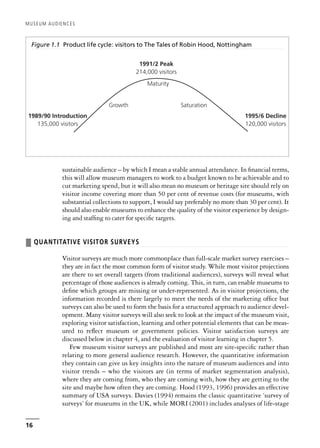
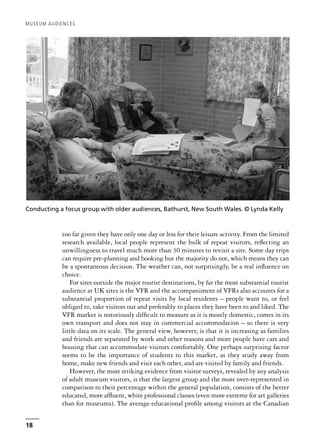
involved in it, I can refer to one such example (see Figure 1.1).
The swift decline in audience attendance at The Tales of Robin Hood exhibition,
Nottingham, UK, was not due to the poor quality of the exhibition – the winner of
many awards – but to the lack of a renewable audience and of the funding required to
redevelop the product.
The current approach to market surveys therefore needs a careful re-examination,
not only in taking both local influences and family/social group needs into account but
also in the way targets are arrived at. It is far better to plan for a realistic, attainable and
‘TRADITIONAL’ MUSEUM AUDIENCES
15
sustainable audience – by which I mean a stable annual attendance. In financial terms,
this will allow museum managers to work to a budget known to be achievable and to
cut marketing spend, but it will also mean no museum or heritage site should rely on
visitor income covering more than 50 per cent of revenue costs (for museums, with
substantial collections to support, I would say preferably no more than 30 per cent). It
should also enable museums to enhance the quality of the visitor experience by design-
ing and staffing to cater for specific targets.
❚ QUANTITATIVE VISITOR SURVEYS
Visitor surveys are much more commonplace than full-scale market survey exercises –
they are in fact the most common form of visitor study. While most visitor projections
are there to set overall targets (from traditional audiences), surveys will reveal what
percentage of those audiences is already coming. This, in turn, can enable museums to
define which groups are missing or under-represented. As in visitor projections, the
information recorded is there largely to meet the needs of the marketing office but
surveys can also be used to form the basis for a structured approach to audience devel-
opment. Many visitor surveys will also seek to look at the impact of the museum visit,
exploring visitor satisfaction, learning and other potential elements that can be meas-
ured to reflect museum or government policies. Visitor satisfaction surveys are
discussed below in chapter 4, and the evaluation of visitor learning in chapter 5.
Few museum visitor surveys are published and most are site-specific rather than
relating to more general audience research. However, the quantitative information
they contain can give us key insights into the nature of museum audiences and into
visitor trends – who the visitors are (in terms of market segmentation analysis),
where they are coming from, who they are coming with, how they are getting to the
site and maybe how often they are coming. Hood (1993, 1996) provides an effective
summary of USA surveys. Davies (1994) remains the classic quantitative ‘survey of
surveys’ for museums in the UK, while MORI (2001) includes analyses of life-stage
MUSEUM AUDIENCES
16
Figure 1.1 Product life cycle: visitors to The Tales of Robin Hood, Nottingham
1989/90 Introduction
135,000 visitors
1995/6 Decline
120,000 visitors
Saturation
Maturity
Growth
1991/2 Peak
214,000 visitors
profiles, regional differences, social class and ethnicity and the attitudes of school-
children as well as limited comment on the impact of changing leisure trends.
❚
What the surveys reveal: who visits museums?
Davies suggests most age ranges are represented relatively equally in UK museum
audiences, but with smaller percentages for 16- to 24-year-olds and those over 55
years old. The more recent MORI survey suggests increasing problems in attracting
the adult audience under 35 years. Rubenstein and Loten (1996) place most adult
museum visitors in Canada within the 35 to 44 age range. At the Australian
Museum, Sydney, 28 per cent of visitors are within the 35 to 49 age range, 25 per
cent are over 50 and 22 per cent are aged between 25 and 34 (AMARC 2003). People
tend to visit in groups or families, as a social outing, rather than on their own,
although more people go on their own to art galleries. At the Australian Museum,
Sydney, 45 to 55 per cent of visitors come in family groups, 15 per cent come with a
partner, 15 per cent come alone and around 15 per cent come in organised school
parties.
Potentially, up to 33 per cent of museum visitors are under 16, making it highly
likely that 60+ per cent of visitors include children in the group – either as families
or on organised school trips. Rubenstein and Loten state that, for Canadian
museums, family groups are the key audience, particularly baby boomers with their
children. Percentages will, however, vary from site to site and exhibition to exhibi-
tion, depending on the approach taken to the presentation, marketing and operation
of the site, and specific exhibitions and programmes.
The two genders are relatively equally represented at museums, with perhaps a
slight majority of females, although this is dependent on the nature of the site – in
Canada, for example, art gallery audiences are 60 per cent female and 40 per cent
male (Rubenstein and Loten 1996). Much less information is available on the ethnic
origin of visitors, although what there is suggests strongly that non-white visitors are
under-represented. The MORI survey (2001) suggested just under 30 per cent of
white and Asian people in the UK visited museums and galleries in the 12 months
up to November 1999, but only 10 per cent of black residents.
For Canada, Rubenstein and Loten suggest most visitors are either local residents
or tourists. In the UK, the research suggests most visitors prefer to travel no more
than one hour to a museum, which is crucial in defining catchment areas. This can
vary depending on the scale and popularity of the site and whether it is on a green-
field location with easy access and free parking or in a traffic-packed city centre, but
it rarely takes more than 1.5 hours. A market survey of museums in the East Mid-
lands carried out in 1994–5 (one of the largest of its type carried out in the UK)
showed that 83 per cent of visitors travelled less than one hour, with 60 per cent trav-
elling less than half an hour (East Midlands Museums Service 1996). These are the
classic local resident population and ‘day-trippers’, generally domestic residents, who
make up the core market for most heritage sites and museums, except for those in
some of the major tourist destinations, including London. Most museum visitors in
the UK, except in central London, travel by car. In general, they do not wish to travel
‘TRADITIONAL’ MUSEUM AUDIENCES
17
too far given they have only one day or less for their leisure activity. From the limited
research available, local people represent the bulk of repeat visitors, reflecting an
unwillingness to travel much more than 30 minutes to revisit a site. Some day trips
can require pre-planning and booking but the majority do not, which means they can
be a spontaneous decision. The weather can, not surprisingly, be a real influence on
choice.
For sites outside the major tourist destinations, by far the most substantial tourist
audience at UK sites is the VFR and the accompaniment of VFRs also accounts for a
substantial proportion of repeat visits by local residents – people want to, or feel
obliged to, take visitors out and preferably to places they have been to and liked. The
VFR market is notoriously difficult to measure as it is mostly domestic, comes in its
own transport and does not stay in commercial accommodation – so there is very
little data on its scale. The general view, however, is that it is increasing as families
and friends are separated by work and other reasons and more people have cars and
housing that can accommodate visitors comfortably. One perhaps surprising factor
seems to be the importance of students to this market, as they study away from
home, make new friends and visit each other, and are visited by family and friends.
However, the most striking evidence from visitor surveys, revealed by any analysis
of adult museum visitors, is that the largest group and the most over-represented in
comparison to their percentage within the general population, consists of the better
educated, more affluent, white professional classes (even more extreme for art galleries
than for museums). The average educational profile among visitors at the Canadian
MUSEUM AUDIENCES
18
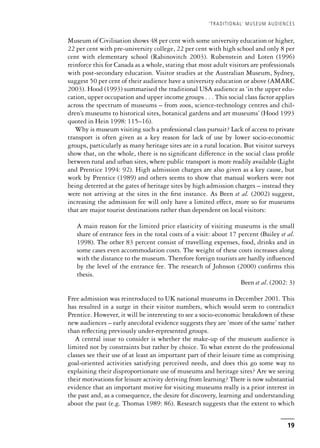
Conducting a focus group with older audiences, Bathurst, New South Wales. © Lynda Kelly
Museum of Civilisation shows 48 per cent with some university education or higher,
22 per cent with pre-university college, 22 per cent with high school and only 8 per
cent with elementary school (Rabinovitch 2003). Rubenstein and Loten (1996)
reinforce this for Canada as a whole, stating that most adult visitors are professionals
with post-secondary education. Visitor studies at the Australian Museum, Sydney,
suggest 50 per cent of their audience have a university education or above (AMARC
2003). Hood (1993) summarised the traditional USA audience as ‘in the upper edu-
cation, upper occupation and upper income groups . . . This social class factor applies
across the spectrum of museums – from zoos, science-technology centres and chil-
dren’s museums to historical sites, botanical gardens and art museums’ (Hood 1993
quoted in Hein 1998: 115–16).
Why is museum visiting such a professional class pursuit? Lack of access to private
transport is often given as a key reason for lack of use by lower socio-economic
groups, particularly as many heritage sites are in a rural location. But visitor surveys
show that, on the whole, there is no significant difference in the social class profile
between rural and urban sites, where public transport is more readily available (Light
and Prentice 1994: 92). High admission charges are also given as a key cause, but
work by Prentice (1989) and others seems to show that manual workers were not
being deterred at the gates of heritage sites by high admission charges – instead they
were not arriving at the sites in the first instance. As Been et al. (2002) suggest,
increasing the admission fee will only have a limited effect, more so for museums
that are major tourist destinations rather than dependent on local visitors:
A main reason for the limited price elasticity of visiting museums is the small
share of entrance fees in the total costs of a visit: about 17 percent (Bailey et al.
1998). The other 83 percent consist of travelling expenses, food, drinks and in
some cases even accommodation costs. The weight of these costs increases along
with the distance to the museum. Therefore foreign tourists are hardly influenced
by the level of the entrance fee. The research of Johnson (2000) confirms this
thesis.
Been et al. (2002: 3)
Free admission was reintroduced to UK national museums in December 2001. This
has resulted in a surge in their visitor numbers, which would seem to contradict
Prentice. However, it will be interesting to see a socio-economic breakdown of these
new audiences – early anecdotal evidence suggests they are ‘more of the same’ rather
than reflecting previously under-represented groups.
A central issue to consider is whether the make-up of the museum audience is
limited not by constraints but rather by choice. To what extent do the professional
classes see their use of at least an important part of their leisure time as comprising
goal-oriented activities satisfying perceived needs, and does this go some way to
explaining their disproportionate use of museums and heritage sites? Are we seeing
their motivations for leisure activity deriving from learning? There is now substantial
evidence that an important motive for visiting museums really is a prior interest in
the past and, as a consequence, the desire for discovery, learning and understanding
about the past (e.g. Thomas 1989: 86). Research suggests that the extent to which
‘TRADITIONAL’ MUSEUM AUDIENCES
19
different social groups require learning from their leisure time varies considerably.
Patmore (1983) noted that those with more skilled and responsible occupations, and
with a longer period in education, tend to lead a more varied and active leisure life.
This group is also more likely to see leisure time as something to be used construc-
tively. As Hood put it:
they are attracted to the kinds of experiences museums offer and they find those
offerings and activities satisfying . . . These folk emphasise three factors in their
leisure life: opportunities to learn, the challenge of new experiences, and doing
something worthwhile for themselves.
Hood (1993) quoted in Hein (1998: 116)
Thomas (1989: 90) noted that professional and managerial workers were more likely
to visit monuments to be informed, whereas manual workers were more likely to
visit for relaxation and entertainment. This subject will be returned to in chapter 5.
Professional class museum visiting may also be based on past experiences. As Light
and Prentice (1994: 98) put it, those activities which an individual has previously
experienced as rewarding are more likely to be repeated, and so behavioural consis-
tency is maintained. Important influences on this process will include the activities
with which an individual has been socialised – and here the family is a key agent. Is
professional class heritage visiting self-perpetuating, passed on from one generation
to the next? Production or supply of heritage is similarly, and traditionally, in the
hands of the professional classes, who make up the bulk of museum curators. So,
white professional-class producers define, present and interpret museum collections,
and heritage in general, for white professional-class consumers. The presentation of
heritage resources inevitably reflects the values and philosophies of their producers.
Museums will have to work very hard to break this cycle.
❚
When do people visit?
It is vital to consider not only how many visitors a museum will receive and who they
are, but also when they will come and how long they are likely to stay. Visitor
throughput is a crucial issue for the business plan, for the physical layout, and for the
provision of activities, etc., that a museum is proposing, as well as for the quality of
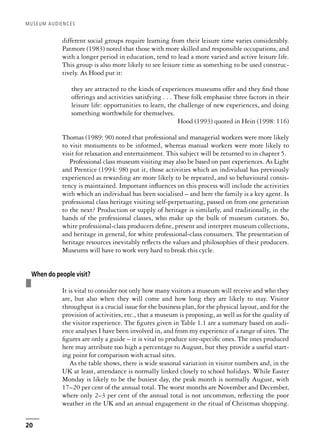
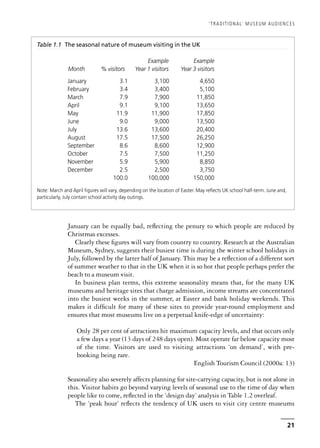
the visitor experience. The figures given in Table 1.1 are a summary based on audi-
ence analyses I have been involved in, and from my experience of a range of sites. The
figures are only a guide – it is vital to produce site-specific ones. The ones produced
here may attribute too high a percentage to August, but they provide a useful start-
ing point for comparison with actual sites.
As the table shows, there is wide seasonal variation in visitor numbers and, in the
UK at least, attendance is normally linked closely to school holidays. While Easter
Monday is likely to be the busiest day, the peak month is normally August, with
17–20 per cent of the annual total. The worst months are November and December,
where only 2–3 per cent of the annual total is not uncommon, reflecting the poor
weather in the UK and an annual engagement in the ritual of Christmas shopping.
MUSEUM AUDIENCES
20
January can be equally bad, reflecting the penury to which people are reduced by
Christmas excesses.
Clearly these figures will vary from country to country. Research at the Australian
Museum, Sydney, suggests their busiest time is during the winter school holidays in
July, followed by the latter half of January. This may be a reflection of a different sort
of summer weather to that in the UK when it is so hot that people perhaps prefer the
beach to a museum visit.
In business plan terms, this extreme seasonality means that, for the many UK
museums and heritage sites that charge admission, income streams are concentrated
into the busiest weeks in the summer, at Easter and bank holiday weekends. This
makes it difficult for many of these sites to provide year-round employment and
ensures that most museums live on a perpetual knife-edge of uncertainty:
Only 28 per cent of attractions hit maximum capacity levels, and that occurs only
a few days a year (13 days of 248 days open). Most operate far below capacity most
of the time. Visitors are used to visiting attractions ‘on demand’, with pre-
booking being rare.
English Tourism Council (2000a: 13)
Seasonality also severely affects planning for site-carrying capacity, but is not alone in
this. Visitor habits go beyond varying levels of seasonal use to the time of day when
people like to come, reflected in the ‘design day’ analysis in Table 1.2 overleaf.
The ‘peak hour’ reflects the tendency of UK users to visit city centre museums
‘TRADITIONAL’ MUSEUM AUDIENCES
21
Table 1.1 The seasonal nature of museum visiting in the UK
Example Example
Month % visitors Year 1 visitors Year 3 visitors
January 3.1 3,100 4,650
February 3.4 3,400 5,100
March 7.9 7,900 11,850
April 9.1 9,100 13,650
May 11.9 11,900 17,850
June 9.0 9,000 13,500
July 13.6 13,600 20,400
August 17.5 17,500 26,250
September 8.6 8,600 12,900
October 7.5 7,500 11,250
November 5.9 5,900 8,850
December 2.5 2,500 3,750
100.0 100,000 150,000
Note: March and April figures will vary, depending on the location of Easter. May reflects UK school half-term. June and,
particularly, July contain school activity day outings.
between 11.00 and 12.30 am, before going elsewhere for lunch (peak arrival at all-
day attractions also tends to be around 11.00 am). Afternoon visitors also tend to like
to leave early, to get home or back to their base – you frequently find museums and
heritage sites in the UK relatively empty after 4.30 pm. There is no long-standing
tradition of evening opening at sites or museums in the UK, although this is clearly
when a working audience would be available. There has been experimentation with
evening opening in recent years in London – successfully with popular exhibitions at
the Royal Academy, Tate Modern, the National Gallery and the Victoria and Albert
Museum – and we are now seeing opening to 8.00 pm as standard at the Lowry in
Salford, where the galleries are in the same building as the theatre. However, like the
lack of a tradition of travelling in certain directions previously mentioned, most tra-
ditional museum visitors in the UK do not seem to see the visiting of museums and
heritage sites as an evening activity – it is primarily a leisure outing for weekends
and holidays. This may, however, reflect the preference of the family audience, with
old and young participants. Evening opening may be a means of reaching particu-
larly the young adult audience, but there is a need for research on this.
❚ QUALITATIVE DATA ON VISITOR EXPECTATIONS, MOTIVATIONS AND NEEDS
Please note that there is substantial use of qualitative research later in the book in
exploring visitor responses to museums and collections.
❚
Visitor expectations
Visitor expectations represent one of the key factors pressing museum managers to
enhance their presentations. Responding to visitor expectations also underpins those
other factors pushing for change, particularly the need to increase visitor numbers
and, therefore, income; the need to diversify the visitor base; and the need to meet
the requirements of the educational sector.
Surveys of public attitudes to museums consistently show a high level of approval
and support for their activities. A survey of almost 24,000 Canadians seeking their
views about the country’s museums, published in 2003, found:
• 68 per cent of respondents see museums as offering both an educational as
well as an entertainment/recreational experience
MUSEUM AUDIENCES
22
Table 1.2 ‘Design day’ analysis: visitor numbers
Annual attendance (numbers) 100,000 150,000
Peak month (17.5% total) 17,500 26,250
Average week (22.6% month) 3,955 5,932
Design day (20% week) 791 1,186
Peak hour (40% day) 316 475
• 92 per cent believe it is important for children to be exposed to museums
• 96 per cent believe museums contribute to quality of life
• 94 per cent believe museums play a valuable role in showcasing and explain-
ing artistic achievements
• 97 per cent believe museums play a valuable role in explaining the natural
heritage
• 96 per cent believe museums play a valuable role in showcasing and explain-
ing achievements in science and technology
• 93 per cent believe museums play a valuable role in explaining other regions
and cultures
• 97 per cent believe museums play a critical role in preserving objects and
knowledge of Canada’s history
• 60 per cent believe museums can play an even more significant role in Can-
adian society.
Canadian Museums Association (2003: executive summary)
Traditional museum audiences see the museum/heritage visit as a relaxed, informal
social outing, providing an opportunity both to learn and to enjoy oneself. However,
surveys also show that the demands of these audiences are growing rapidly, as edu-
cational and mobility levels rise and as people have increased experience of other
locations and other types of leisure facilities. A 1994–5 survey of museums in the
East Midlands of the UK, carried out for East Midlands Museums Service, included
an assessment of public perceptions of museums which suggests that a quality pres-
entation should acknowledge that museums:
• are educational – 96 per cent agreed
• are interesting – 84 per cent agreed – a smaller but unstated percentage said they
were fun
• provide family entertainment – 70 per cent agreed ‘in some form’
• provide good quality facilities and good quality service – 60.5 to 70 per cent
agreed in some form, although 37 per cent felt they did not provide good cafés
• have convenient opening times – 58 per cent agreed
• offer good value for money – 61 per cent agreed.
When people were asked what would encourage them to visit more often, responses
included children’s facilities (14 per cent), cheaper admission charges (11 per cent),
more audio-visual and inter-active displays (10 per cent), changing exhibits (9 per
cent), better catering (6 per cent) and more convenient opening hours (4 per cent).
In both the Canadian and the UK East Midlands examples, it is important to be
somewhat wary of reports that produce exactly the results that the commissioning
organisations want – it all depends on the questions asked. Frankly, for example,
when asked whether you ‘believe it is important for children and young people to
visit museums to learn more about our history and achievements’ (the question
asked), I am surprised that 8 per cent actually said no – it is the sort of ‘feel-good’
question that naturally obtains a ‘yes’ response. Given the propensity to elicit ‘yes’
answers to such questions, the relatively low percentages approving of the facilities,
‘TRADITIONAL’ MUSEUM AUDIENCES
23
service, opening times and value for money in East Midlands museums does begin to
reflect the increasingly high expectations visitors come with (even though there is
still a tendency at least in the UK to think ‘I suppose they are doing the best they
can’, in relation to any public sector activity).
As the museum and heritage site audience is so diverse, expectations may vary
depending on the individual or group involved and the precise circumstances of their
visits. I cannot emphasise enough how important it is to get to know your own audi-
ence. However, an amalgamation of the wide range of relevant research now available
can provide a good starting point – beginning with ease of access; good parking facil-
ities and public transport; convenient opening hours; good value for money; and
access to staff, etc., if required.
The outline list below concentrates on ‘traditional’ visitors. It does not include
such potentially under-represented audiences as both young and elderly people, those
with specific disabilities or those from particular ethnic minorities, all of whom will
have their own expectations, some of which are explored in chapter 2. There is a
growing literature on museums and young people (e.g. Rider and Illingworth 1997;
Baum et al. 2001; Kelly and Bartlett 2002; Kelly et al. 2002) as this under-repre-
sented group among museum audiences is increasingly targeted. There is less
material available on older visitors, but for extensive research on older visitors and
museums in Australia, including a detailed set of recommendations, see Kelly et al.
2002.
Informal visitors
For most informal visitors – in other words the vast majority of people who come – a
trip to a museum is a social outing. Expectations include that:
• the visit will be enjoyable, interesting and even ‘fun’, it will provide family enter-
tainment, there will be things to do together – visitors want to be more than
passive recipients of written information
• there will be something for everyone, including good facilities for children
• the visit will provide an opportunity to learn something – preferably starting
from familiar concepts and moving to the unfamiliar
• the site will cater for all ranges of prior knowledge, ability and age
• the site will provide good quality facilities and a high standard of service
• there will be a picnic site which is a real bonus for families.
What is clear from both anecdotal evidence and the research available is that the
demands and expectations of informal visitors are rising and there is continuing pres-
sure to improve the product further. However, the responses from the East Midlands
Museums survey discussed above are quite typical – museum audiences are willing to
and capable of commenting on the support facilities and services at a museum but
find it difficult to comment on detailed proposals for exhibition development
without substantial and prolonged association with a site. See, for example, the case
study on Manchester Art Gallery at the end of chapter 3.
MUSEUM AUDIENCES
24
Families and children
With families representing such a high percentage of visitors, they are a key group
to research, and it is essential both to understand and provide for their specific
needs. Research with parents by the Australian Museum Audience Research Centre
(AMARC 2003) suggests parents want child-appropriate exhibitions which:
• allow children to learn in an enjoyable way
• provide new experiences and insights
• complement school-based learning
• are interactive and allow them to touch and experiment
• have minimal reading
• are at an appropriate height
• provide sufficient installations to avoid queuing
• cater for a range of ages and abilities
• keep parents entertained as well!
Will the expectations of children be different from those of their parents? There is
much less information available on children, at least in the UK, because of codes of
conduct for survey workers which advise against interviewing people under 16 years of
age, except in the presence of a parent or guardian. A 1997 survey examining children
as an audience for museums and galleries, carried out on behalf of the UK Arts Council
and Museums and Galleries Commission and based on interviews with children aged
between 7 and 11 and their parents (Harris Qualitative 1997), suggests that:
• children enjoy experiencing the past, including the ‘atmosphere’ and opportuni-
ties to participate and dress up
• children like to be able to touch and ‘do’ – to feel involved
• children like interactive exhibits, computers, creative activities, competitions and
trails – all very active elements
• children see museum visits, at their best, as an opportunity to learn as well as have
fun. They gain an enormous amount from visits relating to their schoolwork
• children who have been to the site on a school trip like to come back to show their
families.
To these, I would add that children tend to hammer ‘hands-on’ exhibits they like and
these must therefore be capable of withstanding full frontal attack. They get frustrated
if the experience is disappointing, if there are large queues for popular ‘hands-on’
exhibits, or if key exhibits are broken. Their boredom threshold is low. Children also
do not want to read much, as it can be too much like school and brings in issues of
reading ability and reading age. They look to their parents to support them, but
parents themselves often need help and encouragement in assisting their children. The
approach of children who are regular museum visitors may be different. Research in
America has shown that children’s concentration and self-confidence increased with
regular visits, reducing rowdy and aimless behaviour. However, children’s expectations
are likely to be highly subjective, reflecting their feelings for the place and whom they
have come with. Museums must also look at the facilities they provide for children
‘TRADITIONAL’ MUSEUM AUDIENCES
25
beyond the exhibition galleries. All children need to be able to let off steam. Children
know what they want in the café and it is rarely quiche and salad! The shop is an
important part of the visit for children and must include an exciting and affordable
range of small items, targeted at their age range and pocket money. Finally, the needs
of children as structured educational users will be explored in chapter 6 below.
The repeat visitor
I would define a repeat visitor as someone who has been to a site before and comes
back infrequently for an additional visit or visits. In a non-tourist location, the only
way to combat running out of visitors in the long term is to encourage people to
come back, so the repeat visitor is vital to museums everywhere. The percentage of a
museum audience that should consist of repeat visitors will vary, depending on how
well they are catered for, on the scale of the tourist audience in the area, on the avail-
ability of competing venues and, of course, on how long the site or museum has been
open to the public. Research is needed – not least on successful examples of how the
percentage can be increased. A perhaps more relevant question would be – what per-
centage of visitors need to be repeats if a museum is to ensure its long-term viability?
Equally, in terms of the museum’s or site’s role within its local communities, the per-
centage of repeat visits may be a crucial reflection of the success or otherwise of
outreach strategies and other activities.
While the evidence suggests people will travel an hour, or even more, to visit a
museum or heritage site for the first time, the little available survey work points to
an unwillingness to travel far for a repeat visit – the repeat visitor is likely to be rela-
tively local, living within a 30-minute drive area. Even less research has been done on
what stimulates a repeat trip. First comes a previously memorable experience – and
not just in terms of the quality of the site or collections. Almost everyone who comes
to museums does so in a social or family group. The quality of the front-of-house
operation is vital to the visitor experience and in encouraging repeat use (see chapter
4). Second comes the stimulus, often reflecting the need for a second visit to see
everything, or the need to take visiting friends and relatives out. For Canada, Ruben-
stein and Loten (1996) list as the key reasons for museum visiting:
• new facilities
• special temporary exhibits
• socialisation to museum visiting as a child (with family)
• stage of life cycle (visits at family stage are high)
• customer service may be the single most distinguishing factor of why visitors go
to one museum more often than another.
They speak of what may convert an occasional or repeat visitor into a regular one
(Rubenstein and Loten 1996: unnumbered):
• frequent visitors value this leisure experience
• frequent visitors are aware of ongoing programme changes
• (the quality of customer service) makes the difference between a frequent and an
occasional visitor.
MUSEUM AUDIENCES
26
What does the importance of the repeat visitor mean for the planning of exhibition
developments? Unlike the regular museum or heritage site visitor, the available evi-
dence suggests that infrequent users value most highly the opportunities for social
interaction, active participation and entertainment. To develop a repeat visitor audi-
ence will require building opportunities for social interaction into the exhibitions.
The available evidence suggests we interact with an exhibition as a social or family
group more than individually. Making effective use of this approach both improves
the visitor experience and enhances understanding and appreciation. It will mean
setting aside a substantial temporary exhibition area with flexible facilities, and plan-
ning for two or three major temporary exhibitions a year, rather than the monthly
changeover beloved by art galleries but more suited to the needs of the regular user.
This allows the marketing department to make proper use of the exhibitions and for
word-of-mouth recommendation to be effective. It is also essential to ensure that
there is ‘always something new’ happening, through the establishment of a regular
programme of events and activities. For the longer term, it means building in the
potential to make substantial alterations to the main presentation, perhaps every
three to five years, to reflect that point when the audience is beginning to dry up.
This means designing the initial exhibition in a way that allows it to be renewed
easily, flexibly and cheaply. These elements, and the thinking behind them, are dis-
cussed in more detail in Section 4.
‘TRADITIONAL’ MUSEUM AUDIENCES
27
Community consultation in action – the proposals for the redisplay of Weston Park Museum
are taken out to a community gala. © Sheffield Galleries and Museum Trust
Regular visitors
Compared with casual and repeat visitors, regular visitors may seek:
• a frequently changing programme of exhibitions and events
• an incentive ticketing scheme
• an opportunity to ‘belong’. This may include a Friends group, with special
events, ‘behind the scenes’ sessions, including meeting staff, and the opportunity
to participate, perhaps as a volunteer. Active involvement is not necessarily the
only issue. There is also the chance to meet ‘their kind of people’ and to extend
their emotional involvement with the site.
Overall, regular visitors will want a different type of experience. Unlike infrequent
users, regular museum-goers seem more likely to show a preference for learning and
enhancing their understanding and appreciation. Beware however of achieving too
high a percentage of regular visits – this can suggest the museum is only appealing to
a tiny percentage of the local population – see the case study on Manchester Art
Gallery at the end of chapter 3.
The special interest visitor
In the past, the needs and influence of those with a specialist knowledge or interest
have far outweighed their numbers in terms of their impact on museum display.
However, museums must retain their role as places of learning and expertise. They
have a direct responsibility to both academic researchers and more general enthusi-
asts. Proficiency and competence are attributes of experts. Museums must be able to
respond to queries and experts must continue to have access to the full range of col-
lections and the information available about them. Here, improved documentation
and the electronic availability of catalogues have already enhanced access for the
specialist. The researcher can also continue to have direct contact with the curator
and thereby gain physical access to collections when required. The real display issue
lies with the enthusiast. Displays must continue to incorporate key collections, acces-
sible to all. The continuing movement toward open storage display and collection
resource centres has an important role to play here.
❚
Visitor motivations
What lists of expectations do not answer is what or who motivates people to visit a
particular site in the first place – what generates their expectations. It is difficult, if
not impossible, to separate visitor motivation to come to a site from expectations of
the visit. This section seeks to build on the general expectation lists provided above.
Even within the narrower field I am attempting to explore here, there are two sepa-
rate but interrelated issues:
• why people are motivated to visit/not to visit museums and heritage sites in
general
• why they choose to visit a particular location.
MUSEUM AUDIENCES
28
Museum-led literature relating to the general motivations behind museum visits
overwhelmingly emphasises the importance of learning in some shape or form as a
motive (see, for example, Hood 1983, 1996; Prentice et al. 1997; Falk et al. 1998;
Prentice 1998; Kelly 2001a). This is never defined as the sole motivation but has
come to dominate the museum agenda in the ‘noughties’. Yet people have many
reasons for choosing one leisure activity over another and will, over time, involve
themselves in a wide range of different activities. Since individuals differ, the criteria
applied in deciding what activity to engage in will differ. However, there are some
commonly held motivations defined, from the museum point of view, in a 1983
article by Marilyn Hood, updated in 1996, which lists six criteria used by adults:
being with people, or social interaction; doing something worthwhile for oneself or
others; having the challenge of new experiences; having an opportunity to learn; par-
ticipating actively; and feeling comfortable and at ease in the surroundings.
Research at the Australian Museum, Sydney between 1999 and 2001 (Kelly
2001a: 9) highlighted five main motivations: experiencing something new; entertain-
ment; learning; the interests of children/family; and doing something worthwhile in
leisure. Kelly took these motivations and added to them an acknowledgement of
global leisure trends/market forces and also an awareness of individual ‘predictors’
(characteristics of visitors):
Museum visiting is not evenly spread in the population. Key predictors include
demographic indicators, such as where people live, age and education levels;
psychographic factors such as how people see themselves in relation to what they
like to do in their leisure time; personal interests and prior experiences with
museums, with opportunity also playing an important role.
Kelly (2001a: 3)
From this framework, she has attempted to develop a model of museum visiting, as a
‘work in progress’ (see Figure 1.2).
Research within the leisure and tourism field contrasts with museum-produced
literature in seeing beyond the museum visit to the bigger picture of the ‘day out’ or
holiday. The UK heritage visitor market is dominated by the day-tripper, for whom
the museum visit may provide a useful focus within a leisure drive or city-centre trip,
but where the social occasion of enjoying a leisure activity with family or friends is
the primary motive:
Either [museums and heritage sites] serve the purpose of occasionally offering a
more specific destination in the context of a general day-trip, or they provide an
alternative, and usually subsidiary, recreational activity to those on holiday in
their vicinity. In either event, the role of such activities is of secondary recrea-
tional significance, but nevertheless appears to constitute an important element of
leisure-based behaviour.
Thomas (1989: 67–8)
There is a symbiotic relationship between museums and the leisure and tourism
industry. Many museums depend on the latter to generate both visitor numbers and
‘TRADITIONAL’ MUSEUM AUDIENCES
29
income. To the leisure or tourist visitor, the museum will normally be part of a wider
range of experiences rather than the single focus of their trip. This is explored in
more depth in the case study at the end of this chapter, but a key point to make here
is that an evaluation of visitor motivation cannot allow itself to be dominated by
museum-learning literature and must, instead, explore the wider picture. This is not
to deny the importance of the museum as a learning environment. Rather it is to
emphasise the need to ensure a welcoming environment for all and a series of differ-
ent ‘entry levels’ into exhibitions, to stimulate interest and enthusiasm.
McManus (1996), based on survey work at the Science Museum in London, sought
comments from visitors on the motivation for that specific visit (see Table 1.3), and
the associated expectations of the visit (see Table 1.4).
Her general conclusion was that: ‘we can say that visitors are highly motivated to
attend to exhibit communications within a social recreational context. Their interest
is general and not focused in a studious, academic style’ (McManus 1996: 59–60).
Once again, this emphasises the ‘social recreational context’ of the visit. One must
assume that the traditional audience is drawn to the informal nature of museum
presentations. We already know from basic surveys that visitors prefer to come in
groups – particularly family or friends. A central motivation for their visit must be
the conditions for a social outing that museums already provide. We must seek, in
MUSEUM AUDIENCES
30
Figure 1.2 Model of museum visiting
MUSEUM VISITING
Predictors
Motivations
Interests of children, family
Experience something new
Worthwhile leisure
Learning
Entertaining
Personal interest
Demographics
Psychographics
Prior exposure
Opportunities
Global trends
Source: Kelly (2001a: 3)
our operational and interpretive approaches, to enhance these. McManus also makes
clear that, even after having selected a specific museum to visit, ‘their interest is
general’. Visitors come when they want, leave when they want and look at what they
want. Their interest is general in a personal sense. As also emphasised by extensive
research at the Australian Museum, Sydney (Kelly 2001a), visitors are motivated
principally by personal interest:
. . . in order to attract a range of visitors exhibition topics must be of interest and
have some emotional appeal. Those that are more likely to appeal and attract visi-
tors are ones where people know just enough to pique their interest, can’t be seen
anywhere else, have not been ‘overdone’ and can only be experienced at museums.
Kelly (2001a: 5)
Personal interest need not coincide with other more convenient market segmentation
indicators such as age, gender, family status or lifestyle. People select their personal
choice of aspects to view and interpret the resulting experience in their own indi-
vidual way. Again, museums must already be providing the opportunity for this, but
need to do better. From the one ‘heritage product’ we must seek to provide a means by
which individual family and social groups can experience and interpret in their own
way – in effect a palette of experiences reflecting the differing needs of audiences.
As the survey took place at the start of the visit, it also suggests the image of the
museum held by the visitors is vital, given that only 17 per cent said they had been
before. Almost everyone, including those who do not visit, has a general image of
‘TRADITIONAL’ MUSEUM AUDIENCES
31
Table 1.3 Motivation to visit
Family visit with children 20 per cent
Recreation 20 per cent
Reputation of the museum 18 per cent
Interest in science 17 per cent
Revisiting the venue/an exhibit 17 per cent
Museuming 8 per cent
Source: McManus (1996)
Table 1.4 Expectations of visit
Finding out/learning 26 per cent
Fun 22 per cent
General interest 21 per cent
Specific aspect of museum 18 per cent
No structured plans 7 per cent
None defined 6 per cent
Source: McManus (1996)
museums and heritage sites, and that is what those who come are seeking. What of
those who are not among the traditional audience? Different people, social groups
and cultures will value different things, making it impossible to discover a set of
motives of importance that would apply to all, let alone encourage everyone to visit
our museums and heritage sites. However, individual sites have proven that it is pos-
sible to greatly influence attitudes and, as a result alter and/or broaden their audience
base. Between 1988 and 1998, the Museum of Science and Industry in Manchester,
UK, through a combination of market research, profile raising, tactical marketing
and product development succeeded in changing the gender balance of visitors from
65 per cent:35 per cent male/female to 51 per cent:49 per cent – a remarkable
achievement in a subject area that has traditionally been a male preserve.
❚
Visitor needs
In 2001 the USA Visitor Services Association produced a list of needs common to
visitors, which they termed the ‘Visitors’ Bill of Rights’:
1 Comfort: ‘Meet my basic needs’.
2 Orientation: ‘Make it easy for me to find my way around’.
3 Welcome/belonging: ‘Make me feel welcome’.
4 Enjoyment: ‘I want to have fun’.
5 Socializing: ‘I came to spend time with my family and friends’.
6 Respect: ‘Accept me for who I am and what I know’.
7 Communication: ‘Help me understand and let me talk too’.
8 Learning: ‘I want to learn something new’.
9 Choice and control: ‘Let me choose; give me some control’.
10 Challenge and confidence: ‘Give me a challenge I know I can handle’.
11 Revitalization: ‘Help me leave refreshed, restored’.
Rand (2001: 13–14)
The nature of human needs is an important area of study, well beyond the scope of
this chapter to explore in depth. However, because of the ease with which we
can apply it to the issue of visitor response to the way museums are presented, the
hierarchy of needs, defined by Maslow and illustrated in Figure 1.3, provides an
important means of further exploring this important subject. It must be emphasised,
however, that the comments below are generalised ones, while museums must cater
for individual needs.
Because recognising and responding to visitor needs is a central element in visitor
services provision, the comments below are all based on factors the visitor services
team in a museum must take into account in supporting audience access. The issue of
quality in visitor service provision is further explored in chapter 4.
Physiological needs
Our most basic needs are for a comfort break, food and drink, a suitable temperature,
seating, etc. If these are not properly catered for, a need can take control of the visitor
MUSEUM AUDIENCES
32
33
and make the quality of the site and its presentation irrelevant. Visitor services must
take into account the following:
Restroom provision – a common need on arrival, not least for children, but also within
larger sites and by the café. Why are there always too few women’s WCs? Remember
also facilities for the disabled and for nappy-changing, accessible by both genders.
Catering facilities – particularly necessary if the average visit exceeds one hour. This
may be less important if there is a good range of choice within easy reach. The provi-
sion of catering can be a real problem, as its poor quality frequently lets a site down.
However, after their journey to the site, many people begin their visits in the café,
planning how they will spend their time. There is also substantial anecdotal evidence
that what people remember most about a site are its restrooms and catering, espe-
cially if these are poor!
Climate – ranging from the temperature in a museum to the impact of weather on an
open site. Consider factors like visitors wearing heavy coats in winter but coming
into a warm gallery. Warmth (or lack of it) can be a major issue in historic houses,
where there can be a real problem in balancing conservation requirements and
visitor needs.
Noise levels – the use of interactive exhibits, for example, leads naturally to noise and
bustle among visitors, and can cause congestion. Quality means careful planning and
‘TRADITIONAL’ MUSEUM AUDIENCES
Figure 1.3 Maslow’s hierarchy of needs
Physiological
Self-
actualisation
Esteem
Social
Safety
The need to succeed, to become
what you wish to become
Self-esteem, status, respect
and admiration of others
The need to belong,
be part of a group
Personal security (perhaps
job security, friends)
Food, shelter, etc.
Source: Maslow (1970)
location of exhibit types to prevent congestion; to provide clear signals to visitors
on how to behave in different display types; to separate inter-actives from fragile
non-touchables, etc.; and to allow for the fact that visitors in ‘hands-on’ displays are
more likely to select their own circulation path.
Disability – in addition to suitable restroom facilities, can people with disabilities
physically get into and around the gallery/site, the café and to objects? Can they
follow the same route as everyone else? Is there a good provision of comfortable seats
(essential for everyone, not just those with disabilities)?
Safety needs
These should be seen not only in terms of actual danger, but also in relation to orien-
tation to, from and at the site. Visitor services must take into account the following:
Relief of trip stress means providing good pre-visit information; road signage; on-site
orientation; ease of exit. If in doubt about the impact of this on the visitor experience
of your site, try being lost in your car in a town you have not previously visited, with
three children and an ageing grandmother on the back seat.
Visitors feel physically safe and have confidence in the quality and training of the staff;
clear evidence that fire regulations and health and safety factors have been properly
catered for in terms of light levels, clear routes to exits, etc. Be very aware that the
fire officer can have a dramatic impact on the proposed presentation and the visitor
route – involve him/her at the earliest possible stage and work together to achieve the
best result. Health and safety can be a particular issue for working museums, for
example with operating machinery or steam trains.
Visitors put at ease – if visitors are to be involved/challenged by the presentation, they
must feel safe about, or ‘comfortable’ with, the approach taken. This links directly to
the need for a real understanding of the nature of your target audience and the devel-
opment of a sense of belonging.
Visitors have a firm sense of orientation within the site/building – good orientation within a
site is essential to enable visitors to plan their time (or find the toilet). You need to
consider the provision of orientation plans at regular intervals around the site and/or
the supply of individual plans to visitors on entry.
Disability – will visitors with disabilities also feel safe, and certain that they will not
be trapped? Can they be certain they will not fall over, or walk into unseen obstruc-
tions (such as glass casing with no obvious edging)? Does the fire alarm have a visual
signal? Are guide and hearing dogs allowed?
Sense of belonging
All visitors should feel welcomed to the site, not experience a sense of exclusion. The
single most significant barrier to inclusion is the visitor feeling unwelcome and being
embarrassed because they do not know where to go, what to expect or what is
MUSEUM AUDIENCES
34
expected of them. If visitors do not feel ‘comfortable’, if they feel watched and con-
sidered inadequate, they will vote with their feet and leave. Visitor services must take
into account the following:
Warmth of welcome which includes the quality of staff, signage, orientation at the begin-
ning of the visit, and colour schemes. The external architecture of many nineteenth-
century museum buildings can be off-putting, as can the colour schemes and
‘atmosphere’, for example, in contemporary art galleries. Many museums were once
renowned for their scowling, old-fashioned attendants in quasi-Victorian police uni-
forms. Fortunately, much has improved.
Presentation matches target audience in terms of the media used, the language levels, and
the use of foreign languages if appropriate. The presentational approach taken can
vary from contemplative to highly experiential – what is most suitable for your
audience?
Communicating a ‘sense of place’, ensuring visitors are able to comprehend what is
special or unique about your site and its relevance to them.
Disability – are visitors with disabilities welcomed and treated the same as everyone
else? Can they interact with friends and family, not just through following the same
route, but also, for example, by using the same audio-tapes etc.?
Self-esteem
This means a recognition of the visitors’ worth and respect for them as people. Visi-
tors are equal participants, there to share our enthusiasm for the quality of the site
and collections and there to offer their support for our work. Visitor services must
seek to support the following:
Authenticity and integrity – the visitor has the right to assume that everything in the
presentation is accurate and reflects the latest research.
Professionalism of execution – an essential means of demonstrating the worth of the
visitor lies in the sheer professional quality of the presentation and its maintenance.
Broken down or peeling exhibits, ill-trained or behaved staff, dirty restrooms, etc.,
all reflect on the site’s attitude to its visitors.
Freedom of movement which enables a visitor to move at his or her own pace and recog-
nises individual worth. This is particularly true in enabling the visitor to choose
voluntarily when to leave. Clearly, this is a problem for ‘dark rides’ such as the Jorvik
Viking Centre in York. In such circumstances, the presence of a free-flow exhibition
after the ride (as at Jorvik but not, alas, everywhere) is crucial to visitor satisfaction. It
gives the visitor the choice of whether to explore in more depth and of when to leave.
Hierarchy of information – our visitors will have differing levels of knowledge and
interest about the site. We must provide an opportunity to explore the subject
‘TRADITIONAL’ MUSEUM AUDIENCES
35
matter to a greater or lesser degree, depending on the visitor’s individual inclination.
We must also ensure that there is an overall clarity of intent within the presentation
– that the objectives are clear and that visitors can follow these through.
Provision for children – this is not just about developing the future audience. They are
people in their own right and deserve to be treated as such. This does not mean that
everything must be suitable for child use, but concept development must ensure that
their specific requirements are taken fully into account.
Meeting expectations – the concept of the museum or individual exhibition must reflect
visitor expectations. This is easier said than done, particularly if the development is a
new one. However, once again, we are back to the issue of understanding the target
audience. It also links to the way in which the site is promoted. The marketing pro-
gramme should not raise expectations beyond what can actually be delivered.
Disability – is information presented in an accessible format and can it be understood
without help? Can labels be read independently? Are there a variety of ways to learn
about/access the collections? Is the same information or experience offered to all?
Will the visitor with disabilities be able to see the presentation as an affirmation of
his or her competence/achievement in understanding?
Self-actualisation
Here, once the more basic needs are dealt with, we can turn to the continuous
seeking after self-fulfilment or the desire to reach our full potential – to ‘become
everything that one is capable of becoming’ (Maslow 1970: 46). Clearly Maslow
recognises that this is not achievable, but we are always seeking personal growth and
working toward that end. Since Maslow published his hierarchy, there have been
numerous adaptations and refinements suggested by both himself and others. Within
the area of self-actualisation, there has been in particular the development of concepts
of cognitive needs, the need to know and understand, and aesthetic needs, the apprecia-
tion and search for beauty.
Clearly, all of this is highly relevant to visitor motivation to engage with museum
collections and exhibitions, and is reflected in Sections 3 and 4. However, to com-
plete this section on Maslow, I must mention that the challenge in a museum is not to
attempt to ensure that the visitor leaves knowing ‘everything there is to know’. That
is impossible. Attempting to do so would demoralise all but the most specialist
visitor. Concentrating on a purely information-led approach also implies that self-
actualisation is solely knowledge-based. We need to take into account the personal
benefits that can be gained in other ways, for example through enjoyment, aesthetic
pleasure, emotional involvement, social interaction and the actual process of dis-
covery. Any concept must be geared to engaging the visitor, to seeking to achieve
those benefits for visitors, with the overall objective that visitors leave with that ‘gut’
feeling of having experienced something unique.
MUSEUM AUDIENCES
36
❚ DISCUSSION: AN AUDIENCE IN DECLINE – TRENDS AND CHALLENGES
❚
Attendances at museums in Australia decreased approximately
3 per cent between 1991 and 1995. Between 1995 and 1999,
the decline accelerated a further 9 per cent . . . The
phenomenon is not specific to Australia. Evidence points to a
worldwide trend . . .
Scott (2000: 37)
It is vital for museums to understand that they cannot take their traditional audi-
ences for granted – in fact, museums are at risk of losing a substantial percentage of
them. Museum audiences across the western world are currently at best on a plateau,
at worst falling steadily. The museum audience does not exist in isolation, but must
be seen in the context of wider leisure trends. I can make no more than a passing
mention here – this is an issue for another book – but it would be easy to define this
bigger picture as a bleak one.
❚
More means less
People can use their leisure time either by ‘staying in’ or by ‘going out’, with differ-
ing reasons for which alternative they prefer at different times. Whichever choice
they make at this basic level, there are more options for how they spend their time.
At home there is now a multitude of television and radio channels and a plethora of
electronic equipment as well as conversation, books, etc. If people go out, they will
find more choice for eating, drinking, film-going, and so forth – whatever their area
of interest, there are more options – ‘a greater choice of leisure options and a greater
number of choices within each option’ (Scott 2000: 39). And all these are, of course,
alternatives to visiting a museum. Even with museums, there are now more to choose
from. The end result is that a smaller percentage of the available market will select
individual options.
❚
Shopping
The major competition for museums lies in alternative uses of leisure time. One
thinks of in-home entertainment, the rise of the garden centre and health club,
eating out and, most important of all, shopping. Shopping is now the second biggest
leisure activity in western society, after watching television. In the UK, shopping
centres such as Bluewater Park in Kent, or Trafford Park in Manchester, attract
between 30 and 35 million visitors a year, more than the attendances at all the
national museums put together. The introduction of Sunday trading in the 1990s has
had a disastrous impact on what used to be the busiest day of the week for museums
in the UK. While there has been a substantial increase in both day trip and tourist
visits, particularly to historic towns and cities, much of the drive behind this has
‘TRADITIONAL’ MUSEUM AUDIENCES
37
been about doing ‘normal’ things in a new environment – most importantly this has
meant shopping. What we are seeing here is the rise of historic towns as ‘consump-
tion centres’, with more and more consumption activities being added to those
already available. While the attractive environment created by historic buildings
remains a major draw for heritage tourists and a ‘critical mass’ of relevant attractions
– mainly museums and galleries – is seen as an essential support, shopping and
dining out are frequently the key factors:
Visitors can experience heritage first hand in a way that cannot be achieved at a
purpose built facility such as a heritage centre. They can engage with history
while undertaking activities that could be carried out elsewhere, e.g. shopping
. . . combined shopping and tourism trips are now just as important a reason for
visiting an historic town as its heritage.
EHTF (1999: 11 and 13)
Museums and galleries urgently need to sharpen up their external image and appear-
ance to match the standards demanded by the modern consumer, and make
themselves at least as attractive to the potential visitor as shopping and afternoon
coffee.
❚
The under-35 adult market
Clearly, the under-35 population is highly diverse, and should not normally be
lumped together. However, as far as museum audiences are concerned, there is
increasing evidence that museums and galleries are failing to attract the entire range
of the under-35 adult audience. This needs to be combated urgently, but will not be
an easy task.
Reasons being given for the decline in this audience at museums suggest that
under-35s are more demanding, seek active experiences, have higher expectations
from what is on offer and are less willing to accept poor quality. They are also leading
increasingly frenetic lives – defined as ‘cash rich/time poor’. Research suggests many
do not like traditional museums, preferring a virtual reality, ‘touchy/feely’ theme-
park experience. They do not want the visit to ‘feel like’ learning but seek a more
sensual/emotional experience. They are seeking an integrated leisure experience that
can provide all their requirements in one location – museum galleries; shopping; an
animated public space in which to meet; eating; activities, events and changing exhi-
bitions; and extended opening hours which reflect this usage. Sites seeking to attract
this audience must be able to match the under-35 lifestyle – in these terms it is
perhaps no surprise that Tate Modern in London was such an immediate success.
Yet, under-35s are also closely associated with the shift in consumer demand
toward greater freedom of choice, customisation, personal involvement and indi-
vidual service. The research by Kelly et al. (2002) on Indigenous Youth and Museums
in Australia highlighted display elements relevant to all young people (defined
there as aged 12 to 24 but in my view applicable to all those seeking a more active
engagement):
MUSEUM AUDIENCES
38
• seeing themselves reflected in content, programmes and staffing
• active learning experiences that catered for their individual and collective
interests and learning styles in a comfortable and supportive atmosphere
• involvement in programme development and delivery
• contemporary modes of information exchange . . .
• examination of contemporary youth issues . . .
Kelly et al. (2002: 4)
This would suggest that, like any other potential museum audience, the challenge is
to define their needs, motivations and expectations and seek to respond to these.
Since heritage experiences are subjective and individually determined, museums
have a potent tool for upgrading and customising their products, and for generating
the necessary choice and authenticity. The essential difference for younger audiences
is likely to be that their demand for participation may well go beyond engagement
with collections to having a direct say in programming and content.
❚
The tourist audience
It is quite frightening to explore tourism statistics that show a decline year-on-year
in the percentage of tourists and day trippers including museum visits in their trips.
In the USA, Colonial Williamsburg last saw one million visitors a year in 1990, with
audiences now around 750,000 and a 2003 deficit of $30m (Koncius 2003). Fergu-
son (2002) cites data from the Australian Bureau of Statistics and Bureau of Tourism
Research as evidence of a decline in tourist visitors to Australian museums and gal-
leries. Despite rising international tourism, domestic tourism still accounts for 73
per cent of all visitor nights in Australia, and has grown from 46m overnight trips in
1988/9 to around 73m in 1999 – but domestic tourist visitation to museums has
declined steeply, as reflected in Table 1.5.
In 1990–9, UK domestic tourism increased by 59 per cent, with increasing
emphasis on short breaks of one to three nights, while leisure day trips increased 17
per cent to 5,287m between 1994–8. This picture could be described as at least par-
tially rosy for museums. Domestic and in-bound tourism may not be rising as fast as
outbound tourism, but it is still growing substantially. Short breaks and day trips
both produce ‘natural’ potential audiences for museums:
The lifeblood of the South-East is the day visitor drawn dominantly from socio-
economic groups ABC1, and aged between 40 and 60, of whom 60 per cent are
female. More than 70 per cent are from the region and visit the sites for leisure
rather than for educational reasons.
Berry and Shephard (2001: 166)
Yet, how do trends in tourism and day trips compare with those for visits to
museums and heritage sites? An assessment of a range of surveys and analyses (BTA
1997; MORI 2001; Richards 2001) suggests that at best overall figures for visits
may still be rising slightly – but this contrasts poorly with the rising numbers of
‘TRADITIONAL’ MUSEUM AUDIENCES
39
Random documents with unrelated
content Scribd suggests to you:
[44] Reading and Pate some three years afterwards figured in
another kind of Duo; the Post-Boy, June 20th, 1695, has the
following paragraph:—"I am informed that the Lord Chamberlain
hath been pleased to displace Mr. Pate and Mr. Reading from their
places in the Playhouse for being in the late riot at Drury Lane."
The riot had occurred at the "Dog Tavern," and in consequence
several persons were prosecuted and found guilty; some were
fined 500 marks each, but Reading and Pate were fined only
twenty marks each; probably their fines were reduced in
consideration of their dismissal by the Lord Chamberlain. They
were, however, soon afterwards reinstated in their previous
appointments.
[45] Nichol's Select Collection of Poems.
[46] In the thirteenth edition published in 1697, the third part has
the following heading:—"The art of Descant, or composing musick
in parts; made very plain and easie by the late Mr. Henry Purcell."
[47] The last piece Dryden wrote for the stage.
[48] The music was published by Walsh with the following new
title, "Te Deum et Jubilate for voices and instruments perform'd
before the Sons of the Clergy at the Cathedral Church of St. Paul.
Composed by the late Mr. Henry Purcel." This led to a notion that
the music had been composed for the "Sons of the Clergy"
festival.
[49] This third part is so scarce that probably only one or two
perfect copies now exist.
[50] In my own library.
[51] It is evident from this will that Purcell's youngest child, Mary
Peters, had died since her father's decease.
[52] Anecdotes, Biographical Sketches, by Letitia Matilda
Hawkins.
[53] "The English affect more the Italian than the French music,
and their own compositions are between the gravity of the first
and the levity of the other. They have had several great masters
of their own. Henry Purcell's works in that kind are esteemed
beyond Lully's everywhere, and they have now a good many very
eminent masters; but the taste of the town being at this day all
Italian, it is a great discouragement to them."—Mackay's Journey
Through England, 1722-3.
[54] Dr. King's Bibliotheca, 1712.
[55] The flute of Purcell's day was blown at the extreme end like
a flageolet, the modern flauto traverso was unknown.
[56] Stafford Smith's Collection of English Songs, 1779.
[57] Purcell is named as one of the possessors of property in a
map of Ireland made about the middle of the seventeenth
century.
[58] Cosyn usually meant nephew.
[59] Meaning buried in the Church.
[60] The autograph score is in the British Museum.
[61] "On Wednesday next will be performed at York Buildings Mr.
Daniel Purcell's musick, made for last St. Cecilia's Feast, for the
benefit of Mr. Howel and Mr. Shore, with an addition of new vocal
and instrumental musick."—London Gazette, December 29, 1698.
[62] 1700 according to the new style.
[63] A pupil of Henry Purcell.
[64] "A Song sung by Mr. Mason in Magbeth, sett by Mr. D.
Purcell, 'Cease, gentle Swain,' in the Queen's library, Buckingham
Palace."
[65] Vol. ii. p. 759, new Edition. Novello & Co.
[66] Extracted from the Vestry books of St. Andrew's, Holborn.
[67] Baker's History of Northamptonshire, vol. i. p. 17.
[68] "Frances, daughter of Leonard Welsted, Gent, and Frances
his wife."
[69] 1750.
[70] The master was Bernard Gates.
[71] Mr. Turle having retired from active duty, Dr. J. F. Bridge is
now appointed permanent deputy organist.
TRANSCRIBER NOTES:
P. 2. 'set in on fire' changed to 'set it on fire'.
P. 36. 'Harpsecord' changed to 'Harpsichord'.
P. 37. 'he complete' changed to 'the completed'.
P. 69. Added footnote anchor.
P. 77. 'permaturely' changed to 'prematurely'.
P. 95. 'genuises' changed to 'geniuses'.
Footnote 29. 'harpischord' changed to 'harpsichord'.
P. 107. 'founders of he' changed to founders of the'.
Index: Wood, 4, 91
Corrected various punctuation.
*** END OF THE PROJECT GUTENBERG EBOOK THE GREAT
MUSICIANS: PURCELL ***
Updated editions will replace the previous one—the old editions
will be renamed.
Creating the works from print editions not protected by U.S.
copyright law means that no one owns a United States
copyright in these works, so the Foundation (and you!) can copy
and distribute it in the United States without permission and
without paying copyright royalties. Special rules, set forth in the
General Terms of Use part of this license, apply to copying and
distributing Project Gutenberg™ electronic works to protect the
PROJECT GUTENBERG™ concept and trademark. Project
Gutenberg is a registered trademark, and may not be used if
you charge for an eBook, except by following the terms of the
trademark license, including paying royalties for use of the
Project Gutenberg trademark. If you do not charge anything for
copies of this eBook, complying with the trademark license is
very easy. You may use this eBook for nearly any purpose such
as creation of derivative works, reports, performances and
research. Project Gutenberg eBooks may be modified and
printed and given away—you may do practically ANYTHING in
the United States with eBooks not protected by U.S. copyright
law. Redistribution is subject to the trademark license, especially
commercial redistribution.
START: FULL LICENSE
THE FULL PROJECT GUTENBERG LICENSE
PLEASE READ THIS BEFORE YOU DISTRIBUTE OR USE THIS WORK
To protect the Project Gutenberg™ mission of promoting the
free distribution of electronic works, by using or distributing this
work (or any other work associated in any way with the phrase
“Project Gutenberg”), you agree to comply with all the terms of
the Full Project Gutenberg™ License available with this file or
online at www.gutenberg.org/license.
Section 1. General Terms of Use and
Redistributing Project Gutenberg™
electronic works
1.A. By reading or using any part of this Project Gutenberg™
electronic work, you indicate that you have read, understand,
agree to and accept all the terms of this license and intellectual
property (trademark/copyright) agreement. If you do not agree
to abide by all the terms of this agreement, you must cease
using and return or destroy all copies of Project Gutenberg™
electronic works in your possession. If you paid a fee for
obtaining a copy of or access to a Project Gutenberg™
electronic work and you do not agree to be bound by the terms
of this agreement, you may obtain a refund from the person or
entity to whom you paid the fee as set forth in paragraph 1.E.8.
1.B. “Project Gutenberg” is a registered trademark. It may only
be used on or associated in any way with an electronic work by
people who agree to be bound by the terms of this agreement.
There are a few things that you can do with most Project
Gutenberg™ electronic works even without complying with the
full terms of this agreement. See paragraph 1.C below. There
are a lot of things you can do with Project Gutenberg™
electronic works if you follow the terms of this agreement and
help preserve free future access to Project Gutenberg™
electronic works. See paragraph 1.E below.
1.C. The Project Gutenberg Literary Archive Foundation (“the
Foundation” or PGLAF), owns a compilation copyright in the
collection of Project Gutenberg™ electronic works. Nearly all the
individual works in the collection are in the public domain in the
United States. If an individual work is unprotected by copyright
law in the United States and you are located in the United
States, we do not claim a right to prevent you from copying,
distributing, performing, displaying or creating derivative works
based on the work as long as all references to Project
Gutenberg are removed. Of course, we hope that you will
support the Project Gutenberg™ mission of promoting free
access to electronic works by freely sharing Project Gutenberg™
works in compliance with the terms of this agreement for
keeping the Project Gutenberg™ name associated with the
work. You can easily comply with the terms of this agreement
by keeping this work in the same format with its attached full
Project Gutenberg™ License when you share it without charge
with others.
1.D. The copyright laws of the place where you are located also
govern what you can do with this work. Copyright laws in most
countries are in a constant state of change. If you are outside
the United States, check the laws of your country in addition to
the terms of this agreement before downloading, copying,
displaying, performing, distributing or creating derivative works
based on this work or any other Project Gutenberg™ work. The
Foundation makes no representations concerning the copyright
status of any work in any country other than the United States.
1.E. Unless you have removed all references to Project
Gutenberg:
1.E.1. The following sentence, with active links to, or other
immediate access to, the full Project Gutenberg™ License must
appear prominently whenever any copy of a Project
Gutenberg™ work (any work on which the phrase “Project
Gutenberg” appears, or with which the phrase “Project
Gutenberg” is associated) is accessed, displayed, performed,
viewed, copied or distributed:
This eBook is for the use of anyone anywhere in the United
States and most other parts of the world at no cost and
with almost no restrictions whatsoever. You may copy it,
give it away or re-use it under the terms of the Project
Gutenberg License included with this eBook or online at
www.gutenberg.org. If you are not located in the United
States, you will have to check the laws of the country
where you are located before using this eBook.
1.E.2. If an individual Project Gutenberg™ electronic work is
derived from texts not protected by U.S. copyright law (does not
contain a notice indicating that it is posted with permission of
the copyright holder), the work can be copied and distributed to
anyone in the United States without paying any fees or charges.
If you are redistributing or providing access to a work with the
phrase “Project Gutenberg” associated with or appearing on the
work, you must comply either with the requirements of
paragraphs 1.E.1 through 1.E.7 or obtain permission for the use
of the work and the Project Gutenberg™ trademark as set forth
in paragraphs 1.E.8 or 1.E.9.
1.E.3. If an individual Project Gutenberg™ electronic work is
posted with the permission of the copyright holder, your use and
distribution must comply with both paragraphs 1.E.1 through
1.E.7 and any additional terms imposed by the copyright holder.
Additional terms will be linked to the Project Gutenberg™
License for all works posted with the permission of the copyright
holder found at the beginning of this work.
1.E.4. Do not unlink or detach or remove the full Project
Gutenberg™ License terms from this work, or any files
containing a part of this work or any other work associated with
Project Gutenberg™.
1.E.5. Do not copy, display, perform, distribute or redistribute
this electronic work, or any part of this electronic work, without
prominently displaying the sentence set forth in paragraph 1.E.1
with active links or immediate access to the full terms of the
Project Gutenberg™ License.
1.E.6. You may convert to and distribute this work in any binary,
compressed, marked up, nonproprietary or proprietary form,
including any word processing or hypertext form. However, if
you provide access to or distribute copies of a Project
Gutenberg™ work in a format other than “Plain Vanilla ASCII” or
other format used in the official version posted on the official
Project Gutenberg™ website (www.gutenberg.org), you must,
at no additional cost, fee or expense to the user, provide a copy,
a means of exporting a copy, or a means of obtaining a copy
upon request, of the work in its original “Plain Vanilla ASCII” or
other form. Any alternate format must include the full Project
Gutenberg™ License as specified in paragraph 1.E.1.
1.E.7. Do not charge a fee for access to, viewing, displaying,
performing, copying or distributing any Project Gutenberg™
works unless you comply with paragraph 1.E.8 or 1.E.9.
1.E.8. You may charge a reasonable fee for copies of or
providing access to or distributing Project Gutenberg™
electronic works provided that:
• You pay a royalty fee of 20% of the gross profits you derive
from the use of Project Gutenberg™ works calculated using the
method you already use to calculate your applicable taxes. The
fee is owed to the owner of the Project Gutenberg™ trademark,
but he has agreed to donate royalties under this paragraph to
the Project Gutenberg Literary Archive Foundation. Royalty
payments must be paid within 60 days following each date on
which you prepare (or are legally required to prepare) your
periodic tax returns. Royalty payments should be clearly marked
as such and sent to the Project Gutenberg Literary Archive
Foundation at the address specified in Section 4, “Information
about donations to the Project Gutenberg Literary Archive
Foundation.”
• You provide a full refund of any money paid by a user who
notifies you in writing (or by e-mail) within 30 days of receipt
that s/he does not agree to the terms of the full Project
Gutenberg™ License. You must require such a user to return or
destroy all copies of the works possessed in a physical medium
and discontinue all use of and all access to other copies of
Project Gutenberg™ works.
• You provide, in accordance with paragraph 1.F.3, a full refund of
any money paid for a work or a replacement copy, if a defect in
the electronic work is discovered and reported to you within 90
days of receipt of the work.
• You comply with all other terms of this agreement for free
distribution of Project Gutenberg™ works.
1.E.9. If you wish to charge a fee or distribute a Project
Gutenberg™ electronic work or group of works on different
terms than are set forth in this agreement, you must obtain
permission in writing from the Project Gutenberg Literary
Archive Foundation, the manager of the Project Gutenberg™
trademark. Contact the Foundation as set forth in Section 3
below.
1.F.
1.F.1. Project Gutenberg volunteers and employees expend
considerable effort to identify, do copyright research on,
transcribe and proofread works not protected by U.S. copyright
law in creating the Project Gutenberg™ collection. Despite these
efforts, Project Gutenberg™ electronic works, and the medium
on which they may be stored, may contain “Defects,” such as,
but not limited to, incomplete, inaccurate or corrupt data,
transcription errors, a copyright or other intellectual property
infringement, a defective or damaged disk or other medium, a
computer virus, or computer codes that damage or cannot be
read by your equipment.
1.F.2. LIMITED WARRANTY, DISCLAIMER OF DAMAGES - Except
for the “Right of Replacement or Refund” described in
paragraph 1.F.3, the Project Gutenberg Literary Archive
Foundation, the owner of the Project Gutenberg™ trademark,
and any other party distributing a Project Gutenberg™ electronic
work under this agreement, disclaim all liability to you for
damages, costs and expenses, including legal fees. YOU AGREE
THAT YOU HAVE NO REMEDIES FOR NEGLIGENCE, STRICT
LIABILITY, BREACH OF WARRANTY OR BREACH OF CONTRACT
EXCEPT THOSE PROVIDED IN PARAGRAPH 1.F.3. YOU AGREE
THAT THE FOUNDATION, THE TRADEMARK OWNER, AND ANY
DISTRIBUTOR UNDER THIS AGREEMENT WILL NOT BE LIABLE
TO YOU FOR ACTUAL, DIRECT, INDIRECT, CONSEQUENTIAL,
PUNITIVE OR INCIDENTAL DAMAGES EVEN IF YOU GIVE
NOTICE OF THE POSSIBILITY OF SUCH DAMAGE.
1.F.3. LIMITED RIGHT OF REPLACEMENT OR REFUND - If you
discover a defect in this electronic work within 90 days of
receiving it, you can receive a refund of the money (if any) you
paid for it by sending a written explanation to the person you
received the work from. If you received the work on a physical
medium, you must return the medium with your written
explanation. The person or entity that provided you with the
defective work may elect to provide a replacement copy in lieu
of a refund. If you received the work electronically, the person
or entity providing it to you may choose to give you a second
opportunity to receive the work electronically in lieu of a refund.
If the second copy is also defective, you may demand a refund
in writing without further opportunities to fix the problem.
1.F.4. Except for the limited right of replacement or refund set
forth in paragraph 1.F.3, this work is provided to you ‘AS-IS’,
WITH NO OTHER WARRANTIES OF ANY KIND, EXPRESS OR
IMPLIED, INCLUDING BUT NOT LIMITED TO WARRANTIES OF
MERCHANTABILITY OR FITNESS FOR ANY PURPOSE.
1.F.5. Some states do not allow disclaimers of certain implied
warranties or the exclusion or limitation of certain types of
damages. If any disclaimer or limitation set forth in this
agreement violates the law of the state applicable to this
agreement, the agreement shall be interpreted to make the
maximum disclaimer or limitation permitted by the applicable
state law. The invalidity or unenforceability of any provision of
this agreement shall not void the remaining provisions.
1.F.6. INDEMNITY - You agree to indemnify and hold the
Foundation, the trademark owner, any agent or employee of the
Foundation, anyone providing copies of Project Gutenberg™
electronic works in accordance with this agreement, and any
volunteers associated with the production, promotion and
distribution of Project Gutenberg™ electronic works, harmless
from all liability, costs and expenses, including legal fees, that
arise directly or indirectly from any of the following which you
do or cause to occur: (a) distribution of this or any Project
Gutenberg™ work, (b) alteration, modification, or additions or
deletions to any Project Gutenberg™ work, and (c) any Defect
you cause.
Section 2. Information about the Mission
of Project Gutenberg™
Project Gutenberg™ is synonymous with the free distribution of
electronic works in formats readable by the widest variety of
computers including obsolete, old, middle-aged and new
computers. It exists because of the efforts of hundreds of
volunteers and donations from people in all walks of life.
Volunteers and financial support to provide volunteers with the
assistance they need are critical to reaching Project
Gutenberg™’s goals and ensuring that the Project Gutenberg™
collection will remain freely available for generations to come. In
2001, the Project Gutenberg Literary Archive Foundation was
created to provide a secure and permanent future for Project
Gutenberg™ and future generations. To learn more about the
Project Gutenberg Literary Archive Foundation and how your
efforts and donations can help, see Sections 3 and 4 and the
Foundation information page at www.gutenberg.org.
Section 3. Information about the Project
Gutenberg Literary Archive Foundation
The Project Gutenberg Literary Archive Foundation is a non-
profit 501(c)(3) educational corporation organized under the
laws of the state of Mississippi and granted tax exempt status
by the Internal Revenue Service. The Foundation’s EIN or
federal tax identification number is 64-6221541. Contributions
to the Project Gutenberg Literary Archive Foundation are tax
deductible to the full extent permitted by U.S. federal laws and
your state’s laws.
The Foundation’s business office is located at 809 North 1500
West, Salt Lake City, UT 84116, (801) 596-1887. Email contact
links and up to date contact information can be found at the
Foundation’s website and official page at
www.gutenberg.org/contact
Section 4. Information about Donations to
the Project Gutenberg Literary Archive
Foundation
Project Gutenberg™ depends upon and cannot survive without
widespread public support and donations to carry out its mission
of increasing the number of public domain and licensed works
that can be freely distributed in machine-readable form
accessible by the widest array of equipment including outdated
equipment. Many small donations ($1 to $5,000) are particularly
important to maintaining tax exempt status with the IRS.
The Foundation is committed to complying with the laws
regulating charities and charitable donations in all 50 states of
the United States. Compliance requirements are not uniform
and it takes a considerable effort, much paperwork and many
fees to meet and keep up with these requirements. We do not
solicit donations in locations where we have not received written
confirmation of compliance. To SEND DONATIONS or determine
the status of compliance for any particular state visit
www.gutenberg.org/donate.
While we cannot and do not solicit contributions from states
where we have not met the solicitation requirements, we know
of no prohibition against accepting unsolicited donations from
donors in such states who approach us with offers to donate.
International donations are gratefully accepted, but we cannot
make any statements concerning tax treatment of donations
received from outside the United States. U.S. laws alone swamp
our small staff.
Please check the Project Gutenberg web pages for current
donation methods and addresses. Donations are accepted in a
number of other ways including checks, online payments and
credit card donations. To donate, please visit:
www.gutenberg.org/donate.
Section 5. General Information About
Project Gutenberg™ electronic works
Professor Michael S. Hart was the originator of the Project
Gutenberg™ concept of a library of electronic works that could
be freely shared with anyone. For forty years, he produced and
distributed Project Gutenberg™ eBooks with only a loose
network of volunteer support.
Project Gutenberg™ eBooks are often created from several
printed editions, all of which are confirmed as not protected by
copyright in the U.S. unless a copyright notice is included. Thus,
we do not necessarily keep eBooks in compliance with any
particular paper edition.
Most people start at our website which has the main PG search
facility: www.gutenberg.org.
This website includes information about Project Gutenberg™,
including how to make donations to the Project Gutenberg
Literary Archive Foundation, how to help produce our new
eBooks, and how to subscribe to our email newsletter to hear
about new eBooks.
Welcome to our website – the perfect destination for book lovers and
knowledge seekers. We believe that every book holds a new world,
offering opportunities for learning, discovery, and personal growth.
That’s why we are dedicated to bringing you a diverse collection of
books, ranging from classic literature and specialized publications to
self-development guides and children's books.
More than just a book-buying platform, we strive to be a bridge
connecting you with timeless cultural and intellectual values. With an
elegant, user-friendly interface and a smart search system, you can
quickly find the books that best suit your interests. Additionally,
our special promotions and home delivery services help you save time
and fully enjoy the joy of reading.
Join us on a journey of knowledge exploration, passion nurturing, and
personal growth every day!
ebookbell.com

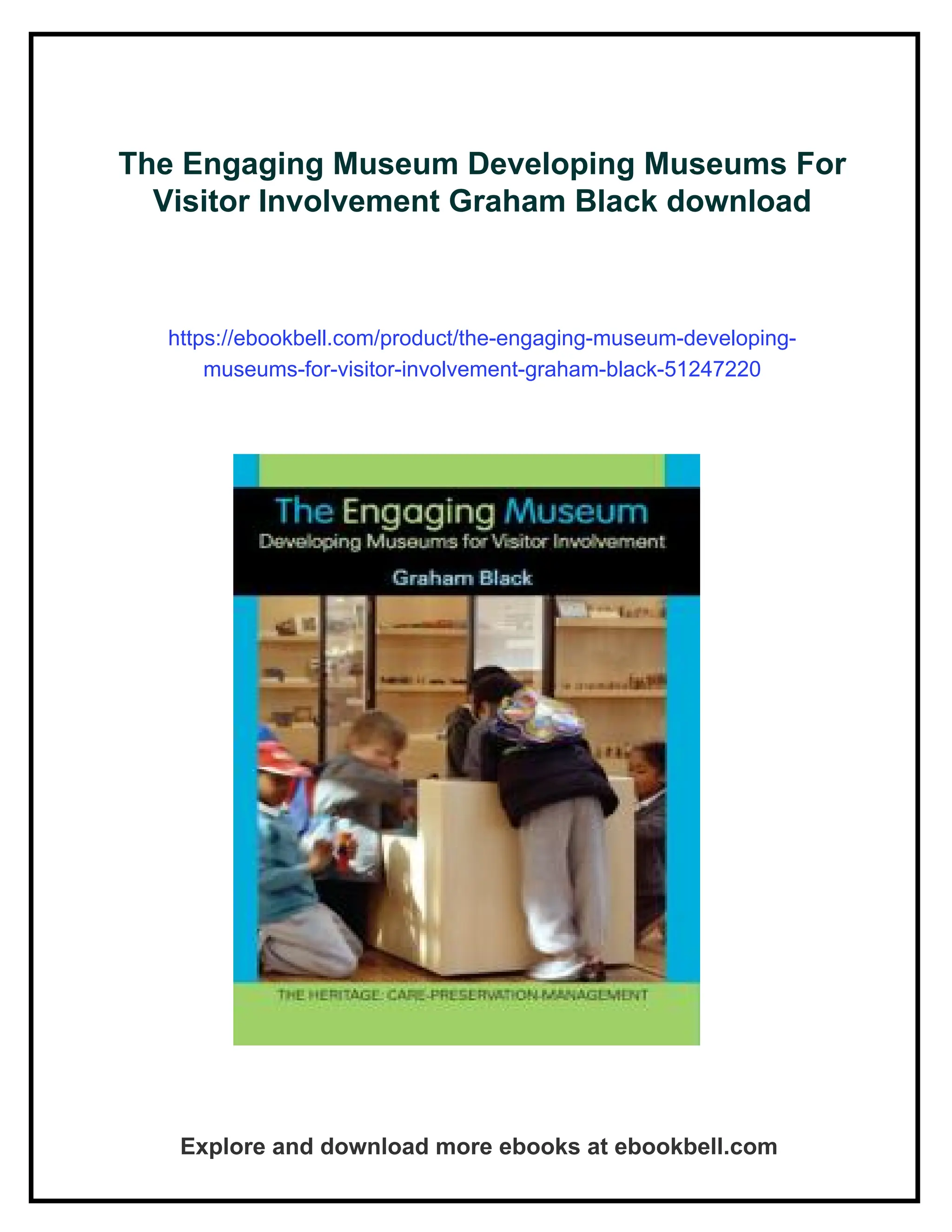
The Engaging Museum Developing Museums For Visitor Involvement Graham Black

  • 1.
    The Engaging MuseumDeveloping Museums For Visitor Involvement Graham Black download https://ebookbell.com/product/the-engaging-museum-developing- museums-for-visitor-involvement-graham-black-51247220 Explore and download more ebooks at ebookbell.com
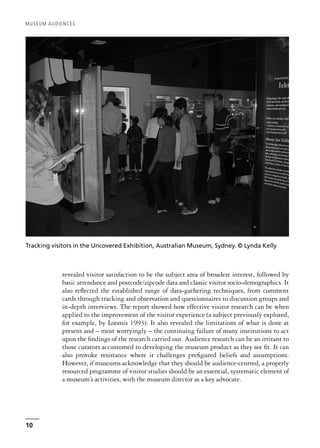
  • 2.
    Here are somerecommended products that we believe you will be interested in. You can click the link to download. Gem Engraving In Britain From Antiquity To The Present With A Catalogue Of The British Engraved Gems In The State Hermitage Museum Julia Kagan https://ebookbell.com/product/gem-engraving-in-britain-from-antiquity- to-the-present-with-a-catalogue-of-the-british-engraved-gems-in-the- state-hermitage-museum-julia-kagan-49995870 Engaging The Law In China State Society And Possibilities For Justice Neil Jeffrey Diamant https://ebookbell.com/product/engaging-the-law-in-china-state-society- and-possibilities-for-justice-neil-jeffrey-diamant-45458530 Engaging The Workforce The Grand Management Challenge Of The 21st Century Nicos Rossides https://ebookbell.com/product/engaging-the-workforce-the-grand- management-challenge-of-the-21st-century-nicos-rossides-47290176 Engaging The Emotions In Spanish Culture And History Luisa Elena Delgado https://ebookbell.com/product/engaging-the-emotions-in-spanish- culture-and-history-luisa-elena-delgado-49156386
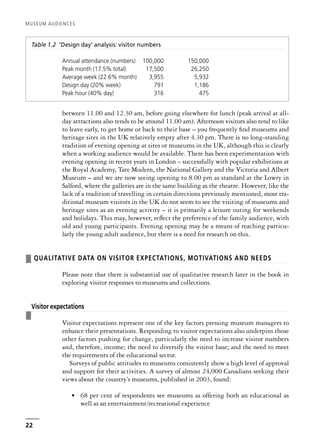
  • 3.
    Engaging The MovingImage Nol Carroll https://ebookbell.com/product/engaging-the-moving-image-nol- carroll-50349780 Engaging The Spirit World Popular Beliefs And Practices In Modern Southeast Asia Kirsten W Endres Editor Andrea Lauser Editor https://ebookbell.com/product/engaging-the-spirit-world-popular- beliefs-and-practices-in-modern-southeast-asia-kirsten-w-endres- editor-andrea-lauser-editor-51750608 Engaging The Past Mass Culture And The Production Of Historical Knowledge Pilot Project Ebook Available To Selected Us Libraries Only Alison Landsberg https://ebookbell.com/product/engaging-the-past-mass-culture-and-the- production-of-historical-knowledge-pilot-project-ebook-available-to- selected-us-libraries-only-alison-landsberg-51912064 Engaging The Evil Empire Washington Moscow And The Beginning Of The End Of The Cold War Simon Miles https://ebookbell.com/product/engaging-the-evil-empire-washington- moscow-and-the-beginning-of-the-end-of-the-cold-war-simon- miles-51934436 Engaging The Law In China State Society And Possibilities For Justice Neil J Diamant Editor Stanley B Lubman Editor Kevin J Obrien Editor https://ebookbell.com/product/engaging-the-law-in-china-state-society- and-possibilities-for-justice-neil-j-diamant-editor-stanley-b-lubman- editor-kevin-j-obrien-editor-51943878
  • 6.
    This very practicalbook guides museums on how to create the highest quality experi- ence possible for their visitors. Creating an environment that supports visitor engage- ment with collections means examining every stage of the visit, from the visitor’s initial impetus to go to a particular institution, to front-of-house management, to the way the collections are displayed and qualitative analysis afterwards. This holistic approach will be immensely helpful to museums in meeting the needs and expecta- tions of visitors and building their audience base. Because The Engaging Museum offers a set of principles that can be adapted to any museum in any location, it will be an invaluable resource for institutions of every shape and size. Especially designed to be user-friendly, The Engaging Museum includes: • chapter introductions and discussion sections • supporting case studies to show how ideas are put into practice • a varied selection of tables, figures and plates to support and illustrate the discus- sion • boxes showing ideas, models and planning suggestions to guide development • an up-to-date bibliography of landmark research The Engaging Museum will appeal internationally to students and teachers from a wide range of postgraduate museum courses in museology, museum studies, gallery studies, heritage studies and management, as well as those studying tourism and visitor attraction management. It is also highly relevant to any professional planning a new museum exhibition or applying for grant aid for exhibition development. Graham Black is a senior lecturer in Museum and Heritage Management at the Nottingham Trent University. He is also a professional interpretation consultant and his exhibitions have won the £100,000 Gulbenkian Prize, a Museum of the Year award, the Special Judges Prize at the Interpret Britain Awards and the English Tourist Board’s ‘England for Excellence’ Tourist Attraction of the Year Award. The Engaging Museum
  • 7.
    ❚ THE HERITAGE:CARE-PRESERVATION-MANAGEMENT The Heritage: Care-Preservation-Management is a series designed to meet the needs of both practitioners and academics in the global museums and heritage community. Each volume has strong practical foundations, integrated with awareness of the rele- vant conceptual frameworks. The new generation of HCPM titles takes full account of the many developments that have occurred since the series was originated, to provide up-to-date support, instruction and insight for today’s readers. Previous titles include: Museum Basics Timothy Ambrose and Crispin Paine Museum Ethics Gary Edson Museum Security and Protection Edited by David Listen Representation of the Past Kevin Walsh
  • 8.
    The Engaging Museum Developingmuseums for visitor involvement Graham Black
  • 9.
    First published 2005by Routledge 2 Park Square, Milton Park, Abingdon, Oxon OX14 4RN Simultaneously published in the USA and Canada by Routledge 711 Third Avenue, New York, NY 10017 (8th Floor) © 2005 Graham Black Typeset in Garamond 3 and Frutiger by The Running Head Limited, Cambridge All rights reserved. No part of this book may be reprinted or reproduced or utilised in any form or by any electronic, mechanical, or other means, now known or hereafter invented, including photocopying and recording, or in any information storage or retrieval system, without permission in writing from the publishers. British Library Cataloguing in Publication Data A catalogue record for this book is available from the British Library Library of Congress Cataloging in Publication Data Black, Graham. The engaging museum: an interpretive approach to visitor involvement/Graham Black. p. cm. — (Heritage) Includes bibliographical references and index. 1. Museum attendance—Evaluation. 2. Museum exhibits—Evaluation. 3. Museums— Educational aspects. 4. Museums—Marketing. 5. Museums—Management. 6. Museum techniques. 7. Museum visitors. 8. Interpretation of cultural and natural resources. 9. Cultural property—Protection. 10. Cultural property—Management. 11. Historic sites—Management. I. Title. II. Series. AM7.B56 2005 069—dc22 2004061484 For my parents Routledge is an imprint of the Taylor & Francis Group, an informa business – ISBN13: 978–0–415–34556–9 (hbk) ISBN13: 978 0–415–34557–6 (pbk)
  • 10.
    Preface ix Acknowledgements xi Introduction:meeting the demands placed on the twenty-first century museum 1 Section 1 Museum audiences: their nature, needs and expectations 7 1 ‘Traditional’ museum audiences: a quantitative and qualitative analysis 9 Introduction: the rise of museum visitor studies 9 Audience segmentation 11 Market surveys 12 Quantitative visitor surveys 16 Qualitative data on visitor expectations, motivations and needs 22 Discussion: an audience in decline – trends and challenges 37 Case study: lessons from tourism research 41 2 Developing new audiences 46 Introduction 46 Social exclusion and museums 48 Audience development 51 Audience development planning 61 Discussion: how will an audience development strategy impact on a museum’s public face? 64 Case study: developing museum content for young children and families with babies/young children 66 Section 2 Operating for quality 75 3 Stimulating the visit 77 Introduction 77 Awareness 78 Entrenched negative attitudes 79 v Contents
  • 11.
    The ‘wrong’ positiveperceptions 80 Positioning the museum 81 Influencing the visitor agenda 86 Positive marketing 86 Marketing to diversify the audience base 87 Discussion: seven core issues 88 Case study: repositioning Manchester Art Gallery 91 4 Visitor services: operating for quality 96 Introduction 96 A central role for visitor services 97 How do you define quality in a museum visit? 101 Measuring visit quality 103 Discussion: managing for quality 109 Case study: adapting Servqual to measure visitor services quality 113 Section 3 Learning in museums 121 5 Museums and lifelong learning 123 Introduction: the rise of ‘learning’ up the museum agenda 123 Museums and lifelong learning 125 Learning theory and museums 128 Discussion: applying learning theory to museum display and support 147 Case study: evaluating visitor learning in museums 150 6 Use of museums by schools 157 Introduction: museums and structured educational use 157 The agenda for structured educational use 159 How can museums best support schools use? 160 Discussion: enjoyment and memories come first 171 Case study: education resource packs/websites 173 Section 4 Planned to engage: using interpretation to develop museum displays and associated services 177 7 Applying the principles of interpretation to museum display 179 Introduction: what is interpretation? 179 Modern museums and interpretation 183 Defining interpretive principles for museum display 185 Discussion: the impact of interpretive principles on museum display 208 Case study: exhibition standards/guidelines 209 8 Interpretive master planning 211 Introduction 211 Developing an interpretation strategy for a museum service 214 CONTENTS vi
  • 12.
    Developing an interpretationmasterplan for a multi-collection museum 226 Discussion: the role of the project manager 230 Case study: process mapping 232 9 Concept development for museum galleries 239 Introduction 239 What: the collections audit 240 Why: aims and objectives 240 Who: specific audience targets 241 How: developing the concept and turning it into reality 242 Discussion: the impact of interpretive planning 255 Case study: a design brief for a small gallery at New Walk Museum, Leicester 258 10 The engaging museum 266 Introduction 266 The ‘big picture’ – a museum for the twenty-first century 268 Direct engagement with objects 271 Discussion: satisfying museum experiences and visitor take-aways 284 Case study: the visitor response 286 Bibliography 289 Index 302 CONTENTS vii
  • 13.
    It is awonderful time to be working in museums – at long last audiences are being given the priority they deserve. This book seeks both to add to the debate on how most effectively to engage audiences with collections, and also to support in a practi- cal way those trying to achieve this. It makes no claims to be the only way forward, but will hopefully provide rich food for thought. The book has two sources of origin. One lies in my role over the last 20 years as a consultant interpreter, where I have spent a lot of my time training curatorial staff in interpretive principles, planning and techniques. The other lies in my role as a teacher, introducing a new generation of future museum professionals to the delights of engaging audiences. The two came together in my need for a text that would provide the groundwork from which I could build. There are a number of excellent books introducing environmental interpretation and interpretive planning, but I did not feel that any of them really sought to apply interpretive principles and tech- niques to the museum world. Equally, there is a huge library of museum texts now available, but I feel strongly that museum literature has lost touch with interpreta- tion (and vice versa) over the last 20 to 30 years, so there was nothing that specifically fitted my needs. So the book started with the intention of introducing an audience of museum pro- fessionals and trainees to a practical interpretive approach to museum and exhibition development. From there it grew. As interpretive planning encompasses all aspects of museum and exhibition development, and as I am committed to a holistic view of the museum visit, it proved essential to provide a background for visitor studies, image projection and visitor services. Because, like many museum professionals, I am committed to sharing my enthusiasms with as broad an audience as possible, a dis- cussion of approaches to audience development and to meeting the needs of diverse audiences was central. As interpretive planning includes defining target audiences and then setting out to meet their needs it was equally essential to include, for example, the ‘building in’ of relevant project work for structured educational users. Because, like all interpreters, I believe that direct visitor participation leads to learn- ing, it was necessary to engage in the wider learning debate – and the physical impact of a commitment to learning on museums. At the same time, I was also seeking to expand the range of ‘interpretive princi- ples’ that I use to underpin my own work specifically to reflect the circumstances of museums which are, in many ways, different to those pertaining to environmental ix Preface
  • 14.
    interpreters or parkvisitor centres. To do so meant not just listing them (adequate for me in my consultancy work), but also providing a justification to a wider audience. The end result is a very practical book immersed within an academic text. I make no apologies for this. The objective of the book is to outline best practice as I see it, and to support this with a thorough academic underpinning. I hope that people who use this book will not only find that it helps them to think through practical approaches to individual projects, but also that they will have no difficulty in commu- nicating why the approach they have selected is the most appropriate for their specific circumstances. Graham Black Nottingham, 2005 THE ENGAGING MUSEUM x
  • 15.
    I must beginby expressing my absolute gratitude to Lynda Kelly, head of the Aus- tralian Museum Audience Research Centre; Kym S. Rice, Assistant Director, Museum Studies Program, George Washington University; and Pat Sterry, Director of the Centre for Heritage Studies, University of Salford. They very generously agreed to read and comment in depth on the bulk of the book. Without their support, the book would not have what depth of understanding it has. Errors, of course, remain my own. I would also like to thank, in chronological order, Diane Lees, Director, UK National Museum of Childhood; Sally Manuireva, Project Manager for the Weston Park Museum, Sheffield redevelopment; and Nick Gordon, site manager of New Walk Museum, Leicester, for helping me get to grips with the practical application of interpretive principles to major new museum developments, and for their help in tracing images. Others who gave invaluable assistance included: Emily Allen for allowing me to quote from her work on Musequal. Robin Conway for saving me comprehensively when my computer tried to die. John Cross of Adult Learning Australia for an inspiring ‘virtual conversation’ on the nature of adult learning and on the central importance of reflection. Larry DeBuhr for his comments on interpretation at botanic gardens and provision of a copy of the Chicago Botanic Garden model. Annie Delin for kindly permitting me to use some of her material on disability access and for commenting on chapter 2. Janet Elkington and Olwyn Ince for the substantial amount of work they did to make my text usable by the publishers. Kate Farmery, head of Marketing and Business Development, Manchester City Galleries, for her invaluable assistance on the chapter 3 case study. Isabelle Frochot of the Université de Savoie, France, for allowing me to refer in detail to her work on Histoqual and for commenting on my text. Nancy Fuller of the Center for Museum Studies, the Smithsonian Institution, Washington DC, for her support and for putting me in contact with a number of people in the USA. Liz Gilmore, Outreach Manager for Families and Young People, National Gallery, London for sharing her experience with me. Jo Graham for her commitment to young children in museums and sharing her ideas and expertise with me, particularly in the case study in chapter 2. xi Acknowledgements
  • 16.
    Pamela Clelland Gray,Manager of Education and Public Programmes at the National Portrait Gallery, Canberra, for reading and commenting on chapter 5 and for adding to my reflection/reverie conversation with John Cross. Phil Hackett, Assistant Director Visitor Operations, English Heritage West Mid- lands Region, for his comments on chapter 4. Emily Johnsson of the London Museum Hub for giving me access to her research, for her comments on chapters 5 and 6 and for her help in locating images. Eric Langham for his comments on chapter 2, for giving me access to some key research material and for his help in tracing images. Kevin Osbon, Steven Fletcher, Anthony Barber and Mike Lee for keeping me focused at all times (or, at least, all hours!). Liz Wilson, of East Midlands Museum Hub, for her comments on chapters 5 and 6, and for pointing me in the direction of key additional material. My university colleagues – Stuart Burch, Angela Phelps, Deborah Skinner and Neville Stankley – for their practical and moral support. And finally my students on the MA Museum and Heritage Management course at The Nottingham Trent University over the last five years, who have had to put up with me as I have developed the contents of this book, have frequently halted me in my tracks with searching questions and have generally inspired me to carry on with it. Throughout the book I have tried to credit all those whose work I have consulted or adapted over the years, or who have inspired my own thinking. If I have missed anyone, it is by accident – the result of many elements of the interpretive approach being adapted constantly over time, and of my basing this book on course notes developed over a number of years. Please bring any omissions to my attention for what I hope will be the second edition. Where I have used figures and tables from other publications, I have made every attempt to locate copyright holders to obtain permission. Any omissions brought to my attention will be remedied in future editions. ACKNOWLEDGEMENTS xii
  • 17.
    Opening a heritagesite or museum collection to the public used to be easy. Art gal- leries saw their primary roles as the collection, preservation and display of artworks, and the promotion of public appreciation of these works. Museums of archaeology, history, science, etc., saw their sites as educational institutions, with a responsibility to create knowledge through the development and research of collections, and then to disseminate that knowledge through the provision of formal scholarly displays. Both types of institution believed that they did not ‘own’ their sites and collec- tions, but held them in trust for future generations. As such, they viewed the unique nature of the assets for which they were responsible as a non-negotiable background, which conditioned the purpose of and approach to their presentation. Access was almost grudgingly provided to the public in return for a sense of reverence and grati- tude, reflected in an authoritarian protection of the site – ‘temple’ architecture, cordoned routes, glass cases, security guards, ‘do not touch’ signs, etc. However in recent decades, while protection of the site or collection has remained the first priority, at least in the eyes of the profession, there have been increasing pres- sures for change in the way the material is presented to the public. These pressures have come from a number of directions – from above (governing and funding bodies), from below (audiences) and from within the profession itself. From ‘above’, there has been the gradual development of national, regional and local strategic goals for museums and heritage sites, and the relating of these directly to sites through conditions placed on public subsidy. This can be seen most clearly in the development of the roles of museums and heritage sites in: • supporting lifelong learning and structured educational provision • enhancing ‘access’, diversifying their audience base and reflecting the make-up of their communities • meeting the needs and requirements of local communities • generating income in their own right • supporting local regeneration initiatives • supporting economic and social regeneration • the drive by governments to enhance the quality and value for money of public service provision. 1 Introduction Meeting the demands placed on the twenty-first century museum
  • 18.
    From ‘below’, thegrowing demands of the ‘traditional’ white professional audience have been joined by those who have previously felt excluded from what museums and heritage sites have to offer: • The competition for use of leisure time has given the ‘traditional’ museum audi- ence much greater choice. It will only visit museums if the experience obtained matches or exceeds that provided by other activities. • The high quality requirements demanded by visitors. The traditional audience is increasingly experienced and educated. Visitors are no longer willing to be passive recipients of wisdom from on high, but want to participate, to question, to take part as equals, and to receive as high a standard of service as would be offered at any other type of leisure site. • The increasing competition from alternative information sources that individuals can control for themselves – not least the Internet. • The increasing demands from previously excluded or marginalised audiences for the right to representation and to a say in how a site or museum is managed and presented. INTRODUCTION 2 A child engrossed in a colouring and cutting activity in the Leicester Museum’s ‘Discovery Gallery’. © Leicester City Museums
  • 19.
    From within theprofession, despite continuing and at times heated debates around the issue of ‘dumbing down’, it is possible to sense: • an increasing recognition that the traditional audience is not ‘one’ but a plurality – a mass of separate audiences each seeking its own experiences and outcomes from what is basically the same product • a commitment to meeting the needs and expectations of visitors and the recogni- tion of an obligation to meet those needs by deploying the most appropriate approaches possible • a growing vision of the potential partnership role for museums in association with local communities, reflecting their histories and perspectives • a belief that heritage has a role in enhancing people’s lives and supporting com- munity regeneration – to engage/involve all audiences/potential audiences with the available sites/collections/heritage – optimising the opportunities for visitors to achieve their full potential • a belief that the work of museums can be used to broaden and retain support for conservation and retention of the heritage • a continuing passion among museum professionals to share knowledge and enthusiasm for ‘their’ subject area. Putting these elements together places very different demands on the twenty-first century museum. Rather than a repository and display facility for objects largely reflective of middle-class, western values worthily made available to the public, we see instead a more audience-centred role, reflected in Box 0.1. The items in Box 0.1 reflect a huge transformation in attitudes toward the roles of museums in society. In seeking to champion such roles, this book states unashamedly that if museum or heritage site managers believe that everyone has a right of ‘access’ to our shared inheritance in museum collections, and that museums can make a pro- found difference to the lives of communities and of individuals, they should face up to the consequences and seek a practical reflection of these ideals. This is not to deny a belief in the continuing importance of collections, their conservation and research, and the documentation related to them. However, if the museum profession is to talk about purpose at the start of the twenty-first century, the focus must be on audiences and on the role of museums in society (see, for example, Smithsonian 1996, 2002c). This book is not so much about the developing roles of museums within their communities but rather focuses on a central element of this – the concept of mus- eums responding to audiences as partners in a joint enterprise. A key step along this route is for the museum to cease to be product-led and become audience-centred in approach. To be audience-centred means taking into account the personal context of the visitor and the holistic nature of the museum visit. Museums need to think of their role in motivating and supporting visitors as three interlinked tiers, defined in Box 0.2, of which only the third is directly about approaches to museum display. The exploration of these three elements, and of their links, provides the framework for this book. Being audience-centred requires a commitment to gaining and constantly up- dating a real knowledge and understanding of visitors. Section 1 of the book explores INTRODUCTION 3
  • 20.
    what we knowof museum audiences – the nature, needs, expectations and motiva- tions of both ‘traditional’ museum visitors, and the broader audience of potential visitors – and what this should mean for the way museums develop. Museums need to talk to people on a regular basis and be flexible enough to respond to their needs. What motivated them to come in the first place? What are their expectations of the visit? What thoughts and experiences do they bring with them to the visit? What thoughts and memories do they take away with them? We must also spend time observing, tracking and listening to visitors to define what they actually do on site. Equally, museums must look at the barriers discouraging people from visiting and seek both to overcome these and to actively stimulate visits. Regular consultation INTRODUCTION 4 Box 0.1 The twenty-first-century museum A museum is now expected to be: • an object treasure-house significant to all local communities • an agent for physical, economic, cultural and social regeneration • accessible to all – intellectually, physically, socially, culturally, economically • relevant to the whole of society, with the community involved in product development and delivery, and with a core purpose of improving people’s lives • a celebrant of cultural diversity • a promoter of social cohesion and a bridger of social capital • a promoter of social inclusion • proactive in supporting neighbourhood and community renewal • proactive in developing new audiences • proactive in developing, working with and managing pan-agency projects • a resource for structured educational use • integral to the learning community • a community meeting place • a tourist attraction • an income generator • an exemplar of quality service provision and value for money. Box 0.2 The three-tier route to visitor engagement 1 Provide the stimulus to visit in the first place – this should include site image, quality of marketing and PR, word-of-mouth recommendation by previous visitors, prior personal experiences, supporting learning agendas, reflecting leisure trends, etc. 2 Place visitors in the ‘right frame of mind’ on site so that they wish to engage with collections and exhibitions – this should include operational and service quality and a sense of welcome and belonging. 3 Provide the motivation and support to engage directly with the site and/or collection – this should include quality of interpretation, learning provision and displays.
  • 21.
    and evaluation iscritical. The importance of this approach cannot be overestimated – it is a framework for continual improvement. Section 2 examines the importance of the external image presented by museums and the quality of visitor services on site, in terms of placing visitors in the ‘right frame of mind’ to engage with collections. For visitors to have a quality experience, museums must promote a positive but accurate external image, provide a ‘sense of occasion’ on arrival, welcome them as equals, meet the highest possible standards of service and do their best to encourage audience motivation to become involved. From the moment of arrival, operational quality also means ensuring that belief in, com- mitment to and enthusiasm for the site and collections shine through. Equally, through the visitors’ stay, museums must be able to respond to their expectations in a way that meets the increasingly high demands of audiences accus- tomed to quality service standards elsewhere and to insist that these are provided by museums. The concept of quality has always been fundamental to museums and gal- leries, in terms of site, collections, etc. Now the museum profession must appreciate that quality standards should also be applied to every aspect of public provision, from front-of-house operations to exhibitions and associated services. Nor is this a one-off activity. All of us must recognise that, over time, expectations will change – so pursu- ing the quality agenda is a dynamic concept. Aspects of this have been recognised for some time but, beyond a few enlightened museums, visitor services specialists are a rarity and there is little momentum to achieve, let alone further develop, quality standards. A key challenge is, therefore, to seek to outline an approach that responds to the quality agenda for museums in the twenty-first century and to provide a posi- tive direction forward for museums and galleries to enable that agenda to be achieved. Section 3 introduces the concept of the museum as a learning environment. This issue is currently at the top of the political agenda for museums across western society, and much has been written on the subject in recent years. The section does not attempt to repeat previous work, but instead focuses on key practical questions. If we accept the potential for museums as learning institutions, what do the relevant learn- ing theories mean in terms of the physical way that collections are presented, and the ways in which we should support this presentation to meet the differing needs of users – effectively in terms of how we develop ‘learning environments’? The section looks briefly at provision for structured educational users, particularly schools, but concen- trates on the non-structured learning experience of the independent visitor. Finally Section 4, the largest in the book, attempts to bring together the conclu- sions reached in earlier chapters to build up a picture of the principles and planning processes involved in seeking to create the ‘engaging museum’, looking service-wide as well as at the master planning for individual sites and at concept development for individual exhibitions. In the past, exhibitions were the key means by which museums sought to communicate with their audiences. Now they are only one of a range of elements in a museum visit, although still the most important one. Also, where exhibition development was once the domain of the curator, it is now a team effort and where once the priority was scholarly display, the objective now is the pro- duction of audience-centred participative and engaging exhibitions, but ones still underpinned by academic rigour. A ‘one size fits all’ approach – the very basis of most INTRODUCTION 5
  • 22.
    past and currentmuseum exhibitions – will not work in presenting collections to twenty-first century audiences. Museums must seek to provide both a palette of display approaches and a layering of content, to meet the needs of different audiences and support their engagement with collections. Finally, a brief word on the structure of the book. The approach seeks to be pro- gressive in the sense that its contents, framed around the three tiers defined in Box 0.2, are intended to build inexorably toward chapter 10 (and beyond). Having broken the book into four sections, I provide a brief introduction to each. I then provide a structure for each chapter, finishing with a brief discussion and a ‘case study’. I am not sure the latter is the correct term, but have failed to come up with a better one. What I seek to do in the case study is to highlight an issue relating to the chapter that provokes thought from a different angle. Some of these are straight- forward – for example, I have a straight site case study at the end of chapter 3. Others are tangential – for example, I use the case study at the end of chapter 1 to contrast the way tourism researchers interpret the quantitative data they gather with that of museum researchers studying the same audience segments. INTRODUCTION 6 Exhibition previews at Manchester Art Gallery now attract a more diverse audience. © Manchester Art Gallery
  • 23.
    ❚Instead of onlyplacing our objects on pedestals, it’s time we placed our visitors on pedestals as well. McLean (1993: 5) Once we recognise that the public face of our museums must be audience- centred rather than product-led, the central challenge for museums at the start of the twenty-first century becomes: • to understand the nature, motivations, expectations and needs of existing audiences, and to build an enduring relationship with them (chapter 1) • to develop and then retain new audiences (chapter 2). The starting point in planning a strategy to meet these objectives is to find out about visitors and non-visitors. This section explores: • available quantitative information on the nature and extent of existing and potential audiences • qualitative material on visitor needs, motivations, perceptions and expec- tations as well as the visitor response to the whole experience • the impact of current trends in leisure activities • the identification of non-visitors, the barriers that prevent their use of museums and ways in which these barriers can be removed or reduced. The objectives are both to underline the need for individual sites to gain a real understanding of their own actual and potential audiences, and of how more general leisure trends are influencing these, and also to show how essential it is that museums then use this understanding to underpin future policies as they strive to develop the ‘engaging museum’. 7 Section 1 Museum audiences: their nature, needs and expectations ❚
  • 24.
    ❚ Our mission isto educate. We cannot do that if we are not serving visitors. We cannot survive if we are not assessing and satisfying the needs of our constituents. Hill (2001: 12) ❚ INTRODUCTION: THE RISE OF MUSEUM VISITOR STUDIES The analysis of audiences and potential audiences for museums is usually defined as ‘market research’, although this term does not define the full range of participants researched (for example sponsors, corporate users, etc.). However, this type of activity represents only a part of the work now being carried out by museums as they seek to develop a fuller understanding of visitors, their motivations, needs and expectations, the way they explore and engage with exhibits, staff and each other, and what they gain from the experience. This much wider exploration now comes under the heading of ‘visitor studies’, still a relatively new activity in museums, although its origins date back over 80 years. A brief summary of the development of museum visitor studies can be found in Hein (1998) or Kelly (1998), and a fuller one in Loomis (1987). The visitor surveys carried out in the 1950s by David Abbey and Duncan Cameron, at the Royal Ontario Museum in Canada, are generally acknowl- edged to be the first systematic visitor surveys undertaken in museums (Rubenstein and Loten 1996: 3). The substantial development of visitor studies first occurred in the USA in the 1960s, although it was not until 1988 that the First Annual Visitor Studies Conference was held in Jacksonville, Alabama. In 1989 the Committee on Audience Research and Evaluation (CARE) was established as a standing professional committee of the American Association of Museums, while the USA Visitor Studies Association was formally incorporated in 1992. Visitor studies first became estab- lished in the UK and Australia in the 1970s. Across the western world, rapid growth in museum visitor studies only occurred in the 1990s. This included the establish- ment of the Visitor Studies Association in Canada in 1991, the Evaluation and Visitor Research Special Interest Group (EVRSIG) of Museums Australia in 1995 and the Visitor Studies Group in the UK in 1998. Thanks to a study commissioned by Museums Australia (Reussner 2003), we know most about the current state of visitor studies in Australian museums. This 9 1 ‘Traditional’ museum audiences: a quantitative and qualitative analysis
  • 25.
    revealed visitor satisfactionto be the subject area of broadest interest, followed by basic attendance and postcode/zipcode data and classic visitor socio-demographics. It also reflected the established range of data-gathering techniques, from comment cards through tracking and observation and questionnaires to discussion groups and in-depth interviews. The report showed how effective visitor research can be when applied to the improvement of the visitor experience (a subject previously explored, for example, by Loomis 1993). It also revealed the limitations of what is done at present and – most worryingly – the continuing failure of many institutions to act upon the findings of the research carried out. Audience research can be an irritant to those curators accustomed to developing the museum product as they see fit. It can also provoke resistance where it challenges prefigured beliefs and assumptions. However, if museums acknowledge that they should be audience-centred, a properly resourced programme of visitor studies should be an essential, systematic element of a museum’s activities, with the museum director as a key advocate. MUSEUM AUDIENCES 10 Tracking visitors in the Uncovered Exhibition, Australian Museum, Sydney. © Lynda Kelly
  • 26.
    ❚ AUDIENCE SEGMENTATION Nointroduction to visitor studies can begin without a basic understanding of market segmentation. Audience appraisals and most visitor surveys provide basic quantitative data on audiences. As marketing tools, both use established market segmentation techniques to provide audience breakdowns. Classic market segmentation breaks down ‘traditional’ heritage audiences in terms of: 1 Demographics, i.e. age, gender, education, class/occupation. Family status is heavily used in heritage segmentation, as it can be such a major predictor of behaviour (dependant; pre-family; family at different stages; older marrieds and empty nesters). In the past, ethnic origin has been a rare factor in visitor surveys, but this is changing as museums seek to respond to the needs of local communities and broaden their audience base. 2 Geography, i.e. resident/local, day tripper, national/international tourist. 3 Socio-economics – although the UK government introduced a new National Statis- tics Socio-Economic Classification (NS-SEC) in 2000, the JICNAR (National Press Joint Industry Committee on National Audiences and Readership) classification is still the most commonly used by heritage sites and museums in the UK because it enables comparisons to be made with previous surveys. The groups are classified as: A higher managerial, administrative or professional B middle managerial, administrative or professional C1 supervisory, clerical or managerial C2 skilled manual workers D semi- and unskilled manual workers E pensioners, the unemployed, casual or lowest grade workers. 4 Structured educational use, i.e. primary/elementary (to age around 11/12), secondary/ high (aged around 11 to 16/18), student (college/university) 5 Special interest, i.e. subject specialist, self-directed learning, booked group, for example, a local history group. This can also be referred to as a part of behaviouristic segmentation, linking groups of people according to interest in or relationship with particular subjects/products. 6 Psychographic segmentation which relates to lifestyles, opinions, attitudes, etc. This is still infrequently used, although it is becoming more common to hear references to these terms as museums increasingly take leisure trends into account. ‘TRADITIONAL’ MUSEUM AUDIENCES 11
  • 27.
    ❚ MARKET SURVEYS Marketsurveys, providing quantitative information on potential audiences, are examined first, largely because they provide essential baseline data on the nature of potential target audiences. This can allow museums both to prioritise interpretation toward the needs of defined audiences and, at a later stage, to evaluate their effective- ness in actually attracting the audiences they have set out to achieve. Owing to the expense involved, a general market survey/assessment of audience potential (often called ‘audience appraisal’ in the UK) is normally only carried out as part of a feasibility study and grant application preliminary to the creation and mar- keting of a new or substantially revamped museum – and normally only defined in terms of actual numbers rather than other factors. Its functions are to assist in estab- lishing the viability of the project and in drawing up the business plan, and to ensure that the proposed scheme can cater for the likely visitor numbers and types and operate within the likely available budget. Because of the links to market analyses and business plans, this sort of research also tends to concentrate on traditional audi- ences and to largely ignore under-represented groups which are unlikely to make an immediate impact on the perceived ‘success’ of a project, if this is measured largely in terms of visitor numbers. ❚ A basic market appraisal Much of this sort of work tends to be carried out, often at considerable cost, by a leisure consultancy, which will define the likely market in terms of the potential audience, seen through the usual market segments (see audience segmentation above) and the quality of communications. Linked to the latter, the consultancy will break down the local resident and day trip market in terms of 30-minute, 30- to 60-minute and 60- to 90-minute drive-time. The consultancy will attempt to assess the likely level of ‘audience penetration’ – i.e. what percentage of the defined potential audiences a site or museum could or should aim to attract – through an analysis of the proposed ‘product’ in terms of con- tents, identity, image, branding, price and the like, and the attractiveness of this package to the potential market. It will take into account: • the scale of the audience for other museums and visitor attractions in the catch- ment area of the project • the audience for similar museums and related sites • the physical location of the project – nationally, regionally, locally; other features nearby which could encourage additional use; long-term development proposals for the area, etc. • the location/place of the project within the attraction spectrum. The end result should be defined visitor projections for the museum, usually for years one, three and five after opening. They will often quote a top, median and bottom MUSEUM AUDIENCES 12
  • 28.
    estimate, take proposedadmission charges into account where relevant – and always add the proviso that the suggested figure(s) depend on the eventual contents and quality of the product itself, its marketing and its daily operation. ❚ Visitor projections and the business plan Visitor projections are a crucial element in developing an ongoing business plan, par- ticularly for a museum that is not in receipt of substantial revenue or endowment support. They will impact on both income estimates and expenditure. Their influence on estimates of revenue income will include: • an outside analysis of the suggested product, especially can it achieve the visitor targets sought? • an assessment of visitor numbers, including the percentage of each target segment for the: – variation in numbers and nature through the year – estimated average entrance charge (projected from likely adult, concession, group and discounted ticket sales) – estimated shop spend per head – marketing targets to aim at – planned seasonal promotions. • comment on suggested pricing levels, especially their likely impact on visitor levels • comment on potential levels of secondary spend. Their influence on forward planning for revenue expenditure will include com- ment on: • staffing required at different times of the year to cater for projected visitor numbers • opening periods/hours • maintenance programme likely to be required • marketing spend required • timing and funding of events, temporary exhibitions, major renewals, etc., to attract and retain audiences. ❚ Can we believe visitor targets defined by market surveys? In recent years, the UK has witnessed a series of high profile new museums and heri- tage-type attractions fail abysmally to achieve their visitor targets, the most potent symbol being the spectacular failure of the Millennium Dome in London to come near its targeted 12 million visitors. The visitor projections for the chief UK culprits – the Millennium Dome, the Royal Armouries in Leeds, the National Centre for Pop Music in Sheffield, the Earth Centre near Doncaster, the Cardiff Centre for the Visual Arts and the Welsh National Botanic Garden (and others currently ‘at risk’) must be ‘TRADITIONAL’ MUSEUM AUDIENCES 13
  • 29.
    seen in context,however. They formed a key element in the development of business plans that were designed to show that the sites would be financially self-sustaining in the medium and long term. Clearly those wanting to see their projects happen would be their own worst enemies here, in terms of a willingness to believe high visitor targets were both achievable and sustainable. Of course, it is not always bad news. At the Eden Project in Cornwall, visitor numbers have vastly exceeded original projec- tions. Does this all mean visitor projections are a nonsense? Because a market survey approach has been used in the wrong way it does not make the process itself unten- able. Far from it – ask any big retailer how it selects sites for stores, or check how to research locations for any roadside café chain. It is a very professional business. So why do visitor projections for museums and heritage sites seem so fickle? There is always the suspicion that the political impetus behind these projects encourages a rose-tinted view, or at least discourages a more conservative analysis. While this can never be proven, what is certain is that market surveys carried out by national consul- tancies rarely take specific local circumstances adequately into account – and these will normally reduce the likely audience. For example: • The precise physical location can have a huge impact – ask any retailer about this. • The use of travel patterns for day-trippers means there will not be an equal spread from across the 60-minute drive time area. Much depends on a tradition of travel- ling in a certain direction. • Unless the museum is in an established tourist destination it is unlikely to attract many independent tourists or coach tours. • The contents of a site may put off a member of the crucial family audience and so hugely reduce your trade – for example, in the UK, the Royal Armouries spe- cialises in weapons, not always attractive to women or as a destination to which parents wish to bring children. • The approach the museum is proposing to take to the presentation may itself be unsatisfactory as a visitor draw, or discourage use by repeat visitors. Each site is different – each must look at its own situation. This will vary from a need to develop a strong base within its local community to its ability to sustain high tourist figures from both the domestic and inbound trade. ❚ How much does a market survey approach tell us about heritage audiences now and in the future? This sort of market research, as currently carried out, is a consummate example of the use of quantitative data only. In effect the consultancy will say, here are the available market segments of the museum-going public and, using business models, here are the percentages you should receive. They pay insufficient attention to qualitative issues. They also have problems with an over-simplification of the basic segmentation process itself. Equally, such research provides little information on the motivational structure underlying the demand for heritage visits. There are two widely accepted views of how MUSEUM AUDIENCES 14
  • 30.
    demand arises oris formulated. A ‘consumer’ view will explore mass demand arising within specific segments of the market, based on demographics or lifestyle/attitude influences and, from this, attempt to generalise demand so it can be satisfied through simple formulae of design and delivery. This is the classic market research approach. The alternative is a view that a visit to a museum or gallery is motivated by an essen- tially unshareable, individual, personal or social group/family interest. From this it follows that visiting groups are market segments in their own right, selecting their personal choice of site to visit and, once there, of which aspects to view and interpret- ing the resulting experience in their own individual ways. If this view is taken, it follows that the basic market research approach will not function – one needs to take a much more sophisticated approach to the varying needs and motivations of social and family groups within market segments. The increasing attention being given to this latter view appears to parallel a similar shift in consumer demand toward greater freedom of choice, customisation and individual service. It is hard not to agree that segmentation approaches are at best a vague approximation because museum visitors are motivated principally by personal interest and this does not always coincide with other more convenient indi- cators such as age, gender, family status or lifestyle. Within at least the marketing of museums and heritage attractions, there is a real tension discernible between mass segmentation and the needs of individual visitors. Yet the museum or heritage product (the site/collection) is perceived as the opportunity to experience something out of the ordinary, something entertaining, sensorially stimulating, ‘magical’. Should this make museums easier to tailor to individual needs? ❚ A sustainable audience? Experience suggests that maximising audiences is the wrong approach to take; yet this is the approach on which most visitor projections are based. In terms of traditional audiences, what really matters is not year-one figures for a new or largely redisplayed museum, but those achieved in years three and beyond when a project is no longer new or a tourist destination has lost its initial attraction. Most museums and heritage sites are not located in areas that are major tourist destinations. They depend on local resi- dents, day-trippers, schools and visitors staying with friends and relatives (VFRs). For those which largely depend on admission charges for their revenue income there is a real risk, if they seek to maximise their audience, that everyone who wants to come will have done so within three to five years of opening – but the site will have no money to make the major changes needed to bring people back. Having been closely involved in it, I can refer to one such example (see Figure 1.1). The swift decline in audience attendance at The Tales of Robin Hood exhibition, Nottingham, UK, was not due to the poor quality of the exhibition – the winner of many awards – but to the lack of a renewable audience and of the funding required to redevelop the product. The current approach to market surveys therefore needs a careful re-examination, not only in taking both local influences and family/social group needs into account but also in the way targets are arrived at. It is far better to plan for a realistic, attainable and ‘TRADITIONAL’ MUSEUM AUDIENCES 15
  • 31.
    sustainable audience –by which I mean a stable annual attendance. In financial terms, this will allow museum managers to work to a budget known to be achievable and to cut marketing spend, but it will also mean no museum or heritage site should rely on visitor income covering more than 50 per cent of revenue costs (for museums, with substantial collections to support, I would say preferably no more than 30 per cent). It should also enable museums to enhance the quality of the visitor experience by design- ing and staffing to cater for specific targets. ❚ QUANTITATIVE VISITOR SURVEYS Visitor surveys are much more commonplace than full-scale market survey exercises – they are in fact the most common form of visitor study. While most visitor projections are there to set overall targets (from traditional audiences), surveys will reveal what percentage of those audiences is already coming. This, in turn, can enable museums to define which groups are missing or under-represented. As in visitor projections, the information recorded is there largely to meet the needs of the marketing office but surveys can also be used to form the basis for a structured approach to audience devel- opment. Many visitor surveys will also seek to look at the impact of the museum visit, exploring visitor satisfaction, learning and other potential elements that can be meas- ured to reflect museum or government policies. Visitor satisfaction surveys are discussed below in chapter 4, and the evaluation of visitor learning in chapter 5. Few museum visitor surveys are published and most are site-specific rather than relating to more general audience research. However, the quantitative information they contain can give us key insights into the nature of museum audiences and into visitor trends – who the visitors are (in terms of market segmentation analysis), where they are coming from, who they are coming with, how they are getting to the site and maybe how often they are coming. Hood (1993, 1996) provides an effective summary of USA surveys. Davies (1994) remains the classic quantitative ‘survey of surveys’ for museums in the UK, while MORI (2001) includes analyses of life-stage MUSEUM AUDIENCES 16 Figure 1.1 Product life cycle: visitors to The Tales of Robin Hood, Nottingham 1989/90 Introduction 135,000 visitors 1995/6 Decline 120,000 visitors Saturation Maturity Growth 1991/2 Peak 214,000 visitors
  • 32.
    profiles, regional differences,social class and ethnicity and the attitudes of school- children as well as limited comment on the impact of changing leisure trends. ❚ What the surveys reveal: who visits museums? Davies suggests most age ranges are represented relatively equally in UK museum audiences, but with smaller percentages for 16- to 24-year-olds and those over 55 years old. The more recent MORI survey suggests increasing problems in attracting the adult audience under 35 years. Rubenstein and Loten (1996) place most adult museum visitors in Canada within the 35 to 44 age range. At the Australian Museum, Sydney, 28 per cent of visitors are within the 35 to 49 age range, 25 per cent are over 50 and 22 per cent are aged between 25 and 34 (AMARC 2003). People tend to visit in groups or families, as a social outing, rather than on their own, although more people go on their own to art galleries. At the Australian Museum, Sydney, 45 to 55 per cent of visitors come in family groups, 15 per cent come with a partner, 15 per cent come alone and around 15 per cent come in organised school parties. Potentially, up to 33 per cent of museum visitors are under 16, making it highly likely that 60+ per cent of visitors include children in the group – either as families or on organised school trips. Rubenstein and Loten state that, for Canadian museums, family groups are the key audience, particularly baby boomers with their children. Percentages will, however, vary from site to site and exhibition to exhibi- tion, depending on the approach taken to the presentation, marketing and operation of the site, and specific exhibitions and programmes. The two genders are relatively equally represented at museums, with perhaps a slight majority of females, although this is dependent on the nature of the site – in Canada, for example, art gallery audiences are 60 per cent female and 40 per cent male (Rubenstein and Loten 1996). Much less information is available on the ethnic origin of visitors, although what there is suggests strongly that non-white visitors are under-represented. The MORI survey (2001) suggested just under 30 per cent of white and Asian people in the UK visited museums and galleries in the 12 months up to November 1999, but only 10 per cent of black residents. For Canada, Rubenstein and Loten suggest most visitors are either local residents or tourists. In the UK, the research suggests most visitors prefer to travel no more than one hour to a museum, which is crucial in defining catchment areas. This can vary depending on the scale and popularity of the site and whether it is on a green- field location with easy access and free parking or in a traffic-packed city centre, but it rarely takes more than 1.5 hours. A market survey of museums in the East Mid- lands carried out in 1994–5 (one of the largest of its type carried out in the UK) showed that 83 per cent of visitors travelled less than one hour, with 60 per cent trav- elling less than half an hour (East Midlands Museums Service 1996). These are the classic local resident population and ‘day-trippers’, generally domestic residents, who make up the core market for most heritage sites and museums, except for those in some of the major tourist destinations, including London. Most museum visitors in the UK, except in central London, travel by car. In general, they do not wish to travel ‘TRADITIONAL’ MUSEUM AUDIENCES 17
  • 33.
    too far giventhey have only one day or less for their leisure activity. From the limited research available, local people represent the bulk of repeat visitors, reflecting an unwillingness to travel much more than 30 minutes to revisit a site. Some day trips can require pre-planning and booking but the majority do not, which means they can be a spontaneous decision. The weather can, not surprisingly, be a real influence on choice. For sites outside the major tourist destinations, by far the most substantial tourist audience at UK sites is the VFR and the accompaniment of VFRs also accounts for a substantial proportion of repeat visits by local residents – people want to, or feel obliged to, take visitors out and preferably to places they have been to and liked. The VFR market is notoriously difficult to measure as it is mostly domestic, comes in its own transport and does not stay in commercial accommodation – so there is very little data on its scale. The general view, however, is that it is increasing as families and friends are separated by work and other reasons and more people have cars and housing that can accommodate visitors comfortably. One perhaps surprising factor seems to be the importance of students to this market, as they study away from home, make new friends and visit each other, and are visited by family and friends. However, the most striking evidence from visitor surveys, revealed by any analysis of adult museum visitors, is that the largest group and the most over-represented in comparison to their percentage within the general population, consists of the better educated, more affluent, white professional classes (even more extreme for art galleries than for museums). The average educational profile among visitors at the Canadian MUSEUM AUDIENCES 18 Conducting a focus group with older audiences, Bathurst, New South Wales. © Lynda Kelly
  • 34.
    Museum of Civilisationshows 48 per cent with some university education or higher, 22 per cent with pre-university college, 22 per cent with high school and only 8 per cent with elementary school (Rabinovitch 2003). Rubenstein and Loten (1996) reinforce this for Canada as a whole, stating that most adult visitors are professionals with post-secondary education. Visitor studies at the Australian Museum, Sydney, suggest 50 per cent of their audience have a university education or above (AMARC 2003). Hood (1993) summarised the traditional USA audience as ‘in the upper edu- cation, upper occupation and upper income groups . . . This social class factor applies across the spectrum of museums – from zoos, science-technology centres and chil- dren’s museums to historical sites, botanical gardens and art museums’ (Hood 1993 quoted in Hein 1998: 115–16). Why is museum visiting such a professional class pursuit? Lack of access to private transport is often given as a key reason for lack of use by lower socio-economic groups, particularly as many heritage sites are in a rural location. But visitor surveys show that, on the whole, there is no significant difference in the social class profile between rural and urban sites, where public transport is more readily available (Light and Prentice 1994: 92). High admission charges are also given as a key cause, but work by Prentice (1989) and others seems to show that manual workers were not being deterred at the gates of heritage sites by high admission charges – instead they were not arriving at the sites in the first instance. As Been et al. (2002) suggest, increasing the admission fee will only have a limited effect, more so for museums that are major tourist destinations rather than dependent on local visitors: A main reason for the limited price elasticity of visiting museums is the small share of entrance fees in the total costs of a visit: about 17 percent (Bailey et al. 1998). The other 83 percent consist of travelling expenses, food, drinks and in some cases even accommodation costs. The weight of these costs increases along with the distance to the museum. Therefore foreign tourists are hardly influenced by the level of the entrance fee. The research of Johnson (2000) confirms this thesis. Been et al. (2002: 3) Free admission was reintroduced to UK national museums in December 2001. This has resulted in a surge in their visitor numbers, which would seem to contradict Prentice. However, it will be interesting to see a socio-economic breakdown of these new audiences – early anecdotal evidence suggests they are ‘more of the same’ rather than reflecting previously under-represented groups. A central issue to consider is whether the make-up of the museum audience is limited not by constraints but rather by choice. To what extent do the professional classes see their use of at least an important part of their leisure time as comprising goal-oriented activities satisfying perceived needs, and does this go some way to explaining their disproportionate use of museums and heritage sites? Are we seeing their motivations for leisure activity deriving from learning? There is now substantial evidence that an important motive for visiting museums really is a prior interest in the past and, as a consequence, the desire for discovery, learning and understanding about the past (e.g. Thomas 1989: 86). Research suggests that the extent to which ‘TRADITIONAL’ MUSEUM AUDIENCES 19
  • 35.
    different social groupsrequire learning from their leisure time varies considerably. Patmore (1983) noted that those with more skilled and responsible occupations, and with a longer period in education, tend to lead a more varied and active leisure life. This group is also more likely to see leisure time as something to be used construc- tively. As Hood put it: they are attracted to the kinds of experiences museums offer and they find those offerings and activities satisfying . . . These folk emphasise three factors in their leisure life: opportunities to learn, the challenge of new experiences, and doing something worthwhile for themselves. Hood (1993) quoted in Hein (1998: 116) Thomas (1989: 90) noted that professional and managerial workers were more likely to visit monuments to be informed, whereas manual workers were more likely to visit for relaxation and entertainment. This subject will be returned to in chapter 5. Professional class museum visiting may also be based on past experiences. As Light and Prentice (1994: 98) put it, those activities which an individual has previously experienced as rewarding are more likely to be repeated, and so behavioural consis- tency is maintained. Important influences on this process will include the activities with which an individual has been socialised – and here the family is a key agent. Is professional class heritage visiting self-perpetuating, passed on from one generation to the next? Production or supply of heritage is similarly, and traditionally, in the hands of the professional classes, who make up the bulk of museum curators. So, white professional-class producers define, present and interpret museum collections, and heritage in general, for white professional-class consumers. The presentation of heritage resources inevitably reflects the values and philosophies of their producers. Museums will have to work very hard to break this cycle. ❚ When do people visit? It is vital to consider not only how many visitors a museum will receive and who they are, but also when they will come and how long they are likely to stay. Visitor throughput is a crucial issue for the business plan, for the physical layout, and for the provision of activities, etc., that a museum is proposing, as well as for the quality of the visitor experience. The figures given in Table 1.1 are a summary based on audi- ence analyses I have been involved in, and from my experience of a range of sites. The figures are only a guide – it is vital to produce site-specific ones. The ones produced here may attribute too high a percentage to August, but they provide a useful start- ing point for comparison with actual sites. As the table shows, there is wide seasonal variation in visitor numbers and, in the UK at least, attendance is normally linked closely to school holidays. While Easter Monday is likely to be the busiest day, the peak month is normally August, with 17–20 per cent of the annual total. The worst months are November and December, where only 2–3 per cent of the annual total is not uncommon, reflecting the poor weather in the UK and an annual engagement in the ritual of Christmas shopping. MUSEUM AUDIENCES 20
  • 36.
    January can beequally bad, reflecting the penury to which people are reduced by Christmas excesses. Clearly these figures will vary from country to country. Research at the Australian Museum, Sydney, suggests their busiest time is during the winter school holidays in July, followed by the latter half of January. This may be a reflection of a different sort of summer weather to that in the UK when it is so hot that people perhaps prefer the beach to a museum visit. In business plan terms, this extreme seasonality means that, for the many UK museums and heritage sites that charge admission, income streams are concentrated into the busiest weeks in the summer, at Easter and bank holiday weekends. This makes it difficult for many of these sites to provide year-round employment and ensures that most museums live on a perpetual knife-edge of uncertainty: Only 28 per cent of attractions hit maximum capacity levels, and that occurs only a few days a year (13 days of 248 days open). Most operate far below capacity most of the time. Visitors are used to visiting attractions ‘on demand’, with pre- booking being rare. English Tourism Council (2000a: 13) Seasonality also severely affects planning for site-carrying capacity, but is not alone in this. Visitor habits go beyond varying levels of seasonal use to the time of day when people like to come, reflected in the ‘design day’ analysis in Table 1.2 overleaf. The ‘peak hour’ reflects the tendency of UK users to visit city centre museums ‘TRADITIONAL’ MUSEUM AUDIENCES 21 Table 1.1 The seasonal nature of museum visiting in the UK Example Example Month % visitors Year 1 visitors Year 3 visitors January 3.1 3,100 4,650 February 3.4 3,400 5,100 March 7.9 7,900 11,850 April 9.1 9,100 13,650 May 11.9 11,900 17,850 June 9.0 9,000 13,500 July 13.6 13,600 20,400 August 17.5 17,500 26,250 September 8.6 8,600 12,900 October 7.5 7,500 11,250 November 5.9 5,900 8,850 December 2.5 2,500 3,750 100.0 100,000 150,000 Note: March and April figures will vary, depending on the location of Easter. May reflects UK school half-term. June and, particularly, July contain school activity day outings.
  • 37.
    between 11.00 and12.30 am, before going elsewhere for lunch (peak arrival at all- day attractions also tends to be around 11.00 am). Afternoon visitors also tend to like to leave early, to get home or back to their base – you frequently find museums and heritage sites in the UK relatively empty after 4.30 pm. There is no long-standing tradition of evening opening at sites or museums in the UK, although this is clearly when a working audience would be available. There has been experimentation with evening opening in recent years in London – successfully with popular exhibitions at the Royal Academy, Tate Modern, the National Gallery and the Victoria and Albert Museum – and we are now seeing opening to 8.00 pm as standard at the Lowry in Salford, where the galleries are in the same building as the theatre. However, like the lack of a tradition of travelling in certain directions previously mentioned, most tra- ditional museum visitors in the UK do not seem to see the visiting of museums and heritage sites as an evening activity – it is primarily a leisure outing for weekends and holidays. This may, however, reflect the preference of the family audience, with old and young participants. Evening opening may be a means of reaching particu- larly the young adult audience, but there is a need for research on this. ❚ QUALITATIVE DATA ON VISITOR EXPECTATIONS, MOTIVATIONS AND NEEDS Please note that there is substantial use of qualitative research later in the book in exploring visitor responses to museums and collections. ❚ Visitor expectations Visitor expectations represent one of the key factors pressing museum managers to enhance their presentations. Responding to visitor expectations also underpins those other factors pushing for change, particularly the need to increase visitor numbers and, therefore, income; the need to diversify the visitor base; and the need to meet the requirements of the educational sector. Surveys of public attitudes to museums consistently show a high level of approval and support for their activities. A survey of almost 24,000 Canadians seeking their views about the country’s museums, published in 2003, found: • 68 per cent of respondents see museums as offering both an educational as well as an entertainment/recreational experience MUSEUM AUDIENCES 22 Table 1.2 ‘Design day’ analysis: visitor numbers Annual attendance (numbers) 100,000 150,000 Peak month (17.5% total) 17,500 26,250 Average week (22.6% month) 3,955 5,932 Design day (20% week) 791 1,186 Peak hour (40% day) 316 475
  • 38.
    • 92 percent believe it is important for children to be exposed to museums • 96 per cent believe museums contribute to quality of life • 94 per cent believe museums play a valuable role in showcasing and explain- ing artistic achievements • 97 per cent believe museums play a valuable role in explaining the natural heritage • 96 per cent believe museums play a valuable role in showcasing and explain- ing achievements in science and technology • 93 per cent believe museums play a valuable role in explaining other regions and cultures • 97 per cent believe museums play a critical role in preserving objects and knowledge of Canada’s history • 60 per cent believe museums can play an even more significant role in Can- adian society. Canadian Museums Association (2003: executive summary) Traditional museum audiences see the museum/heritage visit as a relaxed, informal social outing, providing an opportunity both to learn and to enjoy oneself. However, surveys also show that the demands of these audiences are growing rapidly, as edu- cational and mobility levels rise and as people have increased experience of other locations and other types of leisure facilities. A 1994–5 survey of museums in the East Midlands of the UK, carried out for East Midlands Museums Service, included an assessment of public perceptions of museums which suggests that a quality pres- entation should acknowledge that museums: • are educational – 96 per cent agreed • are interesting – 84 per cent agreed – a smaller but unstated percentage said they were fun • provide family entertainment – 70 per cent agreed ‘in some form’ • provide good quality facilities and good quality service – 60.5 to 70 per cent agreed in some form, although 37 per cent felt they did not provide good cafés • have convenient opening times – 58 per cent agreed • offer good value for money – 61 per cent agreed. When people were asked what would encourage them to visit more often, responses included children’s facilities (14 per cent), cheaper admission charges (11 per cent), more audio-visual and inter-active displays (10 per cent), changing exhibits (9 per cent), better catering (6 per cent) and more convenient opening hours (4 per cent). In both the Canadian and the UK East Midlands examples, it is important to be somewhat wary of reports that produce exactly the results that the commissioning organisations want – it all depends on the questions asked. Frankly, for example, when asked whether you ‘believe it is important for children and young people to visit museums to learn more about our history and achievements’ (the question asked), I am surprised that 8 per cent actually said no – it is the sort of ‘feel-good’ question that naturally obtains a ‘yes’ response. Given the propensity to elicit ‘yes’ answers to such questions, the relatively low percentages approving of the facilities, ‘TRADITIONAL’ MUSEUM AUDIENCES 23
  • 39.
    service, opening timesand value for money in East Midlands museums does begin to reflect the increasingly high expectations visitors come with (even though there is still a tendency at least in the UK to think ‘I suppose they are doing the best they can’, in relation to any public sector activity). As the museum and heritage site audience is so diverse, expectations may vary depending on the individual or group involved and the precise circumstances of their visits. I cannot emphasise enough how important it is to get to know your own audi- ence. However, an amalgamation of the wide range of relevant research now available can provide a good starting point – beginning with ease of access; good parking facil- ities and public transport; convenient opening hours; good value for money; and access to staff, etc., if required. The outline list below concentrates on ‘traditional’ visitors. It does not include such potentially under-represented audiences as both young and elderly people, those with specific disabilities or those from particular ethnic minorities, all of whom will have their own expectations, some of which are explored in chapter 2. There is a growing literature on museums and young people (e.g. Rider and Illingworth 1997; Baum et al. 2001; Kelly and Bartlett 2002; Kelly et al. 2002) as this under-repre- sented group among museum audiences is increasingly targeted. There is less material available on older visitors, but for extensive research on older visitors and museums in Australia, including a detailed set of recommendations, see Kelly et al. 2002. Informal visitors For most informal visitors – in other words the vast majority of people who come – a trip to a museum is a social outing. Expectations include that: • the visit will be enjoyable, interesting and even ‘fun’, it will provide family enter- tainment, there will be things to do together – visitors want to be more than passive recipients of written information • there will be something for everyone, including good facilities for children • the visit will provide an opportunity to learn something – preferably starting from familiar concepts and moving to the unfamiliar • the site will cater for all ranges of prior knowledge, ability and age • the site will provide good quality facilities and a high standard of service • there will be a picnic site which is a real bonus for families. What is clear from both anecdotal evidence and the research available is that the demands and expectations of informal visitors are rising and there is continuing pres- sure to improve the product further. However, the responses from the East Midlands Museums survey discussed above are quite typical – museum audiences are willing to and capable of commenting on the support facilities and services at a museum but find it difficult to comment on detailed proposals for exhibition development without substantial and prolonged association with a site. See, for example, the case study on Manchester Art Gallery at the end of chapter 3. MUSEUM AUDIENCES 24
  • 40.
    Families and children Withfamilies representing such a high percentage of visitors, they are a key group to research, and it is essential both to understand and provide for their specific needs. Research with parents by the Australian Museum Audience Research Centre (AMARC 2003) suggests parents want child-appropriate exhibitions which: • allow children to learn in an enjoyable way • provide new experiences and insights • complement school-based learning • are interactive and allow them to touch and experiment • have minimal reading • are at an appropriate height • provide sufficient installations to avoid queuing • cater for a range of ages and abilities • keep parents entertained as well! Will the expectations of children be different from those of their parents? There is much less information available on children, at least in the UK, because of codes of conduct for survey workers which advise against interviewing people under 16 years of age, except in the presence of a parent or guardian. A 1997 survey examining children as an audience for museums and galleries, carried out on behalf of the UK Arts Council and Museums and Galleries Commission and based on interviews with children aged between 7 and 11 and their parents (Harris Qualitative 1997), suggests that: • children enjoy experiencing the past, including the ‘atmosphere’ and opportuni- ties to participate and dress up • children like to be able to touch and ‘do’ – to feel involved • children like interactive exhibits, computers, creative activities, competitions and trails – all very active elements • children see museum visits, at their best, as an opportunity to learn as well as have fun. They gain an enormous amount from visits relating to their schoolwork • children who have been to the site on a school trip like to come back to show their families. To these, I would add that children tend to hammer ‘hands-on’ exhibits they like and these must therefore be capable of withstanding full frontal attack. They get frustrated if the experience is disappointing, if there are large queues for popular ‘hands-on’ exhibits, or if key exhibits are broken. Their boredom threshold is low. Children also do not want to read much, as it can be too much like school and brings in issues of reading ability and reading age. They look to their parents to support them, but parents themselves often need help and encouragement in assisting their children. The approach of children who are regular museum visitors may be different. Research in America has shown that children’s concentration and self-confidence increased with regular visits, reducing rowdy and aimless behaviour. However, children’s expectations are likely to be highly subjective, reflecting their feelings for the place and whom they have come with. Museums must also look at the facilities they provide for children ‘TRADITIONAL’ MUSEUM AUDIENCES 25
  • 41.
    beyond the exhibitiongalleries. All children need to be able to let off steam. Children know what they want in the café and it is rarely quiche and salad! The shop is an important part of the visit for children and must include an exciting and affordable range of small items, targeted at their age range and pocket money. Finally, the needs of children as structured educational users will be explored in chapter 6 below. The repeat visitor I would define a repeat visitor as someone who has been to a site before and comes back infrequently for an additional visit or visits. In a non-tourist location, the only way to combat running out of visitors in the long term is to encourage people to come back, so the repeat visitor is vital to museums everywhere. The percentage of a museum audience that should consist of repeat visitors will vary, depending on how well they are catered for, on the scale of the tourist audience in the area, on the avail- ability of competing venues and, of course, on how long the site or museum has been open to the public. Research is needed – not least on successful examples of how the percentage can be increased. A perhaps more relevant question would be – what per- centage of visitors need to be repeats if a museum is to ensure its long-term viability? Equally, in terms of the museum’s or site’s role within its local communities, the per- centage of repeat visits may be a crucial reflection of the success or otherwise of outreach strategies and other activities. While the evidence suggests people will travel an hour, or even more, to visit a museum or heritage site for the first time, the little available survey work points to an unwillingness to travel far for a repeat visit – the repeat visitor is likely to be rela- tively local, living within a 30-minute drive area. Even less research has been done on what stimulates a repeat trip. First comes a previously memorable experience – and not just in terms of the quality of the site or collections. Almost everyone who comes to museums does so in a social or family group. The quality of the front-of-house operation is vital to the visitor experience and in encouraging repeat use (see chapter 4). Second comes the stimulus, often reflecting the need for a second visit to see everything, or the need to take visiting friends and relatives out. For Canada, Ruben- stein and Loten (1996) list as the key reasons for museum visiting: • new facilities • special temporary exhibits • socialisation to museum visiting as a child (with family) • stage of life cycle (visits at family stage are high) • customer service may be the single most distinguishing factor of why visitors go to one museum more often than another. They speak of what may convert an occasional or repeat visitor into a regular one (Rubenstein and Loten 1996: unnumbered): • frequent visitors value this leisure experience • frequent visitors are aware of ongoing programme changes • (the quality of customer service) makes the difference between a frequent and an occasional visitor. MUSEUM AUDIENCES 26
  • 42.
    What does theimportance of the repeat visitor mean for the planning of exhibition developments? Unlike the regular museum or heritage site visitor, the available evi- dence suggests that infrequent users value most highly the opportunities for social interaction, active participation and entertainment. To develop a repeat visitor audi- ence will require building opportunities for social interaction into the exhibitions. The available evidence suggests we interact with an exhibition as a social or family group more than individually. Making effective use of this approach both improves the visitor experience and enhances understanding and appreciation. It will mean setting aside a substantial temporary exhibition area with flexible facilities, and plan- ning for two or three major temporary exhibitions a year, rather than the monthly changeover beloved by art galleries but more suited to the needs of the regular user. This allows the marketing department to make proper use of the exhibitions and for word-of-mouth recommendation to be effective. It is also essential to ensure that there is ‘always something new’ happening, through the establishment of a regular programme of events and activities. For the longer term, it means building in the potential to make substantial alterations to the main presentation, perhaps every three to five years, to reflect that point when the audience is beginning to dry up. This means designing the initial exhibition in a way that allows it to be renewed easily, flexibly and cheaply. These elements, and the thinking behind them, are dis- cussed in more detail in Section 4. ‘TRADITIONAL’ MUSEUM AUDIENCES 27 Community consultation in action – the proposals for the redisplay of Weston Park Museum are taken out to a community gala. © Sheffield Galleries and Museum Trust
  • 43.
    Regular visitors Compared withcasual and repeat visitors, regular visitors may seek: • a frequently changing programme of exhibitions and events • an incentive ticketing scheme • an opportunity to ‘belong’. This may include a Friends group, with special events, ‘behind the scenes’ sessions, including meeting staff, and the opportunity to participate, perhaps as a volunteer. Active involvement is not necessarily the only issue. There is also the chance to meet ‘their kind of people’ and to extend their emotional involvement with the site. Overall, regular visitors will want a different type of experience. Unlike infrequent users, regular museum-goers seem more likely to show a preference for learning and enhancing their understanding and appreciation. Beware however of achieving too high a percentage of regular visits – this can suggest the museum is only appealing to a tiny percentage of the local population – see the case study on Manchester Art Gallery at the end of chapter 3. The special interest visitor In the past, the needs and influence of those with a specialist knowledge or interest have far outweighed their numbers in terms of their impact on museum display. However, museums must retain their role as places of learning and expertise. They have a direct responsibility to both academic researchers and more general enthusi- asts. Proficiency and competence are attributes of experts. Museums must be able to respond to queries and experts must continue to have access to the full range of col- lections and the information available about them. Here, improved documentation and the electronic availability of catalogues have already enhanced access for the specialist. The researcher can also continue to have direct contact with the curator and thereby gain physical access to collections when required. The real display issue lies with the enthusiast. Displays must continue to incorporate key collections, acces- sible to all. The continuing movement toward open storage display and collection resource centres has an important role to play here. ❚ Visitor motivations What lists of expectations do not answer is what or who motivates people to visit a particular site in the first place – what generates their expectations. It is difficult, if not impossible, to separate visitor motivation to come to a site from expectations of the visit. This section seeks to build on the general expectation lists provided above. Even within the narrower field I am attempting to explore here, there are two sepa- rate but interrelated issues: • why people are motivated to visit/not to visit museums and heritage sites in general • why they choose to visit a particular location. MUSEUM AUDIENCES 28
  • 44.
    Museum-led literature relatingto the general motivations behind museum visits overwhelmingly emphasises the importance of learning in some shape or form as a motive (see, for example, Hood 1983, 1996; Prentice et al. 1997; Falk et al. 1998; Prentice 1998; Kelly 2001a). This is never defined as the sole motivation but has come to dominate the museum agenda in the ‘noughties’. Yet people have many reasons for choosing one leisure activity over another and will, over time, involve themselves in a wide range of different activities. Since individuals differ, the criteria applied in deciding what activity to engage in will differ. However, there are some commonly held motivations defined, from the museum point of view, in a 1983 article by Marilyn Hood, updated in 1996, which lists six criteria used by adults: being with people, or social interaction; doing something worthwhile for oneself or others; having the challenge of new experiences; having an opportunity to learn; par- ticipating actively; and feeling comfortable and at ease in the surroundings. Research at the Australian Museum, Sydney between 1999 and 2001 (Kelly 2001a: 9) highlighted five main motivations: experiencing something new; entertain- ment; learning; the interests of children/family; and doing something worthwhile in leisure. Kelly took these motivations and added to them an acknowledgement of global leisure trends/market forces and also an awareness of individual ‘predictors’ (characteristics of visitors): Museum visiting is not evenly spread in the population. Key predictors include demographic indicators, such as where people live, age and education levels; psychographic factors such as how people see themselves in relation to what they like to do in their leisure time; personal interests and prior experiences with museums, with opportunity also playing an important role. Kelly (2001a: 3) From this framework, she has attempted to develop a model of museum visiting, as a ‘work in progress’ (see Figure 1.2). Research within the leisure and tourism field contrasts with museum-produced literature in seeing beyond the museum visit to the bigger picture of the ‘day out’ or holiday. The UK heritage visitor market is dominated by the day-tripper, for whom the museum visit may provide a useful focus within a leisure drive or city-centre trip, but where the social occasion of enjoying a leisure activity with family or friends is the primary motive: Either [museums and heritage sites] serve the purpose of occasionally offering a more specific destination in the context of a general day-trip, or they provide an alternative, and usually subsidiary, recreational activity to those on holiday in their vicinity. In either event, the role of such activities is of secondary recrea- tional significance, but nevertheless appears to constitute an important element of leisure-based behaviour. Thomas (1989: 67–8) There is a symbiotic relationship between museums and the leisure and tourism industry. Many museums depend on the latter to generate both visitor numbers and ‘TRADITIONAL’ MUSEUM AUDIENCES 29
  • 45.
    income. To theleisure or tourist visitor, the museum will normally be part of a wider range of experiences rather than the single focus of their trip. This is explored in more depth in the case study at the end of this chapter, but a key point to make here is that an evaluation of visitor motivation cannot allow itself to be dominated by museum-learning literature and must, instead, explore the wider picture. This is not to deny the importance of the museum as a learning environment. Rather it is to emphasise the need to ensure a welcoming environment for all and a series of differ- ent ‘entry levels’ into exhibitions, to stimulate interest and enthusiasm. McManus (1996), based on survey work at the Science Museum in London, sought comments from visitors on the motivation for that specific visit (see Table 1.3), and the associated expectations of the visit (see Table 1.4). Her general conclusion was that: ‘we can say that visitors are highly motivated to attend to exhibit communications within a social recreational context. Their interest is general and not focused in a studious, academic style’ (McManus 1996: 59–60). Once again, this emphasises the ‘social recreational context’ of the visit. One must assume that the traditional audience is drawn to the informal nature of museum presentations. We already know from basic surveys that visitors prefer to come in groups – particularly family or friends. A central motivation for their visit must be the conditions for a social outing that museums already provide. We must seek, in MUSEUM AUDIENCES 30 Figure 1.2 Model of museum visiting MUSEUM VISITING Predictors Motivations Interests of children, family Experience something new Worthwhile leisure Learning Entertaining Personal interest Demographics Psychographics Prior exposure Opportunities Global trends Source: Kelly (2001a: 3)
  • 46.
    our operational andinterpretive approaches, to enhance these. McManus also makes clear that, even after having selected a specific museum to visit, ‘their interest is general’. Visitors come when they want, leave when they want and look at what they want. Their interest is general in a personal sense. As also emphasised by extensive research at the Australian Museum, Sydney (Kelly 2001a), visitors are motivated principally by personal interest: . . . in order to attract a range of visitors exhibition topics must be of interest and have some emotional appeal. Those that are more likely to appeal and attract visi- tors are ones where people know just enough to pique their interest, can’t be seen anywhere else, have not been ‘overdone’ and can only be experienced at museums. Kelly (2001a: 5) Personal interest need not coincide with other more convenient market segmentation indicators such as age, gender, family status or lifestyle. People select their personal choice of aspects to view and interpret the resulting experience in their own indi- vidual way. Again, museums must already be providing the opportunity for this, but need to do better. From the one ‘heritage product’ we must seek to provide a means by which individual family and social groups can experience and interpret in their own way – in effect a palette of experiences reflecting the differing needs of audiences. As the survey took place at the start of the visit, it also suggests the image of the museum held by the visitors is vital, given that only 17 per cent said they had been before. Almost everyone, including those who do not visit, has a general image of ‘TRADITIONAL’ MUSEUM AUDIENCES 31 Table 1.3 Motivation to visit Family visit with children 20 per cent Recreation 20 per cent Reputation of the museum 18 per cent Interest in science 17 per cent Revisiting the venue/an exhibit 17 per cent Museuming 8 per cent Source: McManus (1996) Table 1.4 Expectations of visit Finding out/learning 26 per cent Fun 22 per cent General interest 21 per cent Specific aspect of museum 18 per cent No structured plans 7 per cent None defined 6 per cent Source: McManus (1996)
  • 47.
    museums and heritagesites, and that is what those who come are seeking. What of those who are not among the traditional audience? Different people, social groups and cultures will value different things, making it impossible to discover a set of motives of importance that would apply to all, let alone encourage everyone to visit our museums and heritage sites. However, individual sites have proven that it is pos- sible to greatly influence attitudes and, as a result alter and/or broaden their audience base. Between 1988 and 1998, the Museum of Science and Industry in Manchester, UK, through a combination of market research, profile raising, tactical marketing and product development succeeded in changing the gender balance of visitors from 65 per cent:35 per cent male/female to 51 per cent:49 per cent – a remarkable achievement in a subject area that has traditionally been a male preserve. ❚ Visitor needs In 2001 the USA Visitor Services Association produced a list of needs common to visitors, which they termed the ‘Visitors’ Bill of Rights’: 1 Comfort: ‘Meet my basic needs’. 2 Orientation: ‘Make it easy for me to find my way around’. 3 Welcome/belonging: ‘Make me feel welcome’. 4 Enjoyment: ‘I want to have fun’. 5 Socializing: ‘I came to spend time with my family and friends’. 6 Respect: ‘Accept me for who I am and what I know’. 7 Communication: ‘Help me understand and let me talk too’. 8 Learning: ‘I want to learn something new’. 9 Choice and control: ‘Let me choose; give me some control’. 10 Challenge and confidence: ‘Give me a challenge I know I can handle’. 11 Revitalization: ‘Help me leave refreshed, restored’. Rand (2001: 13–14) The nature of human needs is an important area of study, well beyond the scope of this chapter to explore in depth. However, because of the ease with which we can apply it to the issue of visitor response to the way museums are presented, the hierarchy of needs, defined by Maslow and illustrated in Figure 1.3, provides an important means of further exploring this important subject. It must be emphasised, however, that the comments below are generalised ones, while museums must cater for individual needs. Because recognising and responding to visitor needs is a central element in visitor services provision, the comments below are all based on factors the visitor services team in a museum must take into account in supporting audience access. The issue of quality in visitor service provision is further explored in chapter 4. Physiological needs Our most basic needs are for a comfort break, food and drink, a suitable temperature, seating, etc. If these are not properly catered for, a need can take control of the visitor MUSEUM AUDIENCES 32
  • 48.
    33 and make thequality of the site and its presentation irrelevant. Visitor services must take into account the following: Restroom provision – a common need on arrival, not least for children, but also within larger sites and by the café. Why are there always too few women’s WCs? Remember also facilities for the disabled and for nappy-changing, accessible by both genders. Catering facilities – particularly necessary if the average visit exceeds one hour. This may be less important if there is a good range of choice within easy reach. The provi- sion of catering can be a real problem, as its poor quality frequently lets a site down. However, after their journey to the site, many people begin their visits in the café, planning how they will spend their time. There is also substantial anecdotal evidence that what people remember most about a site are its restrooms and catering, espe- cially if these are poor! Climate – ranging from the temperature in a museum to the impact of weather on an open site. Consider factors like visitors wearing heavy coats in winter but coming into a warm gallery. Warmth (or lack of it) can be a major issue in historic houses, where there can be a real problem in balancing conservation requirements and visitor needs. Noise levels – the use of interactive exhibits, for example, leads naturally to noise and bustle among visitors, and can cause congestion. Quality means careful planning and ‘TRADITIONAL’ MUSEUM AUDIENCES Figure 1.3 Maslow’s hierarchy of needs Physiological Self- actualisation Esteem Social Safety The need to succeed, to become what you wish to become Self-esteem, status, respect and admiration of others The need to belong, be part of a group Personal security (perhaps job security, friends) Food, shelter, etc. Source: Maslow (1970)
  • 49.
    location of exhibittypes to prevent congestion; to provide clear signals to visitors on how to behave in different display types; to separate inter-actives from fragile non-touchables, etc.; and to allow for the fact that visitors in ‘hands-on’ displays are more likely to select their own circulation path. Disability – in addition to suitable restroom facilities, can people with disabilities physically get into and around the gallery/site, the café and to objects? Can they follow the same route as everyone else? Is there a good provision of comfortable seats (essential for everyone, not just those with disabilities)? Safety needs These should be seen not only in terms of actual danger, but also in relation to orien- tation to, from and at the site. Visitor services must take into account the following: Relief of trip stress means providing good pre-visit information; road signage; on-site orientation; ease of exit. If in doubt about the impact of this on the visitor experience of your site, try being lost in your car in a town you have not previously visited, with three children and an ageing grandmother on the back seat. Visitors feel physically safe and have confidence in the quality and training of the staff; clear evidence that fire regulations and health and safety factors have been properly catered for in terms of light levels, clear routes to exits, etc. Be very aware that the fire officer can have a dramatic impact on the proposed presentation and the visitor route – involve him/her at the earliest possible stage and work together to achieve the best result. Health and safety can be a particular issue for working museums, for example with operating machinery or steam trains. Visitors put at ease – if visitors are to be involved/challenged by the presentation, they must feel safe about, or ‘comfortable’ with, the approach taken. This links directly to the need for a real understanding of the nature of your target audience and the devel- opment of a sense of belonging. Visitors have a firm sense of orientation within the site/building – good orientation within a site is essential to enable visitors to plan their time (or find the toilet). You need to consider the provision of orientation plans at regular intervals around the site and/or the supply of individual plans to visitors on entry. Disability – will visitors with disabilities also feel safe, and certain that they will not be trapped? Can they be certain they will not fall over, or walk into unseen obstruc- tions (such as glass casing with no obvious edging)? Does the fire alarm have a visual signal? Are guide and hearing dogs allowed? Sense of belonging All visitors should feel welcomed to the site, not experience a sense of exclusion. The single most significant barrier to inclusion is the visitor feeling unwelcome and being embarrassed because they do not know where to go, what to expect or what is MUSEUM AUDIENCES 34
  • 50.
    expected of them.If visitors do not feel ‘comfortable’, if they feel watched and con- sidered inadequate, they will vote with their feet and leave. Visitor services must take into account the following: Warmth of welcome which includes the quality of staff, signage, orientation at the begin- ning of the visit, and colour schemes. The external architecture of many nineteenth- century museum buildings can be off-putting, as can the colour schemes and ‘atmosphere’, for example, in contemporary art galleries. Many museums were once renowned for their scowling, old-fashioned attendants in quasi-Victorian police uni- forms. Fortunately, much has improved. Presentation matches target audience in terms of the media used, the language levels, and the use of foreign languages if appropriate. The presentational approach taken can vary from contemplative to highly experiential – what is most suitable for your audience? Communicating a ‘sense of place’, ensuring visitors are able to comprehend what is special or unique about your site and its relevance to them. Disability – are visitors with disabilities welcomed and treated the same as everyone else? Can they interact with friends and family, not just through following the same route, but also, for example, by using the same audio-tapes etc.? Self-esteem This means a recognition of the visitors’ worth and respect for them as people. Visi- tors are equal participants, there to share our enthusiasm for the quality of the site and collections and there to offer their support for our work. Visitor services must seek to support the following: Authenticity and integrity – the visitor has the right to assume that everything in the presentation is accurate and reflects the latest research. Professionalism of execution – an essential means of demonstrating the worth of the visitor lies in the sheer professional quality of the presentation and its maintenance. Broken down or peeling exhibits, ill-trained or behaved staff, dirty restrooms, etc., all reflect on the site’s attitude to its visitors. Freedom of movement which enables a visitor to move at his or her own pace and recog- nises individual worth. This is particularly true in enabling the visitor to choose voluntarily when to leave. Clearly, this is a problem for ‘dark rides’ such as the Jorvik Viking Centre in York. In such circumstances, the presence of a free-flow exhibition after the ride (as at Jorvik but not, alas, everywhere) is crucial to visitor satisfaction. It gives the visitor the choice of whether to explore in more depth and of when to leave. Hierarchy of information – our visitors will have differing levels of knowledge and interest about the site. We must provide an opportunity to explore the subject ‘TRADITIONAL’ MUSEUM AUDIENCES 35
  • 51.
    matter to agreater or lesser degree, depending on the visitor’s individual inclination. We must also ensure that there is an overall clarity of intent within the presentation – that the objectives are clear and that visitors can follow these through. Provision for children – this is not just about developing the future audience. They are people in their own right and deserve to be treated as such. This does not mean that everything must be suitable for child use, but concept development must ensure that their specific requirements are taken fully into account. Meeting expectations – the concept of the museum or individual exhibition must reflect visitor expectations. This is easier said than done, particularly if the development is a new one. However, once again, we are back to the issue of understanding the target audience. It also links to the way in which the site is promoted. The marketing pro- gramme should not raise expectations beyond what can actually be delivered. Disability – is information presented in an accessible format and can it be understood without help? Can labels be read independently? Are there a variety of ways to learn about/access the collections? Is the same information or experience offered to all? Will the visitor with disabilities be able to see the presentation as an affirmation of his or her competence/achievement in understanding? Self-actualisation Here, once the more basic needs are dealt with, we can turn to the continuous seeking after self-fulfilment or the desire to reach our full potential – to ‘become everything that one is capable of becoming’ (Maslow 1970: 46). Clearly Maslow recognises that this is not achievable, but we are always seeking personal growth and working toward that end. Since Maslow published his hierarchy, there have been numerous adaptations and refinements suggested by both himself and others. Within the area of self-actualisation, there has been in particular the development of concepts of cognitive needs, the need to know and understand, and aesthetic needs, the apprecia- tion and search for beauty. Clearly, all of this is highly relevant to visitor motivation to engage with museum collections and exhibitions, and is reflected in Sections 3 and 4. However, to com- plete this section on Maslow, I must mention that the challenge in a museum is not to attempt to ensure that the visitor leaves knowing ‘everything there is to know’. That is impossible. Attempting to do so would demoralise all but the most specialist visitor. Concentrating on a purely information-led approach also implies that self- actualisation is solely knowledge-based. We need to take into account the personal benefits that can be gained in other ways, for example through enjoyment, aesthetic pleasure, emotional involvement, social interaction and the actual process of dis- covery. Any concept must be geared to engaging the visitor, to seeking to achieve those benefits for visitors, with the overall objective that visitors leave with that ‘gut’ feeling of having experienced something unique. MUSEUM AUDIENCES 36
  • 52.
    ❚ DISCUSSION: ANAUDIENCE IN DECLINE – TRENDS AND CHALLENGES ❚ Attendances at museums in Australia decreased approximately 3 per cent between 1991 and 1995. Between 1995 and 1999, the decline accelerated a further 9 per cent . . . The phenomenon is not specific to Australia. Evidence points to a worldwide trend . . . Scott (2000: 37) It is vital for museums to understand that they cannot take their traditional audi- ences for granted – in fact, museums are at risk of losing a substantial percentage of them. Museum audiences across the western world are currently at best on a plateau, at worst falling steadily. The museum audience does not exist in isolation, but must be seen in the context of wider leisure trends. I can make no more than a passing mention here – this is an issue for another book – but it would be easy to define this bigger picture as a bleak one. ❚ More means less People can use their leisure time either by ‘staying in’ or by ‘going out’, with differ- ing reasons for which alternative they prefer at different times. Whichever choice they make at this basic level, there are more options for how they spend their time. At home there is now a multitude of television and radio channels and a plethora of electronic equipment as well as conversation, books, etc. If people go out, they will find more choice for eating, drinking, film-going, and so forth – whatever their area of interest, there are more options – ‘a greater choice of leisure options and a greater number of choices within each option’ (Scott 2000: 39). And all these are, of course, alternatives to visiting a museum. Even with museums, there are now more to choose from. The end result is that a smaller percentage of the available market will select individual options. ❚ Shopping The major competition for museums lies in alternative uses of leisure time. One thinks of in-home entertainment, the rise of the garden centre and health club, eating out and, most important of all, shopping. Shopping is now the second biggest leisure activity in western society, after watching television. In the UK, shopping centres such as Bluewater Park in Kent, or Trafford Park in Manchester, attract between 30 and 35 million visitors a year, more than the attendances at all the national museums put together. The introduction of Sunday trading in the 1990s has had a disastrous impact on what used to be the busiest day of the week for museums in the UK. While there has been a substantial increase in both day trip and tourist visits, particularly to historic towns and cities, much of the drive behind this has ‘TRADITIONAL’ MUSEUM AUDIENCES 37
  • 53.
    been about doing‘normal’ things in a new environment – most importantly this has meant shopping. What we are seeing here is the rise of historic towns as ‘consump- tion centres’, with more and more consumption activities being added to those already available. While the attractive environment created by historic buildings remains a major draw for heritage tourists and a ‘critical mass’ of relevant attractions – mainly museums and galleries – is seen as an essential support, shopping and dining out are frequently the key factors: Visitors can experience heritage first hand in a way that cannot be achieved at a purpose built facility such as a heritage centre. They can engage with history while undertaking activities that could be carried out elsewhere, e.g. shopping . . . combined shopping and tourism trips are now just as important a reason for visiting an historic town as its heritage. EHTF (1999: 11 and 13) Museums and galleries urgently need to sharpen up their external image and appear- ance to match the standards demanded by the modern consumer, and make themselves at least as attractive to the potential visitor as shopping and afternoon coffee. ❚ The under-35 adult market Clearly, the under-35 population is highly diverse, and should not normally be lumped together. However, as far as museum audiences are concerned, there is increasing evidence that museums and galleries are failing to attract the entire range of the under-35 adult audience. This needs to be combated urgently, but will not be an easy task. Reasons being given for the decline in this audience at museums suggest that under-35s are more demanding, seek active experiences, have higher expectations from what is on offer and are less willing to accept poor quality. They are also leading increasingly frenetic lives – defined as ‘cash rich/time poor’. Research suggests many do not like traditional museums, preferring a virtual reality, ‘touchy/feely’ theme- park experience. They do not want the visit to ‘feel like’ learning but seek a more sensual/emotional experience. They are seeking an integrated leisure experience that can provide all their requirements in one location – museum galleries; shopping; an animated public space in which to meet; eating; activities, events and changing exhi- bitions; and extended opening hours which reflect this usage. Sites seeking to attract this audience must be able to match the under-35 lifestyle – in these terms it is perhaps no surprise that Tate Modern in London was such an immediate success. Yet, under-35s are also closely associated with the shift in consumer demand toward greater freedom of choice, customisation, personal involvement and indi- vidual service. The research by Kelly et al. (2002) on Indigenous Youth and Museums in Australia highlighted display elements relevant to all young people (defined there as aged 12 to 24 but in my view applicable to all those seeking a more active engagement): MUSEUM AUDIENCES 38
  • 54.
    • seeing themselvesreflected in content, programmes and staffing • active learning experiences that catered for their individual and collective interests and learning styles in a comfortable and supportive atmosphere • involvement in programme development and delivery • contemporary modes of information exchange . . . • examination of contemporary youth issues . . . Kelly et al. (2002: 4) This would suggest that, like any other potential museum audience, the challenge is to define their needs, motivations and expectations and seek to respond to these. Since heritage experiences are subjective and individually determined, museums have a potent tool for upgrading and customising their products, and for generating the necessary choice and authenticity. The essential difference for younger audiences is likely to be that their demand for participation may well go beyond engagement with collections to having a direct say in programming and content. ❚ The tourist audience It is quite frightening to explore tourism statistics that show a decline year-on-year in the percentage of tourists and day trippers including museum visits in their trips. In the USA, Colonial Williamsburg last saw one million visitors a year in 1990, with audiences now around 750,000 and a 2003 deficit of $30m (Koncius 2003). Fergu- son (2002) cites data from the Australian Bureau of Statistics and Bureau of Tourism Research as evidence of a decline in tourist visitors to Australian museums and gal- leries. Despite rising international tourism, domestic tourism still accounts for 73 per cent of all visitor nights in Australia, and has grown from 46m overnight trips in 1988/9 to around 73m in 1999 – but domestic tourist visitation to museums has declined steeply, as reflected in Table 1.5. In 1990–9, UK domestic tourism increased by 59 per cent, with increasing emphasis on short breaks of one to three nights, while leisure day trips increased 17 per cent to 5,287m between 1994–8. This picture could be described as at least par- tially rosy for museums. Domestic and in-bound tourism may not be rising as fast as outbound tourism, but it is still growing substantially. Short breaks and day trips both produce ‘natural’ potential audiences for museums: The lifeblood of the South-East is the day visitor drawn dominantly from socio- economic groups ABC1, and aged between 40 and 60, of whom 60 per cent are female. More than 70 per cent are from the region and visit the sites for leisure rather than for educational reasons. Berry and Shephard (2001: 166) Yet, how do trends in tourism and day trips compare with those for visits to museums and heritage sites? An assessment of a range of surveys and analyses (BTA 1997; MORI 2001; Richards 2001) suggests that at best overall figures for visits may still be rising slightly – but this contrasts poorly with the rising numbers of ‘TRADITIONAL’ MUSEUM AUDIENCES 39
  • 55.
    Random documents withunrelated content Scribd suggests to you:
  • 56.
    [44] Reading andPate some three years afterwards figured in another kind of Duo; the Post-Boy, June 20th, 1695, has the following paragraph:—"I am informed that the Lord Chamberlain hath been pleased to displace Mr. Pate and Mr. Reading from their places in the Playhouse for being in the late riot at Drury Lane." The riot had occurred at the "Dog Tavern," and in consequence several persons were prosecuted and found guilty; some were fined 500 marks each, but Reading and Pate were fined only twenty marks each; probably their fines were reduced in consideration of their dismissal by the Lord Chamberlain. They were, however, soon afterwards reinstated in their previous appointments. [45] Nichol's Select Collection of Poems. [46] In the thirteenth edition published in 1697, the third part has the following heading:—"The art of Descant, or composing musick in parts; made very plain and easie by the late Mr. Henry Purcell." [47] The last piece Dryden wrote for the stage. [48] The music was published by Walsh with the following new title, "Te Deum et Jubilate for voices and instruments perform'd before the Sons of the Clergy at the Cathedral Church of St. Paul. Composed by the late Mr. Henry Purcel." This led to a notion that the music had been composed for the "Sons of the Clergy" festival. [49] This third part is so scarce that probably only one or two perfect copies now exist. [50] In my own library. [51] It is evident from this will that Purcell's youngest child, Mary Peters, had died since her father's decease. [52] Anecdotes, Biographical Sketches, by Letitia Matilda Hawkins. [53] "The English affect more the Italian than the French music, and their own compositions are between the gravity of the first and the levity of the other. They have had several great masters of their own. Henry Purcell's works in that kind are esteemed beyond Lully's everywhere, and they have now a good many very eminent masters; but the taste of the town being at this day all Italian, it is a great discouragement to them."—Mackay's Journey Through England, 1722-3.
  • 57.
    [54] Dr. King'sBibliotheca, 1712. [55] The flute of Purcell's day was blown at the extreme end like a flageolet, the modern flauto traverso was unknown. [56] Stafford Smith's Collection of English Songs, 1779. [57] Purcell is named as one of the possessors of property in a map of Ireland made about the middle of the seventeenth century. [58] Cosyn usually meant nephew. [59] Meaning buried in the Church. [60] The autograph score is in the British Museum. [61] "On Wednesday next will be performed at York Buildings Mr. Daniel Purcell's musick, made for last St. Cecilia's Feast, for the benefit of Mr. Howel and Mr. Shore, with an addition of new vocal and instrumental musick."—London Gazette, December 29, 1698. [62] 1700 according to the new style. [63] A pupil of Henry Purcell. [64] "A Song sung by Mr. Mason in Magbeth, sett by Mr. D. Purcell, 'Cease, gentle Swain,' in the Queen's library, Buckingham Palace." [65] Vol. ii. p. 759, new Edition. Novello & Co. [66] Extracted from the Vestry books of St. Andrew's, Holborn. [67] Baker's History of Northamptonshire, vol. i. p. 17. [68] "Frances, daughter of Leonard Welsted, Gent, and Frances his wife." [69] 1750. [70] The master was Bernard Gates. [71] Mr. Turle having retired from active duty, Dr. J. F. Bridge is now appointed permanent deputy organist. TRANSCRIBER NOTES: P. 2. 'set in on fire' changed to 'set it on fire'.
  • 58.
    P. 36. 'Harpsecord'changed to 'Harpsichord'. P. 37. 'he complete' changed to 'the completed'. P. 69. Added footnote anchor. P. 77. 'permaturely' changed to 'prematurely'. P. 95. 'genuises' changed to 'geniuses'. Footnote 29. 'harpischord' changed to 'harpsichord'. P. 107. 'founders of he' changed to founders of the'. Index: Wood, 4, 91 Corrected various punctuation.
  • 59.
    *** END OFTHE PROJECT GUTENBERG EBOOK THE GREAT MUSICIANS: PURCELL *** Updated editions will replace the previous one—the old editions will be renamed. Creating the works from print editions not protected by U.S. copyright law means that no one owns a United States copyright in these works, so the Foundation (and you!) can copy and distribute it in the United States without permission and without paying copyright royalties. Special rules, set forth in the General Terms of Use part of this license, apply to copying and distributing Project Gutenberg™ electronic works to protect the PROJECT GUTENBERG™ concept and trademark. Project Gutenberg is a registered trademark, and may not be used if you charge for an eBook, except by following the terms of the trademark license, including paying royalties for use of the Project Gutenberg trademark. If you do not charge anything for copies of this eBook, complying with the trademark license is very easy. You may use this eBook for nearly any purpose such as creation of derivative works, reports, performances and research. Project Gutenberg eBooks may be modified and printed and given away—you may do practically ANYTHING in the United States with eBooks not protected by U.S. copyright law. Redistribution is subject to the trademark license, especially commercial redistribution. START: FULL LICENSE
  • 60.
    THE FULL PROJECTGUTENBERG LICENSE
  • 61.
    PLEASE READ THISBEFORE YOU DISTRIBUTE OR USE THIS WORK To protect the Project Gutenberg™ mission of promoting the free distribution of electronic works, by using or distributing this work (or any other work associated in any way with the phrase “Project Gutenberg”), you agree to comply with all the terms of the Full Project Gutenberg™ License available with this file or online at www.gutenberg.org/license. Section 1. General Terms of Use and Redistributing Project Gutenberg™ electronic works 1.A. By reading or using any part of this Project Gutenberg™ electronic work, you indicate that you have read, understand, agree to and accept all the terms of this license and intellectual property (trademark/copyright) agreement. If you do not agree to abide by all the terms of this agreement, you must cease using and return or destroy all copies of Project Gutenberg™ electronic works in your possession. If you paid a fee for obtaining a copy of or access to a Project Gutenberg™ electronic work and you do not agree to be bound by the terms of this agreement, you may obtain a refund from the person or entity to whom you paid the fee as set forth in paragraph 1.E.8. 1.B. “Project Gutenberg” is a registered trademark. It may only be used on or associated in any way with an electronic work by people who agree to be bound by the terms of this agreement. There are a few things that you can do with most Project Gutenberg™ electronic works even without complying with the full terms of this agreement. See paragraph 1.C below. There are a lot of things you can do with Project Gutenberg™ electronic works if you follow the terms of this agreement and help preserve free future access to Project Gutenberg™ electronic works. See paragraph 1.E below.
  • 62.
    1.C. The ProjectGutenberg Literary Archive Foundation (“the Foundation” or PGLAF), owns a compilation copyright in the collection of Project Gutenberg™ electronic works. Nearly all the individual works in the collection are in the public domain in the United States. If an individual work is unprotected by copyright law in the United States and you are located in the United States, we do not claim a right to prevent you from copying, distributing, performing, displaying or creating derivative works based on the work as long as all references to Project Gutenberg are removed. Of course, we hope that you will support the Project Gutenberg™ mission of promoting free access to electronic works by freely sharing Project Gutenberg™ works in compliance with the terms of this agreement for keeping the Project Gutenberg™ name associated with the work. You can easily comply with the terms of this agreement by keeping this work in the same format with its attached full Project Gutenberg™ License when you share it without charge with others. 1.D. The copyright laws of the place where you are located also govern what you can do with this work. Copyright laws in most countries are in a constant state of change. If you are outside the United States, check the laws of your country in addition to the terms of this agreement before downloading, copying, displaying, performing, distributing or creating derivative works based on this work or any other Project Gutenberg™ work. The Foundation makes no representations concerning the copyright status of any work in any country other than the United States. 1.E. Unless you have removed all references to Project Gutenberg: 1.E.1. The following sentence, with active links to, or other immediate access to, the full Project Gutenberg™ License must appear prominently whenever any copy of a Project Gutenberg™ work (any work on which the phrase “Project
  • 63.
    Gutenberg” appears, orwith which the phrase “Project Gutenberg” is associated) is accessed, displayed, performed, viewed, copied or distributed: This eBook is for the use of anyone anywhere in the United States and most other parts of the world at no cost and with almost no restrictions whatsoever. You may copy it, give it away or re-use it under the terms of the Project Gutenberg License included with this eBook or online at www.gutenberg.org. If you are not located in the United States, you will have to check the laws of the country where you are located before using this eBook. 1.E.2. If an individual Project Gutenberg™ electronic work is derived from texts not protected by U.S. copyright law (does not contain a notice indicating that it is posted with permission of the copyright holder), the work can be copied and distributed to anyone in the United States without paying any fees or charges. If you are redistributing or providing access to a work with the phrase “Project Gutenberg” associated with or appearing on the work, you must comply either with the requirements of paragraphs 1.E.1 through 1.E.7 or obtain permission for the use of the work and the Project Gutenberg™ trademark as set forth in paragraphs 1.E.8 or 1.E.9. 1.E.3. If an individual Project Gutenberg™ electronic work is posted with the permission of the copyright holder, your use and distribution must comply with both paragraphs 1.E.1 through 1.E.7 and any additional terms imposed by the copyright holder. Additional terms will be linked to the Project Gutenberg™ License for all works posted with the permission of the copyright holder found at the beginning of this work. 1.E.4. Do not unlink or detach or remove the full Project Gutenberg™ License terms from this work, or any files
  • 64.
    containing a partof this work or any other work associated with Project Gutenberg™. 1.E.5. Do not copy, display, perform, distribute or redistribute this electronic work, or any part of this electronic work, without prominently displaying the sentence set forth in paragraph 1.E.1 with active links or immediate access to the full terms of the Project Gutenberg™ License. 1.E.6. You may convert to and distribute this work in any binary, compressed, marked up, nonproprietary or proprietary form, including any word processing or hypertext form. However, if you provide access to or distribute copies of a Project Gutenberg™ work in a format other than “Plain Vanilla ASCII” or other format used in the official version posted on the official Project Gutenberg™ website (www.gutenberg.org), you must, at no additional cost, fee or expense to the user, provide a copy, a means of exporting a copy, or a means of obtaining a copy upon request, of the work in its original “Plain Vanilla ASCII” or other form. Any alternate format must include the full Project Gutenberg™ License as specified in paragraph 1.E.1. 1.E.7. Do not charge a fee for access to, viewing, displaying, performing, copying or distributing any Project Gutenberg™ works unless you comply with paragraph 1.E.8 or 1.E.9. 1.E.8. You may charge a reasonable fee for copies of or providing access to or distributing Project Gutenberg™ electronic works provided that: • You pay a royalty fee of 20% of the gross profits you derive from the use of Project Gutenberg™ works calculated using the method you already use to calculate your applicable taxes. The fee is owed to the owner of the Project Gutenberg™ trademark, but he has agreed to donate royalties under this paragraph to the Project Gutenberg Literary Archive Foundation. Royalty
  • 65.
    payments must bepaid within 60 days following each date on which you prepare (or are legally required to prepare) your periodic tax returns. Royalty payments should be clearly marked as such and sent to the Project Gutenberg Literary Archive Foundation at the address specified in Section 4, “Information about donations to the Project Gutenberg Literary Archive Foundation.” • You provide a full refund of any money paid by a user who notifies you in writing (or by e-mail) within 30 days of receipt that s/he does not agree to the terms of the full Project Gutenberg™ License. You must require such a user to return or destroy all copies of the works possessed in a physical medium and discontinue all use of and all access to other copies of Project Gutenberg™ works. • You provide, in accordance with paragraph 1.F.3, a full refund of any money paid for a work or a replacement copy, if a defect in the electronic work is discovered and reported to you within 90 days of receipt of the work. • You comply with all other terms of this agreement for free distribution of Project Gutenberg™ works. 1.E.9. If you wish to charge a fee or distribute a Project Gutenberg™ electronic work or group of works on different terms than are set forth in this agreement, you must obtain permission in writing from the Project Gutenberg Literary Archive Foundation, the manager of the Project Gutenberg™ trademark. Contact the Foundation as set forth in Section 3 below. 1.F. 1.F.1. Project Gutenberg volunteers and employees expend considerable effort to identify, do copyright research on, transcribe and proofread works not protected by U.S. copyright
  • 66.
    law in creatingthe Project Gutenberg™ collection. Despite these efforts, Project Gutenberg™ electronic works, and the medium on which they may be stored, may contain “Defects,” such as, but not limited to, incomplete, inaccurate or corrupt data, transcription errors, a copyright or other intellectual property infringement, a defective or damaged disk or other medium, a computer virus, or computer codes that damage or cannot be read by your equipment. 1.F.2. LIMITED WARRANTY, DISCLAIMER OF DAMAGES - Except for the “Right of Replacement or Refund” described in paragraph 1.F.3, the Project Gutenberg Literary Archive Foundation, the owner of the Project Gutenberg™ trademark, and any other party distributing a Project Gutenberg™ electronic work under this agreement, disclaim all liability to you for damages, costs and expenses, including legal fees. YOU AGREE THAT YOU HAVE NO REMEDIES FOR NEGLIGENCE, STRICT LIABILITY, BREACH OF WARRANTY OR BREACH OF CONTRACT EXCEPT THOSE PROVIDED IN PARAGRAPH 1.F.3. YOU AGREE THAT THE FOUNDATION, THE TRADEMARK OWNER, AND ANY DISTRIBUTOR UNDER THIS AGREEMENT WILL NOT BE LIABLE TO YOU FOR ACTUAL, DIRECT, INDIRECT, CONSEQUENTIAL, PUNITIVE OR INCIDENTAL DAMAGES EVEN IF YOU GIVE NOTICE OF THE POSSIBILITY OF SUCH DAMAGE. 1.F.3. LIMITED RIGHT OF REPLACEMENT OR REFUND - If you discover a defect in this electronic work within 90 days of receiving it, you can receive a refund of the money (if any) you paid for it by sending a written explanation to the person you received the work from. If you received the work on a physical medium, you must return the medium with your written explanation. The person or entity that provided you with the defective work may elect to provide a replacement copy in lieu of a refund. If you received the work electronically, the person or entity providing it to you may choose to give you a second opportunity to receive the work electronically in lieu of a refund.
  • 67.
    If the secondcopy is also defective, you may demand a refund in writing without further opportunities to fix the problem. 1.F.4. Except for the limited right of replacement or refund set forth in paragraph 1.F.3, this work is provided to you ‘AS-IS’, WITH NO OTHER WARRANTIES OF ANY KIND, EXPRESS OR IMPLIED, INCLUDING BUT NOT LIMITED TO WARRANTIES OF MERCHANTABILITY OR FITNESS FOR ANY PURPOSE. 1.F.5. Some states do not allow disclaimers of certain implied warranties or the exclusion or limitation of certain types of damages. If any disclaimer or limitation set forth in this agreement violates the law of the state applicable to this agreement, the agreement shall be interpreted to make the maximum disclaimer or limitation permitted by the applicable state law. The invalidity or unenforceability of any provision of this agreement shall not void the remaining provisions. 1.F.6. INDEMNITY - You agree to indemnify and hold the Foundation, the trademark owner, any agent or employee of the Foundation, anyone providing copies of Project Gutenberg™ electronic works in accordance with this agreement, and any volunteers associated with the production, promotion and distribution of Project Gutenberg™ electronic works, harmless from all liability, costs and expenses, including legal fees, that arise directly or indirectly from any of the following which you do or cause to occur: (a) distribution of this or any Project Gutenberg™ work, (b) alteration, modification, or additions or deletions to any Project Gutenberg™ work, and (c) any Defect you cause. Section 2. Information about the Mission of Project Gutenberg™
  • 68.
    Project Gutenberg™ issynonymous with the free distribution of electronic works in formats readable by the widest variety of computers including obsolete, old, middle-aged and new computers. It exists because of the efforts of hundreds of volunteers and donations from people in all walks of life. Volunteers and financial support to provide volunteers with the assistance they need are critical to reaching Project Gutenberg™’s goals and ensuring that the Project Gutenberg™ collection will remain freely available for generations to come. In 2001, the Project Gutenberg Literary Archive Foundation was created to provide a secure and permanent future for Project Gutenberg™ and future generations. To learn more about the Project Gutenberg Literary Archive Foundation and how your efforts and donations can help, see Sections 3 and 4 and the Foundation information page at www.gutenberg.org. Section 3. Information about the Project Gutenberg Literary Archive Foundation The Project Gutenberg Literary Archive Foundation is a non- profit 501(c)(3) educational corporation organized under the laws of the state of Mississippi and granted tax exempt status by the Internal Revenue Service. The Foundation’s EIN or federal tax identification number is 64-6221541. Contributions to the Project Gutenberg Literary Archive Foundation are tax deductible to the full extent permitted by U.S. federal laws and your state’s laws. The Foundation’s business office is located at 809 North 1500 West, Salt Lake City, UT 84116, (801) 596-1887. Email contact links and up to date contact information can be found at the Foundation’s website and official page at www.gutenberg.org/contact
  • 69.
    Section 4. Informationabout Donations to the Project Gutenberg Literary Archive Foundation Project Gutenberg™ depends upon and cannot survive without widespread public support and donations to carry out its mission of increasing the number of public domain and licensed works that can be freely distributed in machine-readable form accessible by the widest array of equipment including outdated equipment. Many small donations ($1 to $5,000) are particularly important to maintaining tax exempt status with the IRS. The Foundation is committed to complying with the laws regulating charities and charitable donations in all 50 states of the United States. Compliance requirements are not uniform and it takes a considerable effort, much paperwork and many fees to meet and keep up with these requirements. We do not solicit donations in locations where we have not received written confirmation of compliance. To SEND DONATIONS or determine the status of compliance for any particular state visit www.gutenberg.org/donate. While we cannot and do not solicit contributions from states where we have not met the solicitation requirements, we know of no prohibition against accepting unsolicited donations from donors in such states who approach us with offers to donate. International donations are gratefully accepted, but we cannot make any statements concerning tax treatment of donations received from outside the United States. U.S. laws alone swamp our small staff. Please check the Project Gutenberg web pages for current donation methods and addresses. Donations are accepted in a number of other ways including checks, online payments and
  • 70.
    credit card donations.To donate, please visit: www.gutenberg.org/donate. Section 5. General Information About Project Gutenberg™ electronic works Professor Michael S. Hart was the originator of the Project Gutenberg™ concept of a library of electronic works that could be freely shared with anyone. For forty years, he produced and distributed Project Gutenberg™ eBooks with only a loose network of volunteer support. Project Gutenberg™ eBooks are often created from several printed editions, all of which are confirmed as not protected by copyright in the U.S. unless a copyright notice is included. Thus, we do not necessarily keep eBooks in compliance with any particular paper edition. Most people start at our website which has the main PG search facility: www.gutenberg.org. This website includes information about Project Gutenberg™, including how to make donations to the Project Gutenberg Literary Archive Foundation, how to help produce our new eBooks, and how to subscribe to our email newsletter to hear about new eBooks.
  • 71.
    Welcome to ourwebsite – the perfect destination for book lovers and knowledge seekers. We believe that every book holds a new world, offering opportunities for learning, discovery, and personal growth. That’s why we are dedicated to bringing you a diverse collection of books, ranging from classic literature and specialized publications to self-development guides and children's books. More than just a book-buying platform, we strive to be a bridge connecting you with timeless cultural and intellectual values. With an elegant, user-friendly interface and a smart search system, you can quickly find the books that best suit your interests. Additionally, our special promotions and home delivery services help you save time and fully enjoy the joy of reading. Join us on a journey of knowledge exploration, passion nurturing, and personal growth every day! ebookbell.com