ARTIFICIAL INTELLIGENCE IN
CHEMICAL RESEARCH
KINGSLEY, HELEN
18/SC/CH/708
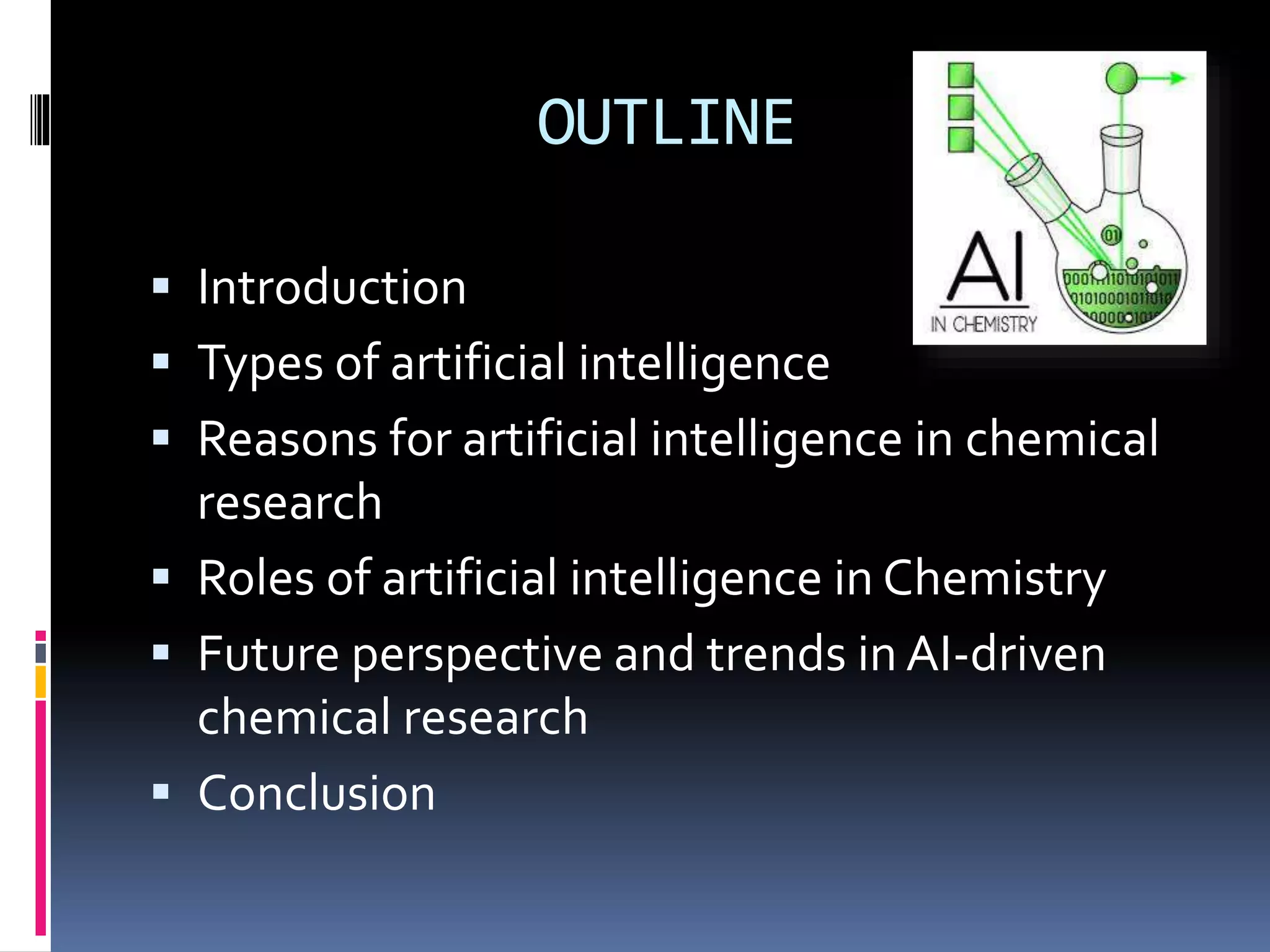
OUTLINE
 Introduction
 Types of artificial intelligence
 Reasons for artificial intelligence in chemical
research
 Roles of artificial intelligence in Chemistry
 Future perspective and trends in AI-driven
chemical research
 Conclusion
INTRODUCTION
 Artificial intelligence (AI),
the ability of a computer-
controlled robot to perform
tasks commonly associated
with intelligence-perceiving,
synthesizing and inferring
information demonstrated
by machines as opposed to
intelligence displayed by
humans.
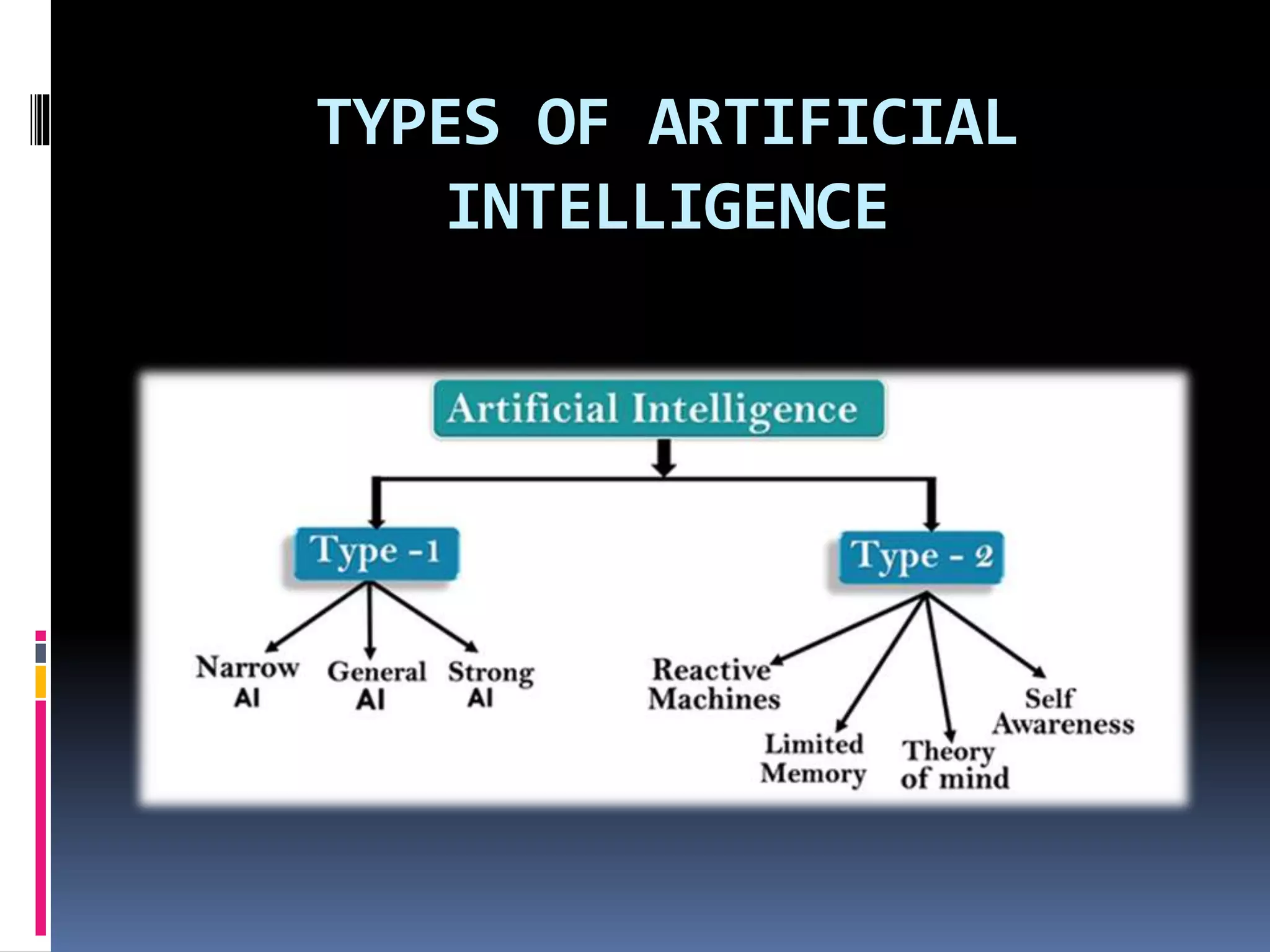
TYPES OF ARTIFICIAL
INTELLIGENCE
REASONS FOR ARTIFICIAL
INTELLIGENCE IN CHEMICAL
RESEARCH
 Predictive modeling
 Drugs Discovery
 Process Optimization
 Data analysis
 Material Design
 Revolutionize chemical research
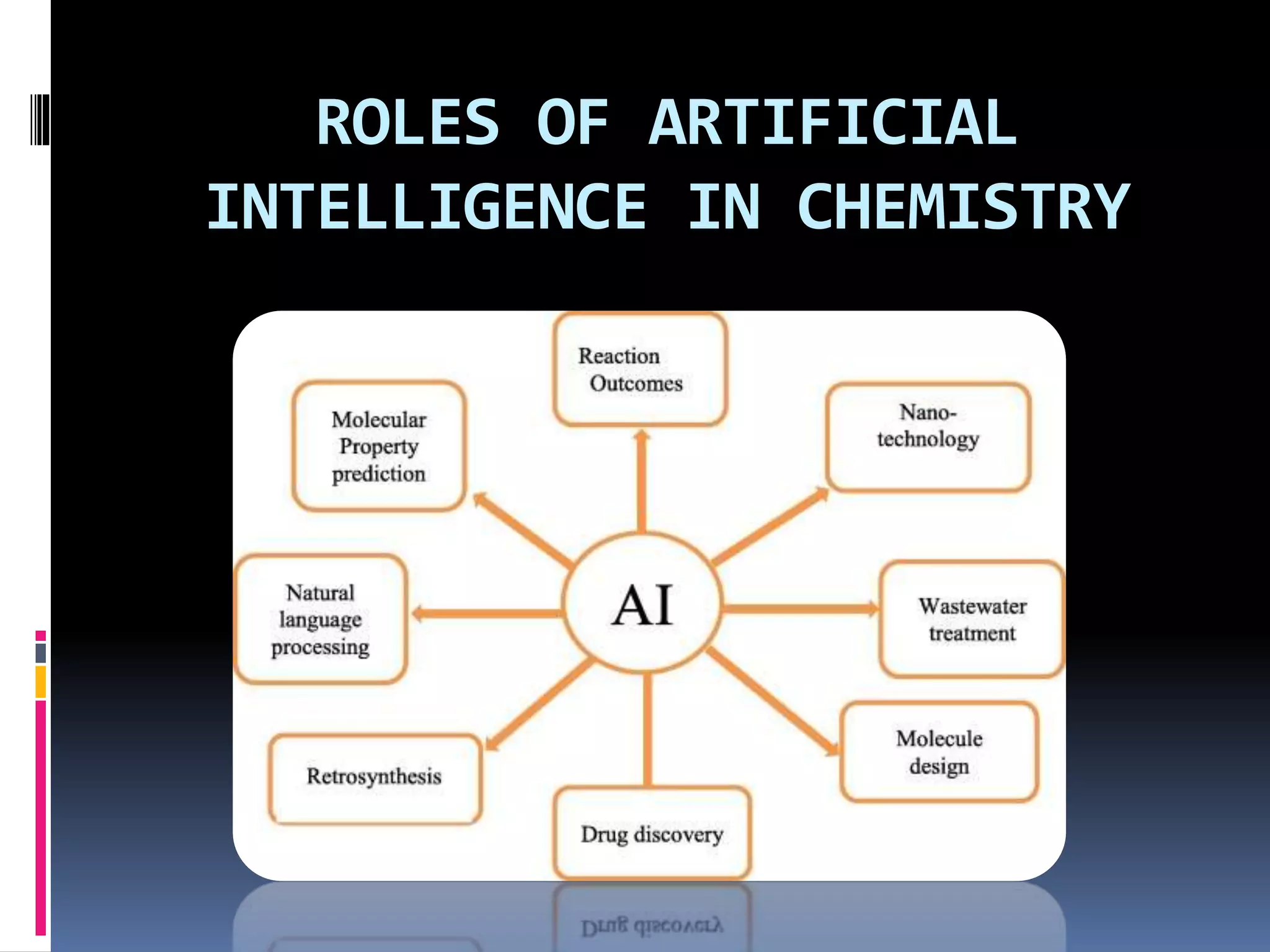
ROLES OF ARTIFICIAL
INTELLIGENCE IN CHEMISTRY
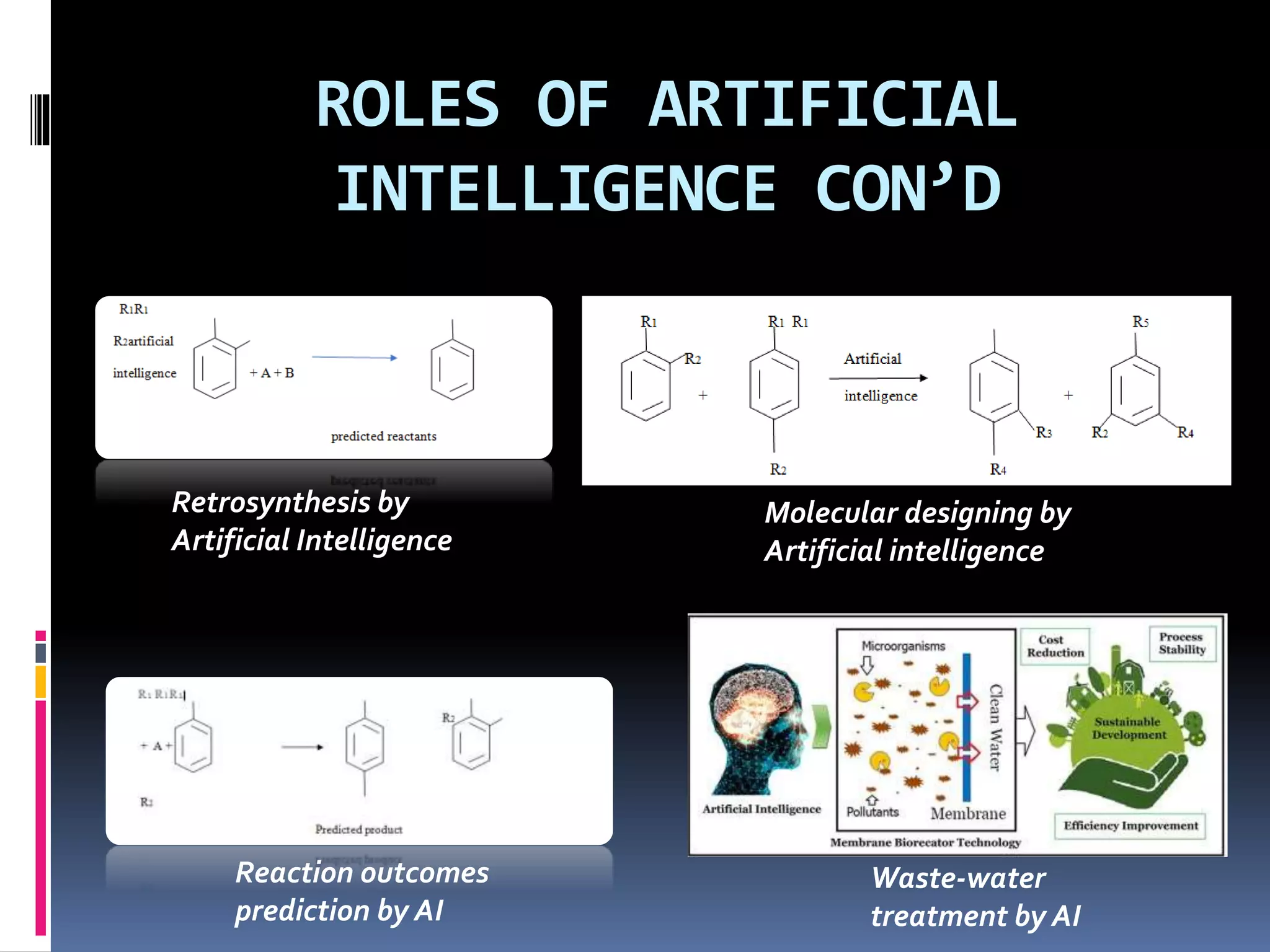
ROLES OF ARTIFICIAL
INTELLIGENCE CON’D
Retrosynthesis by
Artificial Intelligence
Molecular designing by
Artificial intelligence
Reaction outcomes
prediction by AI
Waste-water
treatment by AI
FUTURE PERSPECTIVE AND
TRENDS IN AI-DRIVEN CHEMICAL
RESEARCH
Advances in AI algorithms and models
 AI and interdisciplinary research
 From Artificial Intelligence to Other Fields
 From Other Fields to Artificial Intelligence
CONCLUSION
Artificial intelligence in chemistry makes an
efficient effort in solving chemistry problems
with lesser period of time. By using the artificial
intelligence data-based algorithm, it is very
easy to design a new molecule and to
determine the various properties of these
molecules. Many great applications that are
ready to produce easy successes in this new
data science phase of AI with applications in
chemical industries have been developed.
THANK YOU!

Artificial intelligence in chemical research

  • 1.
    ARTIFICIAL INTELLIGENCE IN CHEMICALRESEARCH KINGSLEY, HELEN 18/SC/CH/708
  • 2.
    OUTLINE  Introduction  Typesof artificial intelligence  Reasons for artificial intelligence in chemical research  Roles of artificial intelligence in Chemistry  Future perspective and trends in AI-driven chemical research  Conclusion
  • 3.
    INTRODUCTION  Artificial intelligence(AI), the ability of a computer- controlled robot to perform tasks commonly associated with intelligence-perceiving, synthesizing and inferring information demonstrated by machines as opposed to intelligence displayed by humans.
  • 4.
  • 5.
    REASONS FOR ARTIFICIAL INTELLIGENCEIN CHEMICAL RESEARCH  Predictive modeling  Drugs Discovery  Process Optimization  Data analysis  Material Design  Revolutionize chemical research
  • 6.
  • 7.
    ROLES OF ARTIFICIAL INTELLIGENCECON’D Retrosynthesis by Artificial Intelligence Molecular designing by Artificial intelligence Reaction outcomes prediction by AI Waste-water treatment by AI
  • 8.
    FUTURE PERSPECTIVE AND TRENDSIN AI-DRIVEN CHEMICAL RESEARCH Advances in AI algorithms and models  AI and interdisciplinary research  From Artificial Intelligence to Other Fields  From Other Fields to Artificial Intelligence
  • 9.
    CONCLUSION Artificial intelligence inchemistry makes an efficient effort in solving chemistry problems with lesser period of time. By using the artificial intelligence data-based algorithm, it is very easy to design a new molecule and to determine the various properties of these molecules. Many great applications that are ready to produce easy successes in this new data science phase of AI with applications in chemical industries have been developed.
  • 10.