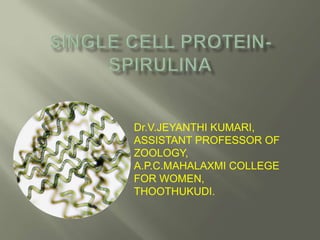






Dr.V.JEYANTHI KUMARI,
ASSISTANT PROFESSOR OF
ZOOLOGY,
A.P.C.MAHALAXMI COLLEGE
FOR WOMEN,
THOOTHUKUDI.
single cell proteins
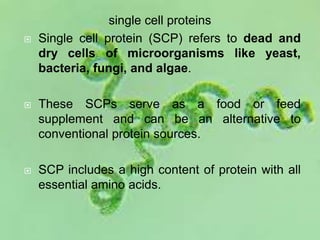
 Single cell protein (SCP) refers to dead and
dry cells of microorganisms like yeast,
bacteria, fungi, and algae.
 These SCPs serve as a food or feed
supplement and can be an alternative to
conventional protein sources.
 SCP includes a high content of protein with all
essential amino acids.
Single Cell Protein examples
 Bacteria- Methylophilus methylotrophus,
Brevibacterium sp., etc.
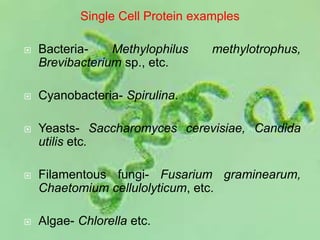
 Cyanobacteria- Spirulina.
 Yeasts- Saccharomyces cerevisiae, Candida
utilis etc.
 Filamentous fungi- Fusarium graminearum,
Chaetomium cellulolyticum, etc.
 Algae- Chlorella etc.
How is single cell protein made?
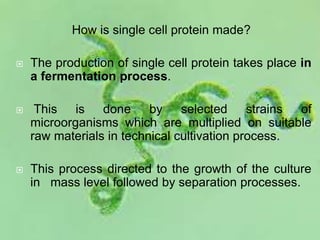
 The production of single cell protein takes place in
a fermentation process.
 This is done by selected strains of
microorganisms which are multiplied on suitable
raw materials in technical cultivation process.
 This process directed to the growth of the culture
in mass level followed by separation processes.
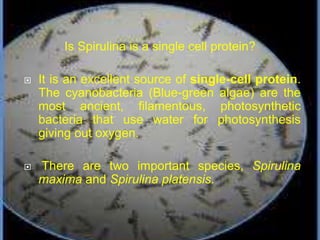
Is Spirulina is a single cell protein?
 It is an excellent source of single-cell protein.
The cyanobacteria (Blue-green algae) are the
most ancient, filamentous, photosynthetic
bacteria that use water for photosynthesis
giving out oxygen.
 There are two important species, Spirulina
maxima and Spirulina platensis.
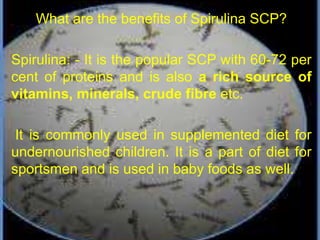
What are the benefits of Spirulina SCP?
Spirulina: - It is the popular SCP with 60-72 per
cent of proteins and is also a rich source of
vitamins, minerals, crude fibre etc.
It is commonly used in supplemented diet for
undernourished children. It is a part of diet for
sportsmen and is used in baby foods as well.
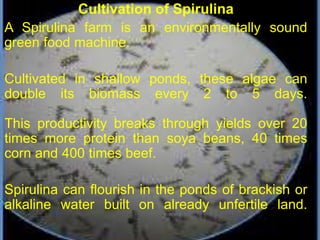
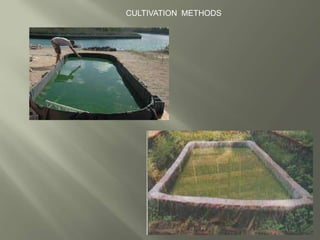
Cultivation of Spirulina
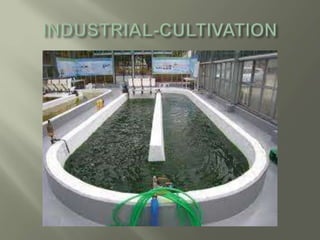
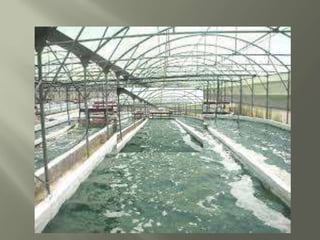
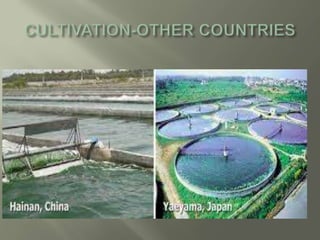
A Spirulina farm is an environmentally sound
green food machine.
Cultivated in shallow ponds, these algae can
double its biomass every 2 to 5 days.
This productivity breaks through yields over 20
times more protein than soya beans, 40 times
corn and 400 times beef.
Spirulina can flourish in the ponds of brackish or
alkaline water built on already unfertile land.
CULTIVATION METHODS
Composition of spirulina
Amino acid quality
A protein is considered to be complete if it has all the essential
amino acids. Spirulina is just that, complete protein.
Protein Digestibility
Spirulina has no cellulose in the cell walls, being composed of
soft muco polysaccharides which is easily digested and
assimilated. It is 85 to 95 per cent digestible since helpful for
people suffering from intestinal mal absorption.
Many older people have difficulty in digesting complex proteins
and on restricted diet, fins spirulina protein easy to digest.
Spirulina is effective for victims of malnutrition diseases like
kwashiorkar, where the ability of intestinal absorption has
been damaged and for those it is the most effective than milk
powders because milk lactic acid can be difficult to absorb.
Vitamins – Protectors of Health
10 grams of spirulina serving (20 tablets) supplies a rich profile of
vitamins we need.
Natural beta carotene (pro-vitamin A)
Spirulina is the richest source in beta carotene, 10 times more
concentrated than carrots. High doses of Vitamin A may be toxic, but
beta carotene in spirulina and vegetables is safe because human
body converts beta carotene into vitamin A only as needed. It is
important in maintaining mucous membranes and pigments
necessary for vision.
Vitamin B12 and B complex vitamins
Spirulina is the richest source of vitamin B12 higher than beef liver,
chlorella or sea vegetables. B12 is necessary for development of
RBC, especially in the bone marrow and nervous system. Although
primary B12 deficiency pernicious anaemia and nerve generation are
quite rare because B12 is the most difficult vitamin to get from plant
sources, vegetarians have taken to spirulina. Others B vitamins, B- 6,
niacin, biotin, panthothenic acid, folic acid, inositol and vitamin E is
also present in smaller amounts.
Mineral content of Spirulina
It absorbs many trace elements while growing and these
minerals are well assimilated by the human body. Its
mineral content varies depending on where it is grown and
the minerals in the water.
The best natural Iron supplement
Iron is the most common mineral deficiency worldwide
especially for women, children and older people. Spirulina
is a rich iron food, 10 times higher than common iron
foods. 10 grams supply up to 10 mg of iron. Spirulina iron
is easily absorbed by the human body. It is theorized that
its blue pigment, phycocyanin forms soluble complexes
with iron and other minerals during digestion making iron
more bio available.
Hence, iron in spirulina is over twice as absorb able as the
form of iron found in vegetables and most meats.
 Essential fatty acids
Human require a dietary source of EFA. They promote
cholesterol normalisation and are precursors of hormones called
prostaglandins. Spirulina has 4 to 7 per cent lipids or fats and
most of these are EFA. 10 grams have 225mg of EFA in the form
of linoleic and gamma linoleic acid (GLA).
GLA is the precursor of the body’s prostaglandins- master
hormones that control many functions. Dietary saturated and
alcohol can cause in GLA deficiency and suppressed
prostaglandin formation. The only other known sources of
dietary GLA are mother’s milk, oil extracts from evening
primrose, black currant and borage seeds. Spirulina is a
concentrated source of GLA where 10 gm serving gives 135 mg
of GLA.
Phyto-nutrients
A rainbow of natural pigments: - Pigments help to synthesize
many enzymes necessary for regulating the body’s metabolism.
Spirulina very dark colour comes from these natural pigments
which harvest different wavelengths of sunlight.
Phycocyanin: -
The most important pigment in spirulina, this protein complex is
about 14 per cent of the entire weight. Phycocyanin evolved a billion
years before chlorophyll and may be the precursor to chlorophyll and
haemoglobin. It has both iron and magnesium in its molecular
formation.
Chlorophyll: -
The common feature of green foods is their high chlorophyll content.
Chlorophyll is known as a cleansing and detoxifying phyto-nutrient.
Sometimes called green blood because it looks like the haemoglobin
molecule in human blood. Chlorophyll has a magnesium ion in its
core giving it a green colour. Spirulina has 1% of chlorophyll, one of
the nature’s highest levels and has the highest chlorophyll – a level.
Carotenoids(natural antioxidants):-
About of these yellow / orange pigments in spirulina are carotenes:
Alpha, Beta and Gamma. About half are Xanthophylls: Myxo
xanthophyll, Zeaxanthin,Cryptoxanthin,Echinenone, Fucoxanthin
,Violaxanthin and Astaxanthin. T otal mixed carotenoids make up
0.37% of spirulina. Although beta- carotene is the best known to
enhance antioxidant protection.
Polysaccharide: -
Spirulina contains only 15 to 25 per cent of CHO and sugar. The primary
source of CHO are rhamnose and glycogen two polysaccharides which are
easily absorbed by the body with minimum insulin intervention. Spirulina
offers quick energy without taxing the pancreas or precipitating
hypoglycemia.
Glycolipids and sulfolipids: -
When NCl announced that sulfolipids in blue green algae were remarkably
active against the AIDS virus, attention was focused on the sulfolipid
containing glycolipids. The three classes of lipids in spirulina are called
neutral lipids, glycolipids and phospholipids. Glycolipids are 40% of the
lipids and contain sulfolipids. Sulfolipids from spirulina range from 2-5% of
the total lipids.
Enzymes: -
Enzymes are catalysts for chemical changes. There are thousands of
enzymes, each catalysing specific reactions. Dried spirulina contain a no. of
enzymes. One in superoxide dismutase (SOD) important in quenching free
radicals and in retarding aging. SOD enzyme activity ranging from 10000 to
37500 units per 10 grams has been found in spirulina powder.
How to use spirulina
It provides quick energy and nourishment between meals or in a place of
meals. It is a perfectly safe natural food. Can be taken 1 tablespoon or more
each day.
The more popular way to enjoy it is to add it to our favourite fruit or vegetable
juice in a blender. Start with 1 tea spoon and add flavours and spices to suit
your taste.
Human health benefits
Natural weight control: -
Take a heaping teaspoon of powder (about 5 grams)or at least 6 tablets one
hour before meals or snack breaks. Slow but steady weight loss is desirable.
Often dieters are able to stabilise their body weight a more ideal lower level.
Spirulina can help us to remember the wisdom of a natural diet. It helps to
lighten up, and provides the energy to make the switch from a bulky unhealthy
diet to lighter, more powerful nutrient rich foods.
Lowering cholesterol level
Spirulina is a helpful food for cholesterol reduction. Only 4 grams of spirulina
day (8 tablets) significantly reduce cholesterol levels.
Reducing pre-menstrual syndrome
Many clinics recommends foods and supplements rich in B-
complex, magnesium, zinc, beta carotene, GLA and other
nutrients spirulina is helpful in a PMS reducing pain and several
PMS supplements contain spirulina.
Lowering risks of cancers
Spirulina is over 10 times more concentrated in beta carotene
than any other vegetables. Only 3 grams offers RDA of Vitamin
A in the safe form of natural beta carotene. Plus, its entire
carotenoid complex offers antioxidant protection at different
sites in the body.
Colon cleansing
Spirulina is described as a metabolic activator which acts on the
body tissues at the cellular level to promote activity to burn up
muco forming substances. Brazilians, who eat excess beef with
few vegetables and fibre, complain of constipation and take
spirulina for its cleansing and normalising effect.
Athletes and body builders
Athletes need extra nutrition and concentrated super foods
have become popular. Taken before jogging or competition
athletes say spirulina delivers energy and improve stamina.
It increases the endurances of marathon runners,
backpackers, cyclists and climbers who carry all their food
take tablets for more energy and stamina per weight than
conventional foods. This high intensity food is perfectly
suited for high intensity training.
Spirulina contains GLA which stimulates prostaglandins
master hormones which regulate every cell of the body
including heart, skin, circulation and musculature. The
Cuban Sports Ministry was given 1,600 bottles of spirulina
before the 1996 Olympic Games so athletes could intensify
training.
Children, pregnant and nursing mothers
Iron deficiency anaemia in mothers and children is the most
prevalent nutritional disorder. Pregnant women need spirulina‘s extra
easy to digest protein and bio available iron, without more saturated
fats. In India and Vietnam, its prescribed for pregnant and nursing
mothers. An amount of 1 tablespoon of spirulina to this entire
category provides sufficient nutrients daily.
Anti aging strategy
With the highest level of the protective anti-oxidant beta carotene. It’s
good for eyes and vision. It builds healthy lactobacillus aiding in
assimilation and elimination. Older people desire to eat less meat, so
it’s important to choose iron rich vegetable sources like spirulina.
Vitamin B 12 absorption decreases with age, so B 12 rich spirulina is
a sound choice. It contains rare EFA GLA, essential nutrients for
healthy skin gram – for – gram it has more calcium and magnesium
than other foods. Calcium and magnesium supplements are
recommended for mature women who may have calcium from their
bone mass and suffer from osteoporosis.
Potent antiviral activity
In April 1996, scientists from the Laboratory of Viral
Pathogenesis, Dana- Farber Cancer Institute, Harvard
Medical School and Earthrise Farms announced on –
going research, “Water extract Spirulina plantensis
inhibits HIV-1 replication in human derived T- cells lines
and in human peripheral blood mononuclear cells. A
concentration of 5 to 10microgram/ ml was found to
reduce viral production.”
HIV-1 is the AIDS virus. Small amount of spirulina extract
reduced viral replication while higher concentrations
stopped its reproduction. With a therapeutic index of
>100, spirulina extract is non toxic to human cells at
concentrations stopping viral replications.
Strengthens immune system
Spirulina is the powerful tonic for the immune system. In studies of
mice, hamsters, chickens, turkeys, cats and fish, it improves immune
system function. Scientists find it not only stimulates the immune
systems, it enhances the body ability to generate new blood cells.
Important parts of immune system, Bone marrow, stem cells,
Macrophages, T- cells and Natural killer cells exhibit enhanced
activity. Spleen and Thymus glands show enhanced function.
Scientists also observe spirulina causing macrophages to increase in
number activated and more effective at killing germs.
Effects against diabetes and hypertension
Spirulina have a positive effect against diabetes. A water soluble
fraction found effective in lowering serum glucose level at fasting
while the water insoluble fraction suppressed glucose level at
glucose loading. It may also reduce blood pressure. In a recent study
with rats it was found to reduce high blood pressure.
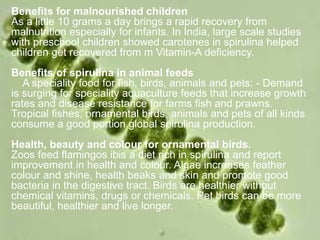
Benefits for malnourished children
As a little 10 grams a day brings a rapid recovery from
malnutrition especially for infants. In India, large scale studies
with preschool children showed carotenes in spirulina helped
children get recovered from m Vitamin-A deficiency.
Benefits of spirulina in animal feeds
A speciality food for fish, birds, animals and pets: - Demand
is surging for speciality aquaculture feeds that increase growth
rates and disease resistance for farms fish and prawns.
Tropical fishes, ornamental birds, animals and pets of all kinds
consume a good portion global spirulina production.
Health, beauty and colour for ornamental birds.
Zoos feed flamingos ibis a diet rich in spirulina and report
improvement in health and colour. Algae increases feather
colour and shine, health beaks and skin and promote good
bacteria in the digestive tract. Birds are healthier without
chemical vitamins, drugs or chemicals. Pet birds can be more
beautiful, healthier and live longer.
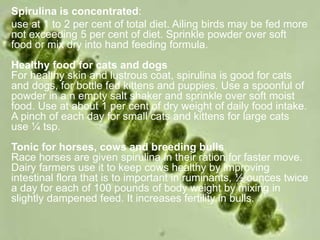
Spirulina is concentrated:
use at 1 to 2 per cent of total diet. Ailing birds may be fed more
not exceeding 5 per cent of diet. Sprinkle powder over soft
food or mix dry into hand feeding formula.
Healthy food for cats and dogs
For healthy skin and lustrous coat, spirulina is good for cats
and dogs, for bottle fed kittens and puppies. Use a spoonful of
powder in a n empty salt shaker and sprinkle over soft moist
food. Use at about 1 per cent of dry weight of daily food intake.
A pinch of each day for small cats and kittens for large cats
use ¼ tsp.
Tonic for horses, cows and breeding bulls
Race horses are given spirulina in their ration for faster move.
Dairy farmers use it to keep cows healthy by improving
intestinal flora that is to important in ruminants, ½ ounces twice
a day for each of 100 pounds of body weight by mixing in
slightly dampened feed. It increases fertility in bulls.
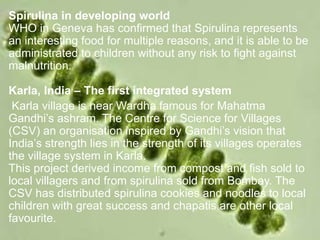
Spirulina in developing world
WHO in Geneva has confirmed that Spirulina represents
an interesting food for multiple reasons, and it is able to be
administrated to children without any risk to fight against
malnutrition.
Karla, India – The first integrated system
Karla village is near Wardha famous for Mahatma
Gandhi’s ashram. The Centre for Science for Villages
(CSV) an organisation inspired by Gandhi’s vision that
India’s strength lies in the strength of its villages operates
the village system in Karla.
This project derived income from compost and fish sold to
local villagers and from spirulina sold from Bombay. The
CSV has distributed spirulina cookies and noodles to local
children with great success and chapatis are other local
favourite.
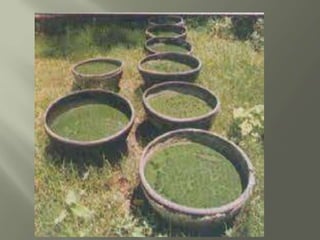
 Mud pot Spirulina cultivation
 Materials required
 Medium
 Process
 Advantages
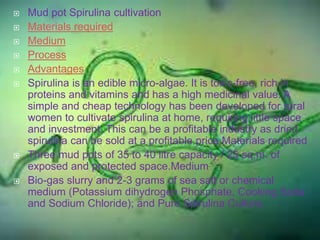
 Spirulina is an edible micro-algae. It is toxic-free, rich in
proteins and vitamins and has a high medicinal value. A
simple and cheap technology has been developed for rural
women to cultivate spirulina at home, requiring little space
and investment. This can be a profitable industry as dried
spirulina can be sold at a profitable price.Materials required
 Three mud pots of 35 to 40 litre capacity / 25 sq.m. of
exposed and protected space.Medium
 Bio-gas slurry and 2-3 grams of sea salt or chemical
medium (Potassium dihydrogen Phosphate, Cooking Soda
and Sodium Chloride); and Pure Spirulina Culture.
 Process
 The three mud pots are buried upto their necks in the
ground, filled with water mixed with the medium. Bio-gas
slurry is the cheapest nutrient medium for spirulina culture.
 A small quantity of pure spirulina is put into the medium. (In
the initial stage, the nutrient medium has to be supplied to
the producer as stock-solution for ready mixing).
 The medium has to be stirred 3 to 4 times a day as the
spirulina cannot grow in a stagnant medium.
 The pots have to be exposed to sunlight as the spirulina
takes 3 to 4 days to mature.
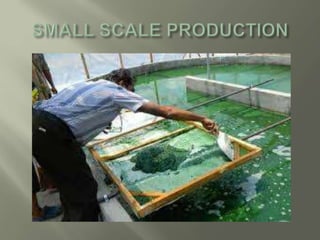
 The mature spirulina (When the pale medium turns into
dark green) can be harvested by simple cloth-filtration.
 After washing the spirulina in fresh water (to remove the
adhering chemicals), it can be directly mixed with the
chapatti / dough, chutnies, noodles, dais, vegetables etc.
(about 2% by weight). Spirulina can be preserved by drying
it in the shade. It must be dried immediately to preserve its
quality and value.
 Advantages
 Spirulina grown in 3 earthen pots of 35-40 litre
capacity is sufficient to provide 2 grams per day (per
person) high-quality spirulina powder to meet 100%
vitamin A and 200% vitamin B-12 requirement, daily.
 Pots are easy to handle as compared to concrete-lined
ponds or polythene-lined pits.
 Pots can be replaced easily, if damaged, and can be
shifted, if necessary.
 Pot-cultures can be maintained for long periods if no
infection, contamination, or other mishaps occur.
 More pots can be manufactured by village women with
minimum additional effort.

 Source : AMM Marugappa Chetttiar Research Centre,
Algal Division, Saverivyar Puram, Pudukkotai Dist.,
Tamilnadu
How spirulina is cultivated?
 Spirulina Cultivation Process : Cultivation can be
started after water is fed into each concrete pond
at a required height and after paddle wheels are
installed. The water has to have the right pH value
and alkaline by adding required salts at the required
rate.
 How long does spirulina take to grow?
How long does it take to grow spirulina? It should take 3-6
weeks for spirulina to grow after adding the culture to the
medium. You'll know it's ready to harvest when it's dark
green and looks thick in the tank. You can verify that it's
ready by making sure the pH remains around 10 for 24
hours.

 How do you mass produce spirulina?
In the present study, the blue-green alga Spirulina
platensis (NRC) was used for mass production under
outdoor cultivation in three open ponds with a final
capacity of 75 m3 net cultivation volume. Subculturing
was performed within sequences and gradual
volumes till 1,200 L open plate photobioreactor.
 How long does it take to grow spirulina?
It should take 3-6 weeks for spirulina to grow after
adding the culture to the medium. You'll know it's ready
to harvest when it's dark green and looks thick in the
tank. You can verify that it's ready by making sure the
pH remains around 10 for 24 hours.
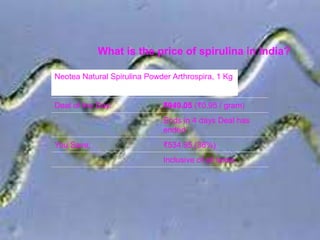
M.R.P.: ₹1,484.00
Deal of the Day: ₹949.05 (₹0.95 / gram)
Ends in 4 days Deal has
ended
You Save: ₹534.95 (36%)
Inclusive of all taxes
Neotea Natural Spirulina Powder Arthrospira, 1 Kg
What is the price of spirulina in India?
 Top 10 & Best Spirulina Brands in India in 2022
you should know
 Parry's Wellness Organic Spirulina Tablets. ...
 Himalayan Organics Spirulina. ...
 Carbamide Forte 100% Organic Spirulina Tablets.
...
 Sunova Organic Spirulina Capsules. ...
 Nutriwish Spirulina Powder. ...
 Urban Platter Pure Spirulina Powder. ...
 Grenera Spirulina Powder.
How do you start a spirulina project?
Spirulina Cultivation Process:
Cultivation can be started after water is fed into
each concrete pond at the required height and
after paddle wheels are installed. The water has to
have the right pH value and alkaline by adding
required salts at the required rate.
What materials Cannot grow spirulina?
On which of the following material, Spirulina cannot
grow? Explanation: Spirulina can be easily grown on
materials like straw, molasses, animal manure and
even sewage, to produce large quantities and can
serve as food rich in protein, minerals, fats and
carbohydrates and vitamins.
Is spirulina powder alive?
Dried Spirulina (like powder and pills) is dead
(often for months) and the nutrients are not readily
available. We use closed tanks, filtered water and a
controlled growing conditions to ensure the highest
quality possible. Other farms grow outdoors in large
open ponds that are prone to contamination.
 What temperature does spirulina grow in?
 30-35c
 Temperature - Optimal temperature for Spirulina is 30-35c.
Spirulina can survive lower (not below 20c) and slightly
higher temperatures (up to 38c), but it is not advisable as
its metabolism will be harmed and it may suffer from a
state of 'shock'. Temperatures can be measured with a
thermometer.
 Can spirulina be used as fertilizer?
 Gardeners can use Spirulina as a complete, effective foliar
plant food. Homeowners can sprinkle a little Spirulina in
the earth around their favorite houseplant and see what a
difference it makes. Organic farmers can use Spirulina
as a completely natural and healthy fertilizer.

The combined value of total export is 35.97 USD
million. Therefore, if any exporter wishes to export
Spirulina then Connect2India offers a complete guide
on how to export Spirulina from India.
 Top countries for Spirulina export from India.
Country Value (USD Million)
Ghana 4.31
France 2.31
Myanmar 1.67
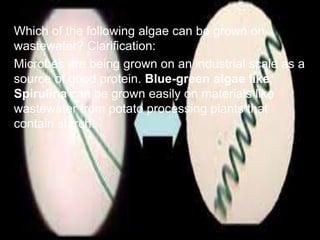
Which of the following algae can be grown on
wastewater? Clarification:
Microbes are being grown on an industrial scale as a
source of good protein. Blue-green algae like
Spirulina can be grown easily on materials like
wastewater from potato processing plants that
contain starch.
 How do you make palatable spirulina?
Just add sweet fruits such as mango, bananas and
pineapple or juice. That shields the taste. In fact,
there are 101 ways to enjoy the best of spirulina but
we will just give you the easy ones. Just mix spirulina
with sweet tasting fruits in your juices
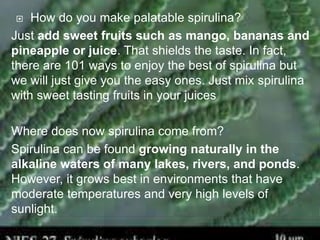
Where does now spirulina come from?
Spirulina can be found growing naturally in the
alkaline waters of many lakes, rivers, and ponds.
However, it grows best in environments that have
moderate temperatures and very high levels of
sunlight.
Who needs spirulina?
 Spirulina Is Extremely High in Many Nutrients. ...
 Powerful Antioxidant and Anti-Inflammatory
Properties. ...
 Can Lower “Bad” LDL and Triglyceride Levels. ...
 Protects “Bad” LDL Cholesterol From Oxidation. .
 May Have Anti-Cancer Properties. ...
 May Reduce Blood Pressure. ...
 Improves Symptoms of Allergic Rhinitis.
 Does spirulina contain heavy metals?
The heavy metals such as lead, mercury, cadmium
and arsenic are mostly found to adulterate in
Spirulina products. Each is found as a trace
contaminant in certain pesticides and fertilizers, so they
are common in agricultural areas
Is blue spirulina better than green?
People say blue is one of the most difficult colors to find in
nature so this variety of spirulina might be the best
source for natural blue color. Not only can you use blue
spirulina to brighten your dishes, but you also get a higher
concentration of antioxidants since you're buying pure
phycocyanin.
 Does spirulina grow in salt water?
No Spirulina has been found to grow naturally in
salt water. However, according to previous reports,
when an adequate supply of bicarbonate, Nitrogen
and Phosphorous, together with a suitable pH and
salinity, are provided, Spirulina species can be grown
in seawater.
 Does spirulina taste like fish?
Taste: Spirulina should have a slight bitter taste or
otherwise tasteless. Powdered spirulina's taste can
usually be masked by other foods. If the taste is too
fishy, bitter, or salty, the spirulina is probably produced
in an unpleasant environment.
 What foods contain spirulina?
Spirulina — classified as a cyanobacteria, or blue-
green algae — has been used for centuries as a food
source in other countries. Spirulina is available in
capsules, tablets, and powder and has been
incorporated in certain foods and beverages such
as energy bars, popcorn, and smoothies.
Which is better spirulina or chlorophyll?
Spirulina is lower in chlorophyll and in the above
nutrients. However, it is higher in vitamin B2, vitamin
B6, and selenium. These vitamins help promote
mental acuity, metabolism, and iron processing.
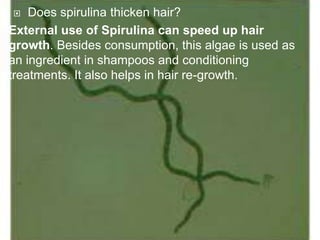
 Does spirulina thicken hair?
External use of Spirulina can speed up hair
growth. Besides consumption, this algae is used as
an ingredient in shampoos and conditioning
treatments. It also helps in hair re-growth.
Which country consumes more spirulina?
 The effects of the COVID-19 pandemic on this
market were felt in China starting 2020, as the
country is one of the world's largest producers
and one of the leading consumers of spirulina
globally.
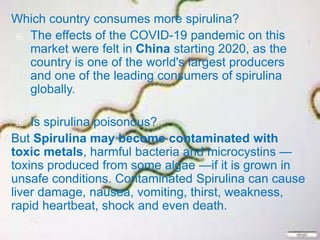
 Is spirulina poisonous?
But Spirulina may become contaminated with
toxic metals, harmful bacteria and microcystins —
toxins produced from some algae —if it is grown in
unsafe conditions. Contaminated Spirulina can cause
liver damage, nausea, vomiting, thirst, weakness,
rapid heartbeat, shock and even death.
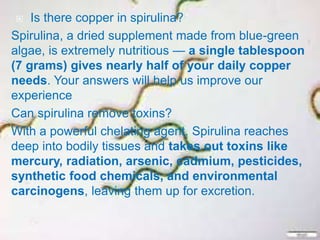
 Is there copper in spirulina?
Spirulina, a dried supplement made from blue-green
algae, is extremely nutritious — a single tablespoon
(7 grams) gives nearly half of your daily copper
needs. Your answers will help us improve our
experience
Can spirulina remove toxins?
With a powerful chelating agent, Spirulina reaches
deep into bodily tissues and takes out toxins like
mercury, radiation, arsenic, cadmium, pesticides,
synthetic food chemicals, and environmental
carcinogens, leaving them up for excretion.
Is spirulina hard on the liver?
Spirulina has been implicated in isolated case reports in
causing clinically apparent liver injury, but the role of
spirulina as opposed to other herbal components or
contaminants has not been shown. Liver injury due to
spirulina must be very rare if it occurs at all.
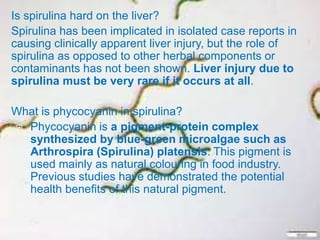
What is phycocyanin in spirulina?
 Phycocyanin is a pigment-protein complex
synthesized by blue-green microalgae such as
Arthrospira (Spirulina) platensis. This pigment is
used mainly as natural colouring in food industry.
Previous studies have demonstrated the potential
health benefits of this natural pigment.

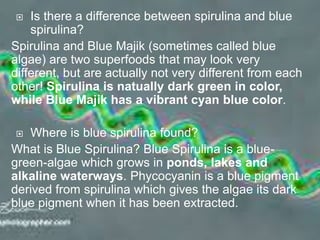
 Is there a difference between spirulina and blue
spirulina?
Spirulina and Blue Majik (sometimes called blue
algae) are two superfoods that may look very
different, but are actually not very different from each
other! Spirulina is natually dark green in color,
while Blue Majik has a vibrant cyan blue color.
 Where is blue spirulina found?
What is Blue Spirulina? Blue Spirulina is a blue-
green-algae which grows in ponds, lakes and
alkaline waterways. Phycocyanin is a blue pigment
derived from spirulina which gives the algae its dark
blue pigment when it has been extracted.
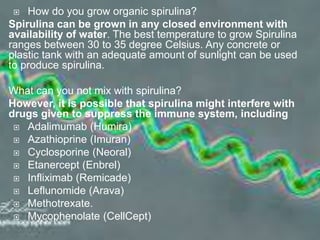
 How do you grow organic spirulina?
Spirulina can be grown in any closed environment with
availability of water. The best temperature to grow Spirulina
ranges between 30 to 35 degree Celsius. Any concrete or
plastic tank with an adequate amount of sunlight can be used
to produce spirulina.
What can you not mix with spirulina?
However, it is possible that spirulina might interfere with
drugs given to suppress the immune system, including
 Adalimumab (Humira)
 Azathioprine (Imuran)
 Cyclosporine (Neoral)
 Etanercept (Enbrel)
 Infliximab (Remicade)
 Leflunomide (Arava)
 Methotrexate.
 Mycophenolate (CellCept)
 Is it good to take spirulina everyday?
Up to 8 grams of spirulina per day is safe, and
many people add it to their shakes or smoothies
because it comes in powder form.
 What time of day is best to take spirulina?
It is best to take spirulina at least four hours
before going to bed but altogether, it does not
seem to matter whether one should take six
tablets at once or two tablets three times a day-
most people report feeling benefits whenever and
however they take spirulina and it often does not
present any problems.
 How long can I store spirulina?
3 weeks
If stored in a refrigerator fresh Spirulina can last up to 3
weeks after harvesting.
 Does spirulina cause body odor?
Spirulina should have a slight ocean scent. Spirulina
usually does not have a strong or pungent smell.
Who should avoid spirulina?
You should avoid spirulina if you take blood thinners or
have an autoimmune condition, bleeding disorder,
allergies, or PKU. If you're unsure whether this
supplement is right for you, consult your doctor.
 Can spirulina cure thyroid?
In summary, the combination of spirulina-
curcumin-Boswellia is effective in reducing the
size of benign thyroid nodules and can be safely
administered in the doses used in the presented
clinical study.
Does spirulina increase sperm count?
In this study, 11% higher volume of semen was
collected from males receiving a supplement of
Spirulina extract compared to the group not
receiving the supplement. As with boars, the quality
of the bull sperm has been improved due to Spirulina.
Does spirulina clean your blood?
Rich in both phycocyanin and
chlorophyll, Spirulina is also a powerful
blood purifier as these two important
nutrients, not only rejuvenate the existing blood
supply, but also promote blood cell growth.
HOW TO GROW SPIRULINA AT HOME
 Spirulina is a type of blue-green algae that’s
loaded with nutrition: protein, antioxidants, and
numerous vitamins and minerals. It is a simple
organism that grows easily in warm water.
However, because algae can absorb toxins found
in the environment, some people opt to grow their
own spirulina at home in safe and controlled
conditions. Others simply prefer the taste and
texture of fresh spirulina. Once you have a few
supplies set up, your spirulina colony will pretty
much take care of itself.

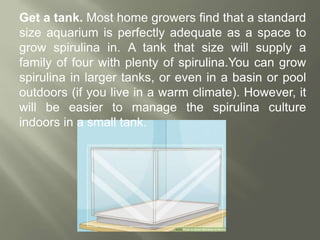
Get a tank. Most home growers find that a standard
size aquarium is perfectly adequate as a space to
grow spirulina in. A tank that size will supply a
family of four with plenty of spirulina.You can grow
spirulina in larger tanks, or even in a basin or pool
outdoors (if you live in a warm climate). However, it
will be easier to manage the spirulina culture
indoors in a small tank.
Gather harvesting equipment. A spirulina colony can
appear thick, but it’s mostly water. Once it’s ready to eat or
use, you’ll want to squeeze out the excess water. For most
home growers who will want to use only a small amount of
fresh spirulina at a time, a fine cloth or mesh will work just
fine. In addition, you'll need a scoop to get the spirulina out of
the tank.If you want to harvest larger amounts of spirulina to
dry, get a larger supply of fine cloth or mesh to make things
easier.
 Purchase minerals to encourage algal
growth. Trying to grow spirulina in plain water
won’t necessarily lead to great results. To have an
optimal colony, you’ll need to add specific minerals.
Make sure that the medium contains:Sodium
bicarbonate
 Magnesium sulfate
 Potassium nitrate
 Citric acid
 Salt
 Urea
 Calcium chloride
 Iron sulfate
 Ammonium sulfate
 Buy a spirulina culture. To get your own
spirulina colony going, you’ll need a bit of live
spirulina as a starter.
 Check with your local or favorite online health
food or organic supplies store and ask for a
spirulina starter kit.
 Spirulina starter cultures are usually as simple
as a bottle containing spirulina algae in its
medium (water).
 Buy spirulina cultures only from sources you
trust. Since spirulina can absorb heavy metals
and other toxins, you want to ensure that the
starter supply has come from a safe source.

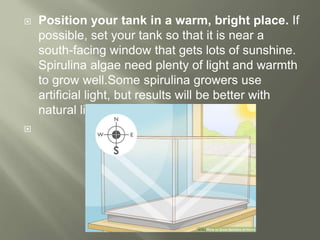
 Position your tank in a warm, bright place. If
possible, set your tank so that it is near a
south-facing window that gets lots of sunshine.
Spirulina algae need plenty of light and warmth
to grow well.Some spirulina growers use
artificial light, but results will be better with
natural light.

 Prepare your medium. Spirulina growers refer
to the "medium" the algae grows in, but this
really just means the water in the tank, with the
mineral "food" added. Fill your tank with filtered
water, and add the mineral mix according to the
package instructions.You can run tap water
through a standard faucet filter (such as a Brita
or Pur filter), and use this for your tank.
 If your water is chlorinated, you should de-
chlorinate it using supplies found at aquarium
supply stores.
 Check the temperature of the
medium. Ideally, the temperature in your tank
should be around 35°C (95 F), but above 38°C
(100.4 F) is too warm. Use an aquarium
thermometer to make sure your tank will
provide the right temperature for your
spirulina.Spirulina can tolerate lower
temperatures without dying, but will do best in
warm environments.
 If your tank is too cold, you can warm it with an
aquarium heater, which can be found at an
aquarium supply or pet store.[2]
 Add the spirulina starter. You should follow
the exact instructions that come with your
bottle of spirulina starter to be sure, but usually
it’s simple to add the starter culture. Generally,
you just pour one half to three-fourths of the
bottle into the medium in your tank.
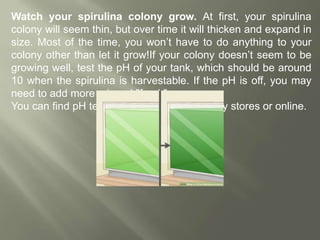
Watch your spirulina colony grow. At first, your spirulina
colony will seem thin, but over time it will thicken and expand in
size. Most of the time, you won’t have to do anything to your
colony other than let it grow!If your colony doesn’t seem to be
growing well, test the pH of your tank, which should be around
10 when the spirulina is harvestable. If the pH is off, you may
need to add more mineral "food."
You can find pH test strips at aquarium supply stores or online.
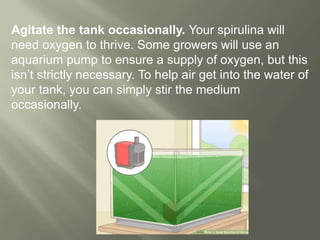
Agitate the tank occasionally. Your spirulina will
need oxygen to thrive. Some growers will use an
aquarium pump to ensure a supply of oxygen, but this
isn’t strictly necessary. To help air get into the water of
your tank, you can simply stir the medium
occasionally.
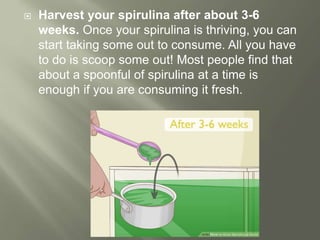
 Harvest your spirulina after about 3-6
weeks. Once your spirulina is thriving, you can
start taking some out to consume. All you have
to do is scoop some out! Most people find that
about a spoonful of spirulina at a time is
enough if you are consuming it fresh.

Filter your spirulina through a fine cloth. Place
the spirulina you took from your tank onto the cloth.
Hold it over a sink or bowl and gently squeeze out
the excess water. You’ll be left with a thick green
paste. Use this fresh spirulina in smoothies, top your
favorite foods with it, or enjoy it all by itself
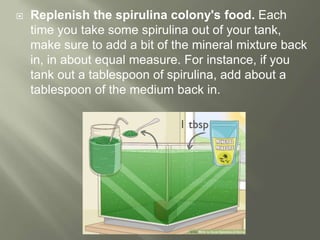
 Replenish the spirulina colony's food. Each
time you take some spirulina out of your tank,
make sure to add a bit of the mineral mixture back
in, in about equal measure. For instance, if you
tank out a tablespoon of spirulina, add about a
tablespoon of the medium back in.
THANK YOU

Single Cell protein

  • 1.
    Dr.V.JEYANTHI KUMARI, ASSISTANT PROFESSOROF ZOOLOGY, A.P.C.MAHALAXMI COLLEGE FOR WOMEN, THOOTHUKUDI.
  • 2.
    single cell proteins Single cell protein (SCP) refers to dead and dry cells of microorganisms like yeast, bacteria, fungi, and algae.  These SCPs serve as a food or feed supplement and can be an alternative to conventional protein sources.  SCP includes a high content of protein with all essential amino acids.
  • 3.
    Single Cell Proteinexamples  Bacteria- Methylophilus methylotrophus, Brevibacterium sp., etc.  Cyanobacteria- Spirulina.  Yeasts- Saccharomyces cerevisiae, Candida utilis etc.  Filamentous fungi- Fusarium graminearum, Chaetomium cellulolyticum, etc.  Algae- Chlorella etc.
  • 4.
    How is singlecell protein made?  The production of single cell protein takes place in a fermentation process.  This is done by selected strains of microorganisms which are multiplied on suitable raw materials in technical cultivation process.  This process directed to the growth of the culture in mass level followed by separation processes.
  • 5.
    Is Spirulina isa single cell protein?  It is an excellent source of single-cell protein. The cyanobacteria (Blue-green algae) are the most ancient, filamentous, photosynthetic bacteria that use water for photosynthesis giving out oxygen.  There are two important species, Spirulina maxima and Spirulina platensis.
  • 6.
    What are thebenefits of Spirulina SCP? Spirulina: - It is the popular SCP with 60-72 per cent of proteins and is also a rich source of vitamins, minerals, crude fibre etc. It is commonly used in supplemented diet for undernourished children. It is a part of diet for sportsmen and is used in baby foods as well.
  • 8.
    Cultivation of Spirulina ASpirulina farm is an environmentally sound green food machine. Cultivated in shallow ponds, these algae can double its biomass every 2 to 5 days. This productivity breaks through yields over 20 times more protein than soya beans, 40 times corn and 400 times beef. Spirulina can flourish in the ponds of brackish or alkaline water built on already unfertile land.
  • 9.
  • 15.
    Composition of spirulina Aminoacid quality A protein is considered to be complete if it has all the essential amino acids. Spirulina is just that, complete protein. Protein Digestibility Spirulina has no cellulose in the cell walls, being composed of soft muco polysaccharides which is easily digested and assimilated. It is 85 to 95 per cent digestible since helpful for people suffering from intestinal mal absorption. Many older people have difficulty in digesting complex proteins and on restricted diet, fins spirulina protein easy to digest. Spirulina is effective for victims of malnutrition diseases like kwashiorkar, where the ability of intestinal absorption has been damaged and for those it is the most effective than milk powders because milk lactic acid can be difficult to absorb.
  • 16.
    Vitamins – Protectorsof Health 10 grams of spirulina serving (20 tablets) supplies a rich profile of vitamins we need. Natural beta carotene (pro-vitamin A) Spirulina is the richest source in beta carotene, 10 times more concentrated than carrots. High doses of Vitamin A may be toxic, but beta carotene in spirulina and vegetables is safe because human body converts beta carotene into vitamin A only as needed. It is important in maintaining mucous membranes and pigments necessary for vision. Vitamin B12 and B complex vitamins Spirulina is the richest source of vitamin B12 higher than beef liver, chlorella or sea vegetables. B12 is necessary for development of RBC, especially in the bone marrow and nervous system. Although primary B12 deficiency pernicious anaemia and nerve generation are quite rare because B12 is the most difficult vitamin to get from plant sources, vegetarians have taken to spirulina. Others B vitamins, B- 6, niacin, biotin, panthothenic acid, folic acid, inositol and vitamin E is also present in smaller amounts.
  • 17.
    Mineral content ofSpirulina It absorbs many trace elements while growing and these minerals are well assimilated by the human body. Its mineral content varies depending on where it is grown and the minerals in the water. The best natural Iron supplement Iron is the most common mineral deficiency worldwide especially for women, children and older people. Spirulina is a rich iron food, 10 times higher than common iron foods. 10 grams supply up to 10 mg of iron. Spirulina iron is easily absorbed by the human body. It is theorized that its blue pigment, phycocyanin forms soluble complexes with iron and other minerals during digestion making iron more bio available. Hence, iron in spirulina is over twice as absorb able as the form of iron found in vegetables and most meats.
  • 18.
     Essential fattyacids Human require a dietary source of EFA. They promote cholesterol normalisation and are precursors of hormones called prostaglandins. Spirulina has 4 to 7 per cent lipids or fats and most of these are EFA. 10 grams have 225mg of EFA in the form of linoleic and gamma linoleic acid (GLA). GLA is the precursor of the body’s prostaglandins- master hormones that control many functions. Dietary saturated and alcohol can cause in GLA deficiency and suppressed prostaglandin formation. The only other known sources of dietary GLA are mother’s milk, oil extracts from evening primrose, black currant and borage seeds. Spirulina is a concentrated source of GLA where 10 gm serving gives 135 mg of GLA. Phyto-nutrients A rainbow of natural pigments: - Pigments help to synthesize many enzymes necessary for regulating the body’s metabolism. Spirulina very dark colour comes from these natural pigments which harvest different wavelengths of sunlight.
  • 19.
    Phycocyanin: - The mostimportant pigment in spirulina, this protein complex is about 14 per cent of the entire weight. Phycocyanin evolved a billion years before chlorophyll and may be the precursor to chlorophyll and haemoglobin. It has both iron and magnesium in its molecular formation. Chlorophyll: - The common feature of green foods is their high chlorophyll content. Chlorophyll is known as a cleansing and detoxifying phyto-nutrient. Sometimes called green blood because it looks like the haemoglobin molecule in human blood. Chlorophyll has a magnesium ion in its core giving it a green colour. Spirulina has 1% of chlorophyll, one of the nature’s highest levels and has the highest chlorophyll – a level. Carotenoids(natural antioxidants):- About of these yellow / orange pigments in spirulina are carotenes: Alpha, Beta and Gamma. About half are Xanthophylls: Myxo xanthophyll, Zeaxanthin,Cryptoxanthin,Echinenone, Fucoxanthin ,Violaxanthin and Astaxanthin. T otal mixed carotenoids make up 0.37% of spirulina. Although beta- carotene is the best known to enhance antioxidant protection.
  • 20.
    Polysaccharide: - Spirulina containsonly 15 to 25 per cent of CHO and sugar. The primary source of CHO are rhamnose and glycogen two polysaccharides which are easily absorbed by the body with minimum insulin intervention. Spirulina offers quick energy without taxing the pancreas or precipitating hypoglycemia. Glycolipids and sulfolipids: - When NCl announced that sulfolipids in blue green algae were remarkably active against the AIDS virus, attention was focused on the sulfolipid containing glycolipids. The three classes of lipids in spirulina are called neutral lipids, glycolipids and phospholipids. Glycolipids are 40% of the lipids and contain sulfolipids. Sulfolipids from spirulina range from 2-5% of the total lipids. Enzymes: - Enzymes are catalysts for chemical changes. There are thousands of enzymes, each catalysing specific reactions. Dried spirulina contain a no. of enzymes. One in superoxide dismutase (SOD) important in quenching free radicals and in retarding aging. SOD enzyme activity ranging from 10000 to 37500 units per 10 grams has been found in spirulina powder.
  • 21.
    How to usespirulina It provides quick energy and nourishment between meals or in a place of meals. It is a perfectly safe natural food. Can be taken 1 tablespoon or more each day. The more popular way to enjoy it is to add it to our favourite fruit or vegetable juice in a blender. Start with 1 tea spoon and add flavours and spices to suit your taste. Human health benefits Natural weight control: - Take a heaping teaspoon of powder (about 5 grams)or at least 6 tablets one hour before meals or snack breaks. Slow but steady weight loss is desirable. Often dieters are able to stabilise their body weight a more ideal lower level. Spirulina can help us to remember the wisdom of a natural diet. It helps to lighten up, and provides the energy to make the switch from a bulky unhealthy diet to lighter, more powerful nutrient rich foods. Lowering cholesterol level Spirulina is a helpful food for cholesterol reduction. Only 4 grams of spirulina day (8 tablets) significantly reduce cholesterol levels.
  • 22.
    Reducing pre-menstrual syndrome Manyclinics recommends foods and supplements rich in B- complex, magnesium, zinc, beta carotene, GLA and other nutrients spirulina is helpful in a PMS reducing pain and several PMS supplements contain spirulina. Lowering risks of cancers Spirulina is over 10 times more concentrated in beta carotene than any other vegetables. Only 3 grams offers RDA of Vitamin A in the safe form of natural beta carotene. Plus, its entire carotenoid complex offers antioxidant protection at different sites in the body. Colon cleansing Spirulina is described as a metabolic activator which acts on the body tissues at the cellular level to promote activity to burn up muco forming substances. Brazilians, who eat excess beef with few vegetables and fibre, complain of constipation and take spirulina for its cleansing and normalising effect.
  • 23.
    Athletes and bodybuilders Athletes need extra nutrition and concentrated super foods have become popular. Taken before jogging or competition athletes say spirulina delivers energy and improve stamina. It increases the endurances of marathon runners, backpackers, cyclists and climbers who carry all their food take tablets for more energy and stamina per weight than conventional foods. This high intensity food is perfectly suited for high intensity training. Spirulina contains GLA which stimulates prostaglandins master hormones which regulate every cell of the body including heart, skin, circulation and musculature. The Cuban Sports Ministry was given 1,600 bottles of spirulina before the 1996 Olympic Games so athletes could intensify training.
  • 24.
    Children, pregnant andnursing mothers Iron deficiency anaemia in mothers and children is the most prevalent nutritional disorder. Pregnant women need spirulina‘s extra easy to digest protein and bio available iron, without more saturated fats. In India and Vietnam, its prescribed for pregnant and nursing mothers. An amount of 1 tablespoon of spirulina to this entire category provides sufficient nutrients daily. Anti aging strategy With the highest level of the protective anti-oxidant beta carotene. It’s good for eyes and vision. It builds healthy lactobacillus aiding in assimilation and elimination. Older people desire to eat less meat, so it’s important to choose iron rich vegetable sources like spirulina. Vitamin B 12 absorption decreases with age, so B 12 rich spirulina is a sound choice. It contains rare EFA GLA, essential nutrients for healthy skin gram – for – gram it has more calcium and magnesium than other foods. Calcium and magnesium supplements are recommended for mature women who may have calcium from their bone mass and suffer from osteoporosis.
  • 25.
    Potent antiviral activity InApril 1996, scientists from the Laboratory of Viral Pathogenesis, Dana- Farber Cancer Institute, Harvard Medical School and Earthrise Farms announced on – going research, “Water extract Spirulina plantensis inhibits HIV-1 replication in human derived T- cells lines and in human peripheral blood mononuclear cells. A concentration of 5 to 10microgram/ ml was found to reduce viral production.” HIV-1 is the AIDS virus. Small amount of spirulina extract reduced viral replication while higher concentrations stopped its reproduction. With a therapeutic index of >100, spirulina extract is non toxic to human cells at concentrations stopping viral replications.
  • 26.
    Strengthens immune system Spirulinais the powerful tonic for the immune system. In studies of mice, hamsters, chickens, turkeys, cats and fish, it improves immune system function. Scientists find it not only stimulates the immune systems, it enhances the body ability to generate new blood cells. Important parts of immune system, Bone marrow, stem cells, Macrophages, T- cells and Natural killer cells exhibit enhanced activity. Spleen and Thymus glands show enhanced function. Scientists also observe spirulina causing macrophages to increase in number activated and more effective at killing germs. Effects against diabetes and hypertension Spirulina have a positive effect against diabetes. A water soluble fraction found effective in lowering serum glucose level at fasting while the water insoluble fraction suppressed glucose level at glucose loading. It may also reduce blood pressure. In a recent study with rats it was found to reduce high blood pressure.
  • 27.
    Benefits for malnourishedchildren As a little 10 grams a day brings a rapid recovery from malnutrition especially for infants. In India, large scale studies with preschool children showed carotenes in spirulina helped children get recovered from m Vitamin-A deficiency. Benefits of spirulina in animal feeds A speciality food for fish, birds, animals and pets: - Demand is surging for speciality aquaculture feeds that increase growth rates and disease resistance for farms fish and prawns. Tropical fishes, ornamental birds, animals and pets of all kinds consume a good portion global spirulina production. Health, beauty and colour for ornamental birds. Zoos feed flamingos ibis a diet rich in spirulina and report improvement in health and colour. Algae increases feather colour and shine, health beaks and skin and promote good bacteria in the digestive tract. Birds are healthier without chemical vitamins, drugs or chemicals. Pet birds can be more beautiful, healthier and live longer.
  • 28.
    Spirulina is concentrated: useat 1 to 2 per cent of total diet. Ailing birds may be fed more not exceeding 5 per cent of diet. Sprinkle powder over soft food or mix dry into hand feeding formula. Healthy food for cats and dogs For healthy skin and lustrous coat, spirulina is good for cats and dogs, for bottle fed kittens and puppies. Use a spoonful of powder in a n empty salt shaker and sprinkle over soft moist food. Use at about 1 per cent of dry weight of daily food intake. A pinch of each day for small cats and kittens for large cats use ¼ tsp. Tonic for horses, cows and breeding bulls Race horses are given spirulina in their ration for faster move. Dairy farmers use it to keep cows healthy by improving intestinal flora that is to important in ruminants, ½ ounces twice a day for each of 100 pounds of body weight by mixing in slightly dampened feed. It increases fertility in bulls.
  • 29.
    Spirulina in developingworld WHO in Geneva has confirmed that Spirulina represents an interesting food for multiple reasons, and it is able to be administrated to children without any risk to fight against malnutrition. Karla, India – The first integrated system Karla village is near Wardha famous for Mahatma Gandhi’s ashram. The Centre for Science for Villages (CSV) an organisation inspired by Gandhi’s vision that India’s strength lies in the strength of its villages operates the village system in Karla. This project derived income from compost and fish sold to local villagers and from spirulina sold from Bombay. The CSV has distributed spirulina cookies and noodles to local children with great success and chapatis are other local favourite.
  • 30.
     Mud potSpirulina cultivation  Materials required  Medium  Process  Advantages  Spirulina is an edible micro-algae. It is toxic-free, rich in proteins and vitamins and has a high medicinal value. A simple and cheap technology has been developed for rural women to cultivate spirulina at home, requiring little space and investment. This can be a profitable industry as dried spirulina can be sold at a profitable price.Materials required  Three mud pots of 35 to 40 litre capacity / 25 sq.m. of exposed and protected space.Medium  Bio-gas slurry and 2-3 grams of sea salt or chemical medium (Potassium dihydrogen Phosphate, Cooking Soda and Sodium Chloride); and Pure Spirulina Culture.
  • 31.
     Process  Thethree mud pots are buried upto their necks in the ground, filled with water mixed with the medium. Bio-gas slurry is the cheapest nutrient medium for spirulina culture.  A small quantity of pure spirulina is put into the medium. (In the initial stage, the nutrient medium has to be supplied to the producer as stock-solution for ready mixing).  The medium has to be stirred 3 to 4 times a day as the spirulina cannot grow in a stagnant medium.  The pots have to be exposed to sunlight as the spirulina takes 3 to 4 days to mature.  The mature spirulina (When the pale medium turns into dark green) can be harvested by simple cloth-filtration.  After washing the spirulina in fresh water (to remove the adhering chemicals), it can be directly mixed with the chapatti / dough, chutnies, noodles, dais, vegetables etc. (about 2% by weight). Spirulina can be preserved by drying it in the shade. It must be dried immediately to preserve its quality and value.  Advantages
  • 32.
     Spirulina grownin 3 earthen pots of 35-40 litre capacity is sufficient to provide 2 grams per day (per person) high-quality spirulina powder to meet 100% vitamin A and 200% vitamin B-12 requirement, daily.  Pots are easy to handle as compared to concrete-lined ponds or polythene-lined pits.  Pots can be replaced easily, if damaged, and can be shifted, if necessary.  Pot-cultures can be maintained for long periods if no infection, contamination, or other mishaps occur.  More pots can be manufactured by village women with minimum additional effort.   Source : AMM Marugappa Chetttiar Research Centre, Algal Division, Saverivyar Puram, Pudukkotai Dist., Tamilnadu
  • 33.
    How spirulina iscultivated?  Spirulina Cultivation Process : Cultivation can be started after water is fed into each concrete pond at a required height and after paddle wheels are installed. The water has to have the right pH value and alkaline by adding required salts at the required rate.  How long does spirulina take to grow? How long does it take to grow spirulina? It should take 3-6 weeks for spirulina to grow after adding the culture to the medium. You'll know it's ready to harvest when it's dark green and looks thick in the tank. You can verify that it's ready by making sure the pH remains around 10 for 24 hours. 
  • 34.
     How doyou mass produce spirulina? In the present study, the blue-green alga Spirulina platensis (NRC) was used for mass production under outdoor cultivation in three open ponds with a final capacity of 75 m3 net cultivation volume. Subculturing was performed within sequences and gradual volumes till 1,200 L open plate photobioreactor.  How long does it take to grow spirulina? It should take 3-6 weeks for spirulina to grow after adding the culture to the medium. You'll know it's ready to harvest when it's dark green and looks thick in the tank. You can verify that it's ready by making sure the pH remains around 10 for 24 hours.
  • 35.
    M.R.P.: ₹1,484.00 Deal ofthe Day: ₹949.05 (₹0.95 / gram) Ends in 4 days Deal has ended You Save: ₹534.95 (36%) Inclusive of all taxes Neotea Natural Spirulina Powder Arthrospira, 1 Kg What is the price of spirulina in India?
  • 36.
     Top 10& Best Spirulina Brands in India in 2022 you should know  Parry's Wellness Organic Spirulina Tablets. ...  Himalayan Organics Spirulina. ...  Carbamide Forte 100% Organic Spirulina Tablets. ...  Sunova Organic Spirulina Capsules. ...  Nutriwish Spirulina Powder. ...  Urban Platter Pure Spirulina Powder. ...  Grenera Spirulina Powder.
  • 37.
    How do youstart a spirulina project? Spirulina Cultivation Process: Cultivation can be started after water is fed into each concrete pond at the required height and after paddle wheels are installed. The water has to have the right pH value and alkaline by adding required salts at the required rate. What materials Cannot grow spirulina? On which of the following material, Spirulina cannot grow? Explanation: Spirulina can be easily grown on materials like straw, molasses, animal manure and even sewage, to produce large quantities and can serve as food rich in protein, minerals, fats and carbohydrates and vitamins.
  • 38.
    Is spirulina powderalive? Dried Spirulina (like powder and pills) is dead (often for months) and the nutrients are not readily available. We use closed tanks, filtered water and a controlled growing conditions to ensure the highest quality possible. Other farms grow outdoors in large open ponds that are prone to contamination.
  • 39.
     What temperaturedoes spirulina grow in?  30-35c  Temperature - Optimal temperature for Spirulina is 30-35c. Spirulina can survive lower (not below 20c) and slightly higher temperatures (up to 38c), but it is not advisable as its metabolism will be harmed and it may suffer from a state of 'shock'. Temperatures can be measured with a thermometer.  Can spirulina be used as fertilizer?  Gardeners can use Spirulina as a complete, effective foliar plant food. Homeowners can sprinkle a little Spirulina in the earth around their favorite houseplant and see what a difference it makes. Organic farmers can use Spirulina as a completely natural and healthy fertilizer. 
  • 40.
    The combined valueof total export is 35.97 USD million. Therefore, if any exporter wishes to export Spirulina then Connect2India offers a complete guide on how to export Spirulina from India.  Top countries for Spirulina export from India. Country Value (USD Million) Ghana 4.31 France 2.31 Myanmar 1.67
  • 41.
    Which of thefollowing algae can be grown on wastewater? Clarification: Microbes are being grown on an industrial scale as a source of good protein. Blue-green algae like Spirulina can be grown easily on materials like wastewater from potato processing plants that contain starch.
  • 42.
     How doyou make palatable spirulina? Just add sweet fruits such as mango, bananas and pineapple or juice. That shields the taste. In fact, there are 101 ways to enjoy the best of spirulina but we will just give you the easy ones. Just mix spirulina with sweet tasting fruits in your juices Where does now spirulina come from? Spirulina can be found growing naturally in the alkaline waters of many lakes, rivers, and ponds. However, it grows best in environments that have moderate temperatures and very high levels of sunlight.
  • 43.
    Who needs spirulina? Spirulina Is Extremely High in Many Nutrients. ...  Powerful Antioxidant and Anti-Inflammatory Properties. ...  Can Lower “Bad” LDL and Triglyceride Levels. ...  Protects “Bad” LDL Cholesterol From Oxidation. .  May Have Anti-Cancer Properties. ...  May Reduce Blood Pressure. ...  Improves Symptoms of Allergic Rhinitis.
  • 44.
     Does spirulinacontain heavy metals? The heavy metals such as lead, mercury, cadmium and arsenic are mostly found to adulterate in Spirulina products. Each is found as a trace contaminant in certain pesticides and fertilizers, so they are common in agricultural areas Is blue spirulina better than green? People say blue is one of the most difficult colors to find in nature so this variety of spirulina might be the best source for natural blue color. Not only can you use blue spirulina to brighten your dishes, but you also get a higher concentration of antioxidants since you're buying pure phycocyanin.
  • 45.
     Does spirulinagrow in salt water? No Spirulina has been found to grow naturally in salt water. However, according to previous reports, when an adequate supply of bicarbonate, Nitrogen and Phosphorous, together with a suitable pH and salinity, are provided, Spirulina species can be grown in seawater.  Does spirulina taste like fish? Taste: Spirulina should have a slight bitter taste or otherwise tasteless. Powdered spirulina's taste can usually be masked by other foods. If the taste is too fishy, bitter, or salty, the spirulina is probably produced in an unpleasant environment.
  • 46.
     What foodscontain spirulina? Spirulina — classified as a cyanobacteria, or blue- green algae — has been used for centuries as a food source in other countries. Spirulina is available in capsules, tablets, and powder and has been incorporated in certain foods and beverages such as energy bars, popcorn, and smoothies. Which is better spirulina or chlorophyll? Spirulina is lower in chlorophyll and in the above nutrients. However, it is higher in vitamin B2, vitamin B6, and selenium. These vitamins help promote mental acuity, metabolism, and iron processing.
  • 47.
     Does spirulinathicken hair? External use of Spirulina can speed up hair growth. Besides consumption, this algae is used as an ingredient in shampoos and conditioning treatments. It also helps in hair re-growth.
  • 48.
    Which country consumesmore spirulina?  The effects of the COVID-19 pandemic on this market were felt in China starting 2020, as the country is one of the world's largest producers and one of the leading consumers of spirulina globally.  Is spirulina poisonous? But Spirulina may become contaminated with toxic metals, harmful bacteria and microcystins — toxins produced from some algae —if it is grown in unsafe conditions. Contaminated Spirulina can cause liver damage, nausea, vomiting, thirst, weakness, rapid heartbeat, shock and even death.
  • 49.
     Is therecopper in spirulina? Spirulina, a dried supplement made from blue-green algae, is extremely nutritious — a single tablespoon (7 grams) gives nearly half of your daily copper needs. Your answers will help us improve our experience Can spirulina remove toxins? With a powerful chelating agent, Spirulina reaches deep into bodily tissues and takes out toxins like mercury, radiation, arsenic, cadmium, pesticides, synthetic food chemicals, and environmental carcinogens, leaving them up for excretion.
  • 50.
    Is spirulina hardon the liver? Spirulina has been implicated in isolated case reports in causing clinically apparent liver injury, but the role of spirulina as opposed to other herbal components or contaminants has not been shown. Liver injury due to spirulina must be very rare if it occurs at all. What is phycocyanin in spirulina?  Phycocyanin is a pigment-protein complex synthesized by blue-green microalgae such as Arthrospira (Spirulina) platensis. This pigment is used mainly as natural colouring in food industry. Previous studies have demonstrated the potential health benefits of this natural pigment. 
  • 51.
     Is therea difference between spirulina and blue spirulina? Spirulina and Blue Majik (sometimes called blue algae) are two superfoods that may look very different, but are actually not very different from each other! Spirulina is natually dark green in color, while Blue Majik has a vibrant cyan blue color.  Where is blue spirulina found? What is Blue Spirulina? Blue Spirulina is a blue- green-algae which grows in ponds, lakes and alkaline waterways. Phycocyanin is a blue pigment derived from spirulina which gives the algae its dark blue pigment when it has been extracted.
  • 52.
     How doyou grow organic spirulina? Spirulina can be grown in any closed environment with availability of water. The best temperature to grow Spirulina ranges between 30 to 35 degree Celsius. Any concrete or plastic tank with an adequate amount of sunlight can be used to produce spirulina. What can you not mix with spirulina? However, it is possible that spirulina might interfere with drugs given to suppress the immune system, including  Adalimumab (Humira)  Azathioprine (Imuran)  Cyclosporine (Neoral)  Etanercept (Enbrel)  Infliximab (Remicade)  Leflunomide (Arava)  Methotrexate.  Mycophenolate (CellCept)
  • 53.
     Is itgood to take spirulina everyday? Up to 8 grams of spirulina per day is safe, and many people add it to their shakes or smoothies because it comes in powder form.  What time of day is best to take spirulina? It is best to take spirulina at least four hours before going to bed but altogether, it does not seem to matter whether one should take six tablets at once or two tablets three times a day- most people report feeling benefits whenever and however they take spirulina and it often does not present any problems.
  • 54.
     How longcan I store spirulina? 3 weeks If stored in a refrigerator fresh Spirulina can last up to 3 weeks after harvesting.  Does spirulina cause body odor? Spirulina should have a slight ocean scent. Spirulina usually does not have a strong or pungent smell. Who should avoid spirulina? You should avoid spirulina if you take blood thinners or have an autoimmune condition, bleeding disorder, allergies, or PKU. If you're unsure whether this supplement is right for you, consult your doctor.
  • 55.
     Can spirulinacure thyroid? In summary, the combination of spirulina- curcumin-Boswellia is effective in reducing the size of benign thyroid nodules and can be safely administered in the doses used in the presented clinical study. Does spirulina increase sperm count? In this study, 11% higher volume of semen was collected from males receiving a supplement of Spirulina extract compared to the group not receiving the supplement. As with boars, the quality of the bull sperm has been improved due to Spirulina.
  • 56.
    Does spirulina cleanyour blood? Rich in both phycocyanin and chlorophyll, Spirulina is also a powerful blood purifier as these two important nutrients, not only rejuvenate the existing blood supply, but also promote blood cell growth.
  • 57.
    HOW TO GROWSPIRULINA AT HOME  Spirulina is a type of blue-green algae that’s loaded with nutrition: protein, antioxidants, and numerous vitamins and minerals. It is a simple organism that grows easily in warm water. However, because algae can absorb toxins found in the environment, some people opt to grow their own spirulina at home in safe and controlled conditions. Others simply prefer the taste and texture of fresh spirulina. Once you have a few supplies set up, your spirulina colony will pretty much take care of itself. 
  • 58.
    Get a tank.Most home growers find that a standard size aquarium is perfectly adequate as a space to grow spirulina in. A tank that size will supply a family of four with plenty of spirulina.You can grow spirulina in larger tanks, or even in a basin or pool outdoors (if you live in a warm climate). However, it will be easier to manage the spirulina culture indoors in a small tank.
  • 59.
    Gather harvesting equipment.A spirulina colony can appear thick, but it’s mostly water. Once it’s ready to eat or use, you’ll want to squeeze out the excess water. For most home growers who will want to use only a small amount of fresh spirulina at a time, a fine cloth or mesh will work just fine. In addition, you'll need a scoop to get the spirulina out of the tank.If you want to harvest larger amounts of spirulina to dry, get a larger supply of fine cloth or mesh to make things easier.
  • 60.
     Purchase mineralsto encourage algal growth. Trying to grow spirulina in plain water won’t necessarily lead to great results. To have an optimal colony, you’ll need to add specific minerals. Make sure that the medium contains:Sodium bicarbonate  Magnesium sulfate  Potassium nitrate  Citric acid  Salt  Urea  Calcium chloride  Iron sulfate  Ammonium sulfate
  • 62.
     Buy aspirulina culture. To get your own spirulina colony going, you’ll need a bit of live spirulina as a starter.  Check with your local or favorite online health food or organic supplies store and ask for a spirulina starter kit.  Spirulina starter cultures are usually as simple as a bottle containing spirulina algae in its medium (water).  Buy spirulina cultures only from sources you trust. Since spirulina can absorb heavy metals and other toxins, you want to ensure that the starter supply has come from a safe source.
  • 63.
  • 64.
     Position yourtank in a warm, bright place. If possible, set your tank so that it is near a south-facing window that gets lots of sunshine. Spirulina algae need plenty of light and warmth to grow well.Some spirulina growers use artificial light, but results will be better with natural light. 
  • 65.
     Prepare yourmedium. Spirulina growers refer to the "medium" the algae grows in, but this really just means the water in the tank, with the mineral "food" added. Fill your tank with filtered water, and add the mineral mix according to the package instructions.You can run tap water through a standard faucet filter (such as a Brita or Pur filter), and use this for your tank.  If your water is chlorinated, you should de- chlorinate it using supplies found at aquarium supply stores.
  • 67.
     Check thetemperature of the medium. Ideally, the temperature in your tank should be around 35°C (95 F), but above 38°C (100.4 F) is too warm. Use an aquarium thermometer to make sure your tank will provide the right temperature for your spirulina.Spirulina can tolerate lower temperatures without dying, but will do best in warm environments.  If your tank is too cold, you can warm it with an aquarium heater, which can be found at an aquarium supply or pet store.[2]
  • 69.
     Add thespirulina starter. You should follow the exact instructions that come with your bottle of spirulina starter to be sure, but usually it’s simple to add the starter culture. Generally, you just pour one half to three-fourths of the bottle into the medium in your tank.
  • 70.
    Watch your spirulinacolony grow. At first, your spirulina colony will seem thin, but over time it will thicken and expand in size. Most of the time, you won’t have to do anything to your colony other than let it grow!If your colony doesn’t seem to be growing well, test the pH of your tank, which should be around 10 when the spirulina is harvestable. If the pH is off, you may need to add more mineral "food." You can find pH test strips at aquarium supply stores or online.
  • 71.
    Agitate the tankoccasionally. Your spirulina will need oxygen to thrive. Some growers will use an aquarium pump to ensure a supply of oxygen, but this isn’t strictly necessary. To help air get into the water of your tank, you can simply stir the medium occasionally.
  • 72.
     Harvest yourspirulina after about 3-6 weeks. Once your spirulina is thriving, you can start taking some out to consume. All you have to do is scoop some out! Most people find that about a spoonful of spirulina at a time is enough if you are consuming it fresh.
  • 73.
     Filter your spirulinathrough a fine cloth. Place the spirulina you took from your tank onto the cloth. Hold it over a sink or bowl and gently squeeze out the excess water. You’ll be left with a thick green paste. Use this fresh spirulina in smoothies, top your favorite foods with it, or enjoy it all by itself
  • 74.
     Replenish thespirulina colony's food. Each time you take some spirulina out of your tank, make sure to add a bit of the mineral mixture back in, in about equal measure. For instance, if you tank out a tablespoon of spirulina, add about a tablespoon of the medium back in.
  • 75.