SaaS Webinar Part 1:
Customer-Driven Product
Development
April 2020
Jake Levirne
Sr. Director, Product Management
Developer Experience
4
Simplicity • Community • Service
2012 founded in
New York City
480+ employees1.3M+ developers and
teams
80M+ Droplets
launched to date
$123M+ funding
raised
3rd largest and fastest
growing cloud provider
Investors
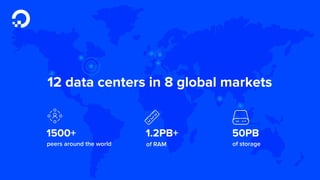
peers around the world of RAM of storage
12 data centers in 8 global markets
1500+ 1.2PB+ 50PB
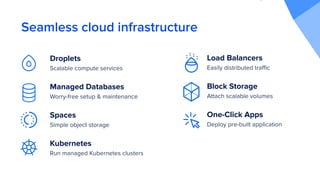
Seamless cloud infrastructure
Droplets
Scalable compute services
Managed Databases
Worry-free setup & maintenance
Spaces
Simple object storage
Kubernetes
Run managed Kubernetes clusters
Load Balancers
Easily distributed traffic
Block Storage
Attach scalable volumes
One-Click Apps
Deploy pre-built application
Building a SaaS, Part 1:
Customer-Driven Product
Development
Abstract:
As technologists, we love to build things. And we sometimes forget that our customers (or potential customers) don’t care about what
we’re building-- they care about what they’re building, doing, or feeling. In this talk, we’ll explore methodologies that help us continually
focus on our customers’ needs, building just enough to learn and iterate towards their desired outcomes. Coming away from this, you’ll
have a few more tools in the toolbox for your lean startup.
Building something new is always difficult
Now may feel more difficult than ever
But there’s hope
50%+
Drop
from
peak
First time
that peak
was
reached
againS&P 500
Some of the greatest tech companies were built in the period during & after the last recession
Move quickly (while big companies reorganize)
Downturns create problems that entrepreneurs can solve
Save on costs (while big companies cut their fat)
Find the talent seeking opportunity (while big companies
shed workers)
All recessions end (hardy startups are the readiest to
rebound)
Maximize Startup Advantages During a Downturn
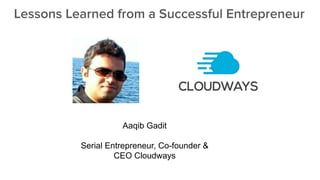
Aaqib Gadit
Serial Entrepreneur, Co-founder &
CEO Cloudways
Lessons Learned from a Successful Entrepreneur
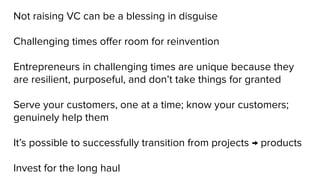
Not raising VC can be a blessing in disguise
Challenging times offer room for reinvention
Entrepreneurs in challenging times are unique because they
are resilient, purposeful, and don’t take things for granted
Serve your customers, one at a time; know your customers;
genuinely help them
It’s possible to successfully transition from projects → products
Invest for the long haul
So how do we get ruthless about solving real
customer pain points? Obsessed with helping
our customers?
Field of Dreams
^broken
No they won’t
How do I know?
Imagine the year 2000
These don’t exist yet
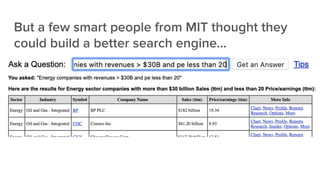
But a few smart people from MIT thought they
could build a better search engine...
At the time, this technology felt like magic
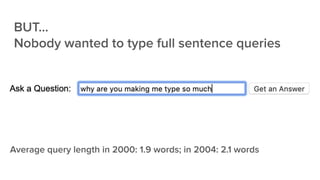
BUT…
Nobody wanted to type full sentence queries
Average query length in 2000: 1.9 words; in 2004: 2.1 words
Why did we fall into this trap?
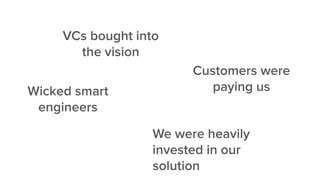
Wicked smart
engineers
VCs bought into
the vision
Customers were
paying us
We were heavily
invested in our
solution
Wicked smart
engineers
VCs bought into
the vision
Customers were
paying us
Heavily invested
in our solution
Talked to
users all the
time
What could we have done differently?
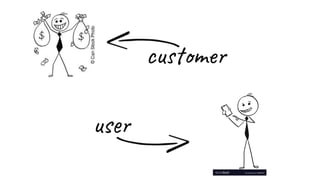
Understand the difference between users and
customers
customer
user
Build just enough to learn something critical that
you don’t know
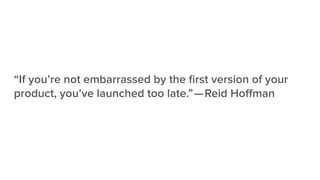
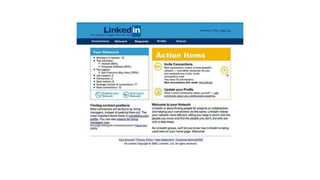
“If you’re not embarrassed by the first version of your
product, you’ve launched too late.” — Reid Hoffman
OK. Where should I start?
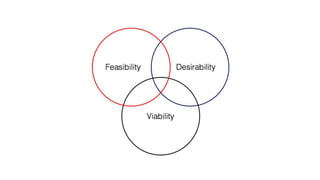
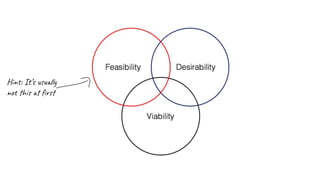
Riskiest first
Hint: It’s usually
not this at first
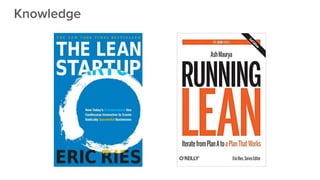
Knowledge
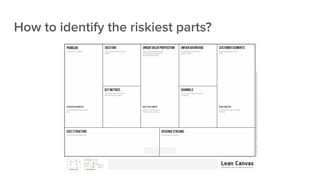
How to identify the riskiest parts?
Now ask yourself, which of these makes me most
uncomfortable?
I know what customer segment to target, but I’m
not sure these are really their problems
Example:
What’s the simplest way to test this?
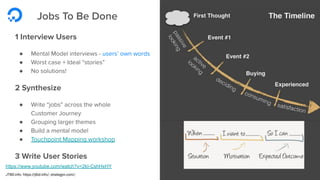
Jobs To Be Done
1 Interview Users
● Mental Model interviews - users’ own words
● Worst case + Ideal “stories”
● No solutions!
2 Synthesize
● Write “jobs” across the whole
Customer Journey
● Grouping larger themes
● Build a mental model
● Touchpoint Mapping workshop
3 Write User Stories
JTBD.info. https://jtbd.info/; strategyn.com/;
https://www.youtube.com/watch?v=2kI-CshHxHY
Tell me about a specific instance where you faced a particularly difficult situation with a tool
or solution you or your team was using. What solution/tool and what was the story?
Tell me about a specific instance where a tool or solution you (or your team) was using
worked particularly well. What solution / tool and what was the story?
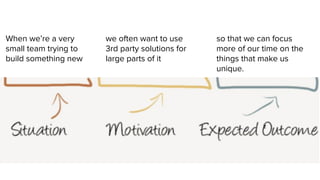
When we’re a very
small team trying to
build something new
we often want to use
3rd party solutions for
large parts of it
so that we can focus
more of our time on the
things that make us
unique.
Desired Outcomes
1 Identify Desired Outcomes
● Use their own words
● Progress or improvement
● No solutions!
2 Quantify
● Survey (statistical significance)
● Scorecard
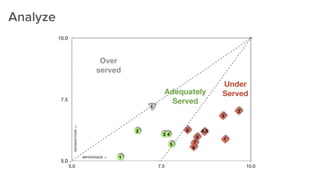
● Analyze for Under-Served
3 Speak to your audience
● In their own words + desires
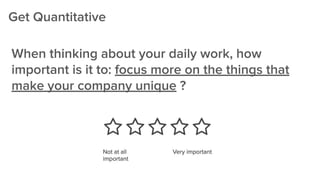
When thinking about your daily work, how
important is it to: focus more on the things that
make your company unique ?
Get Quantitative
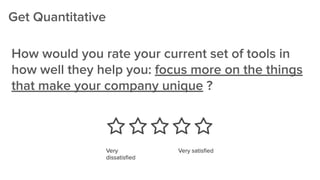
How would you rate your current set of tools in
how well they help you: focus more on the things
that make your company unique ?
Get Quantitative
Analyze
Another example
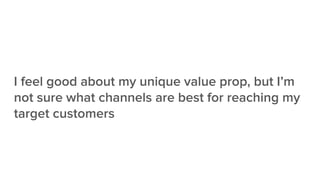
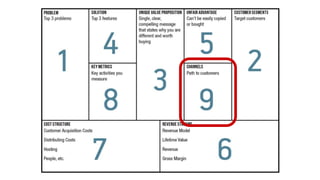
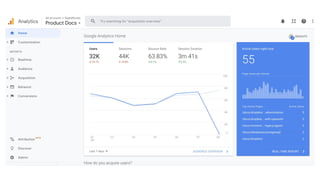
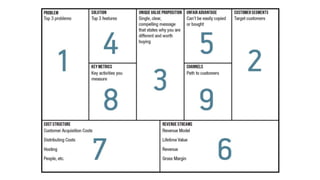
I feel good about my unique value prop, but I’m
not sure what channels are best for reaching my
target customers
What’s the simplest way to test this?
Don’t underestimate the low-tech channels
25% off
How to figure out this marketing thing:
(Check out the Beginner’s Guides) (Understanding CAC and Content
Marketing experts)
LTV
CAC
>> 1
Another example
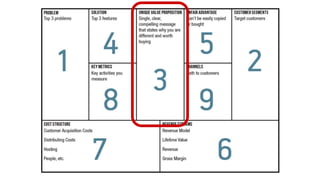
I know my customers and their problems, but not
sure my unique value prop will result in revenue
What’s the simplest way to test this?
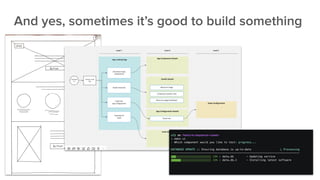
And yes, sometimes it’s good to build something
✔
✔
✔
✔
✔
✔
✔
✔ ✔
But not everything’s an experiment
vs.
Quantitative vs. qualitative
PIVOT OR PROTEST?
How to position your idea
with User Research
Colleen Diez, Lead User Researcher
Data vs. intuition
But there are biases:
● Sunk cost fallacy
● Confirmation bias
● Hindsight bias
And you need to minimize your own biases
Balancing Intuition and Biases
Design thinking can help
Balancing Intuition and Biases
Delay solutioning
Explore multiple solutions
Bias towards the user
Understand full context and the jobs to be done
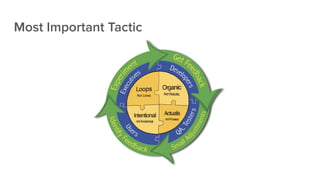
Most Important Tactic
Takeaways
Path of least resistance can lead into the trap
Actively de-risk the thing that makes you most uncomfortable
Find the simplest thing(s) you can do to get comfortable
Move on to the next most uncomfortable thing
Even in challenging times, you can create something valuable but it’s more
important than ever to solve real customer pain points
All the links
● https://www.linkedin.com/pulse/arent-any-typos-essay-we-launched-too-late-reid-hoffman/
● https://learn.onemonth.com/if-youre-not-embarrassed-by-your-startup-you-launched-too-late/
● https://www.ideou.com/blogs/inspiration/how-to-prototype-a-new-business
● https://www.amazon.com/Lean-Startup-Entrepreneurs-Continuous-Innovation-ebook/dp/B004J4XGN6
● https://www.amazon.com/Running-Lean-Iterate-Plan-Works-ebook/dp/B006UKFFE0
● https://www.youtube.com/watch?v=2kI-CshHxHY
● https://jtbd.info
● https://medium.com/envato/a-step-by-step-guide-to-using-outcome-driven-innovation-odi-for-a-new-product-
ded320f49acb
● https://www.verywellmind.com/cognitive-biases-distort-thinking-2794763
● https://designthinking.ideo.com/
● https://growsmethod.com/grows_overview.html
Thank you

DigitalOcean SaaS Webinar - Jake Levirne

  • 1.
    SaaS Webinar Part1: Customer-Driven Product Development April 2020
  • 2.
    Jake Levirne Sr. Director,Product Management Developer Experience
  • 4.
  • 5.
    2012 founded in NewYork City 480+ employees1.3M+ developers and teams 80M+ Droplets launched to date $123M+ funding raised 3rd largest and fastest growing cloud provider Investors
  • 6.
    peers around theworld of RAM of storage 12 data centers in 8 global markets 1500+ 1.2PB+ 50PB
  • 7.
    Seamless cloud infrastructure Droplets Scalablecompute services Managed Databases Worry-free setup & maintenance Spaces Simple object storage Kubernetes Run managed Kubernetes clusters Load Balancers Easily distributed traffic Block Storage Attach scalable volumes One-Click Apps Deploy pre-built application
  • 8.
    Building a SaaS,Part 1: Customer-Driven Product Development
  • 9.
    Abstract: As technologists, welove to build things. And we sometimes forget that our customers (or potential customers) don’t care about what we’re building-- they care about what they’re building, doing, or feeling. In this talk, we’ll explore methodologies that help us continually focus on our customers’ needs, building just enough to learn and iterate towards their desired outcomes. Coming away from this, you’ll have a few more tools in the toolbox for your lean startup.
  • 10.
    Building something newis always difficult Now may feel more difficult than ever But there’s hope
  • 11.
    50%+ Drop from peak First time that peak was reached againS&P500 Some of the greatest tech companies were built in the period during & after the last recession
  • 12.
    Move quickly (whilebig companies reorganize) Downturns create problems that entrepreneurs can solve Save on costs (while big companies cut their fat) Find the talent seeking opportunity (while big companies shed workers) All recessions end (hardy startups are the readiest to rebound) Maximize Startup Advantages During a Downturn
  • 13.
    Aaqib Gadit Serial Entrepreneur,Co-founder & CEO Cloudways Lessons Learned from a Successful Entrepreneur
  • 14.
    Not raising VCcan be a blessing in disguise Challenging times offer room for reinvention Entrepreneurs in challenging times are unique because they are resilient, purposeful, and don’t take things for granted Serve your customers, one at a time; know your customers; genuinely help them It’s possible to successfully transition from projects → products Invest for the long haul
  • 15.
    So how dowe get ruthless about solving real customer pain points? Obsessed with helping our customers?
  • 17.
  • 18.
    How do Iknow?
  • 19.
  • 20.
  • 21.
    But a fewsmart people from MIT thought they could build a better search engine...
  • 22.
    At the time,this technology felt like magic
  • 23.
    BUT… Nobody wanted totype full sentence queries Average query length in 2000: 1.9 words; in 2004: 2.1 words
  • 24.
    Why did wefall into this trap?
  • 25.
    Wicked smart engineers VCs boughtinto the vision Customers were paying us We were heavily invested in our solution
  • 26.
    Wicked smart engineers VCs boughtinto the vision Customers were paying us Heavily invested in our solution Talked to users all the time
  • 27.
    What could wehave done differently?
  • 28.
    Understand the differencebetween users and customers
  • 29.
  • 30.
    Build just enoughto learn something critical that you don’t know
  • 31.
    “If you’re notembarrassed by the first version of your product, you’ve launched too late.” — Reid Hoffman
  • 36.
  • 37.
    OK. Where shouldI start? Riskiest first
  • 39.
  • 40.
  • 41.
    How to identifythe riskiest parts?
  • 43.
    Now ask yourself,which of these makes me most uncomfortable?
  • 44.
    I know whatcustomer segment to target, but I’m not sure these are really their problems Example:
  • 46.
    What’s the simplestway to test this?
  • 48.
    Jobs To BeDone 1 Interview Users ● Mental Model interviews - users’ own words ● Worst case + Ideal “stories” ● No solutions! 2 Synthesize ● Write “jobs” across the whole Customer Journey ● Grouping larger themes ● Build a mental model ● Touchpoint Mapping workshop 3 Write User Stories JTBD.info. https://jtbd.info/; strategyn.com/; https://www.youtube.com/watch?v=2kI-CshHxHY
  • 49.
    Tell me abouta specific instance where you faced a particularly difficult situation with a tool or solution you or your team was using. What solution/tool and what was the story?
  • 50.
    Tell me abouta specific instance where a tool or solution you (or your team) was using worked particularly well. What solution / tool and what was the story?
  • 51.
    When we’re avery small team trying to build something new we often want to use 3rd party solutions for large parts of it so that we can focus more of our time on the things that make us unique.
  • 52.
    Desired Outcomes 1 IdentifyDesired Outcomes ● Use their own words ● Progress or improvement ● No solutions! 2 Quantify ● Survey (statistical significance) ● Scorecard ● Analyze for Under-Served 3 Speak to your audience ● In their own words + desires
  • 53.
    When thinking aboutyour daily work, how important is it to: focus more on the things that make your company unique ? Get Quantitative
  • 54.
    How would yourate your current set of tools in how well they help you: focus more on the things that make your company unique ? Get Quantitative
  • 55.
  • 56.
  • 58.
    I feel goodabout my unique value prop, but I’m not sure what channels are best for reaching my target customers
  • 60.
    What’s the simplestway to test this?
  • 63.
    Don’t underestimate thelow-tech channels
  • 64.
  • 65.
    How to figureout this marketing thing: (Check out the Beginner’s Guides) (Understanding CAC and Content Marketing experts) LTV CAC >> 1
  • 66.
  • 68.
    I know mycustomers and their problems, but not sure my unique value prop will result in revenue
  • 70.
    What’s the simplestway to test this?
  • 73.
    And yes, sometimesit’s good to build something
  • 74.
  • 75.
  • 76.
  • 78.
  • 79.
    PIVOT OR PROTEST? Howto position your idea with User Research Colleen Diez, Lead User Researcher
  • 80.
  • 81.
    But there arebiases: ● Sunk cost fallacy ● Confirmation bias ● Hindsight bias And you need to minimize your own biases
  • 82.
    Balancing Intuition andBiases Design thinking can help
  • 83.
  • 84.
    Delay solutioning Explore multiplesolutions Bias towards the user Understand full context and the jobs to be done
  • 85.
  • 86.
    Takeaways Path of leastresistance can lead into the trap Actively de-risk the thing that makes you most uncomfortable Find the simplest thing(s) you can do to get comfortable Move on to the next most uncomfortable thing Even in challenging times, you can create something valuable but it’s more important than ever to solve real customer pain points
  • 87.
    All the links ●https://www.linkedin.com/pulse/arent-any-typos-essay-we-launched-too-late-reid-hoffman/ ● https://learn.onemonth.com/if-youre-not-embarrassed-by-your-startup-you-launched-too-late/ ● https://www.ideou.com/blogs/inspiration/how-to-prototype-a-new-business ● https://www.amazon.com/Lean-Startup-Entrepreneurs-Continuous-Innovation-ebook/dp/B004J4XGN6 ● https://www.amazon.com/Running-Lean-Iterate-Plan-Works-ebook/dp/B006UKFFE0 ● https://www.youtube.com/watch?v=2kI-CshHxHY ● https://jtbd.info ● https://medium.com/envato/a-step-by-step-guide-to-using-outcome-driven-innovation-odi-for-a-new-product- ded320f49acb ● https://www.verywellmind.com/cognitive-biases-distort-thinking-2794763 ● https://designthinking.ideo.com/ ● https://growsmethod.com/grows_overview.html
  • 88.